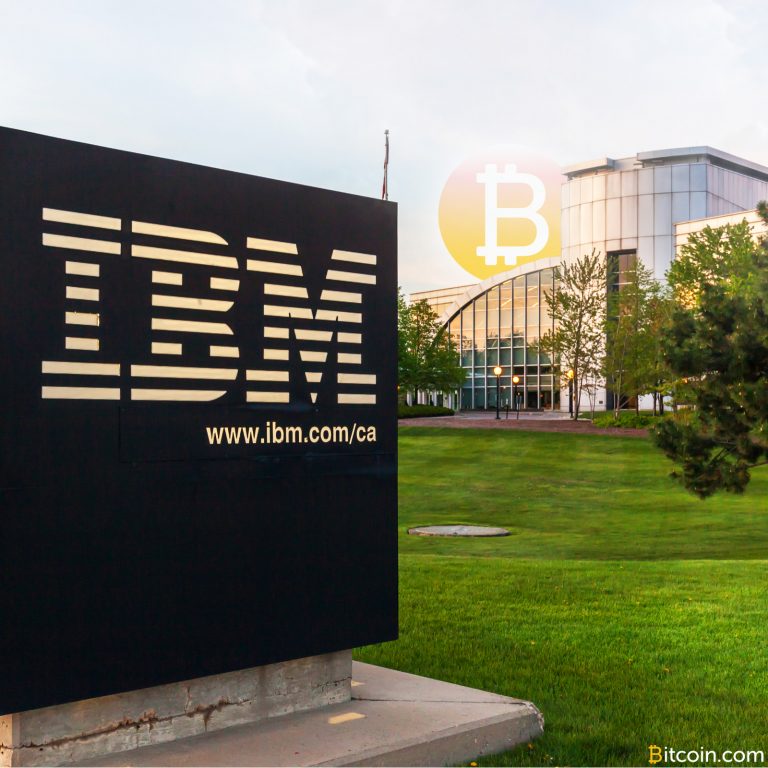
IBM recently unveiled its Q System One at the Consumer Electronics Show (CES) 2019, with the company describing the quantum computer as being developed for “commercial use.” Despite numerous media outlets again decrying the imminent death of Bitcoin, IBM’s quantum system is not the game-changer that many are heralding it to be.
Also Read: Japanese Regulator Clarifies Stance on Bitcoin ETFs and Derivatives
IBM Unveils Quantum Computing System
 IBM’s commercial launch of its new quantum computing system has fueled reports claiming that the technology may spell doom for bitcoin and cryptocurrency.
The reports are based on a long-standing fear that the advent of quantum computing could break contemporary encryption practices, undermining the security of distributed ledger technologies.
The Q System One uses IBM’s 20-qubit chip, with the company claiming that the unit is “designed for commercial use.” At launch, Arvind Krishna, director of IBM Research, described the system as “critical in expanding quantum computing beyond the walls of the research lab as we work to develop practical quantum applications for business and science.”
Despite IMB implying that the computer can be physically purchased, the device is only accessible via the cloud due to the extreme delicacy and climate required to operate quantum chips. According to Gizmodo, IBM also “already offers cloud-based access to its [quantum] experience, which includes the 20-qubit chip.”
Experts Doubt Practical Uses for IBM’s 20-Qubit System
 While a number of analysts have noted the commercial significance of IBM’s Q System One, many onlookers are skeptical of the capabilities of the system, instead suggesting that 50-qubit chips are likely to have a greater array of practical applications.
Helmut Katzgraber, principal researcher at Microsoft Quantum, similarly described IBM’s announcement as a “historical milestone to be able to commercially acquire a digital device, even though the technology,” but anticipates that the system will be of little use beyond research and PR.
IBM Q System One Comprises Commercial Rather Than Computational Milestone
 Despite describing the increasing accessibility of quantum computing as “significant,” Andrew Childs, the co-director of the Joint Center for Quantum Information and Computer Science at the University of Maryland, expressed skepticism regarding IBM’s device, stating: “Ultimately though, I think figuring out how to make a lot of low-noise qubits is a lot more important than figuring out how to put them in a beautiful package.”
“It’s more like a stepping stone than a practical quantum computer,” stated Winfried Hensinger, professor of quantum technologies at the University of Sussex. “Don’t think of this as a quantum computer that can solve all of the problems quantum computing is known for. Think of it as a prototype machine that allows you to test and further develop some of the programming that might be useful in the future,” he added.
What do you think of IBM’s Q System One and the purported threat quantum computing poses to cryptcurrency? Share your thoughts in the comments section below!
Images courtesy of Shutterstock, IBM Research
At Bitcoin.com there’s a bunch of free helpful services. For instance, have you seen our Tools page? You can even lookup the exchange rate for a transaction in the past. Or calculate the value of your current holdings. Or create a paper wallet. And much more.
The post No, IBM’s Quantum Computer Won’t Break Bitcoin appeared first on Bitcoin News.
from Bitcoin News http://bit.ly/2FscvAV No, IBM’s Quantum Computer Won’t Break Bitcoin





 The New York City Economic Development Corporation has announced it has selected Future\Perfect Labs and Global Blockchain Business Council Future to launch and operate the NYC Blockchain Center meant to help foster the continued growth of the local industry.
 The State of
 Wilshire Phoenix is an investment management firm from New York which
  Huobi Group has announced that HBUS, its American strategic partner which launched in San Francisco last year, has licensed its brand and rebranded the digital asset marketplace with the Huobi name. “From a branding perspective, it simply makes sense to ensure that the Huobi name is present in the United States,” said Huobi Group Founder and CEO Leon Li. “This transition will allow Huobi to extend its brand presence around the globe.”



 Specifically, “When soliciting 50 or more investors,” the agency plans to “require the issuer to provide public disclosure initially and subsequently.”




 Benz Rif said more than 1,700 merchants from different parts of the world including Thailand, Venezuela, Turkey and Colombia have been onboarded to the platform. The processing fee is charged at a flat 0.9 percent per transaction, but that can go lower to 0.8 percent with full know-your-customer compliance. Discounts are offered for heavy users.
 Jan. 11 saw a demonstration of