About Startup365

Chaque jour nous vous présenterons une nouvelle Startup française ! Notre pays regorge de talents et d'entrepreneurs brillants ! Alors partons à la découverte des meilleures startup françaises ! Certaines d'entre elles sont dans une étape essentielle dans la vie d'une startup : la recherche de financement, notamment par le financement participatif (ou crowdfunding en anglais). Alors participez à cette grande aventure en leur faisant une petite donation ! Les startups françaises ont besoin de vous !

#Blockchain Acquiring Crypto: Simple Steps to Buying Your First Bitcoin

Acquiring Crypto: A Few Easy Steps to Get Some Bitcoins

There’s a good chance you’ve talked to a friend about Bitcoin. Or maybe heard about this “crazy digital currency” in the news, but haven’t tried to obtain any because you think it might be difficult. These days, acquiring cryptocurrency is actually very easy, with various avenues you can take to purchase your first coins.

Also read: A Look at Some of the ‘Next Generation’ Mining Rigs Available Today

The Most Straightforward Methods to Buy Cryptocurrencies

In the early days, acquiring bitcoins wasn’t so easy and people jumped through all kinds of hoops in order to get some. Nowadays, the crypto ecosystem is vast, with multiple exchanges and various digital assets sold for fiat currencies. People can purchase cryptocurrency using methods like credit and debit cards, cash, Paypal, money orders, and even basic barter arrangements. If you’ve been looking for ways to buy a cryptocurrency like bitcoin cash (BCH) – or any other digital asset – then this article is for you.

The Non-Custodial Wallet

Acquiring Crypto: Simple Steps to Buying Your First Bitcoin
The noncustodial Bitcoin.com Wallet.

The first thing you should do is study the digital currency you want to buy so you can understand what you are purchasing. After choosing a cryptocurrency to invest in, like BCH or ETH, you should get a noncustodial wallet so you can store the assets in a safe place. An ethereum (ETH) wallet will not work with BCH and vice versa. The reason for getting a noncustodial wallet prior to buying coins is because you probably don’t want to leave your assets with a central exchange. Storing cryptocurrencies on an exchange, unless you are trading them, leaves your coins vulnerable to the risk of theft.

Bitcoin.com has a dedicated list of wallets that you can review. There’s also the noncustodial Bitcoin.com Wallet, which allows users to store, send, and receive both bitcoin cash and bitcoin core (BTC). After obtaining a wallet on your mobile phone or desktop, you can choose how to purchase some digital currency. There are three primary ways of doing so —  via an exchange, a cryptocurrency ATM, or a peer-to-peer service.

Exchanges

Exchanges are trading platforms that let you buy and sell cryptocurrencies for other digital assets or fiat. An exchange is a pretty quick way to obtain bitcoins as long as you are comfortable with the process. For instance, you will need a means of payment, because you are online and can’t use cash. Trading platforms allow customers to purchase cryptocurrencies in their local currency and you can usually pay using a credit card, Paypal, and bank wire depending on the exchange in question.

Acquiring Crypto: Simple Steps to Buying Your First Bitcoin
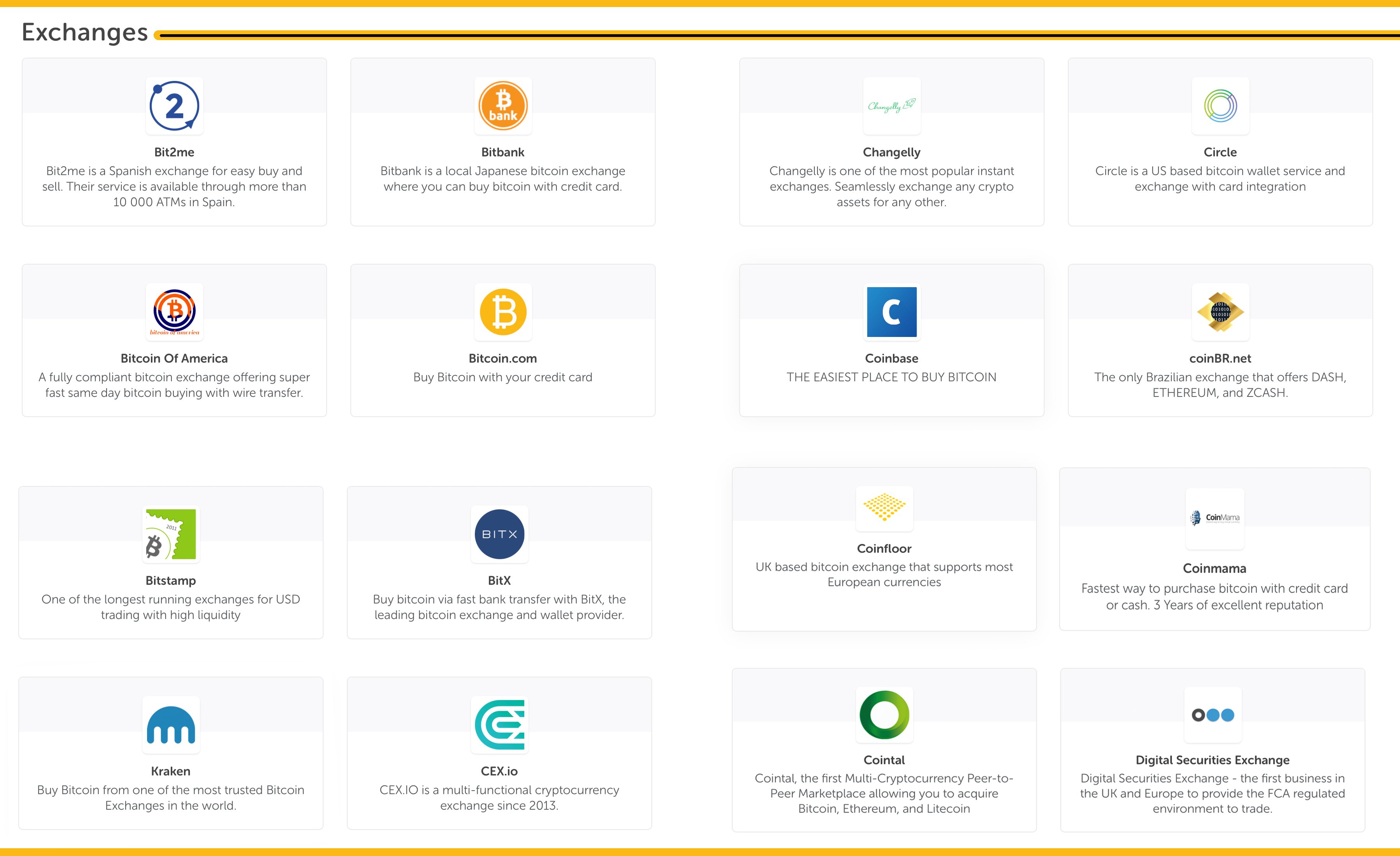
Bitcoin.com keeps a comprehensive list of the most popular cryptocurrency exchanges today.

Exchanges will also require identification and will want to verify your identity in some fashion. The trading platform may require a picture ID or some proof of residence. Two things you will typically have to wait for before actually purchasing coins on an exchange is a verified identity and a validated payment system. Once those are in order, the platform will let you purchase cryptocurrencies and from there you can send them to your noncustodial wallet. Check out Bitcoin.com’s extensive list of cryptocurrency exchanges.

Acquiring Crypto: Simple Steps to Buying Your First Bitcoin
Some of the most popular cryptocurrency exchanges allow users to purchase and sell digital currencies quickly.

The Automated Teller Machine (ATM)

Yes, even cryptocurrencies use automated teller machines (ATMs) and you might be able to find one in your local area. At the moment there are more than 4,100 digital asset dispensing devices across the globe and more being installed every day. In order to locate a machine in your local area, Coinatmradar.com is a great resource. There are a ton of bitcoin core (BTC) ATMs (sometimes called BTMs) that sell the coin for a fee of between 6-10 percent per transaction.

Acquiring Crypto: Simple Steps to Buying Your First Bitcoin
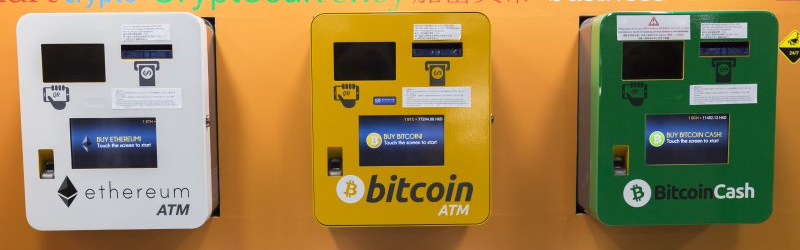
There are all types of cryptocurrency ATMs these days. Check out Bitcoin.com’s map of bitcoin cash (BCH) ATMs and find a local machine in your area.

There’s also a growing amount of bitcoin cash (BCH), dash (DASH), and ethereum (ETH) teller machines. Crypto ATMs are not like bank ATMs because instead of getting cash, you give the machine some paper bills and the device will send digital assets to your wallet, after you’ve given the ATM a valid public address. Some cryptocurrency ATMs don’t require identification, but there are some providers that do oblige the ATM user to supply picture ID.

Peer-to-Peer Services

Acquiring Crypto: Simple Steps to Buying Your First BitcoinThe last method for acquiring cryptocurrency is in a peer-to-peer fashion. In other words, you can buy coins from a friend who already has digital currencies or you can opt to use a service like Openbazaar.org, Localbitcoincash.org, Bitquick, Paxful, or Localbitcoins.com. These services allow anyone to buy from a person selling coins either in person or online by using an escrow system to keep the trades fair. Each peer-to-peer marketplace operates a little differently and depending on the service you can pay for your digital currency with things like cash, Paypal, Moneygram, Vanilla, gift cards, or a cashiers check.

Acquiring Crypto: Simple Steps to Buying Your First Bitcoin
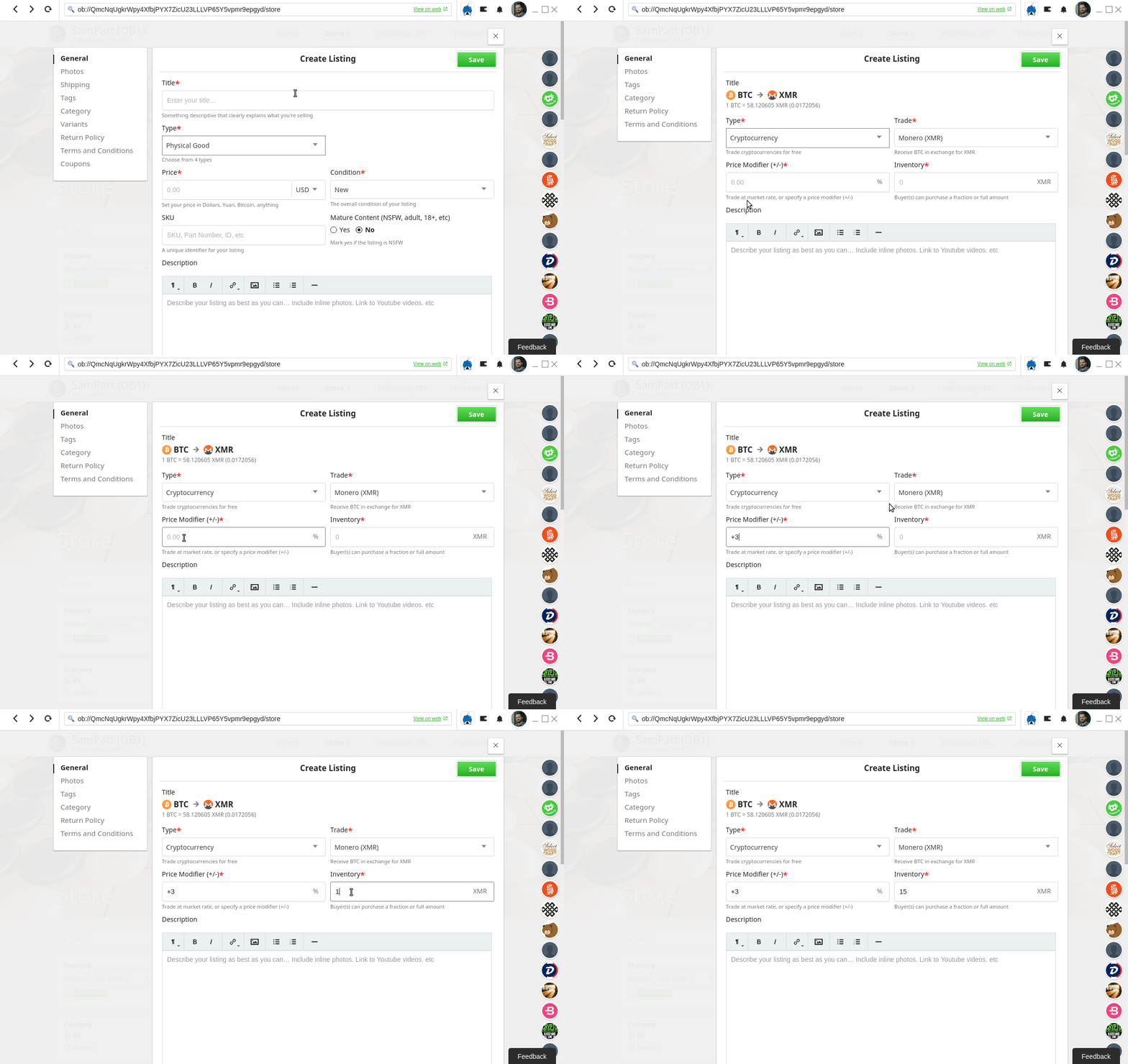
Openbazaar lets users buy and sell an assortment of digital currencies.

After conducting trade with a seller you, can receive coins in relatively little time, but it’s a good idea to research the platform you are using and make sure the vendor has a trustworthy reputation. Typically, these traders have conducted a lot of trades and most platforms, like Localbitcoins, have a reputation system.

Learning the Basic Steps and Getting Comfortable

Buying a digital currency is pretty straightforward, and after doing it once you’ll get an understanding of some of the concepts involved like sending and receiving coins. It’s a good idea to read up on how to send bitcoins from one wallet to another and the basic foundations of the digital currency you decide to buy. Lastly, one last thing to remember is that you don’t have to buy a whole coin when purchasing currencies like ETH, BCH, or BTC. People can buy a fraction of the digital currency they want and can even set up recurring purchases of very small amounts of crypto. After doing it a few times, you’ll quickly get the hang of buying and using digital assets.

Do you think purchasing cryptocurrencies is easy? How would you recommend people buy their first digital coins? Let us know what you think about this subject in the comments section below.


Image credits: Shutterstock, Bitcoin.com, Openbazaar, and Localbitcoincash.org. 


Need to calculate your bitcoin holdings? Check our tools section. 

The post Acquiring Crypto: Simple Steps to Buying Your First Bitcoin appeared first on Bitcoin News.

from Bitcoin News http://bit.ly/2FsNkhq Acquiring Crypto: Simple Steps to Buying Your First Bitcoin

#Blockchain Wendy McElroy: Interview With Jeffrey Tucker on All Things Crypto, Part Two

Interview With Jeffrey Tucker on All Things Crypto, Part Two

Interview with Jeffrey Tucker on All Things Crypto, Part Two

Conducted by Wendy McElroy

The multi-faceted Jeffrey Tucker is an American writer who focuses on market freedom, anarcho-capitalism, and cryptotech. He is the author of eight books on economics, politics, and culture, a much-sought after conference speaker, and an Internet entrepreneur. Jeffrey is editorial director and vice president of the venerable American Institute for Economic Research, founded in 1933. His career has focused on building many of the web’s primary portals for commentary and research on liberty, and is undertaking new adventures in publishing today.

I have incredible good fortune, as Jeff has written the preface to my book “The Satoshi Revolution,” which will be published in early 2019 by bitcoin.com. Meanwhile, a rough draft of the book is available online for free, compliments of bitcoin.com. Be sure to come back for the substantially-rewritten and thoroughly-edited book. I expect there will be a forum established here for me to chat with readers and answer their questions.

To access Part One of this interview, please click here.

Wendy: I was very impressed by an article in which you argued against the idea that Misesian regression theorem invalidated bitcoin as a money. For readers, the Regression theorem claims “Any valid medium of exchange (money) has to have a previous use as something else.” Could you offer an overview of your argument?

Jeff: Mises’s argument was that the root value of money traces to a conjectural history in which the pre-money form was deployed, for example, in barter. By 1949, Mises became hardened in this view: money had to originate in barter; there is no other path. From a historical point of view, this is probably correct. But it is a theoretically misleading formulation.

To understand the theory behind the conjectural history, you have to return to Mises’s original 1912 argument. Here he is more precise. In order for something to become money, it had to have a pre-existing use value. Use value. That’s not the same thing as being used in barter trade. His point was that you can’t take a useless thing and call it money and expect it to take flight.

How can we reconstruct the history of Bitcoin to discern if this applies here? From the January 2009 genesis block until October of that year, Bitcoin’s posted dollar exchange value was exactly $0. And yet we know, because we have a perfect historical record, that there were many thousands of trades being made all these 10 months. What was happening? What was going on? This was a period in which the network was being tested by enthusiasts. What does this network do? It permits the peer-to-peer exchange of immutable information packets on a geographically non-contiguous basis using the Internet so that they can come and go without corruption or compromise.

Is this a valuable service and does it work? This is what was being tested. By October, the use value of this network had proven itself, and so we began to see the emergence of a dollar/Bitcoin exchange ratio. That is to say, Bitcoin was priced as a scarce good. We can see, then, that the conditions of the “Regression Theorem” as theory are met via the services provided by the blockchain. You can also see, however, that if an economist looking at this did not understand the payment system embedded as part of the monetary technology, he or she would be completely befuddled.

To be sure, some very smart people disagree with me. My friend William Luther is blunt about his opinion about his matter. He thinks the Regression Theorem is just wrong, so it doesn’t matter if Bitcoin is theoretically compliant. He once made the argument to me and pretty much backed me into a corner. If he turns out to be correct, I’m fine with that. What matters more, my theory or existing reality? I faced that problem in early 2013 and concluded that I had, as a matter of intellectual integrity, to defer to reality, even if it meant admitting the wrongness of my position or even that of Mises’s. Shocking, I know!

Wendy: The crypto community parallels the libertarian one, in ways both good and bad. An example of the latter is the deep personal schisms with which it is rift. You are a person who stays away from internecine battles. What advice do you have to others who wish to do the same?

Jeff: I try to stay focused on the big picture and imagine that my audience is not my friend network but rather the general public. I try to serve that readership. That means no Twitter wars. No flame wars at all. Plus, I’ve seen vast destruction spread by vicious internecine battles. I’ve seen friendships wrecked, bad theory perpetrated by virtue of ego alone, massive setbacks take place in understanding and marketing. Also, there are some people who are ideologically attached to the friend/enemy distinction. Unless they are smashing someone and hitting “the enemy” they think they are not working. It’s extremely strange how some people thrive off this posture.

To be sure, I have no trouble taking a stand, as I have when libertarians have wrongly drifted left and right. Why? I like to seek greater intellectual clarity and share my thoughts with others, in hopes that I can help others understand too. I’m not seeking saints and not looking to burn witches. I try to choose my battles carefully and stay focused on doing productive work, cooperating with anyone who thinks, writes, and acts in good faith. That’s the main thing to ask yourself, not “Who have you destroyed today?” but rather, “What kind of light have I brought to the world today?”

Wendy: Different explanations of crypto’s recent plunge in price have been advanced. Some people point to increased government regulation, especially in China and in the U.S., where the SEC is taking active steps against the crypto community. Many believe the tumble resulted from a bursting bubble that was created by surging prices earlier in 2018. Still others speak of manipulation by “the whales.” These explanations are not mutually exclusive, of course. But do you favor one over the other? Do you have another explanation?

Jeff: It’s impossible to untangle all of this, and many of the factors you name are right, but let me add another issue. The amazing bull market of 2017 was fueled by wild optimism and adoption. People in the space were ready to rock. Then this optimism was massively interrupted by a terrible realization. Bitcoin would not scale. It stopped behaving like Bitcoin and started becoming more expensive and slower than regular credit cards. To use street parlance, it sucked. It was an amazing thing to have happened. It was a true calamity. And to top it off, it was completely the fault of the guardians of the code. When the code would not adapt to broader use, the optimism turned to pessimism and we experienced a huge setback.

By the way, I’ve worked for years with people who are geniuses at code but completely stupid when it comes to the user experience. It was the tragedy of Bitcoin that it fell prey to exactly this same problem. Coders desperately desire cleanliness, zero bloat, no cruft, perfect logic. It’s an old joke in the community that a coder invites you to use his new program but all you see on the black screen is a blinking green cursor. “Of course I still have to write the user interface.”

The OCD-ish mind of coders is a great thing for some purposes but this outlook has never prevailed in the commercial marketplace. In the early 1990s, there was a great battle over word processors. Microsoft kept making Word larger and larger, puffed with cruft, and the code monkeys were screaming that this was a disaster in the making. For my own part, I hated Word in those days and completely agreed that the hard-to-use light-weight programs were better.

But guess what? The market disagreed. Moore’s Law kicked it as it always does and eventually Word destroyed the competition. Why? Because it had more features that users like. Eventually the code got clean again and now Word itself has many elegant competitors. This is the normal progression of any software with a consumer focus.

Incredibly, some people with the keys to the kingdom of Bitcoin actually came to imagine that they could develop a digital money without an efficient, consumer-focussed use case. They drove a wedge between two functions: store of value and medium of exchange. This is not how much work. One function depends on the other. The freeze in the development of Bitcoin, in the name of staying light and elegant, was a fool’s errand. During all the scaling debates of 2014-16, they dug in their heels, shouting slogans, guarding their small blocks, instead of thinking about adoption and scaling when the time came.

When the time did come, Bitcoin did not perform. It fact – and it pains me to say this – it completely flopped.

Old school Bitcoiners like me were horrified to see it all happening. It was like an old friend had become possessed. When the mempools exploded, and the miners were in a position to ration trades based on price, it would cost $20 to send $2. This was in the fall and winter of 2017. It was absolutely disgraceful, and all the more so because the newly emergent “maximalists” defended this preposterous reality, acting if as this was part of the plan all along. They were like PeeWee Herman explaining that when he fell off the bike that he “meant to do that.” They flagrantly ignored even the title of the White Paper. Then the fork came in August of 2017, as it necessarily had to. But then followed a tremendous explosion of tokens of all sorts.

I don’t regret the competition, and I think this is all a good thing. I’m not a Bitcoin Maximalist. I’m a Competition Maximalist. But the absurdities of Bitcoin’s performance could have been completely avoided with just a bit of concern for the user. I would love it if we could perform a controlled experiment and see the BTC price today if the thing had properly scaled. We can’t do that. We have the reality we have.

Privately, of course, Bitcoin Core developers will admit that this was a disaster and that scaling will eventually take place on the chain. But at this point, pride and arrogance had gotten the best of them. How long will they continue to promise the Lightning Network while showing no concern for the use case? It’s time for a bit of humility.

To be sure, the Lightning Network is super great. We run a node at the Atlanta Bitcoin Embassy. I look forward to its final stability and adoption. The problem is that this was proposed as an eventual solution to the scaling problem that currently exists. Real-time technological development has to deal with problems in real time according to the time schedule of the market rate of adoption. Markets don’t obey code architects; the reverse has to be the case. Bitcoin Core forgot that at the very point it mattered most.

Wendy: Whatever the probable explanation(s), do you have a sense of when or whether crypto markets are likely to rebound significantly? Do you have a sense of what will cause a rebound or prevent one?

Jeff: Like all enthusiasts, I do expect a turnaround. Remember that I’ve been in these markets since BTC was $14. I’ve seen wild swings and long periods of nothingness. I’m prepared for anything.

Wendy: A debate within crypto parallels one I have heard between gold bugs. That is, should one take physical possession of precious metals, or they can be stored with reputable entities. In crypto, the parallel argument is whether coins should be in private wallets with undisclosed keys, or can they be stored with exchanges that do not demand possession of the keys?

Jeff: That is an interesting parallel! I think it is a valid one. I’m disappointed with the rise of what are effectively Bitcoin Banks that now dominate the market. I’ve reluctantly concluded that there is indeed a demand for financial intermediation, even within crypto. Here is a case where my own preferences are being overridden by market choice. That said, intermediation in crypto is not going to have the problems that it does in a central banking world. We have transparency. We have clear lines of ownership. We know the difference between money and a money substitute. I don’t necessarily think that intermediation is an evil thing in the crypto world.

Wendy: Any other thoughts you’d like to share on this subject?

Jeff: I would council Bitcoiners and anyone who sees the potential of this technology to be patient. Think back to railroads and how they came to be. The headlines were all about land speculation, wildcat banks, stock fraud, bankruptcies, and crashes. The reality, in the end, was a transformed world. It was true with the Internet too. People said for years that no one could make money on the Internet. The dotcom crash of 2000 seemed to prove it. Now Internet commerce leads the world. It will be a long time before crypto becomes competitive with nationalized money, and even longer before the pundit class comes around.

The important point is that we have the knowledge. We have the technology. We know now that it is possible. It can be done. There is no longer any excuse for not turning over the production and management of money itself to the market.

Also let us not forget what matters most. Bitcoin is a technology but the goal is much more grand: a better, more peaceful, more prosperous world. I’ve seen it myself how this works. When you pull down the barriers, when you provide opportunities for people to cooperate, beautiful things happen. I see it constantly at the Atlanta Bitcoin Embassy. This is a place where people from all walks of life come together in a spirit of joyful cooperation to build the future. This inspires me more than anything else and points to the kind of future that can be built by a P2P technology. It’s a microcosm of what life in the cryptocon can be like.

Wendy: Thank you, Jeff! This has been fascinating.

[To be continued next week.]

Reprints of this article should credit Bitcoin.com and include a link back to the book


Wendy McElroy has “published” her new book The Satoshi Revolution exclusively with Bitcoin.com. However, things aren’t over yet. Every Saturday you’ll find another installment in a series of interviews about sections of the book with people like Doug Casey, L.Neil Smith, Jeff Tucker, Carl Watner…and so on. Altogether they’ll make up her new book ”The Satoshi Revolution”.

The post Wendy McElroy: Interview With Jeffrey Tucker on All Things Crypto, Part Two appeared first on Bitcoin News.

from Bitcoin News http://bit.ly/2VPVBSh Wendy McElroy: Interview With Jeffrey Tucker on All Things Crypto, Part Two


#USA Startups Weekly: Will Trump ruin the unicorn IPOs of our dreams?

//

The government shutdown entered its 21st day on Friday, upping concerns of potentially long-lasting impacts on the U.S. stock market. Private market investors around the country applauded when Uber finally filed documents with the SEC to go public. Others were giddy to hear Lyft, Pinterest, Postmates and Slack (via a direct listing, according to the latest reports) were likely to IPO in 2019, too.

Unfortunately, floats that seemed imminent may not actually surface until the second half of 2019 — that is unless President Donald Trump and other political leaders are able to reach an agreement on the federal budget ASAP.  This week, we explored the government’s shutdown’s connection to tech IPOs, recounted the demise of a well-funded AR project and introduced readers to an AI-enabled self-checkout shopping cart.

1. Postmates gets pre-IPO cash

The company, an early entrant to the billion-dollar food delivery wars, raised what will likely be its last round of private capital. The $100 million cash infusion was led by BlackRock and valued Postmates at $1.85 billion, up from the $1.2 billion valuation it garnered with its unicorn round in 2018.

2. Uber’s IPO may not be as eye-popping as we expected

To be fair, I don’t think many of us really believed the ride-hailing giant could debut with a $120 billion initial market cap. And can speculate on Uber’s valuation for days (the latest reports estimate a $90 billion IPO), but ultimately Wall Street will determine just how high Uber will fly. For now, all we can do is sit and wait for the company to relinquish its S-1 to the masses.

3. Deal of the week

N26, a German fintech startup, raised $300 million in a round led by Insight Venture Partners at a $2.7 billion valuation. TechCrunch’s Romain Dillet spoke with co-founder and CEO Valentin Stalf about the company’s global investors, financials and what the future holds for N26.

4. On the market

Bird is in the process of raising an additional $300 million on a flat pre-money valuation of $2 billion. The e-scooter startup has already raised a ton of capital in a very short time and a fresh financing would come at a time when many investors are losing faith in scooter startups’ claims to be the solution to the problem of last-mile transportation, as companies in the space display poor unit economics, faulty batteries and a general air of undependability. Plus, Aurora, the developer of a full-stack self-driving software system for automobile manufacturers, is raising at least $500 million in equity funding at more than a $2 billion valuation in a round expected to be led by new investor Sequoia Capital.


Here’s your weekly reminder to send me tips, suggestions and more to kate.clark@techcrunch.com or @KateClarkTweets


5. A unicorn’s deal downsizes

WeWork, a co-working giant backed with billions, had planned on securing a $16 billion investment from existing backer SoftBank . Well, that’s not exactly what happened. And, oh yeah, they rebranded.

6. A startup collapses

After 20 long years, augmented reality glasses pioneer ODG has been left with just a skeleton crew after acquisition deals from Facebook and Magic Leap fell through. Here’s a story of a startup with $58 million in venture capital backing that failed to deliver on its promises.

7. Data point

Seed activity for U.S. startups has declined for the fourth straight year, as median deal sizes increased at every stage of venture capital.

8. Meanwhile, in startup land…

This week edtech startup Emeritus, a U.S.-Indian company that partners with universities to offer digital courses, landed a $40 million Series C round led by Sequoia India. Badi, which uses an algorithm to help millennials find roommates, brought in a $30 million Series B led by Goodwater Capital. And Mr Jeff, an on-demand laundry service startup, bagged a $12 million Series A.

9. Finally, Meet Caper, the AI self-checkout shopping cart

The startup, which makes a shopping cart with a built-in barcode scanner and credit card swiper, has revealed a total of $3 million, including a $2.15 million seed round led by First Round Capital .

Want more TechCrunch newsletters? Sign up here.

from Startups – TechCrunch https://tcrn.ch/2CjABdE

#Blockchain Bitcoin History Part 8: When 1,500 BTC Cost Less Than $1

Bitcoin History Part 8: When 1,500 BTC Cost Less Than $1

How much is one bitcoin worth? In fiat currency terms, that’s a constantly shifting answer, but ever since the beginning, the following has held true: one bitcoin is worth as much as the buyer is willing to pay. Today, that’s likely to be a few thousand dollars, but back in the day, the reverse was more likely to be true: for one dollar, you could buy several thousand bitcoins.

Also read: Bitcoin History Part 7: The First Major Hack

Calculating Bitcoin’s Exchange Rate

Bitcoin History Part 8: When 1,500 BTC Cost Less Than $1Once an asset has a universally agreed exchange rate, tracking its rising and falling price thereafter is a simple matter. But when no one’s really sure what the market is willing to pay for an emerging asset, it can be hard to reach consensus on valuation – especially when there are no exchanges to facilitate price discovery. This was the dilemma that early Bitcoin adopters faced in early 2010.


‘We are in a sort of “chicken and egg” situation at the moment,” noted Bitcointalk forum member The Madhatter. “In order for an exchanger to sell bitcoins … to someone, they need customers who have dollars and want coins … I mean, why would an exchanger sit around and accept bitcoins that are generated on your computers? They are going to just blow out their float of dollars and fold.” A couple of months prior, the first rudimentary exchange rate for BTC had been calculated by influential forum user “NewLibertyStandard” (aka NLS). Their pricing system was based on the amount of energy required to mine BTC – or “BC” as it was still often referred to at the time.

A Simple Model to Get the Ball Rolling

“New Liberty Standard is doing fantastic and logical work to help ‘set the ball rolling’,” praised forum user “BitcoinFX” on Feb. 5, 2010, adding: “I’m currently compiling a Neural Network model that takes into account other factors such as the finite number of Bitcoins, daily Gold and Silver fixings, other currency pairs and daily exchange rates and the average number of Bitcoin users etc. I’m of course factoring in the New Liberty Standard. This will be a very adaptable model to help calculate and predict future exchange rates and I will share it with our growing community.”

Today, the pricing models used to predict future bitcoin prices have become infinitely more sophisticated, but even in 2010, it’s evident that some adopters were thinking beyond mere extraction costs, and trying to envisage a world in which Bitcoin broke away from its power pegged price and attained a value determined by an array of external forces.

Bitcoin History Part 8: When 1,500 BTC Cost Less Than $1
Bitcoin prices, as quoted on the New Liberty Standard website in 2009

While NLS’ methodology has long since been retired, an archived web page reveals the BTC prices their system set back in 2009, explaining:

Our exchange rate is calculated by dividing $1.00 by the average amount of electricity required to run a computer with high CPU for a year, 1331.5 kWh, multiplied by the the average residential cost of electricity in the United States for the previous year, $0.1136, divided by 12 months divided by the number of bitcoins generated by my computer over the past 30 days.

In Dec. 28, 2009, according to NLS, $1 would have gotten you 1,578.77 BTC. Not bad.

Bitcoin History is a multipart series from news.Bitcoin.com charting pivotal moments in the evolution of the world’s first and finest cryptocurrency. Read part seven here.


Images courtesy of Shutterstock.


Need to calculate your bitcoin holdings? Check our tools section.

The post Bitcoin History Part 8: When 1,500 BTC Cost Less Than $1 appeared first on Bitcoin News.

from Bitcoin News http://bit.ly/2Ro7aBS Bitcoin History Part 8: When 1,500 BTC Cost Less Than $1

#Blockchain The Daily: Genesis Trading Doubles OTC Volume, Bittrex Moves 130,000 BTC

The Daily: Genesis Trading Doubles OTC Volume, Bittrex Moves Coins Between Cold Wallets

OTC crypto platform Genesis Global Trading has increased its annual trading volume by 50 percent and we’ve got the details in this edition of The Daily. We also feature an announcement by Bittrex which sought to calm traders who spotted 130,000 BTC being moved, and the launch of an offers bot by P2P exchange Hodl Hodl.  

Also read: Critical Bug Found in Beam Wallet, Wirex Adds Another Cryptocurrency

Genesis Trading Reports 50% Increase in OTC Volume

The Daily: Genesis Trading Doubles OTC Volume, Bittrex Moves 130,000 BTCOver-the-counter (OTC) digital asset platform Genesis Global Trading has recently reported a 50 percent year-over-year increase in its trading volume, despite the continuing bearish trend on the markets which started last year. In a correspondence to its customers, Genesis also noted that the total of crypto loans it gave to institutional clients has reached almost $1 billion in less than a year since the launch of its lending arm, Genesis Capital.

The company began giving loans in bitcoin core (BTC), bitcoin cash (BCH), ethereum (ETH), ripple (XRP), and other cryptocurrencies in March of last year. The entities that borrow the digital money, usually financial institutions such as hedge funds, use the assets to hedge investment positions and against dropping crypto prices.

Genesis Global Trading, which is part of crypto entrepreneur Barry Silbert’s Digital Currency Group, is registered with the U.S. Securities and Exchange Commission (SEC) and the Financial Industry Regulatory Authority (FINRA). In May 2018, the company was granted Bitlicense approval by the New York Department of Financial Services, which allows it to operate under the strict regulatory regime in the state.

Crypto Exchange Bittrex Expands Cold Storage

The Daily: Genesis Trading Doubles OTC Volume, Bittrex Moves 130,000 BTCU.S.-based cryptocurrency trading platform Bittrex announced it’s reorganizing and expanding its cold storage. The exchange explained in a tweet that the process results in the moving of funds between its cold wallets. The company published the notice to reassure its customers, who’d observed 130,000 BTC being sent in a single transaction, they had nothing to worry about.

The crypto exchange, the 50th most popular by 24-hour trading volume, also made a couple of announcements regarding coins available for trading on its platform. Bittrex users can now trade paxos standard (PAX) with fiat money, after the stablecoin was recently added to its USD market.

“On Jan. 17, we’re launching a US dollar (USD) market for digibyte (DGB). Eligible Bittrex accounts are auto enabled for USD trading,” the platform tweeted on Thursday. In both cases, users who want to deposit or withdraw U.S. dollars via wire transfers should submit an application in advance.

Hodl Hodl Introduces Offers Bot

The Daily: Genesis Trading Doubles OTC Volume, Bittrex Moves 130,000 BTCPeer-to-per crypto exchange Hodl Hodl has introduced a new feature, in the form of an offers bot. From now on every offer created on the platform will be automatically posted on its Twitter account and Telegram channel, the digital asset trading platform said in a post on Medium. The list of offers will be refreshed every 30 minutes and their maximum number will be three. Private OTC offers will not be posted.

“In 2018 we created a separate Twitter account with the idea to connect cryptocurrency buyers and sellers to the latest and best offers at Hodl Hodl. We have operated this Twitter account manually up until now, and we decided to automate this process,” the developers explained this week. They have created a new Twitter account but the name remains the same – @offershodlhodl.

In the past months, Latvia-based Hodl Hodl has made a number of announcements about new features, including the introduction of non-custodial OTC trading and support for Russian ruble pairs with BTC and LTC. The exchange is also planning expansion in Asia and recently sealed a partnership agreement with Coins OTC, a company operating in the Asian over-the-counter sector.

What are your thoughts on today’s news tidbits? Tell us in the comments section.


Images courtesy of Shutterstock, Trading, Hodl Hodl.


At Bitcoin.com there’s a bunch of free helpful services. For instance, have you seen our Tools page? You can even lookup the exchange rate for a transaction in the past. Or calculate the value of your current holdings. Or create a paper wallet. And much more.

The post The Daily: Genesis Trading Doubles OTC Volume, Bittrex Moves 130,000 BTC appeared first on Bitcoin News.

from Bitcoin News http://bit.ly/2Frkdew The Daily: Genesis Trading Doubles OTC Volume, Bittrex Moves 130,000 BTC

#Blockchain Mongolia’s Cheap Electricity Draws Japanese Bitcoin Miners Seeking Profit

Mongolia’s Cheap Electricity Draws Japanese Bitcoin Miners Seeking Profit

A combination of cheap electricity and cold weather has started to draw a growing number of Japanese bitcoin miners to Mongolia, a country sandwiched between China to the south and Russia to the north. Amid falling mining revenues in other regions of the world due to the current crypto bear market, companies that have set up shop in Mongolia have found they can still run profitable mining operations.

Also read: China Announces New Regulations for Blockchain Companies to ‘Promote Healthy Development’

 Business Environment Harsh But Mongolia Is Still Profitable

Tokyo-based e-wallet company Ginco is operating two mining farms in Ulaanbaatar, Mongolia’s capital city. One facility is located at an underground structure in a condominium complex .The company launched the business in October, a time when its peers throughout the world were considering winding down operations as a result of declining bitcoin prices, which rendered mining unprofitable.

Mongolia’s Cheap Electricity Draws Japanese Bitcoin Miners Seeking Profit

Altogether, Ginco now operates 600 mining machines and is planning to increase that number to 1,000 units in this quarter. “The business environment is increasingly harsh, but we can still produce a profit,” Yuma Furubayashi, chief executive officer of Ginco Mongol, told Japanese publication Nikkei Asian Review on Jan. 11.

The market has been unforgiving for companies involved in cryptocurrency mining over the past year. During that period, the price of BTC has plunged more than 80 percent from its all-time high of almost $20,000 in December 2017, leaving some miners on the brink of collapse. Coupled with the price decline, bitcoin extraction is becoming less profitable as a result of the network’s rising hashrate.

For example, Japan’s bitcoin mining hardware manufacturer GMO Internet Inc. wound down operations at the end of December after posting a loss of 24 billion yen ($218 million). The company, which will nonetheless continue to mine in-house, also announced that it is moving its mining center to a region with cleaner and less expensive energy.

Mongolia’s Cheap Electricity Draws Japanese Bitcoin Miners Seeking Profit

In November, U.S.-based bitcoin mining firm Giga Watt filed for bankruptcy at a court in the Eastern District of Washington, revealing that it still owes its biggest 20 unsecured creditors nearly $7 million. Other medium-sized miners in China were recently forced to sell their mining rigs as scrap, to curb further losses.

Mongolia’s Freezing Weather and Cheap Electricity Attract Crowds

But with freezing weather and cheap electricity, Mongolia – one of a few countries where bitcoin miners can still generate a profit, along with the U.S. and Sweden – is slowly developing into a destination of choice for Japanese miners. The cooler temperatures help to reduce the need for cooling systems for the mining hardware.

Energy costs are a key factor in the profit equation of crypto mining. Electricity prices in Mongolia run at around a third of Japanese rates and lower than in China, which has been home to many crypto miners, the Nikkei Asian Review reported.

Another Japanese entity, iTools, began mining operations in Mongolia last summer. It says although the market is down, mining in Mongolia still returns a profit. The company has currently put on hold plans to expand its fleet of mining equipment, but CEO Tamir Bayarsaikhan indicated that the business has the capacity to deepen its expertize in blockchain technologies and create new business. iTools rents its gear from Tokyo-based advertising group Unimedia.

Mongolia’s Cheap Electricity Draws Japanese Bitcoin Miners Seeking Profit
Statue of Genghis Khan

Crypto mining is an attractive year-around business for companies in Mongolia, whose core industries like mineral mining, agriculture, and tourism slow down during the harsh winter. The government is actively nurturing the country’s information technology sector, noted the article.

Last year, the Central Bank of Mongolia approved crypto-friendly legislation, and Mobicom – Mongolia’s largest telecoms network – decided to create its own cryptocurrency, known as “Candy”, whose value is pegged to Mongolia’s fiat currency, the tugrik.

This year, Mongolia has just announced a partnership with Terra, a blockchain payment system that is backed by exchanges such as Binance and Houbi. According to a recent Forbes report, the program will launch with two features: a peer-to-peer payment system to allow transfer among users of different banks, as well as a mobile payment system.

What do you think about bitcoin mining in Mongolia? Let us know in the comments section below.


Images courtesy of Shutterstock.


Need to calculate your bitcoin holdings? Check our tools section.

The post Mongolia’s Cheap Electricity Draws Japanese Bitcoin Miners Seeking Profit appeared first on Bitcoin News.

from Bitcoin News http://bit.ly/2RLqSXt Mongolia’s Cheap Electricity Draws Japanese Bitcoin Miners Seeking Profit

#Blockchain Japan Approves 17th Cryptocurrency Exchange – Its First in Over a Year

After Over a Year, Japan Finally Approves the 17th Cryptocurrency Exchange

It has been over a year since Japan’s Financial Services Agency last approved a cryptocurrency exchange to legally operate in the country. Coincheck, which was hacked early last year, has become the 17th fully-registered crypto exchange in the country. The exchange has made numerous improvements after it was acquired by Monex Group.

Also read: Indian Supreme Court Moves Crypto Hearing, Community Calls for Positive Regulations

FSA Finally Approves Coincheck

Japan Approves 17th Cryptocurrency Exchange – Its First in Over a YearJapan’s top financial regulator, the Financial Services Agency (FSA), announced on Friday that it has approved the registration of Coincheck as a cryptocurrency exchange. Under the country’s Payment Service Act, all crypto exchanges must register with the FSA.

The exchange’s parent company, Monex Group, also issued a press release on Friday with registration details. The announcement reads:

Coincheck Inc … announced today that it has registered with the Kanto Financial Bureau as a cryptocurrency exchange agency in accordance with the Payment Service Act, effective January 11, 2019.

Japan Approves 17th Cryptocurrency Exchange – Its First in Over a YearAccording to the FSA’s website, Coincheck handles nine cryptocurrencies: BTC, ETH, ETC, LSK, FCT, XRP, XEM, LTC, and BCH.

Japan Approves 17th Cryptocurrency Exchange – Its First in Over a YearAfter it was hacked in January last year, Coincheck suspended certain services “to focus on enhancing governance and internal controls by developing business improvement plans and carrying them out,” the company explained. On Nov. 26, services for tradable cryptocurrencies were resumed including depositing, remitting, purchasing and selling.

Coincheck originally applied for registration with the FSA in September 2017. While the regulator approved 16 crypto exchanges throughout that year, it continued to evaluate Coincheck. The exchange was classified as a deemed dealer, which means it was allowed to operate while the FSA reviewed its application.

Needed Improvements Made

Japan Approves 17th Cryptocurrency Exchange – Its First in Over a YearIn Friday’s announcement, Coincheck outlined six areas it had addressed in order to comply with the FSA’s registration requirements. The exchange has “improved governance fundamentally,” “revisited the business strategy and ensured customer protection,” “strengthened governance control by the board,” “clarified risks on cryptocurrencies being offered by the company,” “implemented measures on anti-money laundering (AML) and countering the finance of terrorism (CFT),” and “revised organizational structure to ensure validity.”

Japan Approves 17th Cryptocurrency Exchange – Its First in Over a YearMonex Group made an announcement on Dec. 25, explaining to investors that neither it nor Coincheck offers “cryptocurrency mining-related business including cryptocurrency mining itself.” This clarification followed the announcements by GMO Internet and DMM.com regarding their own mining operations. GMO Internet said it will no longer develop, manufacture, and sell mining machines. DMM.com is reportedly exiting the cryptocurrency mining business altogether.

Furthermore, the company assured investors that it “does not conduct cryptocurrency transactions on its own account,” adding:

Coincheck Inc. does conduct cover transactions with domestic and overseas cryptocurrency exchanges speedily for the positions that resulted from the selling and buying transactions with customers.

The approval of Coincheck comes more than a year after the last cryptocurrency exchange, Bitocean, was approved by the FSA on Dec. 26, 2017. The hack of Coincheck in January prompted the agency to slow down the rate of approvals and began tightening its oversight of crypto exchanges, forcing 13 out of 16 deemed dealers to exit the market. Nonetheless, the FSA told news.Bitcoin.com at the end of last year that more than 190 crypto exchange operators have expressed their intention of market entry.

What do you think of the Japanese regulator finally granting registration to Coincheck? Let us know in the comments section below.


Images courtesy of Shutterstock and Coincheck.


Need to calculate your bitcoin holdings? Check our tools section.

The post Japan Approves 17th Cryptocurrency Exchange – Its First in Over a Year appeared first on Bitcoin News.

from Bitcoin News http://bit.ly/2AGb3Yi Japan Approves 17th Cryptocurrency Exchange – Its First in Over a Year

#Blockchain A Look at Some of the ‘Next Generation’ Mining Rigs Available Today

A Look at Some of the 'Next Generation' Mining Rigs Available Today

Over the last year, cryptocurrencies have lost a lot of value yet bitcoin miners continue to process transactions and earn block rewards. A bunch of new mining rigs were announced in 2018 that packed some serious hashrate. As the new year begins, some of the top devices that process between 28-76 trillion hashes per second (TH/s) can be now be purchased from ASIC manufacturers and third party vendors.

Also Read: Nick Szabo: Central Banks May Turn to Cryptocurrency Reserves Over Gold

The Top SHA-256 Mining Rigs of 2019

A Look at Some of the ‘Next Generation’ Mining Rigs Available TodayLast year there was a ton of new mining rig announcements. Many of the new devices announced claimed to have next generation 10 nanometer (nm) and 7nm semiconductors produced by famous chip foundries like Samsung and the Taiwan Semiconductor Manufacturing Company (TSMC). Other machines purported to offer more efficiency, quieter sound, and some of the mining rigs offered a water cooling system as well. Some new releases didn’t fare so well, like when the Japanese manufacturer GMO Group announced it “will no longer develop, manufacture, and sell mining machines.” Then there was the controversial Halong Mining, a startup that was supposed to be the new up and coming manufacturer in the crypto industry. T the firm was accused of rebranding Innosilicon miners and the company’s website says people who want new machines need to subscribe to a waiting list.
A Look at Some of the ‘Next Generation’ Mining Rigs Available Today
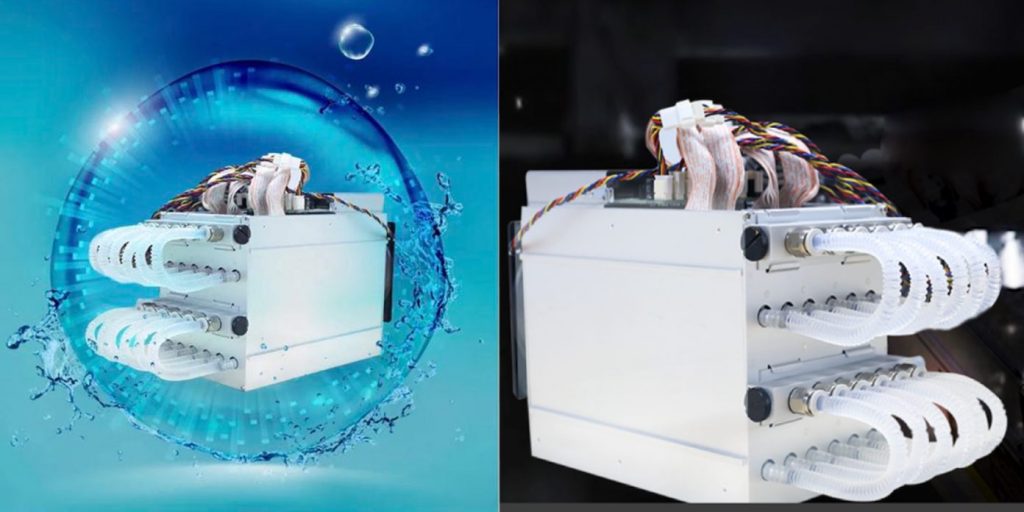
The Antminer Hydro uses a water cooling system. Other mining machines like the 8 Nano have also employed water solutions.

Then, towards the end of the year, a slew of other mining manufacturers, some of which have been reputable companies for years, announced new machines as well. Now that some of the next generation devices are available to the general public, through either the manufacturer or a trusted vendor, these machines will likely boost the network hashrate significantly. What follows is a preview of the top four mining machines that process large amounts of raw terahash and can be purchased today.

Ebang Ebit E11++

A Look at Some of the 'Next Generation' Mining Rigs Available Today Last September news.Bitcoin.com reported on the China-based Ebang Communication announcing its Ebit Miner E-11 series that claimed to boast hashrate speeds between 30-44 trillion hashes per second (TH/s). Right now according to data from Asicminervalue.com, the E11++ miner is the most profitable SHA-256 miner (BCH & BTC) on the market, pulling in $1.12 per day with current bitcoin prices. When the new series was announced last year, the rigs were not available to the general public at the time but the devices can be purchased today directly from the manufacturer.

A Look at Some of the 'Next Generation' Mining Rigs Available Today

The E11++ miner is $2,024 and the next batch of E11 series units will be delivered by March 2019. The machines boast a DW1228 10nm chip with an ideal hashrate of around 44 TH/s. Moreover, both the E11+ and the E11++ machines’ electrical consumption pull about 1980-2035W from the wall. So far the miner has consistently been the top machine in the world as far as earning daily profits since it was announced, but that may not be the case in March. The company’s two lower tier machines that process 30-37 TH/s are currently sold out.

Asicminer 8 Nano

A Look at Some of the 'Next Generation' Mining Rigs Available Today The Asicminer 8 Nano is another rig that mines the SHA-256 algorithm at 44 trillion hashes per second. However, the difference between the 8nm equipped miner and Ebang’s E11++ is that the former consumes about 2100W of power. Because of this difference, the Asicminer 8 Nano processes 44 TH/s but currently takes in around $0.75 per day in profit. The Asicminer company claims the machine boasts 189 8nm custom AM0813 and processes roughly “16384 hash cores on a single die.”

A Look at Some of the 'Next Generation' Mining Rigs Available Today

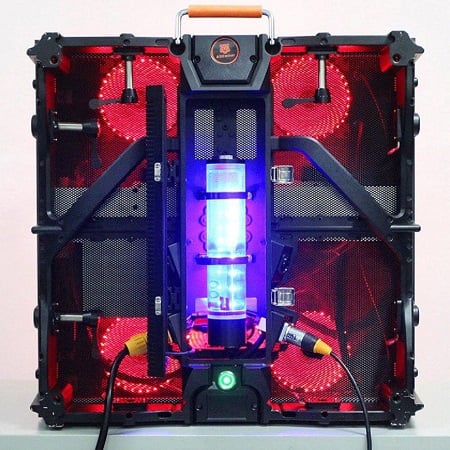
The 8 Nano is cheaper than the Ebang device, at $1,790 per unit, but is way bigger than the average machine manufactured today. The 8 Nano weighs about 60 pounds and measures approximately 500 x 500 x 235mm in size. The machine’s fans also radiate a neon red glow and the device features a noiseless water cooling system. Customers can purchase machines today and the website states there are only 48 machines left at present. Because the miner was released last October, units have shipped to some customers and there are various 8 Nano reviews on Youtube and other forums.  

Innosilicon Terminator 3 (T3)

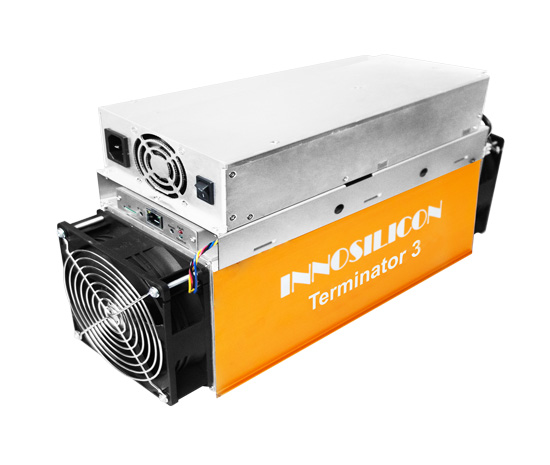
A Look at Some of the 'Next Generation' Mining Rigs Available Today Innosilicon has done well over the last year with its mining rigs powered by Samsung’s low power 10nm semiconductor technology. The Terminator 3 model, otherwise known as the T3, can be purchased as well and the first batch of shipments should be delivered by the end of January. The T3 specifications say the machine will mine at 43 TH/s with a power consumption of 2100W, giving the machine a profit of around $0.58 a day at current prices.
A Look at Some of the 'Next Generation' Mining Rigs Available Today

The T3 is more expensive than the 8 Nano and the E11++ as it is currently selling for $2,279 per unit. The first batch of T3s are limited, the company’s website explains, and the limited second batch won’t be delivered until March. Delivery times are “first pay, first served” Innosilicon emphasizes and all products are also “Asic Boost enabled with a proper license.”

Bitmain Antminer S15

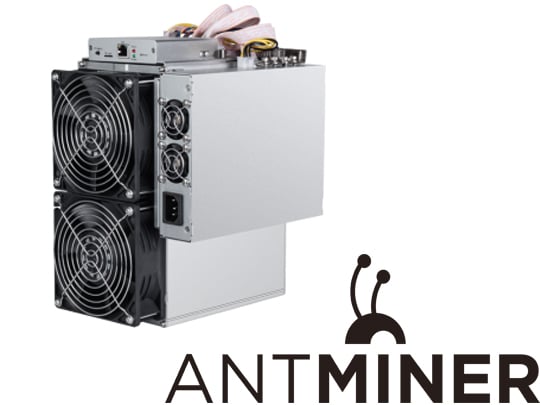
A Look at Some of the 'Next Generation' Mining Rigs Available Today The latest Bitmain Antminer product offers customers a maximum hashrate of 28 TH/s with a power consumption of 1596W. The S15 costs $1,249 per unit and the first batch of rigs are shipping between Jan. 11-20. The miner features two types of mining modes and is equipped with Bitmain’s custom 7nm chip. Like the Asicminer 8 Nano, the S15 doesn’t look like the average miner as it employs a parallel fan design to improve heat dissipation efficiency.
A Look at Some of the 'Next Generation' Mining Rigs Available Today

Currently, according to data stemming from Asicminervalue.com, with current BTC and BCH prices, the S15 is profiting by $0.15 per day. Bitmain is also selling a lower tier S15 that produces 1 terahash less at 27 TH/s and will save the customer $45 in comparison to the 28 TH/s model. Bitmain says that customers utilizing the S15’s next generation 7nm chips and custom semiconductor packaging technology coupled with the new heat dissipation mechanism miners will save on electricity costs.

Asicminer 8 Nano Pro

A Look at Some of the 'Next Generation' Mining Rigs Available Today The Asicminer manufacturer also has a machine called the 8 Nano Pro that claims to produce a whopping 76 trillion hashes per second. The mega-device pulls roughly 4000W from the wall and costs $11,600 per unit. Furthermore, customers must buy a minimum of five units per order. Still, at current bitcoin prices, the Asicminer units with 8nm custom AM0813 chips still scrapes by with $0.13 per day in profit. Again, like the company’s previous model, the 76 TH/s machine is huge at 500 x 1000 x 240mm and weighs about 150 pounds. The 8 Nano Pro also has a noiseless water cooling system, which has a noise level of about 48 decibels. However, unlike the firm’s 44 TH/s machine, the 76 MH/s Pro version doesn’t seem like it has done well as there are no resellers online or reviews on this specific device.
Bitcoin Mining Facilities Hurting for Profits May Try to Leverage Next-Generation Machines

So far, both the BTC and BCH networks which utilize the SHA-256 algorithm have seen significant drops in overall hashrate. The current Bitcoin Core (BTC) network hashrate is roughly 40 exahash per second (EH/s), while Bitcoin Cash (BCH) miners have around 1.5 EH/s today. Moreover, many of the older machines that produce far fewer hashes per second are in the red these days and are seeing significant daily losses at current market prices. Even the Ebang, Bitmain, and Innosilicon lower tier models that have been recently announced in the last three months are not profiting at all due to the depressed prices across crypto markets. New mining machines might give large facilities and even smaller miners enough edge to stay in the game, though, if they can get these products on time. 

What do you think about the top mining rigs in 2019? Let us know what you think about this subject in the comments section below.   

Disclaimer: Bitcoin.com does not endorse these mining products or services. Readers should do their own due diligence before taking any actions related to the mentioned mining company or any of its affiliates or services. Bitcoin.com and the author are not responsible, directly or indirectly, for any damage or loss caused or alleged to be caused by or in connection with the use of or reliance on any content, goods or services mentioned in this article. This editorial is for informational purposes only.


Images via Shutterstock, Ebang, Asicminer, Innosilicon, and Bitmain.


Need to calculate your bitcoin holdings? Check our tools section. 

The post A Look at Some of the ‘Next Generation’ Mining Rigs Available Today appeared first on Bitcoin News.

from Bitcoin News http://bit.ly/2AIkqqF A Look at Some of the ‘Next Generation’ Mining Rigs Available Today

#USA Scooter startup Bird tried to silence a journalist. It did not go well.

//

Cory Doctorow doesn’t like censorship. He especially doesn’t like his own work being censored.

Anyone who knows Doctorow knows his popular tech and culture blog Boing Boing, and anyone who reads Boing Boing knows Doctorow and his cohort of bloggers. The part-blogger, part special advisor at the online rights group Electronic Frontier Foundation, has written for years on topics of technology, hacking, security research, online digital rights, and censorship and its intersection with free speech and expression.

Yet, this week it looked like his own free speech and expression could have been under threat.

Doctorow revealed in a blog post on Friday that scooter startup Bird sent him a legal threat, accusing him of copyright infringement and that his blog post encourages “illegal conduct.”

In its letter to Doctorow, Bird demanded that he “immediately take[s] down this offensive blog.”

Doctorow declined, published the legal threat, and fired back with a rebuttal letter from the EFF accusing the scooter startup of making “baseless legal threats” in an attempt to “suppress coverage that it dislikes.”

The whole debacle started after Doctorow wrote about about how Bird’s many abandoned scooters can be easily converted into a “personal scooter” by swapping out its innards with a plug-and-play converter kit. Citing an initial write-up by Hackaday, these scooters can have “all recovery and payment components permanently disabled” using the converter kit, available for purchase from China on eBay for about $30.

In fact, Doctorow’s blog post was only two paragraphs long and, though didn’t link to the eBay listing directly, did cite the hacker who wrote about it in the first place — bringing interesting things to the masses in bitesize form in in true Boing Boing fashion.

Bird didn’t like this much, and senior counsel Linda Kwak sent the letter — which the EFF published today — claiming that Doctorow’s blog post was “promoting the sale/use of an illegal product that is solely designed to circumvent the copyright protections of Bird’s proprietary technology, as described in greater detail below, as well as promoting illegal activity in general by encouraging the vandalism and misappropriation of Bird property.” The letter also falsely stated that Doctorow’s blog post “provides links to a website where such Infringing Product may be purchased,” given that the post at no point links to the purchasable eBay converter kit.

EFF senior attorney Kit Walsh fired back. “Our client has no obligation to, and will not, comply with your request to remove the article,” she wrote. “Bird may not be pleased that the technology exists to modify the scooters that it deploys, but it should not make baseless legal threats to silence reporting on that technology.”

The three-page rebuttal says Bird used incorrectly cited legal statutes to substantiate its demands for Boing Boing to pull down the blog post. The letter added that unplugging and discarding a motherboard containing unwanted code within the scooter isn’t an act of circumventing as it doesn’t bypass or modify Bird’s code — which copyright law says is illegal.

As Doctorow himself put it in his blog post Friday: “If motherboard swaps were circumvention, then selling someone a screwdriver could be an offense punishable by a five year prison sentence and a $500,000 fine.”

In an email to TechCrunch, Doctorow said that legal threats “are no fun.”

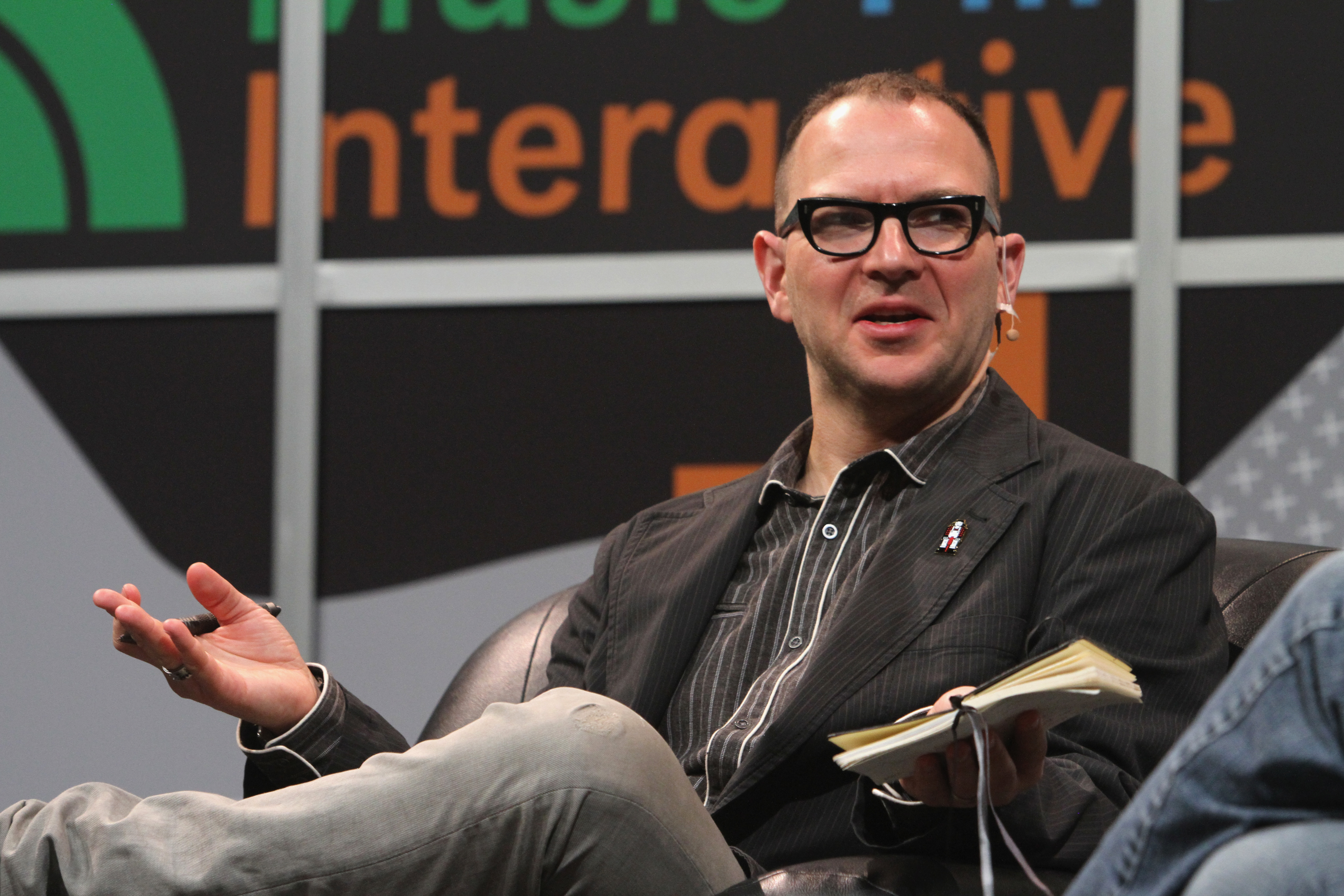
AUSTIN, TX – MARCH 10: Journalist Cory Doctorow speaks onstage at “Snowden 2.0: A Field Report from the NSA Archives” during the 2014 SXSW Music, Film + Interactive Festival at Austin Convention Center on March 10, 2014 in Austin, Texas. (Photo by Travis P Ball/Getty Images for SXSW)

“We’re a small, shoestring operation, and even though this particular threat is one that we have very deep expertise on, it’s still chilling when a company with millions in the bank sends a threat — even a bogus one like this — to you,” he said.

The EFF’s response also said that Doctorow’s freedom of speech “does not in fact impinge on any of Bird’s rights,” adding that Bird should not send takedown notices to journalists using “meritless legal claims,” the letter said.

“So, in a sense, it doesn’t matter whether Bird is right or wrong when it claims that it’s illegal to convert a Bird scooter to a personal scooter,” said Walsh in a separate blog post. “Either way, Boing Boing was free to report on it,” she added.

What’s bizarre is why Bird targeted Doctorow and, apparently nobody else — so far.

TechCrunch reached out to several people who wrote about and were involved with blog posts and write-ups about the Bird converter kit kit. Of those who responded, all said that they had not received a legal demand from Bird.

We asked Bird why it sent the letter, and if this was a one-off letter or if Bird had sent similar legal demands to others. When reached, a Bird spokesperson did not comment on the record.

All too often, companies send legal threats and demands to try to silence work or findings that they find critical, often using misinterpreted, incorrect or vague legal statutes to get things pulled off from the internet. Some companies have been more successful than others, despite an increase in awareness and bug bounties, and a general willingness to fix security issues before they inevitably become public.

Now Bird becomes the latest in a long list of companies that have threatened reporters or security researchers, alongside companies like drone maker DJI, which in 2017 threatened a security researcher trying to report a bug in good faith, and spam operator River City, which sued a security researcher who found the spammer’s exposed servers and a reporter who wrote about it. Most recently, password manager maker Keeper sued a security reporter claiming allegedly defamatory remarks over a security flaw in one of its products. The case was eventually dropped but not before over 50 experts, advocates, and journalist (including this reporter) signed onto a letter calling for companies to stop using legal threats to stifle — and silence security researcher.

That effort resulted in several companies — notably LinkedIn and Tesla — to double down on their protection of security researchers by changing their vulnerability disclosure rules to promise that the companies will not seek to prosecute hackers acting in good-faith.

But some companies have bucked that trend and have taken a more hostile, aggressive — and regressive — approach to security researchers and reporters.

“Bird Scooters and other dockless transport are hugely controversial right now, thanks in large part to a ‘move-fast, break-things’ approach to regulation, and it’s not surprising that they would want to control the debate,” said Doctorow.

“But to my mind, this kind of bullying speaks volumes about the overall character of the company,” he said.

from Startups – TechCrunch https://tcrn.ch/2SRT0FQ

#USA WeWork gets into the food business, backing the superfood startup of big wave surfer Laird Hamilton

//

WeWork CEO Adam Neumann has been described as an avid surfer, one who has been known to grab his board and go, both in the Hamptons in Long Island, where he reportedly owns a home, as well as in Hawaii.

Maybe it’s no surprise then that WeWork is now also investing a so-called superfood company that was created several years ago by big wave surf star Laird Hamilton, who Neumann was apparently surfing alongside just last week. In a video call with Neumann on Monday, a Fast Company reporter noted that Neumann is currently sporting a cast on one of his fingers, having broken it during the outing.

How much WeWork is investing in the startup, Laird Superfood, is not being disclosed, but according to the food company, the money will be used to fuel product development, acquisitions, and to hire more employees. A press release that was published without fanfare earlier today also notes that Laird Superfood products will be made available to WeWork members and employees at select locations soon.

Some of those offerings are certainly . . . interesting, including “performance mushrooms” that it says “harnesses the benefits” of Chaga, which is a fungus that’s believed by some to stimulate the immune system; Cordyceps, another fungus that’s been used for kidney disorders and erectile dysfuntion; and, among other things, Lion’s Mane, yet another fungus believed by some to stimulate nerve growth in the brain.

Laird Superfood also sells a variety of beet- and turmeric-infused powdered coconut waters, “ultra-caffeinated” coffee, and a variety of coffee creamers, including a mint-flavored creamer and a turmeric-flavored number.

It’s for a very specific consumer, in other words (presumably one who really likes turmeric). Then again, what works for Laird Hamilton will undoubtedly work for a lot of people who’ve watched his decades-long career with amazement.

Hamilton seems to be selling what he truly ingests, too. As he told The Guardian last spring of his own diet: “I love espresso. You could give me five shots of espresso, a quarter stick of butter, a quarter stick of coconut oil and other fat, and I’ll drink that. I could go for five or six hours and not be hungry, because I’m burning fat.”

Organic food companies have been raising money left and right, including from traditional food companies that don’t want to miss out on the next wave (pun intended), as well as from venture investors, who’ve poured billions of dollars into healthy snacks and drinks in recent years, with mixed results.

For WeWork’s part, the investment isn’t the first that has seemed somewhat far afield for the company, which has raised the bulk of its money from SoftBank to date. In one of more surprising bets to date, WeWork invested in a maker of wave pools in 2016. The size of that funding was also undisclosed.

from Startups – TechCrunch https://tcrn.ch/2Ma1oxS