Chaque jour nous vous présenterons une nouvelle Startup française !
Notre pays regorge de talents et d'entrepreneurs brillants ! Alors partons à la découverte des meilleures startup françaises ! Certaines d'entre elles sont dans une étape essentielle dans la vie d'une startup : la recherche de financement, notamment par le financement participatif (ou crowdfunding en anglais). Alors participez à cette grande aventure en leur faisant une petite donation ! Les startups françaises ont besoin de vous !
The UNICEF Innovation Fund is looking to make equity-free investments of up to US$100,000 in startups using data science, machine learning, artificial intelligence (AI) or similar technologies.
Its latest call for applications, which is open until February 28 and relevant to startups registered in one of UNICEF’s programme countries, is targeting startups using data science, machine learning and AI startups in a variety of ways.
UNICEF is looking for companies using new sources of data such as satellite imagery or social media and applying data science or artificial intelligence techniques to understand the physical world that we live in, as well as companies trying to generate new insights from existing data.
Over six months ago, Bitcoin.com launched a dedicated development page for programmers working on the Bitcoin Cash (BCH) network. More recently, our web portal further added the literature “Mastering Bitcoin Cash,” a comprehensive overview of BCH basics and technical operation of the protocol. In order to ring in the New Year, Bitcoin.com has added a dedicated Bitdb node and explorer this week that can query the BCH chain.
Bitcoin.com Adds Dedicated Bitdb Node for the Bitcoin Cash Network
Over the last year, Bitcoin.com has been spreading adoption with our wallet that’s seen more than 3.3 million wallets created and our BCH faucet which has given away free BCH to over 100,000 people. In addition to telling the masses about the best money in the world, Bitcoin.com wants to see Bitcoin Cash infrastructure and development flourish. In order to help the ecosystem, we launched Developer.bitcoin.com last year. The web portal offers programmers a Bitbox SDK, REST, GUI, and Cloud platforms that can help them scale and deploy software on top of the BCH chain. Moreover, this week on Jan. 7, Bitcoin.com launched a dedicated Bitdb node for developers and users interested in parsing the BCH chain for data.
“Bitdb has proven to be a useful part of the Bitcoin Cash ecosystem and today we’re very happy to announce Bitcoin.com’s dedicated BCH Bitdb node,” BCH developer Gabriel Cardona announced on Monday. “We also have a testnet node in preview,” the developer added.
Cardona further stated:
We’re committed to maintaining this project in the Bitcoin Cash ecosystem. Thanks to Unwriter for a great open source project and thanks to Spend BCH for all the work getting this live.
Bitdb microservice API endpoint – make HTTP requests to your Bitdb node.
Query Data and Build Killer BCH Applications
The Bitdb protocol is an autonomous database that can crawl, index, and query the blockchain. The project was launched by the prolific programmer Unwriter, alongside the multitude of other applications the developer built last year. The open source project allows anyone to parse the chain for all kinds of information and can specifically query data like OP_Return transactions. Bitdb stores every bitcoin cash transaction in a uniformed format allowing a simple MongoDB query that can be useful for all types of ideas. A few developers have already used Unwriter’s Bitdb for certain applications. For instance, the Poster.cash platform uses Unwriter’s Bitdb and Bitsocket, which provided the creator with the ability to develop a “serverless Memo implementation.”
Bitdb query web UI makes use of the API endpoint to render the query UI.
Adding Bitdb to Bitcoin.com’s suite of developer resources helps bolster the Bitcoin Cash network’s infrastructure, alongside all the other tools and introductory guides to certain frameworks. Researchers and developers who plan to get started building and studying the BCH chain can also utilize this handy list of programming resources. The comprehensive catalog includes tools and documentation for Bitbox, the Simple Ledger Protocol (SLP), Wormhole, a token creation web app, Cash-ID, and the Badger Wallet. With Unwriter’s innovative creation Bitdb helping developers parse the chain and build innovative BCH applications, we think hosting a mainnet and testnet Bitdb node on Bitcoin.com is a great addition to our growing development suite.
What do you think about our Bitdb node? Let us know what you think about this subject in the comments section below.
Images via Shutterstock, Github, and the Bitcoin.com Bitdb web node and API.
Need to calculate your bitcoin holdings? Check our tools section.
South African public transport data and technology startup WhereIsMyTransport has secured US$1.85 million as part of its Series A funding round, and gone global by adding the first Indian, Southeast Asian and Latin American cities to its platform.
Formed in 2016, WhereIsMyTransport connects and collects data in emerging cities, integrating this information on its open data platform.
Its products are then used by cities to coordinate and monitor services, operators to integrate their systems and optimise service, and passengers who access the platform through apps and endpoints connected to the WhereIsMyTransport platform.
The startup, which secured twofunding rounds back in 2017, has now announced an investment of US$1.85 million, led by Liil Ventures and including existing investor Goodwell Investments, as part of its Series A funding round.
This investment has been secured as WhereIsMyTransport expands its digital mapping of formal and informal public transport networks into new emerging markets, including its first data collection projects in India and Latin America. Data for more than 30 major cities in emerging markets is now available on its integrated mobility data platform.
With the expansion into the Latin American market, facilitated by Liil Ventures, the company wrapped up 2018 with its biggest data collection project to date – collecting the world’s most complete dataset for integrated formal and informal public transport in the Mexico City metropolitan area.
“We are delighted to welcome Liil Ventures to our global team, alongside trusted partner Goodwell Investments. Liil is an investor experienced in our sector, and a loud advocate for our market-leading technology. Not only are we strategically aligned, Liil also brings significant go-to-market value in the Latin American market, and a complimentary portfolio including Cabify and What3Words,” said Devin de Vries, co-founder and chief executive officer (CEO) at WhereIsMyTransport.
Nadim Matuk Villazón, investment principal at Liil Ventures, said the investment firm was excited to back the startup and keep supporting resilience in emerging cities around the globe with reliable mobility data and technology.
“WhereIsMyTransport is a promising team of global urban innovators that helps governments in emerging markets to improve public transport networks and invest in better mobility services for everyone,” Villazón said.
Wim van der Beek, founder and managing partner at Goodwell Investments, said poor mobility in emerging markets was a huge social issue that had been overlooked for years.
“WhereIsMyTransport’s data and technology has a direct and sustainable positive impact on the livelihood of hundreds of millions of excluded households in these markets,” he said.
“WhereIsMyTransport and its solutions are perfectly aligned with our investment strategy, and we are thrilled to continue to support the company and its mission for social change.”
On Thursday, Bloxroute Labs announced a partnership with the China-based mining operation Rawpool Group and global video communication software firm Yeecall. Both Rawpool and Yeecall plan to be the first cryptocurrency businesses to adopt Bloxroute’s product, dubbed the Blockchain Distribution Network version one.
Bloxroute is a company that claims it can provide blockchain networks with better efficiency by propagating blocks in a neutral manner. According to the Bloxroute whitepaper, the Blockchain Distribution Network (BDN) cannot favor specific nodes. Bloxroute claims the BDN deployment will enable participating nodes to maintain consensus by remaining provably neutral even when mining thousands of onchain transactions per second. On Jan. 10, the company announced it has partnered with the Chinese organization Rawpool Group and the developers of Yee Chain in order to begin node deployment in February. According to the announcement, the Bloxroute API will support both Ethereum and Bitcoin gateways.
“Rawpool and Yee Chain will be among the first adopters of the Bloxroute BDN version one available for deployment in Q1 and will participate in the first testing of the Bloxroute BDN scheduled for February,” explained Bloxroute Labs. “This test will be followed by a large-scale test in March that will include many miners and users.”
‘Faster Than Any Other Peer’
When version one of the Bloxroute BDN releases, the product will be a fully operational network with 15 nodes across five continents, the startup detailed. Further, the development team hopes to continue scaling and deploy 30-50 nodes by Q3 2019. The company believes the BDN tests in March will attract more mining pools. Bloxroute claims the company’s product is the “only layer zero scalability solution that solves the scalability problem at its core.” The software’s whitepaper asserts that mass use of the BDN network will provide network participants with the ability to propagate blocks and receive transactions “faster than any other peer.” During the announcement on Thursday, the startup explained that the mining operation Rawpool will see similar results.
“This partnership is not only a large step towards scaling blockchains but also will allow Rawpool to immediately hear about and send blocks faster,” Bloxroute stated.
Bloxroute’s New Partners Are BCH Friendly
Bloxroute’s product will be usable by any single node and does not require majority adoption. The whitepaper claims the protocol that runs underneath the consensus layer could allow for 33 transactions per second (TPS) in contrast to Bitcoin Core’s 3 TPS. The BDN might be best suited for Bitcoin Cash (BCH) miners as Bloxroute does not require any fees or any protocol change except for increasing the block size parameter. Further, last September Rawpool was the largest BCH mining pool, and in an interview at the time, founder and chief executive of Rawpool Group David Li emphasized that he liked testing large blocks. Last year, on Sept. 11, Rawpool also published an objective evaluation of the original topological transaction ordering rule (TTOR) and canonical transaction ordering (CTOR). Yee Chain has also been friendly toward the BCH ecosystem when its Yee Wallet product developers partnered with the Bitcoin Cash Association and airdropped small fractions of BCH to its users.
What do you think about Bloxroute’s partnership with the mining operation Rawpool and Yee Chain? Let us know what you think about this subject in the comments section below.
Images credits: Shutterstock, Bloxroute, Rawpool, and Pixabay.
The Bitcoin universe is vast. So is Bitcoin.com. Check ourWiki, where you can learn everything you were afraid to ask. Or read ournews coverage to stay up to date on the latest. Or delve into statistics on our helpfultools page.
China is coming down hard on blockchain companies, even though the government appears to favor blockchain over cryptocurrency. The Cyberspace Administration of China (CAC) announced new regulations on Jan. 10 that will compel blockchain platforms to eliminate “undesirable” content while giving authorities access to private stored data and to check the identity of users.
‘Rules to Promote Healthy Development of Blockchain Industry’
China’s Internet Information Service Management Measures, which come into force on February 15, will “promote the healthy development of blockchain technology and related services,” CAC claimed in a press release. It said the rules are built to “safeguard national security and social public interests, [and] protect the legitimate rights and interests of citizens.”
China has clamped down on virtual currencies since 2017 when the government outlawed initial coin offerings and prevented domestic cryptocurrency exchanges from operating within the Asian country’s economy.
But its government appears to tolerate distributed ledger technology on account of its many uses outside of the cryptocurrency realm. Industries such as oil, shipping, and agriculture are starting to show interest in blockchain, the technology which underpins crypto assets like bitcoin.
Stringent Registration Requirements for Users
Blockchain companies will now be required to register users with their actual names and national identity or mobile number while eliminating content that Beijing deems unfavorable. Companies are expected to “immediately release” stored data that the state regards as a threat to or contravening existing national laws. The new regulations state:
The blockchain information service provider shall implement the responsibility for information content security management, and establish and improve management systems such as user registration, information review, emergency response, and security protection … If the user does not perform real identity authentication, the blockchain information service provider shall not provide related services.
Companies will also be required to report to the government any new updates to their product range and to “accept social supervision” while adhering to strict registration requirements. Entities found to be in violation of the rules could be subject to fines or prosecution, the CAC said. Fines range between 5,000 yuan and 30,000 yuan ($700 to $4,400).
The CAC claims in its new regulations that it is working to reinforce the blockchain industry. It says it intends to “strengthen industry self-discipline, improve industry standards,” and to guide blockchain platforms “to promote industry credit evaluation system construction,” among other things.
What do you think about the new rules guiding the operation of blockchain companies in China? Let us know in the comments section below.
Images courtesy of Shutterstock.
Need to calculate your bitcoin holdings? Check our tools section.
China is coming down hard on blockchain companies, even though the government appears to favor blockchain over cryptocurrency. The Cyberspace Administration of China (CAC) announced new regulations on Jan. 10 that will compel blockchain platforms to eliminate “undesirable” content while giving authorities access to private stored data and to check the identity of users.
‘Rules to Promote Healthy Development of Blockchain Industry’
China’s Internet Information Service Management Measures, which come into force on February 15, will “promote the healthy development of blockchain technology and related services,” CAC claimed in a press release. It said the rules are built to “safeguard national security and social public interests, [and] protect the legitimate rights and interests of citizens.”
China has clamped down on virtual currencies since 2017 when the government outlawed initial coin offerings and prevented domestic cryptocurrency exchanges from operating within the Asian country’s economy.
But its government appears to tolerate distributed ledger technology on account of its many uses outside of the cryptocurrency realm. Industries such as oil, shipping, and agriculture are starting to show interest in blockchain, the technology which underpins crypto assets like bitcoin.
Stringent Registration Requirements for Users
Blockchain companies will now be required to register users with their actual names and national identity or mobile number while eliminating content that Beijing deems unfavorable. Companies are expected to “immediately release” stored data that the state regards as a threat to or contravening existing national laws. The new regulations state:
The blockchain information service provider shall implement the responsibility for information content security management, and establish and improve management systems such as user registration, information review, emergency response, and security protection … If the user does not perform real identity authentication, the blockchain information service provider shall not provide related services.
Companies will also be required to report to the government any new updates to their product range and to “accept social supervision” while adhering to strict registration requirements. Entities found to be in violation of the rules could be subject to fines or prosecution, the CAC said. Fines range between 5,000 yuan and 30,000 yuan ($700 to $4,400).
The CAC claims in its new regulations that it is working to reinforce the blockchain industry. It says it intends to “strengthen industry self-discipline, improve industry standards,” and to guide blockchain platforms “to promote industry credit evaluation system construction,” among other things.
What do you think about the new rules guiding the operation of blockchain companies in China? Let us know in the comments section below.
Images courtesy of Shutterstock.
Need to calculate your bitcoin holdings? Check our tools section.
Postmates, one of the earlier entrants to the billion-dollar food delivery wars, has raised an additional $100 million in equity funding at a $1.85 billion valuation, as first reported by Recode and confirmed to TechCrunch by Postmates. The round comes four months after the eight-year-old startup drove home a $300 million investment that finally knocked it into “unicorn” territory.
New investor BlackRock has joined the funding round alongside Tiger Global, which served as the lead investor of Postmates’ September financing. Led by co-founder and chief executive officer Bastian Lehmann, the company has garnered a total of $681 million in venture capital funding from investors, including Spark Capital, Founders Fund, Uncork Capital and Slow Ventures.
In line with several other tech unicorns, Postmates has begun prep for an initial public offering that could come this year, including tapping JPMorgan to advise the float. As Recode pointed out, the $100 million capital infusion was probably less of a necessary funding event but rather an opportunity for existing investors to liquidate stock ahead of an exit.
Postmates, which completes 3.5 million deliveries per month, reportedly expected to record $400 million in revenue in 2018 on food sales of $1.2 billion. The company has not confirmed that figure nor disclosed any other 2018 revenue numbers. The company currently operates in more than 500 cities, recently tacking on another 100 markets to reach an additional 50 million customers.
It will be interesting to see how Wall Street responds to a Postmates public listing. Though it was an early player in what has become an extremely crowded market, Postmates never emerged as the leader in food delivery. Now, with supergiants like Uber dominating via Uber Eats and SoftBank funneling loads of capital into Postmates competitor DoorDash, it shouldn’t count on an oversubscribed IPO.
Bitwise Asset Management is the latest American financial firm to seek regulatory permission for launching a bitcoin ETF. The company thinks it should succeed in getting the SEC’s approval, which all other applicants have failed to do so far, by utilizing a new model for the instrument.
Bitwise Asset Management, a provider of a number of crypto index funds, announced on Thursday, Jan. 10 that it has filed an initial registration statement with the U.S. Securities and Exchange Commission (SEC) for a proposed new physically held BTC exchange-traded fund (ETF). The company believes its proposed ETF is different from previously filed proposals in that it will rely on regulated third party custodians to hold its physical coins, and in that it is based on a large number of cryptocurrency exchanges representing the majority of currently verifiable trading.
The company is said to have spent 2018 researching the concerns the SEC raised about the crypto market including the quality of the trading ecosystem, the reliability of pricing, the strength of the arbitrage function, and the robustness of custody. “We believe the crypto trading ecosystem has evolved in significant ways in the past year,” stated John Hyland, Global Head of Exchange-Traded Funds for Bitwise. “Having a regulated bank or trust company hold physical assets of a fund has been the standard under U.S. fund regulation for the last 80 years, and we believe that is now possible with bitcoin.”
An ETF Will Trade on NYSE Arca in 2019
According to Bitwise, the proposed listing exchange, NYSE Arca, Inc. (NYSE), will file an application to list shares of the Bitwise Bitcoin ETF under a ticker symbol that will be determined at a later date. The company expects the NYSE to file a so-called Rule 19b-4 request with the SEC in the coming days requesting necessary rule changes in order to allow the ETF to list once the registration statement is declared effective by the SEC.
“While there can be no assurance that the 19b-4 application will be granted or the SEC will review and ultimately accelerate the registration statement, we are optimistic that 2019 should be the year that a bitcoin ETF launches,” said Hyland.
As news.Bitcoin.com recently reported, while companies have been struggling to gain the SEC’s approval so far, fund providers are now arguing there is sufficient market liquidity for such an ETF to be launched in 2019.
Is the SEC likely to approve this new ETF? Share your thoughts in the comments section below.
Images courtesy of Shutterstock.
Verify and track bitcoin cash transactions on our BCH Block Explorer, the best of its kind anywhere in the world. Also, keep up with your holdings, BCH and other coins, on our market charts at Satoshi’s Pulse, another original and free service from Bitcoin.com.
Several known crypto companies have been granted licenses to operate from Gibraltar since the British overseas territory adopted business-friendly regulations for the nascent industry. According to Gibraltar’s trade minister,Albert Isola, the government is now focused on creating a “supportive environment” for the sector.
The Digital Ledger Technology (DLT) Regulatory Framework went into effect in January 2018, a month after it was approved by the Legislature of Gibraltar. The regulations are designed to attract companies from the cryptocurrency and blockchain industry while ensuring proper protection for customers’ interests and maintaining Gibraltar’s own reputation, according to the authors of the dedicated legislation.
“Our financial regulator, the Gibraltar Financial Services Commission (GFSC), began awarding DLT licenses to a number of leading blockchain firms operating here in October,” the Minister for Commerce of Gibraltar Albert Isola told news.Bitcon.com. The list of licensed companies includes Huobi, the fourth largest exchange by daily trading volume, Coinfloor, the oldest crypto trading platform in the U.K., Covesting, which is another crypto exchange based in Europe, the Gibraltar Blockchain Exchange (GBX), operated by the local stock exchange, and the most recently licensed entity, digital asset platform Etorox.
Isola, who is also a member of the British parliament, emphasized that the regulatory framework implemented in Gibraltar is designed to remain flexible to the fast-moving developments of the wider crypto ecosystem and will allow authorities to react swiftly to the growth of the sector in the coming years. The official added that while introducing sensible legislation has been the main priority, the government has been also working to create a supportive and business-friendly environment for blockchain companies that want to operate there or have already established a presence in the territory.
The trade minister shared that Gibraltar has recently established a trade association for the industry, the Gibraltar Association for New Technologies (GANT). The organization facilitates the development of formal relationships between the authorities and the crypto companies. The government has also created a working group called New Technologies in Education (NTiE). The project, a joint initiative between the executive power, the private sector, and the University of Gibraltar, aims to address the growing demand for related skills. The plan is to organize educational courses that will prepare employees and specialists for the industry.
Gibraltar and the Competition
Gibraltar is one of several jurisdictions in Europe that have taken steps to become crypto-friendly territories. These include Switzerland, Malta, Estonia, and the Isle of Man. Switzerland, which is home to the Crypto Valley in Zug, has attracted hundreds of crypto startups. The Swiss government recently announced a comprehensive strategy that recognizes distributed ledger technologies as an important development for the financial sector and aims to build a legal foundation for their implementation. Last year, Malta adopted a welcoming regulatory framework for crypto businesses, and Estonia has licensed over 900 exchanges and wallet service providers in less than a year since it introduced a licensing regime for crypto companies.
Albert Isola believes, however, that Gibraltar remains the destination of choice for quality fintech companies because of its “reputation for being a business-friendly jurisdiction, for promoting blockchain education and for strong public-private sector collaboration.” The government representative noted that the local authorities are focused on creating legislation that will provide strong oversight and consumer protection without stifling the innovation which is required for the industry to flourish. He also added:
We want to create a vibrant DLT community in Gibraltar by developing strong, collaborative relationships with the private sector operators who have based themselves here.
Gibraltar has long been a hub for businesses providing financial services and companies operating online gaming platforms. These two sectors provide a sizable portion of its domestic product and budget receipts. The Gibraltar government has been quick to realize the potential benefits of building a crypto-friendly environment and expects that its regulatory framework will attract more crypto companies in the future.
What are your expectations about the future of the crypto industry in Gibraltar? Tell us in the comments section below.
Images courtesy of Shutterstock.
At Bitcoin.com there’s a bunch of free helpful services. For instance, have you seen ourTools page? You can even lookup the exchange rate for a transaction in the past. Or calculate the value of your current holdings. Or create a paper wallet. And much more.
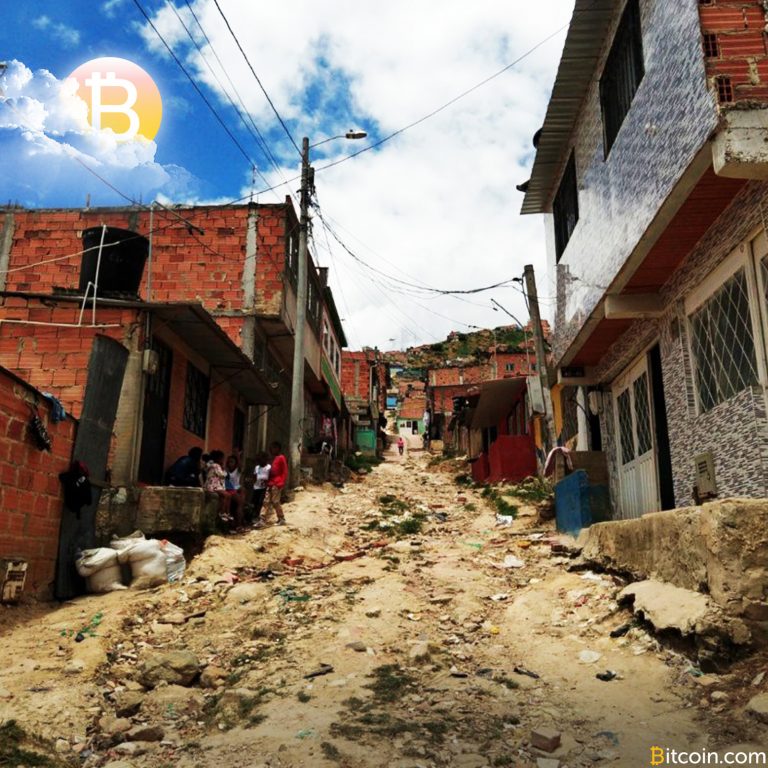
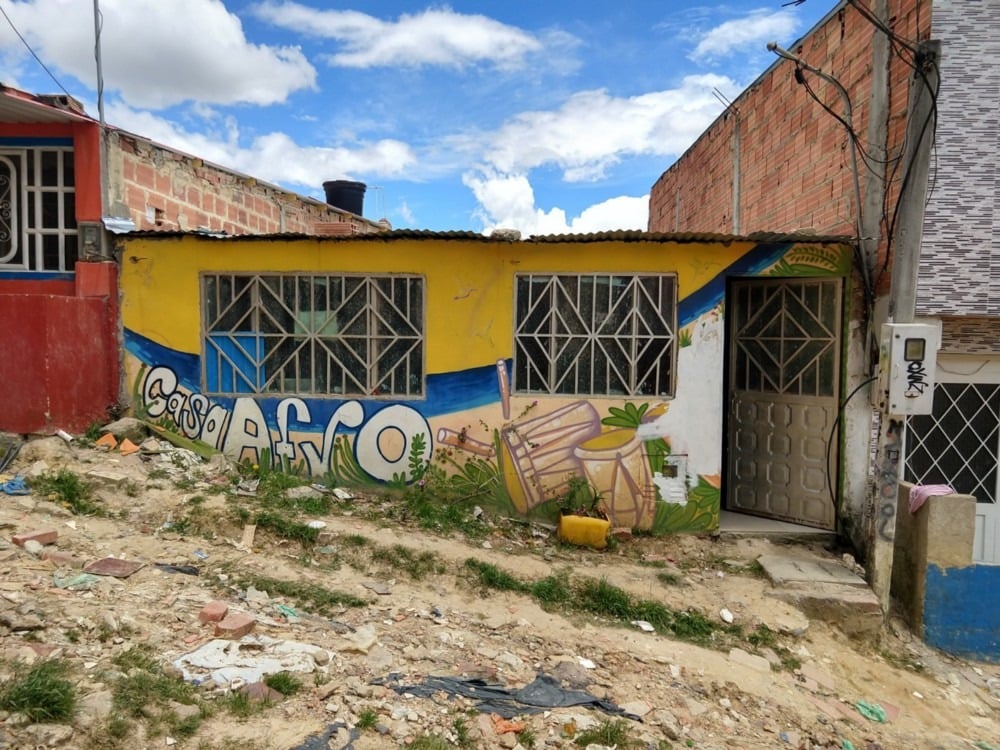
How cryptocurrency can help the unbanked has been a hot topic over the past 12 months. It is a laudable goal, but one that it is by no means easy to accomplish. One tech enthusiast and stablecoin startup employee, Steven Gilbert, experienced the struggles – and successes – of attempting to do so when he went to one of the poorest neighborhoods in Bogota, Colombia to encourage adoption.
Inspired by a hurricane relief project in Puerto Rico he took part in, Steven Gilbert wanted to do something else charitable but this time related to one of his passions – cryptocurrency. Living in Colombia’s capital city of Bogota, the 30-year-old decided to help the needy in a poor, generally out of bounds area in the south of the city. There, he wanted to introduce the benefits of cryptocurrency to people who didn’t have bank accounts as part of an experiment.
“I was interested in visiting this neighborhood which is largely unbanked and poor, and seeing how they would receive the idea of crypto. The takeaway was that they were interested,” he told news.Bitcoin.com. Steven, who is director of international operations at Reserve and now lives in California, went to the Ciudad Bolivar neighborhood and donated some of his own cash to nine families – 44 people in total – living there. He met them by visiting a community centre that helps displaced people in Colombia. Most of the people he spoke to had phones, but no bank accounts, so he was able to show them Breadwallet and from there give them ethereum – 1 ETH apiece, approximately $131.
Steven also embarked on a mission to educate the local people, who live far away from the banks and financial opportunities to be found in central Bogota, about the benefits of cryptocurrency, and how it can help them. “With one old woman, I scanned the QR code, made the transfer and she could could see how much it was in pesos. She asked me, ‘Is that really what it’s worth?’ Her face lit up when I told her it was. She was fascinated to have digital cash,” he recalled.
The Difficulties of Execution
But there were a number of problems. Steven said that despite the enthusiasm among the community, the biggest issue was getting them to use the crypto. “I was trying really hard to get a merchant in the community to get them to use [crypto],” he said. “I was like ‘hey, I’m donating this money to a community, as part of an experiment it would be awesome if the people could use it.’” Despite managing to convince residents to download wallets – many had heard of Bitcoin so had a rough understanding what crypto was – the shopkeepers were harder to sway: “The merchants I spoke with in Ciudad Bolivar hadn’t heard of bitcoin or other cryptocurrencies, so I was starting from square one in terms of educating them. If I had more time, I’m confident I could have brought several merchants onboard but I was time constrained because I was leaving Colombia.”
When Steven did leave, he left them with the knowledge of Localbitcoin.com and of Bogota’s many crypto ATMs. He also left them with a list of stores and restaurants that accept the cryptocurrency. He said: “The main thing was education. At minimum I wanted to see how they would receive crypto. The biggest benefit is a lot of these people don’t have bank accounts, they’re not tapped into the banking system, so one really cool thing about crypto is you don’t need anyone’s permission to download a crypto wallet. Once you know how to do it, you’re effectively banked.”
Other difficulties included the logistics of introducing crypto to just a small section of a neighborhood. “The area was dangerous, I could only be there in the daytime. I would have done more training workshops but because I wasn’t giving it to the entire neighborhood – only a handful of households – it could’ve created tensions,” he said.
But Steven said that despite the difficulties of performing the experiment solo, it was easy enough to introduce unbanked people to cryptocurrency and get them enthusiastic about the concept. Since starting a role that specializes in introducing crypto to countries that struggle with hyperinflation, he added that all it would take is a bit of extra manpower and resources. “These people were very interested and excited at being part of a financial system. They were very open to the idea and I think we could get entire communities using crypto in the future.”
What do you think about Steven’s social experiment? Let us know what you think about this subject in the comments section below.
Image credits: Steven Gilbert
At Bitcoin.com there’s a bunch of free helpful services. For instance, have you seen ourTools page? You can even look up the exchange rate for a transaction in the past. Or calculate the value of your current holdings. Or create a paper wallet. And much more.


 Over the last year, Bitcoin.com has been spreading adoption with our



 When version one of the Bloxroute BDN releases, the product will be a fully operational network with 15 nodes across five continents, the startup detailed. Further, the development team hopes to continue scaling and deploy 30-50 nodes by Q3 2019. The company believes the BDN tests in March will attract more mining pools. Bloxroute claims the company’s product is the “only layer zero scalability solution that solves the scalability problem at its core.” The software’s



 Bitwise Asset Management, a provider of a number of
  According to Bitwise, the proposed listing exchange, NYSE Arca, Inc. (NYSE), will file an application to list shares of the Bitwise Bitcoin ETF under a ticker symbol that will be determined at a later date. The company expects the NYSE to file a so-called Rule 19b-4 request with the SEC in the coming days requesting necessary rule changes in order to allow the ETF to list once the registration statement is declared effective by the SEC.

 Gibraltar is one of several jurisdictions in Europe that have taken steps to become