About Startup365

Chaque jour nous vous présenterons une nouvelle Startup française ! Notre pays regorge de talents et d'entrepreneurs brillants ! Alors partons à la découverte des meilleures startup françaises ! Certaines d'entre elles sont dans une étape essentielle dans la vie d'une startup : la recherche de financement, notamment par le financement participatif (ou crowdfunding en anglais). Alors participez à cette grande aventure en leur faisant une petite donation ! Les startups françaises ont besoin de vous !

#USA Mr Jeff bags $12M Series A to replace trips to the laundromat

//

If you thought the on-demand laundry space had run out of startup steam here’s a bit of a conditioner: Madrid-based startup, Mr Jeff, has bagged a $12M Series A, led by All Iron Ventures.

The 2016-founded firm currently offers home laundry and dry cleaning services, including on-demand and monthly subscription options, in seven countries, with a focus on LatAm. Last August it acquired Brazilian laundry franchise, Lava é Leva, to move into another market in the region.

The franchise model sets the approach apart from some other on-demand laundry startups that already folded. That and a focus on markets with lower rates of washing machine ownership. Ergo, they’re disrupting trips to the laundromat.

The company closed 2018 with more than 1,000 franchises operating, and more than 150 direct employees plus 2,400+ indirect employees working to turn the customer’s in-app tap into clean and ironed clothes returned to them within 48 hours.

Flush with new funding, Mr Jeff says it’s aiming to have franchises operating in 30 countries by the end of 2019, looking east to Asia. It also plans to consolidate its LatAm position by expanding its operations in Panama, Costa Rica and Uruguay.

Prior to the Series A, it had raised around $3.5M in seed funding, including from European entrepreneurs such as Albert Armengol (CEO of Doctoralia), Jeroen Merchiers (Managing Director of Airbnb Europe, Middle East and Africa), and Kim Jung ( CEO NX Corp).

It adds that a majority of its earlier investors have opted to continue to support the company by participating in the Series A.

from Startups – TechCrunch https://tcrn.ch/2REaFDr

#USA Mr Jeff bags $12M Series A to replace trips to the laundromat

//

If you thought the on-demand laundry space had run out of startup steam here’s a bit of a conditioner: Madrid-based startup, Mr Jeff, has bagged a $12M Series A, led by All Iron Ventures.

The 2016-founded firm currently offers home laundry and dry cleaning services, including on-demand and monthly subscription options, in seven countries, with a focus on LatAm. Last August it acquired Brazilian laundry franchise, Lava é Leva, to move into another market in the region.

The franchise model sets the approach apart from some other on-demand laundry startups that already folded. That and a focus on markets with lower rates of washing machine ownership. Ergo, they’re disrupting trips to the laundromat.

The company closed 2018 with more than 1,000 franchises operating, and more than 150 direct employees plus 2,400+ indirect employees working to turn the customer’s in-app tap into clean and ironed clothes returned to them within 48 hours.

Flush with new funding, Mr Jeff says it’s aiming to have franchises operating in 30 countries by the end of 2019, looking east to Asia. It also plans to consolidate its LatAm position by expanding its operations in Panama, Costa Rica and Uruguay.

Prior to the Series A, it had raised around $3.5M in seed funding, including from European entrepreneurs such as Albert Armengol (CEO of Doctoralia), Jeroen Merchiers (Managing Director of Airbnb Europe, Middle East and Africa), and Kim Jung ( CEO NX Corp).

It adds that a majority of its earlier investors have opted to continue to support the company by participating in the Series A.

from Startups – TechCrunch https://tcrn.ch/2REaFDr

#USA Badi gets $30M for AI-aided room rentals

//

Should you let AI help you pick your roommates? Barcelona-based urban room rental startup Badi thinks so, and it’s just closed a $30M Series B funding round less than a year after a $10M Series A — suggesting algorithm-aided matchmaking is resonating with its target Millennial(ish) ‘Generation Rent’ demographic, as they hunt for their next flatmate.

The 2015 founded startup has now raised circa $45M in total, while its platform has passed 12M rental requests. Badi also tells us it passed one million registered users last November, up from around 700,000 in February 2018.

It currently offers a service in key cities in four European markets: Spain, France, Italy and the U.K.

The business was set up to respond to the rising trend of urban living (and indeed tourism) that’s been driving rents and squeezing more people into shared houses to try to make city living affordable.

Badi CEO and founder Carlos Pierre points to estimates that by 2050 the total population living in cities will increase from 54% to 66%. “There will likely be a shortage of homes for people looking to live in cities and as a result, this will lead to an increase in smaller living units or rooms. This is where Badi comes in,” he suggests in a statement.

On the AI front, Badi applies machine learning technology to help with the flatmate matching process — learning from users of its platform, as they match and agree to become flatmates, and then feeding ‘compatibility insights’ back in to keep improving its recommendations.

The Series B is led by U.S.-based consumer tech VC firm Goodwater Capital, making its first investment in a Spanish startup. Also investing Target Global and existing VCs Spark Capital and Mangrove Capital.

Badi says the funding will be put towards consolidating its services in Barcelona, Madrid, London, Paris and Rome, and also to open new offices in London.

It says it’s spying a big opportunity there (despite Brexit) on account of the UK capital being one of the most most expensive for renters in the region.

Two other cities it operates in, Barcelona and Madrid, are similarly in demand with renters (and tourists), with Badi noting the rental market in Spain has grown by 130% in the last 10 years and represents 23% of the entire real estate industry.

While Paris and Rome are also major tourist destinations, and short term tourist rentals have been widely linked to increased rents for locals.

Badi’s business is positioned to benefit from the tourist-inflated rent trend as it stands, though cities like Barcelona are also looking at what they can do, policy wise, to curb rising rents and ensure there is affordable and adequate living space for local families, such as via social housing quotas on developers and even buying vacant buildings themselves to convert to housing stock.

But despite increased political attention on the problem of a lack of affordable housing in cities in desirable urban hotspots it’s highly unlikely that housing pressures are going to let up any time soon.

Badi says the Series B will also be used to expand the size of its team, up to 100%, and also to develop additional extra services intended to make life easier for landlords and tenants.

“In the first quarter of 2019, we will work on improving our product to offer possibilities for professionals and private owners to make their experience on Badi far more efficient. Secondly we are redesigning and launching a new booking system around April 2019 to enhance the booking experience to make it more streamlined and user-centric,” it tells us.

Commenting on the funding in a statement, Chi-Hua Chien, co-founder of Goodwater Capita, added: We are extremely excited to partner with Badi in their mission to solve the looming urban housing crisis — there simply aren’t enough homes in cities and housing has become too expensive. Badi provides a unique end-to-end rental platform that builds trust and convenience directly into the customer experience, which has enabled them to unlock thousands of new rooms in cities around the world.”

from Startups – TechCrunch https://tcrn.ch/2H5hFoS

#Blockchain It’s Time We Began Pricing Things in Satoshis

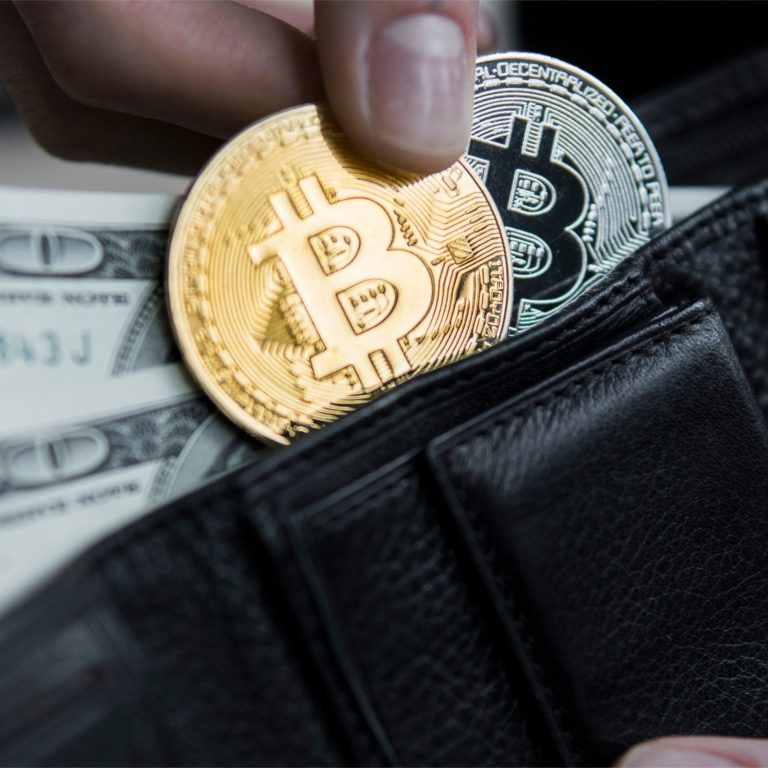
What can you buy with a virtual pocketful of satoshis? Why, anything and everything. Whatever goods or services you can purchase with BTC or BCH you can purchase with their smaller units of account – the satoshi, or ‘sat’ for short. With 100 million of them to every bitcoin, satoshis are as divisible as they are versatile. But for satoshis to thrive, the Bitcoin community needs to start using them to price products. Only then can the simple sat start to shine.

Also read: Eight Historic Bitcoin Transactions

Bitcoins Are Scarce But Satoshis Are Plentiful

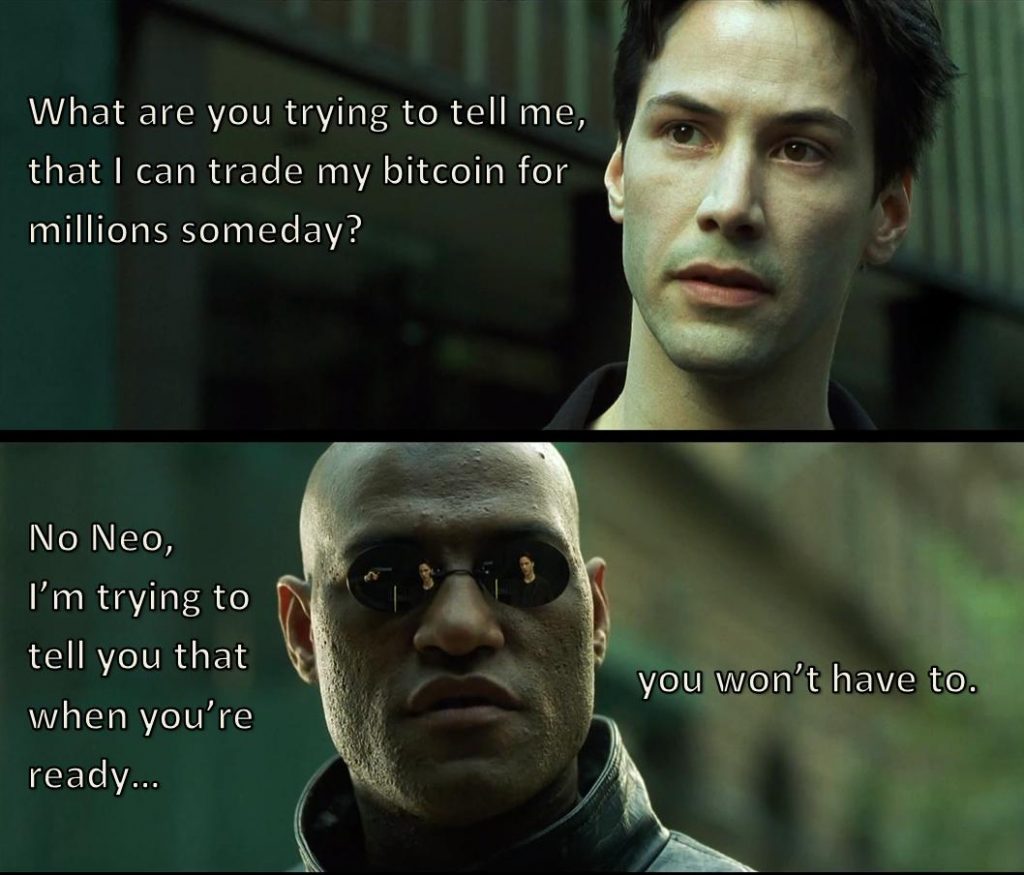
What If Everything Was Priced in SatoshisDigital scarcity is all relative. It’s drummed into us that there will only ever be 21 million bitcoins, and thus the vast majority of people will never own a whole BTC or BCH. This isn’t a problem, since each bitcoin is divisible into 100 million sats, but from a marketing perspective, this is a major issue. Most people who’ve heard of Bitcoin know that you don’t have to buy a whole bitcoin. What they probably don’t know, however, is that simply through switching from bitcoins to satoshis, it’s possible to price a wide range of products, from candy bars to guitars. Before that can happen, though, there’s work to be done in raising awareness of sats and their many applications.

Knowing that there will ultimately be 2.1e+15 satoshis in existence – that’s 2,100,000,000,000,000 – is an interesting statistic, but one that isn’t relatable to everyday use. Knowing that 25,000 sats equates to $1 at the time of publication, however, provides a firmer basis from which to begin pricing items using satoshis. The very act of referencing the U.S. dollar, however, raises a catch-22: for bitcoin and its subunits to become a pricing benchmark, they need to free themselves from the shackles of fiat currencies.

It’s Time We Began Pricing Things in SatoshisSamourai has already done so, removing fiat currency conversions from its BTC wallet altogether. Such cases are few and far between however. There are examples of companies denominating prices in millibits, better known as mBTC (1/100th of a coin), such as market data service Bitcoinity and popular BTC desktop wallet Electrum. By and large, though, only Bitcoin maximalists and altcoin traders are fully fluent in millibits, bits, and satoshis.

Stats About Sats

Satoshis are most commonly referenced as a means of calculating bitcoin transaction fees. BTC and BCH fees are commonly denominated in sats per byte. As a number of Bitcoin supporters have tried to demonstrate, however, the applications for sats needn’t stop there:

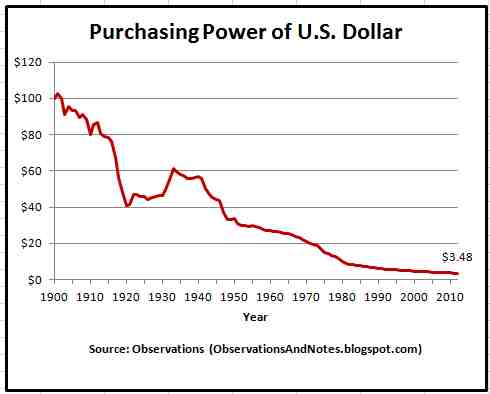
One of the most common arguments against pricing goods and services in sats is that BTC is volatile, and thus a 25,000 satoshi dollar bill could be worth 30,000 sats or 20,000 sats tomorrow. While it’s certainly true that cryptocurrencies can be highly volatile, fiat currencies are not exempt from this malaise. In fact, when viewed over a long enough timeframe, the U.S. dollar’s properties as a store of value don’t look so hot:

It’s Time We Began Pricing Things in Satoshis

Should bitcoin ever become the global reserve currency, everything will be priced in satoshis. In the meantime, there’s nothing to stop ecosystem participants – vendors, wallet developers, P2P market operators, and consumers – from adopting the satoshi as their default unit of account for low value transactions. In the early aughts, when European Union countries began switching to the euro, it was common for shops to display prices in their outgoing national currency as well as in EUR. Perhaps it’s time for the bitcoin community to follow suit.

The first phase is to champion a dual system in which items are priced in both fiat currency and in sats. Should hyperbitcoinization ever occur, phase two will require no explanation – by that point, we’ll know what to do. But that’s a conversation for another day. For now, all that matters is that we start spending, sending, and receiving satoshis. Just as a journey of 1,000 miles starts with one small step, the transition to satoshis starts here.

What are your thoughts on denominating items in satoshis? Let us know in the comments section below.


Images courtesy of Shutterstock.


OP-ed disclaimer: This is an Op-ed article. The opinions expressed in this article are the author’s own. Bitcoin.com does not endorse nor support views, opinions or conclusions drawn in this post. Bitcoin.com is not responsible for or liable for any content, accuracy or quality within the Op-ed article. Readers should do their own due diligence before taking any actions related to the content. Bitcoin.com is not responsible, directly or indirectly, for any damage or loss caused or alleged to be caused by or in connection with the use of or reliance on any information in this Op-ed article.

The post It’s Time We Began Pricing Things in Satoshis appeared first on Bitcoin News.

from Bitcoin News http://bit.ly/2Fk1McA It’s Time We Began Pricing Things in Satoshis

#USA TransferWise applying for Brussels license in bid to navigate a ‘no deal’ Brexit

//

TransferWise, the London-headquartered international money transfer company, is applying for a new licence in Brussels, in a bid to navigate a possible “no deal” Brexit as the U.K. prepares to leave membership of the European Union on March 29 this year.

One of the definite plusses of EU membership, and something that has undoubtedly benefited U.K. fintech startups, is so-called “passporting” of financial services. This sees a certain level of financial regulatory harmony across the EU and means that companies authorised in any EU (or EEA) state can offer their services freely in any other, and with minimal additional authorisation.

Furthermore, these “passports” are the foundation of the EU single market for financial services. Therefore, if the U.K. leaves the single market, which a no deal Brexit and other likely forms of Brexit will result in, then fintech companies in the U.K. that trade in the EU/EEA or have plans to do so, will need to obtain new licenses from an EU/EAA country.

In TransferWise’s case, the plan is to open a small, additional satellite office in Brussels, with the company applying to the Belgium regulator, The National Bank of Belgium, for a “Payment Institutions Licence”.

And, in a sense, this isn’t such a big deal for a large company like TransferWise: the money transfer service already has 9 offices, employs 1,400 people globally, with 230 posted to its HQ in London.

However, for much smaller startups, the loss of passporting could be prohibitively expensive to mitigate, depending on what stage of growth a company is at and how much runway it still has left. For new companies, it makes setting up shop in London’s fintech much less attractive, as regulatory authorisation will need to be duplicated for EU trading.

Meanwhile, it’s notable that TransferWise has chosen to apply to be regulated in Belgium, and not somewhere like Ireland (as, for example Starling Bank has done), or Lithuania (as Revolut has done). It could be argued that both are easier options. Lithuania especially touts itself as the fintech regulator with the lowest barriers and lightest touch.

Cue quote from TransferWise co-founder and CEO Kristo Käärmann: “Brussels is at the heart of all EU affairs, so establishing an office in the city makes great sense for us. The National Bank of Belgium impressed us with its understanding of the payments sector and openness to innovation, while at the same time being a strong and trusted regulator. We’re keen to build a similarly productive relationship with the NBB to the one we already have with the UK’s FCA”.

from Startups – TechCrunch https://tcrn.ch/2Fjadoi

#Blockchain PR: Bitbook Launches Online Gambling and Betting Platform

Bitbook Launches Online Gambling and Betting Platform

This is a paid press release, which contains forward looking statements, and should be treated as advertising or promotional material. Bitcoin.com is not responsible for or liable for any content, accuracy or quality within the press release.

The gambling and casino industry has been alert to the changes associated with modern technologies. Since its inception, it has relied on various inventions, whether a simple dice or a sophisticated blockchain betting platform. As advancements in technology speed up, the industry is transformed at a rapid pace as well to catch up with the reality of a highly digitalized world.

The key purpose of gambling is winning a prize in a game with uncertain results. It has become immensely popular in different societies as it makes people experience a broad spectrum of emotions. It is winning that triggers particularly addictive perceptions and keeps gamblers on the edge of their seats. Nowadays, gamblers don’t even have to take seats outside their houses because leading-edge technologies enable them to place bets and play odds online.

When looking back at the history of gambling, it is clear that people were interested in it before recorded history. Gambling houses emerged in the first millennium BC while the first casino started functioning in Venice in the 17th century. The first official bookmaking service dates from 1790 when Harry Ogden made a profit by offering players the opportunity to bet on horses. Later, new forms of gambling evolved. In 1961, the legalization of betting shops encouraged the spread of bookmaking firms. The launch of online poker websites and the approval of online casinos in the 1990s were major recent landmarks in the gambling and casino industry. In fact, they set a course for striking future developments in the industry, which wouldn’t happen without the use of the latest technologies.

Online Gambling

The successful incorporation of Internet technologies led to the launch of online casinos. Microgaming was the first software development company to expand the variety of online gambling games. The greater availability of those games required the improvements in safe online transactions that were promoted by Cryptologic. Online gambling has been constantly transforming and setting new, demanding standards. For example, modern online casinos are not only expected to be legal but also to be designed to encourage communication and interaction between players from around the world. In the 2000s, online gambling hit the jackpot, welcoming 8 million players. This number hasn’t decreased since then. Online gambling is a promising trend which will continue to build up momentum. Despite its rise, conventional brick and mortar casinos still attract gamblers. Although the atmosphere remains unchanged there, digital gambling machines are found in every traditional casino, proving technological impact is unavoidable.

Mobile Technology

In the last few years, mobile gaming has been on the rise. It ensued from the widespread use of mobile phones, which allow users to place bets on the go. Smartphones not only give access to online casino games, but they also create an opportunity to download apps designed to simplify user experiences and make gambling portable. Mobile technology increases the number of players who value the convenience coming from the ability to place bets quickly. Despite recently imposed regulations on online gambling, mobile casinos and apps are in great demand among users and generate the highest profits in the industry.

Virtual Reality

The future of online gambling lies in virtual reality. This technology is aimed at gamblers who still prefer brick and mortar casinos to online gambling. Of course, virtual reality gambling won’t leave other players indifferent. The first attempt to create a virtual reality casino was in 2016. Since then, developers have been working on the idea of true-to-life casinos which will provide users with vivid virtual experiences and quality animation. Today, SlotsMillion is the only provider of VR/3D online casino applications.

Blockchain-based Gambling Platforms

Blockchain technology has influenced different industries. So far, it is difficult to evaluate its current and future impact. The gambling and casino industry had no choice but to embark on the incorporation of blockchain. And developers who rely on it haven’t made a wrong decision because blockchain-based gambling platforms offer transparency and privacy for their clients. Blockchain casinos have been a solution for modern gamblers who value personal data or hate fraud and unreasonable regulations. Reliable online casinos and sportsbooks such as Bitbook, Bitstarz, and Fortune Jack were built as modern decentralized networks.

The gambling and casino industry has expanded much more dramatically than expected, making it a very profitable sector. There are more than 2.2 billion active online gamers. It is expected revenue from gambling will total $143.5 billion by 2020. Massive popularity results from the rise of various technologies. Undoubtedly, technological development has changed the industry, incorporating multi-player gaming, mobile casinos, casino apps, Internet poker rooms, virtual reality games, decentralized blockchain opportunities, and cryptocurrency transactions. It is evident that technologies have made gambling and betting more convenient for a wider audience by introducing secure, transparent, and user-friendly betting platforms.

Technological development accounts for the advantages of Bitbook.ag, a new online gambling and betting platform. Bitbook.ag is designed to provide clients with numerous licensed games and quality services. It allows gamblers to place their bets on both computers and mobile devices. Moreover, the platform has been built on blockchain, profoundly boosting its operation. Now, Bitbook.ag offers transparent transactions, automatically updated odds, personal privacy, and an unique token that also can be used on betting. It is not all, the team is eager to keep Bitbook.ag up to date and turn it into the leading 2.0 online betting and gambling platform.

Find out more about bitbook on www.bitbook.ag – the platform is already live and you can test their games with a free demo account!

Contact Email Address
info@bitbook.ag

Supporting Link
https://ico.bitbook.ag/en/

This is a paid press release. Readers should do their own due diligence before taking any actions related to the promoted company or any of its affiliates or services. Bitcoin.com is not responsible, directly or indirectly, for any damage or loss caused or alleged to be caused by or in connection with the use of or reliance on any content, goods or services mentioned in the press release.

The post PR: Bitbook Launches Online Gambling and Betting Platform appeared first on Bitcoin News.

from Bitcoin News http://bit.ly/2TDsKPf PR: Bitbook Launches Online Gambling and Betting Platform


#Blockchain The Daily: Trust Wallet Adds BCH, 35,000 Merchants Get Access to Crypto Payments

The Daily: Trust Wallet Adds BCH, 35,000 Merchants Get Access to Crypto Payments

In today’s edition of The Daily we cover an ethereum wallet that’s added support for bitcoin cash, a deal that grants access to accepting payments in cryptocurrency to over 35,000 merchants, and the latest advancement in cross-chain atomic swaps.

Also Read: Banking Agency Advises European Commission to Assess Common Crypto Approach

Trust Wallet Adds Bitcoin Cash

The Daily: Trust Wallet Adds BCH, 35,000 Merchants Get Access to Crypto PaymentsTrust Wallet, a mobile wallet for ethereum and ERC20 tokens, has announced it has added support for bitcoin cash (BCH) on Android and iOS in the latest update of the app. In addition to BCH, the service has also added support for native segwit compatible LTC and BTC wallets.

“As some of you probably have noticed over the past month, Trust Wallet is becoming much more than a simple ethereum and ERC20 wallet. Since our inception around a year ago, Trust has grown to support more than 10 native blockchains, including their native tokens,” the team stated. “We would like Trust Wallet to become your one stop solution for interacting with this new decentralized world, so going forward we will be adding more coins and features to enable our users to fully embrace the seamless experience of having all your tokens, collectibles, dapps and more in one place.”

35,000 Merchants Get Access to Crypto Payments

The Daily: Trust Wallet Adds BCH, 35,000 Merchants Get Access to Crypto PaymentsUtrust, the Zug-headquartered cryptocurrency payments gateway solution, has announced a new integration with Quid Systems’ point of sale (POS) product. Over 35,000 merchants will be able to use the platform in order to accept cryptocurrency as a means of payment through this feature.

Quid POS enables transactions between merchants and customers through a proprietary cash register. “For Utrust merchants, Quid POS offers something unique in the point of sale space – transparent transactions utilizing a currency conversion cash register with an affinity for cryptocurrency payments,” said Utrust CEO Nuno Correia. “We speak the same language of trust and this partnership expands both our missions to make cryptocurrency payments accepted universally.”

Atomic Swaps Take Another Leap

The Daily: Trust Wallet Adds BCH, 35,000 Merchants Get Access to Crypto PaymentsAtomic cross-chain swaps are a method for converting or exchanging one cryptocurrency to another without using a centralized exchange or a trusted third party. Qtum, a project meant to combine the Bitcoin Core protocol with Ethereum technology, has now demonstrated atomic swaps within its mainnet, a process that will allow users to swap QTUM for BTC.

“The feature of not having a third party dependency and atomicity is consistent with basic principles of Bitcoin, so the future of atomic cross-chain swaps are favored by the market,” explained the team. “Many mainstream cryptocurrencies have realized atomic cross-chain swap and released their codes. As the cryptocurrency technologies and markets mature, atomic cross-chain swaps will have more application scenarios. For example, cross-chain exchanges of large amount of cryptocurrencies can be completed on the blockchain using this technology, without the need of centralized exchanges which will charge a large amount of fees.”

What do you think about today’s news tidbits? Share your thoughts in the comments section below.


Images courtesy of Shutterstock.


Verify and track bitcoin cash transactions on our BCH Block Explorer, the best of its kind anywhere in the world. Also, keep up with your holdings, BCH and other coins, on our market charts at Satoshi’s Pulse, another original and free service from Bitcoin.com.

The post The Daily: Trust Wallet Adds BCH, 35,000 Merchants Get Access to Crypto Payments appeared first on Bitcoin News.

from Bitcoin News http://bit.ly/2QyQG4s The Daily: Trust Wallet Adds BCH, 35,000 Merchants Get Access to Crypto Payments

#Blockchain 7 Korean Cryptocurrency Exchanges Pass Government Security Inspection

The South Korean government has released the results of its security inspection of cryptocurrency exchanges. Only seven of them passed all 85 of the inspection points. Fourteen previously-inspected exchanges still have not improved and 17 new crypto exchanges did not meet security standards.

Also read: Indian Supreme Court Moves Crypto Hearing, Community Calls for Positive Regulations

Only Seven Exchanges Passed

7 Korean Cryptocurrency Exchanges Pass Government Security InspectionSouth Korea’s Ministry of Science and ICT announced the results of its security inspection of cryptocurrency exchanges on Thursday, according to local media.

In collaboration with the Korea Internet and Security Agency (KISA), the ministry inspected a total of 38 exchanges between September and December last year. Twenty-one of them were previously inspected between January and March last year while 17 exchanges were inspected for the first time.

7 Korean Cryptocurrency Exchanges Pass Government Security InspectionFollowing the previous inspection, recommendations were given to the 21 exchanges to improve certain security measures. Seven of them have since made the necessary improvements and met all 85 items on the inspectors’ checklist. The 85 items checked “include system security such as administrative security, network separation and account management … and virtual currency wallet management,” Money Today elaborated.

The seven exchanges that passed the inspection are Upbit, Bithumb, Gopax, Korbit, Coinone, Hanbitco, and Huobi Korea. An official of the Ministry of Science and ICT was quoted by Newsprime as saying:

Most of them have weak security except for the seven facilities that satisfy all 85 inspection items.

Most Exchanges Need to Improve

7 Korean Cryptocurrency Exchanges Pass Government Security InspectionMost of the cryptocurrency exchanges inspected did not meet basic security standards. The 14 previously-inspected exchanges have not made the required improvements, government officials told reporters.

These 14 exchanges showed that they still need to improve on 51 security items on average, so they “could be exposed to the risk of hacking attacks at all times,” Zdnet Korea noted. As for the 17 new crypto exchanges, the news outlet added that their “overall security level was found to be weak.” Newsprime elaborated:

By examining 85 items of the basic security requirements for 17 newly identified exchanges, it has been confirmed that the security level [of these exchanges] is generally weak due to the lack of 61 [security] items on average.

The news outlet further detailed, “In particular, it has been confirmed that most of the dealers have a low level of security such as network separation and access control as well as the lack of establishment and management of security systems such as basic PC and network security.” The ministry said it will continue to review and inspect crypto exchanges for security flaws, with a focus on protecting investors from hacking incidents.

What do you think of only seven crypto exchanges passing the Korean government security inspection? Let us know in the comments section below.


Images courtesy of Shutterstock and the Korean government.


Need to calculate your bitcoin holdings? Check our tools section.

The post 7 Korean Cryptocurrency Exchanges Pass Government Security Inspection appeared first on Bitcoin News.

from Bitcoin News http://bit.ly/2QAPaie 7 Korean Cryptocurrency Exchanges Pass Government Security Inspection

#Africa New $10m VC fund to invest in tech startups from Kenya, Nigeria, SA

//

Venture capital (VC) firm Oui Capital has launched a US$10 million fund for investments in innovative tech startups from Kenya, Nigeria and South Africa.

Oui Capital has been launched by, among others, Oluwaseun Oyinsan, previously in charge of investments at Ingressive Capital, an early-stage venture fund that has made investments in the likes of Paystack, Wifi.com.ng and OgaVenue.

The new US$10 million venture fund is dedicated to backing high-growth tech startups in Africa, while simultaneously offering mentorship services from technology and industry experts. It will invest in companies in spaces such as fintech, mobility, healthcare and education.

“With Oui Capital, we will make funding available for early-stage technology startups on the continent. Africa is undergoing a transformation largely driven by technology – similar to the Asian boom of a decade ago which has created over 200 unicorns to date.  It is pertinent that ventures like Oui Capital are available to finance this transformation to create wealth and impact,” said Oyinsan.

“We are mostly interested in companies which are solving real problems with scalable solutions, technology companies solving the everyday problems of Africa’s 1.2 billion people. Our very early-stage investments support startups with significant  growth and impact potential.”

The post New $10m VC fund to invest in tech startups from Kenya, Nigeria, SA appeared first on Disrupt Africa.

from Disrupt Africa http://bit.ly/2FjxQ08

#Africa Meet the Investor: Abu Cassim, Jozi Angels

//

When Abu Cassim started Jozi Angels as an informal endeavour with some friends, he did not imagine four years later it would be an established company with over 30 investments.

Part of the family that owns and operates Fashion House, the Johannesburg-based textiles firm that turns 80 years old next year, Cassim spent the best part of 10 years in asset management in South Africa and Dubai, before studying for an MBA at IE Business School in Madrid.

He now heads up Jozi Angels, which has built a sizeable reputation but only started on an informal basis four years ago.

“A few friends and I were running a non-profit in the startup space when I began assisting high-net-worth-individuals on a few startup investments. We formalised the company in early 2017, bringing the individuals together as a group,” Cassim told Disrupt Africa.

Since then it has grown the network to include 23 investors, become affiliated with the Global Business Angels Network (GBAN), African Business Angel Network (ABAN) and South African Business Angel Network (SABAN), and made over 30 investments, backing the likes of experiences platform Tour 2.0, fitness app FitKey and e-commerce platform Momslist.

“Most of our investments are in Gauteng as we prefer being close to portfolio companies but we have made investments in Cape Town-based startups as well,” Cassim said.

Jozi Angels is not a fund – investments are made by individuals or syndicates.

“The investors are then direct shareholders in the businesses. Our investors are typically entrepreneurs in their own right, they have built successful businesses and are now looking to give back, have fun and hopefully make a return on investment,” said Cassim.

“Angel investing is a people’s game. We invest in people and need to connect with the people we back. We typically look for energetic game changers that are doing something unique. Our requirements often look similar to that of a VC, but we invest at an earlier stage. In order of importance, we look for a strong team, innovative idea, product-market fit and potential scale.”

He said the angel investor market in Africa is ten times smaller than the venture capital market in terms of capital invested, meaning businesses like Jozi Angels have a lot of hard work ahead of us.

“Our aim is to grow the network to 50 angels during the course of 2019. We’ll look to integrate into the business and corporate communities while finding ways of improving the quality of deal flow at the same time,” Cassim said.

He does feel the group is operating in the right market, however.

“We wouldn’t be investing if we didn’t believe in this market. The market is still young and we’re slowly developing our own narratives – we can’t copy-paste what’s happening in the US. Over the six years I’ve been active in the South African tech space, I’m seeing a lot more interest from all corners: corporates, students, business professionals and investors. The momentum is there but we have a long way to go,” he said.

That said, challenges remain.

“I get a few hundred funding applications a month. Most young businesses lack creativity and those that are unique struggle to find early adopters. We tend to back companies that have both these elements,” Cassim said.

More support is needed to ensure more entrepreneurs succeed, especially on a government level.

“Being an entrepreneur is one of the biggest challenges anyone can undertake and there will never be enough support. The challenge ahead for policymakers is the competition coming from innovation hubs like Mauritius, Nairobi, Lagos and markets like Rwanda that are smaller but more agile. Like all good entrepreneurs, policymakers need to continue to innovate and move forward,” said Cassim.

The post Meet the Investor: Abu Cassim, Jozi Angels appeared first on Disrupt Africa.

from Disrupt Africa http://bit.ly/2FlOb3u