About Startup365

Chaque jour nous vous présenterons une nouvelle Startup française ! Notre pays regorge de talents et d'entrepreneurs brillants ! Alors partons à la découverte des meilleures startup françaises ! Certaines d'entre elles sont dans une étape essentielle dans la vie d'une startup : la recherche de financement, notamment par le financement participatif (ou crowdfunding en anglais). Alors participez à cette grande aventure en leur faisant une petite donation ! Les startups françaises ont besoin de vous !

#USA Banking startup N26 raises $300 million at $2.7 billion valuation

//

Fintech startup N26 is raising a Series D round of $300 million. Following this new funding round, the company is now valued at $2.7 billion. Insight Venture Partners is leading the round with Singapore’s sovereign wealth fund GIC and a few existing investors also participating.

N26 is building a retail bank from scratch. The company lets you open a bank account and get a card in just a few minutes. You can then control everything from your phone or computer. And it’s a much better user experience compared to traditional banks.

This round comes as a surprise as the startup announced a $160 million funding round ten months ago. I talked with N26 co-founder and CEO Valentin Stalf about this, and there are several reasons why raising money made sense.

First, N26 is a very different company now compared to early 2018. The user base has tripled and people are using their N26 accounts more and more. Around a third of N26’s customers are paying every month for a premium account.

The startup’s valuation has exploded as well. “The previous valuation was below $1 billion,” Stalf told me. In other words, N26 is in great shape and it made sense to grab more money before expanding to new markets around the world.

N26 is currently live in 24 European markets and has 2.3 million customers. The company plans to expand to the U.S. in the coming months as well as other markets around the world. Customers currently hold €1 billion in N26 accounts overall. And the company has processed €20 billion in transaction volume since its creation.

I interviewed Valentin Stalf about today’s funding round. This interview has been slightly edited for brevity and clarity.

TechCrunch: Your list of investors is becoming more and more global. Does it mean that, in addition to the U.S., we can expect other countries and other regions as well?

Valentin Stalf: Absolutely. Our goal now for the next couple of years is to transform N26 from being a European company to being a global company. We started in Germany and Austria as you know. We’re now in 24 markets including the U.K. where we’re offering our product in a different currency.

And now the next step will be the U.S. in 2019. We would like to bring N26 to four to six new markets outside of the U.S. and Europe in the next couple of years. But this year is really about the U.S. and then by the end of the year one more market or a couple of markets probably. But we see the opportunity to take the business global. And that’s also what everybody who invested in this round signed up for.

TC: It’s the first time you’re sharing the valuation, which is quite high. Does it mean that the financials of the company are looking good? Are you making money and from what?

Stalf: Two things led to the success of this funding round. One is tremendous growth. We’ve more than tripled the number of customers in the last year. Globally, I think we’re the fastest growing mobile bank on the market now. It’s one driver of the valuation — the future potential that there are many more customers searching for a banking alternative.

We’ve also worked on the profitability of our company. We’re definitely today the most advanced player on the market in terms of profitability per customer. Obviously, we’ll be consuming cash in 2019 — that’s why we raised a round to invest in new markets. But if you look at our company on a per-customer basis, we’re profitable on a per-customer basis. And I think it’s very important.

Where is the revenue coming from today? We’re very much focused on the daily usage of our product. So one is really from card transactions and the interchange fee. Second is our subscription model. Depending on the market, up to 32 to 35 percent are choosing one of the premium products that we’re offering — it’s a really important revenue driver. And then you have the daily usage of financial products, such as overdraft, savings and consumer credit and these things that we have on the German market, the French market. We’re bringing that now to the U.K. and other markets.

TC: On the product front, are there other products that you’re going to roll out or are you more focused on launching the entire lineup of products across all your markets?

Stalf: I think we want to internationalize existing products to new markets and bring our financial products that we have to more of the markets that we’re in.

But I think the strong focus that we have in order to internationalize is really to innovate more on the product. We’ve launched Spaces before Christmas — I would say version one. The big update that is coming out in the next two months is really about sharing a space, creating a shared account either long term with your partner or short term with friends.

We’ll add much more functionality to Spaces. We’ll be adding virtual cards that you can add per account. We’ll be adding different account numbers.

TC: Let’s go back to the funding round. You’ve raised $160 million a year ago — it’s quite quick. If I read that correctly, does it mean that you’re thinking that competition is fierce or that you should get a war chest in case there’s an economic downturn?

Stalf: I wouldn’t call it an economic downturn, but if you look at the equity market, obviously valuations have been challenged over the last couple of weeks. And I think we were lucky in terms of when we raised funding. I think it was good timing.

Independent of that, we’ve never raised because of any timing thing or so. Our company managed to do incredibly well in the last year in terms of profitability and growth. And we’ve had a lot of people approaching us, we’re always in contact with different investors. I always think the best time to raise is when you don’t need to raise. GIC and Insight are the best investors we could have thought of.

TC: Let’s talk about the future. Now, that you’ve got a ton of funding in your bank account. How do you see N26 in a couple of years as a product, as a company and as a brand?

Stalf: I think we have the opportunity to really build a business with a hundred million customers globally. I truly believe in this. And that means that we’ll have to build the brand that you need for such as business. It’s going to be a big focus.

If you look more at our company, we have now 700 employees in three locations around the world — Berlin, Barcelona and New York. We will open a couple of offices throughout the next year in Europe and maybe somewhere else in the world. So it's really awesome to transform our company to be more global — we already have 50 different nationalities.

from Startups – TechCrunch https://tcrn.ch/2QxFswZ

#Blockchain Nick Szabo: Central Banks May Turn to Cryptocurrency Reserves Over Gold

Nick Szabo: Central Banks May Turn to Cryptocurrency Reserves Over Gold

At the Israel Bitcoin Summit at Tel Aviv University on Jan. 8, veteran cryptographer Nick Szabo explained that the use of censorship-resistant cryptocurrencies will rise in countries sanctioned from trade and economies suffering from failed monetary planning. Szabo also argued that the world’s central banks might turn to cryptocurrency reserves in the future in order to supplement national gold reserves.

Also Read: Nonprofit Eatbch Shows How Every Little Microtransaction Helps

Nick Szabo Strongly Believes Distraught Economies and Sanctioned Countries Will Seek Refuge In Cryptocurrencies

Nick Szabo: Central Banks May Turn to Cryptocurrency Reserves Over Gold
Veteran cryptographer Nick Szabo.

Cryptographer Nick Szabo is an interesting character and a well known figure in the cryptocurrency community. Long before Satoshi Nakamoto introduced Bitcoin, Szabo designed the Bitgold concept back in 1998. Two years before that, Szabo’s writings forecasted the use of smart contract technology and autonomous organizations. On Jan. 8, Szabo spoke at the Israel Bitcoin Summit at Tel Aviv University and gave the crowd a history lesson on the use of currencies worldwide. During the talk, Szabo explained to attendees that he believes countries blacklisted from trade and regions dealing with hyperinflation will turn to digital assets. Over the last two years, cryptocurrencies like BTC and BCH have been gaining traction in areas like Venezuela, Zimbabwe, and Iran.

According to attendees at Tel Aviv University’s cryptocurrency event, Szabo’s keynote was in response to comments made by Avi Simhon, senior economic policy advisor and Israel’s head of the National Economic Council. Simhon remarked at the summit that Bitcoin technology is “intrinsically inefficient” and “will disappear.” Moreover, the economic policy advisor for the prime minister explained that using the technology on a global scale would waste “trillions of dollars of actual cost in energy.”

Nick Szabo: Central Banks May Turn to Cryptocurrency Reserves Over Gold
Szabo on stage with the renowned cryptographer David Chaum.

Even Central Banks May Attempt to Hoard Bitcoin Reserves Over Gold

Of course, Szabo wholeheartedly believes in cryptocurrencies and his talk explained the many benefits of the digital revolution. Additionally, Szabo asserted that it is possible in the future some of the world’s central banks will turn to cryptocurrencies rather than gold.

“There’s going to be some situations where a central bank can’t trust a foreign central bank or government with their bonds for example,” Szabo emphasized during his talk. “One solution that’s been developed is to have the Swiss government hold it for you – that’s not a trust minimized solution. The Swiss government itself is subject to political pressures and so a more trust minimized solution is cryptocurrency.”

Szabo continued:  

The other problem with gold reserves is that they’re physically vulnerable. When the Nazis conquered countries in Europe, the first place they went to was a central bank’s gold reserves.

Over the last few weeks, a number of top market makers and economists have asserted that the world is facing tumultuous times. Traditional investment vehicles like equities and stocks have been extremely volatile, but precious metals markets have recently seen significant gains. In contrast, this past Monday the spot price of gold touched a six-month high at $1,288.03 per ounce and gold futures settled at $1,289.90 per ounce. Meanwhile, because of increased demand and worldwide shortages, palladium hit an all-time peak in value this week.

Nick Szabo: Central Banks May Turn to Cryptocurrency Reserves Over Gold

During the speech in Israel, Szabo seemed to be far more confident about the future of digital assets over precious metals. Many cryptocurrency proponents over the years take the cryptographer’s predictions seriously because of his early forecasts about the future of smart contracts. An audience member at the Tel Aviv summit even quoted Szabo for saying “Bitcoin could survive a nuclear war.”

What do you think about Szabo’s statements about cryptocurrencies? Let us know what you think about this subject in the comments section below. 


Image credits: Twitter, Steph Vaughan, Shutterstock, and Pixabay. 


At Bitcoin.com there’s a bunch of free helpful services. For instance, have you seen our Tools page? You can even look up the exchange rate for a transaction in the past. Or calculate the value of your current holdings. Or create a paper wallet. And much more.

The post Nick Szabo: Central Banks May Turn to Cryptocurrency Reserves Over Gold appeared first on Bitcoin News.

from Bitcoin News http://bit.ly/2C9UaFw Nick Szabo: Central Banks May Turn to Cryptocurrency Reserves Over Gold

#Blockchain Fund Providers Insist There’s Enough Market Liquidity for a Bitcoin ETF

For years, bitcoin exchange traded funds (ETFs) have been struggling to get off the ground and receive approval from the U.S. Securities and Exchange Commission (SEC). Passive fund providers are now arguing there is sufficient market liquidity for a bitcoin ETF to be launched in 2019. 

Also read: SEC Wants Second Look at Nine Bitcoin ETFs

ETFs to Top $9 Trillion by 2022

Fund Providers Insist There's Enough Market Liquidity for a Bitcoin ETFETFs are becoming a large part of the investment landscape. Research firm ETFGI predicts that in 2020, ETFs and ETPs listed in Europe will reach $1.1 trillion. Morgan Stanley forecasts global ETF assets to top $9 trillion by 2022. As interest in these products grows, regulators have been addressing structural vulnerabilities. Research conducted by broker and asset manager Charles Schwab shows the millennial generation is increasingly choosing to invest in ETFs accessed by apps. It could be a game-changer when – or if – the SEC approves a bitcoin ETF. 

There have been a number of applications submitted over the years. The most recent ones include Proshares, which had two proposals for a bitcoin ETF, both based on bitcoin futures contracts. There was also the Vaneck-Solidx proposal which is based on a physical-backed bitcoin ETF. Before an ETF is approved to trade on one of the U.S.’s major exchanges, there is a number of factors which need to be considered.

Bitcoin Market Cap Stands at $72 Billion

Last year, Blockforce Capital launched blockchain ETFs in the form of BLCN and the world’s first Chinese blockchain ETF, BCNA.  Eric Ervin, CEO of Blockforce Capital, told news.Bitcoin.com the current market environment has the ability to support an ETF for two primary reasons.

Fund Providers Insist There's Enough Market Liquidity for a Bitcoin ETF“First, [BTC] has a market cap of $72 billion,” he explained. “While this is small in comparison to many blue-chip stocks, there are a number of ETFs currently on the market that are focused on esoteric assets. For example, iShares’ IWC ETF focuses on micro-cap stocks, and has almost $900 million in assets. Collectively, the underlying stocks have a market cap of about $450 billion. That number dwarfs bitcoin’s market cap, but when looking at the underlying assets’ liquidity, there are significant volume constraints.”

Ervin explained that 40 percent of the IWC fund comprises holdings that are greater than 50 percent of the average 30-day volume. This is because most are micro-caps, and are also only listed on U.S. exchanges. Ervin highlights that in comparison, BTC’s 24-hour trading volume is about $5.3 billion, and trades on multiple exchanges around the world, allowing global investors to add liquidity to the marketplace.

Exchange Arbitrage Is a Growing Business

As the market develops, participants are becoming more sophisticated and exchange arbitrage is a growing business.

Fund Providers Insist There's Enough Market Liquidity for a Bitcoin ETFErvin said: “Exchange arbitrage – buying bitcoin on exchange A and selling on exchange B to take advantage of small price inefficiencies – is a growing business as many traditional market players enter the space because returns from arbitrage are considered ‘risk free’ as the strategy has no directional exposure.”

When the Blockforce Capital team started arbitraging prices at the beginning of summer 2018, they were averaging around 75 bps profit per trade. “That number has dwindled and the number of opportunities have gone down considerably, due to increased competition. These market participants add liquidity to the marketplace because if an exchange’s price of [BTC] deviates from the global mean, market participants will arbitrage the price back in line with the global average,” explained Ervin.

He concludes that this factor, coupled with an expanding derivative, futures, and swap market, adds liquidity and makes it much more difficult for the price of a globally traded asset to be manipulated, adding:

We could make the case that an ETF holding a substantial amount of a micro-cap stock’s daily volume would have a higher impact on the price than a globally traded asset. 

Scandinavia Leads Market With Bitcoin ETNs

As the SEC continues to agonize over whether to approve a bitcoin ETF, it is worth taking a look at other crypto financial products such as Sweden’s bitcoin exchange-traded note (ETN). In May 2015, XBT Provider AB announced the authorization of Bitcoin Tracker One, the first bitcoin-based security available on a regulated exchange.

Fund Providers Insist There's Enough Market Liquidity for a Bitcoin ETFLaurent Kssis, the CEO of XBT Provider, a Coinshares company, said that to put things in perspective, a so-called ‘physical’ bitcoin ETF simply asks for money upfront to buy the underlying asset physically.

“In this way, a bitcoin ETF provides quick exposure to the underlying asset, but this also means the market needs to be liquid enough to support any new demand for the underlying asset – in this case, bitcoin. There is a key operational question that regulators and investors alike need answered before approval of a bitcoin ETF,” explained Kssis. 

The good news is there are prior proxies in the market to study. Kssis said in his experience of operating the BTC and ETH trackers on Nasdaq Stockholm – notes which are hedged by buying the underlying asset (BTC 1:1) – he has so far been able to keep up with demand while maintaining an accurate price over the last three and a half years without any liquidity issues and being the sole liquidity provider.

“Put differently, even during the height of 2017, the underlying bitcoin market remained liquid enough to absorb new demand as we bought bitcoin to physically hedge the bitcoin trackers,” added Kssis. 

Fund Providers Insist There's Enough Market Liquidity for a Bitcoin ETF
Nasdaq volume of all issuers on Dec. 7 2017.

According to XBT Provider, during 2017, when BTC traded at $20,000, the group was able to source ample liquidity. “My takeaway from 2017: even with substantial demand driving AUM well above $1 billion, the market demonstrated that delta-one security desks were able to source ample liquidity in the market to operate similar products to a proposed bitcoin 1:1 physical bitcoin ETF. A futures market will simply enhance that liquidity that is already available,” said Kssis. 

If Crypto Trading Picks up Expect More Launches

Fund Providers Insist There's Enough Market Liquidity for a Bitcoin ETFOther products available in the market include Greyscale Bitcoin Investment Trust (OTC:GBTC) which trades over the counter and the Amun Crypto Basket Index (SIX:HODL) which launched in November 2018 on Switzerland’s Zurich-based SIX Exchange. 

According to Lars Seier Christensen, chairman of Concordium and founder of Saxo Bank, if trading picks up we can expect more launchesHe said: “If the primary cryptocurrency exchange market continues to be in trouble, there will be little appetite for launching new trading vehicles. On the other hand, if trading picks back up, it is quite likely that we will see a slew of new initiatives being launched — perhaps even some that have already been planned and gone through due diligence but where the offering party have been waiting for a better time to launch.” 

Do you think the SEC will approve a bitcoin ETF in 2019? Let us know in the comments section below.


Images courtesy of Shutterstock and XBT Provider. 


Need to calculate your bitcoin holdings? Check our tools section.

The post Fund Providers Insist There’s Enough Market Liquidity for a Bitcoin ETF appeared first on Bitcoin News.

from Bitcoin News http://bit.ly/2FkCVV7 Fund Providers Insist There’s Enough Market Liquidity for a Bitcoin ETF

#USA Hands-on with Ledger’s Bluetooth crypto hardware wallet

//

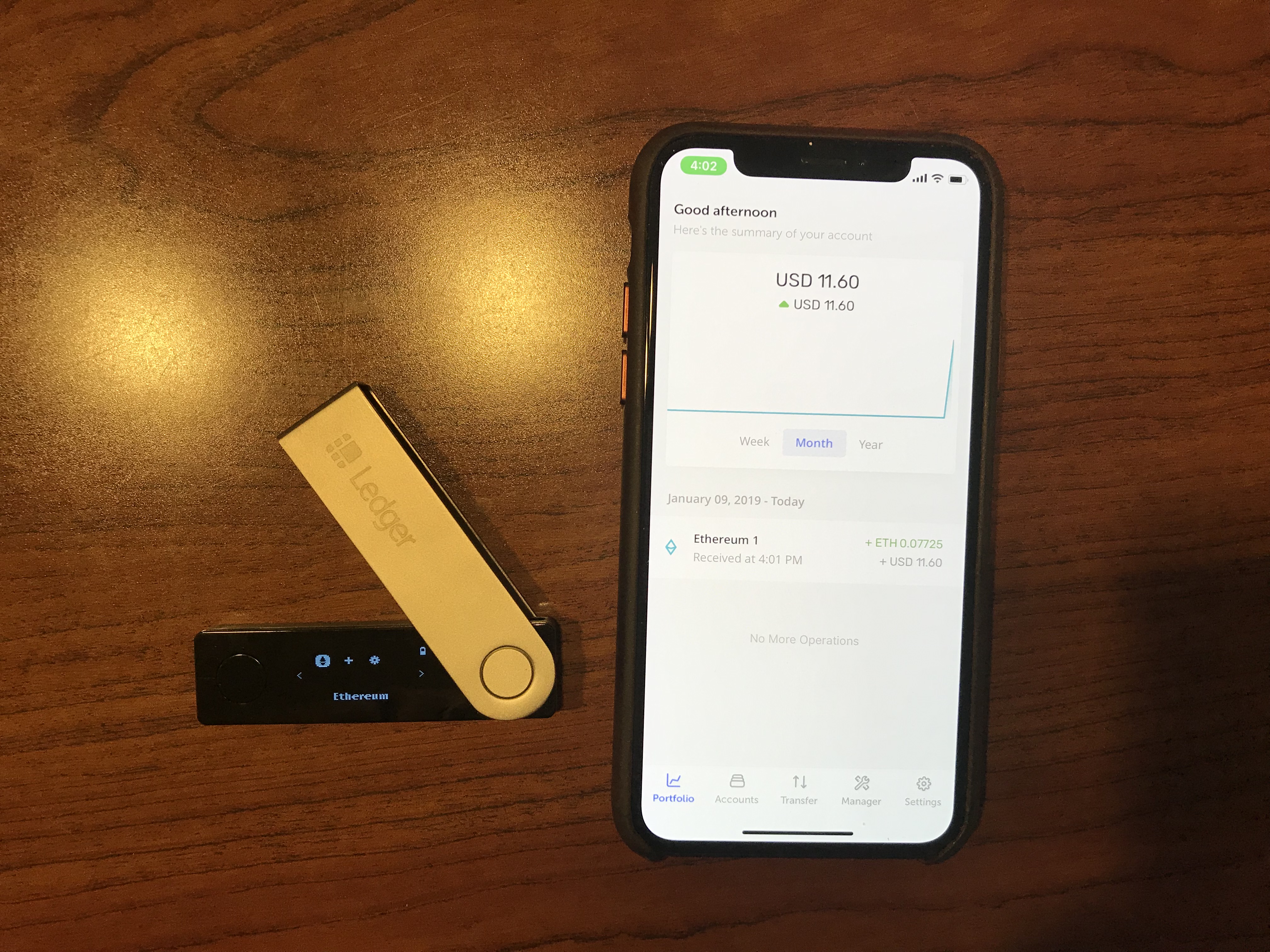
French startup Ledger unveiled a new hardware wallet at CES this week. While the device isn’t going to ship until March, the company let me play with a prototype version of the device. The Ledger Nano X feels just like using the Nano S, but on mobile.

When the company’s previous hardware wallet first came out, that was before the cryptocurrency boom, before Ledger raised $75 million. And the user experience wasn’t great.

You had to install multiple Chrome apps to manage multiple cryptocurrencies, switch between each app when you wanted to access your balance and manage your crypto assets. But things got much better when the company released Ledger Live on macOS, Windows and Linux.

With this new app, you could finally view your portfolio balance and manage multiple crypto assets from the same desktop app. The logical next step was mobile. And you have to get a new hardware wallet for that.

The Ledger Nano X looks more or less like the Ledger Nano S, but slightly bigger. It’s shaped like a USB key and it has a tiny screen to confirm transactions on the device. There’s a tiny 100 mAh battery in it and a slightly bigger screen. The microUSB port has been replaced by a USB-C port. The buttons are now on each side of the screen instead of on the side of the device.

After you pair the device with your phone, you can control everything from your iOS or Android phone. You can install apps on the Ledger Nano X, access your wallets and send cryptocurrencies. On iOS, you can lock the app using a password and optionally Face ID or Touch ID.

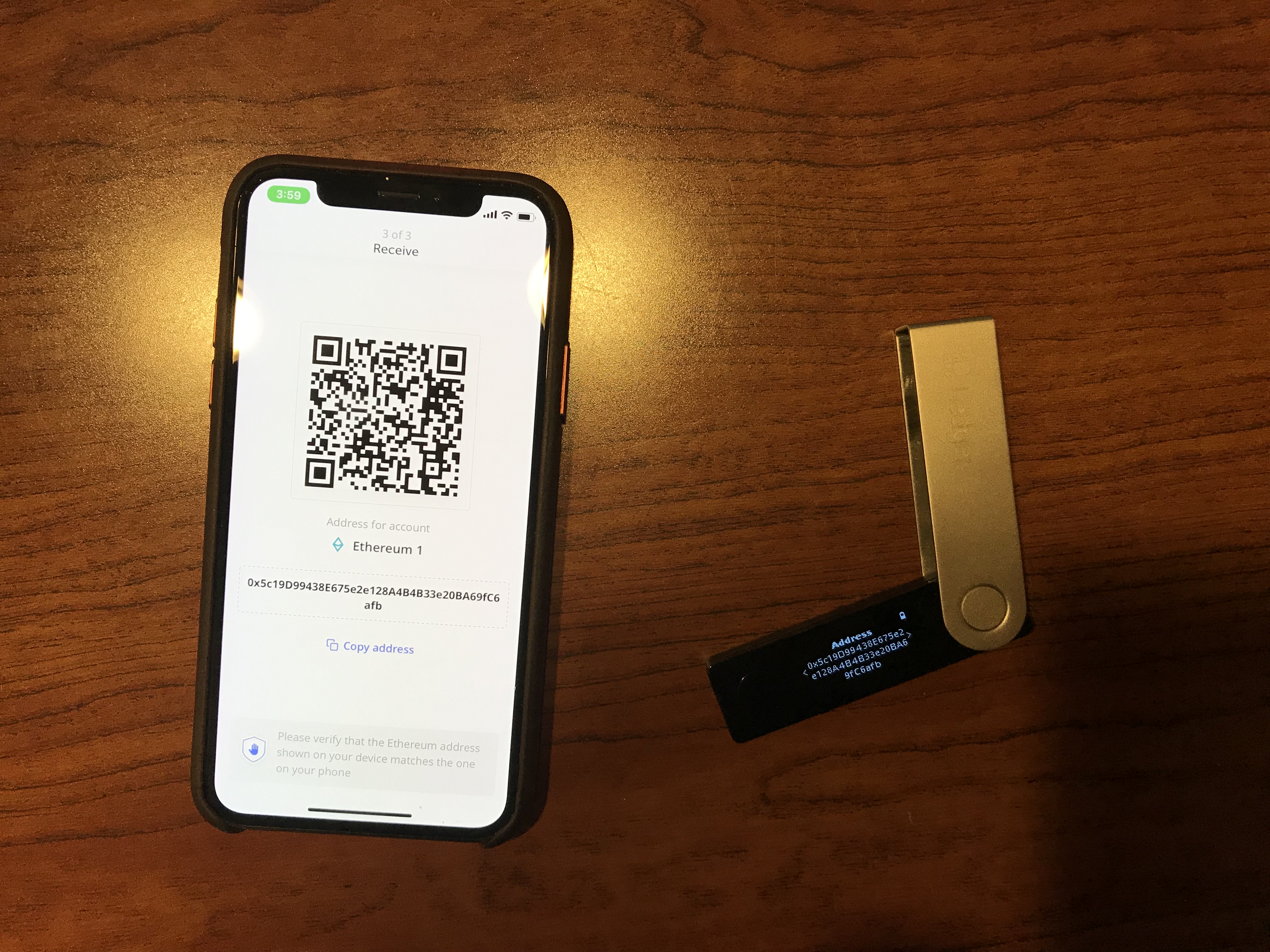
When you need to validate a transaction on your Ledger Nano X, your phone will pair with your Ledger device over Bluetooth. You can then view transaction information on your Ledger device and approve the transaction on the device itself.

What makes Ledger so secure is that your private keys never leave your Ledger device. Transactions are signed directly on the device. Your private keys are never sent over Bluetooth and your cryptocurrencies remain safe even if your smartphone is compromised.

Ledger now uses an ST33 secure element, which is slightly more secure than the previous version ST31. Now, there’s only a single chip and it is connected directly to the screen and buttons, which reduces the risk of having someone compromise the information on your screen.

The screen is now twice as tall, which lets you view full public addresses without a scrolling view. You can now install up to 100 different cryptocurrency apps. You can still plug the device to a computer and use the desktop app as well. And the device costs €120 ($138).

from Startups – TechCrunch https://tcrn.ch/2ADv0Pk

#USA With SEC workers offline, the government shutdown could screw IPO-ready companies

//

The government shutdown has entered into day 19, making it the second-longest shutdown in U.S. history. With President Donald Trump slamming his hands down on a table and storming out of negotiations with Speaker Nancy Pelosi and Senator Chuck Schumer earlier today, a fast-approaching end feels unlikely.

Hundreds of thousands of federal workers are out of work as U.S. leaders struggle to reach a fair agreement on the federal budget, including employees of the U.S. Securities and Exchange Commission . The government agency, responsible for protecting investors and maintaining fair, orderly and efficient markets, shut down on December 27 and has just 285 of its 4,436 employees on the clock.

“Due to the ongoing federal government shutdown, the SEC is currently operating in accordance with the agency’s plan for operating during a shutdown,” the agency wrote on its website. “The SEC has staff available to respond to emergency situations involving market integrity and investor protection, including law enforcement.”

EDGAR, the Electronic Data Gathering, Analysis, and Retrieval system that allows companies to electronically file crucial documents, including paperwork for initial public offerings, has remained up and running. That’s led to a “large and growing” backlog of filings, reports CNBC, that could cause a delay in several IPOs, as well as a lasting impact on the state of the IPO market in 2019.

Several major technology companies have taken steps toward early-2019 IPOs, all of which are at risk of a delay. A poor performing stock market is only adding fuel to the flames in a year that many had expected would bring record amounts of liquidity to investors via high-profile offerings. Uber, Lyft, Slack and Pinterest have all begun IPO prep, for example, with Uber chief executive officer Dara Khosrowshahi recently claiming turbulent public markets would not delay the ride-hailing company’s float.

“The good news is that we’ve got a strong balance sheet so we don’t need to go public this year,” he told The Wall Street Journal. “It’s a desire [but] if it doesn’t happen it doesn’t happen. I’d be disappointed and I think our shareholders would be disappointed but the company would be just fine.”

He didn’t comment on the potential resonating effects of a government shutdown, per The WSJ. Uber and its largest U.S. competitor Lyft both filed confidentially with the SEC in December, just weeks before the shutdown began. During the shutdown, companies are still permitted to file confidentially, a method preferred by many companies as it allows them to refrain from disclosing key IPO details and financials to the public ahead of an exit.

Ultimately, tech’s most buzz-worthy unicorns will be the least affected by Trump and co.’s discordance. Well-funded businesses with strong balance sheets, as Khosrowshahi pointed out, have a safety net ready if IPO plans go awry. Smaller businesses, particularly those in need of an infusion of capital to continue operating, will bear the brunt of any IPO delays.

from Startups – TechCrunch https://tcrn.ch/2VDTfG8

#USA The state of seed

//

“There’s an implosion of early-stage VC funding, and no one’s talking about it,” was the headline of a viral article posted on this site in late 2017. Venture capitalists are deploying more capital than ever, the author explained, yet the number of deals for early-stage startups has taken a nosedive.

Roughly one year later, little has changed. Seed activity for U.S. startups has declined for the fourth straight year, according to venture data provider CB Insights, as median deal sizes increased at every stage of venture capital. In 2018, seed activity as a percentage of all deals shrank from 31 percent to 25 percent — a decade low — while the share and size of late-stage deals swelled to record highs. Total annual global VC funding, for its part, shot up 21 percent to $207 billion as deal activity only increased by 10 percent to 14,247 transactions.

The median U.S. seed deal was the highest on record in the fourth quarter of 2018, growing to $2.1 million after kicking off the year at an average of $1.7 million. Early-stage financings — i.e. Series A and Series B fundings — experienced the same trend, expanding to a median of $8 million in Q4, a significant increase from the $5.5 million median recorded in the first quarter of 2017.

The decline in seed deals and the simultaneous increase in deal size began in 2012, and is far from an anomaly at this point. What’s caused the end of seed investing as we know it? A record amount of dry powder in the venture ecosystem has pushed VCs downstream, where they can deploy large sums of capital in more mature companies. Even firms specializing in seed investments are muscling their way into Series A deals. Many seed firms have grown up and become more strategic in their bets, often opting to invest in startups that have found product/market fit rather than those still at the idea stage, despite the fact that historically, idea-stage companies were the target of seed financings. Fortunately, pre-seed, a newer stage of investing consisting of investments of around $500,000, has emerged to support those projects.

Not only are deals fewer and fatter, but companies earning seed investments are older, too. In 2016, for example, companies raising seed deals were older than the median age of a company raising a Series A deal 10 years ago, and Series A companies were older than the median age of Series B companies a decade prior, too.

Fundraising activity suggests deal sizes will only continue to inflate, rather than adjust. Firms in the $100 million to $500 million range are currently the most active fundraisers, and if you pay any attention to the tech press, you know there’s no shortage of fresh billion-dollar funds. Investors at those funds aren’t able to deploy small bits of capital into early-stage startups — not only because the return on the investment isn’t meaningful, but they don’t have the time to devote to those projects, which typically require more support and oversight than their late-stage counterparts.

One thing could send deal sizes back to their normal ranges, however, and that’s the market downturn many VCs are expecting in 2019. Median deal sizes shrank during the Great Recession in 2008, and investors tend to turn away from riskier bets when market conditions grow cold. That means, in a bear market, more attention will be paid to stable, later-stage businesses while early-stage companies are left to their own devices.

from Startups – TechCrunch https://tcrn.ch/2C7qKri

#USA E-scooter startup Bird is raising another $300M

//

Electric scooter startup Bird is said to be nearing a deal to extend its Series C funding with an additional $300 million led by cross-over investor Fidelity, according to an Axios report. Bird declined to comment.

Fidelity has not previously invested in Bird and is reportedly doing so at a flat pre-money valuation of $2 billion, which Bird earned with a $300 million Sequoia-led financing in June. Santa Monica-based Bird has raised more than $400 million in venture capital funding to date from investors, including Accel, CRV, Greycroft, Index Ventures, Upfront Ventures, Craft Ventures and Tusk Ventures.

The investment comes at a time when many investors are losing faith in scooter startups’ claims to be the solution to the problem of last-mile transportation, as companies in the space display poor unit economics, faulty batteries and a general air of undependability. Lime, Bird’s biggest e-scooter competitor, has at least expanded its suite of micro-mobility offerings from bikes and scooters to LimePods, a line of shareable vehicles available in Seattle, to peak investor interest. San Francisco-based Lime has been seen pitching to investors in Silicon Valley recently, too, with reports indicating it’s looking for a $400 million investment at a $3 billion valuation — more than three times the valuation it garnered with a $335 million round in July.

from Startups – TechCrunch https://tcrn.ch/2H0Yxbu

#Blockchain Banking Agency Advises European Commission to Assess Common Crypto Approach

Banking Agency Advises European Commission to Asses Common EU Crypto Approach

The European Banking Authority (EBA), a regulatory agency of the European Union, has published its assessment into the application of EU law to crypto assets. The agency, which is headquartered in London, recommends that the European Commission tables a response to the risks regulators associate with the field such as money laundering.

Also Read: FBI Agents Raid Tech Campus Over Unauthorized Crypto Trading

Crypto Activity Is Outside Scope of EU Banking Rules

Banking Agency Advises European Commission to Assess Common Crypto ApproachIn the report released on Jan. 9, the EBA examines the application of current EU banking, payments, e-money and anti-money laundering laws to crypto assets, wallet providers and trading platforms, as well as the related activities of credit institutions, investment firms, payment institutions and electronic money institutions.

It determines that the current relatively low level of such activity in the EU does not create a risk for financial stability. However, the agency also found that activities involving crypto assets typically fall outside the scope of EU banking, payments and electronic money regulation. It believes this raises risks for consumers that are not addressed at EU level.

The report further details that, as a result of the development of national level responses, regulatory differences between European countries are starting to emerge. It fears these present risks to the level playing field the union is supposed to maintain between its members. The banking agency also sees a need for a review of EU anti-money laundering legislation.

More Monitoring of Institutions’ Activities

Banking Agency Advises European Commission to Assess Common Crypto ApproachFollowing the findings of the report, the EBA has advised the European Commission to make a comprehensive cost/benefit analysis to determine what action is required at the EU level at this stage. The agency also advises the commission to note the recommendations of the Financial Action Task Force from October 2018, and to take steps to promote consistency in the accounting treatment of crypto assets. The banking regulator also plans a number of steps to take in 2019 in order to enhance the monitoring of institutions’ activities and consumer-facing disclosure practices.
The agency’s Executive Director, Adam Farkas, commented: “The EBA’s warnings to consumers and institutions on virtual currencies remain valid. The EBA calls on the European Commission to assess whether regulatory action is needed to achieve a common EU approach to crypto assets. The EBA continues to monitor market developments from a prudential and consumer perspective.”

What are your thoughts on the European Banking Authority’s reports into crypto asset regulation? Share your thoughts in the comments section below.


Images courtesy of Shutterstock, EBA.


Verify and track bitcoin cash transactions on our BCH Block Explorer, the best of its kind anywhere in the world. Also, keep up with your holdings, BCH and other coins, on our market charts at Satoshi’s Pulse, another original and free service from Bitcoin.com.

The post Banking Agency Advises European Commission to Assess Common Crypto Approach appeared first on Bitcoin News.

from Bitcoin News http://bit.ly/2TEqxmJ Banking Agency Advises European Commission to Assess Common Crypto Approach

#Blockchain Bitcoin Goes on Sale in 24 French Tobacco Stores

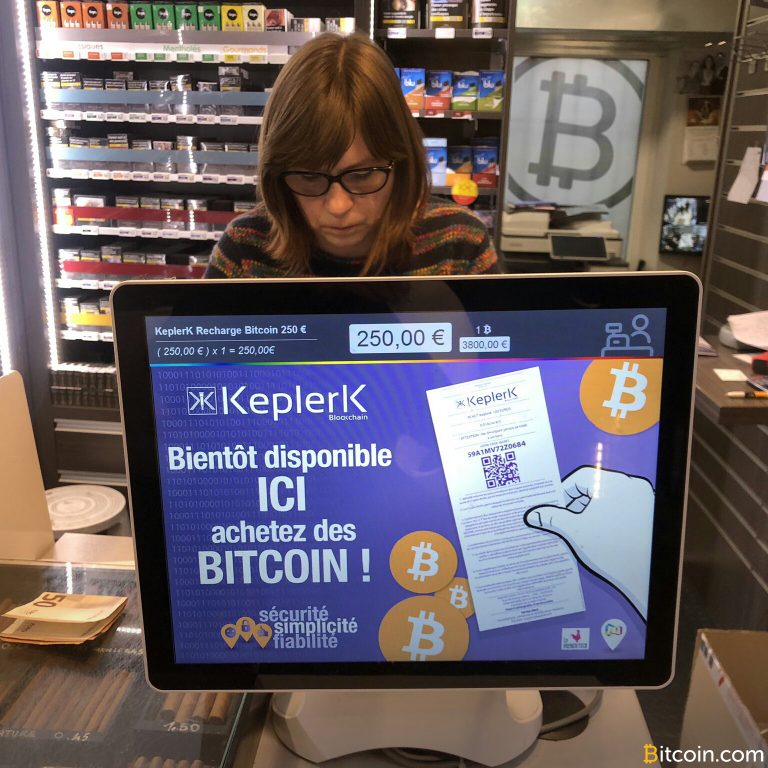
At least 24 tobacco shops have started selling bitcoin coupons in the French capital of Paris. Widely known as “tabacs”, the stores received regulatory approval for the cryptocurrency sales late last year. More than 6,500 tabacs – representing about a quarter of the registered tobacco stores in France – are expected to start offering BTC coupons by February.

Also read: Report Claims Central Banks Are Cautious About Us suing Their Own Digital Currencies

BTC Vouchers for 50, 100 and 250 Euros

According to a Reuters report published Jan. 9 (which mentions only six tabacs), French financial technology group Keplerk is backing the sale of bitcoin in tobacco stores. In 2018, the company reached an agreement with a local payments software provider allowing tabac owners to sell BTC vouchers that can be redeemed from wallet on Keplerk’s website. Keplerk put the figure of bitcoin selling tobacco outlets at 24, in a statement to French website capital.fr.

Bitcoin Goes on Sale in 24 French Tobacco Stores

Currently, BTC can be bought in three sums of 50 euros, 100 euros and 250 euros ($43, $86 and $250). In exchange for the euro, the user obtains a ticket containing an alphanumeric code and a QR code. Buyers then have to visit the Keplerk website to convert their vouchers into cryptocurrency of either bitcoin core or ethereum. Keplerk charges a commission of 7 percent on each ticket sold and gives 1.25% to the tobacconist, the company said.

Adil Zakhar, co-founder of Keplerk, stated:

Some people find it complicated to get bitcoins online They trust their local tobacco shop owner more than they would trust some remote anonymous website.

Tabacs already sell a variety of products including cigars, cigarettes and lottery tickets. Several of France’s 24,000 licensed tobacco shops have moved into new areas, such as prepaid credit cards, cellphone credits and money transfer services to compensate for the declining revenue from tobacco sales.

‘A Good Time to Buy’

Late last year, the French Prudential Supervision and Resolution Authority (ACPR), a unit of the country’s central bank charged with monitoring financial transactions involving banks and insurance companies, officially authorized the Federation of tobacco shops to begin selling bitcoin at the start of 2019.

Reuters quoted one Cyril Azria, a 45-year old man who became one of the first buyers of the BTC coupon saying: “I’ll use the bitcoins to buy some computer material on the internet and the rest to speculate. It’s a good time to buy,” he said, after spending 150 euros.

Bitcoin Goes on Sale in 24 French Tobacco Stores

French regulators have warned the public against investing in cryptocurrencies, saying the unregulated financial instruments are highly volatile. However, they have not blocked Keplerk’s tabac plan.

What do you think about French bitcoin-selling tobacco outlets? Let us know in the comments section below.


Images courtesy of Shutterstock and Keplerk.


Need to calculate your bitcoin holdings? Check our tools section.

The post Bitcoin Goes on Sale in 24 French Tobacco Stores appeared first on Bitcoin News.

from Bitcoin News http://bit.ly/2M3hU2k Bitcoin Goes on Sale in 24 French Tobacco Stores