
About Startup365

Chaque jour nous vous présenterons une nouvelle Startup française ! Notre pays regorge de talents et d'entrepreneurs brillants ! Alors partons à la découverte des meilleures startup françaises ! Certaines d'entre elles sont dans une étape essentielle dans la vie d'une startup : la recherche de financement, notamment par le financement participatif (ou crowdfunding en anglais). Alors participez à cette grande aventure en leur faisant une petite donation ! Les startups françaises ont besoin de vous !

#Blockchain Venezuela Decrees Crypto Operators Must Pay Taxes in Cryptocurrencies

Venezuela Decrees Crypto Operators to Pay Taxes in Cryptocurrencies

The Venezuelan government has published a decree requiring taxpayers with crypto operations in the country to pay their taxes in cryptocurrencies. Similarly, operators of foreign currencies must pay their taxes in those currencies. The decree states that the change is necessary for the “strengthening of the current fiscal regime.”

Also read: Indian Supreme Court Moves Crypto Hearing, Community Calls for Positive Regulations

Paying Taxes in Cryptocurrencies

The Venezuelan government published the official gazette No. 6,420 dated Dec. 28 on Monday, local media reported. It contains Decree No. 3,719 which outlines new tax payment rules for cryptocurrency operators. Dinero publication explained:

The government of President Nicolás Maduro published a decree that will require taxpayers who carry out operations in foreign currencies or cryptocurrencies to pay their taxes in that same currency and not in bolivars.

Venezuela Decrees Crypto Operators to Pay Taxes in CryptocurrenciesThe decree states that “the Venezuelan people are currently facing a fierce war waged by internal and external factors that pursue the deterioration of the economy, which is why it is necessary to adopt sufficient measures to ensure the strengthening of the current fiscal regime.” The Ministry of Popular Power of Economy and Finance is in charge of the execution of the decree which is effective as of the time of the publication in the national gazette.

Article one of the decree states that taxpayers in Venezuela “who carry out operations” in foreign currencies or cryptocurrencies as authorized by the law “must determine and pay [their tax] obligations in a foreign currency or cryptocurrency.”

Venezuela Decrees Crypto Operators Must Pay Taxes in CryptocurrenciesTwo exemptions are listed in the decree: “transactions of securities traded on a stock exchange” and “the export of goods and services, carried out by public bodies or entities.”

Furthermore, the decree describes that payments such as tax refunds for cases established in the decree will be made in the “national currency.”

Using Petro for Tax Calculations

Venezuela Decrees Crypto Operators Must Pay Taxes in CryptocurrenciesMaracaibo Municipality in Venezuela’s Zulia State recently announced that it will use the national “cryptocurrency,” the petro, as the basis for business tax calculations, Runrunes reported. The announcement created some confusion among residents, who thought that they would have to pay their taxes in petros.

On Tuesday, the intendant of Servicio Desconcentrado de Administración Tributaria (Sedemat), Jean Carlos Martínez, clarified to Noticia al Dia publication that “taxpayers will not be charged taxes in petros.” He elaborated:

We are using the value of the petro as a reference unit to be able to determine the minimum tax, since the ordinance of the current economic unit is still stipulated in percentages of gross income.

He added that the petro has two values: one as a cryptocurrency and the other is “as a unit of account that translates into 9,000 sovereign bolivars, which will be used in passport procedures or current salaries.”

The new decree establishes “that the payment of taxes will be made depending on the economic activity of each company or microenterprise,” the news outlet noted. Martinez was then quoted as saying, “If someone had transactions in petro, bitcoin or other currency, [they] should declare [their income] according to the currency that [they] manage.”

What do you think of Venezuela requiring crypto operators to pay taxes in cryptocurrencies? Let us know in the comments section below.


Images courtesy of Shutterstock and the Venezuelan government.


Need to calculate your bitcoin holdings? Check our tools section.

The post Venezuela Decrees Crypto Operators Must Pay Taxes in Cryptocurrencies appeared first on Bitcoin News.

from Bitcoin News http://bit.ly/2Fkt95k Venezuela Decrees Crypto Operators Must Pay Taxes in Cryptocurrencies


#Blockchain Central Bank Official: Regulators Are Hindering the Development of Cryptocurrencies

Regulators Hinder the Development of Cryptocurrencies, Central Bank Official Says

An excessive number of regulatory agencies are interfering with the prospects of successful development of cryptocurrencies in Ukraine, according to a high-ranking representative of the country’s central bank. What the sector needs instead is proper regulations and laws that will allow it to grow, the banker insists.

Also read: Cryptocurrency Exchanges Eye Russia for Expansion Despite Sanctions

NBU Official Urges Banks to Embrace Innovation

Central Bank Official: Regulators Are Hindering the Development of Cryptocurrencies
National Bank of Ukraine

Mikhail Vidyakin, who heads the important Strategies and Reforms Department at the National Bank of Ukraine (NBU), believes that the main issues around the legalization of digital assets are institutional in nature. There are too many regulators responsible for the oversight of the industry, while cryptocurrencies are not yet regulated and defined in Ukrainian law.

Speaking to the Let Know crypto news outlet, Vidyakin said he favors regulations that would give the crypto market a chance to develop. He also emphasized traditional banks should be open to the fintech sector, which provides a new delivery channel for financial services. The banker thinks authorities in Kiev should first reduce the number of regulatory agencies tasked with government control over crypto businesses and then address the lack of regulations and legal definitions for the financial innovations.

Vidyakin is not the first Ukrainian official to call for the legalization and regulation of cryptocurrencies in the country. Last January, Ukraine’s minister of justice Pavel Petrenko made similar recommendations. He insisted that “Bitcoin must be brought into the legal field.”

The status of digital assists was also discussed during a meeting of the National Cybersecurity Coordination Center in Kiev. Its members expressed concerns over “the uncontrolled circulation of cryptocurrencies in Ukraine.” The Secretary of the National Security Council Oleksandr Turchynov stressed that “the development of the cryptocurrency market cannot be left unattended.”

Crypto Regulations Long Overdue

Central Bank Official: Regulators Are Hindering the Development of CryptocurrenciesA number of draft laws designed to regulate the crypto sector and proposals for tax breaks have been introduced in the Ukrainian parliament since the fall of 2017. However, very little real progress has been made toward their adoption.

In October 2018, a new regulatory concept was announced. According to the document, Ukraine will fully legalize cryptocurrencies in two stages within the next three years. The legal status of crypto exchanges should be determined in 2019. Crypto wallet providers and custodial platforms will be regulated by 2021.

The new policy was approved by the Financial Stability Council which includes representatives of the National Bank of Ukraine (NBU), the Ministry of Finance, the Deposit Guarantee Fund, the National Securities and Stock Market Commission (NSSMC), and the National Financial Services Market Commission. At least two of these institutions, the NSSMC and the NBU, will be tasked with the direct oversight of the crypto industry.

A study released by USAID in December estimated that Ukrainians trade around $775 million of cryptocurrency annually. The authors of the research titled “Transformation of the financial sector” suggested that digital coins should be recognized as “currency valuables” and regulated like foreign fiat currencies.

What is your opinion about the role of regulators and the future of cryptocurrencies in Ukraine? Share your thoughts in the comments section.


Images courtesy of Shutterstock.


Make sure you do not miss any important Bitcoin-related news! Follow our news feed any which way you prefer; via Twitter, Facebook, Telegram, RSS or email (scroll down to the bottom of this page to subscribe). We’ve got daily, weekly and quarterly summaries in newsletter form. Bitcoin never sleeps. Neither do we.

The post Central Bank Official: Regulators Are Hindering the Development of Cryptocurrencies appeared first on Bitcoin News.

from Bitcoin News http://bit.ly/2TzK087 Central Bank Official: Regulators Are Hindering the Development of Cryptocurrencies

#Asia #China Know Yourself and Be Yourself; 8X8 Speakers Series (1/2) with Dalida Turkovic, Em Roblin and Andrew Schorr

//

8X8 Speakers Series is back! Today, we are happy to present you the first 3 talks selected from Chinaccelerator 8X8 Speakers Series events in Autumn 2018 about how knowing yourself matters while running your business. Em Robin, Founder of Inner Circles, is a female entrepreneur for 8 years who shared “Entrepreneurship is about sharing what you created”. Founder of Beijing Mindfulness Centre Dalida Turkovic shared her personal journey including how she experienced the depression and financial crisis. Andrew Schorr, Founder of Grata, delivered his insights about how crucial it is to be honest with yourself, have passion and experiment.

Chinaccelerator’s 8X8 Speakers Series invite 8 of Chinaccelerator mentors – serial entrepreneurs, industry experts and investors – to share their personal stories about entrepreneurship twice a year in Beijing and Shanghai.

Show Notes:

01:44 Em Roblin’s Talk

10:57 Dalida Turkovic’s Talk

22:12 Andrew Schorr’s Talk

Many thanks to our speakers Em Roblin, Dalida Turkovic and Andrew Schorr, editor David and Geep, producer Eva Shi, organizer Chinaccelerator and sponsor People Squared. Be sure to check out our website www.chinaccelerator.com.

from The China Startup Pulse http://bit.ly/2SJzhYO

#Blockchain Review: Wasabi’s Privacy-Focused BTC Wallet Aims to Make Bitcoin Fungible Again

Review: Wasabi’s Privacy-focused BTC Wallet Aims to Make Bitcoin Fungible Again

Privacy is relative, but by many people’s reckoning, bitcoin could use greater anonymity. The Bitcoin Core protocol hasn’t changed much over the past decade, but the tools used to forensically inspect it have. In a bid to reclaim some of that eroding privacy, a number of fungibility-enhancing tools have been released by open source developers. Wasabi’s desktop BTC wallet incorporates a number of these to good effect.

Also read: Report Claims Central Banks Are Cautious About Issuing Their Own Digital Currencies

A Little Wasabi to Heat up the Privacy Battle

Review: Wasabi’s Privacy-focused BTC Wallet Aims to Make Bitcoin Fungible AgainPseudonymity isn’t easy in an age of enhanced surveillance, increased KYC/AML checks, and ever-improving forensics tools. It also isn’t helped by poor opsec practices, such as recycling wallet addresses due to laziness. Wasabi Wallet makes it easier for privacy-minded bitcoiners to protect their identity while still benefiting from the superior security, liquidity, and adoption that the BTC network holds over other cryptocurrencies.

In a Reddit AMA on Jan. 7, Wasabi co-founder “nopara73” spoke cogently about the importance of privacy and of its need to operate at “the highest layer, which directly interacts with the user.” Espousing the mantra that “anonymity loves company,” Wasabi utilizes Chaumian Coinjoin, making it the first BTC wallet to trial the coin-shuffling tech. In addition, the non-custodial wallet incorporates a number of other features, including Tor connection, that are designed to keep users cognizant of the importance of privacy and the steps they can take to heighten this.

A Wasabi Wallet Walkthrough

While available for Mac, Windows, and Linux, Wasabi does not offer a mobile wallet – and as “nopara73” acknowledged in his AMA, it’s unlikely to get one anytime soon. For technical and fungible reasons, Wasabi Wallet is bech32 only, which should only present a problem when receiving funds from an exchange that has yet to adopt this address format. If you’re using Wasabi, however, you’re probably not the sort to be loading your wallet with funds sent from a centralized exchange.

Review: Wasabi’s Privacy-focused BTC Wallet Aims to Make Bitcoin Fungible Again
Setting up Wasabi Wallet

Despite the slew of advanced features that Wasabi packs, the wallet is no harder to operate than any other desktop client. The interface is easy to grasp, the onscreen prompts are intuitive, and the setup process is no more convoluted than that of any other desktop BTC wallet such as Electrum. After noting down your 12-word seed, you’ll be given the option of importing an existing wallet or creating a new one. I went for the former option and, after creating a bech32 address, sent some bitcoin there for test purposes.

Review: Wasabi’s Privacy-focused BTC Wallet Aims to Make Bitcoin Fungible Again
Wasabi enforces a new address each time you need to receive funds

One neat thing about Wasabi is that it rates the privacy level of each transaction; in this case my test send scored poorly due to reuse of the sending address. It is little touches like this which help to subtly reinforce the many ways in which bitcoiners can enhance their privacy and increase the fungibility of their coins.

Enhanced Privacy for Those Who Need It

For users interested in optimizing their privacy when using Wasabi, the project’s Reddit page is a good place to start. Popular posts include video tutorials on anonymizing bitcoins with the aid of the open source wallet. It’s fair to say that many of Wasabi’s earliest adopters have been privacy advocates, libertarians, and anyone else with a distaste for the insidious KYC that’s enshrouded the cryptocurrency landscape.

Each time you prepare to receive funds into your Wasabi wallet, you’re forced to create a new address to give to the sender. Then, when it comes to sending funds from Wasabi, there’s the option of selecting which of your multiple addresses you wish to despatch coins from. Alternatively, you can queue your BTC in Coinjoin, where it will be masked through mixing it with other transactions. The more users who queue their coins, the greater the anonymity enjoyed by everyone, so there’s an incentive for mass participation.

Review: Wasabi’s Privacy-focused BTC Wallet Aims to Make Bitcoin Fungible Again
Transactions are rated for privacy

Wasabi won’t be for everyone or for every instance of sending or receiving bitcoin. As a wallet for hodling, however, and for periodically sending or receiving BTC, it acquits itself very well. After using Wasabi for a few days you’ll be more mindful of the various ways in which privacy can be increased. Should you then return to using your regular bitcoin wallet, don’t be surprised if you feel naked, deprived of the comforting cloak of Wasabi’s transaction obfuscation tools. Wasabi Wallet isn’t the last word in bitcoin privacy, but it’s a solid start. Expect to be hearing a lot more about this non-custodial wallet in 2019.

Have you tried Wasabi and if so what was your experience of using it? Let us know in the comments section below.


Images courtesy of Shutterstock and Wasabi.


Disclaimer: Bitcoin.com does not endorse nor support this product/service.

Readers should do their own due diligence before taking any actions related to the mentioned company or any of its affiliates or services. Bitcoin.com is not responsible, directly or indirectly, for any damage or loss caused or alleged to be caused by or in connection with the use of or reliance on any content, goods or services mentioned in this article.

The post Review: Wasabi’s Privacy-Focused BTC Wallet Aims to Make Bitcoin Fungible Again appeared first on Bitcoin News.

from Bitcoin News http://bit.ly/2sq2oVD Review: Wasabi’s Privacy-Focused BTC Wallet Aims to Make Bitcoin Fungible Again

#USA Bowery Valuation raises $12 million more to automate the real estate appraisal process

//

Bowery Valuation, a New York-based company that we told you about last year, has raised $12 million in Series A funding for its tech-enabled real estate appraisal platform. The 3.5-year-old company raised the capital from Corigin Ventures, Camber Creek, Navitas Capital, Fika Ventures and Builders.

Bowery caught our attention initially because, like a lot of real estate technology companies, it’s tackling some clunky processes that you might imagine would have been solved long ago. For example, its mobile app enables appraisers to tick off items, rather than write everything down. It automatically pulls in public record data so that appraisers needn’t surf the web to find what they need. It enables passive databasing, meaning that rental and sales comps that are often lost today can be found via a map-based search. It also uses natural language generation to help its appraiser clients produce reports.

What has changed since we last talked: the company was beginning to sell a white-label version of its app to customers, and it has since shifted toward focusing its entire product and engineering team on its own internal software.

It has also expanded its footprint more slowly than it thought it might. Though the company is currently licensed and working throughout New York, New Jersey, Pennsylvania and Connecticut, it hasn’t reached numerous farther-flung cities that continue to remain in its sights, including L.A. and Chicago.

Both are “still our first two choices for expansion,” says co-founder and CEO Noah Isaacs, adding that Bowery’s goal is now to “be in at least one of those two markets within the next nine to 12 months, with the other to follow shortly. We held off on expanding into new geographies prematurely, as we felt we had a lot more room to grow just in the tri-state area.” (Isaacs says the company has more than tripled its customer base and revenue since we last talked with the company last March.)

Though Bowery today focuses on multi-family and mixed-use assets, it also plans to expand to other commercial properties this year, says Isaacs.

Isaacs and his best childhood friend, John Meadows, founded Bowery in 2015 after working together at the same appraisal firm in New York and seeing plenty about the business on which they could improve. After bringing aboard as CTO Cesar Devars, a Princeton grad who’d studied economics and worked on several startups after graduating, the three got to work, applying and gaining acceptance shortly afterward to MetaProp NYC, a local accelerator program that focuses exclusively on real estate.

Bowery, where Meadows and Isaacs are co-CEOs, has since raised $18.8 million altogether, including from real estate giant Cushman & Wakefield.

from Startups – TechCrunch https://tcrn.ch/2AAHlnq

#USA Report: Self-driving car startup Aurora is raising capital at a $2B valuation

//

Early last year, LinkedIn co-founder and prolific venture capital investor Reid Hoffman called Chris Urmson “the Henry Ford of autonomous vehicles (AV).” The vote of confidence and big check from Hoffman, coupled with a team of deeply knowledgable AV entrepreneurs, has catapulted his company, Aurora Innovation, squarely into “unicorn” territory.

Aurora, the developer of a full-stack self-driving software system for automobile manufacturers, is raising at least $500 million in equity funding at more than a $2 billion valuation in a round expected to be led by new investor Sequoia Capital, according to a Recode report. A $500 million financing would bring Aurora’s total raised to date to $596 million and would provide a 4x increase to its most recent valuation.

The company, founded in 2016, raised a $90 million Series A last February from Hoffman’s Greylock Partners and Index Ventures . Hoffman and Index general partner Mike Volpi joined Aurora’s board as part of the deal. Greylock and Index are Aurora’s only existing investors, per PitchBook data. The young business has a lean cap table often characteristic of startup’s led by experienced entrepreneurs able to secure financing deals briskly from top VCs.

Aurora’s C-suite is chock-full of veteran AV workers. Urmson, for his part, formerly headed up the self-driving vehicles program at Google, now known as Waymo. Chief technology officer Drew Bagnell was head of perception and autonomy at Uber and Sterling Anderson, Aurora’s chief product officer, directed the autopilot program at Tesla from 2015 to 2016.

“Between these three co-founders, they have been thinking and working collectively in robotics, automation automotive products for over 40 years,” Hoffman wrote in a blog post announcing Aurora’s Series A funding.

In addition to the high-caliber of the founding team, Aurora’s collaborative approach to building self-driving cars has attracted investors, too. The company has partnered with a number of automotive retailers to integrate its technology into their vehicles and make self-driving cars a “practical reality.” Currently, Aurora counts Volkswagen, Hyundai and Chinese manufacturer Byton as partners. 

2018 was a banner year for VC investment in U.S. autonomous vehicle startups. In total, investors poured $1.6 billion across 58 deals, nearly doubling 2017’s high of $893 million. Around the world, AV startups secured $3.41 billion, on par with the $3.48 billion invested in 2017, per PitchBook.

Though we are just days into 2019, LiDAR technology developer AEye has completed a previously announced $40 million Series B. The Pleasanton, Calif.-headquartered company raised the funds from Taiwania Capital, Kleiner Perkins, Intel Capital, Airbus Ventures and Tychee Partners. And last week, Sydney-based Baraja, another LiDAR startup, brought in a $32 million Series A from Sequoia China, Main Sequence Ventures’ CSIRO Innovation Fund and Blackbird Ventures.

from Startups – TechCrunch https://tcrn.ch/2FiYqFN

#Blockchain Report Claims Central Banks Are Cautious About Issuing Their Own Digital Currencies

Report: World Central Banks Proceed Cautiously on Issuing Own Digital Currencies

The Bank of International Settlements (BIS) has published a survey showing that most central central banks are “proceeding cautiously” on issuing their own digital currencies. Only a handful are planning to do so in the near future, it said.

Also read: Coinflex Exchange to Offer Leveraged BCH and BTC Futures

70 Percent of Central Banks Working Towards Own Digital Money

Swiss-based BIS, dubbed the central bank of central banks, surveyed 63 of its members on central bank digital currencies (CBDC), a form of government issued digital money that might not necessarily be underpinned by blockchain, as the case is with bitcoin.

About 70 percent of the banks surveyed said that they were involved in some kind of work to issue their own CBDCs, according to the report, which gathered views from central banks that are responsible for 80 percent of the world’s population.

Report Claims Central Banks Are Cautious About Issuing Their Own Digital Currencies

Five central banks have initiated pilot projects, including the central banks of Sweden, Uruguay and South Africa. BIS found that less than a quarter now have the authority to issue a digital currency of their own in the near term and 40 percent remain uncertain. Many are progressing from conceptual work into experimentation and proofs-of-concept, but a great number remain unsure of issuing their own digital coins.

“Only a limited number of central banks are proceeding to the pilot stage with CBDCs, and even fewer see issuance of a CBDC as likely in the short or medium term,” reads the report. “At this stage, most central banks appear to have clarified the challenges of launching a CBDC but they are not yet convinced that the benefits will outweigh the costs.”

The survey revealed that “central banks are proceeding cautiously, and also that they are collaborating and sharing the results of their work.” It highlighted two types of digital currencies that can be issued by central banks – wholesale and general purpose. Whereas wholesale digital currencies are generally limited to specific tasks such as interbank payments, general purpose currencies are designed to replace cash and will be made available to the public. The report said:

Caution and collaboration will reduce the likelihood of unintended consequences. To meet the payment needs of the future, physical cash is unlikely to be the main answer. Most people will have to wait to use a central bank digital currency. However, central banks are working hard to make sure the wait is worth it.

‘Bitcoin Is a Niche Pursuit’

While some central banks from Canada, Singapore and South Africa are attempting to replicate wholesale payment systems using distributed ledger technology – the backbone of major independent cryptocurrencies such as bitcoin – almost all of them refused to acknowledge the impact of these digital currencies in their jurisdictions. Central bankers tended to regard cryptocurrency as a niche pursuit, rather than as the future of money.

Report Claims Central Banks Are Cautious About Issuing Their Own Digital Currencies

“No central banks reported any significant or wider public use of cryptocurrencies for either domestic or cross border payments in their jurisdictions,” BIS said. “Usage of cryptocurrencies is assessed to be either minimal (‘trivial/no use’) or concentrated in niche groups.”

BIS added that the majority of central banks believe that the use of cryptocurrency “will remain minor” due to “low retail acceptance, compliance issues, better public understanding by the general public of the risks involved and, for some jurisdictions, outright bans.”

What do you think of central bank digital currencies? Let us know in the comments section below.


Images courtesy of Shutterstock and BIS.


Need to calculate your bitcoin holdings? Check our tools section.

The post Report Claims Central Banks Are Cautious About Issuing Their Own Digital Currencies appeared first on Bitcoin News.

from Bitcoin News http://bit.ly/2AEcyGt Report Claims Central Banks Are Cautious About Issuing Their Own Digital Currencies

#Blockchain Nevada Saw an Influx of Blockchain Recorded Marriages in 2018

Nevada Sees an Influx of Blockchain Recorded Marriages in 2018

According to public records obtained from Washoe County, home to one of the marriage epicenters of the world in Reno, Nevada, the region saw over 950 blockchain recorded marriages in 2018. Moreover, about 250 miles away in Elko, Nevada, county officials are recording birth certificates using blockchain technology.

Also read: Connecticut Software Engineering School Receives $10,000 BTC Donation

Blockchain Recorded Marriages Are On the Rise in Nevada

Reno, Nevada, otherwise known as “the biggest little city in the world,” saw a significant number of blockchain recorded marriages last year. It’s well known throughout the world that getting married in Reno or Vegas is extremely easy and, unlike other states, individuals can obtain a license without any blood tests. According to records gathered last December, the county of Washoe saw over 950 marriages that were registered into the Ethereum (ETH) blockchain. The executive from a firm called Titan Seal, Phil Dhingra, told the local Reno Gazette-Journal that the documents are cataloged into the ETH blockchain because “[ETH] has computing power that makes it hard to hack.”

Nevada Saw an Influx of Blockchain Recorded Marriages in 2018
Reno is a popular location for people getting married in a quick and easy fashion.

Dhingra also explained that typically a traditional marriage certificate can take 10 business days to process and the blockchain-backed certificates take less than 24 hours. Hunter Halcomb, a Washoe County systems technician, says individuals are using this system because lots of people come to Reno to get married. Furthermore, unlike paper certificates, owners can reuse them as many times as they want without having to order a new seal every time the document is used. In addition to Washoe, the county of Elko has been testing birth certificates that are filed on a blockchain. Counties in Nevada have been testing the technology for records ever since Senate Bill 398 was introduced and eventually passed. The new law incorporates smart contracts into the state’s electronics records law and any blockchain-related transactions are currently recognized by the state.

Other Government Agencies Are Still Not Keen on Digitally Recorded Certificates

Blockchain recorded certificates is not a new concept as the idea has been tested many times in the past. In 2014 the first blockchain recorded wedding hosted by the startup Bitnation saw the marriage of Joyce and David Mondrus get officially recorded into the BTC chain. The event was dubbed the “Blockchain Marriage” and took place on Oct. 5 at the Coins in the Kingdom bitcoin conference at Disney World.

Nevada Saw an Influx of Blockchain Recorded Marriages in 2018
The ‘Blockchain Marriage’ hosted by Bitnation and Jeffrey Tucker saw the marriage of Joyce and David Mondrus get officially recorded into the BTC chain.

Other types of certificates have been filed into the BTC chain as well, as schools like Holberton New Haven, and MIT in Boston use the blockchain to log academic certifications. There is also a few platforms that specialize in blockchain-based data certification like Blockcerts, Stampery, and Blocksign. Last year, Bitcoin.com’s web portal launched a notary service on top of the Bitcoin Cash (BCH) blockchain.

Meanwhile, Halcomb emphasized there are some drawbacks to digitally recorded certificates in Nevada at the moment. For example, the Social Security Administration has been friendly towards this type of documentation, but digital certificate acceptance with entities like the department of motor vehicles in certain areas can vary, the Washoe County systems technician noted.

What do you think about the amount of blockchain-based wedding certificates in Nevada? Let us know what you think about this subject in the comments section below.


Images via Shutterstock, Coins in the Kingdom, and Pixabay. 


Have you seen our widget service? It allows anyone to embed informative Bitcoin.com widgets on their website. They’re pretty cool, and you can customize by size and color. The widgets include price-only, price and graph, price and news, and forum threads. There’s also a widget dedicated to our mining pool, displaying our hash power.

The post Nevada Saw an Influx of Blockchain Recorded Marriages in 2018 appeared first on Bitcoin News.

from Bitcoin News http://bit.ly/2Rgar63 Nevada Saw an Influx of Blockchain Recorded Marriages in 2018

#USA Managed By Q ends 2018 with a fresh $25 million in funding

//

Managed By Q, the office management platform that launched back in 2013, has today revealed that it raised an additional $25 million as a part of its Series C, led by existing investors RRE and Google Ventures, with participation from new investors DivCo West, Oxford Properties and others. The fresh capital brings the total round to $55 million.

Managed By Q launched as a all-encompassing platform for office management, offering IT support, supply inventory management, cleaning, and equipment repair. Since, the company has added a full-fledged marketplace, allowing office managers to choose vendors for various needs around the office.

But for 2019, the company is focused on tools and services.

“We want to spend 2019 putting even greater focus on the tools used by our vendors and workplace management teams, like task management tools,” said cofounder and CEO Dan Teran . “We want to build the first set of collaboration tools for the workplace team, the same way that designers use InVision and engineers use GitHub and salespeople use Salesforce. Something purposely built for the workplace team.”

Teran described tools that would allow for employee requests, work orders, task management, inventory management and budgeting to all live on the same platform.

The company hasn’t shared much by way of revenue or customer growth, but Teran told TechCrunch that the marketplace business has been doubling since it launched and is on track to continue on that trajectory. He also wrote in a company blog post that Managed by Q’s top five vendor partners have done over $1 million in business on the Managed By Q platform, and more than 30 partners will have earned over $100K on the platform in 2018.

The NY-based startup also brokered a partnership with Staples to provide office supplies to clients, and acquired Hivy and NVS to further fill out their office management suite of products.

Managed By Q has raised a total of $128.25 million, according to CrunchBase.

from Startups – TechCrunch https://tcrn.ch/2Fguwmd

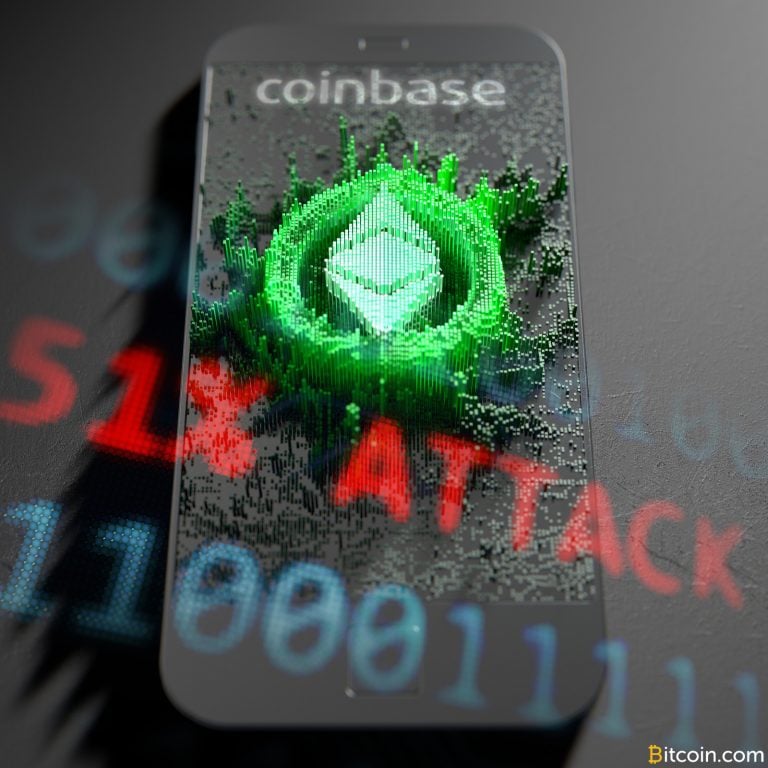
#Blockchain Coinbase Suspends Ethereum Classic Following 51 Percent Attack

Coinbase has ceased interactions with the Ethereum Classic (ETC) blockchain after the exchange detected a 51 percent attack on the network. Following the discovery of a “deep chain reorganization” of the ETC blockchain, Coinbase suspended Ethereum Classic withdrawals and deposits.

Also Read: Major Mining Pools Have a ‘High Die-Off Rate’ Study Reveals

Coinbase Stops Interacting With ETC Blockchain After Deep Chain Reorganization

Coinbase Suspends Ethereum Classic Following 51 Percent AttackCoinbase has published a blog post titled “Ethereum Classic ETC is Currently Being 51% Attacked” detailing a malicious attack on the ETC network.

The post states that on Jan. 5, 2019, Coinbase detected “a deep chain reorganization of the Ethereum Classic blockchain that included a double spend.” In order to safeguard customer funds, the exchange “immediately paused interactions with the ETC blockchain.” The exchange was alerted to the attack by its automated systems, after which the company’s on-call engineers responded and worked to confirm the report.

Coinbase chose not to publicly post analysis pertaining to the attack earlier in order to avoid creating a “false alarm” that could have created premature or unnecessary market instability. The company also notes that traders who attempted to send or receive ETC using Coinbase’s platforms were unable to complete said transactions as a result of the response.

Coinbase Yet to Re-Enable ETC Transactions

Coinbase Suspends Ethereum Classic Following 51 Percent AttackSince the incident, Coinbase claims to have detected “12 additional reorganizations that included double spends,” totaling 219,500 ETC valued at approximately $1.1 million.

The exchange notes that “a full blockchain analysis is beyond the scope” of its blog post, adding that further examination into “the addresses sending the double spend transactions, the history of sends/receives from the addresses, the block fields such as timestamp, and the subsequent movement of miner rewards from attack blocks may shed light on the threat actor or actors behind these attacks.”

Coinbase is currently assessing the “safety” of re-enabling ETC transactions and will communicate with customers regarding updates to the exchange’s support for Ethereum Classic. The post asserts that “Coinbase was not the target of this double spend and no funds were lost.”

What is your response to the recently increased prevalence of 51 percent attacks targeting altcoins? Post your thoughts in the comments section below!


Images courtesy of Shutterstock


At Bitcoin.com there’s a bunch of free helpful services. For instance, have you seen our Tools page? You can even lookup the exchange rate for a transaction in the past. Or calculate the value of your current holdings. Or create a paper wallet. And much more.

The post Coinbase Suspends Ethereum Classic Following 51 Percent Attack appeared first on Bitcoin News.

from Bitcoin News http://bit.ly/2AvkPMX Coinbase Suspends Ethereum Classic Following 51 Percent Attack