About Startup365

Chaque jour nous vous présenterons une nouvelle Startup française ! Notre pays regorge de talents et d'entrepreneurs brillants ! Alors partons à la découverte des meilleures startup françaises ! Certaines d'entre elles sont dans une étape essentielle dans la vie d'une startup : la recherche de financement, notamment par le financement participatif (ou crowdfunding en anglais). Alors participez à cette grande aventure en leur faisant une petite donation ! Les startups françaises ont besoin de vous !

#USA Women’s co-working space The Wing adjusts membership policy to allow all genders

//

The Wing opened its doors to entrepreneurial women in New York City in 2016 with the support of about $2.5 million in seed funding, marketing itself as a place for women of diverse backgrounds to meet and do work. Now, as it officially amends its membership policy to allow all genders — yes, men included — it will have to work harder to stay true to its promise and purpose: to create a feminist co-working empire.

In two years, The Wing built a committed social media following and launched an in-house magazine and an online store offering merchandise adorned with third-wave feminist catchphrases. It established additional co-working spaces in New York, Washington, DC and San Francisco and entered into financial agreements with high-profile venture capitalists. Just three weeks ago, The Wing company announced a $75 million Sequoia-led Series C funding that more than doubled the New York-based female-founded startup’s previous valuation to $375 million, according to PitchBook.

While The Wing grew its community of female-identifying members to more than 6,000, debates surrounding its anti-male doctrine sprang up on and off the internet. Men aren’t allowed in The Wing — is that legal? Many questioned. No, probably not. Why? Because as much as The Wing disguises itself as a social club, it’s technically too large to benefit from laws that actually permit those sorts of groups to practice gender discrimination, according to a Jezebel report. So yes, male-only social clubs were able to thrive for decades because they were lean — small enough to legally discriminate. Still, there’s no reason The Wing needed to bar men from accessing its properties and resources, other than the fact that there have been protected male safe-havens promoting business and entrepreneurship for a very long time, while female-focused rooms of that sort have been few and far between.

Thought pieces were written, Tweets were sent and the New York City Commission on Human Rights opened a “commission-initiated investigation,” which is still ongoing, according to The Wing. Then a man by the name of James Pietrangelo filed a $12 million lawsuit against The Wing alleging its “illegal discrimination against men … was/is egregious: brazen, flagrant, intentional, willful, wanton, actually malicious, motivated by evil and ill-will, deliberately oppressive, outrageous, and willfully and callus disregardful of the rights of men.”

Pietrangelo takes issue with essentially every piece of The Wing’s DNA: its slogans, decor, schemes and employees. “The Wing’s brazen attitude towards the law and the civil rights of men can be summed up by one of The Wing’s own favorite slogans: “Girls Doing Whatever The F*ck They Want,” the lawsuit states.

“Of the 53 corporate and/or front-of-the-house positions, identified on the wing’s About page of its website, all 53 are women — arguably a statistical impossibility if the wing is not discriminating based on sex and/or gender-identity,” it continues.

Now, The Wing says it’s altered its membership policy to allow access to anyone, as first reported by Insider. The company, however, said the transition has been planned for some time and is not a result of the ongoing lawsuit: “The membership policy was codified and adopted before the lawsuit,” a spokesperson for The Wing told TechCrunch.

Keychains for sale on The Wing’s online shop.

“Gender identity and gender presentation are two distinct concepts and do not always align,” co-founder and chief executive Audrey Gelman wrote in a letter to members announcing the policy amendment. “To that end, we’ve made some internal updates and adopted written membership policies to ensure that our staff is trained not to make assumptions about someone’s identity based on how they present, or to ask prospective members or guests to self-identify. We initiated these trainings and policies so that we can continue to build a community that reflects our values and pushes us all to be more inclusive.”

As for how new membership policies will change The Wing’s female-friendly environment and community of women, that’s to be determined. The company is still figuring out just how it will ensure any new members believe and respect its mission of promoting women.

Ultimately, The Wing’s decision to open up membership is good business. Given that it is a space meant for entrepreneurs to get work done, it makes sense that it would be inclusive of all genders, as women and non-binary folk often build businesses with cisgender males, too. The Riveter, another female-focused co-working startup, has allowed men in from the very beginning for that very reason.

“I don’t think the future is female, I think the future is fluid,” The Riveter founder and CEO Amy Nelson told TechCrunch last month. “Gender is becoming an outdated idea but at the same time, it’s important to think of women when we build these spaces … There is a lot of value to women’s only spaces but our take on it is we want to redefine the future of work for women and we want everyone to be part of it.”

Despite demonstrating a certain brand of millennial feminism that isn’t inclusive or appealing to all, The Wing has been very blatant about its diversity and inclusion efforts since its beginning. Sure, it’s learned and adapted along the way, but considering the dearth of attempts in Silicon Valley to create safe spaces for women or to fund women’s businesses, The Wing’s efforts to promote women should be encouraged rather than torn down.

from Startups – TechCrunch https://tcrn.ch/2SIU1jo
#USA WeWork rebranding won’t work

//

The company formerly known as WeWork has rebranded as the We Company — although a better name for its network of on-demand office spaces for the newly incorporated and nominally employed, co-living spaces for the same easyJet-set and educational and coding services could be “House of Cards.”

News of the rebranding (first reported via Fast Company) comes on the heels of reports that the company would no longer be receiving a planned $16 billion golden parachute to escape a soon-to-be-sinking real estate market investment from longtime backer Masayoshi Son’s SoftBank and his SoftBank Vision Fund.

WeWork, which lost $1.2 billion over the first three quarters of 2018 according to an FT report, is rebranding to shift attention from its real estate play to a broader blend of living and educational services that now comprise the three pillars of its business (to be clear, the largest pillar is its real estate properties).

The knock against the company has always been that it was a real estate investment masquerading as a tech company (a case which FT made magisterially last year).

In the blog post, WeWork chief executive Adam Neumann laid out the company’s new strategy, which divides the company into three different business lines: WeWork (real estate), WeLive (its co-living spaces) and WeGrow (for education).

For the We Company to succeed, a few things need to happen. Revenue needs to rebalance to the WeLive and WeGrow businesses quickly and it needs to grow its services even more aggressively. And the result of each needs to be actual profitability.

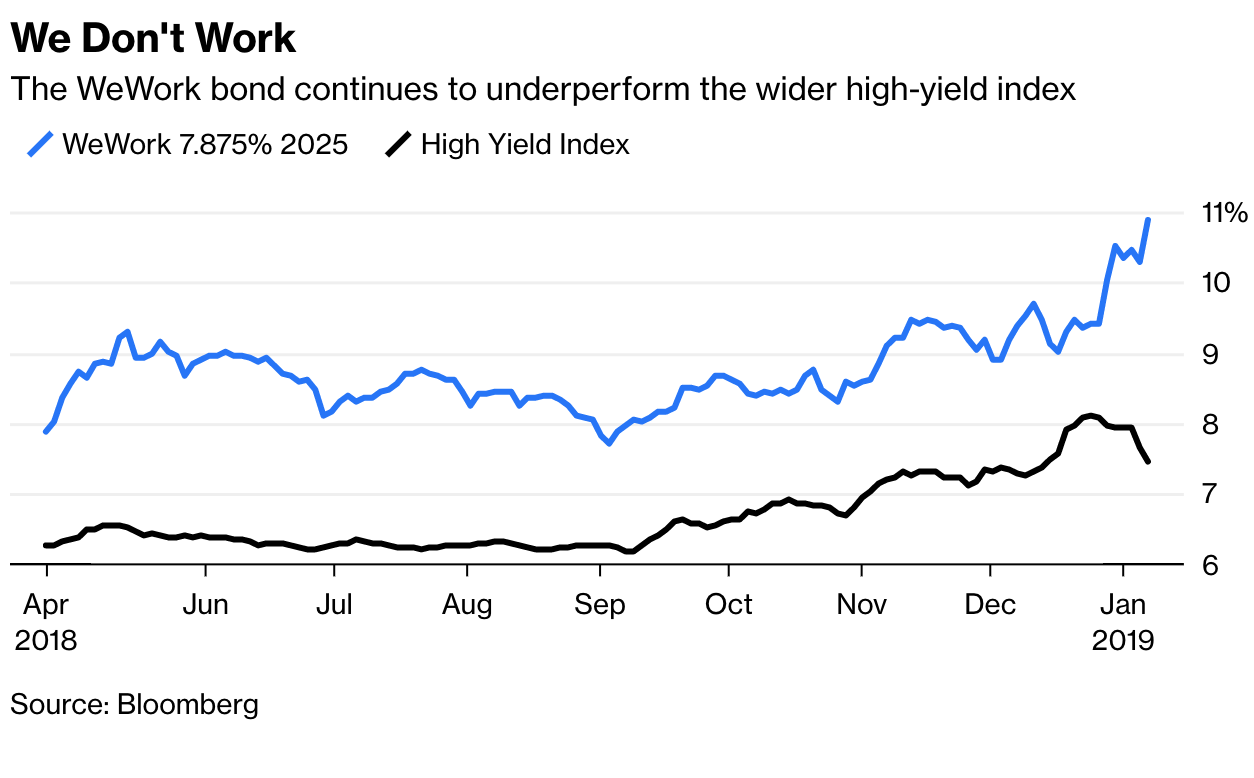
There aren’t a lot of really hard metrics to gauge the company’s current performance. But the good people at Bloomberg did uncover actual financial data on the company’s debt, which is underperforming compared to industry benchmarks.

Neumann said the original vision of the company was an all-encompassing network of offerings that would help customers bank, shop, live and play. That’s a mighty goal worthy of a Vision Fund, but its vision may turn out to be a fever dream if the indicators are right and the worldwide slide into recession finally happens.



from Startups – TechCrunch https://tcrn.ch/2TBCXvD

#USA Daily Crunch: The age of quantum computing is here

//

The Daily Crunch is TechCrunch’s roundup of our biggest and most important stories. If you’d like to get this delivered to your inbox every day at around 9am Pacific, you can subscribe here:

1. IBM unveils its first commercial quantum computer

The 20-qubit system combines the quantum and classical computing parts it takes to use a machine like this for research and business applications into a single package. While it’s worth stressing that the 20-qubit machine is nowhere near powerful enough for most commercial applications, IBM sees this as the first step towards tackling problems that are too complex for classical systems.

2. Apple’s trillion-dollar market cap was always a false idol

Nothing grows forever, not even Apple. Back in August we splashed headlines across the globe glorifying Apple’s brief stint as the world’s first $1 trillion company, but in the end it didn’t matter. Fast-forward four months and Apple has lost more than a third of its stock value, and last week the company lost $75 billion in market cap in a single day.

3. GitHub Free users now get unlimited private repositories

Starting today, free GitHub users will now get unlimited private projects with up to three collaborators. Previously, GitHub had a caveat for its free users that code had to be public if they didn’t pay for the service.

Photo credit: Chesnot/Getty Images

4. Uber’s IPO may not be as eye-popping as we expected

Uber’s public debut later this year is undoubtedly the most anticipated IPO of 2019, but the company’s lofty valuation (valued by some as high as $120 billion) has some investors feeling uneasy.

5. Amazon is getting more serious about Alexa in the car with Telenav deal

Amazon has announced a new partnership with Telenav, a Santa Clara-based provider of connected car services. The collaboration will play a huge role in expanding Amazon’s ability to give drivers relevant information and furthers the company’s mission to bake Alexa into every aspect of your life.

6. I used VR in a car going 90 mph and didn’t get sick

The future of in-vehicle entertainment could be VR. Audi announced at CES that it’s rolling out a new company called Holoride to bring adaptive VR entertainment to cars. The secret sauce here is matching VR content to the slight movements of the vehicle to help those who often get motion sickness.

7. Verizon and T-Mobile call out AT&T over fake 5G labels

Nothing like some CES drama to start your day. AT&T recently shared a shady marketing campaign that labeled its 4G networks as 5G and rivals Verizon and T-Mobile are having none of it.

from Startups – TechCrunch https://tcrn.ch/2TByMQt

#Blockchain Leading Crypto Markets Post Worst Year of Monthly Price Action on Record

When looking at monthly market performance, 2018 was the bloodiest year in the history of the cryptocurrency markets. Of the seven largest cryptocurrencies by market cap, only three were able to produce more than two green monthly candles during 2018.

Also Read: Bitblock Publishes Alternative Valuation Model That Suggests BTC Is Underpriced

BTC and ETH Produce Most Red Monthly Candles in Calendar Year Ever

In 2018, bitcoin core (BTC) saw the most red monthly candles in its history, posting three green and nine red monthly candles throughout the year. BTC gained 2% during the month of February, 33% April, and 21% July. The price of BTC fell by roughly 73% during 2018, opening the year trading for $13,900 and closing 2018 at roughly $3,700.

Leading Crypto Markets Post Worst Year of Monthly Price Action on Record
BTC/USD – Bitstamp – 1M, 2018

Based on monthly performance, the second most-bloody year in BTC’s history was 2014, during which BTC posted four green and eight red monthly candles. In 2014, BTC fell by 56% from $730 to $320.

Leading Crypto Markets Post Worst Year of Monthly Price Action on Record
BTC/USD – Bitstamp – 1M, 2014

ETH also posted its poorest annual performance during 2018 with three green and nine red monthly candles. The price of ETH gained 53% in January, nearly 75% in April, and 19% in December of last year. Overall, ETH shed nearly 82% of its value during 2018, falling from roughly $735 to start 2019 trading for $135.

Leading Crypto Markets Post Worst Year of Monthly Price Action on Record
ETH/USD – Poloniex (Estimated by Tradingview) – 1M, 2018

XLM Posts Strongest Monthly Performance of Top Markets

Stellar (XLM) was the strongest performing cryptocurrency of 2018 when counting green candles, posting four green and eight red candles during last year. XLM started 2018 with a gain of 53% in January, before gaining 103% in April, 44% during July, and 17% in September.

Leading Crypto Markets Post Worst Year of Monthly Price Action on Record
XLM/USD – Bittrex (Estimated by Tradingview) – 1M, 2018

Despite performing better than many other crypto assets during 2018, XLM posted its worst performing year on record. XLM lost 67% during last year, opening 2018 at $0.35 and closing the year below $0.12.

BCH, XRP, EOS, and LTC Post Just Two Green Monthly Candles During 2018

BCH posted green months during April and July of 2018, during which it gained 97% and less than 4% respectively. Overall, BCH shed roughly 94% of its value last year, trading for nearly $2,400 at the start of January and closing the year at roughly $150.

Leading Crypto Markets Post Worst Year of Monthly Price Action on Record
BCH/USD – Kraken – 1M, 2018

XRP’s sole green months for the year were April and September, which saw monthly gains of 66% and 74%. XRP posted an annual loss of 82%, falling from nearly $1.97 to end 2018 trading for $0.36.

Leading Crypto Markets Post Worst Year of Monthly Price Action on Record
XRP/USD – Bitfinex – 1M, 2018

EOS saw bullish action during January and April of last year, during which the market posted gains of 59% and 195% respectively. EOS dropped by 78% during 2018, sliding from $12.17 to close the year at $2.62.

Leading Crypto Markets Post Worst Year of Monthly Price Action on Record
EOS/USD – Bitfinex – 1M, 2018

LTC Produces Second-Most Bearish Year on Record

During 2018, LTC posted modest monthly price gains in February and April, with LTC increasing by 23% and 28%. Overall, LTC fell by 86% last year.

Leading Crypto Markets Post Worst Year of Monthly Price Action on Record
LTC/USD – Coinbase – 1M, 2018

Despite the heavy losses, 2018 comprised LTC’s second most-bearish year on record. During 2014, LTC fell 88% from roughly $23.80 to $2.75, and only posted a single green monthly candle.

Leading Crypto Markets Post Worst Year of Monthly Price Action on Record
LTC/USD – Bitfinex – 1M, 2014

Do you think the worst of the bear trend has already passed? Share your thoughts in the comments section below!


Images courtesy of Shutterstock, Tradingview.


At Bitcoin.com there’s a bunch of free helpful services. For instance, have you seen our Tools page? You can even lookup the exchange rate for a transaction in the past. Or calculate the value of your current holdings. Or create a paper wallet. And much more.

The post Leading Crypto Markets Post Worst Year of Monthly Price Action on Record appeared first on Bitcoin News.

from Bitcoin News http://bit.ly/2Fj6eHG Leading Crypto Markets Post Worst Year of Monthly Price Action on Record

#Blockchain Major Mining Pools Have a ‘High Die-Off Rate’ Study Reveals

Major Mining Pools Have a ‘High Die-Off Rate,’ Study Reveals

On Monday, Coinmetrics.io published a study looking at hashrate history of the most competitive BTC mining pools. The research from the open source cryptocurrency analytics site reveals interesting insights into how the mining ecosystem has evolved over time.

Also read: Connecticut Software Engineering School Receives $10,000 BTC Donation

‘Major Mining Pools Are Fallible’

Cryptocurrency mining is a very competitive industry that has grown significantly in recent years. The processing power of all the SHA-256 algorithm-based coins is more powerful than the world’s supercomputers combined, and individuals and businesses have sunk billions into the mining industry. On Jan. 7 Coinmetrics.io released some interesting research concerning the mining pools processing thousands of BTC blocks over the years. The research team at Coinmetrics explained that the analysis was in response to an Ark Invest issue published last year which lightly touched upon the mining industry and hashrate distribution.

Major Mining Pools Have a ‘High Die-Off Rate’ Study Reveals
Nic Carter, cofounder of CoinMetrics.io, tweets about the new study “Granular mining pool mapping with Bitcoin’s coinbase outputs.”

The authors state that the data used in the Coinmetrics report stems from well-known sources like BTC.com and Bitcoinity, but the team also parsed the coinbase outputs from the last 450,000 BTC blocks. These days, most mining pools use the coinbase parameter to identify themselves when a block is mined on the blockchain. Coinmetrics explains the habit is completely voluntary and in the early days, miners did not identify themselves in this manner. Due to this factor, Coinmetrics skipped the first 100,000 blocks when parsing the chain. After sifting through the particulars, the researchers were able to identify 37 individual mining pools or large solo miners. The statistics suggest that these bitcoin miners mined at least 0.1% of the blocks in the period.

“The striking conclusion from the all-time chart is just how fallible major mining pools are: several influential pools which once controlled significant fractions of Bitcoin’s hashrate – BTC Guild, Ghash, BTCC – are now totally defunct,” the report emphasizes.

Coinmetrics continues by stating:    

Indeed, few pools seem to be truly persistent, F2pool and Slushpool being notable exceptions.

Major Mining Pools Have a ‘High Die-Off Rate’ Study Reveals
Labeled chart of major mining pools. “37 individual mining pools / large solo miners which mined at least 0.1% of the blocks in the period, and 11 additional identifiable entities which we excluded due to not meeting that threshold (they were aggregated into ‘other known’),” the study details. 

The Rise of Unknown Miners in 2018 and a Shrinking Reward Distribution

One notable aspect from the report is that there’s been a significant rise of “unknown miners” or operators choosing not to identify themselves in 2018. There could be a variety of reasons why there’s been a spike of unknown miners, such as for privacy and political reasons. The Coinmetrics research also details that operations like F2pool have seen a significant drop in hashrate and Antpool’s slice of the pie has “moderately declined.” BTCC and BW.com have closed operations and Bitfury’s hashrate has dropped as well. Both F2pool and Antpool have dominated with roughly 83,000 blocks combined, but to this day BTC Guild still holds the most captured BTC by pool. This factor is due to the block rewards shrinking, as pools could amass a lot of coins if they had a sizable amount of hashrate back in the day.

Major Mining Pools Have a ‘High Die-Off Rate’ Study Reveals
BTC Guild was able to accumulate the most BTC during its tenure mining due to the early block rewards being much larger.

Most veteran bitcoiners will remember the old mining pool giants of the past mentioned in the Coinmetrics report. Back then there were plenty of BTC Guild memes and proponents begging individual miners to stop mining with the pool when it gathered 48 percent of the network’s hashrate five years ago. The same thing happened a year later with Ghash when the community was up in arms after the pool gathered more than 51% of the network multiple times in June 2014. Researchers Ittay Eyal and Emin Gün Sirer from the publication Hacking, Distributed explained the situation in great detail at the time and stated:

Actually, it became a 55% miner for almost a day. And prior to that, it seems to have tested the waters over a period of 10 days or so, perhaps gauging the public’s reaction.

Major Mining Pools Have a ‘High Die-Off Rate’ Study Reveals
BTC Guild in 2013. The mining pool caused a lot of debate at the time. 

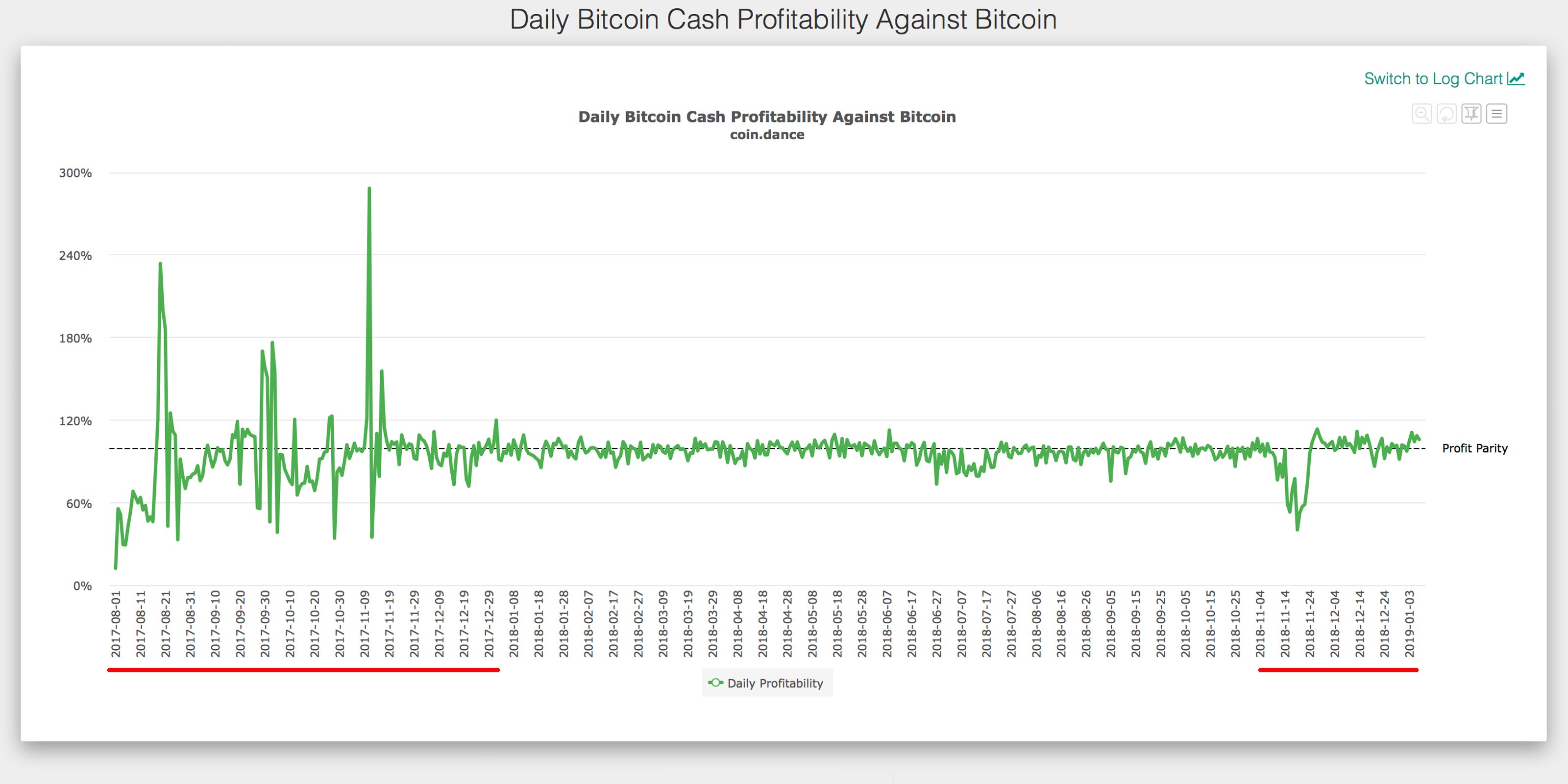
One factor not mentioned in the Coinmetrics report is the hashrate variations that have stemmed from Bitcoin forks. A lot has changed in the last two years and since August 2017 there’s been some variance of miners switching between the BTC and BCH hashrate as well.

Major Mining Pools Have a ‘High Die-Off Rate’ Study Reveals
The red lines represent deep variances between the BTC and BCH hashrate from Aug. 1, 2017, to December 2017 and then the 2018 BCH hard fork as well. This data stems from the analytics website Coin Dance. 

Because many mining pools like Antpool, Viabtc, F2pool, and BTC.com mine both chains, there was a notable divergence between the two chains’ mining profitability up until December 2017. Spectators also noted a slight deviation of pools switching hash during the BCH hashwars that started on Nov. 15 last year. The Coinmetrics analysis concludes by saying that there are a lot more stories in the data they scraped and they have “only begun to scratch the surface.”

What do you think about the recently published Coinmetrics report on mining pools? Let us know what you think about this subject in the comments section below.


Image credits: Coinmetrics.io, Coin Dance, and Shutterstock.


Have you seen our widget service? It allows anyone to embed informative Bitcoin.com widgets on their website. They’re pretty cool, and you can customize by size and color. The widgets include price-only, price and graph, price and news, and forum threads. There’s also a widget dedicated to our mining pool, displaying our hash power.

The post Major Mining Pools Have a ‘High Die-Off Rate’ Study Reveals appeared first on Bitcoin News.

from Bitcoin News http://bit.ly/2Fgpfvb Major Mining Pools Have a ‘High Die-Off Rate’ Study Reveals

#Blockchain The Daily: Binance Adds Stablecoin Pairs, Tzero Patents Integration Platform

The Daily: Binance Adds Stablecoin Pairs, Tzero Patents Integration Platform

Cryptocurrency exchange Binance is opening trading for three stablecoin pairs. Also in Tuesday’s Daily, Overstock’s Tzero has patented a solution to integrate traditional and cryptocurrency trading systems, Morgan Creek founder Jason Williams offers his Lamborghini for bitcoin, and in Brazil, crypto investors are looking to buy vaults to safely store their digital assets.

Also read: Epic Founder Addresses Fortnite Crypto Rumors, Robinhood Recruiting in London

Binance Launches Trading for Three Stablecoin Pairs

The Daily: Binance Adds Stablecoin Pairs, Tzero Patents Integration PlatformBinance, currently the largest crypto exchange by daily trading volume, has announced it’s adding new trading pairs that will allow users to trade stablecoins against one other. Starting from Tuesday, Jan. 8, the following pairs will be available to traders: PAX/TUSD, USDC/TUSD and USDC/PAX.

In November, the digital asset trading platform rebranded its USDT market as a combined stablecoin market, introducing the symbol USDⓈ. The exchange explained this was done to support more trading pairs with different stablecoins offered as a base pair. Later Binance added to the new market pairs with the stablecoins paxos standard (PAX) and USD coin (USDC).

Last year saw the arrival of several stablecoins that are now competing with the dollar-pegged tether (USDT). These include the two tokens that were approved by the New York State Department of Financial Services in September, gemini dollar (GUSD), and paxos standard (PAX), also backed one-to-one with U.S. fiat currency.

Tzero to Integrate Traditional Trading Systems and Crypto Exchanges

The Daily: Binance Adds Stablecoin Pairs, Tzero Patents Integration PlatformSecurity token trading platform Tzero, a subsidiary of Overstock, has secured a patent for a platform that allows integration between traditional trading systems and digital asset exchanges. Tzero’s Crypto Integration Platform is designed to serve as an interface between the two types of systems.

According to the filing, the platform can host initial public offerings (IPOs) and offerings of securities registered with the U.S. Securities and Exchange Commission (SEC). It is also intended to be used to trade these securities in secondary market transactions.

The “digital transactional items” mentioned in the patent represent tokens, securities, digital assets, digital shares, and cash equivalents. When receiving an order, the platform is expected to verify the availability and determine the best market price of the digital asset before a transaction is made.

Online retail giant Overstock is a crypto-friendly company. Recently it announced it will cover part of its tax obligations to the U.S. state of Ohio using bitcoin. Ohio’s new payment portal, which was launched a couple of months ago, allows businesses to pay their taxes with bitcoin core (BTC) and bitcoin cash (BCH) via Bitpay.

Morgan Creek Founder Wants Crypto for His Lambo

The Daily: Binance Adds Stablecoin Pairs, Tzero Patents Integration PlatformJason Williams, co-founder of Morgan Creek Digital Assets, recently tweeted that he is about “to do something that has never been done in crypto.” According to the post, Williams’s Lamborghini is up for sale and the owner wants to buy cryptocurrency with the money he gets for the car. “Offers in BTC accepted,” the entrepreneur noted as well.

Williams has received a lot of comments and even offers for the Lambo. According to Monero’s lead developer Riccardo Spagni, the sale is a good move. “Huracans are awful investments. Unless it’s a Performante, then there’s a limited audience in the future. But seriously, better to get rid of it,” Spagni wrote. “Too many cars. Not enough BTC honestly,” Jason Williams said in response.

Brazilians on the Lookout for Vaults to Store Bitcoin

The Daily: Binance Adds Stablecoin Pairs, Tzero Patents Integration PlatformSafe storage should be a priority for any investor in possession of large amounts of digital cash. According to the local press, many Brazilians don’t feel that hard wallets and secure passwords provide enough protection. Local companies manufacturing and building physical vaults have registered a growing demand for their services from cryptocurrency owners, which has actually revived the industry.


The Folha de São Paulo news outlet recently reported that some of the safes are part of quite sophisticated security systems. They are often installed behind reinforced armored doors and come with advanced features for biometric authorization such as palm scanners that can identify up to 5 million points on the hand of a person who’s trying to open the vault.

What are your thoughts on today’s news tidbits? Tell us in the comments section.


Images courtesy of Shutterstock, Jason Williams (Twitter).


At Bitcoin.com there’s a bunch of free helpful services. For instance, have you seen our Tools page? You can even lookup the exchange rate for a transaction in the past. Or calculate the value of your current holdings. Or create a paper wallet. And much more.

The post The Daily: Binance Adds Stablecoin Pairs, Tzero Patents Integration Platform appeared first on Bitcoin News.

from Bitcoin News http://bit.ly/2VC3evJ The Daily: Binance Adds Stablecoin Pairs, Tzero Patents Integration Platform

#Blockchain Bitblock Publishes Alternative Valuation Model That Suggests BTC Is Underpriced

Bitblock Publishes Alternative Valuation Model for BTC

Bitblock Capital has published an alternative mining valuation model for BTC. The company has published a report that examines data from July 2016 to Dec. 2018 that seeks to “explain the relationships between [BTC] price and its intrinsic value” using the model.

Also Read: Google Play Store Forces Samourai Wallet to Remove Security Features

Bitblock Capital Proposes Alternative Mining Valuation Model for BTC

Bitblock Publishes Alternative Valuation Model That Suggests BTC Is UnderpricedThe report by Bitblock Capital argues that since 2017, “the real value of [BTC] has been the center of an increasingly vibrant discussion in the market,” noting that the price of BTC “behaves like a highly speculative security,” however, the crypto asset is “produced like gold.”

The paper asserts that there are currently three popular valuation theories pertaining to BTC: the currency model, supply and demand, and the mining model.

Bitblock states that there are several problems associated with the currency model, with the report highlighting the security characteristics exhibited by BTC price action, and concluding that the currency model “has very limited explanatory power” with regard to the value of BTC.

While the report finds that “Without additional price factors,” the supply and demand model “is able to analyze the equilibrium price of [BTC],” Bitblock also finds the supply and demand model to have a number of setbacks. In particular, the report notes that “it is extremely challenging to measure the position and elasticity of demand and supply curve accurately,” concluding that the model “has very limited practical use” – especially with regard to predictions of price movement.

Bitblock’s Mining-Based Valuation Model

The mining model is described as being “based on the non-arbitrage pricing or risk-neutral pricing model in financial economics” which states that “any riskless arbitrage opportunity is quickly taken up by well-capitalized market players,” maintaining prices at “the arbitrage-free price level”.

Bitblock Publishes Alternative Valuation Model That Suggests BTC Is UnderpricedThe paper utilizes a “revenue-cost model from the point of view of miners” to value BTC. The model is based on the assumption that there is “market equilibrium in the mining industry.”

Further, Bitblock assumes that the “value of [BTC] relies solely on considerations of mining power and electricity,” and disregards “irrational volatility and speculation” in the markets.

The report also appeals to the labor theory of value, describing the key property of BTC as a storage of value, adding that BTC “stores equivalent values from the ‘work of machines’.”

BTC Price Deviates Significantly From Bitblock’s Model

According to the “equilibrium price” generated by Bitblock’s valuation model, price and equilibrium value were balanced from July 2016 until late 2017, with BTC prices gradually increasing alongside a steadily rising hash rate.

Bitblock Publishes Alternative Valuation Model That Suggests BTC Is Underpriced

The report asserts that from Nov. 2017 onwards, “price deviated from value significantly,” with BTC prices skyrocketing in spite of steadily rising hash rate. Following a brief correction in November that saw price realign with equilibrium value according to Bitblock’s model, the final leg of the 2017 bull run saw value deviate at the end of the year.

Bitblock Publishes Alternative Valuation Model That Suggests BTC Is Underpriced

After price crashed during the start of 2018, the valuation model shows price consolidating near value for a few months, before drastically falling below the equilibrium price value produced by the model.

With regards to current market action, the report asserts that it is “irrational” for prices to remain significantly below the Equilibrium Price for a long period of time.

What do you think of Bitblock’s valuation model? Share your thoughts in the comments section below!


Images courtesy of Shutterstock, Bitblock


At Bitcoin.com there’s a bunch of free helpful services. For instance, have you seen our Tools page? You can even lookup the exchange rate for a transaction in the past. Or calculate the value of your current holdings. Or create a paper wallet. And much more.

The post Bitblock Publishes Alternative Valuation Model That Suggests BTC Is Underpriced appeared first on Bitcoin News.

from Bitcoin News http://bit.ly/2SGAL5T Bitblock Publishes Alternative Valuation Model That Suggests BTC Is Underpriced

#UK Japanese pile into new £10m GeoSpock fundraising

//

Japanese investors Global Brain and 31Ventures along with data tech company KDDI Supership have chipped into a fresh £10 million funding round for Cambridge UK extreme data specialist GeoSpock. 

It takes the total raised by GeoSpock to date to £19.5m – just under $25m – and is designed to fast-track transformational GeoSpock engagement with the massive Asian markets of Japan and Singapore.

GeoSpock’s unique spatial big data platform enables companies to access dynamic contextual data visualisation and programmatic analytics.

The latest investment was led by existing backers Cambridge Innovation Capital jointly with Parkwalk Advisors and Japanese firms Global Brain and 31Ventures. Japanese data tech company KDDI Supership joined as a strategic investor. Investment was also secured from existing investor, Jonathan Milner, the serial Cambridge life science entrepreneur.

The additional funding will support GeoSpock’s rapid international expansion strategy to help develop key client accounts, particularly in the strategic markets of Singapore and Japan. 

The investment will also allow the company to continue to invest in research and development, particularly in the areas of machine learning and data science.

GeoSpock is fast establishing itself as the de facto processing engine at the heart of next-generation smart infrastructure – including smart cities and the Internet of Everything. 

The company powers future mobility applications, including the management of autonomous vehicle fleets, working with businesses across the automotive, telecoms, mobility, marine, media, and retail sectors.

Victor Christou, CEO of Cambridge Innovation Capital said: “We’re delighted to lead GeoSpock’s latest funding drive, enabling this exciting company to innovate and scale globally. 

“The opportunity presented by geospatial data is huge and this funding will support GeoSpock in delivering geo-temporal data understanding and visualisation for the everything-connected world. 

“We also welcome KDDI Supership to this investment, whose expertise, particularly in Asia, will help GeoSpock widen and deepen its global reach.”

from Business Weekly http://bit.ly/2C74zBJ

Posted in #UK

#UK AstraZeneca and Cambridge allies identify cancer breakthrough

//

Global pharma giant AstraZeneca is working with scientists at a fertile Cambridge University laboratory to commercialise potential new cancer treatments arising from critical research into the ATM protein.

Scientists in Professor Steve Jackson’s laboratory at The Gurdon Institute have identified mechanisms by which drug sensitivities characteristic of ATM-deficient cells can be counteracted by changes in other genes. 

These results are important for both understanding cancer drug resistance in the context of sporadic cancers, as well as highlighting potential therapeutic targets for the genetic disease, ataxia-telangiectasia (A-T).

Mutations in the ATM gene cause devastating neurodegenerative and A-T and are also associated with various forms of sporadic cancer.

Previous work has shown that the ATM protein, which is produced from the ATM gene, serves as a molecular guardian of the genome by detecting DNA damage and promoting its repair. Consequently, A-T patients and ATM-deficient cells are hyper-sensitive to various endogenous DNA lesions that can lead to neurodegeneration, as well as DNA-damaging agents used in cancer therapy such as PARP inhibitors.

Professor Jackson said: “This study marks a major step forward in our understanding of how the ATM protein maintains genome stability and how ATM defects can cause cancer and neurodegeneration in human patients with A-T. 

“My colleagues and I are very excited by the potential clinical applications for our findings, which we now plan to actively pursue in my laboratory and with our colleagues elsewhere.”

Researchers in the lab have collaborated with colleagues at AstraZeneca to identify mechanisms by which the drug sensitivities of ATM-deficient cells can be alleviated by changes in other genes. 

Through using cutting-edge CRISPR-Cas9 genetic screens, the authors show that defects in the products of several genes also involved in DNA repair pathways, including components of the BRCA1-A complex and the non-homologous end joining factors LIG4, XRCC4 and XLF, can alleviate the hypersensitivity of ATM-deficient cells to PARP inhibitors and the chemotherapeutic drug topotecan.

As well as providing new mechanistic insights into how cells respond to DNA damage, these findings also have potential medical relevance. First, they suggest how cancers with ATM mutations might evolve resistance in the clinic and how this may make these resistant cancers susceptible to other anti-cancer agents. Second, they suggest potential therapeutic targets for A-T.

Dr Gabriel Balmus from Dementia Research Institute at University of Cambridge, and Domenic Pilger, Jackson Lab Cancer Research UK graduate student, who are co-lead authors on the paper said: “We are excited by the publication of our research and by the possibility that it might improve cancer therapies and could lead to a therapeutic approach for the neurodegenerative disease A-T.”

Dr Josep Forment, Oncology team leader at AstraZeneca who is co-lead and co-corresponding author of the study added: “It has been wonderful collaborating with the group of Prof Steve Jackson to carry out these exciting studies. 

“My colleagues and I at AstraZeneca are now exploring how these findings might lead to the discovery of more effective cancer treatments.”

• PHOTOGRAPH SHOWS: Professor Steve Jackson

from Business Weekly http://bit.ly/2Ff9kx9

Posted in #UK

#USA Scape Technologies raises $8M to let machines visually understand their surroundings

//

Scape Technologies, a London-based computer vision startup, is de-cloaking today to announce that it has raised $8 million in seed fund and launching the first iteration of its “Visual Positioning Service,” which lets developers build apps that require location accuracy far beyond the capabilities of GPS alone.

The technology will initially target augmented reality apps, but can also be used to power applications in mobility, logistics and robotics. More broadly, Scape wants to enable any machine equipped with a camera to understand its surroundings.

Backing the round is LocalGlobe, Mosaic Ventures, Fly Ventures, and company builder Entrepreneur First. Scape Technologies was a member of EF cohort 7, which pitched at EF’s London demo day almost two years ago. The startup has remained pretty stealthy ever since. Until now, that is.

“There is a huge amount hype in the AR space right now which is why we’ve been working for the last two years in stealth, taking our time to make sure our technology is accurate, robust and scalable,” Scape Technologies co-founder and CEO Edward Miller tells TechCrunch. “We set out on a mission to build a new type of infrastructure, to allow computers to safely interpret and navigate the world, using only a camera. To make this possible, we’ve built what we refer to as our ‘Vision Engine’, which lies at the heart of everything we do at Scape”.

Miller describe’s Scape’s “Vision Engine” as a large-scale mapping pipeline that creates 3D maps from ordinary images and video. Camera devices can then query the Vision Engine using the startup’s newly launched Visual Positioning Service API to determine their exact location with far greater precision than GPS can ever provide. Starting today, the Visual Positioning Service is available within London for select partners via Scape’s SDK.

The fact that Scape’s 30 person-plus team has been able to build a detailed 3D map of London is slightly head-scratching, and that’s before factoring in the machine learning and computer vision technology required to enable machines to reference that map to accurately pinpoint “hyper location”. Miller declines to go into much detail on record with regards to how the young company was able to pull off such a large mapping exercise, for fear of giving away too much of the startup’s secret sauce.

However, it is noteworthy that Miller was one of the U.K.’s first Street View photographers, giving him a unique insight into how a company like Google can build maps at scale. He also has a background in interactive imagery, having been involved in VR projects for companies such as ESPN, UEFA and Jaguar. Scape’s other co-founder and CTO Huub Heijnen was previously a researcher in the field of robotics, where he was involved in teaching multi-legged robots how to learn to walk. “It’s pretty hardcore,” says Miller of his co-founder’s previous work.

Teaching a computer to “see” the world with a camera is no small task, either. Whereas humans might see a photograph and recognise in it a car or a building, a computer only sees a bunch of ones and zeros. The role of computer vision to interpret these ones and zeros into something meaningful.

“We’ve had to make significant technological breakthroughs to allow computers to recognise their location accurately, quickly and in varying weather conditions,” explains Miller. “Most importantly, we’ve invested significant efforts in ensuring our Visual Engine is scalable. The world is a big place and we can’t afford to rely on a system that can’t grow with demand. Unlike other approaches, Scape’s Vision Engine scales horizontally to 100s of servers at a time, so we can provide our Visual Positioning Service within areas the size of an entire city”.

More ambitious still, enabling accurate location is “just the beginning”. Over the next 5 years, Scape plans to develop what it calls “ubiquitous spatial intelligence,” which will allow devices to understand where they are and what is around them, using only a camera. The thinking is that with exponential growth in IoT and wearables, the world is becoming increasingly augmented with physical hardware designed to live and operate amongst us.

“With new industries like augmented reality and self-driving cars on the rise, it’s vital that these new types of computers understand with extreme precision where they are and what’s around them,” cautions Scape’s CEO.

from Startups – TechCrunch https://tcrn.ch/2TExhRL