About Startup365

Chaque jour nous vous présenterons une nouvelle Startup française ! Notre pays regorge de talents et d'entrepreneurs brillants ! Alors partons à la découverte des meilleures startup françaises ! Certaines d'entre elles sont dans une étape essentielle dans la vie d'une startup : la recherche de financement, notamment par le financement participatif (ou crowdfunding en anglais). Alors participez à cette grande aventure en leur faisant une petite donation ! Les startups françaises ont besoin de vous !

#UK Tech giants including Google and Intel turn to Cambridge deep learning ace

//

Global technology giants have turned to a Cambridge UK deep learning pioneer to help steer a world first AI and ML collaboration.

myrtle.ai has assembled a globally renowned team of experts with expertise in producing low power inference circuits and already works with quoted businesses on both sides of the Atlantic.

Now it has been chosen to develop a Speech Recognition benchmark for MLPerf – a new Machine Learning (ML) benchmarking competition backed by Google, Baidu, Intel and AMD.

MLPerf, a collaboration of tech giants and researchers from numerous universities including Harvard, Stanford and the University of California Berkeley, is aspiring to drive progress in ML by developing a suite of fair and reliable benchmarks for emerging artificial intelligence hardware and software platforms.

myrtle.ai has been selected to provide the computer code that will be the benchmark standard for the Speech Recognition division. The code is a new implementation of two AI models known as DeepSpeech 1 and DeepSpeech 2, building on models originally developed by Baidu.

CEO Peter Baldwin (pictured) said: “We are honoured to be providing the reference implementations for the Speech to Text category of MLPerf. Myrtle has a world-class machine learning group and we are pleased to be able to provide the code as open source so that everyone can benefit from it.” 

Baldwin says this is the first time the AI community has come together to try to develop a series of reliable, transparent and vendor-neutral ML benchmarks to highlight performance differences between different ML algorithms and cloud configurations. 

The new benchmarking suite will be used to test and measure training speeds and inference times for a range of ML tasks.

myrtle ai’s Speech Recognition benchmark is based on proven experience in this field. Its core R & D team has speeded up Mozilla’s DeepSpeech implementations 100-fold when training on Librispeech, demonstrating their practical experience of training and deploying AI and ML algorithms.

Myrtle was founded to develop software and services for public and private data centres. Originally specialising in image processing and large scale simulation Myrtle helped produce computer generated content for over 20 major Hollywood blockbusters.

Clients have included NYSE and NASDAQ listed companies in LA, Vancouver and London as well as a major automotive OEM and a government department. 

The company is currently targeting its technology at inference workloads in data centres and is involved in a major collaboration to address the safety and verification challenges that currently preventing sophisticated deep learning networks being used in road vehicles.

Peter Baldwin has run Myrtle since founding it. He has a pure mathematics PhD from Cambridge University and a special interest in the mathematical foundations of deep learning.

He wrote and licensed Myrtle’s first commercially available software: a suite of simulation tools that ran at huge scale in private data centres. The first commercial software he ever wrote was used to help produce the chocolate river in Tim Burton’s film ‘Charlie and the Chocolate Factory’.

The celebrated founder of Cambridge Angels, Robert Sansom, is a director while another angel and entrepreneur Robert Swann, who was a first mover in the enterprise, is also on the board; two other companies that benefit from his advice are Audio Analytic and Undo Software – both global leaders in their fields of tech specialism.

From world-changing self-driving car projects to reducing the power consumption of global data centres, myrtle.ai strives to use its engineering expertise to transform the world today by making tomorrow’s AI run with unsurpassed efficiency on low power hardware.

from Business Weekly http://bit.ly/2RAn2jQ

Posted in #UK

#Blockchain Coinflex Exchange to Offer Leveraged BCH and BTC Futures

Coinflex Exchange to Offer Leveraged BCH and BTC Futures

Hong Kong-based Coinflex exchange has announced plans to offer futures contracts for bitcoin core (BTC), bitcoin cash (BCH), and ethereum (ETH) with leverage of up to 20x. All futures bought and sold on the exchange will be physically delivered, meaning that when the contracts expire, holders will be paid the underlying cryptocurrency instead of cash.

Also read: Thousands of Banned Binance Customers Remain Cut off by the Exchange

‘Crypto Derivatives Could Become Bigger Than Spot Markets’

Coinflex Exchange to Offer Leveraged BCH and BTC Futures
Coinflex CEO Mark Lamb speaking on Bloomberg

Coinflex, which spun off from the United Kingdom’s oldest cryptocurrency exchange, Coinfloor, will become one of a few exchanges in the world to offer cryptocurrency derivatives to retail investors. The contracts will start in February, according to a Bloomberg report published on Jan. 7.

Other exchanges such as Intercontinental Exchange Inc., which owns the New York Stock Exchange, and Chicago-based Eris Exchange, recently revealed plans to introduce physically delivered futures for BTC.

Coinflex chief executive officer Mark Lamb told Bloomberg that he was confident his company has the capacity to gain market share in the new area of digital currency derivatives. He stated:

Crypto derivatives could become an order of magnitude larger than spot markets and the main thing that’s holding back that growth is the lack of physical delivery. Volumes are reduced because of a problem of trust when it comes to cash-settled trades.

Coinflex’s contracts will trade against tether (USDT), the USD-pegged stablecoin. That means that at expiry, parties who are short will deliver bitcoin and receive tether, while the reverse is also true.

“Tether is the most liquid, highest volume stablecoin that exists right now and seeing the resolution of recent issues and attestations by banks and outside firms make us confident in using it as a stable coin,” Lamb stated.

Futures Daily Volume to Reach $60 Billion

Coinflex Exchange to Offer Leveraged BCH and BTC Futures

The exchange will face competition from Bitmex, one of the world’s largest digital asset trading platforms, which also has a sizable presence in Hong Kong and was co-founded by former Citigroup trader Arthur Hayes. Bitmex offers leverage of up to 100x on some of its contracts.

Lamb asserted that futures volumes could reach close to $60 billion per day compared to the current $3 billion daily trading volume in the crypto market. The Coinflex CEO further indicated that the new exchange will be incorporated in the digital currency-friendly Seychelles, in a move that will allow it to trade across the world with less hassle. He detailed:

In order to be a large, global exchange focused on traders, the best way to serve the market is to be offshore. Since crypto is a global audience and being regulated by one country would restrict who we can deal with elsewhere, we have chosen to be offshore in order to maximize our accessibility and the trust traders place in us.

Coinflex is reportedly owned by a consortium that includes Trading Technologies International Inc., crypto trader Mike Komaransky, and Dragonfly Capital Partners. Market markers B2C2, Global Advisors, Alameda Research, Amber AI, Grapefruit Trading, Coinfloor and its subsidiary companies also make part of the consortium that owns Coinflex.

What do you think about Coinflex futures contracts? Let us know in the comments section below.


Images courtesy of Shutterstock.


Need to calculate your bitcoin holdings? Check our tools section.

The post Coinflex Exchange to Offer Leveraged BCH and BTC Futures appeared first on Bitcoin News.

from Bitcoin News http://bit.ly/2TyML9w Coinflex Exchange to Offer Leveraged BCH and BTC Futures

#Blockchain Coinflex Exchange to Offer Leveraged BCH and BTC Futures

Coinflex Exchange to Offer Leveraged BCH and BTC Futures

Hong Kong-based Coinflex exchange has announced plans to offer futures contracts for bitcoin core (BTC), bitcoin cash (BCH), and ethereum (ETH) with leverage of up to 20x. All futures bought and sold on the exchange will be physically delivered, meaning that when the contracts expire, holders will be paid the underlying cryptocurrency instead of cash.

Also read: Thousands of Banned Binance Customers Remain Cut off by the Exchange

‘Crypto Derivatives Could Become Bigger Than Spot Markets’

Coinflex Exchange to Offer Leveraged BCH and BTC Futures
Coinflex CEO Mark Lamb speaking on Bloomberg

Coinflex, which spun off from the United Kingdom’s oldest cryptocurrency exchange, Coinfloor, will become one of a few exchanges in the world to offer cryptocurrency derivatives to retail investors. The contracts will start in February, according to a Bloomberg report published on Jan. 7.

Other exchanges such as Intercontinental Exchange Inc., which owns the New York Stock Exchange, and Chicago-based Eris Exchange, recently revealed plans to introduce physically delivered futures for BTC.

Coinflex chief executive officer Mark Lamb told Bloomberg that he was confident his company has the capacity to gain market share in the new area of digital currency derivatives. He stated:

Crypto derivatives could become an order of magnitude larger than spot markets and the main thing that’s holding back that growth is the lack of physical delivery. Volumes are reduced because of a problem of trust when it comes to cash-settled trades.

Coinflex’s contracts will trade against tether (USDT), the USD-pegged stablecoin. That means that at expiry, parties who are short will deliver bitcoin and receive tether, while the reverse is also true.

“Tether is the most liquid, highest volume stablecoin that exists right now and seeing the resolution of recent issues and attestations by banks and outside firms make us confident in using it as a stable coin,” Lamb stated.

Futures Daily Volume to Reach $60 Billion

Coinflex Exchange to Offer Leveraged BCH and BTC Futures

The exchange will face competition from Bitmex, one of the world’s largest digital asset trading platforms, which also has a sizable presence in Hong Kong and was co-founded by former Citigroup trader Arthur Hayes. Bitmex offers leverage of up to 100x on some of its contracts.

Lamb asserted that futures volumes could reach close to $60 billion per day compared to the current $3 billion daily trading volume in the crypto market. The Coinflex CEO further indicated that the new exchange will be incorporated in the digital currency-friendly Seychelles, in a move that will allow it to trade across the world with less hassle. He detailed:

In order to be a large, global exchange focused on traders, the best way to serve the market is to be offshore. Since crypto is a global audience and being regulated by one country would restrict who we can deal with elsewhere, we have chosen to be offshore in order to maximize our accessibility and the trust traders place in us.

Coinflex is reportedly owned by a consortium that includes Trading Technologies International Inc., crypto trader Mike Komaransky, and Dragonfly Capital Partners. Market markers B2C2, Global Advisors, Alameda Research, Amber AI, Grapefruit Trading, Coinfloor and its subsidiary companies also make part of the consortium that owns Coinflex.

What do you think about Coinflex futures contracts? Let us know in the comments section below.


Images courtesy of Shutterstock.


Need to calculate your bitcoin holdings? Check our tools section.

The post Coinflex Exchange to Offer Leveraged BCH and BTC Futures appeared first on Bitcoin News.

from Bitcoin News http://bit.ly/2TyML9w Coinflex Exchange to Offer Leveraged BCH and BTC Futures

#UK Tech giants including Google and Intel turn to Cambridge deep learning ace

//

Global technology giants have turned to a Cambridge UK deep learning pioneer to help steer a world first AI and ML collaboration.

myrtle.ai has assembled a globally renowned team of experts with expertise in producing low power inference circuits and already works with quoted businesses on both sides of the Atlantic.

Now it has been chosen to develop a Speech Recognition benchmark for MLPerf – a new Machine Learning (ML) benchmarking competition backed by Google, Baidu, Intel and AMD.

MLPerf, a collaboration of tech giants and researchers from numerous universities including Harvard, Stanford and the University of California Berkeley, is aspiring to drive progress in ML by developing a suite of fair and reliable benchmarks for emerging artificial intelligence hardware and software platforms.

myrtle.ai has been selected to provide the computer code that will be the benchmark standard for the Speech Recognition division. The code is a new implementation of two AI models known as DeepSpeech 1 and DeepSpeech 2, building on models originally developed by Baidu.

CEO Peter Baldwin (pictured) said: “We are honoured to be providing the reference implementations for the Speech to Text category of MLPerf. Myrtle has a world-class machine learning group and we are pleased to be able to provide the code as open source so that everyone can benefit from it.” 

Baldwin says this is the first time the AI community has come together to try to develop a series of reliable, transparent and vendor-neutral ML benchmarks to highlight performance differences between different ML algorithms and cloud configurations. 

The new benchmarking suite will be used to test and measure training speeds and inference times for a range of ML tasks.

myrtle ai’s Speech Recognition benchmark is based on proven experience in this field. Its core R & D team has speeded up Mozilla’s DeepSpeech implementations 100-fold when training on Librispeech, demonstrating their practical experience of training and deploying AI and ML algorithms.

Myrtle was founded to develop software and services for public and private data centres. Originally specialising in image processing and large scale simulation Myrtle helped produce computer generated content for over 20 major Hollywood blockbusters.

Clients have included NYSE and NASDAQ listed companies in LA, Vancouver and London as well as a major automotive OEM and a government department. 

The company is currently targeting its technology at inference workloads in data centres and is involved in a major collaboration to address the safety and verification challenges that currently preventing sophisticated deep learning networks being used in road vehicles.

Peter Baldwin has run Myrtle since founding it. He has a pure mathematics PhD from Cambridge University and a special interest in the mathematical foundations of deep learning.

He wrote and licensed Myrtle’s first commercially available software: a suite of simulation tools that ran at huge scale in private data centres. The first commercial software he ever wrote was used to help produce the chocolate river in Tim Burton’s film ‘Charlie and the Chocolate Factory’.

The celebrated founder of Cambridge Angels, Robert Sansom, is a director while another angel and entrepreneur Robert Swann, who was a first mover in the enterprise, is also on the board; two other companies that benefit from his advice are Audio Analytic and Undo Software – both global leaders in their fields of tech specialism.

From world-changing self-driving car projects to reducing the power consumption of global data centres, myrtle.ai strives to use its engineering expertise to transform the world today by making tomorrow’s AI run with unsurpassed efficiency on low power hardware.

from Business Weekly http://bit.ly/2RAn2jQ

Posted in #UK

#UK Tech giants including Google and Intel turn to Cambridge deep learning ace

//

Global technology giants have turned to a Cambridge UK deep learning pioneer to help steer a world first AI and ML collaboration.

myrtle.ai has assembled a globally renowned team of experts with expertise in producing low power inference circuits and already works with quoted businesses on both sides of the Atlantic.

Now it has been chosen to develop a Speech Recognition benchmark for MLPerf – a new Machine Learning (ML) benchmarking competition backed by Google, Baidu, Intel and AMD.

MLPerf, a collaboration of tech giants and researchers from numerous universities including Harvard, Stanford and the University of California Berkeley, is aspiring to drive progress in ML by developing a suite of fair and reliable benchmarks for emerging artificial intelligence hardware and software platforms.

myrtle.ai has been selected to provide the computer code that will be the benchmark standard for the Speech Recognition division. The code is a new implementation of two AI models known as DeepSpeech 1 and DeepSpeech 2, building on models originally developed by Baidu.

CEO Peter Baldwin (pictured) said: “We are honoured to be providing the reference implementations for the Speech to Text category of MLPerf. Myrtle has a world-class machine learning group and we are pleased to be able to provide the code as open source so that everyone can benefit from it.” 

Baldwin says this is the first time the AI community has come together to try to develop a series of reliable, transparent and vendor-neutral ML benchmarks to highlight performance differences between different ML algorithms and cloud configurations. 

The new benchmarking suite will be used to test and measure training speeds and inference times for a range of ML tasks.

myrtle ai’s Speech Recognition benchmark is based on proven experience in this field. Its core R & D team has speeded up Mozilla’s DeepSpeech implementations 100-fold when training on Librispeech, demonstrating their practical experience of training and deploying AI and ML algorithms.

Myrtle was founded to develop software and services for public and private data centres. Originally specialising in image processing and large scale simulation Myrtle helped produce computer generated content for over 20 major Hollywood blockbusters.

Clients have included NYSE and NASDAQ listed companies in LA, Vancouver and London as well as a major automotive OEM and a government department. 

The company is currently targeting its technology at inference workloads in data centres and is involved in a major collaboration to address the safety and verification challenges that currently preventing sophisticated deep learning networks being used in road vehicles.

Peter Baldwin has run Myrtle since founding it. He has a pure mathematics PhD from Cambridge University and a special interest in the mathematical foundations of deep learning.

He wrote and licensed Myrtle’s first commercially available software: a suite of simulation tools that ran at huge scale in private data centres. The first commercial software he ever wrote was used to help produce the chocolate river in Tim Burton’s film ‘Charlie and the Chocolate Factory’.

The celebrated founder of Cambridge Angels, Robert Sansom, is a director while another angel and entrepreneur Robert Swann, who was a first mover in the enterprise, is also on the board; two other companies that benefit from his advice are Audio Analytic and Undo Software – both global leaders in their fields of tech specialism.

From world-changing self-driving car projects to reducing the power consumption of global data centres, myrtle.ai strives to use its engineering expertise to transform the world today by making tomorrow’s AI run with unsurpassed efficiency on low power hardware.

from Business Weekly http://bit.ly/2RAn2jQ

Posted in #UK

#UK Tech giants including Google and Intel turn to Cambridge deep learning ace

//

Global technology giants have turned to a Cambridge UK deep learning pioneer to help steer a world first AI and ML collaboration.

myrtle.ai has assembled a globally renowned team of experts with expertise in producing low power inference circuits and already works with quoted businesses on both sides of the Atlantic.

Now it has been chosen to develop a Speech Recognition benchmark for MLPerf – a new Machine Learning (ML) benchmarking competition backed by Google, Baidu, Intel and AMD.

MLPerf, a collaboration of tech giants and researchers from numerous universities including Harvard, Stanford and the University of California Berkeley, is aspiring to drive progress in ML by developing a suite of fair and reliable benchmarks for emerging artificial intelligence hardware and software platforms.

myrtle.ai has been selected to provide the computer code that will be the benchmark standard for the Speech Recognition division. The code is a new implementation of two AI models known as DeepSpeech 1 and DeepSpeech 2, building on models originally developed by Baidu.

CEO Peter Baldwin (pictured) said: “We are honoured to be providing the reference implementations for the Speech to Text category of MLPerf. Myrtle has a world-class machine learning group and we are pleased to be able to provide the code as open source so that everyone can benefit from it.” 

Baldwin says this is the first time the AI community has come together to try to develop a series of reliable, transparent and vendor-neutral ML benchmarks to highlight performance differences between different ML algorithms and cloud configurations. 

The new benchmarking suite will be used to test and measure training speeds and inference times for a range of ML tasks.

myrtle ai’s Speech Recognition benchmark is based on proven experience in this field. Its core R & D team has speeded up Mozilla’s DeepSpeech implementations 100-fold when training on Librispeech, demonstrating their practical experience of training and deploying AI and ML algorithms.

Myrtle was founded to develop software and services for public and private data centres. Originally specialising in image processing and large scale simulation Myrtle helped produce computer generated content for over 20 major Hollywood blockbusters.

Clients have included NYSE and NASDAQ listed companies in LA, Vancouver and London as well as a major automotive OEM and a government department. 

The company is currently targeting its technology at inference workloads in data centres and is involved in a major collaboration to address the safety and verification challenges that currently preventing sophisticated deep learning networks being used in road vehicles.

Peter Baldwin has run Myrtle since founding it. He has a pure mathematics PhD from Cambridge University and a special interest in the mathematical foundations of deep learning.

He wrote and licensed Myrtle’s first commercially available software: a suite of simulation tools that ran at huge scale in private data centres. The first commercial software he ever wrote was used to help produce the chocolate river in Tim Burton’s film ‘Charlie and the Chocolate Factory’.

The celebrated founder of Cambridge Angels, Robert Sansom, is a director while another angel and entrepreneur Robert Swann, who was a first mover in the enterprise, is also on the board; two other companies that benefit from his advice are Audio Analytic and Undo Software – both global leaders in their fields of tech specialism.

From world-changing self-driving car projects to reducing the power consumption of global data centres, myrtle.ai strives to use its engineering expertise to transform the world today by making tomorrow’s AI run with unsurpassed efficiency on low power hardware.

from Business Weekly http://bit.ly/2RAn2jQ

Posted in #UK

#USA Daily Crunch: Nvidia breaks with tradition at CES 2019

//

The Daily Crunch is TechCrunch’s roundup of our biggest and most important stories. If you’d like to get this delivered to your inbox every day at around 9am Pacific, you can subscribe here:

1. Nvidia launches the $349 GeForce RTX 2060

Nvidia broke with tradition and put a new focus on gaming at CES. Last night the company unveiled the RTX 2060, a $349 low-end version of its new Turing-based desktop graphics cards. The RTX 2060 will be available on Jan. 15.

2. Elon Musk’s vision of spaceflight is gorgeous 

This spring SapceX intends to launch the next phase in its space exploration plans. The newly named Starship rocket, previously known as the BFR, intends to to be rocket to rule them all. And it’s going to look good doing it.

3. Apple’s increasingly tricky international trade-offs

Far from its troubles in emerging markets like China, Apple is starting to face backlash from a European population that’s crying foul over the company’s perceived hypocrisy on data privacy. It’s become clear that Apple’s biggest success is now its biggest challenge in Europe.

Photo by Justin Sullivan/Getty Images

4. Marc Andreessen: audio will be “titanically important” and VR will be “1,000” times bigger than AR

In a recently recorded podcast Marc Andreesen gave some predictions on the future of the tech industry. Surprisingly, the all-start investor is continuing his support of the shaky VR industry saying that expanding the immersive world will require us to remove the head-mounted displays we’ve become accustomed to.

5. Fitness marketplace ClassPass acquires competitor GuavaPass

ClassPass, the five-year-old fitness marketplace, is in the midst of an expansion sprint. The company announced yesterday that it’s acquiring one it competitors, GuavaPass, for an undisclosed amount to expand into Asia. The move now puts ClassPass in more than 80 markets across the 11 countries, with plans to expand to 50 new cities in 2019.

6. Apple shows off new smart home products from HomeKit partners

Apple gave a snapshot of its future smart home ecosystem at CES. Looks like an array of smart light switches, door cameras, electrical outlets and more are on the way and will be configurable through the Home app and Siri.

7. Parcel Guard’s smart mailbox protects your packages from porch thieves

Danby is showing off its newly launched smart mailbox called Parcel Guard at CES, which allows deliveries to be left securely at customers’ doorsteps. Turns out you won’t need a farting glitter bomb to protect your packages after all. The Parcel Guard starts at $399 and pre-orders are will be available this week.

from Startups – TechCrunch https://tcrn.ch/2AtjxC7

#Blockchain Street Artist Hides $1,000 in BTC Inside a Mural Depicting Paris Protests

Street Artist Hides $1,000 in BTC Inside a Mural Depicting the Protests in Paris

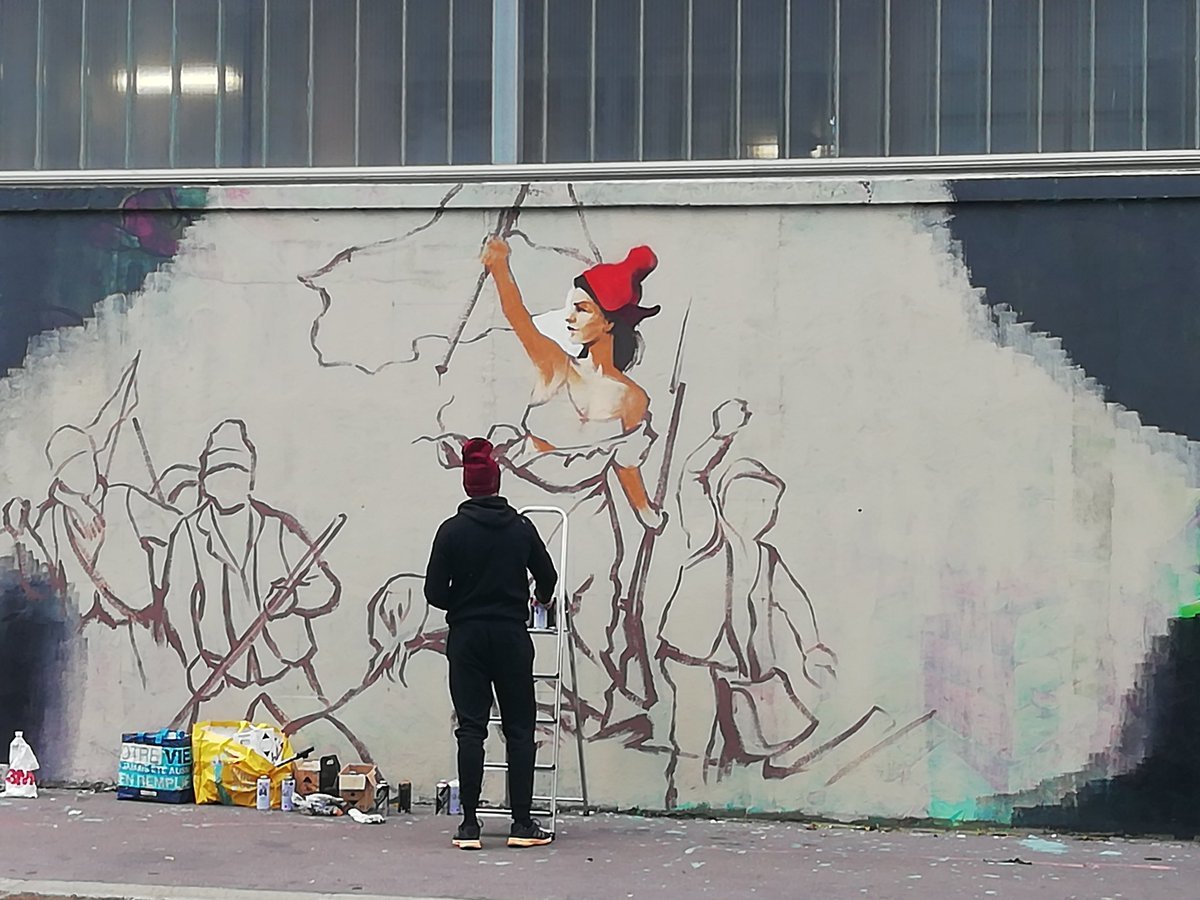
Over the last eight weeks, the world has watched the yellow vest protests in France as the grassroots political movement has fought for economic justice. On Sunday, the well known street artist Pascal Boyart (Pboy) revealed a mural that contains a solvable puzzle with 0.28 BTC inside. The artist explained that the puzzle cannot be solved remotely and that sleuths must visit the location to decipher the painting’s clues.

Also Read: Embracing Utility in 2019: Unreliable Crypto Networks Will Lose to Hyperbitcoinization

A Yellow Vest Rendition of the Painting ‘Liberty Leading the People’ Holds 0.28 BTC

Street Artist Hides $1,000 in BTC Inside a Mural Depicting Paris ProtestsIf you’ve been paying attention to global affairs, you might have noticed the yellow vest protests taking place in Paris, France. Similarly to other political movements like Occupy Wall Street, the yellow-vested Gilets Jaunes have been rallying against obnoxious tax rates, rising living costs, and high fuel prices. Like many of these movements, the anger is directed at the country’s bureaucrats and central banking system that many believe is the root cause of society’s economic hardships.

Street Artist Hides $1,000 in BTC Inside a Mural Depicting Paris Protests
The full HD version of Pboy’s 2019 rendition of Eugène Delacroix’s ‘Liberty Leading the People,’ which contains over $1,000 worth of BTC hidden inside the mural. 

In the midst of the yellow vest protests in Paris, a popular street artist called Pascal Boyart, otherwise known as Pboy, has created a mural depiction of the drama unfolding in the region. The painting is also a puzzle, which contains 0.28 BTC for whoever can solve the mystery. Pboy explained to his Twitter followers that the conundrum within the mural was funded by the well-known bitcoin enthusiast Alistair Milne.

“A street art treasure hunt in Paris with a bitcoin puzzle,” Pboy announced to his Twitter followers on Jan. 7. “For the 10th birthday of the genesis block, I painted this fresco in Paris with a 0.26 BTC ($1000) puzzle in it.”

In order to solve the puzzle, you must be physically in front of the mural — The bitcoin puzzle now has 0.2845 BTC inside as someone gave more to the bounty.

Street Artist Hides $1,000 in BTC Inside a Mural Depicting Paris Protests
The 2019 version of ‘Liberty Leading the People’ with a BTC puzzle.

A Visual Representation of New Age Revolutionaries

So far, no one has solved the puzzle yet as the address still holds the 0.28 BTC inside. According to a marketing executive at Coinhouse, Brian O’Hagan, it was cold outside in Paris when Pboy worked on the painting. “Congrats to Pascal for this great piece and resilience Painting on a wall for a few days in the middle of winter is not that easy,” O’Hagan emphasized. Another fan of the street art wrote: “I feel like there is not enough celebration for Bitcoin’s 10 years and I am glad Pascal Boyart did this.”

Street Artist Hides $1,000 in BTC Inside a Mural Depicting Paris Protests
Pboy working on the mural in the cold.

Pboy’s website, which shows a good portion of his portfolio, explains that the mural is based on the famous oil painting of Eugène Delacroix realized in 1830 on the occasion of the July revolution. The artist’s website says that because of the advent of the yellow vests in late 2018 “it was time to resume the composition of the original and make a contemporary version.”

Street Artist Hides $1,000 in BTC Inside a Mural Depicting Paris Protests
Another painting created by the Paris-based artist Pascal Boyart otherwise known as Pboy.

The revised ‘Liberty Leading the People 2019’ is not Pboy’s first cryptocurrency-themed work, as news.Bitcoin.com has featured the street artist’s murals on a few occasions. The painter has done many other renditions of splattered bitcoins, burning euros, and a Dorian Nakamoto painting made of U.S. dollars. Another infamous artist who has done a lot of cryptocurrency-related street art in the U.S. is Cryptograffiti, who gave props to Pboy after the painter revealed the puzzle.

What do you think about Pboy’s mural in Paris that represents a new rendition of Eugène Delacroix’s ‘Liberty Leading the People’ for the yellow vest movement? What do you think about the BTC puzzle inside? Let us know what you think about this subject in the comments section below.


Images via Twitter, Pboy’s website and Twitter profile. 


Have you seen our widget service? It allows anyone to embed informative Bitcoin.com widgets on their website. They’re pretty cool, and you can customize by size and color. The widgets include price-only, price and graph, price and news, and forum threads. There’s also a widget dedicated to our mining pool, displaying our hash power.

The post Street Artist Hides $1,000 in BTC Inside a Mural Depicting Paris Protests appeared first on Bitcoin News.

from Bitcoin News http://bit.ly/2Rd59rP Street Artist Hides $1,000 in BTC Inside a Mural Depicting Paris Protests

#USA To automate bigger stores than Amazon, Standard Cognition buys Explorer.ai

//

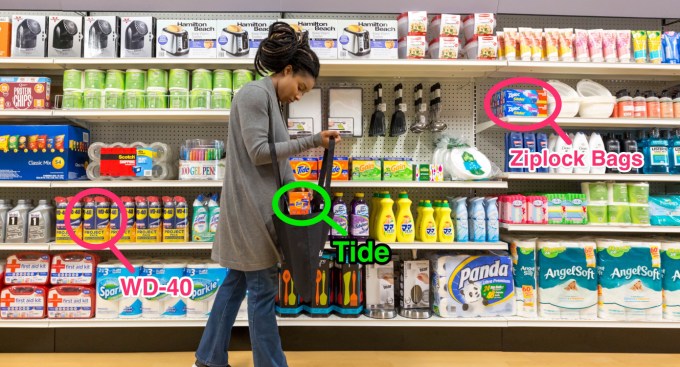
Standard Cognition helps retail stores stand up to Jeff Bezos’ juggernaut. The $50 million-funded autonomous checkout startup is racing to equip bigger shops with scanless payment technology that lets customers walk out the door without ever stopping at a cashier. While Amazon Go opens its own 2,000 square foot boutiques, Standard Cognition is working on outfitting 20,000 square foot and larger drug stores and grocers. That led Standard Cognition to make its first acquisition, Explorer.ai.

Why would an automated checkout company acquire a self-driving car startup? Because whether you’re tracking shoppers or pedestrians, you need sophisticated maps of the real world. The more accurate the machine vision is, the larger the store you can equip. And since Standard Cognition uses ceiling-based cameras instead of putting them on every shelf like Amazon, it’s much cheaper to keep eyes on a bigger space.

Standard Cognition is only just over a year old, but with the backing of Y Combinator, Alexis Ohanian and Garry Tan’s Initialized Capital, and a fast-moving team of seven co-founders, it believes it can outmaneuver Amazon. That means doing whatever it can to leap forward. Standard Cognition already had in-house mapping technology, but Explorer.ai’s team and tech could accelerate its quest to bring even 100,000 sq ft big box supercenters into the automated checkout age.

“It’s the wild west — applying cutting-edge, state-of-the-art machine learning research that’s hot off the press. We read papers then implement it weeks after it’s published, putting the ideas out into the wild and making them production-worthy — taking it from state-of-the-art to dumb machines you can kick and they won’t fall over.” says Standard Cognition co-founder Jordan Fisher. “It’s no easy task and the exactness we’re going to require will only increase. Having a world-class team of engineers and researchers that can build the next generation version of our mapping is why we’re so excited to have the team joining us.”

From AV To AC

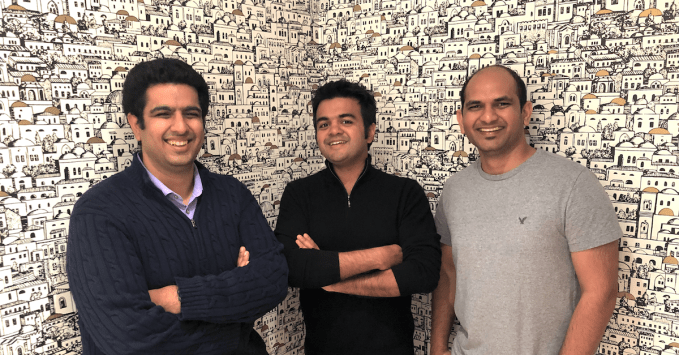
Explorer.ai is was founded in 2017 too, and its acquisition so soon is a testament to how hot the autonomous driving and checkout markets are. Akshay Goel, Nagasrikanth Kallakuri, and Tushar Dadlani noticed self-driving vehicle startups were all trying to generate their own maps. They cobbled together data from several providers, built maps specifically for different purposes, and soon had fellow startups trying to throw money at them. They raised just under $1 million from Story Ventures, early Facebook engineer Nick Heyman and more, growing the team to seven employees.

Explorer.ai’s co-founders


But eventually Explorer.ai realized the bigger players were too cautious to rely on outside maps and it could be years before they’d be comfortable with the idea. “Our view is it would take quite a while to become a commercial success in mapping for autonomous vehicles” Goel tells me. “Most of the companies we were working with in partnerships tried to acquire us from an early stage. Should we fundraise more or start looking at the acquisition process?” the team asked itself as its cash dwindled.

Explorer.ai got a few terms sheets for funding, but weren’t sure they’d be able to go to market fast enough. The founders shopped the startup around “to pretty much everyone” Goel says, though they refused to name names when I asked if that included natural acquirers like Uber and Google’s Waymo. But then they took a left turn into retail. “What we saw was that essentially since autonomous checkout has a lot fewer safety issues, [Standard Cognition] could go to market much faster, and mapping had a large impact on autonomous checkout.”

The two companies declined to disclose financial terms of the deal, but Fisher tells me “We can definitely say it was a competitive process and we’re excited that we could win the hearts and minds of the Explorer team.” Goel adds that “the investors, founders, and team are happy”, implying the payout more than returned the money it’d raised.

Explorer.ai made self-driving car maps before joining Standard Cognition

The big question Standard Cognition’s customers are asking are whether autonomous checkout is cost-effective, simple for customers to understand, and won’t let shoplifters destroy their margins. That means minimizing installation fees, perfecting onboarding and instruction, and recognizing the difference between someone putting an item back on the shelf versus into their jacket. The startup believes that done right, human cashiers can be repurposed as concierges that help customers find what they’re looking for and buy more without having to stand in line.

How do you make this a bulletproof, reproducible system that works as well as a till in a grocery store that no one worries about breaking?” is the challenge Fisher and his new compatriots must solve. “Amazon is pursuing what we call as shelf-based approach with sensors every few inches on every shelf. What’s not great is the expense, the complexity of the electrical and compute systems . . . this is why you’re seeing autonomous checkout applied to Amazon Go and not larger Whole Foods stores. Not from a lack of desire from Amazon, but because it’s not technologically tenable with the approach that they’re taking. I’m confident they’ll tackle that challenge in the next few years but today they’re limited by their technology.”

And so Standard Cognition is pushing as fast as it can build a lead and brand by giving independent retail stores and chains the firepower to fight off Amazon. “I wasn’t thinking we’d do any acquisitions a month ago” Fisher reveals. “Our goal is not just to deliver autonomous checkout to the world but to do it phenomenally quickly. We’re at the beginning of a space race. Two to three years from now, I think this will be potentially as crowded as autonomous vehicles. We’re in the lead today but that’s not enough for us. We need to be light-years ahead to capture as much of the market as we want. [With the Explorer.ai acquisition] how many days does this advance us? How much further along on our roadmap for world domination does this bring us? When we sat down, it was tangible, the real progression of the roadmap.”

from Startups – TechCrunch https://tcrn.ch/2Hc4qTx

#USA Open source monetization startup Tidelift raises $25m series B

//

The curse of open source software is that it is used in pretty much every application and device on the planet, and yet, has pretty much no business model. Sustaining open source is a critical problem for the future of software, because without a durable source of income, the developers behind these critical projects cannot invest their full energies to improve, maintain, and secure them.

Tidelift, a startup founded by a group of long-time open source engineers and executives, has taken on the problem in a compelling way. As I wrote about them last year as part of a deep dive into open source sustainability:

Tidelift is designed to offer assurances “around areas like security, licensing, and maintenance of software,” [Tidelift CEO Donald] Fischer explained. The idea has its genesis in Red Hat, which commercialized Linux. The idea is that companies are willing to pay for open source when they can receive guarantees around issues like critical vulnerabilities and long-term support. In addition, Tidelift handles the mundane tasks of setting up open source for commercialization such as handling licensing issues.

That’s pretty much still the mission of the company, and now it has even more resources to grow. The company announced today that it has raised $25 million in Series B financing led by return backers General Catalyst, Foundry Group, and Matthew Szulik, the former chairman and CEO of open source leader Red Hat, which was acquired by IBM last year in a blockbuster $34 billion deal. That’s a follow-up to a $15 million Series A round last year.

Since I covered Tidelift last June, the company has expanded from its initial launch in the Javascript ecosystem to also offer assurances to packages within the Java, Python, PHP, .NET, and Ruby ecosystems. Among the well-known open-source projects covered under the Tidelift Subscription today are Apache Struts, Vue.js, Gulp, Carbon, Jekyll, Beautiful Soup, and Mongoose. Tidelift says that its subscription now cover hundreds of open source packages.

In addition to covering more packages, Tidelift announced last September that they had reached $1 million in open source maintainer commitments. In a press release, the company highlighted community and discussion platform Discourse as a customer.

CEO Fischer told me that “Our bottom line is that open source doesn’t just need ‘funding.’ It needs a business model that works for creators and users alike, at massive scale.” The company intends to use the new funding to further expand its coverage of popular open source packages and partner with more open source creators.

from Startups – TechCrunch https://tcrn.ch/2C4DM96