Chaque jour nous vous présenterons une nouvelle Startup française !
Notre pays regorge de talents et d'entrepreneurs brillants ! Alors partons à la découverte des meilleures startup françaises ! Certaines d'entre elles sont dans une étape essentielle dans la vie d'une startup : la recherche de financement, notamment par le financement participatif (ou crowdfunding en anglais). Alors participez à cette grande aventure en leur faisant une petite donation ! Les startups françaises ont besoin de vous !
Kraken has launched margin trading for Bitcoin Cash pairings, now supporting leveraged trading for BCH/XBT, BCH/USD, and BCH/EUR markets. The exchange has also launched margin trading for XRP, now offering up to 5x leverage on XRP pairings.
Kraken Launches Leverage Trading for Bitcoin Cash and Ripple Markets
Kraken has become the latest cryptocurrency exchange to expand its Bitcoin Cash markets, introducing margin trading for three BCH pairings. Kraken users are now able to trade BCH/XBT using 2x margin, in addition to having access to BCH/USD and BCH/EUR markets with 2x or 3x leverage.
The exchange has also announced support for leveraged XRP trading, introducing 2x and 3x margin for XRP/XBT, and 2x, 3x, 4x, or 5x margin for its XRP/USD and XRP/EUR pairings. Despite the introduction of the new markets, BCH and XRP are not supported as collateral currencies on Kraken, meaning that traders will not be able to open leveraged positions against BCH or XRP balances.
The introduction of the margin trading for BCH and XRP brings the number of cryptocurrencies that Kraken supports leveraged trading for to eight, alongside XBT (BTC), ETH, ETC, REP, XMR, and USDT.
The exchange charges a 0.02 percent fee for the opening of a margin position, and further 0.02 percent rollover fees per every four hours that the position is open.
Recent Email From Kraken to Prominent Clients Claims $4 Billion Valuation
Earlier this month, Kraken reportedly issued an email to prominent clients informing them that the exchange is considering a private offering and to conduct a survey regarding opportunities to invest in the company.
The email seeks to emphasize that Kraken holds “significant reserves” and is not in need of financing, rather, insisting that the company is anticipating opportunities for acquisition. The email also reportedly states that the company is considering listing its shares with a valuation of $4 billion, with minimum investments expected to be set at $100,000.
“The transaction process will be done by a 3rd party service, who will run accredited investor checks, facilitate the execution of transaction documents, and the funding of your investment,” the email stated, adding that recipients would have until Dec. 16 to respond to the survey.
Do you like to trade using leverage? Share your favorite trading strategies in the comments section below!
Images courtesy of Shutterstock
The Bitcoin universe is vast. So is Bitcoin.com. Check ourWiki, where you can learn everything you were afraid to ask. Or read ournews coverage to stay up to date on the latest. Or delve into statistics on our helpfultools page.
The cryptocurrency economy has seen some improvement over the last 48 hours as many of the top digital assets are seeing gains between 5-15% this Saturday. The entire ecosystem of all the coins in existence has gained about $5 billion since the small correction on Christmas day. Furthermore, global trade volume has also increased indicating that the bulls may be rested after experiencing some exhaustion last week.
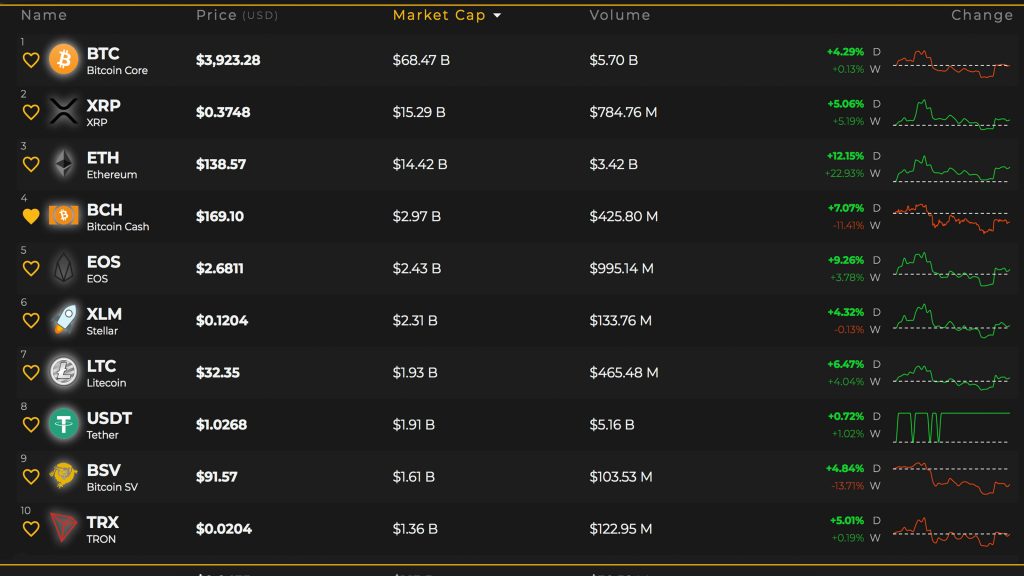
The weekend is here and a large portion of crypto-assets are doing quite well this Saturday, just a few days before the New Year. At the time of publication, the entire digital asset economy has around $19 billion in global trade volume. BTC, USDT, and ETH are the top three traded cryptocurrencies today but ETH is clearly the forerunner gaining 12% over the last 24 hours. Currently, bitcoin core (BTC) is trading for $3,923 per coin and BTC markets are up 4.2% this Saturday. BTC has an overall market valuation of about $68 billion and has seen 5.7 billion traded in the last 24 hours.
Top 10 digital assets on Saturday.
Ripple (XRP) is trading for $0.37 per coin and prices are up by 5%. The third highest valued market capitalization is held by ethereum (ETH) as spot markets are swapping ETH for $138 per token. ETH markets are up well over 12% for today and about 22% over the last seven days. Lastly eos (EOS) still holds the fifth market cap today with each coin trading for $2.68. EOS has spiked 9.2% this weekend and is up 3.7% over the last seven days.
Bitcoin Cash (BCH) Market Action
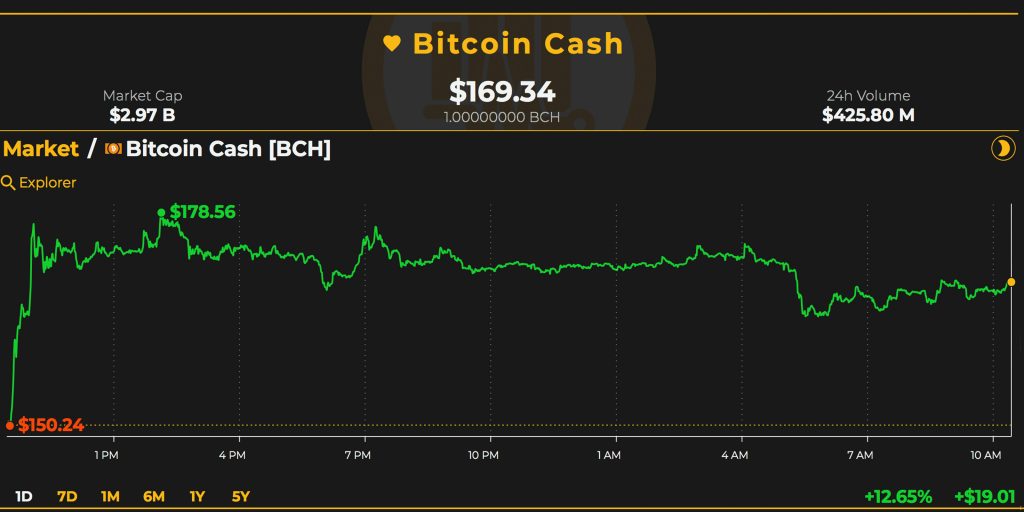
Bitcoin cash (BCH) markets are doing well today as the last 24 hours has shown a BCH increase of 7%. Although the increase is still less than last week’s losses and BCH is still down over 11.4% for the week. BCH is trading for $169 per coin and has a market valuation of around $2.9 billion this weekend. Bitcoin cash is the seventh most traded cryptocurrency below litecoin (LTC) and above ethereum classic (ETC).
BCH/USD daily. Dec. 29, 2018.
The top five exchanges trading the most BCH on Dec. 29 includes Lbank, Binance, Huobi, Coinbase, and Hitbtc. The largest currency pair trading against BCH is tether (USDT) which is capturing 44.5% of all trades. This is followed by BTC (20%), ETH (15.8%), USD (9.2%), and JPY (4.5%). The EUR has increased to 2.7% alongside the KRW’s 2.6% which typically is a good sign of markets becoming more bullish.
BCH/USD Technical Indicators
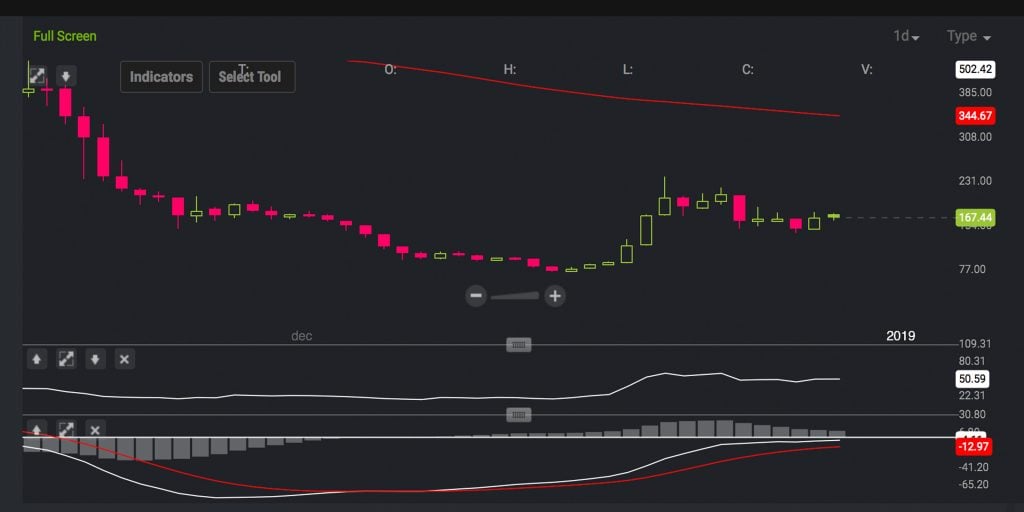
Looking at the 4-hour BCH/USD chart on Bitstamp shows other positive signs of a possible trend change. The biggest indicator would be the long term 200 Simple Moving Average (SMA) dipping below the short term 100 SMA. Both trendlines have just crossed hairs at the time of writing and this would indicate that the path toward the least resistance will change to the upside. However, the 4-hour BCH/USD Relative Strength Index (RSI) is meandering in the middle at around -51.51 showing some temporary uncertainty.
BCH/USD daily. Dec. 29, 2018. Bitstamp.
Stochastic and MACd show similar findings confirming there is plenty of room for any type of movement in any direction in the short term. Order books show a different story than the possible trend shift the SMAs are presenting at the moment. Bulls are feeling resistance as we speak and will be feeling it until they surpass $190 per coin. After that, there may be smoother seas for bulls attempting to head northbound. On the backside, bears will find strong foundations between $165 through $145 until sell orders on the books start looking lighter.
BCH/USD 4-hour. Dec. 29, 2018. Bitstamp.
Crypto-Markets Remain Steady as Traditional Markets ‘Hop Around Like Jumping Beans’
Overall traders seem a bit more optimistic about cryptocurrency markets changing trends, but some are definitely still leery of bigger price drops ahead. Although many are starting to believe that even though there’s still a possibility of dropping lower, they think crypto-markets are very close to the so-called “bottom” at this vantage point. Some investors are seeing an opportunity to begin cost averaging their long-term positions but some sharks are still waiting for for some final blood.
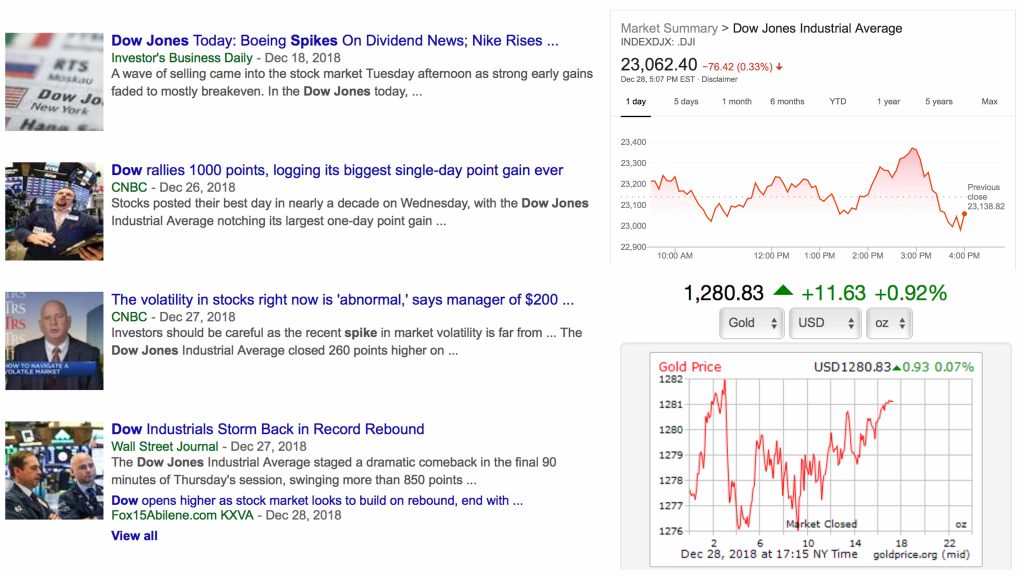
Traditional markets have been very volatile over the last two weeks.
Traditional markets like stocks and equities were also down last week but after one day of trading the Dow Jones spiked on Wall Street by 1,086 points on Wednesday. Mati Greenspan, senior market analyst at Etoro this week detailed that cryptocurrency spot markets didn’t move much while the stocks and traditional investments have been extremely volatile.
“One trading day after US indices officially entered a bear market, the Dow rose 1,086 points — its largest single day gain of all time,” explained Greenspan. “In a strange instance of role reversal, the crypto markets remain calm and collected while the rest of the markets hop around like Mexican jumping beans.”
The Friday afternoon spike and prices this Saturday show cryptocurrency bulls are still attempting to press markets forward but also face another holiday in the next few days. Trade volume may be lighter during New Years day but we did see some strong volatility on Christmas. For now the bears have been stopped and continued upwards pressure could still yield another small rally.
Where do you see the price of BCH, BTC and other coins heading from here? Let us know in the comments below.
Disclaimer: Price articles and markets updates are intended for informational purposes only and should not to be considered as trading advice. Neither Bitcoin.com nor the author is responsible for any losses or gains, as the ultimate decision to conduct a trade is made by the reader. Always remember that only those in possession of the private keys are in control of the “money.”
Images via Shutterstock, Trading View, Bitstamp, and Satoshi Pulse.
Want to create your own secure cold storage paper wallet? Check our tools section.
Payoneer chief executive officer Scott Galit has dismissed the idea of a single global currency like bitcoin as unrealistic. Galit argued that he doesn’t believe countries like the U.S. will ever allow citizens to pay taxes in bitcoin because of too much volatility in the price of the cryptocurrency.
U.S. Will Never Allow Tax to Be Paid in Bitcoin, Says Galit
As a single global currency, bitcoin is viewed as key to ending willful currency manipulation, eliminating transaction fees and improving transparency in global pricing, among other uses.
Scott Galit
“Despite the interests of lots of people out there in the Internet world who love the idea of frictionless commerce and frictionless money and avoiding fiat currencies, I don’t see it,” Galit was quoted by television network CNBC as saying. He was responding to questions on whether the idea of a future single global currency was feasible.
Galit said the bitcoin price volatility means that government money would be subject to the digital asset’s exchange rate fluctuations – so unstable that if that occurred to fiat money, government would be at risk of defaulting on its financial obligations. For that reason, he argues, a government like the U.S. will draw no tangible benefit from adopting bitcoin in its operations, much less as a tax settlement currency.
BTC has lost more than 80 percent of its value since its December 2017 all-time-high of almost $20,000, in a downturn that has shaken the cryptocurrency industry down to its core.
“Now you could have a debate whether taxes are fair or unfair or whatever but they are a reality,” said Galit, who heads the New York City-based Payoneer, a global payments startup voted one of CNBC’s most disruptive emerging companies for 2018. “There are going to be taxes because governments need revenues. Countries actually need tax revenue in order to fund services for their residents,” he added.
Ohio Defies Payoneer Skepticism
Galit will be less impressed that some state governments have already or are looking to transition to bitcoin-enabled tax and bill payments. Ohio has become the first U.S. state to allow citizens to settle their tax obligations and pay some bills in BTC. The crypto payments are made through the ohiocrypto.com platform, which converts the BTC and gives the state government the dollar-equivalent. The states of Arizona, Georgia and Illinois are all reportedly preparing legislation to allow for bitcoin-friendly tax payments.
The Payoneer CEO has other reasons for his skepticism – the U.S. Federal Reserve System. Galit said the role of the Fed regarding monetary policy issues, particularly its use of interest rates to dictate economic direction, posed significant challenges. For a central bank to lose control of this key economic tool over to a single universal currency was simply unfathomable, Galit asserted.
“Central bankers are there to actually help manage the economies and provide kind of stewardship for those economies,” he stated in the CNBC article. “Part of that is actually managing currency in the interest rates [for lending] and in exchange rates. If you don’t actually have any control over a currency you’ve lost one of the major policy tools that you have, so what do you do?”
Payoneer processes payments and transfers from more than 200 countries throughout the world. The company makes its money by levying fees on withdrawals in various currencies, making it a key stakeholder in the currency business.
What do you think about the sentiments from the Payoneer chief executive? Let us know in the comments section below.
Images courtesy of Shutterstock.
Need to calculate your bitcoin holdings? Check our tools section.
To kickstart the weekend, we’ve curated a handful of short but compelling stories from across the crypto sphere. First up, we’ll revisit the fallout from Wallet Fail’s demonstration of hardware wallet cracking. We’ll then move on to a Patreon alternative that’s powered by cryptocurrency and a viral tweetstorm about everything that’s allegedly wrong with Ethereum.
More Hardware Wallet Manufacturers Respond to Hacking Claims
As we reported yesterday, a team known as Wallet Fail have captured attention after demonstrating how to crack several cryptocurrency hardware wallets. Ledger and Trezor, the manufacturers whose devices were exploited at the 35C3 conference, were swift to issue rebuttals and reassurances, emphasizing the impracticality of an attacker implementing one of Wallet Fail’s methods in the wild. Since we reported on the story, a number of other hardware wallet companies have also responded to the presentation.
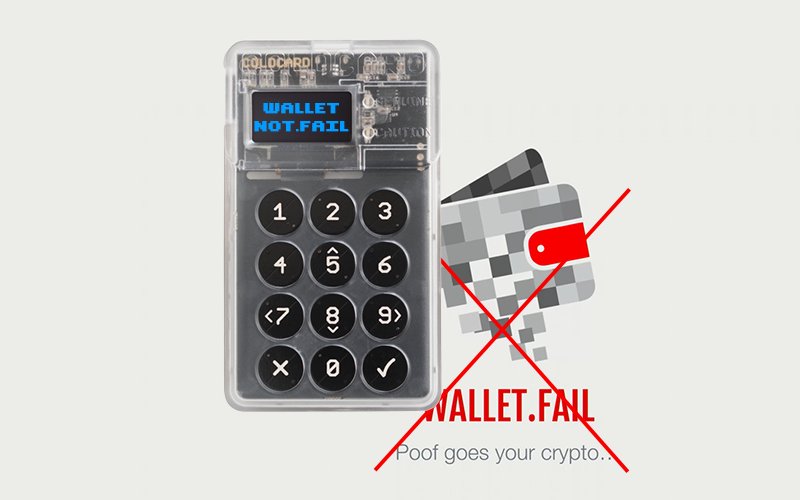
The Coldcard hardware wallet
“Keepkey did not have prior knowledge of this vulnerability through our responsible disclosure program,” tweeted the wallet manufacturer, but explained that “The Keepkey dev team is working on a fix.” They then stressed that “all users should make sure their physical device is in a safe place, as the attacker must have physical access to be successful.” Coldcard, meanwhile, pointed out that its own device wasn’t referenced in Wallet Fail’s presentation, and used the opportunity to boast that, unlike the competition, its own wallet doesn’t fail. The Wallet Fail team, for its part, has denied allegations that it didn’t disclose the vulnerabilities it found to manufacturers in advance of its presentation:
Bitcoin-Based Patreon Alternative Tallycoin Takes Off
In the wake of widespread controversy over Patreon liberally banning content creators, a bitcoin-based alternative has begun to gain traction. Tallycoin takes the model popularized by Patreon and Gofundme and adapts it for P2P cash in the form of BTC. Unlike Patreon, which charges 5 percent, Tallycoin takes zero fees, with all funding going directly to the creator’s bitcoin wallet. Regular BTC and Lightning Network payments are accepted, and while the user interface is simple, the platform demonstrates the potential for a censorship-resistant Patreon alternative.
Tuur Demeester’s Anti-Ethereum Rant Goes Viral
On Friday, prominent bitcoiner Tuur Demeester embarked on a 50-strong Twitter rant about everything he deemed to be wrong with Ethereum. From scaling to decentralization and from use cases to monetary supply, he left no stone unturned, describing the project as “at best a science experiment.” “I agree with Ethereum developer Vlad Zamfir that it’s not money, not safe, and not scalable,” he continued.
1/ People often ask me why I’m so “against” Ethereum. Why do I go out of my way to point out flaws or make analogies that put it in a bad light?
Demonstrating that there are two sides to every tweetstorm, Bryant Eisenbach issued a point-by-point rebuttal of Demeester’s lengthy indictment on Ethereum. While Adamant Capital founder Tuur Demeester’s rant caught plenty of flak from Ethereum proponents, Bitcoin maximalists such as Jimmy Song were swift to endorse his critique. The thread also prompted intense discussion on the Ethereum subreddit where a few feathers were rustled.
Kraken Launches BCH and XRP Margin Trading
Finally, margin trading for bitcoin cash and ripple has been enabled on Kraken. The U.S. cryptocurrency exchange now enables retail and institutional clients to obtain leverage on both coins, with the borrowing limit depending on the level of the account in question. Bitcoin cash can be traded with up to 3x leverage and ripple with 5x.
We have enabled margin trading for Bitcoin Cash (BCH) and Ripple (XRP)! The addition expands our margin offering to 8 assets. Read more on our blog: https://t.co/DSBaMBdOR7
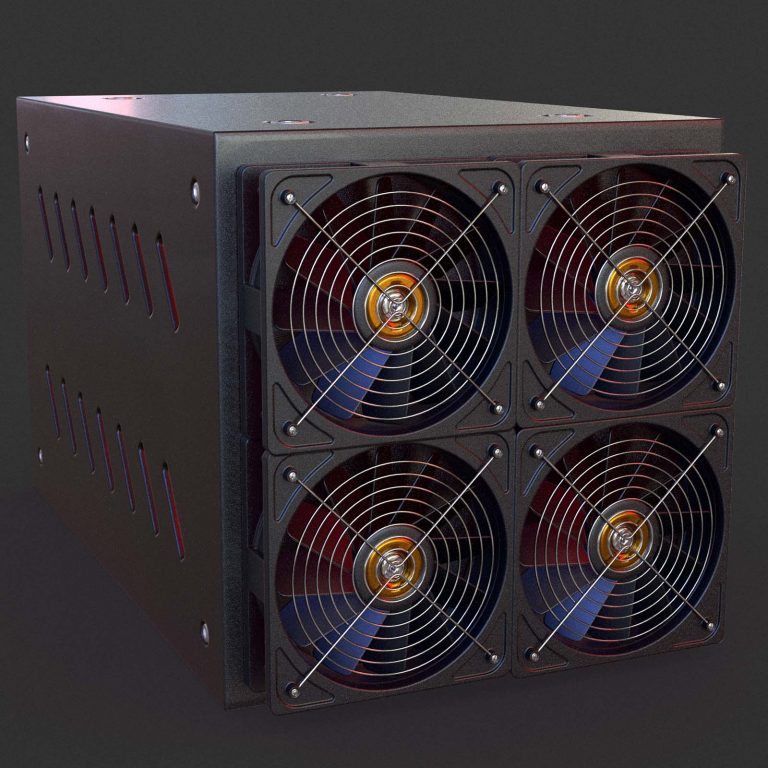
Azultec is a company that has been researching current mining solutions as part of its project to create an efficient alternative with high computing power and low energy consumption. Its Cube devices are silent mining rigs that can be installed in living rooms. The miners can also use renewable energy and are designed to reuse over two thirds of the generated heat.
Mining equipment manufacturing has been an industry long dominated by giants such as Bitmain, Ebang, and Canaan. But every once in a while, a smaller business comes up with a less powerful but nevertheless empowering offering. German-based Azultec is less focused on industrial-grade clients, with its devices designed for the domestic market.
The mining rigs the company makes are assembled using specially adapted graphics processing units (GPUs). The developers of the all-in-one concept have attempted to avoid issues that have plagued traditional mining hardware and have put forward solutions that make their equipment suitable for a regular living room or server room.
Azultec’s devices utilize high-end custom-built water cooling systems designed for personal computers. They can be installed in homes or in warehouses and connected to photovoltaic systems or fuel cells to reduce energy costs. The mining machines are also capable of repurposing up to 72 percent of the heat generated by the hardware.
Cube 300, the mid-range configuration, is equipped with eight Nvidia GTX 1070 graphic cards, 2TB HDD memory and 4GB DDR4 of RAM. Its power consumption is about 1450W and the miner is capable of reaching 310 MHash/s. Cube 400, which is Azultec’s high-end consumer-grade miner, comes with 8 Nvidia GTX 1080 cards, 2TB HDD and 4GB DDR4 RAM memory. It has a power rating of less than 2000W and computing performance of 410 MHash/s.
The components in both rigs are water-cooled to ensure operation under optimal conditions. The product page doesn’t say what cryptocurrencies these rigs are designed to mine, but in general, video cards are more suitable for altcoins such as ethereum rather than bitcoin, which requires much more computing power and electrical energy. The first generation of the Cubes will be released in the first quarter of 2019.
Another of Azultec’s products, Wizard Machine 300, is an entry-level industrial solution for cloud computing and mining. The device is developed for 19-inch server racks and can be used by enterprises that need to utilize excess energy such as windparks. The liquid-cooled server is built to enhance CGI rendering performance and it comes with eight Nvidia GTX 1070 GPUs and 64GB of RAM hosted on a single motherboard to reduce the number of used components.
New Mining Rigs to Be Unveiled at CES
According to Azultec, its project is backed by three well-known German brands in the IT and high-tech sectors – Alphacool, Aquatuning and Technikpr. They have supported the idea of making the minting of digital coins and the earning of cryptocurrencies as easy as possible and sustainable.
The company is not only assembling mining rigs but also exploring options to produce its own graphics cards and mainboards in order to optimize the efficiency of its mining Cubes. Its engineers are working to design an in-house heat-to-cool conversion system that can utilize the heat generated by the mining hardware.
According to the startup’s roadmap, the first-generation of the mining rigs from the Cube series will be released onto the market in Q1 of 2019. During the same quarter, Azultec plans to also experiment with fuels cells as a power generating solution for its products.
Azultec will be presenting its devices at CES 2019, the annual consumer electronics expo that will take place on Jan. 11-18 in Las Vegas. Expansion in the U.S. and Asia is in its business plans for the coming year as well. The company will also launch its own token and conduct a coin offering in January to raise funds for its projects.
What do you think of Azultec’s mining solutions? Share your thoughts in the comments section below.
Images courtesy of Shutterstock, Azultec.
Disclaimer: Bitcoin.com does not endorse nor support this product/service.
Readers should do their own due diligence before taking any actions related to the mentioned company or any of its affiliates or services. Bitcoin.com is not responsible, directly or indirectly, for any damage or loss caused or alleged to be caused by or in connection with the use of or reliance on any content, goods or services mentioned in this article.
Japan’s top financial regulator has published the final report outlining proposed rules for cryptocurrency service providers to follow. The rules address areas such as hacking incidents, coin listings, financial and price disclosures, margin trading, and crypto custodial services.
Japan’s Financial Services Agency (FSA) has published the final report from last week’s study group meeting on crypto exchanges detailing requirements “as a precondition of the proper principle of self-responsibility.” The agency expects crypto service providers to follow these rules either by themselves or under the guidance of a self-regulatory organization (SRO). Currently, only one SRO — the Japan Virtual Currency Exchange Association — has been approved by the FSA.
An FSA spokesperson told news.Bitcoin.com on Wednesday:
Based on the discussion of developing systematic approaches towards various issues on crypto-assets … Taking the perspectives indicated by the final report, FSA has been currently conducting comprehensive consideration on the future approaches, including for revising acts.
The requirements cover areas such as risks relating to thefts of customers’ cryptocurrencies when hacking incidents occur, price fluctuations and speculation. The lack of internal control systems amid rapid business expansion of service providers was discussed, along with measures for crypto transaction types such as margin trading that are not covered by existing regulations.
Rules on Crypto Exchange Operations
The report specifies nine areas that need to be addressed relating to the operations of crypto exchanges and service providers. The first proposed rule reads:
Where private keys of customers’ deposited virtual currency are managed online … service providers [are required] to maintain net assets and funds for reimbursement at the same or greater amount. The funds must consist of the same types as the deposited virtual currency.
Secondly, they must “Develop [a] framework to entitle customers to [a] statutory lien that secures their claim to deposited virtual currency.” They must also disclose their financial statements.
In order to ensure proper business operations, crypto service providers need to disclose information relating to trading prices, the report explains. They are also prohibited from advertising, promoting or encouraging speculative trading. Additionally, they must follow the rules set forth by an SRO. The agency noted that registration of non-SRO members that have not established internal rules equivalent to the SRO’s rules can be refused or canceled.
Furthermore, crypto service providers are prohibited “from dealing in virtual currencies that could impede user protection or proper and reliable business operations,” the report reads. The last requirement under this category is for them to notify the FSA “each change of a line of virtual currencies in advance.”
Rules on Margin Trading
The first proposed condition under this category states that a registration requirement for “foreign exchange margin trading (forex trading)” will be imposed on crypto service providers offering margin trading. The same code of conduct “such as the prohibition of unrequested solicitation” will also apply.
Secondly, a limit will be imposed on each cryptocurrency’s leverage ratio “based on [the] actual virtual currency price fluctuations.”
Service providers will also be required to explain the risks specific to cryptocurrencies and set minimum margin amounts. Lastly, crypto credit will follow similar rules as margin trading since they have similar functions and risks, the report details.
Additional Rules
The report also outlines rules for crypto custodial services and “unfair acts” in crypto spot trading. All persons and entities are prohibited “from improper conduct, spreading rumors and price manipulation.”
Cryptocurrency custodial services will also be regulated. Specifically, the same regulations that currently apply to crypto exchanges will apply to the custody of customers’ cryptocurrencies. Furthermore, the report notes:
Virtual currency exchange service providers [are] to monitor transactions and prohibit transactions aimed at profiting based on nonpublic information.
What do you think of these proposed rules? Let us know in the comments section below.
Images courtesy of Shutterstock.
Need to calculate your bitcoin holdings? Check our tools section.
Dutch crypto company Libereum has announced the acquisition of Spanish soccer club Elche CF, who are based in the province of Alicante. The move provides another sign that the crypto world’s interest in sports sponsorship and partnerships is growing.
Libereum, a company which is “primarily aimed at making cryptocurrency widely accessible to the average person,” has put down an initial payment of €4.3 million ($4.9 million) for the Spanish club. The acquisition marks a trend in the crypto world for bringing cryptocurrency to sports with the hope that P2P cash could be adopted as a means of payment in stadiums, club shops, websites and elsewhere.
The acquisition of the club, who play in the Segunda División A (Spain’s second professional association soccer division) is part of Libereum’s plans to bring the club back up to the premier division and make their own cryptocurrency, the liber, an integral part of the club’s financial system.
“The purchase of Elche CF, a beautiful football club that shares our vision of a cryptocurrency future and is willing to actively communicate it to its supporters, is fantastic news,” Cem Kumlar, the founder of Libereum, said in a statement. “The team has been working very hard to achieve this and I would like to express my thanks to all those who have contributed to this impressive and intensive process.”
Libereum’s main objective is to invest in soccer clubs, with the goal of generating demand for its coin. The company has ambitious goals of overhauling everything from transfer deals and ticket sales to merchandising and stadium catering, aided by cryptocurrency.
Growing Relationship Between Crypto and Soccer
Libereum is not the only company focusing on football in the hope of re-energizing the game with the aid of crypto. In August, investment platform Etoro launched partnerships with seven English Premier League soccer clubs – Brighton & Hove Albion, Cardiff City, Crystal Palace, Leicester City, Newcastle United, Southampton, and Tottenham Hotspur – paying for the deals in bitcoin core (BTC).
The landmark move made the social trading and multi-asset brokerage platform the first company to ever pay for a Premier League partnership in bitcoin. The company has since said its goal is to have the sport fully embrace blockchain technology. U.S. managing director at Etoro, Guy Hirsch, said they were “looking to integrate cryptocurrencies into mainstream football in the near future.”
He added: “Educating the masses on crypto assets will ultimately increase public participation in the market, improving the rate of adoption and providing an incentive for merchants and vendors to begin to accept cryptocurrencies as payment.”
Earlier this year, Gibraltar United decided to introduce cryptocurrency salary payments for its players, while English Premier League club Wolverhampton Wanderers started its season by announcing sponsorship from cryptocurrency exchange Coin Deal.
With the most popular sport in the world being introduced to cryptocurrencies, and NBA basketball teams following suit, it may not be long before crypto is propelled into the big league.
What do you think about Liberium’s acquisition and efforts to bring crypto into the sporting world? Let us know in the comments section below.
Images courtesy of Shutterstock and Liberium.
Need to calculate your bitcoin holdings? Check our tools section.
On Dec. 27 the Houston Rockets challenged the Boston Celtics. During the game’s intermission, two contestants participated in a contest called the Antpool Red Planet Race. The participants played a game that involved ‘mining’ bitcoin cash (BCH) on the court floor in the hope of winning $300 worth of BCH.
Houston Rockets Fans Get a Taste of Bitcoin Cash Mining
Bitcoin technology got some mainstream attention during the Rockets and Celtics match on Thursday. The mining operation Antpool was in attendance and had a booth set up in the arena, which showcases the benefits of blockchain technology and digital assets. Back in September, mining rig manufacturer Bitmain announced the company would be sponsoring the Houston Rockets and pledged they would help invest upwards of $500 million into the Texas economy. At the time, the press release stated that Antpool would be allowed to host its exhibit inside the Toyota Center during the second week of January 2019. However, pictures stemming from Thursday’s Rockets game suggests that Antpool was allowed to at least set up the exhibition early.
When the deal was first inked, Antpool’s overseas operations manager, Haijiao Li, explained the exhibit would be used to teach people visiting the Toyota Center about the innovation behind cryptocurrencies. “As far as professional sports teams go, the Houston Rockets are legendary across the globe, and what better way to continue the momentum of our U.S. expansion than partnering with the prolific Houston Rockets basketball club, the No. 1 team in China,” explained Haijiao Li during the announcement.
Antpool’s Red Planet Race
Bitcoin Cash fans will also be pleasantly surprised by the number of BCH symbols displayed at the Toyota Center. Furthermore, during the intermission at the Rockets vs Celtics game, two contestants helped ‘mine’ bitcoin cash on the court floor in order to win a prize. During the start of the intermission, the audio played the Beastie Boys track “Intergalactic” while showing a large physical bitcoin being mined.
Then the announcer explained the rules to the contest, which was dubbed the Antpool Red Planet Race. The two contestants had to receive two deposits while ‘mining’ with Antpool’s mining operation on the BCH chain and then plant ‘red rockets’ flags in the red rocks. The contest lasted less than 45 seconds and one of the ‘space cadets’ took home $300 dollars worth of BCH.
Bitcoin Cash fans on social media and on forums like r/btc were pumped to see BCH bolstered at a mainstream sports arena. The news also follows the recent Litecoin Foundation’s UFC sponsorship, which will be used to advertise Litecoin symbols on the arena’s canvas floor at the Ultimate Fighting Championship match on Dec. 29. Cryptocurrency supporters believe sponsorships like these will further progress mainstream awareness over time.
What do you think about Bitmain’s Antpool sponsoring the Houston Rockets? Let us know what you think about this subject in the comments section below.
Images via Shutterstock, NBA, Houston Rockets, Antpool, and the Toyota Center in Texas.
Need to calculate your bitcoin holdings? Check our tools section.
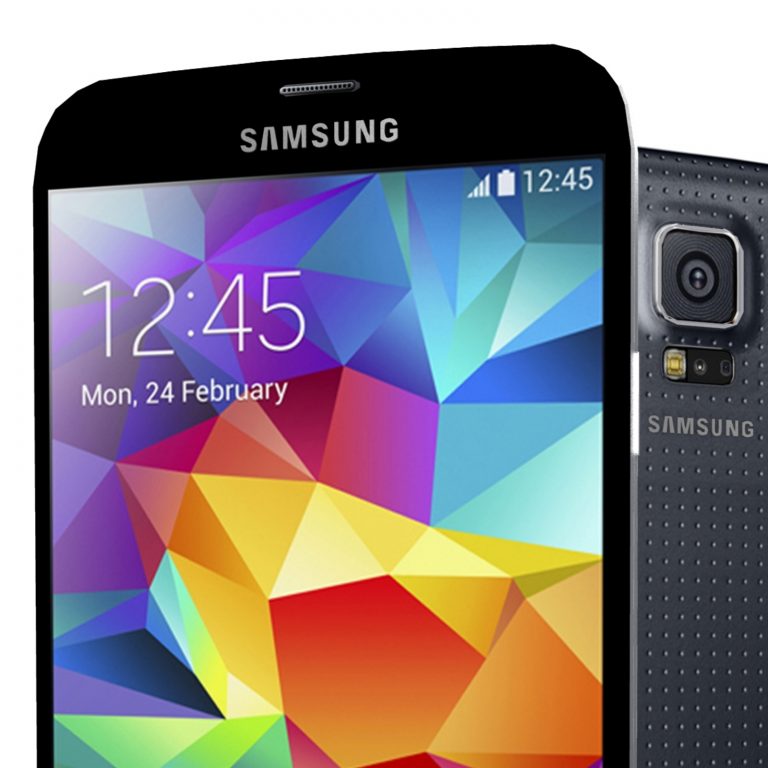
Electronics manufacturer Samsung has filed a trademark that suggests it may be considering integrating a cryptocurrency wallet into its smartphones. The filing, submitted to the U.K.’s Intellectual Property Office (IPO) on Dec. 27, reinforces reports that emerged earlier this month claiming that cryptocurrency integration was on Samsung’s agenda.
Speculation is growing that Samsung may be on the brink of launching a cryptocurrency-equipped smartphone. The filing of a trademark on Dec. 27, following weeks of rumors, has added weight to the notion that Samsung has cryptocurrency on its roadmap, and that a built-in wallet may be the next feature to be added to its flagship phones, which retail for up to $750. Simply titled “Samsung Crypto Wallet,” trademark UK00003363431 doesn’t reveal much by way of detail, but its name is unambiguous enough.
The filing category Samsung’s crypto wallet UK trademark was placed in.
As a result of the filing, cryptocurrency users will be left with two pressing questions:
1. Is Samsung developing a standalone hardware wallet or an integrated smartphone wallet?
2. Has the trademark been filed defensively or offensively? In other words, does Samsung have any intention of actually developing the device in the near future?
It is common practice for corporations to prolifically file patents and register trademarks, even though only a handful of these will result in a product being brought to market. Indeed, on the same say the Samsung Crypto Wallet trademark was approved, another 42 trademarks from the Asian electronics manufacturer were also filed in the U.K.
Blockchain Smartphones Are Proliferating
The Exodus blockchain phone
With each new iteration of smartphones, such as the Samsung Galaxy and Apple’s iPhone, technical improvements become less discernible and new features less frequent. Integrating a cryptocurrency wallet, with its private key stored in a secure enclave separate from the rest of the phone’s core operations, gives manufacturers an opportunity to distinguish their handsets from the competition. It also gives cryptocurrency users a new gadget to lust after. To date, however, so-called blockchain phones have been underwhelming.
Sirin’s Finney smartphone has been derided in some quarters for its clunky design and mediocre features when compared to those of high-end phones. The HTC Exodus smartphone, meanwhile, backed by cryptocurrency figures such as Charlie Lee, was meant to ship this month, but has yet to deliver. The bar for blockchain phones, therefore, sits pretty low. Should Samsung throw its hat into the ring and attempt its own crypto-equipped smartphone, it would stand a very good chance of becoming the most popular device of its kind.
Do you think Samsung is developing a cryptocurrency-equipped smartphone? Let us know in the comments section below.
Images courtesy of Shutterstock.
Need to calculate your bitcoin holdings? Check our tools section.
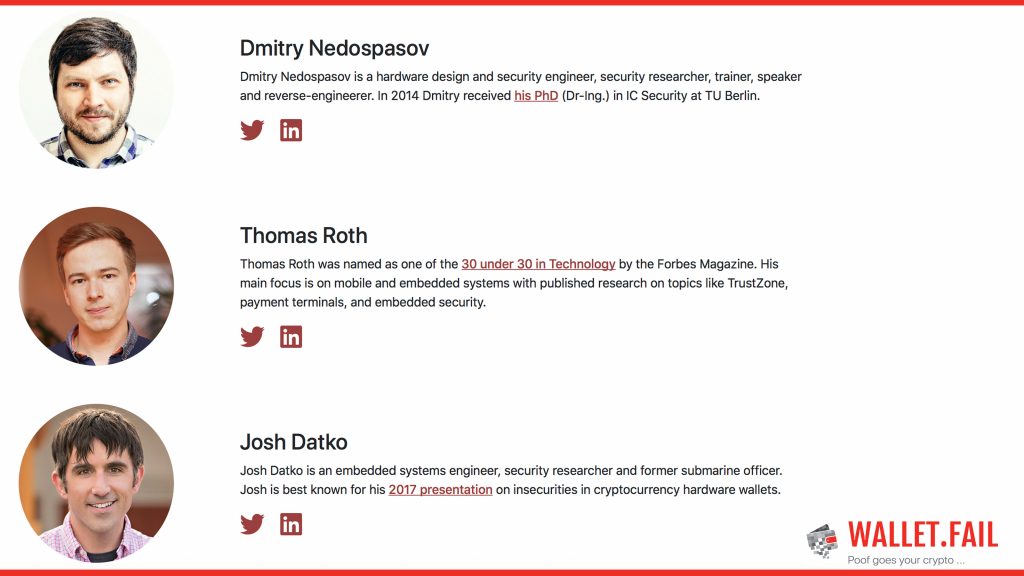
On Dec. 27 at the 35th Annual Chaos Communication Congress (35C3) event, three individuals from a startup called Wallet Fail allegedly hacked the most popular hardware wallets and revealed their secrets on stage. According to Trezor, however, the hackers at 35C3 did not follow the standard responsible disclosure protocol and Ledger Wallet developers claim the Wallet Fail team only gave the impression of critical vulnerabilities, emphasizing that this was “not the case.”
A Startup Called Wallet Fail Claims to Have Cracked Cryptocurrency Hardware Wallets
The European Chaos Computer Club hosts a yearly event called the 35th Annual Chaos Communication Congress, a conference that gathers hackers, computer scientists, and security experts. This year at 35C3, attendees saw an hour-long demonstration from a team called Wallet Fail, a group that believes it can break into any cryptocurrency hardware device including top brands like Trezor and Ledger. Wallet Fail presented vulnerabilities that can be fixed in a firmware upgrade, but they claim to have also found issues with the microcontrollers and the bugs would “require a new hardware revision.”
The Wallet Fail developers seemingly cracked multiple hardware wallets manufactured by popular vendors at the 35th Annual Chaos Communication Congress (35C3).
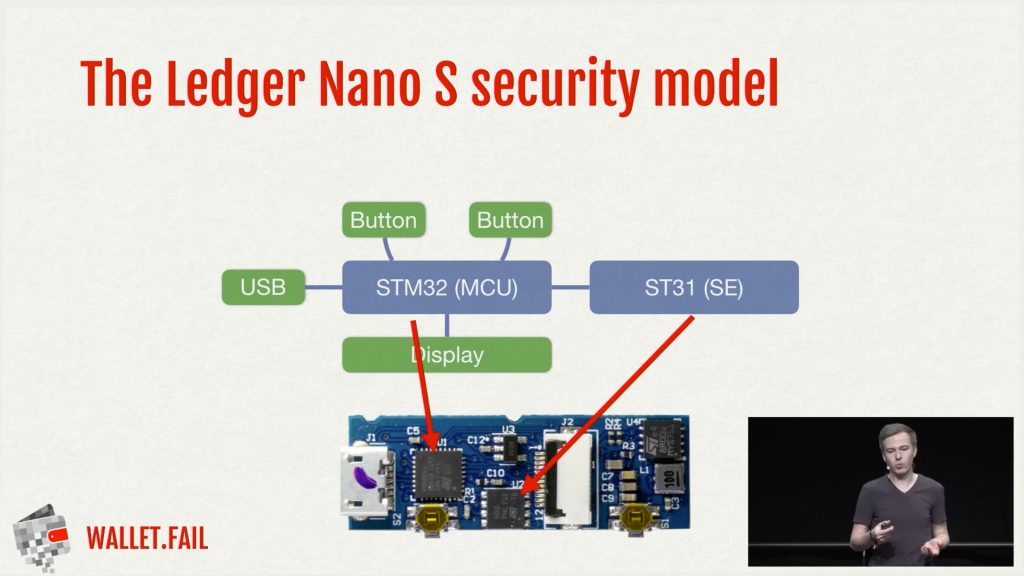
Some of the attacks shown on stage included various software attacks. Wallet Fail showed a slideshow of pictures exposing private information when the device was flash booted. Other attacks seemingly showed severe weaknesses within the supply chain, evil maid attacks, side channel assaults, and other types of social engineering techniques. The video demonstrates cracking the hardware wallet’s proprietary bootloader protection, bypassing microcontrollers, and using web interface glitches to interact with the wallet. In one part of the demonstration video, Wallet Fail flashed a Ledger Nano S device and boot-loaded the old school Snake game that was once installed on Nokia feature phones. After the hour-long demo, the developers uploaded the 35C3 video to the startup’s Wallet.fail website.
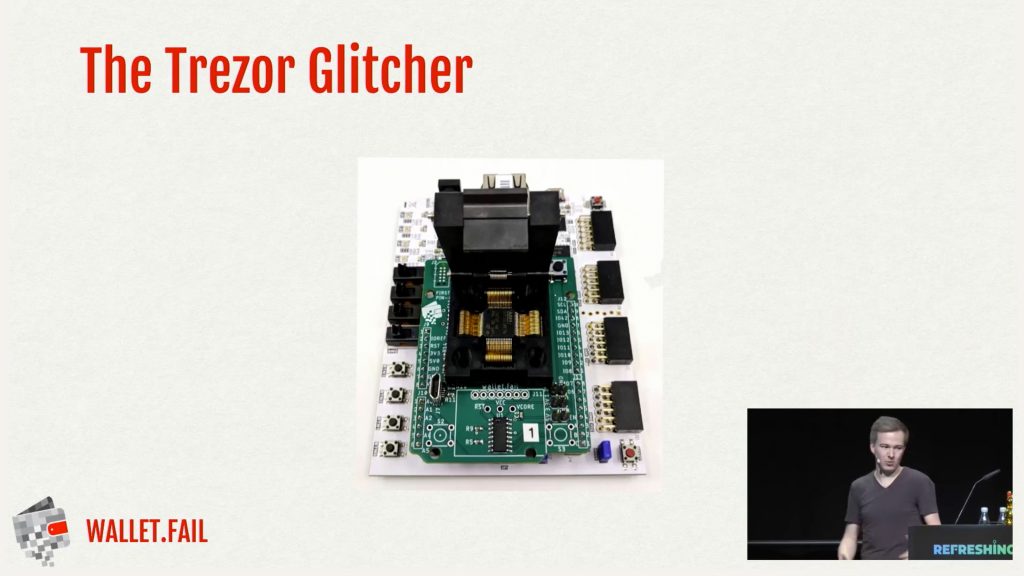
The ‘Trezor Glitcher’ device developed by Wallet Fail programmers can allegedly reveal private data.
Trezor and Ledger Wallet Respond to Vulnerability Accusations
After the website published the video and the 35C3 event came to an end, two of the most popular hardware wallet manufacturers responded to the claims made by Wallet Fail. The CTO of Satoshi Labs, Pavol Rusnak, told his Twitter followers his company was not informed through Trezor’s responsible disclosure program and learned about the vulnerabilities “from the stage.” “We need to take some time to fix these and we’ll be addressing them via a firmware update at the end of January,” Rusnak emphasized on Twitter. According to the Satoshi Labs CTO, he attended the 35C3 conference this year and saw the demo first-hand.
Trezor also responded to the video demo and tweeted:
Please keep in mind that this is a physical vulnerability. An attacker would need physical access to your device, specifically to the board — breaking the case. If you have physical control over your Trezor, you can keep on using it, and this vulnerability is not a threat to you.
Wallet Fail developer Thomas Roth shows the audience the Ledger security model and bootloads the old Snake game on a Nano S device.
The Ledger Wallet team headquartered in France also responded to Wallet Fail’s accusations. According to Ledger, the Wallet Fail team presented a total of three attack vectors which had given the audience the impression of “critical vulnerabilities.” However, the Ledger developers state that “this is not the case” and users should not worry about securing assets on Ledger devices.
“In particular they did not succeed to extract any seed nor PIN on a stolen device. Every sensitive assets stored on the Secure Element remain secure,” detailed the Ledger team’s blog post on Friday.
Ledger continued:
[Our] responsible disclosure is the best practice to follow in order to protect the end users while improving our products’ security.
Hardware Wallet Manufacturers’ Uphill Battle
This isn’t the first time hardware wallet manufacturers have had to deal with wallet hackers who claim they can compromise any device. Back in the Summer of 2017 at Def Con 25 in Las Vegas, attendees saw an exhibit which allegedly disclosed vulnerabilities in popular cryptocurrency hardware wallets. Last March a teenager told Ars Technica he created code that could find a “backdoor” in Ledger devices. However, again Ledger Wallet told the public that 15-year-old Saleem Rashid’s published post on certain vectors was “not critical” and the attacks “cannot extract the private keys or the seed.”
The Wallet Fail team also disclosed simple supply chain vectors.
As usual, most of the vulnerabilities have been taken with a grain of salt because a great majority of attacks shown over the years require stealing the physical device itself and remote attacks still seem implausible. The companies who responded to Wallet Fail’s recent demo stressed that people should use a secondary passphrase. A few cryptocurrency veterans also stressed on social media the importance of using a PIN with hardware devices.
What do you think about the alleged hardware wallet vulnerabilities presented at the Annual Chaos Communication Congress? Let us know what you think about this subject in the comments section below.
Images via Wallet Fail’s slide show, 35C3, Shutterstock, and Pixabay.
Need to calculate your bitcoin holdings? Check our tools section.

 Kraken has become the latest cryptocurrency exchange to expand its Bitcoin Cash markets, introducing margin trading for three BCH pairings. Kraken users are now able to trade BCH/XBT using 2x margin, in addition to having access to BCH/USD and BCH/EUR markets with 2x or 3x leverage.
 Earlier this month, Kraken reportedly issued an email to prominent clients informing them that the exchange is considering a private offering and to conduct a survey regarding opportunities to invest in the company.






 Mining equipment manufacturing has been an industry long dominated by giants such as Bitmain, Ebang, and Canaan. But every once in a while, a smaller business comes up with a less powerful but nevertheless empowering offering. German-based Azultec is less focused on industrial-grade clients, with its devices designed for the domestic market.
 According to Azultec, its project is backed by three well-known German brands in the IT and high-tech sectors – Alphacool, Aquatuning and Technikpr. They have supported the idea of making the minting of digital coins and the earning of cryptocurrencies as easy as possible and sustainable.
 Japan’s Financial Services Agency (FSA) has published the final report from last week’s study group meeting on crypto exchanges detailing requirements “as a precondition of the proper principle of self-responsibility.” The agency expects crypto service providers to follow these rules either by themselves or under the guidance of a self-regulatory organization (SRO). Currently, only one SRO — the Japan Virtual Currency Exchange Association — has been approved by the FSA.
 In order to ensure proper business operations, crypto service providers need to disclose information relating to trading prices, the report explains. They are also prohibited from advertising, promoting or encouraging speculative trading. Additionally, they must follow the rules set forth by an SRO. The agency noted that registration of non-SRO members that have not established internal rules equivalent to the SRO’s rules can be refused or canceled.
 The first proposed condition under this category states that a registration requirement for “foreign exchange margin trading (forex trading)” will be imposed on crypto service providers offering margin trading. The same code of conduct “such as the prohibition of unrequested solicitation” will also apply.
 The report also outlines rules for crypto custodial services and “unfair acts” in crypto spot trading. All persons and entities are prohibited “from improper conduct, spreading rumors and price manipulation.”



 Bitcoin technology got some mainstream attention during the Rockets and Celtics match on Thursday. The mining operation Antpool was in attendance and had a booth set up in the arena, which showcases the benefits of blockchain technology and digital assets. Back in September, mining rig manufacturer Bitmain announced the company would be sponsoring the Houston Rockets and pledged they would help invest upwards of $500 million into the Texas economy.
 Bitcoin Cash fans will also be pleasantly surprised by the number of BCH symbols displayed at the Toyota Center. Furthermore, during the intermission at the Rockets vs Celtics game, two contestants