About Startup365

Chaque jour nous vous présenterons une nouvelle Startup française ! Notre pays regorge de talents et d'entrepreneurs brillants ! Alors partons à la découverte des meilleures startup françaises ! Certaines d'entre elles sont dans une étape essentielle dans la vie d'une startup : la recherche de financement, notamment par le financement participatif (ou crowdfunding en anglais). Alors participez à cette grande aventure en leur faisant une petite donation ! Les startups françaises ont besoin de vous !

#USA Samsara banks $100M at a $3.6B valuation for its internet-connected sensors

//

Sensor data platform Samsara confirmed this morning that it had closed a new round of funding from existing investors Andreessen Horowitz and General Catalyst that values the startup at $3.6 billion.

The news was first reported by Cheddar, which spotted a filing with the state of Delaware on December 21 disclosing Samsara’s intent to raise a $100 million round at more than double the valuation it garnered upon its $50 million Series D this March.

“Our growth comes from bringing transformational new technologies to solve the problems of operational businesses, a massive segment of the economy that has long been underserved by the technology industry,” wrote Kiren Sekar, Samsara’s vice president of marketing and products, in the funding announcement. “Today, the advent of inexpensive sensors, high-bandwidth wireless connectivity, smartphones, and cloud computing enable these businesses to fully reap the benefits of 21st century technology.”

Founded in 2015, Samsara supports the transportation, logistics, construction, food production, energy and manufacturing industries with its internet-connected sensor systems, which helps businesses collect data and derive insights to improve the efficiency of physical operations.

The company’s co-founders are Sanjit Biswas and John Bicket, who previously launched Meraki, an enterprise Wi-Fi startup acquired by Cisco in an all-cash $1.2 billion deal in 2012.

Samsara’s latest financing brings the company’s total raised to $230 million. According to PitchBook, Andreessen Howoritz and General Catalyst are the only two private investors in the company, with Marc Andreessen and Hemant Taneja of General Catalyst representing the venture capital firms as lead investors on several Samsara deals.

San Francisco-based Samsara says revenue grew 250 percent in 2018 as its customer base swelled to 5,000. As for how it will deploy the new capital, the company plans to hire 1,000 employees, double down on AI and computer vision technology and open its first East Coast office in Atlanta.

The startup has yet to spend a dime of its last financing round, evidence it, like many other venture-funded startups, is probably pulling in capital before a market downturn strikes the industry and makes it increasingly difficult to raise hefty sums at impressive valuations.

“While the company already had a healthy balance sheet – we hadn’t dipped into our previous round of funding – the new capital enables us to accelerate long-term product investments and expand into new markets while continuing to maintain a strong balance sheet over the long term,” wrote Sekar.

from Startups – TechCrunch https://tcrn.ch/2ERcbLz

#Blockchain Markets Update: BCH and BTC Set to Post Record 5 Months of Consecutive Red Candles

Despite the short-lived rally leading up to Christmas, BTC appears poised to post a fifth consecutive red candle on the monthly chart for the second time ever. BCH also looks ready to extend its record bear streak to five months of red, while ETH appears poised to post a monthly gain for the first time in seven months.

Also Read: Judge Denies Craig Wright’s Motion to Dismiss Billion-Dollar Bitcoin Lawsuit

BTC Likely to Post Fifth Consecutive Red Candle for First Time Since 2011

Should BTC fail to finish 2018 above $4,000 on Bitstamp, the markets will have produced five consecutive red monthly candles for the second time ever. At the current price of roughly $3,850, BTC has shed 50% since trading for approximately $7,725 at the start of August of this year.

Markets Update: BCH and BTC Set to Post Record 5 Months of Consecutive Red Candles
BTC/USD – Bitstamp – 1M

The first time BTC posted five red one-month candles in a row occurred during the fallout from what many describe as bitcoin’s first bubble of 2011, which saw BTC gain nearly 3,000% from roughly $1 in April to over $29 in June. Driven by minuscule liquidity, however, the rally was short-lived, resulting in roughly five months of downward momentum that saw BTC bleed 83% from $16.48 at the start of June to $2.79 at the end of November.

Markets Update: BCH and BTC Set to Post Record 5 Months of Consecutive Red Candles

Since then, the most heavily sustained bearish price action posted on BTC’s monthly chart took place during the second half of 2014, which saw four consecutive months of red as prices fell 47.5% from $640 at the start of July to $336 at the end of Oct. Following the three months of selling that persisted from March to May of 2015, BTC markets had not posted more than two consecutive red monthly candles leading into the second half of 2018. BTC currently has a capitalization of $67.2 billion and a market dominance of 52.4%.

BCH in Midst of Record Selling Streak on Monthly Chart

BCH/USD also appears on the cusp of posting five consecutive monthly red candles at the time of writing. The charts show a doji candle with a tight body on near-record volume for Dec., suggesting that the color of this month’s candle could easily change.

Markets Update: BCH and BTC Set to Post Record 5 Months of Consecutive Red Candles
BCH/USD – Kraken – 1M

Regardless of whether the month closes red or green, BCH/USD is currently in the midst of a record run of red candles after posting four consecutive months of bearish action starting in Aug. of this year, beating out the three-month slide that gripped BCH/USD during the first quarter of 2018.

Currently trading for approximately $170, BCH has slid 78% against the dollar since starting Aug. at roughly $775. When measuring against BTC, BCH is testing resistance at the 0.78 Fibonacci retracement area from the local top of 0.097 BTC at roughly 0.07 BTC.

Markets Update: BCH and BTC Set to Post Record 5 Months of Consecutive Red Candles

As of this writing, BCH is the fourth largest crypto market with a market cap of over $2.8 million and a market dominance of 2.2%.

XRP Dominance Over ETH Recedes

XRP/USD will likely close Dec. green, which would comprise just the third green monthly candle posted by the second-largest cryptocurrency by market cap.

Markets Update: BCH and BTC Set to Post Record 5 Months of Consecutive Red Candles
XRP/USD (Calculated by TradingView) – Poloniex – 1M

When measuring against BTC, XRP has continued to rally toward resistance at 0.0001 BTC, with current prices hovering at 0.0000980.

Markets Update: BCH and BTC Set to Post Record 5 Months of Consecutive Red Candles
XRP/BTC- Poloniex – 1M

At the time of writing, XRP has a market cap of $15.3 billion and a market dominance of 12.6%.

ETH to Post First Green Month Since April

After a record seven consecutive monthly red candles, ETH appears ready to post what would be the third green one-month candle for 2018. Since the start of May, ETH has shed approximately 81% of its value against the dollar, sliding from nearly $675 to $130 in roughly 200 days.

Markets Update: BCH and BTC Set to Post Record 5 Months of Consecutive Red Candles
ETH/USDT- Poloniex – 1M

When measuring against BTC, ETH is also poised to break a record spate of selling pressure, following six consecutive red monthly candles. The recent slide beats out the previous ETH/BTC record of five consecutive red monthly candles that sustained from the market’s Aug. 2015 launch until the start of 2016.

Markets Update: BCH and BTC Set to Post Record 5 Months of Consecutive Red Candles
ETH/BTC- Poloniex – 1M

Despite still sitting in third place by capitalization, ETH has reclaimed significant market dominance, currently comprising a $13.7 billion market cap and a dominance of 10.3%.

Do you think that the anomalous spate of sell pressure posted across the leading markets is a sign of capitulation? Share your thoughts in the comments section below!


Images courtesy of Shutterstock, Tradingview


Disclaimer: Price articles and markets updates are intended for informational purposes only and should not to be considered as trading advice. Neither Bitcoin.com nor the author is responsible for any losses or gains, as the ultimate decision to conduct a trade is made by the reader. Always remember that only those in possession of the private keys are in control of the “money.”

The post Markets Update: BCH and BTC Set to Post Record 5 Months of Consecutive Red Candles appeared first on Bitcoin News.

from Bitcoin News http://bit.ly/2Vehv1s Markets Update: BCH and BTC Set to Post Record 5 Months of Consecutive Red Candles

#Blockchain Influential Politicians Are Advocating Crypto Around the Globe

Mineable and tradable from anywhere, cryptocurrency is borderless. Its adoption nevertheless hinges in part upon the stance taken by nation states. Politicians have the power to integrate, legitimize and push crypto to the next stage of mainstream adoption. A number of influential politicians around the globe have expressed varying levels of support for digital currencies and blockchain technology. 

Also Read: The Next Generation of Politicians Will Be Crypto’s Biggest Advocates 

Cryptocurrencies Are Essentially Borderless

Influential Politicians Are Advocating Crypto Around the Globe

Pressure has been building on regulators to increase oversight of cryptocurrencies, whose stateless nature makes them difficult to restrict. There has been an expansion of economic activity on a global scale geared around quantifying and regulating crypto assets.

In 2019, politicians and regulators will play a pivotal role in pushing cryptocurrencies into the realm of mainstream finance. Cryptocurrency investing remains a high risk pursuit, but greater regulatory clarity may help to legitimize this nascent asset class, and grant investors greater protection. A number of politicians have been instrumental in bringing bitcoin and other cryptocurrencies into the spotlight, with some openly advocating crypto’s many benefits.

Who Are the Politicians Advocating Crypto?

The following list of countries, arranged alphabetically, details notable politicians who support the adoption of cryptocurrencies and blockchain technology. Influential Politicians Are Advocating Crypto Around the Globe

Australian politician Nick Dametto, a recently elected MP for Katter’s Australian Party, a right-leaning minority party that seeks to serve Queensland, has openly discussed his bitcoin holdings. Dametto first purchased BTC in October 2017. In recent years, a reform of Australia’s tax regime surrounding cryptocurrency has also helped propel bitcoin toward the mainstream.

China has a love-hate relationship with blockchain and cryptocurrency. Most recently, Wang Pengjie, а member of the Chinese People’s Political Consultative Conference (CPPCC), has been actively pushing for a digital asset management “approval system” and raised the possibility of establishing a crypto asset trading platform at a national level.

Dubai ruler Sheikh Hamdan bin Mohammed Al Maktoum is the current executive authority of the government and has launched a blockchain strategy. The prince has been actively pushing Dubai for the highly-sought position to be at the forefront of this technological revolution. 

Gibraltar’s finance minister Albert Isola has been busy rolling out the red carpet for crypto companies, with the country currently in the final stages of voting on regulations that would allow companies to issue and trade digital tokens. 

Israel’s Netanyahu Gets It Influential Politicians Are Advocating Crypto Around the Globe

Israel’s prime minister Benjamin Netanyahu, currently a member of the Knesset and the chairman of the Likud party, has spoken positively of cryptocurrencies and has warned that banks will eventually disappear, potentially because of Bitcoin. According to a recent report released by Bezeq, one of the largest telecom companies in Israel, 5 percent of people in the country have invested in or used BTC and other digital coins. 

In Japan, Takeshi Fujimaki of the country’s Nippon Ishin no Kai political party has proposed a number of changes to the current taxation system for cryptocurrencies. Fujimaki was formerly an adviser to billionaire investor George Soros. 

Putin: Crypto Goes Beyond National Borders

Influential Politicians Are Advocating Crypto Around the Globe
Vladimir Putin

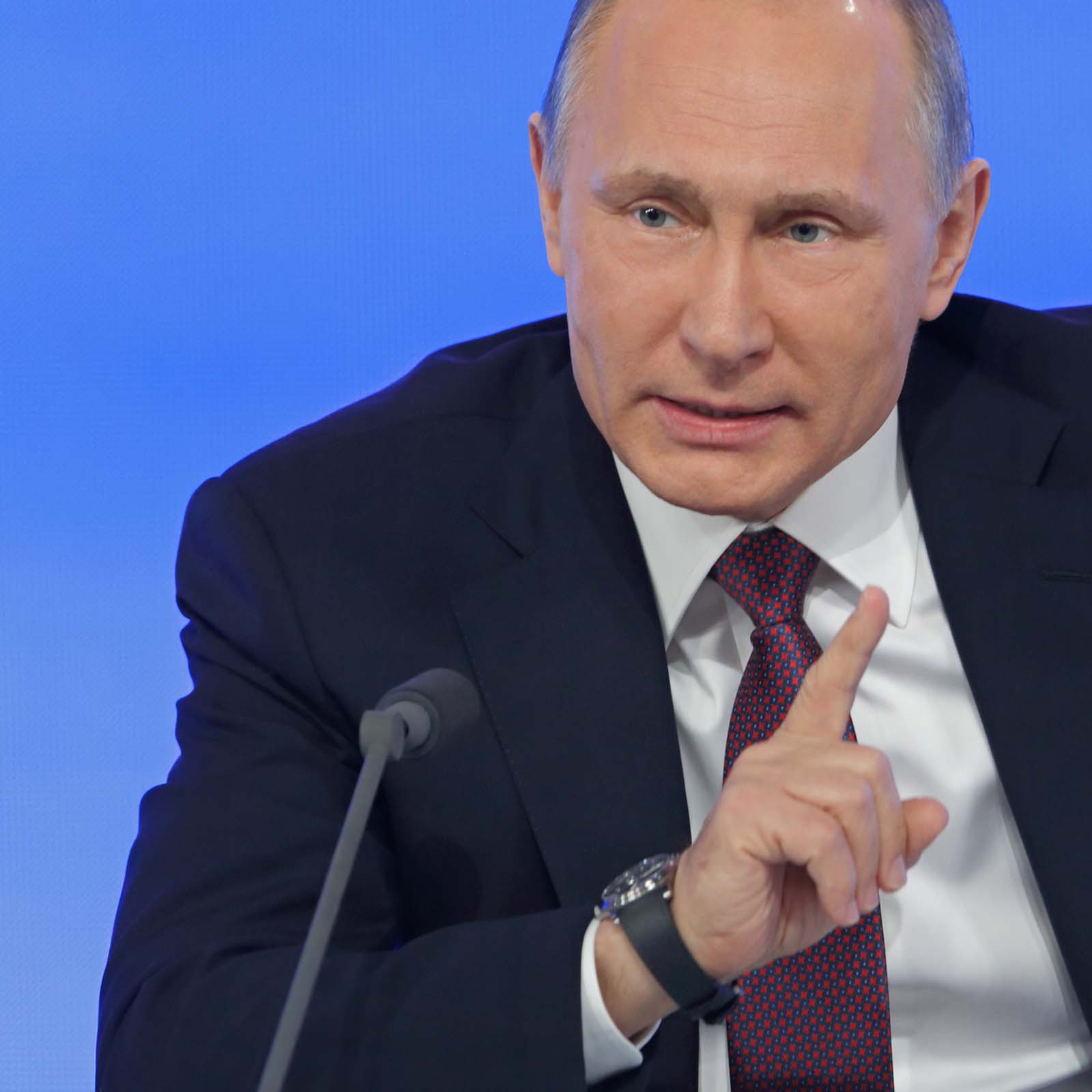
Russia’s president Vladimir Putin has mentioned blockchain, intimating that lawmakers stop hindering the development of these technologies. Putin has noted the potential of the cryptoruble, and recently commenting, “If we talk about cryptocurrency – this is something that goes beyond national borders.” 

South Korea’s minister of science and IT, Yoo Young-min, is a huge blockchain supporter. Young-min has been pushing blockchain integration and to have cryptocurrencies and blockchain technology regarded as separate entities for regulatory purposes.

In Sweden, Mathias Sundin became a member of the country’s parliament after funding his election campaign solely in bitcoin. Sundin then made the transition from the political arena to the position of chairman of the board of Swedish crypto exchange BTCX. 

Following very closely behind Sundin is Switzerland’s lawmaker Cédric Wermuth who is vice president of the Social Democratic Party. He called for a formal government study into the possibility of launching a state cryptocurrency. The government has asked legislators commission a study on the pros and cons of a Swiss “e-franc.”

First State-Issued Cryptocurrency Is the Petro Influential Politicians Are Advocating Crypto Around the Globe

In the United Kingdom, member of Parliament from the Conservative party Eddie Hughes says that he is a “crypto enthusiast with amateur knowledge,” and has urged fellow parliamentarians to get a better understanding of blockchain and cryptocurrencies.

In the United States, during the 2018 midterm elections a number of crypto-friendly lawmakers have secured governorships. Bitcoin advocate and pro-tech candidate Jared Polis was elected as governor. The tech advocate and gamer earned a fond place in bitcoiners’ hearts in 2014 when he vowed to fight any attempt by the government to restrict the cryptocurrency’s growth. Early BTC adopter Gavin Newsom was also elected governor of California.

Venezuela’s president Nicolás Maduro, while a controversial figure, is also a crypto-friendly politician who is behind the oil-backed Venezuelan coin, the petro. Maduro has been tirelessly promoting the petro ever since his administration announced the creation of what is now considered the first state-issued cryptocurrency.

Will we see more politicians endorse cryptocurrencies in 2019? Let us know in the comments section below.


Images courtesy of Shutterstock.


Need to calculate your bitcoin holdings? Check our tools section.

The post Influential Politicians Are Advocating Crypto Around the Globe appeared first on Bitcoin News.

from Bitcoin News http://bit.ly/2QWHqvU Influential Politicians Are Advocating Crypto Around the Globe

#USA Private equity buyouts have become viable exit options — even for early-stage startups

//

About 13 years ago I faced an excruciating decision: whether to sell my company, Pinnacle Systems, to a private equity firm or to another large public company. I felt that both suitors would treat my employees well (and I negotiated hard to make sure that was the case), and both offered a good asking price well above our value on NASDAQ.

After raising what at the time felt like my first child, born in my living room and nurtured into a publicly traded entity, I was ready for it to take its next step and for me to take mine. I ultimately opted for the strategic sale, but I left the process intrigued by what was already an evolving dynamic between private equity firms and tech exits.

In years past, stigma often accompanied private equity sales. I know I felt that way, even under strong deal terms. Plus, private equity exits were only available to companies generating substantial annual revenues and often profits, making this exit option inaccessible for many startups. Today, private equity buyout firms can provide a solid (and on occasion excellent) exit route — as well as an increasingly common one, accounting for 18.5 percent of VC-backed exits in 2017.

Private equity firms are investing in a broad array of technology companies, including highly valued unicorns, but also early- to mid-stage profitable and unprofitable companies that a few years ago would have been unable to secure interest from these buyout firms.

In addition, the lines between venture capital and private equity are increasingly blurring, with more private equity investments in tech, and several-late stage VC firms creating large, billion-dollar plus late-stage growth funds. Further blurring the lines, some of the late-stage VC firms are taking controlling interests in startups, a strategy typically associated with private equity. Recently, one of our portfolio companies received an investment from a late-stage VC firm that acquired a majority stake by providing liquidity to some existing shareholders and investing in the company, utilizing a strategy typically associated with PE buyout firms.

The rise of private equity buyouts within the tech sector presents a viable exit option for founders, given the reality that most startups won’t ultimately IPO. (According to PitchBook, only 3 percent of venture-backed companies in the last decade eventually went public.)

If an IPO is not a realistic long-term option, the remaining primary exit option has typically been a sale to another company (a strategic buyer, in venture parlance). However, in the past few years, private equity firms have become aggressive buyers of private companies, sometimes bidding as high as or higher than strategic buyers. With one of my portfolio companies, a private equity buyer placed the second highest bid ahead of all but one strategic buyer and helped raise the final price from the strategic buyer just by being in the bidding process.

Founders who find themselves in negotiations with strategic buyers should also reach out to PE firms to optimize the outcome. Silver Lake, Francisco Partners, Thoma Bravo and Vista are a few technology-focused PE firms, and PitchBook’s annual liquidity report lists other firms. Vista has been especially active, acquiring many technology companies, including Infoblox, Lithium and Marketo. Not all PE firms are the same, just like not all VCs and strategic buyers are the same.

Years ago, when private equity buyouts were typically only large deals, new management teams were almost always brought in to tweak the edges of already successful companies. Today, each private equity firm has its own strategy — some only buy large profitable companies, others focus on mid-size acquisitions and some only buy early-stage (typically unprofitable) companies, which brings us to the next point.

Even early-stage startups can explore a PE exit, especially if things are not going well

While most readers are familiar with private equity buyers at later stages, what’s new is the emergence of PE activity at early stages. These firms acquire majority stakes in startups that have only raised early-stage investments but are having trouble scaling or raising the next round.

After a buyout, these private equity firms typically provide value by adding the missing elements, such as marketing or sales know-how, in order to kick-start the business and achieve scale. Their goal is to increase the value of the underlying asset by augmenting founder teams with the buyout firm’s own operational experts, sometimes combining newly acquired assets with already existing assets to create a stronger whole, or doubling-down on promising products (while shedding less promising offerings) to unlock potential.

Typically, these PE firms then sell the company to another company (usually a strategic buyer) for greater value. In some cases, these early-stage PE firms sell to another PE buyout firm further up market. In some of these acquisitions, founders can maintain minority ownership in the company (though not a controlling stake), which they can carry through to their “next exit.”

Unlike PE buyouts at later stages, PE buyouts at the earlier stages are not usually high-value exits; they are mostly an avenue to provide the founders some return for their hard work, rather than the disappointing returns they can expect from an acqui-hire or, even worse, a shutdown. If negotiated correctly, a private equity deal can give founders an opportunity to play another hand to the next exit.

Few founders create companies in order to flip them. Strong entrepreneurs create companies to transform their missions into reality and positively impact the world. Steve Jobs said, “I’m convinced that about half of what separates the successful entrepreneurs from the non-successful ones is pure perseverance.” An acquisition — particularly to private equity — may not have been the original goal, but it may fuel the continued pursuit of the founder’s mission. Or, perhaps it will enable the pursuit of a new and worthy mission.

from Startups – TechCrunch https://tcrn.ch/2LCv72a

#Blockchain The Daily: Electrum Users Targeted by Hackers, Huobi DM’s Daily Volume Exceeds $1B

The Daily: Electrum Users Targeted by Hackers, Huobi DM Daily Volume Exceeds $1B

Electrum developers have confirmed reports of an attack against the popular cryptocurrency wallet. Also covered in The Daily, Huobi Derivative Market’s daily trading volume has reached $1 billion, and one of the founders of Brazil’s leading crypto exchange Foxbit has died in a car crash.

Also read: UFC 232 to Have Official Crypto Partner, 5% of Israelis Use Bitcoin

Electrum Developers Scramble to Stop Phishing Attack

The Daily: Electrum Users Targeted by Hackers, Huobi DM's Daily Volume Exceeds $1BUsers of the Electrum bitcoin wallet have been targeted in a new phishing attack, the project’s developers confirmed on Twitter. The team notes that the wallet’s official website is electrum.org and warns against downloading the software from any other source.

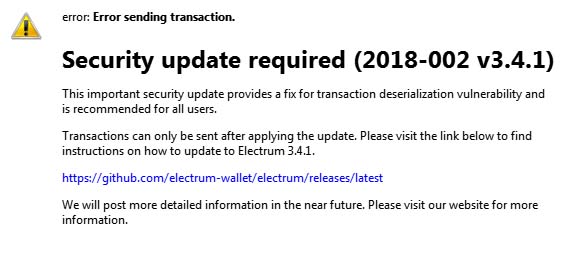
The attack, which began about a week ago, has been conducted through malicious servers. When asked to broadcast a transaction through a legitimate Electrum wallet, these servers reply with an error message, directing users to download a fake ‘security update’ from an unauthorized Github repository.

At startup, the malicious software asks users for a two-factor authentication code, an unusual request as the 2FA codes are needed only when sending funds. The app then uses the code to transfer the stolen digital cash to addresses controlled by the attacker.

Electrum is one of the most popular cryptocurrency wallets with support for major coins such as bitcoin core, bitcoin cash, litecoin, and others. According to a report by Zdnet, the unknown hacker or hackers have so far managed to misappropriate over 200 BTC.

The Daily: Electrum Users Targeted by Hackers, Huobi DM's Daily Volume Exceeds $1B

Electrum developers released an update, version 3.3.2, after they were notified of the attack. However, they admitted in a blog post that “This is not a true fix, but the more proper fix of using error codes would entail upgrading the whole federated server ecosystem.” Gitub admins have also taken down the attackers’ repository.

In January of this year, Electrum issued an emergency patch for another bug. The vulnerability exposed passwords allowing websites hosting the wallets to potentially steal cryptocurrency belonging to their users.

Huobi DM’s Daily Trading Volume Surpasses $1 Billion

The Daily: Electrum Users Targeted by Hackers, Huobi DM's Daily Volume Exceeds $1BHuobi Derivative Market’s daily volume has exceeded $1 billion within a month after the launch of the trading service, the Singapore-based cryptocurrency exchange announced. The threshold was reached on Dec. 25, which was also a strong day for the company’s main trading platform, Huobi Global, with the combined trading volume of both Huboi’s platforms amounting to $2 billion on Christmas day. Huobi Global CEO Livio Weng commented:

This just goes to show the market demand for more sophisticated crypto trading tools, particularly those that allow traders to control risks in volatile markets. Huobi DM is a priority for us and we will continue to enhance it over the coming months.

The cryptocurrency contract trading feature offered by Huobi Derivative Market allows users to buy or sell bitcoin core (BTC) and ethereum (ETH) at predetermined prices and specified times in the future. That provides traders with a number of options such as arbitrage, speculation, and hedging. Huobi also plans to offer support for more cryptocurrencies, with EOS contracts already scheduled to go live on Friday.

Foxbit Co-Founder Gustavo Schiavon Dies in a Car Crash

The Daily: Electrum Users Targeted by Hackers, Huobi DM's Daily Volume Exceeds $1BGustavo Schiavon, one of the founders of the leading Brazilian cryptocurrency exchange Foxbit, has died in a road accident. While driving between Marília and São Paulo, the young entrepreneur reportedly lost control over his car and ran into a cargo truck. Gustavo’s girlfriend, Ariadny Rinolfi, has survived but has been hospitalized in serious condition. Another victim died in the crash that involved a total of two passenger cars and two large trucks.

Schiavon established Foxbit in 2014 with three other partners – João Canhada, Marcos Henrique and Felipe Trovão. In the following years, it became Brazil’s largest digital asset trading platform. This past March, the exchange lost to hackers 1 million Brazilian real (approximately $260,000), however, restored customers’ balances with the company’s own reserves.

This year Foxbit was also involved in a lawsuit against a commercial bank that closed its account citing concerns over money laundering. Without presenting evidence in court, the bank claimed it had the right to shut down accounts which it determined to be risky, which was later confirmed by Brazil’s judiciary.

What are your thoughts on today’s news tidbits? Tell us in the comments section.


Images courtesy of Shutterstock, Electrum, Foxbit.


Make sure you do not miss any important Bitcoin-related news! Follow our news feed any which way you prefer; via Twitter, Facebook, Telegram, RSS or email (scroll down to the bottom of this page to subscribe). We’ve got daily, weekly and quarterly summaries in newsletter form. Bitcoin never sleeps. Neither do we.

The post The Daily: Electrum Users Targeted by Hackers, Huobi DM’s Daily Volume Exceeds $1B appeared first on Bitcoin News.

from Bitcoin News http://bit.ly/2CDOxAW The Daily: Electrum Users Targeted by Hackers, Huobi DM’s Daily Volume Exceeds $1B

#Blockchain PR: ACD and Bitcoin.com Have Teamed up to Launch Payments With Bitcoin Cash

ACD and Bitcoin.com Have Teamed up to Launch Payments With Bitcoin Cash

This is a paid press release, which contains forward looking statements, and should be treated as advertising or promotional material. Bitcoin.com does not endorse nor support this product/service. Bitcoin.com is not responsible for or liable for any content, accuracy or quality within the press release.

December 28th, 2018
Bitcoin.com
ACD Inc

Bitcoin.com CEO Roger Ver has announced a strategic partnership within the cryptocurrency space between his company and the Tokyo-based ACD Inc (funded by ANA Holdings).

Based on this alliance, ACD’s token will be launched on the Bitcoin Cash network as a BCH token. As early as spring 2019, ACD will provide consumers with various services on this Bitcoin Cash Platform, including the ability to purchase authentic Japanese goods through their online store.

After extensive research and testing, ACD and Bitcoin.com jointly advocate Bitcoin Cash as the cryptocurrency that offers the most benefit to both consumers and businesses across the world due to its cheap, fast, and reliable payments. The partnership will begin with ACD accepting Bitcoin Cash payments from their customers. Many additional use cases will be announced in the coming months, including details for the ACD token that will be based on Bitcoin Cash Platform.

Mr. Yasuhiro Sonoda, CEO of ACD said, “After extensive research into different cryptocurrencies on the market, ACD chose to implement Bitcoin Cash as a new payment method. This will benefit our customers by offering fast, cheap and reliable worldwide transactions for both online and offline payments.”

Roger Ver, CEO of Bitcoin.com said, “I’m honoured to be a part of this exciting partnership between ACD and Bitcoin Cash! Worldwide money is a natural fit for a worldwide airline.”

Bitcoin Cash is a peer to peer electronic cash system that allows anyone to pay from anywhere in the world instantly, basically for free, and with no risk of chargebacks, payment denials or reversals. It is a natural fit for any global business like ACD, and their decision to adopt Bitcoin Cash payments sets them ahead of competitors by providing customers with an innovative new way to pay.

Media Inquiries:
Mr. Kota Morimoto
ACD Inc
morimoto@a-cd.co.jp
+81-(0)3-5657-1505

Mickey Amami
Bitcoin.com
mickey@bitcoin.com
+81-(0)3-6450-5136

Supporting Link
https://www.a-cd.co.jp/corporate_en/

This is a paid press release. Readers should do their own due diligence before taking any actions related to the promoted company or any of its affiliates or services. Bitcoin.com is not responsible, directly or indirectly, for any damage or loss caused or alleged to be caused by or in connection with the use of or reliance on any content, goods or services mentioned in the press release.

The post PR: ACD and Bitcoin.com Have Teamed up to Launch Payments With Bitcoin Cash appeared first on Bitcoin News.

from Bitcoin News http://bit.ly/2QYuBS9 PR: ACD and Bitcoin.com Have Teamed up to Launch Payments With Bitcoin Cash

#USA Venture capital, global expansion, blockchain and drones characterize African tech in 2018

//

2018 saw Africa’s tech sector become more dynamic and international. VC firms on the continent multiplied. There were numerous investment rounds. And startups pursued acquisitions and global expansion. Here’s a snapshot of the news that shaped African tech over the last year.  

Surge in VC funds

A notable 2018 trend was Africa’s VC landscape becoming more African, with an increasing number of investment funds headquartered on the continent and run by locals, according to Crunchbase data released in this TechCrunch exclusive.

Drawing on its database and primary source research, Crunchbase identified 51 viable Africa-focused VC funds globally with at least 7-10 investments in African startups from seed to series stage.

Of the 51 funds, 22 (or 43 percent) were headquartered in Africa and managed by Africans. Of those 22, nine (or 41 percent) were formed since 2016 and nine were Nigerian.
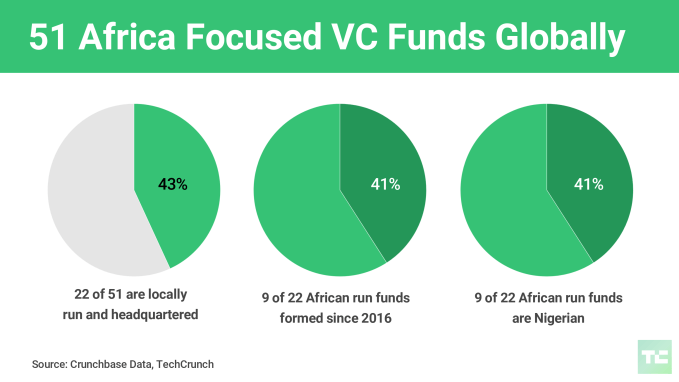
Four of the nine Nigeria-based funds were formed within the last year: Microtraction, Neon Ventures, Beta.Ventures and CcHub’s Growth Capital fund.

The Crunchbase study also tracked more Africans in top positions at outside funds and the rise of homegrown corporate venture arms.

One of those entities with a corporate venture arm, Naspers, announced a $100 million fund named Naspers Foundry to invest in South African tech startups. This was part of a $300 million (4.6 billion Rand) commitment by the South African media and investment company to support South Africa’s tech sector overall, as reported here at TechCrunch.

Another DFI came on the scene when France announced a $76 million African startup fund administered by the French Development Agency, AFD. TechCrunch got the skinny on how it will work here.

Investment and expansion

If African VC investment headlines were scarce a decade ago, in 2018 we became overwhelmed with them. This was largely a result of several recently closed Africa funds — TLcom’s $40 million, Partech’s $70 million, TPG’s 2 billion — beginning to deploy that capital.

In March, Nigerian consumer data analytics firm Terragon raised $5 million from TLcom. Kenyan business enterprise software company Africa’s Talking raised $8.6 million in a round led by IFC.

Investment startup Piggybank.ng closed $1.1 million in seed funding and announced a new product — Smart Target, for traditional savings groups. Trucking Logistics company Kobo360 raised two rounds, for a total of $7.2 million. Kenya-based agtech supply chain startup Twiga Foods raised $10 million. B2B retail supply chain Sokowatch closed a $2 million seed round led by 4DX ventures.
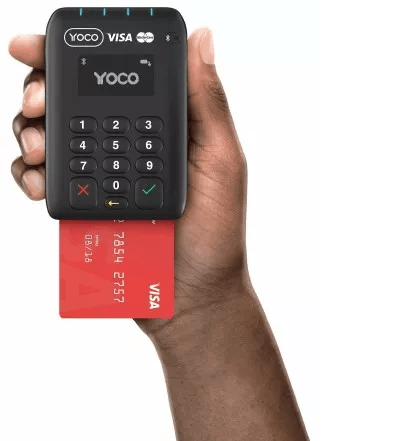
White-label lending startup Mines.io secured a $13 million Series A round. South African SME payment venture Yoco raised $16 million. Paga Payments added $10 million in fresh funding.

And then there were the three huge raises of the year. Kenyan digital payment company Cellulant hauled in $37.5 million in a Series C round led by TPG Growth. South African lending startup Jumo raised $52 million led by Goldman Sachs. And just this month, The Carlyle Group invested $40 million in Africa-focused online travel site Wakanow.com.  

Acquisitions and expansion

In 2018, African tech demonstrated it can travel, as several digital companies expanded on the continent and abroad. In May, MallforAfrica and DHL launched MarketPlaceAfrica.com, a global e-commerce site for select African artisans to sell wares to buyers in any of DHL’s 220 delivery countries.

Paga announced plans to expand in Africa and internationally, with an eye on Ethiopia, Mexico and the Philippines, CEO Tayo Oviosu told TechCrunch. Kobo360 is moving into in new markets — Ghana, Togo and Cote D’Ivoire.

On the back of its $52 million round, Jumo said it would expand in Asia and started by opening an office in Singapore.

On the acquisition front, Terragon bought Asian mobile marketing company Bizense in a cash and stock deal. The company is exploring greater growth opportunities in Latin America and Southeast Asia, CEO Elo Umeh told TechCrunch.

TPG Growth acquired a majority stake (of an undisclosed value) in Africa entertainment content company TRACE. After previous investments, Naspers acquired  96 percent of Southern African e-commerce venture Takealot.

And in December, California-based Emergent Technology Holdings acquired Ghanaian fintech payment company InterpayAfrica.

Partnerships

Collaboration between local tech firms and big global names continued in 2018. Liquid Telecom and Microsoft continued their partnership to offer connectivity cloud services such as Microsoft’s Azure, Dynamics 365 and Office 365 to select startups and hubs. This is part of Liquid Telecom’s strategy to go long on Africa’s startups as its future clients and the continent’s next big companies.

Facebook teamed up with Nigerian tech hub CcHub to launch its NG_Hub high-tech incubator.

Blockchain

As crypto fever gripped many leading economies in 2018, Africa was shaping its own blockchain narrative — one more grounded in utility than speculation. 500 Startups-backed SureRemit launched a crypto token product aimed at disrupting Africa’s multi-billion-dollar remittance market and raised $7 million in an ICO. South African payments venture Wala and solar energy startup Sun Exchange also had ICOs.

For blockchain as a platform, agtech startups Twiga Foods and Hello Tractor partnered with IBM Research to use the digital ledger tech to advance small-scale farmers and agriculture on the continent.

Ride-hail boda bodas

Ride-hail tech expanded into the continent’s frequently used motorcycle taxi market. Uber entered the three-wheeled tuk tuk moto taxi market in Tanzania in March and Uber and Taxify launched motorcycle passenger services in East Africa, including Kenya and Uganda.

Fails

Last year saw Y Combinator-backed VOD startup Afrostream shutter. In February 2018, Nigerian e-commerce startup Konga — backed by VC — was sold in a distressed acquisition. There were high expectations for Konga and its much-liked founder Sim Shagaya. I made the case that Konga’s acquisition was one of Africa’s first big startup fails that flew under the radar.

Drones

TechCrunch did a deep dive into Africa’s drone scene, talking to several experts and looking at emerging use cases across delivery services, agtech and surveying. On the regulatory side, several countries — Rwanda, Tanzania, South Africa, Zambia and Malawi — are doing some interesting things around regulation and creating drone-testing corridors for global players.

TechCrunch and Africa

In 2018 TechCrunch did more with Africa than any previous year. In addition to more content, there was a market engagement trip to Ghana and Nigeria, with meet-and-greets at Impact Hub, MEST Accra and Lagos, and CcHub.
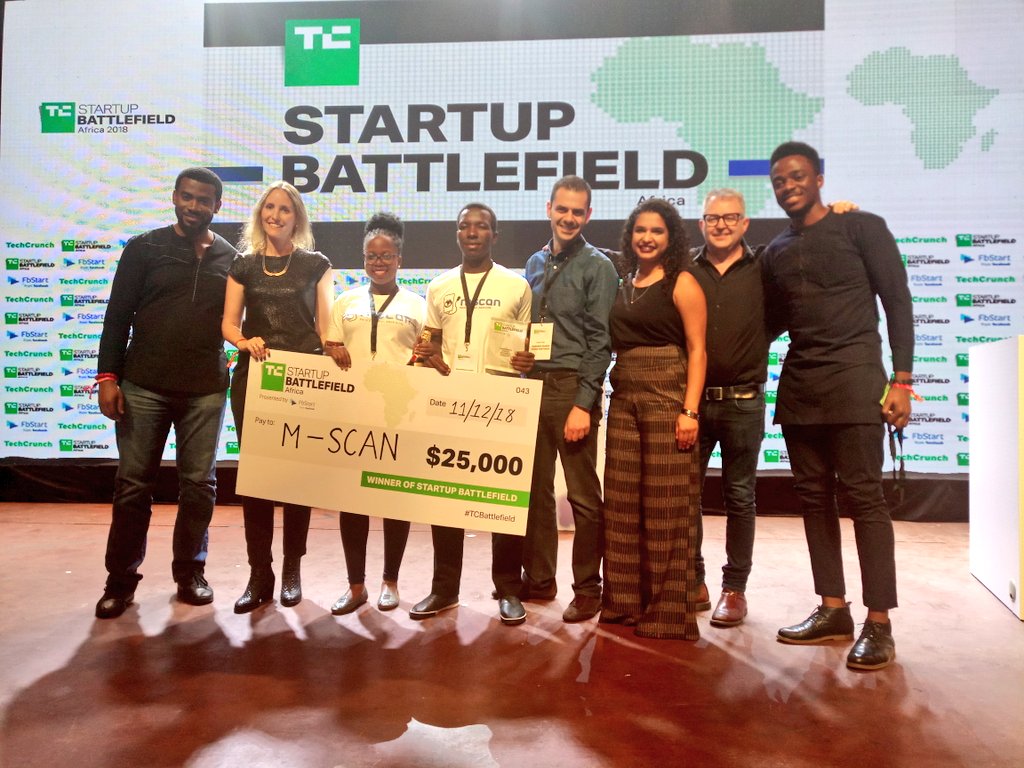
TechCrunch also had its first Africa panel on Disrupt SF’s main stage, an Africa session at Disrupt Berlin and held the second Startup Battlefield Africa in December in Nigeria.

Fifteen startups competed in Lagos in front of a Pan-African and global crowd. South African virtual banking startup Bettr was runner-up. Ultra-affordable ultrasound startup M-Scan from Uganda was the winner.

More Africa-related stories @TechCrunch

African tech around the ‘net  

from Startups – TechCrunch https://tcrn.ch/2GJfEyz

#Blockchain Judge Denies Craig Wright’s Motion to Dismiss Billion-Dollar Bitcoin Lawsuit

Judge Denies Craig Wright's Motion to Dismiss Billion-Dollar Bitcoin Lawsuit

On Dec. 27, court documents from the case against the Nchain chief scientist, Craig Wright, explained a large portion of his recent dismissal motions were found “not warranted” and were denied. Wright is being sued for 1.1 million BTC in a legal case in Florida that alleges he manipulated David Kleiman’s family.

Also Read: Many Self-Proclaimed Bitcoin Inventors and Satoshi Clues Were Debunked in 2018

The Lawsuit Against Craig Wright for 1.1 Million BTC Moves Forward

According to case 18-CV-80176 Kleiman v. Wright filed in South Florida, Craig Wright is accused of allegedly interfering with David Kleiman’s bitcoin assets after he died. Kleiman’s family believes David and Wright played a role in the early days of Bitcoin and possibly created the technology. This assumption was bolstered back when Kleiman, a forensic computer investigator was featured with Wright in tech publications such as Wired and Gizmodo, because they too thought the duo were possible Satoshi suspects.

Judge Denies Craig 'Satoshi' Wright's Motion in Billion-Dollar Bitcoin Lawsuit
Judge Beth Bloom says Craig Wright still must respond to counts I, II, V-IX in a legal battle seeking 1.1 million BTC.  

Kleiman died in 2013 with very little money after fighting with MRSA, a bacterium infection that spreads in different parts of the body. His brother Ira Kleiman alleges Wright of plotting to “seize Dave’s bitcoins and his rights to certain intellectual property,” according to the legal documents filed last February. Kleiman’s estate is suing Wright for approximately 1.1 million BTC ($3.9 billion) or the coin’s fair market value and damages associated with IP theft.

Judge Denies Craig 'Satoshi' Wright's Motion in Billion-Dollar Bitcoin Lawsuit
David Kleiman, computer security expert, an author of multiple books and a noted speaker. Kleiman has been named as one of the members of the Satoshi Nakamoto group theory. 

Wright Accused of Grifting the Kleiman Family and Transferring David’s Bitcoins to Various International Trusts

Nchain’s Craig Wright and his legal representation, Rivero Mestre LLP, attempted to dismiss the case earlier this year. Wright’s motion emphasized that Kleiman’s lawsuit was full of “supposition, speculation, conflicting allegations, hearsay, and innuendo.” The decision published on Dec. 27 explains the Florida district Judge Beth Bloom has granted Wright’s motion to dismiss counts III, and IV. However, Wright must answer to counts I, II, V-IX of the amended complaint and he has until Jan. 10, 2019, to respond. For instance the 40-page court document states:   

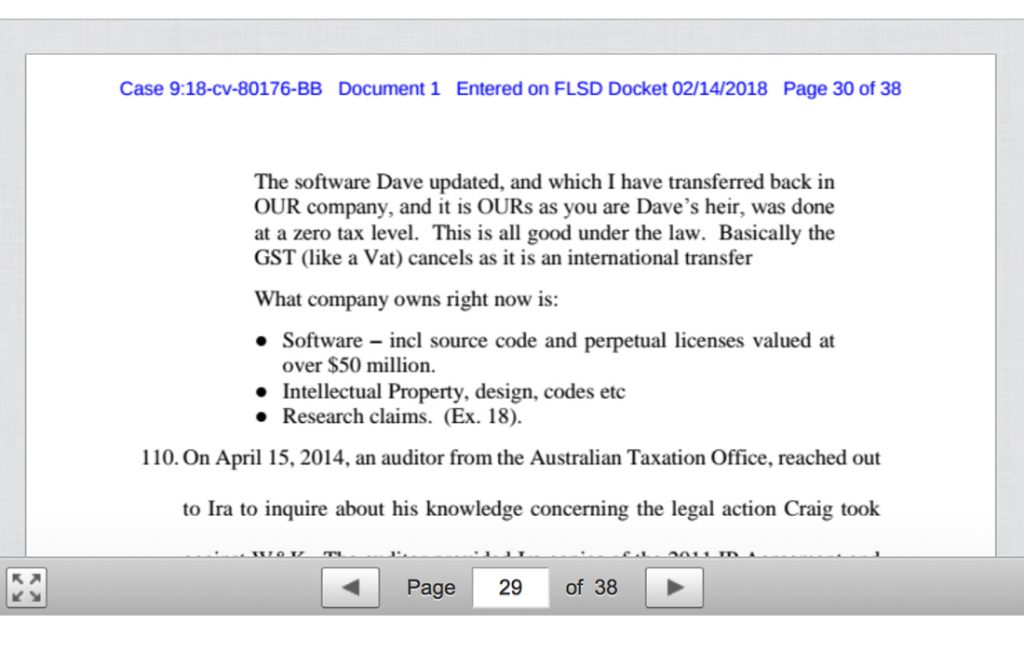
[The] court finds that plaintiffs have sufficiently alleged a claim for conversion — The Amended Complaint alleges that defendant converted at least 300,000 bitcoins upon Dave’s death and transferred them to various international trusts, was an unauthorized act that deprived the plaintiffs of the bitcoins therein — Accordingly, plaintiffs’ claim for conversion (Count I) survives defendant’s motion to dismiss.

Judge Denies Craig 'Satoshi' Wright's Motion in Billion-Dollar Bitcoin Lawsuit
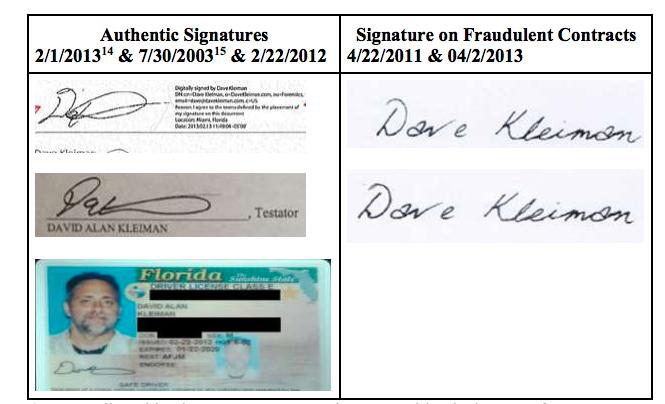
Allegedly the above photos are fraudulent signatures using David Kleiman’s name to transfer funds to various international trusts. “In reality, this signature appears to be a near identical copy of a computer-generated font called Otto,” the billion-dollar court case states. 

The Kleiman complaints further allege that Wright took advantage of a family who didn’t know too much about the technology. According to the lawsuit, the Kleiman family was unaware of certain property and IP assets that existed. Allegedly, Wright reached out to Dave’s elderly father 10-months after he passed and said, “he was not seek[ing] anything other than to give [him] information about [his] son, and offering to help the Kleiman family recover what Dave owned.”  

Judge Denies Craig 'Satoshi' Wright's Motion in Billion-Dollar Bitcoin Lawsuit
An email of promises to the Kleiman family allegedly written by Craig Wright according to the plaintiff’s evidence.

The Amended Complaint also says that Wright promised shares to David’s family for a company called “Coin-Exch” and detailed the shares were “worth millions.” Wright is also accused of “several fraudulent omissions and misrepresentations” to the Kleiman family and related to the property and assets David may have owned. Judge Bloom explains that the Eleventh Circuit Court of Appeals has not decided on whether or not bitcoins are considered “money.” But Bloom emphasized the court still takes alleged victims and injury that occurs on home soil very seriously.   

“This controversy concerns a Florida company, regarding Florida assets (bitcoins mined in Florida) and intellectual property developed by a Florida company, where both the injured parties are Florida citizens,” Bloom’s decision states. “Therefore, the Southern District of Florida undeniably has a strong interest in adjudicating a case in which its residents claim that harm was committed against them.”

The court documents assert that with counts I, II, V-IX still standing, Wright has not met his “heavy burden” against the opposing Kleiman estate and “dismissal on forum non-conveniens grounds is therefore not warranted.”

What do you think about the case against Craig Wright? Let us know what you think about this legal matter concerning 1.1 million BTC in the comments section below.


Images via Shutterstock, Pixabay, Google, Wiki, Pacer, and Florida case 18-CV-80176.


Need to calculate your bitcoin holdings? Check our tools section.

The post Judge Denies Craig Wright’s Motion to Dismiss Billion-Dollar Bitcoin Lawsuit appeared first on Bitcoin News.

from Bitcoin News http://bit.ly/2Ak5kY5 Judge Denies Craig Wright’s Motion to Dismiss Billion-Dollar Bitcoin Lawsuit

#Africa Predictions for 2019 – what the investors said

//

With 2019 just around the corner, Disrupt Africa chatted to Africa’s investor community about what the new year has in store for the ecosystem.  Here’s a selection of predictions for 2019 from investor around the continent.

Tidjane Dème, general partner at Partech, managing the Partech Africa fund:

“We expect mostly more of the same good things.  We are looking forward to seeing more action in the investment sector, as more local teams raise funds for early stage companies.

However, on the startup front, the spotlight will be less on the seed stage: new should be less about  “This is the first African startup to do X”, and more about startups achieving significant growth milestone and maturity.  

Finally, we are confident that, as African markets are established as an exciting tech frontier,  great talent will converge on the continent. And 2019 might be the year where this phenomenon attracts attention.”

Andrea Böhmert, co-managing partner, Knife Capital:

“As a result of the increase in maturity of the ecosystem, I predict 2019 to be a fantastic year for the ecosystem. I see a record year in terms of investments made as a lot of money needs to be placed. I expect some high profile success stories. I also hope (and yes, hope is not a strategy) that all the engagements, conversations, indabas and conferences that talk about stimulating the economy, and supporting entrepreneurship, will finally result in clear actions, decisions and optimal allocation of resources.”

Yele Bademosi, founder and managing partner, Microtraction:

“We’ll see later stage funds write smaller checks or go even earlier to close the pre-seed and seed funding gaps – because that’s still a problem in the ecosystem. I also expect more funds to be announced – so hopefully an entrepreneur would have access to capital locally without the need to go to the valley.”

Nico Blaauw, director for marketing, Goodwell Investments:

“Ever more PE and VC investors will be attracted by growth opportunities in Africa.  Convergence will result in new businesses combining proven models and technologies that allow fast implementation and scale up; while we also expect a growing interest in the logistics and transportation sector as catalyst and facilitator of economic growth.  There will be further integration of the digital ecosystem with the physical world in order to scale to mass populations.

We also expect growing partnerships to scale across regions and expand footprint;  the expansion of investment focus in new geographies as “silent giants” emerge for new opportunities; and further discussions on rapid digital lending and the need for responsible investments.”

Justin Stanford, co-founding general partner, 4Di Capital:

“It seems that fintech is starting to mature as a theme, and the next theme which is now rising is insuretech, and perhaps agtech too. We have seen a noticeable increase of activity in the insuretech vertical in particular recently. Another trend which is picking up steam is the rise of corporate investment, from banks, insurers and other institutions looking to acquire a stake in the disruption space.”

Clive Butkow, chief executive officer, Kalon Venture Partners:

“I think we’ll see more of the same as were the highlights from 2018; far more capital being deployed to African tech startups for both seed and growth capital; and an increase in the number of entrepreneurs seeing entrepreneurship as a viable career path.”

The post Predictions for 2019 – what the investors said appeared first on Disrupt Africa.

from Disrupt Africa http://bit.ly/2Rk3Kip

#Blockchain 190 Companies Seek to Enter Japanese Cryptocurrency Market

190 Companies Seek to Enter Japanese Cryptocurrency Market

In an exclusive interview with news.Bitcoin.com, Japan’s top financial regulator has confirmed the number of companies currently wanting to enter the Japanese cryptocurrency market. Meanwhile, several existing crypto exchanges in the country are undergoing changes.

Also read: Indian Supreme Court Moves Crypto Hearing, Community Calls for Positive Regulations

Over 190 Companies Want In

Japan’s Financial Services Agency (FSA) confirmed to news.Bitcoin.com on Wednesday the number of companies to date that have expressed interest to register as cryptocurrency operators. The FSA said:

Including preliminary consultation/inquiries regarding registration, more than 190 operators are expressing their intention of market entry.

190 Companies Seek to Enter Japanese Cryptocurrency MarketThis number is 30 more companies than the previous count the agency revealed in August. At that time, the FSA said that 160 operators had expressed intention to enter the Japanese cryptocurrency market.

While the FSA did not discuss specific applications, some companies have made announcements themselves regarding their plans to start crypto-related businesses. Among them are Line Corp., Yahoo! Japan, Money Forward Inc., Drecom Co. Ltd., Yamane Medical Corp., Adways Inc., Avex Inc., Daiwa Securities Group, Samurai & J Partners, Appbank Inc., I-Freek Mobile Inc., Forside Co. Ltd., and Fasteps Co. Ltd.

Japan’s Changing Crypto Landscape

190 Companies Seek to Enter Japanese Cryptocurrency MarketThere are currently 16 registered crypto exchanges in Japan. Under the revised Payment Services Act, crypto operators must register with the FSA. Japan also has three deemed dealers, which are companies that have been allowed to operate while their applications are being reviewed by the regulator. They are Coincheck, Lastroots, and Everybody’s Bitcoin.

190 Companies Seek to Enter Japanese Cryptocurrency MarketIn September, regulated crypto exchange Zaif was hacked and was subsequently taken over by another regulated exchange, Fisco Cryptocurrency Exchange Inc. Bittrade was recently acquired by Huobi and is in the process of relaunching as Huobi Japan. Madison Group has announced a plan to acquire a stake in Bitocean, another registered exchange. In addition, Ceres Inc. announced on Thursday a capital tie-up with crypto exchange Xtheta to start a joint service next spring.

Among deemed dealers, Coincheck was acquired by Monex Group after it was hacked in January. Everybody’s Bitcoin was acquired by mega e-commerce and internet giant Rakuten Inc. Despite acquisitions, the FSA confirmed to news.Bitcoin.com on Wednesday that Japan still currently has 16 registered crypto exchanges.

DMM and GMO

190 Companies Seek to Enter Japanese Cryptocurrency MarketDMM.com, the parent company of DMM Bitcoin, a regulated crypto exchange, announced on Tuesday that it will no longer launch its Cointap app. The company began accepting registration for this service in January and initially planned to release the app in the spring. The e-commerce giant emphasized that the group will continue to offer crypto trading services at DMM Bitcoin.

190 Companies Seek to Enter Japanese Cryptocurrency MarketGMO Internet, the parent company of crypto exchange GMO Coin, also announced on Tuesday that it will no longer develop, manufacture or sell cryptocurrency mining machines, although it will continue to mine in-house. However, GMO said that this decision will not affect services by GMO Coin or the development of its yen-pegged stablecoin, which was announced in October.

What do you think of the number of companies wanting to enter the Japanese crypto market? Let us know in the comments section below.


Images courtesy of Shutterstock, DMM.com, and GMO Internet.


Need to calculate your bitcoin holdings? Check our tools section.

The post 190 Companies Seek to Enter Japanese Cryptocurrency Market appeared first on Bitcoin News.

from Bitcoin News http://bit.ly/2LCUuRn 190 Companies Seek to Enter Japanese Cryptocurrency Market