About Startup365

Chaque jour nous vous présenterons une nouvelle Startup française ! Notre pays regorge de talents et d'entrepreneurs brillants ! Alors partons à la découverte des meilleures startup françaises ! Certaines d'entre elles sont dans une étape essentielle dans la vie d'une startup : la recherche de financement, notamment par le financement participatif (ou crowdfunding en anglais). Alors participez à cette grande aventure en leur faisant une petite donation ! Les startups françaises ont besoin de vous !

#Blockchain Japan Reveals Expectations for Cryptocurrency Industry Self-Regulation

Japan Reveals Expectations for Cryptocurrency Industry Self-Regulation

In an exclusive interview with news.Bitcoin.com, Japan’s top financial regulator revealed its expectations for the self-regulation of cryptocurrency exchanges in Japan. The agency has approved a self-regulatory organization, which it is working closely with to ensure compliance. All 16 regulated crypto exchanges in Japan are members of this self-regulatory organization.

Also read: Indian Supreme Court Moves Crypto Hearing, Community Calls for Positive Regulations

Working Together

Japan Reveals Expectations for Cryptocurrency Industry Self-RegulationThe Japan Financial Services Agency (JFSA), the country’s top financial regulator, granted the Japan Virtual Currency Exchange Association (Jvcea) self-regulatory organization (SRO) status under the Payment Services Act in October.

The JFSA explained to news.Bitcoin.com that it believes “the SRO can take actions flexibly to keep up with the fast-changing environment surrounding crypto-assets,” adding:

We think it necessary [for us] to work with the Jvcea closely so that the association can successfully perform self-regulatory functions through the establishment and application of self-regulatory rules and monitoring of their members.

Japan Reveals Expectations for Cryptocurrency Industry Self-RegulationThe association is expected to cooperate with the JFSA to instruct and supervise its members to “operate their businesses appropriately.” It is also expected work with them “to improve the safety of related systems through investigation and research on security” and disseminate “information externally to increase the awareness of exchange users,” the agency described.

Furthermore, the association is expected to “set out detailed wallet management processes from the system security point of view and the cross-sectoral rules in areas that are not covered by the laws/regulations, for example, margin trading, for the users’ protection,” Japan’s top financial regulator noted, elaborating:

We expect that through self-regulation, clearer and more detailed rules will be provided as to provisions that are not specified under the existing laws/regulations, as well as self-discipline in areas that are not covered by the laws and regulations.

Adhering to Self-Regulatory Rules

Japan Reveals Expectations for Cryptocurrency Industry Self-RegulationAll of Japan’s 16 registered cryptocurrency exchanges are members of the Jvcea. Initially, only registered exchanges could join the association. However, after it was granted SRO status, the association opened up membership to other cryptocurrency operators. According to local media, deemed dealers, which are companies that have been allowed to operate while their applications are being reviewed by the JFSA, can also join the association.

Japan Reveals Expectations for Cryptocurrency Industry Self-RegulationThe JFSA confirmed to news.Bitcoin.com that “It is not a legal obligation for virtual currency exchange service providers to be a member” of a self-regulatory organization. “However, from the perspective of user protection, the JFSA monitors whether virtual currency exchange service providers conduct their businesses appropriately, taking self-regulatory rules into account.” In other words, crypto exchanges are expected to uphold self-regulatory standards even if they are not members of the Jvcea.

The agency revealed that it “works closely with the association by exchanging views about various issues on a regular basis and sharing information on members, unregistered business providers and user complaints,” emphasizing:

In cooperation with the Jvcea, the JFSA has been monitoring virtual currency exchange service providers as to their compliance with self-regulation as well as the laws and regulations.

In terms of whether the JFSA will approve another self-regulatory organization, the agency noted that “There is no limit to the number of SROs under the laws/regulations.” The regulator added, “In the event that another SRO submits an application for approval, the JFSA will scrutinize it from the viewpoint of the applicant’s effectiveness in performing self-regulatory functions.”

What do you think of Japan’s approach to self-regulation for the crypto industry? Let us know in the comments section below.


Images courtesy of Shutterstock.


Need to calculate your bitcoin holdings? Check our tools section.

The post Japan Reveals Expectations for Cryptocurrency Industry Self-Regulation appeared first on Bitcoin News.

from Bitcoin News http://bit.ly/2QRDTiz Japan Reveals Expectations for Cryptocurrency Industry Self-Regulation

#Blockchain Report: India Evaluating Cryptocurrency Legalization Under Strong Regulation

Report: India Evaluating Cryptocurrency Legalization Under Strong Regulation

The committee charged with providing recommendations for the regulatory framework surrounding cryptocurrencies in India is reportedly evaluating the legalization of the asset class under strong regulation. According to a recent report, “There is a general consensus that cryptocurrency cannot be dismissed as completely illegal.”

Also read: Report: Indian Government Panel Submits Crypto Recommendations

Legalizing With Strong Riders

An article published by the New Indian Express on Wednesday claims that the second inter-ministerial committee appointed to discuss the country’s stance on cryptocurrencies is not completely convinced of outlawing the asset class and is looking to legalize it under strong regulation.

The committee is headed by the Department of Economic Affairs’ secretary, Subhash Chandra Garg. It consists of officials from the Reserve Bank of India (RBI), the Securities and Exchange Board of India, and the Ministry of Electronics and Information Technology. An unnamed official was quoted by the publication as saying:

We have already had two meetings. There is a general consensus that cryptocurrency cannot be dismissed as completely illegal. It needs to be legalized with strong riders. Deliberations are on. We will have more clarity soon

Spirits Are High Despite Uncertainty

Report: India Evaluating Cryptocurrency Legalization Under Strong RegulationThis news comes almost a year after the country’s finance minister, Arun Jaitley, declared during a speech in February that the Indian government “does not consider cryptocurrencies as legal tender or coin” and vowed that the government would take all the necessary measures to “eliminate the use of these assets in financing illegitimate activities.”

Jaitley’s comments echo similar remarks by the RBI. The central bank issued a circular in April, giving all banking institutions under its control a three-month window to close all ties with cryptocurrency companies.

The banking ban imposed by the RBI has influenced cryptocurrency trading behaviors in India. Exchange-escrowed peer-to-peer (P2P) trading volumes have reportedly soared in the months following the decision, indicating that the Indian people’s desire to use and hold cryptocurrencies has not been entirely dampened by the ongoing regulatory uncertainty.

Although the government of India has yet to announce a formal stance on the matter, the Indian crypto community remains optimistic that the government will end up lifting the ban and will formulate positive regulations in the upcoming months. The next meeting of the committee is scheduled for January 2019.

What do you think will be the outcome of these meetings? Will the Indian government embrace cryptocurrencies and lift the ban? Let us know in the comment section below.


Images courtesy of Shutterstock.


The Bitcoin universe is vast. So is Bitcoin.com. Check our Wiki, where you can learn everything you were afraid to ask. Or read our news coverage to stay up to date on the latest. Or delve into statistics on our helpful tools page.

The post Report: India Evaluating Cryptocurrency Legalization Under Strong Regulation appeared first on Bitcoin News.

from Bitcoin News http://bit.ly/2AesKhh Report: India Evaluating Cryptocurrency Legalization Under Strong Regulation

#Blockchain Wine Retailer to Buy Majority Stake in Japanese Bitcoin Exchange for $30M

Wine Retailer to Buy Majority Stake in Japanese Bitcoin Exchange for $30M

Madison Holdings Group Ltd. has agreed to buy 67.2 percent of Japanese cryptocurrency exchange Bitocean for 1.68 billion yen ($15.12 million). Inclusive of fees, the wines and alcoholic beverages company will pay a total $30.12 million. According to local media reports, the deal is to be completed through a subsidiary, Madison Labs.

Also read: Cryptocurrency Exchanges Delist Dozens of Struggling Altcoins

Acquisition to Diversify Operations and Expand Income Sources

Wine Retailer to Buy Majority Stake in Japanese Bitcoin Exchange for $30M

Madison is an investment holding company popular for selling top-end French wines. The $546 million-valued company is listed on the Hong Kong stock exchange’s Growth Enterprise Market (GEM), a junior segment of the bourse. The company also has interests in corporate finance activities, financial advisory services and asset management.

Bitocean is registered as a crypto exchange with Japan’s Financial Services Agency, but has not commenced trading yet. According to papers filed with GEM, sometime this month, Madison is buying the stake from “independent third parties,” in what management said was part of the company’s “diversification strategy.”

A report in the South China Morning Post (SCMP) also detailed plans by HDR Cadenza Management – a unit of HDR Global Trading, owners of crypto exchange Bitmex – to acquire a 51 percent stake in Madison Labs for $17.14 million. Both deals have yet to be closed. Raymond Ting Pang-wan, chairman of Madison, stated:

Our wine business is stable and profitable, but then it is small. It is hard to make wine trading into a very big business. This is why we have to diversify into financial technology and the cryptocurrency business – to achieve a better return for our shareholders. Virtual currencies and blockchain are getting more popular. Investing in the virtual currency sector will expand our income source.

Lured by Japan’s Robust Crypto Regulation

Pang-wan told SCMP that his company was not concerned about the current market slump, which has seen the price of bitcoin core (BTC) plummet by more than 80 percent from its December 2017 all-time-high of almost $20,000. “Bitcoin is cheap, which has created a good opportunity for us to enter the market. We are eyeing the long term, so we are not worried about short-term volatility,” he was quoted as saying.

Wine Retailer to Buy Majority Stake in Japanese Bitcoin Exchange for $30M

He said the decision to enter Japan, which controls about a fifth of the global cryptocurrency trading total, was motivated by the existence of a comprehensive regulatory framework in the Pacific island nation. “We wanted to invest in a platform that was under proper regulation,” said Pang-wan.

Japan is building one of the strongest regulatory frameworks for the cryptocurrency industry, ostensibly to prevent cases of theft of investor funds. The $530 million Coincheck hack in January marked a crucial turning point in crypto regulation in the country. Today, Japan has the Virtual Currency Exchange Association, a self-regulatory body, while exchanges applying for a license with the Financial Services Authority have to go through a rigorous verification process.

According to the SCMP report, Gary Cheung Wai-kwok, chairman of the Hong Kong Securities Association, said:  “This is a small investment for the company (Madison), so it will not take too big a risk. It makes sense for the company to diversify its business to achieve higher income.”

What do you think about Madison’s deals with Bitocean and Bitmex? Let us know in the comments section below.


Images courtesy of Shutterstock.


Need to calculate your bitcoin holdings? Check our tools section.

The post Wine Retailer to Buy Majority Stake in Japanese Bitcoin Exchange for $30M appeared first on Bitcoin News.

from Bitcoin News http://bit.ly/2rXURwK Wine Retailer to Buy Majority Stake in Japanese Bitcoin Exchange for $30M

#USA The 10 largest US venture rounds of 2018

//

Three U.S. companies raised more than $1 billion in just one funding round in 2018, a year in which total deal value for U.S. startups is expected to surpass $100 billion for the first time.

For the most part, it was the usual suspects, and yes, SoftBank was an accessory in many of these rounds. Here’s a look at the 10 largest venture rounds of 2018.

Epic Games: $1.25 billion

The video game Fortnite Battle Royale was the star of the year 2018; more than 200 million players worldwide are registered online. (Photo Illustration by Chesnot/Getty Images)

Given the absolute phenomenon Fortnite became in just one year from its original release, it was no surprise private investors wanted to put money into Epic Games, the company behind it. In October, Epic Games announced a whopping $1.25 billion round at $15 billion valuation from KKR, Iconiq Capital, Smash Ventures, Vulcan Capital, Kleiner Perkins and Lightspeed Venture Partners to continue growing its Fortnite empire. That game alone is expected to bring in $2 billion in revenue in 2018 and reports 200 million registered players — not too shabby.

Cary, N.C.-based Epic Games’ monstrous fundraise was a standout in a year when funding for gaming and esports startups really took off. According to Crunchbase, global venture investment in the industry increased nearly 75 percent, to $701 million in the first half of 2018. Given Epic’s round, Discord’s $150 million infusion of capital this week and several others since June, the second half of 2018 undoubtedly set major records in the space.

Uber: $1.2 billion

Travis Kalanick, co-founder and former chief executive officer of Uber Technologies Inc., speaks during the TiE Global Entrepreneurs Summit in New Delhi, India, on Friday, December 16, 2016. Kalanick said the company will introduce Uber Moto across India. Photographer: Udit Kulshrestha/Bloomberg via Getty Images

One of the largest rounds of 2018 was also one of the first big financings of the year. To be fair, the negotiations behind Uber’s $1.2 billion SoftBank investment and much of the press coverage surrounding it came in 2017, but the deal officially closed in January. This deal was monumental for many reasons. First of all, it made Uber founder and former chief executive officer Travis Kalanick a billionaire — not just on paper — and it cemented SoftBank’s position as the ride-hailing giant’s largest shareholder.

The financing brought San Francisco-based Uber’s total raised to date to just over $20 billion at a valuation said to be around $72 billion. Of course, Uber has since privately filed for an initial public offering slated for the first quarter of 2019.

Juul Labs: $1.2 billion

Juul Labs, the maker of the popular e-cigarette brand that has recently come under fire from health officials over its popularity with young adults, plans to introduce a line of lower-nicotine pods. Photographer: Gabby Jones/Bloomberg via Getty Images

Juul, one of the buzziest companies of 2018, raised $1.2 billion from private investors Tiger Global, Fidelity and more in mid-2018. Then, this month, the developer of e-cigarettes popular among teenagers accepted a $12.8 billion investment from the makers of Marlboro that valued it at $38 billion. Not only has Juul created significant controversy surrounding the ethics, or lack thereof, of its core product and its marketing to the younger generation in a short time, but it has also accumulated value at a clip rarely seen before. Juul, for context, surpassed a $10 billion valuation just seven months after its first round of VC backing — that’s four times faster than Facebook.

2019 is poised to be an interesting year for San Francisco-based Juul as it navigates public scrutiny, regulations and the completion of its partnership with Altria Group, which, according to Juul’s CEO Kevin Burns, will “help accelerate [Juul’s] success switching adult smokers.”

Magic Leap: $963M

Magic Leap’s flagship product, the Magic Leap One AR headset, began shipping to consumers this year.

It wouldn’t be an end of the year round-up of the largest VC deals without any mention of Magic Leap, the extremely well-funded virtual reality company. Tucked away in Plantation, Fla., 8-year-old Magic Leap has closed round after round, raising more than $2 billion to develop its hardware and software. The key investors in this year’s big round, which valued the company at $6.3 billion, were Temasek and AT&T, which announced it would become the exclusive “wireless distributor” of Magic Leap products in the U.S. starting this summer. Magic Leap is also backed by Google, Alibaba and Axel Springer.

Not only did Magic Leap land one of the largest VC deals this year, but it also finally began shipping to consumers its flagship product, the Magic Leap One AR headset. That was a long time coming — years, in fact. So long, many doubted whether the buzzy headsets would ever see the light of day. Now, the headsets are available to buyers in 48 states, though it’s worth mentioning they cost more than two grand.

Instacart: $600M

Founder and CEO of Instacart Apoorva Mehta and moderator Megan Rose Dickey speak onstage during TechCrunch Disrupt SF 2016 at Pier 48 on September 14, 2016 in San Francisco, California. (Photo by Steve Jennings/Getty Images for TechCrunch)

Instacart has a lofty goal of delivering groceries to every household in the U.S., and it needs a lot of cash to get there. The company has raised VC every year since it completed the Y Combinator startup accelerator in 2012, and 2018 was no different. In October, the service brought in $600 million at a $7.6 billion valuation in a round led by D1 Capital Partners. Headquartered in San Francisco, the company has raised $1.6 billion to date from Coatue Management, Thrive Capital, Canaan Partners, Andreessen Horowitz and several others.

Instacart CEO Apoorva Mehta told TechCrunch at the time that the startup didn’t really need the capital and that this was more of an “opportunistic” battle. The market is hot, after all, and Instacart has ambitious plans to scale and it has a fierce competitor in Amazon to take on. As for an IPO, Mehta said “it will be on the horizon.”

Katerra: $865M

SoftBank-backed Katerra says it’s brought in more than $1.3 billion in bookings for new construction ranging from residential to hospitality and student housing.

One of SoftBank’s first major bets of 2018 was on construction technology, with an $865 million investment in Katerra at a $3 billion valuation out of its Vision Fund. Katerra, a tech startup based out of Menlo Park, develops, designs and constructs buildings. At the time of its January fundraise, Katerra told TechCrunch it had brought in more than $1.3 billion in bookings for new construction ranging from residential to hospitality and student housing. Founded in 2015 by three former private equity barons, the company has raised a total of $1.1 billion to date from SoftBank, Foxconn, Greenoaks Capital and others.

In June, Katerra announced it would merge with KEF Infra, an offsite manufacturing technology specialist, and would begin operating in India and the Middle East markets.

Opendoor: $725M

Yet another SoftBank investment, San Francisco-based Opendoor is also backed by Fifth Wall Ventures, GV, Andreessen Horowitz and more.

Opendoor’s two big SoftBank-backed investments this year totaled $725 million, valuing the company at $2.5 billion. The deal gave SoftBank a minority stake in Opendoor, an online real estate marketplace, and put one of its five managing directors, Jeff Housenbold, on the company’s board of directors. The round brought Opendoor’s total funding to slightly more than $1 billion — most of which it acquired in 2018, a major year for the company. Founded in 2014, the San Francisco-based startup is also backed by Fifth Wall Ventures, GV, Andreessen Horowitz and more.

According to TechCrunch’s Connie Loizos, Housenbold had hoped to work with Opendoor co-founder and CEO Eric Wu for some time. “The minute he joined [SoftBank] he reached out to me and let me know … saying if there was an opportunity to work together, to reach out to him,” Wu said.

Lyft: $600M

Uber competitor Lyft expanded aggressively in 2018, raised hundreds of millions in additional venture capital funding, and filed confidentially to go public.

Lyft managed to stay quite busy this year. Not only did the ridesharing company raise a $600 million round at a $15.1 billion valuation, it also acquired bike-share operator Motivate and filed confidentially to go public. Founded in 2012 by Logan Green and John Zimmer, the company has long competed with Uber, and will continue to do so as the pair race to the public markets in early-2019. Lyft, much smaller than Uber and only active in the U.S. and Canada, has raised nearly $5 billion in venture backing from KKR, Mayfield, Didi Chuxing, Floodgate and others.

San Francisco-based Lyft has spent much of the last two years expanding rapidly across the U.S. market, as well as pursuing its autonomous vehicle ambitions.

Automation Anywhere: $550M

Automation Anywhere raised a monstrous $550 million Series A in 2018, with support from the SoftBank Vision Fund.

The only surprise to make this list is Automation Anywhere, a 15-year-old provider of robotic process automation. The company raised a total of $550 million in Series A funding, a large chunk of which came from the SoftBank Vision Fund, as well as NEA, General Atlantic and Goldman Sachs. The round valued Automation Anywhere at $2.6 billion. According to PitchBook, this was the first round of institutional backing for the San Jose, Calif.-based company.

In a conversation with TechCrunch, Automation Anywhere CEO Mihir Shukla said they were attracted to SoftBank because of Masayoshi So — the CEO and founder of SoftBank: “[He} has a vision and he is investing in foundational platforms that will change how we work and travel. We share that vision.”

Peloton: $500M

SAN FRANCISCO, CA – SEPTEMBER 06: Peloton Co-Founder/CEO John Foley speaks onstage during Day 2 of TechCrunch Disrupt SF 2018 at Moscone Center on September 6, 2018 in San Francisco, California. (Photo by Kimberly White/Getty Images for TechCrunch)

Peloton’s growth exploded in 2018 as it launched its $4,000 treadmill, doubled down on original fitness streaming content and raised an additional $500 million in equity funding at a $5 billion valuation. The New York-based startup, often referred to as the “Netflix of fitness,” has raised nearly $1 billion in venture capital funding in the six years since it was founded by John Foley. It’s backed by  L Catterton, True Ventures, Tiger Global and others.

It’s likely Peloton will take the public markets plunge in 2019 much like Uber and Lyft. Foley earlier this year told The Wall Street Journal that though he doesn’t have any concrete plans, 2019 “makes a lot of sense” for its stock market debut.

from Startups – TechCrunch https://tcrn.ch/2T7ch5y

#USA A new solar technology could be the next big boost for renewable energy

//

Across the globe, a clutch of companies from Oxford, England to Redwood City, Calif. are working to commercialize a new solar technology that could further boost the adoption of renewable energy generation.

Earlier this year, Oxford PV, a startup working in tandem with Oxford University, received $3 million from the U.K. government to develop the technology, which uses a new kind of material to make solar cells. Two days ago, in the U.S., a company called Swift Solar raised $7 million to bring the same technology to market, according to a filing with the Securities and Exchange Commission.

Called a perovskite cell, the new photovoltaic tech uses hybrid organic-inorganic lead or tin halide-based material as the light-harvesting active layer. It’s the first new technology to come along in years to offer the promise of better efficiency in the conversion of light to electric power at a lower cost than existing technologies.

“Perovskite has let us truly rethink what we can do with the silicon-based solar panels we see on roofs today,” said Sam Stranks, the lead scientific advisor and one of the co-founders of Swift Solar, in a Ted Talk. “Another aspect that really excites me: how cheaply these can be made. These thin crystalline films are made by mixing two inexpensive readily abundant salts to make an ink that can be deposited in many different ways… This means that perovskite solar panels could cost less than half of their silicon counterparts.”

First incorporated into solar cells by Japanese researchers in 2009, the perovskite solar cells suffered from low efficiencies and lacked stability to be broadly used in manufacturing. But over the past nine years researchers have steadily improved both the stability of the compounds used and the efficiency that these solar cells generate.

Oxford PV, in the U.K., is now working on developing solar cells that could achieve conversion efficiencies of 37 percent — much higher than existing polycrystalline photovoltaic or thin-film solar cells.

New chemistries for solar cell manufacturing have been touted in the past, but cost has been an obstacle to commercial rollout, given how cheaply solar panels became thanks in part to a massive push from the Chinese government to increase manufacturing capacity.

Many of those manufacturers eventually folded, but the survivors managed to maintain their dominant position in the industry by reducing the need for buyers to look to newer technologies for cost or efficiency savings.

There’s a risk that this new technology also faces, but the promise of radical improvements in efficiencies at costs that are low enough to attract buyers have investors once again putting money behind alternative solar chemistries.

Oxford PV has already set a world-leading efficiency mark for perovskite-based cells at 27.3 percent. That’s already 4 percent higher than the leading monocrystalline silicon panels available today.

“Today, commercial-sized perovskite-on-silicon tandem solar cells are in production at our pilot line and we are optimizing equipment and processes in preparation for commercial deployment,” said Oxford PV’s CTO Chris Case in a statement.

from Startups – TechCrunch https://tcrn.ch/2rU1qR1

#Blockchain Crypto Bear Market Triggers Rise in M&A Activity

In 2018 there was a rapid decline in initial coin offerings, a slowdown in blockchain business launches, and a bearish crypto market. During this period, companies with good liquidity have been scaling up and strengthening by acquiring startups. 

Also Read: Global Cryptocurrency M&As Rise

 M&A Deal Frenzy in 2018

In 2017 the number of cryptocurrency and blockchain companies that launched more than doubled compared to the year prior. The current bear market that has since come to characterize 2018 has proven the ideal time for institutional investors and venture capitalists to make a land grab and acquire innovative startups.  Crypto Bear Market Triggers Rise in M&A Activity

There’s been something of a deal frenzy involving cryptocurrency and blockchain-related companies seeing mergers and acquisitions (M&A), which have increased by 200 percent in 2018. M&A is the lifeblood of Wall Street and this activity is expected to continue to accelerate within the cryptosphere as we head into 2019. 

In an interview with news.Bitcoin.com, Danish Saxo Bank founder Lars Seier Christensen revealed that he is actively searching to acquire crypto businesses, saying: “I am also looking at a couple of serious fund vehicles that do extensive research across the space. Because of course there will be some gold nuggets that have been dragged down unfairly in this bear market as happens in all bear markets.” 

Crypto Bear Market Triggers Rise in M&A Activity
Lars Seier Christensen

According to JMP Securities’ head of blockchain and digital assets investment banking, Satya Bajpai, the industry is witnessing a “land grab” for innovative technology, access to new markets, intellectual property, and talented employees through M&A, reports CNBC

The most recent data from JMP Securities and data from Pitchbook shows 115 deals have already been announced globally this year, with roughly 30 more expected by the end of this year. This compares with just 47 mergers and acquisitions that were completed in all of 2017. 

Crypto Bear Market Triggers Rise in M&A Activity
Source: JMP Securities

Rundown of Key M&A Deals From 2018

There have been a number of key crypto and blockchain acquisitions this year, with one of the most active companies being Coinbase. The California-based exchange has not allowed diminished trade volumes to keep it from actively acquiring startups. Earlier this year, there were also rumors about a potential acquisition of Coinbase by Facebook, though this appears to have been little more than speculation. 

Crypto Bear Market Triggers Rise in M&A Activity

Coinbase acquired decentralized ERC20 trading platform Paradex. The company also acquired Earn.com for an estimated $100 million, a platform that lets users receive cryptocurrency for answering emails and completing tasks

Another notable acquisition involved Goldman Sachs startup Circle which acquired cryptocurrency exchange Poloniex.

Coinsource, a Texas-based cryptocurrency ATM operator, became the first digital asset ATM provider to be granted a Bitlicense in the state of New York.

Japanese insurance group Sompo Holdings acquired a 10 percent stake in Bitpesa, a Kenyan digital currency exchange and payments company.

Trade.io acquired British brokerage firm Primus Capital Markets for an undisclosed amount to offer BTC-backed Forex trading.

Consensys, the software company established by Ethereum co-founder Joseph Lubin, acquired struggling space startup Planetary Resources.

Japanese mega ecommerce and internet company Rakuten Inc. entered the crypto space by acquiring an existing crypto exchange to fast-track its wat into the Japanese cryptocurrency market.

Shapeshift completed the acquisition of Bitfract, a software firm which operates a service that allows users to swap from one cryptocurrency to many in an instant.

Ernst & Young, one of the major global accounting firms, acquired technology assets and related patents from Elevated Consciousness.

Blockchain research and development firm Nchain announced the acquisition of a majority stake in the Bitcoin Cash-centric startup Handcash.

Chinese bitcoin company BTCC was acquired by a Hong Kong-based investment fund.

It seems the market downturn that has pervaded through 2018 has been the ideal time for large corporations to snag a good deal and secure a stake in the future of the rapidly developing crypto space.

Will M&A activity continue to accelerate as we head into 2019? Let us know in the comments section below.


Images courtesy of Shutterstock.


Need to calculate your bitcoin holdings? Check our tools section.

The post Crypto Bear Market Triggers Rise in M&A Activity appeared first on Bitcoin News.

from Bitcoin News http://bit.ly/2LH1ahz Crypto Bear Market Triggers Rise in M&A Activity

#Blockchain Markets Update: Crypto Prices Begin to Slump as the New Year Approaches

Markets Update: Crypto-Prices Begin to Slump as the New Year Approaches

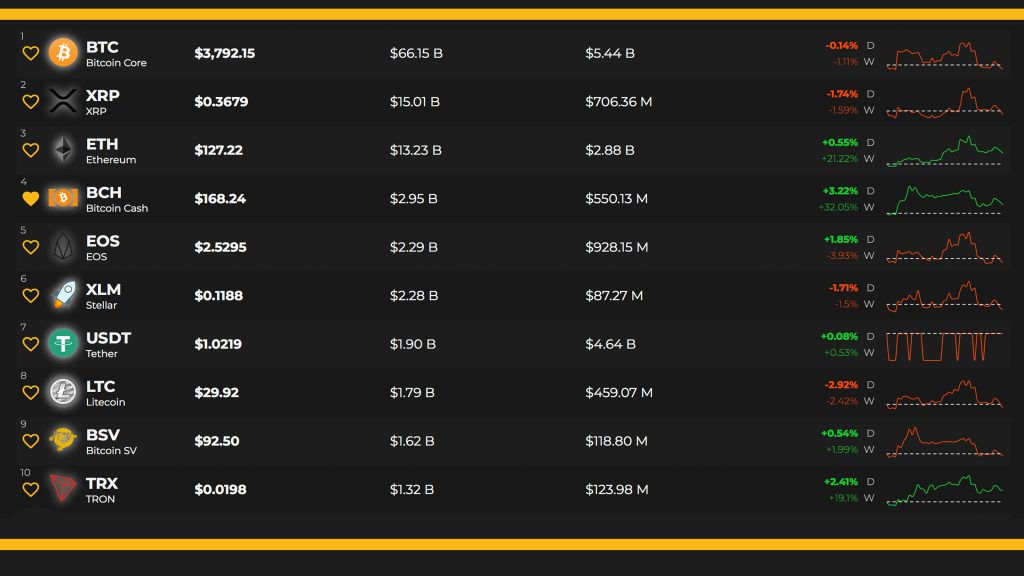
Most cryptocurrencies took a hit on Christmas Day, losing between 5-10% after having a decent run of solid gains last week. Some traders had assumed digital asset markets would be rather dull during the holidays, but the correction was deep and fast. At the moment, the entire cryptocurrency economy is worth $126 billion as traders are curiously waiting for the next big move.

Also read: Year in Review: 2018’s Top Cryptocurrency Stories

Crypto Markets Show It’s Too Soon to Call the Bottom

Cryptocurrency markets have consolidated a little after taking some deep losses during the early morning hours of Dec. 25. Global trade volume for the entire ecosystem of digital assets had dropped a few billion since last week’s price spikes, and bulls are starting to show signs of exhaustion. This Wednesday, the combined valuation of all 2,000+ cryptocurrencies in terms of 24-hour trade volume is roughly $17.4 billion. Bitcoin core (BTC) is trading for $3,792 at the time of publication and its markets are capturing $5.4 billion worth of today’s crypto trades. BTC is down 0.14% over the last 24 hours and down 1% for the week. The second largest market capitalization is commanded by ripple (XRP) which is trading for $0.36 per coin. Ripple markets are down 1.7% over the last day and are down 1.5% for the week.

Markets Update: Crypto Prices Begin to Slump as the New Year Approaches
Top 10 cryptocurrencies on Dec. 26, 2018.

Ethereum (ETH) has had a much better run over the last few days, with ETH markets up 0.55% today and 21% during the course of the last seven days. ETH is trading for $127 per coin and has a total market capitalization of around $13.2 billion. Lastly, the fifth biggest market valuation is still held by eos (EOS), where each token is swapping for $2.52. EOS has a $2.2 billion market cap and is up 1.8% today but down 3.9% for the week.

Bitcoin Cash Market Action

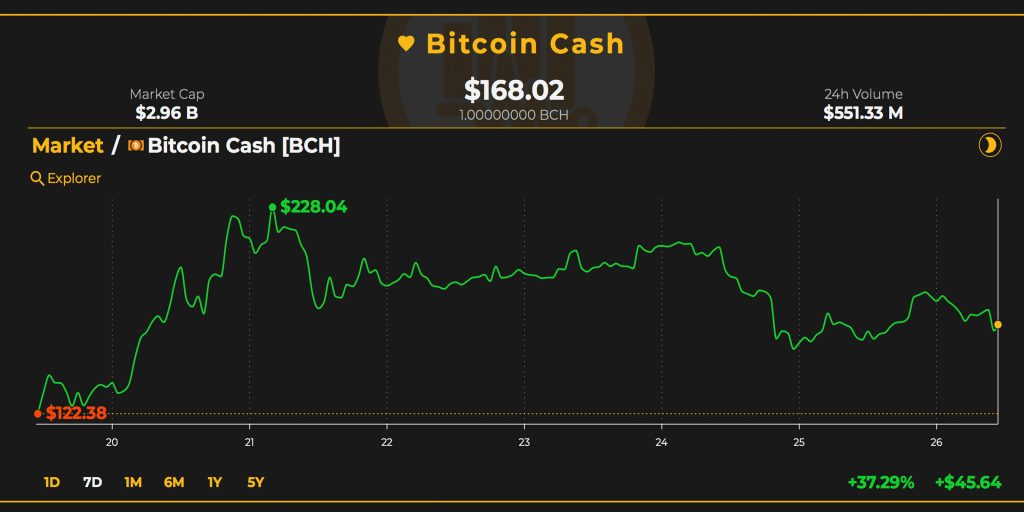
Bitcoin cash (BCH) markets are still doing very well this week after last week’s phenomenal 140% gains. BCH is still up by 32% over the last seven days and markets are up 3.2% in the last 24 hours. At the moment, BCH is trading for $168 per coin and the market has an overall valuation of about $2.9 billion. Trade volume is about $100 million lighter than a few days ago as today’s global BCH trade volume is around $551 million.

Markets Update: Crypto Prices Begin to Slump as the New Year Approaches
Bitcoin Cash (BCH) daily chart on Wednesday.

The top five exchanges swapping the most bitcoin cash are Lbank, Binance, Huobi, Coinbase, and Hitbtc. Lbank and Binance are capturing about ⅓ of today’s BCH trades. The top currency today paired against BCH is tether (USDT), with 47.3% of trades. This is followed by BTC (20.9%), ETH (16%), USD (7.4%), JPY (3.9%), and the KRW (1.9%). Bitcoin cash is the sixth most traded cryptocurrency on Wednesday above litecoin but below the volume of ripple.

BCH/USD Technical Indicators

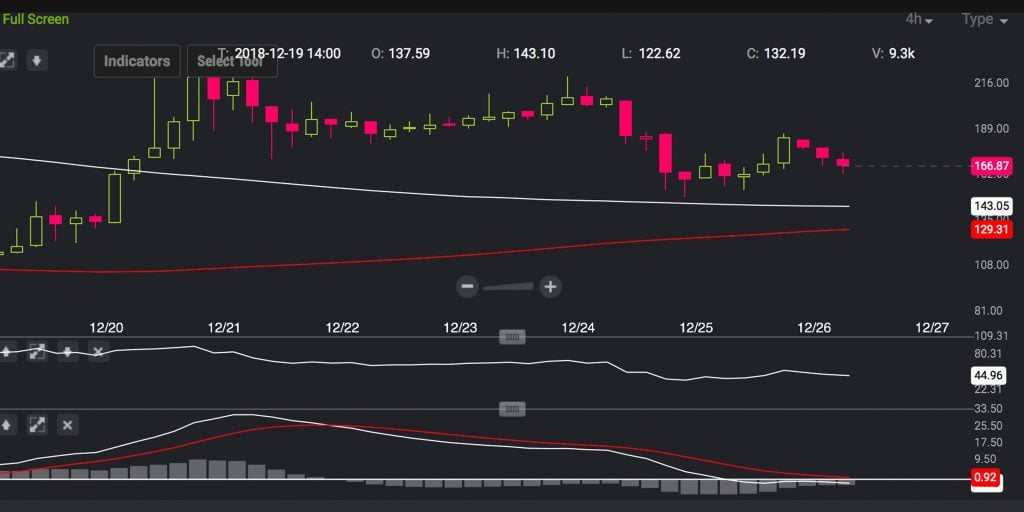
Even though there was a sizeable dip the other day, a few indicators on the charts still look bullish. Looking at the four-hour BCH/USD chart on Bitstamp shows the two Simple Moving Averages will be crossing hairs very soon as the 100 SMA may rise above the longer term 200 SMA. For now, the path toward the least resistance is still the downside, but in the near term it looks like a trend change may appear.

Markets Update: Crypto Prices Begin to Slump as the New Year Approaches
Bitstamp BCH/USD 4-hour on Dec. 26, 2018.

Right now the Relative Strength Index (RSI 4-H -44.96) is meandering in the middle, indicating more uncertainty. The Holidays may be inflicting a slight lull as the stochastic reports the same findings over a broad set of trading ranges. Looking at the order books shows bulls need to muster up more strength to penetrate the $200 region again and gain headway. On the backside, bears will see pit stops all the way until the $150 range and a few more speed bumps if it falls below that price zone.

Markets Update: Crypto Prices Begin to Slump as the New Year Approaches
Bitstamp BCH/USD 4-hour window.

The Verdict: Uncertainty Remains Strong

This week has seen traders perusing ideas on Tradingview, some discussions between swing traders on Twitter, and Telegram trading channels showing people think the “bottom” has not yet been reached. The dip in trade volume was to be expected over the holidays between Christmas and New Year and analyzing crypto market trade volume may not be a great source of confirmation this week.

Markets Update: Crypto Prices Begin to Slump as the New Year Approaches
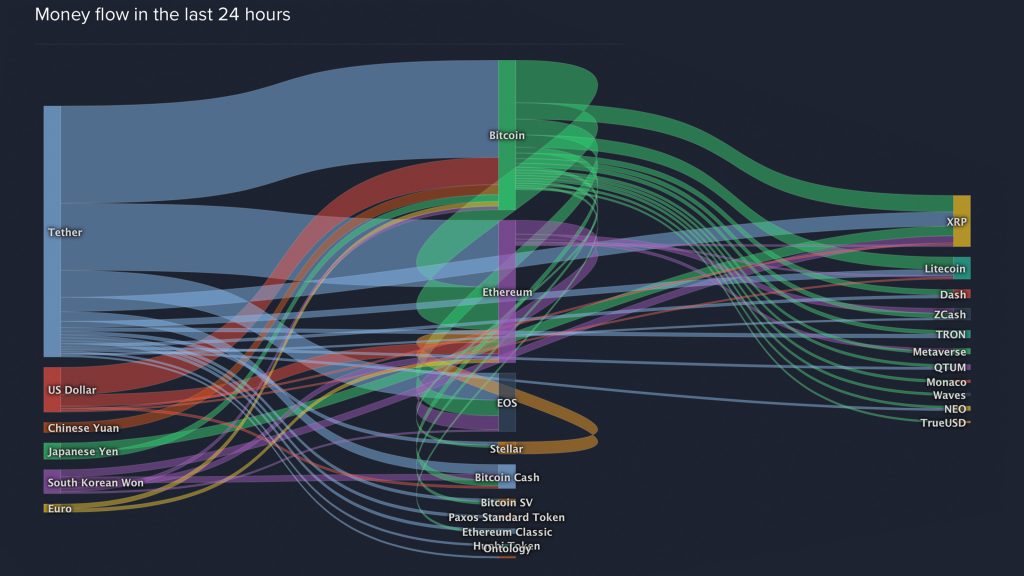
Cryptocurrency & Fiat money flow over the last 24-hours on Dec. 26, 2018.

BTC/USD and ETH/USD shorts are still well above normal, but discernibly less than two weeks ago. If digital asset markets cannot hold above the 50-day exponential moving average (EMA) then traders may see even lower bottoms in the near future. Overall, uncertainty remains high for traders who won’t attempt to call the bottom. Their stance is prudent one given that price letdowns have been one of the few certainties throughout the entire year.

Where do you see the price of BCH, BTC and other coins heading from here? Let us know in the comments below.

Disclaimer: Price articles and markets updates are intended for informational purposes only and should not to be considered as trading advice. Neither Bitcoin.com nor the author is responsible for any losses or gains, as the ultimate decision to conduct a trade is made by the reader. Always remember that only those in possession of the private keys are in control of the “money.”


Images via Shutterstock, Trading View, Coinlib.io, Bitstamp, and Satoshi Pulse.


Want to create your own secure cold storage paper wallet? Check our tools section.

The post Markets Update: Crypto Prices Begin to Slump as the New Year Approaches appeared first on Bitcoin News.

from Bitcoin News http://bit.ly/2rToZcJ Markets Update: Crypto Prices Begin to Slump as the New Year Approaches

#Blockchain The Daily: Mimblewimble Coins Prepare to Launch, New Remittance Platform Announced

The Daily: Mimblewimble Coins, New Remittance Platform, Restructuring Giants

With the New Year around the corner, startups as well as established players in the cryptocurrency industry have announced plans for new products and services. In The Daily today we cover the upcoming premieres of two Mimblewimble-based coins, the planned launch of a low-fee, crypto-based remittance service in Asia, and the intentions of two leading Chinese crypto companies to focus on core business activities.

Also read: BTCP Bug Exploited by ‘Bad Actor’, Binance Lists New Pairs

Customizable Privacy Coins Coming Soon

The Daily: Mimblewimble Coins Prepare to Launch, New Remittance Platform AnnouncedTwo crypto projects using Mimblewimble, a protocol designed to increase privacy and scalability, have announced the upcoming premieres of their new coins. The Mimblewimble concept was introduced back in 2016 and is now ready to be implemented at the beginning of 2019. Challenges during the development of the two cryptocurrencies have postponed both launches.


A startup called Beam is preparing to issue what has been described as the first Mimblewimble-based cryptocurrency on Jan. 3, after earlier reports that it would go live by the end of this month. Beam has been developed as a privacy-oriented crypto, but according to its creators it will be highly customizable, unlike other offerings in that niche.

“Lack of transaction confidentiality and poor scalability are some of the major issues that hinder crypto adoption,” Beam’s CEO Alexander Zaidelson told Distributed. The company will offer users the ability to set the privacy level for their transactions so that they can still report them to tax authorities, for example.

Another blockchain project based on the Mimblewimble protocol, Grin, was announced even earlier than Beam. However, its coin is now scheduled to launch on Jan. 15, 2019, to become the second Mimblewimble-based cryptocurrency.

Remittance Platform to Use Crypto Conversion

Atom Solutions, a Japan-based fintech company, is planning to launch its new remittance service on March 1, 2019. The platform uses a crypto wallet system that provides an alternative to traditional channels such as those based on the banking network Swift, which can be quite expensive and in some cases very slow.

The Daily: Mimblewimble Coins Prepare to Launch, New Remittance Platform Announced

Initially, the service will be available to users who want to send money between South Korea and the Philippines. However, the Japanese startup plans to expand the coverage to include at least 10 countries by the end of next year.

Atom Solutions promises low exchange rates and fees for fiat transfers thanks to using cryptocurrency conversion, but also addresses the issue with volatility that concerns crypto remittances by providing fast exchange through its wallet. The company has developed a system that quickly exchanges the fiat amount a user wants to send into cryptocurrency and then again into local fiat for the receiver.

Chinese Crypto Giants Focus on Core Businesses

The Daily: Mimblewimble Coins Prepare to Launch, New Remittance Platform AnnouncedTwo leading cryptocurrency companies with Chinese roots have announced plans to optimize their operations and focus on core business activities. The news comes at the end of a bearish year that saw digital asset markets losing billions of dollars in capitalization compared to the all-time highs of late 2017.



Bitmain Technology, the world’s leading producer of bitcoin mining equipment, has confirmed recent reports regarding planned job cuts that first spread on Chinese social media. In a statement quoted by the South China Morning Post, the Beijing-based company said it’s undergoing “some adjustment to our staff this year.” Emphasizing that it’s continuing to build a sustainable business, Bitmain denied rumors that it will lay off half of its employees. The company explained:

A part of that is having to really focus on things that are core to that mission and not things that are auxiliary. As we move into the new year, we will continue to double down on hiring the best talent from a diverse range of backgrounds.

In a similar announcement, the operator of Huobi, currently the third largest crypto exchange by daily trading volume, said it’s working to optimize staffing. The Chinese Huobi Group intends to do so by laying off its “worst-performing employees.” A spokesperson for the company noted however that the Singapore-based exchange is still hiring people for its core businesses and emerging markets.

What are your thoughts on today’s news tidbits? Tell us in the comments section.


Images courtesy of Shutterstock, Beam, Atom Solutions.


Make sure you do not miss any important Bitcoin-related news! Follow our news feed any which way you prefer; via Twitter, Facebook, Telegram, RSS or email (scroll down to the bottom of this page to subscribe). We’ve got daily, weekly and quarterly summaries in newsletter form. Bitcoin never sleeps. Neither do we.

The post The Daily: Mimblewimble Coins Prepare to Launch, New Remittance Platform Announced appeared first on Bitcoin News.

from Bitcoin News http://bit.ly/2V9QKeE The Daily: Mimblewimble Coins Prepare to Launch, New Remittance Platform Announced

#Blockchain Cryptocurrency Exchanges Delist Dozens of Struggling Altcoins

Cryptocurrency Exchanges Delist Struggling Altcoins as Markets Crash

Kucoin has delisted 10 digital assets, including bitcoin gold and mobius, and Huobi has put 32 trading pairs on notice. Both exchanges cite issues to do with weak liquidity and trading volume as reasons for their action. But the flurry of delistings also point to how the cryptocurrency market downturn has taken a toll on many altcoins.

Also read: Bitcoin Equipment Maker Ebang Reapplies for Hong Kong Listing

Delisting Result of Low Liquidity

Kucoin said it had “disqualified” tokens such as bread, bitclave, wepower and ethlend for failing to meet the Chinese exchange’s listing requirements as set out in its “special treatment rule (ST).” Digital coins at risk of being delisted are placed under the so-called ST for “mandatory review over a specified period of time.”

Cryptocurrency Exchanges Delist Dozens of Struggling Altcoins

Tokens are indicted particularly for low liquidity or when the project is faced with the risk of bankruptcy or liquidation, security breaches and other issues. “The exchange may delist … the project (if it) fails to meet the basic liquidity requirements by the end of the observation period,” explains Kucoin on its “special treatment rule” page.

Any trading or deposits of the 10 delisted cryptocurrencies has now been suspended, even though withdrawals are permitted for a time. Kucoin said the decision had been taken in order “to provide a solid user experience” on the exchange.

Kucoin is the world’s 54th largest digital currency platform by daily trade volume, with $20.35 million worth of coins traded in the last 24 hours, according to data from Coinmarketcap. Currently, the exchange offers over 300 token trading pairs.

Altcoins on the Brink as Markets Struggle

The rout in global cryptocurrency markets this year has left hundreds of altcoins haemorrhaging value against the U.S. dollar and struggling to retain liquidity. Many are down by 90% or more from their all-time high, making the tokens almost worthless in some cases.

Cryptocurrency Exchanges Delist Dozens of Struggling Altcoins

The latest Kucoin purge comes in the same week as an announcement from Huobi, the world’s fourth largest cryptocurrency exchange, that it is planning to remove about 32 digital assets from its platform. The tokens were cited for low trading volume and have been placed in Huobi’s version of the ST risk category.

“In order to promote the healthy development of the blockchain industry and protect the legitimate rights and interests of investors, Huobi regularly carries out comprehensive reviews of the listed tokens in accordance with the Token Administration Regulations of Huobi,” said the exchange.

Huobi is to reexamine the affected assets on Dec. 26, and those that fail to meet the listing requirements will effectively be trading under caution, with a real risk of being delisted. Some of the affected tokens include enigma, datum, my token, medishares, wepower, appcoins and bitcapital vendor. Salt, tieron, untrust, quantstamp, medical chain and others are also at risk of being delisted.

Do you think more low cap altcoins are in danger of being delisted from major exchanges? Let us know in the comments section below.


Images courtesy of Shutterstock.


Need to calculate your bitcoin holdings? Check our tools section.

The post Cryptocurrency Exchanges Delist Dozens of Struggling Altcoins appeared first on Bitcoin News.

from Bitcoin News http://bit.ly/2EQKu6l Cryptocurrency Exchanges Delist Dozens of Struggling Altcoins

#USA See you in Las Vegas during CES

//

We will be holding a small event during CES in Las Vegas and we want to see you! We’re looking to meet some cool hardware and crypto startups, so the good folks at Work In Progress have opened up their space to us and 200 of you all to hold a meetup and pitch-off.

The event will be held at Work In Progress, 317 South 6th Street on Wednesday, January 9, 2019 between 6:00 PM – 9:00 PM PST.

There are only 200 tickets, so if you want to come please pick one up ASAP. The meetup is open to everyone, so head over if you’d like to talk tech. You can pick up a ticket here.

If you’d like to pitch at the event I’ll be picking 10 companies that will have three minutes to pitch without slides. Because this is a hardware event I recommend bringing a few of your items to show off. If you’d like to pitch, fill this out and I will contact those who will be coming up on stage.

See you in Vegas!

from Startups – TechCrunch https://tcrn.ch/2QNXHU5