Chaque jour nous vous présenterons une nouvelle Startup française !
Notre pays regorge de talents et d'entrepreneurs brillants ! Alors partons à la découverte des meilleures startup françaises ! Certaines d'entre elles sont dans une étape essentielle dans la vie d'une startup : la recherche de financement, notamment par le financement participatif (ou crowdfunding en anglais). Alors participez à cette grande aventure en leur faisant une petite donation ! Les startups françaises ont besoin de vous !
Back in October, members of the Bitcoin Cash (BCH) community discussed feeding chickens with mealworms over the internet from remote locations using BCH microtransactions. Now BCH users can provide food for horses, baby goats, roosters and more using River Forest Farm’s livestream and pay for feed using bitcoin cash.
The BCH Zoo: Feed 7 Different Species With Bitcoin Cash
Bitcoin Cash fans thought it was pretty cool when Spencer Lambert (Redpepper261) created a mealworm dispenser that could feed chickens after the machine had received a payment of BCH. The owner of the chicken coop used a candy machine designed by the firm Iozeta which dispenses candy or literally anything that will fit through the chute after a payment is broadcast. Now the website, called the Bitcoin Cash Zoo, not only shows Lambert’s chicken coop, but visitors can also interact with baby goats, horses, bunnies, ducks, and geese. Visitors who happen to stumble on the virtual BCH petting zoo are greeted by a message that states:
Feed River Forest Farm’s Baby Goats and more using bitcoin cash.
Lambert’s live feed and chicken coops are decorated with Xmas ornaments and lights.
All of the live streams are hosted on the streaming website Twitch, and each window explains how much is needed to dispense feed to the animals. For instance, you can feed the baby goats using the BCH address written in the video description or scan the QR code located on the top left of the streaming window screen. The dispenser works with zero-confirmation transactions, so almost immediately after the BCH payment broadcasts on the network, the animal’s feed is dispensed through the chute. Depending on when you visit the BCH zoo, it may be too late to feed the farm animals if they are sleeping. The live streams also detail what time you can see the animals moving around the farm pens, which is typically around 7:20 a.m. MST.
A Simple Idea Could Bring Limitless Innovation
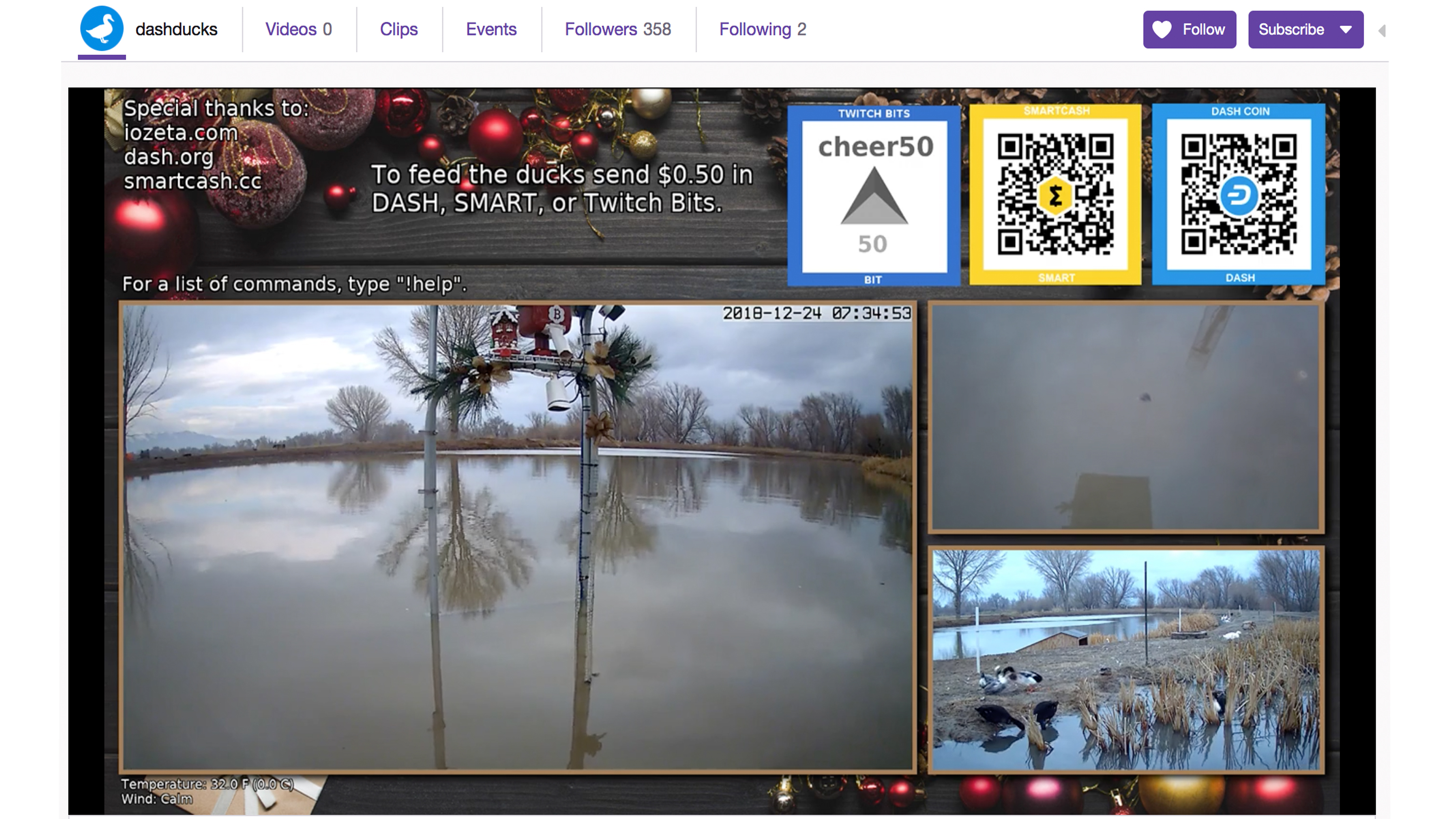
The farm’s ‘Dash Ducks’ not only accept bitcoin cash, but visitors can feed the ducks and geese with dash, smartcash, and the other animals can be fed with litecoin as well. Just watching the farm online can be amusing, as sometimes you can get a glimpse of Lambert, his dogs and other wildlife moving around in the video too. There’s plenty of noise throughout the stream after feeding some of the animals as the chickens will cluck like crazy and the geese honk when the dispenser releases the food.
The ‘Dash Ducks’ can be fed using dash, smartcash and bitcoin cash as well.
The Bitcoin Cash community are enjoying the fact they can feed seven different species using BCH. And even though the concept of feeding farm animals from a remote location is quite simple, the idea could inspire further microtransaction innovation. With bitcoin cash, any type of philanthropic cause and literally anything can be funded in a matter of minutes from anywhere in the world.
What do you think about the Bitcoin Cash Zoo? Let us know what you think about this subject in the comments section below.
Images via Shutterstock, Twitter, Twitch, and the Bitcoin Cash Zoo website.
Want to create your own secure cold storage paper wallet? Check our tools section.
Back in October, members of the Bitcoin Cash (BCH) community discussed feeding chickens with mealworms over the internet from remote locations using BCH microtransactions. Now BCH users can provide food for horses, baby goats, roosters and more using River Forest Farm’s livestream and pay for feed using bitcoin cash.
The BCH Zoo: Feed 7 Different Species With Bitcoin Cash
Bitcoin Cash fans thought it was pretty cool when Spencer Lambert (Redpepper261) created a mealworm dispenser that could feed chickens after the machine had received a payment of BCH. The owner of the chicken coop used a candy machine designed by the firm Iozeta which dispenses candy or literally anything that will fit through the chute after a payment is broadcast. Now the website, called the Bitcoin Cash Zoo, not only shows Lambert’s chicken coop, but visitors can also interact with baby goats, horses, bunnies, ducks, and geese. Visitors who happen to stumble on the virtual BCH petting zoo are greeted by a message that states:
Feed River Forest Farm’s Baby Goats and more using bitcoin cash.
Lambert’s live feed and chicken coops are decorated with Xmas ornaments and lights.
All of the live streams are hosted on the streaming website Twitch, and each window explains how much is needed to dispense feed to the animals. For instance, you can feed the baby goats using the BCH address written in the video description or scan the QR code located on the top left of the streaming window screen. The dispenser works with zero-confirmation transactions, so almost immediately after the BCH payment broadcasts on the network, the animal’s feed is dispensed through the chute. Depending on when you visit the BCH zoo, it may be too late to feed the farm animals if they are sleeping. The live streams also detail what time you can see the animals moving around the farm pens, which is typically around 7:20 a.m. MST.
A Simple Idea Could Bring Limitless Innovation
The farm’s ‘Dash Ducks’ not only accept bitcoin cash, but visitors can feed the ducks and geese with dash, smartcash, and the other animals can be fed with litecoin as well. Just watching the farm online can be amusing, as sometimes you can get a glimpse of Lambert, his dogs and other wildlife moving around in the video too. There’s plenty of noise throughout the stream after feeding some of the animals as the chickens will cluck like crazy and the geese honk when the dispenser releases the food.
The ‘Dash Ducks’ can be fed using dash, smartcash and bitcoin cash as well.
The Bitcoin Cash community are enjoying the fact they can feed seven different species using BCH. And even though the concept of feeding farm animals from a remote location is quite simple, the idea could inspire further microtransaction innovation. With bitcoin cash, any type of philanthropic cause and literally anything can be funded in a matter of minutes from anywhere in the world.
What do you think about the Bitcoin Cash Zoo? Let us know what you think about this subject in the comments section below.
Images via Shutterstock, Twitter, Twitch, and the Bitcoin Cash Zoo website.
Want to create your own secure cold storage paper wallet? Check our tools section.
Malta, the renewable energy storage project born in Alphabet’s moonshot factory X, is now on its own and flush with $26 million from a Series A funding round led by Breakthrough Energy Ventures .
Concord New Energy Group and Alfa Laval also invested in the round.
Project Malta launched last year in Alphabet’s X (formerly Google X) with an aim to build energy storage facilities that can support full-scale power grids. The independent company spun out of Alphabet is now called Malta Inc.
Malta Inc has developed a system designed to keep power generated from renewable energy or fossil fuels in reserve for longer than lithium-ion batteries. The electro-thermal storage system first captures energy generated from wind, solar, or fossil generators on the grid. The collected electricity drives a heat pump, which converts the electrical energy into thermal energy. The heat is stored in molten salt, while the cold is stored in a chilled antifreeze liquid. A heat engine is used to convert the energy back to electricity for the grid when it’s needed.
The system can store electricity for days or even weeks, Malta says.
Malta is going to use the funds to work with industry partners to turn the detailed designs developed and refined at X into industrial-grade machinery for its first pilot system.
BEV, the lead investor in Malta’s Series A round, was created in 2016 by the Breakthrough Energy Coalition, an investor group that includes Microsoft co-founder Bill Gates, John Doerr, chairman of venture firm Kleiner Perkins Caufield & Byers, Alibaba founder Jack Ma, Amazon founder and CEO Jeff Bezos, and SAP co-founder Hasso Plattner.
from Startups – TechCrunch https://tcrn.ch/2EJq7rK
Malta, the renewable energy storage project born in Alphabet’s moonshot factory X, is now on its own and flush with $26 million from a Series A funding round led by Breakthrough Energy Ventures .
Concord New Energy Group and Alfa Laval also invested in the round.
Project Malta launched last year in Alphabet’s X (formerly Google X) with an aim to build energy storage facilities that can support full-scale power grids. The independent company spun out of Alphabet is now called Malta Inc.
Malta Inc has developed a system designed to keep power generated from renewable energy or fossil fuels in reserve for longer than lithium-ion batteries. The electro-thermal storage system first captures energy generated from wind, solar, or fossil generators on the grid. The collected electricity drives a heat pump, which converts the electrical energy into thermal energy. The heat is stored in molten salt, while the cold is stored in a chilled antifreeze liquid. A heat engine is used to convert the energy back to electricity for the grid when it’s needed.
The system can store electricity for days or even weeks, Malta says.
Malta is going to use the funds to work with industry partners to turn the detailed designs developed and refined at X into industrial-grade machinery for its first pilot system.
BEV, the lead investor in Malta’s Series A round, was created in 2016 by the Breakthrough Energy Coalition, an investor group that includes Microsoft co-founder Bill Gates, John Doerr, chairman of venture firm Kleiner Perkins Caufield & Byers, Alibaba founder Jack Ma, Amazon founder and CEO Jeff Bezos, and SAP co-founder Hasso Plattner.
from Startups – TechCrunch https://tcrn.ch/2EJq7rK
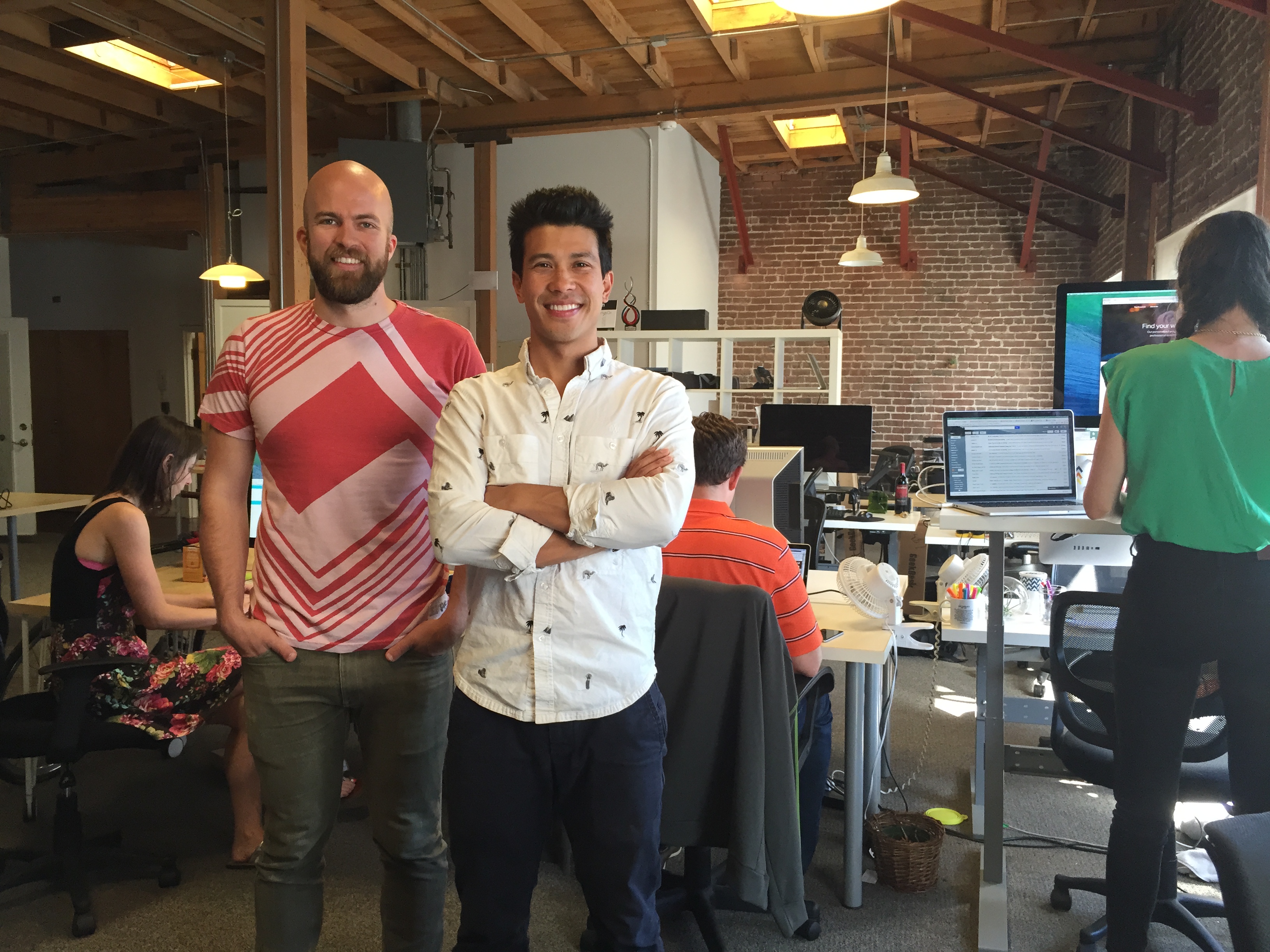
When founder Bobby Farahi met Shaudi “Shoddy” Lynn, it was at a rave in L.A. Farahi has said he was immediately drawn to the fashion sense of Lynn, who was a DJ at the time; she, meanwhile, might have appreciated the business acumen of Farahi, who had already sold a broadcast monitoring service called Multivision to a rival company.
As Farahi told Inc. magazine several years ago, the couple, now married, decided to try their hand at business together, calling it Dolls Kill and selling foxtail keychains before eventually evolving the brand into an online boutique that sells edgy, risqué clothes and accessories from companies like Killstar and Motel, both in the U.K., as well as makeup from another London company called Skinnydip.
Shoppers like what they see, seemingly. Back in 2014, Inc. reported, Dolls Kill, which is based in San Francisco, generated $7.6 million in sales. It was enough to elicit the attention of the consumer-focused venture firm Maveron, which wrote the company a check for $5 million. Now, shows an SEC filing, seven-year-old Dolls Kill is raising $15 million in new equity funding, and it has secured at least $10.7 million toward that end.
Some of that capital is seemingly being used to test out offline stores. Dolls Kill already has one brick-and-mortar store in San Francisco’s famous Haight neighborhood. In August, the company opened a second concept store in a 6,000-square-foot space on Fairfax Avenue in Los Angeles.
Dolls Kill is sometimes likened to Nasty Gal, founded in 2006 by Sophia Amoruso. Nasty Gal had filed for bankruptcy protection in 2016 after raising tens of millions of dollars from investors and reportedly spending heavily on marketing; two storefronts in L.A.; a downtown L.A. headquarters that quadrupled the size of an earlier HQ; and a fulfillment center in Kentucky.
At the time, industry analyst Richie Siegel told the L.A. Times that a central challenge to the company’s growth was Nasty Gal’s target market, suggesting that there is a ceiling to the number of women to whom a brand like Nasty Gal appeals. The company, since acquired by British online retailer Boohoo, continues as an online business only.
from Startups – TechCrunch https://tcrn.ch/2Af0NGl
There are few things in this world more difficult than launching a successful startup. It takes talent, know-how, money and a hell of a lot of good timing and luck. And even with all of those magical components in place, the odds may still be against you.
At TechCrunch, we take pride at covering the best and brightest of the startup world. But while covering the startup world is one of the most exciting and fulfilling parts of our job, death is a part of any lifecycle. Sadly, not all startups that burn bright ultimately make it. In fact, most don’t.
As we wrap up this year and look forward to the next, let’s take a moment to remember some of those startups we lost in 2018.
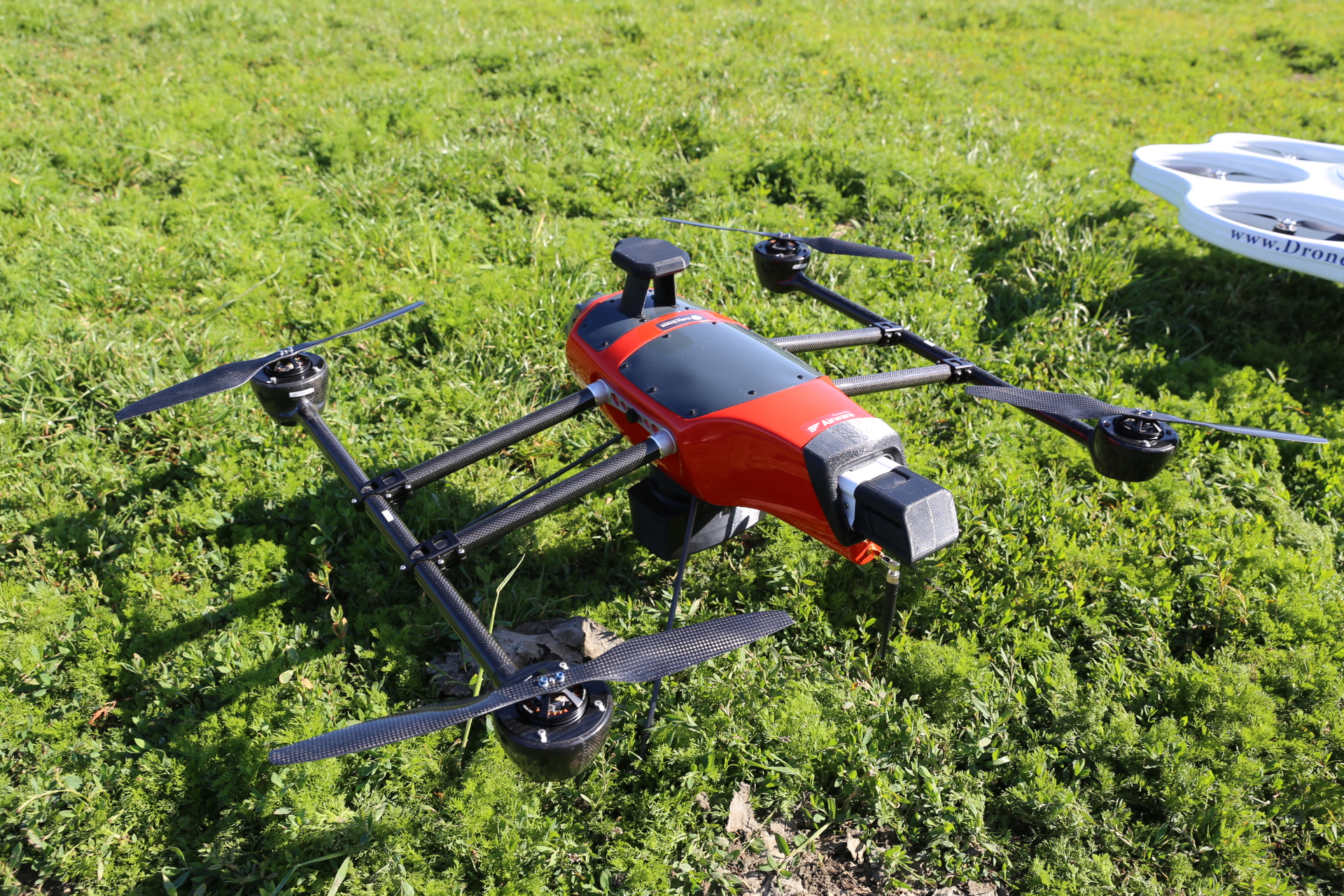
Airware created a cloud software system to help construction companies, mining operations and other enterprise customers use drones to inspect equipment for damage. It also tried to build its own drones but found that it couldn’t compete with giants like China’s DJI.
The shutdown appears to have been very sudden, coming just four days after Airware opened a Tokyo office, with an investment and partnership from Mitsubishi. In a statement, the company said, “Unfortunately, the market took longer to mature than we expected. As we worked through the various required pivots to position ourselves for long-term success, we ran out of financial runway.”
Blippar was one of the early pioneers in augmented reality, but unfortunately the AR market has yet to live up to the hopes for mainstream adoption. And despite raising a funding round earlier this year, the startup was apparently losing money quickly as it searched for new customers.
Not helping matters was some shareholder drama, where an emergency influx of $5 million was blocked by Khazanah, a strategic investment fund from the Malaysian government. In a blog post, the company said this was “an incredibly sad, disappointing, and unfortunate outcome.”
One of the major casualties of the FAA’s ban on smart luggage, this New York-based startup was forced to close its doors in May. CEO Tomi Pierucci was extremely outspoken when airlines started to enforce the new rules early this year, calling the news “an absolute travesty.”
From the standpoint of Bluesmart, he was right. The startup went all-in on connected luggage, and ultimately found it impossible to adapt when battery packs were no longer allowed on flights. The startup ended all sales and manufacturing, selling what was left of its tech, designs and IP to luggage giant TravelPro.
Things came crumbling down for San Francisco-based Doughbies in July, when the 500 Startups-backed, same-day cookie delivery service announced it was shutting down immediately. But it wasn’t because the startup ran out of money. Doughbies was actually profitable. Rather, its founders, Daniel Conway and Mariam Khan, just wanted to move onto something new.
TechCrunch’s Josh Constine argued at the time that Doughbies really didn’t need venture backing and that pressure to deliver adequate returns may have weighed more heavily on Doughbies than it was willing to admit. RIP Doughbies.
Like many failed startups before it, San Francisco-based Lantern was forced to shutter operations after an acquisition deal fell through. The mental health startup, founded by Nicholas Bui LeTourneau and Alejandro Foung, had raised millions in venture capital funding from the University of Pittsburgh Medical Center’s venture arm, Mayfield and SoftTechVC, but failed to follow through on its promise.
What was that promise? To offer personalized tools to deal with stress, anxiety and body image based on cognitive behavioral therapy techniques via a mobile application. Despite being an early mover in a now overly-crowded field of mental wellness apps, Lantern wasn’t able to find enough customers to survive.
Smart security camera maker Lighthouse AI had a promising product with a natural language processing system that allowed users to navigate their footage. But it also faced a crowded market, and it seems consumers didn’t embrace the product. The company announced this month that it’s winding down.
“I am incredibly proud of the groundbreaking work the Lighthouse team accomplished – delivering useful and accessible intelligence for our homes via advanced AI and 3D sensing,” wrote CEO Alex Teichman. “Unfortunately, we did not achieve the commercial success we were looking for and will be shutting down operations in the near future.”
Mayfield Robotics (2015-2018)
Total Raised: N/A
Mayfield, which was originally part of Bosch, created the adorable home robot Kuri. However, it announced in July that it would stop manufacturing Kuri, and followed with an announcement that it would cease operations altogether.
“Our team is beyond disappointed,” the company said in a blog post. “Together we’ve spent the past four years designing and building not just Kuri, but also an equally incredible company culture and spirit.”
A major player in industrial robotics, Rethink was founded by iRobot cofounder Rod Brooks and former MIT CSAIL staff researcher, Ann Whittaker. The Boston area startup grew into one of the most important players in both the collaborative and educational robotics space, courtesy of creations like Baxter and Sawyer.
Ultimately, however, the company served as yet another testament to just how difficult it is to launch a robotics startup. Even with brilliant minds and nearly $150 million in funding, the company couldn’t turn enough profit to stay afloat. A last-minute planned acquisition fell through, and Rethink was forced to close up shop in October.
Startup stories don’t come more film ready than this. Even before it officially closed its doors, Theranos was set to be the subject of a book, documentary and an Adam McKay directed feature film starring Jennifer Lawrence as founder Elizabeth Holmes. Holmes founded the company in 2003, promising a breakthrough in blood testing. By age 31, she became the world’s youngest self-made billionaire.
Theranos would go on to raise $1.4 billion, with a $10 billion valuation at its peak. In 2015, medical professionals began to mount criticism against the company’s methods. The following year, the SEC began investigating Theranos, ultimately charging it with “massive fraud.” In September, the company finally called it quits, with Holmes agreeing to pay a $500,000 penalty, while being barred from serving as an officer or director of a public company for 10 years.
NEW YORK, NY – MAY 06: Co-Founder and CEO of Shyp, Kevin Gibbons speaks onstage during TechCrunch Disrupt NY 2015 – Day 3 at The Manhattan Center on May 6, 2015 in New York City. (Photo by Noam Galai/Getty Images for TechCrunch)
A $250 million valuation and capital from some of the best investors (Kleiner Perkins, Slow Ventures) failed to keep on-demand shipping startup Shyp from dissolving. The San Francisco-based startup raised multiple rounds of venture capital amid a major hype cycle for on-demand shipping companies but wasn’t able to scale successfully beyond the Bay Area.
“To this day, I’m in awe of the vigor the team possessed in tackling a 200-year-old industry,” CEO Kevin Gibbon wrote at the time. “But, growth at all costs is a dangerous trap that many startups fall into, mine included.”
Over the past few years, Telltale Games seemed to reinvent adventure gaming, adapting big franchises like The Walking Dead, Game of Thrones and Batman into episodic stories where players’ choices seemed to have real weight. It even partnered with Netflix to bring a version of “Minecraft: Story Mode” to the streaming service.
But it seems the company has had longstanding business issues, with 90 employees laid off in November 2017, then another 250 let go in September of this year. Although a skeleton crew remained employed to finish the work for Netflix, it looks like Telltale is dead. And the fact that those employees were let go without severance seems to reinforce an earlier report of toxic management.
from Startups – TechCrunch https://tcrn.ch/2QMklfs
Captiv8, a company offering tools for brands to manage influencer marketing campaigns, has released its 2018 Fraud Influencer Marketing Benchmark Report. The goal is to give marketers the data they need to spot fake followers — and thus, to separate the influencers with a real following from those who only offer the illusion of engagement.
The report argues that that this a problem with a real financial impact (it’s something that Instagram is working to crack down on), with $2.1 billion spent on influencer marketing on Instagram in 2017 and 11 percent of the engagement coming from fraudulent accounts.
“For influencer marketing to truly deliver on its transformative potential, marketers need a more concrete and reliable way to identify fake followers and engagement, compare their performance to industry benchmarks, and determine the real reach and impact of social media spend,” Captiv8 says.
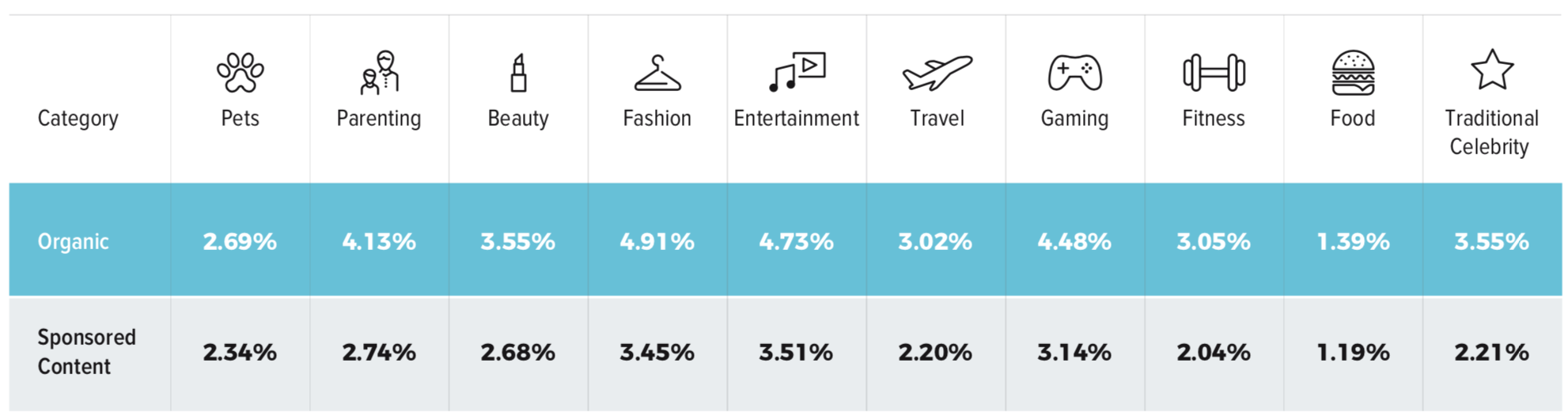
So the company looked at a range of marketing categories (pets, parenting, beauty, fashion, entertainment, travel, gaming, fitness, food and traditional celebrity) and randomly selected 5,000 Instagram influencer accounts in each one, pulling engagement from August to November of this year.
The idea is to establish a baseline for standard activity, so that marketers can spot potential red flags. Of course, everyone with a significant social media audience is going to have some fake followers, but Captiv8 suggests that some categories have a higher rate of fraud than others — fashion was the worst, with an average of 14 percent of fake activity per account, to compared to traditional celebrity, where the average was just 4 percent.
So what should you look out for? For starters, the report says that the average daily change in follower counts for an influencer is 1.2 percent, so be on the look out for shifts that are significantly larger.
The report also breaks down the average engagement rate for organic and sponsored content by category (ranging from 1.19 percent for sponsored content in food to 3.51 percent in entertainment), and suggests that a lower engagement rate “shows a high probability that their follower count is inflated through bots or fake followers.”
Conversely, it says it could also be a warning sign if a creator’s audience reach or impressions per user is higher than the industry benchmarks (for example, image posts in fashion have an average audience reach of 23.69 percent, with 1.32 impressions per unique user).
Bitcoin historians will recollect that the early cryptocurrency pioneer Hal Finney was a person who believed in life extension and chose to be frozen in cryopreservation. Now a recent report shows that a good number of well-known blockchain advocates are also convinced that an ‘extropian-like’ technology may extend the lives of humans in the future.
Cryptocurrency enthusiasts and believers in life extension go hand in hand these days, according to a report by Breaker columnist Julia Herbst. The chief science officer of SENS (Strategies for Engineered Negligible Senescence), Aubrey de Grey, talked with Herbst about the relationship between an extropian philosophy and blockchain technology proponents. Extropians are futurists who believe in the philosophy of life extension through improving technology. News.Bitcoin.com recently reported on how Hal Finney, the man who received the very first bitcoin transaction, was a devout extropian. The British biogerontologist de Grey explained in his interview that many other blockchain luminaries have donated to SENS research, which studies and develops regenerative medical therapies.
In the early 2000s, Michael Novogratz donated to the organization and the Pineapple Fund gave SENS $2 million in BTC last year. Moreover, the inventor of the Ethereum network, Vitalik Buterin, donated $2.4 million to SENS. The regenerative medical therapies organization raised another $4.1 million in cryptocurrencies this year in addition to the Pineapple Fund donation. “I’m not in this to do science for the sake of doing science,” de Grey detailed in his interview with Herbs. “I’m in it for the ultimate goal,” the SENS founder adds. The biogerontologist further revealed that a few anonymous donors have given SENS $1 million per individual and other cryptocurrency personalities are also long-term donors.
Deep Freeze
World-renowned cryptographer Ralph Merkle at the Singularity Summit 2007.
According to the report, a few anonymous members of the digital currency industry have also donated to the Alcor Life Extension Foundation and its cryonics research. On Aug. 28, 2014, Hal Finney’s body was taken to Alcor and he was the company’s 128th patient. Hal paid for his cryogenic process “through a combination of life insurance and bitcoins donated by admirers,” explained Alcor at the time. In another instance of the strong relationship between crypto-advocates and the philosophy of life extension, the entrepreneur Brad Armstrong donated $5 million in cryptocurrencies this year to Alcor Research and dedicated the gift to Hal Finney’s memory.
Furthermore, the inventor of cryptographic hashing, Ralph Merkle, is also a big life extension and cryogenics believer. Merkle’s Wikipedia page calls him a “researcher and speaker of cryonics.” Herbst detailed that Merkle has known a few crypto-advocates who have donated to cryonics and explained he has also helped raise funds for Alcor. Another member of the Alcor Foundation is the cryptocurrency magnate Robin Hanson, who believes future generations will be able to unfreeze him after the cryogenic process. In fact, Hanson thinks it will be very easy in the future and stated; “[Future generations] won’t have to try really hard — If they have to try really hard, they probably won’t.”
What do you think about blockchain enthusiasts and their relationship with the philosophy of life extension? Let us know what you think about this subject in the comments section below.
Images via Shutterstock, and Pixabay.
Verify and track bitcoin cash transactions on our BCH Block Explorer, the best of its kind anywhere in the world. Also, keep up with your holdings, BCH, and other coins, on our market charts at Satoshi’s Pulse, another original and free service from Bitcoin.com.
In this edition of The Daily, we focus on the growing number of bitcoin ATMs in Argentina. Five new devices have been installed recently in Buenos Aires. We also look at a report that Russia’stelecom watchdog plans to spend millions of dollars to restrict access to banned websites and services such as Telegram. And in Greece, the suspected BTC-e operator Alexander Vinnik has been hospitalized after a month-long hunger strike in prison.
Five New Bitcoin ATMs Installed in Argentina’s Capital
In a bearish year, cryptocurrencies have enjoyed growing popularity in Argentina, a major South American economy that has been through some hard times in the past decades. For example, the trade between BTC and the Argentine peso on the P2P platform Localbitcoins has seen rising volumes throughout 2018. It reached a record high of almost 9.5 million peso (~$250,000) in the week of Dec. 8, according to market data compiled by Coindance.
The number of teller machines exchanging fiat with digital money has also increased significantly and Argentina is now ranking among the countries with the most crypto ATMs on the continent, the Cripto Noticias news outlet reported. Since September, a company called Athena Bitcoin has installed five new devices in shopping malls and supermarkets in Buenos Aires. That brings the total number of bitcoin ATMs in the country to seven. Two other teller machines were installed in the capital city in 2017.
New BATMs have been popping up across the region this year, with dozens of devices now operating in countries like Colombia, Venezuela, Panama, and Mexico. 2018 has also seen the number of cryptocurrency teller machines around the world double to over 4,000 devices, as news.Bitcoin.com recently reported. Most of these ATMs support major cryptocurrencies such as BTC, ETH and LTC. The number of devices exchanging BCH has increased to almost 1,400.
Watchdog to Spend Millions on Blocking Online Services
Roskomnadzor, Russia’s Federal Service for Supervision of Communications, Information Technology and Mass Media, is planning to acquire new technology to better combat banned websites and online platforms. The agency is ready to spend up to 20 billion rubles (over $500 million) on its implementation, BBC Russian Service has learned. Sources familiar with the project have been quoted by the media.
The report comes after a year of futile attempts to block Telegram, the popular messenger used by millions of crypto enthusiasts around the world. Its operator, founded by Russian entrepreneur Pavel Durov, is fighting a court decision to ban the service in Russia after it refused to hand over its encryption keys to the Federal Security Service, the country’s major security agency.
According to the BBC, Roskomnadzor is planning to use DPI (deep packet inspection) technology to improve its efforts to restrict access to Telegram and other banned platforms. Currently, Roskomnadzor is trying to curb traffic to these websites and services by blocking the IP addresses they use. This approach, however, has affected many other businesses that have nothing to do with the messaging app.
For example, this past spring the regulator blocked around 11 million IP addresses and 20 VPN and proxy services offering access to Telegram. Despite the offensive, the messenger is still accessible in Russia and has even increased its users to 3.4 million. According to Russian media, Roskomnadzor may also use the technology to block access to unregulated crypto platforms such as digital asset exchanges.
BTC-e Operator Alexander Vinnik Hospitalized in Prison
Alexander Vinnik, the alleged operator of the infamous BTC-e exchange, has been hospitalized, his lawyer Timofey Musatov told RIA Novosti. Musatov wasn’t able to reveal any more details, but in the last week of November Vinnik went on a hunger strike to protest against prison conditions and violations of his rights by the Greek judiciary.
The Russian IT specialist was arrested in Thessaloniki last summer on a warrant issued by the U.S. where he is accused of laundering between $4 and $9 billion through the now defunct crypto trading platform, including bitcoins stolen in the Mt Gox hack. His native Russia as well as France have also requested his extradition on charges of other crimes.
Last week, the Supreme Court of Greece ruled that Vinnik should be handed over to the French authorities. His defense team claims the extradition request filed by Paris has already expired. Vinnik himself told Russian journalists in the court room that he would continue his protest in case Greece decides to extradite him to France, Tass reported. He also said he had lost 9 kilograms of body weight since he started the hunger strike.
What are your thoughts on today’s news tidbits? Tell us in the comments section.
Images courtesy of Shutterstock.
Make sure you do not miss any important Bitcoin-related news! Follow our news feed any which way you prefer; via Twitter, Facebook, Telegram, RSS or email (scroll down to the bottom of this page to subscribe). We’ve got daily, weekly and quarterly summaries in newsletter form. Bitcoin never sleeps. Neither dowe.
The demise of 2017’s cryptocurrency bull market, the rapid collapse of ICOs, and the fizzling out of corporate blockchain hype have made 2018 a challenging year for many startups operating in the crypto sector. A new report from the U.K. helps quantify the global slowdown.
The meteoric rise of cryptocurrency prices in 2017 led to an influx of new entrepreneurs, some of whom, unfortunately, were scammers. A number wanted to take advantage of inexperienced crypto investors through shilling ICO tokens, despite not having a real product in many cases or even a viable business plan. Others tried to con stock investors by adding the term “blockchain” to their companies’ names or claiming to use “DLT” for every unrelated business under the sun, just to ride the hype all the way to the bank. As these trends subsided, many startups went belly up.
Putting a number on it, the U.K.’s Sky News has found out that at least 340 companies claiming to be involved with crypto or blockchain were shut down this year. It obtained these findings by analyzing publicly available figures from the databases of Companies House and Open Corporates. This figure is an increase of 144 percent from just 139 blockchain-related companies that went bust in 2017. The data shows that over 200 of those companies were established during 2017 and 60 percent of them closed down between June and November 2018 alone.
Blame It All on Bitcoin?
On the other side, the number of newly-registered blockchain companies continued to raise throughout the year, reaching a total of 817 in November 2018, which means the market continued to grow overall. However, the report notes that the number of new companies is now growing slower than the number of blockchain businesses shutting down for the first time. And of the companies which haven’t been shut down, over 50 have removed references to blockchain or crypto from their name.
Instead of trying to explain exactly what happened in the vast and varied ecosystem of blockchain business, Sky News has simply tried to blame it all on Bitcoin. The report simply points to the price decline of BTC and links it directly to the figures which they have found. To further dramatize the issue, the authors claim that hundreds of bitcoin investors in the U.K. have been hurt, causing them to lose their homes and even marriages, but fail to present a single concrete example. Sky News’ rhetoric is incomparable to mainstream media coverage of the collapse in stock markets around the world, which has seen tech giants Facebook, Amazon, Apple, Netflix and Google (the ‘FAANG’ stocks) lose more than $1 trillion in value.
Is 2019 going to be better for the survival of blockchain and crypto companies? Share your thoughts in the comments section below.
Images courtesy of Shutterstock.
Verify and track bitcoin cash transactions on our BCH Block Explorer, the best of its kind anywhere in the world. Also, keep up with your holdings, BCH and other coins, on our market charts at Satoshi’s Pulse, another original and free service from Bitcoin.com.


 Bitcoin Cash fans thought it was pretty cool when Spencer Lambert (Redpepper261) created a mealworm dispenser that could feed chickens after the machine had received a payment of BCH. The owner of the chicken coop used a candy machine designed by the firm Iozeta which dispenses candy or literally anything that will fit through the chute after a payment is broadcast. Now the website, called the Bitcoin Cash Zoo, not only shows Lambert’s chicken coop, but visitors can also interact with baby goats, horses, bunnies, ducks, and geese. Visitors who happen to stumble on the virtual BCH petting zoo are greeted by a message that states: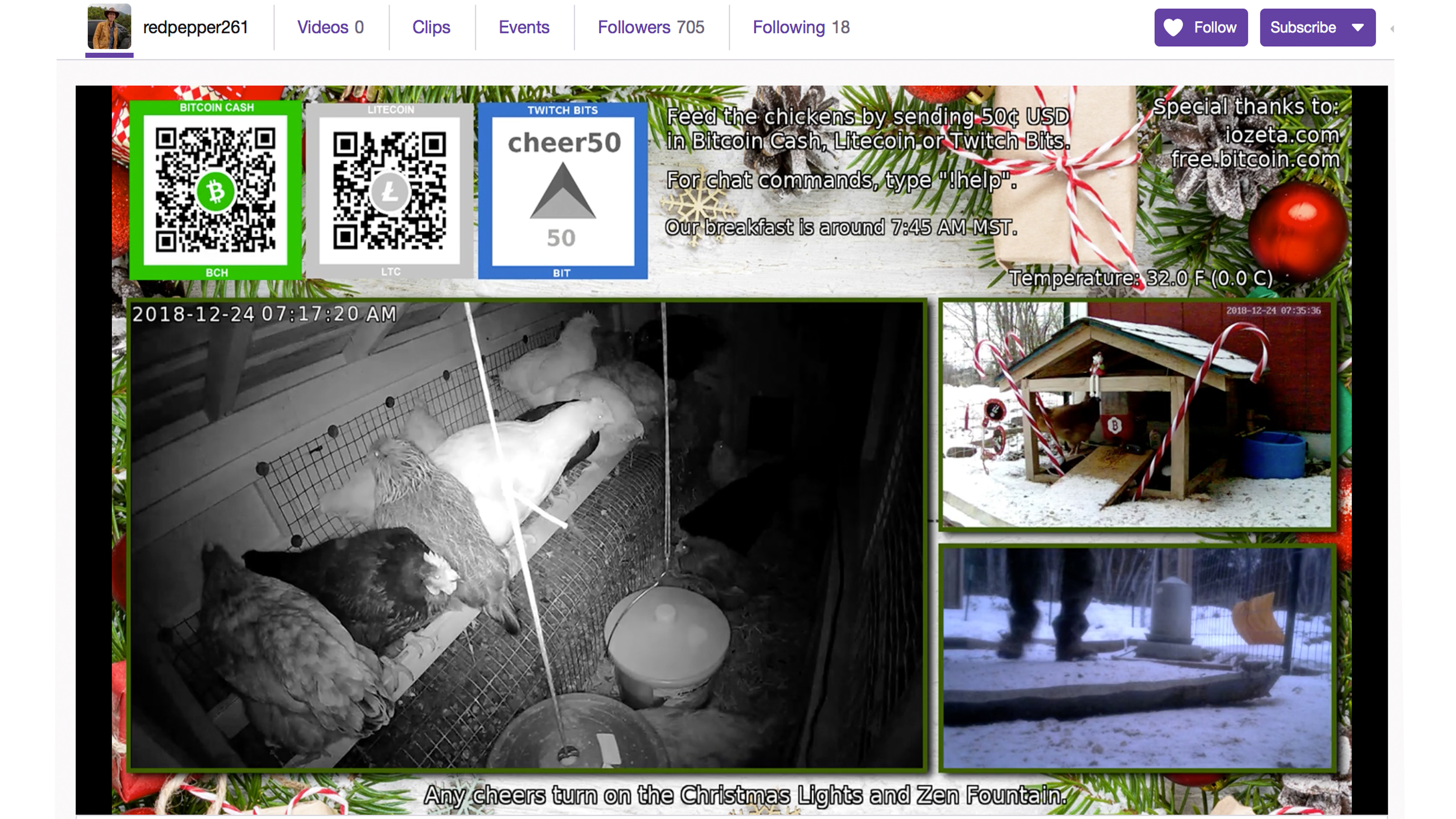














 In a bearish year, cryptocurrencies have enjoyed growing popularity in Argentina, a major South American economy that has been through some hard times in the past decades. For example, the trade between BTC and the Argentine peso on the P2P platform Localbitcoins has seen
  Roskomnadzor, Russia’s Federal Service for Supervision of Communications, Information Technology and Mass Media, is planning to acquire new technology to better combat banned websites and online platforms. The agency is ready to spend up to 20 billion rubles (over $500 million) on its implementation, BBC Russian Service has learned. Sources familiar with the project have been quoted by the media.
 The Russian IT specialist was arrested in Thessaloniki last summer on a warrant issued by the U.S. where he is accused of laundering between $4 and $9 billion through the now defunct crypto trading platform, including bitcoins stolen in the
 The meteoric rise of cryptocurrency prices in 2017 led to an influx of new entrepreneurs, some of whom, unfortunately, were scammers. A number wanted to take advantage of inexperienced crypto investors through shilling ICO tokens, despite not having a real product in many cases or even a viable business plan. Others tried to con stock investors by adding the term “blockchain” to their companies’ names or claiming to use “DLT” for every unrelated business under the sun, just to
  On the other side, the number of newly-registered blockchain companies continued to raise throughout the year, reaching a total of 817 in November 2018, which means the market continued to grow overall. However, the report notes that the number of new companies is now growing slower than the number of blockchain businesses shutting down for the first time. And of the companies which haven’t been shut down, over 50 have removed references to blockchain or crypto from their name.