About Startup365

Chaque jour nous vous présenterons une nouvelle Startup française ! Notre pays regorge de talents et d'entrepreneurs brillants ! Alors partons à la découverte des meilleures startup françaises ! Certaines d'entre elles sont dans une étape essentielle dans la vie d'une startup : la recherche de financement, notamment par le financement participatif (ou crowdfunding en anglais). Alors participez à cette grande aventure en leur faisant une petite donation ! Les startups françaises ont besoin de vous !

#Africa 2 Kenyan e-health startups secure grants from Villgro

//

Villgro Kenya has added Kenyan e-health startups Maisha Meds and Turaco to its portfolio, offering them grant funding and incubation support to help them grow and increase access to healthcare for low-income communities.

Disrupt Africa reported in February of last year the India-based Villgro Innovations Foundation had launched an incubator for early-stage businesses in the healthcare and life sciences sector in Nairobi.

In India, Villgro works with early-stage for-profit social enterprises that have an impact on the lives of the poor, incubating companies in sectors such as education, health, energy and agriculture. Villgro Kenya is a health-focused incubator offering mentoring, funding and access to networks.

After backing two Ugandan companies earlier this year, Villgro has now provided grants to two from Kenya. Maisha Meds, a software platform for ensuring that rural pharmacists and clinicians effectively purchase quality affordable medicines and pass on subsidies to patients, received US$40,000, which comes with mentorship and technical expertise to develop its business model and scale.

Turaco, which offers health loans bundled with insurance so clients can receive care whenever a medical emergency arises, also received US$40,000 in grant funding.

Maisha Meds chief executive officer (CEO) Jessica Vernon expressed her excitement to join Villgro Kenya’s incubation programme.

“The mission of Maisha Meds is to develop systems to improve access to high quality and affordable medicines. We are incredibly excited to work with Villgro in this mission, and have heard wonderful things about the support that Villgro provides companies working to scale health technologies in East Africa,” she said.

The post 2 Kenyan e-health startups secure grants from Villgro appeared first on Disrupt Africa.

from Disrupt Africa https://ift.tt/2BxQMDS

#Africa Egyptian bank launches dedicated fund for fintech startups

//

Egypt’s Commercial International Bank (CIB) has launched CVentures, a corporate venture capital firm focused on investing in transformational fintech startups and next generation financial services platforms.

CIB said the establishment of CVentures reflected its deep and continued commitment towards Egypt’s largely untapped financial services industry, and the importance of fintech as a key driver of financial inclusion.

The fund will predominantly participate in Series A and Series B investment rounds in Egypt, the Middle East, Africa and other highly regarded cross-border market economies, in addition to considering seed investment rounds across similar markets.

“As demonstrated through our active engagement and sponsorship initiatives over the course of the past couple of years, CIB has always had a clear vision towards the importance of entrepreneurship,” said Hussein Abaza, CIB chief executive officer (CEO) and CVentures chairman.

“The establishment of CVentures is a continuation of such vision; evidence of CIB’s profound commitment towards supporting the development of the Egyptian financial sector. The founding of a venture capital firm focused on fintech comes at a very exciting time for the Egyptian economy where all stakeholders are encouraged to support the government’s strategic direction towards financial inclusion.”

The post Egyptian bank launches dedicated fund for fintech startups appeared first on Disrupt Africa.

from Disrupt Africa https://ift.tt/2A4TqkI

#Blockchain Hash Wars: BCH Proponents Face a New Dawn in the Battle’s Aftermath

Hash Wars: BCH Proponents Face a New Dawn Following the Aftermath of War

It’s been a little over a month since the Bitcoin Cash (BCH) network fork which resulted in a blockchain split. Besides the severed chain, the hash war was quite damaging to say the least, leaving BCH supporters to steadily pick up the pieces in order to bring the world a pure peer-to-peer version of electronic cash.

Also read: How to Spend and Give Bitcoin Cash Over the Holidays

 One Month Later

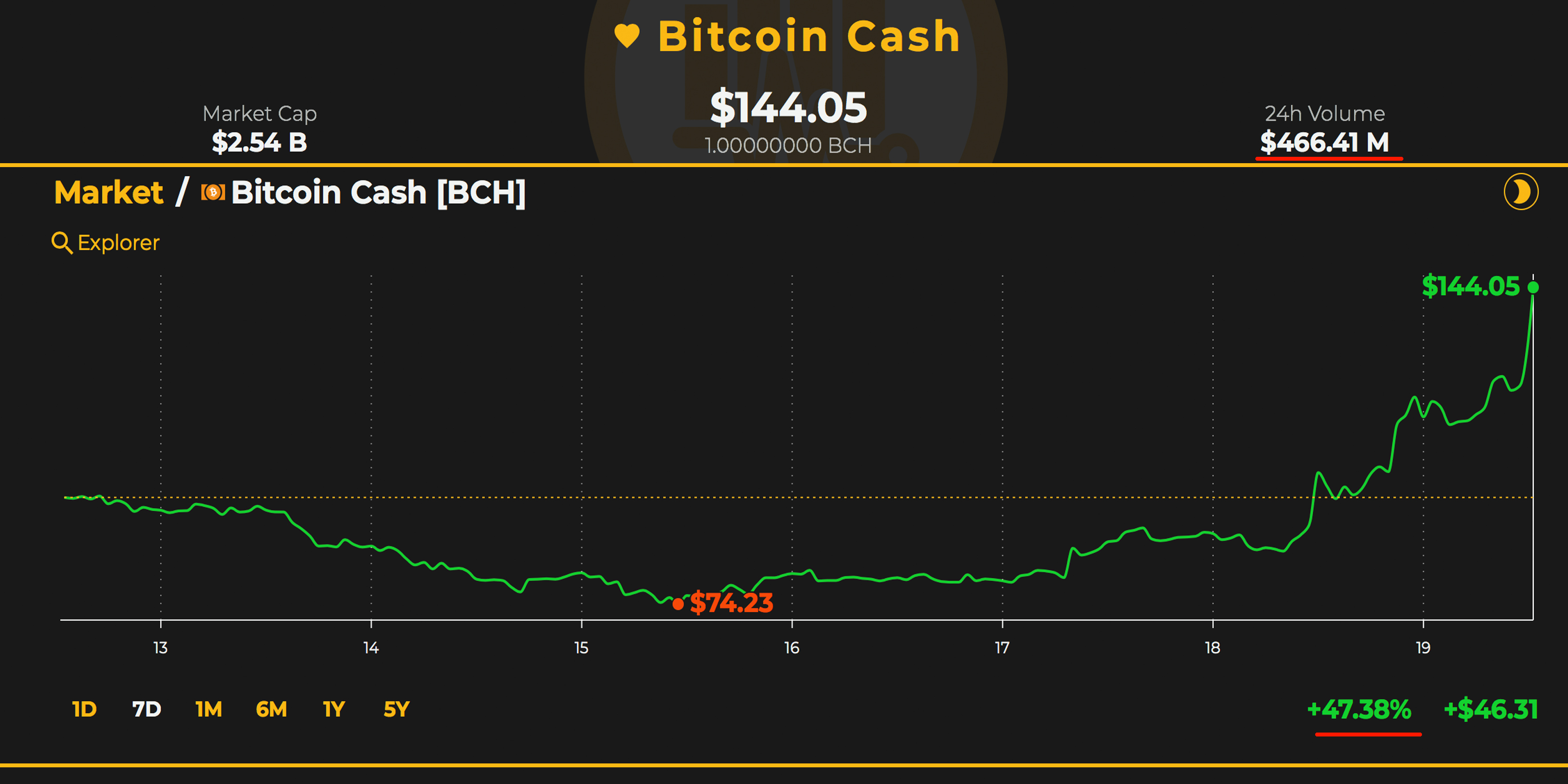
35 days later after the fork, Bitcoin Cash supporters are working towards moving past the hash war that took place a little after the scheduled BCH upgrade on Nov. 15. Now both networks are operating and the Bitcoin Satoshi’s Vision (BSV) coin has its own price ticker and market capitalization listed on data sites like Coinmarketcap and Satoshi Pulse. A portion of crypto-trading platforms have now listed BSV as a separate currency and the entire ecosystem of exchanges, payment processors and a great majority of wallets have awarded the ABC side of the chain the BCH ticker. At the time of writing, the global average price for BCH is $144 after markets jumped 47 percent on Dec. 19. BSV spiked 18 percent this Tuesday and each coin is currently trading for $92 per token.

Hash Wars: BCH Proponents Face a New Dawn in the Battle's Aftermath
BCH trade volume has spiked considerably by over $300 million in the last two days and gained 47% today.

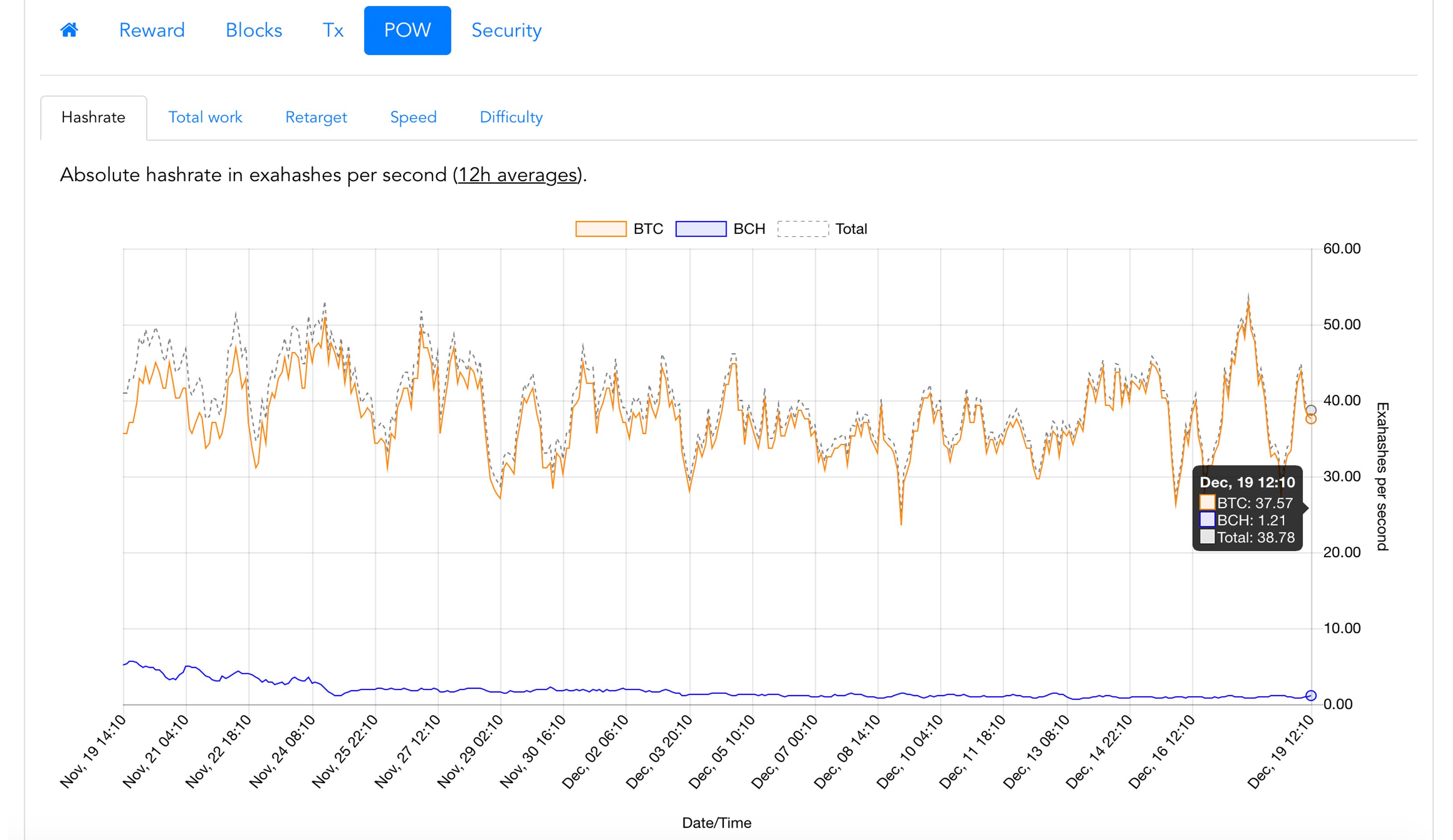
Since the fork, the BCH network hashrate has dropped considerably, even more so than the 50 percent loss BTC suffered this past month. Average hashrates for a great number of SHA-256 algorithm coins have endured deep drops in processing power according to global statistics. The Bitcoin Cash hashrate used to command a rough average of 5 exahash per second (EH/s), but now only captures 1 EH/s to 850 petahash per second (PH/s) on a daily basis throughout this month.

Hash Wars: BCH Proponents Face a New Dawn in the Battle's Aftermath
The Bitcoin Cash network has lost a considerable amount of hashrate as it’s been averaging roughly 1 exahash per second over the last two weeks. With the price increase over the last two days, the hashrate will likely follow. 

On the bright side, the BCH network has been 5-8 percent more profitable to mine than BTC over the last two days. Further, BCH has amassed a large swathe of different mining pools that are processing BCH blocks on a regular basis. This includes Viabtc, Btc.com, Antpool, Multipool, Bitcoin.com, Btc.top, Waterhole, Copernicus, P2pool, Ckpool, and some other unknown mining entities as well.

Hash Wars: BCH Proponents Face a New Dawn in the Battle's Aftermath
All the mining pools processing Bitcoin Cash blocks on Dec. 19, 2018.

BCH Transactions and Volume Flattened After the Fork But Have Started Climbing Again

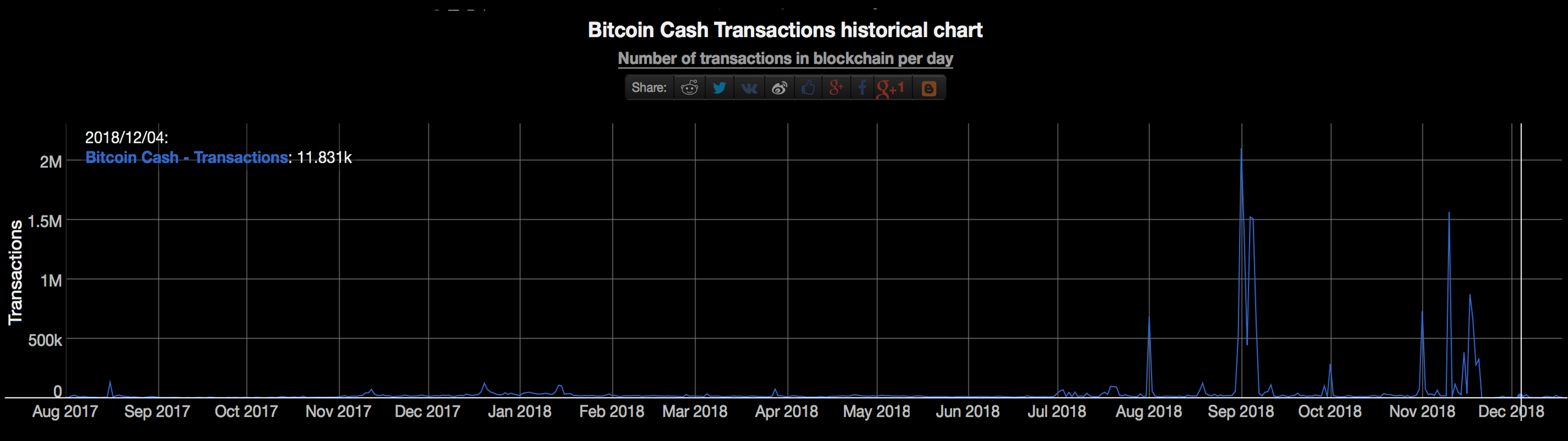
Another BCH metric that has halved since the fork on Nov. 15 is the cryptocurrency’s daily transaction rate over the last month. Before, bitcoin cash transactions per day were about 20,000-25,000, whereas today that number stands at roughly 9,750 over the course of the last 24 hours. Over the last three weeks, the BCH daily transaction rate has been averaging 10k per day, with a few instances of 15k-22k spikes here and there. There has been a steady increase in daily transactions week after week, and with 99 percent of BCH infrastructure back in order, this should continue.

Hash Wars: BCH Proponents Face a New Dawn in the Battle's Aftermath
Daily transactions (tx) have dropped by 50% since the fork but have been slowly ascending back to 20-25,000 tx per day. Today the network has processed 9,759 confirmed transactions so far. 

A good example of this behavior is the increase in BCH price and trade volume on exchanges over the last few weeks. Pre-fork BCH trade volumes captured anywhere between $400-900 million worth of global trades every day. After the fork, this statistic dropped to around $50-100 million daily on global exchanges. This was because some cryptocurrency trading platforms with a ton of bitcoin cash liquidity had paused BCH transactions and some exchanges halted trading. Week after week, however, global BCH trade volume has been steadily increasing on exchanges like Upbit, Binance, Huobi, Lbank, and Coinbase Pro. With the 40 percent increase over the last 24 hours, BCH trade volume has jumped to over $400 million in global trades on Dec. 19. At the time of publication, this makes BCH the seventh most traded digital asset out of the entire crypto economy.

Hash Wars: BCH Proponents Face a New Dawn in the Battle's Aftermath
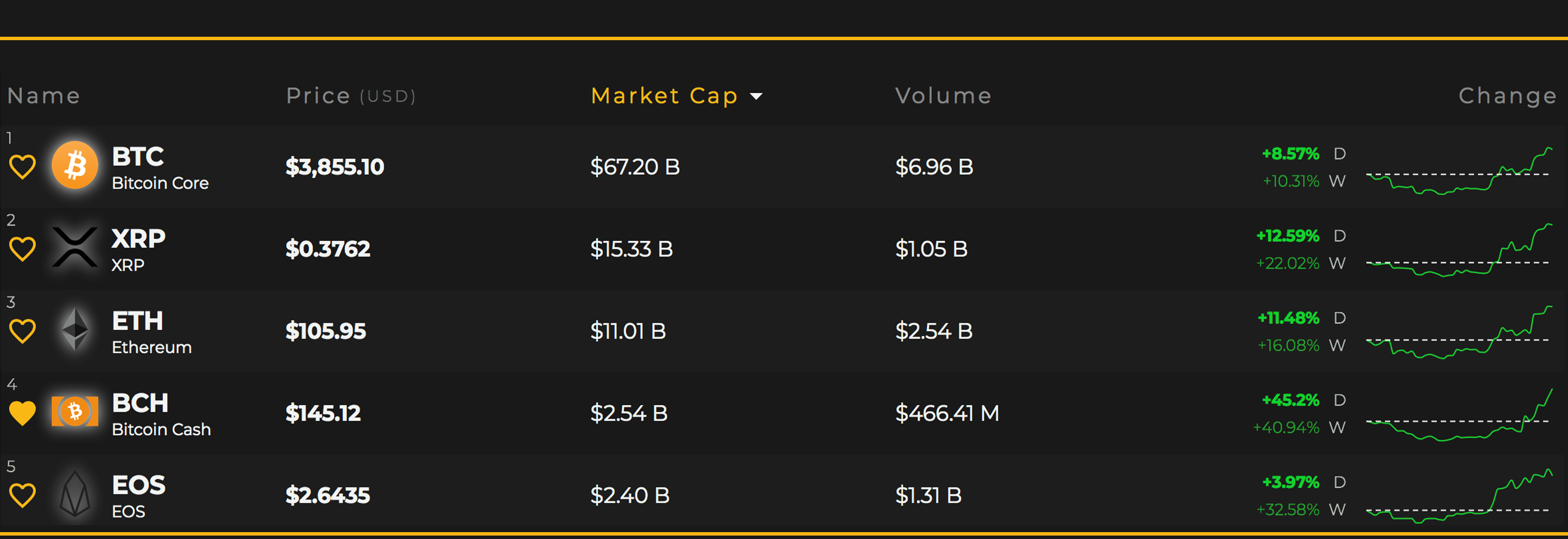
Bitcoin cash markets have regained the 4th largest market cap position today on Dec. 19 after climbing more than 40% during the course of the early afternoon trading sessions.

Bitcoin Cash Moves Back to the Fourth Largest Cryptocurrency Capitalization

The Bitcoin Cash community had also suffered from daily battles on Reddit’s r/btc forum and social media platforms like Twitter. A good portion of the trolling and infighting seems to have quietened down, and most BCH supporters are just trying to move forward. There’s been plenty of developments since the fork, with projects like Electron Cash, Honest Cash, Cash Shuffle, and Openswap adding more utility to the BCH network. Furthermore, BCH enthusiasts look forward to the upcoming BCH upgrades that are under discussion and they can track the code’s development too. For now, BCH supporters are extremely pleased that the fork is behind them and are thrilled to reclaim fourth position among all cryptocurrency market capitalizations.

What do you think about the last few weeks for Bitcoin Cash after the fork and subsequent blockchain split? Let us know what you think about this subject in the comments section below.


Images via Shutterstock, Pixabay, Fork.lol, Satoshi Pulse, Bitinfocharts.com, and Coin Dance.


Want to create your own secure cold storage paper wallet? Check our tools section.

The post Hash Wars: BCH Proponents Face a New Dawn in the Battle’s Aftermath appeared first on Bitcoin News.

from Bitcoin News https://ift.tt/2Bv9GLJ Hash Wars: BCH Proponents Face a New Dawn in the Battle’s Aftermath

#Blockchain Hash Wars: BCH Proponents Face a New Dawn in the Battle’s Aftermath

Hash Wars: BCH Proponents Face a New Dawn Following the Aftermath of War

It’s been a little over a month since the Bitcoin Cash (BCH) network fork which resulted in a blockchain split. Besides the severed chain, the hash war was quite damaging to say the least, leaving BCH supporters to steadily pick up the pieces in order to bring the world a pure peer-to-peer version of electronic cash.

Also read: How to Spend and Give Bitcoin Cash Over the Holidays

 One Month Later

35 days later after the fork, Bitcoin Cash supporters are working towards moving past the hash war that took place a little after the scheduled BCH upgrade on Nov. 15. Now both networks are operating and the Bitcoin Satoshi’s Vision (BSV) coin has its own price ticker and market capitalization listed on data sites like Coinmarketcap and Satoshi Pulse. A portion of crypto-trading platforms have now listed BSV as a separate currency and the entire ecosystem of exchanges, payment processors and a great majority of wallets have awarded the ABC side of the chain the BCH ticker. At the time of writing, the global average price for BCH is $144 after markets jumped 47 percent on Dec. 19. BSV spiked 18 percent this Tuesday and each coin is currently trading for $92 per token.

Hash Wars: BCH Proponents Face a New Dawn in the Battle's Aftermath
BCH trade volume has spiked considerably by over $300 million in the last two days and gained 47% today.

Since the fork, the BCH network hashrate has dropped considerably, even more so than the 50 percent loss BTC suffered this past month. Average hashrates for a great number of SHA-256 algorithm coins have endured deep drops in processing power according to global statistics. The Bitcoin Cash hashrate used to command a rough average of 5 exahash per second (EH/s), but now only captures 1 EH/s to 850 petahash per second (PH/s) on a daily basis throughout this month.

Hash Wars: BCH Proponents Face a New Dawn in the Battle's Aftermath
The Bitcoin Cash network has lost a considerable amount of hashrate as it’s been averaging roughly 1 exahash per second over the last two weeks. With the price increase over the last two days, the hashrate will likely follow. 

On the bright side, the BCH network has been 5-8 percent more profitable to mine than BTC over the last two days. Further, BCH has amassed a large swathe of different mining pools that are processing BCH blocks on a regular basis. This includes Viabtc, Btc.com, Antpool, Multipool, Bitcoin.com, Btc.top, Waterhole, Copernicus, P2pool, Ckpool, and some other unknown mining entities as well.

Hash Wars: BCH Proponents Face a New Dawn in the Battle's Aftermath
All the mining pools processing Bitcoin Cash blocks on Dec. 19, 2018.

BCH Transactions and Volume Flattened After the Fork But Have Started Climbing Again

Another BCH metric that has halved since the fork on Nov. 15 is the cryptocurrency’s daily transaction rate over the last month. Before, bitcoin cash transactions per day were about 20,000-25,000, whereas today that number stands at roughly 9,750 over the course of the last 24 hours. Over the last three weeks, the BCH daily transaction rate has been averaging 10k per day, with a few instances of 15k-22k spikes here and there. There has been a steady increase in daily transactions week after week, and with 99 percent of BCH infrastructure back in order, this should continue.

Hash Wars: BCH Proponents Face a New Dawn in the Battle's Aftermath
Daily transactions (tx) have dropped by 50% since the fork but have been slowly ascending back to 20-25,000 tx per day. Today the network has processed 9,759 confirmed transactions so far. 

A good example of this behavior is the increase in BCH price and trade volume on exchanges over the last few weeks. Pre-fork BCH trade volumes captured anywhere between $400-900 million worth of global trades every day. After the fork, this statistic dropped to around $50-100 million daily on global exchanges. This was because some cryptocurrency trading platforms with a ton of bitcoin cash liquidity had paused BCH transactions and some exchanges halted trading. Week after week, however, global BCH trade volume has been steadily increasing on exchanges like Upbit, Binance, Huobi, Lbank, and Coinbase Pro. With the 40 percent increase over the last 24 hours, BCH trade volume has jumped to over $400 million in global trades on Dec. 19. At the time of publication, this makes BCH the seventh most traded digital asset out of the entire crypto economy.

Hash Wars: BCH Proponents Face a New Dawn in the Battle's Aftermath
Bitcoin cash markets have regained the 4th largest market cap position today on Dec. 19 after climbing more than 40% during the course of the early afternoon trading sessions.

Bitcoin Cash Moves Back to the Fourth Largest Cryptocurrency Capitalization

The Bitcoin Cash community had also suffered from daily battles on Reddit’s r/btc forum and social media platforms like Twitter. A good portion of the trolling and infighting seems to have quietened down, and most BCH supporters are just trying to move forward. There’s been plenty of developments since the fork, with projects like Electron Cash, Honest Cash, Cash Shuffle, and Openswap adding more utility to the BCH network. Furthermore, BCH enthusiasts look forward to the upcoming BCH upgrades that are under discussion and they can track the code’s development too. For now, BCH supporters are extremely pleased that the fork is behind them and are thrilled to reclaim fourth position among all cryptocurrency market capitalizations.

What do you think about the last few weeks for Bitcoin Cash after the fork and subsequent blockchain split? Let us know what you think about this subject in the comments section below.


Images via Shutterstock, Pixabay, Fork.lol, Satoshi Pulse, Bitinfocharts.com, and Coin Dance.


Want to create your own secure cold storage paper wallet? Check our tools section.

The post Hash Wars: BCH Proponents Face a New Dawn in the Battle’s Aftermath appeared first on Bitcoin News.

from Bitcoin News https://ift.tt/2Bv9GLJ Hash Wars: BCH Proponents Face a New Dawn in the Battle’s Aftermath

#Blockchain Hash Wars: BCH Proponents Face a New Dawn in the Battle’s Aftermath

Hash Wars: BCH Proponents Face a New Dawn Following the Aftermath of War

It’s been a little over a month since the Bitcoin Cash (BCH) network fork which resulted in a blockchain split. Besides the severed chain, the hash war was quite damaging to say the least, leaving BCH supporters to steadily pick up the pieces in order to bring the world a pure peer-to-peer version of electronic cash.

Also read: How to Spend and Give Bitcoin Cash Over the Holidays

 One Month Later

35 days later after the fork, Bitcoin Cash supporters are working towards moving past the hash war that took place a little after the scheduled BCH upgrade on Nov. 15. Now both networks are operating and the Bitcoin Satoshi’s Vision (BSV) coin has its own price ticker and market capitalization listed on data sites like Coinmarketcap and Satoshi Pulse. A portion of crypto-trading platforms have now listed BSV as a separate currency and the entire ecosystem of exchanges, payment processors and a great majority of wallets have awarded the ABC side of the chain the BCH ticker. At the time of writing, the global average price for BCH is $144 after markets jumped 47 percent on Dec. 19. BSV spiked 18 percent this Tuesday and each coin is currently trading for $92 per token.

Hash Wars: BCH Proponents Face a New Dawn in the Battle's Aftermath
BCH trade volume has spiked considerably by over $300 million in the last two days and gained 47% today.

Since the fork, the BCH network hashrate has dropped considerably, even more so than the 50 percent loss BTC suffered this past month. Average hashrates for a great number of SHA-256 algorithm coins have endured deep drops in processing power according to global statistics. The Bitcoin Cash hashrate used to command a rough average of 5 exahash per second (EH/s), but now only captures 1 EH/s to 850 petahash per second (PH/s) on a daily basis throughout this month.

Hash Wars: BCH Proponents Face a New Dawn in the Battle's Aftermath
The Bitcoin Cash network has lost a considerable amount of hashrate as it’s been averaging roughly 1 exahash per second over the last two weeks. With the price increase over the last two days, the hashrate will likely follow. 

On the bright side, the BCH network has been 5-8 percent more profitable to mine than BTC over the last two days. Further, BCH has amassed a large swathe of different mining pools that are processing BCH blocks on a regular basis. This includes Viabtc, Btc.com, Antpool, Multipool, Bitcoin.com, Btc.top, Waterhole, Copernicus, P2pool, Ckpool, and some other unknown mining entities as well.

Hash Wars: BCH Proponents Face a New Dawn in the Battle's Aftermath
All the mining pools processing Bitcoin Cash blocks on Dec. 19, 2018.

BCH Transactions and Volume Flattened After the Fork But Have Started Climbing Again

Another BCH metric that has halved since the fork on Nov. 15 is the cryptocurrency’s daily transaction rate over the last month. Before, bitcoin cash transactions per day were about 20,000-25,000, whereas today that number stands at roughly 9,750 over the course of the last 24 hours. Over the last three weeks, the BCH daily transaction rate has been averaging 10k per day, with a few instances of 15k-22k spikes here and there. There has been a steady increase in daily transactions week after week, and with 99 percent of BCH infrastructure back in order, this should continue.

Hash Wars: BCH Proponents Face a New Dawn in the Battle's Aftermath
Daily transactions (tx) have dropped by 50% since the fork but have been slowly ascending back to 20-25,000 tx per day. Today the network has processed 9,759 confirmed transactions so far. 

A good example of this behavior is the increase in BCH price and trade volume on exchanges over the last few weeks. Pre-fork BCH trade volumes captured anywhere between $400-900 million worth of global trades every day. After the fork, this statistic dropped to around $50-100 million daily on global exchanges. This was because some cryptocurrency trading platforms with a ton of bitcoin cash liquidity had paused BCH transactions and some exchanges halted trading. Week after week, however, global BCH trade volume has been steadily increasing on exchanges like Upbit, Binance, Huobi, Lbank, and Coinbase Pro. With the 40 percent increase over the last 24 hours, BCH trade volume has jumped to over $400 million in global trades on Dec. 19. At the time of publication, this makes BCH the seventh most traded digital asset out of the entire crypto economy.

Hash Wars: BCH Proponents Face a New Dawn in the Battle's Aftermath
Bitcoin cash markets have regained the 4th largest market cap position today on Dec. 19 after climbing more than 40% during the course of the early afternoon trading sessions.

Bitcoin Cash Moves Back to the Fourth Largest Cryptocurrency Capitalization

The Bitcoin Cash community had also suffered from daily battles on Reddit’s r/btc forum and social media platforms like Twitter. A good portion of the trolling and infighting seems to have quietened down, and most BCH supporters are just trying to move forward. There’s been plenty of developments since the fork, with projects like Electron Cash, Honest Cash, Cash Shuffle, and Openswap adding more utility to the BCH network. Furthermore, BCH enthusiasts look forward to the upcoming BCH upgrades that are under discussion and they can track the code’s development too. For now, BCH supporters are extremely pleased that the fork is behind them and are thrilled to reclaim fourth position among all cryptocurrency market capitalizations.

What do you think about the last few weeks for Bitcoin Cash after the fork and subsequent blockchain split? Let us know what you think about this subject in the comments section below.


Images via Shutterstock, Pixabay, Fork.lol, Satoshi Pulse, Bitinfocharts.com, and Coin Dance.


Want to create your own secure cold storage paper wallet? Check our tools section.

The post Hash Wars: BCH Proponents Face a New Dawn in the Battle’s Aftermath appeared first on Bitcoin News.

from Bitcoin News https://ift.tt/2Bv9GLJ Hash Wars: BCH Proponents Face a New Dawn in the Battle’s Aftermath

#Africa African startups can apply for Westerwelle Young Founders Programme

//

African entrepreneurs have been invited to apply for the next edition of the Westerwelle Young Founders Programme, a year-long programme for entrepreneurs from emerging and developing countries.

Applications are open until January 8 for the Spring edition of the programme, which will start with the Young Founders Conference in Berlin in April.

The programme is aimed at supporting talented entrepreneurs from emerging and developing countries, with 23 entrepreneurs from 14 countries, including eight from Africa, currently taking part in the Autumn programme.

Among this year’s participants are Odunayo Eweniyi, co-founder and chief operating officer (COO) of Nigeria’s Piggybank.ng, Kelvin Nyame, co-founder and chief executive officer (CEO) of Ghana’s MeQasa, and Eunice Maina, founder and CEO of Kenya’s Bismart.

Each participating founder takes part in the Young Founders Conference, and is introduced to a personal mentor who will act as a sparring partner to evaluate new opportunities and upcoming challenges. Participants also get insight from a number of investors.

The post African startups can apply for Westerwelle Young Founders Programme appeared first on Disrupt Africa.

from Disrupt Africa https://ift.tt/2BwH70w

#Blockchain Hash Wars: BCH Proponents Face a New Dawn in the Battle’s Aftermath

Hash Wars: BCH Proponents Face a New Dawn Following the Aftermath of War

It’s been a little over a month since the Bitcoin Cash (BCH) network fork which resulted in a blockchain split. Besides the severed chain, the hash war was quite damaging to say the least, leaving BCH supporters to steadily pick up the pieces in order to bring the world a pure peer-to-peer version of electronic cash.

Also read: How to Spend and Give Bitcoin Cash Over the Holidays

 One Month Later

35 days later after the fork, Bitcoin Cash supporters are working towards moving past the hash war that took place a little after the scheduled BCH upgrade on Nov. 15. Now both networks are operating and the Bitcoin Satoshi’s Vision (BSV) coin has its own price ticker and market capitalization listed on data sites like Coinmarketcap and Satoshi Pulse. A portion of crypto-trading platforms have now listed BSV as a separate currency and the entire ecosystem of exchanges, payment processors and a great majority of wallets have awarded the ABC side of the chain the BCH ticker. At the time of writing, the global average price for BCH is $144 after markets jumped 47 percent on Dec. 19. BSV spiked 18 percent this Tuesday and each coin is currently trading for $92 per token.

Hash Wars: BCH Proponents Face a New Dawn in the Battle's Aftermath
BCH trade volume has spiked considerably by over $300 million in the last two days and gained 47% today.

Since the fork, the BCH network hashrate has dropped considerably, even more so than the 50 percent loss BTC suffered this past month. Average hashrates for a great number of SHA-256 algorithm coins have endured deep drops in processing power according to global statistics. The Bitcoin Cash hashrate used to command a rough average of 5 exahash per second (EH/s), but now only captures 1 EH/s to 850 petahash per second (PH/s) on a daily basis throughout this month.

Hash Wars: BCH Proponents Face a New Dawn in the Battle's Aftermath
The Bitcoin Cash network has lost a considerable amount of hashrate as it’s been averaging roughly 1 exahash per second over the last two weeks. With the price increase over the last two days, the hashrate will likely follow. 

On the bright side, the BCH network has been 5-8 percent more profitable to mine than BTC over the last two days. Further, BCH has amassed a large swathe of different mining pools that are processing BCH blocks on a regular basis. This includes Viabtc, Btc.com, Antpool, Multipool, Bitcoin.com, Btc.top, Waterhole, Copernicus, P2pool, Ckpool, and some other unknown mining entities as well.

Hash Wars: BCH Proponents Face a New Dawn in the Battle's Aftermath
All the mining pools processing Bitcoin Cash blocks on Dec. 19, 2018.

BCH Transactions and Volume Flattened After the Fork But Have Started Climbing Again

Another BCH metric that has halved since the fork on Nov. 15 is the cryptocurrency’s daily transaction rate over the last month. Before, bitcoin cash transactions per day were about 20,000-25,000, whereas today that number stands at roughly 9,750 over the course of the last 24 hours. Over the last three weeks, the BCH daily transaction rate has been averaging 10k per day, with a few instances of 15k-22k spikes here and there. There has been a steady increase in daily transactions week after week, and with 99 percent of BCH infrastructure back in order, this should continue.

Hash Wars: BCH Proponents Face a New Dawn in the Battle's Aftermath
Daily transactions (tx) have dropped by 50% since the fork but have been slowly ascending back to 20-25,000 tx per day. Today the network has processed 9,759 confirmed transactions so far. 

A good example of this behavior is the increase in BCH price and trade volume on exchanges over the last few weeks. Pre-fork BCH trade volumes captured anywhere between $400-900 million worth of global trades every day. After the fork, this statistic dropped to around $50-100 million daily on global exchanges. This was because some cryptocurrency trading platforms with a ton of bitcoin cash liquidity had paused BCH transactions and some exchanges halted trading. Week after week, however, global BCH trade volume has been steadily increasing on exchanges like Upbit, Binance, Huobi, Lbank, and Coinbase Pro. With the 40 percent increase over the last 24 hours, BCH trade volume has jumped to over $400 million in global trades on Dec. 19. At the time of publication, this makes BCH the seventh most traded digital asset out of the entire crypto economy.

Hash Wars: BCH Proponents Face a New Dawn in the Battle's Aftermath
Bitcoin cash markets have regained the 4th largest market cap position today on Dec. 19 after climbing more than 40% during the course of the early afternoon trading sessions.

Bitcoin Cash Moves Back to the Fourth Largest Cryptocurrency Capitalization

The Bitcoin Cash community had also suffered from daily battles on Reddit’s r/btc forum and social media platforms like Twitter. A good portion of the trolling and infighting seems to have quietened down, and most BCH supporters are just trying to move forward. There’s been plenty of developments since the fork, with projects like Electron Cash, Honest Cash, Cash Shuffle, and Openswap adding more utility to the BCH network. Furthermore, BCH enthusiasts look forward to the upcoming BCH upgrades that are under discussion and they can track the code’s development too. For now, BCH supporters are extremely pleased that the fork is behind them and are thrilled to reclaim fourth position among all cryptocurrency market capitalizations.

What do you think about the last few weeks for Bitcoin Cash after the fork and subsequent blockchain split? Let us know what you think about this subject in the comments section below.


Images via Shutterstock, Pixabay, Fork.lol, Satoshi Pulse, Bitinfocharts.com, and Coin Dance.


Want to create your own secure cold storage paper wallet? Check our tools section.

The post Hash Wars: BCH Proponents Face a New Dawn in the Battle’s Aftermath appeared first on Bitcoin News.

from Bitcoin News https://ift.tt/2Bv9GLJ Hash Wars: BCH Proponents Face a New Dawn in the Battle’s Aftermath

#Blockchain Hash Wars: BCH Proponents Face a New Dawn in the Battle’s Aftermath

Hash Wars: BCH Proponents Face a New Dawn Following the Aftermath of War

It’s been a little over a month since the Bitcoin Cash (BCH) network fork which resulted in a blockchain split. Besides the severed chain, the hash war was quite damaging to say the least, leaving BCH supporters to steadily pick up the pieces in order to bring the world a pure peer-to-peer version of electronic cash.

Also read: How to Spend and Give Bitcoin Cash Over the Holidays

 One Month Later

35 days later after the fork, Bitcoin Cash supporters are working towards moving past the hash war that took place a little after the scheduled BCH upgrade on Nov. 15. Now both networks are operating and the Bitcoin Satoshi’s Vision (BSV) coin has its own price ticker and market capitalization listed on data sites like Coinmarketcap and Satoshi Pulse. A portion of crypto-trading platforms have now listed BSV as a separate currency and the entire ecosystem of exchanges, payment processors and a great majority of wallets have awarded the ABC side of the chain the BCH ticker. At the time of writing, the global average price for BCH is $144 after markets jumped 47 percent on Dec. 19. BSV spiked 18 percent this Tuesday and each coin is currently trading for $92 per token.

Hash Wars: BCH Proponents Face a New Dawn in the Battle's Aftermath
BCH trade volume has spiked considerably by over $300 million in the last two days and gained 47% today.

Since the fork, the BCH network hashrate has dropped considerably, even more so than the 50 percent loss BTC suffered this past month. Average hashrates for a great number of SHA-256 algorithm coins have endured deep drops in processing power according to global statistics. The Bitcoin Cash hashrate used to command a rough average of 5 exahash per second (EH/s), but now only captures 1 EH/s to 850 petahash per second (PH/s) on a daily basis throughout this month.

Hash Wars: BCH Proponents Face a New Dawn in the Battle's Aftermath
The Bitcoin Cash network has lost a considerable amount of hashrate as it’s been averaging roughly 1 exahash per second over the last two weeks. With the price increase over the last two days, the hashrate will likely follow. 

On the bright side, the BCH network has been 5-8 percent more profitable to mine than BTC over the last two days. Further, BCH has amassed a large swathe of different mining pools that are processing BCH blocks on a regular basis. This includes Viabtc, Btc.com, Antpool, Multipool, Bitcoin.com, Btc.top, Waterhole, Copernicus, P2pool, Ckpool, and some other unknown mining entities as well.

Hash Wars: BCH Proponents Face a New Dawn in the Battle's Aftermath
All the mining pools processing Bitcoin Cash blocks on Dec. 19, 2018.

BCH Transactions and Volume Flattened After the Fork But Have Started Climbing Again

Another BCH metric that has halved since the fork on Nov. 15 is the cryptocurrency’s daily transaction rate over the last month. Before, bitcoin cash transactions per day were about 20,000-25,000, whereas today that number stands at roughly 9,750 over the course of the last 24 hours. Over the last three weeks, the BCH daily transaction rate has been averaging 10k per day, with a few instances of 15k-22k spikes here and there. There has been a steady increase in daily transactions week after week, and with 99 percent of BCH infrastructure back in order, this should continue.

Hash Wars: BCH Proponents Face a New Dawn in the Battle's Aftermath
Daily transactions (tx) have dropped by 50% since the fork but have been slowly ascending back to 20-25,000 tx per day. Today the network has processed 9,759 confirmed transactions so far. 

A good example of this behavior is the increase in BCH price and trade volume on exchanges over the last few weeks. Pre-fork BCH trade volumes captured anywhere between $400-900 million worth of global trades every day. After the fork, this statistic dropped to around $50-100 million daily on global exchanges. This was because some cryptocurrency trading platforms with a ton of bitcoin cash liquidity had paused BCH transactions and some exchanges halted trading. Week after week, however, global BCH trade volume has been steadily increasing on exchanges like Upbit, Binance, Huobi, Lbank, and Coinbase Pro. With the 40 percent increase over the last 24 hours, BCH trade volume has jumped to over $400 million in global trades on Dec. 19. At the time of publication, this makes BCH the seventh most traded digital asset out of the entire crypto economy.

Hash Wars: BCH Proponents Face a New Dawn in the Battle's Aftermath
Bitcoin cash markets have regained the 4th largest market cap position today on Dec. 19 after climbing more than 40% during the course of the early afternoon trading sessions.

Bitcoin Cash Moves Back to the Fourth Largest Cryptocurrency Capitalization

The Bitcoin Cash community had also suffered from daily battles on Reddit’s r/btc forum and social media platforms like Twitter. A good portion of the trolling and infighting seems to have quietened down, and most BCH supporters are just trying to move forward. There’s been plenty of developments since the fork, with projects like Electron Cash, Honest Cash, Cash Shuffle, and Openswap adding more utility to the BCH network. Furthermore, BCH enthusiasts look forward to the upcoming BCH upgrades that are under discussion and they can track the code’s development too. For now, BCH supporters are extremely pleased that the fork is behind them and are thrilled to reclaim fourth position among all cryptocurrency market capitalizations.

What do you think about the last few weeks for Bitcoin Cash after the fork and subsequent blockchain split? Let us know what you think about this subject in the comments section below.


Images via Shutterstock, Pixabay, Fork.lol, Satoshi Pulse, Bitinfocharts.com, and Coin Dance.


Want to create your own secure cold storage paper wallet? Check our tools section.

The post Hash Wars: BCH Proponents Face a New Dawn in the Battle’s Aftermath appeared first on Bitcoin News.

from Bitcoin News https://ift.tt/2Bv9GLJ Hash Wars: BCH Proponents Face a New Dawn in the Battle’s Aftermath

#Africa How AI is slowly becoming a major sector in Africa’s tech scene

//

It has gone mostly under the radar, but the use of artificial intelligence (AI) by African tech startups is on the rise, with the sector becoming bigger by the week and attracting more funding.

Back in April, Google announced it was opening an AI research centre in Ghana, bringing the potential of Africa as a hub for AI and machine learning into sharp focus. Yet things had been bubbling along for a while before that, with a number of startups using these technologies in a host of different spaces.

Some of these have already secured VC funding, but investment into AI startups, or companies looking to utilise AI within their existing operations, looks set to grow substantially with the recent news that South African private equity investment firm Ethos has launched a ZAR600 million (US$42.9 million) fund for startups that will benefit from AI-based algorithmic decision making.

In fact, South Africa has already established itself as something of a hub for African AI. Several startups are making names for themselves in different areas, believing they have spotted a major gap and that increased uptake of AI and machine learning across multiple industries is inevitable.

AI for manufacturing

The Cape Town-based DataProphet is one of the main players. Managing director Frans Cronje has an MSc in statistics from the University of Cape Town, and began his working life consulting on machine learning for various companies as he identified business problems that could be solved with these advanced technologies.

Founded in 2015, DataProphet uses AI within the manufacturing sector, to improve the efficiency of the process by optimising the variable process parameters.

“Over the years, manufacturing businesses have amassed a lot of data which is underutilised, in some cases, only collected for compliance purposes. Most manufacturers are still using traditional approaches to analyse their data, which were not built to handle the amount of data being collected nowadays, therefore sub-optimal,” Cronje told Disrupt Africa.

“Much investment has gone into the setting up of infrastructure for the acquisition and storage of such data, with very little advanced analytics happening on it. You’ll, therefore, find that manufacturers are sitting on a lot of insights into their process within that data and the potential for a return on their investment.”  

DataProphet developed a system specifically for manufacturing firms that helps them reduce defects and increase yield, and works with customers that include car manufacturers like Mercedes-Benz and BMW, and various foundries. Earlier this year, it raised a multi-million dollar funding round from South African VC firm Knife Capital to accelerate its global expansion.

Cronje says the nascent nature of the AI space means it offers huge opportunities to startups entering the market at this time.

“In general, AI has been rapidly introduced to processes around the world – and so it is underutilised. In Africa, that is also the case, more so as processes are typically less mature due to it being a developing continent, and skills are more scarce here,” he said.

“The extent to which AI can be used is so large that we have not even scratched the surface, and this is increasing with further developments in this field, moving into the deep learning space.”

More and more industries are “getting their feet wet” when it comes to AI, however, and more budgets are being made available.

“AI projects are still seen as innovation projects as most organisations are not sure of the results. Currently, AI is used to optimise processes – make them more efficient – but it does require the process to be in place. This will, however,  gradually change as processes are built with AI in mind, rather than AI attached. So we will see a move from a manufacturer improved by AI, to a manufacturer built around AI.”

AI for agriculture

Another massive African industry with the potential to be hugely disrupted by AI is agriculture. Another Cape Town-based startup is taking the lead in this respect. Aerobotics has developed proprietary AI to process data it gathers using satellite imagery and drones, in order to learn about different tree and vine crops, analyse trees down to the canopy level, and provide insights and data to farmers that they would not have identified with the naked eye or through satellite imagery alone.

The startup, which raised funding of around US$2 million earlier this year and recently released a host of new products, has more than eight million trees in its database, which chief executive officer (CEO) James Paterson told Disrupt Africa means its AI is getting smarter and more accurate by the minute.

“Through our AI, we are getting highly accurate tree counts and size and health measurements on a per tree basis that help the farmer identify pests and diseases early and equip them with critical insights, so they can make better decisions to reduce loss and increase yield,” he said.

Paterson, who was himself brought up on a South African farm and therefore knows a thing or two about the challenges faced by farmers, said he fully believes in the potential of AI to positively impact farming and other industries around the world.

“AI is already being used in places like customer service, transportation, shipping and healthcare, but there has been a relatively lower uptake in farming up until the last couple years. The farming digital transformation is happening, and we believe we are at its forefront in Africa and around the world,” he said.

“The more we speak with farmers and partners in the agriculture industry, the more we are able to showcase how we are helping the agriculture industry, which is causing us to see an increase in the utilisation of our AI in the agriculture industry in South Africa and around the world.”

He believes the space will grow exponentially as the market matures, meaning startups already active in the AI sector have much to gain.

“There will be an increase in the use of the tech and a distinction between the different offerings out there, which will help Aerobotics immensely as we provide world leading early problem detection technology,” said Paterson.

AI for finance

Fintech is one of the major sub-sectors of the African tech space, and here too AI is having an impact. Leading the way is Nigerian company Mines, which uses AI to power its Credit-as-a-Service digital platform, enabling institutions in emerging markets to offer credit products to their customers with no smartphone required.

“Leveraging their own data sets, domestic institutions are able to serve loans to customers ignored by available credit systems and open up entirely new revenue opportunities. By mining high-volume data like phone records, bank records, and payment transactions in real-time, Mines can instantly assess credit risk in markets that lack robust credit bureau infrastructure,” said the company’s Nigeria managing director Adia Sowho.

“It then integrates its risk models with identity, origination, payments, loan lifecycle management, and customer service to form a holistic platform. The net result is a seamless user experience where partners’ customers can apply for and receive a loan in less than 60 seconds or make instant purchases with virtual or physical credit cards.”

Such is the impact of this that Mines has proven very attractive to investors, bagging a US$13 million funding round earlier this year. This finance is to be used for expansion, with Sowho saying there is a great opportunity for AI in Africa as it enables the development of digital infrastructure in lieu of the physical structures that many countries are challenged to deploy.  

“There is an opportunity to use AI to overcome these logistical and infrastructure challenges, achieve scale across the diverse populace,” she said.

Encouraging uptake

The potential impact of AI in Africa, then, is massive. Yet many of these companies are utilising these technologies in relatively undisrupted markets, and often with users that are less than tech savvy. Do they take some convincing of its merits and ease of use?

From a DataProphet perspective, Cronje said it depends on whether customers are collecting data and whether their processes support the additional information that AI can find in that data.

“We find that some organisations will have the necessary infrastructure, data and the right resources to start using AI effectively. In addition to that, they have problem statements that speak to AI and an immediate need,” he said.

Beyond manufacturing, however, there are challenges. Paterson said farmers live in the “tangible world”, perhaps more so than any other industry.

“This can create some initial hurdles when bringing our products to a farmer that is used to feeling, seeing and smelling everything on the farm,” he said.

Paterson’s own background in farming helps in the conversion process, and Aerobotics has designed its products from the ground up with the farmer in mind.

“Additionally, while building our products, we consult our customers and industry-leading agronomists to be sure that we are solving real world challenges,” he said.

In the end, it comes down to the product in question and the extent of the problem it is solving, says Sowho.

“Users will respond to a right product. Adoption is determined by the product-market fit and the value proposition to the end user,” she said. “The tech does play a role in adoption but only as an enabler.”

The post How AI is slowly becoming a major sector in Africa’s tech scene appeared first on Disrupt Africa.

from Disrupt Africa https://ift.tt/2LqDvBG

#Africa How AI is slowly becoming a major sector in Africa’s tech scene

//

It has gone mostly under the radar, but the use of artificial intelligence (AI) by African tech startups is on the rise, with the sector becoming bigger by the week and attracting more funding.

Back in April, Google announced it was opening an AI research centre in Ghana, bringing the potential of Africa as a hub for AI and machine learning into sharp focus. Yet things had been bubbling along for a while before that, with a number of startups using these technologies in a host of different spaces.

Some of these have already secured VC funding, but investment into AI startups, or companies looking to utilise AI within their existing operations, looks set to grow substantially with the recent news that South African private equity investment firm Ethos has launched a ZAR600 million (US$42.9 million) fund for startups that will benefit from AI-based algorithmic decision making.

In fact, South Africa has already established itself as something of a hub for African AI. Several startups are making names for themselves in different areas, believing they have spotted a major gap and that increased uptake of AI and machine learning across multiple industries is inevitable.

AI for manufacturing

The Cape Town-based DataProphet is one of the main players. Managing director Frans Cronje has an MSc in statistics from the University of Cape Town, and began his working life consulting on machine learning for various companies as he identified business problems that could be solved with these advanced technologies.

Founded in 2015, DataProphet uses AI within the manufacturing sector, to improve the efficiency of the process by optimising the variable process parameters.

“Over the years, manufacturing businesses have amassed a lot of data which is underutilised, in some cases, only collected for compliance purposes. Most manufacturers are still using traditional approaches to analyse their data, which were not built to handle the amount of data being collected nowadays, therefore sub-optimal,” Cronje told Disrupt Africa.

“Much investment has gone into the setting up of infrastructure for the acquisition and storage of such data, with very little advanced analytics happening on it. You’ll, therefore, find that manufacturers are sitting on a lot of insights into their process within that data and the potential for a return on their investment.”  

DataProphet developed a system specifically for manufacturing firms that helps them reduce defects and increase yield, and works with customers that include car manufacturers like Mercedes-Benz and BMW, and various foundries. Earlier this year, it raised a multi-million dollar funding round from South African VC firm Knife Capital to accelerate its global expansion.

Cronje says the nascent nature of the AI space means it offers huge opportunities to startups entering the market at this time.

“In general, AI has been rapidly introduced to processes around the world – and so it is underutilised. In Africa, that is also the case, more so as processes are typically less mature due to it being a developing continent, and skills are more scarce here,” he said.

“The extent to which AI can be used is so large that we have not even scratched the surface, and this is increasing with further developments in this field, moving into the deep learning space.”

More and more industries are “getting their feet wet” when it comes to AI, however, and more budgets are being made available.

“AI projects are still seen as innovation projects as most organisations are not sure of the results. Currently, AI is used to optimise processes – make them more efficient – but it does require the process to be in place. This will, however,  gradually change as processes are built with AI in mind, rather than AI attached. So we will see a move from a manufacturer improved by AI, to a manufacturer built around AI.”

AI for agriculture

Another massive African industry with the potential to be hugely disrupted by AI is agriculture. Another Cape Town-based startup is taking the lead in this respect. Aerobotics has developed proprietary AI to process data it gathers using satellite imagery and drones, in order to learn about different tree and vine crops, analyse trees down to the canopy level, and provide insights and data to farmers that they would not have identified with the naked eye or through satellite imagery alone.

The startup, which raised funding of around US$2 million earlier this year and recently released a host of new products, has more than eight million trees in its database, which chief executive officer (CEO) James Paterson told Disrupt Africa means its AI is getting smarter and more accurate by the minute.

“Through our AI, we are getting highly accurate tree counts and size and health measurements on a per tree basis that help the farmer identify pests and diseases early and equip them with critical insights, so they can make better decisions to reduce loss and increase yield,” he said.

Paterson, who was himself brought up on a South African farm and therefore knows a thing or two about the challenges faced by farmers, said he fully believes in the potential of AI to positively impact farming and other industries around the world.

“AI is already being used in places like customer service, transportation, shipping and healthcare, but there has been a relatively lower uptake in farming up until the last couple years. The farming digital transformation is happening, and we believe we are at its forefront in Africa and around the world,” he said.

“The more we speak with farmers and partners in the agriculture industry, the more we are able to showcase how we are helping the agriculture industry, which is causing us to see an increase in the utilisation of our AI in the agriculture industry in South Africa and around the world.”

He believes the space will grow exponentially as the market matures, meaning startups already active in the AI sector have much to gain.

“There will be an increase in the use of the tech and a distinction between the different offerings out there, which will help Aerobotics immensely as we provide world leading early problem detection technology,” said Paterson.

AI for finance

Fintech is one of the major sub-sectors of the African tech space, and here too AI is having an impact. Leading the way is Nigerian company Mines, which uses AI to power its Credit-as-a-Service digital platform, enabling institutions in emerging markets to offer credit products to their customers with no smartphone required.

“Leveraging their own data sets, domestic institutions are able to serve loans to customers ignored by available credit systems and open up entirely new revenue opportunities. By mining high-volume data like phone records, bank records, and payment transactions in real-time, Mines can instantly assess credit risk in markets that lack robust credit bureau infrastructure,” said the company’s Nigeria managing director Adia Sowho.

“It then integrates its risk models with identity, origination, payments, loan lifecycle management, and customer service to form a holistic platform. The net result is a seamless user experience where partners’ customers can apply for and receive a loan in less than 60 seconds or make instant purchases with virtual or physical credit cards.”

Such is the impact of this that Mines has proven very attractive to investors, bagging a US$13 million funding round earlier this year. This finance is to be used for expansion, with Sowho saying there is a great opportunity for AI in Africa as it enables the development of digital infrastructure in lieu of the physical structures that many countries are challenged to deploy.  

“There is an opportunity to use AI to overcome these logistical and infrastructure challenges, achieve scale across the diverse populace,” she said.

Encouraging uptake

The potential impact of AI in Africa, then, is massive. Yet many of these companies are utilising these technologies in relatively undisrupted markets, and often with users that are less than tech savvy. Do they take some convincing of its merits and ease of use?

From a DataProphet perspective, Cronje said it depends on whether customers are collecting data and whether their processes support the additional information that AI can find in that data.

“We find that some organisations will have the necessary infrastructure, data and the right resources to start using AI effectively. In addition to that, they have problem statements that speak to AI and an immediate need,” he said.

Beyond manufacturing, however, there are challenges. Paterson said farmers live in the “tangible world”, perhaps more so than any other industry.

“This can create some initial hurdles when bringing our products to a farmer that is used to feeling, seeing and smelling everything on the farm,” he said.

Paterson’s own background in farming helps in the conversion process, and Aerobotics has designed its products from the ground up with the farmer in mind.

“Additionally, while building our products, we consult our customers and industry-leading agronomists to be sure that we are solving real world challenges,” he said.

In the end, it comes down to the product in question and the extent of the problem it is solving, says Sowho.

“Users will respond to a right product. Adoption is determined by the product-market fit and the value proposition to the end user,” she said. “The tech does play a role in adoption but only as an enabler.”

The post How AI is slowly becoming a major sector in Africa’s tech scene appeared first on Disrupt Africa.

from Disrupt Africa https://ift.tt/2LqDvBG