About Startup365

Chaque jour nous vous présenterons une nouvelle Startup française ! Notre pays regorge de talents et d'entrepreneurs brillants ! Alors partons à la découverte des meilleures startup françaises ! Certaines d'entre elles sont dans une étape essentielle dans la vie d'une startup : la recherche de financement, notamment par le financement participatif (ou crowdfunding en anglais). Alors participez à cette grande aventure en leur faisant une petite donation ! Les startups françaises ont besoin de vous !

#Africa Ivorian startup studio Janngo launches import-export solution

//

Ivory Coast-based startup studio Janngo has launched Jexport, an import-export solution aimed at accelerating access to regional and international markets for African small and medium enterprises (SMEs).

Janngo builds, grows and invests in pan-African digital champions with proven business models and inclusive social impact, building digital ecosystems in high growth sectors by providing business support and digital platforms to SMEs.

Disrupt Africa reported in May it had raised EUR1 million (US$1.18 million) in funding to launch new digital solutions for African SMEs, and the newly-launched Jexport is the first such product.

A turnkey import-export platform, Jexport helps SMEs export their products globally at the best prices, while allowing freight forwarders and transporters to increase volumes, reduce costs, and optimise capacity on key corridors.

“Food waste represents more than 40 per cent of the whole production worldwide. The situation is equally dire in Africa where, contrary to the developed countries where the waste occurs downstream of the value chain, we face most challenges upstream in particular in terms of handling, transportation and distribution,” said Fatoumata Bâ, founder and chief executive officer (CEO) of Janngo.

“Today, our farmers and local producers severely suffer from prohibitive transport costs which drives them in some cases to resort to sell off their crop at ridiculously low prices or even worse to see them rot on their stems.”

Jexport aims to solve this problem, enables SMEs and other economic players in Ivory Coast to trade globally, find the best prices regarding their transport needs, improve their operational efficiency, and manage their legal and compliance needs.

The post Ivorian startup studio Janngo launches import-export solution appeared first on Disrupt Africa.

from Disrupt Africa https://ift.tt/2Bq7qFu

#Africa Ivorian startup studio Janngo launches import-export solution

//

Ivory Coast-based startup studio Janngo has launched Jexport, an import-export solution aimed at accelerating access to regional and international markets for African small and medium enterprises (SMEs).

Janngo builds, grows and invests in pan-African digital champions with proven business models and inclusive social impact, building digital ecosystems in high growth sectors by providing business support and digital platforms to SMEs.

Disrupt Africa reported in May it had raised EUR1 million (US$1.18 million) in funding to launch new digital solutions for African SMEs, and the newly-launched Jexport is the first such product.

A turnkey import-export platform, Jexport helps SMEs export their products globally at the best prices, while allowing freight forwarders and transporters to increase volumes, reduce costs, and optimise capacity on key corridors.

“Food waste represents more than 40 per cent of the whole production worldwide. The situation is equally dire in Africa where, contrary to the developed countries where the waste occurs downstream of the value chain, we face most challenges upstream in particular in terms of handling, transportation and distribution,” said Fatoumata Bâ, founder and chief executive officer (CEO) of Janngo.

“Today, our farmers and local producers severely suffer from prohibitive transport costs which drives them in some cases to resort to sell off their crop at ridiculously low prices or even worse to see them rot on their stems.”

Jexport aims to solve this problem, enables SMEs and other economic players in Ivory Coast to trade globally, find the best prices regarding their transport needs, improve their operational efficiency, and manage their legal and compliance needs.

The post Ivorian startup studio Janngo launches import-export solution appeared first on Disrupt Africa.

from Disrupt Africa https://ift.tt/2Bq7qFu

#Africa Ivorian startup studio Janngo launches import-export solution

//

Ivory Coast-based startup studio Janngo has launched Jexport, an import-export solution aimed at accelerating access to regional and international markets for African small and medium enterprises (SMEs).

Janngo builds, grows and invests in pan-African digital champions with proven business models and inclusive social impact, building digital ecosystems in high growth sectors by providing business support and digital platforms to SMEs.

Disrupt Africa reported in May it had raised EUR1 million (US$1.18 million) in funding to launch new digital solutions for African SMEs, and the newly-launched Jexport is the first such product.

A turnkey import-export platform, Jexport helps SMEs export their products globally at the best prices, while allowing freight forwarders and transporters to increase volumes, reduce costs, and optimise capacity on key corridors.

“Food waste represents more than 40 per cent of the whole production worldwide. The situation is equally dire in Africa where, contrary to the developed countries where the waste occurs downstream of the value chain, we face most challenges upstream in particular in terms of handling, transportation and distribution,” said Fatoumata Bâ, founder and chief executive officer (CEO) of Janngo.

“Today, our farmers and local producers severely suffer from prohibitive transport costs which drives them in some cases to resort to sell off their crop at ridiculously low prices or even worse to see them rot on their stems.”

Jexport aims to solve this problem, enables SMEs and other economic players in Ivory Coast to trade globally, find the best prices regarding their transport needs, improve their operational efficiency, and manage their legal and compliance needs.

The post Ivorian startup studio Janngo launches import-export solution appeared first on Disrupt Africa.

from Disrupt Africa https://ift.tt/2Bq7qFu

#Africa Ivorian startup studio Janngo launches import-export solution

//

Ivory Coast-based startup studio Janngo has launched Jexport, an import-export solution aimed at accelerating access to regional and international markets for African small and medium enterprises (SMEs).

Janngo builds, grows and invests in pan-African digital champions with proven business models and inclusive social impact, building digital ecosystems in high growth sectors by providing business support and digital platforms to SMEs.

Disrupt Africa reported in May it had raised EUR1 million (US$1.18 million) in funding to launch new digital solutions for African SMEs, and the newly-launched Jexport is the first such product.

A turnkey import-export platform, Jexport helps SMEs export their products globally at the best prices, while allowing freight forwarders and transporters to increase volumes, reduce costs, and optimise capacity on key corridors.

“Food waste represents more than 40 per cent of the whole production worldwide. The situation is equally dire in Africa where, contrary to the developed countries where the waste occurs downstream of the value chain, we face most challenges upstream in particular in terms of handling, transportation and distribution,” said Fatoumata Bâ, founder and chief executive officer (CEO) of Janngo.

“Today, our farmers and local producers severely suffer from prohibitive transport costs which drives them in some cases to resort to sell off their crop at ridiculously low prices or even worse to see them rot on their stems.”

Jexport aims to solve this problem, enables SMEs and other economic players in Ivory Coast to trade globally, find the best prices regarding their transport needs, improve their operational efficiency, and manage their legal and compliance needs.

The post Ivorian startup studio Janngo launches import-export solution appeared first on Disrupt Africa.

from Disrupt Africa https://ift.tt/2Bq7qFu

#Africa How Joburg is carving out its own niche startup ecosystem

//

If you think about the South African tech startup ecosystem, you would be forgiven for equating it with that of Cape Town.

A lot of this is down to excellent marketing, but Cape Town has been banking on startups for a while to shed its “weekend city” image, using its touristic appeal in its favour when it comes to attracting entrepreneurs, investors, and talent.

Its recent declaration that it has the most productive tech sector in Africa may need to be taken with a pinch of salt, but all the evidence does point to the city being the major hub for startups in South Africa – the flow of quality startups, the Bandwidth Barn, Silicon Cape, the huge numbers of accelerators and investors that call Cape Town home…

All of this has rather put Johannesburg, the business capital of South Africa – and perhaps even Africa as a whole – in the shade, but the city is gradually carving out a renowned tech startup ecosystem all of its own.

Fighting back

Even Johannesburg-based entrepreneurs admit the city has fallen behind Cape Town when it comes to being the heart of the South African tech scene. Shane Curran is co-founder of fintech startup InvestSure. He says Cape Town has a more entrepreneurial vibe, especially when it comes to tech.

“We struggled to hire a developer in Johannesburg due to a lot of the tech skills being based or wanting to be based in Cape Town,” he said.

“It seems that a lot more of the early stage, seed funding and Series A investors are based in Cape Town, so I guess proximity and awareness often go hand-in-hand in a business’s early stages, thus potentially giving a Cape Town startup a higher likelihood of being recognised and obtaining seed and Series A funding.”

Matthew Elan Smith, co-founder of another Johannesburg-based fintech startup, Pineapple, agrees.

“Johannesburg does have less of an entrepreneurial spirit compared to Cape Town. My belief is that this is due to Jozi having more of a corporate focused lifestyle and culture,” he said.

Yet trailing Cape Town in the startup stakes is not necessarily to Johannesburg’s discredit, and there are signs the city is staking a claim of its own. Abu Cassim, founder of angel investment group Jozi Angels, says the local tech startup scene is on a par with those in Lagos and Nairobi, and growing.

“Support for startups in the Johannesburg market is improving all the time, there’s never been a better time to be a startup here,” he said.

Smith echoes this view, saying the city is “hot on Cape Town’s heels”.

“There is also a large drive in Jozi to grow the space due to the corporate influence,” he said.

Corporate influence

This corporate influence could well be key to the space’s development, and attracting startups to launch in the city. The key example of an initiative linking startups and corporates is AlphaCode, but there are plenty of others, and Johannesburg may well be in the process of establishing itself as a fintech hub alongside its existing reputation as an economic one.

“From what we’ve seen and experienced there is a more active approach to corporate partnership in the startup scene in Jozi. This may, however, be due to startup’s who settle here having business models which are more B2B, partnership-focused, thus they choose Jozi,” said Smith.

Cassim says Johannesburg’s status as one of Africa’s economic powerhouses makes it a huge market for certain types of startups.

“If you’re a B2B business model you’ll eventually need to have some sort of presence in this market,” he said.

Llewellyn Morkel, chief executive officer (CEO) of real estate investment platform DreamBlock, goes so far as to say that Johannesburg is “the African entrepreneur’s Mecca”.

“At some point every growing business undertakes a trip to the financial hub of the continent to grow their business,” he said.

Aside from the well-known benefits of being near to corporates, Morkel cites more common startup hub pull factors as being ready and waiting in Johannesburg, including access to incubators, talent and funding, all of which are assumed to be more prevalent in Cape Town.

“The city offers an array of startup support services, some offered and funded by local government but most run completely independently by corporates and NGOs,” he said.

What next?

Johannesburg, then, is certainly growing as a tech startup ecosystem, but how much more needs to be done? Plenty, by the sounds of it. Curran believes there is a need for bigger incubators and accelerators in terms of the amount of funding provided, while Smith says the city’s startups need more large VCs to pay them attention.

There are other problems that run deeper, however. Salome Kgoale is marketing director of Johannesburg-based logistics startup Empty Trips. She highlights issues that are preventing the city from reaching its full potential.

“Firstly, issues of corporate bureaucracy and legacies inhibit startups from growing their product base and customers. Competitiveness is key and aggressive,” she said.

“Secondly, Johannesburg has a high number of graduates, yet these graduates are not employable in many cases, with limited practical expertise that are valued within a startup. Lastly, the pay-scale in Johannesburg is often unaffordable for startups to employ top talent, a key stumbling block.”

While being at the centre of an institutional and corporate hub comes with its own advantages, including information, expertise and access to resources, she said many Johannesburg corporates prefer to develop innovative and technological ideas internally, sometime pilfering young concepts, instead of partnering with agile startups.

“This hinders the ecosystem, because many startups cannot compete with their balance sheets, and often their credibility. The few corporates that recognise that many flagship startups build, deploy and implement technologies faster, cheaper and better than they ever could, are the type of companies we look to elevate,” she said.

There are increasing signs, however, that more and more corporates are recognising this, and it is these growing linkages between the corporate and startup worlds that could yet see Johannesburg carve out a sizeable niche for itself, especially in the fintech space.

The post How Joburg is carving out its own niche startup ecosystem appeared first on Disrupt Africa.

from Disrupt Africa https://ift.tt/2R2EgGh

#Blockchain How to Spend and Give Bitcoin Cash Over the Holidays

How to Spend and Give Bitcoin Cash Over the Holidays

It’s the season of giving and many Bitcoin Cash (BCH) advocates will be spending some of their coins on gifts for family and friends this year. With the holidays approaching, we take a look at some of the various methods BCH holders can use to spend peer-to-peer electronic cash.

Also read: A Look at Some of 2018’s Most Popular Cryptocurrency Traders   

Plenty of Places to Spend BCH This Holiday Season

How to Spend and Give Bitcoin Cash Over the HolidaysThis time of the year is known as the season of giving, a spell that’s meant to be infused with a spirit of benevolence. Lots of people give to their family and friends during the holidays and it’s a great time of year to spend some bitcoin cash and help support BCH merchants. Between payment processors and services like Bitpay, Coinbase Commerce, Purse.io, and searchable databases like Marco Coino and Greenpages.cash, people can buy all kinds of things for loved ones using BCH. The merchant directory websites are a great way to find specific bricks and mortar and ecommerce shops that accept BCH.
Bitcoin Cash Merchant Directories

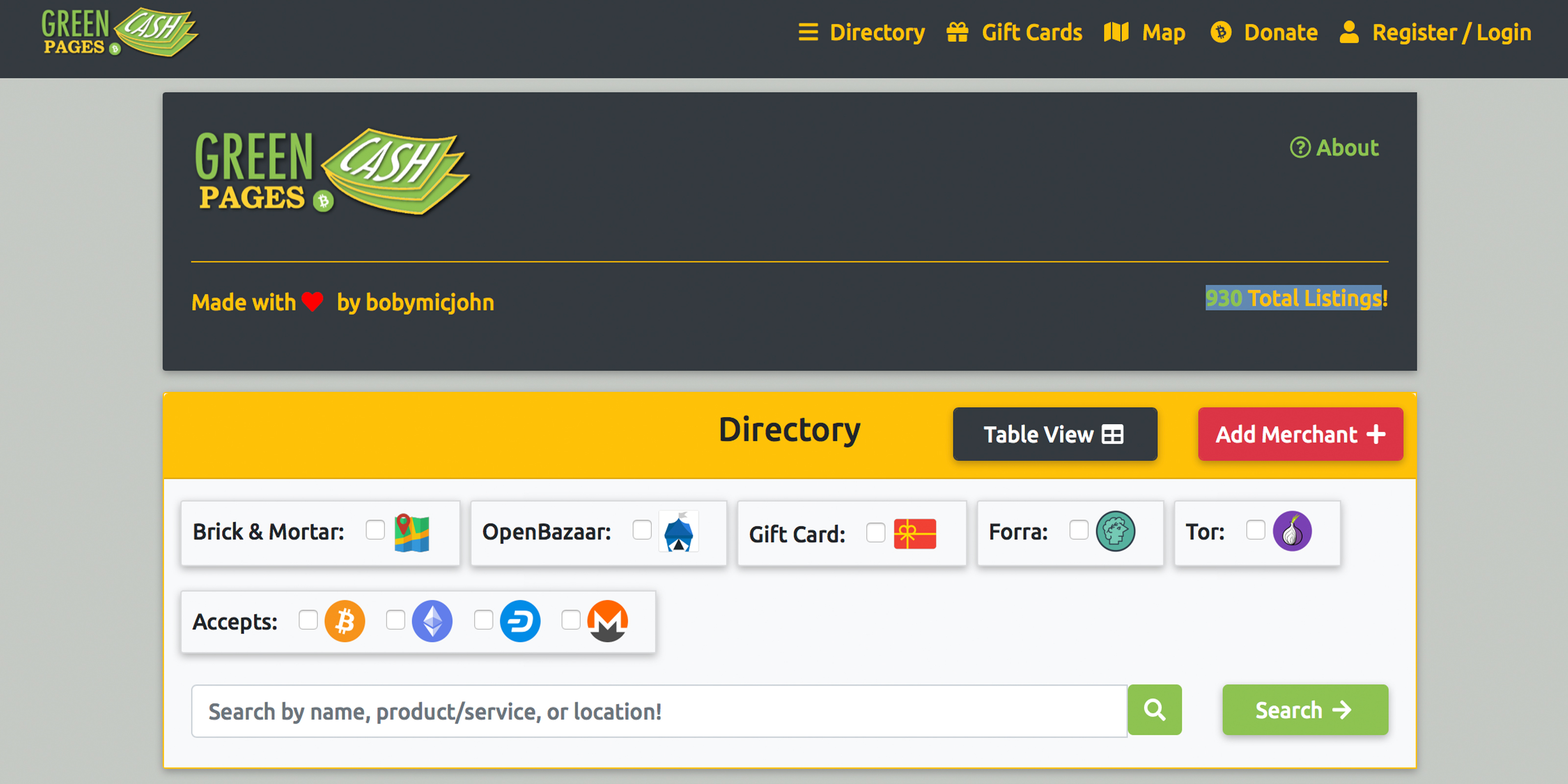
Greenpages.cash has over 930 total listings for people who want to spend their crypto assets. The site tracks gift card retailers, Openbazaar vendors, products found on Tor and Forra, and physical stores that all accept BCH for payment. BCH fans can find Pokemon cards, restaurant gift certificates, stickers, computers, clothing and much more. Greenpages has a searchable browser so visitors can find a specific location or certain product within the site’s database. The website also shows vendors who accept BTC, DASH, XMR, and ETH for payment.

How to Spend and Give Bitcoin Cash Over the Holidays
Greenpages.cash is a source to find all kinds of BCH-accepting vendors.

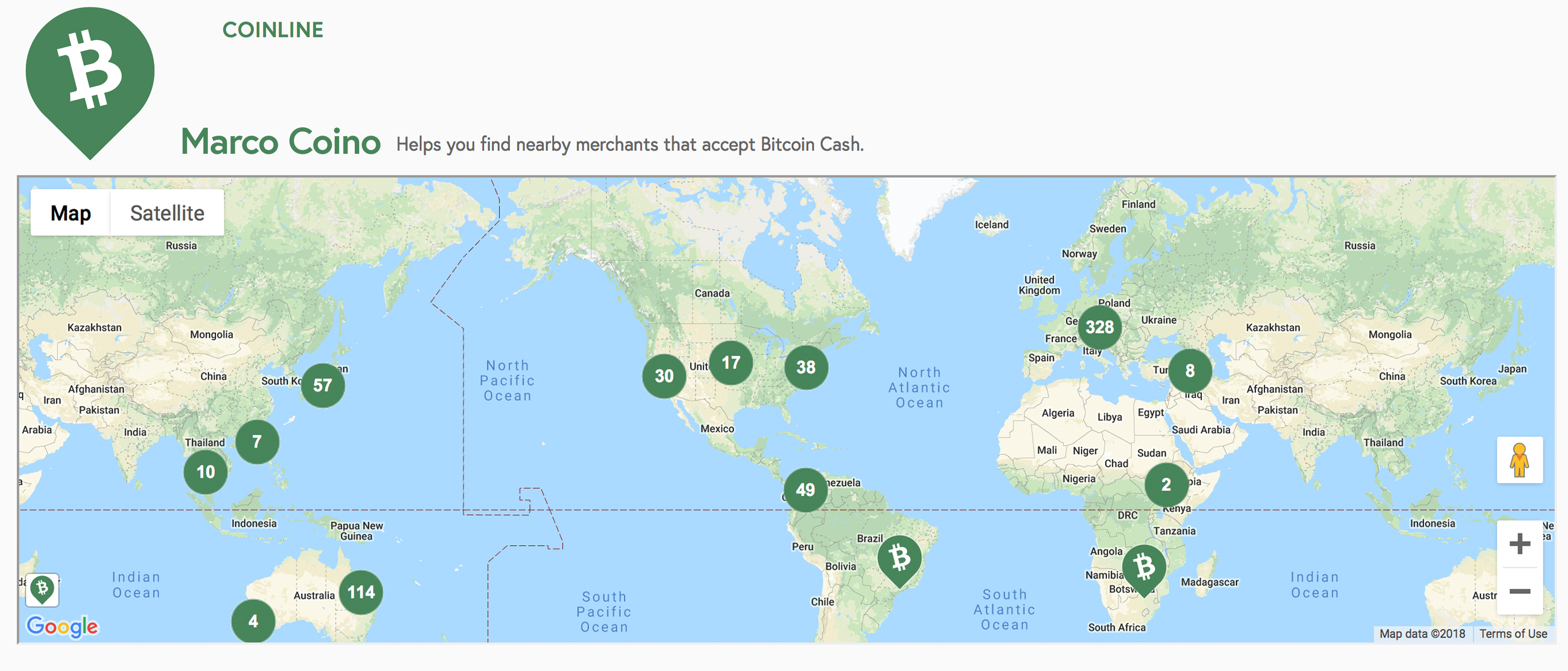
Another directory shoppers can use is the Marco Coino website, which lists hundreds of merchants all around the world who accept BCH. Last October, news.Bitcoin.com reported on the BCH directory listing over 500 merchants across the globe and now the site hosts close to 600 vendors. If you want to spend some bitcoin cash in your local economy then Marco Coino will find your geographical location using satellites (with your permission) and show you all the BCH-accepting merchants within your vicinity. Marco Coino also lists restaurants and retail shops where people can use their BCH for holiday gifts.

How to Spend and Give Bitcoin Cash Over the Holidays
Marco Coino is available for Android, iOS, and common web browsers.

Bitpay Merchants Accept BCH

Elsewhere, due to the attention cryptocurrencies received over the last two years, the payment processor Bitpay has partnered with various vendors that sell all kinds of wares for BCH. A large majority of merchants that deal with the Atlanta-based firm accept bitcoin cash for payment since the company integrated BCH for merchant processing and Bitpay debit card loads. For example, with Bitpay’s merchants worldwide, BCH enthusiasts can use their coin to purchase various gifts during the holidays. The cryptocurrency can purchase subscription TV services from Dish, precious metals, jewelry, luxury cars and more using Bitpay for processing and bitcoin cash for settlement.

How to Spend and Give Bitcoin Cash Over the Holidays
You can buy a Bentley or other luxury automobile this holiday season. The dealership Post Oak Motor Cars accepts bitcoin cash through Bitpay for payments.

Gift Cards and Swag

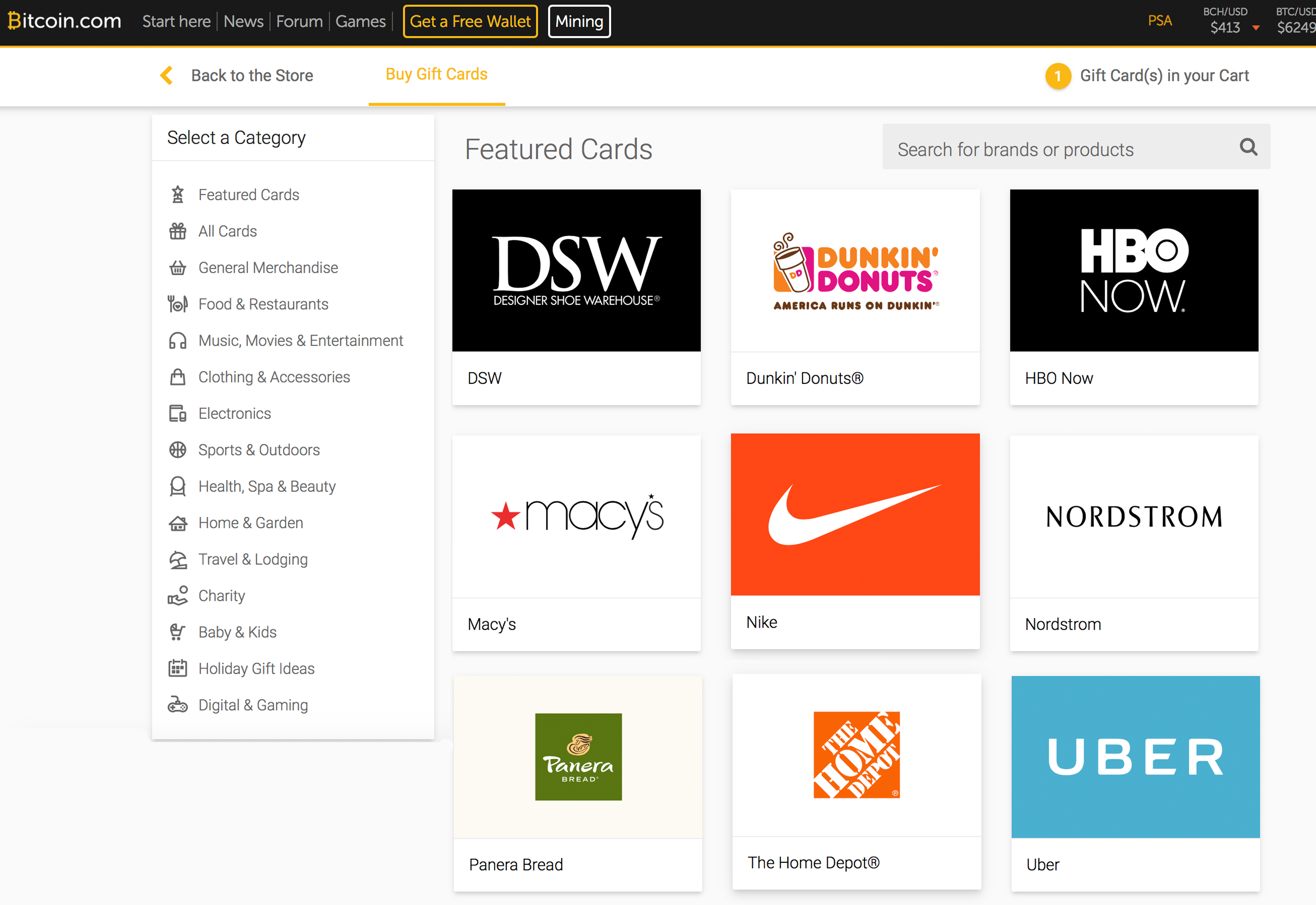
Bitcoiners can also spend their BCH at the Bitcoin.com Store, which offers all kinds of cryptocurrency swag, hardware wallets, collectibles, and even gift cards. Those who want to avoid the mall and the crowds of sweaty shoppers trampling each other for the latest must-have gifts can simply purchase gift cards from their couch with BCH.

How to Spend and Give Bitcoin Cash Over the Holidays
People can avoid the malls by getting gift cards.

The gift cards offered on store.Bitcoin.com are from leading brands like Adidas, American Eagle, Applebee’s, Best Buy, DSW, HBO, Dunkin’ Donuts and more. Shoppers can buy prepaid gift cards in various denominations and get the whole family gifts in less than 30 minutes.

Giving Bitcoin Cash

One of the best ways to spread BCH adoption this holiday season – and indeed any time of the year – is by giving people the currency to use and test on their own. BCH proponents can give any increment of bitcoin cash to family members and friends by getting them to download a wallet and giving them some during the family holiday dinner. You can alternatively give people BCH by printing out paper wallets or bitcoin cash-funded tips at the local pub on New Year’s Eve. Furthermore, if your family does a Christmas swap for presents this year you could give the gift of BCH and provide the recipient with a very unique perk during the party.

How to Spend and Give Bitcoin Cash Over the Holidays
Giving bitcoin cash helps spread adoption.

There are plenty of ways you can spend your coins this holiday season including giving the decentralized cryptocurrency away as an endowment. Moreover, there are various charities like the nonprofit Eatbch that accept BCH for donations too. Using the coin to help your fellow humans in need is another great way to express the potential of bitcoin cash and an honorable one at that. The holidays this year are an excellent opportunity to spread adoption in a unique fashion and demonstrate the cryptocurrency’s utility. 

Will you be giving or spending any cryptocurrencies this holiday season? Let us know what you think about this subject in the comments section below.


Images via Shutterstock, Bitcoin.com, store.Bitcoin.com, Pixabay, Marco Coino, and Greenpages.cash.


Want to create your own secure cold storage paper wallet? Check our tools section.

The post How to Spend and Give Bitcoin Cash Over the Holidays appeared first on Bitcoin News.

from Bitcoin News https://ift.tt/2STklag How to Spend and Give Bitcoin Cash Over the Holidays

#Blockchain How Crypto Miners Are Adapting to Survive the Bear Market

Vietnamese Stop Importing Bitcoin Mining Rigs as Import Ban Looms

In the current crypto bear market, miners have been battered due to the depreciation of digital assets, leaving many operations struggling to generate profit. In some cases, miners have been forced to exit the business altogether. In their absence, a number of experienced miners are capturing the bulk of the market share, according to one expert. 

Also read: Federal Agents Told This Silk Road Moderator to Fake His Own Death

Crypto Winter Is Taking Its Toll

How Crypto Miners Are Being Forced to Adapt to Survive the Bear MarketThis year, a number of mining operations have closed globally and around tens of thousands of mining rigs have been shut down in China. However, the bear market has ignited a wave of creativity among resourceful market participants, allowing their mining operations to thrive by capitalizing on new cost-efficient strategies.

Matt D’Souza, co-founder of Blockware Solutions and a consultant at KPMG based in Chicago, also operates one of the largest mining pools for Aion Network. D’Souza acknowledges that while the bear market has caused many facilities to close shop, experienced miners are getting creative and capturing greater market share.

It is the miners who built inefficient and large indoor facilities a few years ago and bought mining rigs Q3 2017 – Q2 2018 that are in trouble. D’Souza explains that the mining market participants currently going out of business most likely purchased rigs and signed hosting contracts between Q4 2017 and Q2 2018 while BTC was trading over $9,000. Within that timeframe, S9s sold for over $2,000, and a two-year hosting contract averaged $120+ per S9 per month.

Survival of the Fittest

How Crypto Miners Are Being Forced to Adapt to Survive the Bear MarketAccording to Blockware in the U.S., under current market conditions the going rate for hosting an S9 is between $60-75 per month, depending on the number of units. “It is just like every market cycle – the inefficient get wiped out but innovative participants observe the incumbents’ mistakes, run lean, cost-efficient operations, and establish long-term competitive advantages. Our mine will be able to still thrive at [a BTC price of] $1,500,” said D’Souza.


On average, solo miners pay $0.13+ per kWh to run their rigs at home or anywhere with residential rates. According to Blockware, miners have been able to reduce their total costs by over 40 percent during the BTC correction by contracting with a hosting facility and locking in a $0.06- $0.07 per kWh rate.

“Miners locking in a two-year hosting contract at present market rates is analogous to a value investor purchasing BTC at $3,500 with a two-year outlook. They are locking an average rate of $60-$75/month per S9 and paying $265-$340 for the mining rigs they purchase: these hosting rates and mining rigs prices are only available during a suppressed market,” said D’Souza.

It is important for new or expanding mining operations to calculate capital expenditures which include the cost of facility build-out and procurement of mining rigs, as well as the operational expenditure of running mining rigs which is primarily a function of electricity rate and capacity.

Geopolitics and US-China Tariffs

Another key factor is that with most mining rigs coming from China, geopolitical tariffs have become a critical consideration. According to Blockware, several large American miners purchased thousands of new S9s at bulk discounted rates preemptively in anticipation of the enforcement of U.S.-China tariffs. However, their facilities and energy capacity have not grown at the pace expected at the time those purchases were made.

“As devastating as this Bitcoin bear market has been, we are optimistic that many large self-mining facilities, hosting facilities and individual miners will survive and radically prosper if and when the market recovers as we believe it will,” concluded D’Souza.

Do you think more miners will be forced to drop out before prices start to recover? Let us know in the comments section below.


Images courtesy of Shutterstock.


Need to calculate your bitcoin holdings? Check our tools section.

The post How Crypto Miners Are Adapting to Survive the Bear Market appeared first on Bitcoin News.

from Bitcoin News https://ift.tt/2R2wqwu How Crypto Miners Are Adapting to Survive the Bear Market

#USA In emerging markets there are no copycats, just budding entrepreneurs

//

Every year I teach an MBA course at Stanford about the exciting opportunities for tech investors and entrepreneurs in developing economies. When we designed the syllabus back in 2013, Rocket Internet was still firing on all cylinders on four continents. The unapologetic machine built to copy big American internet companies created billions of dollars for the Samwer brothers and its backers. During Rocket’s golden years, the best startups in the developing economies seemed to inevitably have an original reference in Silicon Valley.

Accordingly, we added a class about the opportunity of replicating business models to seize this information arbitrage. Call it the second-mover advantage.

Despite my conviction about the model, the copycat word  —  short for replicating startups and attached to these ventures  —  annoyed me from the start. More than a term to describe a straightforward recipe to launch, I see it as an unconscious way to belittle an entire group of hard-charging founders and investors.

Indeed, while in foreign eyes, we have been building a Mexican Kickstarter, a Middle Eastern Uber, an Indian Amazon or a Colombian Postmates, I argue visionary founders are taking a simple idea that already exists and creating new worlds.

On the internet, there are Einsteins and there are Bob the Builders. I’m Bob the Builder. Oliver Samwer, founder of Rocket Internet

Gateway to entrepreneurship

While impact is the final goal, founders can approach the journey in different ways. The most common approach in the startup world is to use the business method, or more pompously, the design thinking methodology. “Fall in love with the problem, not the solution,” mentors keep telling a succession of startup clusters in acceleration programs. The best and “leanest” way to product market fit is by starting small then keep iterating the solution until you nail it.

A second way to start is favored by engineers and scientists: Take a new promising technology or a forgotten molecule, then find a big problem. Keep iterating until you find a problem worth solving, like a hammer looking for a nail.

A third way is starting like painters create, building skills by copying classics, or like a new chef cooks by starting with iconic recipes: replicate a proven idea and iterate until you find traction.

Until a few years ago it was ostensibly the only way to scale in developing economies. The model helped raise local capital from risk-averse investors who needed reassurance. The playbook to scale was unfolding a couple of years ahead and served as a guide to founders without previous startup experience and no local role models. The potential acquirer was identified and sometimes contacted in advance. Founders weren’t crazy and investors weren’t dumb.

Replicating a business model has served in emerging ecosystems as the gateway to entrepreneurship and venture investing.

Photo courtesy of Flickr/A_Marga

Riding the next wave

According to conventional wisdom, new ecosystems around the world grow through the following three stages, be them in developing economies or more developed countries. First, local and foreign entrepreneurs replicate successful models focused on local markets. Then as the ecosystem evolves, founders start applying existing technologies to solve local problems. Finally, as the tech space matures, new technologies begin to flourish.

In my opinion, those stages never happen sequentially as stated by ecosystem observers. Successful startups that started with a foreign inspiration can outgrow the master. If they are not bought into submission by the first mover, some of the most famous copycats reinvented the original and made it better: Mercado Libre is much more relevant in the e-commerce space than eBay . Flipkart is hardly an Amazon, not to mention WeChat. These companies are in turn some of the most prolific tech innovators on the globe. Truly ecosystems evolve organically in unique ways reflecting their history, geopolitical environment, economic structure and cultural features.

Two ways to defend the status quo: “It’s been done before” and “It’s never been done before.” –Thibault @Kpaxs

In defense of talent

Recently, it’s hard to hear American observers use the word copycat to describe any American company. After all, Guilt replicated VentesPrivees and Lime, Chinese dockless bike sharing and many more examples. All American startups are treated as innovators while the rest as mere followers.

Recently, Chinese or Indian startups seem to be given the benefit of the doubt regarding their originality. Is it because these regions have become more innovative? Maybe. But it’s also because these ecosystems have gained the respect of Silicon Valley. Indeed, Chinese consumer tech surpassed decisively the U.S. as the most important country in terms of investments.

So here’s my humble suggestion to our wealthier and more accomplished colleagues: stop using the c-word with founders. It’s offensive. Most probably, these founders are facing more challenges to build their companies and lower odds for success that the first mover. If anything, they have more merit than the originals.

As for founders, when they call you a me-too, remember all teams started somewhere, somehow. In fact, most started like Bob the Builder before turning into Einsteins. The truth is, it doesn’t matter where you start. You can start by applying a new technology or protocol. You can start with a problem you feel passionate about. You can start by replicating a business model. It doesn’t really matter if you take a big swing at the future and trust you will figure out how to make it happen. It doesn’t matter what label they use while you change the world for the better.

from Startups – TechCrunch https://ift.tt/2A23Oty

#Blockchain Patreon’s Censorship Is Bad for Free Speech But Good for Bitcoin

Patreon’s Censorship Is Bad for Free Speech But Good for Bitcoin

A fresh wound has opened in the culture war, and this time money is the blade. In recent days, a number of prominent Youtubers and other content creators have abandoned the crowdfunding platform Patreon in protest at the deplatforming of “Sargon of Akkad” aka Carl Benjamin. Benjamin, who has over 800,000 subscribers and debunks social justice talking points, was removed from the crowdfunding site without warning, erasing his primary source of income overnight.

Also read: Hit by Sanctions, Iranian Students in the UK Use Bitcoin to Bypass Banks

Patreon Is Making the Case for Uncensorable Payment Protocols

In a video titled You Cannot Trust Patreon, Benjamin states “This is not new for Patreon – this is clearly part of a political campaign to deplatform opponents of political correctness.” His claim was seemingly strengthened by the fact that days earlier, political provocateur and former Breitbart editor Milo Yiannopoulos was also banned for “association with or supporting hate groups.”

There is now increasing concern among content creators and subscribers that Patreon, along with payment processors such as Paypal and Stripe, may be applying their rules selectively as a means of political coercion. As ordinary users abandon these services in increasing numbers, the financial collateral damage continues to spread.

Patreon’s Censorship Is Bad for Free Speech But Good for Bitcoin
Subscribestar’s payment processors before vigilante justice warriors began exerting pressure (in color, top) and after (black and white)

Vigilante Justice Warriors

Sleeping Giants, a prominent group leading the fight to deprive conservative creators of their income, describe themselves as “A campaign to make bigotry and sexism less profitable.” Using their verified Twitter account, the campaigners put pressure on social media platforms and payment providers while rallying against foes whose opinions they don’t share.

Given the success that such “woke” activists are having, they are unlikely to cease their activities any time soon. Following the growing exodus from Patreon, a number of content creators switched to the alternative platform Subscribestar, which vowed not to bend to mob rule. Shortly after, however, Subscribestar was crippled by the announcement that it could no longer offer Paypal to its user base at the payment processor’s insistence.

The general attitude of the emboldened vigilante justice warriors was summed up in the tweet of one Twitter user who opined:

Patreon’s Censorship Is Bad for Free Speech But Good for Bitcoin

With the lines defining what is and is not acceptable arbitrary and apparently as open to interpretation as Patreon’s own terms of service, anyone who creates content online may be justified in feeling concern. Among the growing voices of protestors and outspoken critics are psychologist Jordan B. Peterson, journalist Dave Rubin, who now accepts bitcoin, and the neuroscientist and prominent atheist Sam Harris. Until today, Harris had the number 13 podcast on Patreon and was estimated to make $20,000 plus per episode from the site.

In The War Against Free Speech, Bitcoin Offers Salvation

If it’s censorship-resistant payment protocols that content creators are seeking, there is only one alternative that can be relied on to resist pressure from governments, merchants and internet agitators, because its very design prevents it from being controlled. As free speech network Gab put it:

Silicon Valley giants can’t stop Bitcoin. They can’t censor it. They can’t no-platform it or bar it for falling foul of the prevailing ideology du jour. Through censorship and suppression, Bitcoin’s very competitors – Patreon, Paypal and their fiat-related cousins – are strengthening the case for cryptocurrency. With each ousted content creator, the case for censorship-resistant money grows stronger.

Why do you think social media platforms and payment providers have begun policing free speech so aggressively? And do you think this censorship is good for Bitcoin adoption? Let us know in the comments section below.


Images courtesy of Shutterstock.


Need to calculate your bitcoin holdings? Check our tools section.

The post Patreon’s Censorship Is Bad for Free Speech But Good for Bitcoin appeared first on Bitcoin News.

from Bitcoin News https://ift.tt/2A5scKL Patreon’s Censorship Is Bad for Free Speech But Good for Bitcoin

#Blockchain Patreon’s Censorship Is Bad for Free Speech But Good for Bitcoin

Patreon’s Censorship Is Bad for Free Speech But Good for Bitcoin

A fresh wound has opened in the culture war, and this time money is the blade. In recent days, a number of prominent Youtubers and other content creators have abandoned the crowdfunding platform Patreon in protest at the deplatforming of “Sargon of Akkad” aka Carl Benjamin. Benjamin, who has over 800,000 subscribers and debunks social justice talking points, was removed from the crowdfunding site without warning, erasing his primary source of income overnight.

Also read: Hit by Sanctions, Iranian Students in the UK Use Bitcoin to Bypass Banks

Patreon Is Making the Case for Uncensorable Payment Protocols

In a video titled You Cannot Trust Patreon, Benjamin states “This is not new for Patreon – this is clearly part of a political campaign to deplatform opponents of political correctness.” His claim was seemingly strengthened by the fact that days earlier, political provocateur and former Breitbart editor Milo Yiannopoulos was also banned for “association with or supporting hate groups.”

There is now increasing concern among content creators and subscribers that Patreon, along with payment processors such as Paypal and Stripe, may be applying their rules selectively as a means of political coercion. As ordinary users abandon these services in increasing numbers, the financial collateral damage continues to spread.

Patreon’s Censorship Is Bad for Free Speech But Good for Bitcoin
Subscribestar’s payment processors before vigilante justice warriors began exerting pressure (in color, top) and after (black and white)

Vigilante Justice Warriors

Sleeping Giants, a prominent group leading the fight to deprive conservative creators of their income, describe themselves as “A campaign to make bigotry and sexism less profitable.” Using their verified Twitter account, the campaigners put pressure on social media platforms and payment providers while rallying against foes whose opinions they don’t share.

Given the success that such “woke” activists are having, they are unlikely to cease their activities any time soon. Following the growing exodus from Patreon, a number of content creators switched to the alternative platform Subscribestar, which vowed not to bend to mob rule. Shortly after, however, Subscribestar was crippled by the announcement that it could no longer offer Paypal to its user base at the payment processor’s insistence.

The general attitude of the emboldened vigilante justice warriors was summed up in the tweet of one Twitter user who opined:

Patreon’s Censorship Is Bad for Free Speech But Good for Bitcoin

With the lines defining what is and is not acceptable arbitrary and apparently as open to interpretation as Patreon’s own terms of service, anyone who creates content online may be justified in feeling concern. Among the growing voices of protestors and outspoken critics are psychologist Jordan B. Peterson, journalist Dave Rubin, who now accepts bitcoin, and the neuroscientist and prominent atheist Sam Harris. Until today, Harris had the number 13 podcast on Patreon and was estimated to make $20,000 plus per episode from the site.

In The War Against Free Speech, Bitcoin Offers Salvation

If it’s censorship-resistant payment protocols that content creators are seeking, there is only one alternative that can be relied on to resist pressure from governments, merchants and internet agitators, because its very design prevents it from being controlled. As free speech network Gab put it:

Silicon Valley giants can’t stop Bitcoin. They can’t censor it. They can’t no-platform it or bar it for falling foul of the prevailing ideology du jour. Through censorship and suppression, Bitcoin’s very competitors – Patreon, Paypal and their fiat-related cousins – are strengthening the case for cryptocurrency. With each ousted content creator, the case for censorship-resistant money grows stronger.

Why do you think social media platforms and payment providers have begun policing free speech so aggressively? And do you think this censorship is good for Bitcoin adoption? Let us know in the comments section below.


Images courtesy of Shutterstock.


Need to calculate your bitcoin holdings? Check our tools section.

The post Patreon’s Censorship Is Bad for Free Speech But Good for Bitcoin appeared first on Bitcoin News.

from Bitcoin News https://ift.tt/2A5scKL Patreon’s Censorship Is Bad for Free Speech But Good for Bitcoin