
About Startup365

Chaque jour nous vous présenterons une nouvelle Startup française ! Notre pays regorge de talents et d'entrepreneurs brillants ! Alors partons à la découverte des meilleures startup françaises ! Certaines d'entre elles sont dans une étape essentielle dans la vie d'une startup : la recherche de financement, notamment par le financement participatif (ou crowdfunding en anglais). Alors participez à cette grande aventure en leur faisant une petite donation ! Les startups françaises ont besoin de vous !

#USA Keepsafe launches My Number Lookup, so you can see the public data tied to your mobile number

//

Ever wonder how much of your personal information is accessible to marketers? Well, there’s a new service called My Number Lookup that makes it easy (and free) for you to check the data that’s publicly available and tied to your mobile phone number.

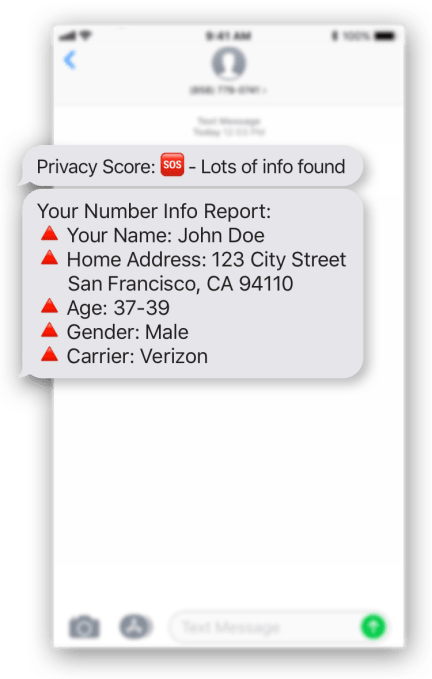
The service was created by Keepsafe, maker of privacy-centric products. While there is a My Number Lookup website, the service actually operates over SMS — you just text HELLO to (855) 228-4539 and it will start sending you a report.

Keepsafe co-founder and CEO Zouhair Belkoura said that while marketers are able to access this information with relative ease, it’s difficult for consumers to check.

“We said, ‘Why don’t we make it super easy?’” he said. “Here’s a number you can text that tells you what information is publicly available.”
My Number Lookup

Specifically, My Number Lookup will tell you whether it was able to find a name, home address, age, gender, mobile carrier and associated people tied to your mobile number. It will even show you the data (several of the data points about me were missing, out-of-date or flat-out wrong), then point you towards Keepsafe Unlisted, a service for creating “burner” phone numbers (so you don’t have to share your real number widely), and also towards a Keepsafe blog post that outlines how someone can try to remove their personal information from various data brokers.

Belkoura admitted that even though you’ve got the report, you won’t necessarily be able to scrub the data from the Internet. Instead, he sees it as more of “a wakeup call” that people need to be more careful about giving out their phone numbers. And if it leads them to use Keepsafe Unlisted, even better.

“Once information is out there, it’s very difficult to delete,” he said. “The Internet is a place that just doesn’t forget.”

As for why the service operates over SMS, Belkoura said My Number Lookup will only provide data about the number you’re texting from. Hopefully that means users will only check on their own data, not someone else’s: “We don’t actually want to create a service where people who don’t have a legitimate interest can pay to look up information.”

from Startups – TechCrunch https://ift.tt/2SIJmET
#USA Keepsafe launches My Number Lookup, so you can see the public data tied to your mobile number

//

Ever wonder how much of your personal information is accessible to marketers? Well, there’s a new service called My Number Lookup that makes it easy (and free) for you to check the data that’s publicly available and tied to your mobile phone number.

The service was created by Keepsafe, maker of privacy-centric products. While there is a My Number Lookup website, the service actually operates over SMS — you just text HELLO to (855) 228-4539 and it will start sending you a report.

Keepsafe co-founder and CEO Zouhair Belkoura said that while marketers are able to access this information with relative ease, it’s difficult for consumers to check.

“We said, ‘Why don’t we make it super easy?’” he said. “Here’s a number you can text that tells you what information is publicly available.”

My Number Lookup

Specifically, My Number Lookup will tell you whether it was able to find a name, home address, age, gender, mobile carrier and associated people tied to your mobile number. It will even show you the data (several of the data points about me were missing, out-of-date or flat-out wrong), then point you towards Keepsafe Unlisted, a service for creating “burner” phone numbers (so you don’t have to share your real number widely), and also towards a Keepsafe blog post that outlines how someone can try to remove their personal information from various data brokers.

Belkoura admitted that even though you’ve got the report, you won’t necessarily be able to scrub the data from the Internet. Instead, he sees it as more of “a wakeup call” that people need to be more careful about giving out their phone numbers. And if it leads them to use Keepsafe Unlisted, even better.

“Once information is out there, it’s very difficult to delete,” he said. “The Internet is a place that just doesn’t forget.”

As for why the service operates over SMS, Belkoura said My Number Lookup will only provide data about the number you’re texting from. Hopefully that means users will only check on their own data, not someone else’s: “We don’t actually want to create a service where people who don’t have a legitimate interest can pay to look up information.”

from Startups – TechCrunch https://ift.tt/2SIJmET
#USA Keepsafe launches My Number Lookup, so you can see the public data tied to your mobile number

//

Ever wonder how much of your personal information is accessible to marketers? Well, there’s a new service called My Number Lookup that makes it easy (and free) for you to check the data that’s publicly available and tied to your mobile phone number.

The service was created by Keepsafe, maker of privacy-centric products. While there is a My Number Lookup website, the service actually operates over SMS — you just text HELLO to (855) 228-4539 and it will start sending you a report.

Keepsafe co-founder and CEO Zouhair Belkoura said that while marketers are able to access this information with relative ease, it’s difficult for consumers to check.

“We said, ‘Why don’t we make it super easy?’” he said. “Here’s a number you can text that tells you what information is publicly available.”

My Number Lookup

Specifically, My Number Lookup will tell you whether it was able to find a name, home address, age, gender, mobile carrier and associated people tied to your mobile number. It will even show you the data (several of the data points about me were missing, out-of-date or flat-out wrong), then point you towards Keepsafe Unlisted, a service for creating “burner” phone numbers (so you don’t have to share your real number widely), and also towards a Keepsafe blog post that outlines how someone can try to remove their personal information from various data brokers.

Belkoura admitted that even though you’ve got the report, you won’t necessarily be able to scrub the data from the Internet. Instead, he sees it as more of “a wakeup call” that people need to be more careful about giving out their phone numbers. And if it leads them to use Keepsafe Unlisted, even better.

“Once information is out there, it’s very difficult to delete,” he said. “The Internet is a place that just doesn’t forget.”

As for why the service operates over SMS, Belkoura said My Number Lookup will only provide data about the number you’re texting from. Hopefully that means users will only check on their own data, not someone else’s: “We don’t actually want to create a service where people who don’t have a legitimate interest can pay to look up information.”

from Startups – TechCrunch https://ift.tt/2SIJmET
#USA Robinhood launches no-fee checking/savings with Mastercard & the most ATMs

//

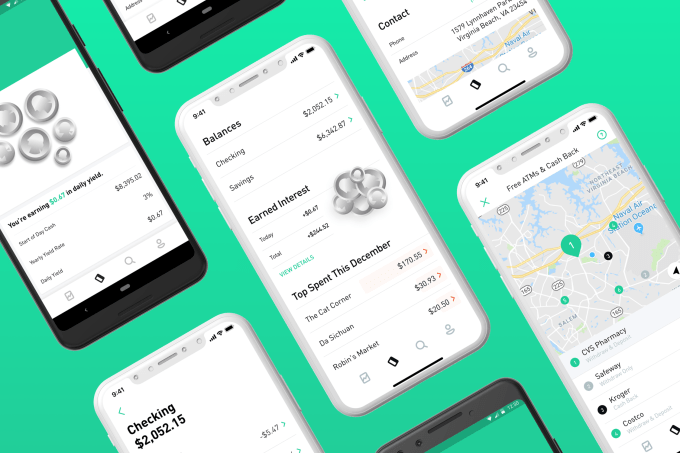
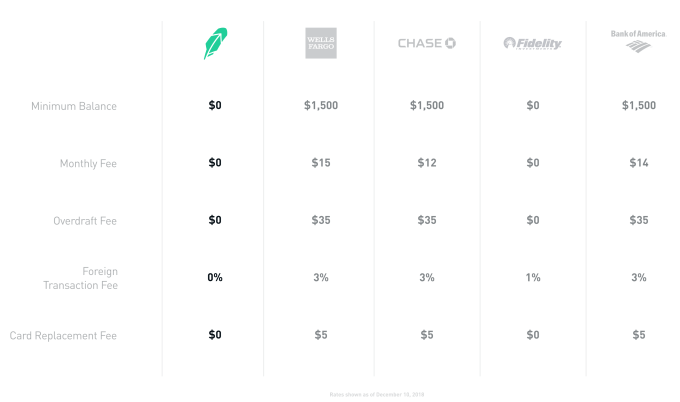
Robinhood is undercutting the big banks by forgoing brick-and-mortar branches with its new zero-fee checking and savings account features. With no overdraft or monthly fees, a juicy 3 percent interest rate, and a claim of more US ATMs than the five biggest banks combined, Robinhood is using the scalability of software to pass impressive perks on to customers. The free stock trading app already used that approach to attack brokers like E*Trade and Charles Schwab that charge a per trade fee. Now it’s breaking into the larger financial services market with a model that could put the squeeze on Wells Fargo, Chase, and Bank Of America.

Today Robinhood launches checking and savings accounts in the US with a Mastercard debit card issued through Sutton Bank that starts shipping December 18th. Users earn 3 percent on all the dough they keep with Robinhood, yet there’s no minimum balance or fees for monthly membership, overdrafts, foreign transactions, or card replacements. That’s a pretty sweet deal compared to the other leading banks that all charge for some of that or offer much lower interest rates. The tradeoff is that while customers get 24/7 live text chat support, they won’t be able to walk into a local bank branch. 

Robinhood expects to turn a profit thanks to a lean 300-employee operation, earning a margin on investing your money in US treasuries, and a revenue share with Mastercard on interchange fees charged to merchants when you swipe. The launch could be critical to keeping Robinhood worthy of its $5.6 billion valuation from when it took a $363 million Series D in March just a year after raising at a $1.3 billion valuation. The 6 million-user app invested in launching a free cryptocurrency trading exchange early this year only to see coin prices plummet and mainstream interest fall off. But with banks hammering users with surprise fees and mediocre user experience, there’s a huge opportunity for a mobile-first startup to disrupt how we store money.

“Brick-and-mortar locations are costly. Our goal with this product was to build a completely digital experience so we can reduce our overhead so we can pass more of the value back to customers” Robinhood co-CEO Baiju Bhatt tells me. “Saving accounts in the US pay on average 0.09 percent and we all know the banks are making far more than that from the deposits. With Robinhood you earn 3 percent off all of your money. Mental math is hard so if you look at the median US household that has about $8000 in liquid savings, they’d earn $240 a year.”

Getting into banking could open a lucrative revenue stream for Robinhood as it charts its path to IPO. The startup recently hired Jason Warnick, a 20-year veteran of Amazon, to be its CFO and get it prepped to go public. Wall Street will want to see a more robust business that’s not as vulnerable to foes like stock brokerage Charles Schwab which is already lowering fees to stay competitive with Robinhood. Not only will checking and savings see users move more money into their Robinhood accounts that it can invest to earn a profit, but it also poises the startup to tackle more financial services in the future.

from Startups – TechCrunch https://ift.tt/2Gf21qy

#USA Sovrn acquires VigLink to expand its publisher monetization platform

//

Sovrn recently raised a $25 million in new funding with the goal of expanding beyond the adtech business through acquisitions. Now it’s announcing the first of those deals: It’s acquiring affiliate marketing company VigLink.

Sovrn first launched in 2014 — made up, as CEO Walter Knapp put it, from “bits and pieces of different companies.” (It emerged from Federated Media and its roots go back to Lijit, which FM acquired in 2011.) Knapp said the company’s vision is to “enable a professional class of storytellers to do more of what they want to do” by providing tools around content creation, distribution, monetization, operations and capital.

As for VigLink, it was founded in 2009 to help publishers monetize by automatically inserting affiliate links (where merchants share revenue with publishers when those publishers drive sales). Knapp said he’s been interested in the intersection of publishing and commerce because publishers are often the ones influencing consumer purchase decisions, but “they don’t really capture the commerce value of what they’ve created.”

VigLink already plays a big role in that process — Knapp said its links are driving nearly $1 billion in annual sales. But he also noted that there’s less than 10 percent overlap between the domains working with Sovrn and VigLink, so he sees plenty of opportunity to grow.

“We can take what is a really interesting product that has appealed more to high volume publishers and take it into content publishers,” Knapp said. “Now what’s required there is a pretty deep understanding of the editorial process.”

Knapp intends to bring entire 35-person VigLink team over to Sovrn, bringing the company’s headcount to 220. He also said that with the addition of VigLink to Sovrn’s business, “transactional adtech” will make up less than half of the company’s total revenue.

And he promised that the VigLink product will continue to evolve, for example by giving publishers more data about the entire customer journey.

The financial terms of the acquisition were not disclosed. According to Crunchbase, VigLink raised more than $27 million from investors including GV, Emergence Capital, First Round Capital, RRE Ventures, Correlation Ventures, Foundry Group, Costanoa Ventures and Silicon Valley Bank.

from Startups – TechCrunch https://ift.tt/2PBUrWr

#Blockchain Shakepay App Turns Spare Change Into Fractions of BTC

Shakepay App Turns Spare Change Into Fractions of BTC

Canadians can now gradually accumulate small fractions of BTC by rounding up their everyday debit card purchases with a mobile application called Shakepay. The company launched in 2015 operates multiple cryptocurrency services and its new Shakepay Change element aims to provide individuals with a frictionless way to buy BTC in Canada.

Also read: The Digital Revolution Increases Sovereignty

Shakepay: A Spare Change-to-Cryptocurrency App

Shakepay App Turns Spare Change Into Fractions of BTCThe Montreal-based financial technology company Shakepay provides digital currency applications for Canadians. Since 2015, the Shakepay application has provided users with the ability to purchase and sell bitcoin core (BTC) in a quick fashion. The company has serviced over 40,000 customers and has processed well over $30 million in BTC since its inception. The Shakepay Change feature is a new addition to the slew of applications created to make acquiring bitcoins easier. The change service will allow Canadians to purchase BTC with the spare change of rounded up debit purchases.

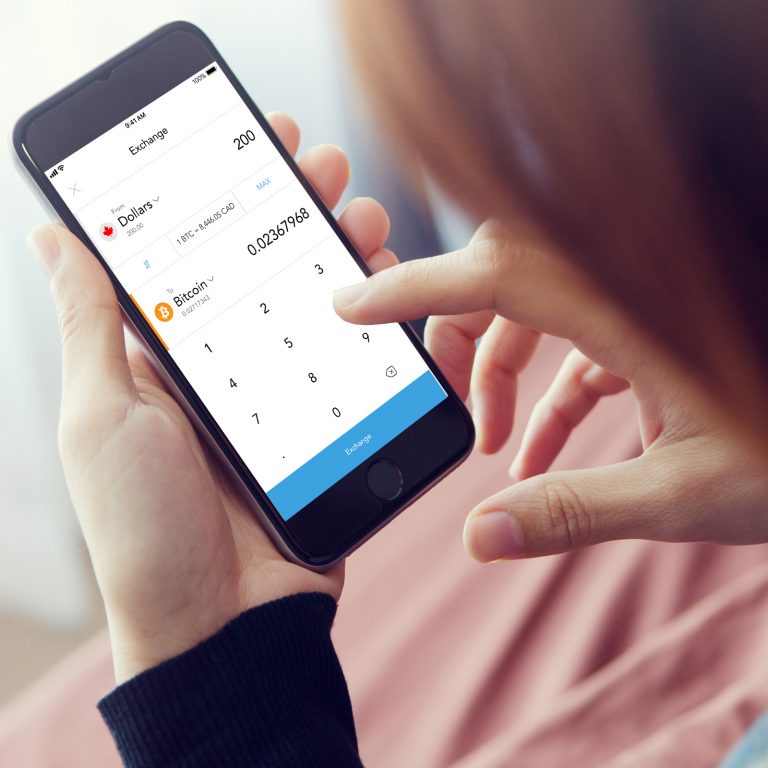
Basically, Shakepay Change users need to link a debit card to their Shakepay account. Then if they purchase anything, the application will round up each purchase to the nearest dollar. The leftover change is what is used to purchase BTC and then the platform adds the funds to the Shakepay wallet.

“Following Bitcoin, the entire suite of financial services is being rebuilt independently from the current financial infrastructure,” explained Jean Amiouny, CEO of Shakepay. “We believe enabling access to these services is paramount to the creation of wealth and economic freedom.”

Shakepay is a licensed money services business and can operate in any province throughout Canada. The company is backed by investors such as Boost VC and has also partnered with a Schedule 1 bank in order to facilitate the application’s payment processing. The Shakepay team believes Bitcoin’s innovation is important because “it enables wealth to be stored with an individual without the need for a third party.” The Shakepay application with the spare change service is available for Canadians using both Android and iOS mobile phones.

Not the Only Loose Change Crypto-Application

Shakepay App Turns Spare Change Into Fractions of BTCShakepay is not the first company to offer this type of cryptocurrency purchasing technique with rounded up debit purchases. Back in the spring of 2015, the project Lawnmower.io offered a spare change-into-bitcoin conversion tool that was tethered to Coinbase accounts. However, Lawnmower stopped offering the rounded change feature back in March 2016.
Then there’s another digital currency purchasing application that rounds up purchases called Coinflash. The Coinflash application gives users the ability to purchase BTC and ETH using spare change.

As far as Canadians are concerned, they can try the Shakepay platform to acquire small fractions of BTC. “Our mission is to create open access to building wealth and we’re setting out to have every single Canadian owning bitcoin,” Amiouny added.

What do you think about the Shakepay Change feature? Let us know what you think about this subject in the comments section below. 


Images via Shakepay Change, and Shutterstock. 


At Bitcoin.com there’s a bunch of free helpful services. For instance, have you seen our Tools page? You can even look up the exchange rate for a transaction in the past. Or calculate the value of your current holdings. Or create a paper wallet. And much more.

The post Shakepay App Turns Spare Change Into Fractions of BTC appeared first on Bitcoin News.

from Bitcoin News https://ift.tt/2CbLu2J Shakepay App Turns Spare Change Into Fractions of BTC

#Blockchain Shakepay App Turns Spare Change Into Fractions of BTC

Shakepay App Turns Spare Change Into Fractions of BTC

Canadians can now gradually accumulate small fractions of BTC by rounding up their everyday debit card purchases with a mobile application called Shakepay. The company launched in 2015 operates multiple cryptocurrency services and its new Shakepay Change element aims to provide individuals with a frictionless way to buy BTC in Canada.

Also read: The Digital Revolution Increases Sovereignty

Shakepay: A Spare Change-to-Cryptocurrency App

Shakepay App Turns Spare Change Into Fractions of BTCThe Montreal-based financial technology company Shakepay provides digital currency applications for Canadians. Since 2015, the Shakepay application has provided users with the ability to purchase and sell bitcoin core (BTC) in a quick fashion. The company has serviced over 40,000 customers and has processed well over $30 million in BTC since its inception. The Shakepay Change feature is a new addition to the slew of applications created to make acquiring bitcoins easier. The change service will allow Canadians to purchase BTC with the spare change of rounded up debit purchases.

Basically, Shakepay Change users need to link a debit card to their Shakepay account. Then if they purchase anything, the application will round up each purchase to the nearest dollar. The leftover change is what is used to purchase BTC and then the platform adds the funds to the Shakepay wallet.

“Following Bitcoin, the entire suite of financial services is being rebuilt independently from the current financial infrastructure,” explained Jean Amiouny, CEO of Shakepay. “We believe enabling access to these services is paramount to the creation of wealth and economic freedom.”

Shakepay is a licensed money services business and can operate in any province throughout Canada. The company is backed by investors such as Boost VC and has also partnered with a Schedule 1 bank in order to facilitate the application’s payment processing. The Shakepay team believes Bitcoin’s innovation is important because “it enables wealth to be stored with an individual without the need for a third party.” The Shakepay application with the spare change service is available for Canadians using both Android and iOS mobile phones.

Not the Only Loose Change Crypto-Application

Shakepay App Turns Spare Change Into Fractions of BTCShakepay is not the first company to offer this type of cryptocurrency purchasing technique with rounded up debit purchases. Back in the spring of 2015, the project Lawnmower.io offered a spare change-into-bitcoin conversion tool that was tethered to Coinbase accounts. However, Lawnmower stopped offering the rounded change feature back in March 2016.
Then there’s another digital currency purchasing application that rounds up purchases called Coinflash. The Coinflash application gives users the ability to purchase BTC and ETH using spare change.

As far as Canadians are concerned, they can try the Shakepay platform to acquire small fractions of BTC. “Our mission is to create open access to building wealth and we’re setting out to have every single Canadian owning bitcoin,” Amiouny added.

What do you think about the Shakepay Change feature? Let us know what you think about this subject in the comments section below. 


Images via Shakepay Change, and Shutterstock. 


At Bitcoin.com there’s a bunch of free helpful services. For instance, have you seen our Tools page? You can even look up the exchange rate for a transaction in the past. Or calculate the value of your current holdings. Or create a paper wallet. And much more.

The post Shakepay App Turns Spare Change Into Fractions of BTC appeared first on Bitcoin News.

from Bitcoin News https://ift.tt/2CbLu2J Shakepay App Turns Spare Change Into Fractions of BTC

#Blockchain Shakepay App Turns Spare Change Into Fractions of BTC

Shakepay App Turns Spare Change Into Fractions of BTC

Canadians can now gradually accumulate small fractions of BTC by rounding up their everyday debit card purchases with a mobile application called Shakepay. The company launched in 2015 operates multiple cryptocurrency services and its new Shakepay Change element aims to provide individuals with a frictionless way to buy BTC in Canada.

Also read: The Digital Revolution Increases Sovereignty

Shakepay: A Spare Change-to-Cryptocurrency App

Shakepay App Turns Spare Change Into Fractions of BTCThe Montreal-based financial technology company Shakepay provides digital currency applications for Canadians. Since 2015, the Shakepay application has provided users with the ability to purchase and sell bitcoin core (BTC) in a quick fashion. The company has serviced over 40,000 customers and has processed well over $30 million in BTC since its inception. The Shakepay Change feature is a new addition to the slew of applications created to make acquiring bitcoins easier. The change service will allow Canadians to purchase BTC with the spare change of rounded up debit purchases.

Basically, Shakepay Change users need to link a debit card to their Shakepay account. Then if they purchase anything, the application will round up each purchase to the nearest dollar. The leftover change is what is used to purchase BTC and then the platform adds the funds to the Shakepay wallet.

“Following Bitcoin, the entire suite of financial services is being rebuilt independently from the current financial infrastructure,” explained Jean Amiouny, CEO of Shakepay. “We believe enabling access to these services is paramount to the creation of wealth and economic freedom.”

Shakepay is a licensed money services business and can operate in any province throughout Canada. The company is backed by investors such as Boost VC and has also partnered with a Schedule 1 bank in order to facilitate the application’s payment processing. The Shakepay team believes Bitcoin’s innovation is important because “it enables wealth to be stored with an individual without the need for a third party.” The Shakepay application with the spare change service is available for Canadians using both Android and iOS mobile phones.

Not the Only Loose Change Crypto-Application

Shakepay App Turns Spare Change Into Fractions of BTCShakepay is not the first company to offer this type of cryptocurrency purchasing technique with rounded up debit purchases. Back in the spring of 2015, the project Lawnmower.io offered a spare change-into-bitcoin conversion tool that was tethered to Coinbase accounts. However, Lawnmower stopped offering the rounded change feature back in March 2016.

Then there’s another digital currency purchasing application that rounds up purchases called Coinflash. The Coinflash application gives users the ability to purchase BTC and ETH using spare change.

As far as Canadians are concerned, they can try the Shakepay platform to acquire small fractions of BTC. “Our mission is to create open access to building wealth and we’re setting out to have every single Canadian owning bitcoin,” Amiouny added.

What do you think about the Shakepay Change feature? Let us know what you think about this subject in the comments section below. 


Images via Shakepay, and Shutterstock. 


At Bitcoin.com there’s a bunch of free helpful services. For instance, have you seen our Tools page? You can even look up the exchange rate for a transaction in the past. Or calculate the value of your current holdings. Or create a paper wallet. And much more.

The post Shakepay App Turns Spare Change Into Fractions of BTC appeared first on Bitcoin News.

from Bitcoin News https://ift.tt/2CbLu2J Shakepay App Turns Spare Change Into Fractions of BTC

#USA Postmates unveils Serve, a friendlier autonomous delivery robot

//

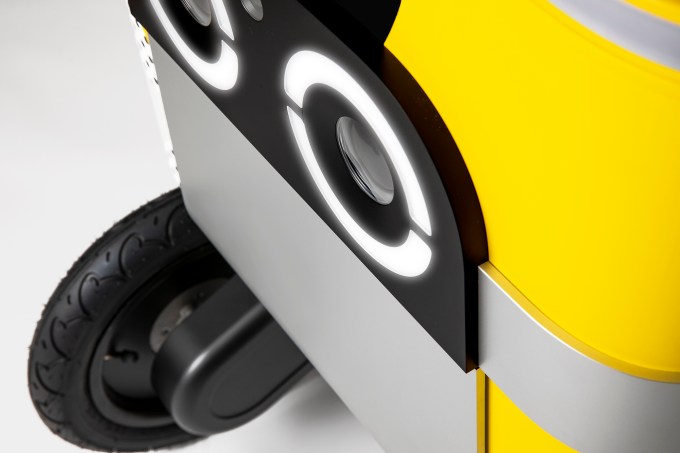
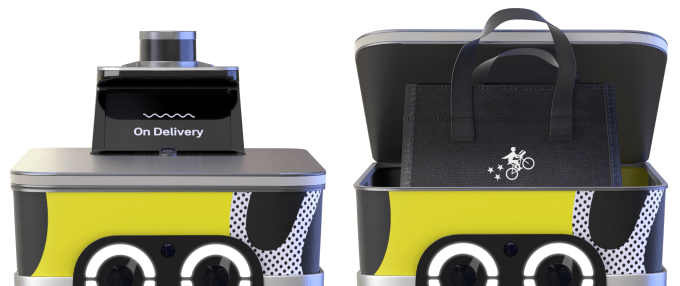
San Francisco partially banned delivery robots because they obstructed pedestrians, so Postmates built one with eyes, turn signals, and a mandate to yield. Serve is Postmates’ new cooler-meet-autonomous-stroller that it hopes can cut costs and speed up deliveries. The semi-autonomous rover uses cameras and LIDAR to navigate sidewalks, but always has a human pilot remotely monitoring a fleet of Serves who can take control if there’s a problem. There’s even a “Help” button, touchscreen, and video chat display customers or passers-by can use to summon assistance.

Serve will be rolling out in various cities over the next year. It does deliveries to customers that unlock its cargo hatch with their phone or a passcode, but it also can grab food from restaurants in congested areas and bring them to a Postmates dispatch hub from which delivery people can take packages the last mile. That could save Postmates money on delivery labor, but the company didn’t provide any information on how it might help transition delivery staff to other roles or careers.

“Somehow as a society we’re OK with moving a 2-pound burrito with a 2-ton car. All the energy is used to move the car, not the burrito, and there all the congestion it introduces” says Ali Kashani, VP of Postmates X special projects. So Postmates spent the last couple of years piloting autonomous rovers built by Starship and Robby before deciding only it had the on-demand experience to build the right bot.

Serve can carry 50 pounds of goods for 25 miles on a single charge — enough to make around a dozen deliveries per day. Thanks to a low center of gravity achieved by building the battery into the bottom of the chassis, it’s less likely to get cow-tipped. It uses Velodyne Lidar and a NVIDIA XAVIER processor to tell where it’s going.  A Postmates spokesperson tells me that the scalability and efficiency of the rovers, “ultimately we believe that there will be a world where goods move rapidly at almost zero cost to the consumer.”

We took time to figure out what is the language for the rover and pedestrians to interact with each other. If a robot is at sidewalk and wants to be able to cross the street, it needs to show its intent to cross” Kashani tells me. Thanks to a light ring around the top with turn signals and eyes that can indicate where it’s trying to go, Kashani believes Serve can be a respectful and natural part of the urban environment. 

Avoiding becoming an obstacle to seniors, children, and people in wheelchairs will be critical if cities are going to allow robots like Serve to operate. In December, San Francisco nearly banned the bots by limiting companies to three robots each with only nine total in the city that are relegated to low-population areas, can’t travel more than three miles per hour, and must be supervised remotely by humans.

Postmates tells me it’s been working with the SF board of supervisors including Norman Yee and a coalition of logistics companies to develop a regulatory framework for issuing permits allowing limited autonomous deliveries. Postmates’ permit application is under review by the City of SF. Postmates is working with SF’s Emerging Technology Working Group, local merchant associations, and pedestrian safety groups to figure out how to balance innovative tools that could increase local retail sales and reduce traffic with the public’s need for right of way on the sidewalks.

There’s also the question of what happens to the labor Serve replaces. A Postmates spokesperson claims that Serve is about augmenting its fleet with super powers rather than replacing its fleet. The company does 4 million deliveries per month and some might not ever be completable by robots. But it’d be nice to see Postmates spin up some training courses or offer transitions to behind-the-scenes operations and customer service rolls to deliverers that eventually feel the squeeze.

Interestingly, Kashani hinted at how Postmates might end up moving to an “Uber X, Uber Black Car” model where you’d pay more to have a human take your delivery upstairs and directly to your door, while you might pay less if you’re willing to grab your order from the Serve robot out on the curb. Essentially, Postmates Serve is poised to turn human delivery into a luxury.

from Startups – TechCrunch https://ift.tt/2RWCbZR

#USA Minted lands $208M Series E from Permira and T. Rowe Price

//

Minted, a company we’ve been covering on this site for a decade-plus, plans to double down on its wholesale and licensing business, which helps larger retailers sell stationery, art and home decor designed by its community of independent artists.

To fund the growing initiative, the design marketplace is today announcing a $208 million Series E funding led by Permira, with participation from T. Rowe Price. The round brings Minted’s total raised to date to $300 million. The company, founded in 2007, has previously landed backing from Benchmark, Menlo Ventures, Norwest Venture Partners, Technology Crossover Ventures and others.

“Minted is playing into a trend that’s really fortunate for us, which is a need for differentiated design that helps retailers compete,” the company’s founder and chief executive officer Mariam Naficy told TechCrunch.

Naficy, a former vice president of U.S. e-commerce at The Body Shop, declined to disclose the company’s valuation but says it’s profitable on an earnings before interest, tax, depreciation and amortization (EBITDA) basis and is on track to post “low hundreds of millions” in revenue this year. Its wholesale and licensing operation, she says, is itself expected to become a nine-figure business, too, and will likely represent 50 percent of Minted’s earnings in four years.

Minted is best known as an online marketplace for printed goods, like wedding invitations, greeting cards, notebooks, stationery and wall art. The company crowdsources work from independent illustrators, textile designers, painters and other artists, then lets its customers vote on the designs they like best to determine what is sold on Minted. Then, the platform leverages predictive analytics to forecast bestsellers. As a result, Naficy says they’ve collected hoards of valuable data surrounding consumer preferences.

Minted, in addition to fueling growth of its wholesale business, will use the investment to build out a robust supply chain, expand the team and continue experimenting with new business strategies, like its first brick-and-mortar store that recently popped up on San Francisco’s Fillmore Street, where the company is selling wall art and stationery.

from Startups – TechCrunch https://ift.tt/2SL2u4Z