About Startup365

Chaque jour nous vous présenterons une nouvelle Startup française ! Notre pays regorge de talents et d'entrepreneurs brillants ! Alors partons à la découverte des meilleures startup françaises ! Certaines d'entre elles sont dans une étape essentielle dans la vie d'une startup : la recherche de financement, notamment par le financement participatif (ou crowdfunding en anglais). Alors participez à cette grande aventure en leur faisant une petite donation ! Les startups françaises ont besoin de vous !

#USA Revolut gets European banking license in Lithuania

//

Fintech startup Revolut is now officially a bank. While the startup initially expected to get its European banking license during the first half of 2018, the company has finally come out of the regulatory tunnel with a license in hand.

As expected, Revolut applied for a license through the Bank of Lithuania and is leveraging passporting rules to operate in other European countries. Users will see some changes over the coming months.

First, the company expects to roll out new features in the U.K., France, Germany and Poland. Right now, Revolut is more like an e-wallet that you can top up in many different ways. Users in those countries will get a true current account and a non-prepaid debit card in a few months.

After transferring your money to Revolut’s own infrastructure, funds will be covered up to €100,000 under the European Deposit Insurance Scheme. It should convince more users to switch to Revolut for their salaries and big sums of money.

Eventually, the startup expects to be able to offer overdrafts and loans. All fintech startups end up offering credit at some point as it’s a good way to generate revenue.

There are currently 8,000 to 10,000 people opening a Revolut account per day. Users generate $4 billion in monthly transaction volume.

It’s going to be interesting to see if current accounts will affect growth. It’s currently quite easy to open a Revolut account as users don’t need to go through a lot of KYC processes. This is going to change once the startup starts opening current accounts.

from Startups – TechCrunch https://ift.tt/2Erx9RW

#USA Revolut gets European banking license in Lithuania

//

Fintech startup Revolut is now officially a bank. While the startup initially expected to get its European banking license during the first half of 2018, the company has finally come out of the regulatory tunnel with a license in hand.

As expected, Revolut applied for a license through the Bank of Lithuania and is leveraging passporting rules to operate in other European countries. Users will see some changes over the coming months.

First, the company expects to roll out new features in the U.K., France, Germany and Poland. Right now, Revolut is more like an e-wallet that you can top up in many different ways. Users in those countries will get a true current account and a non-prepaid debit card in a few months.

After transferring your money to Revolut’s own infrastructure, funds will be covered up to €100,000 under the European Deposit Insurance Scheme. It should convince more users to switch to Revolut for their salaries and big sums of money.

Eventually, the startup expects to be able to offer overdrafts and loans. All fintech startups end up offering credit at some point as it’s a good way to generate revenue.

There are currently 8,000 to 10,000 people opening a Revolut account per day. Users generate $4 billion in monthly transaction volume.

It’s going to be interesting to see if current accounts will affect growth. It’s currently quite easy to open a Revolut account as users don’t need to go through a lot of KYC processes. This is going to change once the startup starts opening current accounts.

from Startups – TechCrunch https://ift.tt/2Erx9RW

#Blockchain Report: Lightning Network Still Way off Being Ready for Commercial Use

The Lightning Network (LN) is a second-layer protocol that was long promised as a solution to BTC’s scalability problem. However, the off-chain system is still very far from being able to support actual commence according to a new review by business management technology company Scipio ERP.

Also Read: The Daily: CEX.io Enforces KYC, Okex Updates BCH Ticker

LN Is Incredibly Difficult to Use

Report: Lightning Network Still Way off Being Ready for Commercial UseThe report’s developers created a Lightning Add-on for Scipio ERP that provides businesses with the ability to use the system. They then tested the network in order to see if it was really ready for commerce. On the positive side, the tests confirmed that under best conditions payment confirmations were reached within 5-10 seconds. However, they also revealed many crucial flaws.

LN makes it very hard to implement clustering, meaning running several redundant servers simultaneously, which is a critical feature for online retailers. Implementing it, in particular in a dynamic cloud setup, would require a lot of workarounds, the developers explain.

The network has a bad user experience, in sharp contrast to that provided by most payment providers, who make the process of setting up and integrating as fast and painless as possible. The system is also incredibly difficult to use. The report lists over a dozen steps needed for merchants and close to 10 steps required of customers to make payments.

It is also a resource hog, requiring a Bitcoin node and a Lightning node installed on the same server as the business application. “All of which will require a lot of time to set up and configure. If one of the systems fails, your business application will not be able to handle cryptocurrency transactions. This is even more problematic, as redundancy cannot be easily achieved,” the developers lament.

Slower Than an Average Credit Card Payment

Report: Lightning Network Still Way off Being Ready for Commercial UseThe tests found that LN is still in a very early stage of development. “We have been operating the system for four months and crashes can and will happen all the time. Transaction channels can close or may not have enough peers at any time. There are no push notifications for these events, so you won’t know until a new transaction is placed and fails.”

Moreover, the network only allows small payments to be accepted due to limitations on the amount each channel can handle. And the process of opening a channel, needed once the limit on the previous one has been reached, makes it extremely difficult to automate for business applications.

As it stands, the Lightning Network is not useful for professional clustered environments, the developers insist. “Yes, Lightning does allow multiple nodes in its network, but at the same time it limits the number of systems that can connect to a Lightning node. And sure, payments are considerably faster than Bitcoin, but they are not ‘instant’. Even under best conditions, it still takes more time for transactions to be secured and processed than with your average credit card payment. In addition, Lightning is neither easy to set up, nor convenient to run.”

All of the above made the Scipio ERP developers conclude that LN payments are not yet suitable for business transactions.

Will the Lightning Network eventually help to scale BTC? Share your thoughts in the comments section below.


Images courtesy of Shutterstock.


Verify and track bitcoin cash transactions on our BCH Block Explorer, the best of its kind anywhere in the world. Also, keep up with your holdings, BCH and other coins, on our market charts at Satoshi’s Pulse, another original and free service from Bitcoin.com.

The post Report: Lightning Network Still Way off Being Ready for Commercial Use appeared first on Bitcoin News.

from Bitcoin News https://ift.tt/2Lg0Khy Report: Lightning Network Still Way off Being Ready for Commercial Use

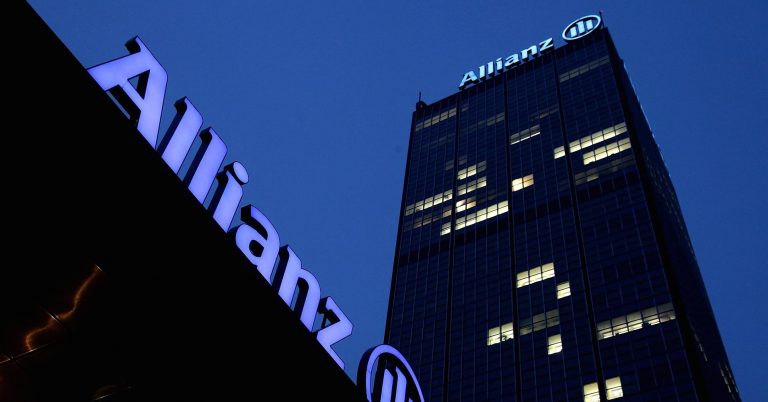
#Blockchain Allianz Global Investors CEO Calls for Cryptocurrencies to Be Outlawed

The head of one of Europe’s largest asset managers, Allianz Global, has called for global regulators to “outlaw” crypto assets. The outburst from CEO Andreas Utermann came during a panel discussion in London. 

Also read: Netherlands to Regulate Cryptocurrencies in Bid to Curb Money Laundering

Cryptocurrencies Have “Wiped out People’s Savings”

Allianz Global Investors chief Andreas Utermann called for cryptocurrencies to be banned on Tuesday during a panel discussion. “You should outlaw it,” he is reported to have told regulators.

Allianz Global Investors CEO Calls for Cryptocurrencies to Be OutlawedUtermann, who previously worked at Merrill Lynch Investment Managers, went on to say that he was “personally surprised regulators haven’t stepped in harder” and that cryptocurrencies had wiped out people’s savings, Reuters reported. Sitting beside him at the panel discussion was Andrew Bailey, the head of the UK’s Financial Conduct Authority (FCA), who said his comments were “quite strong actually.” Bailey, who served as the Deputy Governor of the Bank of England from April 2013 to July 2016, then went on to add that cryptocurrencies have “no intrinsic value.”

He added that the authorities were keeping a close eye on initial coin offerings (ICOs). An October report revealed that hundreds of startups are being “secretly” targeted by the U.S. Securities and Exchange Commission for their involvement with initial coin offerings.

A More Crypto-Friendly Environment

Despite the condemnatory statement from Allianz Global’s CEO, the company’s chief economic adviser has previously said he believes cryptocurrencies are here to stay – and even admitted that he had opened a bitcoin trading account. He did add, however, that he was unsure whether they would ever replace fiat currency, saying:

“I think cryptocurrencies will exist, they will become more and more widespread, but they will be part of an ecosystem.

Utermann’s statement comes at a time when banks – and countries around the world – are becoming more crypto-friendly. Although multinational banks and mainstream financial services have traditionally been quick to slam cryptocurrencies, many now appear to be opening to the idea of them.

The Central Bank of the United Arab Emirates has said it will be working with Saudi Arabia for a cross-border digital currency – not long after consumers in Dubai were told they would be able to use digital currency to make payments for a number of different purposes.

Goldman Sachs, a leading multinational investment bank and financial services company, has had plans in the pipeline for some time now to open a derivative for bitcoin and a trading desk for cryptocurrencies. And Boerse Stuttgart Group, Germany’s second largest stock exchange, is due to launch a crypto trading venue next year.

What do you think of Utermann’s comments? Let us know in the comments section below.


Images courtesy of Shutterstock and Bitwala.


Need to calculate your bitcoin holdings? Check our tools section.

The post Allianz Global Investors CEO Calls for Cryptocurrencies to Be Outlawed appeared first on Bitcoin News.

from Bitcoin News https://ift.tt/2Bc0Rq1 Allianz Global Investors CEO Calls for Cryptocurrencies to Be Outlawed

#Blockchain Allianz Global Investors CEO Calls for Cryptocurrencies to Be Outlawed

The head of one of Europe’s largest asset managers, Allianz Global, has called for global regulators to “outlaw” crypto assets. The outburst from CEO Andreas Utermann came during a panel discussion in London. 

Also read: Netherlands to Regulate Cryptocurrencies in Bid to Curb Money Laundering

Cryptocurrencies Have “Wiped out People’s Savings”

Allianz Global Investors chief Andreas Utermann called for cryptocurrencies to be banned on Tuesday during a panel discussion. “You should outlaw it,” he is reported to have told regulators.

Allianz Global Investors CEO Calls for Cryptocurrencies to Be OutlawedUtermann, who previously worked at Merrill Lynch Investment Managers, went on to say that he was “personally surprised regulators haven’t stepped in harder” and that cryptocurrencies had wiped out people’s savings, Reuters reported. Sitting beside him at the panel discussion was Andrew Bailey, the head of the UK’s Financial Conduct Authority (FCA), who said his comments were “quite strong actually.” Bailey, who served as the Deputy Governor of the Bank of England from April 2013 to July 2016, then went on to add that cryptocurrencies have “no intrinsic value.”

He added that the authorities were keeping a close eye on initial coin offerings (ICOs). An October report revealed that hundreds of startups are being “secretly” targeted by the U.S. Securities and Exchange Commission for their involvement with initial coin offerings.

A More Crypto-Friendly Environment

Despite the condemnatory statement from Allianz Global’s CEO, the company’s chief economic adviser has previously said he believes cryptocurrencies are here to stay – and even admitted that he had opened a bitcoin trading account. He did add, however, that he was unsure whether they would ever replace fiat currency, saying:

“I think cryptocurrencies will exist, they will become more and more widespread, but they will be part of an ecosystem.

Utermann’s statement comes at a time when banks – and countries around the world – are becoming more crypto-friendly. Although multinational banks and mainstream financial services have traditionally been quick to slam cryptocurrencies, many now appear to be opening to the idea of them.

The Central Bank of the United Arab Emirates has said it will be working with Saudi Arabia for a cross-border digital currency – not long after consumers in Dubai were told they would be able to use digital currency to make payments for a number of different purposes.

Goldman Sachs, a leading multinational investment bank and financial services company, has had plans in the pipeline for some time now to open a derivative for bitcoin and a trading desk for cryptocurrencies. And Boerse Stuttgart Group, Germany’s second largest stock exchange, is due to launch a crypto trading venue next year.

What do you think of Utermann’s comments? Let us know in the comments section below.


Images courtesy of Shutterstock and Bitwala.


Need to calculate your bitcoin holdings? Check our tools section.

The post Allianz Global Investors CEO Calls for Cryptocurrencies to Be Outlawed appeared first on Bitcoin News.

from Bitcoin News https://ift.tt/2Bc0Rq1 Allianz Global Investors CEO Calls for Cryptocurrencies to Be Outlawed

#USA Bowery, an indoor farming startup, raises $90 million more, including to counter a SoftBank-funded rival

//

When in July of last year, Softbank’s Vision Fund led a whopping $200 million round in the Silicon Valley startup Plenty, investors behind a competing indoor farming startup across the country, New York-based Bowery, were left reeling.  Just one month earlier, they’d closed on a round that brought Bowery’s total funding to $31 million. And as one of Bowery’s backers told us in the immediate aftermath of Plenty’s enormous round, SoftBank’s involvement “definitely gives you pause.”

It has not, however, prompted investors to give up, plainly. On the contrary, Bowery just today announced that it has raised $90 million in fresh funding led by GV, with participation from Temasek and Almanac Ventures; the company’s Series A investors, General Catalyst and GGV Capital; and numerous of its seed investors, including First Round Capital.

It’s easy to understand investors’ unwavering interest in the company and the space, given the opportunity that Bowery, and Plenty, and hundreds of other indoor farming startups, are chasing. As Bowery outlined in a post this morning, “traditional agriculture uses 700 million pounds of pesticides annually, and fresh food takes weeks” and sometimes longer to land on the dinner table. Along the way, terrible things sometimes happen, including E.coli outbreaks, like the kind recently linked to the sale of romaine lettuce in the U.S.

Meanwhile, Bowery, which is growing crops inside two warehouses in New Jersey can promise people in New York that their bok choy didn’t travel far at all.

Bowery also appears to be gaining the kind of momentum that VCs want to see. According to the company, it started life with five employees three years ago; today its staff has ballooned to 65 people. It has established a distribution partnership with Whole Foods. It has as partnered with sweetgreen, the fast-food chain known for its farm-to-table salad bowls, and Dig Inn, a New York- and Boston-based chain of locally farm-sourced restaurants.

Unsurprisingly, the company says it plans to partner with new retail, food service, and restaurant partners in the new year, too.

Bigger picture, Bowery says it plans to build a “global distributed network of farms” that are connected to each other through a kind of operating system, and that it has already begun work on the first of these outside of the tristate area.

Whether it succeeds in that vision is anyone’s guess at this point. It’s hard to know how big an impact that Bowery, or Plenty (which plans to build 300 indoor farms in or near Chinese cities) or any of its many competitors will ultimately have. But given that we’ll need to feed two billion more people by 2050 without overwhelming the planet, it’s also easy to understand from a humanitarian standpoint why investors might be keen to write these companies big checks. In fact, the rest of us should probably be rooting them on, too.

from Startups – TechCrunch https://ift.tt/2zVyKLX

#USA Farfetch bets on sneakers with $250M Stadium Goods acquisition

//

The lines between streetwear and luxury fashion have blurred in recent years, especially as excitement around sneaker brands like Yeezy and Off-White has soared.

A marriage between a luxury fashion marketplace and a sneaker and streetwear reseller seems like a natural way to wrap up M&A in 2018. With that said, Farfetch has acquired New York-based Stadium Goods, opting to pay $250 million for the sneaker startup in a combination of cash and Farfetch stock. Headquartered in London, Farfetch went public on the New York Stock Exchange in September, pricing its shares at $20 apiece and raising $885 million in the process.

What’s more impressive is Stadium Goods’ journey to exit. The company, which sells new and deadstock products online and in a brick-and-mortar store in New York’s Soho neighborhood, was founded in 2015 by John McPheters and Jed Stiller and had only raised $4.6 million in venture capital funding from Forerunner Ventures, The Chernin Group and Mark Cuban, who is an advisor to the startup.

“There was a time not that long ago when you couldn’t wear sneakers and streetwear to nightclubs and restaurants,” McPheters, Stadium Goods’ chief executive officer, told TechCrunch. “But adoption of the stuff we are selling has continued to grow at a very large clip.”

The sale to Farfetch not only provides a major boost to the sneaker tech ecosystem, which is surprisingly much larger than those who aren’t familiar with it might have guessed, but its yet another successful e-commerce exit for Kirsten Green, the founding partner of Forerunner Ventures, who’s also backed Dollar Shave Club and Bonobos — direct-to-consumer retailers that sold for $1 billion and $310 million, respectively.

Stadium Goods founders John McPheters (left) and Jed Stiller.

Farfetch boarded the sneaker and streetwear hype train a while ago when it incorporated brands like Nike’s Jordan, pairs of which sell for more than $1,000 on the site. The company doubled down on sneakers earlier this year when it began integrating Stadium Goods products. After noticing high-demand, Farfetch founder and CEO José Neves tells TechCrunch, they began acquisition talks with the startup. Stadium Goods will remain independent as part of the deal, with McPheters and Stiller staying on to lead the brand forward. The company’s portfolio of shoes and apparel will be fully available on Farfetch’s e-commerce platform in the coming months.

“Luxury streetwear is a significant part of our business,” Neves said. “For many years now, we have had the largest collection of Off-White, for example, on the internet … What we did not have was the resale, secondary market. It was clear this was an interesting opportunity.”

Together, Farfetch and Stadium Goods will focus on international growth. McPheters tells TechCrunch Stadium Goods already had a significant international base of customers, but a partnership with Farfetch gives them the tools to go places they’ve never been before.

“In my mind, we are only just beginning,” McPheters said. “As more and more customers get comfortable with purchasing aftermarket items, we are going to continue to grow.”

The global athletic footwear industry is expected to be worth $95 billion by 2025. Meanwhile, sneaker resale is a $1 billion market and growing, fueled by a cohort of startups making it easier than ever for sneakerheads to locate rare shoes online and have them delivered to their doorsteps. That includes Stadium Goods, Flight Club, GOAT and StockX.

All four of these resellers, which ensure authentication of their products, are backed by VCs. Flight Club merged with GOAT earlier this year and together the pair raised a $60 million Series C. Before that, GOAT had brought in $30 million for its secondary market for collectible shoes from Accel, Upfront Ventures, Matrix Partners and more. StockX, for its part, has raised just over $50 million from Mark Wahlberg, Scooter Braun, Wale, Eminem, SV Angel and others.

According to Crunchbase data, VCs have funneled more than $200 million into sneaker startups in the past two years. Now, given the size of Stadium Goods’ exit, investment in the space will likely pick up significantly as other VCs hope to land an exit multiple that substantial.

Whether the reselling market will continue to expand is in question. Some have called it a bubble poised to burst, claiming it’s at its “height in popularity.” Why? Because corporate shoe brands like Nike and Adidas are keenly aware of the secondary market for their products and how they, too, can profit from it. If they decide to increase the supply of particular shoe models hot on the secondary market, they can radically disrupt the reseller economy. McPheters, however, says this doesn’t concern him.

“Brands need to strangle the demand to keep driving excitement in the space,” McPheters said. “They count on that hype to really move the needle.”

from Startups – TechCrunch https://ift.tt/2C9FM1j


#USA Farfetch bets on sneakers with $250M Stadium Goods acquisition

//

The lines between streetwear and luxury fashion have blurred in recent years, especially as excitement around sneaker brands like Yeezy and Off-White has soared.

A marriage between a luxury fashion marketplace and a sneaker and streetwear reseller seems like a natural way to wrap up M&A in 2018. With that said, Farfetch has acquired New York-based Stadium Goods, opting to pay $250 million for the sneaker startup in a combination of cash and Farfetch stock. Headquartered in London, Farfetch went public on the New York Stock Exchange in September, pricing its shares at $20 apiece and raising $885 million in the process.

What’s more impressive is Stadium Goods’ journey to exit. The company, which sells new and deadstock products online and in a brick-and-mortar store in New York’s Soho neighborhood, was founded in 2015 by John McPheters and Jed Stiller and had only raised $4.6 million in venture capital funding from Forerunner Ventures, The Chernin Group and Mark Cuban, who is an advisor to the startup.

“There was a time not that long ago when you couldn’t wear sneakers and streetwear to nightclubs and restaurants,” McPheters, Stadium Goods’ chief executive officer, told TechCrunch. “But adoption of the stuff we are selling has continued to grow at a very large clip.”

The sale to Farfetch not only provides a major boost to the sneaker tech ecosystem, which is surprisingly much larger than those who aren’t familiar with it might have guessed, but its yet another successful e-commerce exit for Kirsten Green, the founding partner of Forerunner Ventures, who’s also backed Dollar Shave Club and Bonobos — direct-to-consumer retailers that sold for $1 billion and $310 million, respectively.

Stadium Goods founders John McPheters (left) and Jed Stiller.

Farfetch boarded the sneaker and streetwear hype train a while ago when it incorporated brands like Nike’s Jordan, pairs of which sell for more than $1,000 on the site. The company doubled down on sneakers earlier this year when it began integrating Stadium Goods products. After noticing high-demand, Farfetch founder and CEO José Neves tells TechCrunch, they began acquisition talks with the startup. Stadium Goods will remain independent as part of the deal, with McPheters and Stiller staying on to lead the brand forward. The company’s portfolio of shoes and apparel will be fully available on Farfetch’s e-commerce platform in the coming months.

“Luxury streetwear is a significant part of our business,” Neves said. “For many years now, we have had the largest collection of Off-White, for example, on the internet … What we did not have was the resale, secondary market. It was clear this was an interesting opportunity.”

Together, Farfetch and Stadium Goods will focus on international growth. McPheters tells TechCrunch Stadium Goods already had a significant international base of customers, but a partnership with Farfetch gives them the tools to go places they’ve never been before.

“In my mind, we are only just beginning,” McPheters said. “As more and more customers get comfortable with purchasing aftermarket items, we are going to continue to grow.”

The global athletic footwear industry is expected to be worth $95 billion by 2025. Meanwhile, sneaker resale is a $1 billion market and growing, fueled by a cohort of startups making it easier than ever for sneakerheads to locate rare shoes online and have them delivered to their doorsteps. That includes Stadium Goods, Flight Club, GOAT and StockX.

All four of these resellers, which ensure authentication of their products, are backed by VCs. Flight Club merged with GOAT earlier this year and together the pair raised a $60 million Series C. Before that, GOAT had brought in $30 million for its secondary market for collectible shoes from Accel, Upfront Ventures, Matrix Partners and more. StockX, for its part, has raised just over $50 million from Mark Wahlberg, Scooter Braun, Wale, Eminem, SV Angel and others.

According to Crunchbase data, VCs have funneled more than $200 million into sneaker startups in the past two years. Now, given the size of Stadium Goods’ exit, investment in the space will likely pick up significantly as other VCs hope to land an exit multiple that substantial.

Whether the reselling market will continue to expand is in question. Some have called it a bubble poised to burst, claiming it’s at its “height in popularity.” Why? Because corporate shoe brands like Nike and Adidas are keenly aware of the secondary market for their products and how they, too, can profit from it. If they decide to increase the supply of particular shoe models hot on the secondary market, they can radically disrupt the reseller economy. McPheters, however, says this doesn’t concern him.

“Brands need to strangle the demand to keep driving excitement in the space,” McPheters said. “They count on that hype to really move the needle.”

from Startups – TechCrunch https://ift.tt/2C9FM1j

#USA Farfetch bets on sneakers with $250M Stadium Goods acquisition

//

The lines between streetwear and luxury fashion have blurred in recent years, especially as excitement around sneaker brands like Yeezy and Off-White has soared.

A marriage between a luxury fashion marketplace and a sneaker and streetwear reseller seems like a natural way to wrap up M&A in 2018. With that said, Farfetch has acquired New York-based Stadium Goods, opting to pay $250 million for the sneaker startup in a combination of cash and Farfetch stock. Headquartered in London, Farfetch went public on the New York Stock Exchange in September, pricing its shares at $20 apiece and raising $885 million in the process.

What’s more impressive is Stadium Goods’ journey to exit. The company, which sells new and deadstock products online and in a brick-and-mortar store in New York’s Soho neighborhood, was founded in 2015 by John McPheters and Jed Stiller and had only raised $4.6 million in venture capital funding from Forerunner Ventures, The Chernin Group and Mark Cuban, who is an advisor to the startup.

“There was a time not that long ago when you couldn’t wear sneakers and streetwear to nightclubs and restaurants,” McPheters, Stadium Goods’ chief executive officer, told TechCrunch. “But adoption of the stuff we are selling has continued to grow at a very large clip.”

The sale to Farfetch not only provides a major boost to the sneaker tech ecosystem, which is surprisingly much larger than those who aren’t familiar with it might have guessed, but its yet another successful e-commerce exit for Kirsten Green, the founding partner of Forerunner Ventures, who’s also backed Dollar Shave Club and Bonobos — direct-to-consumer retailers that sold for $1 billion and $310 million, respectively.

Stadium Goods founders John McPheters (left) and Jed Stiller.

Farfetch boarded the sneaker and streetwear hype train a while ago when it incorporated brands like Nike’s Jordan, some of which sell for more than $1,000 on the site. The company doubled down on sneakers earlier this year when it began integrating Stadium Goods products. After noticing high-demand, Farfetch founder and CEO José Neves tells TechCrunch, they began acquisition talks with the startup. Stadium Goods will remain independent as part of the deal, with McPheters and Stiller staying on to lead the brand forward. The company’s portfolio of shoes and apparel will be fully available on Farfetch’s e-commerce platform in the coming months.

“Luxury streetwear is a significant part of our business,” Neves said. “For many years now, we have had the largest collection of Off-White, for example, on the internet … What we did not have was the resale, secondary market. It was clear this was an interesting opportunity.”

Together, Farfetch and Stadium Goods will focus on international growth. McPheters tells TechCrunch Stadium Goods already had a significant international base of customers, but a partnership with Farfetch gives them the tools to go places they’ve never been before.

“In my mind, we are only just beginning,” McPheters said. “As more and more customers get comfortable with purchasing aftermarket items, we are going to continue to grow.”

The global athletic footwear industry is expected to be worth $95 billion by 2025. Meanwhile, sneaker resale is a $1 billion market and growing, fueled by a cohort of startups making it easier than ever for sneakerheads to locate rare shoes online and have them delivered to their doorsteps. That includes Stadium Goods, Flight Club, GOAT and StockX.

All four of these resellers, which ensure authentication of their products, are backed by VCs. Flight Club merged with GOAT earlier this year and together the pair raised a $60 million Series C. Before that, GOAT had brought in $30 million for its secondary market for collectible shoes from Accel, Upfront Ventures, Matrix Partners and more. StockX, for its part, has raised just over $50 million from Mark Wahlberg, Scooter Braun, Wale, Eminem, SV Angel and others.

According to Crunchbase data, VCs have funneled more than $200 million into sneaker startups in the past two years. Now, given the size of Stadium Goods’ exit, investment in the space will likely pick up significantly as other VCs hope to land an exit multiple that substantial.

Whether the reselling market will continue to expand is in question. Some have called it a bubble poised to burst, claiming it’s at its “height in popularity.” Why? Because corporate shoe brands like Nike and Adidas are keenly aware of the secondary market for their products and how they, too, can profit from it. If they decide to increase the supply of particular shoe models hot on the secondary market, they can radically disrupt the reseller economy. McPheters, however, says this doesn’t concern him.

“Brands need to strangle the demand to keep driving excitement in the space,” McPheters said. “They count on that hype to really move the needle.”

from Startups – TechCrunch https://ift.tt/2C9FM1j

#USA Farfetch bets on sneakers with $250M Stadium Goods acquisition

//

The lines between streetwear and luxury fashion have blurred in recent years, especially as excitement around sneaker brands like Yeezy and Off-White has soared.

A marriage between a luxury fashion marketplace and a sneaker and streetwear reseller seems like a natural way to wrap up M&A in 2018. With that said, Farfetch has acquired New York-based Stadium Goods, opting to pay $250 million for the sneaker startup in a combination of cash and Farfetch stock. Headquartered in London, Farfetch went public on the New York Stock Exchange in September, pricing its shares at $20 apiece and raising $885 million in the process.

What’s more impressive is Stadium Goods’ journey to exit. The company, which sells new and deadstock products online and in a brick-and-mortar store in New York’s Soho neighborhood, was founded in 2015 by John McPheters and Jed Stiller and had only raised $4.6 million in venture capital funding from Forerunner Ventures, The Chernin Group and Mark Cuban, who is an advisor to the startup.

“There was a time not that long ago when you couldn’t wear sneakers and streetwear to nightclubs and restaurants,” McPheters, Stadium Goods’ chief executive officer, told TechCrunch. “But adoption of the stuff we are selling has continued to grow at a very large clip.”

The sale to Farfetch not only provides a major boost to the sneaker tech ecosystem, which is surprisingly much larger than those who aren’t familiar with it might have guessed, but its yet another successful e-commerce exit for Kirsten Green, the founding partner of Forerunner Ventures, who’s also backed Dollar Shave Club and Bonobos — direct-to-consumer retailers that sold for $1 billion and $310 million, respectively.

Stadium Goods founders John McPheters (left) and Jed Stiller.

Farfetch boarded the sneaker and streetwear hype train a while ago when it incorporated brands like Nike’s Jordan, some of which sell for more than $1,000 on the site. The company doubled down on sneakers earlier this year when it began integrating Stadium Goods products. After noticing high-demand, Farfetch founder and CEO José Neves tells TechCrunch, they began acquisition talks with the startup. Stadium Goods will remain independent as part of the deal, with McPheters and Stiller staying on to lead the brand forward. The company’s portfolio of shoes and apparel will be fully available on Farfetch’s e-commerce platform in the coming months.

“Luxury streetwear is a significant part of our business,” Neves said. “For many years now, we have had the largest collection of Off-White, for example, on the internet … What we did not have was the resale, secondary market. It was clear this was an interesting opportunity.”

Together, Farfetch and Stadium Goods will focus on international growth. McPheters tells TechCrunch Stadium Goods already had a significant international base of customers, but a partnership with Farfetch gives them the tools to go places they’ve never been before.

“In my mind, we are only just beginning,” McPheters said. “As more and more customers get comfortable with purchasing aftermarket items, we are going to continue to grow.”

The global athletic footwear industry is expected to be worth $95 billion by 2025. Meanwhile, sneaker resale is a $1 billion market and growing, fueled by a cohort of startups making it easier than ever for sneakerheads to locate rare shoes online and have them delivered to their doorsteps. That includes Stadium Goods, Flight Club, GOAT and StockX.

All four of these resellers, which ensure authentication of their products, are backed by VCs. Flight Club merged with GOAT earlier this year and together the pair raised a $60 million Series C. Before that, GOAT had brought in $30 million for its secondary market for collectible shoes from Accel, Upfront Ventures, Matrix Partners and more. StockX, for its part, has raised just over $50 million from Mark Wahlberg, Scooter Braun, Wale, Eminem, SV Angel and others.

According to Crunchbase data, VCs have funneled more than $200 million into sneaker startups in the past two years. Now, given the size of Stadium Goods’ exit, investment in the space will likely pick up significantly as other VCs hope to land an exit multiple that substantial.

Whether the reselling market will continue to expand is in question. Some have called it a bubble poised to burst, claiming it’s at its “height in popularity.” Why? Because corporate shoe brands like Nike and Adidas are keenly aware of the secondary market for their products and how they, too, can profit from it. If they decide to increase the supply of particular shoe models hot on the secondary market, they can radically disrupt the reseller economy. McPheters, however, says this doesn’t concern him.

“Brands need to strangle the demand to keep driving excitement in the space,” McPheters said. “They count on that hype to really move the needle.”

from Startups – TechCrunch https://ift.tt/2C9FM1j