
About Startup365

Chaque jour nous vous présenterons une nouvelle Startup française ! Notre pays regorge de talents et d'entrepreneurs brillants ! Alors partons à la découverte des meilleures startup françaises ! Certaines d'entre elles sont dans une étape essentielle dans la vie d'une startup : la recherche de financement, notamment par le financement participatif (ou crowdfunding en anglais). Alors participez à cette grande aventure en leur faisant une petite donation ! Les startups françaises ont besoin de vous !

#Blockchain Former Mt. Gox CEO Could Face 10 Years in Jail Over Embezzlement

Former Mt. Gox CEO Faces 10 Years in Jail Over Embezzlement in Japan

Japanese prosecutors are seeking a 10-year jail term for Mark Karpeles, the former CEO of Mt. Gox. The embattled Frenchman, who has been previously accused of diverting company money for prostitutes, business acquisitions and luxury items, is facing charges of transferring $3 million of client funds to his own account for investment in a software development business.

Also read: Netherlands to Regulate Cryptocurrencies in Bid to Curb Money Laundering

Karpeles Pleads Innocence But Authorities Aren’t Buying It

According to prosecutors, Mark Karpeles falsified Mt. Gox’s trading system to make customer balances appear healthier than they in fact were. He also acted in violation of the country’s corporate law, Japanese daily The Mainichi reported on Dec. 12.

Former Mt. Gox CEO Could Face 10 Years in Jail Over Embezzlement

Karpeles has sworn his innocence and says the money, moved in the last four months of 2013, was meant to serve as only a temporary loan. He also argued, earlier in the trial, that the funds in question did not belong to clients but were his now-defunct company’s revenue.

However, prosecutors have argued there is no evidence that this diversion of funds was merely as a temporary loan. “There was no documentation of loans and there was no intention of paying back,” reads their submission at the Tokyo District Court. Karpeles, prosecutors argue, must be slapped with a harsh sentence for betraying the confidence of investors who trusted him with their money.

The Great Bitcoin Heist

Mt. Gox went from handling 70 percent of global bitcoin trades in 2013 to bankruptcy in 2014 after about $400 million was supposedly lost to hackers, with 200,000 bitcoins recovered two weeks later. The current lawsuit is not investigating the cause of this theft.

As the effects of the discrepancy became apparent, the exchange initially delayed withdrawals for up to three months before completely ceasing them altogether, ostensibly over the theft of bitcoins. The company entered bankruptcy proceedings in 2014 but has since undergone civil rehabilitation processes to enable it to pay bitcoin still owed to investors. It has yet to be determined how much users will be repaid, given the numerous fluctuations in bitcoin’s trading price since 2014.

Former Mt. Gox CEO Could Face 10 Years in Jail Over Embezzlement
Mark Karpeles

“I never imagined things would end this way and I am forever sorry for everything that’s taken place and all the effect it had on everyone involved,” Karpeles said earlier during the bankruptcy saga, although he has consistently maintained his innocence. In November, a Mt. Gox trustee sought to defer the deadline for filing civil rehabilitation claims, initially slated for October, until this month.

Regardless of how the matter plays out in Japan, Karpeles faces more legal trouble in the U.S. where former Mt. Gox clients filed a lawsuit against him several months ago. Karpeles’ lawyers want the lawsuit dismissed on the basis that a U.S. court has no jurisdiction over the matter.

What are your thoughts on the Mt. Gox case? Let us know in the comments section below.


Images courtesy of Shutterstock.


Need to calculate your bitcoin holdings? Check our tools section.


The post Former Mt. Gox CEO Could Face 10 Years in Jail Over Embezzlement appeared first on Bitcoin News.

from Bitcoin News https://ift.tt/2UFBiq5 Former Mt. Gox CEO Could Face 10 Years in Jail Over Embezzlement


#Blockchain BCH Devs Discuss Securing Instant Transactions With the Avalanche Protocol

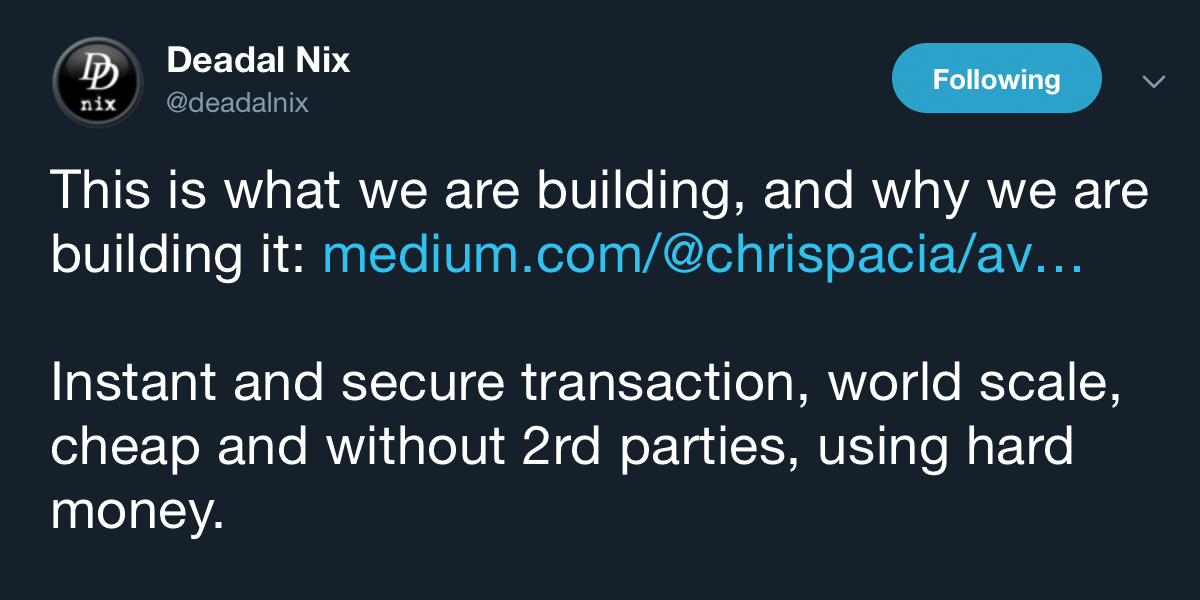
Over the last couple of weeks, the Bitcoin Cash (BCH) community has been talking fervently about zero-confirmation transactions and a new pre-consensus mechanism called Avalanche. On Monday, Openbazaar developer Chris Pacia published a comprehensive description of the pre-consensus protocol that could theoretically bolster secure zero-confirmation BCH transactions.

Also read: Onegold Customers Can Now Purchase Digital Bullion With Bitcoin

A Pre-Consensus Concept Called Avalanche Could Bolster Zeroconf BCH Transactions

BCH Devs Discuss Securing Instant Transactions With the Avalanche Protocol
Chris Pacia.

Since the hard fork in November, BCH developers have been exploring an idea called Avalanche, a concept that could hypothetically add a double-spend protection mechanism to zero-confirmation transactions. These types of instant transactions are broadcast to the network before they are confirmed and some people believe there is still an open double-spend attack vector for unconfirmed transactions. Essentially, Chris Pacia’s recent post, called “Making Zeroconf Secure”, describes how the Avalanche protocol could protect unconfirmed transactions by having a group of participating nodes come to pre-consensus.

“Avalanche is a new consensus protocol that was first introduced earlier this year — It provides a novel way for nodes on a network to choose between two conflicting transactions and come to a consensus about which one should be included in the next block,” explained Pacia.

The Openbazaar developer continued:

Using Avalanche in Bitcoin Cash for miner coordination provides a very elegant, decentralized coordination mechanism that can potentially prevent miners from accepting double spend bribes and when combined with double spend notifications, make zeroconf transactions very secure.

BCH Devs Discuss Securing Instant Transactions With the Avalanche Protocol

Proof-of-Work: The Anti-Sybil Mechanism

The developer further explained that each node participating in the pre-consensus method will query or poll each other in order to validate the transaction. However, rather than using nodes that can be easily ‘sybiled,’ the Avalanche system would use the pools of BCH miners already securing the network. In a sybil attack, nodes in a network are easily spoofed and the software is hijacked by a variety of manipulative phony nodes.  

“Proof-of-work is used as the anti-sybil mechanism. The miners of the last 100 blocks form the consensus group and participate in Avalanche. This is a rolling membership group. Each new block a new miner is added to the group and the miner who mined block n-100 gets booted,” Pacia detailed in his post.

BCH Devs Discuss Securing Instant Transactions With the Avalanche Protocol

The Avalanche discussion heated up even more so when a video demonstration and a descriptive editorial was published showing an alleged double-spend vector on the BSV network. A BCH proponent named Reizu confessed, “I’ve done many double-spends on the Bitcoin SV network.” Pacia believes the BCH network, on the other hand, is very close to making zero confirmation transactions secure. The Openbazaar developer believes there’s a better solution to the problem than orphaning blocks and suing people when things go wrong.

“The difference in the quality of research, proposal, and implementation between BCH and BSV really isn’t even comparable,” Pacia concluded.

What do you think about the Avalanche protocol and pre-consensus methods? Let us know what you think in the comments section below.


Images via Shutterstock, Twitter, and Pixabay. 


Need to calculate your bitcoin holdings? Check our tools section.   

The post BCH Devs Discuss Securing Instant Transactions With the Avalanche Protocol appeared first on Bitcoin News.

from Bitcoin News https://ift.tt/2QMz3SP BCH Devs Discuss Securing Instant Transactions With the Avalanche Protocol

#USA YayPay raises $8.4 million for its accounts receivable service

//

Fintech startup YayPay just raised another $8.4 million for its software-as-a-service solution focused on collecting money from outstanding invoices. The company participated in TechCrunch’s Startup Battlefield.

Information Venture Partners led today’s funding round with existing investors Birchmere, QED, Fifth Third Capital, Gaingels and 500 Fintech Fund also participating.

YayPay targets large companies with an accounting department. The startup provides the perfect service to handle unpaid invoices. YayPay analyzes previous invoices and predicts when you’re supposed to get paid depending on the client and the nature of the invoice. This way, you know which account needs your attention right now.

Teams can collaborate to send reminders and make sure everyone is on the same page. You can also view information about your client directly in YayPay thanks to CRM and ERP integrations.

YayPay also eliminates a bunch of pesky tasks, such as gentle email reminders. You can create automated workflows so that your clients get an email a few days before a payment deadline. If they don’t open the email, you can receive a notification telling you to call them. Customers can also pay invoices directly using YayPay. The platform supports ACH and credit cards.

While this seems like a niche product, the company has managed to attract 480 clients who have generated over $7 billion in accounts receivables. This represents a 500 percent user base increase over the last 12 months.


from Startups – TechCrunch https://ift.tt/2BdJyEW

#USA Accenture will acquire digital ad company Adaptly

//

Accenture announced today that it’s reached an agreement to acquire Adaptly.

The digital advertising company launched in 2010 with self-serve tools for running ads across different social networks. In a blog post about the acquisition, co-founder and CEO Nikhil Sethi wrote that the company’s mission hasn’t changed, but it has expanded to support Google and Amazon’s ad platforms, while also introducing “several creative technology solutions that make our media buying work harder.”

While Adaptly has mostly stayed out of the headlines for the past few years, the company now has nearly 150 employees and works with advertisers like Chico’s, Mazda, Prudential and Sprint. Once the deal closes, it will become part of the Accenture’s digital marketing arm, Accenture Interactive Operations.

“As new consumer experiences emerge and new digital platforms are born, our mission has always been to help brands connect with people in new and powerful ways,” Sethi said in the acquisition release, adding, “Being a part of Accenture is really exciting as, together, we’ll have an amazing opportunity to supercharge our key platform partnerships, drive more transparency and effectiveness for our clients, and enable them to deliver more relevant, high impact experiences.”

The financial terms of the acquisition were not disclosed. It looks like Adaptly hasn’t raised outside funding (or at least hasn’t announced any funding) from investors since 2012. Those investors include Valhalla Partners, Time Warner Investments, First Round Capital, Charles River Ventures and Lerer Hippeau.

from Startups – TechCrunch https://ift.tt/2GdwRjp

#USA Accenture will acquire digital ad company Adaptly

//

Accenture announced today that it’s reached an agreement to acquire Adaptly.

The digital advertising company launched in 2010 with self-serve tools for running ads across different social networks. In a blog post about the acquisition, co-founder and CEO Nikhil Sethi wrote that the company’s mission hasn’t changed, but it has expanded to support Google and Amazon’s ad platforms, while also introducing “several creative technology solutions that make our media buying work harder.”

While Adaptly has mostly stayed out of the headlines for the past few years, the company now has nearly 150 employees and works with advertisers like Chico’s, Mazda, Prudential and Sprint. Once the deal closes, it will become part of the Accenture’s digital marketing arm, Accenture Interactive Operations.

“As new consumer experiences emerge and new digital platforms are born, our mission has always been to help brands connect with people in new and powerful ways,” Sethi said in the acquisition release, adding, “Being a part of Accenture is really exciting as, together, we’ll have an amazing opportunity to supercharge our key platform partnerships, drive more transparency and effectiveness for our clients, and enable them to deliver more relevant, high impact experiences.”

The financial terms of the acquisition were not disclosed. It looks like Adaptly hasn’t raised outside funding (or at least hasn’t announced any funding) from investors since 2012. Those investors include Valhalla Partners, Time Warner Investments, First Round Capital, Charles River Ventures and Lerer Hippeau.

from Startups – TechCrunch https://ift.tt/2GdwRjp

#USA Accenture will acquire digital ad company Adaptly

//

Accenture announced today that it’s reached an agreement to acquire Adaptly.

The digital advertising company launched in 2010 with self-serve tools for running ads across different social networks. In a blog post about the acquisition, co-founder and CEO Nikhil Sethi wrote that the company’s mission hasn’t changed, but it has expanded to support Google and Amazon’s ad platforms, while also introducing “several creative technology solutions that make our media buying work harder.”

While Adaptly has mostly stayed out of the headlines for the past few years, the company now has nearly 150 employees and works with advertisers like Chico’s, Mazda, Prudential and Sprint. Once the deal closes, it will become part of the Accenture’s digital marketing arm, Accenture Interactive Operations.

“As new consumer experiences emerge and new digital platforms are born, our mission has always been to help brands connect with people in new and powerful ways,” Sethi said in the acquisition release, adding, “Being a part of Accenture is really exciting as, together, we’ll have an amazing opportunity to supercharge our key platform partnerships, drive more transparency and effectiveness for our clients, and enable them to deliver more relevant, high impact experiences.”

The financial terms of the acquisition were not disclosed. It looks like Adaptly hasn’t raised outside funding (or at least hasn’t announced any funding) from investors since 2012. Those investors include Valhalla Partners, Time Warner Investments, First Round Capital, Charles River Ventures and Lerer Hippeau.

from Startups – TechCrunch https://ift.tt/2GdwRjp

#USA Accenture will acquire digital ad company Adaptly

//

Accenture announced today that it’s reached an agreement to acquire Adaptly.

The digital advertising company launched in 2010 with self-serve tools for running ads across different social networks. In a blog post about the acquisition, co-founder and CEO Nikhil Sethi wrote that the company’s mission hasn’t changed, but it has expanded to support Google and Amazon’s ad platforms, while also introducing “several creative technology solutions that make our media buying work harder.”

While Adaptly has mostly stayed out of the headlines for the past few years, the company now has nearly 150 employees and works with advertisers like Chico’s, Mazda, Prudential and Sprint. Once the deal closes, it will become part of the Accenture’s digital marketing arm, Accenture Interactive Operations.

“As new consumer experiences emerge and new digital platforms are born, our mission has always been to help brands connect with people in new and powerful ways,” Sethi said in the acquisition release, adding, “Being a part of Accenture is really exciting as, together, we’ll have an amazing opportunity to supercharge our key platform partnerships, drive more transparency and effectiveness for our clients, and enable them to deliver more relevant, high impact experiences.”

The financial terms of the acquisition were not disclosed. It looks like Adaptly hasn’t raised outside funding (or at least hasn’t announced any funding) from investors since 2012. Those investors include Valhalla Partners, Time Warner Investments, First Round Capital, Charles River Ventures and Lerer Hippeau.

from Startups – TechCrunch https://ift.tt/2GdwRjp

#USA Accenture will acquire digital ad company Adaptly

//

Accenture announced today that it’s reached an agreement to acquire Adaptly.

The digital advertising company launched in 2010 with self-serve tools for running ads across different social networks. In a blog post about the acquisition, co-founder and CEO Nikhil Sethi wrote that the company’s mission hasn’t changed, but it has expanded to support Google and Amazon’s ad platforms, while also introducing “several creative technology solutions that make our media buying work harder.”

While Adaptly has mostly stayed out of the headlines for the past few years, the company now has nearly 150 employees and works with advertisers like Chico’s, Mazda, Prudential and Sprint. Once the deal closes, it will become part of the Accenture’s digital marketing arm, Accenture Interactive Operations.

“As new consumer experiences emerge and new digital platforms are born, our mission has always been to help brands connect with people in new and powerful ways,” Sethi said in the acquisition release, adding, “Being a part of Accenture is really exciting as, together, we’ll have an amazing opportunity to supercharge our key platform partnerships, drive more transparency and effectiveness for our clients, and enable them to deliver more relevant, high impact experiences.”

The financial terms of the acquisition were not disclosed. It looks like Adaptly hasn’t raised outside funding (or at least hasn’t announced any funding) from investors since 2012. Those investors include Valhalla Partners, Time Warner Investments, First Round Capital, Charles River Ventures and Lerer Hippeau.

from Startups – TechCrunch https://ift.tt/2GdwRjp

#USA Tigera raises $30M Series B for its Kubernetes security and compliance platform

//

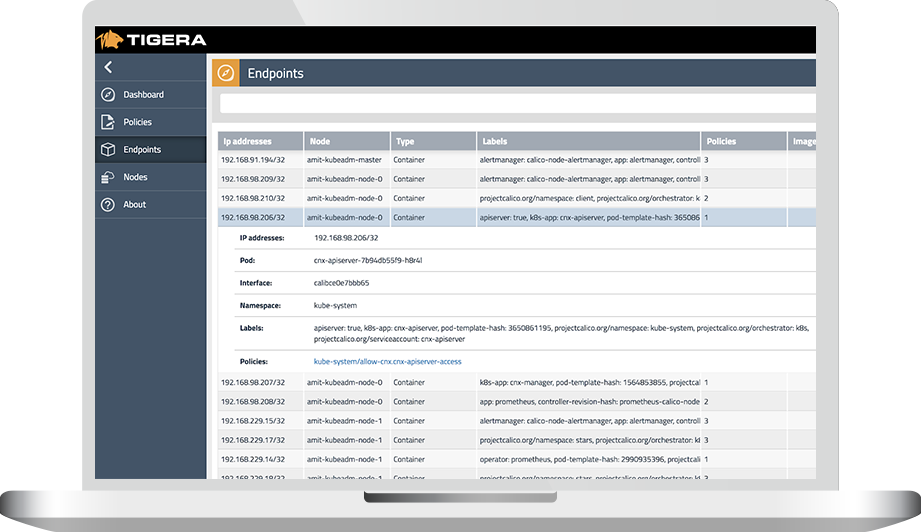
Tigera, a startup that offers security and compliance solutions for Kubernetes container deployments, today announced that it has raised a $30 million Series B round led by Insight Partners. Existing investors Madrona, NEA and Wing also participated in this round.

Like everybody in the Kubernetes ecosystem, Tigera is exhibiting at KubeCon this week, so I caught up with the team to talk about the state of the company and its plans for this new raise.

“We are in a very exciting position,” Tigera president and CEO Ratan Tipirneni told me. “All the four public cloud players [AWS, Microsoft Azure, Google Cloud and IBM Cloud] have adopted us for their public Kubernetes service. The large Kubernetes distros like Red Hat and Docker are using us.” In addition, the team has signed up other enterprises, often in the healthcare and financial industry, and SaaS players (all of which it isn’t allowed to name) that use its service directly.

The company says that it didn’t need to raise right now. “We didn’t need the money right now, but we had a lot of incoming interest,” Tipirneni said. The company will use the funding to expand its engineering, marketing and customer success teams. In total, it plans to quadruple its sales force. In addition, it plans to set up a large office in Vancouver, Canada, mostly because of the availability of talent there.

In the legacy IT world, security and compliance solutions could rely on the knowledge that the underlying infrastructure was relatively stable. Now, though, with the advent of containers and DevOps, workloads are highly dynamic, but that also makes the challenge of securing them and ensuring compliance with regulations like HIPAA or standards like PCI more complex, too. The promise of Tigera’s solution is that it allows enterprises to ensure compliance by using a zero-trust model that authorizes each service on the network, encrypts all the traffic and enforces the policies the admins have set for their company and needs. All of this data is logged in detail and, if necessary, enterprises can pull it for incident management or forensic analysis. 

from Startups – TechCrunch https://ift.tt/2Gfn10h

#USA Future Family secures a $100M credit line to help more families with fertility care

//

West Owens, CFO and Claire Tomkins, CEO

West Owens, Future Family CFO, and Claire Tomkins, CEO

Future Family is a startup (and a Disrupt Startup Battlefield alum!) that helps families more easily afford fertility services like IVF and egg freezing. They work with fertility clinics to get the often unpredictable costs set in stone, then cover said costs and convert them into a more approachable monthly payment plan.

But covering those costs up front isn’t cheap, which lead to long waitlists for those looking to Future Family for help. With that in mind, the company has locked in a $100 million credit line to help them power through their waitlist and immediately offer their services to more people.

The capital is coming from Atalaya, a capital management firm that specializes in funding specialty finance companies like Future Family (or Point, a startup that provides capital to home buyers in exchange for equity in the home, in which Atalaya invested $150 million earlier this year.)

So what does this mean? Most immediately, it means that Future Family will be able to clear up its waitlists before moving on to offering same-day approval/financing to new customers.

Claire Tomkins founded Future Family after seeing for herself just how complicated and expensive the fertility care process could be. After spending hundreds of thousands of dollars on the fertility care involved with having her first child, she set out to make it less complicated and more accessible.

This news comes a little less than two months after Future Family raised $10 million in a Series A round. A few weeks before that, the company adjusted its model to work more like a monthly subscription than a loan, allowing additional costs (like genetic testing and travel) to be wrapped in should the need arise.

from Startups – TechCrunch https://ift.tt/2RV15ZJ