About Startup365

Chaque jour nous vous présenterons une nouvelle Startup française ! Notre pays regorge de talents et d'entrepreneurs brillants ! Alors partons à la découverte des meilleures startup françaises ! Certaines d'entre elles sont dans une étape essentielle dans la vie d'une startup : la recherche de financement, notamment par le financement participatif (ou crowdfunding en anglais). Alors participez à cette grande aventure en leur faisant une petite donation ! Les startups françaises ont besoin de vous !

#Blockchain Bitcoin History Part 3: Turning on the Faucet

Bitcoin History Part 3: Turning on the Faucet

With no exchanges, P2P marketplaces, or escrow services in Bitcoin’s earliest days, acquiring coins wasn’t easy. You either mined them or begged someone on the Bitcointalk forum to sell to you OTC. Then, along came a developer called Gavin Andresen who created a faucet that allowed anyone to claim free BTC.

Also read: Bitcoin History Part 1: In the Beginning

How Gavin Andresen Turned on the Tap for Bitcoin

Bitcoin History Part 3: Turning on the Faucet
Gavin Andresen

“For my first Bitcoin coding project, I decided to do something that sounds really dumb,” wrote Gavin Andresen. “I created a website that gives away bitcoins.” It was June 2010 and, in an era when obtaining BTC wasn’t easy, Andresen’s idea proved to be very smart. For the nascent cryptocurrency community to grow, it was essential that bitcoin be distributed as widely as possible. Only through having skin in the game, and sending and receiving BTC, would it be possible for people to understand Bitcoin and for it to grow from an idea into a global phenomenon.

Bitcoin faucets were the original airdrops, and Andresen’s was the first faucet. To begin with, it dispensed 5 BTC per visitor, each of whom was required to do nothing more than complete a captcha. The notion of receiving a king’s ransom in BTC for little more than visiting a webpage seems outlandish today, but back then, 5 BTC was worthless in dollar terms. “It only gives 5 coins [a day],” complained the second forum user to reply to Andersen’s post (the first was bitcoin pizza guy Laszlo). Satoshi was impressed though, enthusing:

Excellent choice of a first project, nice work. I had planned to do this exact thing if someone else didn’t do it, so when it gets too hard for mortals to generate 50BTC, new users could get some coins to play with right away.

To those who had the perspicacity to appreciate what they were taking from the tap, those bitcoins were priceless. A handful may have hodled, but the majority of claimants will have long since frittered their coins away on sites like Satoshidice and later Silk Road. Faucets such as Andresen’s were forerunners to the sort of websites where BTC could be exchanged for goods and services.

Bitcoin History Part 3: Turning on the Faucet
The webpage for Gavin Andresen’s bitcoin faucet

One thing that anyone revisiting the early Bitcointalk threads will note is the benevolence that pervaded: More than one individual found security holes in Andresen’s faucet, and one drained his wallet of BTC before kindly returning it and explaining how to patch the flaw. Through altruistic deeds such as these, bitcoin’s early adopters gave the cryptocurrency its value back then, placing community ahead of personal profit.

19,700 BTC Given Away

To fuel the first faucet, Andresen loaded it with 1,100 BTC of his own. After these were disbursed, the faucet was reloaded, with early bitcoin miners and whales also donating coins. “Bitcoins are a new kind of money,” explained Andresen’s faucet website. “They aren’t created or controlled by a government (like dollars or euros), they’re created and controlled by anybody who wants to be part of the Bitcoin payment network.”

“What’s the catch?” asked the last of the four questions on the developer’s website, to which came Andresen’s reply: “I want Bitcoin to be successful, so I created this little service to give you a few coins to start with.”

It’s fair to say that both Bitcoin and Andresen went on to overachieve in some style. By the time the faucet had dispensed its last coins in early 2011, 19,715 BTC had passed through Andresen’s wallet. Bitcoin, meanwhile, was on the way to its first parabolic price spike, mainstream media coverage, political censure, and a world of adventure. But those are all tales for another time in Bitcoin History.

Bitcoin History is a multipart series from news.Bitcoin.com charting pivotal moments in the evolution of the world’s first and finest cryptocurrency. Read part one here.


Images courtesy of Shutterstock.


Need to calculate your bitcoin holdings? Check our tools section.

The post Bitcoin History Part 3: Turning on the Faucet appeared first on Bitcoin News.

from Bitcoin News https://ift.tt/2B4b2gj Bitcoin History Part 3: Turning on the Faucet

#Blockchain Bipartisan Bitcoin Bills to Step up Consumer Protection in the U.S.

Two United States congressmen have introduced two pieces of legislation to help prevent alleged cryptocurrency price manipulation while aiming to position the U.S. at the forefront of innovation within the digital asset industry.

Also read: Chilean Court Rules in Favor of Closing Bank Accounts of Crypto Exchange Orionx

Protection From Price Manipulation

The Virtual Currency Consumer Protection Act of 2018 and the U.S. Virtual Currency Market and Regulatory Competitiveness Act of 2018 task U.S. financial regulators with researching means to protect retail investors from price manipulation, while staking the global economic powerhouse’s share in the evolving financial technology.

Bipartisan Bitcoin Bills to Step up Consumer Protection in the U.S.
Darren Soto

In a joint statement, congressmen Darren Soto, a democrat, and republican Ted Budd approvingly noted the potential of virtual currencies, and the technology that powers them, to facilitate economic growth as well as the need for security guarantees for users.

The lawmakers pointed out the need to “ensure that the United States is at the forefront of protecting consumers and the financial well-being of virtual currency investors, while also promoting an environment of innovation to maximize the potential of these technological advances.”

In terms of the two bills, the U.S. Commodity Futures Trading Commission (CFTC), which regulates futures and option markets, as well as other financial regulators will make critical recommendations on fine-tuning the regulatory environment for consumers and businesses.

The congressmen observed that the bills are particularly important following concerns raised in the New York Attorney General’s recent report on cryptocurrency exchanges, showing how they are prone to the risk of manipulation. The Wall Street Journal also recently detailed potentially abusive software, whereby bots can manipulate the price of bitcoin.

The representatives said:

The Virtual Currency Consumer Protection Act directs the CFTC to describe aspects of how price manipulation could happen in virtual markets and then to make recommendations for regulatory changes that can improve the CFTC’s monitoring procedures in preventing price manipulation.

Driving Innovation

The second bill, titled the U.S. Virtual Currency Market and Regulatory Competitiveness Act of 2018, seeks to keep the U.S. at the cutting edge of blockchain technology. The bill directs the CFTC to run a comparative study of the regulation of virtual currency in other countries and then table recommendations for the U.S.

Bipartisan Bitcoin Bills to Step up Consumer Protection in the U.S.

Based on the CTFC’s recommendations, the U.S. will craft for regulatory changes to promote competitiveness in the industry, with a view of providing regulatory clarity and bringing in alternatives to cumbersome regulations that may be currently discouraging innovation in virtual currencies.

“For example, it asks the CFTC to clarify the virtual currencies that qualify as commodities and examine the costs and benefits of a new, optional regulatory structure that could replace the current state money transmission system,” the congressmen explained in their statement.

What do you think about the planned legislation on crypto in the U.S.? Let us know in the comments section below.


Images courtesy of Shutterstock.


Express yourself freely at Bitcoin.com’s user forums. We don’t censor on political grounds. Check forum.Bitcoin.com.

The post Bipartisan Bitcoin Bills to Step up Consumer Protection in the U.S. appeared first on Bitcoin News.

from Bitcoin News https://ift.tt/2rstbA0 Bipartisan Bitcoin Bills to Step up Consumer Protection in the U.S.

#Blockchain Brazillian Bitcoin Exchange Sends User $35M in Bug-Induced Error

Brazillian Bitcoin Exchange Sends User $35M in Bug-Induced Error

Accidental millionaire Kaique Nunes has a bug to thank after his withdrawal request of 500 reals ($128) erroneously returned a cool 137 million reals ($35.13 million) from Brazilian bitcoin exchange Bitcambio. Nunes was not too eager to part with his overnight millions when Bitcambio started contacting to effect a reversal of the transaction, suspecting an elaborate scam.

Also read: Coinbase Opens Door to More Than 30 New Cryptocurrencies

Fortune Bugs a Man’s Account

Brazillian Bitcoin Exchange Sends User $35M in Bug-Induced Error

The Brazilian walked into his fortune last month when he drafted an order for $128, and the facility responsible for the automatic computation of transactions landed him the nine-figure bug-induced surprise. The company has already cancelled the transaction but, given its unwieldy size, local authorities insisted on getting the customer’s written agreement first.

“Earlier last month, I issued some normal draft orders. After a while, Bitcambio called to let me know that they had issued all this value and that they needed me to recognize a document in a notary’s office. I thought it was a coup,” Nunes told local publication Portal do Bitcoin.

For him, the call could have been anything, from a scammer worming his way into a signature, to an employee at the digital asset exchange supposedly trying his hands on easy money. But Bitcambio was determined to have its own back so its workers remained on Nunes’ case, explaining to him the importance of the reversal procedure.

“They said that they had already canceled, but that to complete the process it was necessary to go to the registry office, to recognize the signature and a document that they sent by email,” Nunes was quoted in the article as saying.

But he had his own ways to tell whether he was not being phished – not a bad idea considering the ubiquity of elaborately coined ruses about sudden fortunes, used to manipulate would-be helpers into giving up signatures and pass codes.

‘A Mistake Really Happened’

Brazillian Bitcoin Exchange Sends User $35M in Bug-Induced Error

On Dec. 4, Nunes posted on Bitcambio platform vendor Rodrigo Souza’s page, and a mutual group where he is an administrator, seeking clarification on the issue. Souza put it down to a mistake and promised Nunes that he would be compensated for committing his time and travelling for the rectification of the problem. Souza’s company Blinktrade provided the software on the exchange.

“People, the mistake really happened. Kaique will be reimbursed for all the costs he has to go to the notary’s office to solve this shit. Note [it] is already being canceled,” Souza posted. He took responsibility for the mistake and committed to resolving it. “At Bitcambio everything is done strictly within the law. Mistakes happen, we are not afraid to have their attention.”

Speaking to Portal do Bitcoin, Souza said efforts to get the bug-induced transaction had not gone through as client verification was required, except in the case of a lower value. Nunes has since agreed to help with the reversal and hopes the revenue service will not trouble him.

What do you think about Bitcambio’s monumental error? Let us know in the comments section below.


Images courtesy of Shutterstock and Coinbase.


Need to calculate your bitcoin holdings? Check our tools section.

The post Brazillian Bitcoin Exchange Sends User $35M in Bug-Induced Error appeared first on Bitcoin News.

from Bitcoin News https://ift.tt/2rpGocT Brazillian Bitcoin Exchange Sends User $35M in Bug-Induced Error

#Blockchain ‘Crypto Crisis’ Mining Simulator Lets Players Relive the Last 10 Years of Bitcoin

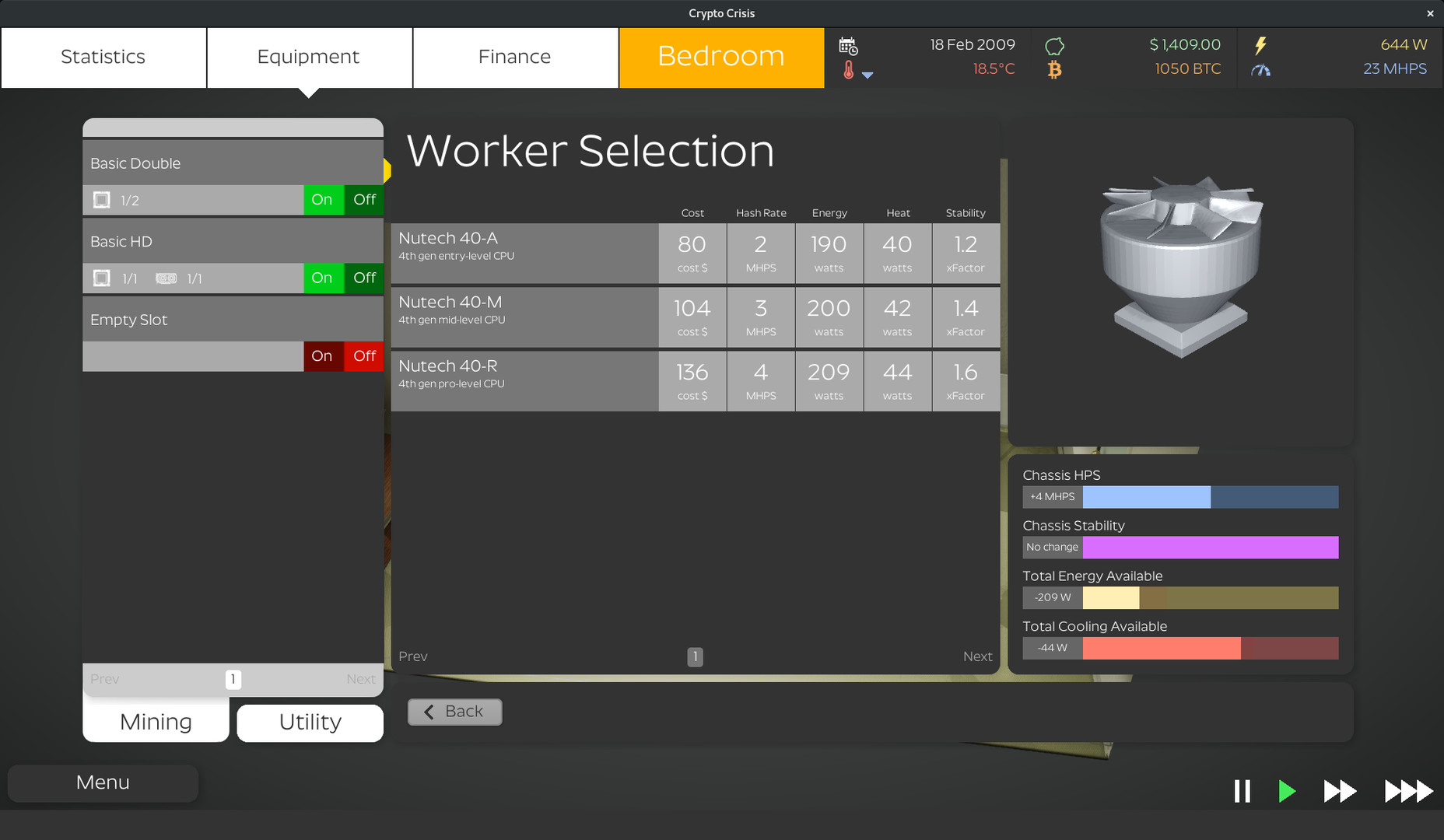
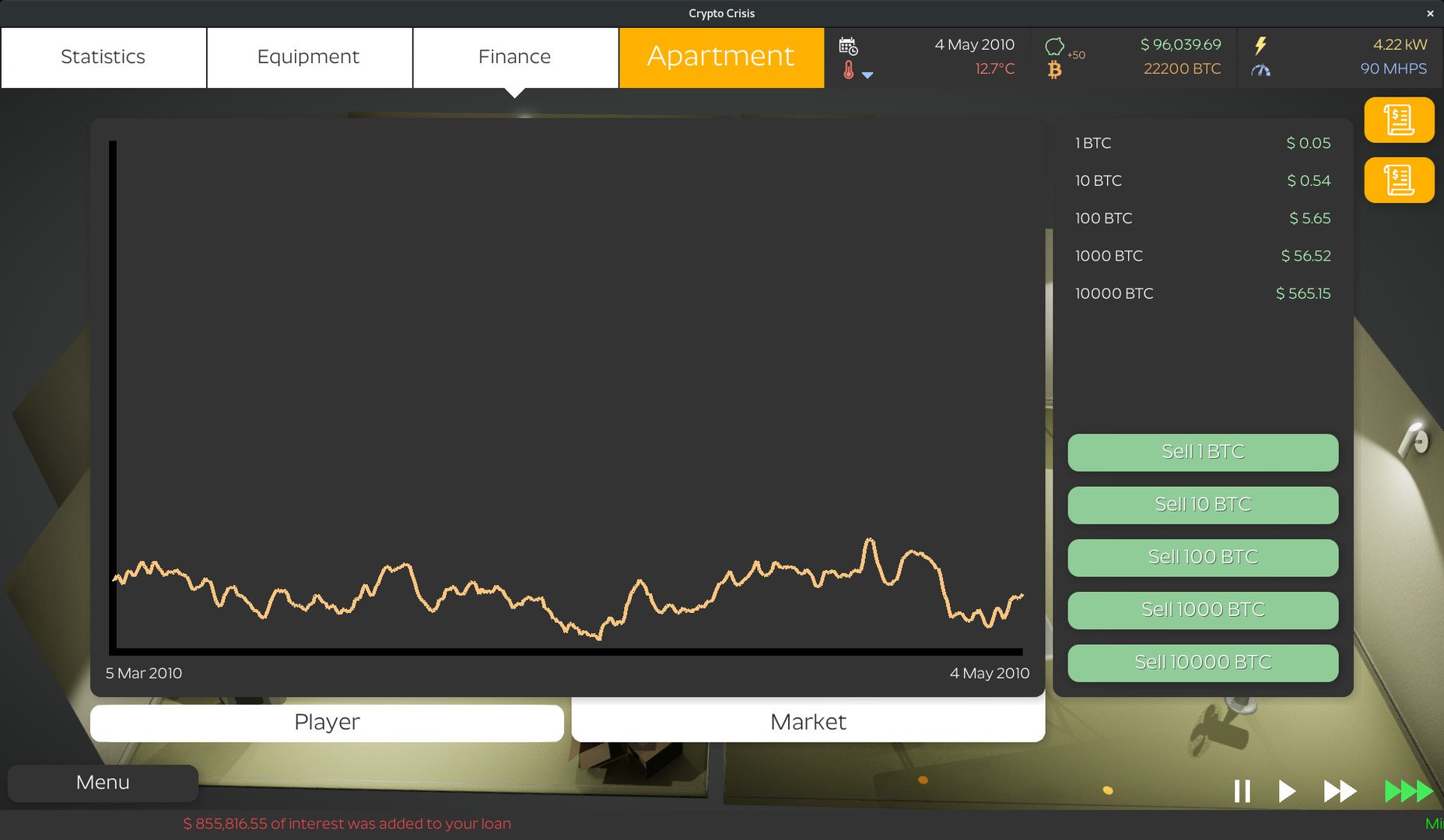
In October, an early access game called Crypto Crisis was released on the digital distribution platform Steam. The recently launched title rewinds time to the year 2009 and lets players mine coins on a simulation of the Bitcoin network by utilizing historical data from the last decade.

Also read: Indian Supreme Court Moves Crypto Hearing, Community Calls for Positive Regulations

Simulated Bitcoin Mining Operations  

'Crypto Crisis' Mining Simulator Lets Players Relive the Last 10 Years of BitcoinThe new simulator game, designed by Armoured Beans, allows players to relive a “closely simulated” version of the Bitcoin network. Essentially Crypto Crisis players spawn back in 2009 and start a mining operation while improving mining equipment and selling bitcoins throughout the duration of the game. Crypto Crisis was released as an early access game, which means it’s currently incomplete, but players can still try the game as it develops. On Nov. 16 and 28 Armoured Beans published two major updates which improved the game’s maps system and added new models for utility equipment.
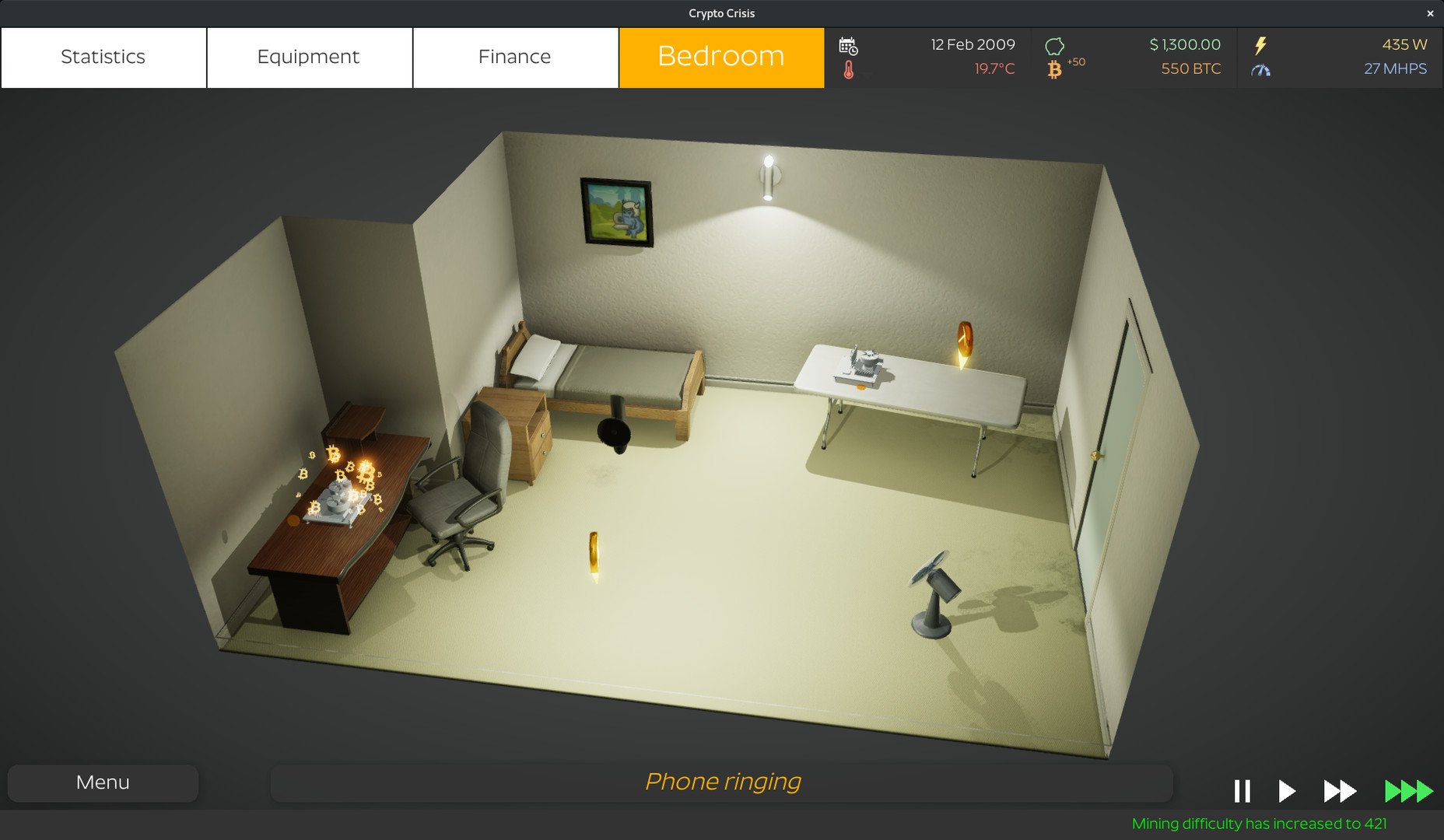
“[You] have fallen into debt with very little to your name, and you decide to start Bitcoin mining to turn your life around — Compete for and increase your share of block rewards by building and upgrading your mining rigs while carefully managing your resources,” explains the developer’s summary of the game.

'Crypto Crisis' Mining Simulator Lets Players Relive the Last 10 Years of Bitcoin

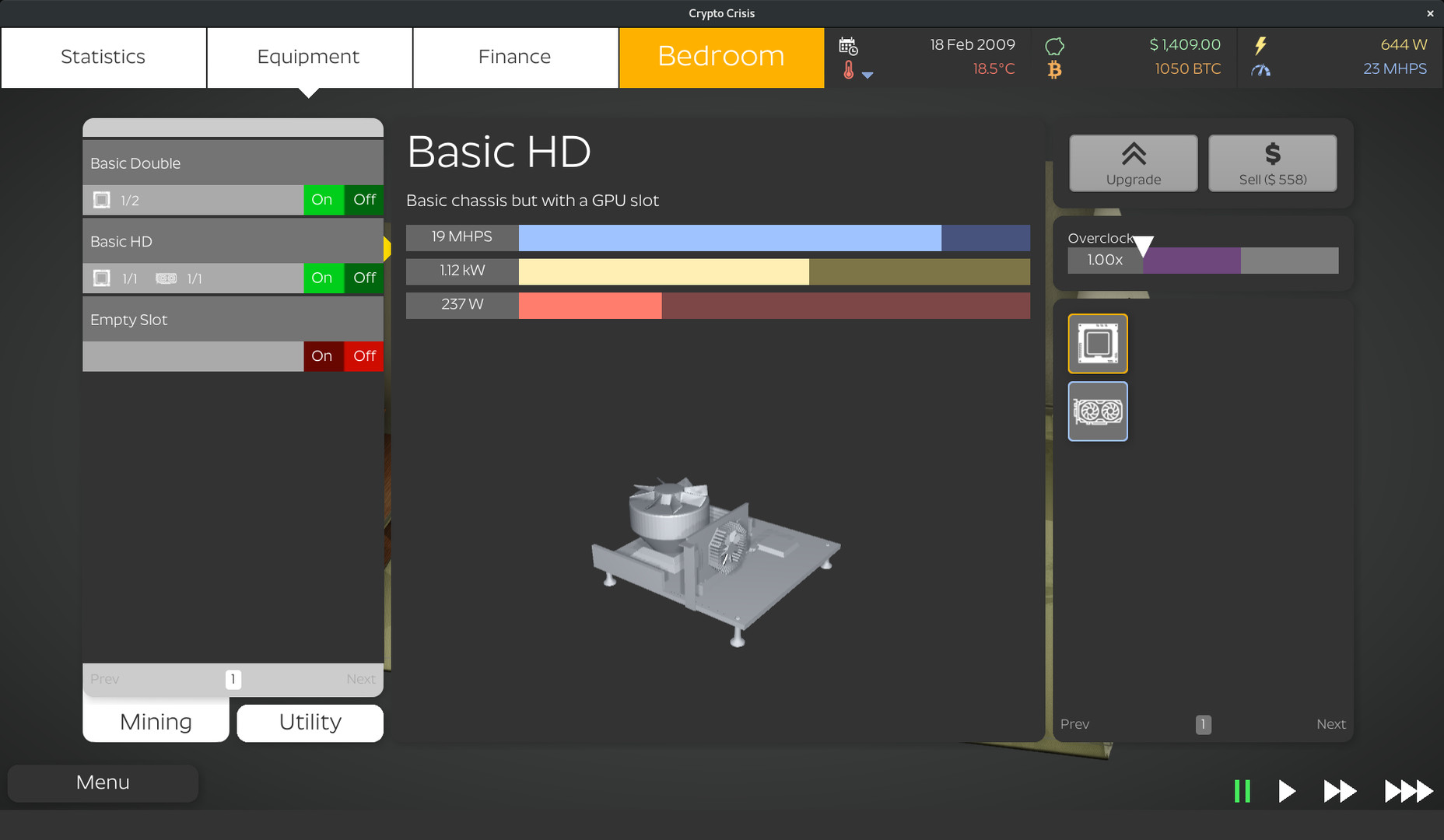
The Bitcoin-infused game is very similar to simulators like Sid Meier’s “Civilization” and Will Wright’s “Sims.” Instead of conquering the world or attracting all the babes at a Sims party, Crypto Crisis users manage energy consumption, data facilities, and their mining rig’s heat output. As the game progresses, players slowly improve their mining operations by unlocking new maps and additional space in order to accumulate more bitcoin miners.

Just like in the early days, when everyone could mine, the game starts you off with a basic central processing unit (CPU) to mine coins. Not long after that, players can upgrade to graphics processing units (GPU) and then facilities full of next-generation application-specific integrated circuit (ASIC) machines.

'Crypto Crisis' Mining Simulator Lets Players Relive the Last 10 Years of Bitcoin

Reset and Start Over

At the moment there are four 3D maps available to play and over 20 different mining chassis types. There’s also a wide variety of rigs to choose from alongside more than 170 CPU, GPU, and ASIC parts. Besides dealing with buying and upgrading mining devices, users also have to deal with the cryptocurrency market. They must choose whether they hold the coins in order to gather more profit or sell them right away for immediate funding.

'Crypto Crisis' Mining Simulator Lets Players Relive the Last 10 Years of Bitcoin

Crypto Crisis users can also rank up while they play the mining simulation, with rankings logged on the Steam leaderboards. Developers recommend about 1 GB of storage space and at least 768 MB to 1 GB of random-access memory (RAM) for the game to run fluidly. According to Crypto Crisis reviews, Steam players seem to be enjoying the early access game development so far.

'Crypto Crisis' Mining Simulator Lets Players Relive the Last 10 Years of Bitcoin

One player says it’s a fun game but he’s restarted back to 2009 over 17 times because he “can’t figure out how to make enough money to stay afloat.” Another player attempting to rule the virtual mining world started off well only to find that the game was prone to freezing during play.

“Actually quite enjoy this game — I have played quite a few opening scenarios to determine the best path and I finally settled on one that I have been quite successful at making money,” the player wrote. “Unfortunately, I just moved into the apartment and purchased my second 6kw generator and large A/C unit, when I selected my 3rd super gaming chassis, the system completely froze.”   

Getting to mine bitcoins back in 2009 is not so easy, unless you have a flying Delorean and a working flux capacitor. However, cryptocurrency fans can get a taste of what it was like with a historical simulator based on the most innovative money of our time. And unlike in real life, if players fail to become mining barons, they can always reset and start over.

What do you think about the game “Crypto Crisis?” Let us know what you think about this historical Bitcoin network simulator in the comments section below.

Disclaimer: Bitcoin.com does not endorse nor support any of these mentioned products/services/games. Readers should do their own due diligence before taking any actions related to the mentioned company or any of its affiliates or services. Bitcoin.com is not responsible, directly or indirectly, for any damage or loss caused or alleged to be caused by or in connection with the use of or reliance on any content, games, goods or services mentioned in this article.


Images via Shutterstock, Crypto Crisis, and Pixabay.


Need to calculate your bitcoin holdings? Check our tools section.

The post ‘Crypto Crisis’ Mining Simulator Lets Players Relive the Last 10 Years of Bitcoin appeared first on Bitcoin News.

from Bitcoin News https://ift.tt/2QJpgwM ‘Crypto Crisis’ Mining Simulator Lets Players Relive the Last 10 Years of Bitcoin

#Blockchain Bitcoin Address Illuminates Amsterdam’s Lights Festival

Bitcoin Address Illuminates Amsterdam’s Lights Festival

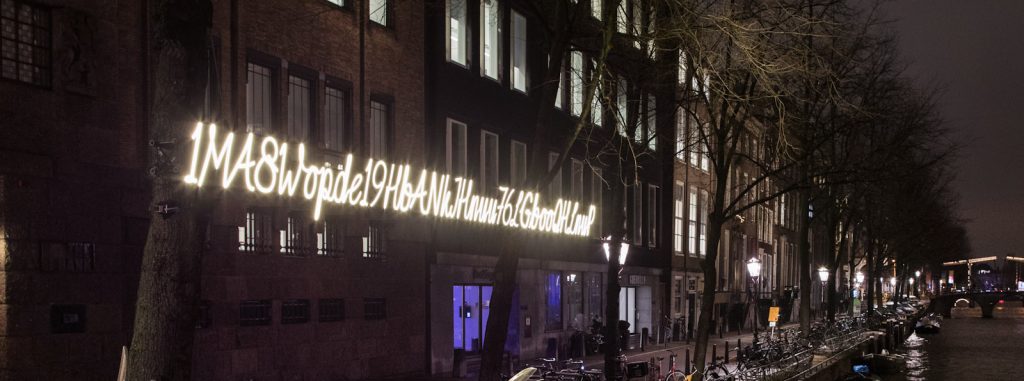
Residents of the Herengracht, one of Amsterdam’s most famous canalside streets, have been confronted by a curious combination of illuminated letters and numbers. The large 34-character display has provoked curiosity and more than a little confusion. Part of Amsterdam Light Festival, the gaudy installation is in fact a bitcoin address with a benevolent cause attached.

Also read: House of Nakamoto Opens in Amsterdam

Cryptographic Code Down by the Canal

Bitcoin Address Illuminates Amsterdam’s Lights Festival
Frederike Top

“Code” is the name of Frederike Top’s eye-catching contribution to Amsterdam Light Festival. The 37-year-old Dutch artist, who learned her craft in Utrecht, normally creates lamps, furniture and interior designs that are characterized by playfulness, often with an element of user interaction. In “Code”, Top has taken her artwork to the streets and scaled it up significantly to create a coruscating bitcoin address in the heart of the city’s tourist district.

The positioning of the artwork, affixed to the face of a former bank building, is no coincidence. As the Amsterdam Light Festival website explains, “Central control is no longer needed for digital transactions as opposed to the traditional financial world. Cryptocurrency is a real threat for governments and banks as Top highlights in her installation by positioning it in front of the enormous, closed former bank building.”

Bitcoin Address Illuminates Amsterdam’s Lights Festival

Charity in the City of Crypto

The BTC address used for the project, 1MA8Wopde19HbANkJHnuu76LGbooQHLnuP, which even contains the word “bank”, has an altruistic purpose: all contributions it receives will be donated to Huis van de Tijd, a foundation for elderly people with dementia. So far, 14 modest BTC donations have been made.

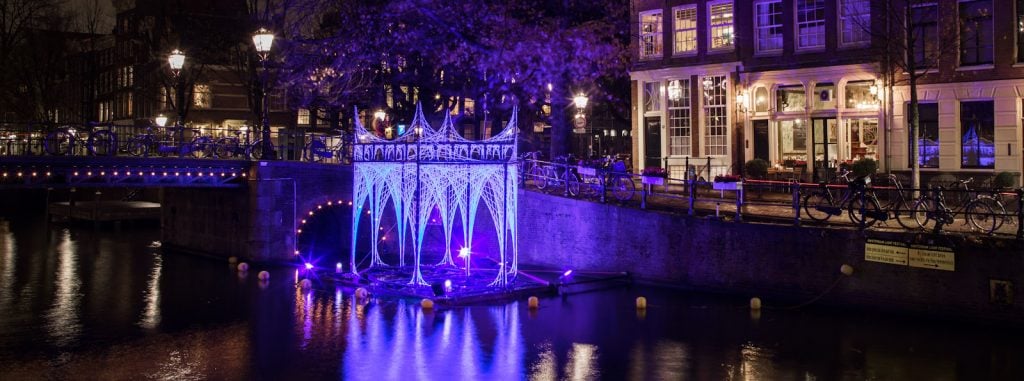
Amsterdam has a strong Bitcoin heritage, having housed its own Bitcoin Embassy since 2014. It also recently opened the House of Nakamoto, an information center and retail store for cryptocurrencies that features a Bitcoin museum. Frederike Top’s bitcoin address artwork can be seen as part of Amsterdam Light Festival until Jan 20, 2019. The seventh edition of the festival comprises 29 illuminated artworks and 10 city stories, with the lights switched on between 5 p.m. and 11 p.m. daily. Walking tours take visitors around the installations, which can also be viewed by bicycle or boat.

Bitcoin Address Illuminates Amsterdam’s Lights Festival
Amsterdam Light Festival

What are your thoughts on Bitcoin-themed artworks such as this? Do you think they help to raise awareness of cryptocurrency? Let us know in the comments section below.


Images courtesy of Amsterdam Light Festival.


Need to calculate your bitcoin holdings? Check our tools section.

The post Bitcoin Address Illuminates Amsterdam’s Lights Festival appeared first on Bitcoin News.

from Bitcoin News https://ift.tt/2G5NdKC Bitcoin Address Illuminates Amsterdam’s Lights Festival

#Blockchain Bitcoin Address Illuminates Amsterdam’s Lights Festival

Bitcoin Address Illuminates Amsterdam’s Lights Festival

Residents of the Herengracht, one of Amsterdam’s most famous canalside streets, have been confronted by a curious combination of illuminated letters and numbers. The large 34-character display has provoked curiosity and more than a little confusion. Part of Amsterdam Light Festival, the gaudy installation is in fact a bitcoin address with a benevolent cause attached.

Also read: House of Nakamoto Opens in Amsterdam

Cryptographic Code Down by the Canal

Bitcoin Address Illuminates Amsterdam’s Lights Festival
Frederike Top

“Code” is the name of Frederike Top’s eye-catching contribution to Amsterdam Light Festival. The 37-year-old Dutch artist, who learned her craft in Utrecht, normally creates lamps, furniture and interior designs that are characterized by playfulness, often with an element of user interaction. In “Code”, Top has taken her artwork to the streets and scaled it up significantly to create a coruscating bitcoin address in the heart of the city’s tourist district.

The positioning of the artwork, affixed to the face of a former bank building, is no coincidence. As the Amsterdam Light Festival website explains, “Central control is no longer needed for digital transactions as opposed to the traditional financial world. Cryptocurrency is a real threat for governments and banks as Top highlights in her installation by positioning it in front of the enormous, closed former bank building.”

Bitcoin Address Illuminates Amsterdam’s Lights Festival

Charity in the City of Crypto

The BTC address used for the project, 1MA8Wopde19HbANkJHnuu76LGbooQHLnuP, which even contains the word “bank”, has an altruistic purpose: all contributions it receives will be donated to Huis van de Tijd, a foundation for elderly people with dementia. So far, 14 modest BTC donations have been made.

Amsterdam has a strong Bitcoin heritage, having housed its own Bitcoin Embassy since 2014. It also recently opened the House of Nakamoto, an information center and retail store for cryptocurrencies that features a Bitcoin museum. Frederike Top’s bitcoin address artwork can be seen as part of Amsterdam Light Festival until Jan 20, 2019. The seventh edition of the festival comprises 29 illuminated artworks and 10 city stories, with the lights switched on between 5 p.m. and 11 p.m. daily. Walking tours take visitors around the installations, which can also be viewed by bicycle or boat.

Bitcoin Address Illuminates Amsterdam’s Lights Festival
Amsterdam Light Festival

What are your thoughts on Bitcoin-themed artworks such as this? Do you think they help to raise awareness of cryptocurrency? Let us know in the comments section below.


Images courtesy of Amsterdam Light Festival.


Need to calculate your bitcoin holdings? Check our tools section.

The post Bitcoin Address Illuminates Amsterdam’s Lights Festival appeared first on Bitcoin News.

from Bitcoin News https://ift.tt/2G5NdKC Bitcoin Address Illuminates Amsterdam’s Lights Festival

#Blockchain Bitcoin Address Illuminates Amsterdam’s Lights Festival

Bitcoin Address Illuminates Amsterdam’s Lights Festival

Residents of the Herengracht, one of Amsterdam’s most famous canalside streets, have been confronted by a curious combination of illuminated letters and numbers. The large 34-character display has provoked curiosity and more than a little confusion. Part of Amsterdam Light Festival, the gaudy installation is in fact a bitcoin address with a benevolent cause attached.

Also read: House of Nakamoto Opens in Amsterdam

Cryptographic Code Down by the Canal

Bitcoin Address Illuminates Amsterdam’s Lights Festival
Frederike Top

“Code” is the name of Frederike Top’s eye-catching contribution to Amsterdam Light Festival. The 37-year-old Dutch artist, who learned her craft in Utrecht, normally creates lamps, furniture and interior designs that are characterized by playfulness, often with an element of user interaction. In “Code”, Top has taken her artwork to the streets and scaled it up significantly to create a coruscating bitcoin address in the heart of the city’s tourist district.

The positioning of the artwork, affixed to the face of a former bank building, is no coincidence. As the Amsterdam Light Festival website explains, “Central control is no longer needed for digital transactions as opposed to the traditional financial world. Cryptocurrency is a real threat for governments and banks as Top highlights in her installation by positioning it in front of the enormous, closed former bank building.”

Bitcoin Address Illuminates Amsterdam’s Lights Festival

Charity in the City of Crypto

The BTC address used for the project, 1MA8Wopde19HbANkJHnuu76LGbooQHLnuP, which even contains the word “bank”, has an altruistic purpose: all contributions it receives will be donated to Huis van de Tijd, a foundation for elderly people with dementia. So far, 14 modest BTC donations have been made.

Amsterdam has a strong Bitcoin heritage, having housed its own Bitcoin Embassy since 2014. It also recently opened the House of Nakamoto, an information center and retail store for cryptocurrencies that features a Bitcoin museum. Frederike Top’s bitcoin address artwork can be seen as part of Amsterdam Light Festival until Jan 20, 2019. The seventh edition of the festival comprises 29 illuminated artworks and 10 city stories, with the lights switched on between 5 p.m. and 11 p.m. daily. Walking tours take visitors around the installations, which can also be viewed by bicycle or boat.

Bitcoin Address Illuminates Amsterdam’s Lights Festival
Amsterdam Light Festival

What are your thoughts on Bitcoin-themed artworks such as this? Do you think they help to raise awareness of cryptocurrency? Let us know in the comments section below.


Images courtesy of Amsterdam Light Festival.


Need to calculate your bitcoin holdings? Check our tools section.

The post Bitcoin Address Illuminates Amsterdam’s Lights Festival appeared first on Bitcoin News.

from Bitcoin News https://ift.tt/2G5NdKC Bitcoin Address Illuminates Amsterdam’s Lights Festival

#Blockchain USDT Volume Up Despite Tether’s Stablecoin Dominance Dropping

USDT Trade Volume Up Despite Drop in Tether's Stablecoin Dominance

The ongoing drama surrounding the opaque operations of Tether throughout 2018 has driven the proliferation of similar pegged currencies, leading to USDT’s dominance over the stablecoin markets waning. Despite this shift, USDT trade volume has risen 100 percent since tether’s dramatic decoupling from its dollar peg in October.

Also Read: Buffett Bet 2.0: Asset Manager Wagers Crypto Fund Will Beat S&P 500

Tether Loses Stablecoin Crown Amid Controversy

USDT Volume Up Despite Tether's Stablecoin Dominance DroppingAt the start of 2018, USDT accounted for approximately 94 percent of the entire stablecoin market. According to Diar, Tether’s dominance fell to 74 percent as of December 2018. As of this writing, Tether is the seventh largest cryptocurrency by market capitalization with a circulating supply of 1.85 billion USDT, down from over 2.8 billion on Oct. 7, 2018.

Continual speculation regarding the opaque nature of Tether’s operations and accounting, punctuated by a crash that saw the price of the so-called stablecoin drop to $0.88 on Oct. 15, paved the way for rival dollar-pegged cryptocurrencies to grow their market share. The major stablecoin competitors to emerge have been Trueusd (TUSD), Paxos Standard (PAX), Circle’s USD Coin (USDC), and Dai (DAI).

Tether Decoupling Drives Demand for Stablecoin Alternatives

USDT Volume Up Despite Tether's Stablecoin Dominance DroppingOn Oct. 14, one day before Tether’s dramatic decoupling from its dollar-peg, tether was the eighth largest market cap with a circulating supply of 2.66 billion USDT and a 24-hour volume of $2.02 billion.

The second largest stablecoin, trueusd, was then the 48th largest crypto by capitalization with a circulating supply of 135.3 million TUSD and a 24-hour volume of $11.75 million.

Dai comprised the 97th largest crypto with an outstanding supply of 60.8 million DAI and a 24-hour volume of $4.2 million, and paxos ranked 176th by market cap with a supply of 23.75 million PAX and a 24-hour volume of $21.3 million.

Data indicating the circulating supply of Circle’s USDC as of Oct. 14 could not be found, however, Coinmarketcap recorded USDC as having a market cap of approximately $24 million and 24-hour volume of roughly $1.2 million on Oct. 17.

USDT Supply Falls 30% in Two Weeks

USDT Volume Up Despite Tether's Stablecoin Dominance DroppingOn Oct. 28, roughly two weeks after USDT crashed to $0.88, tether still boasted the eighth largest market cap but the circulating supply of USDT had fallen by approximately 30 percent, with a 24-hour trade volume of $1.68 billion.

Meanwhile, the supply of trueusd had grown 30 percent to 175.45 million to rank as the 45th largest cryptocurrency by market cap, with $26.4 million worth of TUSD changing hands during the preceding 24 hours.

The supply of USDC had grown nearly 420 percent to rank it as the 58th largest crypto with 124.2 million outstanding tokens, but 24-hour volume had fallen to $642,196. Paxos had grown 305 percent to rank as the 69th largest capitalization with a supply of 96.1 million and a 24-hour volume of $24.8 million. The supply of dai had grown 9 percent to 66.5 million despite dai slipping one place to rank as the 98th largest crypto asset and 24-hour volume falling to $3.3 million.

Stablecoin Rankings Today

USDT Volume Up Despite Tether's Stablecoin Dominance DroppingAs of Dec. 7, trueusd is the 25th largest cryptocurrency by market cap with a circulating supply of over 200 million and a 24-hour volume of $52.5 million. USDC now closely follows, ranking 26th with a supply of nearly 181.2 million and a 24-hour volume of $25 million.
Paxos is currently the 27th largest crypto by capitalization with a circulating supply of 167.6 million, but boasts a larger 24-hour trade volume than its immediate competitors with $86.75 million.

Dai now ranks as the 63rd largest cryptocurrency despite its circulating supply falling by 54.7 million. $10.6 million of dai has changed hands in the last 24 hours.

Despite suffering a significant drop in circulating supply and dominance over the stablecoin markets, the 24-hour trade volume for USDT pairings has doubled since Tether’s brief decoupling from the dollar, and now stands at over $4 billion a day.

Do you think that USDT competitors will continue to gain stablecoin market dominance? Share your thoughts in the comments section below!


Images courtesy of Shutterstock


At Bitcoin.com there’s a bunch of free helpful services. For instance, have you seen our Tools page? You can even lookup the exchange rate for a transaction in the past. Or calculate the value of your current holdings. Or create a paper wallet. And much more.

The post USDT Volume Up Despite Tether’s Stablecoin Dominance Dropping appeared first on Bitcoin News.

from Bitcoin News https://ift.tt/2zMUCJt USDT Volume Up Despite Tether’s Stablecoin Dominance Dropping

#Blockchain Coinbase Opens the Door to More Than 30 New Cryptocurrencies

Coinbase has announced that it plans to list over 30 cryptocurrencies, with many more to follow. In its largest listing spree to date, the California-based exchange will add dozens of cryptocurrencies in the coming months, including dai, mana and neo. Moving forward, Coinbase ultimately plans to add over 90 percent of “all compliant digital assets.”

Also read: SEC to Decide Fate of Vaneck Solidx Bitcoin ETF by Late February

Coinbase Embarks on a Listing Blitz

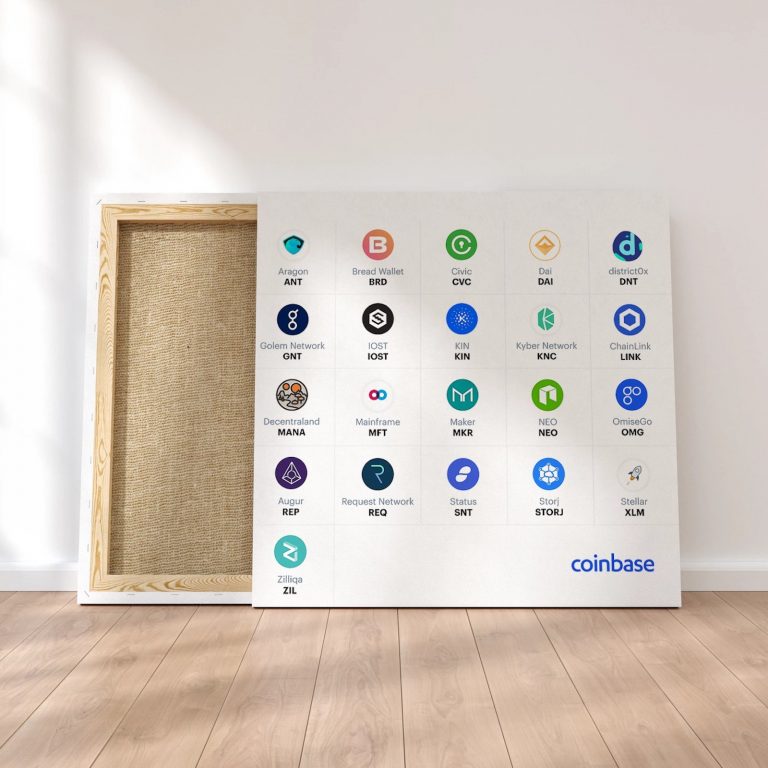
Coinbase Opens the Door to More Than 30 New CryptocurrenciesOn Dec. 7, Coinbase shared an ambitious plan to list scores of digital assets. The seven cryptocurrencies it currently supports, BCH, BTC, ETH, LTC, ETC, ZRX, and BAT, will soon be complemented by over 30 more. A company blog post explained: “Coinbase’s goal is to offer support for all assets that meet our standards and are fully compliant with local law. Over time, we intend to offer our customers access to greater than 90% of all compliant digital assets by market cap.”

While focused on ERC20 tokens, the listing blitz will also include assets operating on other networks such as NEO and XRP. Ripple’s native cryptocurrency had long been a source of speculation, with both the company and its token-holders eager for XRP to be added to the dominant U.S. exchange. While their wish will now come true, ripple will have to share the limelight with many other tokens scheduled to be added around the same time.

Coinbase to Compete With Token-Rich Exchanges Such as Binance

Coinbase Opens the Door to More Than 30 New CryptocurrenciesOne of the main drivers behind Coinbase’s aggressive listing policy will be the desire to claim a slice of the trading volume being absorbed by token-rich exchanges such as Binance, which operates 393 markets. Okex has 415 and Huobi 290 trading pairs. Coinbase made record profits last year, but its financials for 2018 will show a major drop in revenue as market conditions have reduced the appetite among retail investors for cryptocurrencies such as BTC, ETH, and BCH.

The full list of cryptocurrencies Coinbase has shortlisted for addition comprises cardano (ADA), aeternity (AE), aragon (ANT), bread (BRD), civic (CVC), dai (DAI), district0x (DNT), enjincoin (ENJ), EOS (EOS), golem network (GNT), iost (IOST), kin (KIN), kyber network (KNC), chainlink (LINK), loom network (LOOM), loopring (LRC), decentraland (MANA), mainframe (MFT), maker (MKR), NEO (NEO), omisego (OMG), poet (POE), quarkchain (QKC), augur (REP), request network (REQ), status (SNT), storj (STORJ), stellar (XLM), ripple (XRP), tezos (XTZ), and zilliqa (ZIL).

Coinbase Opens the Door to More Than 30 New Cryptocurrencies

“Some of these assets may become available everywhere, while others may only be supported in specific jurisdictions,” concluded the blog post. Coinbase Pro has since announced that it will begin accepting deposits for civic, district0x, loom, and mana ahead of trading commencing.

What are your thoughts on the 30 cryptocurrencies Coinbase intends to list? Let us know in the comments section below.


Images courtesy of Shutterstock and Coinbase.


Need to calculate your bitcoin holdings? Check our tools section.

The post Coinbase Opens the Door to More Than 30 New Cryptocurrencies appeared first on Bitcoin News.

from Bitcoin News https://ift.tt/2AZC2NP Coinbase Opens the Door to More Than 30 New Cryptocurrencies

#USA Nigerian logistics startup Kobo360 raises $6M, expands in Africa

//

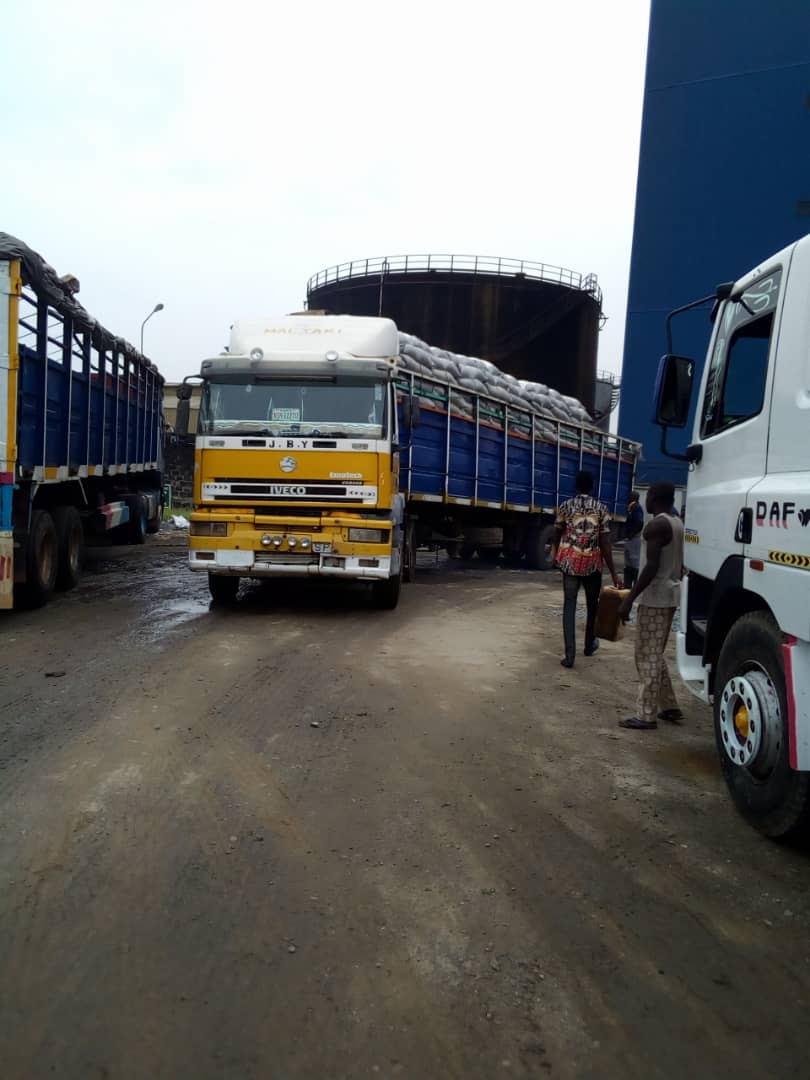
Nigerian trucking logistics startup Kobo360 has raised $6 million to upgrade its platform and expand operations to Ghana, Togo and Cote D’Ivoire.

The company — with an Uber -like app that connects truckers and companies with freight needs — gained the equity financing in an IFC led investment. The funding saw participation from others, including TLcom Capital and Y Combinator.

With the investment Kobo360 aims to become more than a trucking transit app.

“We started off as an app, but our goal is to build a global logistics operating system. We’re no longer an app, we’re a platform,” founder Obi Ozor told TechCrunch.

In addition to connecting truckers, producers and distributors, the company is building that platform to offer supply chain management tools for enterprise customers.

“Large enterprises are asking us for very specific features related to movement, tracking, and sales of their goods. We either integrate other services, like SAP, into Kobo or we build those solutions into our platform directly,” said Ozor.

Kobo360 will start by developing its API and opening it up to large enterprise customers.

“We want clients to be able to use our Kobo dashboard for everything; moving goods, tracking, sales, and accounting…and tackling their challenges,” said Ozor.

Kobo360 will also build more physical presence throughout Nigeria to service its business. “We’ll open 100 hubs before the end of 2019…to be able to help operations collect proof of delivery, to monitor trucks on the roads, and have closer access to truck owners for vehicle inspection and training,” said Ozor.

Kobo360 will add more warehousing capabilities, “to support our reverse logistics business”—one of the ways the company brings prices down by matching trucks with return freight after they drop their loads, rather than returning empty, according to Ozor.

Kobo360 will also use its $6 million investment to expand programs and services for its drivers, something Ozor sees as a strategic priority.

“The day you neglect your drivers you are not going to have a company, only issues. If Uber were more driver focused it would be a trillion dollar company today,” he said.

The startup offers drivers training and group programs on insurance, discounted petrol, and vehicle financing (KoboWin). Drivers on the Kobo360 app earn on average approximately $5000 per month, according to Ozor.

Under KoboCare, Kobo360 has also created an HMO for drivers and an incentive based program to pay for education. “We give school fee support, a 5000 Naira bonus per trip for drivers toward educational expenses for their kids,” said Ozor.

Kobo360 will complete limited expansion into new markets Ghana, Togo, and Cote D’Ivoire in 2019. “The expansion will be with existing customers, one in the port operations business, one in FMCG, and another in agriculture,” said Ozor

Ozor thinks the startup’s asset-free, digital platform and business model can outpace traditional long-haul 3PL providers in Nigeria by handling more volume at cheaper prices.

“Owning trucks is just too difficult to manage. The best scalable model is to aggregate trucks,” he told TechCrunch in a previous interview.

With the latest investment, IFC’s regional head for Africa Wale Ayeni and TLcom senior partner Omobola Johnson will join Kobo360’s board. “There’s a lot of inefficiencies in long-haul freight in Africa…and they’re building a platform that can help a lot of these issues,” said Ayeni of Kobo360’s appeal as an investment.

The company has served 900 businesses, aggregated a fleet of 8000 drivers and moved 155 million kilograms, per company stats. Top clients include Honeywell, Olam, Unilever, Dangote, and DHL.

MarketLine estimated the value of Nigeria’s transportation sector in 2016 at $6 billion, with 99.4 percent comprising road freight.

Logistics has become an active space in Africa’s tech sector with startup entrepreneurs connecting digital to delivery models. In Nigeria, Jumia founder Tunde Kehinde departed and founded Africa Courier Express. Startup Max.ng is wrapping an app around motorcycles as an e-delivery platform. Nairobi-based Lori Systems has moved into digital coordination of trucking in East Africa. And U.S.-based Zipline—who launched drone delivery of commercial medical supplies in partnership with the government of Rwanda and support of UPS—and is in “process of expanding to several other countries,” according to a spokesperson.

Kobo360 has plans for broader Africa expansion but would not name additional countries yet.

Ozor said the company is profitable, though the startup does not release financial results. Wale Ayeni also wouldn’t divulge revenue figures, but confirmed IFC’s did full “legal and financial due diligence on Kobo’s stats,” as part of the investment.

Ozor named Lori Systems as Kobo360’s closest African startup competitor.

On the biggest challenge to revenue generation, it’s all about service delivery and execution, according to Ozor.

“We already have volume and demand in the market. The biggest threat to revenues is if Kobo360’s platform doesn’t succeed in solving our client’s problems and bringing reliability to their needs,” he said.

from Startups – TechCrunch https://ift.tt/2AW6o3G