About Startup365

Chaque jour nous vous présenterons une nouvelle Startup française ! Notre pays regorge de talents et d'entrepreneurs brillants ! Alors partons à la découverte des meilleures startup françaises ! Certaines d'entre elles sont dans une étape essentielle dans la vie d'une startup : la recherche de financement, notamment par le financement participatif (ou crowdfunding en anglais). Alors participez à cette grande aventure en leur faisant une petite donation ! Les startups françaises ont besoin de vous !

#USA Facebook picks up retail computer vision outfit GrokStyle

//

If you’ve ever seen a lamp or chair that you liked and wished you could just take a picture and find it online, well, GrokStyle let you do that — and now the company has been snatched up by Facebook to augment its own growing computer vision department.

GrokStyle started as a paper — as AI companies often do these days — at 2015’s SIGGRAPH. A National Science Foundation grant got the ball rolling on the actual company, and in 2017 founders Kavita Bala and Sean Bell raised $2 million to grow it.

The basic idea is simple: matching a piece of furniture (or a light fixture, or any of a variety of product types) in an image to visually similar ones in stock at stores. Of course, sometimes the simplest ideas are the most difficult to execute. But Bala and Bell made it work, and it was impressive enough in action that IKEA on first sight demanded it be in the next release of its app. I saw it in action and it’s pretty impressive.

Facebook’s acquisition of the company (no terms disclosed) makes sense on a couple fronts: First, the company is investing heavily in computer vision and AI, so GrokStyle and its founders are naturally potential targets. Second, Facebook is also trying to invest in its marketplace, and using the camera as an interface for it fits right into the company’s philosophy.

One can imagine how useful it would be to be able to pull up the Facebook camera app, point it at a lamp you like at a hotel, and see who’s selling it or something like it on the site.

Facebook did not answer my questions regarding how GrokStyle’s tech and team would be used, but offered the following statement: “We are excited to welcome GrokStyle to Facebook. Their team and technology will contribute to our AI capabilities.” Well!

There’s an “exciting journey” message on GrokStyle’s webpage, so the old site and service is gone for good. But one assumes that it will reappear in some form in the future. I’ve asked the founders for comment and will update the post if I hear back.

from Startups – TechCrunch https://tcrn.ch/2DphXBK

#USA FDA chief summons Altria and JUUL to Washington to discuss teen vaping

//

The head of the U.S. Food and Drug Administration is calling Altria and Juul to meet in Washington to discuss their tie-up and how it impacts the companies’ plans to combat teen vaping. Earlier this year, Altria  href=”https://techcrunch.com/2018/12/20/juul-labs-gets-12-8-billion-investment-from-marlboro-maker-altria-group/”>invested $12.8 billion investment in Juul.

“After Altria’s acquisition of a 35 percent ownership interest in JUUL Labs, Inc., your newly announced plans with JUUL contradict the commitments you made to the FDA,” Commissioner Scott Gottlieb wrote in a strongly worded letter addressed to Altria chairman and chief executive, Howard A. Willard III.

“When we meet, Altria should be prepared to explain how this acquisition affects the full range of representations you made to the FDA and the public regarding your plans to stop marketing e-cigarettes and to address the crisis of youth use of e-cigarettes,” Gottlieb wrote.

The commissioner sent a similarly worded message to Juul’s chief executive, Kevin Burns.

As part of that deal, Juul is getting access to Altria’s retail shelf space; the company is sending out direct communications pitching Juul to adult smokers through cigarette pack inserts and mailings to the company’s database of customers; and the two will combine the power of their respective sales and distribution backend which reaches roughly 230,000 retailers across America.

The recent deal comes only months after Juul released its plan to combat teen vaping — something the FDA had required of the company.

In the commitments it made last year, the vape manufacturer and retailer said it would expand its secret shopper program to make sure underage buyers weren’t getting access to its products; pull its campaigns from social media; and limit sales of non-traditional cigarette flavors (menthol, mint, Virginia tobacco, and “classic” tobacco) to the company’s website — which requires age verification.

Gottlieb isn’t the only one who has a problem with Juul. We’ve written about how the company has lowered the barrier to entry for nicotine addiction.

For Gottlieb, the addition of Altria’s marketing firepower and network of 230,000 retail locations likely isn’t an indicator of a company that’s willing to winnow down access to its products.

“I am aware of deeply concerning data showing that youth use of JUUL represents a significant proportion of the overall use of e-cigarette products by children. I have no reason to believe these youth patterns of use are abating in the near term, and they certainly do not appear to be reversing,” Gottlieb wrote. “Manufacturers have an independent responsibility to take action to address the epidemic of youth use of their products. My office will contact you to arrange a meeting to discuss these issues. Pursuant to your request, we intend to schedule this as a joint meeting with both Altria and JUUL.”

from Startups – TechCrunch https://tcrn.ch/2DmADlE

#Blockchain Markets Update: Cryptocurrencies Gain Billions in Less Than an Hour

Markets Update: Cryptocurrencies Gain Billions in Less Than an Hour

Cryptocurrency prices have spiked significantly in value during afternoon trading sessions on Feb. 8. The entire market cap of the top digital assets recorded today has added over $15 billion in fiat value in just one hour.

Also Read: Public Transportation Across Argentina Can Now Be Paid With BTC

Cryptocurrency Markets Gain Billions in One Hour

Earlier today, news.Bitcoin.com reported on a slew of leading digital currency markets breaking the descending trendline since December 2017’s all-time high (ATH). Not too long after our markets update, the bearish price trend for most cryptocurrencies has started to show signs of reversing. At the moment the entire digital asset economy is worth roughly $120.5 billion and global trade volumes have spiked to $20 billion+ worth of 24-hour trades.

Markets Update: Cryptocurrencies Gain Billions in Less Than an Hour
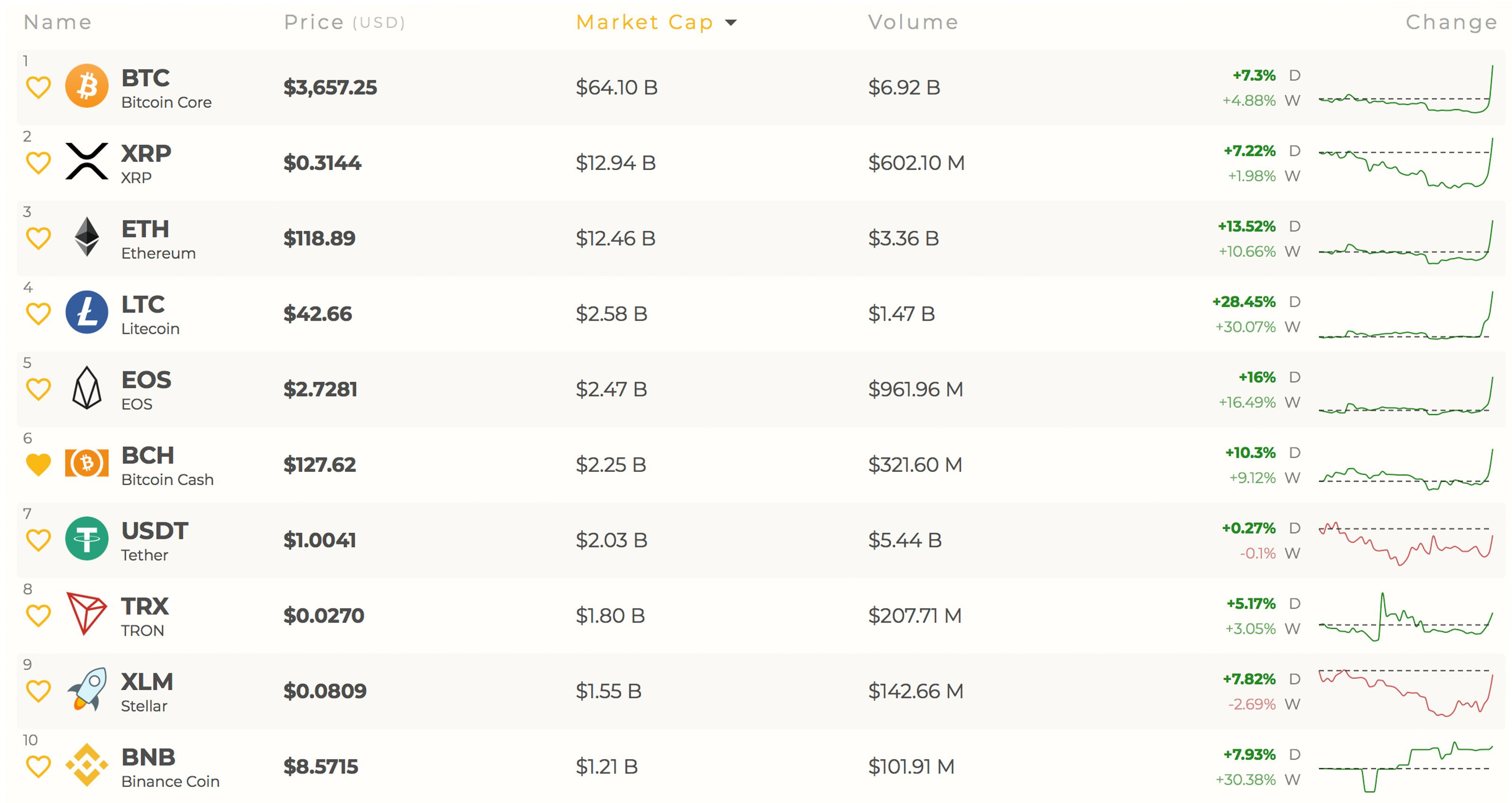
Top 10 digital assets according to Satoshi Pulse on Feb. 8, 2019, at 1:40 p.m. EST.

Bitcoin core (BTC) is currently trading for $3,657 per coin and has a market capitalization of $64 billion at the time of publication. 24-hour statistics show BTC has jumped 7.3% today in value so far, giving it a 4.8% lead in value for the last seven days. This is followed by ripple (XRP) markets, which are up 7.2% as each XRP is swapping for $0.31 a token. Ethereum (ETH) has jumped considerably seeing a 13.5% gain today with each ETH trading for $118 apiece. In a surprising move today, litecoin (LTC) jumped to the fourth largest market cap as the cryptocurrency has gained 28.4%. Each LTC is trading for $42 per coin at the time of writing. Lastly, eos (EOS) has seen a 16% increase over the last 24 hours and each coin is around $2.72.

Bitcoin Cash (BCH) Market Action

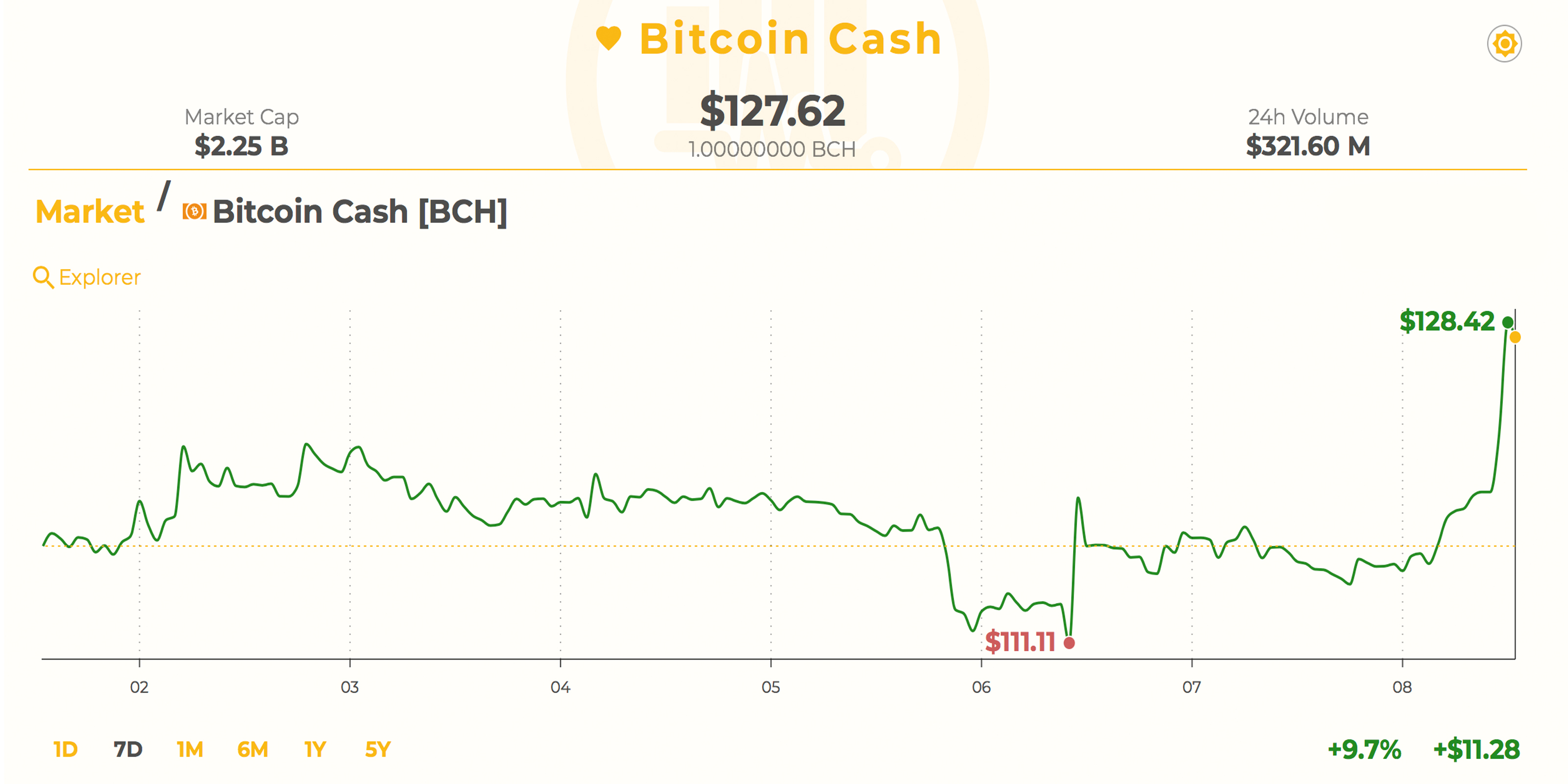
Bitcoin cash (BCH) markets are up over 10% today and 9.7% over the last seven days. At the moment, one BCH is trading for $128. The overall market valuation for BCH is around $2.27 billion and the cryptocurrency has about $306 million in trade volume. The top five exchanges trading the most BCH today are Lbank, Hitbtc, Fcoin, Huobi, and Coinbase. USDT is the strongest pair today against BCH and currently captures 32% of today’s trade. This is followed by ETH (29%), BTC (21.5%), USD (7.5%), and KRW (4.3%). Bitcoin cash today holds the seventh highest trade volume below XRP and above TRX.

Markets Update: Cryptocurrencies Gain Billions in Less Than an Hour
BCH/USD price 7-day on Feb. 8

BCH/USD Technical Indicators

Looking at the BCH/USD 4-hour chart on Poloniex and Kraken shows bitcoin cash bulls have pushed the price past heavy resistance much like most of the top coins. At press time the two Simple Moving Averages (SMA) are still spread, with the 200 SMA above the 100 SMA. This indicates the path toward the least resistance is still the downside. However, the two trendlines seem as though they will crossing hairs in the near future which would further solidify today’s gains if things reversed.

Markets Update: Cryptocurrencies Gain Billions in Less Than an Hour
BCH/USD 4-hour on Poloniex on Feb. 8

RSI levels are screaming oversold conditions on the 4-hour BCH/USD chart but this is true for most coins at the moment. After the initial jump in price, there’s been a slight correction but nothing too crazy. Order books show a bunch more resistance for BCH all the way until the $145 range and from there, things look a touch lighter. On the backside, lots of foundational support has formed and if bears attempt to grab the reins again then they will see pit stops between now and $110 again.

Markets Update: Cryptocurrencies Gain Billions in Less Than an Hour
BCH/USD 4-hour on Kraken on Feb. 8

Breaking the Descending Wedge and the Eventuality of a Bitcoin ETF

Many traders are curious about what will happen next after many of the top digital assets broke out of their descending wedges. Many coins tried to overcome resistance in the past and today’s daily spike shows a bullish engulfing candle on BCH, BTC, ETH, and many other charts. Traders and speculators are also talking about bitcoin exchange-traded funds (ETF) today. The commissioner at the U.S. Securities and Exchange Commission (SEC), Robert J. Jackson Jr., explained he believes an ETF will “eventually” happen. Jackson thinks that someone will satisfy the SEC’s regulatory standards. For now, today’s cryptocurrency trading session seem far brighter than the last two weeks and the faithful remain positive a change will come.

Where do you see the price of BCH, BTC, and other coins heading from here? Let us know in the comments below.

Disclaimer: Price articles and markets updates are intended for informational purposes only and should not to be considered as trading advice. Neither Bitcoin.com nor the author is responsible for any losses or gains, as the ultimate decision to conduct a trade is made by the reader. Always remember that only those in possession of the private keys are in control of the “money.”


Images via Shutterstock, Trading View, Bitstamp, Coinlib.io, and Satoshi Pulse.


Want to create your own secure cold storage paper wallet? Check our tools section.

The post Markets Update: Cryptocurrencies Gain Billions in Less Than an Hour appeared first on Bitcoin News.

from Bitcoin News http://bit.ly/2RPle2s Markets Update: Cryptocurrencies Gain Billions in Less Than an Hour

#USA How to prepare for an investment apocalypse

//

Unlike 2000 and 2008, everyone in the startup world is expecting a crash to come at any moment. But few are taking concrete steps to prepare for it.

If you’re running a venture-backed startup, you should probably get on that. First, go read RIP Good Times from Sequoia to get a sense for how bad it can get, quickly. Then take a look at the checklist below. You don’t need to build a bomb shelter, yet, but adopting a bit of the prepper mentality now will pay dividends down the road.

Don’t wait, prepare

The first step in preparing for a coming downturn is making a plan for how you’d get to a point of sustainability. Many startups have been lulled into a false sense of confidence that profit is something they can figure out “later.” Keep in mind, it has to be done eventually and it’s easier to do when the broader economy isn’t crashing around you. There are two complicating factors to keep in mind.

You’ll have to do it with less revenue

In a downturn, business customers skip investing in capital equipment and new software. Likewise, consumer discretionary spending goes way down. The result is you’ll likely have less revenue than you do now. War-game a variety of scenarios — what you’d do if you lost 20 percent, 50 percent or 80 percent of your revenue, and what decisions would have to be taken to survive.

Sometimes capital can’t be had at any valuation

When a downturn comes, capital markets don’t soften, they seize. Depending on how bad a hypothetical financial crisis got, there’s a good chance that investors would close up their checkbooks and triage. If you aren’t one of your investor’s favorite portfolio companies, there’s a decent chance you may be left in the cold. Don’t even assume you’ll be able to close a down round. Fortunately, showing a plan with a clear path to profitability will allay investors concerns that you’ll need their capital indefinitely and make it more likely you’ll be able to raise.

Planning around these three realities — the need for profits, while experiencing dropping revenue, in a world where capital can’t be had at any valuation — is going to lead to unpleasant conclusions. A dramatically diminished business, major layoffs, and a decisive drop in morale are likely outcomes. Thankfully, you can take steps now to help soften the landing, or if you’re really successful, avoid it entirely.

Avoid “growth at all costs” mentality

Getting acquisition costs under control will help you in two ways. First, it’ll lower your burn rate. Chasing growth for growth’s sake is always a short-sighted decision, but especially during the late part of the business cycle. Avoid this even if you’re VC is encouraging it. Second, by carefully analyzing the inputs to your acquisition cost, it will force you to examine the dynamics of your business. It gives you an opportunity to decide if a poorly performing channel or lackluster sales reps are actually smart investments. Even cutting your payback period from 12 months to nine will provide an increased measure of visibility and control.

Increase the hiring bar

Instagram took over the web with a team of a dozen. Craigslist is a pillar of the internet with a staff of 40 employees. WhatsApp supported hundreds of millions of daily users with fewer than 50 people. Chances are you need fewer people than you think.

In his new book, Scott Belsky shares an algorithm he used building Behance into a $100M company — automate, automate, then hire. His point was that founders should encourage teams to push hard on improving processes and other labor-saving tools before adding more FTEs.

Don’t institute a hiring freeze or take other actions that might spook the staff, but do send the message that new hires should be the last resort, not the first response to a challenge.

Preach discipline — build it into the culture

Founders often try to change spending habits, and in turn culture, when it’s too late. Is there a fair bit of business class flying among the executive team? Do your employees stretch your free dinner policy by staying just past the dinner hour to take advantage of free food? At most tech ventures, everyone is truly an owner. Try to help the entire team to internalize that they are spending their own money.

Get to know your potential acquirers

The week the market drops 50 percent is not the week to start a M&A conversation. You should be getting to know the five most likely buyers of your company, now. Find out who the decision makers at each of the companies are and build relationships. Make it a point to catch up with these people at conferences and even consider sending them regular updates about your company’s progress (but not too much data). You’re not running a formal sales process, but helping build up the internal desire to buy your company if the opportunity presents itself. It may not be the exit of your dreams, but it’s nice to have options if you need them.

Jettison expensive office space

If you’re coming to a T-juncture regarding office space, you may want to prioritize price and lease flexibility over quality and location. I remember one of our offices at my start-up was a twelve month lease with 6 months free. The landlords were desperate, and so were we!

Front-load revenue

If you’re in the kind of business that will support annual contracts, figure out a way to offer them. Pre-sell credits to consumers at a discount. More fundamentally, think about how you might be able to adjust your business model so you can get paid before you deliver services. Plenty of viable businesses are asphyxiated by delays in accounts receivable, don’t allow your ambitions to be thwarted by accounting.

Diversify your customer base

One lesson learned in the 2000 bubble was that startups that serve other startups tend to be hit hardest. It’s important to think about how a downturn will impact your customer base. If more than 30 percent of your revenue comes from one industry (perhaps start-ups!), or heaven help you, a single customer, start thinking about managing risk by diversifying your customer base.

Raise a pre-emptive round (AND DON’T SPEND IT)

Topping up your balance sheet at this point isn’t a bad idea, provided you have the discipline to treat it as a rainy day fund. Communicate this rationale to your investors. It’s also important to use this moment to reflect on valuation. An eye-popping valuation will feel good when you sign the term sheet, but it’s going to feel like a millstone if the economy turns, and the market for blue-chip tech stocks drops precipitously.

Consider venture debt

Many VCs discourage venture debt. They’ll say “if you need more money, we’ll backstop you.” The problem is when things ugly, they may not be there. Debt providers are a good way to extend the runway. The thing is that it’s best to raise debt capital when you don’t need it. Venture debt can add ⅓ to ½ of additional capital to some funding rounds with minimal dilution and relatively modest interest rates. Do note that when things get bad, some debt funds can get aggressive so do your homework before taking the notes.

Don’t panic

It’s tough to predict the top of the market. CNN, Time, The Atlantic, The Wall Street Journal, and many others argued Facebook paying $1 billion for Instagram was a sure sign of a bubble — in 2012. Reputable commentators have claimed that we’re in a bubble every year since, see 2013, 2014, 2015, 2016, 2017, and 2018. Going into survival mode in any of those years would have been a serious mistake for most startups.

Still, we’re only two quarters away from marking the longest economic expansion in US history. The good times have got to end at some point. Venture capital is a hell of a drug and withdrawal can be painful. Keep in mind that there’s no correlation between how much a company raised and how well they did on the public markets. If you’re struggling to make your startup’s economics work, read up on dozens of “invisible unicorns” who show that you can get big without relying on outsized amounts of venture capital.

If your house is in order when the downturn hits, you may actually be able to grow through it. As unprepared competitors go out of business, you’ll find that talent is more plentiful and customer acquisition costs plummet. Some of the best companies have been founded and thrived in the worst of times — if you’re prepared.

from Startups – TechCrunch https://tcrn.ch/2tcn7wn


#Blockchain Quadrigacx Saga: Founder’s Widow Owns $5.6m Properties, Hospital Confirms Cotten’s Death

Quadrigacx Saga: Founder's Widow Owns $5.6m Properties, Hospital Confirms Cotten's Death

Troubled Canadian cryptocurrency exchange Quadrigacx may be newly armed with a 30-day stay from creditors, following the Feb. 5 bankruptcy hearing, but its late CEO’s widow, Jennifer Robertson, is on shifting ground as her affidavit is being picked apart by customers, experts and conspiracy theorists.

Also read: Report Claims Quadrigacx Never Held More Than 1,000BTC

Cotten’s Death Births Several Conspiracy Theories

Quadrigacx, until last year the largest Canadian exchange by traded volume, gained notoriety when it filed for bankruptcy protection, claiming that its founder and chief executive officer, Gerald W. Cotten, died in India on Dec. 9 without revealing the keys to cold wallets containing CAD $190 million (~US $145 million). A Nova Scotia Supreme Court judge on Tuesday granted Quadriga’s request for creditor protection from as many as 115,000 customers.

Quadrigacx Saga: Founder's Widow Owns $5.6m Properties, Hospital Confirms Cotten's Death
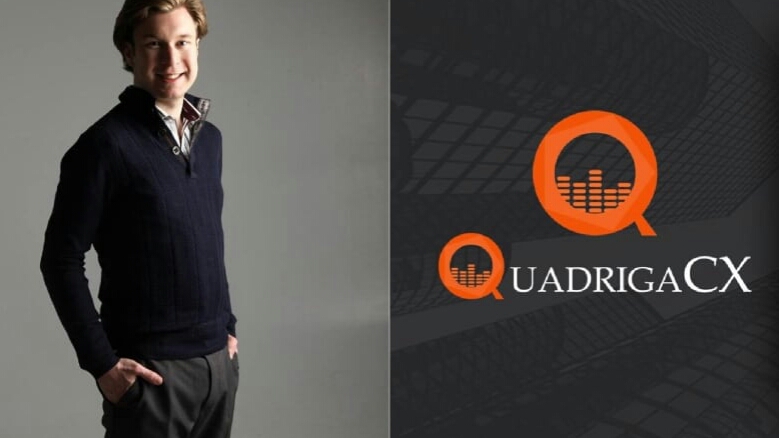
The late Gerry Cotten

The shifting narrative is now being challenged on multiple fronts, with skeptics claiming that the 30-year old CEO faked his death to evade paying customers. A recent report in The Times of India confirms that Cotten did die on Dec. 9 and his widow was granted a death certificate and police clearance to take his body back to Canada.

The article claims Cotten was admitted to Fortis Escorts hospital in Jaipur on Dec. 8 and diagnosed with “septic shock, perforation, peritonitis and intestinal obstruction.” Cotten allegedly died hours later of a cardiac arrest. He was known to suffer from Crohn’s disease.

Without DNA confirmation, though, the report will do to little to douse the skepticism surrounding the saga. Cotten is thought to have methodically gone about his “death,” naming his wife the sole executor of his estate 12 days before passing, and bequeathing properties from a jointly operated company to his in-laws.

A Widow’s Fortune

On a related note, it has been revealed by Canadian broadcaster CBC that Robertson’s company acquired properties in Nova Scotia worth CAD$7.5 million (~US$5.6 million) in the last two and half years. The properties may be a subject of interest as Quadrigacx is currently looking for money to pay creditors under the administration of accountants Ernst and Young.

According to the Nova Scotia’s property registry, Robertson and Cotten bought 16 properties between May 2016 and October 2018, ranging in price from CAD$94,000 for a waterfront lot in Lunenburg County to CAD$2.5 million for nine row houses in Bedford. About a dozen properties are held by the widow’s company, Robertson Nova Property Management Ltd, CBC reported.

Robertson, who also owns two other properties in her own name, including an island in Mahone Bay the couple purchased in September 2017 for CAD $162,000, has used three family names in the last few years.

According to the CBC article, deeds for properties she bought in 2016 show she was once known as Jennifer Forgeron. On Dec. 1, 2016, she changed her name from Jennifer Kathleen Margaret Griffith to her current name, Jennifer Kathleen Margaret Robertson.

Quadrigacx Saga: Founder's Widow Owns $5.6m Properties, Hospital Confirms Cotten's Death
Jennifer Robertson’s properties in Bedford

Quadrigacx Has Less BTC Than It Claims to Own

While discontent and conspiracy theories have been particularly awash on social media, one cryptocurrency researcher has claimed that the exchange had significantly less bitcoin than it claims to have lost, and dismisses the claim that Cotten died with the keys to cold wallets, claiming that blockchain records show outgoing transactions since Cotten’s death.

A theory has also been floated that the company did not actually have the supposed cryptocurrency in its accounts but would use customers’ money for withdrawal requests. Delays experienced by some customers between withdrawal requests and payment were attributed to the possibility that the exchange was waiting on new deposits.

The company had previously claimed liquidity problems as a result of losing access to the wallets. In the affidavit filed against the Feb. 5 bankruptcy hearing, Robertson stated that her husband was the sole director and officer at Quadrigacx and its sister companies at the time of his death.

The failure of the company to remain liquid after the CEO’s death tied into the lone wolf style of business. “To the best of my knowledge, most of the businesses of these companies was being conducted by Gerry whenever and wherever he and his computer were located,” claimed his widow.

Following the death of Cotten, Quadrigacx claimed to have lost 26,488 BTC, 11,278 BCH, 11,149 BSV, and 35,320 BTG. About 199,888 LTC and 429,966 ETH were also allegedly lost.

What do you think about the unfolding saga at Quadrigacx? Do you think Cotten faked his death? Let us know in the comments section below.


Images courtesy of Shutterstock and CBC.


Express yourself freely at Bitcoin.com’s user forums. We don’t censor on political grounds. Check forum.Bitcoin.com

The post Quadrigacx Saga: Founder’s Widow Owns $5.6m Properties, Hospital Confirms Cotten’s Death appeared first on Bitcoin News.

from Bitcoin News http://bit.ly/2WMYu70 Quadrigacx Saga: Founder’s Widow Owns $5.6m Properties, Hospital Confirms Cotten’s Death

#USA Item tracking startup Adero is laying off 45% of staff, just weeks after it pivoted

//

Pivots can be the making of a startup, helping teams refocus on a good idea when previous things haven’t worked. But sometimes, they are just one more step on a difficult track. TechCrunch has learned and confirmed that Adero — an Amazon-backed maker of Bluetooth-enabled tracking tags that until last December was known as TrackR — is laying off at least 45 percent of its staff. The cuts come as Adero refocuses on building software instead of hardware products, and attempts to build a B2B business that reduces its emphasis on the consumer market, ahead of plans to raise another round of funding.

The layoffs, which started last week, follow a pivot about two months ago from selling individual tracking tags — a business that had become increasingly commoditized — to developing solutions to organise and track groups of items that tend to be used together (such as the contents of a school backpack).

It’s not clear exactly how many employees are being affected, but when the pivot was announced at the end of November, the company had 60 employees, which would work out to 27 employees in this latest cut.

A spokesperson said that layoffs were  being made to put more focus on building software instead of hardware.

“As our new brand grows, we can now move to the next chapter in developing the intelligent organization platform,” he said. “As a result, we’ve parted ways with a portion of the team that was brought on to help design and deliver the consumer product. We will both support the consumer products and focus new energy on developing the platform that powers our consumer products so it can power the experiences of our strategic partners.”

The layoffs and shift at Adero underscore the more general, continuing challenges of building hardware startups. If the product is unique, chances are that the economies of scale to manufacture it will be too capital-intensive for even well-capitalised startups.

But often, the products are just not unique enough. Adero, for example, competes with Tile and a plethora of smaller brands selling tracking dongles are either very similar, or fulfil a similar purpose, and that in turn commoditizes the core product. The mission then becomes building services around the hardware that are in themselves distinctive, or at least trying to be.

“It took a superhuman effort to develop and deliver a new product from scratch — hardware, software, cloud — in nine months,” CEO Nate Kelly wrote in an emailed statement when contacted to provide more detail about the layoffs.

“We threw everything we had into that work and are happy to say that not only did we launch but we have, since launch, delivered two updates to iOS, one to Android and will be delivering… a firmware update that increases the reliability of the product and releases new functionality like removing the limits on the number of taglets.”

Adero’s relaunch in December saw the company building a new line of large and small tags that allowed users to group items that often travelled together to help track them more logically, with plans to add more predictive and other intelligent features over time. “We did more than launch new products, we also built a platform, Activefield, that can scale across many products, many companies and unlimited use cases,” Kelly said.

He added that now the company is trying to work with more (unnamed) strategic partners. That B2B shift also has translated to cutting costs and streamlining particularly in “areas where we had bulked up” to launch the consumer product. “We don’t need that level of support anymore,” he said.

“Now that we’ve launched on our website and on Amazon” — which is an investor in Adero — “we will continue to take our product into other channels and countries, but the push in consumer comes second in focus to the further development of the platform and the deployment into a number of strategic partners,” he said. “This is all very ambitious and we are a small company with limited resources so I’m having to make some changes to the org that makes us leaner and sharpens our focus on deploying our ‘powered by Activefield’ strategy.”

He said that while Adero will continue to support its consumer products, “we hope to come back to you soon to share some good news on partnerships.”

He added that Adero also hoped to have more news of a new round of funding later this quarter. To date, the company has raised about $50 million, but its valuation has yo-yoed from $150 million in August 2017, to just $40 million in July 2018. Investors in the company, in addition to Amazon, include Foundry Group, NTT and Revolution.

While the company would only confirm 45 percent of employees were laid off, our tipsters paint a slightly more dire picture of the company. One tip we received described the layoffs as covering “almost everyone” and another noted that “the majority of the team” at the Santa Barbara-based startup were now gone. “Very few remain to help close the business,” it said.

The news caps off a tricky year for Adero. In January 2018, still branded TrackR, it laid off around 42 employees — at the time just under half its employees. The layoffs came as it was emerging that the startup’s core product, its Bluetooth tag, was becoming increasingly commoditized, with dozens of me-too trackers sold alongside it on Amazon and other marketplaces. (Its biggest rival, Tile, has also seen some big changes and also appears to be shifting its focus to a wider home IoT play.)

Around the time of those layoffs, first one and then both of the company’s founders — Chris Herbert and Christain Smith — stepped away from day-to-day roles at the company. Herbert had been CEO and he was replaced by Kelly, who had been the COO.

Then came the funding round at a big devaluation. “Foundry and Revolution [two of the startup’s investors] were hoping that they would put this money in and I could fix and scale things, similar to how I’d scaled Sonos and so on,” Kelly said about the funding in November (his experience includes Sonos, Tesla and Facebook). “But within six weeks, it became evident that we didn’t need to scale but figure out what the future was and where this is going.”

Where this is going continues to be the question as Adero takes its next steps.

from Startups – TechCrunch https://tcrn.ch/2UJlmCo

#Africa SA to expand business incubation programme for entrepreneurs

//

The South African government is to expand the business incubation programme it offers to local entrepreneurs, establishing township digital hubs in the process.

This is according to President Cyril Ramaphosa, who presented his second State of the Nation Address (SONA) yesterday (Thursday February 7)

The incubation programme run by the government provides aspiring entrepreneurs with physical space, infrastructure and shared services, as well as access to specialised knowledge, market linkages, training in the use of new technologies, and access to finance.

It currently consists of a network of 51 technology business incubators, 10 enterprise supplier development incubators, and 14 rapid youth incubators, but Ramaphosa said it will be expanded given its impact on the country’s economy.

“Given the key role that small businesses play in stimulating economic activity and employment – and in advancing broad-based empowerment – we are focusing this year on significantly expanding our small business incubation programme,” he said.

As part of the expansion, township digital hubs will be established, initially in four as yet unnamed provinces, with more to follow.

“We expect these hubs to provide most needed entrepreneurial service to small and medium enterprises in the rural areas and townships, but more especially to young people who want to start their businesses. Our greatest challenge is to create jobs for the unemployed of today, while preparing workers for the jobs of tomorrow,” said Ramaphosa.

The post SA to expand business incubation programme for entrepreneurs appeared first on Disrupt Africa.

from Disrupt Africa http://bit.ly/2TD1z7K

#Blockchain Crypto Investor Brock Pierce Is Attempting to Pull Mt. Gox From the Ashes

Crypto Proponent Brock Pierce Is Attempting to Pull Mt. Gox From the Ashes

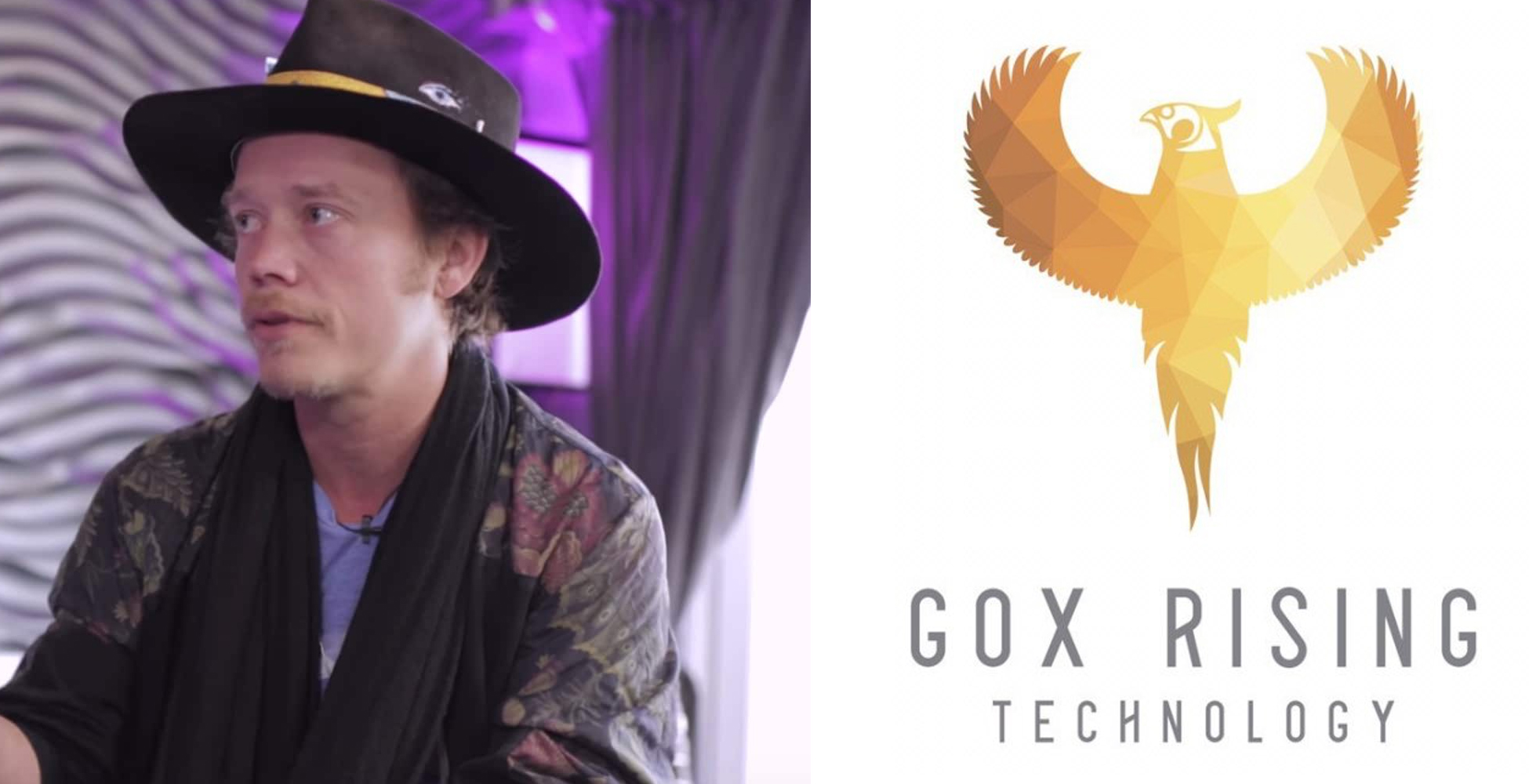
Prominent cryptocurrency entrepreneur Brock Pierce is attempting to revive the defunct Mt. Gox exchange by submitting a single rehabilitation plan for creditors called Gox Rising. Back in 2014, the former CEO of Mt. Gox, Mark Karpeles, reportedly signed over all of the business’s assets to Pierce and a firm called Sunlot Holdings Limited.

Also read: Indian Supreme Court Moves Crypto Hearing, Community Calls for Positive Regulations

The Wild Attempt to Revive Mt. Gox

According to Goxrising.com, a plan is in motion to help the creditors of Mt. Gox gain restitution. At The North American Bitcoin Conference (TNABC) in Miami, Brock Pierce revealed the plan to help claimants get their return of bitcoin lost years ago. On Jan. 22, Gox Rising Limited published a press release describing the ‘United We Rise’ rehabilitation proposal which outlines the effort in greater detail. The plan calls for an implementation that should focus on a high degree of certainty so that claims can be “repaid in bitcoin and bitcoin cash.”

“The Gox Rising movement aims to restore the creditors’ losses as well as the world’s faith in the cryptocurrency industry,” stated Brock Pierce during his speech in Miami.

Crypto Investor Brock Pierce Is Attempting to Pull Mt. Gox From the Ashes
Gox Rising Limited hopes to revamp Mt. Gox in order to pay creditors back.

Following the announcement, leaked documents stemming from the trial have been revealed over the last two weeks concerning Mt. Gox creditors, the company’s trustee, and Coinlab. According to additional reports, Pierce and the firm Sunlot Holdings Limited allegedly purchased all of the remaining Mt. Gox assets for a single bitcoin. The deal was supposedly agreed upon by Mark Karpeles and Tibanne (Mt. Gox’s parent company) but it is unclear if the agreement is binding. The documents stem from the infamous leaker Goxdox who published Sunlot Holdings’ proposed rehabilitation plan, which is dated March 28, 2014. The proposal submitted at the time is very similar to the ‘United We Rise’ plan and the document says the sponsor company has the “resource for the capacity to make payments to creditors.”

‘A Pro Rata Portion of All the Mt. Gox Cash and Coins’

On Feb. 7, a few cryptocurrency proponents spoke out on Twitter about Pierce’s involvement with the defunct exchange. Blocktech founder Devon James said, “Wow — Really impressed by the plan Brock Pierce has been working on for the past five years, as well as the patience involved.” The same day, Bitcoin Private founder Rhett Creighton also remarked “[Brock Pierce] owns 100% of Mt. Gox and plans to relaunch — Payback creditors, leave Mark Karpeles with nothing.” Following the statement, Pierce responded to Creighton’s tweet and stated:

It should be honored as soon as possible without selling any more coins and you should get your pro rata portion of all the cash and coins.

The original 2014 Sunlot proposal was filed with the Tokyo District Court and subsequently leaked to the press by Goxdox. At the time, a few crypto proponents discussed the “rebirth” of Mt. Gox but the Sunlot proposal eventually fizzled away. Now, after five years of creditors fighting the liquidation phase, the bankruptcy case has transformed into a civil rehabilitation plan. Gox Rising is hoping people who had deposits on Mt. Gox will support the organization’s plan, but there are still many issues at hand.

Crypto Investor Brock Pierce Is Attempting to Pull Mt. Gox From the Ashes
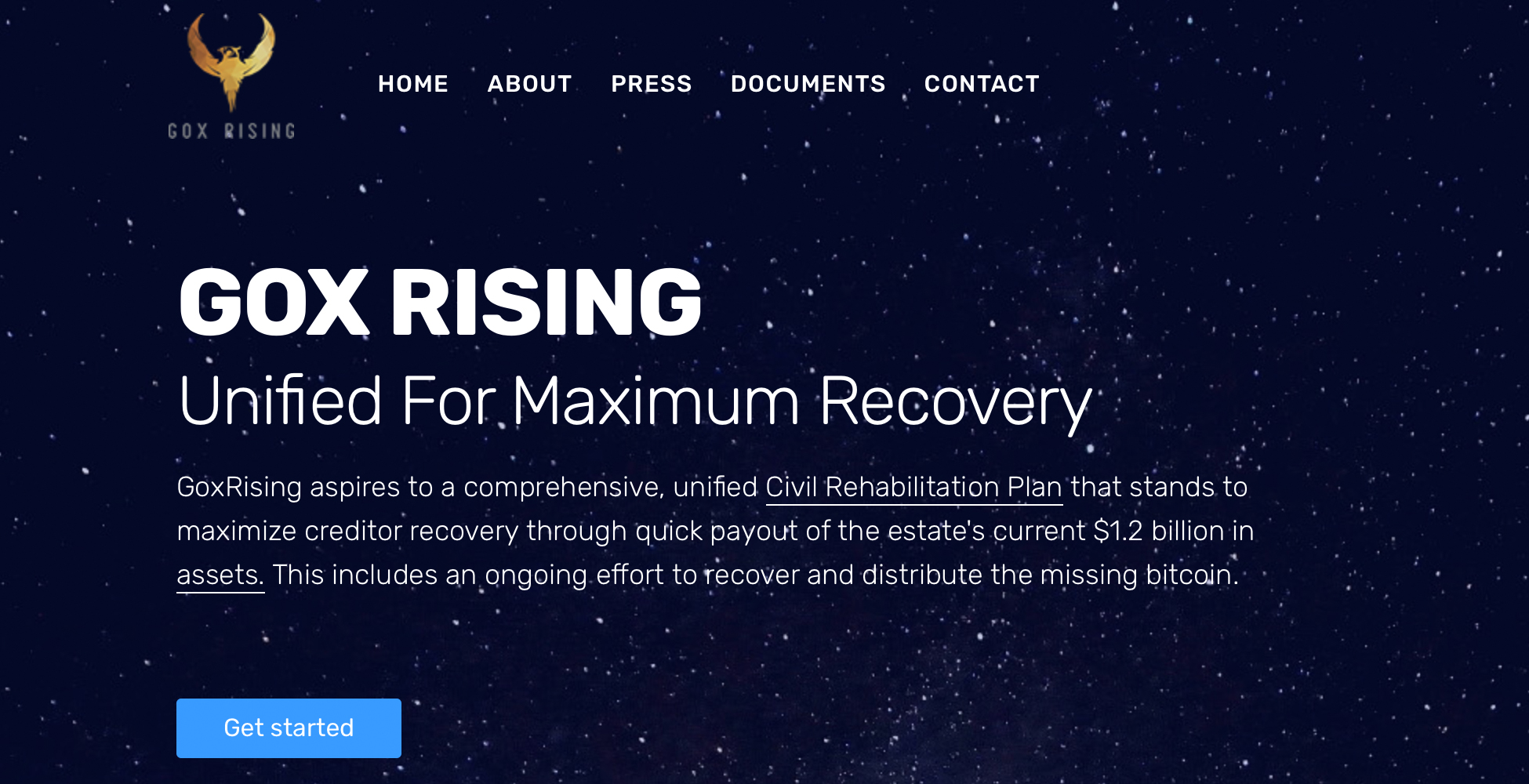
Brock Pierce and the Gox Rising Limited logo.

Our sources in Tokyo have told our newsdesk that Gox creditors are absolutely terrified that their claims will still be brushed aside or payouts will be delayed further. Claimants want to be sure no one will make an equity claim with the Mt. Gox estate and delay payouts for even longer. Some creditors believe it would be a public service to all Mt. Gox victims to get Pierce to make a statement publicly saying that the original Sunlot agreement is non-binding and that he will not make any equity claims with it. Most people’s Mt. Gox claims to date have not been actionable, as the statute of limitations has run on just about everyone.

The Gox Rising plan does emphasize: “Equity will make no claim on any of the cash and coins held by the trustee.” Also, if the trustee does not have any intentions to relaunch Mt. Gox then Gox Rising Limited will bid for the former trading platform’s intangible assets which include intellectual property, the Mt. Gox Estate, brand, domain names, and trademarks. “Gox Rising is separately putting forward a vision for this new Mt. Gox Exchange, which will voluntarily create significant additional value for participating crypto creditors towards full recovery of their claims,” the CR Pillars plan written by the Gox Rising team reads.

“The New Mt. Gox Exchange (the “Exchange”) will be launched as an institutional grade, fully licensed and partially decentralized crypto exchange,” the Gox Rising “vision” roadmap explains. The vision statement continues further by stating:

Crypto Creditors will be eligible to receive a 16.5% economic interest from the operations of the Exchange on a pro-rata basis — To participate, Crypto Creditors simply need to maintain an account with the Exchange.

Additionally, the Gox Rising team claims it will attempt the continued pursuit of residual assets including the lost or stolen coins. In the meantime, the trustee and the thousands of claimants still have the Coinlab claim hovering above them like a dark cloud.

What do you think about Brock Pierce’s plan to revive Mt. Gox and pay creditors back with this new plan? Let us know what you think about this subject in the comments section below. 


Image credits: Shutterstock, Pixabay, and Youtube. 


Need to calculate your bitcoin holdings? Check our tools section.

The post Crypto Investor Brock Pierce Is Attempting to Pull Mt. Gox From the Ashes appeared first on Bitcoin News.

from Bitcoin News http://bit.ly/2E0271Z Crypto Investor Brock Pierce Is Attempting to Pull Mt. Gox From the Ashes

#USA Luxury handbag marketplace Rebag raises $25M to expand to 30 more stores

//

Rebag, an online resale marketplace for luxury handbags, is getting another infusion of capital as it prepares to expand its offline retail operations. The company this week announced $25 million in Series C funding, in a round led by private equity firm Novator, with participation from existing investors, General Catalyst and FJ Labs.

The round brings Rebag’s total raise to date to $52 million.

Rebag competes with other luxury goods resellers, like TheRealReal, and to some extent with broader resale marketplaces like thredUP or Poshmark, which also attract shoppers looking to buy quality pre-owned items. And it exists in alongside large marketplaces like eBay as well as rental shops like Rent the Runway, which offers an alternative to a site focused only on handbags.

In fact, Rebag founder and CEO Charles Gorra spent a brief period at Rent the Runway, before leaving to start Rebag in 2014. At the time, he said he saw an immediate opportunity to not just rent the items out, but to actually resell them on a secondary market.

Today, Rebag’s shop sells bags from over 50 designer brands, including all the majors like Chanel, Louis Vuitton, Hermes, Gucci, and others.

However, in the years following Rebag’s launch, the company has expand its offerings beyond just online resale to include brick-and-mortar retail and, more recently, a service called Rebag Infinity, which allows shoppers to turn in any Rebag handbag purchase within 6 months in exchange to receive a credit of at least 70 percent of the purchase price.

Last year, Rebag made headlines in the fashion world for selling the rare Hermès White Crocodile Himalayan Birkin collectible – typically an over $100,000 bag – for “just” $70,000, to celebrate the opening of its 57th Street and Madison Avenue store, its second Manhattan flagship location.

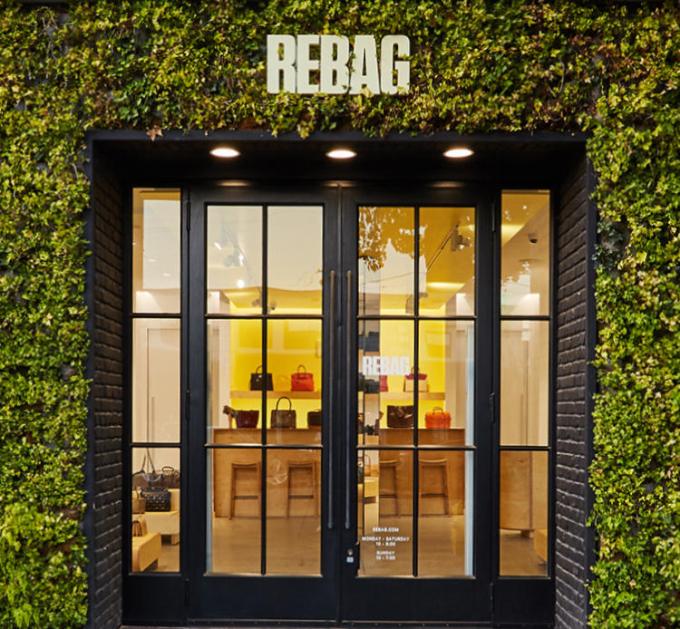
With the new funding, Rebag will expand its offline footprint, it says. The company currently operates five stores in New York and L.A. but plans to launch 30 more locations in the “medium term.” This will include both standalone storefronts, as well as presences within luxury malls.

It’s common these days for resale marketplaces these days to take their wares to offline shoppers. TheRealReal, Rent the Runway, ThredUP, and others all today offer real world locations, where shoppers can browse in person instead of just online.

Rebag says since it opened its retail stores las year, it moved from being a 100 percent digital operation to 80 percent digital, and 20 percent offline. Its sourcing network also grew to include over 20,000 stylists, partners, shoppers and sales associates.

With the funding, Rebag adds it will also refine its pricing and handbag evaluation tools aimed at standardizing the resale process, something that could represent another business for the brand (or make it attractive to an acquirer.)

“We are a technology company first,” noted founder and CEO Charles Gorra, in a statement. “Our goal is to become the standard for the luxury resale industry, just like Kelley Blue Book is the main resource for the auto industry.”

The company plans also to triple its team of 100, which today includes newer hires CTO Jay Winters (Delivery.com, Goldman Sachs) and CMO Elizabeth Layne (Bonobos, Appear Here).

Rebag doesn’t share its hard numbers about sales, revenues, valuation, customer base or others, but told us it has tripled revenues since its Series B.


from Startups – TechCrunch https://tcrn.ch/2I2BJbT

#USA Luxury handbag marketplace Rebag raises $25M to expand to 30 more stores

//

Rebag, an online resale marketplace for luxury handbags, is getting another infusion of capital as it prepares to expand its offline retail operations. The company this week announced $25 million in Series C funding, in a round led by private equity firm Novator, with participation from existing investors, General Catalyst and FJ Labs.

The round brings Rebag’s total raise to date to $52 million.

Rebag competes with other luxury goods resellers, like TheRealReal, and to some extent with broader resale marketplaces like thredUP or Poshmark, which also attract shoppers looking to buy quality pre-owned items. And it exists in alongside large marketplaces like eBay as well as rental shops like Rent the Runway, which offers an alternative to a site focused only on handbags.

In fact, Rebag founder and CEO Charles Gorra spent a brief period at Rent the Runway, before leaving to start Rebag in 2014. At the time, he said he saw an immediate opportunity to not just rent the items out, but to actually resell them on a secondary market.

Today, Rebag’s shop sells bags from over 50 designer brands, including all the majors like Chanel, Louis Vuitton, Hermes, Gucci, and others.

However, in the years following Rebag’s launch, the company has expand its offerings beyond just online resale to include brick-and-mortar retail and, more recently, a service called Rebag Infinity, which allows shoppers to turn in any Rebag handbag purchase within 6 months in exchange to receive a credit of at least 70 percent of the purchase price.

Last year, Rebag made headlines in the fashion world for selling the rare Hermès White Crocodile Himalayan Birkin collectible – typically an over $100,000 bag – for “just” $70,000, to celebrate the opening of its 57th Street and Madison Avenue store, its second Manhattan flagship location.

With the new funding, Rebag will expand its offline footprint, it says. The company currently operates five stores in New York and L.A. but plans to launch 30 more locations in the “medium term.” This will include both standalone storefronts, as well as presences within luxury malls.

It’s common these days for resale marketplaces these days to take their wares to offline shoppers. TheRealReal, Rent the Runway, ThredUP, and others all today offer real world locations, where shoppers can browse in person instead of just online.

Rebag says it will also refine its pricing and handbag evaluation tools aimed at standardizing the resale process, something that could represent another business for the brand (or make it attractive to an acquirer.)

“We are a technology company first,” noted founder and CEO Charles Gorra, in a statement. “Our goal is to become the standard for the luxury resale industry, just like Kelley Blue Book is the main resource for the auto industry.”

The company plans also to triple its team of 100, which today includes newer hires CTO Jay Winters (Delivery.com, Goldman Sachs) and CMO Elizabeth Layne (Bonobos, Appear Here).

Rebag doesn’t share its hard numbers about sales, revenues, valuation, customer base or others, but told us it has tripled revenues since its Series B.


from Startups – TechCrunch https://tcrn.ch/2I2BJbT