About Startup365

Chaque jour nous vous présenterons une nouvelle Startup française ! Notre pays regorge de talents et d'entrepreneurs brillants ! Alors partons à la découverte des meilleures startup françaises ! Certaines d'entre elles sont dans une étape essentielle dans la vie d'une startup : la recherche de financement, notamment par le financement participatif (ou crowdfunding en anglais). Alors participez à cette grande aventure en leur faisant une petite donation ! Les startups françaises ont besoin de vous !

#USA Freelancer banking service Shine switches to paid subscriptions

//

French startup Shine wants to be the only professional bank account you need if you’re a freelancer. So far, 25,000 people signed up to the service and the company recently raised a $9.3 million funding round.

Shine wants to help freelancers in France all steps of the way. After signing up, the app helps you fill out all the paperwork to create your freelancer status. You then get a card and banking information.

This way, you can generate invoices, accept payments and also pay for stuff. Creating an account and basic transactions have been free so far. But starting on January 21st, freelancers will have to pay €4.90 to €7.90 per month depending on their status.

Freelancers who generate less than €70,000 (so-called “auto-entrepreneurs”) will pay €4.90 per month while others will pay more. This is still cheaper than most professional bank accounts. Existing users won’t have to pay anything.

The company mentioned premium plans in the past, but Shine now wants to create a single plan with a unified feature set for everyone. If you’re more serious about your indie lifestyle and generate a lot of revenue, you’ll pay a bit more.

In addition to that change, the startup is working on some new features. Soon, you’ll be able to generate better exports for accounting purposes. You’ll be able to deposit checks, control your account from a web browser, generate better invoices and more.

But Shine doesn’t just want to build an endless list of bullet points with as many features as possible. The company wants to create the best banking assistant for freelancers. You get notifications for admin tasks and you can ask the support team any question you have when it comes to the administrative part of your work.

It’s not just customer support for the product — it’s customer support for French paperwork. And that has some value by itself.

from Startups – TechCrunch https://tcrn.ch/2QO5rAG

#USA Computer vision startup AnyVision pulls in new funding from Lightspeed

//

While there have been a few massive surveillance startups in China that have raised funds on the back of computer vision advances, there’s seemed to be less fervor outside of that market. Tel Aviv-based AnyVision is aiming to leverage its computer vision chops in tracking people and objects to create some pretty clear utility for the enterprise world.

After announcing a $27 million Series A in mid-2018, the computer vision startup is bringing Lightspeed Venture Partners into the raise, closing out the round at $43 million.

“When you have a company with the technology AnyVision has, and the market need that I’m hearing from across industries, what you need to do is push the gas pedal and build an organization which can monetize and take on this opportunity to grow massively,” Lightspeed partner Raviraj Jain told TechCrunch.

Right now the 200-person company has its eyes on the security and identity markets as it aims to bring its computer vision technology into more industry-tailored solutions.

The company’s “Better Tomorrow” product delivers camera-agnostic surveillance insights from its object and human-tracking tech. “Sesame” is the company’s consumer-facing play for bringing mobile banking authentication to hundreds of millions of phones. The company is still looking to release a retail analytics platform to customers as well.

from Startups – TechCrunch https://tcrn.ch/2HkROtk

#USA Computer vision startup AnyVision pulls in new funding from Lightspeed

//

While there have been a few massive surveillance startups in China that have raised funds on the back of computer vision advances, there’s seemed to be less fervor outside of that market. Tel Aviv-based AnyVision is aiming to leverage its computer vision chops in tracking people and objects to create some pretty clear utility for the enterprise world.

After announcing a $27 million Series A in mid-2018, the computer vision startup is bringing Lightspeed Venture Partners into the raise, closing out the round at $43 million.

“When you have a company with the technology AnyVision has, and the market need that I’m hearing from across industries, what you need to do is push the gas pedal and build an organization which can monetize and take on this opportunity to grow massively,” Lightspeed partner Raviraj Jain told TechCrunch.

Right now the 200-person company has its eyes on the security and identity markets as it aims to bring its computer vision technology into more industry-tailored solutions.

The company’s “Better Tomorrow” product delivers camera-agnostic surveillance insights from its object and human-tracking tech. “Sesame” is the company’s consumer-facing play for bringing mobile banking authentication to hundreds of millions of phones. The company is still looking to release a retail analytics platform to customers as well.

from Startups – TechCrunch https://tcrn.ch/2HkROtk

#USA Computer vision startup AnyVision pulls in new funding from Lightspeed

//

While there have been a few massive surveillance startups in China that have raised funds on the back of computer vision advances, there’s seemed to be less fervor outside of that market. Tel Aviv-based AnyVision is aiming to leverage its computer vision chops in tracking people and objects to create some pretty clear utility for the enterprise world.

After announcing a $27 million Series A in mid-2018, the computer vision startup is bringing Lightspeed Venture Partners into the raise, closing out the round at $43 million.

“When you have a company with the technology AnyVision has, and the market need that I’m hearing from across industries, what you need to do is push the gas pedal and build an organization which can monetize and take on this opportunity to grow massively,” Lightspeed partner Raviraj Jain told TechCrunch.

Right now the 200-person company has its eyes on the security and identity markets as it aims to bring its computer vision technology into more industry-tailored solutions.

The company’s “Better Tomorrow” product delivers camera-agnostic surveillance insights from its object and human-tracking tech. “Sesame” is the company’s consumer-facing play for bringing mobile banking authentication to hundreds of millions of phones. The company is still looking to release a retail analytics platform to customers as well.

from Startups – TechCrunch https://tcrn.ch/2HkROtk

#USA Computer vision startup AnyVision pulls in new funding from Lightspeed

//

While there have been a few massive surveillance startups in China that have raised funds on the back of computer vision advances, there’s seemed to be less fervor outside of that market. Tel Aviv-based AnyVision is aiming to leverage its computer vision chops in tracking people and objects to create some pretty clear utility for the enterprise world.

After announcing a $27 million Series A in mid-2018, the computer vision startup is bringing Lightspeed Venture Partners into the raise, closing out the round at $43 million.

“When you have a company with the technology AnyVision has, and the market need that I’m hearing from across industries, what you need to do is push the gas pedal and build an organization which can monetize and take on this opportunity to grow massively,” Lightspeed partner Raviraj Jain told TechCrunch.

Right now the 200-person company has its eyes on the security and identity markets as it aims to bring its computer vision technology into more industry-tailored solutions.

The company’s “Better Tomorrow” product delivers camera-agnostic surveillance insights from its object and human-tracking tech. “Sesame” is the company’s consumer-facing play for bringing mobile banking authentication to hundreds of millions of phones. The company is still looking to release a retail analytics platform to customers as well.

from Startups – TechCrunch https://tcrn.ch/2HkROtk

#USA Computer vision startup AnyVision pulls in new funding from Lightspeed

//

While there have been a few massive surveillance startups in China that have raised funds on the back of computer vision advances, there’s seemed to be less fervor outside of that market. Tel Aviv-based AnyVision is aiming to leverage its computer vision chops in tracking people and objects to create some pretty clear utility for the enterprise world.

After announcing a $27 million Series A in mid-2018, the computer vision startup is bringing Lightspeed Venture Partners into the raise, closing out the round at $43 million.

“When you have a company with the technology AnyVision has, and the market need that I’m hearing from across industries, what you need to do is push the gas pedal and build an organization which can monetize and take on this opportunity to grow massively,” Lightspeed partner Raviraj Jain told TechCrunch.

Right now the 200-person company has its eyes on the security and identity markets as it aims to bring its computer vision technology into more industry-tailored solutions.

The company’s “Better Tomorrow” product delivers camera-agnostic surveillance insights from its object and human-tracking tech. “Sesame” is the company’s consumer-facing play for bringing mobile banking authentication to hundreds of millions of phones. The company is still looking to release a retail analytics platform to customers as well.

from Startups – TechCrunch https://tcrn.ch/2HkROtk

#USA What3Words breaks the world down into phrases

//

If you’re down in ///joins.slides.predict you may want to visit ///history.writing.closets or, if you’ve got a little money to spend, try the Bananas Foster at ///cattle.excuse.luggage. Either way, don’t forget to stop by ///plotting.nest.reshape before you fly out.

If things go what3words way, that’s how you’ll be sending out addresses in the future. Founded by musician Chris Sheldrick and Cambridge mathematician Mohan Ganesalingam, the company has cut the world into three meter boxes that are identified by three words. Totonno’s Pizza in Brooklyn is at ///cats.lots.dame while the White House is at ///kicks.mirror.tops. Because there are only three words, you can easily find spots that have no addresses and without using cumbersome latitude and longitude coordinates.

The team created this system after finding that travelers found it almost impossible to find some out-of-the-way places. Tokyo, for example, is notoriously difficult to traverse via address while other situations – renting a Yurt in Alaska, for example – require constantly updated addresses that do not lend themselves to GPS coordinates. Instead, you can tell your driver to take you to ///else.impulse.broom and be done with it.

The team has raised £40 million and is currently working on systems to add their mapping API to industrial and travel partners. You can browse the map here.

“I organized live music events around the world. Often in rural places. HeIfound equipment, musicians and guests got lost. We tried to give coordinates but they were impossible to remember and communicate accurately,” said Sheldrick. “This is the only address solution designed for voice, and the only system using words and not alphanumeric codes.”

Obviously this will take some getting used to. The three words might get mispronounced, leading to some fun problems, but in general it might be good to way to get around the world in a post-modern way. After all, some of the spot names sound like poetry and if you don’t like it you can always just go to ///drills.dandelions.bounds.

from Startups – TechCrunch https://tcrn.ch/2FpWrAh

#Blockchain Why Some Crypto Companies Consider KYC and AML Compliance Unnecessary

When it comes to cryptocurrency regulation, there is a lack of consensus on how to protect investors. Criminal activity such as fraud, hacks and theft is prevalent, not only in the crypto realm, but in the traditional financial world too.  Some exchanges have deemed know your customer (KYC) and anti-money laundering (AML) compliance as unnecessary, however, claiming it infringes on the user’s right to privacy. 

Also read: Following the Crypto-Anarchist Dream: 3 Reasons to Reject KYC and AML

Crypto Exchanges Refuse KYC

There are a number of crypto exchanges doing everything in their power to avoid having to introduce KYC. Ethfinex’ Trustless DEX launched without KYC, having pointed out that it is impossible to obscure the source of a person’s funds: every transaction is visible and recorded forever onchain. Cryptocurrency exchange Hodl Hodl allows traders to swap cryptocurrencies without the need to undergo compliance. These exchanges require no lengthy signup process and no interminable wait for KYC checks to be approved, but such platforms are the exception rather than the rule. For legal and regulatory reasons, exchanges and similar financial organizations within the crypto sector are usually obliged to perform KYC. 

Why Some Crypto Companies Consider KYC and AML Compliance Unnecessary

From Crypto Anarchism to Close Regulation

The concept of Bitcoin was born around 2008 during the financial collapse. Originally, cryptocurrencies emerged as a means to allow privacy-oriented value storage and transfer to take place. Even before Bitcoin’s inception, crypto anarchists were employing cryptographic software in order to avoid scrutiny and potential prosecution while sending and receiving information over networks in an effort to protect their privacy and political and economic freedom. A central element to this philosophy is the inherent distrust of states in favor of individual sovereignty and self-determinism.

In a recent op-ed, Bitcoin.com’s Sterlin Lujan wrote of the crypto anarchist dream being financially independent and removed from the state apparatus, while Wendy McElroy, the author of The Satoshi Revolution, has questioned what is meant by “the law.” She writes that a government should not be allowed to monopolize its citizens’ financial affairs as it monopolizes so many other aspects of their lives. “The term [the law] refers to nothing more than the rules that identify and regulate a system. When the system is human society, discussions of law tend to become matters of power because some people want to dominate,” writes McElroy. 

Some Laws Do More Harm Than Good

Why Some Crypto Companies Consider KYC and AML Compliance UnnecessaryThe crypto world has often been dubbed the Wild West in dire need of regulation and direction. But is that really the case? There is evidence to show that instances of money laundering and other financial crimes are significantly lower in the crypto space than they are in the traditional financial sector. Onerous KYC and AML regulations also serve to deter new entrants, increase compliance costs for crypto companies, and arguably stifle innovation.

Kraken exchange has complained of the cost of compliance, stating that the “cost of handling subpoenas (regardless of licenses) is quickly becoming a barrier to entry.” Rather than deter criminals and increase transparency, some argue that all KYC/AML does is financially exclude those who lack the documentation to prove their identity – a particular problem for the world’s 1.7 billion unbanked. While some exchanges, such as Binance, are famously KYC free, its decision to partner with blockchain forensics firm Chainalysis is evidence that Binance is taking its regulatory obligations seriously. The crypto exchange, the world’s largest by trading volume, is now preparing to introduce KYC for its customers, mirroring the actions of other exchanges such as Kucoin that have similarly caved in.

Despite KYC and AML being a multi-billion dollar industry, critics remain convinced that the practice does more harm than good. While some exchanges are able to evade compliance through operating offshore and prohibiting U.S. investors from signing up, the majority have no choice but to bow to regulatory demands or face the consequences.

Do you support KYC and AML? Let us know in the comments section below.


Images courtesy of Shutterstock.


Need to calculate your bitcoin holdings? Check our tools section.

The post Why Some Crypto Companies Consider KYC and AML Compliance Unnecessary appeared first on Bitcoin News.

from Bitcoin News http://bit.ly/2VVB8eO Why Some Crypto Companies Consider KYC and AML Compliance Unnecessary

#Blockchain How to Generate a Bitcoin Vanity Address

You don’t have to be vain to want a vanity address. A bitcoin vanity address is the crypto equivalent of a personalized license plate, with a portion of its 26-35 alphanumeric characters closely mirroring the name of the wallet’s owner. For fundraising, collecting tips or soliciting donations, having a bitcoin address that’s synonymous with its owner can be advantageous, despite the privacy trade-off this entails.

Also read: Newspaper Ad Seeks Donations for Bitcoin Baby’s College Fund

Why You Might Want a Vanity Address

If you’ve been involved with Bitcoin for a while, you’ve likely encountered a vanity address at some stage. While perusing a blockchain explorer and inspecting the outputs for a particular transaction, for example, you may have spotted an address whose combination of characters looks to be more than just a coincidence. In a report on the U.S. government “blacklisting” bitcoin addresses, for example, news.Bitcoin.com noted some of the addresses that had been sending funds to one Iranian-controlled BTC account:

How to Generate a Bitcoin Vanity Address

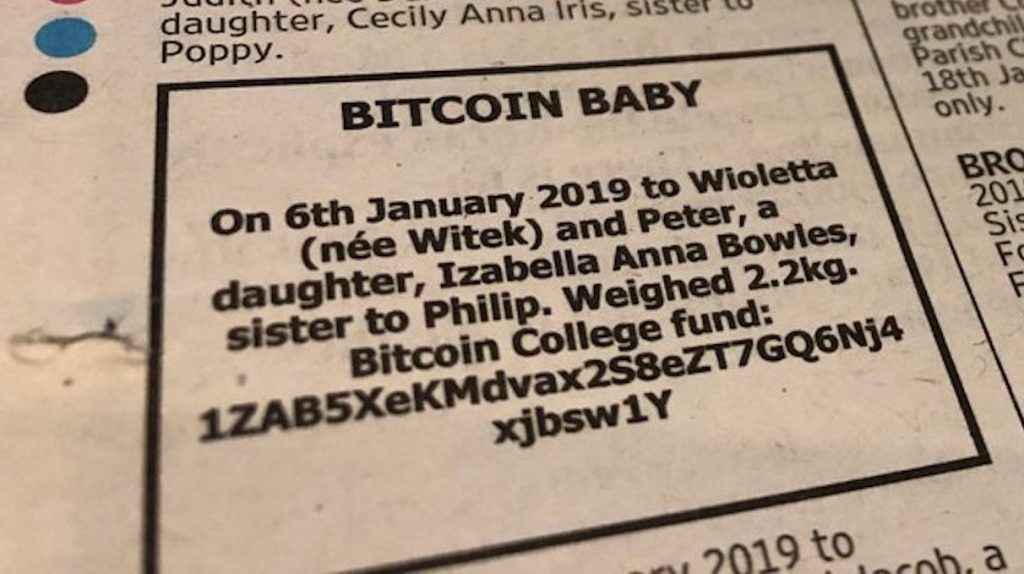
A vanity address was also used by the couple who placed an ad in The Times seeking to raise college funds for their “bitcoin baby.” Week-old Izabella’s bitcoin address starts with the characters “1ZAB5Xe.” For anyone wishing to follow suit, there are a number of third-party solutions that will help create a personalized address including Vanitygen and, for BCH users, Vanitygen Cash. Caution should be exercised when using third party code, however, particularly with services whose Github repository hasn’t been updated in years.

How Vanity Addresses Are Created

Services such as Vanitygen are designed to search for exact prefixes or expression matches. The search initiated for a matching public key is probabilistic, and thus the longer the name desired, the longer it will take your computer to hash an address that meets the criteria. Vanitygen first appeared in 2011 in a Bitcointalk forum thread, and thus is almost as old as Bitcoin itself.

How to Generate a Bitcoin Vanity Address

For anyone interested in playing about with vanity address creation, there are various internet forums and threads dedicated to the topic. It’s possible, for example, to create a bitcoin address containing only numbers and uppercase characters. If you lack the computational power to generate your own vanity address, a service such as Vanity Pool will do the honors, with the fee starting at 0.01 BTC for 1-6 characters, but rising significantly after that due to the increased processing power required. As the Vanitygen wiki page explains, it would take approximately a week to compute a vanity address that began with the characters “1Bitcoin” whereas an address starting with the characters “1BitcoinEat” would take an estimated 3,500 years.

How to Generate a Bitcoin Vanity Address
Vante.me’s key generation service. Caution should be observed when using third party vanity address generators.

From a security perspective, the safest way to create a vanity address is to do it yourself on your own computer, though this may not be possible if you’re seeking a larger pattern that’s computationally intensive. The next safest option is probably to use a service such as Vante.me, which uses split-key address generation. The biggest drawback to creating and using a vanity address, of course, is that it’s a poor practice from a privacy perspective. If you do choose to use one, it’s wise to periodically send funds to a separate address that you control, for privacy and security reasons. Despite their drawbacks, a vanity address can prove a nice touch for anyone willing to publicize their bitcoin address and be permanently associated with it.

What are your thoughts on vanity addresses? Let us know in the comments section below.


Images courtesy of Shutterstock.


Disclaimer: Bitcoin.com does not endorse nor support these products/services.

Readers should do their own due diligence before taking any actions related to the mentioned companies or any of their affiliates or services. Bitcoin.com is not responsible, directly or indirectly, for any damage or loss caused or alleged to be caused by or in connection with the use of or reliance on any content, goods or services mentioned in this article.

The post How to Generate a Bitcoin Vanity Address appeared first on Bitcoin News.

from Bitcoin News http://bit.ly/2AJsuYe How to Generate a Bitcoin Vanity Address

#Blockchain The Daily: Twitch Gamer Tipped $70K in Crypto, Hacker Returns $100K of ETC

The Daily: Twitch Gamer Tipped $70K in Crypto, Hacker Returns $100K of ETC

In this edition of The Daily, a video gamer streaming on Twitch has received crypto donations totaling over $70,000 and a hacker believed to be behind the 51 percent attack on the Ethereum Classic blockchain has reportedly returned $100,000 in ETC coins. Also, Electrum developers have issued another series of warnings about phishing attempts using the name of the popular cryptocurrency wallet.

Also read: NYC to Launch Blockchain Center, Wyoming Advances Industry-Friendly Bills

Gamer Gets $70,000 in BTC Donations

A video gamer going by the nickname “Sick_Nerd” has been tipped more than $70,000 in cryptocurrency while streaming a game of Runescape on Twitch. Most of the money was donated in several separate transfers of BTC by another user with the handle “lightpuma.”

The game played in front of a couple of thousand viewers is a version of Runescape, which is the most popular edition of the “massively multiplayer online roleplaying games” genre. It has been estimated that Runescape has over 250 million players.

The Daily: Twitch Gamer Tipped $70K in Crypto, Hacker Returns $100K of ETC

On Friday, Sick_Nerd got a total of 46 crypto donations amounting to around 20 BTC worth around $73,000, at the time of writing. Other Twitch users have recorded the stream and the gamer’s reactions. Later Sick_Nerd went to Twitter to thank his mysterious benefactor.

Last year, the popular video game streaming app Twitch enabled its users to tip each other with a number of major cryptocurrencies including bitcoin core (BTC), bitcoin cash (BCH), ethereum (ETH), and litecoin (LTC). The feature was integrated with the help of a company called Streamlabs and the tips are sent through the users’ Coinbase accounts.

Exchange Receives Back $100,000 Stolen in 51% Attack

The hacker, or group of hackers, believed to be responsible for the 51 percent attack against the Ethereum Classic blockchain has reportedly returned $100,000 worth of ETC coins to the cryptocurrency exchange Gate.io, the trading platform announced in a blog post. The company said it’s trying to contact the attacker but hasn’t received any reply yet. The exchange commented:

We still don’t know the reason. If the attacker didn’t run it for profit, he might be a white hacker who wanted to remind people the risks in blockchain consensus and hashing power security.

Gate.io conducted its own analysis and concluded that the hashing power of the ETC network is still not strong enough. That means another 51 percent attack is still possible if enough hashing power is rented to launch it.

The exchange said it raised the number of ETC confirmations to 4,000 before accepting deposits and introduced measures to detect a new attack. The company urged other digital asset trading platforms supporting ethereum classic to also take steps to protect their users from blockchain reorg or rollback.

Electrum Warns About New Phishing Attempts

The Daily: Twitch Gamer Tipped $70K in Crypto, Hacker Returns $100K of ETCFollowing an announcement about a phishing attack in December, Electrum developers have now raised the alarm about numerous other projects attempting to clone the popular wallet. On Jan. 10, they issued a warning on Twitter stating that “there is an ongoing phishing attack against Electrum users, where rogue servers ask users to install bitcoin-stealing malware. We released version 3.3.2, which mitigates the attack.”

One of the attacks is being conducted through a fake Electrum wallet for stellar (XLM). The platform issued an alert noting that the electrum-xlm [dot] info is a Bitcoin-stealing malware. It tweeted: “There is no way to easily port wallet software from Bitcoin to Stellar, because these are completely different projects. Please do not download altcoin variants of Electrum, unless you really know what you are doing.”

The Electrum dev team also warned they have nothing to do with a project called Electrum Dark: “They are using our name without our permission. Please be very careful with altcoin versions of Electrum, as they are sometimes used as a vector to install malware that targets your real Bitcoin wallet.”

The previous phishing attack was conducted through malicious servers, which when asked to broadcast a transaction through a legitimate Electrum wallet, replied with an error message directing users to download a fake ‘security update’ from an unauthorized Github repository. The unknown hackers reportedly managed to steal over 200 BTC.

What are your thoughts on today’s news tidbits? Tell us in the comments section.


Images courtesy of Shutterstock, Livestreamfails, Sick_Nerd (Twitter), Electrum.


Make sure you do not miss any important Bitcoin-related news! Follow our news feed any which way you prefer; via Twitter, Facebook, Telegram, RSS or email (scroll down to the bottom of this page to subscribe). We’ve got daily, weekly and quarterly summaries in newsletter form. Bitcoin never sleeps. Neither do we.

The post The Daily: Twitch Gamer Tipped $70K in Crypto, Hacker Returns $100K of ETC appeared first on Bitcoin News.

from Bitcoin News http://bit.ly/2QQvJlS The Daily: Twitch Gamer Tipped $70K in Crypto, Hacker Returns $100K of ETC