#UK Windows 10 is now used on 10% of PCs in the world (MSFT)

//

Satya Nadella

Windows 10, Microsoft’s new desktop operating system, launched in August and is already being used on roughly 10% of the total PC market.

According to Statistica, over two billion PCs have been shipped since 2009, meaning that Windows 10 has been installed on around 200 million devices.

The consumer and enterprise response to Windows 10 has been largely positive, with businesses adopting the operating system at a quicker rate than Windows 7 or 8

Jeremy Korst, the general manager for Windows product marketing, told Business Insider that the company is seeing “seeing a Renaissance of the PC” and the data backs up this theory.  

Microsoft’s stated aim is to have Windows 10 on over one billion devices — which means tablets, PCs, smartphones, and the Internet of Things — by 2019.  

Here is a breakdown of how fast Windows 10 is growing: 

Windows 10

Comparing Windows 10, which is free, to previous versions of the operating system is problematic. Paul Thurrot, a noted Microsoft blogger, did some back-of-the-envelope calculations and found that Windows 10 adoption is exceeding Windows 7, the most popular version of the operating system, from the same period.

As of today, Windows 7 is used by 54% of the PC market — over one billion devices — with Windows 8.1 coming in second, with 11%. 

The total share of Mac OS X, Apple’s desktop operating system, sits at 7% — roughly 158 million devices — meaning that Windows 10 has outgrown it.  Next up, according to the data, is Windows XP. 

Join the conversation about this story »

NOW WATCH: 5 hard-to-find iPhone tricks only power users know about

from Business Insider http://ift.tt/1lX80kB

Posted in #UK

#UK Kohli says India wants to be ‘ruthless’ in final test vs SA

//

NEW DELHI (AP) — India aims to be “ruthless” in the final test against South Africa despite having taken a winning 2-0 lead in the four-game series,” captain Virat Kohli said on Wednesday.

“We want to be ruthless and will try to go 3-0 up,” Kohli said ahead of the match starting Thursday in Delhi. “We will not be experimenting just because we have won the series. We want to create a hard-working side with a winning culture. The team is in a good space and we will go all out for a win.”

India won the first test at Mohali by 104 runs, and the third at Nagpur by 124 runs. The second test at Bangalore was a rain-affected draw.

The Nagpur pitch, where South Africa folded for only 79 in the first innings, has been termed “poor” by match referee Jeff Crowe in his report to the International Cricket Council which awaits a reply from the Indian cricket board.

“I think the pitches have been discussed too much. No one talks about the Adelaide test (Australia vs New Zealand day-night game) which ended in two and a half days. People don’t talk about the number of times teams have been bowled out for less than 100 in South Africa but pitches are highlighted in India,” Kohli said.

Kohli, who will lead India for the first time on his home ground, said he was not giving a thought to whether the pitch at the Feroze Shah Kotla Stadium will also help turn as much.

“We’re confident of our abilities whether the game lasts three days or four or five. The pitch being different won’t change our mindset. We’ve come to win,” Kohli said.

South Africa captain Hashim Amla hopes to end the series on a high.

“Since we started this tour by winning the one-day internationals and Twenty20 series we would like to win this match and make it 2-1. We’ve got the England series very close, two weeks after we get back. It’s very important for us to get back to winning ways and cap it off well,” Amla said.

South Africa had won a five-game ODI series 3-2 and a three-game T20 series 2-0.

“It’s been a challenge against good bowlers on difficult tracks. It has been exciting with the games condensed into three days. But as a batsman, you are never settled,” he added.

Amla said pace bowler Dale Steyn would miss a third consecutive test owing to a groin injury he got during the opening test but that the team was not looking to experiment even though the series was already lost.

“It’s important to win and salvage some pride,” said Amla.

Join the conversation about this story »

from Business Insider http://ift.tt/1lX81VL

Posted in #UK

#UK AP test: Rio Olympic water badly polluted, even far offshore

//

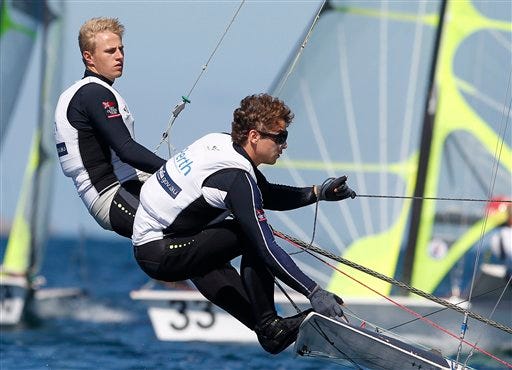
FILE - In this Dec 16, 2011 file photo, Germany's Erik Heil and Thomas Ploessel compete in the men's 49er skiff gold fleet 1 race 10 at the Sailing Championships in Perth, Australia. Heil had to be treated at a Berlin hospital for MRSA, a flesh-eating bacteria, shortly after sailing in an Olympic test event in August at Rio de Janeiro, Brazil, where tests by The Associated Press have found high contamination in waters to be used in the 2016 Olympics. (AP Photo/Theron Kirkman, File)

RIO DE JANEIRO (AP) — Olympic sailor Erik Heil floated a novel idea to protect himself from the sewage-infested waters he and other athletes will compete in during next year’s games: He’d wear plastic overalls and peel them off when he was safely past the contaminated waters nearest shore.

Heil, 26, was treated at a Berlin hospital for MRSA, a flesh-eating bacteria, shortly after sailing in an Olympic test event in Rio in August. But his strategy to avoid a repeat infection won’t limit his risk.

A new round of testing by The Associated Press shows the city’s Olympic waterways are as rife with pathogens far offshore as they are nearer land, where raw sewage flows into them from fetid rivers and storm drains. That means there is no dilution factor in the bay or lagoon where events will take place and no less risk to the health of athletes like sailors competing farther from the shore.

“Those virus levels are widespread. It’s not just along the shoreline but it’s elsewhere in the water, therefore it’s going to increase the exposure of the people who come into contact with those waters,” said Kristina Mena, an expert in waterborne viruses and an associate professor of public health at the University of Texas Health Science Center at Houston. “We’re talking about an extreme environment, where the pollution is so high that exposure is imminent and the chance of infection very likely.”

In July, the AP reported that its first round of tests showed disease-causing viruses directly linked to human sewage at levels up to 1.7 million times what would be considered highly alarming in the U.S. or Europe. Experts said athletes were competing in the viral equivalent of raw sewage and exposure to dangerous health risks almost certain.

The results sent shockwaves through the global athletic community, with sports officials pledging to do their own viral testing to ensure the waters were safe for competition in next year’s games. Those promises took on further urgency in August, after pre-Olympic rowing and sailing events in Rio led to illnesses among athletes nearly double the acceptable limit in the U.S. for swimmers in recreational waters.

Nevertheless, Olympic and World Health Organization officials have flip-flopped on promises to carry out viral testing in the wake of the AP’s July report.

Now, the AP’s most recent tests since August show not only no improvement in water quality — but that the water is even more widely contaminated than previously known. The number of viruses found over a kilometer from the shore in Guanabara Bay, where sailors compete at high speeds and get utterly drenched, are equal to those found along shorelines closer to sewage sources.

“The levels of viruses are so high in these Brazilian waters that if we saw those levels here in the United States on beaches, officials would likely close those beaches,” Mena said.

Brazilian, Olympic and WHO officials now say Brazil needs only to carry out testing for bacterial “markers” of pollution to determine water quality. That’s the standard used by nations around the globe, mostly because it’s been historically easier and cheaper.

“The health and safety of athletes is always a top priority and there is no doubt that water within the field of play meets the relevant standards,” the Rio 2016 Olympic organizing committee said in an emailed statement Tuesday. “Rio 2016 follows the expert advice of the World Health Organization, whose guidelines for Safe Recreational Water Environments recommend classifying water through a regular program of microbial water quality testing.”

However, in recent years technological advances have made it simpler and less expensive to monitor viral levels, too.

That’s why many in the scientific communities in the U.S. and Europe are pushing for legislation that would require viral testing of water. They argue that repeated studies dating back decades have shown little to no correlation between the levels of bacteria pathogens in water, which quickly break down in salty and sunny conditions like those in tropical Brazil, and the presence of viruses, which have been shown to last for months, and in some cases years.

That disparity has surfaced in AP’s testing in Rio, where the water often falls within safe levels of fecal bacteria, but the same water sample shows levels of viruses akin to raw sewage. Many of the testing points show spikes in bacterial contamination, too — especially in the Olympic lagoon and in the marina where sailors launch crafts.

Rio’s waterways, like those of many developing nations, are extremely contaminated because most of the city’s sewage is not treated, let alone collected. Massive amounts of it flow straight into Guanabara Bay. The Rodrigo de Freitas Lagoon and the famous Copacabana Beach also are heavily contaminated.

Rio won the right to host the Olympics based on a lengthy bid document that promised to clean up the city’s scenic waterways by improving sewage sanitation, a pledge that was intended to be one of the event’s biggest legacies.

Brazilian officials now acknowledge that won’t happen.

The AP’s first published results were based on samples taken along the shores of the lagoon where rowing and canoeing events will be held. Other samples were drawn from the marina where sailors enter the water and in the Copacabana Beach surf, where marathon and triathlon swimming will take place. Ipanema Beach, popular with tourists and where many of the expected 350,000 foreign visitors will take a dip during the games, was also tested.

Since then, the AP expanded its testing to include offshore sampling sites inside Olympic sailing courses in Guanabara Bay and in the middle of the lagoon where rowing and canoeing lanes were located during recent test events.

The tests found the lagoon and bay to be consistently virus-laden throughout, but it also captured a spike in the bacterial fecal coliforms in the lagoon — to over 16 times the amount permitted under Brazilian law.

Mena, the waterborne virus expert, said it makes sense for athletes to think that deeper into the bay and lagoon would be safer, but the testing doesn’t bear that out.

“One would expect to see more fluctuations with the levels of any pathogen in the water, but it’s not there,” she said.

As a result, none of the venues are fit for swimmers or boaters, she said. Athletes who ingest three teaspoons of water have a 99 percent chance of being infected by viruses.

That assessment was echoed by Brazilian virologist Fernando Spilki, coordinator of the environmental quality program at Feevale University in southern Brazil, who is conducting monthly tests for the AP.

“Samples from the sailing courses and inside the lagoon prove that the viruses are present even away from the shore, away from the sources of pollution, and that they maintain extremely high viral loads,” he said.

Athletes in Rio test events have tried many tricks and treatments to avoid falling ill, including bleaching rowing oars, hosing off their bodies the second they finish competing, and preemptively taking antibiotics — which have no effect on viruses.

Despite those efforts, athletes at a competition in August still fell ill. The World Rowing Federation reported that 6.7 percent of 567 rowers got sick at a junior championships event in Rio.

The International Sailing Federation said just over 7 percent of sailors competing at a mid-August Olympic warm-up event in Guanabara Bay fell ill — but the federation has not conducted a full count of how many athletes got sick in the two weeks following the competition, the rough incubation period for many of the pathogens in the water.

Mena and other experts say it’s difficult to put those figures into international context as each geographic location has unique threats. But in the U.S., for instance, the Environmental Protection Agency’s maximum illness rate for swimming is 3.6 percent — and many experts say that is too high.

The German sailor, Heil, was one of those who got sick at the Rio test event.

“I’ve never had infections on my legs. Never!” he wrote on the German sailing team’s blog in late August as he underwent painful treatment to scrape the infections off his hips and legs. “The origin must be the Marina da Gloria. In the future, we will try to travel to Rio right before the start of any event, so that any diseases that show up only occur when we are already back home.”

In the year preceding the Olympics, AP is examining monthly water samples for three types of human adenovirus as well as enterovirus, rotavirus and bacterial fecal coliforms. The viruses are found in human intestinal and respiratory tracts. They cause digestive illnesses including vomiting, explosive diarrhea and respiratory problems — all of which would knock athletes out of competition. Serious heart and brain disease are also possible, though rare. One type of analysis tests for adenovirus types 2 and 5, markers for the sewage contamination.

Water quality experts say a virus count hitting 1,000 per liter in the U.S. or Europe would cause extreme alarm, leading in many cases to beach closures.

Viral levels were all 30,000 times higher than what is highly alarming in the U.S. or Europe at each of the AP’s new offshore sampling sites: at a point 600 meters (yards) offshore and within the Sugarloaf sailing race course; at 1,300 meters (yards) offshore within the Naval School sailing circuit; and at a spot inside the Olympic lagoon where rowing lanes are located, about 200 meters (yards) from shore.

In September tests at the Naval School race course and offshore lagoon points, the water was positive for enterovirus, a major cause of respiratory illness, gastrointestinal ailments and, less often, serious heart and brain inflammation.

Subsequent cell culture testing showed the viruses in the lagoon water to be “active and infectious,” but the samples taken from the sailing courses in the bay were not. Mena, the risk assessment expert, said several factors inhibit viruses from growing in a laboratory, but the sheer number of pathogens in Rio’s waters means the risk to human health is unacceptable.

Rio de Janeiro state authorities promised to complete sewerage infrastructure near the Marina da Gloria by the end of this year and are making progress. Authorities say Olympic venues will then be safe.

But the high levels of sewage-linked pathogens found in the offshore sailing courses “show that these viruses don’t just come from the marina — there are many, many points where sewage enters the bay,” Spilki, the Brazilian expert, said. “These pathogens we’re looking for, especially the viruses, are able to migrate in the currents in a big way.”

Those pollution points are mostly the dozens of rivers that crisscross metropolitan Rio and dump hundreds of millions of liters of raw sewage into the bay each day. By the government’s own estimate, just half of the city’s wastewater flowing into the bay is treated.

Since the AP report in July exposed the serious risk to athletes, Olympic and World Health Organization officials have flip-flopped over whether they would carry out their own viral testing.

The WHO, which acts in an advisory role to the IOC, took four different positions on whether or not viral testing should be carried out between July and mid-October. In an Oct. 24 email, the WHO told the AP that it didn’t feel Olympic officials needed to conduct “routine” viral testing, but added that it was not “unconcerned with viral pathogens in water” and that water quality and monitoring would be discussed in Brazil once again in late November.

Mel Stewart, an American who won two swimming gold medals and a bronze at the 1992 Barcelona Games, said if his daughter were a contender in an open-water swimming competition in Rio, he would tell her not to compete.

“A gold medal is not worth jeopardizing your health,” Stewart said. “Right now there are too many questions. I don’t see safety. It doesn’t appear at this point that the athletes are being thought of first.”

___

Online:

Interactive, summary findings and methodology of AP’s study: http://ift.tt/1TtA0Yj

___

Associated Press sports writer Stephen Wade contributed to this report.

___

Brad Brooks on Twitter: http://www.twitter.com/bradleybrooks

Join the conversation about this story »

from Business Insider http://ift.tt/1N3u6IW

Posted in #UK

#UK 10 things you need to know before the opening bell (SPX, SPY, DJI, IXIC, FB, YHOO, VLKAY)

//

fish stuck climate change

Good morning. Here’s what you need to know:

Yahoo’s board is reportedly talking about selling the company’s core internet business. The Wall Street Journal reported, citing anonymous sources, that the discussions will happen in meetings today through Friday, as investors grow impatient with CEO Marissa Meyer’s efforts to turnaround the company. Yahoo would also consider spinning off its stake in Chinese e-commerce giant Alibaba. Activist shareholder Starboard had last month urged Yahoo to halt its plan to shed its 15% stake in Alibaba through a tax-free spinoff that’s on track to be completed by January. Yahoo shares were up by as much as 4% pre-market. 

Mark Zuckerberg will give away 99% of his Facebook shares, worth $45 billion. He announced this Tuesday in a letter to his newborn daughter, Max. Zuckerberg and his wife, Priscilla Chan, created the Chan Zuckerberg initiative to donate to causes focused on curing diseases, increasing global internet penetration, and others. 

Federal Reserve governor Lael Brainard said the path of higher interest rates will be low and gradual. In a speech on Tuesday, she noted that this may become a “new normal”, necessitated by bleak foreign growth prospects and higher risk sensitivity following the financial crisis. The FOMC meets in two weeks, and is widely expected to raise its benchmark rate for the first time in nine years. 

American manufacturing is still struggling. The Institute of Supply Management’s manufacturing index, released Tuesday, fell into contractionary territory (below 50, to 48.6) for the first time since June 2009. Markit’s manufacturing PMI also dropped, to the lowest level in 25 months at 52.8. Demand for exports was weak, and new work from abroad fell for the first time since August, even as ISM’s employment index improved a bit. With manufacturing making up just 12% of the economy, some experts say this is not cause for economy-wide concern, at least for now. 

Volkswagen is getting a $21 billion loan to help with the costs of the emission scandal. Reuters reported, citing people familiar with the matter, that Europe’s largest automaker reached an agreement with 13 banks on the terms of the 20 billion-euro bridge loan. Each bank is offering either 1.5 billion euros or 2.5 billion euros, making up the total, and adding to the company’s 6.7 billion euros it had set aside. On Tuesday, the carmaker said its US sales fell 24.7% in November. The company had halted sales of vehicles with the types of diesel engines that were found to have emissions-test-cheating software installed.

Eurozone core inflation unexpectedly fell in November. Core inflation fell to 0.9% from 1% in November, while headline inflation was unchanged at 0.1%. This could give the European Central Bank even more reason to boost its policy stimulus to the economy.

Brazil’s economy is shrinking. Third-quarter gross domestic product in Latin America’s largest economy fell by 4.5% year-on-year, according to the country’s statistics bureau. The cumulative drop of 3.2% so far for 2015 is the worst since 1996.

Australia has gone 25 years without a recession. Economic growth in the September quarter increased 0.5%, with the annual growth rate at 2.5%, beating forecasts. The country has not seen two consecutive quarters of negative economic growth since June 1991. 

Major global markets are green. Dow futures were up about 14 points near 7:08 a.m. ET. The 10-year yield was unchanged at 2.16%, near a one-month low. 

In economic data, ADP private payrolls for November cross at 8:15 a.m. ET, crude oil inventories at 10:30 a.m., and the Fed’s beige book at 2:00 p.m. Federal Reserve chair Janet Yellen will speak at the Economics Club of Washington near noon.

SEE ALSO: Here’s the spin Wall Street is putting on today’s disastrous manufacturing report

Join the conversation about this story »

NOW WATCH: This woman got a prime seat at a Trump rally, and spent the whole time reading a book about racism

from Business Insider http://ift.tt/1XxVhWr

Posted in #UK

#UK South Korea wants in on Czech nuclear program

//

Czech Republic's President Milos Zeman, right, welcomes his South Korean counterpart Park Geun-hye, left, at the Prague castle during her working visit in Prague, Czech Republic, Wednesday, Dec. 2, 2015. (AP Photo/Petr David Josek)

PRAGUE (AP) — South Korea’s president says her country would like to participate in developing the Czech Republic’s nuclear program.

After meeting her Czech counterpart, Milos Zeman, on Wednesday, Park Geun-hye said “we have expressed our interest.”

The Czech government has approved a long-term plan to increase nuclear power production. As part of the plan, the government wants to build one more reactor at the Temelin nuclear plant and another at the Dukovany plant, with an option to build yet another reactor at each site.

Unlike some other European countries, the Czech Republic heavily relies on nuclear energy.

Major players from the United States, Russia, France and other countries are expected to bid for a lucrative Czech nuclear contract.

South Korean companies have invested more than $4 billion in the Czech Republic.

Join the conversation about this story »

from Business Insider http://ift.tt/1N3u3wR

Posted in #UK

#UK UK Parliament to vote on expanded attacks on Islamic State

//

British Prime Minister David Cameron leaves 10, Downing Street in London, to go to the Houses of Parliament for a debate and vote on launching airstrikes against Islamic State extremists inside Syria, Wednesday, Dec. 2, 2015. The vote expected Wednesday evening would authorize bombing inside Syria. Britain has been participating in U.S.-led coalition attacks against IS positions in Iraq only. (AP Photo/Matt Dunham)

LONDON (AP) — The British Parliament is set to decide Wednesday whether to take more aggressive action against Islamic State extremists even as U.S. officials announced additional forces would be sent to the region as part of a global push against the radical group.

The British vote would authorize the Royal Air Force to launch airstrikes against suspected IS positions inside Syria, allowing it to take a more active role in the U.S.-led coalition seeking to weaken the militants held responsible for recent attacks in Paris, Beirut, Egypt and elsewhere.

Prime Minister David Cameron, confident of winning approval, has accused legislative opponents of sympathizing with terrorists. That has sparked a backlash, particularly in the opposition Labour Party, whose leader, Jeremy Corbyn, opposes any expansion of the military role.

A bruising debate began Wednesday morning in Parliament, with a vote expected late in the evening after more than 10 hours of discussion. Attacks may start within days if authorized by Parliament.

The British vote marks another step in building an international consensus on how to address the problem of the Islamic State group — something that had not been possible before the bombing of a Russian jetliner over Egypt and the Paris attacks, said Jill Sargent Russell, an expert on warfare politics and strategy at King’s College London.

The widening political consensus creates a real chance that “something sensible can be done and achieved.” If Britain does vote to take part in the coalition, it will give the country a place at the table when political solutions are created, she said.

“What matters is the U.K. being part of this political shift,” she said.

The British debate comes as U.S. officials told Congress that the U.S. would put American combat troops on the ground in a more permanent role in Iraq and Syria.

Defense Secretary Ash Carter said Tuesday that the U.S. military will deploy a new special operations force to be sent to to Iraq to step up the fight against IS militants.

President Barack Obama had previously announced he was sending fewer than 50 special operations forces to Syria, but Carter said the new expeditionary force will be larger. He did not provide force strength details.

Carter said the force will be able to conduct raids, free hostages, gather intelligence and capture IS leaders. It would also be in position to conduct unilateral operations into Syria.

“This is an important capability because it takes advantage of what we’re good at,” he said. “We’re good at intelligence, we’re good at mobility, we’re good at surprise. We have the long reach that no one else has. And it puts everybody on notice in Syria. You don’t know at night who’s going to be coming in the window. And that’s the sensation that we want all of ISIL’s leadership and followers to have,” he said, using a different acronym for Islamic State.

Iraqi Prime Minister Haider al-Abadi said after Carter’s announcement that his security forces are capable of defeating Islamic State extremists without the help of foreign combat troops.

But he said foreign troops might be accepted in the future if they respect Iraqi sovereignty, cooperate fully with the Iraqi government, and have its approval.

___

Associated Press writers Danica Kirka in London, Deb Riechmann in Washington and Sinan Salaheddin in Baghdad contributed.

Join the conversation about this story »

from Business Insider http://ift.tt/1lX81oK

Posted in #UK

#UK Cabela’s eyeing options, may sell all or part of business

//

NEW YORK (AP) — Cabela’s may be seeking a buyer for all or some of the sports chain.

The retailer has been under pressure since late October when the investment firm Elliott Management bought a 6 percent stake and pushed for strategic changes from the company, like the potential sale of its credit card unit.

Shares of Cabela’s Inc. are down 11 percent this year, but they’ve risen more than 18 percent in the last month on speculation of a buyout.

Cabela’s said Wednesday that it’s looking at various alternatives.

CEO Tommy Millner said in a written statement that Cabela’s continues to honor its commitments and that the company remains focused on its business.

Join the conversation about this story »

from Business Insider http://ift.tt/1IE6JDN

Posted in #UK

#UK The 10 worst ads of 2015

//

McDonald's Hamburglar

Every year, no matter how sophisticated the advertising industry is, there are still some classic examples of ill-advised “badvertising.”

While such howlers are usually reserved for small or local businesses with tiny budgets and little creative counsel, our rogues’ gallery is largely made up of major-spending advertisers that are household names.

If it all becomes too much to bear, do go back and cheer yourself up with our ranking of the 10 best ads of 2015.

Were there any spots we missed? Let us know in the comments.

NOW SEE: The 10 best ads of 2015

10. HTC — “Hold the Crown.” In February, the phone maker released a bizarre rap video to diss its rivals, starring “Doc G” of Hip Hop group P.M. Dawn. Choice lyrics include: “We HTC and we about to say it loud. HTC, we hold the crown, word to Peter Chou” and “More than a few clowns stole what we originated. We own the universe, your Galaxy is overrated.” The intention was tongue-in-cheek cringe, but the result positioned HTC as a downmarket competitor struggling to stay up-to-date with its larger rivals.

9. McDonald’s — “Hamburglar.” McDonald’s brought back one of its old-skool brand ambassadors in May. At first the internet was undecided as to whether he was a hunk, or a creep. McDonald’s then launched digital marketing push that saw the “suburban dad” mascot appear to be on the run from the fast food chain, and his nagging wife. The Verge called the videos “awkward,” E! said they were “bizarre,” and BGR said it will “convince you the company is more desperate than you ever dreamed.” Oddly, the tweets have since been deleted, but we’ve found a link to one of the videos below.

Watch the video here.

8. Bic — “#HappyWomensDay.” The irony that this Facebook photo was posted by Bic South Africa on the country’s National Women’s Day was not lost on the masses of people that complained about it on Twitter and Facebook. One commenter wrote: “Why am I expected to look like a child? Why am I expected to see the world through a masculine lens? Why am I expected to ‘think like a man’ but not expected to act ‘like a man’ on my so-called manly thoughts? There are so many different ways Bic could’ve celebrated women that don’t try and dictate how women must live their lives. I’m disappointed.” Bic said: “We’re incredibly sorry for offending everybody — that was never out intention, but we completely understand where we’ve gone wrong.”

See the rest of the story at Business Insider

from Business Insider http://ift.tt/1PuVuFB

Posted in #UK

#UK £350,000 a year is not enough to live on, according to the widow of a property tycoon

//

Woman in sunglasses holding moneyThis is probably the most ridiculous court case you’ll hear all year. The widow of a property tycoon killed in a helicopter crash is fighting a huge court battle with her stepson, because she says she wasn’t given enough money in her husband’s will, and needs £372,000 ($561,000) to live on each year, as reported by numerous organisations.

Thandi Wooldridge was widowed in 2010, when her husband Ian was killed on his way back from a day pheasant shooting in Northern Ireland after his helicopter crashed on Mourne Mountain. He left behind two sons, Charlie and Rhett.

Ian Wooldridge, along with his brother Graham, founded the Wooldridge Group. It specialises in demolition and construction, and is worth around £40 million ($60 million), according to various media reports.

When Wooldridge died, he left around £10 million ($15 million) of assets, including the family home Glanfield Manor, in Surrey, which he and his wife built together. The house was given to Mrs Wooldridge, along with about £1.6 million ($2.4 million) more of assets. It is now thought that Glanfield Manor is worth about £4.25 million ($6.4 million).

This is not enough for Mrs Wooldridge though, and she wants roughly £3.75 million ($5.65 million) more from her husband’s estate so that she can keep living what her barrister called in court on Tuesday “an extraordinarily luxurious lifestyle, vastly in excess of what most people could ever aspire to.”

“That lifestyle included numerous long-haul holidays, accompanied by the most luxurious travel and accommodation on offer. It included luxury cars, dinners and social and sporting events and the purchase by Ian of numerous luxury gifts,” Richard Wilson QC told London County Court.

The details of the £372,000 ($561,000) a year Mrs Wooldridge says she needs are significant. The widow claimed in court that she needs around £178,000 ($268,000) for social events, clothes, jewels, and what reports call “general entertainment”.

The most amazing of the demands however relate to Mrs Wooldridge’s cars and holidays. She claims to need £65,000 ($98,000) a year for holidays, and £58,000 ($87,000) for transport. Mrs Wooldridge and her son, Rhett, who is 11, take holidays in Barbados every year, she said in the court.

Bentley Continental GT SpeedShe also drives a Bentley and Range Rover, both of which she insists she needs.

On top of that, she says she has to spend nearly £80,000 ($120,000) on maintaining her house.

“I know that my husband would never have wanted me to worry or to be in this situation where I’m fighting for what he wanted for us,” Mrs Wooldridge said.

Charlie Wooldridge, who is now the Commercial Director of the Wooldridge Group, and is in control of the other assets left by his father, says that his stepmother doesn’t need that much money, and that giving her more money could destabilise the position of the family business.

He also says that after his father died, he spent a large amount of his inheritance on gambling, but is now far more responsible. “I’ve done a lot of gambling over the past four years,” said he said. “I’ve been grieving and so I’ve done a lot of things I shouldn’t have done.”

The presiding judge in the case, Judge Walden-Smith has reserved her ruling until a later date.

If you want to read more about it, the full account from this crazy court case can be found here.

Join the conversation about this story »

NOW WATCH: JAMES ALTUCHER: This is why owning a home is financial suicide

from Business Insider http://ift.tt/1IE6IQd

Posted in #UK