#UK Google has found a clever way to make web pages load faster and save your mobile data by up to 70% (GOOG)

//

Google has a new feature in its Chrome browser for mobile that it thinks could save mobile data by up to 70%.

How? By automatically stripping out images from web pages.

The search and mobile giant is expanding the Data Saver mode included in Chrome for Android devices. If you’re on a slow connection and the feature is enabled, it won’t enable most of the images on a page unless you ask it to — saving significant amounts of data in the process.

Here’s how it looks in action:

google gif data saver images

Google didn’t invent this idea, of course. There was a similar feature on my Nokia E63, which came out way back in 2008.

But it shows the company is grappling with the issue of connectivity. While this kind of feature isn’t really necessary in countries like the US and the UK (unless you’ve got a particularly tight data plan), it could be invaluable in emerging markets, where connections are far slower and data costs are a lot higher (and users have, on average, lower incomes).

It shouldn’t be a surprise then that Google is initially launching the feature in India and Indonesia — two emerging markets that have huge potential for the company.

Google isn’t the only tech company trying to solve issues around low connectivity. Facebook offers its employees super slow internet connections every Tuesday, to help them understand what its like for many users in emerging markets.

Join the conversation about this story »

NOW WATCH: Here’s how to find out your Uber rating

from Business Insider http://ift.tt/1Sw1Ke4

Posted in #UK

#UK MORGAN STANLEY: Iran is the biggest thing for the global economy since the Berlin Wall fell

//

rouhani

Iran is entering the global economy, and some investment bank analysts are starting to get pretty excited. 

Most outsiders see Iran as an anti-Semitic Islamic state run by extremists who tolerate terrorism (as long as it’s not in Iran).

But Iran is also the last large, modern, educated economy which is locked out of the global system, and the biggest one to re-enter it since the end of the Cold War.

Here’s a snippet from a note the researchers emailed out this week:

Iran is the largest economy to return to the global fold since the break-up of the Soviet Union and similarities include the complexity of the sanctions regime involved, the attempt at political rapprochement with the West and Iran’s vast energy wealth.

They’re not the only ones getting excited. Car companies are eager to get involved, and we spoke to the man who quit Deutsche Bank to set up the first Iranian private equity firm that’s able to take foreign investment.

Part of the anticipation is down to Iran’s massive fossil fuel reserves:Iran oil and gas

But that’s really not all of. Iran is also a middle-income country with a huge potential which has been (deliberately) restrained by sanctions. Before the Islamic Revolution in 1979, the country had a thriving middle class with a taste for Western fashions and consumerism.

On top of that, it’s the most literate nation in the region, a largely urbanised country where 60% of the population is under 30. The potential for an economic upswing when the sanctions are lifted is pretty clear. 

In many respects, there is no direct comparator for Iran, given its economic size, the scale of the sanctions imposed and its political structure. In particular, the potential reintegration of Iran into the global economy is arguably uncharted territory in that there is no other hydrocarbon frontier economy that has been subjected to comparable economic and political sanctions.

In the next few years, there are some pretty rapid growth forecasts for Iran — the World Bank expects GDP growth to rise to 6.7% in 2017, largely on the back of increased production of oil and natural gas. 

Join the conversation about this story »

NOW WATCH: Jeff Sachs: Here’s why the Middle East is going to get a lot worse

from Business Insider http://ift.tt/1O32ELm

Posted in #UK

#UK House to vote on No Child Left Behind rewrite

//

WASHINGTON (AP) — The House is ready to vote Wednesday on a long-sought rewrite of the 2002 No Child Left Behind education law that would roll back the federal government’s authority to push academic standards and tell schools how to improve.

The legislation, a compromise reached by House and Senate negotiators, would continue the No Child law’s requirement for annual reading and math testing of children in grades 3 through 8 and once in high school. But it would shift back to the states the decision-making power over how to use students’ performance on the tests to assess teachers and schools. The measure also would end federal efforts to tie test scores to teacher evaluations.

“I think that we will have a strong majority of the majority, and we’ll have a strong majority of the minority,” said Rep. John Kline, R-Minn., who led the House-Senate conference committee on the legislation. “The big picture here is that the bill moves from this massive intrusion of the federal government, moves back to state and local control.”

A compromise bill was a long time coming. No Child Left Behind, which was passed by Congress in 2002 during President George W. Bush’s first term, ushered in a new era of accountability standards for the nation’s public schools. But subsequently fell into disfavor in some quarters, widely criticized as unworkable, unrealistic and too punitive for public school educators.

The law has been due for renewal since 2007, but it got caught up in the broader debate over the federal role in public education.

“It’s been a long road and it’s a good bill,” said Kline’s Democratic counterpart on the committee, Rep. Bobby Scott of Virginia. “We don’t tell states what to do … but it’s clear that they have to have high standards and address in a meaningful way any achievement gaps.”

Despite the bipartisan support, some conservative lawmakers have said they won’t support it.

Under the bill, there would no longer be federal sanctions for schools labeled as underperforming. However, states would be required to intervene in the nation’s lowest-scoring 5 percent of schools, in high school dropout factories and in schools with persistent achievement gaps — something Democrats fought hard to ensure in any bill.

The Senate is expected to vote on the measure next week.

The White House had threatened to veto an earlier version of the bill that passed the House in July. Officials called the compromise now in play an improvement over the House bill — and a version passed by the Senate. But the administration also stopped short of saying that President Barack Obama would sign it.

No Child Left Behind was signed into law by Bush after passing Congress with broad partisan support. But it quickly became clear that its lofty goals for student achievement could not be met. Unions and more liberal voices in the education universe criticized it for placing too much of an emphasis on testing. Among conservatives, the law was assailed for allowing too much federal intrusion in public schools.

The compromise bill, among other things, would:

—Bar the Education Department from mandating or giving states incentives to adopt or maintain any particular set of standards, such as the college and career-ready curriculum guidelines known as Common Core. The standards were created by the states, but have become a lightning rod for those who sought a reduced federal role in education. The administration offered grants through its Race to the Top program for states that adopted strong academic standards for its students.

—End waivers the Obama administration has granted to more than 40 states. These waivers offered exemptions to the more onerous parts of No Child when it became clear the standards set forth there would not be met.

—Would not permit portability — allowing money to follow low-income students to public schools of their choice, an idea embraced by Republicans. Those dollars would remain at struggling schools, under the bill. But it would allow for a small pilot program that would let some federal money move with students in some school districts.

—Encourage testing caps. An amendment from Sen. Michael Bennet, a Democrat from Colorado, says states should set caps on the total amount of time kids spend taking tests. Bennet says federal testing requirements have resulted in additional layers of state and district level tests, and some of those may be redundant or unnecessary.

Join the conversation about this story »

from Business Insider http://ift.tt/1YH7dm4

Posted in #UK

#UK Tidal just nabbed a former SoundCloud exec to be its new CEO

//

Jeff Toig

TIdal has a new CEO — its third since the music-streaming service launched in March, Billboard reports.

After months of heavy turnover in Tidal’s executive ranks, the company has named former SoundCloud executive, Jeff Toig, as its new chief executive.

In addition to his previous role as SoundCloud’s chief business officer, Toig brings an extensive background in music-streaming services.

All of that could bode well for Tidal, which has been fighting to gain traction among a growing field of competitors.

Tidal has proven itself to be an interesting business case. Maybe even an outlier.

Like a bad singer with a broken mic, the company debuted in March with much-hyped fanfare that promptly fell flat.

Two CEOs have cycled through, along with a handful of other executives — including artist and label relations SVP Zena Burns and Chief Marketing Officer Jeff Geisler.

Rumors of Tidal’s demise were the song of the summer, despite cofounder Jay Z’s promise that the seemingly hobbled service would survive.

Recent Jay Z sightings at powwows with Samsung executives appeared to suggest the multi-platinum rapper and mogul was looking for an out. But, if we’ve learned anything from Jay Z (other than the fact that he’s a business, man), it’s that he refuses to lose.

In an interview with Billboard published Wednesday, Toig called Tidal’s business model — music-streaming as an artist-driven creative platform — a “powerful” and “compelling” experience. He says that despite the somewhat crowded field, “there’s clearly momentum building” in the space.

Evidence of that can be seen in Tidal’s subscriber growth, which topped 1 million users earlier this fall.

Though some critics have panned Tidal’s subscription model — one $9.99-per-month “basic” subscription, a $19.99 monthly membership for high-fidelity audio, and no free option — Toig says nearly half of Tidal’s subscriber’s “are on the hi-fi offering.”

It’s not clear how many of those are paying subscribers though, since Tidal still offers a free 30-day trial for new users.

While some uncertainties remain, Toig lays out his vision for Tidal’s future: “We’re deeply committed to this business, and we’re focusing on building a scaled, sustainable, successful business that’s going to be here for a long time.”

Toig officially jumps in the front seat in January.

Join the conversation about this story »

NOW WATCH: Google’s self-driving car has a huge problem

from Business Insider http://ift.tt/1Ioqzbp

Posted in #UK

#UK Greene King’s staffing costs are going to rocket because of the new Living Wage

//

China's President Xi Jinping and Britain's Prime Minister David Cameron drink a pint of beer during a visit to the The Plough pub on October 22, 2015 in Princes Risborough, England. The President of the People's Republic of China, Mr Xi Jinping and his wife, Madame Peng Liyuan, are paying a State Visit to the United Kingdom as guests of The Queen. They will stay at Buckingham Palace and undertake engagements in London and Manchester. The last state visit paid by a Chinese President to the UK was Hu Jintao in 2005. (Photo by )

Pub owner and brewer Greene King put out a generally positive half-year report on Wednesday, but there was a nugget buried in the update that will worry investors.

Britain’s new National Living Wage is going to cost the pub chain £2 million ($3 million) next year and an extra £6 million ($9 million) annually by 2018/19.

In July, UK Chancellor George Osborne said the government would scrap the National Minimum Wage — £6.50 ($9.79) an hour for workers — for a new National Living Wage of £7.20 ($10.85) an hour for workers over the age of 25. It comes into force next April and by 2020, the National Living Wage should rise to £9 ($13.56).

Greene King employs 42,000 people across the UK, many of them low-paid pub staff who will be in line for a rise thanks to the new Living Wage.

Half of Greene King’s 42,000 staff are under 25, which is why the cost of the living wage to the company will ramp up so quickly. In 3 years time, many of those staff who are under 25 now will have crossed that threshold and qualify for the higher wage.

Greene King isn’t the only pub chain to have sounded off about the pay rise — JD Wetherspoons said in September: “By pushing up the cost of wages by a large factor, the government is inevitably putting financial pressure on pubs, many of which have already closed.”

But other than rising staffing costs, Greene King looks in rude health. The company recently completed a merger with rival pub group Spirit and the fruits of that deal can be seen in the update:

  • Revenue up 49.2% to £917.7 million ($1.38 billion);
  • Pre-tax profit up 46.9% to £121.3 million ($182.7 million);
  • Targeted cost savings from the merger raised to £35 million ($52.7 million);
  • Integration ahead of plan.

Greene King shares are up almost 8% at 8.50 a.m. GMT (3.50 a.m. ET) in London.greene king

Join the conversation about this story »

NOW WATCH: How a successful investment banker used insider information to bankroll his mistress and child

from Business Insider http://ift.tt/1N3eEwy

Posted in #UK

#UK This British startup has created a high-tech banking app and credit card — here’s what it’s like to use

//

Mondo team

Mondo is a London fintech startup that’s looking at banking in a different way. It doesn’t have branches, and its current account is controlled from a smartphone app that analyses spending and can be used to contact the company at any time.

You can’t actaually use a Mondo card yet, as it’s still being alpha tested to make sure that everything works (you don’t want your bank account to have problems).

However, we were given access to one of alpha testing cards. Here’s what it’s like to use a digital bank:

Mondo invited lots of developers and startup figures to its office-warming party where it gave out the alpha cards.

Here’s what the Mondo card looks like — just like a normal card. Pink is the only colour choice for now.

I stuck £50 on the card. You have to transfer money onto it from another account to get started.

See the rest of the story at Business Insider

from Business Insider http://ift.tt/1LNrQnh

Posted in #UK

#UK Senate GOP health law repeal delivers wins to party’s wings

//

In this Dec. 1, 2015, photo, Senate Majority Leader Mitch McConnell of Ky., joined by Senate Majority Whip John Cornyn of Texas, tells reporters that he’s confident he will have enough support on an effort to repeal the Affordable Care Act this week during a news conference following a GOP policy meeting on Capitol Hill in Washington. Senate Republican leaders seem to have accomplished a balancing act in their drive to dismantle President Barack Obama’s health care law and block Planned Parenthood’s funding. They’re poised to push a measure through the Senate stuffed with victories for conservatives and concessions for more moderate GOP senators facing competitive 2016 re-election races.  (AP Photo/J. Scott Applewhite)

WASHINGTON (AP) — Senate Republican leaders seem to have carried out a delicate balancing act in their drive to dismantle President Barack Obama’s health care law and close the federal funds spigot to Planned Parenthood.

They’re poised to push through a measure that would bestow victories on both conservative Republicans and moderates, senators confronting the more competitive 2016 re-election races. For his part, Obama is primed to veto the bill when it reaches his desk. And Democrats say the GOP exercise is a partisan charade aimed at setting up Republicans to use the health care law as a wedge issue in the election campaign next year.

“Enough of this haranguing about Obamacare,” Senate Minority Leader Harry Reid, D-Nev., said. He said the bill “will pass, it will go to the president and he’ll veto it in about 10 seconds.”

The GOP says a veto will only help its presidential and congressional candidates by underscoring that Republican control of the White House and Congress could spell the end of the law they derisively label “Obamacare” and would imperil Planned Parenthood’s federal dollars.

“This is an exercise where failure was not an option,” John Cornyn of Texas, the No. 2 Senate GOP leader, said Tuesday. He tacitly acknowledged the high expectations of many conservative voters that Republicans aggressively challenge Obama, calling the pending legislation “a mortal blow to Obamacare.”

Conservative senators are happy the measure before the Senate would all but kill the 2010 Affordable Care Act, effectively abrogating its requirements that individuals obtain health insurance and that large companies offer coverage to workers. The bill would also repeal the law’s expanded Medicaid coverage for lower-income people and its federal subsidies for those buying policies in insurance marketplaces, while repealing tax increases on items including medical devices.

For GOP senators facing tough re-election fights, the measure offers some relief: a two-year delay in its repeal of exchange subsidies and the Medicaid expansion, according to lawmakers. That would allow Republicans to argue that the bill creates a two-year bridge until the next president takes office and can offer a replacement health care plan. In the five years since the health statute became law, the GOP hasn’t coalesced behind a replacement proposal.

The delay in what would amount to a virtually full repeal also keeps the impact of the measure from being felt immediately. That could help GOP senators facing strong re-election challenges in Illinois, New Hampshire, Ohio and Pennsylvania, which are among 30 states that have expanded Medicaid to thousands of voters.

Also included is extra money for drug abuse programs — $1 billion over two years, by one account. Sen. Rob Portman, R-Ohio, who could face a tough race next year, said that money is “important to me, especially with a heroin epidemic in Ohio.”

Republicans are bringing the bill to the Senate floor 11 months before an election in which Democrats have a real chance of retaking majority control of a chamber the GOP controls by 54-46.

Democrats think the bill will help their candidates by underscoring the GOP’s desire to scuttle a health care program that has helped around 16 million additional Americans gain coverage. They also will zero in on the GOP’s efforts to slash federal money for Planned Parenthood, which provides health services to millions of women.

“Republicans should have gotten their fill of political attacks on women’s health. But clearly, they haven’t,” said Sen. Patty Murray, D-Wash.

After weeks of closed-door strategizing, GOP leaders said they finally had a package that would pass the Senate by week’s end.

That suggests they had corralled at least 51 votes for the measure. Republicans avoided the need for 60 votes to overcome Democratic procedural moves to kill the measure by using a streamlined procedure available for deficit-cutting legislation.

“We finally have a chance to vote to end Obamacare’s cycle of broken promises and failures with a simple majority vote,” said Senate Majority Leader Mitch McConnell, R-Ky.

Getting to 51 votes has been tricky for the GOP.

Presidential candidates Marco Rubio of Florida and Ted Cruz of Texas had warned that a House-approved version of the bill was too weak. But Cornyn said the Senate bill was “bigger and better” than the House’s.

Sen. John Thune, R-S.D., said changes to the measure have helped attract “those who’ve said they weren’t going to support the House-passed bill,” a seeming reference to Cruz, Rubio and Sen. Mike Lee, R-Utah, who jointly issued that threat.

On the other end of the party spectrum, moderates including Sens. Mark Kirk of Illinois, who faces re-election in 2016, and Susan Collins of Maine, were concerned about the bill’s Planned Parenthood cuts. The organization has faced Republican attacks this year for providing fetal tissue to researchers.

Democrats said they might offer amendments that, while doomed, could provide fodder for campaign ads next year.

These included a proposal to let Planned Parenthood keep its federal money — $450 million out of its $1.3 billion yearly budget.

Another provision would block gun purchases for people designated as terrorists or terror suspects by the government. Democrats have pushed this initiative even harder in the wake of the terror attacks in Paris last month.

Join the conversation about this story »

from Business Insider http://ift.tt/1NpYW28

Posted in #UK

#UK Officer prepares to face jury in first Freddie Gray trial

//

William Porter, left, one of six Baltimore city police officers charged in connection to the death of Freddie Gray, walks to a courthouse with his attorney Joseph Murtha for jury selection in his trial, Monday, Nov. 30, 2015, in Baltimore. Porter faces charges of manslaughter, assault, reckless endangerment and misconduct in office. (AP Photo/Patrick Semansky, Pool)

BALTIMORE (AP) — Baltimore Police Officer William Porter is set to face a jury in the first trial stemming from the death of Freddie Gray, a young black man whose death from injuries he suffered in police custody triggered protests and rioting, and helped fuel the Black Lives Matter movement.

Twelve jurors and several alternates were to be seated Wednesday in Baltimore Circuit Court, following two days of preliminary screening, court spokeswoman Terri Charles said Tuesday. She said lawyers also may make opening statements Wednesday.

Porter, who is also black, is among six officers charged in the case. He has pleaded not guilty to charges of involuntary manslaughter, second-degree assault, misconduct in office and reckless endangerment. Prosecutors say he failed to render aid to Gray, who repeatedly asked for medical attention. The charges carry maximum prison terms totaling 25 years.

The jury selection process has been relatively brisk in light of defense assertions in pretrial proceedings that it would be impossible to seat an impartial panel. Judge Barry Williams has repeatedly denied defense motions to move the trial out of Baltimore.

Williams questioned 150 jurors, mostly out of public view, Monday and Tuesday in an efficient process designed to shield their identities. Some were dismissed, leaving a smaller pool for the final selection.

Gray, 25, died April 19 of a severe spinal injury he suffered while riding in the back of police van without a seatbelt, a violation of department policy. Porter is accused of failing to get him medical help during several stops on the 45-minute trip. Gray arrived at a police station unresponsive, was taken to a hospital and died a week later.

For several days after he died, the demonstrations were mostly peaceful. But on the day Gray was buried, looting and rioting started, and businesses were burned down. The unrest caused at least $33.2 million in public and private property damage and police overtime.

A verdict will likely set the tone for the city. If Porter is acquitted, there could be protests and possibly more unrest. A conviction could send shock waves through the city’s troubled police department.

Join the conversation about this story »

from Business Insider http://ift.tt/1YH7d5s

Posted in #UK

#UK Scientists, ethicists tackle gene editing’s ethics, promise

//

Nobel laureate David Baltimore of CalTech speaks to reporters at the National Academy of Sciences international summit on the safety and ethics of human gene editing, Tuesday, Dec. 1, 2015, in Washington. Alternating the promise of cures for intractable diseases with anxiety about designer babies and eugenics, hundreds of scientists and ethicists from around the world began debating the boundaries of a revolutionary technology to edit the human genetic code.  (AP Photo/Susan Walsh)

WASHINGTON (AP) — A hot new tool to edit the human genetic code has a big wow factor: the promise of long-sought cures for intractable diseases. But depending on how it’s used, that same tool could also alter human heredity.

The debate has brought hundreds of scientists and ethicists from 20 countries to a highly unusual, three-day meeting in Washington on the ethics of human gene editing.

“We could be on the cusp of a new era in human history,” Nobel laureate David Baltimore of the California Institute of Technology said Tuesday, in opening the international summit to examine what he called “deep and disturbing questions.”

“The overriding question is when, if ever, would we want to use gene editing to change human inheritance?” Baltimore said.

That question gained urgency after Chinese researchers made the first attempt at altering genes in human embryos, a laboratory experiment that didn’t work well but did raise the prospect of one day modifying genes in a way that goes far beyond helping one sick person. The process could also pass those alterations on to future generations.

“That really does raise the issue of, how do we use this technology in a responsible fashion,” said molecular biologist Jennifer Doudna of the University of California, Berkeley, who helped pioneer the most-used gene-editing tool. Her calls for debate on its implications and boundaries led to this week’s gathering, a step that could eventually lead to research recommendations.

At issue are tools to precisely edit genes inside living cells, finding specific sections of DNA to slice and repair or replace much like a biological version of cut-and-paste software. There are a few methods but one with the wonky name CRISPR-Cas9 is so fast, cheap and simple for biologists to use that research is booming.

The potential is huge: Scientists are engineering animals with humanlike disorders to unravel the gene defects that fuel them. They’re developing treatments for muscular dystrophy, sickle cell disease, cancer and HIV. They’re trying to grow transplantable human organs inside pigs. They’re even hatching mutant mosquitoes designed to be incapable of spreading malaria, and exploring ways to wipe out invasive species.

One hurdle is safety. While the CRISPR tool is pretty precise, it sometimes cuts the wrong section of DNA. Tuesday, CRISPR pioneer Feng Zhang of the Broad Institute at MIT and Harvard reported tweaking the tool’s molecular scissors to significantly lower chances of off-target editing errors — an improvement that could have implications both for developing therapies and for germline research.

“The reality is, it will be years until this is turned into some kind of a therapy,” Doudna cautioned reporters.

Yet many scientists said it’s not too early to consider the biggest ethical quandary, that performing what’s called germline editing, manipulating reproductive cells — sperm, eggs or embryos — could spread gene changes to future generations.

In the U.S., germline editing for clinical use — meaning for pregnancy — “is a line that should not be crossed at this time,” said John Holdren of the White House Office of Science and Technology Policy.

Last spring’s experiment in China highlighted that, ethics aside, embryo editing wasn’t anywhere near ready for real-world use because those off-target edits risked fixing one problem only to create another.

But there’s controversy over whether and how to continue laboratory experiments to see if it eventually could work. And just as fraudulent stem cell clinics already lure desperate patients, there’s worry about misuse of gene-editing techniques before they’re proven.

Around the world, laws and guidelines vary widely about what germline, or hereditary, research is allowed. Some ban any research; some allow only lab research but not pregnancies; some have no policies. In the U.S., the National Institutes of Health won’t fund germline research but private funding is allowed.

What one country attempts “will have consequences in others,” the White House’s Holdren noted.

It’s not just about editing embryos. At the University of Pittsburgh, Dr. Kyle Orwig is exploring treatments for male infertility that could alter sperm-producing cells that don’t do their job.

Critics note there are other ways to halt transmission of inherited disease. Already, couples undergo in vitro fertilization and have the resulting embryos tested for the family’s problem gene before deciding which to have implanted, noted Marcy Darnovsky of the Center for Genetics and Society advocacy group.

Allowing gene editing for medical reasons would open the door to designer babies with cosmetic changes, too, she added.

“It would alter future human societies, perhaps profoundly so,” Darnovsky said.

Pre-testing of embryos doesn’t solve the problem for all families with devastating rare diseases, said Dr. George Daley of Boston Children’s Hospital, recounting families that have dozens of embryos created through IVF to come up with one or two usable ones.

“Is it more ethical to edit embryos, or to screen a lot of embryos and throw them away? I don’t know the answer,” Doudna said.

___

Online:

Human gene-editing initiative: http://bit.ly/1YDu8OU

Join the conversation about this story »

from Business Insider http://ift.tt/1NpYW26

Posted in #UK

#UK AP Conversation: Cruz’s ambitious foreign policy has limits

//

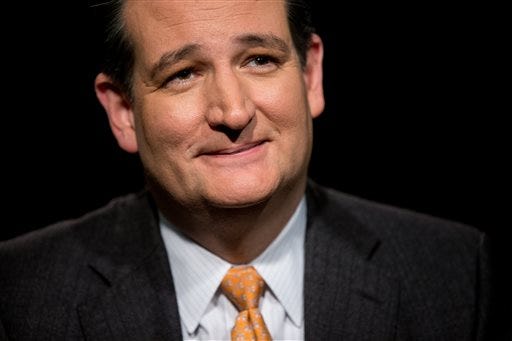
Republican presidential candidate Sen. Ted Cruz, R-Texas, speaks during an interview with the Associated Press in Washington, Tuesday, Dec. 1, 2015. Cruz outlined an approach to foreign policy inspired by Ronald Reagan, saying he would restore the American leadership missing from the world under President Barack Obama. But pressed on how he would address specific hotspots of today, Cruz places limits on American action, including refusing to back ground troops to combat the Islamic State. (AP Photo/Andrew Harnik)

WASHINGTON (AP) — Ted Cruz says the question follows him into the hallways of foreign capitals around the world. In whispered tones, heads of state pull the Texas senator and Republican candidate for president aside to ask: “Where is America?”

“We need America,” Cruz says they tell him. “The world doesn’t work without America leading.”

And so if he’s elected president next November, Cruz vows a dramatic shift in how America engages with the world. With fiery rhetoric befitting his hero status within the tea party movement, he condemns the foreign policy of President Barack Obama and his first secretary of state, Democratic front-runner Hillary Clinton, as weak, ineffective and dangerous.

Instead, he suggests, as many Republicans do, that he will follow the lead of Ronald Reagan. A gigantic mural hangs in Cruz’s Senate office featuring the Republican icon standing in front of Berlin’s Brandenburg Gate, making his famous call for Soviet leader Mikhail Gorbachev to “tear down this wall.”

“There is power to speaking the truth on the global stage,” Cruz says. “He understood America’s strength draws from our people, draws from our values, draws from the beacon of light and hope we provide to the world.”

Yet while promising to destroy the Islamic State, beat back aggression from Russia, China and Iran, and ensure extremists don’t infiltrate the U.S. homeland, Cruz also places notable limits on his approach to national security.

While Syrian president Bashar al-Assad is undoubtedly a “bad man,” removing him from power would be “materially worse for U.S. national security interests.” He is unwilling to send more U.S. ground forces into the Middle East and rejects the idea that torture can serve as an appropriate interrogation tool.

“We can defend our nation and be strong and uphold our values,” he says. “There is a reason the bad guys engage in torture. ISIS engages in torture. Iran engages in torture. America does not need to torture to protect ourselves.”

The 44-year-old first-term senator, trying to cement his place in the top tier of Republicans running for president, outlines a prospective foreign policy that is both broadly ambitious and cautious at times in the specifics.

In an election increasingly focused on national security in the wake of the Paris attacks, however, Cruz says he would have one goal above all others once in the Oval Office.

“The pre-eminent job of the commander-in-chief is to keep this country safe,” he says in an interview with The Associated Press. “It is the first responsibility.”

Cruz sat down to share his view on national security and foreign affairs in an AP Conversation — a series of extended interviews with the candidates to become the nation’s 45th president.

___

For Cruz, any discussion about how best to confront the Islamic State begins with criticism of Obama and a reminder that the president once said the U.S. did not “yet have a complete strategy” to defeat the group of violent Islamic extremists who have taken control of parts of Syria and Iraq.

Pressed for his approach, Cruz says he would keep things “very simple.”

“We win and they lose. And if I’m elected president, I will make unambiguously clear that we will destroy ISIS — not weaken it, not degrade it, but utterly destroy it,” he says, using one of the several acronyms for the group.

He says there is no room for anything other than outright victory: “ISIS has declared war on America. They are a clear and present danger. They are the face of evil.”

While Cruz’s goals are definitive, he is unwilling to go as far as several other Republican presidential contenders — among them, retired neurosurgeon Ben Carson and former Florida Gov. Jeb Bush — who have said the battle against the Islamic State must include U.S. troops on the ground.

Cruz lashed out against plans released by the Obama administration on Tuesday to deploy a new special operations force to the region, a move that puts U.S. combat troops in a more permanent role in Iraq and Syria for the first time in the fight against the Islamic State.

He argues instead for a vast intensification of the Obama administration’s existing air campaign, which he dismissed as “photo op foreign policy” that’s “not designed to succeed.” Instead, he called for “overwhelming air power” and cited the “saturation bombing” of the first Gulf War in Iraq that he said featured roughly 1,100 air attacks a day for more than a month.

“You may need some embedded special forces to direct that air power,” Cruz says, “but not the way President Obama is doing it now, which is just sending our guys over there with no mission, no plan to win, and simply over there to be targets.”

As a second step, Cruz argues for directly arming the ethnic Kurds who are fighting Islamic State forces. “In a very real sense, the Kurds are our troops on the ground,” he says.

Pressed to say under what circumstances he may favor dispatching a more substantial U.S. ground force, Cruz demurs, saying only that such scenarios exist in situations affecting “vital U.S. national security interests.”

“If and when we have to use military power, there should be a clearly defined objective at the outset. We should use overwhelming power,” he says. “When we’re done, we should get the heck out. I don’t believe in nation building.”

___

While conceding that Assad has “murdered hundreds of thousands of his own citizens” in Syria, Cruz is a harsh critic of Obama’s desire to remove him from power. He notes with an eye toward the upcoming Republican primaries that Florida Sen. Marco Rubio, a presidential rival, also thinks Assad must go.

The Middle East and the United States are better off with Assad in place, Cruz says.

“If President Obama and Hillary Clinton and Sen. Rubio succeed in toppling Assad, the result will be the radical Islamic terrorists will take over Syria, that Syria will be controlled by ISIS, and that is materially worse for U.S. national security interests,” he says.

He doesn’t stop there. In another example of limits he would follow as president, Cruz argues the U.S. should not have supported the ouster of former Iraqi President Saddam Hussein, former Egyptian President Hosni Mubarak and former Libyan leader Moammar Gadhafi.

“If you topple a stable ruler, throw a Middle Eastern country into chaos and hand it over to radical Islamic terrorists, that hurts America,” he said, arguing that the U.S. has no place litigating civil wars abroad — especially those rooted in religious disputes among Muslims.

“It is not the job of America to cause the Sunnis and Shiites to suddenly get along,” he says. “It is the job of America to prevent jihadists from murdering innocent Americans.”

His approach to Assad’s leadership of Syria aligns him with Russian President Vladimir Putin. Despite their shared belief that Assad should remain in power, Cruz called Putin “a KGB thug” — although one who is not “explicitly homicidal in the way that Iran and ISIS are.”

___

Cruz’s cites his father’s personal story as a major factor in shaping his worldview. The Cuban-born Rafael Cruz fought in the island nation’s revolution and was tortured and imprisoned before fleeing to the United States.

“It is an incredible blessing to be the child of an immigrant who fled oppression,” Cruz said of his father, now a pastor with a passionate following among evangelical Christians. “When you grow up in the home of an immigrant who’s seen prison and torture, who’s seen freedom stripped away, you grow up with an acute appreciation for how precious and fragile our liberty is.”

And yet Cruz is an outspoken opponent of allowing Syrian refugees fleeing the Assad regime to resettle in the United States. He calls the idea “lunacy” and, as have many Republicans, warns that challenges in screening the backgrounds of such refugees make it impossible to determine whether they have links to the Islamic State.

“They ought to be resettled in the Middle East in majority Muslim countries,” he said.

___

While Cruz defines the job of president first and foremost as ensuring the safety of the country, he’s also an advocate for limits on how much authority the National Security Agency should have to conduct surveillance inside the U.S.

Cruz aligned himself with civil libertarians a year ago who fought to end the government’s bulk collection of telephone records — taking on security hawks in his own party who warned that doing so would remove a valuable tool from authorities that helps protect the nation’s security.

Cruz declined to say whether he supports allowing what’s known as the PRISM program, which allows the NSA to obtain secret court orders and collect intelligence about foreign threats via U.S. Internet companies. The program is set to expire soon after the next president takes office.

“We will surely debate that in Congress and examine how to do two things at once: protect the constitutional rights of law abiding citizens and ensure that we have the tools to stop terrorists,” Cruz says.

The subject is one that will undoubtedly continue to come up as the lead-off Iowa caucuses draw closer. It’s one that allows Cruz to poke at Rubio, who has criticized his fellow senator for his position on NSA surveillance in recent weeks.

“What they’re attacking me for is something I’m very proud of,” he says. “I disagree with Marco Rubio. I don’t think the federal government has to violate the constitutional rights of hundreds of millions of law abiding citizens to keep us safe.”

___

Follow Steve Peoples on Twitter at: http://twitter.com/sppeoples

This AP Conversation is the second in an occasional series of extended interviews with the presidential candidates on a topic of interest in the 2016 campaign

Join the conversation about this story »

from Business Insider http://ift.tt/1Ioq29r

Posted in #UK