#USA Alan partners with Kry’s Livi for telemedicine appointments

//

French startup Alan is expanding beyond health insurance by offering telemedicine appointments directly from Alan . The company is partnering with Livi, Kry’s French subsidiary.

While a handful of European countries already let you talk to a doctor using video calls, France’s national health system just started allowing remote appointments.

If you need to renew your prescription or your doctor already knows you quite well, chances are you don’t need to see your doctor in person every single time. With remote appointements, you can save time and talk to a doctor more quickly. This is particularly useful if you live in the countryside.

Kry is already a well-known startup when it comes to telehealth. The company raised a $66 million Series B round back in July and operates in three countries — Sweden, Norway and Spain. Kry is building its own team of practitioners that you can find on the platform. The company created a new brand for the French market and started operating a few weeks ago.

Alan customers will be able to talk to a doctor on Livi and get reimbursed by the national health system and Alan (Update: Alan reimburses everything). Ideally, you’ll be able to talk to a doctor within a few minutes between 7 AM and 11 PM.

So Alan isn’t going to handle remote appointments directly, but the startup is going to make it as easy as possible to talk to a doctor.

French startup Doctolib is leveraging its own community of practitioners to compete with Livi and other newcomers. In a couple of months, Doctolib users will also be able to book a remote appointment on Doctolib.

Those are two different approaches — an integrated user experience compared to a marketplace. Both provide advantages and disadvantages. But it’s good to see that Alan is on top of recent regulatory changes to improve the user experience.

from Startups – TechCrunch https://ift.tt/2xVBp7a

#USA Alan partners with Kry’s Livi for telemedicine appointments

//

French startup Alan is expanding beyond health insurance by offering telemedicine appointments directly from Alan . The company is partnering with Livi, Kry’s French subsidiary.

While a handful of European countries already let you talk to a doctor using video calls, France’s national health system just started allowing remote appointments.

If you need to renew your prescription or your doctor already knows you quite well, chances are you don’t need to see your doctor in person every single time. With remote appointements, you can save time and talk to a doctor more quickly. This is particularly useful if you live in the countryside.

Kry is already a well-known startup when it comes to telehealth. The company raised a $66 million Series B round back in July and operates in three countries — Sweden, Norway and Spain. Kry is building its own team of practitioners that you can find on the platform. The company created a new brand for the French market and started operating a few weeks ago.

Alan customers will be able to talk to a doctor on Livi and get reimbursed by the national health system and Alan (Update: Alan reimburses everything). Ideally, you’ll be able to talk to a doctor within a few minutes between 7 AM and 11 PM.

So Alan isn’t going to handle remote appointments directly, but the startup is going to make it as easy as possible to talk to a doctor.

French startup Doctolib is leveraging its own community of practitioners to compete with Livi and other newcomers. In a couple of months, Doctolib users will also be able to book a remote appointment on Doctolib.

Those are two different approaches — an integrated user experience compared to a marketplace. Both provide advantages and disadvantages. But it’s good to see that Alan is on top of recent regulatory changes to improve the user experience.

from Startups – TechCrunch https://ift.tt/2xVBp7a

#USA Alan partners with Kry’s Livi for telemedicine appointments

//

French startup Alan is expanding beyond health insurance by offering telemedicine appointments directly from Alan . The company is partnering with Livi, Kry’s French subsidiary.

While a handful of European countries already let you talk to a doctor using video calls, France’s national health system just started allowing remote appointments.

If you need to renew your prescription or your doctor already knows you quite well, chances are you don’t need to see your doctor in person every single time. With remote appointements, you can save time and talk to a doctor more quickly. This is particularly useful if you live in the countryside.

Kry is already a well-known startup when it comes to telehealth. The company raised a $66 million Series B round back in July and operates in three countries — Sweden, Norway and Spain. Kry is building its own team of practitioners that you can find on the platform. The company created a new brand for the French market and started operating a few weeks ago.

Alan customers will be able to talk to a doctor on Livi and get reimbursed by the national health system and Alan (Update: Alan reimburses everything). Ideally, you’ll be able to talk to a doctor within a few minutes between 7 AM and 11 PM.

So Alan isn’t going to handle remote appointments directly, but the startup is going to make it as easy as possible to talk to a doctor.

French startup Doctolib is leveraging its own community of practitioners to compete with Livi and other newcomers. In a couple of months, Doctolib users will also be able to book a remote appointment on Doctolib.

Those are two different approaches — an integrated user experience compared to a marketplace. Both provide advantages and disadvantages. But it’s good to see that Alan is on top of recent regulatory changes to improve the user experience.

from Startups – TechCrunch https://ift.tt/2xVBp7a

#USA Alan partners with Kry’s Livi for telemedicine appointments

//

French startup Alan is expanding beyond health insurance by offering telemedicine appointments directly from Alan . The company is partnering with Livi, Kry’s French subsidiary.

While a handful of European countries already let you talk to a doctor using video calls, France’s national health system just started allowing remote appointments.

If you need to renew your prescription or your doctor already knows you quite well, chances are you don’t need to see your doctor in person every single time. With remote appointements, you can save time and talk to a doctor more quickly. This is particularly useful if you live in the countryside.

Kry is already a well-known startup when it comes to telehealth. The company raised a $66 million Series B round back in July and operates in three countries — Sweden, Norway and Spain. Kry is building its own team of practitioners that you can find on the platform. The company created a new brand for the French market and started operating a few weeks ago.

Alan customers will be able to talk to a doctor on Livi and get reimbursed by the national health system and Alan (Update: Alan reimburses everything). Ideally, you’ll be able to talk to a doctor within a few minutes between 7 AM and 11 PM.

So Alan isn’t going to handle remote appointments directly, but the startup is going to make it as easy as possible to talk to a doctor.

French startup Doctolib is leveraging its own community of practitioners to compete with Livi and other newcomers. In a couple of months, Doctolib users will also be able to book a remote appointment on Doctolib.

Those are two different approaches — an integrated user experience compared to a marketplace. Both provide advantages and disadvantages. But it’s good to see that Alan is on top of recent regulatory changes to improve the user experience.

from Startups – TechCrunch https://ift.tt/2xVBp7a

#USA Balderton’s $145M ‘secondary’ fund will give shareholders in European scale-ups the chance to exit early

//

In what looks like a European first, the London-based early-stage venture capital firm Balderton Capital is announcing it has closed a new $145 million “secondary” fund dedicated to buying equity stakes from early shareholders in European-founded “high growth, scale-up” technology companies.

Dubbed “Balderton Liquidity I,” the new fund will invest in European growth-stage companies through the mechanism of purchasing shares from existing, early shareholders who want to liquidate some or all of their shares “pre-exit.”

“Balderton will take minority stakes, between regular fund-raising rounds, making it possible for early shareholders — including angels, seed funds, current and former founders and employees — to realise early returns, reinvest capital in the ecosystem, or reward founders and early employees,” explains the firm.

The move essentially formalises the secondary share dealing that already happens — typically as part of a Series C or other later rounds — which often sees founders take some money off the table so they can improve their own financial situation and won’t be tempted to sell their company too soon, but also gives early investors a way out so they can begin the cycle all over again. Otherwise it can literally take five to 10 years before a liquidity event happens, either via IPO or through a private acquisition, if it happens at all.

“The bigger picture is there are lots of shareholders who either want or need or have to take liquidity at some point,” Balderton partner Daniel Waterhouse tells me on a call. “Founders are one part of that… but I think the majority of this fund is more targeted at other shareholders — business angels, seed funds, maybe employees who left, founders who left — who want to reinvest their money, want to solve a personal financial issue, want to de-risk their personal balance sheets, etc. So we’re not obsessed with founders in this fund, we’re obsessed with many different types of early shareholders, which for many different reasons would like to get liquidity before the grand exit event.”

Waterhouse says that one of the big drivers for doing this now is that Balderton’s analysis suggests there is “a critical mass of interesting companies” that are in the growth stage: “businesses that have got a scalable commercial engine” and a proven commercial model. This critical mass has happened only over the last two years, which is why — unlike in Silicon Valley — we haven’t yet seen a fund of this kind launch in Europe.

“We think there’s now about 500 companies in Europe that have raised over $20 million. That doesn’t mean they are all great companies but it’s an interesting, crude data point in terms of the scale they’ve got to. As a consequence, within that 500 we expect there to be quite a lot of interesting companies for this fund to help and we obviously have a pretty good lens on the market. Through our early-stage investing, and working with companies from the early-stage through to exit, and then obviously staying in touch with companies we don’t necessarily invest in, we have a pretty good sense of that from a bottom up perspective on how many opportunities are out there.”

He explained that there are three aspects behind the secondary funding strategy. First is that by investing via secondary funding, more companies will gain access to the “Balderton platform,” which includes an extensive executive and CEO network and support with recruitment and marketing. Secondly, it is good for the ecosystem as it will not only help relieve financial pressure from founders so they can “shoot for the next growth point” but will also let business angels cash out and recycle their money by investing in new startups. Thirdly, and perhaps most importantly, Balderton thinks it represents a good investment opportunity for the firm and its LPs as secondary liquidity is “underserved as a market.”

(Separately, one London VC I spoke to said a dedicated secondary fund in Europe made sense except in one scenario: that European valuations see a price correction sometime in the future promoted by the current trajectory of available funding slowing down, which he believes will eventually happen. “Funds are 10 years so they just have to get out in time,” is how said VC framed it.)

To that end, Waterhouse says Balderton is looking to do around 15-20 investments out of the fund, but in some instances may start slowly and then buy more shares in the same company at an even later stage. It will be managed by Waterhouse with support from investment principal Laura Connell, who recently joined the VC firm.

Struggling to see many downsides to the new fund — which by virtue of being later-stage is less risky and will likely command a discount on secondary shares it does purchase — I ask if perhaps Balderton is being a little opportunistic in bringing a reasonably large amount of institutional capital to the secondary market.

“No, I don’t think so,” he replies. “What we’ve seen in our portfolio is [that] the point in time when someone is looking for liquidity isn’t set on the calendar alongside when companies do fund raising. In particular as a company gets more mature, the gap between fund raises can stretch out because the businesses are more close to profitability. And so it’s not deterministic. We want to just be there to help people who are actually looking to sell out of cycle in those points of time and at the moment have very little options. If someone wants to wait, they’ll wait.”

Finally, I was curious to know how it might feel the first time Balderton buys a substantial amount of secondary shares in a company that it previously turned its nose down at during the Series A stage. After pointing out that companies usually look very different at Series A compared to later on in their existence — and that Balderton can’t and doesn’t invest in every promising company — Waterhouse replies diplomatically: “Maybe we kick ourselves a bit, but we’re quite happy with the performance of our early funds and obviously we’ll be happy to add other new companies that are doing really well into the family.”

from Startups – TechCrunch https://ift.tt/2OCUtRz

#USA Cratejoy sheds 60% of its workforce amid restructuring effort

//

Cratejoy, a startup that runs a marketplace for subscription businesses and helps founders launch and scale their own subscription box services, has laid off 18 members of its 43-person team.

The company’s co-founder and chief executive officer Amir Elaguizy confirmed the lay-offs to TechCrunch. He says the cuts are part of a restructuring effort to keep costs in line and that subscribers and merchants will not be impacted.

The startup has raised a total of $10 million to date from investors, including Charles River Ventures, SV Angel, Andreessen Horowitz, Maverick Capital, Start Fund and ACE Venture Fund. Cratejoy completed the Y Combinator accelerator program in the summer of 2013 alongside DoorDash, Le Tote and Bloom That, which itself recently hit pause on its on-demand flower service.

“This was a hard decision made by the leadership team to keep our costs in line,” Elaguizy told TechCrunch. “Whenever we’re forced to make hard staffing decisions it is difficult, and this reduction was no exception. We had to part ways with many very good and talented people.”

Elaguizy declined to elaborate on any other changes to the business.

Austin-based Cratejoy sells a curated collection of subscription boxes and helps entrepreneurs develop their own subscription box. It exists on the premise that the future of e-commerce is these packaged collections of goods delivered on a recurring basis.

For some time, venture capitalists were drinking the subscription box Kool-Aid, but those days appear to be over. Funding into subscription box startups, according to Crunchbase data, has dropped off significantly.

Cratejoy was founded in 2014 amid the subscription box funding boom. The same year it completed its $4 million Series A, Birchbox completed a $60 million round, Dollar Shave Club raised $13 million and Stitch Fix brought in $30 million. With 30 companies raising about $200 million, 2014 was the highest on record for investment in subscription box companies.

Last year, companies in the sector raised just $39.7 million across 20 deals.

from Startups – TechCrunch https://ift.tt/2yhQQpZ

#USA Meet the 10 startups in Techstars NYC’s summer 2018 class

//

Not even Techstars NYC can avoid the end of summer, where 10 startups are wrapping up their participation in the accelerator’s summer program.

This also marks the end of Alex Iskold’s tenure as managing director of the program. He’s certainly going out with a varied groups of startups — these entrepreneurs are working on everything from tampons to spices to skin care, plus more traditional tech categories like finance and security.

Here’s a quick rundown of each company.

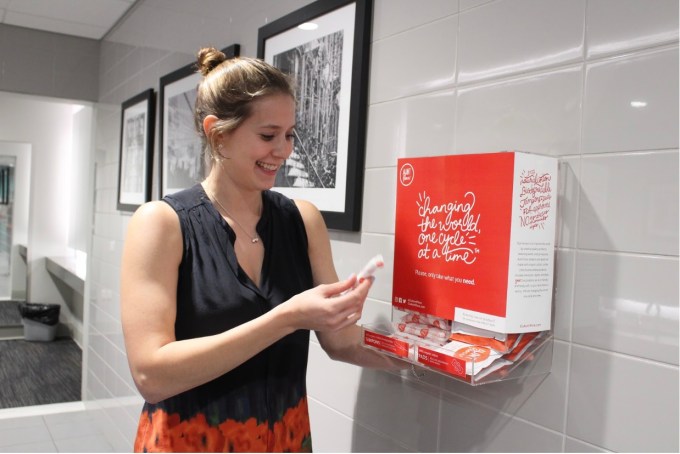
    • Aunt Flow helps businesses and schools stock free tampons. Founder and CEO Claire Coder argues that if businesses are providing toilet paper for free, they should do the same with menstrual products. Current customers include Viacom, Twitter, and Brown University. (And it’s also selling products directly to customers.)

aunt flow

    • Burlap and Barrel finds spices from farmers all over the world, selling them to consumers and restaurants (including Dig Inn). The startup emphasizes the stories behind the spices, and it says it currently offers organic black peppercorns from Zanzibar, wild mountain cumin from Afghanistan, smoked pimenton paprika from Spain, plus 40 other spices.
    • Clever Girl Finance offers financial education content and tools for women of color. Founder and CEO Bola Sokunbi is an immigrant, computer science major and a certified financial educator. The startup currently offers more than 20 different courses, covering topics like getting out of debt and managing your wedding on the budget, all accessible for $10 per month.
    • Concert Finance automates financial reporting, starting with sales commissions. This allows sales reps to get real-time updates on the commissions that they’re earning. It works on top of Salesforce with no developer integration work required.
    • FlyThere connects customers with drone operators, allowing those customers to fly drones remotely. The company is pitching this as a way for people to experience locations around the world without actually traveling there. It’s available for visits to eight locations already, including the Big Buddha temple in Thailand and the pirate ship in Cancun.
    • With Le CultureClub, customers can test the “microbiome” of their skin by swabbing their skin and sending a sample to the startup. Le CultureClub can then give them access to a dashboard with personalized skincard recommendations.
    • Pandium aims to make it easier for B2B software companies to support integrations. The platform handles authentication, scheduling and other basic issues. That doesn’t eliminate the work for developers, but it’s supposed to allow them on the core integration logic, and supposedly reduces engineering time by 80 percent.
    • Perch aims to improve physical training and coaching by installing a camera and tablet, which is mounted on gym equipment to track and display data like number of reps and velocity. It’s currently targeting college and professional teams, and plans to expand to commercial and home gyms.

Perch

  • SeekWell co-founder Mike Ritchie spent 15 years leading analytics teams at Bank of America and at startups. His goal is to change the way analytics teams share code by offering them an analytics platform and common code repository, allowing them to share and reuse SQL queries.
  • SIEmonster is focused on security information and event management, using deep learning to detect and defend against attacks. Its partners include HP, which is distributing the platform to financial institutions like Bank of America.

from Startups – TechCrunch https://ift.tt/2DRftzx

#USA Cover collects $16M to insure your gadgets, pets… anything

//

People procrastinate about buying insurance because it’s such a boring and complicated chore to compare policies. But Cover combines plans from 45 insurance companies into a single marketplace so it’s easy to find the best one for your car, home, rental, business, personal property, pets, jewelry and more. Now Cover is building powerful onboarding tricks like a driving school that earns you lower car insurance rates, and a way for Shopify merchants to sell warranties for their items.

The potential to use tech to run circles around the old insurance brokers has attracted a new $16 million Series B for Cover led by Tribe Capital’s Arjun Sethi, who led the Series A and sits on the startup’s board. The round was joined by Y Combinator, Social Capital, Exor and Samsung, and brings the company to a total of $27.1 million in funding.

“Insurance isn’t very different from being a white-collar bookie, where the house’s rake is too high and the dollars at stake are in the hundreds of billions in the U.S. alone,” says co-founder and CEO Karn Saroya. “This, all to the detriment of regular people, who view insurance as a tax. We’re here to change that perception.”

Saroya and his co-founders have deep ties. He went to high school with Anand Dhillon, is engaged to Natalie Gray and hired Ben Aneesh at the team’s previous startup, a high-end fashion marketplace called StyleKick that was eventually acqui-hired by Shopify. “We were tossing around ideas for what we wanted to do after StyleKick/Shopify, running hackathons on weekends. We built a couple different apps, but Cover — the MVP, where we just asked potential customers to take pictures of things they wanted to insure, surprised us” says Saroya. “Our customers sent us walkthroughs of their homes, pictures of their dogs and videos of themselves washing their cars. When you come across behavior that violates your expectations in consumers, that’s usually when you double-down.”

Cover co-founder and CEO Karn Saroya

So they built Cover, where you don’t have to cobble together an endless set of insurance websites or wait on hold. You download the app, pick your item, list how much you paid and where, provide some photos or video of its condition using its TensorFlow-equipped camera and Cover will check across its insurance partners and find you the best quote instantly. You can easily see what is and isn’t covered, learn how to make claims, and text with an agent if you have questions. For example, I was quickly quoted $5 per month to insure my new iPhone against damage but not loss or theft.

Cover earns between 10 to 35 percent per dollar of premium you pay. Its annualized premium already exceeds $8.5 million and is growing 30 percent per month. Thanks to its low-churn business model, easy cross-promotion of products, low training requirements for customers and no need to constantly update its existing subscriptions, Cover starts to look like a very efficient software-as-a-service business.

The big question remains whether Cover can consistently find the best rates for customers so they don’t second guess its quotes and search somewhere else. It will have to outcompete multi-insurance providers, like State Farm and Geico, as well as startups like MetroMile tackling specific insurance verticals with mobile apps. To really earn the big profits, Cover is building out its own in-house insurance plans. But that will put it under constant threat of insuring the wrong risks and ending up paying out too much.

“We built Cover because we saw an opportunity to build elegant products that could deliver on pricing and customer experience in a way that no incumbent insurance entity can,” Saroya concludes. By bringing the service to mobile and making it a seamless part of owning something, Cover could ensure you’re insured, even if insurance is the last thing you want to think about.

from Startups – TechCrunch https://ift.tt/2NVKI1b

#USA See you in Vancouver on Thursday

//

We’ve finalized the Vancouver micro meetup for this Thursday. We’ll be holding it at Hoot Suite HQ on 5, East 8th Ave at 7pm on October 4. Extra special thanks to the folks at Hoot Suite for helping out.

You must RSVP here so we know how many are attending. If you’d like to pitch please fill out this form and I will contact you ONLY IF YOU ARE CHOSEN. The best pitch will win a table at Disrupt Berlin.

Since there will be no booze at the event we’ll have an extra special drinkathon at 9pm at a bar of your choosing. I’m open to suggestions.

I love doing these little meetups because it gives me a good view on the startup scene in a city so I hope you’ll join us. See you all soon!

from Startups – TechCrunch https://ift.tt/2OrZtIw

#USA Rich-text editing platform Tiny raises $4M, launches file management service

//

Maybe you’ve never heard about Tiny, but chances are, you’ve used its products. Tiny is the company behind the text editors you’ve likely used in WordPress, Marketo, Zendesk, Atlassian and other products. The company is actually the result of the merger of Moxiecode, the two-person team behind the open source TinyMCE editor, and Ephox, the company behind the Textbox.io editor. Ephox was the larger company in this deal, but TinyMCE had a significantly larger user base, so Tiny’s focus is now almost exclusively on that.

And the future of Tiny looks bright thanks to a $4 million funding round led by BlueRun Ventures, the company announced today (in addition to a number of new products). Tiny CEO Andrew Roberts told me the round mostly came together thanks to personal connections. While both Ephox and Moxiecode were profitable, now seemed like the right time to try to push for growth.
Roberts also noted that the merger itself is a sign of the company’s ambitions. “I think we’ve always been searching for how we could get that hockey stick growth to kick in,” he said. “I don’t think we would’ve done the merger if we weren’t hungry for that next level of success. So after two or three years [after the merger], we started to feel like we had the signs of a business that could grow into something significant and big and with some good numbers behind it. So were: ‘alright, now is the time.’”

While Tiny continues to offer its free open-source editor, it offers a cloud-hosted version of its service with a fee based on the number of users for developers who want the company to handle the backend infrastructure, as well as a self-hosted version that Tiny charges for based on the number of servers it runs on.

Roberts noted that quite a few developers try to build their own text editors. Yet handling all the edge cases and ensuring compatibility is actually quite hard. He estimates that it would take two or three years to build a new text editor from the ground up.

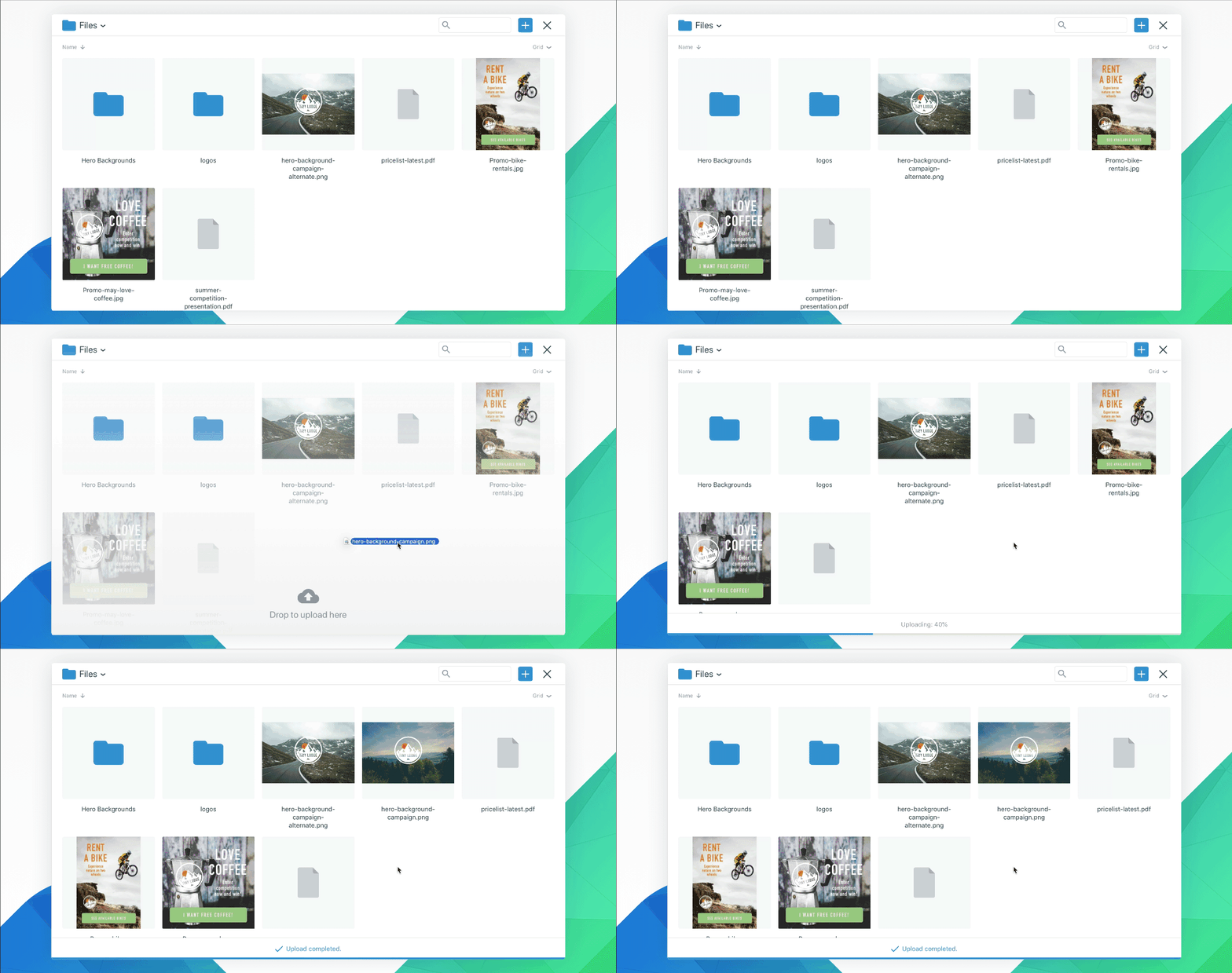
As part of today’s announcement, Tiny is also launching a number of new products. The most important of those from a business perspective is surely Tiny Drive, a file storage service that developers can integrate with the TinyMCE editor. Tiny Drive offers all of the file storage features that one would expect, including the ability to handle images and other assets. Tiny Drive uses AWS’s S3 file storage service and CloudFront CDN to distribute files.

Also new is the Tiny App Directory, which Roberts likened to the Slack App Directory. The idea here is to offer a curated list of TinyMCE plugins. For now, there is no revenue sharing here or any other advanced features, but it’s definitely a play for creating a larger ecosystem around the editor.

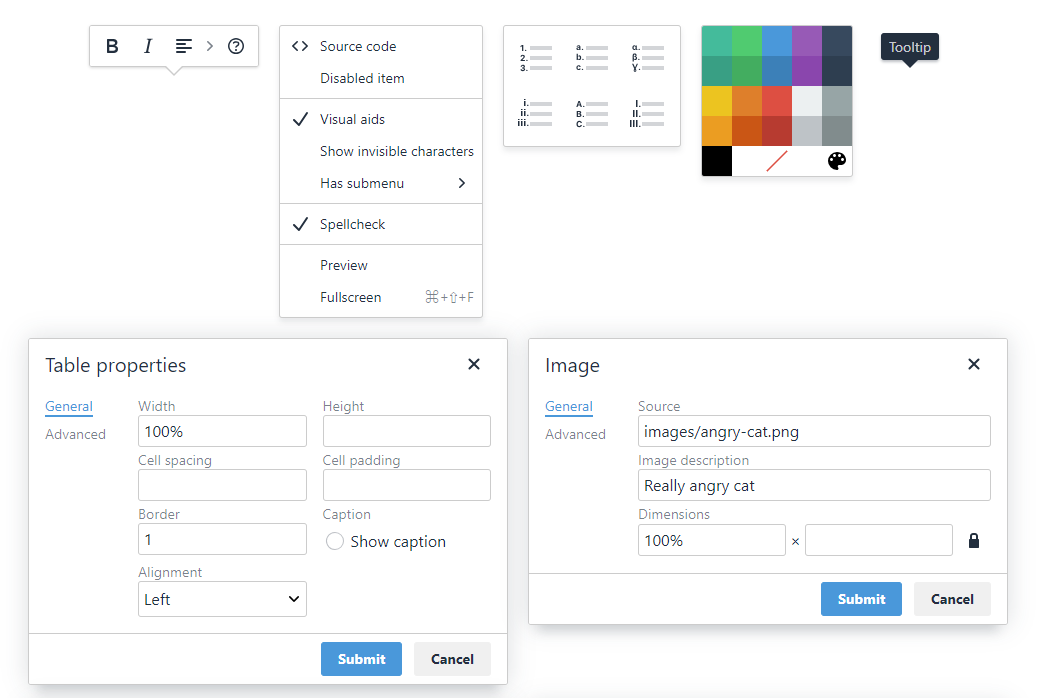
Tiny also today announced the first developer preview of the TinyMCE 5 editor. The updated editor features a new user interface that gives the editor a more modern look. Developers can customize it to their hearts’ content, with plenty of compatible plugins and advanced features to extend the editor based on their specific needs. There’s also now an emoticon plugin.

Talking about customized editors: You’re probably aware of WordPress’ efforts to modernize its text editor. The new editor, called Gutenberg, focuses more on page building than the current one, but as Roberts stressed, the underlying rich text editor is still based on the TinyMCE libraries. He noted that even the classic version, though, was always a subset of TinyMCE’s editor. What’s maybe even more important for Tiny as a company, though, is that none of WordPress’ changes will influence its business, even though WordPress and TinyMCE have long had what he describes as a “symbiotic relationship.”

“Tiny’s core business comes from a mix of software vendors, large enterprises, and agencies building custom solutions for clients that has little to do with the WordPress ecosystem,” he notes. “It is a popular and commercially viable project in its own right.”

from Startups – TechCrunch https://ift.tt/2IyQT5t