#USA Qonto raises $23 million to improve business banking

//

French startup Qonto has raised a $23 million funding round for its fintech product. The company is trying to make business banking cheaper, faster and more efficient.

Existing investors Valar Ventures and Alven are once again leading the round. The European Investment Bank Group is also participating.

If you are running a small company or work as a freelancer, Qonto wants to replace your professional bank account. When you sign up, you get a French IBAN, one or multiple debit cards and the ability to send and receive money.

And then, it works pretty much like any challenger bank. You can create virtual cards, order more cards for your team, get real time notifications and freeze cards. This is a breath of fresh air compared to traditional business banks and their time-consuming processes.

You can then sync your transactions with accounting and invoicing services, and grant access to your accountant. Premium plans let you select multiple administrators and create a validation workflow to approve expensive transfers for instance.

With today’s funding round, the company plans to double the size of the team and create its own payment infrastructure. Qonto currently relies heavily on Treezor for the back end. The startup also plans to expand to Germany, Italy and Spain in 2019.

Qonto now has 90 employees and 25,000 clients. The company has managed $2 billion in total transaction volume so far. The fact that the same VC funds keep investing more money into Qonto is a great vote of confidence.

from Startups – TechCrunch https://ift.tt/2py64D1

#USA Understanding Renaud Laplanche’s next Upgraded act

//

Renaud Laplanche spent ten years building LendingClub. In the process, he created an industry from scratch. Circumventing conventional banking channels for consumer credit began in 1996 when Chris Larsen started E-LOAN, which ultimately led to Prosper Marketplace. But LendingClub, which Laplanche founded in 2007, was and remains the poster child for the business of marketplace lending. The industry’s short history has been volatile, characterized by both triumphant hype and utter lack of confidence.
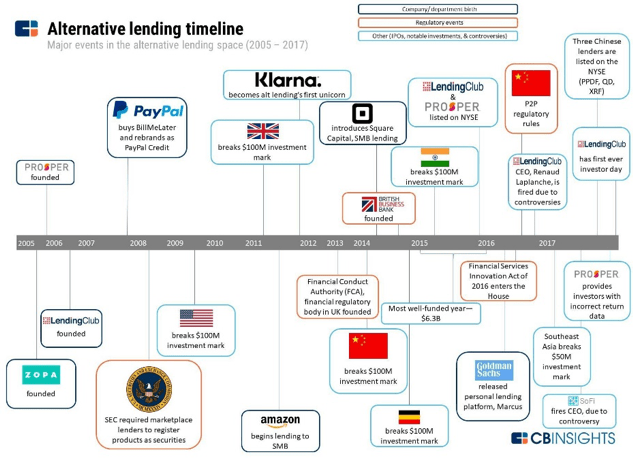
History of the Marketplace Lending Industry, CB Insights

While LendingClub has struggled in the public markets since their late 2014 IPO, they have managed to propel their industry into significance, while rapidly expanding their share of the personal loan market to 10%.

After his well-publicized departure in May 2016, Laplanche got started on his next venture in a hurry. Just a few months later he started Credify, ultimately renamed to Upgrade, a company that bears a striking resemblance to LendingClub. In just two years Upgrade has raised $142 million in funding, while originating more than $1 billion in loans since August 2017.

With Upgrade, Laplanche has the opportunity to start fresh with the benefit of hindsight. The initial promise of LendingClub and their competitors was unbundling the banks. Now, to persist and grow, marketplace lenders have realized they need to rebundle, providing an array of bank-like services to better serve their end customers. This post explores what Laplanche is doing differently this time with Upgrade.

Total Addressable Market ≠ Value Capture

There has been a general recognition across many fintech businesses that marketplace business models aren’t enough. The mutually-beneficial arrangement of marketplace lending is a perfect example. Superior customer experience, expedited loan decision, quick receipt of funds, and lower operational costs without legacy infrastructure were the selling points. Charles Moldow famously called it a “trillion-dollar opportunity” in 2014.

He may still be right, but in order to realize the opportunity, marketplace lenders need to capture a larger, more regular share of borrower’s attention. Loans may be high-volume purchases, but they’re not high-frequency transactions. So when a platform like LendingClub facilitates a loan so someone can refinance their outstanding credit card debt, is there really a relationship with the customer there? Capital is provided, customer service is available, and monthly payments are made. That’s all there is to it.

Total addressable market (TAM) is frequently used to assess opportunity. A critical part of the TAM estimation process might have been overlooked in the early assessments of the alternative lending industry. The large numbers in the figure below reflect an alluring market that LendingClub, Prosper, Avant, Upstart, OneMain, Best Egg and others have attempted to capitalize upon.

The notion of a replacement cycle, which I’ll borrow from Michael Mauboussin, is an important consideration here, particularly in a high volume, low frequency transaction relationship such as consumer lending. Just because a borrower refinances their credit card debt with a loan from LendingClub, there’s little guarantee that all of the money spent on acquiring that customer will lead to future transactions with that customer. Yet, in order for these companies to succeed, the average revenue per user (ARPU) is going to have to rise through some combination of repeat customers and complementary services to deepen the relationship and create new revenue channels.
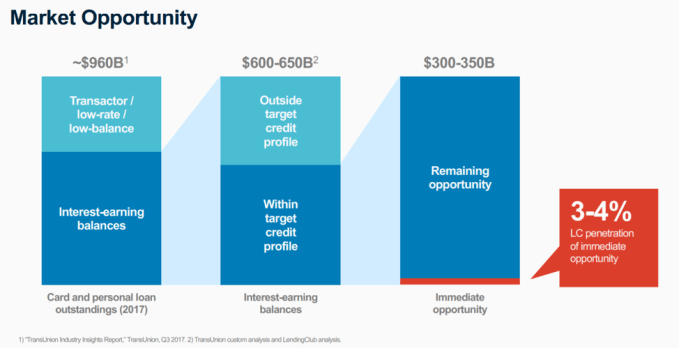
The market opportunity for marketplace Lenders, LendingClub Investor Day 2017

With this realization in mind, fintech players across the board have focused on deepening relationships with customers to drive sales and lower SG&A costs. Customer acquisition is a major component of the income statement for these companies. The more engagement a lender has with their end customer, the greater the chance they stand to not only be called upon when a borrower needs to borrow again, but ultimately pinpoint opportunities for product recommendations.

And that’s exactly what Upgrade is doing. In many ways, they’re quite similar to LendingClub. Upgrade offers personal loans between $1,000 and $50,000 over three-to-five-year repayment periods at rates competitive with major banks. LendingClub varies a bit in the principal amount offerings and APRs, but they essentially do the same thing. Loans are originated through WebBank, the partner bank that also works with LendingClub. Operationally, there’s a blockchain component for data remediation and security purposes. However, the extent and value of this application are unclear.

Marrying Credit with Financial Wellness

The notion of financial wellness is increasingly popular among consumer fintech companies, as well as incumbent financial institutions. It reflects a transition away from a purely transactional relationship to a fiduciary one, as we’ve also seen in the wealth management industry. The tricky thing about this is that although it may be the right thing to do, late fees and overdraft penalties make up a sizeable portion of traditional bank revenue.

Where Upgrade differs from LendingClub is in their customer engagement model. Upgrade provides several features to customers that resemble a conventional personal financial management (PFM) app. Their Credit Health service offers free advice and monitoring tools, personalized recommendations, and customized updates for individual credit scores and underlying rationale. Additionally, they offer a financial education tool open to the public called Credit Health Insights, which offers tips and tricks for debt management and financial wellness. At the surface, there’s little differentiation here. A free credit score is becoming table stakes for any financial institution, and personalized insights are to be expected.

Upgrade’s borrower value proposition, LendIt 2018 Conference

In Upgrade’s case, however, the framing of the dual service is compelling. Typically, online lenders only approve 10-15% of applicants. While the credit underwriting models are looking for the most compelling borrower profiles who will pay back their loans, the majority of interested borrowers are sent back to the drawing board.

A major focus of Upgrade is to build the credit of the other 85-90% of applicants who are typically rejected so that they improve their profile and obtain a loan in the future. Credit repair and financial wellness are underserved markets today, although companies like Bloom Credit are working to change the record. This product combination helps to unify the interests of Upgrade and borrowers, both approved and rejected.

Reinventing Consumer Credit?

At the LendIt Conference in 2017, Laplanche concluded his presentation with a reference to the Wright Brothers. He discussed how he was enamored with their ability to combine two things to create something entirely new, which in their case was “wheeling and flying.” A year later, he returned to LendIt with a new product release that borrowed from the innovation strategy of Orville and Wilbur.

Upgrade launched a first of its kind product, a Personal Credit Line, a hybrid of a credit card and an unsecured loan. Here’s how it works: customers get approved for up to $50,000 in credit, from which they can draw down as needed. They only pay interest on what’s borrowed, over the course of a 12-60-month timeframe. The interest rate is also fixed over the term of the loan.

Upgrade’s Personal Credit Line, a hybrid of a personal loan and a credit card, Upgrade

The product is built on the premise that the level of innovation in the origination of consumer credit has been somewhat limited. Laplanche attempted to reinvent it once with the creation of LendingClub. In some ways, it worked. Personal loans originated by fintech lenders account for roughly a third of outstanding consumer loans according to Transunion. Now he’s trying to do it again.

First Mover Disadvantage in Consumer Fintech

When I first read the press release for the Personal Credit Line, I thought it was a very compelling way to expand the menu of options to qualified consumers. It puts more control in the hands of the borrower, so they can avoid the vicious cycle of consumer debt. I was also reminded of a comment made by Josh Brown, CEO of Ritholtz Wealth Management, after Wealthfront released their “Portfolio Line of Credit” product in April 2017. He said that while it might sound flashy, there’s nothing holding Schwab or Fidelity back from offering the same product tomorrow.

What’s so challenging about consumer-facing fintech companies is that customers are expensive to acquire, they’re difficult to keep, and products are easy to replicate. Providing a free credit score is easily accessible through a partnership with Equifax or Experian. It’s commoditized. The situation is similar with personal financial management tools. This Personal Credit Line seems awfully similar. What’s to stop Chase or Goldman’s Marcus from offering an identical product, perhaps with even better rates? U.S. Bank just launched a similar product, albeit for a different use case, called Simple Loan. It’s a $100 to $1,000 loan marketed as a payday lending alternative, with a roughly 20% lower interest rate than typical payday lender offers.

There is something to be said for being first to market, but ease of replication limits the defensibility of that position. There is a clear interest in an expansion into new products, which will continue to help Upgrade to differentiate the value proposition to consumers, and maybe one day small businesses. The unfortunate reality is that bigger players with an existing customer base and a lower cost of capital are on their tail.

Forget about Democratization
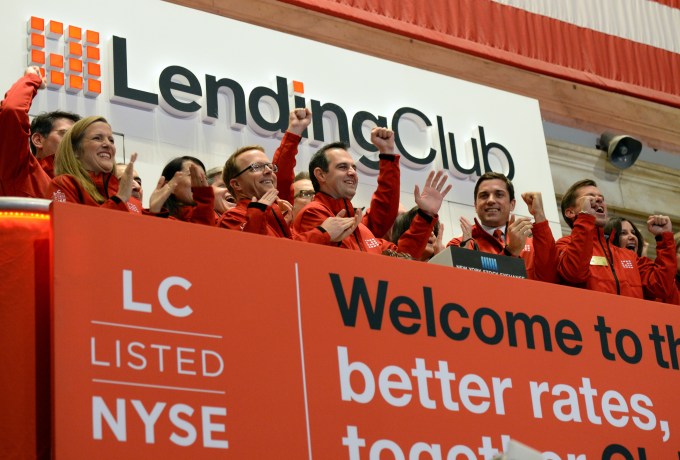
Renaud Laplanche rings the bell with his team at LendingClub (DON EMMERT/AFP/Getty Images)

The real insight that distinguishes Upgrade from LendingClub is the profile of the users. On the supply side of the marketplace, Upgrade only welcomes institutional investors. LendingClub was, and still is, marketed to individuals and institutions.

The peer-to-peer model turned out to be a little too idealistic to serve as the foundation for a business. The concept of a marketplace is really attractive – the ability to invest in others, as cliché as that may sound, has a philanthropic twist to it that even implies a social good. Or, at the very least, an alignment of interests. Except interests aren’t aligned because of the mercurial nature of retail investors, which makes for unstable sources of capital.

LendingClub’s original business model, in the pure P2P form, was reliant on the ability to create a new asset class. The notion of investing in consumer credit may sound compelling, and return prospects may be even more appealing. But, you can’t bootstrap an asset class and base a business model around retail adoption. LendingClub had to solve for distribution of their service, as well as the dissemination of the broader concept of unsecured consumer lending as an asset class.

On Laplanche’s second go around with Upgrade, there’s no more promise of democratization of a new asset class. Instead, large multi-billion-dollar credit investors own the supply side of the marketplace. As a result, there’s a more stable capital base of institutional investors who know what they’re investing in and the reason why they’re investing in it.

What Laplanche did this time around was base his business model around stability. In this market it can pay to be a follower. LendingClub touts the notion that they have “brought a new asset class to investors,” but that education campaign came at a serious cost. It also invited boiler room-like sales behavior from competitors. Upgrade is stepping in after a decade of marketing to scale an untested industry to the masses. Fortunately, a lot of the work has already been done for them.

How Different Can You Be?

Upgrade is led by as experienced and forward-thinking of a leader as they come in the marketplace lending industry. They expect to originate over $2 billion loans in 2018 and hit profitability by year-end as well. They’re redefining convention when it comes to consumer credit products.

The question, however, remains: how long can the novelty last? Consumer fintech is fiercely competitive. It’s also increasingly occupied by incumbents with far lower costs of capital, large existing customer bases, and the ability to experiment in a way that a startup cannot. The unsecured consumer lending space has attracted mountains of capital in the past five years, but the opportunity is clearly defined. The number of lenders issuing more than 10,000 personal loans per year has more than doubled since 2011.

There’s a network effect component to marketplace lending businesses, particularly as lenders are able to maintain more connected relationships with consumers. But when it comes to standing apart from the rest of the pack, a differentiated product offering isn’t a very wide moat.

from Startups – TechCrunch https://ift.tt/2PSr16O

#USA VCs say Silicon Valley isn’t the gold mine it used to be

//

In the days leading up to TechCrunch Disrupt SF 2018, The Economist published the cover story, ‘Why Startups Are Leaving Silicon Valley.’

The author outlined reasons why the Valley has “peaked.” Venture capital investors are deploying capital outside the Bay Area more than ever before. High-profile entrepreneurs and investors, Peter Thiel, for example, have left. Rising rents are making it impossible for new blood to make a living, let alone build businesses. And according to a recent survey, 46 percent of Bay Area residents want to get the hell out, an increase from 34 percent two years ago.

Needless to say, the future of Silicon Valley was top of mind on stage at Disrupt.

“It’s hard to make a difference in San Francisco as a single entrepreneur,” said J.D. Vance, the author of ‘Hillbilly Elegy’ and a managing partner at Revolution’s Rise of the Rest Fund, which backs seed-stage companies based outside Silicon Valley. “It’s not as a hard to make a difference as a successful entrepreneur in Columbus, Ohio.”

In conversation with Vance, Revolution CEO Steve Case said he’s noticed a “mega-trend” emerging. Founders from cities like Pittsburgh, Detroit or Portland are opting to stay in their hometowns instead of moving to U.S. innovation hubs like San Francisco.

“The sense that you have to be here or you can’t play is going to start diminishing.”

“We are seeing the beginnings of a slowing of what has been a brain drain the last 20 years,” Case said. “It’s not just watching where the capital flows, it’s watching where the talent flows. And the sense that you have to be here or you can’t play is going to start diminishing.”

Farewell, San Francisco

“It’s too expensive to live here,” said Aileen Lee, the founder of seed-stage VC firm Cowboy Ventures, amid a conversation with leading venture capitalists Spark Capital general partner Megan Quinn and Benchmark general partner Sarah Tavel .

“I know that there are a lot of people in the Bay Area that are trying to work on that problem and I hope that they are successful,” Lee added. “It’s an amazing place to live and we’ve made it really challenging for people to live here and not worry about making ends meet.”

One of Cowboy’s portfolio companies opted to relocate from Silicon Valley to Colorado when it came time to scale their business. That kind of move would’ve historically been seen as a failure. Today, it may be a sign of strong business acumen.

Quinn said that of all 28 of Spark’s growth-stage portfolio companies, Raleigh, North Carolina-based Pendo has the easiest time recruiting folks locally and from the Bay Area.

She advises her Bay Area-based late-stage companies to open a second office outside of the Valley where lower-cost talent is available.

“We often say go to [flySFO.com], draw a three-hour circle around San Francisco where they have direct flights, find a city that has a university and open up a second office as quickly as possible,” Quinn said.

Still, all three firms invest in a lot of companies based in San Francisco. Of Benchmark’s 10 most recent investments, for example, eight were based in SF, according to Crunchbase.

“I used to believe really strongly if you wanted to build a multi-billion dollar company you had to be based here,” Tavel said. “I’ve stopped giving that soap speech.”

Underestimated talent

A lot of Bay Area VCs have been blind to the droves of tech talent located outside the region. Believe it or not, there are great engineers in America’s small- and medium-sized markets too.

At Disrupt, Backstage Capital founder Arlan Hamilton announced the firm would launch an accelerator to further amplify companies led by underestimated founders. The program will have cohorts based in four cities; San Francisco was noticeably absent from that list.

Instead, the firm, which invests in underrepresented founders and recently raised a $36 million fund, will work with companies in Philadelphia, Los Angeles, London and one more city, which will be determined by a public vote. Aniyia Williams, the founder of Tinsel and Black & Brown Founders, will spearhead the Philadelphia effort.

“For us, it’s about closing that wealth gap to address inequity in tech,” Williams said. “There needs to be more active participation from everyone.”

Hamilton added that for her, the tech talent in LA and London is undeniable.

“There is a lot of money and a lot of investors … it reminds me of three years ago in Silicon Valley,” Hamilton said.

Silicon Valley vs. China

Silicon Valley’s demise may not be just as a result of increased costs of living or investors overlooking talent in other geographies. It may be because of heightened competition abroad.

Doug Leone, an early- and growth-stage investor at Sequoia Capital, said at Disrupt that he’s noticed a very different work ethic in China.

Chinese entrepreneurs, he explained, are more ruthless than their American counterparts and they’re putting in a whole lot more hours.

“I’ve had dinner in China until after 10 p.m. and people go to work after 10 p.m.,” Leone recalled.

“We don’t see that in the U.S. I’m not saying the U.S. founders oughta do that but those are the differences. They are similar in character. They are similar in dreams. They are similar in how they want to change the world. They are ultra-driven … The Chinese founders have a half other gear because I think they are a little more desperate.”

Much of this, however, has been said before and still, somehow, Silicon Valley remained the place to be for investors and startup entrepreneurs.

The reality is, those engaged in tech culture are always anxiously awaiting for the bubble to pop, the market to crash and for “peak Valley” to finally arrive.

Maybe, just maybe, Silicon Valley is forever.

Here’s more of our coverage of Disrupt 2018.

from Startups – TechCrunch https://ift.tt/2xwFsXt

#USA uBiome is jumping into therapeutics with a healthy $83 million in Series C financing

//

23andMe, IBM and now uBiome is the next tech company to jump into the lucrative multi-billion dollar drug discovery market.

The company started out with a consumer gut health test to check whether your intestines carry the right kind of bacteria for healthy digestion but has since expanded to include over 250,000 samples for everything from the microbes on your skin to vaginal health — the largest data set in the world for these types of samples, according to the company.

Founder Jessica Richman now says there’s a wider opportunity to use this data to create value in therapeutics.

To support its new drug discovery efforts, the San Francisco-based startup will be moving its therapeutics unit into new Cambridge, Massachusetts headquarters and appointing former Novartis CEO Joseph Jimenez to the board of directors as well.

The company has a healthy pile of cash to help build out that new HQ, too, with a fresh $83 million Series C, lead by OS Fund and in participation with 8VC, Y Combinator, Dentsu Ventures and others.

The drug discovery market is slated to be worth nearly $86 billion by 2022, according to BCC Research numbers. New technologies — those that solve logistics issues and shorten the time between research and getting a drug to market in particular — are driving the growth and that’s where uBiome thinks it can get into the game.

“This financing allows us to expand our product portfolio, increase our focus on patent assets and further raise our clinical profile, especially as we begin to focus on commercialization of drug discovery and development of our patent assets,” Richman said.

Though its unclear at this time which drug maker the company might partner up with, Richman did say there would be plenty to announce later on that front.

So far, the company has published over 30 peer-reviewed papers on microbiome research, has entered into research partnerships with the likes of the Center for Disease Control (CDC) and leading research institutions such as Harvard, MIT and Stanford and has previously raised $22 million in funding. The additional VC cash puts the total amount raised to $105 million to date.

from Startups – TechCrunch https://ift.tt/2NxOVrO

#USA Cleo, the ‘digital assistant’ that replaces your banking apps, picks up $10M Series A led by Balderton

//

When Cleo, the London-based ‘digital assistant’ that wants to replace your banking apps, quietly entered the U.S., the company couldn’t have expected to be an instant hit. Many better funded British startups have failed to ‘break America’. However, just four months later, the fintech upstart counts 350,000 users across the pond — claiming more than 600,000 active users in the U.K., U.S. and Canada in total — and says it is adding 30,000 new signups each week. All of which hasn’t gone unnoticed by investors.

Already backed by some of the biggest VC names in the London tech scene — including Entrepreneur First, Moonfruit founder Wendy Tan White, Skype founder Niklas Zennström, Wonga founder Errol Damelin, TransferWise founder Taavet Hinrikus, and LocalGlobe — Cleo is adding Balderton Capital to the list.

The European venture capital firm, which has previously invested in fintech unicorn Revolut and the well-established GoCardless, has led Cleo’s $10 million Series A round, in which I understand most early backers, including Zennström, also followed on. One source told me the Series A gives the hot London startup a post-money valuation of around £30 million (~$39.7m), although Cleo declined to comment.

In a call with co-founder and CEO Barney Hussey-Yeo, he explained that the new capital will be used to continue scaling the company, with further international expansion the name of the game. Hussey-Yeo says Cleo will be targeting Western Europe, the Americas, and Australasia, aiming to launch in a whopping 22 countries in the next 12 months, as Cleo bids to become the “default interface” for millennials interacting and managing their money.

Primarily accessed via Facebook Messenger, the AI-powered chatbot gives insights into your spending across multiple accounts and credit cards, broken down by transaction, category or merchant. In addition, Cleo lets you take a number of actions based on the financial data it has gleaned. You can choose to put money aside for a rainy day or specific goal, send money to your Facebook Messenger contacts, donate to charity, set spending alerts, and more.

However, in the context of traction and Cleo’s broader global ambitions, it is the decision not to become a bank in its own right, that Hussey-Yeo feels is really beginning to bear fruit. His argument has always been that you don’t need to be a bank to become the primary way users interface with their finances, and that without the regulatory and capital burden that becoming a fully licensed bank brings, you can scale much more quickly. I have a feeling that strategy — and its pros and cons — has a long way to play out just yet.

from Startups – TechCrunch https://ift.tt/2xGjO2u

#USA uBeam wireless power’s CEO Meredith Perry steps aside amidst B2B pivot

//

After repeatedly missing self-imposed deadlines for progress on its wireless charging-at-a-distance phone case, uBeam’s CEO Meredith Perry has decided to shift out of the CEO position and into a board member and senior advisor role. She’d founded the company in 2011 from her dorm room and brought in over $40 million in funding by selling a wide range of elite investors on her vision for a cordless future, including Andreessen Horowitz, Founders Fund, CrunchFund (disclosure: started by TechCrunch’s founder), Marissa Mayer, and Mark Cuban.

Now rather than trying to build its own consumer products like wireless power transmitters and receivers that could charge your phone from across the room using ultrasound frequencies, uBeam is pivoting to licensing its technology for use in other companies’ products.

“Meredith made the decision to step down as CEO. She wanted the company to hire a CEO who had experience in overseeing the rollout of a b2b electronics product” tweeted one of the startup’s lead investors, Mark Suster of Upfront Capital. Axios’ Dan Primack reported the news earlier today. TechCrunch spoke to Perry but she declined to comment on the record.

For the interim, uBeam’s head of HR and finance Jacqueline McCauley who joined in 2016 will lead the company. In a blog post today, she announced that “Meredith felt it was time to bring on a seasoned executive in the electronics field to lead the company through its commercialization phase. The company has begun a search for this new CEO.”

uBeam had wowed investors and AllThingsD conference attendees in 2011 with a demo showing it could deliver at least some power over a distance of few feet. A source at one point said uBeam was holding talks with top retail and dining chains, and insinuated one of the world’s top phone makers might build on its technology.

But the startup made big promises about public demonstrations and the efficiency of its technology it couldn’t keep. In 2015 Perry had told TechCrunch real-life public demos would be ready the next year, which came and went.

In 2016, things started to fall apart. The startup’s former VP of Engineering Paul Reynolds wrote a series of blog posts accusing uBeam’s technology of not working, and noted that “When I left it was an ugly departure, but was reported to the investors as ‘the VP Engineering left for personal reasons’ — personal reasons being ‘sick of putting up with this bullshit’.” He also revealed that uBeam’s original CTO and new CFO had left the company, and that Perry’s co-founder Nora Dweck had sued her over an unfair equity split and settled.

It wasn’t until 2017 that uBeam gave a two limited public demonstrations at the Upfront Ventures conference and to USA Today. It proved that an impractically large uBeam transmitter could deliver enough power over the distance of four to ten feet to make multiple phones signal they were charging. But the company never opened itself up to more scrutiny regarding just how much power it was delivering, how fast a phone would actually charge, and whether the tech could surmount practical issues like phones moving or being blocked by clothing.

Questions began to mount about whether uBeam’s approach could produce a marketable product in a palatable form factor with real utility. In the meantime, larger competitors like WattUp-maker Energous and COTA-maker Ossia have started to make real progress on over the air wireless charging. A recent deep-dive by PC Mag revealed how these two companies are starting to be able to deliver 1 watt of power across a room. But Energous and Ossia executives were careful to be realistic in their predictions about the hurdles to delivering rapid phone charging at a distance and how many years they’d need to get there.

Now with Perry stepping down, uBeam will shift gears and move to the same B2B licensing model Energous and Ossia use. They’ll now be directly competing to get their wireless power transmitters and receivers built into other products such as televisions, sound bar speakers, phone cases, and more. But the industry is taking a while to mature. Energous, a public company that had raised $117 million, is trading at $10.62 down from a peak above $22 earlier this year and $15 in mid-2017. Ossia has only raised $25 million.

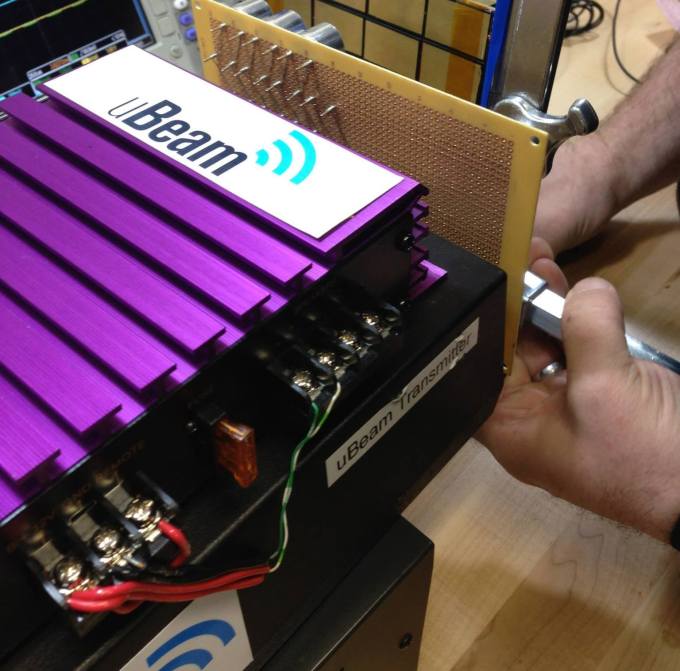
A bulky early uBeam transmitter prototype

Apple last year announced it was building a less ambitious AirPower near-field wireless charging pad that could juice up an AirPods case sitting on it. That was supposed to arrive in “early 2018” but there was no mention of it onstage at the recent iPhone XS launch event. Today’s Qi-standard wireless charging pads require direct contact with devices and some fidgeting to get them to connect.

uBeam’s stumbles may make it tough to hire or retain talent, and the organizational disruption amidst direct competition could cost it valuable time as it strives to get its tech ready for licensing. The startup’s audacious idea for a world without wires may still one day come to fruition. There remains big potential in the more technically feasible over the air charging of Internet Of Things devices that don’t need much power. But uBeam could serve as a reminder to fellow startups that grand visions might make it easier to secure funding, but can raise expectations that are much harder to fulfill.

from Startups – TechCrunch https://ift.tt/2xD3vmT

#USA Eventbrite’s IPO should encourage tech companies to get out while they still can

//

Eventbrite is having one hell of a debut on the New York Stock Exchange this morning.

Shares of the ticketing startup, founded back in 2006, have shot up over 50 percent in trading on the NYSE. After pricing its shares at $23 in its initial offering, investors have bid up the stock to a whopping $37, putting the company’s valuation at nearly $3 billion.

That’s well above where the ticketing company had hoped to be when it initially set terms for the public offering earlier this month.

The company started trading priced above its share price and nearly doubled its valuation. And if Eventbrite can do it, really almost any later-stage startup should be thinking about the public markets right now.

Performance for the San Francisco ticketing company has been… somewhat lackluster. As we noted when wrote about the company’s offering:

Eventbrite is not profitable and has been losing money since 2016. According to the documents, it posted losses of $40.4 million in 2016 and $38.5 million in 2017. In the first six months of 2018, the company has posted a net loss of $15.6 million. The company is making changes to make up for some of those losses — at the end of August, it announced a new pricing scheme for its customers using the “Essentials” package.

Its revenue is rising though, increasing from $133 million in 2016 to $201 million last year.

Since the beginning of the year tech public offerings have been on a tear. As The Wall Street Journal noted in July, 120 companies had raised $35.2 billion on U.S. exchanges at that point — the best showing for public markets since 2014 and the fourth busiest year since 1995, according to the financial data and analysis service Dealogic.

We’ve noted before that it’s a bit mind-boggling that investors and their portfolio companies wouldn’t be taking more advantage of these heady times. Nothing lasts forever (not even cold November rain) and certainly not markets that have been this bullish for this long.

Some of the reasoning is likely thanks to a market that’s still awash in private equity, sovereign wealth and late-stage dollars. SoftBank has hundreds of billions to invest; private equity firms are beginning to look at growth-stage companies the way that I look at banana cream pies from Cassell’s; and venture firms are beefing up big time to keep up with the Joneses (or in this case, the Blackstoneses).

However, the fun is certainly going to come to an end, and likely sooner rather than later. Early-stage investors are beginning to dole out their advice on lowering cash burn (something that happens every time they see the beginning of the end of the beginning of the end).

With that in mind, later-stage companies should be looking for the exit signs wherever they can find them. Right now, that’s an IPO window that seems to be wide open.

from Startups – TechCrunch https://ift.tt/2QHe2pM

#USA Cluep, a Canadian startup that raised just $500k, acquired for $40M

//

Everyone loves a tale of a bootstrapped startup founder’s journey to an eight-figure exit.

The team at Toronto-based Cluep have a good one.

The founders of the adtech startup raised less than $500,000 from angel investors before selling their company to Impact Group for $40 million ($53 milllion CAD) this week.

Founded in 2012, Karan Walia, Sobi Walia and Anton Mamonov were just 21, 17 and 16 years old, respectively, when they started the digital advertising platform, which uses artificial intelligence to help brands connect and engage with people based on what they are sharing, how they are feeling and the places they’ve been.

They, being teenagers, struggled initially to get the company off the ground. At one point, the trio hacked into computers at a university in Toronto to train the neural networks on large amounts of data sets because they didn’t have enough money to buy their own tech. On a shoe-string budget, they would split meals at Popeyes to get by.

“No one wanted to give us money at that time so we had to live off of my student loans,” Walia told TechCrunch . “We did pretty much everything, whether it was programming and building the product, or going out and selling. I was our first sales rep and I was pretty bad early on but I learned.”

Ultimately, Cluep was able to raise enough from angels to pay themselves a salary, hire a few engineers and sales representatives, and move into an actual office. From that point, their revenue began growing significantly YoY.

  • 2015: $2 million CAD in revenue
  • 2016: $6 million CAD in revenue
  • 2017: $14.5 million CAD in revenue
  • 2018: On track to bring in ~$30 million CAD

They fielded offers from VCs toward the end of 2015 and considered raising a proper Series A round of capital, but ultimately decided staying independent would lead to the best exit.

“This way allowed us to basically maintain control and exit on our terms,” Walia said.

Impact Group, a Boise, Idaho-based grocery sales and marketing agency, will operate Cluep independently.

from Startups – TechCrunch https://ift.tt/2ODmp4g

#USA Meet the startups in the latest Alchemist class

//

Alchemist is the Valley’s premiere enterprise accelerator and every season they feature a group of promising startups. They are also trying something new this year: they’re putting a reserve button next to each company, allowing angels to express their interest in investing immediately. It’s a clever addition to the demo day model.

You can watch the livestream at 3pm PST here.

Videoflow – Videoflow allows broadcasters to personalize live TV. The founding team is a duo of brothers — one from the creative side of TV as a designer, the other a computer scientist. Their SaaS product delivers personalized and targeted content on top of live video streams to viewers. Completely bootstrapped to date, they’ve landed NBC, ABC, and CBS Sports as paying customers and appear to be growing fast, having booked over $300k in revenue this year.

Redbird Health Tech – Redbird is a lab-in-a-box for convenient health monitoring in emerging market pharmacies, starting with Africa. Africa has the fastest growing middle class in the world — but also the fastest growing rate of diabetes (double North America’s). Redbird supplies local pharmacies with software and rapid tests to transform them into health monitoring points – for anything from blood sugar to malaria to cholesterol. The founding team includes a Princeton Chemical Engineer, 2 Peace Corps alums, and a Pharmacist from Ghana’s top engineering school. They have 20 customers, and are growing 36% week over week.

Shuttle Shuttle is getting a head start on the future of space travel by building a commercial spaceflight booking platform. Space tourism may be coming sooner than you think. Shuttle wants to democratize access to the heavens above. Founded by a Stanford Computer Science alum active in Stanford’s Student Space Society, Shuttle has partnerships with the leading spaceflight operators, including Virgin Galactic, Space Adventures, and Zero-G. Tickets to space today will set you back a cool $250K, but Shuttle believes that prices will drop exponentially as reusable rockets and landing pads become pervasive. They have $1.6m in reservations and growing.

Birdnest – Threading the needle between communal and private, Birdnest is the Goldilocks of office space for startups. Communal coworking spaces are accessible but have too many distractions. Traditional office spaces are private but inflexible on their terms. Birdnest brings the best of each without the drawbacks: finding, leasing, and operating a network of underutilized spaces inside of private offices. The cofounders, a duo of Duke and Kellogg MBA grads, are at $300K ARR with a fast-growing 50+ client waitlist.

Tag.bio – Tag.bio wants to make data science actionable in healthtech. The founding team is comprised of a former Ayasdi bioinformatician and a former Honda Racing engineer with a Stanford MBA. They’ve developed a next-generation data science platform that makes it easy and fast to build data apps for end users, or as they say, “WordPress for data science.” The result they claim is lightning-fast analysis apps that can be run by end users, dramatically accelerating insight discovery. They count the UCSF Medical Center and a “large Swiss pharma company” as early customers.

nCorium – They’ve built a new server architecture to handle the onslaught of AI to come with what they claim is the world’s first AI accelerator on memory to deliver 30x greater performance than the status quo. The quad founding team is intimidatingly technical — including a UCSD Professor, and former engineers from Qualcomm and Intel with 40 patents among them. They have $300K in pilots.

Spiio – Software eats landscaping with Spiio, which combines cloud-driven AI with physical sensors to monitor watering and landscaping for big companies. Their smart system knows when to water and when not to. This reduces water consumption by 50%, which means their system pays for itself in less than 30 days for big companies. They want to connect every plant to the internet, and look like they are off to a good start — $100K in orders from brand name Valley tech firms, and they are doubling monthly.

Element42 – Fraud is a major problem — For example, if you buy a Rolex on eBay, you run the risk of winding up with a counterfeit. Started by ex-VPs from Citibank, the founders are using risk models and technologies that banks use to help brands combat fraud and counterfeiting. Designed with token economics, they also incentivize customers to buy genuine products by serving exclusive content and promotions only to genuine product holders. Built on blockchain at the core, they claim to be the world’s first peer-to-peer authentication platform for physical assets. They have 45 customers across two industry verticals, 800K in ARR and are a member of World Economic Forum’s global initiatives against corruption.

My90 – Distrust between the public and the police has rarely been more strained than it is today. My90 wants to solve that by collecting data about interactions between the police and the public—think traffic stops, service calls, etc.—and turn these into actionable intelligence via an online analytics dashboard. Users text My90 anonymously about their interactions, and My90’s dashboard analyzes the results using natural language processing. Customers include major city police departments like the San Jose Police Department and the world’s largest community policing program. They have booked $150K in pilots and are expanding aggressively across the US.

Nunetz – A Stanford Computer Science grad and UCSF Neurosurgeon have come together to try to build a single unifying interface to replace the deluge of monitors and data sources in today’s clinical health environment. The goal is to prepare a daily “battle map” for physicians, nurses, and other providers, with an initial focus on the Intensive Care Unit (ICU). They have closed 3 paid pilots with hospitals through grants.

When Labs – If you hate managing people, When Labs wants to unburden you. Using an AI-powered assistant that texts with employees to negotiate assignments for hourly work, WhenLabs is trying to free customers like Hilton from spending money on managers who would normally do this manually. As the system gets smarter, they claim employees will prefer interfacing with their AI bot more than a human. AI and HR is a crowded space, but this might be the team to separate from the pack: the founding team’s previous company had a 9 figure exit to IBM.

FirstCut – FirstCut helps businesses put video content out at scale. Video dominates social media — it creates 10x more comments than text — and is emerging as a necessity for B2B media. But putting video out if you are a B2B marketer normally requires using agencies that charge hefty fees. FirstCut wants to disrupt the agencies with software and marketplaces. They use software automation and an on-demand talent marketplace to offer a fixed price product for video content. They are at $180k revenue, and most of it is moving to recurring subscriptions.

LynxCare – LynxCare claims that 90% of healthcare data goes untapped when doctors make critical decisions about your life. Further, they claim the average person’s life could be extended by 4 years if that data can be converted into insights. Their team of clinicians and data scientists aims to do just that — building a data platform that aggregates disparate data sets and drive insight for better clinical outcomes. And it looks like their platform has fans: they are active in 9 hospitals, count Pharma companies like Pfizer as Partners, and grew 4x over the past year and now are at $800K ARR.

ADIAN – Adian is a B2B SaaS product that digitizes the complex agrochemical supply chain in order to improve the sales process between manufacturers and distributors. The company claims manufacturers reduce costs by 20% and increase sales by 4% by using their online framework. $1.5 Billion and 70,000 orders have gone through the platform to date.

Hardin Scientific – Hardin is building IoT-enabled, Smart Lab Equipment. The hardware becomes a gateway to become the hub for monitoring, controlling, and sharing scientific data across teams. They’ve closed over $1.5m in revenue, and raised $15m in equity and debt financing. One of their smart devices is being used to 3D print bio-tissues and human organs in space.

ZaiNar – This team of 5 Stanford grads — 3 PhD’s and 2 MBAs — joined up with the Co-Founder of BlueKai to build the world’s best time synchronization technology. ZaiNar claims their ability to wirelessly synchronize and distribute time between networked devices is a thousand times better than existing technologies. This enables them to locate RF-emitting devices (i.e. phones, cars, drones, & RFID) at long distances with sub-meter accuracy. Beyond location, this technology has applications across data transmission, 5G communications, and energy grids. ZaiNar has raised a $1.7M seed from AME Cloud and Softbank, and has built an extensive patent portfolio.

SMART Brain Aging – This startup claims to reduce the onset of dementia by 2.25 years with software. They are the only company approved by Medicare to get reimbursed on a preventative basis for the treatment of dementia. In conjunction with Harvard University, they have developed 20,000 exercises that are clinically proven to reduce the onset of dementia and, they claim, help build neurotransmitters. The company works with 300 patients per week ($2.2m annual revenue) and is building to a goal of helping 22,000 people in 24 months.

Phoneic – Phoneic believes the data trapped in voice calls from cellphones is a gold mine waiting to be unleashed. Their app records and transcribes cell phones conversations, and the company has built an integration layer to enterprise AI and CRM systems that traditionally didn’t have access to voice data. The team is led by the co-founder of 3jam, one of the first group SMS and virtual number companies, which was acquired by Skype in 2011. He is keenly aware of the power of virality — and like Skype, the use of Phoneic spreads its adoption. The company has already raised $800,000 in seed funding.

Arkose Labs – Whether or not you think Russia interfered with the 2016 election, it’s no secret that bots are having significant impact on society. Arkose Labs wants to fight fraud, without adding friction to legit users. Most fraud prevention platforms today focus on gathering info from the user and providing a probability score that the traffic is good or bad. This leaves companies with a difficult decision where they may be blocking revenue generating users. Arkose has a different approach, and uses a bilateral approach that doesn’t force this tradeoff. They claim to be the only solution to offer a 100% SLA on fraud prevention. Big companies like Singapore Airlines and Electronic Arts are customers. USVP led a $6m investment into the company.

from Startups – TechCrunch https://ift.tt/2xD7pMv

#USA Bird hits 10 million scooter rides

//

Bird just announced 10 million scooter rides since launching about one year ago. If this story sounds familiar to you, it’s probably because Bird competitor Lime earlier today announced it surpassed 11.5 million rides across its shared bikes and scooters.

Bird, which launched last September in Santa Monica, Calif., currently operates in 100 cities and has over two million unique riders, Bird founder and CEO Travis VanderZanden told TechCrunch. But Bird’s first year of operations has been full of ups and downs.

Many of the downs have been around regulatory issues. Bird faced, and overcame them, in Santa Monica but failed in San Francisco.

“I think anytime you’re doing something new that the cities haven’t contemplated before, there always seems to be gray area on where you fit in in the regulatory environment,” VanderZanden said. “Cities hadn’t thought about electric scooters and electric scooter sharing. We collaborated very closely with the cities we’re in now.”

Although San Francisco did not grant an operating permit to Bird — the city gave them to Scoot and Skip — VanderZanden stressed that “San Francisco is one city. We’re in 100 cities.”

He also said Bird is not looking to appeal the decision in San Francisco. Lime, however, is in engaging in the appeals process.

As Bird enters its second year of operations, the name of the game is to double down on its efforts with cities and building out its government tech platform. Bird is also looking into manufacturing its own scooters to provide more durability to its customers and differentiate itself from other scooters on the market.

“We’ve been investing heavily in that area,” VanderZanden said. “You’ll start to see new vehicles coming from us soon.”

He added, “we want to keep building vehicles that are more ruggedized but also vehicles that have new features for the riders as well.”

And Bird definitely has the funds to do that. To date, Bird has raised $415 million in funding for shared electric scooters.

from Startups – TechCrunch https://ift.tt/2OFAmij