#USA Postmates raises another $300M, reportedly valued at $1.2B

//

On-demand delivery service Postmates announced this morning that it has raised $300 million in additional funding led by Tiger Global Management.

While the company’s press release doesn’t mention this, Fortune reports that the deal valued Postmates at $1.2 billion. Tiger’s Scott Schleifer is joining the board of directors.

Postmates does say that it’s completing “millions” of deliveries every month and is profitable in 90 percent of its markets, and that over the past four years, gross margins have “improved dramatically to nearly 50%.”

Over the past few months, Postmates expanded into more than 100 new cities (it’s now available in more than 400 U.S. cities, as well as Mexico City) and also announced partnerships with companies like Instacart and Walmart.

Postmates previously raised a $140 million round at a $600 million valuation in 2016. More broadly, it looks like VCs aren’t backing away from the on-demand delivery market — DoorDash, for example, recently raised $250 million at a $4 billion valuation.

“The transformation of how commerce moves in cities demands that we build the most innovative tools for businesses to keep up and distribute their products to the modern consumer — efficiently and cost effectively,” said Postmates CEO Bastian Lehmann in the release. “Postmates is proud to be the first and largest on-demand network that is enabling the growth of retail across the country, and today’s investment accelerates our ability to pair technology with the vitality of our neighborhoods.”

from Startups – TechCrunch https://ift.tt/2NmmjSc

#USA Marketing data startup Singular raises $30M

//

Singular, a startup working to unify data for marketers, is announcing that it has raised $30 million in Series B funding.

The company was founded by former Onavo executives, including Gadi Eliashiv, Eran Friedman and Susan Kuo — who now serve, respectively, as Singular’s CEO, CTO and COO.

Eliashiv explained that Singular was created in response to “this trend of data explosion in the marketing stack,” which require marketers to pull data from hundreds or thousands of different systems.

“Essentially what we see is the creation of this new category of marketing intelligence, where the complexity of the marketing stack has created the need for this layer that sits on top,” he said. “It doesn’t matter if you use a marketing cloud like Adobe that’s bundling five products together, at the end of the day, you need a layer on top on making sense of it, helping you make better decisions.”

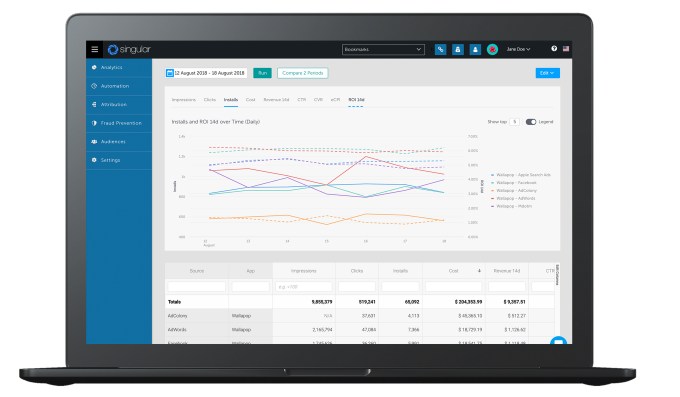
Singular Dashboard

Eliashiv said Singular is able to go from a high-level dashboard summary for CMOs to “the finest level of detail.” He also noted that while the company is designed to integrate with existing marketing tools, it will “oftentimes displace smaller point solutions.”

“Our principal is, it has to be relevant for data, meaning we’re never going to displace your ad-buying tool,” he added. “It’s not what we do. We’re an intelligence platform.”

The idea of unifying marketing data is one that I hear a lot, but Eliashiv’s claims seem weightier when you see that Singular is already working with a number of big names, including Lyft, Yelp, Airbnb, Linkedin, Symantec, Zynga, Match and Twitter.

Singular previously raised $20 million in funding. Norwest Venture Partners led the new round, with partner Scott Beechuk joining the board of directors.

Beechuk told me that he’d been studying marketing analytics market for quite some time, and he argued, “There is something really unique and special about Singular. It’s the bridge between mobile, web and offline, all on a single platform.”

“What you’re going to find is, there are going to be a lot of technologies that Singular replaces,” Beechuck continued. “Let’s say a CMO or [chief growth officer] has 300 different outlets where they are advertising … Everyone one of those systems tends to have their own analytics built in. The first thing Singular does, it replaces all of those analytics systems with a single pane of glass.”

General Catalyst, Method Capital, Telstra Ventures, Translink Capital and Thomvest also participated in the new funding.

from Startups – TechCrunch https://ift.tt/2PJu4yk

#USA UIpath lands $225M Series C on $3 billion valuation as robotics process automation soars

//

UIPath is bringing automation to repetitive processes inside large organizations and it seems to have landed on a huge pain point. Today it announced a massive $225 million Series C on a $3 billion valuation.

The round was led by CapitalG and Sequoia Capital. Accel, which invested in the companies A and B rounds also participated. Today’s investment brings the total raised to $408 million, according to Crunchbase, and comes just months after a $153 million Series B we reported on last March. At that time, it had a valuation of over $1 billion, meaning the valuation has tripled in less than six months.

There’s a reason this company you might have never heard of is garnering this level of investment so quickly. For starters, it’s growing in leaps in bounds. Consider that it went from $1 million to $100 million in annual recurring revenue in under 21 months, according to the company. It currently has 1800 enterprise customers and claims to be adding 6 new ones a day, an astonishing rate of customer acquisition.

The company is part of the growing field of robotics process automation or RPA . While the robotics part of the name could be considered a bit of a misnomer, the software helps automate a series of mundane tasks that were typically handled by humans. It allows companies to bring a level of automation to legacy processes like accounts payable, employee onboarding, procurement and reconciliation without actually having to replace legacy systems.

Phil Fersht, CEO and chief analyst at HFS, a firm that watches the RPA market, says RPA isn’t actually that intelligent. “It’s about taking manual work, work-arounds and integrated processes built on legacy technology and finding way to stitch them together,” he told TechCrunch in an interview earlier this year.

It isn’t quite as simple as the old macro recorders that used to record a series of tasks and execute them with a keystroke, but it is somewhat analogous to that approach. Today, it’s more akin to a bot that may help you complete a task in Slack. RPA is a bit more sophisticated moving through a workflow in an automated fashion.

Ian Barkin from Symphony Ventures, a firm that used to do outsourcing, has embraced RPA. He says while most organizations have a hard time getting a handle on AI, RPA allows them to institute fundamental change around desktop routines without having to understand AI.

If you’re worrying about this technology replacing humans, it is somewhat valid, but Barkin says the technology is replacing jobs that most humans don’t enjoy doing. “The work people enjoy doing is exceptions and judgment based, which isn’t the sweet spot of RPA. It frees them from mundaneness of routine,” he said.

Whatever it is, it’s resonating inside large organizations and UIpath, is benefiting from the growing need by offering its own flavor of RPA. Today its customers include the likes of Autodesk, BMW Group and Huawei.

As it has grown over the last year, the number of employees has increased 3x  and the company expects to reach 1700 employees by the end of the year.

from Startups – TechCrunch https://ift.tt/2NQnvfX

#USA Erectile pharmacy app Roman raises $88M to launch ‘quit smoking’ kit

//

Roman is a rocket ship, and I’m not talking about how it sells Viagra and Cialis. Less than a year after launching its cloud pharmacy for erectile dysfunction with $3 million in funding and a five-person team, Roman has grown to seventy team members and a revenue run-rate in the 10s of millions — up 720 percent since January. It’s sparked over a million patient-physician visits, phone calls, and text conversations through its telemedicine portal for getting diagnoses and prescriptions.

And now Roman is ready to expand beyond men, so it’s dropping the ‘Man.

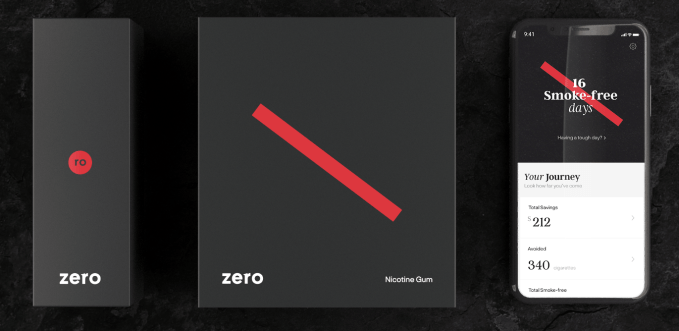
Today, the newly renamed ‘Ro’ unveiled its next product, Zero, a $129 ‘quit smoking’ kit containing a month’s worth of prescription cessation medication bupropion and nicotine gum, plus an app for tracking progress and learning how to stay motivated through hunger, nausea, and cravings. Pre-orders open today.

“Erectile dysfunction medication is a knee brace. It helps you to walk again but the goal would be to not need a knee brace” says Ro co-founder Zachariah Reitano, who started the company because he lives with ED himself due to a heart medication side effect. “Some people will need ED medication but we’re hoping that a lot of people, through lifestyle changes or quitting smoking, won’t need us any more.”

To get the word out about Zero to women and men alike, as well as build a physician’s electronic medical record system, Ro has also raised a jaw dropping $88 million Series A round. It was led by FirstMark Capital and joined by SignalFire, Initialized Capital, General Catalyst, and more. Initialized and Reddit co-founder Alexis Ohanian and FirstMark managing director Rick Heitzmann will both join Ro’s board to steward this massive infusion of capital.

“The plan for the money is to continue to build out our own pharmacy” as well as “a lot of the backend infrastructure that we call ‘Ro’ that will allow us to launch these other products and verticals over the next two to three years.” Ohanian writes that “The only thing that exceeds Ro’s execution to date is their vision for the future of healthcare. Unlike other companies in the space, Ro is full-stack and is actually rebuilding the health care experience from the ground up, which means they are able to deliver unrivaled care for patients across the country.”

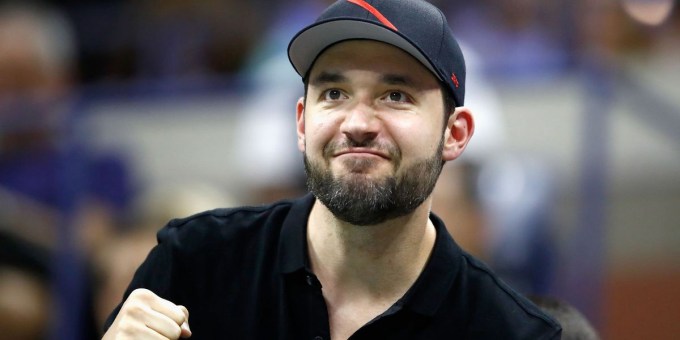
Roman board member Alexia Ohanian sporting a Roman Zero hat while cheering on his wife, tennis star Serena Williams

Until recently, 80 percent of Viagra sold online was counterfeit. That not only made it awkward to buy medication for erectile dysfunction, but also dangerous. Yet that number is starting to drop thanks to the explosion in popularity of Roman, as well as fellow men’s health startup Hims. “One of the thing that’s helped has been me sharing my story [he’s dealt with ED since he was 17], and this ‘check engine light’ concept” that views erections as indicators that a man’s body is in working order. Roman even built a somewhat-silly app called Morning Glory to help men track morning erections.

Roman co-founder Zachariah Reitano

Now it wants to take the same clear-eyed approach to helping people quit smoking. The company says that of the 37.5 million people in the US who smoke, 70 percent want to quit and 50 percent try to quit each year, but only 3 to 5 percent are smoke-free after six months. But with medication, nicotine replacement therapy like gum, tapering down smoking before stopping, and counseling, the quit rate drastically imrpves to 33 percent after six months.

You get all that from Zero’s kit for $129 per month, compared to $120 on Amazon for just the nicotine gum. Reitano admits that “the margin actually is not fantastic to start. Let’s say it’s slightly below what a typical commerce purchase would be.” But the idea is that if Ro and Zero can help someone quit smoking, patients will turn to it for more of their online pharmacy needs.

Reitano concludes, “Honestly, I hope we can live up to what we want to build.”

from Startups – TechCrunch https://ift.tt/2MJbfZZ

#USA Erectile pharmacy app Roman raises $88M to launch ‘quit smoking’ kit

//

Roman is a rocket ship, and I’m not talking about how it sells Viagra and Cialis. Less than a year after launching its cloud pharmacy for erectile dysfunction with $3 million in funding and a five-person team, Roman has grown to seventy team members and a revenue run-rate in the 10s of millions — up 720 percent since January. It’s sparked over a million patient-physician visits, phone calls, and text conversations through its telemedicine portal for getting diagnoses and prescriptions.

And now Roman is ready to expand beyond men.

Today Roman unveiled its next product, Zero, a $129 ‘quit smoking’ kit containing a month’s worth of prescription cessation medication bupropion and nicotine gum, plus an app for tracking progress and learning how to stay motivated through hunger, nausea, and cravings. Pre-orders open today.

“Erectile dysfunction medication is a knee brace. It helps you to walk again but the goal would be to not need a knee brace” says Roman co-founder Zachariah Reitano, who started the company because he lives with ED himself due to a heart medication side effect. “Some people will need ED medication but we’re hoping that a lot of people, through lifestyle changes or quitting smoking, won’t need us any more.”

To get the word out about Zero to women and men alike, as well as build a physician’s electronic medical record system, Roman has also raised a jaw dropping $88 million Series A round. It was led by FirstMark Capital and joined by SignalFire, Initialized Capital, General Catalyst, and more. Initialized and Reddit co-founder Alexis Ohanian and FirstMark managing director Rick Heitzmann will both join Roman’s board to steward this massive infusion of capital.

“The plan for the money is to continue to build out our own pharmacy” as well as “a lot of the backend infrastructure that we call ‘Ro’ that will allow us to launch these other products and verticals over the next two to three years.” Ohanian writes that “The only thing that exceeds Ro’s execution to date is their vision for the future of healthcare. Unlike other companies in the space, Ro is full-stack and is actually rebuilding the health care experience from the ground up, which means they are able to deliver unrivaled care for patients across the country.”

Roman board member Alexia Ohanian sporting a Roman Zero hat while cheering on his wife, tennis star Serena Williams

Until recently, 80 percent of Viagra sold online was counterfeit. That not only made it awkward to buy medication for erectile dysfunction, but also dangerous. Yet that number is starting to drop thanks to the explosion in popularity of Roman, as well as fellow men’s health startup Hims. “One of the thing that’s helped has been me sharing my story [he’s dealt with ED since he was 17], and this ‘check engine light’ concept” that views erections as indicators that a man’s body is in working order. Roman even built a somewhat-silly app called Morning Glory to help men track morning erections.

Roman co-founder Zachariah Reitano

Now it wants to take the same clear-eyed approach to helping people quit smoking. The company says that of the 37.5 million people in the US who smoke, 70 percent want to quit and 50 percent try to quit each year, but only 3 to 5 percent are smoke-free after six months. But with medication, nicotine replacement therapy like gum, tapering down smoking before stopping, and counseling, the quit rate drastically imrpves to 33 percent after six months.

You get all that from Zero’s kit for $129 per month, compared to $120 on Amazon for just the nicotine gum. Reitano admits that “the margin actually is not fantastic to start. Let’s say it’s slightly below what a typical commerce purchase would be.” But the idea is that if Roman and Zero can help someone quit smoking, patients will turn to it for more of their online pharmacy needs.

Reitano concludes, “Honestly, I hope we can live up to what we want to build.”

from Startups – TechCrunch https://ift.tt/2MJbfZZ

#USA Indigo raises $250M, launches marketplace to help farmers get paid for quality grain

//

Indigo, the startup bringing algorithms and machine learning to the agricultural industry, has raised a $250 million Series E, bringing its total raised to $650 million.

The funding values the company at $3.5 billion, according to a source familiar with the deal. That’s a steep increase from its previously reported value: $1.4 billion with a $156 million Series D last September. Existing investors Baillie Gifford, the Alaska Permanent Fund, the Investment Corporation of Dubai and Flagship Pioneering participated in the round. New investors, who Indigo declined to name, also participated.

Indigo initially launched in 2014 to help farmers improve the health and productivity of their crops with microbial products that protect against the environment, disease and pest stress. Now, the company is expanding its suite of digital tools with the launch of Indigo Marketplace, which is essentially eBay for farmers.

Indigo CEO David Perry, who grew up on a farm in Arkansas, told TechCrunch Indigo expects to do $500 million in bookings this year thanks to the early growth of the new product. That’s more than 8x growth YoY.

Indigo first began rolling out the online grain marketplace to its network of farmers in June and has since seen more than $6 billion worth of grain put up for sale by farmers. Buyers have placed more than 4,000 bids worth $2 billion.

Perry, a serial entrepreneur — he co-founded Better Therapeutics and Anacor Pharmaceuticals, which was acquired for $5.2 billion by Pfizer — says Indigo’s marketplace has had the most rapid adoption of any product launch he’s been associated with in his career.

“It’s part of a bigger plan,” he said. “We knew microbiology was a cornerstone to changing agriculture but it couldn’t do it by itself.”

Using Indigo Marketplace, buyers can purchase grain directly from farmers. They can filter by protein content, milling quality or by production practices, i.e. whether it’s organic or not. Growers are paid based on the quality of their crop, which is determined by a sample sent to a third-party lab for analysis.

Indigo manages the testing, the transportation of the crop and the payment through its new platform. 

Venture capital investment in agtech has been steadily growing in the last decade with more and more early-stage startups emerging to compete with the Big 6 of agriculture: Monsanto, Bayer, DuPont, Dow, Syngenta and BASF.

The industry, according to agtech firm Finistere Ventures, has transitioned “from a niche, opportunistic clade of the venture capital investment class, to a legitimate asset class attracting focused and generalist funds.”

As for Indigo, it has been and continues to be the most valuable private agtech startup.

from Startups – TechCrunch https://ift.tt/2MJjpSd

#USA Mabl announces $20 million Series B to bring automated QA to enterprise customers

//

Mabl, a Boston-based startup from the folks who brought you Stackdriver, wants to change software testing using machine learning, and today it announced a $20 million Series B investment led by GV (formerly Google Ventures).

Existing investors CRV and Amplify Partners also participated. As part of the deal, Karim Faris, general partner at GV will be joining the Mabl board. Today’s investment comes on top of a $10 million Series A announced in February.

While it was at it, the company also announced a brand new enterprise product. In fact, part of the reason for going for a hefty Series B so soon after landing the Series A was because it takes some money to service enterprise clients, company founder Izzy Azeri explained.

Azeri says that when he and his partner Dan Belcher decided to start a new company after selling Stackdriver to Google in 2014, they wanted to be methodical about it. They did some research to find gaps and pain points the new company could address. What they found was that QA wasn’t keeping up with modern development speed.

They saw development and testing teams spending too much time simply maintaining the testing regimen, and they believed with machine learning they could help automate the QA process and deliver it in the form of a cloud service, allowing testing to keep up.

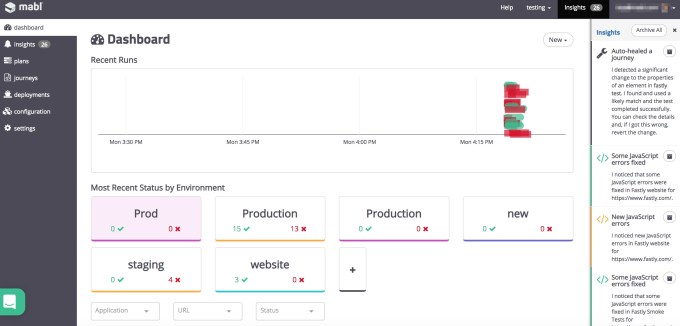
Instead of looking at the code level, Mabl looks at your website or service and alerts you to errors like increased load time, broken links or other problems, and displays the results in a dashboard. When it finds an issue, it flags the step in the process where the problem occured and sends a screenshot to the test or development team where they can analyze it and fix it if needed.

Mabl dashboard. Screenshot: Mabl

They launched in Beta last February and went GA in May. Since then, they were pleasantly surprised to find that larger companies were interested in their service and they knew they needed to beef up the base product to appeal to these customers.

That meant adding secure tunneling, which they call Mabl Link, a higher level of encryption, support for cross-browser testing and integration with enterprise single sign-on. They also needed a higher level of support and training, which are also part of the enterprise package.

They let each customer try the full suite of features when they sign up for 21 days, after which they can drop down to Pro or sign up for the enterprise version, depending on their budgets and requirements.

Mabl currently has 30 employees in Boston, and as they develop the enterprise business, the plan is bring that up to 70 in the next year as they add enterprise sales people, customer success staff and of course more engineering to keep building the product.

from Startups – TechCrunch https://ift.tt/2phegYc

#USA Mabl announces $20 million Series B to bring automated QA to enterprise customers

//

Mabl, a Boston-based startup from the folks who brought you Stackdriver, wants to change software testing using machine learning, and today it announced a $20 million Series B investment led by GV (formerly Google Ventures).

Existing investors CRV and Amplify Partners also participated. As part of the deal, Karim Faris, general partner at GV will be joining the Mabl board. Today’s investment comes on top of a $10 million Series A announced in February.

While it was at it, the company also announced a brand new enterprise product. In fact, part of the reason for going for a hefty Series B so soon after landing the Series A was because it takes some money to service enterprise clients, company founder Izzy Azeri explained.

Azeri says that when he and his partner Dan Belcher decided to start a new company after selling Stackdriver to Google in 2014, they wanted to be methodical about it. They did some research to find gaps and pain points the new company could address. What they found was that QA wasn’t keeping up with modern development speed.

They saw development and testing teams spending too much time simply maintaining the testing regimen, and they believed with machine learning they could help automate the QA process and deliver it in the form of a cloud service, allowing testing to keep up.

Instead of looking at the code level, Mabl looks at your website or service and alerts you to errors like increased load time, broken links or other problems, and displays the results in a dashboard. When it finds an issue, it flags the step in the process where the problem occured and sends a screenshot to the test or development team where they can analyze it and fix it if needed.

Mabl dashboard. Screenshot: Mabl

They launched in Beta last February and went GA in May. Since then, they were pleasantly surprised to find that larger companies were interested in their service and they knew they needed to beef up the base product to appeal to these customers.

That meant adding secure tunneling, which they call Mabl Link, a higher level of encryption, support for cross-browser testing and integration with enterprise single sign-on. They also needed a higher level of support and training, which are also part of the enterprise package.

They let each customer try the full suite of features when they sign up for 21 days, after which they can drop down to Pro or sign up for the enterprise version, depending on their budgets and requirements.

Mabl currently has 30 employees in Boston, and as they develop the enterprise business, the plan is bring that up to 70 in the next year as they add enterprise sales people, customer success staff and of course more engineering to keep building the product.

from Startups – TechCrunch https://ift.tt/2phegYc

#USA Ostrichpillow Hood, the latest product from Studio Banana, is no joke

//

I’m not going to lie, when Studio Banana released the original Ostrichpillow back in 2012, despite breaking all Kickstarter records at the time, I thought the whole thing might be an elaborate joke. Or, worse still, since the sleep-at-your-desk styled product had found popularity amongst people who worked at startups, Silicon Valley was now parodying itself.

Except that “transformative” design company Studio Banana is based in Europe, with offices based in London, Lake Geneva and Madrid. And 500,000 sales and five products later, the joke is arguably on its critics. As I’m fond of telling founders who ask for validation, ultimately it is the market that decides.

Enter the latest Ostrichpillow creation: the aptly named Ostrichpillow Hood. Aptly named because, well, it’s a hood. However, unlike the previous products in the range, which were designed to facilitate sleep in non-traditional places, the Ostrichpillow Hood, we’re told, is to be used in “everyday waking life”.

Specifically, by reducing the ability to see activity in the edges of your field of vision, it is intended to help you focus on the task at hand and/or reduce overstimulation, such as the kind induced by open plan co-working spaces.

The Ostrichpillow Original

“The product we’re launching now is the sixth of the different products that have emerged in the Ostrichpillow family and they’re catering to different needs,” Ali Ganjavian, co-founder of Studio Banana, tells me in a video call yesterday. “Ostrichpillow was really about complete isolation and it was really a statement product… So different products have different use-cases and different functions, and also different social acceptances”.

I suggest that the Ostrichpillow Hood may turn out to be broadly socially acceptable, not least for anyone already familiar with the original Ostrichpillow, but also because asking work colleagues to respect the need to focus is a lot different to asking them to ignore your need to take a nap at your desk. Ganjavian doesn’t degree, even though there is no doubt the two products share the same design heritage.

“A lot of the stuff we are thinking about now is about the state of mind,” he says, noting that throughout the working day we are bombarded with stimuli and information, from messaging apps, emails, social media, meetings and even something as innocuous as having to say hello to work mates. “[The Ostrichpillow Hood] is really about sheltering. It is not only a physical movement, there is psychology in the way it shelters you… it’s about shifting your mood”.

Next Ganjavian demonstrates the three positions the Ostrichpillow Hood is designed to be worn.

The ‘Hood’ position is for when you need to concentrate on something in public, for example when commuting or in an open plan office or coffee shop. Like wearing a pair of visually loud headphones, it also has the added effect of signalling to colleagues that you’d rather not be disturbed or are “wired in“.

The ‘Eclipse’ position, where the hood can be turned around to cover your face completely, is for when you need to truly switch off from your surroundings, such as to deeply think, take a short break or meditate. “If I’ve got my headphones on in that posture then what it allows me to do is to totally isolate myself in the same way I would with an Ostrichpillow but in a much more acceptable way,” says Ganjavian.

Finally, the ‘Hoop’ position, with the hood worn down around your neck, is designed to feel warm and cozy and turns the Ostrichpillow Hood into attire more akin to a fashion accessory.

Adds the Studio Banana co-founder: “What I find really exciting about this moment is that I currently work in between three different geographies, there is so much going on, and how do we create a tool or object that makes me feel good, helps me perform better, and helps me become more efficient, and also feeds that overall well-being that I’m looking for in my workplace. At the same time, I can just walk out into the street with it on and just go home and feel good about it”.

from Startups – TechCrunch https://ift.tt/2xnRQJj

#USA Ostrichpillow Hood, the latest product from Studio Banana, is no joke

//

I’m not going to lie, when Studio Banana released the original Ostrichpillow back in 2012, despite breaking all Kickstarter records at the time, I thought the whole thing might be an elaborate joke. Or, worse still, since the sleep-at-your-desk styled product had found popularity amongst people who worked at startups, Silicon Valley was now parodying itself.

Except that “transformative” design company Studio Banana is based in Europe, with offices based in London, Lake Geneva and Madrid. And 500,000 sales and five products later, the joke is arguably on its critics. As I’m fond of telling founders who ask for validation, ultimately it is the market that decides.

Enter the latest Ostrichpillow creation: the aptly named Ostrichpillow Hood. Aptly named because, well, it’s a hood. However, unlike the previous products in the range, which were designed to facilitate sleep in non-traditional places, the Ostrichpillow Hood, we’re told, is to be used in “everyday waking life”.

Specifically, by reducing the ability to see activity in the edges of your field of vision, it is intended to help you focus on the task at hand and/or reduce overstimulation, such as the kind induced by open plan co-working spaces.

The Ostrichpillow Original

“The product we’re launching now is the sixth of the different products that have emerged in the Ostrichpillow family and they’re catering to different needs,” Ali Ganjavian, co-founder of Studio Banana, tells me in a video call yesterday. “Ostrichpillow was really about complete isolation and it was really a statement product… So different products have different use-cases and different functions, and also different social acceptances”.

I suggest that the Ostrichpillow Hood may turn out to be broadly socially acceptable, not least for anyone already familiar with the original Ostrichpillow, but also because asking work colleagues to respect the need to focus is a lot different to asking them to ignore your need to take a nap at your desk. Ganjavian doesn’t degree, even though there is no doubt the two products share the same design heritage.

“A lot of the stuff we are thinking about now is about the state of mind,” he says, noting that throughout the working day we are bombarded with stimuli and information, from messaging apps, emails, social media, meetings and even something as innocuous as having to say hello to work mates. “[The Ostrichpillow Hood] is really about sheltering. It is not only a physical movement, there is psychology in the way it shelters you… it’s about shifting your mood”.

Next Ganjavian demonstrates the three positions the Ostrichpillow Hood is designed to be worn.

The ‘Hood’ position is for when you need to concentrate on something in public, for example when commuting or in an open plan office or coffee shop. Like wearing a pair of visually loud headphones, it also has the added effect of signalling to colleagues that you’d rather not be disturbed or are “wired in“.

The ‘Eclipse’ position, where the hood can be turned around to cover your face completely, is for when you need to truly switch off from your surroundings, such as to deeply think, take a short break or meditate. “If I’ve got my headphones on in that posture then what it allows me to do is to totally isolate myself in the same way I would with an Ostrichpillow but in a much more acceptable way,” says Ganjavian.

Finally, the ‘Hoop’ position, with the hood worn down around your neck, is designed to feel warm and cozy and turns the Ostrichpillow Hood into attire more akin to a fashion accessory.

Adds the Studio Banana co-founder: “What I find really exciting about this moment is that I currently work in between three different geographies, there is so much going on, and how do we create a tool or object that makes me feel good, helps me perform better, and helps me become more efficient, and also feeds that overall well-being that I’m looking for in my workplace. At the same time, I can just walk out into the street with it on and just go home and feel good about it”.

from Startups – TechCrunch https://ift.tt/2xnRQJj