#USA Lucid Motors secures $1 billion from Saudi wealth fund to launch the Air

//

Saudi Arabia’s sovereign wealth fund is investing $1 billion into Lucid Motors, capital that will finance the commercial launch of the startup’s first electric vehicle.

The agreement comes just six weeks after Tesla CEO Elon Musk tweeted that he was considering taking Tesla private at $420 a share and had secured the proper funding to make the leap. Musk suggested that Saudi’s wealth fund, which already owns almost 5 percent of Tesla stock, would xyz.

Tesla’s board and Musk have since quashed those plans to go private.

The investment came at a crucial moment for Lucid Motors, which has struggled recently to raise the funds needed to produce its luxury EV, the Lucid Air. The funding will be used to complete engineering development and testing of the Lucid Air, construct its factory in Casa Grande, Arizona, begin the global rollout of its retail strategy starting in North America and enter production, the company said.

Lucid Motors was founded 10 years ago with a different name and mission. The company, called  Atieva at the time, was focused on developing electric car battery technology. It then shifted to producing electric cars and changed its name in 2016.

The company seemed to have momentum at the time. Lucid Motors had successfully raised money, unveiled the Air, announced plans to build a $700 million factory in Arizona, signed a deal with Samsung SDI to supply it with lithium-ion batteries and moved into spacious new digs. But building a factory is expensive, and the company fell silent for nearly a year as it sought funding to produce the Air.

It’s also a notable investment for the Saudi kingdom, which under its Vision 2030 plan is seeking to diversify its economy away from fossil fuels. In the past year, the Saudi Public Investment Fund has invested in renewable energy, established and developed recycling companies and energy efficiency services, the kingdom noted in a release.

from Startups – TechCrunch https://ift.tt/2xjakuC

#USA Lucid Motors secures $1 billion from Saudi wealth fund to launch the Air

//

Saudi Arabia’s sovereign wealth fund is investing $1 billion into Lucid Motors, capital that will finance the commercial launch of the startup’s first electric vehicle.

The agreement comes just six weeks after Tesla CEO Elon Musk tweeted that he was considering taking Tesla private at $420 a share and had secured the proper funding to make the leap. Musk suggested that Saudi’s wealth fund, which already owns almost 5 percent of Tesla stock, would xyz.

Tesla’s board and Musk have since quashed those plans to go private.

The investment came at a crucial moment for Lucid Motors, which has struggled recently to raise the funds needed to produce its luxury EV, the Lucid Air. The funding will be used to complete engineering development and testing of the Lucid Air, construct its factory in Casa Grande, Arizona, begin the global rollout of its retail strategy starting in North America and enter production, the company said.

Lucid Motors was founded 10 years ago with a different name and mission. The company, called  Atieva at the time, was focused on developing electric car battery technology. It then shifted to producing electric cars and changed its name in 2016.

The company seemed to have momentum at the time. Lucid Motors had successfully raised money, unveiled the Air, announced plans to build a $700 million factory in Arizona, signed a deal with Samsung SDI to supply it with lithium-ion batteries and moved into spacious new digs. But building a factory is expensive, and the company fell silent for nearly a year as it sought funding to produce the Air.

It’s also a notable investment for the Saudi kingdom, which under its Vision 2030 plan is seeking to diversify its economy away from fossil fuels. In the past year, the Saudi Public Investment Fund has invested in renewable energy, established and developed recycling companies and energy efficiency services, the kingdom noted in a release.

from Startups – TechCrunch https://ift.tt/2xjakuC

#USA Blippar picks up $37 million hoping to become profitable in the next year

//

Blippar, the AR startup that launched in 2011, has today announced the close of a $37 million financing led by Candy Ventures and Qualcomm Ventures.

The company started out by offering AR experiences for brand marketers through publishers and other real-world products, letting users unlock AR content by scanning a tag called a “Blipp”.

Blippar then transitioned to a number of different AR products, but took a particular focus on computer vision, launching a consumer-facing visual search engine that would let users identify cars, plants, and other real-world objects.

Most recently, Blippar has introduced an indoor positioning system that lets commercial real estate owners implement AR mapping and other content from within their buildings.

The AR industry has been in a state of evolution for the past few years, and Blippar has constantly reshifted and re-positioned to try and take advantage of the blossoming market. Unfortunately, several pivots have put the company in a tough spot financially.

BI reports that Blippar posted revenue of £8.5 million ($11.2 million) in the 16-month period up to March 31 2016, with losses of £24 million ($31.5 million). These latest rounds have essentially let Blippar keep the lights on while trying to pick up the pace on revenues. 

The company says that this latest round is meant to fuel the company’s race to reach profitability in the next 12 months. Blippar has raised more than $137 million to date.

from Startups – TechCrunch https://ift.tt/2NmpNnJ

#USA Zortrax launches a new high-speed, high-resolution printer, the Inkspire

//

Zortrax has launched a new printer, the Inkspire, that prints using an LCD to create objects in high-quality resin in minutes. The printer – essentially an upgrade to traditional stereolithography (SLA) printers – uses a single frame of light to create layers of 25 microns.

Most SLA printers use a laser or DLP to shine a pattern on the resin. The light hardens the resin instantly, creating a layer of material that the printer then pulls up and out as the object grows. The UV LCD in the $2,699 Inkspire throws an entire layer at a time and is nine times more precise than standard SLA systems. It can print 20 to 36 millimeters per hour and the system can print objects in serial, allowing you to to print hundreds of thousands of small objects per month.

“The printer is also perfect for rapid prototyping of tiny yet incredibly detailed products like jewelry or dental prostheses. But there are more possible applications,” said co-founder Marcin Olchanowski. “Working with relatively small models like HDMI cover caps, one Zortrax Inkspire can 3D print 77 of them in 1h 30min. 30 printers working together in a 3D printing farm can offer an approximate monthly output of 360,000 to over 500,000 parts (depending on how many shifts per day are scheduled). This is how Zortrax Inkspire can take a business way into medium or even high scale production territory.”

The printer company, which is now one of the largest in Central Europe, explored multiple technologies before settling on this form of SLA printing.

“At the early stage of this project we were investigating the technology itself, and it seemed very unlikely we were able to create such a device,” said Olchanowski. “We tried SLA and DLP but we were not happy with these technologies. We perceived them undeveloped. But, step by step, we succeeded. We see huge prospects of development for resin 3D printing technology, because nowadays customers expect the higher quality of printed models.”

The company sells 6,500 printers yearly and will see $13.7 million in revenue this year. They are also selling resins for their new printers and they will ship in about two months.

Printers like the Inkspire are a bit harder to use than traditional extruder-based printers like Makerbots. However, the quality and print speed is far better and paves the way to truly 3D-printed production runs for one-off parts.

from Startups – TechCrunch https://ift.tt/2xpvu9E

#USA Logistics startup Freightos raises $44.4M Series C led by Singapore Exchange

//

Freightos, a marketplace for logistics providers, announced today that it has raised a $44.4 million Series C led by Singapore Exchange. Returning investors including General Electric Ventures (the lead investor of Freightos’ Series B extension last year), ICV and Aleph also participated in the round, which brings Freightos’ total funding so far to $94.4 million.

Launched in 2016 as a price comparison service for freight forwarders—the agents that organize shipments from a supplier or manufacturer to their final destination—Freightos now also lets users book, manage and track shipments with more than 1,200 logistics providers.

In an email, founder and CEO Zvi Schreiber said its online freight marketplace will continue to be Freightos’ flagship product, but the company also wants to find ways to make the industry more efficient by building a global digital infrastructure.

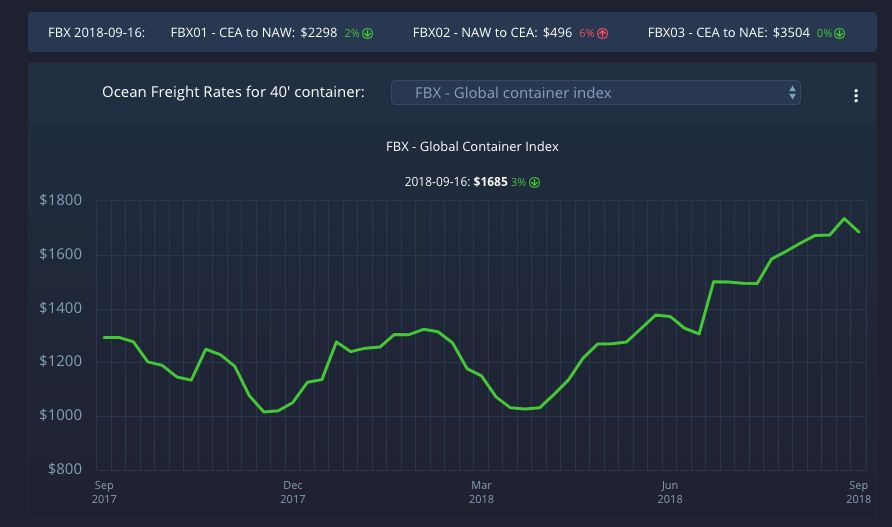
The company claims to process more than one million instant freight quote requests each month using its patent-pending routing and pricing engines. Its database of global shipping rates also underpins the Freightos Baltic Index (FBX), an industry-specific index created to provide more pricing transparency.

Developed in partnership with the Baltic Exchange, a market information provider for the maritime transportation industry, the FBX tracks freight pricing from 12 major routes around the world and also combines them into one index to serve as the freight industry’s equivalent of the S&P 500.

“Nearly every major global industry, from jet fuel to livestock, leverages dynamic pricing based on real-time metrics to make smarter, automated decisions. We’re excited to explore how our global freight index, the Freightos Baltic Index, can reduce pricing risks and improve stability, and are already exploring implementation with major multinational corporations,” Schreiber said.

He added that Freightos is also looking at more ways to connect airlines with logistics providers to sell cargo space on passenger flights.

Freightos will partner with the Singapore Exchange, which owns the Baltic Exchange, to develop new financial instruments. It will start by launching daily reporting on the FBX, which is currently updated weekly.

In a press statement, SGX head of derivatives Michael Syn said, “Freightos is at the forefront of a new wave of solutions for price discovery and digital marketplaces in global freight – an industry at the heart of the global economy. SGX is excited by the potential to develop risk management tools and services and build on Singapore’s unique position in the trade ecosystem, to bridge the physical and financial markets.”

from Startups – TechCrunch https://ift.tt/2OxdTDN

#USA Uber fires up its own traffic estimates to fuel demand beyond cars

//

If the whole map is red and it’s a short ride, maybe you’d prefer taking an Uber JUMP Bike instead of an UberX. Or at least if you do end up stuck bumper-to-bumper, the warning could make you less likely to get mad mid-ride and take it out on the driver’s rating.

This week TechCrunch spotted Uber overlaying blue, yellow, and red traffic condition bars on your route map before you hail. Responding to TechCrunch’s inquiry, Uber confirmed that traffic estimates have been quietly testing for riders on Android over the past few months and the pilot program recently expanded to a subset of iOS users. It’s already live for all drivers.

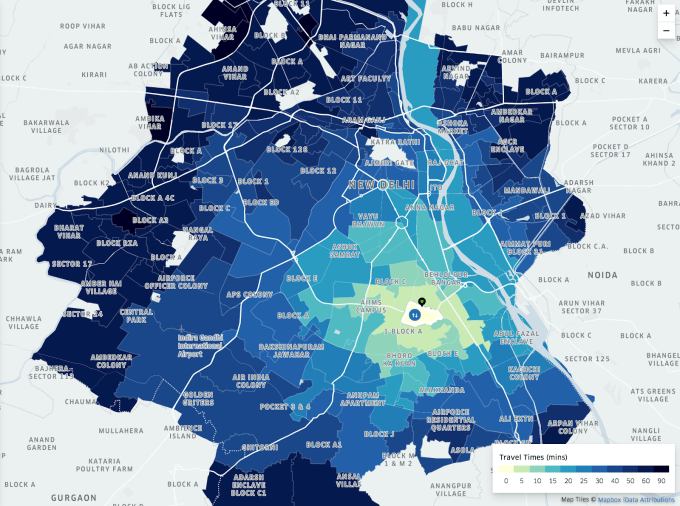
The congestion indicators are based on Uber’s own traffic information pulled from its historic trip data about 10 billion rides plus real-time data from its drivers’ phones, rather than estimates from Google that already power Uber’s maps.

If traffic estimates do roll out, they could make users more tolerant of longer ETAs and less likely to check a competing app since they’ll know their driver might take longer to pick them up because congestion is to blame rather than Uber’s algorithm. During the ride they might be more patient amidst the clogged streets.

Uber’s research into traffic in India

But most interestingly, seeing traffic conditions could help users choose when it’s time to take one of Uber’s non-car choices. They could sail past traffic in one of Uber’s new electric JUMP Bikes, or buy a public transportation ticket from inside Uber thanks to its new partnership with Masabi for access to New York’s MTA plus buses and trains in other cities. Cheaper and less labor intensive for Uber, these options make more sense to riders the more traffic there is. It’s to the company’s advantage to steer users towards the most satisfying mode of transportation, and traffic info could point them in the right direction.

Through a program called Uber Movement, the company began sharing its traffic data with city governments early last year. The goal was to give urban planners the proof they need to make their streets more efficient. Uber has long claimed that it can help reduce traffic by getting people into shared rides and eliminating circling in search of parking. But a new study showed that for each mile of personal driving Uber and Lyft eliminated, they added 2.8 miles of professional driving for an 180 percent increase in total traffic.

Uber is still learning whether users find traffic estimates helpful before it considers rolling them out permanently to everyone. Right now they only appear on unshared UberX, Black, XL, SUV, and Taxi routes before you hail to a small percentage of users. But Uber’s spokesperson verified that the company’s long-term goal is to be able to tell users that the cheapest way to get there is option X, the cheapest is option Y, and the most comfortable is option Z. Traffic estimates are key to that. And now that it’s had so many cars on the road for so long, it has the signals necessary to predict which streets will be smooth and which will be jammed at a given hour.

For years, Uber called itself a logistics company, not a ride sharing company. Most people gave it a knowing wink. Every Silicon Valley company tries to trump up its importance by claiming to conquer a higher level of abstraction. But with advent of personal transportation modes like on-demand bikes and scooters, Uber is poised to earn the title by getting us from point A to point B however we prefer.

from Startups – TechCrunch https://ift.tt/2NLzAmy

#USA In Bad Blood, a pedestrian tale of heuristics and lies

//

In a world where thousands and thousands of startups are started in the Bay Area every year, becoming a name that everyone recognizes is no small feat.

Theranos reached that summit, and it all came crashing down.

The story of the fraudulent rise and precipitous fall of the company and its entrepreneur, Elizabeth Holmes, is also the singular story of the journalist who chronicled the company. John Carreyrou’s tenacious and intrepid reporting at the Wall Street Journal would ultimately expose one of the largest frauds ever perpetrated in Silicon Valley.

Bad Blood is the culmination of that investigative reporting. The swift decline of Theranos and its protective legal apparatus has done this story a lot of good: many of the anonymous sources that underpinned Carreyrou’s WSJ coverage are now public and visible, allowing the author to weave together the various articles he published into a holistic and complete story.

And yet, what I found in the book was not all that thrilling or shocking, but rather astonishingly pedestrian.

Part of the challenge is Carreyrou’s laconic WSJ tone, with its “just the facts” attitude that is punctuated only occasionally by brief interludes on the motivations and psychology of its characters. That style is appreciated by this subscriber of the paper daily, but the book-length treatment suffers a bit from a lack of charisma.

The real challenge though is that the raw story — for all of its fraud — lacks the sort of verve that makes business thrillers like Barbarians at the Gate or Red Notice so engaging. The characters that Carreyrou has to work with just aren’t all that interesting. One could argue that perhaps the book is too early — with criminal charges filed and court trials coming, we may well learn much more about the conspiracy and its participants. But I don’t think so, mostly because the fraud seems so simple in its premise.

At the heart of this story is the use of heuristics by investors and customers to make their largest decisions. Theranos is a story of the snowball effect blown up to an avalanche: a retired and successful venture capitalist seeds the company, leading to other investors to see that name and invest, and onwards and upwards for more than a decade, eventually collecting a cast of characters around the table that includes James Mattis, the current Secretary of Defense, and Henry Kissinger.

Take Rupert Murdoch, the billionaire owner of News Corporation (and by extension the Wall Street Journal), who invested $125 million into Theranos near the end of the company’s story. He met Holmes at a dinner in Silicon Valley:

During the dinner, Holmes came over to Murdoch’s table, introduced herself, and chatted him up. The strong first impression she made on him was bolstered by [Yuri] Milner, who sang her praises when Murdoch later asked him what he thought of the young woman.

….

But unlike the big venture capital firms, he did no due diligence to speak of. The eighty-four-year-old mogul tended to just follow his gut, an approach that had served him well …

He made one call before investing $125 million.

To some readers, that might be a breathtaking sum, but it really is something of a pittance for Murdoch, whose reported net worth today is roughly $17 billion. In the denouement of the Theranos story, Carreyrou notes that, “The media mogul sold his stock back to Theranos for one dollar so he could claim a big tax write-off on his other earnings. With a fortune estimated at $12 billion, Murdoch could afford to lose more than $100 million on a bad investment.”

For Murdoch, a bad heuristic around the company cost him roughly 1% of his net wealth, and with the tax loss, may not have cost him much of anything at all.

That’s the challenge of the book: for all the fraud committed by Theranos and its founder, its financial losses were ultimately borne by the ultra-rich. This is not the 2008 Financial Crisis, where millions of people are thrown out of their homes due to the chicanery of Wall Street fat cats.

If there is a lesson in all of this, it is that the right heuristics would have helped these investors to an extraordinarily degree. Take for example the rapid turnover of Theranos’ workforce, which could have been checked on LinkedIn in minutes and would have signaled something deeply wrong with the company’s culture and leadership. It doesn’t take many questions to discover the fraud here if they are the right questions.

Beyond the investors and workers though, the harm is even hard to track to patients. There are perhaps no more serious consequences around Theranos’ fraud than for patients, who took tests on the company’s proprietary Edison machines and received inaccurate and at times faked results. Yet, Carreyrou strangely hasn’t compiled a compelling set of patients for whom Theranos caused morbidity. If any industry comes out positively in this book, it is the doctors of patients who reorder tests and ask additional questions when results didn’t make sense.

Ultimately, Bad Blood is a complete book about an important story. I’m reminded a bit of the 2012 documentary The Act of Killing, in which the filmmakers travel to Indonesia to have the killers of the 1965 communist genocide recreate the murders they perpetrated. The director’s cut is long and at times remarkably tedious, and yet, that is in many ways precisely the point. As a viewer, you become inured to the murder, bereft of emotion while waiting for the ending credits to roll.

Bad Blood is the same: its direct, to the point, and relatively sparing in any deep thrills. And that is its point. The book gives us a pinprick in our belief that Silicon Valley’s vaunted investors and founders are immune to stupidity. If you didn’t already know that before, you certainly now have a one-word household name of a startup to reference.

from Startups – TechCrunch https://ift.tt/2xc5tew

#USA Kegel trainer startup Elvie is launching a smaller, smarter, hands-free breast pump

//

Elvie, a Berlin-based startup known best for its connected Kegel trainer is jumping into the breast pump business with a new $480 hands-free system you can slip into your bra.

Even with all the innovation in baby gear, breast pumps have mostly sucked (pun intended) for new moms for the past half a century. My first experience with a pump required me to stay near a wall socket and hunch over for a good twenty to thirty minutes for fear the milk collected might spill all over the place (which it did anyway, frequently). It was awful!

Next I tried the Willow Pump, an egg-shaped, connected pump meant to liberate women everywhere with its small and mobile design. It received glowing reviews, though my experience with it was less than stellar.

The proprietary bags were hard to fit in the device, filled up with air, cost 50 cents each (on top of the $500 pump that insurance did not cover), wasted many a golden drop of precious milk in the transfer and I had to reconfigure placement several times before it would start working. So I’ve been tentatively excited about the announcement of Elvie’s new cordless (and silent??) double breast pump.
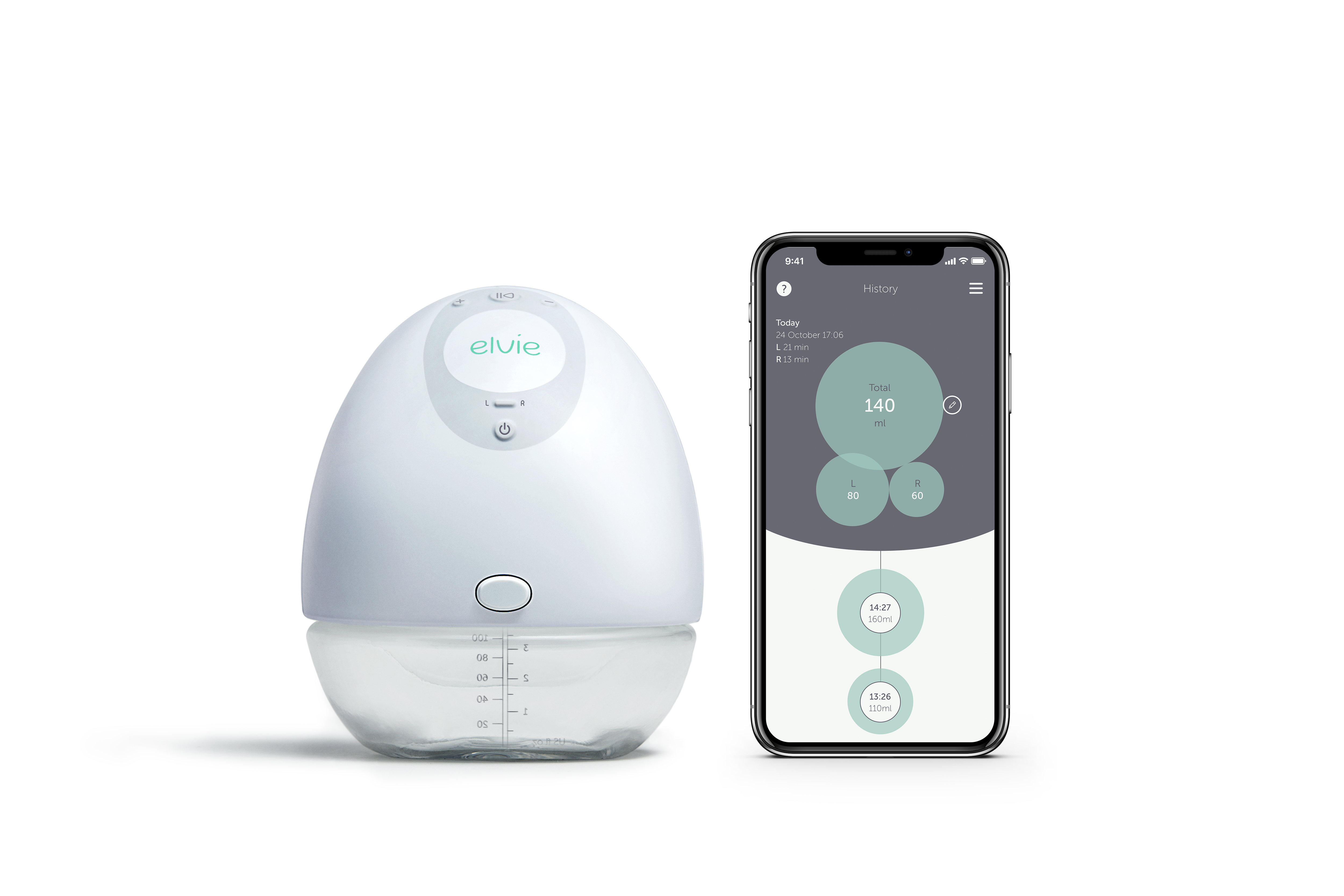
Displayed: a single Elive pump with accompanying app.

Elvie tells TechCrunch its aim all along has been to make health tech for women and that it has been working on this pump for the past three years.

The Elvie Pump is a cordless, hands-free, closed system, rechargeable electric pump designed by former Dyson engineers. It can hold up to 5 oz from each breast in a single use.

It’s most obvious and direct competition is the Willow pump, another “wearable” pump moms can put right in their bra and walk around in, hands free. However, unlike the Willow, Elvie’s pump does not need proprietary bags. You just pump right into the device and the pump’s smartphone app will tell you when each side is full.

It’s also half the size and weight of a Willow and saves every precious drop it can by pumping right into the attached bottle so you just pump and feed (no more donut-shaped bags you have to cut open and awkwardly pour into a bottle).

On top of that, Elvie claims this pump is silent. No more loud suction noise off and on while trying to pump in a quiet room in the office or elsewhere. It’s small, easy to carry around and you can wear it under your clothes without it making a peep! While the Willow pump claims to be quiet — and it is, compared to other systems –you can still very much hear it while you are pumping.

Elvie’s connected breast pump app

All of these features sound fantastic to this new (and currently pumping) mom. I remember in the early days of my baby’s life wanting to go places but feeling stuck. I was chained to not just all the baby gear, hormonal shifts and worries about my newborn but to the pump and feed schedule itself, which made it next to impossible to leave the house for the first few months.

My baby was one of those “gourmet eaters” who just nursed and nursed all day. There were days I couldn’t leave the bed! Having a silent, no mess, hands-free device that fit right in my bra would have made a world of difference.

However, I mentioned the word “tentatively” above as I have not had a chance to do a hands-on review of Elvie’s pump. The Willow pump also seemed to hold a lot of promise early on, yet left me disappointed.

To be fair, the company’s customer service team was top-notch and did try to address my concerns. I even went through two “coaching” sessions but in the end it seemed the blame was put on me for not getting their device to work correctly. That’s a bad user experience if you are blaming others for your design flaws, especially new and struggling moms.

Both companies are founded by women and make products for women — and it’s about time. But it seems as if Elvie has taken note of the good and bad in their competitors and had time to improve upon it — and that’s what has me excited.

As my fellow TechCrunch writer Natasha put it in her initial review of Elvie as a company, “It’s not hyperbole to say Elvie is a new breed of connected device. It’s indicative of the lack of smart technology specifically — and intelligently — addressing women.”

So why the pump? “We recognized the opportunity [in the market] was smarter tech for women,” Boler told TechCrunch on her company’s move into the breast pump space. “Our aim is to transform the way women think and feel about themselves by providing the tools to address the issues that matter most to them, and Elvie Pump does just that.”

The Elvie Pump comes in three sizes and shapes to fit the majority of breasts and, in case you want to check your latch or pump volume, also has transparent nipple shields with markings to help guide the nipple to the right spot.

The app connects to each device via Bluetooth and tracks your production, detects let down, will pause when full and is equipped to pump in seven different modes.

The pump retails for $480 and is currently available in the U.K. However, those in the U.S. will have to wait till closer to the end of the year to get their hands on one. According to the company, It will be available on Elvie.com and Amazon.com, as well in select physical retail stores nationally later this year, pending FDA approval.

from Startups – TechCrunch https://ift.tt/2p5M9Ly

#USA 3DHubs, once a community 3D printing service, is now sourcing all 3D prints internally

//

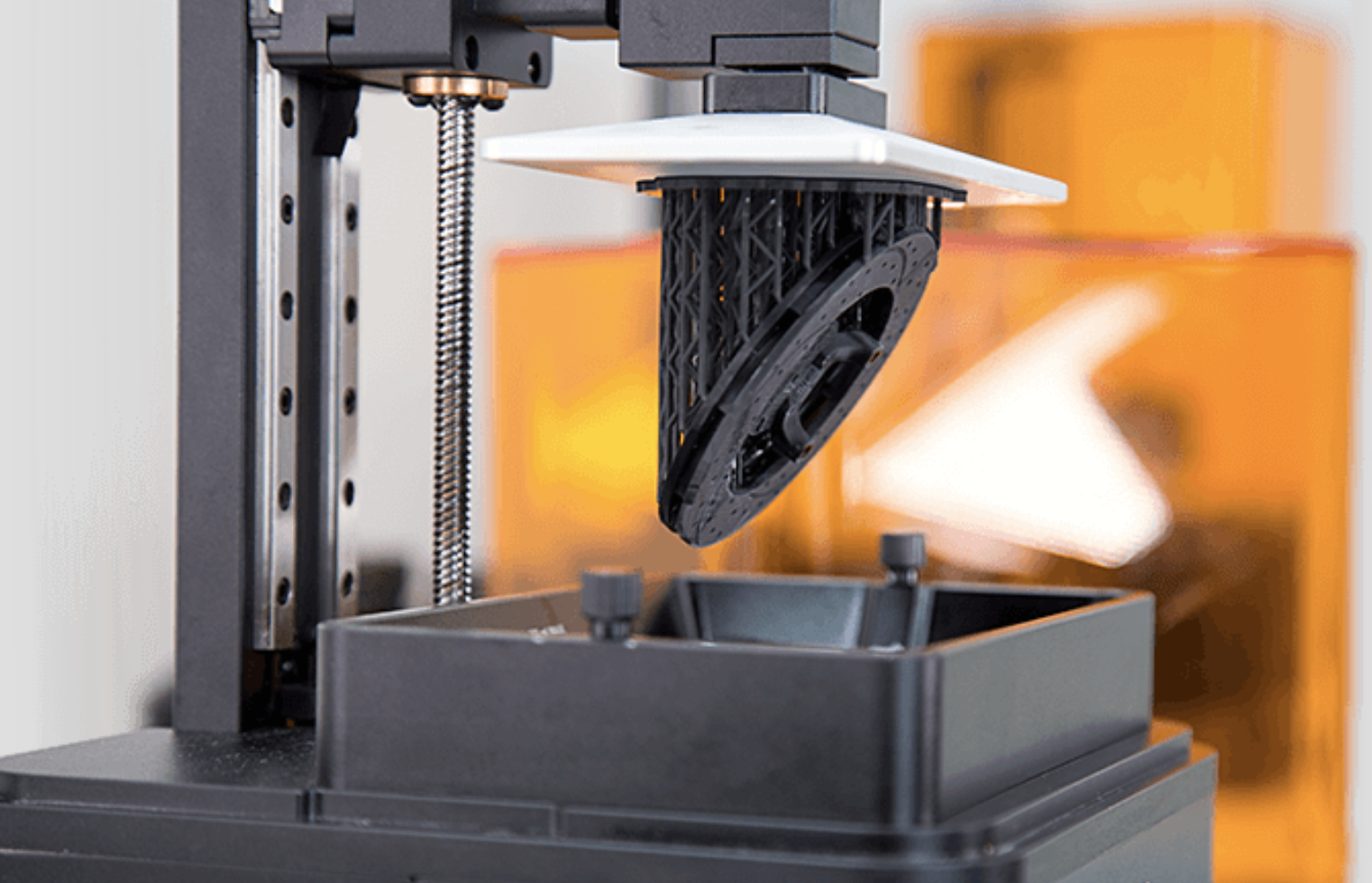
3D Hubs, like MakeXYZ, was a community-based 3D printing service that let anyone with a printer sell their prints online. Founded in the heyday of the 3D printing revolution, the service let thousands of makers gather a little cash for making and mailing prints on their home 3D printers.

Now, however, the company has moved to a model in which its high-end partners will be manufacturing plastic, metal, and injection molded parts for customers willing to pay extra for a professional print.

“Indeed, more focus on high end printers run by professional companies,” said founder Brian Garret. “So a smaller pool of manufacturing locations (still hundreds around the world), but with more control on standardized quality and repeatability. Our software takes care of the sourcing, so companies order with 3D Hubs directly.”

Not everyone is happy with the decision. 3DPrint.come editor Joris Peels saw the value in a solid, dedicated community of hobbyists in the 3D space. The decision to move away from hobbyist printers, wrote Peels, “has confused many.”

“The value of 3DHubs is in its community; the community gives it granular local presence and a barrier to entry. Now it is just like any 3D printing service upstart and will lose its community entirely. I’ve always liked 3DHubs, although I have been very skeptical of their Trends Report I like the company and what they’re doing. I liked the idealism coupled with business,” he wrote.

The community, for its part, is angry.

The move will happen on October 1 when all prints will be completed by Fulfilled by 3D Hubs partners, dedicated merchants who will offer “source parts for larger, high value engineering projects.” The company wrote that during the early hobbyist days the “platform at that time was very much free-form, with the goal of serving as many, mostly one-off, custom maker projects as possible.”

This slow movement from hobbyist 3D printing to professional parts manufacturer is not surprising or unexpected, but it is jarring. The 3D printing community is small, vociferous, and dedicated to the technology. In the early days, when 3D printers were rare, it was tempting to buy a mid-price printer and become a small, one-person shop online. Now, with the availability of commodity printers that cost less than some paper printers, the novelty and utility of a low-resolution print has fallen considerably.

3D printing never fulfilled its promise in the home and small office. A one-off print can save some of us a trip to the machine shop or music store but in practice home 3D printing has been a bust.

Like most open source technologies that went commercial, the dedicated zealots will complain and the established players will pivot into profitability. It ruffles feathers, to be sure, but that’s how these things work. To paraphrase the White Stripes, “Well, you’re in your little room and you’re printing something good/ But if it’s really good, you’re gonna need a bigger room/ And when you’re in the bigger room, you might not know what to do/ You might have to think of how you got started sitting in your little room.”

from Startups – TechCrunch https://ift.tt/2CUKYIL

#USA Crypto’s second bubble, Juul has 60 days and three Chinese IPOs

//

Hello and welcome back to Equity, TechCrunch’s venture capital-focused podcast where we unpack the numbers behind the headlines.

After a long run of having guests climb aboard each week, we took a pause on that front, bringing together three of our regular hosts instead: Connie Loizos, Danny Chrichton, and myself.

Despite the fact that there were just three of us instead of the usual four, we got through a mountain of stuff. Which was good as it was a surprisingly busy week, and we didn’t want to leave too much behind.

Up top we dug into the latest in the land of crypto, which Danny had politely summarized for us in an article. The gist of his argument is that the analogies relating crypto as an industry to the Internet may work, but most people have their timelines wrong: Crypto isn’t like the Internet in the 90s, perhaps. More like the 80s.

On the same topic, crypto companies formed a team lobbying effort, and a high-flying crypto fund is struggling to once again post strong profit figures.

Moving along, Juul is back in the news. Not, however, for raising more money or posting quick growth. Well, sort of the latter, as the government is after it. The Food and Drug Administration has put Juul on a countdown to get its act together regarding teens and smoking. That the financially-impressive unicorn is in as much trouble as it is nearly surprising.

Finally, we ran through the three most recent Chinese IPOs that hit our radar. Here they are:

  • Meituan Dianping: The Tencent-backed group buying, delivery, and everything company raised over $4 billion in its debut, which was impressive, but also short of expectations. The firm won’t begin trading until the 20th, but it’s one more massive deal that got done in 2018.
  • 111: We spent a minute on the show discussing what counts as a technology company thanks to 111. We voted that the Chinese online-to-offline pharmacy startup did in fact count. So, it’s in our list. Some notes on its debut can be found here.
  • NIO: Finally on our list was NIO, a Chinese electric car company with, as we have discussed on Equity before, a shockingly short history of revenue generation. Whether the company is a gamble or not, it did raise $1 billion in its own offering. And its stock is off like a rocket to boot.

And that was the end of things. Thanks for sticking with us, as always. Speaking of which, our 100th episode is coming up. Who should we bring onto the show to celebrate?

Equity drops every Friday at 6:00 am PT, so subscribe to us on Apple PodcastsOvercast, Pocket Casts, Downcast and all the casts.

from Startups – TechCrunch https://ift.tt/2CXz8NU