#USA Microsoft acquires Lobe, a drag-and-drop AI tool

//

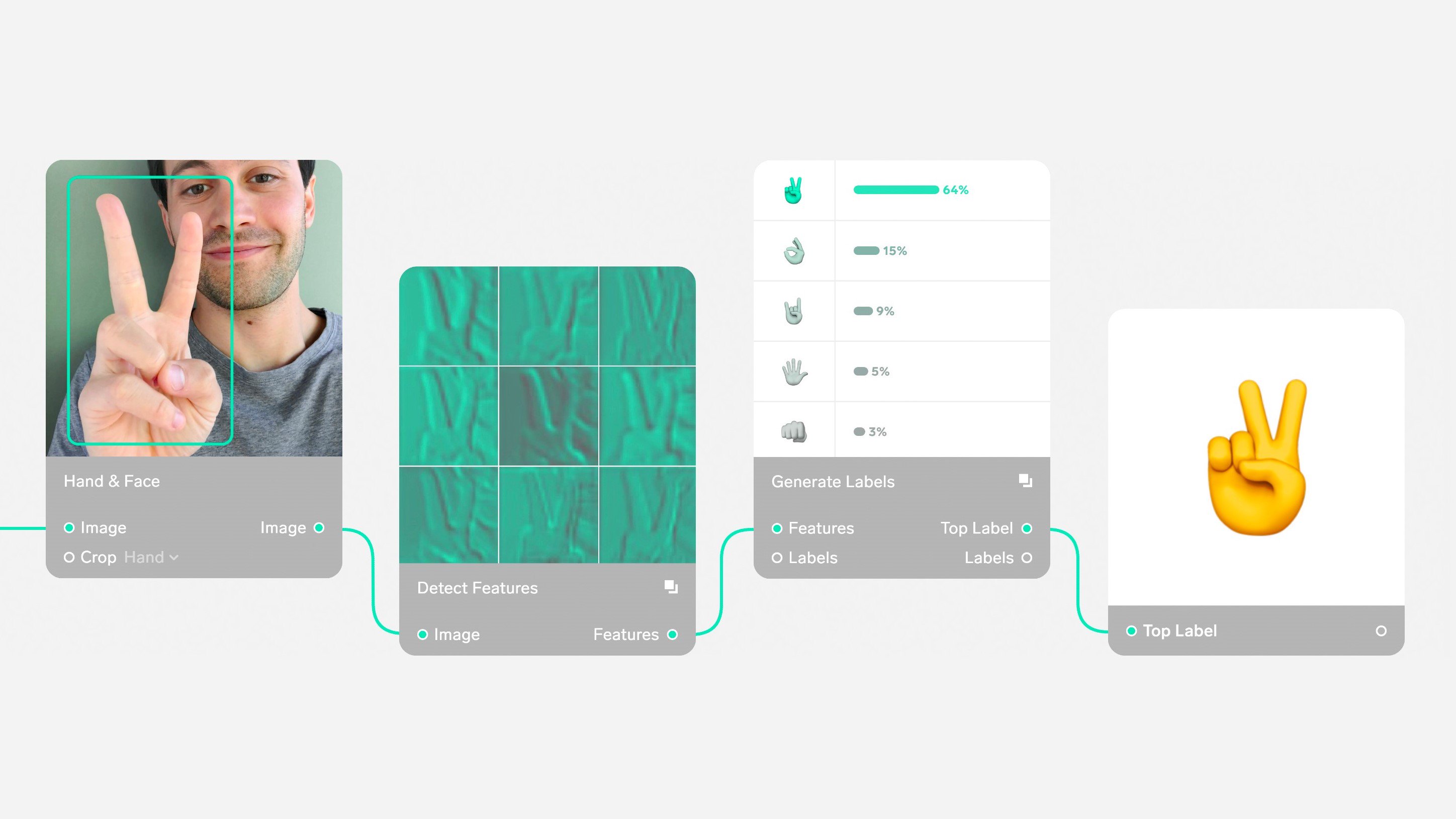
Microsoft today announced that is has acquired Lobe, a startup that lets you build machine learning models with the help of a simple drag and drop interface. Microsoft plans to use Lobe, which only launched into beta earlier this year, to build upon its own efforts to make building AI models easier, though, for the time being, Lobe will operate as before.

“As part of Microsoft, Lobe will be able to leverage world-class AI research, global infrastructure, and decades of experience building developer tools,” the team writes. “We plan to continue developing Lobe as a standalone service, supporting open source standards and multiple platforms.”

Lobe was co-founded by Mike Matas, who previously worked on the iPhone and iPad, as well as Facebook’s Paper and Instant Articles products. The other co-founders are Adam Menges and Markus Beissinger.

In addition to Lobe, Microsoft also recently bought Bonsai.ai, a deep reinforcement learning platform, and Semantic Machines, a conversational AI platform. Last year, it acquired Disrupt Battlefield participant Maluuba. It’s no secret that machine learning talent is hard to come by, so it’s no surprise that all of the major tech firms are acquiring as much talent and technology as they can.

“In many ways though, we’re only just beginning to tap into the full potential AI can provide,” Microsoft’s EVP and CTO Kevin Scott writes in today’s announcement. “This in large part is because AI development and building deep learning models are slow and complex processes even for experienced data scientists and developers. To date, many people have been at a disadvantage when it comes to accessing AI, and we’re committed to changing that.”

It’s worth noting that Lobe’s approach complements Microsoft’s existing Azure ML Studio platform, which also offers a drag-and-drop interface for building machine learning models, though with a more utilitarian design than the slick interface that the Lobe team built. Both Lobe and Azure ML Studio aim to make machine learning easy to use for anybody, without having to know the ins and outs of TensorFlow, Keras or PyTorch. Those approaches always come with some limitations, but just like low-code tools, they do serve a purpose and work well enough for many use cases.

from Startups – TechCrunch https://ift.tt/2p2IVbw

#USA Online used car startup Shift raises $140 million

//

Shift Technologies, an online marketplace for used cars, has closed a Series D financing round of more than $140 million in equity and debt.

The round, which consists of about $70 million in debt and $71 million in equity, was led by automotive retailer Lithia Motors. Bryan DeBoer, CEO and president of Lithia, will join Shift’s board of directors.

Previous investors Alliance Ventures, BMW iVentures, DCM, DFJ, G2VP, Goldman Sachs Investment Partners and Highland Capital also participated. This new capital brings Shift’s total financing of equity and debt to $265 million.

Shift, which is based in San Francisco, serves car buyers and sellers. The company, founded in 2013, has built a software platform that lets customers shop for cars, get financing and schedule test drives. Car owners can use the platform to sell their vehicle, as well. Shift says any car it buys must pass a “rigorous” 150+ point inspection.

The company plans to invest in its technology platform and scale its staff from 35 to more than 80 people by the end of 2019, CEO George Arison noted to TechCrunch in an email. The company’s platform has focused on scaling in California; it covers about 80 percent of that market. But the company has long had its sights set on expanding beyond the Golden State.

Shift is focused on, and is heavily investing in, its peer-to-peer business, in which the company acquires cars from individuals and then sells them. Buying, refurbishing and then selling cars online is a logistics-heavy business pursuit, and one that has seen a number of competitors come and go in the past several years. But Arison says the company has not just survived; it has grown. 

Shift didn’t provide revenue numbers. But Arison cited the company’s more than 70 percent revenue growth in the past six months as an example of the company’s success.

The company did have a partnership with rental giant Hertz, but that has since ended. At the time, Shift was going to feature vehicles from Hertz’s fleet inventory. It was meant to be a win-win: Hertz gets access to a new retail sales channel and Shift benefits from the rental car company’s ready supply of lightly used cars.

The partnership ended after Hertz opened its own retail stores that competed against Shift

from Startups – TechCrunch https://ift.tt/2NMvI4Z

#USA Economist Tyler Cowen launches a fellowship and grant program for moon shot ideas

//

Tyler Cowen, who I interviewed here, is a fascinating economist. Part pragmatist and part dreamer, he has been researching and writing about the future for a long time in books and his blog, Marginal Revolution. Now he and his university, George Mason, are putting some money where his mouth is.

Cowen and the team at GMU are working on Emergent Ventures, a fellowship and grant program for moon shots. The goal is to give people with big ideas a little capital to help them build out their dreams.

“It has long been my view that risk-takers are not sufficiently rewarded in the world of ideas and that academic incentives are too conservative,” he said. “The intellectual scene should learn something from Silicon Valley and venture capital.”

Cowen is raising $4 million for the first fund. He announced the fund in a podcast on the Mercatus website.

“People such as Satoshi and Jordan Peterson have had huge impacts (regardless of one’s degree of enthusiasm for their ideas), and yet in terms of philanthropic funding the world just isn’t geared to seed their ambitions,” said Cowen.

The project is part of the GMU Mercatus Center, a “source for market-oriented ideas—bridging the gap between academic ideas and real-world problems.” The fund has just opened applications and the amounts granted depend on the project and creator.

Cowen, for his part, is optimistic about the prospects of the future-focused fund.

“I expect to produce a better and freer world, some degree of human self-realization, a better climate for public intellectuals and other creators of ideas, more innovation, and to bring the intellectual side of America more in touch with the entrepreneurial side,” said Cowen.

from Startups – TechCrunch https://ift.tt/2MrxovK

#USA Hybrid cloud data specialist Datrium nabs $60M led by Samsung at a $282M valuation

//

Cloud services — where our data, apps and computing power are all being managed in servers owned by others, many miles from where we are sitting — have taken off like a rocket in the decade with the rise of smaller devices, but in the business world, hybrid solutions — mixing cloud with on-premise architectures — remains the order of the day. And today, a provider of hybrid cloud services has raised a round of funding to capitalise on that. Datrium, a provider of back-up and other services for businesses that store and use data in hybrid environments, has raised $60 million in a Series D round of funding.

The company is not disclosing its valuation — we’re asking — but PitchBook estimates that it was at $222 million pre-money, putting it at $282 million post-money. This was an upround compared to previous raises, but it’s also playing on a more modest field than some of its competitors. As a point of comparison, another notable hybrid cloud back-up and data management startup, Rubrik, raised $180 million at a $1.3 billion valuation last year.

Interestingly, Datrium and Rubrik share an investor. This latest round was led by Samsung’s Catalyst Fund, with Icon Ventures, NEA and Lightspeed Venture Partners also participating. Lightspeed (whose investing partner founded and leads Rubrik) also backs Rubrik.

Large enterprises are gradually making the move to the cloud, but they are doing so while also continuing to use their legacy services and architectures — in part to continue sweating those assets, and in part because if something isn’t broken, it’s tempting fate to try to fix it. As a result of that, hybrid cloud services have been a big business up to now, with estimates that it will be a $44.6 billion market this year, and growing to $97.6 billion by 2023.

“As a world leader in memory and storage technologies, we’re always looking for novel and innovative ways to advance datacenter technology,” said Shankar Chandran, senior vice president and managing director, Samsung Catalyst Fund, in a statement. “At this unique moment in time—when data is powering the economy—cutting-edge infrastructure, like Datrium’s hybrid cloud platform, will help enterprises overcome major obstacles in data analysis and storage. We are excited to be an investor in their future.”

And with a market of that size, startups are not only ones targeting it. Google has gone all-in on hybrid; VMware is also interested; and HPE has made some acquisitions to expand its hybrid computing business, as has Microsoft (at least twice), and Cisco.

Datrium — with its flagship DVX platform — has been one of the hopefuls in providing a specific area of data services to enterprises operating hybrid environments: data management and data backup, with customers ranging from large players in healthcare and finance through to media and entertainment. Interestingly, it’s doing so at a time when others like Rubrik have gradually been building more cloud-only solutions to expand beyond hybrid environments customers relying on these.

With this round Michael Mullany of Icon Ventures — formerly a VP of marketing and products for VMware — is joining the board of Datrium.

“We are thrilled to partner with Samsung and Icon Ventures to expand our technical and geographical momentum,” said Tim Page, CEO of Datrium, in a statement. “Enterprises globally have the same problems in simplifying compute and data management across on-prem and cloud. Where SANs don’t even have a  path to cloud, traditional HCI has too many tradeoffs for core datacenters – backup requires separate purchasing and administration, and cloud DR automation is seldom guaranteed. Larger enterprises are realizing that Datrium software offers them a simpler path.”

from Startups – TechCrunch https://ift.tt/2NEMsLm

#USA iHeartMedia is acquiring HowStuffWorks

//

iHeartMedia has agreed to acquire Stuff Media, the company that owns the HowStuffWorks podcasting business.

The companies did not disclose the financial terms of the deal, but both the Wall Street Journal and Variety are reporting that the acquisition price was $55 million.

According to the announcement, Stuff Media podcasts will retain their branding and the organization will remain headquartered in Atlanta, while President and CEO Conal Byrne joins iHeartMedia as the head of its podcasting division.

HowStuffWorks was originally founded in 1998 and had a number of owners before spinning out as an independent company and raising a $15 million Series A last year. In recent years, its focus has shifted from explainer articles and videos to podcasts, and in fact, it says those podcasts receive more than 61 million downloads and streams each month, with Stuff You Should Know surpassing 500 million downloads this year.

iHeartMedia, meanwhile, filed for bankruptcy earlier this year. (The media company was formerly known as Clear Channel.) Prior to announcing the acquisition, it was already working with   Stuff Media on its true crime podcast Atlanta Monster.

“Stuff Media is the original trailblazer of the podcasting industry, and we’ve been impressed by its ability to grow a massive, loyal audience over the past decade, led by a strong, experienced and cohesive management team, who we welcome to iHeartMedia,”  said iHeartMedia’s chairman and CEO Bob Pittman in the announcement. “This strategic acquisition will pair Stuff Media’s wildly popular content and strong creative capabilities with iHeartMedia’s extensive resources and massive scale through our digital platforms, social reach and broadcast radio stations, introducing podcasts to the vast majority of the country and offering even more unique opportunities for advertisers to reach their consumers.”

from Startups – TechCrunch https://ift.tt/2CQsoS4

#USA Hacera creates directory to make blockchain projects more searchable

//

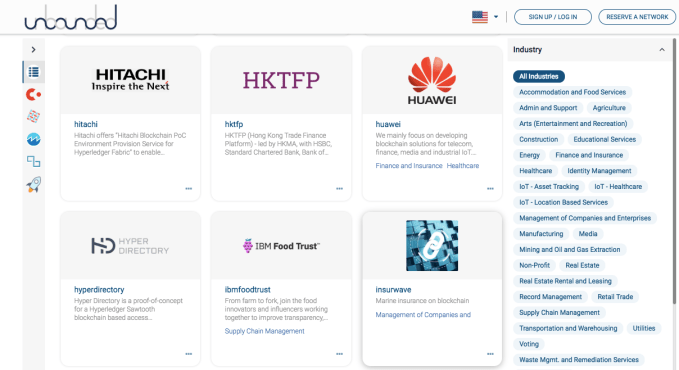
In the 1990s when the web was young, companies like Yahoo, created directories of web pages to help make them more discoverable. Hacera wants to bring that same idea to blockchain, and today it announced the launch of the Hacera Network Registry.

CEO Jonathan Levi says that blockchains being established today risk being isolated because people simply can’t find them. If you have a project like the IBM -Maersk supply chain blockchain announced last month, how does an interested party like a supplier or customs authority find it and ask to participate? Up until the creation of this registry, there was no easy way to search for projects.

Early participants include heavy hitters like Microsoft, Hitachi, Huawei, IBM, SAP and Oracle, who are linking to projects being created on their platforms. The registry supports projects based on major digital ledger communities including Hyperledger, Quorum, Cosmos, Ethereum and Corda. The Hacera Network Registry is built on Hyperledger Fabric, and the code is open source. (Levi was Risk Manager for Hyperledger Fabric 1.0.)

Hacera Network Registry page

While early sponsors of the project include IBM and Hyperledger Fabric, Levi stressed the network is open to all. Blockchain projects can create information pages, not unlike a personal LinkedIn page, and Hacera verifies the data before adding it to the registry. There are currently more than 20 permissioned networks in the registry, and Hacera is hoping this is just the beginning.

Jerry Cuomo, VP of blockchain technologies at IBM, says for blockchain to grow it will require a way to register, lookup, join and transact across a variety of blockchain solutions. “As the number of blockchain consortiums, networks and applications continues to grow we need a means to list them and make them known to the world, in order to unleash the power of blockchain,” Cuomo told TechCrunch. Hacera is solving that problem.

This is exactly the kind of underlying infrastructure that the blockchain requires to expand as a technology. Cuomo certainly recognizes this.”We realized from the start that you cannot do blockchain on your own; you need a vibrant community and ecosystem of like-minded innovators who share the vision of helping to transform the way companies conduct business in the global economy,” he said.

Hacera understands that every cloud vendor wants people using their blockchain service. Yet they also see that to move the technology forward, there need to be some standard ways of conducting business, and they want to provide that layer. Levi has a broader vision for the network beyond pure discoverability. He hopes eventually to provide the means to share data through the registry.

from Startups – TechCrunch https://ift.tt/2Nb1Rn9

#USA PlayVS taps League of Legends in launch of high school esports platform

//

PlayVS, the startup bringing an e-sports infrastructure to the high school level, has today announced that it will partner with Riot’s League of Legends for its beta season.

High school students across five states, including Connecticut, Georgia, Kentucky, Massachusetts, and Rhode Island, will be able to sign up to play for their school in Season Zero, which begins in October 2018.

Around 200 colleges and universities across the U.S. and Canada are offering esports scholarships, but without any infrastructure around high school esports, those recruiters are left at the mercy of the publishers and a grueling tournament schedule.

Meanwhile, young gamers who want to go pro are forced to gain a following via Twitch, or hit up all those tournaments and find a way to shine.

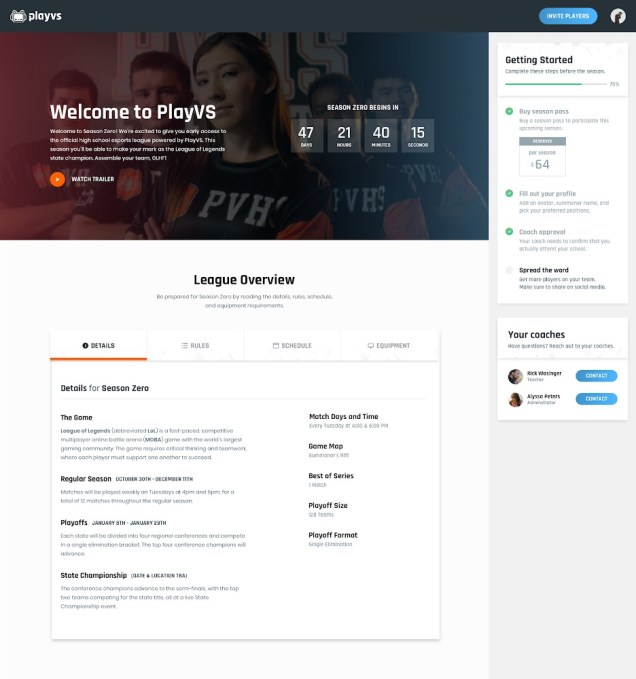
PlayVS offers access to recruiters while giving high school students the chance to play competitive esports at the high school level. The startup, backed by Science with $15.5 million in funding, has partnered with the NFHS (essentially the NCAA of high school) to offer turnkey competition through its dashboard.

PlayVS partners with publishers, and lets players sign up, receive team and league schedules, check standings and stats, and actually play the game all within the PlayVS online portal.

PlayVS has a no-cut policy, letting high schools submit as many unique teams as they like. Given that the company makes money from players themselves ($64/season/player), it makes sense that the company would take a ‘more the merrier’ approach.

The company then divides up those teams into conferences, and the teams play to be conference champions, advance to semi-finals, and eventually head to the state championship. All the games will be played from the students’ own school through the online portal, except for the State Championship tournament which will have a live spectator audience.

This beta season, which includes five states, gives PlayVS a chance to roll out the platform to a smaller pool of players and work out any issues ahead of the inaugural season, which starts February 2019.

from Startups – TechCrunch https://ift.tt/2p1qt3g

#USA Brazilian startup Yellow raises $63M — the largest Series A ever for a Latin American startup

//

After selling their ridesharing startup, 99, to Didi Chuxing for $1 billion last year, Ariel Lambrecht and Renato Freitas didn’t waste any time throwing their hats back in the ring.

Months after their big exit, the pair joined forces with Eduardo Musa, who spent two decades in the bicycle industry, to start another São Paulo-based mobility startup. Yellow, a bike- and scooter-sharing service, quickly captured the attention of venture capitalists, raising a $9 million seed round in April and now, the company is announcing the close of a $63 million Series A.

The round is the largest Series A financing ever for a startup in Latin America, where tech investment, especially from U.S.-based firms, has historically remained low. 2017, however, was a banner year for Latin American startups; 2018, it seems, is following suit. More than $600 million was invested in the first quarter of 2018, partly as a result of increased activity from international investors. And just last month, on-demand delivery startup Rappi brought in $200 million to become the second Latin American company to garner a billion-dollar valuation.

GGV Capital has led the round for Yellow . The Silicon Valley firm is a backer of several other mobility companies, including Grab, Hellobike and Didi Chuxing. Yellow represents the firm’s first foray into the Latin American tech ecosystem. Brazilian VC firm Monashees, Grishin Robotics, Base10 Partners and Class 5 also participated.

“We think there’s a new economy emerging in Latin America,” GGV managing partner Hans Tung told TechCrunch. “A lot of people are more cautious but what we’ve seen with our experience in China, when internet penetration started to happen, a new economy started to emerge that’s more efficient.”

Yellow’s bikes and e-scooters are only available in São Paulo. With the investment, the startup plans to expand to Mexico City, Colombia, Chile and Argentina, as well as add e-bikes to its portfolio of micro-mobility options.

The company also plans to tap into local resources by building a scooter manufacturing facility in the region. Yellow CEO Eduardo Musa told me the company doesn’t want to be reliant on Chinese manufacturers to import scooters and that a local supplier is a whole lot cheaper. The company’s bikes are already sourced locally.

“Since the beginning, we wanted to be vertically integrated,” Musa told TechCrunch. “We definitely believe you need a constant inflow of hardware and you need control and management over the supply chain … not only because of the cost but also because of the quality control.”

Yellow is one of several e-scooter startups to raise VC in 2018. Bird and Lime, for example, both raised large rounds of capital at billion-dollar valuations. A good chunk of that capital has gone into building more scooters, placing a huge demand on the few Chinese manufacturers that’ve tapped into the market.

“There was simply not available capacity or factories prepared to fulfill the demand that arose from the other scooter sharing companies,” Musa said. “This became, very, very quickly, a major bottleneck for this industry.”


from Startups – TechCrunch https://ift.tt/2xeVbJE

#USA Discover Sono Motors’ vision of the electric car at Disrupt Berlin

//

New car makers have been popping up left and right. But instead of creating yet another Tesla-like company, German company Sono Motors is working on something completely new — a solar-powered car. That’s why I’m excited to announce that the company’s co-founder and CEO Laurin Hahn will join us at TechCrunch Disrupt Berlin.

Sono Motors has been working for years on its first car — the Sion. The company now has a handful of prototypes on the road and is refining its manufacturing process to ship those cars to customers who preordered.

The company is focusing on compact cars at first with the Sion. The car looks more like a Volkswagen Golf than a Mercedes E-Class. And it makes a ton of sense given that a solar car isn’t your average car.

People in the automotive industry will tell you that cars remain parked for 90 percent or 95 percent of the time. While it’s hard to find the exact figure, it’s true that you don’t go on a road trip every day.

Many people drive to work. It’s usually a quick ride and you just need your car in the morning and in the evening. The Sion is perfect for this. With a range of 250 kilometers (155 miles), you can usually drive back and forth quite a lot.

And every day, you get an additional 30 kilometers of range using the solar panels. It might be just enough so that you never have to charge your car. But if you’re running low, you can still plug your car just like any other electric car.

Many people already have a big car for weekend trips and longer getaways. In that case, the Sion can be a good second car for your errands and day-to-day drives. It could be useful for medium cities with few public transportation options.

Sono Motors knows from day one that a car manufacturer needs to be a service company as well. You’ll be able to share your car with other users and get paid for it.

There are many other ambitious features that I haven’t listed here. It’s clear that Hahn will have an interesting story to tell on stage at Disrupt Berlin. Building a car manufacturer from scratch sounds like an insane idea as well.

TechCrunch is coming back to Berlin to talk with the best and brightest people in tech from Europe and the rest of the world. In addition to fireside chats and panels, new startups will participate in the Startup Battlefield Europe to win the coveted cup.

Grab your ticket to Disrupt Berlin to listen to Sono Motors’ story. The conference will take place on November 29-30.

from Startups – TechCrunch https://ift.tt/2x9eHHH

#USA Detroit’s StockX raises $44M from GV and Battery to expand marketplace internationally

//

StockX started as a marketplace for reselling sneakers but has since grown to be much more, bringing its transparent and anonymous marketplace to more verticals. Today the company is announcing a $44 million Series B that will help fuel international and domestic growth while letting the company expand to even more product categories and perhaps opening StockX stores.

The idea driving StockX is simple: Provide a marketplace with fair pricing and ensure the merchandise is authentic. The result scales to nearly day-trading in consumer goods in the same vein as oil futures. In some cases, the seller never touches the product. Sneakers and other in-demand products are priced and sold at rates set by the market rather than the seller. If a particular sneaker is in demand, the price increases.

StockX is among the fastest growing startups in Detroit and Michigan and currently employs 300 in Detroit and 50 in Tempe, Arizona. Founded in 2016 by CEO Josh Luber, COO Greg Schwartz and Dan Gilbert, founder and chairman of Quick Loans, the company has scaled to see more than $2 million in daily transactions and 800,000 users have sold or purchased items on StockX. Today, at an event in Detroit, Luber told the audience that the company is approaching a billion dollar run-rate.

The company has never been capital contrasted and CEO and co-founder Josh Luber told TechCrunch that the company never thought they would have to turn to institutional financing. That’s the comfort of having a billionaire like Gilbert as a co-founder; Luber said Gilbert was always happy to fund StockX.

“We didn’t need money,” Luber told TechCrunch the day before this announcement, adding. “It was really about having external people that that we thought added truly different values than we had around the table.”

Right now the company’s main marketplace centers around sneakers but StockX is built around a platform that works for most ecommerce. It’s a $5 billion market worldwide. Last year the company also launched marketplaces for streetwear, handbags and watches — all verticals with a strong demand in the secondary market.

Scaling the service requires more bodies. Since everything sold on StockX is authenticated — in person — it takes more hands to authenticate more items. With that comes more customer service employees and as the company grows, StockX will need more engineers.

The company is already growing fast but Luber seems ready to double down. In March StockX had 130 people. Today, it’s at 415. He thinks. He confesses it could be a slightly more.

“We have about 50 engineers today and I would quadruple that tomorrow if I could,” he said. “We have about 50 customer service people today. I think it would be safe to double that tomorrow just because the business is growing so fast and we obviously hope it continues to grow as we scale.”

If StockX is going to scale, it needs more employees to ensure the company’s core ethos does not soften. The new round of funding will go far in bringing in the people Luber is seeking including additional members of the C-suite. StockX is running without a CTO, CMO, or CFO — pretty much the entire leadership suite, Luber admits.

It seems this is part of the reasoning behind the funding. The company was not seeking funding but, as Luber tells it, as the company gained attention, investors increasing reached out requesting meetings. Of the meetings they took, there were two firms that meshed with Luber’s vision of growing a marketplace.

The new round of funding comes from GV and Battery Ventures including several high-profile investors including DJ Steve Aoki; model and entrepreneur, Karlie Kloss; streetwear designer Don C; Salesforce founder chairman and co-CEO, Marc Benioff; Bob Mylod, founder and managing partner of Annox Capital; Shana Fisher, managing partner at Third Kind Venture Capital; and Jonathon Triest, managing partner of Ludlow Ventures — only Mylod and Triest are based in the Detroit area.

StockX says it intends to use the funding to expand internationally. Right now StockX only advertises in the US and only supports purchases in U.S. dollars. Going forward it intends to open up local versions of StockX to better support key markets with support for local currency, language and marketing. The company could also open location operations to make shipping and receiving easier and faster.

“In some of these countries, we have, a pretty decent customer base where people are tendered on a VPN,” Luber said. “There are pictures of people that walk around China with a StockX tag hanging off their shoe.”

Fifteen percent of StockX sales currently come from international buyers.

Of the four product categories StockX current sells, sneakers and streetwear make up the bulk of the sales. Before expanding to different verticals, Luber tells me there’s a lot of room for growth in each of the current categories but expanding means more employees.

For instance, each streetwear brand is essentially a sub-vertical, he says, adding that if the company launches a new brand StockX has to assemble a staff around it with brand expertise to build the catalog and product authentication process.

StockX is not ready to announce what other type of products it might sell. Street art seems like one they’re exploring.

Despite the growth, Luber remains committed to Detroit. He said the company will always be headquartered in Detroit and was proud to point to the fact that StockX was the second largest tenant in Dan Gilbert’s marquee Detroit building, One Campus Martius. The company also operates a 30,000 square foot facility in Detroit’s Corktown neighborhood.

StockX could come to other cities though, Luber says. The company is talking about what a StockX “in-real-life” experience would look like: It could be retail, a brand experience, accepting products to be sold or additional operation centers. The company is exploring all the obvious candidates including LA, NYC, San Francisco and Portland.

from Startups – TechCrunch https://ift.tt/2xbLaNl