#USA HQ Trivia nabs Target to sponsor game with biggest ever single winner prize of $100K

//

HQ Trivia is aiming to attract more players following a slight decline in downloads with a new, large prize. The company announced today it has bagged Target to sponsor to sponsor a special Emmy-themed game featuring its biggest-ever single winner prize of $100,000. The game will air on Monday, September 17 at 9 PM ET, but will be played in a different fashion than usual.

Typically, HQ Trivia players compete to win or split a cash prize, which often doesn’t amount to much more than enough for a cup of coffee. But this time around, HQ Trivia will run in a “one winner takes all” format, meaning only one individual will earn the winnings from the game.

Instead of a normal 12-question round with 10 second to answer, the game will continue until only one winner remains. Players can still use their extra lives, but only until question number 15. After that, they won’t work.

The game’s content will be Emmy Awards-themed, featuring questions about shows, actors, the Emmy telecast, and other historical facts.

Target is stepping up as the game’s sponsor for this winner-takes-all milestone game. The game itself will also be branded, but the exact nature of the creative is something Target is keeping under wraps for the time being as it’s first for the retailer.

HQ Trivia has worked with a number of other big-name brands in the past through its game, including Warner Bros, Nike, MillerCoors, National Geographic, Chase, Viacom, and NBCUniversal.

The news of the milestone game comes at a time when HQ Trivia’s downloads have been trending slightly downwards. As TechCrunch’s Josh Constine reported last month for the app’s Apple TV launch, the iOS version of HQ Trivia had fallen from being the No. 1 U.S. trivia game to No. 10, and the No. 44 game to No. 196.

Today, it’s the No. 135 game and No. 467 Overall app.

According to data from Sensor Tower, the app has 12.8 million downloads across platforms, the majority of which (11M) were this year.

HQ Trivia claims the app continues to have the “largest live audience on mobile daily.”

The company responded at the time that games are a “hits business” and “don’t grow exponentially forever.” Rus Yusupov, CEO of HQ Trivia parent company Intermedia Labs, also noted that HQ was working on new game formats as a result.

Despite the fickle nature of mobile gamers, HQ Trivia has spawned a number of clones and other live games, including Fox’s FN Genius, ProveIt, FameGame, Gravy, MajorityRules, Cash Show, and many others. Even Facebook caught onto the trend, launching its own gameshows platform to support interactive video.

However, it remains to be seen if live game-playing is a lasting interest for mobile gamers, or just a flash in the pan.

from Startups – TechCrunch https://ift.tt/2x6ap4J
#USA The clock is ticking for e-cig companies to block underage users

//

The FDA is giving makers of e-cigarettes sixty days to come up with a more effective, forceful plan to combat underage use of the products.

FDA Commissioner Dr. Scott Gottlieb is yet again moving the goal posts for e-cig companies. He now considers underage use of electronic nicotine delivery systems (ENDS) an epidemic, forcing the government to make a choice that we all knew was coming: save the smokers or save the kids?

“I believe in the power of American ingenuity to solve a lot of problems, including this one,” said Gottlieb in a statement. “I’m deeply disturbed by the trends I’ve seen. I’m disturbed by an epidemic of nicotine use among teenagers. So, we’re at a crossroads today. It’s one where the opportunities from new innovations will be responsibly seized on right now, or perhaps lost forever.”

E-cigarettes, like the Juul (which owns more than 70 percent of the market by revenue), offer a much less harmful alternative to cigarettes for folks who smoke. Smoking is the leading cause of preventable death, according to the CDC, with 6 million deaths per year worldwide, and that number is expected to rise to 8 million by 2030.

Public Health England says that e-cigarettes are 95 percent less harmful than combustible cigarettes. Addiction, which in this case is caused by nicotine, is always harmful, but not nearly as threatening as the harm caused by actual smoke from traditional cigarettes.

On the spectrum of risk, e-cigarettes should seem like a huge win in the decades-long battle against smoking.

But that was before teenagers started using e-cigarettes, including the Juul, at a surprisingly increasing rate. The FDA says more than 2 million middle and high school students were regular users of e-cigarettes last year. While nicotine isn’t all that harmful to a fully developed brain, the developing brain of a teenager is inordinately susceptible to addiction, and underage use of nicotine delivery systems may leave these users addicted to nicotine for life.

This dilemma obviously leaves e-cig makers in a tough spot, but it is also a sticky situation for the FDA. In July of last year, the FDA decided to extend the deadline for e-cigarettes to get FDA approval. This decision was made in part to give e-cig makers and the FDA itself the opportunity to thoughtfully and cooperatively figure out the ‘rules of the road’ in a budding new industry that Gottlieb himself believes is to the benefit of public health. As part of the extension, e-cig makers could leave their products on the market with the caveat that they were not allowed to bring new products to market.

In the wake of growing use by minors, the agency is now walking back some of those decisions. The FDA is keeping an even closer eye on offline and online retailers selling to minors, as well as watching for ‘straw purchases’ on the e-cig makers own online storefronts.

But the FDA is putting a good deal of the responsibility on the e-cig makers themselves. These companies, which include JUUL, Vuse, MarkTen, blu e-cigs, and Logic (97 percent of the market), will have sixty days to present the agency with a more comprehensive and effective plan to eliminate underage use of e-cigs, or the agency will have to re-evaluate its decision to extend the FDA deadline and leave these existing products on the market.

“JUUL Labs will work proactively with FDA in response to its request,” said Juul Labs spokesperson Victoria Davis. “We are committed to preventing underage use of our product, and we want to be part of the solution in keeping e-cigarettes out of the hands of young people. Our mission is to improve the lives of adult smokers by providing them with a true alternative to combustible cigarettes. Appropriate flavors play an important role in helping adult smokers switch. By working together, we believe we can help adult smokers while preventing access to minors, and we will continue to engage with the FDA to fulfill our mission.”

One of the trends that the agency has observed is minors attraction to flavors, particularly flavor-based cartridge devices, as opposed to open-tank vaping. The Juul happens to fall in the former category. If the FDA doesn’t see the response it’s hoping for in the next sixty days, flavors may well be the first piece to be taken off the market.

Juul Labs, in particular, has already done quite a bit to stymie underage use, from raising the age of purchase to 21+ on its website, removing everyone but real-life former smokers from its social media, investing $30 million into its own youth prevention plan, and working with online retailers to pull unauthorized listings of the product from their sites.

The letter from the FDA, then, suggests that the agency is looking for much more drastic action.

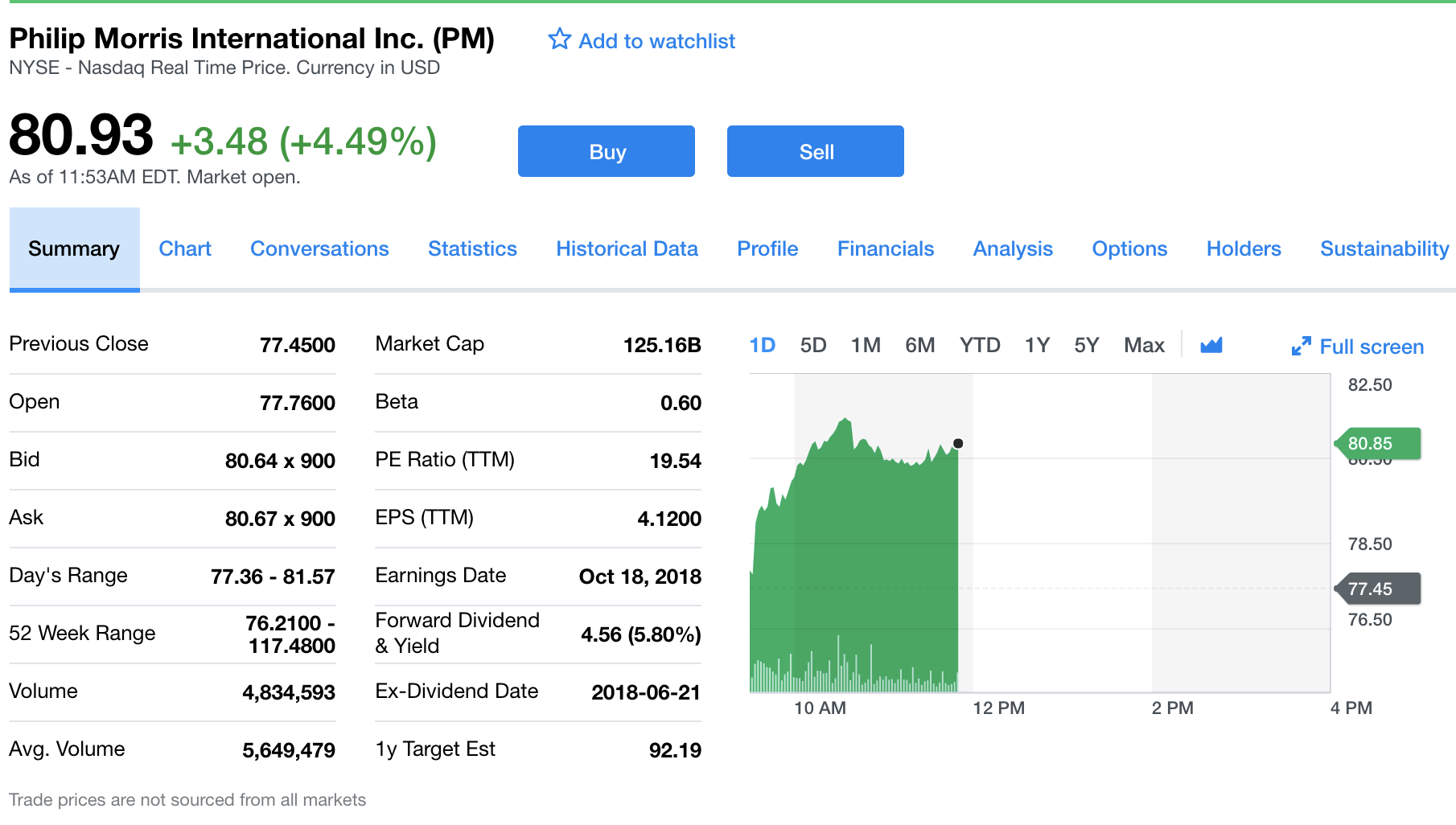
Big tobacco stocks are up on word of the news.

from Startups – TechCrunch https://ift.tt/2CMZxOk

#USA Wasabi just landed $68 million to upend cloud storage

//

Chances are you see a story about cloud storage, and you yawn and move on, but Wasabi, a startup from the folks who brought you Carbonite backup, might make you pause. That’s because they claim to have found a cheaper, faster way to store data, and apparently investors like what they are seeing, forking over $68 million for a Series B investment.

Yes, that’s a hefty amount for an early round, but with founders who have multiple successful exits, investors might have seen a lower risk than you might think. The company didn’t go with your usual Sand Hill Road suspects here, instead opting for an unconventional set of industry veterans and family offices along with Forestay Capital, Swiss entrepreneur, Ernesto Bertarelli’s technology fund.

Much like Packet, a startup that scored $25 million the other day, they are hoping to take on cloud giants by finding a seam in the market they can exploit. While Packet was looking at customized compute, Wasabi is concentrating squarely on storage, an area they understand well from their Carbonite days.

CEO David Friend reports they are offering a terabyte of storage for just $5 a month, and says they are growing 30-40 percent month over month, since they launched in May 2017. In fact, he says they already have 3500 customers.

They took their time building their own custom storage solution, which he claims is faster and more efficient than any out there, allowing them to undercut Amazon S3 storage prices. Amazon is charging .023 cents per gigabyte for up to 50 terabytes. That works out to $23 a terabyte, substantially more than Wasabi’s asking price.

It begs the question though, how they can afford to keep scaling such a solution. For starters, they use co-location facilities like Digital Realty and Equinix for their storage solution instead of building out their own data centers. Friend says as they scale, they won’t be using their investment capital to add more capacity. Instead, they will be borrowing from banks in an apartment building kind of model, where you build the building, rent out the apartments and break even after a certain amount of time. He says, Wasabi can continue to grow this way.

They are going after fat data targets like media and entertainment and genomics, where they believe companies looking for the best price possible will bypass the big three — Amazon, Google and Microsoft — to build a more cost-effective storage solution.

The road is littered with failed cloud storage plays, but these folks have an experienced team and plenty of money behind them. Time will tell if they can buck the odds and take on the world’s biggest cloud companies by competing on price and performance, or if they can continue to keep prices this low as they grow and must add increasing capacity without the benefit of being webscale.

from Startups – TechCrunch https://ift.tt/2QpDqAs

#USA Grammarly now saves you from embarrassing mistakes in Google Docs, too

//

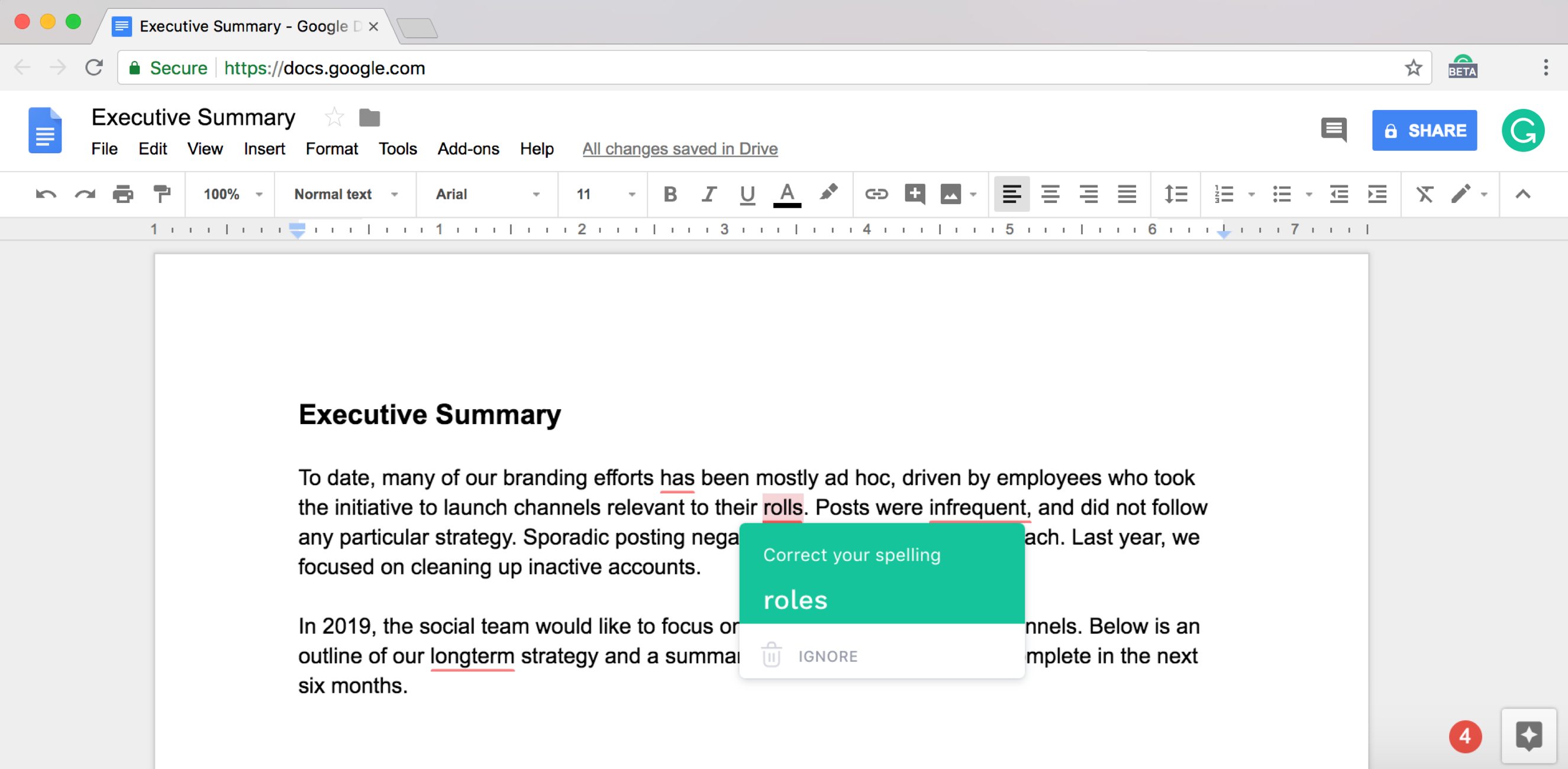
Grammarly now supports Google Docs. Over the course of the last few years, Grammarly has made a name for itself as one of the better grammar and spelling checkers on the market. As a Chrome extension, it neatly integrates with virtually every major online tool and social media site, but until now, Google Docs remained a blind spot.

Because of its real-time collaboration features, the Google Docs editor isn’t just a straight-up text field, after all, so the Grammarly team had to do a bit of extra work to make its service work there. Once you have installed the extension, though, it’ll now work just like in any other web app.

The feature has actually been available as a beta to paying premium users for a little while, but now everybody can give it a try.

It’s interesting to see Grammarly come to Google Docs now. In July, after all, Google announced that it was bringing its own grammar checker to Google Docs, too. Google’s twist here is that it is basically using the same kind of machine learning techniques that power its translation software to check for errors in your documents. My sense is that Grammarly actually offers a more comprehensive set of tools for keeping you from embarrassing yourself with bad grammar (including help with punctuation, for example), but Google’s tool remains in private beta, so I haven’t been able to give it a try yet.

Grammarly’s paid plans start at $29.95 per month, but you get a discount if you pre-pay for three months or a full year (and the company also regularly offers discounts to its free subscribers). There also is a team plan for businesses that starts at $10/month/members (with a minimum of three subscribers).

from Startups – TechCrunch https://ift.tt/2x9TZYh

#USA Sisense hauls in $80M investment as data analytics business matures

//

Sisense, a company that helps customers understand and visualize their data across multiple sources, announced an $80 million Series E investment today led by Insight Venture Partners. They also announced that Zack Urlocker, former COO at Duo Security and Zendesk, has joined the organization’s board of directors.

The company has attracted a prestigious list of past investors, who also participated in the round, including Battery Ventures, Bessemer Venture Partners, DFJ Venture Capital, Genesis Partners and Opus Capital. Today’s investment brings the total raised to close to $200 million.

CEO Amir Orad says investors like their mission of simplifying complex data with analytics and business intelligence and delivering it in whatever way makes sense. That could be on screens throughout the company, desktop or smartphone, or via Amazon Alexa. “We found a way to make accessing data extremely simple, mashing it together in a logical way and embedding it in every logical place,” he explained.

It appears to be resonating. The company has over 1000 customers including Expedia, Oppenheimer and Phillips to name but a few. Orad says they are actually the analytics engine behind Nasdaq Corporate Solutions, which is the the main investor relations system used by CFOs.

He was not in the mood to discuss the company’s valuation, an exercise he called “an ego boost he doesn’t relate to.” He says that he would prefer to be measured by how efficiently he uses the money investors give him or by customer satisfaction scores. Nor would he deal with IPO speculation. All he would say on that front was, “When you focus on the value you bring, positive things happen.”

In spite of that, he was clearly excited about having Urlocker join the board. He says the two spent six months getting to know each other and he sees a guy who has brought several companies to successful exit joining his team, and perhaps someone who can help him bring his company across the finish line, however that ultimately happens. Just last month, Cisco bought Urlocker’s former company, Duo Security for $2.35 billion.

For now Sisense, which launched in 2010, has another $80 million in the bank. They plan to add to the nearly 500 employees already in place in offices in New York, Tel Aviv, Kiev, Tokyo and Arizona. In particular, they plan to grow their international presence more aggressively, especially adding employees to help with customer success and field engineering. Orad also said that he was also open to acquiring companies should the right opportunity come along, saying “Because of talent, technology and presence, it’s something you have to be on lookout for.”

When a company reaches Series E and a couple of hundred million raised, it’s often a point where an exit could be coming sooner than later. By adding an experienced executive like Urlocker, it just emphasizes that possibility, but for now the company appears to be growing and thriving, and taking the view that whatever will be, will be.

from Startups – TechCrunch https://ift.tt/2x3x1m6

#USA Job Today gets a $16M top up as it preps for Brexit bump

//

Accel-backed mobile-first jobs app Job Today has pulled in another $16M — an expansion to its November 2016 $20M Series B round. It raised a $10M Series A in January of the same year.

The 2015 founded startup offers a mobile app for job seekers that does away with the need for a CV.

Instead job seekers create a profile in the app and can apply to relevant jobs. Employers can then triage potential applicants via the app and chat to any they like the look of via its messaging platform.

The approach has been especially popular with fast turnover jobs in the service industry, such as hospitality and retail.

Job Today says it has more than five million job seekers registered on its platform, and claims to have delivered more than 100 million candidate applications to the 400,000+ predominantly small businesses posting jobs via the app to date (with 1M+ jobs posted). It currently operates in two markets: Spain and the UK.

The additional funding will be put towards expanding its presence in the UK market — where it says it’s seen “significant growth” in both job postings and candidate applications.

It says the overall volume of applications has increased by 46% year-on-year in the market, with the number of applications per candidate growing by 32% in the same period. The likes of Costa Coffee, Pret A Manger and Eat are named as among its “regular hirers”.

It’s also envisaging a Brexit bump for the local casual job market, as the UK’s decision to leave the European Union looks set to impact the supply of labor for employers…

Commenting in a statement, CEO Eugene Mizin, said: “The casual job market is often the first to experience the effects from macro-economic forces and Brexit will mean that many non-skilled and non-British workers will leave the UK. This will create a demand to fill casual jobs and create new opportunities for the less-skilled school, college and university leavers entering the workforce for the first time in 2019.”

The Series B expansion funds are coming from New York based investor 14W.

Job Today says it got additional growth uplift after integrating with Google Jobs — aka Google search’s built in AI-powered jobs engine. This launched in the UK in July 2018, and Job Today said it saw 101% growth in users in the first month of integration.

from Startups – TechCrunch https://ift.tt/2Od9Cp6

#USA Ready, Set, Raise is a new accelerator built for women by women

//

Women in tech are not only significantly under-funded by venture capitalists, but they also often lack access to the early-stage support granted to their male counterparts.

To enroll in a startup accelerator like Y Combinator, for example, its expected founders relocate to the Bay Area for three months. Women, who are more often caregivers, might not be able to do that, and even if they can, the program may not cater to their specific needs.

Female Founders Alliance (FFA), a relatively new network of female startup founders, has built a free, non-dilutive 5-week accelerator for women by women. Called ‘Ready, Set, Raise,’ its goal is to help more female-founded startups raise VC through workshops, 1-on-1 coaching, legal clinics, communications and speech coaching and more. The accelerator, sponsored by Trilogy Equity Partners, kicked off at the end of August and will culminate with a private demo day with VCs in Seattle on September 27th. 

“I don’t know many women who can uproot their families for three months to go live in another city,” FFA founder Leslie Feinzaig told TechCrunch. “When I was working on my company, I wanted to apply to Y Combinator but I was a new mom, it was 100% a non-starter.”

Feinzaig knows the trials and tribulations of raising VC as a female entrepreneur all too well. As the founder of an edtech startup called Venture Kits, she tried, unsuccessfully, to procure venture backing. That struggle is why she started FFA, which began as a Facebook group to connect female founders in the Seattle area but has expanded across North America.

The accelerator is designed to allow founders to tune into the programming remotely. Participants are only required to be on-site in Seattle, where FFA is based, for one week, during which the organization is providing free housing and childcare.

FFA’s accelerator is among a new class of efforts created for women in tech. All Raise’s Founders For Change initiative, for example, and new female-focused funds, like Sarah Kunst’s Cleo Capital, are all working to close the gender funding gap.

“I know it seems to people like there’s a lot happening around female founders and diverse founders, but in the context of the size and scale of that gender gap, we are barely getting started,” Feinzaig said. “We need all the accelerators. We need hundreds of funds. We are nowhere close to making a real dent in equal leadership.”

Today, FFA is announcing their inaugural class of startups, eight in total. Here’s a closer look at the group:

  • Chanlogic: Based in Seattle, the SaaS startup provides a product for e-commerce channel managers.
  • Esq.Me Inc.: A Portland-based document marketplace for lawyers created by lawyers.
  • Future Sight AR: A Houston-based AR product for engineering, procurement and construction companies.
  • geeRemit: Based in Raleigh, the startup leverages the blockchain to power remittances to Africa.
  • Magic AI: A Seattle-based AI startup for livestock care.
  • MoxieReader: Based in New York, an edtech startup focused on improving child literacy through tech.
  • Pandere Shoes: Based in Anchorage, the startup is creating expandable shoes.
  • Zeta Help: A San Francisco-based financial support platform for millennial couples.


from Startups – TechCrunch https://ift.tt/2MpD9di

#USA Google Street View cars will be roaming around the planet to check our air quality with these sensors

//

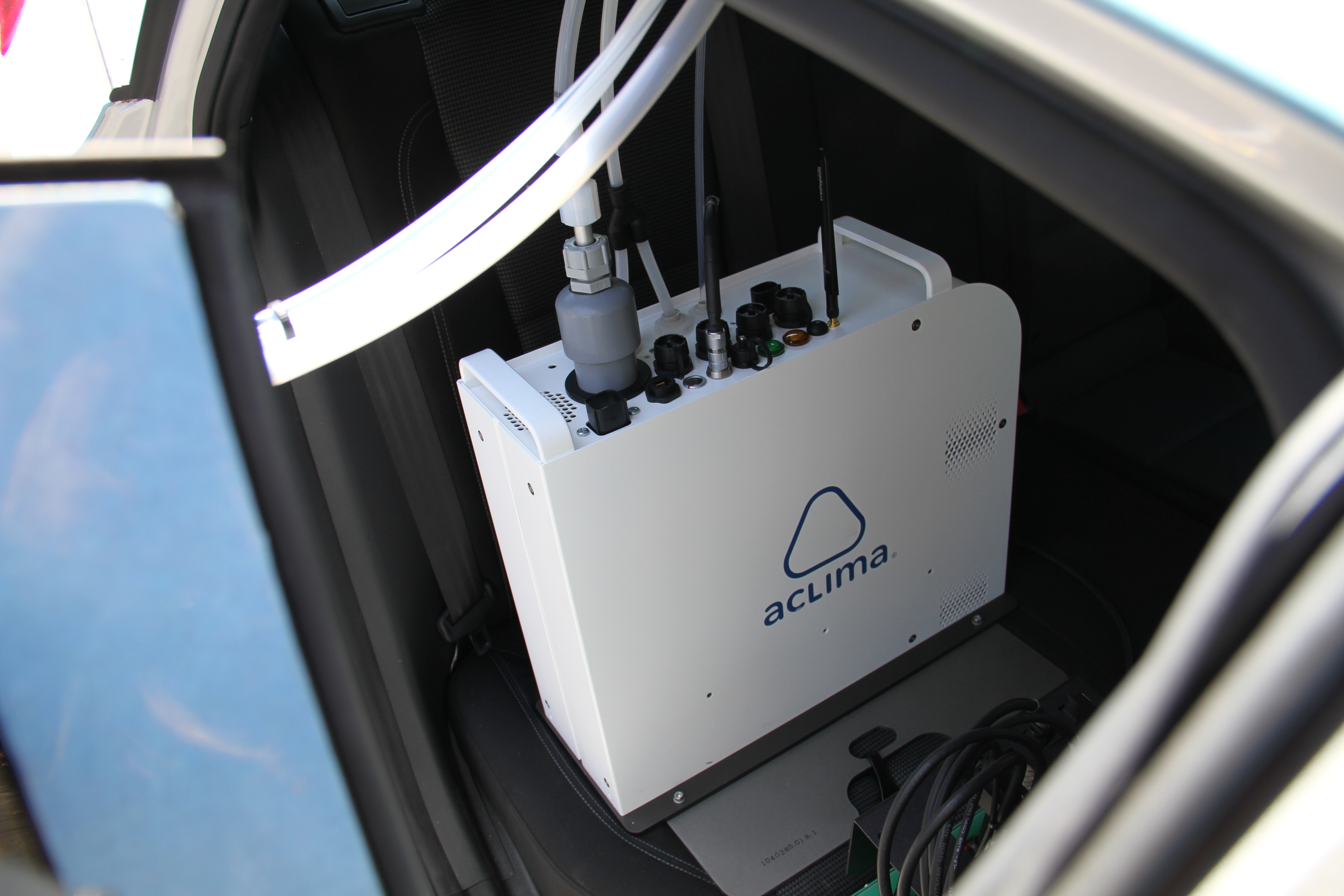
Aclima, a San Francisco-based startup building Internet-connected air quality sensors has announced plans to integrate its mobile sensing platform into Google’s global fleet of Street View vehicles.

Google uses the Street View cars to map the land for Google Maps. Starting with 50 cars in Houston, Mexico City and Sydney, Aclima will capture air quality data by generating snapshots of carbon dioxide (CO2), carbon monoxide (CO), nitric oxide (NO), nitrogen dioxide (NO2), ozone (O3), and particulate matter (PM2.5)while the Google cars roam the streets. The idea is to ascertain where there may be too much pollution and other breathing issues on a hyper local level in each metropolitan area. The data will then be made available as a public dataset on Google BigQuery.

Aclima has had a close relationship with Google for the past few years and this is not its first ride in Street View cars. The startup deployed its sensors in London earlier this year using Google’s vehicles and three years ago started working with the tech giant to ascertain air health within Google’s own campus as well as around the Bay Area.

“All that work culminated in a major scientific study,”Aclima founder Davida Herzl told TechCrunch, referring to a study published in Environmental Science and Technology revealing air pollution levels varied in difference five to eight times along a city street. “We found you can have the best air quality and the worst air quality all on the same street…Understanding that can help with everything from urban planning to understanding your personal exposure

That initial research now enables Aclima to scale up with Google’s Street View cars in the hopes of gathering even more data on a global basis. Google Street View cars cover the roads in all seven continents and have driven over 100,000 miles in just the state of California collecting over one billion data points since the initial project began with Aclima in 2015.

The first Street View cars with the updated Aclima sensors will hit the road this Fall in the Western United States, as well as in Europe, according to the company.

“These measurements can provide cities with new neighborhood-level insights to help cities accelerate efforts in their transition to smarter, healthier cities,” Karin Tuxen-Bettman, Program Manager for Google Earth Outreach said in a statement. 

from Startups – TechCrunch https://ift.tt/2Qqxtmu

#USA Confrere, the video calling service for professionals and clients, raises $1.5M seed

//

Confrere, a video calling service designed specifically for professionals who need to hold online consultations or meeting with clients, has raised $1.5 million in seed funding.

Leading the round is Berlin’s Point Nine Capital, with participation from Nordic Makers, The Nordic Web Ventures, and Fathom Capital. A number of angel investors also took part in the round, including Albert Armengo (the founder of Doctoralia, sold to Docplanner), as well as a number of physicians who are users of the product.

Notably, Confrere was co-founded by CEO Svein Yngvar Willassen, who previously founded and headed up appear.in, another video calling service but one designed for team collaboration. The startup’s other co-founders are CTO Dag-Inge Aas and CPO Ida Aalen.

“I knew from my time with appear.in that meetings between professionals and their clients were a different use case than team meetings,” Yngvar Willassen tells me. “Appear.in and other current video tools do not serve that use case well. I found that it would probably be better to make a new service for this”.

That’s because a typical professional receives many client calls after another, and this also makes it awkward to use typical room-based systems like Zoom or appear.in. “In addition, of course, needing to download and install an application is out of the question. It needs to run in the browser, also on mobile phones,” says the Confrere CEO.

To that end, Confrere’s UX is tailored for professional-client calls, and enables professionals to receive multiple clients after each other without the risk of clients bumping into each other. It works in the browser on Android and iPhone; you simply send a link or add a button to your website to start receiving calls. In addition, Confrere offers an API that makes it easy for other SaaS companies to add video calling to their offering.

“The largest group [of users] are professionals like physicians, therapists, tutors, recruiters, lawyers and so on. Basically, everyone who spends a lot of their day meeting their customers or clients in their office as part of their business. We believe all of these businesses have the potential to work more efficiently by utilising video communication with customers,” says Yngvar Willassen.

Adds Confrere’s Aalen: “The fact that you can brand your video calls, charge for your services over video, and where it’s super easy for the end user to enter the video call… is simply not something anyone else is doing. Some might say it’s a niche market, but we believe it’s a market with huge potential. There are so many professions that typically have 1-1 meetings with their customers, clients or leads, and many of them could have been done on video instead of meeting face to face. We’re creating a new market”.

from Startups – TechCrunch https://ift.tt/2x8B7bZ

#USA The Family raises $17.4 million to support European startups

//

The Family has always been an ambitious startup accelerator. But it has always felt like the company never had enough money to grow as quickly as it wanted. The Family is raising a new $17.4 million funding round (€15 million).

Private banking and asset management group LGT Capital Partners is leading the round, with HummingBird Venture, Project A, eVentures and others also participating.

“It’s the first time an investor understands The Family’s business model. It’s the first time an investor isn’t trying to turn us into a VC fund,” The Family co-founder Oussama Ammar told me.

According to him, The Family is basically going to do more of the same. Except that this funding round “makes [The Family] virtually immortal.” The Family had to double-check its bank account many, many times to make sure that there was enough money to pay all its employees. This funding round should let the company catch its breath.

The Family has fine-tuned its fellowship program over the years. Here’s how it works today. Every quarter, around 20 startups join The Family. They will attend onboarding sessions in Paris, Berlin and London.

In Paris, The Family’s team is focused on product and engineering. In London, The Family can help you raise money. And in Berlin, The Family’s team is all about operations and execution.

After the onboarding stuff, companies can still seek for advice and connections. There’s no demo day and end of batch. The Family plans to support startups when it comes to funding, product, hiring and more.

Being part of The Family is not free of course. Startups need to be willing to give away 5 percent of their equity in exchange of this support system. This isn’t for everyone and many entrepreneurs are already surrounded by a supportive ecosystem. So if you don’t think you’re getting enough value, you can ask for your shares back within a year.

I’ve covered some of The Family’s startups over the years, such as Agricool, Algolia, Clustree, Comet, Doctrine, Fretlink, Heetch, Nestor, Payfit, Side, Stanley Robotics, Trusk and more.

With today’s funding round, The Family plans to invest in every funding round after a startup joins the fellowship. As a startup, if you can find a lead investor, The Family will automatically join the round with the same valuation and conditions.

But the fellowship is just one side of the story. “Our goal with the fellowship is that we never exit because we want to maximize the returns on investment,” Ammar said.

In order to support a staff of 60 people around 3 countries, The Family had to find a way to make money before those long-term exits. That’s why the company has launched other products.

For instance, Pathfinder helps big companies become digital companies, Lion educates startup employees and Kymono sells startup sweatshirts. The Family has spun off all those products into their own companies. They all have a dedicated CEO and team, but The Family retains at least 60 percent of the shares.

And The Family wants to create more side businesses like those. It seems like The Family is leveraging this model to finance all the fellowship activities.

Eventually, The Family’s dream is to be able to follow portfolio companies at every step of the way. It’s clear that you don’t need as much external support if you’re a Series C company. But The Family wants to become an infrastructure company that lets you build European tech giants.

from Startups – TechCrunch https://ift.tt/2x4msiS