#USA Hong Kong-based OneDegree gets $25.5M Series A to make coverage more accessible, starting with pet insurance

//

OneDegree, a Hong Kong-based insurance technology startup, announced today that it has closed a Series A totaling HKD $200 million (about $25.5 million). Half of that amount was pledged by investors to OneDegree pending regulatory approval through the Hong Kong Insurance Authority’s new fast-track licensing program for online-only insurers. The company, which participated in Cyberport, the Hong Kong government’s startup incubator, claims this is the largest ever fundraising round for a pre-revenue insurance tech startup in Hong Kong.

OneDegree is currently not disclosing its list of investors because its new shareholders are being vetted by the Insurance Authority, founder and CEO Alvin Kwock tells TechCrunch, but it includes institutional investors and family offices. The South China Morning Post reports that speculation among brokers peg Tencent and Alibaba as probable backers.

OneDegree has developed an online insurance platform that lets consumers purchase personal lines and health insurance products without needing to consult with an agent. Instead, they find and buy policies through an app that is connected to a backend that automates claims processing, policy management and customer service.

The startup will initially sell medical insurance plans for pets. While there are more than 500,000 pet dogs and cats in Hong Kong, only about 2% to 3% are covered by insurance, compared to 42% in the United Kingdom, says OneDegree. The startup blames this on ineffective distribution, since pet insurance has relatively low premiums and is therefore overlooked by insurance agents, even though the number of pet dogs and cats in Hong Kong is increasing at an average annual growth rate of 3.5% and their owners are a relatively affluent demographic.

OneDegree plans to use its Series A to on tech development, launching new products and marketing. The funding will also serve as risk capital once it launches its insurance business.

In a press statement, Cyberport chairman George Lam said “As a key driver of digital technology development in Hong Kong, we are definitely excited to see local fintech start-ups like OneDegree successfully securing recognition from renowned institutional investors and attracting sizable funding that will enable faster growth.”

from Startups – TechCrunch https://ift.tt/2MjgUWq

#USA Perlego raises $4.8M for its ‘Spotify for textbooks’

//

Perlego, which has been dubbed the ‘Spotify for textbooks,’ has closed $4.8 million in finding. Leading the round is ADV, with participation from existing angel investors, including Simon Franks (co-founder of Lovefilm), Alex Chesterman (founder of Zoopla), and Peter Hinssen.

Founded by Gauthier Van Malderen and Matthew Davis, Perlego provides students and professionals unlimited access to hundreds of thousands of academic and professional eBook titles for £12 a month.

To be able to do this, it works with 650 publishers, including big names like Oxford University Press, Princeton University Press, Macmillan Higher Education, and Cengage Learning. Publishers receive 65 percent of each subscription on a consumption basis.

“Textbook prices have increased more than fifteen-fold since 1970, or three times the rate of inflation,” Perlego co-founder and CEO Van Malderen tells TechCrunch. “In the U.K., the average university student spends £439 a year on textbooks. This is only exacerbating the cost of higher education and the debt burden on students, which is set to rise again this year in the U.K.”.

In turn, Perlego says it helps publishers monetise their content to a large segment of price-sensitive students that would otherwise buy their books from the used-books market or download pirated copies. It also supplies publishers with detailed data on the consumption of titles.

“We are true subscription model,” adds Van Malderen. “For £12 per month you get unlimited access to the best textbooks. We do not operate a complex leasing model and publishers benefit [through] data collection, reduced piracy, no cannibalization from second-hand print sales”.

Meanwhile, Perlego says it will use the new funding to grow the team and support the company’s growth across the U.K. and Europe. It will also further invest in developing its product for students and professionals.

In addition, Perlego has joined Founders Factory this month as part of its edtech accelerator programme, which is backed by Holtzbrinck Macmillan one of the world’s leading academic publishers.

from Startups – TechCrunch https://ift.tt/2wZ2E0q

#USA Unmortgage scores £10M seed round to offer ‘part-own, part-rental’ housing

//

Unmortgage enables everyone to live in the home they want to, that’s our mission,” Unmortgage co-founder and CEO Ray Rafiq-Omar tells me. “We do that by allowing people to buy as little as five percent of a home and rent the rest. So there’s no mortgage involved, hence the name Unmortgage”.

The burgeoning London startup, which aims to launch next year having just closed a hefty £10 million seed round, calls its model “part-own, part-rent”. However, unlike traditional shared ownership schemes, Unmortgage doesn’t want you to have to take out a mortgage to buy the first portion of your own, and it isn’t targeting new-builds.

Like a number of other fintech/proptech companies, such as Strideup and Proportunity, it is the latest attempt to solve the increasing difficulty first time buyers face trying to get on the housing ladder as rising house prices typically outstrip wages. If people rent, they often cannot save the large deposit required for a mortgage. It is this “vicious circle” that Unmortgage want to break: by helping families that can afford to rent gradually buy a home.

“The way we like to think about it is the security of home ownership with the flexibility of renting,” says Rafiq-Omar. “You find a home. If we like it too, we’ll but it together in partnership. You’ll own your bit and you’ll pay rent on our bit. Then you have the option to buy more of your home from as little as a pound at any time”.

To keeps things fair — Rafiq-Omar stresses that fairness is “our core value” — Unmortgage will revalue the property on a monthly basis so you’ll always have an up-to-date valuation when increasing your stake. And at any point you are free to either buy out Unmortgage with a mortgage or an inheritance or to give the company three month’s notice for it to buy you out so you can take your cash at market price and move on to your next home.

Likewise, the rent you pay on the part of the property you don’t own is pegged to rises to inflation. But in case inflation outpaces market rate rents, Rafiq-Omar says Unmortgage will allow the customer to ask for a rent review. “They have the ability to not have to worry about their rent but if they are worried they can have it reviewed,” he says.

Unmortgage will use institutional funding to finance its part of the homes it purchases, who Rafiq-Omar says would like to own residential property, and the secure income stream it brings, but don’t want to be landlords or end up in the media for behaving like a landlord. “Unmortgage gives them a way to invest in residential property while solving societal need, which is [that] people want to own their own homes and have security over their housing situation”.

Meanwhile, investors in Unmortgage’s seed round are fintech venture capital firms Anthemis Exponential Ventures, and Augmentum Fintech plc. “”We’re grateful to our investors for believing in us and our social mission and excited to be working with them – especially Tee Pruitt [of Anthemis], who was instrumental through much of this process,” adds Rafiq-Omar.

from Startups – TechCrunch https://ift.tt/2CCOlUB

#USA Unmortgage scores £10M seed round to offer ‘part-own, part-rental’ housing

//

Unmortgage enables everyone to live in the home they want to, that’s our mission,” Unmortgage co-founder and CEO Ray Rafiq-Omar tells me. “We do that by allowing people to buy as little as five percent of a home and rent the rest. So there’s no mortgage involved, hence the name Unmortgage”.

The burgeoning London startup, which aims to launch next year having just closed a hefty £10 million seed round, calls its model “part-own, part-rent”. However, unlike traditional shared ownership schemes, Unmortgage doesn’t want you to have to take out a mortgage to buy the first portion of your own, and it isn’t targeting new-builds.

Like a number of other fintech/proptech companies, such as Strideup and Proportunity, it is the latest attempt to solve the increasing difficulty first time buyers face trying to get on the housing ladder as rising house prices typically outstrip wages. If people rent, they often cannot save the large deposit required for a mortgage. It is this “vicious circle” that Unmortgage want to break: by helping families that can afford to rent gradually buy a home.

“The way we like to think about it is the security of home ownership with the flexibility of renting,” says Rafiq-Omar. “You find a home. If we like it too, we’ll but it together in partnership. You’ll own your bit and you’ll pay rent on our bit. Then you have the option to buy more of your home from as little as a pound at any time”.

To keeps things fair — Rafiq-Omar stresses that fairness is “our core value” — Unmortgage will revalue the property on a monthly basis so you’ll always have an up-to-date valuation when increasing your stake. And at any point you are free to either buy out Unmortgage with a mortgage or an inheritance or to give the company three month’s notice for it to buy you out so you can take your cash at market price and move on to your next home.

Likewise, the rent you pay on the part of the property you don’t own is pegged to rises to inflation. But in case inflation outpaces market rate rents, Rafiq-Omar says Unmortgage will allow the customer to ask for a rent review. “They have the ability to not have to worry about their rent but if they are worried they can have it reviewed,” he says.

Unmortgage will use institutional funding to finance its part of the homes it purchases, who Rafiq-Omar says would like to own residential property, and the secure income stream it brings, but don’t want to be landlords or end up in the media for behaving like a landlord. “Unmortgage gives them a way to invest in residential property while solving societal need, which is [that] people want to own their own homes and have security over their housing situation”.

Meanwhile, investors in Unmortgage’s seed round are fintech venture capital firms Anthemis Exponential Ventures, and Augmentum Fintech plc. “”We’re grateful to our investors for believing in us and our social mission and excited to be working with them – especially Tee Pruitt [of Anthemis], who was instrumental through much of this process,” adds Rafiq-Omar.

from Startups – TechCrunch https://ift.tt/2CCOlUB

#USA Unmortgage scores £10M seed round to offer ‘part-own, part-rental’ housing

//

Unmortgage enables everyone to live in the home they want to, that’s our mission,” Unmortgage co-founder and CEO Ray Rafiq-Omar tells me. “We do that by allowing people to buy as little as five percent of a home and rent the rest. So there’s no mortgage involved, hence the name Unmortgage”.

The burgeoning London startup, which aims to launch next year having just closed a hefty £10 million seed round, calls its model “part-own, part-rent”. However, unlike traditional shared ownership schemes, Unmortgage doesn’t want you to have to take out a mortgage to buy the first portion of your own, and it isn’t targeting new-builds.

Like a number of other fintech/proptech companies, such as Strideup and Proportunity, it is the latest attempt to solve the increasing difficulty first time buyers face trying to get on the housing ladder as rising house prices typically outstrip wages. If people rent, they often cannot save the large deposit required for a mortgage. It is this “vicious circle” that Unmortgage want to break: by helping families that can afford to rent gradually buy a home.

“The way we like to think about it is the security of home ownership with the flexibility of renting,” says Rafiq-Omar. “You find a home. If we like it too, we’ll but it together in partnership. You’ll own your bit and you’ll pay rent on our bit. Then you have the option to buy more of your home from as little as a pound at any time”.

To keeps things fair — Rafiq-Omar stresses that fairness is “our core value” — Unmortgage will revalue the property on a monthly basis so you’ll always have an up-to-date valuation when increasing your stake. And at any point you are free to either buy out Unmortgage with a mortgage or an inheritance or to give the company three month’s notice for it to buy you out so you can take your cash at market price and move on to your next home.

Likewise, the rent you pay on the part of the property you don’t own is pegged to rises to inflation. But in case inflation outpaces market rate rents, Rafiq-Omar says Unmortgage will allow the customer to ask for a rent review. “They have the ability to not have to worry about their rent but if they are worried they can have it reviewed,” he says.

Unmortgage will use institutional funding to finance its part of the homes it purchases, who Rafiq-Omar says would like to own residential property, and the secure income stream it brings, but don’t want to be landlords or end up in the media for behaving like a landlord. “Unmortgage gives them a way to invest in residential property while solving societal need, which is [that] people want to own their own homes and have security over their housing situation”.

Meanwhile, investors in Unmortgage’s seed round are fintech venture capital firms Anthemis Exponential Ventures, and Augmentum Fintech plc. “”We’re grateful to our investors for believing in us and our social mission and excited to be working with them – especially Tee Pruitt [of Anthemis], who was instrumental through much of this process,” adds Rafiq-Omar.

from Startups – TechCrunch https://ift.tt/2CCOlUB

#USA Unmortgage scores £10M seed round to offer ‘part-own, part-rental’ housing

//

Unmortgage enables everyone to live in the home they want to, that’s our mission,” Unmortgage co-founder and CEO Ray Rafiq-Omar tells me. “We do that by allowing people to buy as little as five percent of a home and rent the rest. So there’s no mortgage involved, hence the name Unmortgage”.

The burgeoning London startup, which aims to launch next year having just closed a hefty £10 million seed round, calls its model “part-own, part-rent”. However, unlike traditional shared ownership schemes, Unmortgage doesn’t want you to have to take out a mortgage to buy the first portion of your own, and it isn’t targeting new-builds.

Like a number of other fintech/proptech companies, such as Strideup and Proportunity, it is the latest attempt to solve the increasing difficulty first time buyers face trying to get on the housing ladder as rising house prices typically outstrip wages. If people rent, they often cannot save the large deposit required for a mortgage. It is this “vicious circle” that Unmortgage want to break: by helping families that can afford to rent gradually buy a home.

“The way we like to think about it is the security of home ownership with the flexibility of renting,” says Rafiq-Omar. “You find a home. If we like it too, we’ll but it together in partnership. You’ll own your bit and you’ll pay rent on our bit. Then you have the option to buy more of your home from as little as a pound at any time”.

To keeps things fair — Rafiq-Omar stresses that fairness is “our core value” — Unmortgage will revalue the property on a monthly basis so you’ll always have an up-to-date valuation when increasing your stake. And at any point you are free to either buy out Unmortgage with a mortgage or an inheritance or to give the company three month’s notice for it to buy you out so you can take your cash at market price and move on to your next home.

Likewise, the rent you pay on the part of the property you don’t own is pegged to rises to inflation. But in case inflation outpaces market rate rents, Rafiq-Omar says Unmortgage will allow the customer to ask for a rent review. “They have the ability to not have to worry about their rent but if they are worried they can have it reviewed,” he says.

Unmortgage will use institutional funding to finance its part of the homes it purchases, who Rafiq-Omar says would like to own residential property, and the secure income stream it brings, but don’t want to be landlords or end up in the media for behaving like a landlord. “Unmortgage gives them a way to invest in residential property while solving societal need, which is [that] people want to own their own homes and have security over their housing situation”.

Meanwhile, investors in Unmortgage’s seed round are fintech venture capital firms Anthemis Exponential Ventures, and Augmentum Fintech plc. “”We’re grateful to our investors for believing in us and our social mission and excited to be working with them – especially Tee Pruitt [of Anthemis], who was instrumental through much of this process,” adds Rafiq-Omar.

from Startups – TechCrunch https://ift.tt/2CCOlUB

#USA Coinbase’s Brian Armstrong: ‘I’d love to run a public company’

//

Brian Armstrong, the CEO of cryptocurrency trading platform Coinbase, wants to take his company public — maybe on the blockchain.

Onstage at TechCrunch Disrupt SF 2018, Armstrong dished on his ambitions for the future of Coinbase.

“We are self-sustaining,” Armstrong said. “You know, we’ve been profitable for quite a while. We don’t have any plans to raise additional capital at this point, but never say never … Someday I’d love to run a public company.”

Armstrong didn’t rule out going public on the blockchain. He said he’s even considered going public on his own platform.

“I think it would be very on mission for us to do that because, of course, we are creating an open financial system,” he said. “Companies could list their stock, which are really tokens, and instead of a cap table, you tokenize the cap table. But I don’t have any decisions on that to share at the moment.”

An innovative exit would be very on-brand for Coinbase. As one of the earliest players in crypto-mania, the company has certainly had to make things up as it goes. It’s worked, as Armstrong said; the company is profitable and was the first-ever cryptocurrency startup to garner a billion-dollar valuation.

Founded in 2012, Coinbase is backed by IVP, Spark Capital, Greylock Partners, Battery Ventures, Section 32, Draper Associates and more. The company was valued at $1.6 billion in August 2017 with a $100 million Series D last year. The financing was reportedly the largest-ever for a crypto startup.

Watch the full interview with Brian Armstrong below.

from Startups – TechCrunch https://ift.tt/2wPzmQU

#USA And the winner of Startup Battlefield at Disrupt SF 2018 is… Forethought

//

At the very beginning, there were 21 startups. After three days of incredibly fierce competition, we now have a winner.

Startups participating in the Startup Battlefield have all been hand-picked to participate in our highly competitive startup competition. They all presented in front of multiple groups of VCs and tech leaders serving as judges for a chance to win $50,000 and the coveted Disrupt Cup.

After hours of deliberations, TechCrunch editors pored over the judges’ notes and narrowed the list down to five finalists: CB Therapeutics, Forethought, Mira, Origami Labs and Unbound.

These startups made their way to the finale to demo in front of our final panel of judges, which included: Cyan Banister (Founders Fund), Roelof Botha (Sequoia Capital), Jeff Clavier (Uncork Capital), Kirsten Green (Forerunner Ventures), Aileen Lee (Cowboy Ventures) and Matthew Panzarino (TechCrunch).

And now, meet the Startup Battlefield winner of TechCrunch Disrupt SF 2018.

Winner: Forethought

Forethought has a modern vision for enterprise search that uses AI to surface the content that matters most in the context of work. Its first use case involves customer service, but it has a broader ambition to work across the enterprise.

Read more about Forethought in our separate post.

Runner-Up: Unbound

Unbound makes fashion-forward vibrators, and their latest is the Palma. The new device masquerades as a ring, offers multiple speeds, and is completely waterproof. And the team plans to add accelerometer features.

Read more about Unbound in our separate post.

from Startups – TechCrunch https://ift.tt/2wUY5E6

#USA Deep-linking startup Branch is raising more than $100M at a unicorn valuation

//

Branch, the deep-linking startup backed by Andy Rubin’s Playground Ventures, will enter the unicorn club with an upcoming funding round.

The four-year-old company, which helps brands create links between websites and mobile apps, has authorized the sale of $129 million in Series D shares, according to sources and confirmed by PitchBook, which tracks venture capital deals. The infusion of capital values the company at roughly $1 billion.

In an e-mail this morning, Branch CEO Alex Austin declined to comment.

The Redwood City-based startup closed a $60 million Series C led by Playground in April 2017, bringing its total equity raised to $113 million. It’s also backed by NEA, Pear Ventures, Cowboy Ventures and Madrona Ventures. Rubin, for his part, is a co-founder of Android, as well as the founder of Essential, a smartphone company that, though highly valued, has had less success.

Branch’s deep-linking platform helps brands drive app growth, conversions, user engagement and retention.

Deep links are links that take you to a specific piece of web content, rather than a website’s homepage. This, for example, is a deep link. This is not.

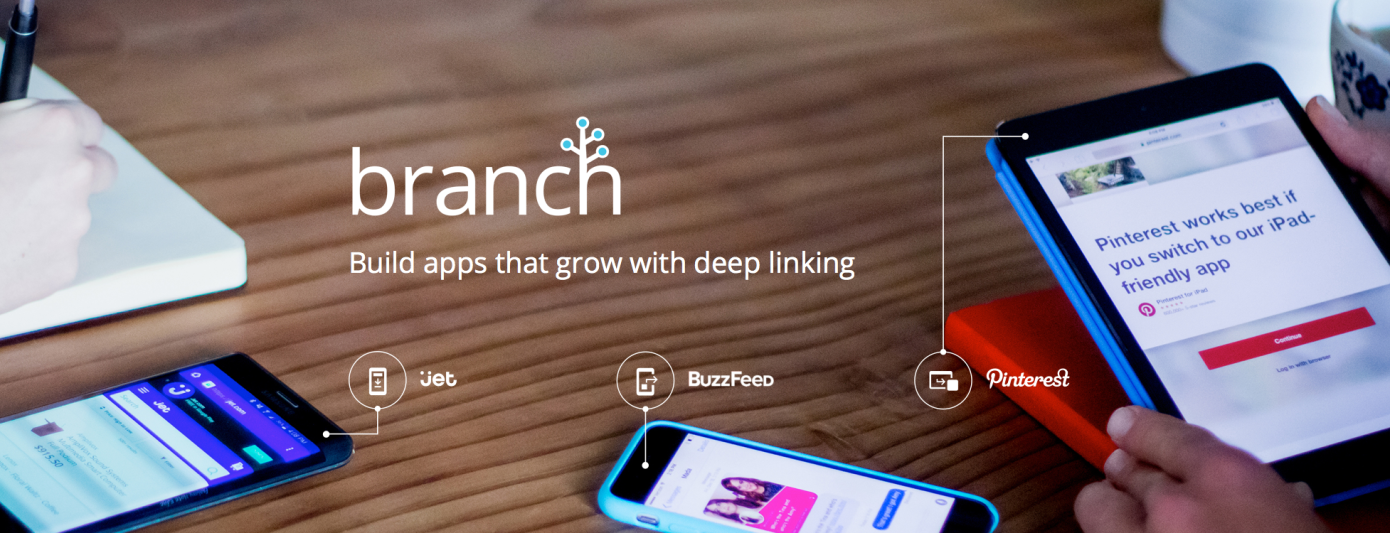
Deep links are used to connect web or e-mail content with apps. That way, when you’re doing some online shopping using your phone and you click on a link to an item on Jet.com, you’re taken to the Jet app installed on your phone, instead of Jet’s desktop site, which would provide a much poorer mobile experience.

Branch supports 40,000 apps with roughly 3 billion monthly users. The company counts Airbnb, Amazon, Bing, Pinterest, Reddit, Slack, Tinder and several others as customers.

Following its previous round of venture capital funding, Austin told TechCrunch that the company had seen “tremendous growth” ahead of the raise.

“[We] have been fortunate enough to become the clear market leader,” he said. “There’s so much more we can accomplish in deep linking and this money will be used to fund Branch’s continued platform growth.”

from Startups – TechCrunch https://ift.tt/2wTVtGx

#USA Deep-linking startup Branch is raising more than $100M at a unicorn valuation

//

Branch, the deep-linking startup backed by Andy Rubin’s Playground Ventures, will enter the unicorn club with an upcoming funding round.

The four-year-old company, which helps brands create links between websites and mobile apps, has authorized the sale of $129 million in Series D shares, according to sources and confirmed by PitchBook, which tracks venture capital deals. The infusion of capital values the company at roughly $1 billion.

In an e-mail this morning, Branch CEO Alex Austin declined to comment.

The Redwood City-based startup closed a $60 million Series C led by Playground in April 2017, bringing its total equity raised to $113 million. It’s also backed by NEA, Pear Ventures, Cowboy Ventures and Madrona Ventures. Rubin, for his part, is a co-founder of Android, as well as the founder of Essential, a smartphone company that, though highly valued, has had less success.

Branch’s deep-linking platform helps brands drive app growth, conversions, user engagement and retention.

Deep links are links that take you to a specific piece of web content, rather than a website’s homepage. This, for example, is a deep link. This is not.

Deep links are used to connect web or e-mail content with apps. That way, when you’re doing some online shopping using your phone and you click on a link to an item on Jet.com, you’re taken to the Jet app installed on your phone, instead of Jet’s desktop site, which would provide a much poorer mobile experience.

Branch supports 40,000 apps with roughly 3 billion monthly users. The company counts Airbnb, Amazon, Bing, Pinterest, Reddit, Slack, Tinder and several others as customers.

Following its previous round of venture capital funding, Austin told TechCrunch that the company had seen “tremendous growth” ahead of the raise.

“[We] have been fortunate enough to become the clear market leader,” he said. “There’s so much more we can accomplish in deep linking and this money will be used to fund Branch’s continued platform growth.”

from Startups – TechCrunch https://ift.tt/2wTVtGx