#USA Wine-by-the-glass subscription service Vinebox raises $5.9 million

//

One SF startup wants you to get home from a day at work and polish off a bottle of wine by yourself.

Vinebox isn’t really trying to get you wasted though… these bottles are cute and tiny. The small startup is hoping they can get consumers into the idea of buying premium-quality wine-by-the-glass and they’ve convinced investors there’s something behind this concept, as well.

The team has just closed a $5.9 million round of funding led by Harbinger Ventures.

Co-founders Rachel Vodofsky and Matt Dukes were both corporate lawyers several years ago with a taste for good wine, but when Dukes decided to move to France and dig deeper into his burgeoning interest in wineries, the founders set off to see how they could start a consumer business with wine discovery at its heart.

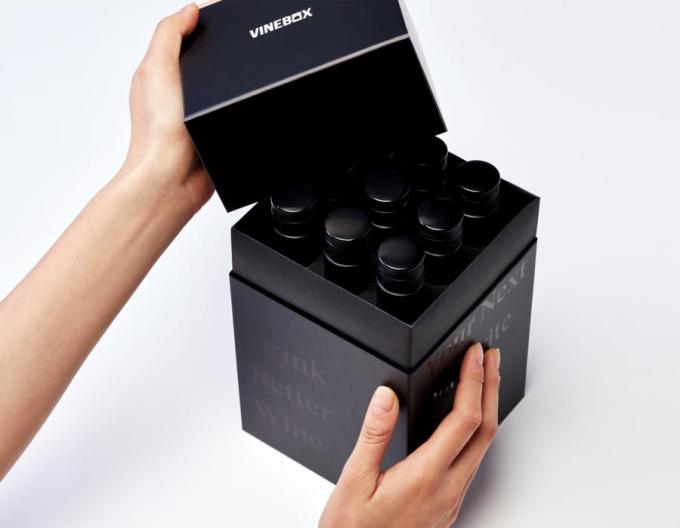
The Y Combinator-backed company began their mission with a quarterly and annual subscription service that set people up with new types of single-serve wine on a rolling basis (as well as a wonderful-sounding wine advent calendar), with the ultimate goal of exposing wine lovers to small-lot wineries they wouldn’t have otherwise come across. The 100ml bottles look more like something you would find in a laboratory than a liquor store.

A quarterly subscription is $78 per quarter and includes 9 wine samples, with $15 off purchases of full-sized bottles.

A big drive of the subscription is helping members discover new favorites. Subscription members can get discounts on full bottles if they stumble upon something that piques their interest. Vinebox says they’ve shipped one million glasses of wine so far.

The company is also now working on multi-packs of their single-serve bottles as they aim to shift consumer habits. With the Usual brand, Vinebox sells what are essentially half-bottles in 6, 12 and 24-packs. Right now the pricing is similarly premium (a 12-pack is $96), but Dukes says that they’re trying to reshape the attitudes toward single-serve wine.

“The biggest mold that we wanted to break when we were coming into this was the little bottles of wine you get on the airplane,” Dukes says. “It comes in the little plastic bottles and you just immediately associate with lesser quality, cheaper wine.”

Vinebox is selling a red blend from Sonoma County and a rosé from Santa Barbara under the Usual brand first, but says that they’ve gotten a lot of great customer feedback and can let that drive the direction for what types of wine they move to add next.

With this new funding, the group is looking to grow its team and further scale their online distribution as they hope to get their single-serve bottles into more people’s hands.

from Startups – TechCrunch https://tcrn.ch/2T0Iv2Y

#USA Sony venture arm invests in geocoding startup what3words

//

Sony’s venture capital arm has invested in what3words, the startup that has divided the entire world into 57 trillion 3-by-3 meter squares and assigned a three-word address to each one.

Financial details were not disclosed.

The startup’s novel addressing system isn’t the whole story. The ability to integrate what3words into voice assistants is what has piqued the interest and investment from Sony and others.

“what3words have solved the considerable problem of entering a precise location into a machine by voice. The dramatic rise in voice-activated systems calls for a simple voice geocoder that works across all digital platforms and channels, can be written down and spoken easily,” Sony Corporation’s senior vice president Toshimoto Mitomo said in a statement.

Last year, Daimler took a 10 percent stake in what3words, following an announcement in 2017 to integrate the addressing system into Mercedes’ new infotainment and navigation system — called the Mercedes-Benz User Experience, or MBUX. MBUX is now in the latest Mercedes A-Class and B-Class cars and Sprinter commercial vehicles. Owners of these new Mercedes-Benz vehicles are now able to navigate to an exact destination in the world by just saying or typing three words into the infotainment system.

Other companies are keen to follow Daimler’s lead. TomTom and ride-hailing services like Cabify recently announced plans to enable what3words navigation to precise locations.

And more could follow. The startup says it plans to use the investment from Sony to focus on more initiatives in the automotive space.

from Startups – TechCrunch https://tcrn.ch/2HfAQfE

#USA Whyd now helps companies create their custom voice assistant

//

Y Combinator-backed startup Whyd is pivoting from hardware to software. The startup had been working on a connected speaker with a voice-control interface specifically designed for music. But a couple of years later, it’s clear that subsidized voice assistant devices from Google and Amazon have taken over the market.

Whyd is only keeping its own software platform and partnering with other companies. In other words, if you’re working on an app, a website or a skill for the Amazon Echo or Google Home, you can create your own voice assistant to interact with your content.

This way, your users get the same experience across all platforms and you don’t have to rely on Amazon’s or Google’s services.

“We let you integrate with a database of millions of items, create a custom agent and release it,” Whyd co-founder and CEO Gilles Poupardin told me. You can think about it as a sort of Algolia for voice queries. Instead of limiting yourself to basic queries (“play my favorite playlist”), you can handle complicated queries (“I want to dance on electronic music”).

In particular, Whyd focuses on the cloud infrastructure behind your voice assistant. The company doesn’t try to reinvent the wheel and lets you use any speech-to-text SDK. But Whyd can then interpret your query and give you results in little time.

The startup has already worked with 8tracks on its voice assistant. You can now search for music playlists in the mobile app using a voice assistant now. Whyd has developed different models for other verticals. You can imagine a voice assistant for video on demand, e-commerce and other services.

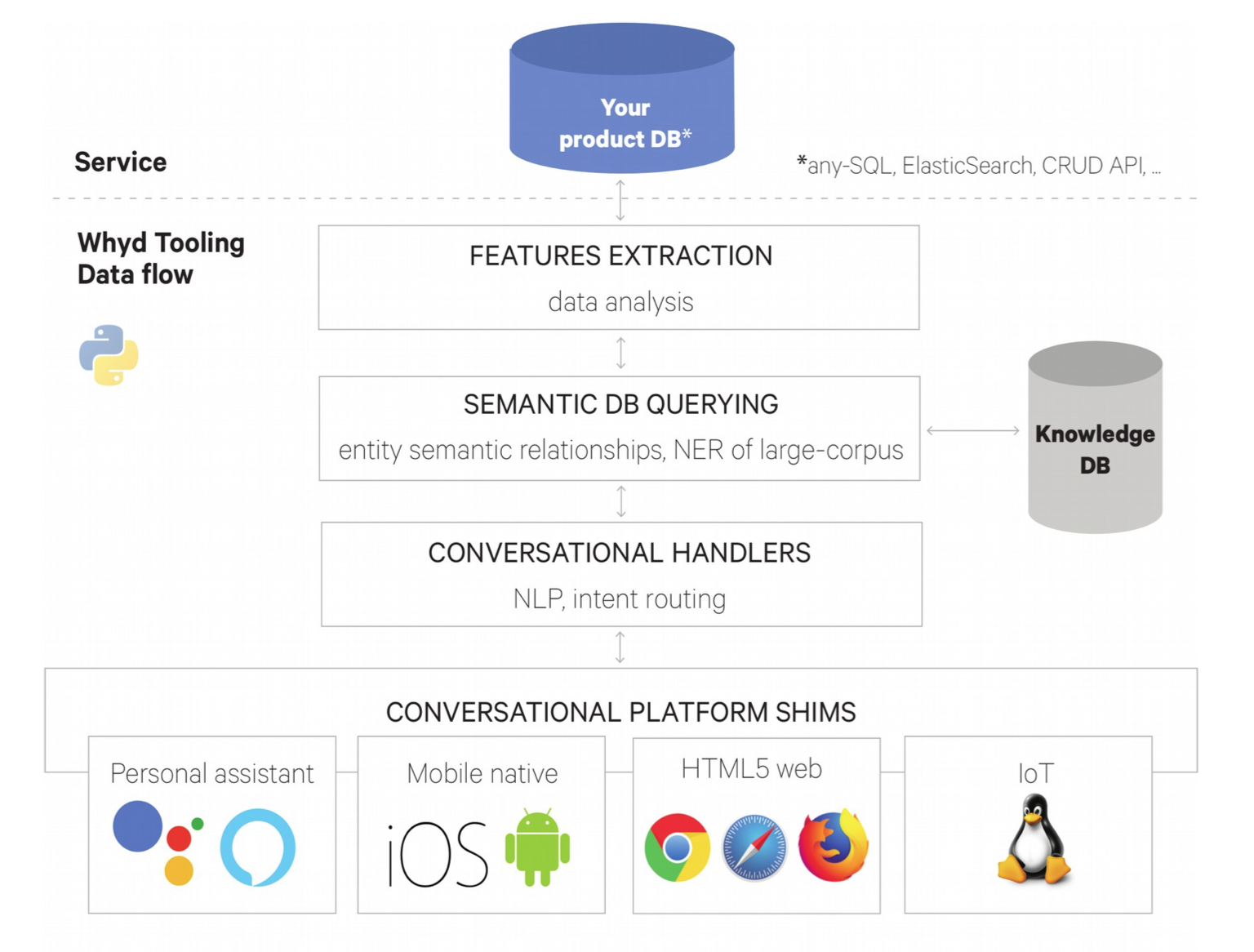
This is what happens between your database and your front end when users interact with their voice:

from Startups – TechCrunch https://tcrn.ch/2Hiy2OR

#USA SimplyCook dishes up £4.5M Series A for its subscription-based flavourings and recipe service

//

SimplyCook, the recipe kit service that focuses on flavour ingredients, has closed £4.5 million in Series A funding. The round is led by Octopus Investments.

Unlike other recipe or meal kits, such as HelloFresh, Gousto and Marley Spoon, U.K.-based SimplyCook doesn’t send all of the fresh ingredients required to turn its recipes into food on your table. Instead, the subscription service consists of recipe cards and what SimplyCook calls “ingredients kits,” which are herbs, spices, sauces and other extras needed to cook each meal.

It’s not only a product that potentially has better margins than fresh food recipe kits — by negating the need to manage such perishable goods — SimplyCook founder and CEO Oli Ashness argues that SimplyCook’s flavour kits have broader mass-market appeal, too.

“Flavour products are used by over 50 percent of consumers weekly,” he says. “Whereas fresh food delivery still caters for maybe 0.25-0.5 percent of evening meals in the UK. Flavour already works as a way to get people cooking. Fresh Meal Kits are fairly unproven”.

“I am actually a fan of how some fresh food players are run and their founders, however, I am still not convinced fresh food meal kits will ever be mass market like us due to the level of monthly commitment. Getting people to spend [less than] £10 per month is much easier than asking them to spend £120-£200 per month, in my opinion. It’s going to be much easier for us to build a big base in customer numbers”.

He also makes the valid point that SimplyCook builds on the success of traditional flavour brands, such as Old El paso, Dolmio, Knorr, and Schwartz, “[that] have got millions cooking”.

Related to this, as well as selling subscriptions online, the company has launched SimplyCook recipe kits in physical retail stores. This is seeing it pursue a hybrid online/offline model that Ashness likens to healthy snack company Graze. (Notably, HelloFresh tried selling into grocery stores in the U.K., before cooling on the idea).

Meanwhile, SimplyCook says its Series A funding will be used to invest in technology and sales & marketing, in order to drive continued growth across the U.K. and beyond.

“We also expect this funding round to fuel international launches,” adds the SimplyCook CEO, [and to] provide working capital for the retail business and allow us to invest in technology to aid our operations. These investments we’ll make over the next 2 years”.

from Startups – TechCrunch https://tcrn.ch/2TS7x4m

#USA Flash, the stealthy e-scooter and ‘micro-mobility’ startup from Delivery Hero founder, raises €55M Series A

//

Flash, the stealthy mobility startup from Delivery Hero and Team Europe founder Lukasz Gadowski, is de-cloaking today, with news that the Berlin-based company has raised a whopping €55 million in Series A funding.

Despite rumours that multiple VC firms would be involved, the bulk of the new funding comes from Target Global via its mobility fund, which led this round and was already an existing backer of Flash. Others participating in Flash’s Series A include Idinvest Partners, Signals Venture Capital and a number of unnamed angel investors.

Notably, Gadowski is listed as an Entrepreneur in Residence at Target Global, and has been broadly working in the mobility space for the past two years. Rather quietly, he is also an investor in Grin, the Mexico City-based electric scooter company backed by Y Combinator.

In a call with Gadowski, he filled in many of the blanks relating to his new venture, including positioning Flash as a “micro-mobility” company that wants to solve the last-mile transportation problem. The startup is initially entering the e-scooter rental space, but this is just the beginning, he says. More broadly, the way he and his team think about Flash is that it is “unbundling” the car, with new forms of transport.

“In a few years time, micro-mobility will look very different from today,” says Gadowski, revealing that before founding Flash last year, he also took a hard look at new forms of aviation.

Even though it is still very early days for Flash, the startup already boasts a current team of more than 50 full-time employees, recruited from the likes of Uber, Amazon, and Airbnb. Alongside Gadowski, the other Flash co-founders are Carlos Bhola (Corp. Development) and Tim Rucquoi-Berger (Supply & Operations).

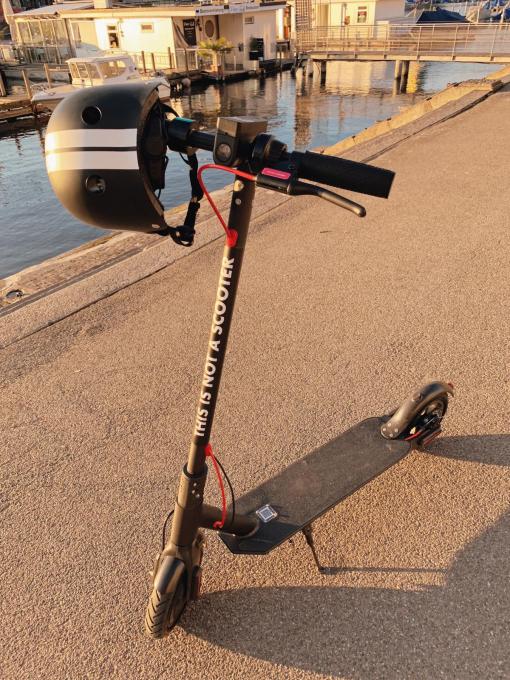
“This is not a scooter” – Flash branding in stealth mode

Notably — and definitely quietly — Flash is already operating in Switzerland and Portugal, with plans to launch into France, Italy and Spain in spring 2019, and in the rest of Europe in summer 2019.

The existing launches have been soft-launches, to say the least, with Flash e-scooters not initially carrying the company’s branding, instead sporting the label “This is not a scooter,” part in-house word play, part a statement of intent. Not just another scooter company might be an even more apt label if Gadowski’s longer-term ambitions are realised.

Perhaps more of a product-market-fit trial than anything else, Flash has initially used off-the-shelf e-scooters at launch, whilst simultaneously developing its own hardware and technology. The startup is headquartered in Berlin, but Gadowski tells me the team was first posted in China, establishing a supply chain and other partnerships that he believes can help give Flash the edge.

I put to him a common belief amongst some VCs that the e-scooter space in Europe is heading for a bloodbath that will continue to see a huge amount of venture capital pumped into the space, and subsequently many losers and a lot of money lost.

Recent raises by European e-scooter startups include Wind Mobility ($22 million), VOI ($50 million and Tier (€25 million). Meanwhile, Taxify has also announced its entrance into e-scooter rentals, and Bird and Lime have received substantial investment from three of Europe’s top venture capital firms. Index and Accel have backed Bird, and Atomico has backed Lime.

Gadowski appears for the most part unfazed by the swelling of competition coffers, although he does concede that the current “land grab” is forcing Flash to move slightly faster than it might have done otherwise. In some ways, he would have preferred to continue a more staggered, cautious roll-out, describing the startup as “product-first and multi-vehicle,” and says its customers are not just users of the service but local residents more broadly and the authorities with which it needs to coordinate. “Mistakes can be a lot more serious than at Delivery Hero, safety is involved,” he cautions.

The size of recent funding rounds in the space has also surprised him. However, he doesn’t think this is a “Facebook scenario,” where there will only be a single winner. Several micro-mobility companies can happily co-exist, he says, and the early movers are helping to pave the way for others, including Flash.

I suggest that the e-scooter land grab at its current pace also has a high chance of provoking a backlash amongst consumers and/or authorities, perhaps after a more serious safety accident or other source of reputational damage. Gadowski concedes this is definitely a “short-term” risk, but says there is so much determination by governments and local authorities to solve congestion and the last-mile problem, he doesn’t believe it will be a long-term one.

Finally, I asked Gadowski if he is considering acquiring smaller e-scooter startups in Europe (or perhaps elsewhere), as part of a roll-up strategy that would help the company leapfrog competitors. He declined to rule out acquisitions entirely — Delivery Hero was very effective in this regard — but said it doesn’t make much sense right now as hype in the space has pushed valuations way up. A more likely scenario, he says, is investing in or acquiring startups that can help with other aspects of the business, such as in the supply chain.

from Startups – TechCrunch https://tcrn.ch/2SZDp76

#USA A look at Birdies, the popular slipper shoe startup that just raised $8 million more from investors

//

Bianca Gates is a first-generation American, her parents having immigrated to the U.S. from Latin America. As such, she says, after waitressing her way through college at UC Irvine, she was expected to get a safe job with a 401(k) plan and to live with her parents until she was married.

Things haven’t gone exactly that way, but one can imagine Gates’s parents feeling pretty satisfied with their daughter’s trajectory nevertheless. The reason: Gates, along with cofounder Marisa Sharkey, are the cofounders of Birdies, a three-year-old, San Francisco-based  footwear brand that has made it chic to step out in shoes like look like elegant slippers, and which just raised $8 million in Series A funding led by Norwest Venture Partners, with participation from Slow Ventures and earlier investor Forerunner Ventures.

Sure, another e-commerce brand, who cares. Actually, if you’re a woman and don’t own a pair yourself yet or know someone who does, there’s a high likelihood that will change soon, including because one of the company’s biggest advocates to date has been none other than Megan Markle, the actress turned Duchess of Sussex, whose fashion choices are copiously detailed by fashion sites around the world, copied by their readers, then picked up by readers’ friends.

Interestingly, Markle was never meant to step outside in the slippers. But before we explain, let’s back up a bit first, to Gates’s earlier career, which is a familiar story but also underscores the importance of grit — as well as the importance of making the right connections. 

As Gates tells it from Birdie’s offices on Union Street, a kind of yuppie haven in San Francisco, “My family was living in Santa Ana and I was commuting every day to Irvine and I just wanted to spread my wings and move to a big city with a lot of diversity after graduating.” Thanks partly to her fluency in Spanish, she landed a job with the broadcast giant Univision as an account executive. After more than three years, and “realizing I didn’t want to be typecast as an Hispanic person working for Hispanic TV,” she left for Viacom, where Gates fell in love with a colleague.

He landed soon after at Stanford Business School, and after plenty of cross-country flights, the two married and moved to San Francisco to start their family, with Gates opening up an office for Viacom’s MTV in the process. But she was soon feeling antsy again. “It was really convenient for me, but I [felt] after having my first chid and working out of a satellite office that I was out of the action. I wanted to be closer to people.”

As it happens, she caught a 2011 commencement speech that Facebook COO Sheryl Sandberg delivered to Barnard College students and decided to apply to Facebook. Six months later, she landed a job leading retail partnerships, where she helped sales organizations understand what was then a new platform to them. 

She also made powerful friends, including Priti Youssef Chokski, a Facebook colleague who was striking corporate and business development deals and who Gates befriended over a series of events at the home of Sandberg, who quietly hosted women of Facebook who Sandberg identified as eager to do more with their careers. “You didn’t photograph yourself there or talk about [the dinners], but it helped Priti and I form a deeper friendship,” recalls Gates.

The friendship — and Sandberg’s support — would eventually help get Birdies off the ground.

So did Gates’s obsession with finding post-work, pre-slipper-type shoes, which she says dates back a decade. “I just found that more and more, I was being asked to take off my shoes in friends’ homes and I was asking people to do the same. I thought that stylish shoes for indoors made a lot of sense, but whenever I tried to find something, the images went from bad to worse. It was either funny animal heads, or shoes you couldn’t really wear to pop outside.” Gates wasn’t sure if there was a void in the market, or if she just imagined one, but either way, her husband, “who was like, ‘I’m sick of hearing about this,’” encouraged her to pursue the idea.

She knew she couldn’t do it alone. She still had that big job at Facebook that she loved. She also had two young kids at home at this point. So Gates texted her friend, Marisa Sharkey, a former Ross Stores executive who’d moved from Manhattan to Sacramento with her own family and was feeling restless. “I texted her and said, ‘I have this crazy idea; I’ll call you tomorrow.’ Marisa texted back immediately and said, ‘Tell me what it is.’” Within no time at all, Sharkey was fully committed, putting $50,000 into the venture, alongside Gates, who also put $50,000 into the venture.

What they got for their money? Shoes that today give them both “PTSD,” jokes Gates, but that became the starting point of Birdies.

It wasn’t so easy, but some key connections made the difference, one of which surfaced through good-old-fashioned outreach.  “We basically became so obsessed with our idea that we asked everyone we talked with whether they could help. Through degrees of separation, we were connected to someone who’d just retired from the footwear business in L.A and knew some factories in China and agreed to help introduce us to them.”

It was a game changer, even if what the factories were left working with wasn’t exactly pretty. Think shoes torn apart, their innards — including their memory foam inserts — reassembled on construction paper. “The shoe industry is very small and it’s really hard to get into a factory unless you know someone,” says Gates. “It isn’t like making apparel, where you can go to a factory in South San Francisco and make 24 dresses and see how it goes. With footwear, you can’t try in small doses.”

Of course, there were still many learnings to come, starting with the realization that they had no where to store the 1,800 pairs of shoes they’d had to order — and which arrived sooner than expected outside of Sharkey’s home. (They wound up housed in her garage.)

Gates also began worrying about losing her full-time job, eventually mustering up the courage to write Sandberg to explain that she was responsible for a garage piled high with slipper shoes that she hoped to sell — then fretting about what the return email would say. As it happens, Sandberg “could have been more supportive. I even forwarded her note to my manager, saying, look, Sheryl is cool with this,” says Gates, laughing.

Fast forward several years, and Birdies is now a a legitimate, if surprisingly small, operation, one with just six employees but a big and fast-growing base of customers.

Its very first customer, Gate’s Facebook friend, Choksi, wound up being an important champion. Chokski left Facebook last year to become a venture capitalist. And as a partner with Norwest Venture Partners, she just led the firm into Birdie’s competitive Series A round, a development about which she sounds excited.

“Even that first pair — they didn’t look like the random shoes i was putting on with what i was wearing at home,” recalls Choksi. “I could also get the mail and do quick errands.” She still has them, she says. “They’re fairly worn out, but I keep them just to taunt Bianca.”

Unbeknownst to Birdies, it was Megan Markle who would put the company on the map, however. A short lifestyle piece about Birdies in the SF Chronicle got the ball rolling. “We started to gain traction,” and with that came the nascent attention of fashion editors and celebrity stylists, says Gates. But the company still had very limited resources. It had to choose one celebrity on which to focus and it zeroed in on Megan Markle, then an actor starring in a show called “Suits.”

“We just loved her casual elegance,” says Gates of Markle, whose courtship with with Prince Harry was on no one’s radar at the time. “We loved that she often wore simple button-downs and jeans and casual loafers. We also liked that she was this wonderful humanitarian.” Birdies sent Markle a complimentary pair of shoes, and to its great delight, Markle took to them. In fact, she began wearing them all them time and tagging them on Instagram, too.

There was just one problem. Markle was wearing them everywhere other than indoors. “It was this amazing, frustrating moment for the brand, because they were made for entertaining in the home.” They might have stewed longer, but a quick call with Bonobos founder Andy Dunn — who’d attended Stanford with Gates’s husband — soon set Gates and Sharkey straight. “He basically said, ‘You just fell into a much bigger opportunity.’”

A thicker rubber soul followed — along with a $100,000 check from Dunn —  and the rest is history in the making. Not that it’s all a walk in the park, naturally. The company has at times had waitlists of up to 30,000 people — a problem it hopes its new round of funding will help solve.

Like a lot of e-commerce brands, it’s also wrestling with price points, offering several limited edition shoes in partnership with designer Ken Fulk last fall that “brought in a whole new customer” but were also priced at $165, roughly 30 percent more than most of its slippers, says Gates. (Birdies more recently introduced a “resort” slipper that’s priced at $95, and Gates says the company hopes to introduce other, more affordable designs down the line.)

There’s also the challenge of figuring out which new markets to chase while simultaneously hiring, fast. Choksi and Norwest, which has reach into many consumer brands, is helping on the latter front. Meanwhile, Gates says to expect more in the way of bridesmaids’ slippers, as well as other new designs coming this spring and summer.

Like any successful startup, Birdies also seems poised to see more copycat designs, though Gates doesn’t seem terribly concerned, not yet.

“We’ve had friends tell us that Target is offering a similar slipper at a different price point. Everybody copies everybody,” she says. “It’s our job to create a brand beyond the silhouette of a slipper, because that can be knocked off, it’s not defensible. What is defensible is why [a customer] is buying Birdies, and why she is telling her friends to shop us. It’s our job to give her more than a product, to lift her up. That’s the mission of the company.”

Birdies has now raised roughly $10 million altogether, including $2 million in seed funding led by Forerunner in the fall of 2017.

Above, left to right, cofounders Bianca Gates and Marisa Sharkey. Photo courtesy of Birdies.

from Startups – TechCrunch https://tcrn.ch/2CtNySw

#USA Slack’s product chief is out ahead of direct listing

//

Slack is losing its chief product officer April Underwood ahead of a direct listing expected in 2019.

Underwood joined Slack, the provider of workplace communication tools, in 2015 as its head of platform after a five-year stint as Twitter’s director of product. She was promoted to the chief product role about 10 months ago. Underwood is also a founding partner of #Angels, an investment collective that pushes to get more women on startup cap tables.

In a Medium post announcing her departure from Slack, Underwood said she planned to focus on investing full time.

“One common story you hear when you talk to founders is that their idea ran as a background process for many years until it moved into the foreground and became a calling too loud to ignore,” Underwood wrote. “And now, I can truly empathize with founders — because that’s happened for me. Investing, which started as a side hustle for me and my #Angels partners, has emerged as the pursuit too inspiring and energizing to be relegated to my spare time.”

During her tenure, Underwood had a hand in crafting Slack’s investment fund — a pool of capital supported by Accel, Index Ventures, KPCB, Social Capital, Andreessen Horowitz and Spark Capital that has invested in 49 projects building on top of Slack to date.

Slack, led by founder and chief executive officer Stewart Butterfield, is said to be preparing for a direct listing, meaning it will go public without listing any new shares, with no lockup period and no intermediary bankers. Valued at roughly $7 billion, Slack has raised more than $1 billion to date from GV, IVP, T. Rowe Price, SoftBank, Kleiner Perkins, Accel and others.

Slack did not immediately respond to a request for comment.

from Startups – TechCrunch https://tcrn.ch/2DgO6g4

#USA Innovaccer nabs $11 million from Microsoft’s VC arm to give doctors a better window into patient health

//

Cracking the silos of digital health records promises to bring better care to patients by better informing doctors, according to Abhinav Shashank, the chief executive officer of San Francisco-based startup Innovaccer.

Shashank’s company is just wrapping up a $35 million round of financing with a new $11 million commitment from Microsoft’s investment arm M12 (formerly known as Microsoft Ventures).

The corporate investor joins Westbridge and Lightspeed Partners, which previously committed to the Series B round last year.

Founded in 2014, Innovaccer has been working to roll up data from a number of different healthcare providers, including Hartford Healthcare, University of California, Mercy ACO Iowa, UniNet Healthcare Network of Nebraska, Inmediata Health Integrated Solutions of Puerto Rico and StratiFi Health Network.

Innovaccer estimates that it has saved its customers $400 million in expenses; the company said it will use the funds to build out its software services that connect to lab systems, electronic health records, claims management software and health information exchanges.

“Innovaccer’s approach to data aggregation and analytics fundamentally helps healthcare organizations implement value-based care models and improve care delivery,” said Rashmi Gopinath, partner at M12, in a statement. “We look to invest in startups addressing huge markets with best-in-class deep technology. We are excited to support Innovaccer as they continue to scale and grow in the global healthcare market.”

In addition to providing a unified view into all of the different records that a care provider touches, the company is also looking to layer in prompts to encourage treatment options for future care, according to Shashank.

According to the company’s chief executive, care providers are already incorporating suggestions from the company’s algorithmically based predictive tools in their treatment plans to ensure that patients are getting the best possible outcomes.

“It is rare to see this type of growth in the healthcare industry. Normally, this is only seen in the fastest of enterprise SaaS companies. We think there is tremendous potential to bring the speed and innovation normally associated with enterprise software to the world of healthcare IT,” says Sumir Chadha, managing director at Westbridge Capital.

from Startups – TechCrunch https://tcrn.ch/2DeHAqj

#USA SeeTree raises $11.5M to help farmers manage their orchards

//

SeeTree, a Tel Aviv-based startup that uses drones and artificial intelligence to bring precision agriculture to their groves, today announced that it has raised an $11.5 million Series A funding round led by Hanaco Ventures, with participation from previous investors Canaan Partners Israel, Uri Levine and his investors group, iAngel and Mindset. This brings the company’s total funding to $15 million.

The idea behind the company, which also has offices in California and Brazil, is that in the past, drone-based precision agriculture hasn’t really lived up to its promise and didn’t work all that well for permanent crops like fruit trees. “In the past two decades, since the concept was born, the application of it, as well as measuring techniques, has seen limited success — especially in the permanent-crop sector,” said SeeTree CEO Israel Talpaz. “They failed to reach the full potential of precision agriculture as it is meant to be.”

He argues that the future of precision agriculture has to take a more holistic view of the entire farm. He also believes that past efforts didn’t quite offer the quality of data necessary to give permanent crop farmers the actionable recommendations they need to manage their groves.

SeeTree is obviously trying to tackle these issues and it does so by offering granular per-tree data based on the imagery gathered from drones and the company’s machine learning algorithms that then analyze this imagery. Using this data, farmers can then decide to replace trees that underperform, for example, or map out a plan to selectively harvest based on the size of a tree’s fruits and its development stages. They can then also correlate all of this data with their irrigation and fertilization infrastructure to determine the ROI of those efforts.

“Traditionally, farmers made large-scale business decisions based on intuitions that would come from limited (and often unreliable) small-scale testing done by the naked eye,” said Talpaz. “With SeeTree, farmers can now make critical decisions based on accurate and consistent small and large-scale data, connecting their actions to actual results in the field.”

SeeTree was founded by Talpaz, who like so many Israeli entrepreneurs previously worked for the country’s intelligence services, as well as Barak Hachamov (who you may remember from his early personalized news startup my6sense) and Guy Morgenstern, who has extensive experience as an R&D executive with a background in image processing and communications systems.

from Startups – TechCrunch https://tcrn.ch/2VZx3q7

#USA Ciitizen raises $17 million to give cancer patients better control over their health records

//

Ciitizen, the company founded by the creators of Gliimpse (an Apple acquisition that’s been incorporated into the company’s HealthKit) which is developing tools to help patients organize and share their medical records, has raised $17 million in new funding.

Ciitizen, like Gliimpse before it, is an attempt to break down the barriers that keep patients from being able to record, store and share their healthcare information with whomever they want in their quest for treatment.

The digitization of health records — a featured element of President Barack Obama’s overhaul of the healthcare system back in 2009 — remains an obstacle to quality care and proper treatment nearly a decade later. Hospitals spend millions and the U.S. healthcare system spends billions on electronic health records annually. All with very little to show for the expense.

Those kinds of challenges are what attracted investors in the Andreessen Horowitz -led round. New investors include Section 32, formed by the former head of Google Ventures, Bill Maris; and Verily, one of the healthcare subsidiaries that spun out of Google X and is a part of Google’s parent company, Alphabet.

“Ciitizen uniquely understands the challenges cancer patients face – including the intense friction patients experience when managing their medical records in our current healthcare system,” said Vijay Pande, a general partner in Andreessen Horowitz’s Bio fund, in a statement. “Using their deep insights, the Ciitizen team have developed sophisticated technology and tools that remove this friction, putting the power back in the patients’ hands and literally saving lives.”

Pande may be a little biased, as Andreessen Horowitz also led the company’s seed funding last July, in what was, at the time, one of the earlier investments from the Bio fund’s latest $450 million second investment vehicle.

“The continued support from Andreessen Horowitz reaffirms the rapid progress we have already made and further validates our potential to significantly impact healthcare globally. Adding Section 32 and Verily to our effort further enhances our ability to transform the way patients engage with their health data,” said Anil Sethi, CEO and founder of Ciitizen, in a statement.

from Startups – TechCrunch https://tcrn.ch/2FF07O7