#USA For SoftBank, no majority stake in WeWork as it scales down talks from a new $16 billion investment to $2 billion

//

Several weeks after it was reported by the WSJ that two of the biggest investors in SoftBank’s massive Vision Fund vehicle were cool on its planned $16 billion investment in the coworking company WeWork, those plans have changed radically, says the Financial Times.

According to its sources — and confirmed by our own — SoftBank is now in “detailed negotiations” to invest a comparatively modest $2 billion more into WeWork, plans that could be firmed up as soon as the end of this week.

A WeWork spokesperson declined to comment.

The development is both surprising and unsurprising. The government-backed funds of Saudi Arabia and Abu Dhabi, which committed $45 billion and $15 billion, respectively, to the Vision Fund, haven’t been been known before to push back against the person pulling its levers, SoftBank CEO Masayoshi Son .

Indeed, given the vast sums of money that the Vision Fund has put to work since being announced in late 2016, it seemed there were few if any checks on Son or the 80-plus people who work for the Vision Fund.

Just some of its many bold bets include, most recently, a $500 million investment in Cambridge Mobile Telematics, an eight-year-old, Boston-area company that had earlier raised just one round of funding of less than $20 million to build out its technology. The Vision Fund also recently led a $400 million round into Emeryville, Ca.-based Zymergen, which manufacturers molecules for a wide array of industries and already counted SoftBank as an investor.

Still, according to that Journal piece, the two anchor investors were less enthusiastic about a giant new investment in nearly nine-year-old WeWork for numerous reasons, including that they see WeWork as a real estate play and both already have plenty of real estate in their portfolios; that WeWork CEO Adam Neumann would still control the company even while SoftBank was looking to acquire a majority stake; and because SoftBank has already committed $8 billion into WeWork in recent years, including through an agreement last year to invest a fresh $4 billion into the company via a convertible note and a $3 billion warrant that gave it the right to buy additional equity in WeWork.

As it stands, including the $2 billion that WeWork looks to receive from SoftBank imminently, SoftBank will have sunk $10 billion into the company. Perhaps it’s no wonder that the newest $2 billion is not coming from the Vision Fund but from SoftBank directly. (Son sometimes invests off SoftBank’s balance sheet directly,  expediency’s sake and, presumably in a case such as this one, when there may be pushback from Vision Fund investors.)

Either way, two billion dollars more from SoftBank is “hardly a stinging rebuke” of WeWork or its business model, says one person familiar with SoftBank’s thinking. This same source also notes that the $16 billion figure bandied about last year was “never a lock. There were always numerous options on the table.”

Whether SoftBank regrets what remains a huge bet can only be known in time. A shifting public market certainly seems like reason for worry, given that unprofitable WeWork relies increasingly on freely spending companies for its revenue, both customers that install their employees at WeWork’s coworking spaces, as well as those that have more recently begun licensing the company’s technology and aesthetic to WeWork-ify their own offices.

Unsurprisingly, Neumann, when asked how WeWork would fare in a downturn, told us at a Disrupt event in 2017 that it was positioned perfectly for one. “Business is a flexible thing,” he’d said at the time. “Space is fixed. Being able to give people that flexibility if a recession comes or when a recession comes is actually going to be a very needed product.”

According to the FT, SoftBank’s earlier plans for WeWork included SoftBank and the Vision Fund paying $10 billion to buy out all outside investors in WeWork. A further $6 billion of capital would have been injected directly into the company, including a $2 billion commitment this year, and a commitment to invest a further $4 billion based on agreed-up performance targets for WeWork in 2020 and 2021.

Our sources say that, as of this writing, the $2 billion being discussed will be split evenly to purchase both primary and secondary shares from earlier investors. We’re also told the company’s post-money valuation, assuming the deal is completed, will be $47 billion, a total that includes $1 . billion that Softbank invested in WeWork last year via that convertible note and the $3 billion more than the SoftBank committed last year to invest in the company this year.

WeWork’s losses in the first nine months of 2018 nearly quadrupled from a year earlier to $1.2 billion, says the FT, which says it viewed an investor presentation. The company’s sales meanwhile hit $1.5 billion during the same period.

from Startups – TechCrunch https://tcrn.ch/2Fdpeb8
#USA Uber’s IPO may not be as eye-popping as we expected

//

Uber is expected to raise $10 billion later this year in one of the largest U.S. initial public offerings in history. The float will value the ride-hailing giant somewhere between $76 billion — the valuation it garnered with its last private financing — and $120 billion — a sky-high figure assigned by Wall Street bankers that’s had even early Uber investors scratching their heads.

A new report from The Information pegs Uber’s initial market cap at $90 billion. To develop the estimate, the site analyzed undisclosed documents Uber provided creditors in 2017 “in which the company projected it would double net revenue to $14.2 billion by 2019,” ran revenue multiples and compared Uber to GrubHub, which investors say is the business’s closest comparison.

Uber declined to comment on The Information’s analysis.

How we got here

Uber confidentially filed for its long-awaited IPO last month, marking the beginning of a race to the stock markets between it and U.S. competitor Lyft, which filed just hours before, according to a source with knowledge of the situation. Founded in 2009 by Travis Kalanick, Uber has brought in about $20 billion in a combination of debt and equity funding. It counts SoftBank as its largest shareholder in a cap table that also lists Toyota, T. Rowe Price, Fidelity, TPG Growth and many more. As for the skepticism surrounding Uber’s lofty $120 billion valuation, the eye-popping figure seems unachievable considering the company isn’t profitable and has and continues to burn through cash.

An IPO that large would certainly make its investors happy. First Round Capital, for example, seeded Uber with $1.6 million in the company’s first two funding rounds in 2010 and 2011, according to The Wall Street Journal. At a $120 billion valuation, First Round’s shares would be worth some $5 billion. The venture capital firm, however, sold some of its shares to SoftBank alongside Benchmark, which itself would otherwise own shares worth about $14 billion.

Bradley Tusk, an early Uber investor who signed on to help the company surmount political and regulatory barriers in 2011, own shares said to be worth $100 million, though he too gave up 42 percent of his equity in a secondary sale to SoftBank, he recently told TechCrunch.

I’m quite happy with the 120 number,” Tusk said. “But … I am a little surprised by [it], it does seem to be a really aggressive number.”

“Any investment in Uber is obviously a long-term bet on the future, like someone who invested in Amazon in the early days,” Tusk added. “One thing [Uber chief executive officer Dara Khosrowshahi] is doing well is really expanding Uber into a mobility company as opposed to just a ride-hailing company.”

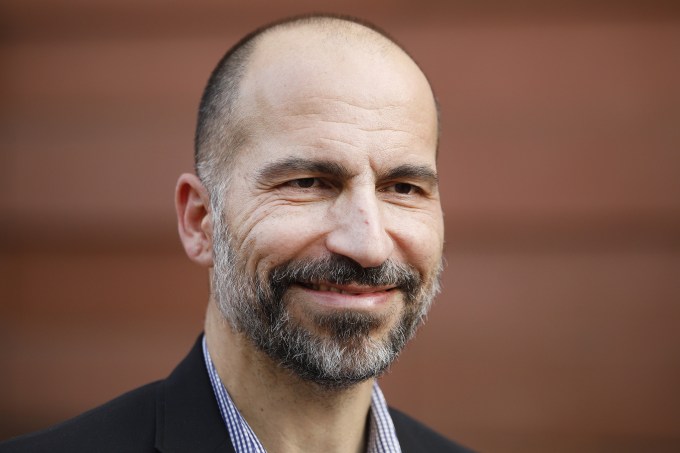
Dara Kowsrowshahi, chief executive officer of Uber, looks on following an event in New Delhi, India, on Thursday, Feb. 22, 2018. Photographer: Anindito Mukherjee/Bloomberg via Getty Images

A long-term bet on the future

Uber has opted to go public in a year poised to see the most high-flying unicorn IPOs in history. As we’ve reported in great detail on this site, both Lyft and Uber are planning to float, as are Slack and Pinterest . Many of these companies, however, made the call to make their public markets debut before the stock market took a quick turn south. Poor performing stocks may discourage unicorns from emerging from their cozy VC-protected stalls.

Uber will garner increased scrutiny from Wall Street investors as they begin to parse out its true value. Fortunately the company, which like Amazon has long prioritized growth over profit, has “’clear levers’ it could pull in order to turn on the cash spigots if it wanted to, by reducing its marketing spending both in the U.S. and developing markets and by finding partners to help finance its self-driving car development,” according to The Information. “Pulling those levers would slow revenue growth by a third—from a 33% growth in net revenue to 22 percent growth in net revenue in 2019 [but] it would save Uber $2 billion annually.”

In its third quarter 2018 financial results, Uber posted a net loss of $939 million on a pro forma basis and an adjusted EBITDA loss of $527 million, up about 21 percent quarter-over-quarter. Revenue for Q3 was up five percent QoQ at $2.95 billion and up 38 percent year-over-year.

“We had another strong quarter for a business of our size and global scope,” Uber chief financial officer Nelson Chai said in a statement. “As we look ahead to an IPO and beyond, we are investing in future growth across our platform, including in food, freight, electric bikes and scooters, and high-potential markets in India and the Middle East where we continue to solidify our leadership position.”

We can speculate on Uber’s valuation for days but ultimately Wall Street will determine just how high Uber will go. For now, all we can do is sit and wait for the company to relinquish its S-1 to the masses.

from Startups – TechCrunch https://tcrn.ch/2AyrdTJ

#USA Uber’s IPO may not be as eye-popping as we expected

//

Uber is expected to raise $10 billion later this year in one of the largest U.S. initial public offerings in history. The float will value the ride-hailing giant somewhere between $76 billion — the valuation it garnered with its last private financing — and $120 billion — a sky-high figure assigned by Wall Street bankers that’s had even early Uber investors scratching their heads.

A new report from The Information pegs Uber’s initial market cap at $90 billion. To develop the estimate, the site analyzed undisclosed documents Uber provided creditors in 2017 “in which the company projected it would double net revenue to $14.2 billion by 2019,” ran revenue multiples and compared Uber to GrubHub, which investors say is the business’s closest comparison.

Uber declined to comment on The Information’s analysis.

How we got here

Uber confidentially filed for its long-awaited IPO last month, marking the beginning of a race to the stock markets between it and U.S. competitor Lyft, which filed just hours before, according to a source with knowledge of the situation. Founded in 2009 by Travis Kalanick, Uber has brought in about $20 billion in a combination of debt and equity funding. It counts SoftBank as its largest shareholder in a cap table that also lists Toyota, T. Rowe Price, Fidelity, TPG Growth and many more. As for the skepticism surrounding Uber’s lofty $120 billion valuation, the eye-popping figure seems unachievable considering the company isn’t profitable and has and continues to burn through cash.

An IPO that large would certainly make its investors happy. First Round Capital, for example, seeded Uber with $1.6 million in the company’s first two funding rounds in 2010 and 2011, according to The Wall Street Journal. At a $120 billion valuation, First Round’s shares would be worth some $5 billion. The venture capital firm, however, sold some of its shares to SoftBank alongside Benchmark, which itself would otherwise own shares worth about $14 billion.

Bradley Tusk, an early Uber investor who signed on to help the company surmount political and regulatory barriers in 2011, own shares said to be worth $100 million, though he too gave up 42 percent of his equity in a secondary sale to SoftBank, he recently told TechCrunch.

I’m quite happy with the 120 number,” Tusk said. “But … I am a little surprised by [it], it does seem to be a really aggressive number.”

“Any investment in Uber is obviously a long-term bet on the future, like someone who invested in Amazon in the early days,” Tusk added. “One thing [Uber chief executive officer Dara Khosrowshahi] is doing well is really expanding Uber into a mobility company as opposed to just a ride-hailing company.”

Dara Kowsrowshahi, chief executive officer of Uber, looks on following an event in New Delhi, India, on Thursday, Feb. 22, 2018. Photographer: Anindito Mukherjee/Bloomberg via Getty Images

A long-term bet on the future

Uber has opted to go public in a year poised to see the most high-flying unicorn IPOs in history. As we’ve reported in great detail on this site, both Lyft and Uber are planning to float, as are Slack and Pinterest . Many of these companies, however, made the call to make their public markets debut before the stock market took a quick turn south. Poor performing stocks may discourage unicorns from emerging from their cozy VC-protected stalls.

Uber will garner increased scrutiny from Wall Street investors as they begin to parse out its true value. Fortunately the company, which like Amazon has long prioritized growth over profit, has “’clear levers’ it could pull in order to turn on the cash spigots if it wanted to, by reducing its marketing spending both in the U.S. and developing markets and by finding partners to help finance its self-driving car development,” according to The Information. “Pulling those levers would slow revenue growth by a third—from a 33% growth in net revenue to 22 percent growth in net revenue in 2019 [but] it would save Uber $2 billion annually.”

In its third quarter 2018 financial results, Uber posted a net loss of $939 million on a pro forma basis and an adjusted EBITDA loss of $527 million, up about 21 percent quarter-over-quarter. Revenue for Q3 was up five percent QoQ at $2.95 billion and up 38 percent year-over-year.

“We had another strong quarter for a business of our size and global scope,” Uber chief financial officer Nelson Chai said in a statement. “As we look ahead to an IPO and beyond, we are investing in future growth across our platform, including in food, freight, electric bikes and scooters, and high-potential markets in India and the Middle East where we continue to solidify our leadership position.”

We can speculate on Uber’s valuation for days but ultimately Wall Street will determine just how high Uber will go. For now, all we can do is sit and wait for the company to relinquish its S-1 to the masses.

from Startups – TechCrunch https://tcrn.ch/2AyrdTJ

#USA Uber’s IPO may not be as eye-popping as we expected

//

Uber is expected to raise $10 billion later this year in one of the largest U.S. initial public offerings in history. The float will value the ride-hailing giant somewhere between $76 billion — the valuation it garnered with its last private financing — and $120 billion — a sky-high figure assigned by Wall Street bankers that’s had even early Uber investors scratching their heads.

A new report from The Information pegs Uber’s initial market cap at $90 billion. To develop the estimate, the site analyzed undisclosed documents Uber provided creditors in 2017 “in which the company projected it would double net revenue to $14.2 billion by 2019,” ran revenue multiples and compared Uber to GrubHub, which investors say is the business’s closest comparison.

Uber declined to comment on The Information’s analysis.

How we got here

Uber confidentially filed for its long-awaited IPO last month, marking the beginning of a race to the stock markets between it and U.S. competitor Lyft, which filed just hours before, according to a source with knowledge of the situation. Founded in 2009 by Travis Kalanick, Uber has brought in about $20 billion in a combination of debt and equity funding. It counts SoftBank as its largest shareholder in a cap table that also lists Toyota, T. Rowe Price, Fidelity, TPG Growth and many more. As for the skepticism surrounding Uber’s lofty $120 billion valuation, the eye-popping figure seems unachievable considering the company isn’t profitable and has and continues to burn through cash.

An IPO that large would certainly make its investors happy. First Round Capital, for example, seeded Uber with $1.6 million in the company’s first two funding rounds in 2010 and 2011, according to The Wall Street Journal. At a $120 billion valuation, First Round’s shares would be worth some $5 billion. The venture capital firm, however, sold some of its shares to SoftBank alongside Benchmark, which itself would otherwise own shares worth about $14 billion.

Bradley Tusk, an early Uber investor who signed on to help the company surmount political and regulatory barriers in 2011, own shares said to be worth $100 million, though he too gave up 42 percent of his equity in a secondary sale to SoftBank, he recently told TechCrunch.

I’m quite happy with the 120 number,” Tusk said. “But … I am a little surprised by [it], it does seem to be a really aggressive number.”

“Any investment in Uber is obviously a long-term bet on the future, like someone who invested in Amazon in the early days,” Tusk added. “One thing [Uber chief executive officer Dara Khosrowshahi] is doing well is really expanding Uber into a mobility company as opposed to just a ride-hailing company.”

Dara Kowsrowshahi, chief executive officer of Uber, looks on following an event in New Delhi, India, on Thursday, Feb. 22, 2018. Photographer: Anindito Mukherjee/Bloomberg via Getty Images

A long-term bet on the future

Uber has opted to go public in a year poised to see the most high-flying unicorn IPOs in history. As we’ve reported in great detail on this site, both Lyft and Uber are planning to float, as are Slack and Pinterest . Many of these companies, however, made the call to make their public markets debut before the stock market took a quick turn south. Poor performing stocks may discourage unicorns from emerging from their cozy VC-protected stalls.

Uber will garner increased scrutiny from Wall Street investors as they begin to parse out its true value. Fortunately the company, which like Amazon has long prioritized growth over profit, has “’clear levers’ it could pull in order to turn on the cash spigots if it wanted to, by reducing its marketing spending both in the U.S. and developing markets and by finding partners to help finance its self-driving car development,” according to The Information. “Pulling those levers would slow revenue growth by a third—from a 33% growth in net revenue to 22 percent growth in net revenue in 2019 [but] it would save Uber $2 billion annually.”

In its third quarter 2018 financial results, Uber posted a net loss of $939 million on a pro forma basis and an adjusted EBITDA loss of $527 million, up about 21 percent quarter-over-quarter. Revenue for Q3 was up five percent QoQ at $2.95 billion and up 38 percent year-over-year.

“We had another strong quarter for a business of our size and global scope,” Uber chief financial officer Nelson Chai said in a statement. “As we look ahead to an IPO and beyond, we are investing in future growth across our platform, including in food, freight, electric bikes and scooters, and high-potential markets in India and the Middle East where we continue to solidify our leadership position.”

We can speculate on Uber’s valuation for days but ultimately Wall Street will determine just how high Uber will go. For now, all we can do is sit and wait for the company to relinquish its S-1 to the masses.

from Startups – TechCrunch https://tcrn.ch/2AyrdTJ

#USA Uber’s IPO may not be as eye-popping as we expected

//

Uber is expected to raise $10 billion later this year in one of the largest U.S. initial public offerings in history. The float will value the ride-hailing giant somewhere between $76 billion — the valuation it garnered with its last private financing — and $120 billion — a sky-high figure assigned by Wall Street bankers that’s had even early Uber investors scratching their heads.

A new report from The Information pegs Uber’s initial market cap at $90 billion. To develop the estimate, the site analyzed undisclosed documents Uber provided creditors in 2017 “in which the company projected it would double net revenue to $14.2 billion by 2019,” ran revenue multiples and compared Uber to GrubHub, which investors say is the business’s closest comparison.

Uber declined to comment on The Information’s analysis.

How we got here

Uber confidentially filed for its long-awaited IPO last month, marking the beginning of a race to the stock markets between it and U.S. competitor Lyft, which filed just hours before, according to a source with knowledge of the situation. Founded in 2009 by Travis Kalanick, Uber has brought in about $20 billion in a combination of debt and equity funding. It counts SoftBank as its largest shareholder in a cap table that also lists Toyota, T. Rowe Price, Fidelity, TPG Growth and many more. As for the skepticism surrounding Uber’s lofty $120 billion valuation, the eye-popping figure seems unachievable considering the company isn’t profitable and has and continues to burn through cash.

An IPO that large would certainly make its investors happy. First Round Capital, for example, seeded Uber with $1.6 million in the company’s first two funding rounds in 2010 and 2011, according to The Wall Street Journal. At a $120 billion valuation, First Round’s shares would be worth some $5 billion. The venture capital firm, however, sold some of its shares to SoftBank alongside Benchmark, which itself would otherwise own shares worth about $14 billion.

Bradley Tusk, an early Uber investor who signed on to help the company surmount political and regulatory barriers in 2011, own shares said to be worth $100 million, though he too gave up 42 percent of his equity in a secondary sale to SoftBank, he recently told TechCrunch.

I’m quite happy with the 120 number,” Tusk said. “But … I am a little surprised by [it], it does seem to be a really aggressive number.”

“Any investment in Uber is obviously a long-term bet on the future, like someone who invested in Amazon in the early days,” Tusk added. “One thing [Uber chief executive officer Dara Khosrowshahi] is doing well is really expanding Uber into a mobility company as opposed to just a ride-hailing company.”

Dara Kowsrowshahi, chief executive officer of Uber, looks on following an event in New Delhi, India, on Thursday, Feb. 22, 2018. Photographer: Anindito Mukherjee/Bloomberg via Getty Images

A long-term bet on the future

Uber has opted to go public in a year poised to see the most high-flying unicorn IPOs in history. As we’ve reported in great detail on this site, both Lyft and Uber are planning to float, as are Slack and Pinterest . Many of these companies, however, made the call to make their public markets debut before the stock market took a quick turn south. Poor performing stocks may discourage unicorns from emerging from their cozy VC-protected stalls.

Uber will garner increased scrutiny from Wall Street investors as they begin to parse out its true value. Fortunately the company, which like Amazon has long prioritized growth over profit, has “’clear levers’ it could pull in order to turn on the cash spigots if it wanted to, by reducing its marketing spending both in the U.S. and developing markets and by finding partners to help finance its self-driving car development,” according to The Information. “Pulling those levers would slow revenue growth by a third—from a 33% growth in net revenue to 22 percent growth in net revenue in 2019 [but] it would save Uber $2 billion annually.”

In its third quarter 2018 financial results, Uber posted a net loss of $939 million on a pro forma basis and an adjusted EBITDA loss of $527 million, up about 21 percent quarter-over-quarter. Revenue for Q3 was up five percent QoQ at $2.95 billion and up 38 percent year-over-year.

“We had another strong quarter for a business of our size and global scope,” Uber chief financial officer Nelson Chai said in a statement. “As we look ahead to an IPO and beyond, we are investing in future growth across our platform, including in food, freight, electric bikes and scooters, and high-potential markets in India and the Middle East where we continue to solidify our leadership position.”

We can speculate on Uber’s valuation for days but ultimately Wall Street will determine just how high Uber will go. For now, all we can do is sit and wait for the company to relinquish its S-1 to the masses.

from Startups – TechCrunch https://tcrn.ch/2AyrdTJ

#USA Uber’s IPO may not be as eye-popping as we expected

//

Uber is expected to raise $10 billion later this year in one of the largest U.S. initial public offerings in history. The float will value the ride-hailing giant somewhere between $76 billion — the valuation it garnered with its last private financing — and $120 billion — a sky-high figure assigned by Wall Street bankers that’s had even early Uber investors scratching their heads.

A new report from The Information pegs Uber’s initial market cap at $90 billion. To develop the estimate, the site analyzed undisclosed documents Uber provided creditors in 2017 “in which the company projected it would double net revenue to $14.2 billion by 2019,” ran revenue multiples and compared Uber to GrubHub, which investors say is the business’s closest comparison.

Uber declined to comment on The Information’s analysis.

How we got here

Uber confidentially filed for its long-awaited IPO last month, marking the beginning of a race to the stock markets between it and U.S. competitor Lyft, which filed just hours before, according to a source with knowledge of the situation. Founded in 2009 by Travis Kalanick, Uber has brought in about $20 billion in a combination of debt and equity funding. It counts SoftBank as its largest shareholder in a cap table that also lists Toyota, T. Rowe Price, Fidelity, TPG Growth and many more. As for the skepticism surrounding Uber’s lofty $120 billion valuation, the eye-popping figure seems unachievable considering the company isn’t profitable and has and continues to burn through cash.

An IPO that large would certainly make its investors happy. First Round Capital, for example, seeded Uber with $1.6 million in the company’s first two funding rounds in 2010 and 2011, according to The Wall Street Journal. At a $120 billion valuation, First Round’s shares would be worth some $5 billion. The venture capital firm, however, sold some of its shares to SoftBank alongside Benchmark, which itself would otherwise own shares worth about $14 billion.

Bradley Tusk, an early Uber investor who signed on to help the company surmount political and regulatory barriers in 2011, own shares said to be worth $100 million, though he too gave up 42 percent of his equity in a secondary sale to SoftBank, he recently told TechCrunch.

I’m quite happy with the 120 number,” Tusk said. “But … I am a little surprised by [it], it does seem to be a really aggressive number.”

“Any investment in Uber is obviously a long-term bet on the future, like someone who invested in Amazon in the early days,” Tusk added. “One thing [Uber chief executive officer Dara Khosrowshahi] is doing well is really expanding Uber into a mobility company as opposed to just a ride-hailing company.”

Dara Kowsrowshahi, chief executive officer of Uber, looks on following an event in New Delhi, India, on Thursday, Feb. 22, 2018. Photographer: Anindito Mukherjee/Bloomberg via Getty Images

A long-term bet on the future

Uber has opted to go public in a year poised to see the most high-flying unicorn IPOs in history. As we’ve reported in great detail on this site, both Lyft and Uber are planning to float, as are Slack and Pinterest . Many of these companies, however, made the call to make their public markets debut before the stock market took a quick turn south. Poor performing stocks may discourage unicorns from emerging from their cozy VC-protected stalls.

Uber will garner increased scrutiny from Wall Street investors as they begin to parse out its true value. Fortunately the company, which like Amazon has long prioritized growth over profit, has “’clear levers’ it could pull in order to turn on the cash spigots if it wanted to, by reducing its marketing spending both in the U.S. and developing markets and by finding partners to help finance its self-driving car development,” according to The Information. “Pulling those levers would slow revenue growth by a third—from a 33% growth in net revenue to 22 percent growth in net revenue in 2019 [but] it would save Uber $2 billion annually.”

In its third quarter 2018 financial results, Uber posted a net loss of $939 million on a pro forma basis and an adjusted EBITDA loss of $527 million, up about 21 percent quarter-over-quarter. Revenue for Q3 was up five percent QoQ at $2.95 billion and up 38 percent year-over-year.

“We had another strong quarter for a business of our size and global scope,” Uber chief financial officer Nelson Chai said in a statement. “As we look ahead to an IPO and beyond, we are investing in future growth across our platform, including in food, freight, electric bikes and scooters, and high-potential markets in India and the Middle East where we continue to solidify our leadership position.”

We can speculate on Uber’s valuation for days but ultimately Wall Street will determine just how high Uber will go. For now, all we can do is sit and wait for the company to relinquish its S-1 to the masses.

from Startups – TechCrunch https://tcrn.ch/2AyrdTJ

#USA Daily Crunch: Nvidia breaks with tradition at CES 2019

//

The Daily Crunch is TechCrunch’s roundup of our biggest and most important stories. If you’d like to get this delivered to your inbox every day at around 9am Pacific, you can subscribe here:

1. Nvidia launches the $349 GeForce RTX 2060

Nvidia broke with tradition and put a new focus on gaming at CES. Last night the company unveiled the RTX 2060, a $349 low-end version of its new Turing-based desktop graphics cards. The RTX 2060 will be available on Jan. 15.

2. Elon Musk’s vision of spaceflight is gorgeous 

This spring SapceX intends to launch the next phase in its space exploration plans. The newly named Starship rocket, previously known as the BFR, intends to to be rocket to rule them all. And it’s going to look good doing it.

3. Apple’s increasingly tricky international trade-offs

Far from its troubles in emerging markets like China, Apple is starting to face backlash from a European population that’s crying foul over the company’s perceived hypocrisy on data privacy. It’s become clear that Apple’s biggest success is now its biggest challenge in Europe.

Photo by Justin Sullivan/Getty Images

4. Marc Andreessen: audio will be “titanically important” and VR will be “1,000” times bigger than AR

In a recently recorded podcast Marc Andreesen gave some predictions on the future of the tech industry. Surprisingly, the all-start investor is continuing his support of the shaky VR industry saying that expanding the immersive world will require us to remove the head-mounted displays we’ve become accustomed to.

5. Fitness marketplace ClassPass acquires competitor GuavaPass

ClassPass, the five-year-old fitness marketplace, is in the midst of an expansion sprint. The company announced yesterday that it’s acquiring one it competitors, GuavaPass, for an undisclosed amount to expand into Asia. The move now puts ClassPass in more than 80 markets across the 11 countries, with plans to expand to 50 new cities in 2019.

6. Apple shows off new smart home products from HomeKit partners

Apple gave a snapshot of its future smart home ecosystem at CES. Looks like an array of smart light switches, door cameras, electrical outlets and more are on the way and will be configurable through the Home app and Siri.

7. Parcel Guard’s smart mailbox protects your packages from porch thieves

Danby is showing off its newly launched smart mailbox called Parcel Guard at CES, which allows deliveries to be left securely at customers’ doorsteps. Turns out you won’t need a farting glitter bomb to protect your packages after all. The Parcel Guard starts at $399 and pre-orders are will be available this week.

from Startups – TechCrunch https://tcrn.ch/2AtjxC7

#USA To automate bigger stores than Amazon, Standard Cognition buys Explorer.ai

//

Standard Cognition helps retail stores stand up to Jeff Bezos’ juggernaut. The $50 million-funded autonomous checkout startup is racing to equip bigger shops with scanless payment technology that lets customers walk out the door without ever stopping at a cashier. While Amazon Go opens its own 2,000 square foot boutiques, Standard Cognition is working on outfitting 20,000 square foot and larger drug stores and grocers. That led Standard Cognition to make its first acquisition, Explorer.ai.

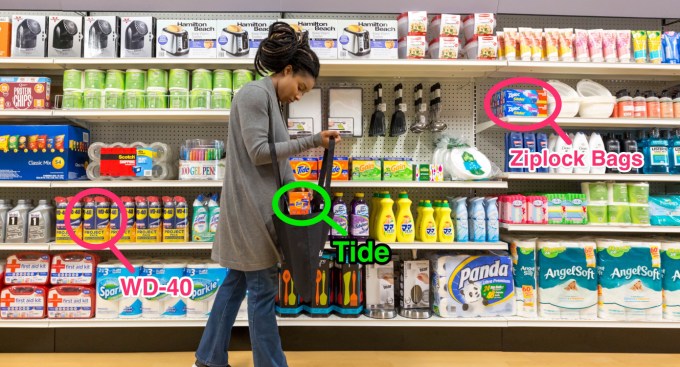
Why would an automated checkout company acquire a self-driving car startup? Because whether you’re tracking shoppers or pedestrians, you need sophisticated maps of the real world. The more accurate the machine vision is, the larger the store you can equip. And since Standard Cognition uses ceiling-based cameras instead of putting them on every shelf like Amazon, it’s much cheaper to keep eyes on a bigger space.

Standard Cognition is only just over a year old, but with the backing of Y Combinator, Alexis Ohanian and Garry Tan’s Initialized Capital, and a fast-moving team of seven co-founders, it believes it can outmaneuver Amazon. That means doing whatever it can to leap forward. Standard Cognition already had in-house mapping technology, but Explorer.ai’s team and tech could accelerate its quest to bring even 100,000 sq ft big box supercenters into the automated checkout age.

“It’s the wild west — applying cutting-edge, state-of-the-art machine learning research that’s hot off the press. We read papers then implement it weeks after it’s published, putting the ideas out into the wild and making them production-worthy — taking it from state-of-the-art to dumb machines you can kick and they won’t fall over.” says Standard Cognition co-founder Jordan Fisher. “It’s no easy task and the exactness we’re going to require will only increase. Having a world-class team of engineers and researchers that can build the next generation version of our mapping is why we’re so excited to have the team joining us.”

From AV To AC

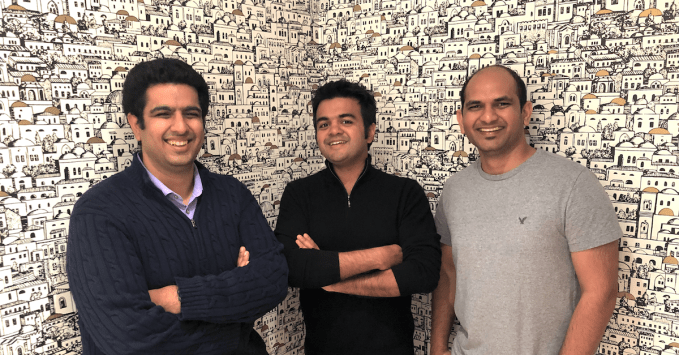
Explorer.ai is was founded in 2017 too, and its acquisition so soon is a testament to how hot the autonomous driving and checkout markets are. Akshay Goel, Nagasrikanth Kallakuri, and Tushar Dadlani noticed self-driving vehicle startups were all trying to generate their own maps. They cobbled together data from several providers, built maps specifically for different purposes, and soon had fellow startups trying to throw money at them. They raised just under $1 million from Story Ventures, early Facebook engineer Nick Heyman and more, growing the team to seven employees.

Explorer.ai’s co-founders


But eventually Explorer.ai realized the bigger players were too cautious to rely on outside maps and it could be years before they’d be comfortable with the idea. “Our view is it would take quite a while to become a commercial success in mapping for autonomous vehicles” Goel tells me. “Most of the companies we were working with in partnerships tried to acquire us from an early stage. Should we fundraise more or start looking at the acquisition process?” the team asked itself as its cash dwindled.

Explorer.ai got a few terms sheets for funding, but weren’t sure they’d be able to go to market fast enough. The founders shopped the startup around “to pretty much everyone” Goel says, though they refused to name names when I asked if that included natural acquirers like Uber and Google’s Waymo. But then they took a left turn into retail. “What we saw was that essentially since autonomous checkout has a lot fewer safety issues, [Standard Cognition] could go to market much faster, and mapping had a large impact on autonomous checkout.”

The two companies declined to disclose financial terms of the deal, but Fisher tells me “We can definitely say it was a competitive process and we’re excited that we could win the hearts and minds of the Explorer team.” Goel adds that “the investors, founders, and team are happy”, implying the payout more than returned the money it’d raised.

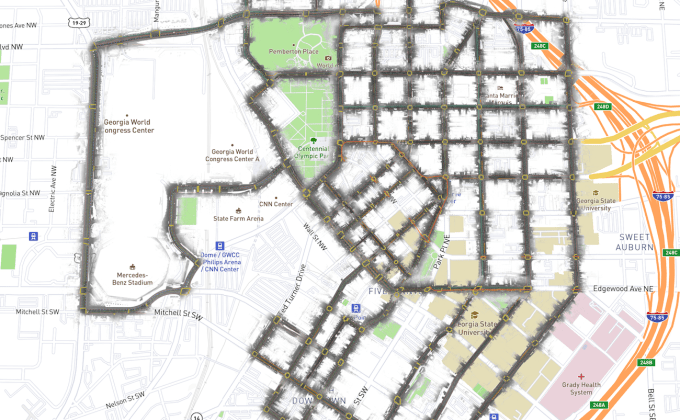
Explorer.ai made self-driving car maps before joining Standard Cognition

The big question Standard Cognition’s customers are asking are whether autonomous checkout is cost-effective, simple for customers to understand, and won’t let shoplifters destroy their margins. That means minimizing installation fees, perfecting onboarding and instruction, and recognizing the difference between someone putting an item back on the shelf versus into their jacket. The startup believes that done right, human cashiers can be repurposed as concierges that help customers find what they’re looking for and buy more without having to stand in line.

How do you make this a bulletproof, reproducible system that works as well as a till in a grocery store that no one worries about breaking?” is the challenge Fisher and his new compatriots must solve. “Amazon is pursuing what we call as shelf-based approach with sensors every few inches on every shelf. What’s not great is the expense, the complexity of the electrical and compute systems . . . this is why you’re seeing autonomous checkout applied to Amazon Go and not larger Whole Foods stores. Not from a lack of desire from Amazon, but because it’s not technologically tenable with the approach that they’re taking. I’m confident they’ll tackle that challenge in the next few years but today they’re limited by their technology.”

And so Standard Cognition is pushing as fast as it can build a lead and brand by giving independent retail stores and chains the firepower to fight off Amazon. “I wasn’t thinking we’d do any acquisitions a month ago” Fisher reveals. “Our goal is not just to deliver autonomous checkout to the world but to do it phenomenally quickly. We’re at the beginning of a space race. Two to three years from now, I think this will be potentially as crowded as autonomous vehicles. We’re in the lead today but that’s not enough for us. We need to be light-years ahead to capture as much of the market as we want. [With the Explorer.ai acquisition] how many days does this advance us? How much further along on our roadmap for world domination does this bring us? When we sat down, it was tangible, the real progression of the roadmap.”

from Startups – TechCrunch https://tcrn.ch/2Hc4qTx

#USA Open source monetization startup Tidelift raises $25m series B

//

The curse of open source software is that it is used in pretty much every application and device on the planet, and yet, has pretty much no business model. Sustaining open source is a critical problem for the future of software, because without a durable source of income, the developers behind these critical projects cannot invest their full energies to improve, maintain, and secure them.

Tidelift, a startup founded by a group of long-time open source engineers and executives, has taken on the problem in a compelling way. As I wrote about them last year as part of a deep dive into open source sustainability:

Tidelift is designed to offer assurances “around areas like security, licensing, and maintenance of software,” [Tidelift CEO Donald] Fischer explained. The idea has its genesis in Red Hat, which commercialized Linux. The idea is that companies are willing to pay for open source when they can receive guarantees around issues like critical vulnerabilities and long-term support. In addition, Tidelift handles the mundane tasks of setting up open source for commercialization such as handling licensing issues.

That’s pretty much still the mission of the company, and now it has even more resources to grow. The company announced today that it has raised $25 million in Series B financing led by return backers General Catalyst, Foundry Group, and Matthew Szulik, the former chairman and CEO of open source leader Red Hat, which was acquired by IBM last year in a blockbuster $34 billion deal. That’s a follow-up to a $15 million Series A round last year.

Since I covered Tidelift last June, the company has expanded from its initial launch in the Javascript ecosystem to also offer assurances to packages within the Java, Python, PHP, .NET, and Ruby ecosystems. Among the well-known open-source projects covered under the Tidelift Subscription today are Apache Struts, Vue.js, Gulp, Carbon, Jekyll, Beautiful Soup, and Mongoose. Tidelift says that its subscription now cover hundreds of open source packages.

In addition to covering more packages, Tidelift announced last September that they had reached $1 million in open source maintainer commitments. In a press release, the company highlighted community and discussion platform Discourse as a customer.

CEO Fischer told me that “Our bottom line is that open source doesn’t just need ‘funding.’ It needs a business model that works for creators and users alike, at massive scale.” The company intends to use the new funding to further expand its coverage of popular open source packages and partner with more open source creators.

from Startups – TechCrunch https://tcrn.ch/2C4DM96

#USA Pouch, the browser extension that surfaces discount codes, has been acquired by Global Savings Group

//

Pouch, the U.K.-based money-saving browser extension, has been acquired by German ‘publishing technology’ platform Global Savings Group.

Exact financial terms of the deal remain undisclosed, although I understand it to be a cash purchase and in the 7-figure U.S. dollar range, plus performance related bonuses.

The entire Pouch team are joining Global Savings Group, and founders Ben Corrigan, Jonny Plein, and Vikram Simha will continue working on Pouch as its “Global Product Leads”.

Launched publicly in September 2016, Pouch is best known for its shopping tool that automatically alerts buyers to working voucher codes as they visit over 3,000 U.K. e-commerce sites. The Pouch browser extension is available for Google Chrome, Safari and Firefox. It’s free to download.

Last year, the company garnered a nice PR boost after appearing on the BBC television show Dragons’ Den. This included receiving investment offers from all five Dragons, culminating in an offer of £75,000 in exchange for 18 percent equity split between Touker Suleyman, Jenny Campbell and Tej Lalvani. However, as is quite common in Dragons’ Den, the deal ultimately fell through, with Pouch eventually seeking equity financing on better terms elsewhere.

The London startup was backed by a consortium of angels, including Andreas Zollmann, and had raised just £345,000 in total. Pouch also won the MassChallenge prize and went through the Huckeltree Alpha Programme in 2017 and the Natwest Entrepreneur Accelerator programme in 2018.

Meanwhile, Global Savings Group’s acquisition of Pouch looks like a decent fit. The company offers commerce content to help publishers find additional routes to monetisation. It operates over 100 digital assets for various leading publishers globally. In the U.K., this includes powering discount voucher sites for Daily Mail and Metro, delivering “inspirations, recommendations, deals and discounts” to consumers.

Regarding Pouch, Global Savings Group says it will incorporate the product into its white label offering for publishers in multiple markets.

“Pouch allows our users to shop with the confidence that they are always getting the biggest saving, without wasting time searching for deals across the internet,” says Pouch co-founder Jonny Plein in a statement. “We are incredibly excited to join the Global Savings Group family and continue to improve our products and build new tools that help people save time and money when shopping online”.

from Startups – TechCrunch https://tcrn.ch/2AAiKzo