#USA Why your startup shouldn’t rush to $1 million in revenue

//

There is a prevailing belief that the magic formula for early-stage tech startups hinges on how quickly they achieve $1 million in annual recurring revenue (ARR). Investors in SaaS companies, in particular, are very guilty of pushing this or its equally loaded corollary, “When will you sign your first six-figure deal?”

But in the rush toward these numbers, too many startups lose sight of their primary intent: These metrics are supposed to be an indicator of product/market fit. We’ve seen companies reach $1 million in ARR in less than a year, yet not have enough market momentum to get their next million easily. We’ve seen early-stage companies so concerned about getting those first sales, they don’t validate the market and if they’re building the right product. We’ve also watched a focus on new logos make companies forget about keeping existing customers happy, introducing unexpectedly high churn — something startups can’t afford.

Those first customers and that first million are supposed to be the bedrock on which the rest of the business grows. Founders must constantly ask what they’re learning about their market, product and go-to-market approach — in that order! — so the business becomes a flywheel.

Revenue is a lagging indicator of sales success, so must likewise be prioritized accordingly. That’s not to say revenue isn’t vitally important and that there isn’t a great deal of urgency to it, but focusing on it too much too early can mask big problems that will hurt startups later when the stakes are higher.

Here are a few lessons we’ve learned by watching our early-stage companies go through this crucial phase. Every early-stage company needs to do them well.

Customer and market discovery is job No. 1

We talk about product and knowing customers a lot, but that is insufficient. Startups must understand the market, as well. How do customers do this today? Is there urgency around the problem? What is the community saying? An early investor in PagerDuty went onto Reddit and Quora and just looked at who people were talking about. It made his decision easy.

To be really successful, it is as important to understand market dynamics as it is to deliver a great product. This also helps zero in on all the aspects of your ideal customer profile; it needs to be more specific than you think! This also then helps qualify customers for future sales.

Elevate Security stood out in their super-crowded security space because they carved out a unique position around people-powered security. They used their early sales process to carefully qualify who would help them best develop their products. Their first product got shout-outs on social media from users who loved it — a rare occurrence in security — and were indicators they had found good initial customers and were creating something unique.

Build a product that sells itself

You’ll always find smart people saying, “I love what you’re doing.” Some things are so broken even a mediocre improvement is worth a change. But this is why revenue can be a false indicator for scalable success: Founders find enough early adopters to get that first million, which leads them to believe the product is enough. The company starts chasing more revenue, not investing in a product-based growth engine. If sales keeps hitting their numbers, everyone believes things are fine. Until they’re not. And then it’s usually a really heavy lift, with 6-12 months of product, sales or team upgrades.
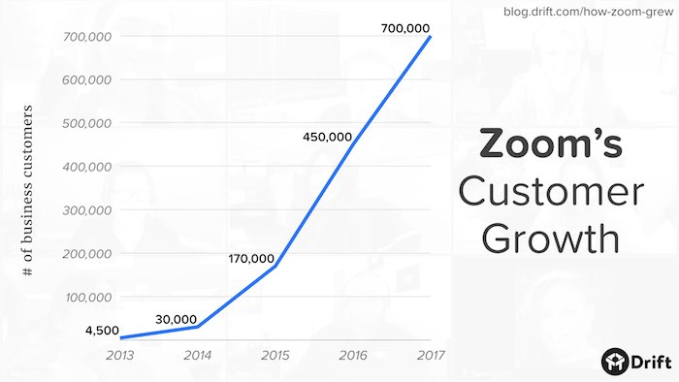
What startup doesn’t want a growth curve like this? Zoom had triple-digit growth for the last four years in a crowded, mature video conferencing category. Janine Pelosi, Zoom’s head of marketing, said the reason they were so successful before and after she arrived was they have a great product. It’s reliable, easy to use, and the founder, Eric Yuan, was selling it every day. Yuan knew the market really well coming out of Webex, and always touching customers meant he could adjust company strategy accordingly. Zoom embodied the real magic formula: know your market + build great product.

Pay attention to customer engagement and delight

Customer satisfaction is simple: It comes from the perception that people get value from their purchase; it’s much less about how much they paid. It’s also always cheaper to make an existing customer happy than it is to acquire a new one, so make sure even in the early days that you’re investing in making current customers happy advocates.

Aquabyte uses computer vision to identify sea lice in the $160 billion aquafarming market. When they showed customers FreckleID (think racial recognition for fish) to uniquely identify fish in a pen of 200,000, fish farmers loved the idea. The price they were willing to pay was 3x what the CEO thought possible. They’re likewise investing heavily in making sure their initial customer is successful with the product and are delighting them in unexpected ways (handwritten holiday cards). They have more prospects in their pipeline than they have capacity, which means they don’t need to expand sales to grow revenue fast.

Your startup may have the coolest tech, be in the biggest market and have the smartest team. No matter what your board says, remember revenue is NOT the primary indicator; it is simply an indicator. To become a breakout success, you need to read the tea leaves of all aspects of your market and build a product and customer experience that is truly superior.

from Startups – TechCrunch https://tcrn.ch/2ThiFrf

#USA TrueFacet, which sells pre-owned, authenticated watches and jewelry, is raising a $10 million round of funding

//

The secondary luxury goods market has been growing wildly in recent years, with more shoppers opting to both sell their lightly used luxury goods like clothing and jewelry for cold, hard cash, as well as buying the pre-owned, authenticated luxury goods of others.

One of the biggest beneficiaries of the trend is The RealReal, a nearly eight-year-old shopping destination for the growing population of people who might not be willing or able to purchase a new Hermes Birkin bag but are willing to buy one in like-new condition for considerably less. The idea — which seems to be working — is to create a virtuous cycle, wherein the bag’s original purchaser receives the bulk of that re-sale price, then uses the money to buy another new handbag (or a used one) that can be resold at a later point in time.

Another beneficiary of the trend: TrueFacet, a five-year-old, New York-based marketplace that claims to have more than 40,000 watches and 55,000 pieces of pre-owned authenticated watches and jewelry for sale at its site, and that has more recently begun offering pre-owned timepieces directly through brands like Fendi Timepieces, Raymond Weil and Roberto Coin that now partner with TrueFacet to carry their pre-owned timepieces with a manufacture warranty.

Apparently, shoppers are buying what they’re collectively selling. The company, which had previously raised $14.7 million in funding from investors, looks to be closing in on another $10 million round, judging by freshly filed SEC paperwork that shows it has so far raised $7 million in funding and is targeting $9.8 million altogether.

TrueFacet’s backers include Founders Co-op,  Freestyle Capital and Maveron, led by partner Jason Stoffer, who also happens to sit on the board of Dolls Kill, an edgy clothing marketplace that we wrote about on Monday.

TrueFacet has some tough competition in the space, including Crown & Caliber, a six-year-old, Atlanta, Ga.-based company that has never announced outside funding, and 15-year-old, Germany-based Chrono24, which has raised €21 million over the years. Both sell timepieces alone, however.

It also competes directly with The RealReal, which has raised nearly $300 million from investors and sells clothing and high-end home decor, as well as jewelry and watches. (The company doesn’t break out publicly which of these categories outpace the others in terms of sales.)

Interestingly, like The RealReal, which now operates permanent offline stores in both New York and L.A., TrueFacet is also crossing the chasm into the offline world, though it’s taking baby steps toward that end.

Specifically, earlier this month, it announced a partnership with Stephen Silver Fine Jewelry, which sells timepieces to many monied Bay Area VCs and other Silicon Valley bigs at stores in Redwood City and Menlo Park, Calif. For the time being at least, the jeweler will also sell pieces from TrueFacet’s collection.

from Startups – TechCrunch https://tcrn.ch/2ENtCwF

#USA Grove Collaborative, a subscription startup selling ‘household essentials,’ has been quietly raising a lot of moolah

//

Grove Collaborative, a four-year-old, San Francisco-based startup that sells household, personal care, baby, children’s and pet products, has been busy raising money in 2018, shows two new SEC filings that lists representatives from the company’s earlier investors, including Mayfield, Norwest Venture Partners and MHS Capital, as well as apparent new investor General Atlantic, represented by partner Catherine Beaudoin.

One of the filings shows that Grove Collaborative, which had already raised roughly $62 million as of the start of 2018, subsequently raised $27.4 million more this year. A separate, second filing shows another $76.4 million has been secured in what looks to be a newer round that’s targeting $125 million. It’s a lot of money for such a young company, which suggests it has found traction with a growing customer base.

We’ve reached out to Grove Collaborative and are waiting to learn more.

As we reported back in January, co-founder Stuart Landesberg started the company after working with retail brands during two years as an associate with TPG Capital, which focuses on growth equity and middle-market private equity transactions. With shelf space limited for brands in brick-and-mortar stores, he saw an opportunity for a startup that prompts consumers to buy the kinds of items they buy over and over again just as they are running out of them: think dish soap, pet food, deodorant, vitamins and sunscreen.

Amazon, of course, similarly prompts its customers to buy such items, but Grove Collaborative is marketing to a slightly narrower demographic, that of people who want only all-natural products. In fact, along with the brands that it make it easier for its customers to find — think Method and Mrs. Meyers — the company began selling its own all-natural products this year. Among the many dozens of offerings it now retails under the Grove Collaborative label: a coconut body lotion, a foaming hand soap, coffee filters, soy candles and lip balm.

The move puts the startup in more direct competition with other e-commerce companies, like the consumer goods company Honest Company, which similarly sells natural products for the home and personal care, though many of its products are now sold on shelves in big retail stores like Target.

Grove Collaborative also looks to be competing more directly now with well-funded Brandless, which raised $240 million from SoftBank’s Vision Fund in summer at a valuation of slightly more than $500 million. Brandless also sells its own all-natural household and personal care products, though, unlike Grove Collaborative, it also focuses on food and, unlike Grove, it offers a subscription service, yet does not revolve around one. Grove is exclusively selling an auto-shipment service.

Grove had previously raised two separate rounds of funding in quick succession: a $15 million Series B round it closed in March of 2017, following by a $35 million Series C round it announced in January of this year.

Given that Landesberg was formerly an investor himself, he may well have realized — as have many founders — that raising money next year may be far harder in 2019 than it has been this year. As the CEO of Zymergen, whose giant funding round we recently featured, told Bloomberg last week: “We wanted to have some fat on our bones for sure . . . The time to raise money is when people are giving it to you.”

from Startups – TechCrunch https://tcrn.ch/2QPNYwx

#USA Cap table management tool Carta valued at $800M with new funding

//

Startups supporting startups are blazing a new trail with support from venture capitalists.

Co-working spaces like The Wing and The Riveter raked in funding rounds this year, as did Brex, the provider of a corporate card built specifically for startups. Now Carta, which helps companies manage their cap tables, valuations, portfolio investments and equity plans, has announced an $80 million Series D at a valuation of $800 million. The company, formerly known as eShares, raised the capital from lead investors Meritech and Tribe Capital, with support from existing investors.

The round brings Carta’s total funding to $147.8 million. Its existing investors include Spark Capital, Menlo Ventures, Union Square Ventures and Social Capital, though the latter didn’t participate in the Series D funding. Tribe Capital, however, is a new venture capital firm launched by Arjun Sethi, who previously led Social Capital’s investment in Carta, Jonathan Hsu and Ted Maidenberg, a trio of former Social Capital partners who exited the VC firm amid its transition from a traditional VC fund to a technology holding company. Tribe is said to be in the process of raising its own $200 million debut fund.

Founded in 2012 by Henry Ward (pictured), the Palo Alto-based company plans to use the latest investment to develop their transfer agent and equity administration products and services to better support startups transitioning into public companies. It also will launch additional products for investors to collect data from their portfolio companies and to manage their back office.

“We’ve come this far by changing how ownership management works for private companies—popularizing electronic securities and cap table software, combined with audit-ready 409As,” Ward wrote in an announcement. “But our ambitions go far beyond supporting privately-held, venture-backed companies.”

Carta, which counts Robinhood, Slack, Wealthfront, Squarespace, Coinbase and more as customers, currently manages $500 billion in equity. This year, Carta expanded its headcount from 310 employees to 450 employees, launched board management and portfolio insights products and completed a study in partnership with #Angels that highlighted the major equity gap female startup employees are victim to.

The study, released in September, revealed that women own just 9 percent of founder and employee startup equity, despite making up 35 percent of startup equity-holding employees. On top of that, women account for 13 percent of startup founders, but just 6 percent of founder equity — or $0.39 on the dollar.

from Startups – TechCrunch https://tcrn.ch/2ENSFja

#USA The best tech books of 2018

//

This year has been good for tech titles. Books like Bad Blood and Brotopia brought us some in-depth reporting on crashes and burns while Stephen Hawking brought us his last thoughts. Here are some of our favorite tech titles for 2018.

from Startups – TechCrunch https://tcrn.ch/2EOWxRX

#USA The 10 largest US venture rounds of 2018

//

Three U.S. companies raised more than $1 billion in just one funding round in 2018, a year in which total deal value for U.S. startups is expected to surpass $100 billion for the first time.

For the most part, it was the usual suspects, and yes, SoftBank was an accessory in many of these rounds. Here’s a look at the 10 largest venture rounds of 2018.

Epic Games: $1.25 billion

The video game Fortnite Battle Royale was the star of the year 2018; more than 200 million players worldwide are registered online. (Photo Illustration by Chesnot/Getty Images)

Given the absolute phenomenon Fortnite became in just one year from its original release, it was no surprise private investors wanted to put money into Epic Games, the company behind it. In October, Epic Games announced a whopping $1.25 billion round at $15 billion valuation from KKR, Iconiq Capital, Smash Ventures, Vulcan Capital, Kleiner Perkins and Lightspeed Venture Partners to continue growing its Fortnite empire. That game alone is expected to bring in $2 billion in revenue in 2018 and reports 200 million registered players — not too shabby.

Cary, N.C.-based Epic Games’ monstrous fundraise was a standout in a year when funding for gaming and esports startups really took off. According to Crunchbase, global venture investment in the industry increased nearly 75 percent, to $701 million in the first half of 2018. Given Epic’s round, Discord’s $150 million infusion of capital this week and several others since June, the second half of 2018 undoubtedly set major records in the space.

Uber: $1.2 billion

Travis Kalanick, co-founder and former chief executive officer of Uber Technologies Inc., speaks during the TiE Global Entrepreneurs Summit in New Delhi, India, on Friday, December 16, 2016. Kalanick said the company will introduce Uber Moto across India. Photographer: Udit Kulshrestha/Bloomberg via Getty Images

One of the largest rounds of 2018 was also one of the first big financings of the year. To be fair, the negotiations behind Uber’s $1.2 billion SoftBank investment and much of the press coverage surrounding it came in 2017, but the deal officially closed in January. This deal was monumental for many reasons. First of all, it made Uber founder and former chief executive officer Travis Kalanick a billionaire — not just on paper — and it cemented SoftBank’s position as the ride-hailing giant’s largest shareholder.

The financing brought San Francisco-based Uber’s total raised to date to just over $20 billion at a valuation said to be around $72 billion. Of course, Uber has since privately filed for an initial public offering slated for the first quarter of 2019.

Juul Labs: $1.2 billion

Juul Labs, the maker of the popular e-cigarette brand that has recently come under fire from health officials over its popularity with young adults, plans to introduce a line of lower-nicotine pods. Photographer: Gabby Jones/Bloomberg via Getty Images

Juul, one of the buzziest companies of 2018, raised $1.2 billion from private investors Tiger Global, Fidelity and more in mid-2018. Then, this month, the developer of e-cigarettes popular among teenagers accepted a $12.8 billion investment from the makers of Marlboro that valued it at $38 billion. Not only has Juul created significant controversy surrounding the ethics, or lack thereof, of its core product and its marketing to the younger generation in a short time, but it has also accumulated value at a clip rarely seen before. Juul, for context, surpassed a $10 billion valuation just seven months after its first round of VC backing — that’s four times faster than Facebook.

2019 is poised to be an interesting year for San Francisco-based Juul as it navigates public scrutiny, regulations and the completion of its partnership with Altria Group, which, according to Juul’s CEO Kevin Burns, will “help accelerate [Juul’s] success switching adult smokers.”

Magic Leap: $963M

Magic Leap’s flagship product, the Magic Leap One AR headset, began shipping to consumers this year.

It wouldn’t be an end of the year round-up of the largest VC deals without any mention of Magic Leap, the extremely well-funded virtual reality company. Tucked away in Plantation, Fla., 8-year-old Magic Leap has closed round after round, raising more than $2 billion to develop its hardware and software. The key investors in this year’s big round, which valued the company at $6.3 billion, were Temasek and AT&T, which announced it would become the exclusive “wireless distributor” of Magic Leap products in the U.S. starting this summer. Magic Leap is also backed by Google, Alibaba and Axel Springer.

Not only did Magic Leap land one of the largest VC deals this year, but it also finally began shipping to consumers its flagship product, the Magic Leap One AR headset. That was a long time coming — years, in fact. So long, many doubted whether the buzzy headsets would ever see the light of day. Now, the headsets are available to buyers in 48 states, though it’s worth mentioning they cost more than two grand.

Instacart: $600M

Founder and CEO of Instacart Apoorva Mehta and moderator Megan Rose Dickey speak onstage during TechCrunch Disrupt SF 2016 at Pier 48 on September 14, 2016 in San Francisco, California. (Photo by Steve Jennings/Getty Images for TechCrunch)

Instacart has a lofty goal of delivering groceries to every household in the U.S., and it needs a lot of cash to get there. The company has raised VC every year since it completed the Y Combinator startup accelerator in 2012, and 2018 was no different. In October, the service brought in $600 million at a $7.6 billion valuation in a round led by D1 Capital Partners. Headquartered in San Francisco, the company has raised $1.6 billion to date from Coatue Management, Thrive Capital, Canaan Partners, Andreessen Horowitz and several others.

Instacart CEO Apoorva Mehta told TechCrunch at the time that the startup didn’t really need the capital and that this was more of an “opportunistic” battle. The market is hot, after all, and Instacart has ambitious plans to scale and it has a fierce competitor in Amazon to take on. As for an IPO, Mehta said “it will be on the horizon.”

Katerra: $865M

SoftBank-backed Katerra says it’s brought in more than $1.3 billion in bookings for new construction ranging from residential to hospitality and student housing.

One of SoftBank’s first major bets of 2018 was on construction technology, with an $865 million investment in Katerra at a $3 billion valuation out of its Vision Fund. Katerra, a tech startup based out of Menlo Park, develops, designs and constructs buildings. At the time of its January fundraise, Katerra told TechCrunch it had brought in more than $1.3 billion in bookings for new construction ranging from residential to hospitality and student housing. Founded in 2015 by three former private equity barons, the company has raised a total of $1.1 billion to date from SoftBank, Foxconn, Greenoaks Capital and others.

In June, Katerra announced it would merge with KEF Infra, an offsite manufacturing technology specialist, and would begin operating in India and the Middle East markets.

Opendoor: $725M

Yet another SoftBank investment, San Francisco-based Opendoor is also backed by Fifth Wall Ventures, GV, Andreessen Horowitz and more.

Opendoor’s two big SoftBank-backed investments this year totaled $725 million, valuing the company at $2.5 billion. The deal gave SoftBank a minority stake in Opendoor, an online real estate marketplace, and put one of its five managing directors, Jeff Housenbold, on the company’s board of directors. The round brought Opendoor’s total funding to slightly more than $1 billion — most of which it acquired in 2018, a major year for the company. Founded in 2014, the San Francisco-based startup is also backed by Fifth Wall Ventures, GV, Andreessen Horowitz and more.

According to TechCrunch’s Connie Loizos, Housenbold had hoped to work with Opendoor co-founder and CEO Eric Wu for some time. “The minute he joined [SoftBank] he reached out to me and let me know … saying if there was an opportunity to work together, to reach out to him,” Wu said.

Lyft: $600M

Uber competitor Lyft expanded aggressively in 2018, raised hundreds of millions in additional venture capital funding, and filed confidentially to go public.

Lyft managed to stay quite busy this year. Not only did the ridesharing company raise a $600 million round at a $15.1 billion valuation, it also acquired bike-share operator Motivate and filed confidentially to go public. Founded in 2012 by Logan Green and John Zimmer, the company has long competed with Uber, and will continue to do so as the pair race to the public markets in early-2019. Lyft, much smaller than Uber and only active in the U.S. and Canada, has raised nearly $5 billion in venture backing from KKR, Mayfield, Didi Chuxing, Floodgate and others.

San Francisco-based Lyft has spent much of the last two years expanding rapidly across the U.S. market, as well as pursuing its autonomous vehicle ambitions.

Automation Anywhere: $550M

Automation Anywhere raised a monstrous $550 million Series A in 2018, with support from the SoftBank Vision Fund.

The only surprise to make this list is Automation Anywhere, a 15-year-old provider of robotic process automation. The company raised a total of $550 million in Series A funding, a large chunk of which came from the SoftBank Vision Fund, as well as NEA, General Atlantic and Goldman Sachs. The round valued Automation Anywhere at $2.6 billion. According to PitchBook, this was the first round of institutional backing for the San Jose, Calif.-based company.

In a conversation with TechCrunch, Automation Anywhere CEO Mihir Shukla said they were attracted to SoftBank because of Masayoshi So — the CEO and founder of SoftBank: “[He} has a vision and he is investing in foundational platforms that will change how we work and travel. We share that vision.”

Peloton: $500M

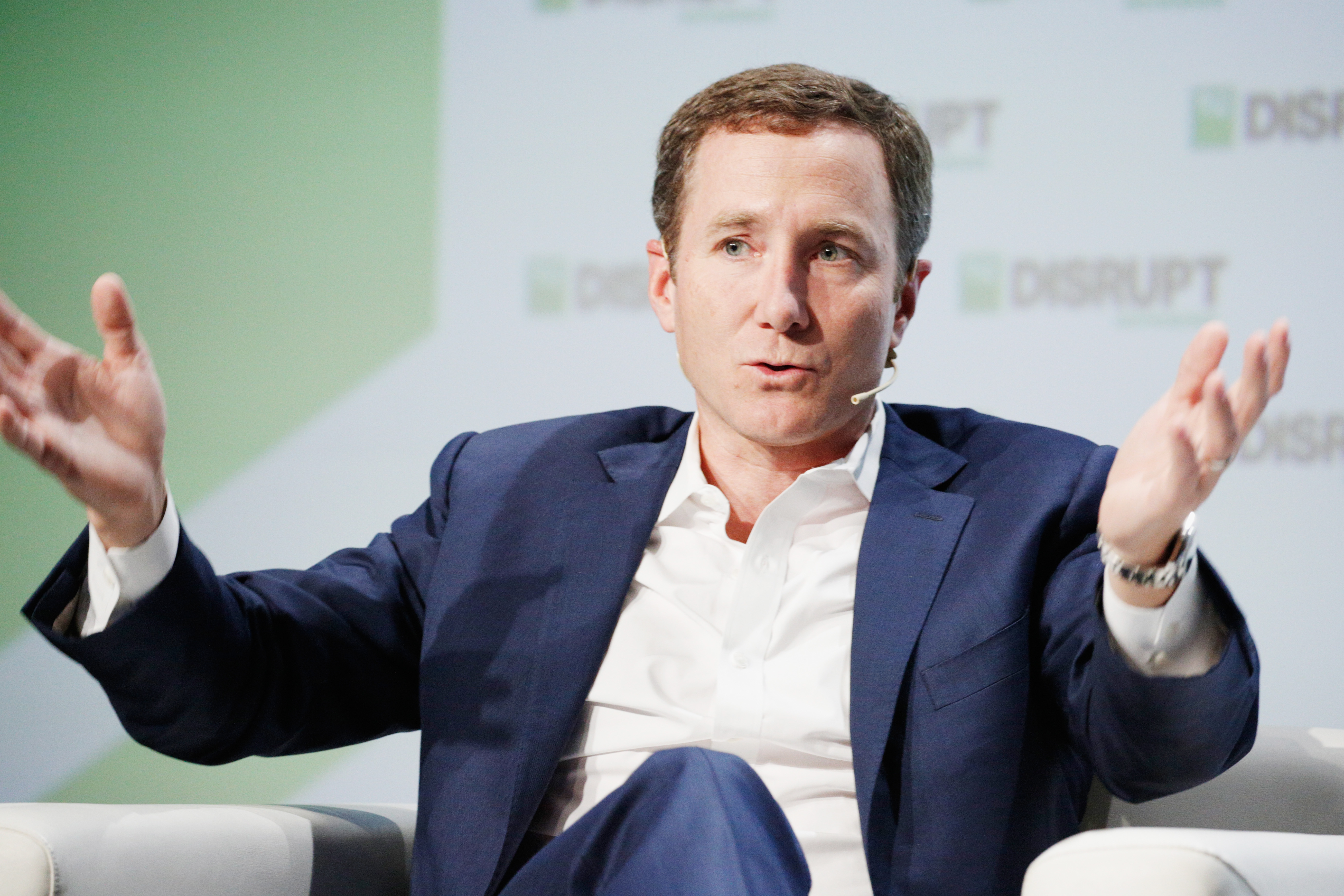
SAN FRANCISCO, CA – SEPTEMBER 06: Peloton Co-Founder/CEO John Foley speaks onstage during Day 2 of TechCrunch Disrupt SF 2018 at Moscone Center on September 6, 2018 in San Francisco, California. (Photo by Kimberly White/Getty Images for TechCrunch)

Peloton’s growth exploded in 2018 as it launched its $4,000 treadmill, doubled down on original fitness streaming content and raised an additional $500 million in equity funding at a $5 billion valuation. The New York-based startup, often referred to as the “Netflix of fitness,” has raised nearly $1 billion in venture capital funding in the six years since it was founded by John Foley. It’s backed by  L Catterton, True Ventures, Tiger Global and others.

It’s likely Peloton will take the public markets plunge in 2019 much like Uber and Lyft. Foley earlier this year told The Wall Street Journal that though he doesn’t have any concrete plans, 2019 “makes a lot of sense” for its stock market debut.

from Startups – TechCrunch https://tcrn.ch/2T7ch5y

#USA A new solar technology could be the next big boost for renewable energy

//

Across the globe, a clutch of companies from Oxford, England to Redwood City, Calif. are working to commercialize a new solar technology that could further boost the adoption of renewable energy generation.

Earlier this year, Oxford PV, a startup working in tandem with Oxford University, received $3 million from the U.K. government to develop the technology, which uses a new kind of material to make solar cells. Two days ago, in the U.S., a company called Swift Solar raised $7 million to bring the same technology to market, according to a filing with the Securities and Exchange Commission.

Called a perovskite cell, the new photovoltaic tech uses hybrid organic-inorganic lead or tin halide-based material as the light-harvesting active layer. It’s the first new technology to come along in years to offer the promise of better efficiency in the conversion of light to electric power at a lower cost than existing technologies.

“Perovskite has let us truly rethink what we can do with the silicon-based solar panels we see on roofs today,” said Sam Stranks, the lead scientific advisor and one of the co-founders of Swift Solar, in a Ted Talk. “Another aspect that really excites me: how cheaply these can be made. These thin crystalline films are made by mixing two inexpensive readily abundant salts to make an ink that can be deposited in many different ways… This means that perovskite solar panels could cost less than half of their silicon counterparts.”

First incorporated into solar cells by Japanese researchers in 2009, the perovskite solar cells suffered from low efficiencies and lacked stability to be broadly used in manufacturing. But over the past nine years researchers have steadily improved both the stability of the compounds used and the efficiency that these solar cells generate.

Oxford PV, in the U.K., is now working on developing solar cells that could achieve conversion efficiencies of 37 percent — much higher than existing polycrystalline photovoltaic or thin-film solar cells.

New chemistries for solar cell manufacturing have been touted in the past, but cost has been an obstacle to commercial rollout, given how cheaply solar panels became thanks in part to a massive push from the Chinese government to increase manufacturing capacity.

Many of those manufacturers eventually folded, but the survivors managed to maintain their dominant position in the industry by reducing the need for buyers to look to newer technologies for cost or efficiency savings.

There’s a risk that this new technology also faces, but the promise of radical improvements in efficiencies at costs that are low enough to attract buyers have investors once again putting money behind alternative solar chemistries.

Oxford PV has already set a world-leading efficiency mark for perovskite-based cells at 27.3 percent. That’s already 4 percent higher than the leading monocrystalline silicon panels available today.

“Today, commercial-sized perovskite-on-silicon tandem solar cells are in production at our pilot line and we are optimizing equipment and processes in preparation for commercial deployment,” said Oxford PV’s CTO Chris Case in a statement.

from Startups – TechCrunch https://tcrn.ch/2rU1qR1

#USA See you in Las Vegas during CES

//

We will be holding a small event during CES in Las Vegas and we want to see you! We’re looking to meet some cool hardware and crypto startups, so the good folks at Work In Progress have opened up their space to us and 200 of you all to hold a meetup and pitch-off.

The event will be held at Work In Progress, 317 South 6th Street on Wednesday, January 9, 2019 between 6:00 PM – 9:00 PM PST.

There are only 200 tickets, so if you want to come please pick one up ASAP. The meetup is open to everyone, so head over if you’d like to talk tech. You can pick up a ticket here.

If you’d like to pitch at the event I’ll be picking 10 companies that will have three minutes to pitch without slides. Because this is a hardware event I recommend bringing a few of your items to show off. If you’d like to pitch, fill this out and I will contact those who will be coming up on stage.

See you in Vegas!

from Startups – TechCrunch https://tcrn.ch/2QNXHU5

#USA My product launch wishlist for Instagram, Twitter, Uber and more

//

‘Twas the night before Xmas, and all through the house, not a feature was stirring from the designer’s mouse . . . Not Twitter! Not Uber, Not Apple or Pinterest! On Facebook! On Snapchat! On Lyft or on Insta! . . . From the sidelines I ask you to flex your code’s might. Happy Xmas to all if you make these apps right.

Instagram

See More Like This – A button on feed posts that when tapped inserts a burst of similar posts before the timeline continues. Want to see more fashion, sunsets, selfies, food porn, pets, or Boomerangs? Instagram’s machine vision technology and metadata would gather them from people you follow and give you a dose. You shouldn’t have to work through search, hashtags, or the Explore page, nor permanently change your feed by following new accounts. Pinterest briefly had this feature (and should bring it back) but it’d work better on Insta.

Web DMs Instagram’s messaging feature has become the defacto place for sharing memes and trash talk about people’s photos, but it’s stuck on mobile. For all the college kids and entry-level office workers out there, this would make being stuck on laptops all day much more fun. Plus, youth culture truthsayer Taylor Lorenz wants Instagram web DMs too.

Upload Quality Indicator – Try to post a Story video or Boomerang from a crummy internet connection and they turn out a blurry mess. Instagram should warn us if our signal strength is low compared to what we usually have (since some places it’s always mediocre) and either recommend we wait for Wi-Fi, or post a low-res copy that’s replaced by the high-res version when possible.

Oh, and if new VP of product Vishal Shah is listening, I’d also like Bitmoji-style avatars and a better way to discover accounts that shows a selection of their recent posts plus their bio, instead of just one post and no context in Explore which is better for discovering content.

Twitter

DM Search – Ummm, this is pretty straightforward. It’s absurd that you can’t even search DMs by person, let alone keyword. Twitter knows messaging is a big thing on mobile right? And DMs are one of the most powerful ways to get in contact with mid-level public figures and journalists. PS: My DMs are open if you’ve got a news tip — @JoshConstine.

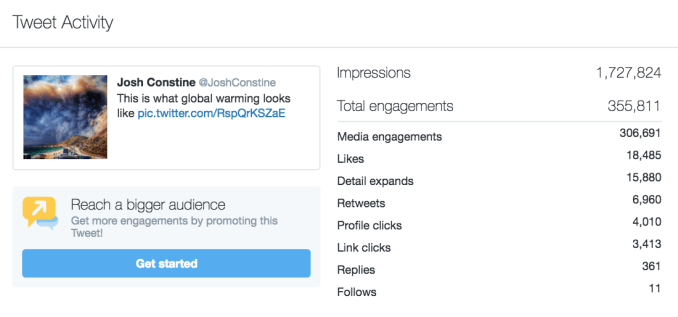
Unfollow Suggestions – Social networks are obsessed with getting us to follow more people, but do a terrible job of helping us clean up our feeds. With Twitter bringing back the option to see a chronological feed, we need unfollow suggestions more than ever. It should analyze who I follow but never click, fave, reply to, retweet, or even slow down to read and ask if I want to nix them. I asked for this 5 years ago and the problem has only gotten worse. Since people feel like their feeds are already overflowing, they’re stingy with following new people. That’s partly why you see accounts get only a handful of new followers when their tweets go viral and are seen by millions. I recently had a tweet with 1.7 million impressions and 18,000 Likes that drove just 11 follows. Yes I know that’s a self-own.

Analytics Benchmarks – If Twitter wants to improve conversation quality, it should teach us what works. Twitter offers analytics about each of your tweets, but not in context of your other posts. Did this drive more or fewer link clicks or follows than my typical tweet? That kind of info could guide users to create more compelling content.

Facebook

(Obviously we could get into Facebook’s myriad problems here. A less sensationalized feed that doesn’t reward exaggerated claims would top my list. Hopefully its plan to downrank “borderline content” that almost violates its policies will help when it rolls out.)

Batched Notifications – Facebook sends way too many notifications. Some are downright useless and should be eliminated. “14 friends responded to events happening tomorrow”? “Someone’s fundraiser is half way to its goal?” Get that shit out of here. But there are other notifications I want to see but that aren’t urgent nor crucial to know about individually. Facebook should let us decide to batch notifications so we’d only get one of a certain type every 12 or 24 hours, or only when a certain number of similar ones are triggered. I’d love a digest of posts to my Groups or Events from the past day rather than every time someone opens their mouth.

I so don’t care

Notifications In The “Time Well Spent” Feature – Facebook tells you how many minutes you spent on it each day over the past week and on average, but my total time on Facebook matters less to me than how often it interrupts my life with push notifications. The “Your Time On Facebook” feature should show how many notifications of each type I’ve received, which ones I actually opened, and let me turn off or batch the ones I want fewer of.

Oh, and for Will Cathcart, Facebook’s VP of apps, can I also get proper syncing so I don’t rewatch the same Stories on Instagram and Facebook, the ability to invite people to Events on mobile based on past invite lists of those I’ve hosted or attended, and the See More Like This feature I recommended for Instagram?

Uber/Lyft/Ridesharing

“Quiet Ride” Button – Sometimes you’re just not in the mood for small talk. Had a rough day, need to get work done, or want to just zone out? Ridesharing apps should offer a request for a quiet ride that if the driver accepts, you pay them an extra dollar (or get it free as a loyalty perk), and you get ferried to your destination without unnecessary conversation. I get that it’s a bit dehumanizing for the driver, but I’d bet some would happily take a little extra cash for their compliance.

“I Need More Time” Button – Sometimes you overestimate the ETA and suddenly your car is arriving before you’re ready to leave. Instead of cancelling and rebooking a few minutes later, frantically rushing so you don’t miss your window and get smacked with a no-show fee, or making the driver wait while they and the company aren’t getting paid, Uber, Lyft, and the rest should offer the “I Need More Time” button that simply rebooks you a car that’s a little further away.

Spotify/Music Streaming Apps

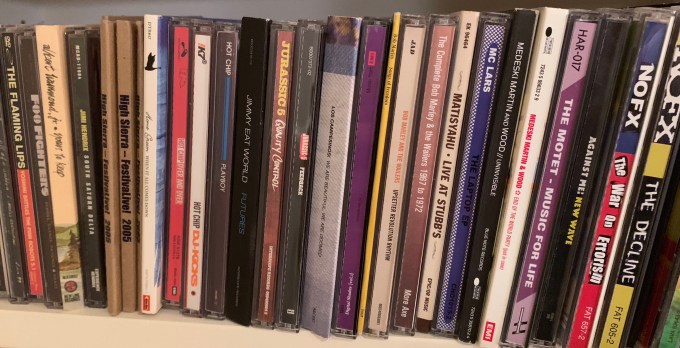
Scan My Collection – I wish I could just take photos of the album covers, spines, or even discs of my CD or record collection and have them instantly added to a playlist or folder. It’s kind of sad that after lifetimes of collecting physical music, most of it now sits on a shelf and we forget to play what we used to love. Music apps want more data on what we like, and it’s just sitting there gathering dust. There’s obviously some fun viral potential here too. Let me share what’s my most embarrassing CD. For me, it’s my dual copies of Limp Bizkit’s “Significant Other” because I played the first one so much it got scratched.

Friends Weekly Spotify ditched its in-app messaging, third-party app platform, and other ways to discover music so its playlists would decide what becomes a hit in order to exert leverage over the record labels to negotiate better deals. But music discovery is inherently social and the desktop little ticker of what friends are playing on doesn’t cut it. Spotify should let me choose to recommend my new favorite song or agree to let it share what I’ve recently played most, and put those into a Discover Weekly-style social playlist of what friends are listening to.

Snapchat

Growth – I’m sorry, I had to.

Bulk Export Memories – But seriously, Snapchat is shrinking. That’s worrisome because some users’ photos and videos are trapped on its Memories cloud hosting feature that’s supposed to help free up space on your phone. But there’s no bulk export option, meaning it could take hours of saving shots one at a time to your camera roll if you needed to get off of Snapchat, if for example it was shutting down, or got acquired, or you’re just bored of it.

Add-On Cameras – Snapchat’s Spectacles are actually pretty neat for recording first-person or underwater shots in a circular format. But otherwise they don’t do much more, and in some ways do much less, than your phone’s camera and are a long way from being a Magic Leap competitor. That’s why if Snapchat really wants to become a “Camera Company”, it should build sleek add-on cameras that augment our phone’s hardware. Snap previously explored selling a 360-camera but never launched one. A little Giroptic iO-style 360 lens that attaches to your phone’s charging port could let you capture a new kind of content that really makes people feel like they’re there with you. An Aukey Aura-style zoom lens attachment that easily fits in your pocket unlike a DSLR could also be a hit

iOS

Switch Wi-Fi/Bluetooth From Control Center – I thought the whole point of Control Center was one touch access, but I can only turn on or off the Wi-Fi and Bluetooth. It’s silly having to dig into the Settings menu to switch to a different Wi-Fi network or Bluetooth device, especially as we interact with more and more of them. Control Center should unfurl a menu of networks or devices you can choose from.

Shoot GIFs – Live Photos are a clumsy proprietary format. Instagram’s Boomerang nailed what we want out of live action GIFs and we should be able to shoot them straight from the iOS camera and export them as actual GIFs that can be used across the web. Give us some extra GIF settings and iPhones could have a new reason for teens to choose them over Androids.

Gradual Alarms – Anyone else have a heart attack whenever they hear their phone’s Alarm Clock ringtone? I know I do because I leave my alarms on so loud that I’ll never miss them, but end up being rudely shocked awake. A setting that gradually increases the volume of the iOS Alarm Clock every 15 seconds or minute so I can be gently arisen unless I refuse to get up.

Maybe some of these apply to Android, but I wouldn’t know because I’m a filthy casual iPhoner. Send me your Android suggestions, as well as what else you want to see added to your favorite apps.

[Image Credit: Hanson Inc]

from Startups – TechCrunch https://tcrn.ch/2ELMwDV

#USA Four ways to bridge the widening valley of death for startups

//

Many founders believe in the myth that the first steps of starting a business are the hardest: Attracting the first investment, the first hires, proving the technology, launching the first product, and landing the first customer.  Although those critical first steps are difficult, they are certainly not the most difficult on the arduous path of building an iconic company. As early and late-stage funding becomes more abundant, founders and their early VC backers need to get smarter about how to position their companies for a looming valley of death in between. As we’ll learn below, it’s only going to get much, much harder before it gets easier.

Money will have the look, and heft, of dumbbells as the economic cycle turns. Expect an abundance of small, seed checks at one end, an abundance of massive checks for clear, breakout companies at the other, and a dearth of capital for expanding companies with early proof points and market traction. Read more on how to best prepare for this inevitable future. (Image courtesy Flickr/CircaSassy)

There will be an abundance of capital at the two ends of the startup spectrum.  At one end, hundreds of seed and micro VCs, each armed with dozens of $250k-$1M checks to write every year, are on the prowl for visionary founders with pedigree and resumes.  At the other end, behemoths like Softbank, sovereigns, as well “early-stage” firms raising larger funds are seeking breakout companies ready for checks that are in the mid-tens to hundreds of millions.  There will be a dearth of capital to grow companies from a kernel of a business, to a becoming the clear market-defining leader.  In fact, we’re already seeing deal volume decreasing significantly as dollars increase, likely evidence of larger checks going into fewer companies.

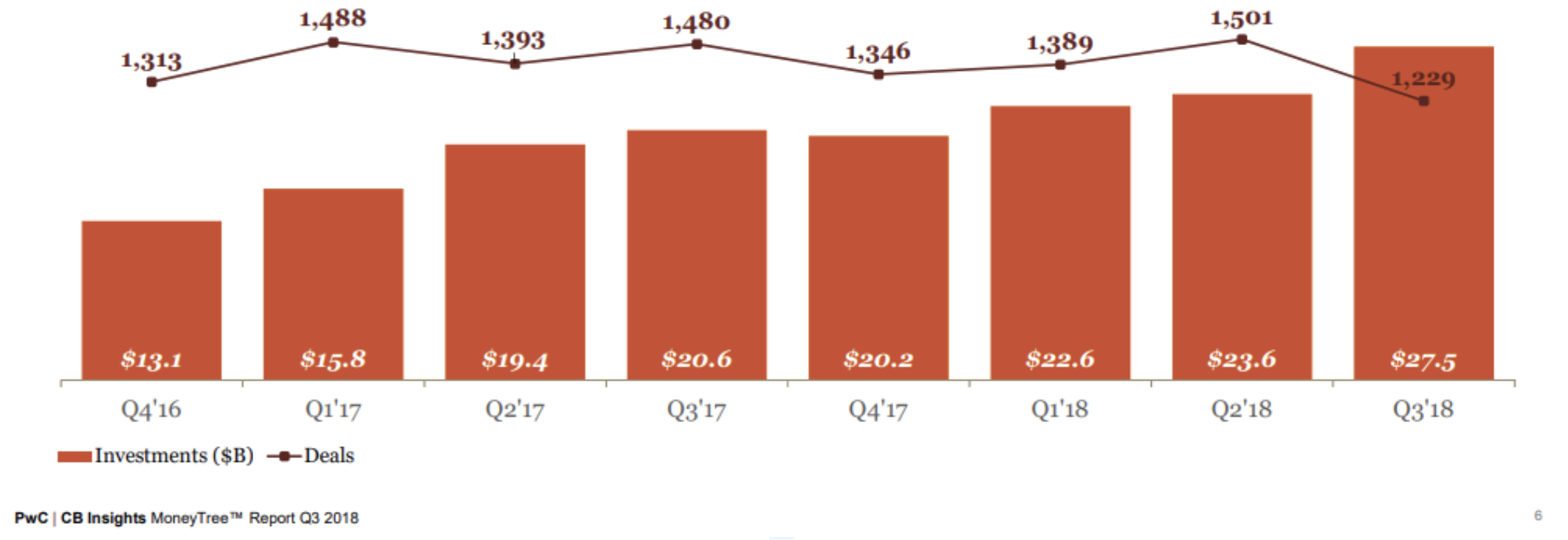
Even as the overall number of deals decrease below 2012 levels, the overall dollars invested into startups continue to soar. The 200+ “seed” stage funds formed since 2012 will continue to chase nascent companies. Meanwhile, the increasing number of mega-funds will seek breakout companies into which to make $100M+ investments. Companies with early traction seeking ~$20M to grow will be abundant and have difficulty accessing capital.

Founders should no longer assume that their all-star seed and Series A syndicates will guarantee a successful follow-on financing. Progress on recruiting and product development, though necessary, are no longer sufficient for B-rounds and beyond.  Founders should be mindful that investors that specialize in leading $20-50M rounds will have a plethora of well-funded, well-mentored, well-staffed startups with slick presentations, big visions, and some early market traction, to choose from.

Today, there is far more capital chasing fewer quality companies.  Fewer breakout companies and fear of missing out is making it easy to raise growth rounds with revenue growth which may not be scalable or even reflective of an attractive business. This is creating false realities and prompting founders to raise big rounds at high prices- which is fine when there is an over-abundance of capital, but can cripple them when capital later becomes scarce. For example, not long ago, cleantech companies, armed with very preliminary sales, raised massive financings from VCs eager to back winners towards scaling into what they characterized as infinite demand. The reality is that the capital required to meet target economics was far greater and demand far smaller. As the private markets turned, access to cash became difficult and most faltered or were acquired for pennies on the dollar.

There is a likely future where capital grows scarce, and investors take a harder look at the underpinnings of revenue, growth, and (dis)economies of scale.

What should startup leadership teams emphasize in an inevitable future where the $30M rounds will be orders of magnitude harder than their $5M rounds?

A business model representative of the big vision

Leadership teams put lots of emphasis on revenue.  Unfortunately, revenue that’s not representative of the big vision is probably worse than no revenue at all.  Companies are initially seeded with the expectation that the founding team can build and sell something.  What needs to be proven is the hypothesis that the company can a) build a special product that b) is inexpensive to convince customers to pay for, and c) that those customers represent a massive market. It should be proven that it is unattractive for customers to switch to the inevitable copycats.  It should be clear that over time, customers will pay more for additional features, and the cost of acquiring new customers will go down. Simply selling a product to customers that don’t represent that model, is worse than not selling anything at all.

Recruiting talent that’s done it

Early founding teams are cognitively diverse individuals that can convince early investors that they can overcome the incredible odds of building a company that until now, shouldn’t have existed.  They build a unique product, leveraging unique tools satisfying an unmet need. The early teams need to demonstrate the big vision, and that they can recruit the people that can make that vision a reality.  Unfortunately, more founders struggle when it comes to recruiting people that have real experience reducing a technology to practice, executing on a product that customers want, and charting the path to expand their market with improving unit economics. There are always exceptions of people that do the above for the first time at startups; however, most of today’s iconic startups knew what kind of talent they needed to execute and succeeded in bringing them on board.  Who’s on your team?

Present metrics that matter 

The attractive SaaS valuation multiples behoove all founders to apply its metrics to their businesses even if they aren’t really SaaS businesses.  Sophisticated later-stage investors see right past that and dismiss numbers associated with metrics that are not representative. Semiconductors are about winning dedicated sockets in growing markets.  Design tools are about winning and upselling seats in an industry that’s going to be hooked on those tools. Develop a clear understanding of how your business will be measured. Don’t inundate your investor with numbers; present a concise hypothesis for your unfair advantage in a growing market with your current traction being evidence to back it.

Find efficiencies by working in massive markets

“Pouring fuel on the fire” is a misleading metaphor that leads some into believing that capital can grow any business.  That’s just as true as watering a plant with a firehose water or putting TNT in your Corolla’s gas tank: most business models and markets simply are not native to the much-sought-after venture growth profile.  In fact, most later-stage startups that fail after raising large amounts of capital, fail for this reason.  Most markets are conducive to businesses with DIS-economies of scale, implying dwindling margins with scale, which is why many businesses are small serving local, fragmented markets that technology alone cannot consolidate.  How do your unit economics improve over time? What are the efficiencies generated by economies of scale? Is there a real network effect that drives these economies?

Image courtesy Getty Images

I expect today’s resourceful founders to seek partners, whether its employees, advisors, or investors, to help them answer these questions.  Together, these cognitively diverse teams will work together accelerate past any metaphoric valley and build the iconic companies taking humanity to its fantastic future.   

from Startups – TechCrunch https://tcrn.ch/2Q0CPDI