#USA Vroom nabs $146M from AutoNation, VCs for its used car marketplace

//

Vroom has raised $146 million in Series G funding, an expansion to a $30 million investment we reported in early September. U.S. automotive retailer AutoNation led the round for the startup, with participation from existing investors T. Rowe Price, L Catterton, General Catalyst and Fraser McCombs Capital.

The company declined to disclose the valuation, but says it was an up round. Vroom was valued at $440 million in 2016 with a $50 million financing, according to PitchBook.

Led by chief executive officer Paul Hennessy, the former CEO of Priceline.com, Vroom is an online platform for buying and selling refurbished, pre-owned cars. The company purchases used vehicles, then includes them in its online catalog, which currently lists just over 3,200 cars. Once it finds a buyer, it provides financing support through a number of lending partners, including CapitalOne and Ally, and delivers the vehicle directly to customers’ doorsteps in the U.S. To date, the company says it has sold 250,000 cars.

Founded in 2013, the company has raised $440 million in equity funding to date, but it hasn’t all been smooth sailing. Earlier this year, Vroom laid off roughly 30 percent of its staff after a futile attempt at building brick-and-mortar car dealerships. As a result, Vroom shut down its Dallas dealership, which was where most of the layoffs occurred, Hennessy said. Its Houston dealership is the only in-person effort still up and running.

“Clearly our investors were supportive of the strategic steps we took,” Hennessy told TechCrunch.

Since the layoffs, Vroom has been focused on building out its leadership team. Dave Jones, who spent over a decade at Penske Automotive Group, joined as the company’s chief financial officer; Mitch Berg, who was most recently the senior vice president of technology at dailymotion, was brought on as chief technology officer; and Dennis Looney, a veteran in supply chain management, was tapped as chief supply chain officer. 

The infusion of capital is necessary for the five-year-old business, which operates in a capital-intensive industry. Carvana, perhaps its largest competitor in the space, raised $300 million in equity funding and hundreds of millions in debt before going public in 2017. Auto1, a German car trading platform, has raised more than $1 billion, including a significant investment from SoftBank’s Vision Fund earlier this year.

Other digitally native vehicle retailers have fallen on hard times despite venture backing. British startups Hellocar and Carspring both shut down in 2017, and Beepi, a Silicon Valley peer-to-peer used car marketplace, brought in $150 million in VC backing before going out of business last year. Vroom acquired some of Beepi’s software as the company went under.

Vroom’s decision to halt the operations of its physical dealership looks to have satisfied investors, but whether it’s built a sustainable business that can operate without a consistent influx of VC support remains to be seen.

from Startups – TechCrunch https://ift.tt/2L8mtZ3

#USA Fintech startup Plaid raises $250M at a $2.65B valuation

//

In the five years since its product was showcased onstage at TechCrunch Disrupt New York’s hackathon, Plaid has emerged as one of the most critical contributors to financial technology’s evolution — and one of the most under the radar.

That is, until now. The company is today announcing a $250 million Series C investment led by famed venture capitalist and the author of the Internet Trends report Mary Meeker, who will join its board of directors as part of the deal. The funds were raised at a valuation of $2.65 billion, according to sources close to the company. Capital from Meeker’s investment came from Kleiner Perkins’ growth fund — where Meeker has been a partner since 2010 — not from the reported billion-dollar-plus solo fund she’s in the process of raising.

New investors Andreessen Horowitz and Index Ventures also participated, as did existing investors Goldman Sachs, NEA and Spark Capital. The financing brings Plaid’s total raised to $310 million and provides a major boost to its valuation, which was just over $200 million with its 2016 Series B.

Making money easier for everyone

Plaid builds infrastructure that allows a consumer to interact with their bank account on the web through a number of third-party applications, like Venmo, Robinhood, Coinbase, Acorns and LendingClub. The San Francisco-based startup has integrated with 10,000 banks in the U.S. and Canada and says 25 percent of people living in those countries with bank accounts have linked with Plaid through at least one of the hundreds of apps that leverage Plaid’s application program interfaces (APIs) — an increase from 13 percent last year.

The platform allows companies to create financial services applications without having to hire their own team of engineers to build out a tool that connects apps to its users’ bank accounts, something Plaid’s founders themselves lacked when they set out to build a fintech startup years ago. Plaid was founded by a pair of former Bain consultants, William Hockey and Zach Perret, the chief technology officer and chief executive officer, respectively, in 2012.

“We were always really infatuated with the concept of financial services,” Hockey told TechCrunch. “We thought it had so much power to impact and improve people’s lives but at the time it really wasn’t … We quickly realized building financial services was almost impossible to do because there wasn’t the tooling or the infrastructure, so we turned around and started building that infrastructure.”

Plaid closed a $44 million Series B in mid-2016 and has since seen its valuation increase more than tenfold. On top of that, it doubled its customer base this year, launched in Canada — its first market outside the U.S. — opened its third office, expanded its overall headcount to 175 employees and debuted a digital mortgage product called Assets.

Hockey and Perret say the new funding will be used to continue expanding the team in San Francisco, Salt Lake City and New York. Plaid, given how essential its tools are to any technology companies that deals with payments in any fashion, which these days is the vast majority of businesses, is a company to watch going into 2019.

“When we think about our long-term goals, we want to make money easier for everyone,” Perret told TechCrunch. “We want everyone to lives these simple, straightforward digitally enabled financial lives and for us, that means supporting these tech innovators in the space and these large incumbents. We want to be able to help them create great consumer financial experiences so consumers can live simpler financial lives.”

from Startups – TechCrunch https://ift.tt/2C4sXFd

#USA Hardware Club closes its $50 million fund

//

French VC firm Hardware Club just announced the final closing of its first fund. The firm will invest $50 million in total in hardware startups (as the name suggests).

Hardware Club first started as a community of hardware startups sharing knowledge, tips and contacts in the hardware community. If you’re launching a hardware product, chances are many companies before you had the same supply chain struggles.

The club itself has negotiated partnerships with well-known manufacturers and distributors, such as Foxconn, Amazon and Honda. Right now, there are 470 startups in the club from 39 countries, as well as 150 partners.

And Hardware Club then invests in the most promising startups that are part of the club. Let’s hope that startups get enough perks from the community because investing in some companies but not all of them creates a signaling issue.

After the first closing of $28 million, Hardware Club already invested in multiple companies, such as Cowboy Bike, Alcatraz AI, Automata and Left Hand Robotics. Overall, Hardware Club invested in 28 startups and expects to realize an exit very soon. The firm also plans to invest in another 20 startups with this fund, ideally in a seed or Series A round.

from Startups – TechCrunch https://ift.tt/2EbHOzf

#USA Molotov creates a VR coffee shop to watch TV together

//

French startup Molotov is slowly becoming the leading platform to stream TV in France. With a single account, you can watch TV on your phone, tablet, computer and set-top box. The company is about to release a VR app that lets you watch TV using a virtual reality headset — but there’s a twist.

The new service is called Molotov Together and is an interesting experience in many ways. I tried an early version of the service a couple of weeks ago.

At first, I was quite reluctant about the idea of watching TV in a VR headset. I’m not a fan of VR in general, and many VR headsets already let you watch videos in in virtual reality.

In many cases, you end up with a YouTube player in a web browser projected on a virtual wall in a virtual room. But Molotov is aware of that and knows that watching a video is still better on an actual TV.

When Molotov co-founder and CEO Jean-David Blanc started pitching me the idea of Molotov Together, he first talked about live TV.

In the era of Netflix shows and huge iTunes libraries, it’s hard to remember that watching TV used to mean watching something live, sharing a moment together. You can still experience this with football matches, election nights and other important events.

And in those cases, the side conversations and jokes can be as important as the content itself.

TV for long-distance besties

Molotov has created a virtual reality coffee shop called Molotov Café. With Molotov Together, you can invite one or two friends to watch TV with you in the café. You all sit in comfortable virtual reality armchairs and can see each other.

Each person can control the TV channel they want to watch and access all Molotov content — in that experience, you don’t share a TV, everyone has its own TV. But Molotov Together truly shines when you’re all watching the same channel.

After that, you can watch the same content and talk together using voice chat. You don’t have to press any button, you can just casually sit back and watch something together.

I tried Molotov Together with Jean-David Blanc and I didn’t expect it to work so well. At first, entering the virtual coffee shop is a bit odd because it’s a significant context change. But once you start chatting with the other person and comment on what you see, it feels like you’re sitting next to each other.

Long-distance friends and couples sometimes watch the same movie with Skype or FaceTime running on a device. Molotov wants to perfect this concept and people in this situation will love the service. Similarly, there’s a reason why people watch reaction videos to popular TV shows. Hearing jokes and comments on your favorite show is a good way to enhance your favorite content.

Mind tricks

A product like Molotov Together doesn’t work well if the team behind it isn’t paying attention to small details. I tried Molotov Together with an Oculus Go but the app should eventually work with all major VR headsets.

Molotov Together is a multiplayer experience. Just like a video game, you need to see the same thing at the same time. If your favorite team scores a goal and your feed is five seconds behind, it’s not going to cut it. That’s why Molotov made sure that two persons stream from the same content delivery network so that the video feeds are perfectly in sync.

While you can control the volume of your virtual TV, the voices of your friends are also spatialized. Even if both of your friends have a similar sounding voice, you know who is talking without even looking.

From the coffee shop to your living room

Molotov Together will be released in February 2019. Any Molotov user will be able to access the service if they have a compatible VR headset.

The company wants to release new features after that. In particular, Molotov will let you invite people to your own virtual living room and watch your TV. This time, the host controls the TV and can stream premium content — other people can watch premium content even if they are not subscribers. It’s going to be interesting to see the reaction of French regulators.

Molotov currently has around 7 million users in France. Every day, 1.2 million users watch something on Molotov. They stream a total of 1.1 million hours of content. As you can see, those Molotov sessions can be quite long.

With this new product, Molotov proves that it’s a technology company that competes with content companies. Molotov Together won’t change the face of the company. But the startup is still experimenting with new ways to watch TV. And that might be enough to give it an edge over its competitors.

from Startups – TechCrunch https://ift.tt/2BdwHT8

#USA HypeHop is a product to fix sponsored videos

//

I’ve been thinking hard about the concept of sponsored content – you can find some of it on TechCrunch if you look hard enough and it appears almost everywhere else. It’s an important consideration because as a online journalist I’ve heard everything from “How much did Apple pay you to post this?” to “How much can I pay you to post something to TechCrunch?”

And I’m sick of it.

Journalists afflict the comfortable and comfort the afflicted. Marketers comfort the comfortable. The only person who wins in that struggle is the guy with the biggest wallet to buy as much coverage as possible. Crypto, for all its faults, promises to change that.

Now I’d like to introduce something else I built (and I never do this on TC so I think it’s pretty important and interesting.) It’s called HypeHop and it’s an experiment in sponsored video. Most sponsored video appears in front of your YouTube selections like a cold sore – you know it’s there, it’s unwanted, and you know it will take a while for it to go away. For example, this deeply applicable ad appeared as my son was watching Nerf videos, for example, proving that algorithms aren’t always the smartest.

Enough.

In the current system marketers pay media platforms for their audience. The marketer gets eyeballs, the media platform gets money, and the user gets bupkus. I wanted to try to change that.

With a few friends I made something called HypeHop. It basically pays you for watching videos. At this point it’s a proof-of-concept that accepts uploaded videos, a small payment for hosting, and then watches the viewer to ensure they are watching the video. “Watching the viewer?” you ask? Sure. We’re being surveilled every day. Isn’t it time we were paid for it?

Viewers currently get about 40 cents in BTC per view. I created a demo video with my son here to show off how it worked and preseeded some videos with BTC to test. Thus far it’s been an interesting experiment.

I’d love to talk to like-minded folks about expanding this technology. I could, for example, see this as a tool to make sponsored posts more interesting to readers – who doesn’t want a few pennies for reading marketing dross – and a way to monetize many marketing tools for readers, producers, and marketers. Ultimately this is a win-win-win in a win-win-lose world and it’s vitally important we look at it as a way forward in our fight against fake news and faker marketing.

from Startups – TechCrunch https://ift.tt/2QqFUSI

#USA HypeHop is a product to fix sponsored videos

//

I’ve been thinking hard about the concept of sponsored content – you can find some of it on TechCrunch if you look hard enough and it appears almost everywhere else. It’s an important consideration because as a online journalist I’ve heard everything from “How much did Apple pay you to post this?” to “How much can I pay you to post something to TechCrunch?”

And I’m sick of it.

Journalists afflict the comfortable and comfort the afflicted. Marketers comfort the comfortable. The only person who wins in that struggle is the guy with the biggest wallet to buy as much coverage as possible. Crypto, for all its faults, promises to change that.

Now I’d like to introduce something else I built (and I never do this on TC so I think it’s pretty important and interesting.) It’s called HypeHop and it’s an experiment in sponsored video. Most sponsored video appears in front of your YouTube selections like a cold sore – you know it’s there, it’s unwanted, and you know it will take a while for it to go away. For example, this deeply applicable ad appeared as my son was watching Nerf videos, for example, proving that algorithms aren’t always the smartest.

Enough.

In the current system marketers pay media platforms for their audience. The marketer gets eyeballs, the media platform gets money, and the user gets bupkus. I wanted to try to change that.

With a few friends I made something called HypeHop. It basically pays you for watching videos. At this point it’s a proof-of-concept that accepts uploaded videos, a small payment for hosting, and then watches the viewer to ensure they are watching the video. “Watching the viewer?” you ask? Sure. We’re being surveilled every day. Isn’t it time we were paid for it?

Viewers currently get about 40 cents in BTC per view. I created a demo video with my son here to show off how it worked and preseeded some videos with BTC to test. Thus far it’s been an interesting experiment.

I’d love to talk to like-minded folks about expanding this technology. I could, for example, see this as a tool to make sponsored posts more interesting to readers – who doesn’t want a few pennies for reading marketing dross – and a way to monetize many marketing tools for readers, producers, and marketers. Ultimately this is a win-win-win in a win-win-lose world and it’s vitally important we look at it as a way forward in our fight against fake news and faker marketing.

from Startups – TechCrunch https://ift.tt/2QqFUSI

#USA SoftBank invests in parking startup ParkJockey pushing valuation to $1 billion

//

SoftBank continues to invest in the future of transportation — this time in ParkJockey, a startup that has built a technology platform aimed at monetizing parking lots. And ParkJockey, which was founded in 2013, is already using that capital to scale up.

Along with the SoftBank investment news, ParkJockey also announced that it was acquiring two of the largest parking operators in North America. The startup, with help from Abu Dhabi-based Mubadala Capital and debt financing from Owl Rock, said it had reached an agreement to acquire Imperial Parking Corporation, a North American-based parking management company often referred to as Impark. The agreement follows ParkJockey’s acquisition of parking management operator Citizens Parking Inc.

The investment puts the ParkJockey valuation to more than $1 billion, reported Miami Herald.

Miami-based ParkJockey developed a parking management platform that helps commercial property owners better monetize parking lots as well as handle operations at large venues and stadiums. The company’s platform offers features like automatic license plate recognition and pay-by-app, among others.  The company’s app also can be used by drivers to find parking spaces more efficiently.

Financial terms of the SoftBank investment or the acquisitions weren’t disclosed. The announcement follows an Axios article last week that reported SoftBank was backing the startup.

The Impark transaction is subject to regulatory approvals. The acquisition is expected to close in the first half of 2019, ParkJockey said. 

SoftBank’s investment in parking might seem rather, well, pedestrian. It’s actually a bet on an automated future from present-day parking management issues like electric vehicle charging, designated areas for ride-hailing and automatic pay, as well as a day when vehicles are fully autonomous.

from Startups – TechCrunch https://ift.tt/2QtrGk8

#USA CTRL-labs’ first dev kit is a gesture-tracking neural controller

//

The race to replace the mouse and keyboard has yielded a lot of weird tech, but as various hardware startups try to find the missing link between what we have now and some sort of embedded brain chip, we’re seeing some fascinating solutions surface.

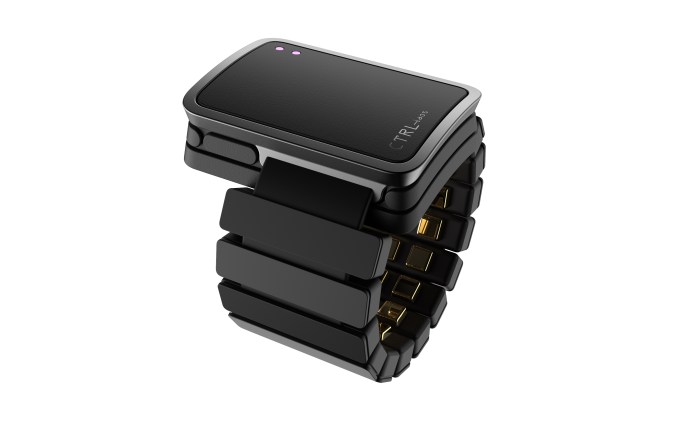
New York-based CTRL-labs just announced its first developer kit that’s aiming to refresh how people interact with computers — an armband that can track a user’s finger movements by measuring electrical impulses. It’s not quite a brain controller, though in practice this type of tech can definitely feel like it’s reading your mind, taking minor finger movements and yielding a surprising amount of insight into the position of your hand and the pressure you’re applying on your finger tips.

CTRL-labs’ investors are betting big on the insight this unconventional interface type can deliver. The startup closed a $28 million Series A in May with funding coming from Vulcan Capital, GV and others.

The use cases for something like this seem to be a little up in the air at the moment, hence the interest in getting a developer kit out into the wild. There are some more obvious use cases in the VR space, but pushing a theoretical input type on an industry with theoretical appeal obviously isn’t the best basket in which to put a Series A.

The system (called CTRL-kit) is, indeed, a developer kit, so there hasn’t been the highest premium placed on miniaturizing all of the tech in the tethered system, but the company tells TechCrunch that the intent is definitely to get into a wrist-worn form factor like a smartwatch in the future. Watch a few of the tech demos and you’ll see what an interesting proposition this is for the wearable of the future.

CTRL-kit

Think about the link between some lightweight glasses with a heads-up display and an Apple Watch-type controller that can parse hand gestures and you can see a more predictable endgame for this kind of tech.

Controlling augmented reality systems has always been a big UX question. Hand-tracking startups like Leap Motion have delivered very polished solutions that offer finesse but sidestep realistic user behaviors. Who’s going to wave their hands in front of their face while walking down the street? Microsoft has dumbed this down into optically tracked gestures like the “air tap” for HoloLens that let you select things in a pretty straightforward, yet cumbersome way. Magic Leap integrates a few input types into their system but seems to be pushing developers toward a physical controller while the current hardware is more focused on home use.

The company says they’re also intrigued by potential with the automotive industry and more conventional desktop applications. Like a good amount of technologies that are attractive for VR and AR tech, what CTRL-labs is building has an attractive endgame but suspect near-term utility. Startups like Thalmic Labs, now North, tried and failed to gain an audience for a consumer-grade motion-control armband like this. For the time being, the company expects a decent amount of developer attention to go toward using this tech for gaming.

The company says it plans to begin shipping the CTRL-kit in the first quarter of next year.

from Startups – TechCrunch https://ift.tt/2L93sWe

#USA Africa Roundup: Terragon’s Asia acquisition, Twiga Foods’ $10M raise, SimbaPay’s China payment service

//

Nigerian consumer data analytics firm Terragon Group acquired Asian mobile marketing company Bizense in a cash and stock deal. The price of the acquisition was not disclosed.

Based in Singapore, with operations in India and Indonesia, Bizense specializes in “mobile ad platform[s] for Telco’s, large publishers, and [e-commerce] ad networks.”

Headquartered in Lagos, Terragon’s software services give its clients — primarily telecommunications and financial services companies — data on Africa’s growing consumer markets.

“Most of the problems we seek to solve for our clients in Africa also exist in places like South East Asia and Latin America,” Umeh told TechCrunch of the logic for the acquisition.

Umeh indicated the company is contemplating further expansion in Asia and Latin America, where Terragon already has consumer data research and development teams.

Tarragon has a team of 100 employees across Nigeria, Kenya, Ghana and South Africa. Clients include local firms, such as Honeywell, and global names, including Unilever, DHL and international agribusiness firm Olam.

Terragon’s acquisition in Singapore, and moves by several other Nigerian ventures this year, signal greater global possibilities for Sub-Saharan African startups.

African financial technology companies like Mines and Paga announced their intent to expand in and outside Africa. They would join e-commerce site MallforAfrica, which went global in July in a partnership with DHL.

Kenya’s Twiga Foods has raised $10 million and announced it will add to its product line-up processed food and fast-moving consumer goods.

The $10 million IFC and TLcom Capital co-led investment comes in the form of convertible notes, available later as equity, according to Wale Ayeni, regional head of IFC’s Africa VC practice.

Twiga Foods has built a B2B platform to improve the supply chain from farmers to markets. The startup now aims to scale additional merchandise on its digital network that coordinates pricing, payment, quality control and logistics across sellers and vendors.

CEO and co-founder Grant Brooke sees “a growth horizon…to build a B2B Amazon,” with produce as the base.

“If we can build a business around fresh fruit and vegetables, everything else after that is much simpler to add on,” he told TechCrunch in this feature.

Forging another link between Africa and China’s digital economies, the African-focused money transfer startup SimbaPay and Kenya’s Family Bank have launched an instant payment service from East Africa to China.

The new product — which piggy-backs on WeChat’s  messaging service — is aimed at Kenyan merchants that purchase goods from China, Kenya’s largest import source.

To be clear, SimbaPay isn’t partnering with WeChat on this service, neither to provide the payments nor to build the service.

Using QR codes, SimbaPay developed a third-party payment aggregator that enables funds delivery when the buyer and seller both use WeChat’s network, which today has more than 1 billion registered accounts.

Individuals and businesses can now send funds to China through Family Bank’s PesaPap app, Safaricom’s M-Pesa or by texting USSD using the code *325#.

The service opens a faster and less expensive money transfer option between Kenya and China through the Tencent-owned WeChat social media platform.

SimbaPay transfers funds to 11 countries — nine in Africa then to China and India. “Early next year we’ll increase this to 29 countries,” SimbaPay co-founder Sagini Onyancha told TechCrunch in this feature.

In case you missed it, TLcom Capital senior partner Omobola Johnson and Terragon CEO Elo Umeh joined TechCrunch editor Jon Shieber for a breakdown of African tech at Disrupt Berlin. They covered everything from digital skills to the pros and cons of Andela in African IT markets and Africa’s IPO prospects.

Umeh described how “copying and pasting” Silicon Valley models didn’t work for his Nigerian startup’s mission “to help…enterprise companies achieve value at scale.”

Johnson envisioned Africa’s next unicorn as “as a B2B — business to very small business and SMEs — company” that can solve small businesses challenges, across advertising, access to markets, and finance.

TechCrunch’s discussion of African tech with top founders, IT leaders, and VCs continues December 11 in Lagos for the second Startup Battlefield Africa. In addition to the pitch competition of 15 top early-stage startups, discussions are teed up on blockchain in Africa, unique VC models for the continent and solving Africa’s connectivity equation. Hopefully tickets aren’t sold out by the time you read this.

More Africa Related Stories @TechCrunch

African Tech Around the Net

from Startups – TechCrunch https://ift.tt/2Ptu44E

#USA Africa Roundup: Terragon’s Asia acquisition, Twiga Foods’ $10M raise, SimbaPay’s China payment service

//

Nigerian consumer data analytics firm Terragon Group acquired Asian mobile marketing company Bizense in a cash and stock deal. The price of the acquisition was not disclosed.

Based in Singapore, with operations in India and Indonesia, Bizense specializes in “mobile ad platform[s] for Telco’s, large publishers, and [e-commerce] ad networks.”

Headquartered in Lagos, Terragon’s software services give its clients — primarily telecommunications and financial services companies — data on Africa’s growing consumer markets.

“Most of the problems we seek to solve for our clients in Africa also exist in places like South East Asia and Latin America,” Umeh told TechCrunch of the logic for the acquisition.

Umeh indicated the company is contemplating further expansion in Asia and Latin America, where Terragon already has consumer data research and development teams.

Tarragon has a team of 100 employees across Nigeria, Kenya, Ghana and South Africa. Clients include local firms, such as Honeywell, and global names, including Unilever, DHL and international agribusiness firm Olam.

Terragon’s acquisition in Singapore, and moves by several other Nigerian ventures this year, signal greater global possibilities for Sub-Saharan African startups.

African financial technology companies like Mines and Paga announced their intent to expand in and outside Africa. They would join e-commerce site MallforAfrica, which went global in July in a partnership with DHL.

Kenya’s Twiga Foods has raised $10 million and announced it will add to its product line-up processed food and fast-moving consumer goods.

The $10 million IFC and TLcom Capital co-led investment comes in the form of convertible notes, available later as equity, according to Wale Ayeni, regional head of IFC’s Africa VC practice.

Twiga Foods has built a B2B platform to improve the supply chain from farmers to markets. The startup now aims to scale additional merchandise on its digital network that coordinates pricing, payment, quality control and logistics across sellers and vendors.

CEO and co-founder Grant Brooke sees “a growth horizon…to build a B2B Amazon,” with produce as the base.

“If we can build a business around fresh fruit and vegetables, everything else after that is much simpler to add on,” he told TechCrunch in this feature.

Forging another link between Africa and China’s digital economies, the African-focused money transfer startup SimbaPay and Kenya’s Family Bank have launched an instant payment service from East Africa to China.

The new product — which piggy-backs on WeChat’s  messaging service — is aimed at Kenyan merchants that purchase goods from China, Kenya’s largest import source.

To be clear, SimbaPay isn’t partnering with WeChat on this service, neither to provide the payments nor to build the service.

Using QR codes, SimbaPay developed a third-party payment aggregator that enables funds delivery when the buyer and seller both use WeChat’s network, which today has more than 1 billion registered accounts.

Individuals and businesses can now send funds to China through Family Bank’s PesaPap app, Safaricom’s M-Pesa or by texting USSD using the code *325#.

The service opens a faster and less expensive money transfer option between Kenya and China through the Tencent-owned WeChat social media platform.

SimbaPay transfers funds to 11 countries — nine in Africa then to China and India. “Early next year we’ll increase this to 29 countries,” SimbaPay co-founder Sagini Onyancha told TechCrunch in this feature.

In case you missed it, TLcom Capital senior partner Omobola Johnson and Terragon CEO Elo Umeh joined TechCrunch editor Jon Shieber for a breakdown of African tech at Disrupt Berlin. They covered everything from digital skills to the pros and cons of Andela in African IT markets and Africa’s IPO prospects.

Umeh described how “copying and pasting” Silicon Valley models didn’t work for his Nigerian startup’s mission “to help…enterprise companies achieve value at scale.”

Johnson envisioned Africa’s next unicorn as “as a B2B — business to very small business and SMEs — company” that can solve small businesses challenges, across advertising, access to markets, and finance.

TechCrunch’s discussion of African tech with top founders, IT leaders, and VCs continues December 11 in Lagos for the second Startup Battlefield Africa. In addition to the pitch competition of 15 top early-stage startups, discussions are teed up on blockchain in Africa, unique VC models for the continent and solving Africa’s connectivity equation. Hopefully tickets aren’t sold out by the time you read this.

More Africa Related Stories @TechCrunch

African Tech Around the Net

from Startups – TechCrunch https://ift.tt/2Ptu44E