#USA Still a year away from launch, Meg Whitman and Jeffrey Katzenberg’s Quibi keeps adding talent

//

Video won’t start rolling on Meg Whitman and Jeffrey Katzenberg’s new bite-sized streaming service with the billion-dollar backing until the end of 2019, but talent keeps signing up to come along for their ride into the future of serialization.

The latest marquee director to sign on the dotted line with Quibi is Catherine Hardwicke, who will be helming a story around the creation of an artificial intelligence with the working title “How They Made Her,” according to an announcement from Katzenberg onstage at the Variety Innovate summit.

Hardwicke, who directed “Thirteen,” “Lords of Dogtown” and, most famously, “Twilight,” is joining Antoine Fuqua, Guillermo del Toro, Sam Raimi and Lena Waithe in an attempt to answer the question of whether Whitman and Katzenberg’s gamble on premium (up to $6 million per episode) short-form storytelling is a quixotic quest or a quintessential viewing experience for a new generation of media consumers.

Katzenberg also revealed in a LinkedIn post that Quibi would be working on a basketball-related series with Steph Curry’s production company. He wrote:

I announced a new docu-series by Whistle called “Benedict Men” coming exclusively to Quibi. “Benedict Men” will be executive produced by Stephen Curry’s Unanimous Media and will give viewers an inside look at one of the most unique high school basketball teams in America at St. Benedict’s Prep in Newark, New Jersey.

St. Benedict’s Prep is an all-boys secondary school founded on the core belief ‘What Hurts My Brother Hurts Me,’ and aims to foster a legacy of strong character, community, leadership, and faith. As one of the top athletic high schools with a storied basketball program and the highest graduation rate in New Jersey, the series will follow the brotherhood of young men who seek to balance life in complicated surroundings.

In some ways, the big adventure backed by Katzenberg, the former chairman of Walt Disney Studios and founder of WndrCo, and every major Hollywood studio — including Disney, 21st Century Fox, Entertainment One, NBCUniversal, Sony Pictures Entertainment and Alibaba Goldman Sachs — is the latest in an everything old is new again refrain.

If blogs reinvented printed media, and podcasts and music streaming reinvented radio, why can’t Quibi reinvent serialized storytelling.

Again and again, Whitman and Katzenberg returned to an analogy from the early days of the cable revolution. “We’re not short form, we’re Quibi,” said Whitman, echoing the tagline that HBO made famous in its early advertising blitzes. That Whitman and Katzenberg’s project to take what HBO did for premium television and apply that to mobile media is ambitious. Now industry-watchers will have to wait until 2019 at the earliest to see if it’s also successful.

In the interview onstage at a Variety event on artificial intelligence in media, Katzenberg cited Dan Brown’s “The Da Vinci Code” as something of an inspiration — noting that the book had more than 100 chapters for its 500 pages of text. But Katzenberg could have gone back even further to the days of Dickens and his serialized entertainments.

And right now for the entertainment business it really is the best of times and the worst of times. Traditional Hollywood studios are seeing new players like Netflix, Amazon, Apple and others all trying to drink their milkshake. And, for the most part, these studios and their new telecom owners are woefully ill-equipped to fight these big technology platforms at their own game. 

Taking the long view of entertainment history, Katzenberg is hoping to win networks with not just a new skin for the old ceremony of watching entertainment but with a throwback to old style deal-making. The term serialization here takes on greater meaning. 

Quibi is offering its production partners a sweetheart deal. After seven years the production company behind the Quibi shows will own their intellectual property, and after two years those producers will be able to repackage the Quibi content back into long-form series and pitch them for distribution to other platforms. Not only that, but Quibi is fronting the money for over 100 percent of the production.

Katzenberg said that it “will create the most powerful syndicated marketplace” Hollywood has seen in decades. It’s a sort of anti-Netflix model where Katzenberg and Whitman view Quibi as a platform where creators and talent will want to come. “We are betting on the success of the platform — and by the way, it worked brilliantly in the ’60s and ’70s and ’80s.” Katzenberg said. “Hundreds of TV shows were tremendous successes and [like the networks then] we don’t want to compete with our suppliers.”

In addition to the business model innovations (or throwbacks, depending on how one looks at it), Quibi is being built from the ground up with a technology stack that will leverage new technologies like 5G broadband, and big data and analytics, according to Whitman.

Indeed, launching the first platform built without an existing stable of content means that Quibi is preparing 5,000 unique pieces of content to go up when it pulls the curtains back on its service in late 2019 or early 2020, Whitman said.

And the company is looking to big telecommunications companies like Verizon (my corporate overlord’s corporate overlord) and AT&T as partners to help it get to market. Since those networks need something to do with all the 5G capacity they’re building out, high-quality streaming content that’s replete with meta-tags to monitor and manage how an audience is spending their time is a compelling proposition.

“We want to work to have video that looks good on mobile [and] ramp up content in terms of quantity and quality,” Whitman said. That quality extends to things like the user interface, search features and analytics.

“We have to have a different search and find metaphor,” Whitman said. “It takes eight minutes to find what you’re looking for on Netflix… We will be able to instrument this with data on what people are watching and using that in our recommendation engine.”

Questions remain about the service’s viability. Like what role will the telcos actually play in distribution and development? Can Quibi avoid the Hulu problem where the various investors are able to overcome their own entrenched interests to work for the viability of the platform? And do consumers even want a premium experience on mobile given the new kinds of stars that are made through the immediacy and accessibility that technology platforms like YouTube, Instagram and Snap offer?

“Where the fish are today is a phenomenal environment,” Katzenberg said of the current short-form content market. “But it is an ocean. We need to find a place where there are these premium services.”

from Startups – TechCrunch https://ift.tt/2rkHdDH
#USA Still a year away from launch, Meg Whitman and Jeffrey Katzenberg’s Quibi keeps adding talent

//

Video won’t start rolling on Meg Whitman and Jeffrey Katzenberg’s new bite-sized streaming service with the billion-dollar backing until the end of 2019, but talent keeps signing up to come along for their ride into the future of serialization.

The latest marquee director to sign on the dotted line with Quibi is Catherine Hardwicke, who will be helming a story around the creation of an artificial intelligence with the working title “How They Made Her,” according to an announcement from Katzenberg onstage at the Variety Innovate summit.

Hardwicke, who directed “Thirteen,” “Lords of Dogtown” and, most famously, “Twilight,” is joining Antoine Fuqua, Guillermo del Toro, Sam Raimi and Lena Waithe in an attempt to answer the question of whether Whitman and Katzenberg’s gamble on premium (up to $6 million per episode) short-form storytelling is a quixotic quest or a quintessential viewing experience for a new generation of media consumers.

Katzenberg also revealed in a LinkedIn post that Quibi would be working on a basketball-related series with Steph Curry’s production company. He wrote:

I announced a new docu-series by Whistle called “Benedict Men” coming exclusively to Quibi. “Benedict Men” will be executive produced by Stephen Curry’s Unanimous Media and will give viewers an inside look at one of the most unique high school basketball teams in America at St. Benedict’s Prep in Newark, New Jersey.

St. Benedict’s Prep is an all-boys secondary school founded on the core belief ‘What Hurts My Brother Hurts Me,’ and aims to foster a legacy of strong character, community, leadership, and faith. As one of the top athletic high schools with a storied basketball program and the highest graduation rate in New Jersey, the series will follow the brotherhood of young men who seek to balance life in complicated surroundings.

In some ways, the big adventure backed by Katzenberg, the former chairman of Walt Disney Studios and founder of WndrCo, and every major Hollywood studio — including Disney, 21st Century Fox, Entertainment One, NBCUniversal, Sony Pictures Entertainment and Alibaba Goldman Sachs — is the latest in an everything old is new again refrain.

If blogs reinvented printed media, and podcasts and music streaming reinvented radio, why can’t Quibi reinvent serialized storytelling.

Again and again, Whitman and Katzenberg returned to an analogy from the early days of the cable revolution. “We’re not short form, we’re Quibi,” said Whitman, echoing the tagline that HBO made famous in its early advertising blitzes. That Whitman and Katzenberg’s project to take what HBO did for premium television and apply that to mobile media is ambitious. Now industry-watchers will have to wait until 2019 at the earliest to see if it’s also successful.

In the interview onstage at a Variety event on artificial intelligence in media, Katzenberg cited Dan Brown’s “The Da Vinci Code” as something of an inspiration — noting that the book had more than 100 chapters for its 500 pages of text. But Katzenberg could have gone back even further to the days of Dickens and his serialized entertainments.

And right now for the entertainment business it really is the best of times and the worst of times. Traditional Hollywood studios are seeing new players like Netflix, Amazon, Apple and others all trying to drink their milkshake. And, for the most part, these studios and their new telecom owners are woefully ill-equipped to fight these big technology platforms at their own game. 

Taking the long view of entertainment history, Katzenberg is hoping to win networks with not just a new skin for the old ceremony of watching entertainment but with a throwback to old style deal-making. The term serialization here takes on greater meaning. 

Quibi is offering its production partners a sweetheart deal. After seven years the production company behind the Quibi shows will own their intellectual property, and after two years those producers will be able to repackage the Quibi content back into long-form series and pitch them for distribution to other platforms. Not only that, but Quibi is fronting the money for over 100 percent of the production.

Katzenberg said that it “will create the most powerful syndicated marketplace” Hollywood has seen in decades. It’s a sort of anti-Netflix model where Katzenberg and Whitman view Quibi as a platform where creators and talent will want to come. “We are betting on the success of the platform — and by the way, it worked brilliantly in the ’60s and ’70s and ’80s.” Katzenberg said. “Hundreds of TV shows were tremendous successes and [like the networks then] we don’t want to compete with our suppliers.”

In addition to the business model innovations (or throwbacks, depending on how one looks at it), Quibi is being built from the ground up with a technology stack that will leverage new technologies like 5G broadband, and big data and analytics, according to Whitman.

Indeed, launching the first platform built without an existing stable of content means that Quibi is preparing 5,000 unique pieces of content to go up when it pulls the curtains back on its service in late 2019 or early 2020, Whitman said.

And the company is looking to big telecommunications companies like Verizon (my corporate overlord’s corporate overlord) and AT&T as partners to help it get to market. Since those networks need something to do with all the 5G capacity they’re building out, high-quality streaming content that’s replete with meta-tags to monitor and manage how an audience is spending their time is a compelling proposition.

“We want to work to have video that looks good on mobile [and] ramp up content in terms of quantity and quality,” Whitman said. That quality extends to things like the user interface, search features and analytics.

“We have to have a different search and find metaphor,” Whitman said. “It takes eight minutes to find what you’re looking for on Netflix… We will be able to instrument this with data on what people are watching and using that in our recommendation engine.”

Questions remain about the service’s viability. Like what role will the telcos actually play in distribution and development? Can Quibi avoid the Hulu problem where the various investors are able to overcome their own entrenched interests to work for the viability of the platform? And do consumers even want a premium experience on mobile given the new kinds of stars that are made through the immediacy and accessibility that technology platforms like YouTube, Instagram and Snap offer?

“Where the fish are today is a phenomenal environment,” Katzenberg said of the current short-form content market. “But it is an ocean. We need to find a place where there are these premium services.”

from Startups – TechCrunch https://ift.tt/2rkHdDH
#USA Foxconn or Foxgone? Tariffs, Wisconsin, and iPhone fires

//

First some notes on SoftBank’s rumored expansion into China and its weird fund math, then Foxconn, and then quick notes on tech depression, Huawei, and more.

TechCrunch is experimenting with new content forms. This is a rough draft of something new – provide your feedback directly to the author (Danny at danny@techcrunch.com) if you like or hate something here.

SoftBank has fund visions (and a Vision Fund) for China? That, and more money

Kane Wu at Reuters reported over night that SoftBank is looking to open an office and hire an investment team in China, which Wu says will be based in Shanghai. That’s following the fund’s recent global expansion with new targeted offices in Saudi Arabia and India.

When I saw this, I sort of did a double-take: SoftBank doesn’t have a presence in China? The fund has reportedly been seeking investments in some of China’s leading unicorn stars, including controversial face recognition startup SenseTime, and leading edtech startup Zuoyebang (作业帮, which literally translates as “school assignment help”). (Hat tips to Selina Wang at Bloomberg, who seems to just be sitting in Vision Fund partner meetings). And of course, it dumped a pretty penny into WeWork China, where it was part of a $500 million syndicate, and is a huge investor in Didi.

It’s sort of obvious that SoftBank would expand to China. What will be interesting though is to see how the fund structures itself long-term. As far as I know, the Vision Fund is a singular “fund” that invests worldwide (send me an email if I am wrong on this count). China has a thicket of regulations on funds and companies, which is one of several reasons we see specifically China-focused vehicles (such as Lightspeed and Lightspeed China or Sequoia and Sequoia China). If the Vision Fund continues to be a unified fund, that would be a notable strategy shift that might be cloned by other trans-Pacific funds.

Aside: SoftBank Vision Fund math is complicated

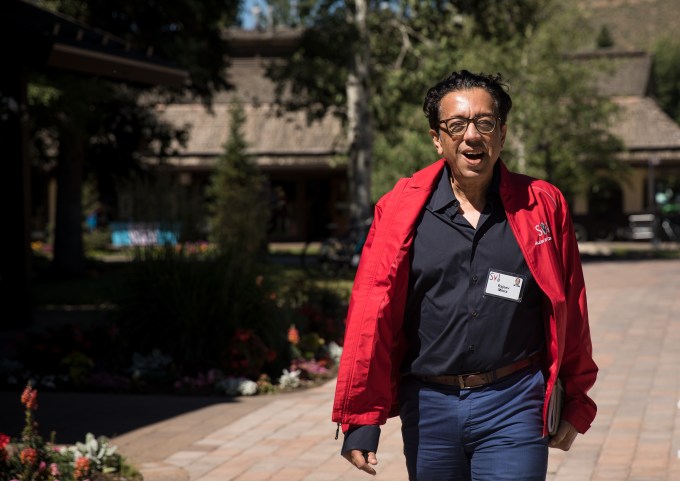
Rajeev Misra, board director of SoftBank Group and CEO of SoftBank Investment Advisors. Photo by Drew Angerer/Getty Images.

When it first closed the Vision Fund, SoftBank explained they had raised just over $93 billion in committed capital or, more precisely, around $93.15-$93.2 billion according to the initial investor presentations and its annual Form D filings. In those docs, SoftBank said that the fund was financed with $28 billion from SoftBank and $65 billion from third-party investors.

On top of the $93 billion raised for the Vision Fund, SoftBank detailed that it had committed $4.5 billion of its own capital to a separate “Delta Fund,” which was used to alleviate conflicts around SoftBank’s Didi investment. Thus, SoftBank’s total VC funding aggregates to around $97.7 billion.

To add a complication, SoftBank later shifted $1.6 billion of the Vision Fund’s previously disclosed $65 billion in third-party capital over to the Delta Fund. In current disclosures, SoftBank shows $91.7 billion of committed capital for the Vision Fund ($28.1 billion from SoftBank and $63.6 billion from third-party investors). For the Delta Fund, SoftBank shows $6 billion in committed capital ($4.5 billion SoftBank contribution and $1.6 billion from third-party investors).

Here is where it gets even more complicated. In its latest filings, SoftBank also notes that it completed the interim closing of an additional $5 billion for the Vision Fund in mid-October, “intended for the installment of an incentive scheme for operations of SoftBank Vision Fund.” That additional cash would bring Vision Fund’s total committed capital to $96.7 billion, and $102.7 billion together with the Delta Fund.

While it wouldn’t be included in the committed equity capital total, SoftBank is also rumored to be raising a $4 billion credit facility to help finance additional acquisitions.

So, it’s probably best to say that the Vision Fund — as constituted right now — is $97 billion or $96.7 billion with precision, assuming this $5 billion reaches a final close.

SoftBank IPO

We have of course covered SoftBank quite obsessively, particularly its debt situation (Part 1, Part 2, Part 3, Part 4, and Part 5). What we haven’t covered more recently is the latest developments in SoftBank’s IPO, which is slated for December 19th and expected to bring in a haul of $21 billion. More to come on that front in the coming days.

Foxconn or Foxgone?

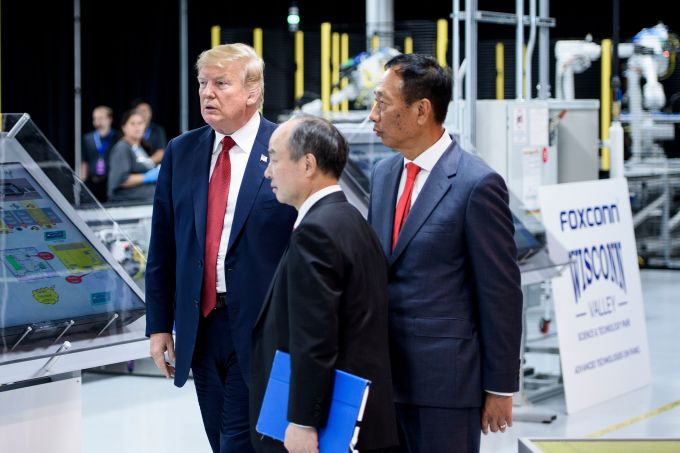
US President Donald Trump and Foxconn Chairman Terry Gou. BRENDAN SMIALOWSKI/AFP/Getty Images

The South China Morning Post reported yesterday that Foxconn is investigating expanding its factories to Vietnam in order to avoid tariffs. Makes sense, and I have some calls this week and next trying to suss out how much hardware supply chains have really changed in response to the trade conflict.

That decision though isn’t just about the trade conflict, but also about the quickly increasing wages of Chinese laborers as well as political interference from Beijing. The Trump administration’s trade policies are just the excuse Foxconn needs to (at least partially) extricate itself from China, while saving face in the process.

What’s interesting is that Foxconn is also dealing with a massive brush fire in Wisconsin, where it received one of the largest economic development incentives ever offered by an American government, a whopping $3 billion package that was expected to drive manufacturing employment in the state.

Over night, Republicans in the state legislature passed a bill that would place large restrictions on incoming Democratic governor Tony Evers. Jessie Opoien for the (Madison) Cap Times:

Under the bill, legislators would have increased influence over the Wisconsin Economic Development Corporation, and the WEDC board, not the governor, would appoint the job creation agency’s CEO. However, the governor’s power to appoint a CEO would be restored in September 2019.

That is the agency that provided the Foxconn funding, which has become a political football in Wisconsin politics. Republicans are trying to protect one of the major economic legacies of outgoing governor Scott Walker, as well as what they believe is the future direction of manufacturing work in the state. Democrats smell a boondoggle in the making.

If that wasn’t all, rumored skimpy sales for iPhones is putting enormous pressure on Foxconn’s bottom line. Debby Wu at Bloomberg reported two weeks ago that:

The contract manufacturer aims to cut 20 billion yuan ($2.9 billion) from expenses in 2019 as it faces “a very difficult and competitive year,” according to an internal document obtained by Bloomberg. The company’s spending in the past 12 months is about NT$206 billion ($6.7 billion).

Foxconn is a very dynamic organization that has weathered repeated crises over the years. It is pretty much unique in what it does today: very few other companies can scale up and down hundreds of thousands of workers to meet iPhone and other device demands with such alacrity.

But, the fundamentals of the mobile device market have apparently changed dramatically this year, and Foxconn is likely to be the company most harmed as the assembler of those devices. That could destroy not just the Chinese dream of leading in manufacturing, but also the Vietnam and Wisconsin dreams as well.

Also: If you haven’t read it, this poetry by a Foxconn worker who committed suicide really resonated with me. Foxconn’s suicide problem is well-documented, but we often don’t hear from the individuals themselves.

Quick bites

Which big tech companies are most depressed?

Blind, the anonymous enterprise chatting app that has taken the tech world by storm, published survey results asking tech employees “I believe I am depressed.” Roughly 40% of employees responded yes. Interestingly, there wasn’t too much variation between companies. Amazon had the highest rate at 43% and Apple had the lowest rate at 30%. It’s an informal survey, probably without high scientific validation, but it is a reminder for all of us in the community that mental health and burnout is very real in the startup and tech ecosystems and we should be vigilant in helping each other when times are rough.

More bad news for Huawei as British Telecom bans its equipment

This is one of those stories that we are just going to keep on hearing about. After bans in Australia and New Zealand, British Telecom has announced they will not just ban Huawei’s 5G equipment, but also its 3G and 4G equipment. Britain, like Aus/NZ, Canada and the US are part of the Five Eyes intelligence network, and national security officials have been leading the crusade against Huawei infrastructure. What’s interesting is not just the rapidity of the bans, but also that the bans haven’t (from what I have seen) migrated outside the Five Eyes community yet.

Pendo commits to hometown of Raleigh

Relaigh skyline. Photo by James Willamor used under Creative Commons via Flickr.

Pendo is a digital product management platform that has had quite a bit of success with customers and has raised more than $100 million in VC funding, most recently a Series D from Sapphire. The company announced that they have received a grant from home state North Carolina’s economic development department to grow in the Raleigh region. Pendo is committing $34.5 million to its headquarters (with the potential of creating 590 jobs), while the state will offer around $8.8 million in potential reimbursements over the next 12 years.

Given what I wrote yesterday about Wes McKinney leaving NYC and heading to Nashville and the work Chattanooga is doing to aid startups, it’s great to see other hotspots like Raleigh, NC invest to build out their ecosystems in a compelling way.

Todd Olson, CEO of Pendo, explained to me by email that, “Office rents in our downtown are a fraction of the cost of operating in other cities, and the cost of living is appealing to our employees. They can afford to buy a house here. In some markets around the country, that is becoming more difficult. It’s also just a nice place to live and work.”

Creative work is increasingly going to have to find a lower cost home.

What’s next

I am still obsessing about next-gen semiconductors. If you have thoughts there, give me a ring: danny@techcrunch.com.

Thoughts on Articles

The LP Anti-Portfolio – Great short read. Lindel Eakman, former managing director at UTIMCO, the University of Texas/Texas A&M endowment, gives a list of funds that he passed on that he now regrets. Unfortunately, this is pretty rare coming from an LP, albeit a former one. It would be great to get more public discussion on what funds were missed and why by LP investors.

Hopefully more reading time tomorrow.

Reading docket

What I’m reading (or at least, trying to read)

  • Huge long list of articles on next-gen semiconductors. More to come shortly.

from Startups – TechCrunch https://ift.tt/2QcxGgO

#USA Foxconn or Foxgone? Tariffs, Wisconsin, and iPhone fires

//

First some notes on SoftBank’s rumored expansion into China and its weird fund math, then Foxconn, and then quick notes on tech depression, Huawei, and more.

TechCrunch is experimenting with new content forms. This is a rough draft of something new – provide your feedback directly to the author (Danny at danny@techcrunch.com) if you like or hate something here.

SoftBank has fund visions (and a Vision Fund) for China? That, and more money

Kane Wu at Reuters reported over night that SoftBank is looking to open an office and hire an investment team in China, which Wu says will be based in Shanghai. That’s following the fund’s recent global expansion with new targeted offices in Saudi Arabia and India.

When I saw this, I sort of did a double-take: SoftBank doesn’t have a presence in China? The fund has reportedly been seeking investments in some of China’s leading unicorn stars, including controversial face recognition startup SenseTime, and leading edtech startup Zuoyebang (作业帮, which literally translates as “school assignment help”). (Hat tips to Selina Wang at Bloomberg, who seems to just be sitting in Vision Fund partner meetings). And of course, it dumped a pretty penny into WeWork China, where it was part of a $500 million syndicate, and is a huge investor in Didi.

It’s sort of obvious that SoftBank would expand to China. What will be interesting though is to see how the fund structures itself long-term. As far as I know, the Vision Fund is a singular “fund” that invests worldwide (send me an email if I am wrong on this count). China has a thicket of regulations on funds and companies, which is one of several reasons we see specifically China-focused vehicles (such as Lightspeed and Lightspeed China or Sequoia and Sequoia China). If the Vision Fund continues to be a unified fund, that would be a notable strategy shift that might be cloned by other trans-Pacific funds.

Aside: SoftBank Vision Fund math is complicated

Rajeev Misra, board director of SoftBank Group and CEO of SoftBank Investment Advisors. Photo by Drew Angerer/Getty Images.

When it first closed the Vision Fund, SoftBank explained they had raised just over $93 billion in committed capital or, more precisely, around $93.15-$93.2 billion according to the initial investor presentations and its annual Form D filings. In those docs, SoftBank said that the fund was financed with $28 billion from SoftBank and $65 billion from third-party investors.

On top of the $93 billion raised for the Vision Fund, SoftBank detailed that it had committed $4.5 billion of its own capital to a separate “Delta Fund,” which was used to alleviate conflicts around SoftBank’s Didi investment. Thus, SoftBank’s total VC funding aggregates to around $97.7 billion.

To add a complication, SoftBank later shifted $1.6 billion of the Vision Fund’s previously disclosed $65 billion in third-party capital over to the Delta Fund. In current disclosures, SoftBank shows $91.7 billion of committed capital for the Vision Fund ($28.1 billion from SoftBank and $63.6 billion from third-party investors). For the Delta Fund, SoftBank shows $6 billion in committed capital ($4.5 billion SoftBank contribution and $1.6 billion from third-party investors).

Here is where it gets even more complicated. In its latest filings, SoftBank also notes that it completed the interim closing of an additional $5 billion for the Vision Fund in mid-October, “intended for the installment of an incentive scheme for operations of SoftBank Vision Fund.” That additional cash would bring Vision Fund’s total committed capital to $96.7 billion, and $102.7 billion together with the Delta Fund.

While it wouldn’t be included in the committed equity capital total, SoftBank is also rumored to be raising a $4 billion credit facility to help finance additional acquisitions.

So, it’s probably best to say that the Vision Fund — as constituted right now — is $97 billion or $96.7 billion with precision, assuming this $5 billion reaches a final close.

SoftBank IPO

We have of course covered SoftBank quite obsessively, particularly its debt situation (Part 1, Part 2, Part 3, Part 4, and Part 5). What we haven’t covered more recently is the latest developments in SoftBank’s IPO, which is slated for December 19th and expected to bring in a haul of $21 billion. More to come on that front in the coming days.

Foxconn or Foxgone?

US President Donald Trump and Foxconn Chairman Terry Gou. BRENDAN SMIALOWSKI/AFP/Getty Images

The South China Morning Post reported yesterday that Foxconn is investigating expanding its factories to Vietnam in order to avoid tariffs. Makes sense, and I have some calls this week and next trying to suss out how much hardware supply chains have really changed in response to the trade conflict.

That decision though isn’t just about the trade conflict, but also about the quickly increasing wages of Chinese laborers as well as political interference from Beijing. The Trump administration’s trade policies are just the excuse Foxconn needs to (at least partially) extricate itself from China, while saving face in the process.

What’s interesting is that Foxconn is also dealing with a massive brush fire in Wisconsin, where it received one of the largest economic development incentives ever offered by an American government, a whopping $3 billion package that was expected to drive manufacturing employment in the state.

Over night, Republicans in the state legislature passed a bill that would place large restrictions on incoming Democratic governor Tony Evers. Jessie Opoien for the (Madison) Cap Times:

Under the bill, legislators would have increased influence over the Wisconsin Economic Development Corporation, and the WEDC board, not the governor, would appoint the job creation agency’s CEO. However, the governor’s power to appoint a CEO would be restored in September 2019.

That is the agency that provided the Foxconn funding, which has become a political football in Wisconsin politics. Republicans are trying to protect one of the major economic legacies of outgoing governor Scott Walker, as well as what they believe is the future direction of manufacturing work in the state. Democrats smell a boondoggle in the making.

If that wasn’t all, rumored skimpy sales for iPhones is putting enormous pressure on Foxconn’s bottom line. Debby Wu at Bloomberg reported two weeks ago that:

The contract manufacturer aims to cut 20 billion yuan ($2.9 billion) from expenses in 2019 as it faces “a very difficult and competitive year,” according to an internal document obtained by Bloomberg. The company’s spending in the past 12 months is about NT$206 billion ($6.7 billion).

Foxconn is a very dynamic organization that has weathered repeated crises over the years. It is pretty much unique in what it does today: very few other companies can scale up and down hundreds of thousands of workers to meet iPhone and other device demands with such alacrity.

But, the fundamentals of the mobile device market have apparently changed dramatically this year, and Foxconn is likely to be the company most harmed as the assembler of those devices. That could destroy not just the Chinese dream of leading in manufacturing, but also the Vietnam and Wisconsin dreams as well.

Also: If you haven’t read it, this poetry by a Foxconn worker who committed suicide really resonated with me. Foxconn’s suicide problem is well-documented, but we often don’t hear from the individuals themselves.

Quick bites

Which big tech companies are most depressed?

Blind, the anonymous enterprise chatting app that has taken the tech world by storm, published survey results asking tech employees “I believe I am depressed.” Roughly 40% of employees responded yes. Interestingly, there wasn’t too much variation between companies. Amazon had the highest rate at 43% and Apple had the lowest rate at 30%. It’s an informal survey, probably without high scientific validation, but it is a reminder for all of us in the community that mental health and burnout is very real in the startup and tech ecosystems and we should be vigilant in helping each other when times are rough.

More bad news for Huawei as British Telecom bans its equipment

This is one of those stories that we are just going to keep on hearing about. After bans in Australia and New Zealand, British Telecom has announced they will not just ban Huawei’s 5G equipment, but also its 3G and 4G equipment. Britain, like Aus/NZ, Canada and the US are part of the Five Eyes intelligence network, and national security officials have been leading the crusade against Huawei infrastructure. What’s interesting is not just the rapidity of the bans, but also that the bans haven’t (from what I have seen) migrated outside the Five Eyes community yet.

Pendo commits to hometown of Raleigh

Relaigh skyline. Photo by James Willamor used under Creative Commons via Flickr.

Pendo is a digital product management platform that has had quite a bit of success with customers and has raised more than $100 million in VC funding, most recently a Series D from Sapphire. The company announced that they have received a grant from home state North Carolina’s economic development department to grow in the Raleigh region. Pendo is committing $34.5 million to its headquarters (with the potential of creating 590 jobs), while the state will offer around $8.8 million in potential reimbursements over the next 12 years.

Given what I wrote yesterday about Wes McKinney leaving NYC and heading to Nashville and the work Chattanooga is doing to aid startups, it’s great to see other hotspots like Raleigh, NC invest to build out their ecosystems in a compelling way.

Todd Olson, CEO of Pendo, explained to me by email that, “Office rents in our downtown are a fraction of the cost of operating in other cities, and the cost of living is appealing to our employees. They can afford to buy a house here. In some markets around the country, that is becoming more difficult. It’s also just a nice place to live and work.”

Creative work is increasingly going to have to find a lower cost home.

What’s next

I am still obsessing about next-gen semiconductors. If you have thoughts there, give me a ring: danny@techcrunch.com.

Thoughts on Articles

The LP Anti-Portfolio – Great short read. Lindel Eakman, former managing director at UTIMCO, the University of Texas/Texas A&M endowment, gives a list of funds that he passed on that he now regrets. Unfortunately, this is pretty rare coming from an LP, albeit a former one. It would be great to get more public discussion on what funds were missed and why by LP investors.

Hopefully more reading time tomorrow.

Reading docket

What I’m reading (or at least, trying to read)

  • Huge long list of articles on next-gen semiconductors. More to come shortly.

from Startups – TechCrunch https://ift.tt/2QcxGgO

#USA Foxconn or Foxgone? Tariffs, Wisconsin, and iPhone fires

//

First some notes on SoftBank’s rumored expansion into China and its weird fund math, then Foxconn, and then quick notes on tech depression, Huawei, and more.

TechCrunch is experimenting with new content forms. This is a rough draft of something new – provide your feedback directly to the author (Danny at danny@techcrunch.com) if you like or hate something here.

SoftBank has fund visions (and a Vision Fund) for China? That, and more money

Kane Wu at Reuters reported over night that SoftBank is looking to open an office and hire an investment team in China, which Wu says will be based in Shanghai. That’s following the fund’s recent global expansion with new targeted offices in Saudi Arabia and India.

When I saw this, I sort of did a double-take: SoftBank doesn’t have a presence in China? The fund has reportedly been seeking investments in some of China’s leading unicorn stars, including controversial face recognition startup SenseTime, and leading edtech startup Zuoyebang (作业帮, which literally translates as “school assignment help”). (Hat tips to Selina Wang at Bloomberg, who seems to just be sitting in Vision Fund partner meetings). And of course, it dumped a pretty penny into WeWork China, where it was part of a $500 million syndicate, and is a huge investor in Didi.

It’s sort of obvious that SoftBank would expand to China. What will be interesting though is to see how the fund structures itself long-term. As far as I know, the Vision Fund is a singular “fund” that invests worldwide (send me an email if I am wrong on this count). China has a thicket of regulations on funds and companies, which is one of several reasons we see specifically China-focused vehicles (such as Lightspeed and Lightspeed China or Sequoia and Sequoia China). If the Vision Fund continues to be a unified fund, that would be a notable strategy shift that might be cloned by other trans-Pacific funds.

Aside: SoftBank Vision Fund math is complicated

Rajeev Misra, board director of SoftBank Group and CEO of SoftBank Investment Advisors. Photo by Drew Angerer/Getty Images.

When it first closed the Vision Fund, SoftBank explained they had raised just over $93 billion in committed capital or, more precisely, around $93.15-$93.2 billion according to the initial investor presentations and its annual Form D filings. In those docs, SoftBank said that the fund was financed with $28 billion from SoftBank and $65 billion from third-party investors.

On top of the $93 billion raised for the Vision Fund, SoftBank detailed that it had committed $4.5 billion of its own capital to a separate “Delta Fund,” which was used to alleviate conflicts around SoftBank’s Didi investment. Thus, SoftBank’s total VC funding aggregates to around $97.7 billion.

To add a complication, SoftBank later shifted $1.6 billion of the Vision Fund’s previously disclosed $65 billion in third-party capital over to the Delta Fund. In current disclosures, SoftBank shows $91.7 billion of committed capital for the Vision Fund ($28.1 billion from SoftBank and $63.6 billion from third-party investors). For the Delta Fund, SoftBank shows $6 billion in committed capital ($4.5 billion SoftBank contribution and $1.6 billion from third-party investors).

Here is where it gets even more complicated. In its latest filings, SoftBank also notes that it completed the interim closing of an additional $5 billion for the Vision Fund in mid-October, “intended for the installment of an incentive scheme for operations of SoftBank Vision Fund.” That additional cash would bring Vision Fund’s total committed capital to $96.7 billion, and $102.7 billion together with the Delta Fund.

While it wouldn’t be included in the committed equity capital total, SoftBank is also rumored to be raising a $4 billion credit facility to help finance additional acquisitions.

So, it’s probably best to say that the Vision Fund — as constituted right now — is $97 billion or $96.7 billion with precision, assuming this $5 billion reaches a final close.

SoftBank IPO

We have of course covered SoftBank quite obsessively, particularly its debt situation (Part 1, Part 2, Part 3, Part 4, and Part 5). What we haven’t covered more recently is the latest developments in SoftBank’s IPO, which is slated for December 19th and expected to bring in a haul of $21 billion. More to come on that front in the coming days.

Foxconn or Foxgone?

US President Donald Trump and Foxconn Chairman Terry Gou. BRENDAN SMIALOWSKI/AFP/Getty Images

The South China Morning Post reported yesterday that Foxconn is investigating expanding its factories to Vietnam in order to avoid tariffs. Makes sense, and I have some calls this week and next trying to suss out how much hardware supply chains have really changed in response to the trade conflict.

That decision though isn’t just about the trade conflict, but also about the quickly increasing wages of Chinese laborers as well as political interference from Beijing. The Trump administration’s trade policies are just the excuse Foxconn needs to (at least partially) extricate itself from China, while saving face in the process.

What’s interesting is that Foxconn is also dealing with a massive brush fire in Wisconsin, where it received one of the largest economic development incentives ever offered by an American government, a whopping $3 billion package that was expected to drive manufacturing employment in the state.

Over night, Republicans in the state legislature passed a bill that would place large restrictions on incoming Democratic governor Tony Evers. Jessie Opoien for the (Madison) Cap Times:

Under the bill, legislators would have increased influence over the Wisconsin Economic Development Corporation, and the WEDC board, not the governor, would appoint the job creation agency’s CEO. However, the governor’s power to appoint a CEO would be restored in September 2019.

That is the agency that provided the Foxconn funding, which has become a political football in Wisconsin politics. Republicans are trying to protect one of the major economic legacies of outgoing governor Scott Walker, as well as what they believe is the future direction of manufacturing work in the state. Democrats smell a boondoggle in the making.

If that wasn’t all, rumored skimpy sales for iPhones is putting enormous pressure on Foxconn’s bottom line. Debby Wu at Bloomberg reported two weeks ago that:

The contract manufacturer aims to cut 20 billion yuan ($2.9 billion) from expenses in 2019 as it faces “a very difficult and competitive year,” according to an internal document obtained by Bloomberg. The company’s spending in the past 12 months is about NT$206 billion ($6.7 billion).

Foxconn is a very dynamic organization that has weathered repeated crises over the years. It is pretty much unique in what it does today: very few other companies can scale up and down hundreds of thousands of workers to meet iPhone and other device demands with such alacrity.

But, the fundamentals of the mobile device market have apparently changed dramatically this year, and Foxconn is likely to be the company most harmed as the assembler of those devices. That could destroy not just the Chinese dream of leading in manufacturing, but also the Vietnam and Wisconsin dreams as well.

Also: If you haven’t read it, this poetry by a Foxconn worker who committed suicide really resonated with me. Foxconn’s suicide problem is well-documented, but we often don’t hear from the individuals themselves.

Quick bites

Which big tech companies are most depressed?

Blind, the anonymous enterprise chatting app that has taken the tech world by storm, published survey results asking tech employees “I believe I am depressed.” Roughly 40% of employees responded yes. Interestingly, there wasn’t too much variation between companies. Amazon had the highest rate at 43% and Apple had the lowest rate at 30%. It’s an informal survey, probably without high scientific validation, but it is a reminder for all of us in the community that mental health and burnout is very real in the startup and tech ecosystems and we should be vigilant in helping each other when times are rough.

More bad news for Huawei as British Telecom bans its equipment

This is one of those stories that we are just going to keep on hearing about. After bans in Australia and New Zealand, British Telecom has announced they will not just ban Huawei’s 5G equipment, but also its 3G and 4G equipment. Britain, like Aus/NZ, Canada and the US are part of the Five Eyes intelligence network, and national security officials have been leading the crusade against Huawei infrastructure. What’s interesting is not just the rapidity of the bans, but also that the bans haven’t (from what I have seen) migrated outside the Five Eyes community yet.

Pendo commits to hometown of Raleigh

Relaigh skyline. Photo by James Willamor used under Creative Commons via Flickr.

Pendo is a digital product management platform that has had quite a bit of success with customers and has raised more than $100 million in VC funding, most recently a Series D from Sapphire. The company announced that they have received a grant from home state North Carolina’s economic development department to grow in the Raleigh region. Pendo is committing $34.5 million to its headquarters (with the potential of creating 590 jobs), while the state will offer around $8.8 million in potential reimbursements over the next 12 years.

Given what I wrote yesterday about Wes McKinney leaving NYC and heading to Nashville and the work Chattanooga is doing to aid startups, it’s great to see other hotspots like Raleigh, NC invest to build out their ecosystems in a compelling way.

Todd Olson, CEO of Pendo, explained to me by email that, “Office rents in our downtown are a fraction of the cost of operating in other cities, and the cost of living is appealing to our employees. They can afford to buy a house here. In some markets around the country, that is becoming more difficult. It’s also just a nice place to live and work.”

Creative work is increasingly going to have to find a lower cost home.

What’s next

I am still obsessing about next-gen semiconductors. If you have thoughts there, give me a ring: danny@techcrunch.com.

Thoughts on Articles

The LP Anti-Portfolio – Great short read. Lindel Eakman, former managing director at UTIMCO, the University of Texas/Texas A&M endowment, gives a list of funds that he passed on that he now regrets. Unfortunately, this is pretty rare coming from an LP, albeit a former one. It would be great to get more public discussion on what funds were missed and why by LP investors.

Hopefully more reading time tomorrow.

Reading docket

What I’m reading (or at least, trying to read)

  • Huge long list of articles on next-gen semiconductors. More to come shortly.

from Startups – TechCrunch https://ift.tt/2QcxGgO

#USA Workato raises $25M for its integration platform

//

Workato, a startup that offers an integration and automation platform for businesses that competes with the likes of MuleSoft, SnapLogic and Microsoft’s Logic Apps, today announced that it has raised a $25 million Series B funding round from Battery Ventures, Storm Ventures, ServiceNow and Workday Ventures. Combined with its previous rounds, the company has now received investments from some of the largest SaaS players, including Salesforce, which participated in an earlier round.

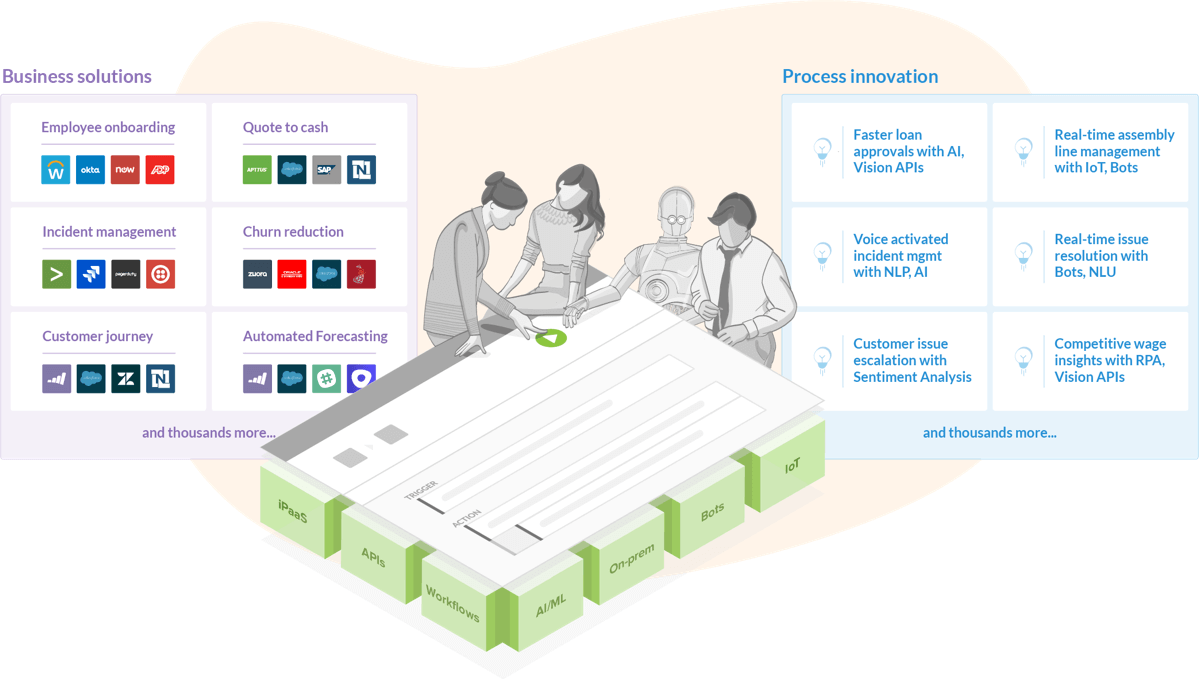
At its core, Workato’s service isn’t that different from other integration services (you can think of them as IFTTT for the enterprise) in that it helps you to connect disparate systems and services, set up triggers to kick of certain actions (if somebody signs a contract on Docusign, send a message to Slack and create an invoice). Like its competitors, it connects to virtually any SaaS tool that a company would use, no matter whether that’s Marketo and Salesforce, or Slack and Twitter. And like some of its competitors, all of this can be done with a drag-and-drop interface.

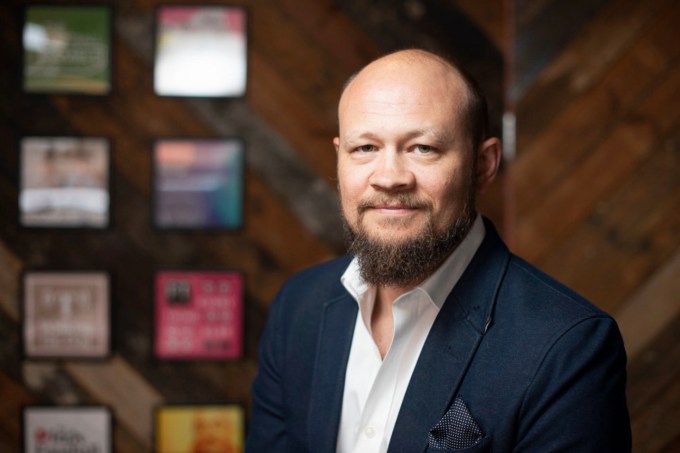
What’s different, Workato founder and CEO Vijay Tella tells me, is that the service was built for business users, not IT admins. “Other enterprise integration platforms require people who are technical to build and manage them,” he said. “With the explosion in SaaS with lines of business buying them – the IT team gets backlogged with the various integration needs. Further, they are not able to handle all the workflow automation needs that businesses require to streamline and innovate on the operations.”

Battery Ventures’ general partner Neeraj Agrawal also echoed this. “As we’ve all seen, the number of SaaS applications run by companies is growing at a very rapid clip,” he said. “This has created a huge need to engage team members with less technical skill-sets in integrating all these applications. These types of users are closer to the actual business workflows that are ripe for automation, and we found Workato’s ability to empower everyday business users super compelling.”

Tella also stressed that Workato makes extensive use of AI/ML to make building integrations and automations easier. The company calls this Recipe Q. ” Leveraging the tens of billions of events processed, hundreds of millions of metadata elements inspected, and hundreds of thousands of automations that people have built on our platform – we leverage ML to guide users to build the most effective integration/automation by recommending next steps as they build these automations,” he explained. “It recommends the next set of actions to take, fields to map, auto-validates mappings, etc. The great thing with this is that as people build more automations – it learns from them and continues to make the automation smarter.”

The AI/ML system also handles errors and offers features like sentiment analysis to analyze emails and detect their intent, with the ability to route them depending on the results of that analysis.

As part of today’s announcement, the company is also launching a new AI-enabled feature: Automation Editions for sales, marketing and HR (with editions for finance and support coming in the future). The idea here is to give those departments a kit with pre-built workflows that helps them to get started with the service without having to bring in IT.

from Startups – TechCrunch https://ift.tt/2QjJFte

#USA Revcontent names Omar Nicola as its new CEO

//

Content recommendation company Revcontent has a new chief executive: Omar Nicola, formerly the CEO of mobile advertising company Kixer.

Revcontent’s founder and outgoing CEO John Lemp will remain involved as chairman of the board of directors.

“Omar is the perfect choice to take over as CEO of Revcontent, because of his wealth of experience and track record of success as a publisher and a leader of several different advertising technology companies,” Lemp said in a statement. “Founding and building Revcontent has been one of the most rewarding times of my life and I am humbled by the many successes … I look forward to following Revcontent’s future success as Chairman while also having the opportunity to spend more time focusing on my family, my other businesses and some passion projects.””

Revcontent President Richard Marques described Nicola as “the perfect fit to elevate us to that next level.” At the same time, Nicola didn’t anticipate making big changes in strategy.

“Part of it is me coming in and looking at things we can improve upon, and looking at things that we can restructure,” he said. “But the business has been built from the ground up pretty successfully. My job is to help grow that business: What can I do in my day-to-day to essentially complement what’s been done to date?”

Nicola noted that he’s spent “the better part of 10 years” in the adtech industry — in fact, he suggested that Kixer had a similar model to Revcontent, except that it was recommending mobile apps instead news articles. (Kixer was acquired by Lakana and its parent company Nexstar Broadcasting Group in 2015, and Nicola served as Nexstar’s senior vice president for revenue and operations until last year.)

It’s a challenging time for the digital media business, but Nicola said the key is to make sure Revcontent is a good partner for its publishers.

“Ultimately, we’ve got to find a balance user experience and revenue and make sure that publishers move forward,” he said. He noted that in the short-term, “the best thing for us might be to include as many ad units and widgets as possible, but one, that’s not best thing for the industry and two, it’s not the best thing for the publisher. What we try to do is strike fair deals and build those relationships as a fair partner.”

He also argued that Revcontent has the freedom to take the high road because it’s been self-funded.

“This is not a company that’s got a ton of venture capital in it,” he said. “I use a term adtech purgatory … because you find yourself in a scenario where you’ve raised too much money that exiting the business can only be done for a crazy amount of money. That will never happen to me, I like having flexibility that we have. Not having taken on that venture money was extremely extremely important to me.”

from Startups – TechCrunch https://ift.tt/2BS96Jf

#USA Intelligo does constant background checks on your trusted employees

//

As a former Arby’s sandwich artist I understand the value of a background check. Had I not been investigated back at age 16 no one at the restaurant would have known I was a lapsed Boy Scout and read Stephen King novels. But what would have happened had I taken up a life of petty crime after being hired? No one except Intelligo would know.

Run by former lawyer, Shlomo Mirvis, Intelligo began as a manual background check service that pivoted to use AI and machine learning to speed up the process. Now Mirvis and his team have added a further twist, allowing for constant background checks over time, ensuring nothing untoward comes up after five months behind the keyboard or meat slicer.

Both Mirvis and Chief Research Officer Dana Rakovsky have connections to public and private intelligence. The company raised a $5.7 million series A and they declined to mention growth numbers although they did mention a number of high-ticket clients.

“Unlike most other players in the market, we’ve created a way to give customers continuous exposure to the people that matter to their investments,” said Mirvis. “Standard background checks are outdated the minute they’re published so we built a method to give businesses live alerts to the individuals they invest in, called Ongoing Monitoring. Unlike other products that exist, Ongoing Monitoring is built on an AI algorithm to provide a thorough scope of review, yet remove noise.”

Mirvis said that other services depend on humans poring over arrest records and other important documents to find mention of key employees. Their system looks at multiple databases and data sources and never gets tired.

“Any suspicious information found is highlighted with a red or yellow flag on our interactive report,” he said. “Copies of the original sources that our report is based on can easily be accessed.”

“Everyday people must make critical, and often difficult, decisions,” said Mirvis. “Whether the decision is to invest money or move ahead with a hire, the implications could affect a person’s financial standing or a company’s survival. At Intelligo, our mission is to create a way for people to leverage technology so they can rely on, and value, trust.”

Given background checks have become a given in many industries it’s no wonder Intelligo is running constant monitoring. After all, what would have happened if I had been found, months later, to be an undesirable sort while making my fiftieth beef and cheddar of the day?

from Startups – TechCrunch https://ift.tt/2RzXW1m

#USA Tiger Global and Accel lead facility management startup Facilio’s $6.4M Series A

//

Facilio, an IoT startup that focuses on facility management software, announced today that it has raised a $6.4 million Series A led by Tiger Global and returning investor Accel. The funding will be used to expand further in India, where Facilio has an office in Chennai, the United States, and the Middle East, as well as enter new markets. Facilio is also one of the first new Indian companies Tiger Global has added to its portfolio since hitting pause on new investments there in 2015.

Led by Lee Fixel, Tiger Global was among the many venture capital firms that poured money into early-stage Indian startups in 2014-2015 before uncertainty about growth and valuations dampened the funding frenzy. Funding began picking up again this year, but this time the focus is on more mature companies like Swiggy and Zomato.

Tiger Global hit a home run when one of its Indian investments, FlipKart, was acquired by Walmart earlier this year and recently reportedly closed a new $3.75 billion fund to focus on India, U.S., and China.

Founded in 2017 by Prabhu Ramachandran, Rajavel Subramanian, Yogendra Babu, and Krishnamoorthi Rangasamy, Facilio’s software helps commercial real estate property owners keep on top of regular maintenance, make sure things like air conditioning systems and elevators are functioning properly, and lower their energy consumption.

In a press statement, Fixel said “On a global basis, facilities management services and energy spend by buildings each account for more than a trillion dollars. I am optimistic that Facilio can be a true disruptor in this industry.”

from Startups – TechCrunch https://ift.tt/2Rz4bT5

#USA Acast raises $35M to help podcasters make money

//

Podcasting has grown tremendously in recent years, and a Stockholm-based company called Acast is looking to help all those podcasters make money.

Acast is announcing today that it has raised $35 million in Series C funding, bringing its total funding to more than $67 million. Investors in the round include AP1 (which manages some of the capital in Sweden’s national income pension system), as well as Swedbank Robur funds Ny Teknik and Microcap.

Ross Adams, who became Acast’s CEO last fall, told me that the money will allow Acast to expand, both in terms of its product offerings and the geographies where it operates.

The company has focused on bringing technology to the surprisingly old-fashioned world of podcast advertising. In fact, it pioneered the practice of dynamically inserting ads into podcasts — as opposed to the model where (as Adams put it), “When you listen to a five-year-old podcast, you’ll hear the host read a five-year-old ad.”

Earlier this year, it announced a partnership with the BBC, allowing the BBC’s podcasts to remain ad-free in the United Kingdom while inserting ads everywhere else.

“We don’t mind if your show is absolutely huge or absolutely tiny,” Adams said. “The model we have allows a serious mainstream publisher like the BBC to monetize — or a bedroom podcast hobbyist.”

Ross Adams, Acast

Ross Adams

At the same time, Adams wants Acast to support other business models. It’s already experimenting with paid, premium content through its Acast+ app, but it sounds like there are more paid podcast products in the works: “We want to be that central point of monetization, [whether] they make money through advertising or they’re looking at premium offerings.”

As for geographic expansion, Acast says it launched in Ireland, New Zealand and Denmark this year. It also plans to grow in the United States, which currently represents 25 percent of all listens on the platform.

Acast is also looking to bring podcast monetization into new hardware — Adams said the company has spent much of the past year focused on the smart speaker market. Those speakers present new opportunities for content (Adams said it’s less about “longer-form storytelling” and more “short-form shows for your daily consumption in the morning”), and new challenges for advertising.

Adams is hoping that if Acast can solve those challenges, it won’t just be monetizing the smart home market, but also moving into cars and anywhere else you might find “voice-enabled technology.”

from Startups – TechCrunch https://ift.tt/2KTAgm0