#USA Atomico unveils Angel Programme to ‘activate’ the next generation of European investors

//

Atomico, the London-based venture capital firm co-founded by Skype founder Niklas Zennström, has launched a new program to find, mentor and back the next generation of angel investors across various hubs in the European tech startup ecosystem.

Dubbed the Atomico Angel Programme, and unveiled on stage at TechCrunch Disrupt Berlin, the new initiative is headed up by newly promoted Atomico Partner Sophia Bendz, with support from Associate Will Dufton. Prior to joining Atomico she was an exec and early employee at Spotify, and has been a very active angel investor based in the Nordics over the last few years.

In a call last Friday, Bendz explained that the idea behind the program is to help “activate” a new generation of angel investors who Atomico believes are well-placed to discover “the most innovative and ambitious” founders just starting out, and to attract new people to angel investing sooner that might otherwise happen. More broadly, Atomico is always looking for new ways to help grow the ecosystem in Europe. A rising tide lifts all boats, after all.

“We are passionate about helping all of the ecosystems to flourish and this is one way of boosting them, and we’re also passionate about helping to activate the next generation of angels,” said Bendz. “And for me it has been such a rewarding journey doing angel investments, and there are more people out there with knowledge and capabilities, so this is a way for us to sort of help seed them in a way”.

The Atomico Angel Programme will run on a 12 month rolling basis, with 12 angels backed in the first cohort (full list published below). Each angel is given $100,000 to write multiple early-stage cheques. They remain entirely autonomous and who they choose to invest in is up to them, as long as it does not violate Atomico’s ethical investment principles and commitments to its LPs (i.e nothing “unethical” including drugs, alcohol, tobacco, firearms, and porn startups etc).

And of course angels get a share of the upside if or when the founders they back succeed, in the same way that Atomico does. To promote collaboration by angels in the program, Atomico is also allocating “pooled carry,” meaning that one company’s success benefits all the Atomico angels in the same cohort.

“It’s more relationships than transactions that matters for us, so this is a long-term play where we care about relationships with founders and talented and interesting people in our ecosystem,” said Bendz. “It’s a way for us to come closer to the grassroots community and we are always passionate about, you know, connecting and making sure people meet, so we can help being that connector and put the graduate community even closer to the old established institutions and the people that they want to meet”.

Interestingly, Atomico itself doesn’t do seed investments but backs companies one or two stages later at Series A and beyond, so the Angel Programme is very different from the angel scout networks typically operated by large VC firms in Silicon Valley that want to build a bridge to seed stage deal-flow.

It is also notable that, unlike some U.S. VCs, Atomico is making the initiative public from the get-go, offering a greater level of transparency. After all, there’s something rather odd about angel investors investing in young companies but unable to disclose where the money is actually coming from. That said, Atomico isn’t disclosing the exact split between Atomico, the angels in the program, and the pooled carry.

Another thing worth pointing out and the part that is arguably disruptive, albeit on quite a small-scale, is that the program has a chance to create angel investors that might never have the personal wealth to start investing, and therefore to diversify the angel ecosystem with fresh ideas and new, otherwise untapped investor talent. That’s because the program is targeting people who are not expected to have had a huge exit or even any exit at all. Right off the bat, the gender balance of the first cohort is better than any group of angels I’ve come across.

“What I’m excited about with this program is we are doing things a bit differently, we’re transparent about it and reaching a slightly different group of angels than the ones that are approached by the big firms in the Valley,” said Bendz. “These are more people that are operators, founders, co-founders. c-suite people, and some are great connectors with their feet down in the depths of the ecosystem, so we want to help them to do angel investments, maybe even sooner than what normally happens: People with great deal-flow that maybe haven’t had their own liquidity event”.

That’s not to say that there isn’t direct upside for Atomico. The firm makes no secret that it wants to find well-placed future angels in hard to reach “pockets” right across the often fragmented European ecosystem.

The first cohort is quite shrewdly filled with a number of known uber-connectors, such as former U.K. government advisor Rohan Silva and Station F’s Roxanne Varza. And whilst there is absolutely no guarantee that Atomico will go on to back any of the companies its newly activated angels choose to invest in, VC relationships often work best when they start early. Bendz also told me Atomico worked hard to find angels outside of its existing network.

To that end, the full list is as follows:

  • Doreen Huber, Founder, LemonCat
  • Suvi Haimi, Co-Founder, Sulapac
  • Stefano Bernardi, Co-Founder, Token Economy
  • Rohan Silva, Co-Founder, Second Home
  • Clare Johnston, Founder, The Up Group
  • Emily Brooke, Founder, Beryl
  • Gregory Gazagne, Executive Vice President, Criteo
  • Roxanne Varza, Director, Station F
  • Josefin Landgård, Co-Founder, Kry
  • Tuva Palm, Founder, Executive Tech Advisor
  • Ritu Jain, Co-Founder, LifeX
  • Johan Brand, Founding Partner, We Are Human

from Startups – TechCrunch https://ift.tt/2FPJu3K
#USA LocalGlobe co-founder Saul Klein says despite Brexit fears, the UK’s startup kids should be all right

//

While Brexit’s effects are dominating headlines in the UK and around the globe, the nation’s startup industry should emerge from the chaos relatively unscathed, according to longtime European venture investor Saul Klein .

A former partner at Index Ventures (and an employee at Skype back in the day), Klein is on to his next act as an early-stage investor alongside his father, Robin (who is, himself, a famous early-stage investor in technology) at LocalGlobe. 

Onstage at TechCrunch Disrupt Berlin, Klein brushed off any potential impact that the exit of the UK from the European Union might have on startups and entrepreneurship for the country. Indeed, according to Klein, Britain’s startup kids are all right.

Given that roughly 85% of Klein’s portfolio at LocalGlobe is based in the UK, his take on Brexit’s potential impact better be right (for the sake of his fund).

But there’s data to back up Klein’s assertion of the ramifications of Brexit for the UK startup community. “We did a survey with a lot of other people in the ecosystem,” says Klein. “Only 9 percent of companies were thinking of moving. It hasn’t really changed behavior.”


From Klein’s perspective, industry observers need only look at the increasing capital commitments being made to UK startups. “[The] UK in 2016 had about $3.5 billion and the year after it had $7 billion or $8 billion. Venture is a 10- to 12-year bet. Anyone investing in the UK in 2017 and 2018 had heard of Brexit and priced that in.”

Beyond the current investments, the past indicators of Britain’s success loom large over the entire European startup industry. Roughly 40 percent of Europe and Israel’s unicorns hail from the UK and seven out of Europe’s top ten investment funds hail from the UK (based on the number of unicorns they’ve invested in), according to Klein.

Even immigration issues shouldn’t present a problem for Britain. “The UK is thinking about how do we get more highly skilled talent to the UK. Not less,” Klein says.

from Startups – TechCrunch https://ift.tt/2ShOJKY

#USA Polyteia launches to help European city governments put their data to work

//

Local governments collect a lot of data, but they aren’t always great at organizing and using it efficiently. Instead of letting useful municipal insights sit around in disparate databases, some not even digital, Berlin-based Polyteia proposes a platform that would allow city leaders to unify and analyze the data that represents the constituents that they serve.

TechCrunch spoke with Polyteia co-founders Faruk Tuncer and Taisia Antonova (CEO and CPO, respectively) at Disrupt Berlin 2018, where they are competing in the Startup Battlefield, and heard a bit more about the platform, who it’s designed for and why. The company was also created with the help of a third co-founder, lead Polyteia architect Lukas Rambold. For the project, Tuncer will bring his experience working in city governments to bear, while Antonova provides expertise on the product side. Antonova is a TechCrunch Battlefield veteran, having pitched IO onstage in London back in 2014.

Polyteia’s platform is designed to serve the mayor’s office and city council alike, with a modular topic-specific system that lets cities (and towns) choose bits of its smart governance platform à la carte. The goal is to bring together legacy data stored in various systems into a central location. “It’s trapped in silos,” Tuncer said. “It takes a lot of time to aggregate that data.” Polyteia also offers to digitize data for clients that might still be stuck with some paper systems.

That modular design means that Polyteia plans to collect and glean insight on everything from local fire departments and housing projects to schools and childcare. The company began its pilot product, now operating, with a childcare module that allows local governments to track kindergarten needs and utilization numbers, making it possible to identify areas that might need expanded services.

In the town of Oranienburg, Head of Central Services Department Mike Wedel is using Polyteia to figure out childcare needs and lauds how with Polyteia “reports are generated at the fingertip.” Angelika Kerstenski, treasurer of the City of Wriezen and chairwoman of the Association of Treasurers in Brandenburg, had similar praise for its work with the new platform. “Polyteia transforms financial and operational data into KPIs and provides forecasts,” Kerstenski said. “Those enable me to control effectively and strategically, without any extra effort.”

The company’s second module, which Polyteia calls a “logical next step,” will be schools. The company is in talks with two German cities about rolling out its school modules now. Polyteia’s business is subscription based, with an activation fee between €5,000 and €50,000 and an annual license fee between €10,000 and €40,000, depending on the size of the project. 

Aware of the sensitive nature of the data it will handle, Polyteia’s platform will receive only anonymized, aggregated data from its clients, complying with privacy laws and negating any potential risk. Beyond privacy concerns, Polyteia notes that many govtech companies struggle to “crack the European market” due to the fragmented nature and heterogeneous needs of different countries, but with some expertise in governance it doesn’t expect to meet the same resistance.

So far, Polyteia’s partner cities have been pleasantly surprised with a startup’s approach to their own data hassles. The company boasts three paying clients to date. “They’re quite impressed with our speed,” Antonova said.

from Startups – TechCrunch https://ift.tt/2FOQJcq

#USA Spin Analytics automates credit risk modeling for banks

//

Meet Spin Analytics, a startup that wants to leverage artificial intelligence to automatically write credit risk modeling regulation reports. The company is participating in Startup Battlefield at TechCrunch Disrupt Berlin.

If you work for a big bank, you know how painful it can be to launch a new product. Every time you start selling a new asset, you need to comply with regulations around the world. It can take months and a lot of money to write detailed documents about your asset.

This isn’t like writing a school essay. You need to validate the model, stress test and make sure that everything is sound. “The idea is to automate this process. Today, this process takes 6 to 9 months,” co-founder and CEO Panos Skliamis told me before Disrupt.

Spin Analytics calls its platform RiskRobot. First, you need to get a clean data set. The startup helps you aggregate, merge and cleanse data before processing it. This process alone usually takes 4 to 6 weeks.

Second, RiskRobot makes sure you comply with regulations in Europe, the U.S. and all around the world — Basel III, CECL, you name it.

Finally, Spin Analytics writes the big report. Regulators want to make sure that it’s accurate. That’s why the report contains step-by-step instructions so you can reproduce the model later. Overall, you can expect to leverage Spin Analytics to write a report in less than two weeks.

Spin Analytics has been working on this product for three years and is now testing it with some big banks, such as BBVA and Crédit Agricole. If everything goes well, those banks could end up using Spin Analytics for more and more asset classes.

It’s an easy sell, as banks could end up saving a ton of money. Credit risk management currently costs $500,000 to $1 million per model. “We reduce that by 70 percent,” Skliamis said.

Now, banks need to assess the risk of using this credit risk modeling system. It sounds a bit convoluted, but it also sounds like a great business opportunity.


from Startups – TechCrunch https://ift.tt/2Q20Pv5

#USA Spin Analytics automates credit risk modeling for banks

//

Meet Spin Analytics, a startup that wants to leverage artificial intelligence to automatically write credit risk modeling regulation reports. The company is participating in Startup Battlefield at TechCrunch Disrupt Berlin.

If you work for a big bank, you know how painful it can be to launch a new product. Every time you start selling a new asset, you need to comply with regulations around the world. It can take months and a lot of money to write detailed documents about your asset.

This isn’t like writing a school essay. You need to validate the model, stress test and make sure that everything is sound. “The idea is to automate this process. Today, this process takes 6 to 9 months,” co-founder and CEO Panos Skliamis told me before Disrupt.

Spin Analytics calls its platform RiskRobot. First, you need to get a clean data set. The startup helps you aggregate, merge and cleanse data before processing it. This process alone usually takes 4 to 6 weeks.

Second, RiskRobot makes sure you comply with regulations in Europe, the U.S. and all around the world — Basel III, CECL, you name it.

Finally, Spin Analytics writes the big report. Regulators want to make sure that it’s accurate. That’s why the report contains step-by-step instructions so you can reproduce the model later. Overall, you can expect to leverage Spin Analytics to write a report in less than two weeks.

Spin Analytics has been working on this product for three years and is now testing it with some big banks, such as BBVA and Crédit Agricole. If everything goes well, those banks could end up using Spin Analytics for more and more asset classes.

It’s an easy sell, as banks could end up saving a ton of money. Credit risk management currently costs $500,000 to $1 million per model. “We reduce that by 70 percent,” Skliamis said.

Now, banks need to assess the risk of using this credit risk modeling system. It sounds a bit convoluted, but it also sounds like a great business opportunity.


from Startups – TechCrunch https://ift.tt/2Q20Pv5

#USA Loro’s mounted wheelchair assistant puts high tech to work for people with disabilities

//

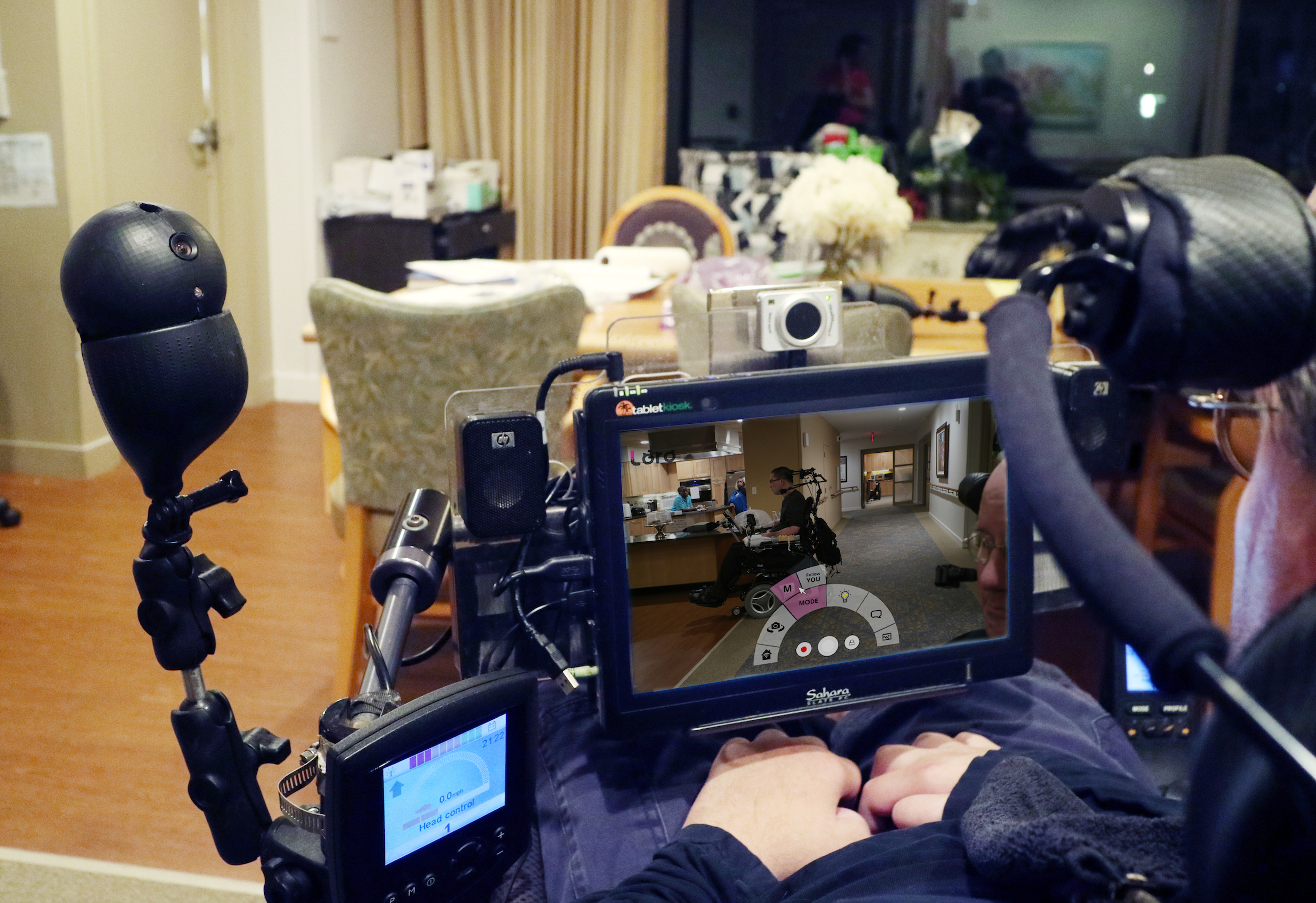
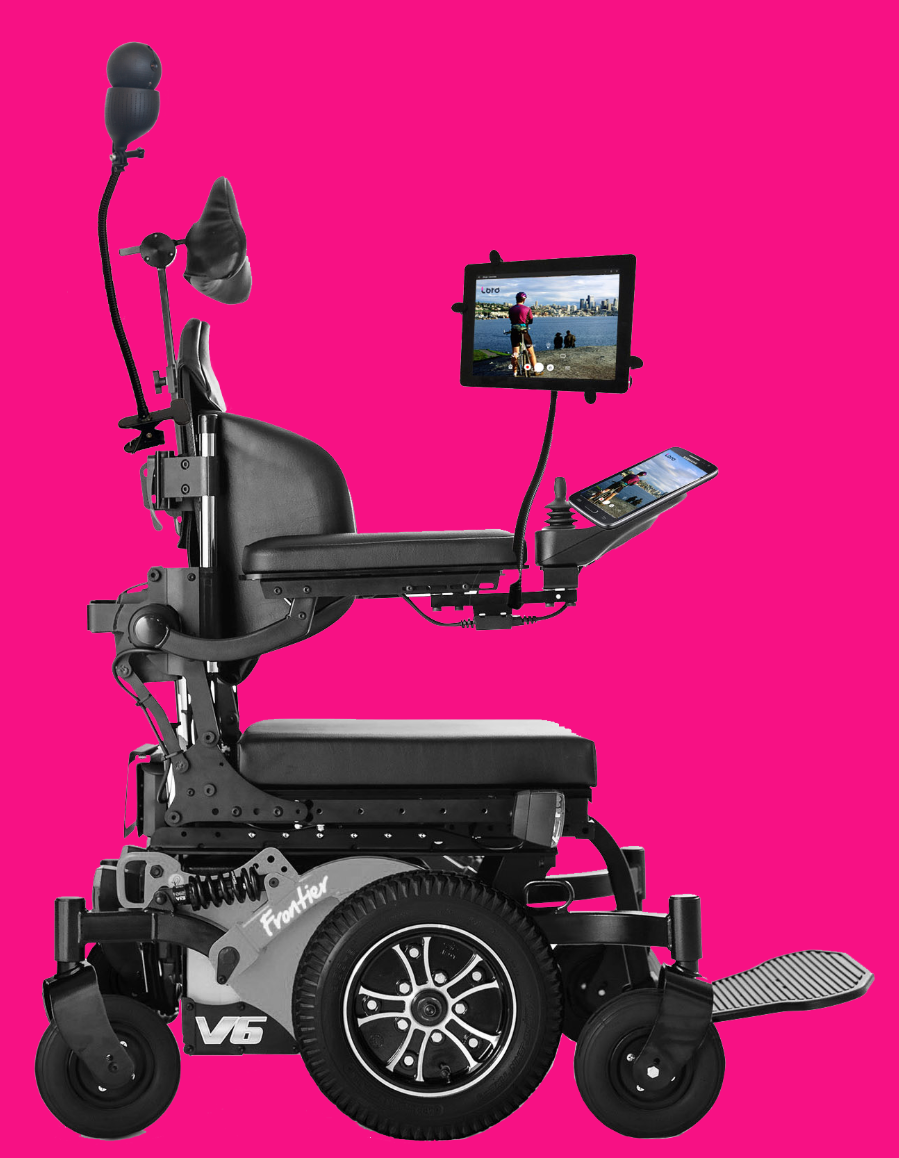
A person with physical disabilities can’t interact with the world the same way as the able, but there’s no reason we can’t use tech to close that gap. Loro is a device that mounts to a wheelchair and offers its occupant the ability to see and interact with the people and things around them in powerful ways.

Loro’s camera and app work together to let the user see farther, read or translate writing, identify people, gesture with a laser pointer and more. They demonstrated their tech onstage today during Startup Battlefield at TechCrunch Disrupt Berlin.

Invented by a team of mostly students who gathered at Harvard’s Innovation Lab, Loro began as a simple camera for disabled people to more easily view their surroundings.

“We started this project for our friend Steve,” said Loro co-founder and creative director, Johae Song. A designer like her and others in their friend group, he was diagnosed with Amyotrophic Lateral Sclerosis, or ALS, a degenerative neural disease that paralyzes the muscles of the afflicted. “So we decided to come up with ideas of how to help people with mobility challenges.”

“We started with just the idea of a camera attached to the wheelchair, to give people a panoramic view so they can navigate easily,” explained co-founder David Hojah. “We developed from that idea after talking with mentors and experts; we did a lot of iterations, and came up with the idea to be smarter, and now it’s this platform that can do all these things.”

It’s not simple to design responsibly for a population like ALS sufferers and others with motor problems. The problems they may have in everyday life aren’t necessarily what one would think, nor are the solutions always obvious. So the Loro team determined to consult many sources and expend a great deal of time in simple observation.

“Very basic observation — just sit and watch,” Hojah said. “From that you can get ideas of what people need without even asking them specific questions.”

Others would voice specific concerns without suggesting solutions, such as a flashlight the user can direct through the camera interface.

“People didn’t say, ‘I want a flashlight,’ they said ‘I can’t get around in the dark.’ So we brainstormed and came up with the flashlight,” he said. An obvious solution in some ways, but only through observation and understanding can it be implemented well.

The focus is always on communication and independence, Song said, and users are the ones who determine what gets included.

“We brainstorm together and then go out and user test. We realize some features work, others don’t. We try to just let them play with it and see what features people use the most.”

There are assistive devices for motor-impaired people out there already, Song and Hojah acknowledged, but they’re generally expensive, unwieldy and poorly designed. Hojah’s background is in medical device design, so he knows of what he speaks.

Consequently, Loro has been designed to be as accessible as possible, with a tablet interface that can be navigated using gaze tracking (via a Tobii camera setup) or other inputs like joysticks and sip-and-puff tubes.

The camera can be directed to, for example, look behind the wheelchair so the user can safely back up. Or it can zoom in on a menu that’s difficult to see from the user’s perspective and read the items off. The laser pointer allows a user with no ability to point or gesture to signal in ways we take for granted, such as choosing a pastry from a case. Text to speech is built right in, so users don’t have to use a separate app to speak out loud.

The camera also tracks faces and can recognize them from a personal (though for now, cloud-hosted) database for people who need help tracking those with whom they interact. The best of us can lose a name or fail to place a face — honestly, I wouldn’t mind having a Loro on my shoulder during some of our events.

Right now the team is focused on finalizing the hardware; the app and capabilities are mostly finalized but the enclosure and so on need to be made production-ready. The company itself is very early-stage — they just incorporated a few months ago and worked with $100,000 in pre-seed funding to create the prototype. Next up is doing a seed round to get ready to manufacture.

“The whole team, we’re really passionate about empowering these people to be really independent, not just waiting for help from others,” Hojah said. Their driving force, he made clear, is compassion.


from Startups – TechCrunch https://ift.tt/2zvpnlU

#USA WiARframe wants to make building AR experiences easy

//

Augmented reality has been a buzzword for years, but for the most part, it has remained a novelty. WiARframe, which is competing in our Startup Battlefield competition today at Disrupt Berlin, believes that we are still very early on in the AR game and that part of what is holding the market back is that the tools need to become easier to use and that designers need to find better ways to find inspiration for their AR experiences.

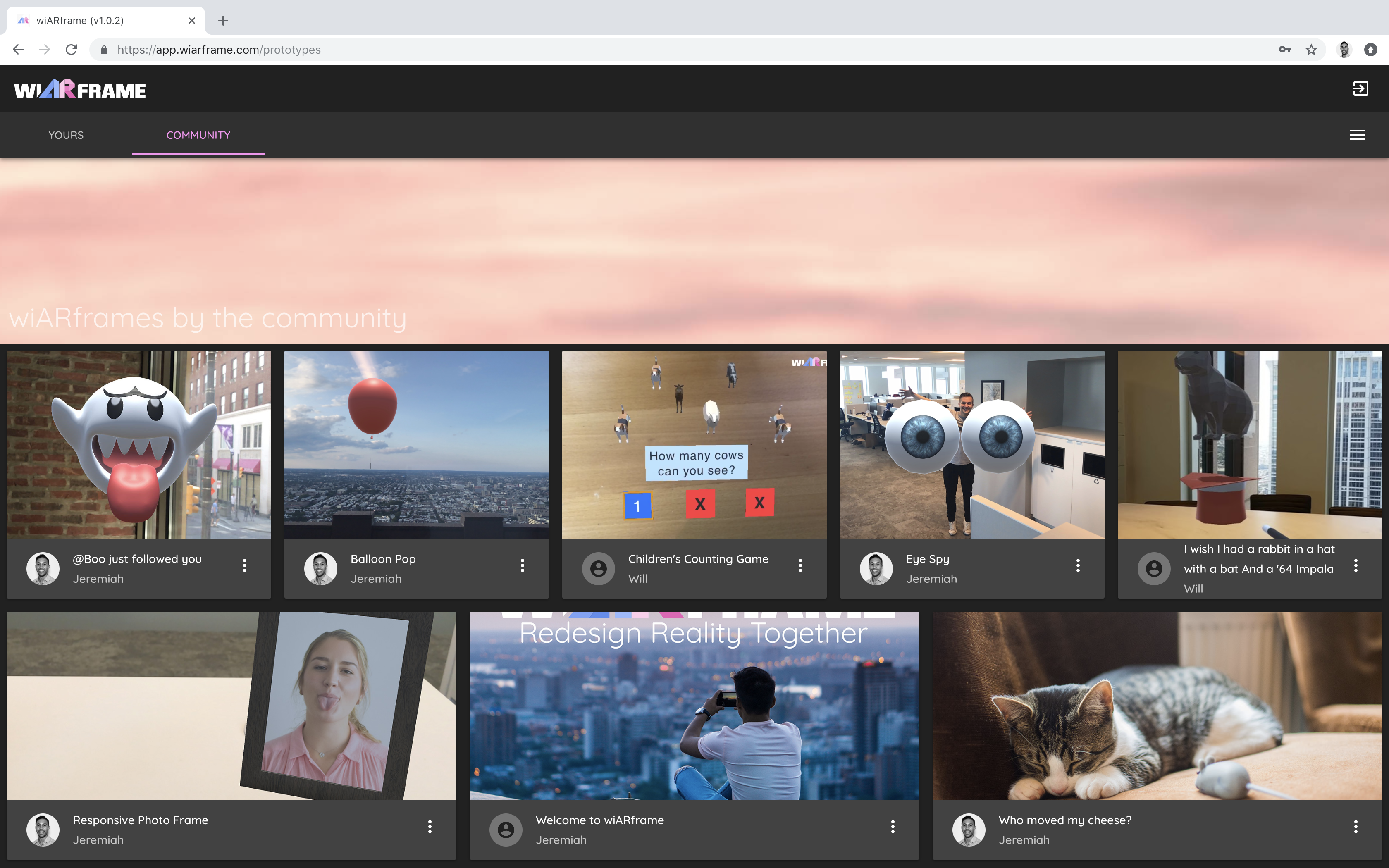
WiARframe tackles these issues by providing budding AR designers with an easy-to-use web-based interface for building AR experiences and a community feature that allows them to share these experiences with anybody who downloads the company’s iOS and Android apps.

The actual scene editor, the company’s founder Jeremiah Alexander told me, is modeled after other 3D modeling tools. In it, you can lay out the scene, but then also make it interactive. Typically, developers would do this in a complex and multi-faceted tool like Unity, but Alexander argues that the barrier of entry there is still too high for many non-developers, while wiARframe removes a lot of that complexity by offering a specialized tool that’s only for building AR experiences.”Unity is not for designers,” he told me.

In addition to being able to import 3D models, the tool also allows designers to add menus to a scene that can be used for settings or other in-app experiences.

As Alexander stressed, though, the community aspect of the service may be just as important. The idea here is to allow other designers to take existing scenes and remix them. That’s not unlike what Microsoft is doing with Paint 3D and Remix 3D, though Alexander likened it more to GitHub.

GitHub is also the inspiration for what will likely become wiARframe’s business model in the long run. Like on GitHub, wiARframe users will be able to use the service for free, but their creations will be public. To make them private, users will have to pay. In the long run, the company may also offer an enterprise plan with additional features.

While wiARframe started out with Alexander as a solo founder, the company now has three full-time employees. The team went through the Comcast NBCUniversal Techstars program earlier this year, and Alexander has an extensive background in designing games and other digital products. Indeed, early on in his career, he built tools for developers at Atari.

Alexander compared the state of AR to the early days of the web, where you had to be pretty technical to get started. The idea behind wiARframe is to democratize the ability to create AR content. What remains to be seen is whether that consumer demand for AR will ever crystallize. If it does, tools like wiARframe will surely make it easier for anybody to jump in and build new experiences.


from Startups – TechCrunch https://ift.tt/2FNq93m

#USA Revolut is ready to launch in Singapore and Japan

//

Fintech startup Revolut has been teasing Asian market expansions for more than a year, but it sounds like it might finally happen. The company has secured licenses to operate in Singapore and Japan. It now expects to launch its service in Q1 2019.

In Singapore, the company was granted a Remittance License by the Monetary Authority and a Stored Value Facility approval — these two things combined let Revolut users hold money as well as send and spend money. In Japan, the company has been authorized to operate by Japan’s Finance Service Agency.

According to Revolut, those approvals are enough to launch the service in those countries. But not all features will make their way to Singapore and Japan. Regulation varies from one country to another, so the company might not be able to provide the same limits and feature set everywhere.

At launch, Revolut will focus on the electronic wallet and the payment card. You won’t be able to buy cryptocurrencies, create business accounts and more. Limits should be more or less the same in local currency equivalent.

In Japan, Revolut says that it has already signed deals with Rakuten, Sompo Japan Insurance (SJNK) and Toppan. It sounds like there will be new insurance products, special card designs and more.

Revolut plans to open its APAC office in Singapore. Let’s see if Revolut ends up convincing expats to sign up or if they can have a real impact outside of Europe.

And if you’re a potential user in the U.S. or Canada, you’ll have to wait a bit more. Revolut says that there will be more news in the coming weeks.

from Startups – TechCrunch https://ift.tt/2Q0NCT7

#USA Phiar raises $3 million for an AR navigation app for drivers

//

Augmented reality is a very buzzy space, but the fundamental technologies underpinning it are pushing boundaries across a lot of other verticals. Machine learning, object recognition and visual mapping tech are the pillars of plenty of new ventures, enabling there to be companies that thrive in the overlap.

Phiar (pronounced fire) is building an augmented reality navigation app for drivers, but the same tech it’s built to help drivers easily pinpoint where they need to make their next turn also helps them build up rich mapping data that can give partners like autonomous car startups the high-quality data they so deeply need.

The SF-based company has just closed a $3 million seed deal led by Norwest Venture Partners and The Venture Reality Fund. Other investors include Anorak Ventures, Mayfield Fund, Zeno Ventures, Cross Culture Ventures, GFR Fund, Y Combinator, Innolinks Ventures and Half Court Ventures.

While phone and headset-based AR have received a lot of the broader media attention, the automotive industry is a central focus for a lot of augmented reality startups attracted by the proposition of a mobile environment that can showcase and integrate bulky tech. There certainly have been quite a few heads-up display startups looking to take advantage of a car’s windshield real estate, and prior to joining Y Combinator, Phiar was actually looking to build some of this hardware themselves before deciding on a more software-focused route for the company.

Unlike a lot of phone AR apps built on top of Apple or Google’s developer platforms, Phiar’s use case doesn’t quite work with the limitations of these systems, which understandably weren’t built with the idea a user would be moving at 60 miles per hour. As a result, the company has had to build tech to greater understand the geometry of a quickly updating world through a single camera while ensuring that it’s not just some ugly directional overlay, using techniques like real-time occlusion to ensure that the digital and physical worlds interact nicely.

While the startup’s big consumer-facing play is the free AR mobile app, Phiar is really just an augmented reality company on the surface; its real sell is what it can do with the data and insights gathered from an always-on dash camera. The same object recognition tech that will allow the app to seamlessly toss AR animations onto the scene in front of you is also analyzing that environment and uploading metadata to build up its mapping insights.

In addition, the app saves up to 30 minutes of footage from each ride, offering users the utility of a free dash cam in case they get in an accident and need video for an insurance claim, while providing some rich anonymized data for the company to build up high-quality mapping data it can sell to partners.

This kind of data is incredibly useful to companies building autonomous car tech, ridesharing companies and a lot of entities that are interested in access to quickly updating map data. The challenge for Phiar will be building up enough users so their map data is as rich as their partners will demand.

CEO Chen-Ping Yu says that the startup is in talks with partners in the automotive space to integrate their tech and is also working to bring what they’ve built to companies in the ridesharing space. Yu says the company plans to release their consumer app in mid-2019.

from Startups – TechCrunch https://ift.tt/2Rm3OLl

#USA Phiar raises $3 million for an AR navigation app for drivers

//

Augmented reality is a very buzzy space, but the fundamental technologies underpinning it are pushing boundaries across a lot of other verticals. Machine learning, object recognition and visual mapping tech are the pillars of plenty of new ventures, enabling there to be companies that thrive in the overlap.

Phiar (pronounced fire) is building an augmented reality navigation app for drivers, but the same tech it’s built to help drivers easily pinpoint where they need to make their next turn also helps them build up rich mapping data that can give partners like autonomous car startups the high-quality data they so deeply need.

The SF-based company has just closed a $3 million seed deal led by Norwest Venture Partners and The Venture Reality Fund. Other investors include Anorak Ventures, Mayfield Fund, Zeno Ventures, Cross Culture Ventures, GFR Fund, Y Combinator, Innolinks Ventures and Half Court Ventures.

While phone and headset-based AR have received a lot of the broader media attention, the automotive industry is a central focus for a lot of augmented reality startups attracted by the proposition of a mobile environment that can showcase and integrate bulky tech. There certainly have been quite a few heads-up display startups looking to take advantage of a car’s windshield real estate, and prior to joining Y Combinator, Phiar was actually looking to build some of this hardware themselves before deciding on a more software-focused route for the company.

Unlike a lot of phone AR apps built on top of Apple or Google’s developer platforms, Phiar’s use case doesn’t quite work with the limitations of these systems, which understandably weren’t built with the idea a user would be moving at 60 miles per hour. As a result, the company has had to build tech to greater understand the geometry of a quickly updating world through a single camera while ensuring that it’s not just some ugly directional overlay, using techniques like real-time occlusion to ensure that the digital and physical worlds interact nicely.

While the startup’s big consumer-facing play is the free AR mobile app, Phiar is really just an augmented reality company on the surface; its real sell is what it can do with the data and insights gathered from an always-on dash camera. The same object recognition tech that will allow the app to seamlessly toss AR animations onto the scene in front of you is also analyzing that environment and uploading metadata to build up its mapping insights.

In addition, the app saves up to 30 minutes of footage from each ride, offering users the utility of a free dash cam in case they get in an accident and need video for an insurance claim, while providing some rich anonymized data for the company to build up high-quality mapping data it can sell to partners.

This kind of data is incredibly useful to companies building autonomous car tech, ridesharing companies and a lot of entities that are interested in access to quickly updating map data. The challenge for Phiar will be building up enough users so their map data is as rich as their partners will demand.

CEO Chen-Ping Yu says that the startup is in talks with partners in the automotive space to integrate their tech and is also working to bring what they’ve built to companies in the ridesharing space. Yu says the company plans to release their consumer app in mid-2019.

from Startups – TechCrunch https://ift.tt/2Rm3OLl