#USA Skincare startup Heyday raises $8M

//

Heyday, a startup aiming to make facials more affordable and personalized, announced today that it has raised $8 million in Series A funding.

I first wrote about the company a year ago, when it raised its $3 million seed round. At the time, co-founder and CEO Adam Ross said his goal was to offer something that sits between expensive, high-end facials and “random little places that are generally cheap in a bad way.” (Heyday pricing starts at $65 for a 30-minute session.)

The company current operates six brick-and-mortar locations — it started in New York City but recently opened its first Los Angeles store. At the same time, Ross said the website was recently redesigned to offer a more “frictionless” booking experience, and the company also says it can use its “Facial Record” of customers to personalize the treatment and products.

Moving forward, the goal is to both open new physical locations (particularly in LA), but also to continue to investing in the technology.

“It’s not an either/or — we see mutual growth and expansion across both channel,” Ross said. “The physical footprint is always going to be a key pillar of our brand strategy, but to win and service customers’ needs in this space, you need to be online.”

Ross also suggested that Heyday is changing the way customers look at facials. For one thing, 30 percent of its customers say they’ve never had a facial before. In addition, Ross said they’re starting to see facials not as an occasional luxury, but as a regular part of their wellness routine: “Most of our clients think about us like an Equinox membership.” And they should, he argued, especially since “your skin is your largest organ.”

The new funding was led by Fifth Wall Ventures, with participation from Lerer Hippeau, Brainchild Funding, M3 Ventures and CircleUp. Fifth Wall partner Kevin Campos is joining Heyday’s board of directors.

“We are in the midst of a significant shift in the retail industry, where marquee brands are moving from digitally native to an omnichannel model,” Campos said in the funding announcement. “We believe the team at Heyday is offering the best experience across both digital and physical touchpoints, and we are thrilled to partner with them to help navigate this complex process and position them for success.”

from Startups – TechCrunch https://ift.tt/2qKmrNx

#USA Lime is debuting its line of shareable vehicles in Seattle this week

//

Lime, the well-funded startup known for its fleet of brightly colored dockless bicycles and electric scooters, has a new way for its customers to get around: cars.

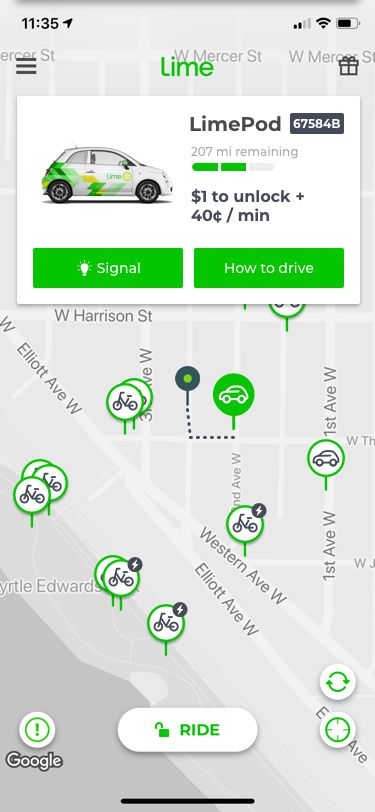
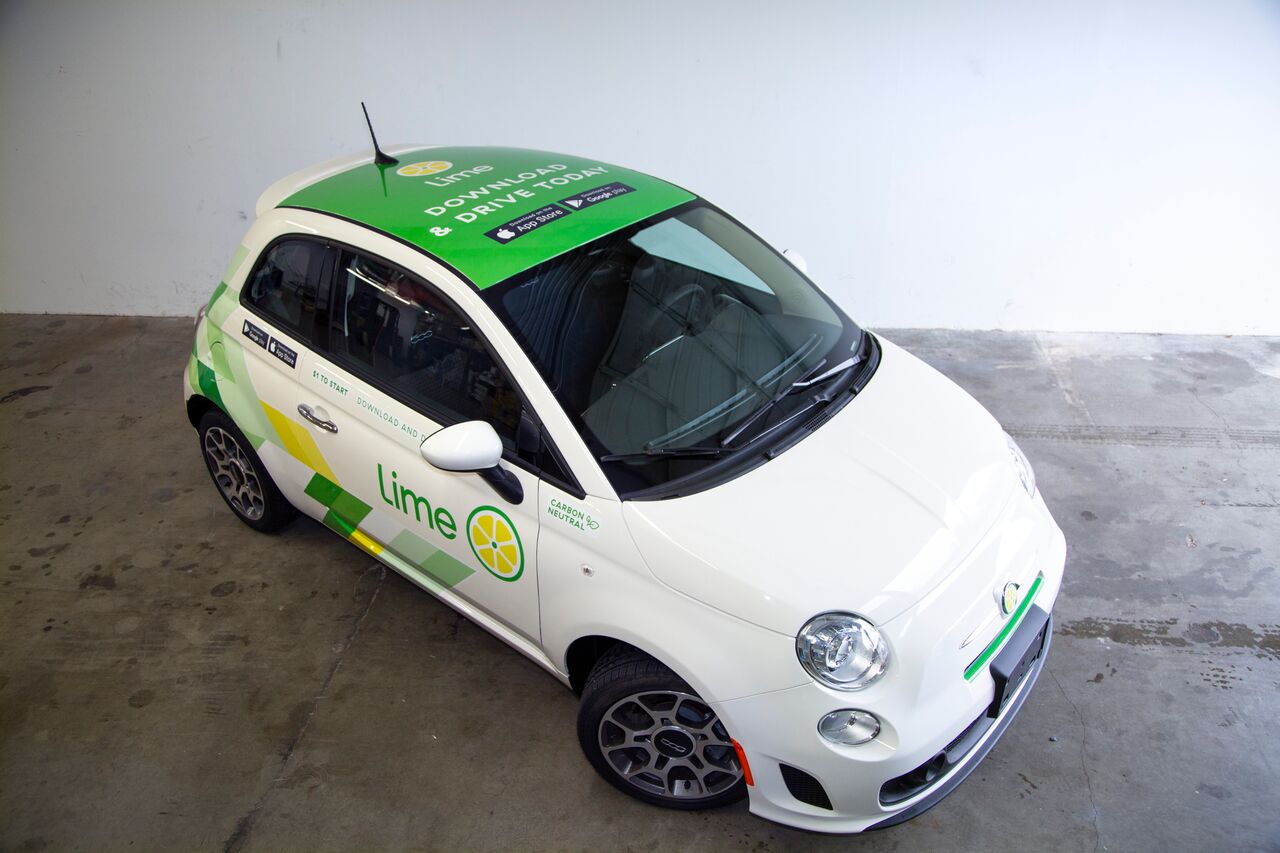
Beginning this week, Lime users in Seattle will be able to reserve a “LimePod,” a Lime-branded 2018 Fiat 500, within the Lime mobile app. There will be 50 cars available to start as part of the company’s initial rollout. Lime plans to increase that number at the end of the month.

“LimePods, Lime’s car-sharing product line, a convenient, affordable, weather-resistant mobility solution for communities,” a spokesperson for Lime said in a statement provided to TechCrunch. “The ease of use of finding, unlocking, and paying for cars will be consistent with how riders use Lime scooters and e-bikes today.”

Lime will roll out 50 “LimePods” in Seattle this week.

Rides in the LimePod will cost $1 to unlock the car and 40 cents per minute of use. The company plans to unleash additional shareable cars in California early next year. Its scooters and e-bikes, for reference, are $1 to unlock and 15 cents per minute and regular pedal bikes are $1 to unlock and 5 cents per minute.

Founded in 2017 by Berkeley graduates Toby Sun and Brad Bao, the startup has raised a total of $467 million to date from GV, Andreessen Horowitz, IVP, Section 32, GGV Capital and more. Reports indicate that Lime is on the fundraising circuit now, targeting a $3 billion valuation, or nearly 3x its latest valuation.

LimePods will be available to order in the Lime mobile app.

The company is expanding rapidly, most recently releasing a fleet of e-scooters and bikes in Australia, as well as making notable hires on what seems like a weekly basis. In the last month, Lime has tapped Joe Kraus, a general partner at Alphabet’s venture arm GV and an existing member of the startup’s board of directors, as its first chief operating officer. Before that, it brought on Uber’s former chief business officer David Richter as its first-ever chief business officer and interim chief financial officer.

In July, the company hired Peter Dempster from ReachNow to lead the LimePod initiative out of Seattle.

from Startups – TechCrunch https://ift.tt/2FlWIVF

#USA In one of Latin America’s largest deals, Movile raises $400 million for its iFood delivery business

//

The Brazilian technology conglomerate Movile has just raised one of the largest rounds ever recorded for a Latin American startup, pulling in an additional $400 million for its iFood subsidiary from existing investors, including Naspers and Innova Capital.

Founded roughly 20 years ago by chief executive officer Fabricio Bloisi, the company, which began as a digital content studio for mobile device, has grown into a mobile services and content empire with aspirations of reaching 1 billion people.

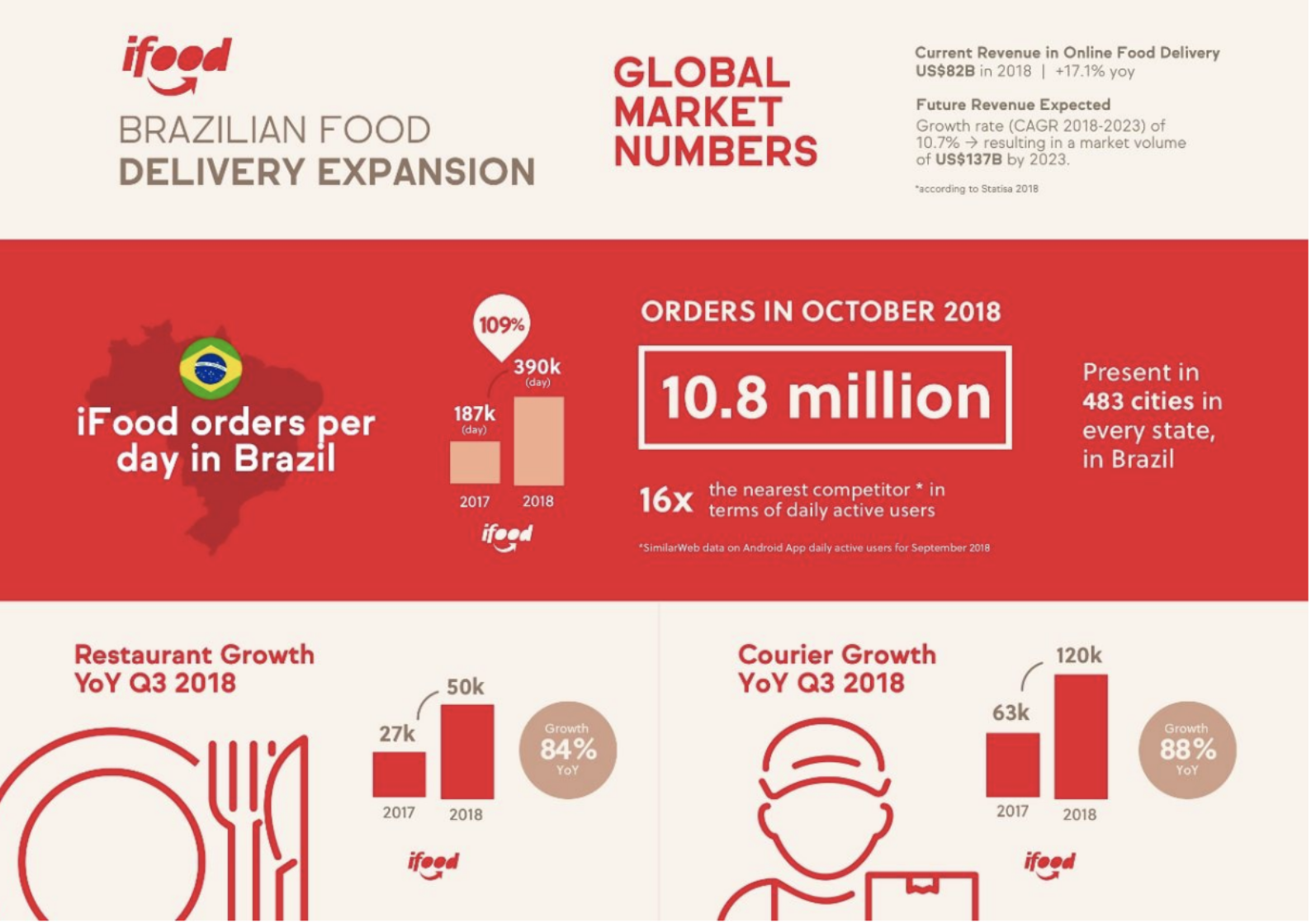
The company is on its way with estimated revenues more than $240 million and more than 150 million monthly active users. iFood alone recorded 10.4 million delivery orders for the month of October and the growth of the business is nothing short of explosive.

According to data from the company, iFood received 390,000 orders per day in Brazil in the last weeks of October — representing 109 percent growth, compared to 183,000 from October 2017. The company’s 10.8 million monthly orders have fed 9 million Brazilian customers, and iFood boasts a network of 50,000 restaurants and 120,000 couriers. 
“Movile is very fortunate to have long-term investors who have supported us for the past decade to help achieve our goal of transforming the lives of more than one billion people and thus we are able to continually back iFood to ensure it remains the market leader,” said Fabricio Bloisi, the company’s chief executive in a statement. “Our entire ecosystem of companies is focused on allocating resources and energy towards our one billion people goal, and iFood is leading the way fueling unprecedented growth through its innovative technology platform, providing consumers, couriers and restaurants with the best experience in food ordering and delivery.”
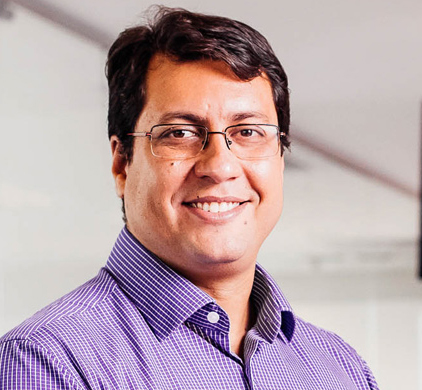
Movile Chief Executive Officer, Fabricio Bloisi

Delivery is central to Movile’s expansion plans and it serves as a gateway to many of the company’s other business lines.

While the engine of growth in the company’s earliest days was PlayKids, its mobile content business focused on children’s entertainment, it has moved well beyond content and entertainment. Now it counts the payment business Zoop, delivery company Rappido and the ticketing business Sympla among its many and varied business units.

In an interview onstage at TechCrunch’s Startup Battlefield Latin America event last week, Bloisi attributed the company’s success to its aggressive mergers and acquisitions strategy across the region and an ability to rapidly spin up and shut down business units as it experimented with what could work for Latin American consumers.

The goal for Bloisi was always to create a multi-billion-dollar business that could span the globe and compete with any of the technology giants hailing from Silicon Valley or, increasingly, China.

Indeed, as Movile expands, its model is looking more and more similar to another Naspers portfolio company, the Chinese mammoth of mobile messaging and services, Tencent.

Leveraging its messaging platform, WeChat, Tencent has become a multi-billion-dollar powerhouse — and a platform for exchanging goods and services for a huge percentage of China’s mobile internet users.

Movile hopes to follow the same path, with operations in content, payments and delivery all housed under its roof. And as the connections between online and offline commerce increase, food delivery is emerging as the central hub for that plan, as our contributor, Nathan Lustig wrote for us earlier this year.

The insights and data that Movile gathered during its strategic venture capital investments in iFood were critical. During this time, Movile built the foundation for its investments that followed shortly after, and learned how to make them a success. With each new investment, Movile’s goal was simple: take a fast-moving startup and help it grow beyond what the founding team ever thought possible by infusing cash, human capital and any technical resources or expertise that the startup could possibly need.

Movile quickly solidified its M&A strategy, its processes and its position as a leader in Latin America’s mobile market. To continue financing its growth through acquisitions, Movile raised another $55 million from Innova Capital, Jorge Paulo Lemann and FINEP in its Series D round in 2014. This new round of financing led to even more acquisitions, including the acquisition of Rapiddo, ChefTime and FreshTime. It also allowed the company to make additional investments in LBS Local, the owners of Apontador, MapLink, Cinepapaya and TruckPad.

“We want our consumers to have an amazing delivery experience from the moment they order their food to the moment it arrives, and our partners – the restaurants and delivery fleet – make that happen by living our purpose of improving people’s lives using our services,” said Carlos Moyses, iFood’s chief executive in a statement. “iFood exists for our customers and with an increased investment commitment of this size, we will be able to build out our state of the art technology platform, and increase our courier and restaurant partners to even better serve our current and future customers in Latin America.”

from Startups – TechCrunch https://ift.tt/2FioHWk

#USA RideCell expands funding round to $60 million

//

RideCell, a transportation software startup, has doubled its previously announced Series B funding round to $60 million, a sign that investors believe demand for cloud-based mobility platforms will grow as more companies try to scale up car-sharing, ride-hailing and even robotaxi businesses.

The company, which has developed a platform designed to help car-sharing, ride-sharing and autonomous technology companies manage their vehicles, announced it raised $28 million in May.

Activate Capital led this round; its co-founder and managing director Raj Atluru has joined RideCell’s board. Reinsurance group Munich Re’s ERGO fund, LG Technology Ventures, BNP Paribas, Sony Innovation Fund, Ally Ventures and Khosla Ventures joined this extended round. Denso also upped its investment in the Series B round.

Nearly half a dozen other companies had already invested in the Series B round, including Cox Automotive, Initialized Capital, Denso, Penske, Deutsche Bahn and Mitsui.

“Investor interest in cloud-based mobility platforms and autonomous vehicles increases almost daily as the disruptive potential of these new technologies are realized,” RideCell CEO Aarjav Trivedi said in a statement.

The company recently received a permit from the California Department of Motor Vehicles to test its Auro autonomous vehicles on public roads. RideCell acquired self-driving car company Auro in October 2017. Auro initially developed and operated driverless shuttles for private geo-fenced locations such as corporate and university campuses. The company has since expanded its focus to include passenger vehicle models and minivans, although it still plans to target low-speed urban use cases focused on solving last-mile transportation.

The company’s real-world trials will start on Ford Fusion vehicle platforms equipped with Auro’s autonomous driving system.

from Startups – TechCrunch https://ift.tt/2FjGNqR

#USA RideCell expands funding round to $60 million

//

RideCell, a transportation software startup, has doubled its previously announced Series B funding round to $60 million, a sign that investors believe demand for cloud-based mobility platforms will grow as more companies try to scale up car-sharing, ride-hailing and even robotaxi businesses.

The company, which has developed a platform designed to help car-sharing, ride-sharing and autonomous technology companies manage their vehicles, announced it raised $28 million in May.

Activate Capital led this round; its co-founder and managing director Raj Atluru has joined RideCell’s board. Reinsurance group Munich Re’s ERGO fund, LG Technology Ventures, BNP Paribas, Sony Innovation Fund, Ally Ventures and Khosla Ventures joined this extended round. Denso also upped its investment in the Series B round.

Nearly half a dozen other companies had already invested in the Series B round, including Cox Automotive, Initialized Capital, Denso, Penske, Deutsche Bahn and Mitsui.

“Investor interest in cloud-based mobility platforms and autonomous vehicles increases almost daily as the disruptive potential of these new technologies are realized,” RideCell CEO Aarjav Trivedi said in a statement.

The company recently received a permit from the California Department of Motor Vehicles to test its Auro autonomous vehicles on public roads. RideCell acquired self-driving car company Auro in October 2017. Auro initially developed and operated driverless shuttles for private geo-fenced locations such as corporate and university campuses. The company has since expanded its focus to include passenger vehicle models and minivans, although it still plans to target low-speed urban use cases focused on solving last-mile transportation.

The company’s real-world trials will start on Ford Fusion vehicle platforms equipped with Auro’s autonomous driving system.

from Startups – TechCrunch https://ift.tt/2FjGNqR

#USA WeRecover, the Kayak for addiction recovery, raises $2M

//

Approximately 90 percent of people in need rehabilitation services for drug and alcohol abuse don’t have access to them, according to a Substance Abuse and Mental Health Services Administration survey. Why? Often, because they don’t know where to look.

Santa Monica-based WeRecover wants to fill that information gap with its Kayak-like online booking engine for rehab centers. The startup’s matching algorithm pairs people with an accredited rehab center with open beds, tailored to that person’s budget, insurance, clinical needs and location. The goal is to make it easier for anyone seeking treatment for themselves or otherwise to quickly discover and secure a spot at a facility, streamlining what can be a daunting and logistically complicated process that prevents people from receiving the care they need.

Today, WeRecover is announcing another $2 million fundraise led by Crosslink Capital, bringing its total venture capital backing to $4.5 million. Box Group, Wonder Ventures, Struck Capital and others also participated in the round.

“It’s a really obvious idea … but truly no entrepreneurs anywhere were working to build a marketplace for addiction recovery centers,” WeRecover co-founder and chief executive officer Stephen Estes told TechCrunch. “There’s an overwhelming need for a simpler way to connect with patients.”

WeRecover co-founder and chief executive officer Stephen Estes.

Founded in 2016 by Estes and Max Jaffe, WeRecover has rapidly grown from connecting a few hundred people seeking treatment per month to roughly 4,000 users last month. The startup now provides information on 11,000 treatment centers in 29 states. The goal is to have at least 1 program listed in every state by the end of 2018. Currently, most of the programs the company tracks are located in California, Florida, Arizona and Colorado.

Estes said the WeRecover database is the most comprehensive database of free, non-profit and state-funded treatment programs in existence, simply because no one had set out to aggregate this particular set of information until now.

The startup plans to use the latest round of venture financing to continue hunting down treatment centers to add to its database, expand its 16-person team and eventually, Estes said, WeRecover would like to craft and integrate content into the experience.

“We play a really important role in somebody’s journey,” he said. “They find treatment through us and we are part of one of the most important decisions they make in their life, so we should keep them engaged. We do think there’s room to build an app to help people sustain their sobriety and connect them with their peers.”

from Startups – TechCrunch https://ift.tt/2Tfdzwu

#USA WeWork picks up ANOTHER $3B from SoftBank

//

WeWork has picked up another $3 billion in financing from SoftBank Corp, not to be confused with SoftBank Vision Fund. The deal comes in the form of a warrant, allowing SoftBank to pay $3 billion for the opportunity to buy shares before September 2019 at a price of $110 or higher, ultimately valuing WeWork at $42 billion minimum.

In August, SoftBank Corp invested $1 billion in WeWork in the form of a convertible note.

According to the Financial Times, SoftBank will pay WeWork $1.5 billion on January 15, 2019 and another $1.5 billion on April 15.

SoftBank is far and away WeWork’s biggest investor, with SoftBank Vision Fund having poured $4.4 billion into the company just last year.

The real estate play out of WeWork is just one facet of the company’s strategy.

More than physical land, WeWork wants to be the central connective tissue for work in general. The company often strikes deals with major service providers at ‘whole sale’ prices by negotiating on behalf of its 300,000 members. Plus, WeWork has developed enterprise products for large corporations, such as Microsoft, who tend to sign longer, more lucrative leases. In fact, these types of deals make up 29 percent of WeWork’s revenue.

The biggest issue is whether or not WeWork can sustain its outrageous growth, which seems to have been the key to its soaring valuation. After all, WeWork hasn’t yet achieved profitability.

Can the vision become a reality? SoftBank seems willing to bet on it.

from Startups – TechCrunch https://ift.tt/2OEO5VF

#USA WeWork picks up ANOTHER $3B from SoftBank

//

WeWork has picked up another $3 billion in financing from SoftBank Corp, not to be confused with SoftBank Vision Fund. The deal comes in the form of a warrant, allowing SoftBank to pay $3 billion for the opportunity to buy shares before September 2019 at a price of $110 or higher, ultimately valuing WeWork at $42 billion minimum.

In August, SoftBank Corp invested $1 billion in WeWork in the form of a convertible note.

According to the Financial Times, SoftBank will pay WeWork $1.5 billion on January 15, 2019 and another $1.5 billion on April 15.

SoftBank is far and away WeWork’s biggest investor, with SoftBank Vision Fund having poured $4.4 billion into the company just last year.

The real estate play out of WeWork is just one facet of the company’s strategy.

More than physical land, WeWork wants to be the central connective tissue for work in general. The company often strikes deals with major service providers at ‘whole sale’ prices by negotiating on behalf of its 300,000 members. Plus, WeWork has developed enterprise products for large corporations, such as Microsoft, who tend to sign longer, more lucrative leases. In fact, these types of deals make up 29 percent of WeWork’s revenue.

The biggest issue is whether or not WeWork can sustain its outrageous growth, which seems to have been the key to its soaring valuation. After all, WeWork hasn’t yet achieved profitability.

Can the vision become a reality? SoftBank seems willing to bet on it.

from Startups – TechCrunch https://ift.tt/2OEO5VF

#USA Atolla uses machine learning to address your skin care needs

//

Atolla, a skin care startup that got its roots at MIT, is launching a Kickstarter campaign to to help people achieve their skin goals. Atolla uses machine learning to identify skin health issues and then recommend the right skin care products based on what affects your skin.

Atolla comes as a monthly subscription, with the idea being that you test your skin every month to see how it changes depending on the season. The kit allows you to test for oil, moisture and pH. Every month, you receive a customized product based on the data extrapolated from your skin.

“So we’re thinking that if we do this measurement for people like just once a month, after about a year we can start to predict how their skin’s going to change,” Atolla co-founder Meghan Maulpin told TechCrunch. “It’s like, we know that your skin gets this percent dryer in the winter so before you actually have the issue of super dry skin, we already know that you need to use something that’s like this.”

Testing your skin takes just about 10 minutes (I tried it) and is pretty straightforward, thanks to on-screen directions from Atolla’s mobile app.

Atolla’s vision is to build a longitudinal dataset that looks at skin concerns across demographics, geographies and lifestyles. Atolla use two distinct machine learning models. The first is to create skin archetypes based on all the factors that may affect someone’s skin and the second is to predict how someone’s skin may change.

“What we’re really trying to build is a database that represents all different types of like skin attributes, and understand what the actual skin types are,” Maulpin told TechCrunch. “So it’s not just about like, number of data, it’s also diversity.”

Maulpin and her co-founder Sid Salvi met at MIT while in graduate school last year. Following acceptance into MIT’s Delta V accelerator for students, the two opened up a handful of pop-up shops in New York City. Fast forward to today, and Atolla is gearing up to start shipping to consumers in February.

from Startups – TechCrunch https://ift.tt/2RSNr97

#USA Meditation app Simple Habit raises $10 million Series A

//

Five-minute meditation app Simple Habit announced today that it has raised a $10 million Series A, led by Foundation Capital. The round brings the developer’s total funding up to $12.5 million, following a $2.5 million seed last year.

The Shark Tank alum has been kicking since 2016, the result of CEO and co-founder Yunha Kim’s attempt to build a kind of “Spotify for Meditation.” The startup graduated Y Combinator in April of last year and has made a large push to increase available content.

The company has received praise for its focus on helping users incorporate short meditation sessions into their busy lives. And certainly the time is pretty ideal if you happen to be a mindfulness app in search of some serious VC. 

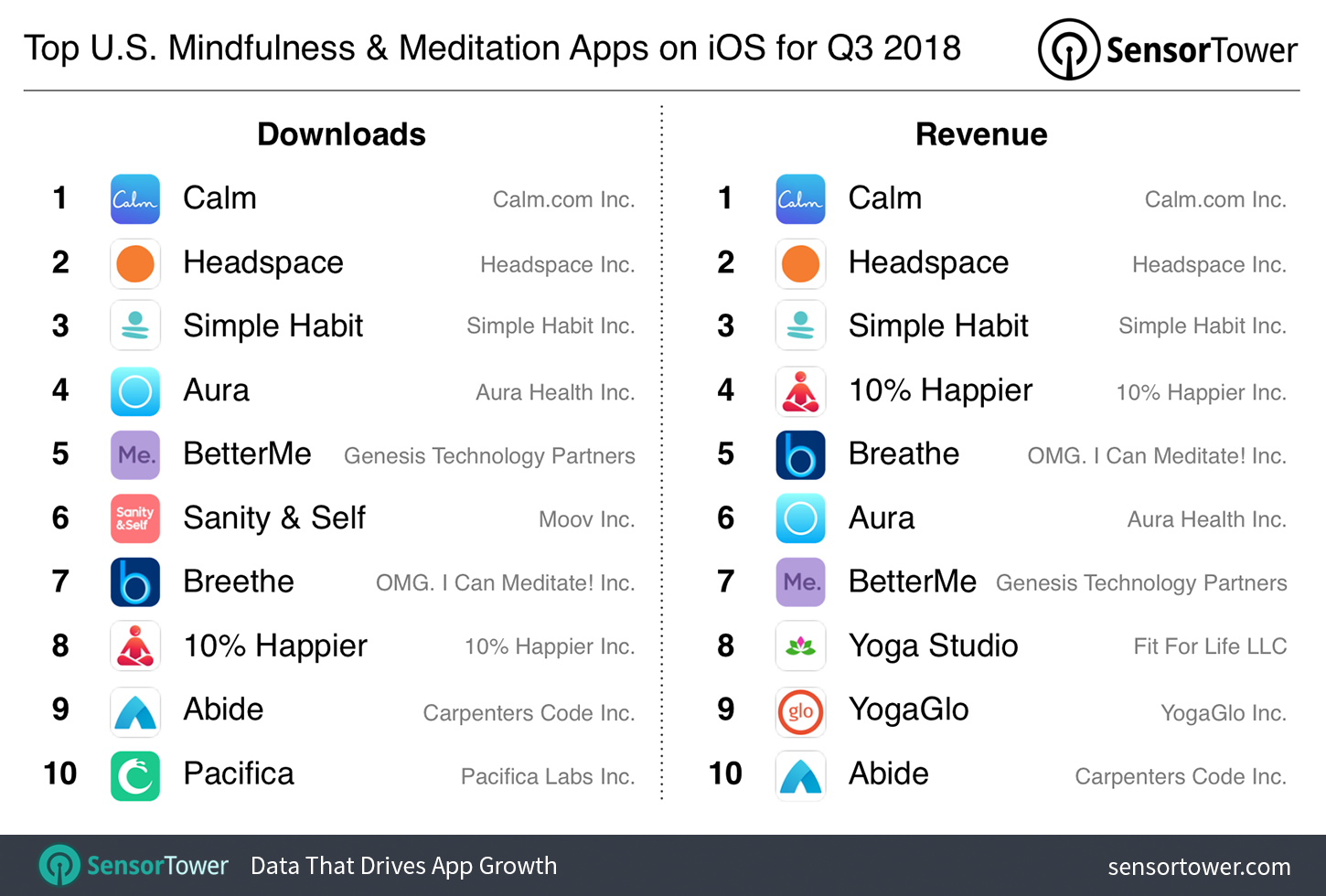
Most of the reception has been positive, and according to numbers provided to TechCrunch by SensorTower, Simple Habit was the third most popular meditation app in the iOS App Store for Q3 2018. The app trails only Calm and Headspace in terms of both downloads and revenue.

from Startups – TechCrunch https://ift.tt/2z8skc2