#USA Guardian Circle upgrades with a decentralized alert network

//

Chris Hays and Mark Jeffrey wanted to create a way for everyone to be able to tell their loved ones if they were in trouble. Their first product, GuardianCircle did just that, netting a mention in a few years ago. Now the same team is truly decentralizing alerts with a new token called, obviously, Guardium.

The plan is to create an ad hoc network of helpers and first responders. “Guardium and Guardian Circle togther open the emergency response grid to vetted citizens, private response and compatible devices for the very first time,” write the founders. “Providing an economic framework on our global distributed emergency response network; Guardium brings first responders to the 4 billion people on the planet without government sponsored emergency response.”

Since the product already works, the team is taking on the token sale as a new challenge.

“We’re serial entrepreneurs — both of us have been venture-backed in the past by names like Softbank and Intel, and we’ve been senior execs in companies backed by Sequoia and Elon Musk. Transitioning to the token-sale backed universe has been an interesting study in contrasts,” said Hays. “There are a number of ‘panic button apps’ — but without exception, all of them have forgotten ‘the second half of the problem’ — organizing the response. Getting people who do not know one another into instant communication and location sharing during an emergency — the importance of that cannot be overstated.”

The founders found that their idea wasn’t fundable in the valley. After all, what VC wants to help people when they can invest in Snapchat? Instead, Hays and Jeffrey are aiming bigger.

“We’re rebooting the world’s safety grid,” said Hays. “We’re creating a new global public utility. And we want it to service everyone, everywhere on earth. Although it is a very big vision, and it is a capitalist, multibillion dollar ecosystem that we’re chasing — it’s still a very different vision, and not the one venture capitalists are looking for.”

The token works to create a flash mob of help. Guard tokens pay first responders and dispatchers and “cities, campuses, and resorts stake $GUARD to access Alerts created within their geofenced borders,” allowing local folks to help immediately. They’ve sold half of their hard cap of $10 million thus far.

While tokens are always an iffy investment, this team has produced product and, more important, it’s clear they’ll never raise venture. A token, no matter how it’s used in the future, seems like a solid solution.


from Startups – TechCrunch https://ift.tt/2zF0jIi

#USA The disappearing Form D

//

We are experimenting with new content forms at TechCrunch. This is a rough draft of something new – provide your feedback directly to the authors: Danny at danny@techcrunch.com or Arman at Arman.Tabatabai@techcrunch.com if you like or hate something here.

Ignoring the midterm hysteria, we continue our obsession with SoftBank today by looking at the group’s IPO of its telecom unit, but first, some thoughts about Form Ds.

Recently, I was looking up the investment history of Patreon (note: I was an investor in the company through my previous venture firm CRV). I did what I normally do: I went straight to the SEC’s EDGAR system and started searching for the company and its filings. And came up with nothing. Full-text search, office address searches, and founder name searches — nothing was returned.

And yet, the company has publicly raised more than $100 million in venture capital according to Crunchbase, and to my knowledge, is not incorporated outside of the United States.

There should be a whole spate of filings and yet none exist. What’s up with that?

After some investigation, my working hypothesis is that startups are (increasingly?) not filing disclosures with the SEC as a specific strategy to avoid scrutiny.

To take a step back, when companies take money from investors, they sell those investors securities. Under American laws, all securities need to be registered with the Securities and Exchange Commission using pre-defined templates (such as an S-1 registration form) to ensure that all investors know exactly what they are buying.

However, registration is expensive and time-consuming, and so U.S. law also provides a set of exemptions from registration for companies where that process is impractical. Startups take advantage of these exemptions and stay private, until they eventually want to become public through a registration with the SEC.

One mandated component of taking advantage of these registration exemptions is that the startup needs to file a Form D with the SEC. The Form D is free to file and relatively simple, requiring basic information such as the amount of capital fundraised and who the investors were in the round. It’s required to be filed 15 days after the first sale of securities, and conveniently, the form pre-empts most state securities laws so that startups don’t have to file in state jurisdictions.

There are theoretically large penalties for failing to file — a company could open itself to investor lawsuits, and there are various financial felonies available that could be applied as well.

But that’s legal theory, and the practicalities are that almost nothing bad happens to startups who fail to file a Form D. American courts along with the SEC have upheld that a startup does not lose its covered security exemption by failing to file the form. The only additional requirement is generally to file state security forms in lieu of the federal form.

A bigger question is why go through this when filing is easy and free? The obvious answer is that startups don’t want to put their round’s information out in the public eye where the good people at TechCrunch will see it and report on it. Of course, the whole point of Form D disclosure is to provide the public a modicum of information about what is happening in the economy.

But actually, the motivations go far beyond that. One reader, Paul David Shrader, saw our note yesterday that we were investigating Form Ds and offered this list of reasons on why companies in general (and to be clear, not specific to any company he has advised) choose to forego filing:

As for the “why,” there are a few reasons why management, the board of directors, or even investors may be sensitive to fundraising disclosures:

1. The company doesn’t want the increased scrutiny internally that comes along with a new funding round. This can come from employees demanding different levels of compensation.

2. The company doesn’t want increased regulatory scrutiny. Many startups operate in regulatory gray areas, and increased attention from regulators before they are ready can be a Bad Thing.

3. The company has security concerns. For startups that operate in certain environments internationally, raising a monster round can place a target on the backs of its employees. This has been an issue in Latin America from time to time.

4. The company has competitive concerns. Raising a big round may attract new entrants to the market or heighten attention from existing competitors before a startup has solidified its position in the market.

5. Investors don’t want disclosure. Some investors want to disclose new investments on their own timeframe, and they make this a condition of their investment. Publicly-traded investors or sovereign wealth funds (SoftBank included!) may only want to disclose at the time of their quarterly reports.

6. Flat rounds or down rounds can suck away any positive momentum. When founders are trying to convince customers and employees to join the rocket ship that is their company, a flatlining fundraise can look like… well, a flatlining company.

7. The round may not be closed yet. Companies sometimes have optimistic goals about the size of a round (“We’re raising $4 million!”), but only have a smaller amount committed at the outset of the round. Sometimes a single round can take 18+ months to close, even though a sizable (or not so sizable) percentage closed at the outset.

Some of these are obvious, but others, such as internal compensation concerns or international security concerns were more surprising to me. Thanks Paul David for the thoughts.

Now, I said at the outset that my hypothesis is that startups are increasingly foregoing Form D disclosure. Arman and I are still doing work on this (the SEC has some datasets), but to be frank, it is very hard to operationalize and prove. Form D filings are up or steady, which makes sense given that the number of startups in areas like San Francisco have skyrocketed over the past decade. We are trying to prove something that doesn’t exist, and Karl Popper has helpfully explained that that is impossible.

Nonetheless, we are still interested in whether the legal norms have shifted here, and will hopefully report back on this again. If you are a startup attorney with an opinion here, please email Danny@techcrunch.com or Arman.tabatabai@techcrunch.com with your thoughts.

SoftBank’s telecom IPO weirdness
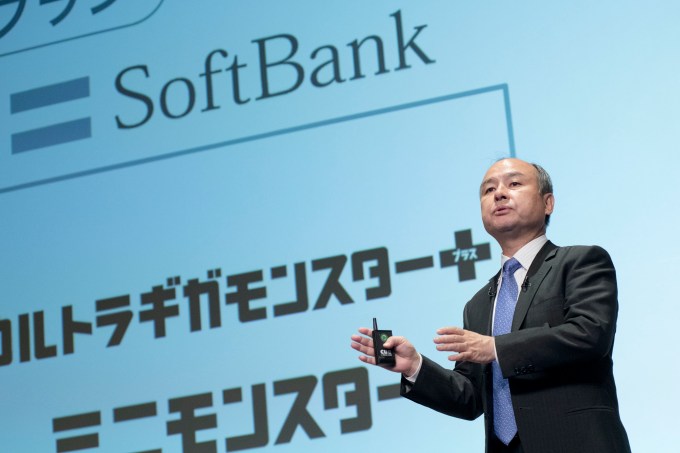
Photo by Alessandro Di Ciommo/NurPhoto via Getty Images

Talking about filings, one of the most complicated filings in the world is underway. While we were digging into SoftBank’s financing strategies yesterday, all the activity around the looming IPO of its telco business caught our attention.

As we analyzed yesterday, though SoftBank’s debt balance continues to balloon, the company’s balance sheet has rarely prevented it from pursuing investments in the past.

SoftBank continues to dole out multi-billion dollar checks with stunning regularity, having invested around one third of its $90+ billion Vision Fund. And we know SoftBank has no intention of slowing its torrid pace, with Chairman and CEO Masayoshi Son previously stating he plans to raise $100 billion funds that would spend around $50 billion annually, every two or three years.

One way SoftBank is looking to access additional funding to pour into the next batch of unicorns is by taking a portion of its Japanese mobile business public. For some context, SoftBank is generally considered to be the third largest telco in Japan behind NTT DoCoMo and KDDI.

Even though initial estimates expect SoftBank to only sell around 30-40% of the company’s shares, the offering is widely expected to be one of the largest listings ever at potentially more than $25 billion, which would value the overall business at $90 billion on the high end. Reuters recently reported via a Japanese news service that the Tokyo Stock Exchange is expected to give SoftBank approval to list shares next Monday, with a likely listing date of December 19th.

But the progression of the IPO has been oddly complex and unique from the beginning.

First, there was an issue with a set of bonds SoftBank had issued in 2013, which were guaranteed by the telecom business and had covenants requiring that the company hold investment grade credit ratings before pursuing a sale of any sort. However, SoftBank’s bonds hold junk status from major credit ratings agencies. To fix that roadblock, SoftBank issued a new set of bonds with better terms to buy back the bonds with the prohibitive covenants, undercutting and aggravating some investors of the initial bonds.

Then, it was reported that while lining up the underwriting banks for the IPO, SoftBank reportedly asked banks to commit to loans to the Vision Fund that total around $9 billion, a claim SoftBank has not commented on. As reported by Bloomberg:

The IPO’s top underwriters, which include Nomura Holdings Inc. and Goldman Sachs Group Inc., have given non-binding assurances while they finalize terms of the loan to the Vision Fund, the people said. Stakes in around five of the investment fund’s holdings will be used as collateral, according to the people, who asked not to be identified because the information is private.

Deutsche Bank AG, Mizuho Financial Group Inc. and Sumitomo Mitsui Financial Group Inc. were also among banks chosen to lead SoftBank’s wireless unit IPO, Bloomberg News reported last week. Details of the loan are still being worked out, and terms could change, the people said. Meanwhile, Deutsche Bank and Goldman Sachs committed about $1 billion each, they said.

While the fund’s holdings (perhaps Uber or WeWork or others) would be set as collateral, Bloomberg also reported in the same article that the loans were non-recourse, meaning that if for some reason SoftBank were unable to repay the loan, the lenders would have no claim to any assets outside of the company stakes set as collateral. The loan terms become more concerning with the Vision Fund since it invests in many unlisted and, in many cases, unprofitable companies. As we noted yesterday, at least one potential lender, Bank of America, decided not to participate due to concerns that the terms were too risky.

Such sausage-making isn’t usually visible to the public, which would seem to indicate that at least some of the banks are grousing to reporters about terms they find egregious. As always, feel free to grouse to us as well.

What’s next

  • Definitely drop us a line if you have thoughts about Form Ds or SoftBank – we are continuing to investigate

Reading docket

What we are reading (or at least, trying to read)

from Startups – TechCrunch https://ift.tt/2PFeF5N


#USA This tiny house grows with your family

//

Tiny houses are all the rage but once you put more than a few people in one you have a problem: Where can you go from there?

Nowhere. Exactly.

What you do is, if you need that extra push over the cliff, you know what you do? Talk to Brian Gaudio. Gaudio is the founder of Module Housing, an incremental building startup from Pittsburgh. Gaudio, formerly of Walt Disney Imagineering, has an architecture background and saw firsthand the need for incremental housing in his work in Biloxi and Latin America. His idea is simple: create a little house that grows with you over time, allowing a single room to turn into a mansion with a few turns of a wrench.

“We think of the home as a recurring revenue stream – buy a starter home today, purchase additions and upgrades in the future. All our homes are designed to change over time – as a homebuyers family grows, income grows, or needs change,” he said. “We are capital light compared to other prefab startups in that we don’t own the manufacturing facilities where our homes are built. We leverage existing network of high-performance prefab manufacturers on the east coast.”

The service does it all: they offer multiple room dwellings and work with you to order the modules, find land that lets you add on over time, and assemble the houses. Like the Craftsman houses of old, you have a few basic styles but in this case you can buy a one bedroom Nook house for $212,000 and then add on over time instead of buying a house with seven rooms and realizing you only needed two.

Additional costs include building a foundation and land preparation. It’s also dead easy to add onto your house when your ready, said Gaudio, thanks to work they’ve done in modularizing the houses.

“We have patents pending on a removable roof and wall system that simplifies the addition process when a customer is ready to add-on,” he said.

The company raised $1.2 million so far and they have prototype houses in Pittsburgh. They already have orders and they’ve created a Tesla-like reservation system for the folks who want to try out their product.

“I moved back to Pittsburgh to start Module with the goal of making good design accessible to everyone,” he said. “Affordable housing is one of the most critical issues our country faces today. Module is a vehicle to promote responsible, equitable development in cities. We are reimagining housing to be more sustainable, adaptable, and better designed.”


from Startups – TechCrunch https://ift.tt/2PPsjTE

#USA Brooklinen launches a pop-up shop in NYC

//

Brooklinen, the direct-to-consumer bed linens brand, has today announced the opening of a four-month pop-up shop in NYC.

The company has been around for four years thus far, and recently hit $100 million in revenue after raising just $10 million in funding.

Part of the company’s success comes down to its attention to detail. The process of shopping for sheets is often difficult for new adults who don’t understand how to weigh quality and price, and usually don’t get much help in stores like Bed Bath & Beyond.

Brooklinen isn’t necessarily inexpensive — 270 thread count sheets start at $129 for a queen, and 480 thread count sheets start at $149 for a queen — but the process of purchasing quality sheets is leaps and bounds more convenient. Brooklinen handles fulfillment, including the packaging, and has invested in customer service to ensure that there are no hiccups from the point of purchase to the point of making the bed.

Moreover, Brooklinen has designed many of their sheets to easily mix and match with other sets, creating an environment that begs for repeat purchases.

That said, there are still customers who either need the instant gratification of a purchase or to touch and feel the product before converting. Which is why Brooklinen is launching the pop-up shop on Spring Street in Soho.

Cofounder and CEO Rich Fulop explained to TechCrunch that the timing of the pop-up was very intentional.
“We’re doing a four-month pop-up to learn as much as we can and talk to customers,” said Fulop. “We understand that shopping picks up ahead of the holidays, so we set it up to go through the holidays and then into the slower time following the holidays. We want to see the difference between holiday season and through to February so we don’t get a false positive in terms of the model.”

Interestingly, Brooklinen is opting to hold inventory in the store so that purchasing customers can take home their wares. Many pop-up shops offer portals to purchase items and have them shipped as opposed to holding inventory. The company wants to capitalize on any customer who’s flirting with the idea of purchasing and believes holding inventory is the best way to do that.

However, Brooklinen expressed no interest in going the wholesale route, selling inventory to other retailers. Controlling every step of the process, from design all the way to fulfillment, is part of what makes Brooklinen successful, according to the founders.

The 2,000 square-foot space is at 119 Spring St and officially opens on Friday.

from Startups – TechCrunch https://ift.tt/2PfVNuz

#USA Anti-fraud startup Fraugster score $14M Series B

//

Fraugster, the Berlin-based startup that uses artificial intelligence to prevent fraud for online retailers, has raised $14 million in a Series B funding. The round is led by CommerzVentures, the venture capital subsidiary of Commerzbank, alongside early Fraugster investors Earlybird, Speedinvest, Seedcamp, and Rancilio Cube.

Notably, Munich Re/HSB Ventures, the VC arm of global reinsurer Munich Re, also participated in the round. That’s because Munich Re is insuring Fraugster’s “Fraud Free” product, which takes on the full liability for each transaction to ensure retailers utilising Fraugster’s fraud detection technology never lose out — a sign that the company is pretty confident in its machine learning.

Selling its wares to payments companies — including Ingenico ePayments, and Six Payments — the Fraugster AI technology takes data from multiple sources, analyses and cross-checks it in a fraction of a second, to determine whether a transaction is fraudulent or not.

The idea isn’t just to block any potential fraud, which rules-based systems can already do, but to actually let more transactions through. That’s because false-positives (ie accidentally preventing perfectly valid purchases) is the real bane of the industry.

Citing industry average stats of false positives, Fraugster CEO and co-founder CEO Max Laemmle tells me that for every dollar lost to fraud, $17 is lost through transactions that are wrongly turned down, leading to lower revenues for merchants. He says that Fraugster’s technology has already got that down to $2.

Meanwhile, the anti-fraud startup says it will use the new funds to continue expansion into new markets. This includes the U.S., Asia and Europe, where retailers are facing “an accelerating battle against fraud”.

from Startups – TechCrunch https://ift.tt/2yYDAHN

#USA Storyblocks makes it easier for developers to integrate its stock media services

//

Storyblocks, formerly known as Videoblocks, is a stock media service that offers videos, images and audio for creatives. One feature that always made it stand out from the competition is its flat-rate model that gives you unlimited access to all of the media files in its library (though there’s also a pay-as-you-go marketplace). Last year, Storyblocks started making similar flat-rate deals with developers who wanted to integrate its library into their own creative applications. Those were pretty bespoke integrations, but starting today, developers will be able to take the Storyblocks library for a test drive and try it in their apps without having to pay a fee or talk to a salesperson.

The new Storyblocks developer portal, which is launching today, allows developers to generate an API key, integrate the Storyblocks API and then, when they are ready, talk to the company to set up a commercial partnership. Developers who want to integrate the service will get full access to the Storyblocks library and since they are paying the flat fee for that service, users won’t have to get a Storyblocks account or worry about the licensing.

Many of the developers who would most likely be interested in using this service likely find themselves in competition with Adobe, which offers a rich set of creative tools and an integration with its own Adobe Stock service. With the Storyblocks API, developers will be able to offer similar integrations to their users, something Storyblocks CEO TJ Leonard also acknowledged when I talked to him ahead of today’s announcement.

“You’ve got the changing profile of the content creator and they are demanding a more integrated workflow,” he said. “You’re seeing that materialize as Adobe Stock is integrated with Premiere and Photoshop — and Adobe launching [its new video editor] Rush. These are all about producing shorter form content, distributing it quickly, but also without lowering the bar on the overall quality.” Leonard believes that what he described as “closed ecosystems” will own a large portion of the market, but he obviously also believes that there is room for a player like Storyblocks to offer an alternative. And indeed, Leonard told me that API access already drives a double-digit amount of revenue for Storyblocks right now and unsurprisingly, he expects that number to go up over time.


from Startups – TechCrunch https://ift.tt/2Ov83lv

#USA Social media content and analytics startup PressLogic raises $10M from popular Chinese selfie app Meitu

//

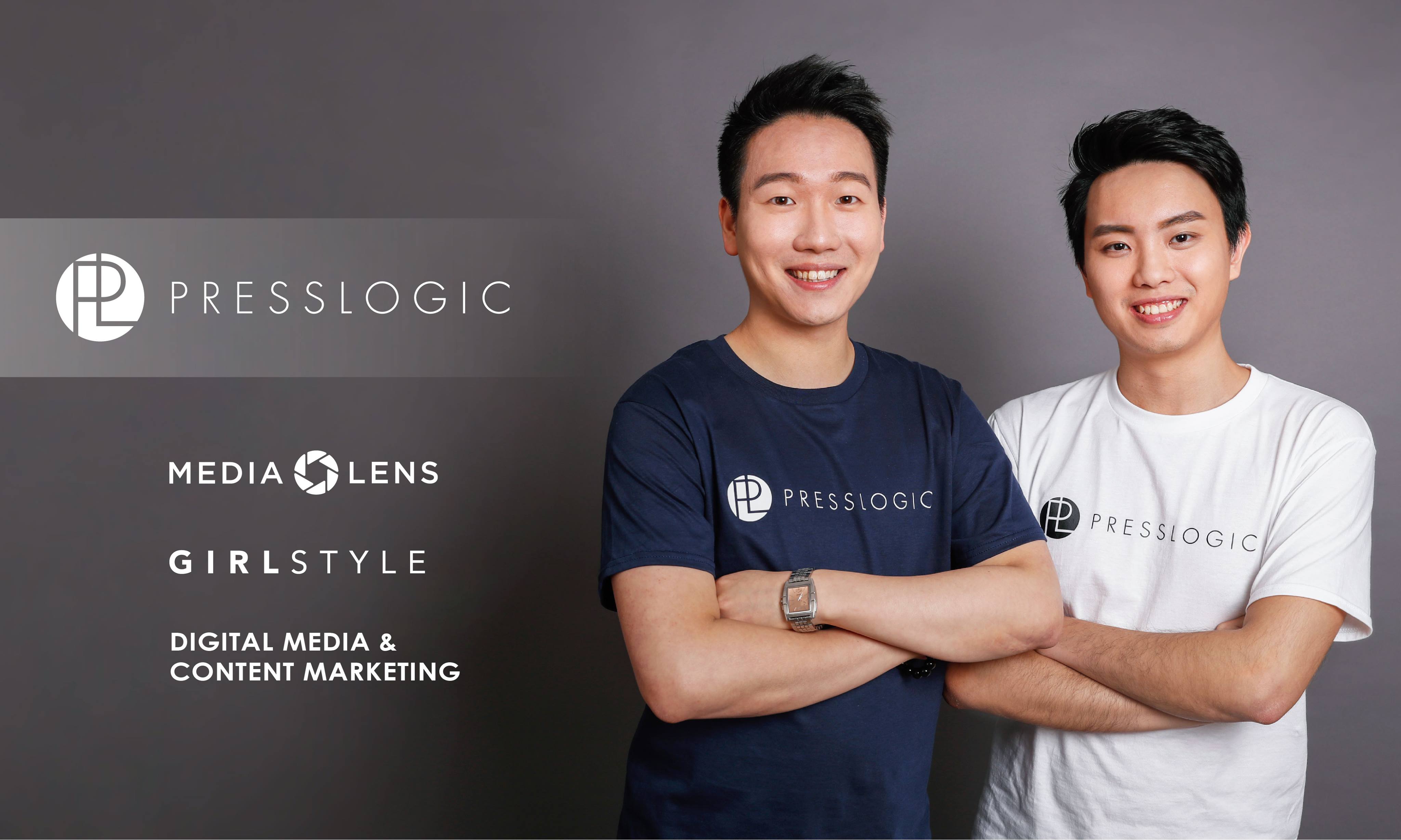
PressLogic founders Ryan Cheung and Edward Chow

PressLogic, a Hong Kong-based social media content and data analytics startup, announced today that it has raised a $10 million Series A+ round from Meitu, developer of the popular Chinese selfie app. PressLogic will use the funds to launch its new lifestyle brand GirlStyle and enter e-commerce with its proprietary algorithms, which predict what topics will trend on social media among specific groups.

The new round brings PressLogic’s total raised to $15 million. Meitu first acquired a minority stake in PressLogic last year.

After launching a data-analytics service for social media managers called MediaLens in 2016, founders Ryan Cheung and Edward Chow began creating social media publishing and marketing brands in order to show potential clients how their technology could boost audience engagement. PressLogic, their social media publishing platform, now claims a total of 8 million Facebook and Instagram followers and over 700 million monthly content impressions across its social media profiles and websites, with about 75 percent of its visitors aged 18 to 34.

MediaLens still serves as PressLogic’s core technology, underpinning its content brands, as well as the insights it provides to partners in order to increase their social media engagement and return on investment. CEO Cheung (Chow serves as PressLogic’s CTO) told TechCrunch that MediaLens “creates a pipeline from data sourcing to content suggestion to optimization” and has an edge against its competitors because it is able to make more granular suggestions about what content is likely to be popular among specific groups based on trending topics.

With its new round of funding, PressLogic will launch GirlStyle, a lifestyle and fashion-based social network targeted to young women, as an app and website in Hong Kong, Taiwan, Singapore, India, Korea, and Malaysia by the end of this year. In terms of e-commerce, CEO Cheung (Chow serves as PressLogic’s CTO) says the company will start by focusing on skincare and cosmetics by leveraging data from its online traffic and readers.

PressLogic hasn’t revealed if Meitu’s photo imaging technology will be integrated into its platform, but Cheung says it would like to extend MediaLens’ analytics to images, too, since data from photos and videos shared on social media is potentially valuable, but still difficult to transform into the kind of insights that help predict what content will go viral next.

from Startups – TechCrunch https://ift.tt/2yRJomr

#USA Portify raises £1.3M to help gig economy workers improve their financial wellbeing

//

Portify, a London fintech startup that offers an app and various financial products to help gig economy workers better manage their finances and in turn improve financial wellbeing, has raised £1.3 million in seed investment. The round is led by Kindred Capital, and company builder and investor Entrepreneur First (EF), with participation from various unnamed angel investors.

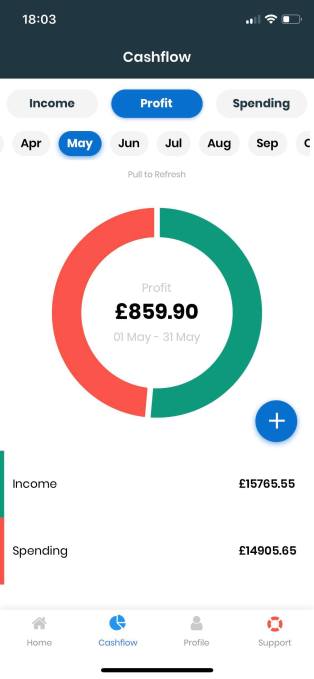
Founded in May last year by EF alumni Sho Sugihara (CEO) and Chris Butcher (CTO), Portify is setting out to address the financial volatility many flexible or so-called gig economy workers face. The startup offers a number of tailored financial products, accessible via its mobile app, to help flexible workers get insights into their current financial status and income, as well as do short and long-term financial planning.

The app — primarily a B2B2C play — is distributed in partnership with various gig economy platforms and also includes earning “rewards” at partnering merchants or service providers. The current Portify website lists TransferWise, Amazon, and Spotify as rewards.

“Portify’s vision is to enable financial security and wellbeing for independent workers,” Portify co-founder and CEO Sho Sugihara tells me. “While we’ve seen rapid growth in the numbers of independent workers (6 million in the U.K., and up to 162 million in the E.U. and U.S., according to McKinsey), there is still a large gap in the market for financial services to ensure these workers are secure, and have access to an economic ladder.

“We work with companies to help build access to financial products that enable this security and progression, and offer this through a mobile app which workers can port between different jobs”.

Sugihara says there are three elements to Portify’s mission: helping flexible workers control “immediate income volatility”, helping them budget effectively on a day-to-day basis, and support with financial planning for the long-term.

“Once a user gets access to our app, the first thing they do is securely connect their bank account,” he explains. “We then help control volatility by offering emergency credit with select stores to buy essentials products if required. We also help our users manage cash flow and budget for tax and other recurring expenses. By building up financial security and wellbeing from the ground up, our goal is to improve our user’s financial standing over the long term, whether through saving for retirement or helping them invest into their own businesses and careers”.

To that end, Sugihara says Portify is currently being used by independent workers in the gig economy and temp staffing sector. This covers couriers, ride-hailing drivers, retail shop floor staff, hospitality workers, amongst others. Its B2B customers span large gig economy platforms and digital temporary staffing agencies “with global coverage”.

from Startups – TechCrunch https://ift.tt/2yU3JHx

#USA Home Made raises further £2M for its premium online lettings agency

//

Home Made, the London premium online lettings agency, has raised a further £2 million in funding. The round is led by Athens-based venture capital firm VentureFriends, and follows the proptech startup’s £850,000 “pre-seed” round nine months ago.

Founded in 2016 by Asaf Navot, a former Bain strategy consultant and INSEAD graduate, and Nick Binnington, a former British Army Captain and LBS graduate, Home Made’s proposition is based on the premise that the letting agent model is broken. Specifically, that high-street agents offer average service and charge extortionate fees, while online agents typically charge low fees but offer a worse service as a result.

The company positions itself as the only estate agency in the U.K. that offers a premium service akin to a high-end traditional estate agent, including accompanied property viewings and working until 10 pm at night, on weekends and bank holidays — for a low online fee starting at £948 +VAT. However, competitor Rentify also occupies a more upmarket space, but charges a monthly fee and is fully-managed and provides a ‘rent guarantee’. At the lower end are startups like Open Rent and uPad that operate more of a pile ‘em high, sell ‘em cheap à la carte model with various services to help you rent out your property.

To that end, Home Made says it plans to use the new funding to expand its offering and further develop its underlying technology, focus on growing its customer base in London “and beyond”. This will include hiring 20-25 new sales and marketing staff in the coming months.

The company’s proprietary online platform allows landlords to manage their properties from marketing to move-in. This includes full control during the marketing phase – landlords can add or remove marketing photos on the portals, write or enhance existing descriptions and change the price – and visibility of progress during tenancy progression.
 
International expansion has also begin: Home Made recently opened an office in Athens and says it is looking to develop several company functions in the country, including lead generation, tech support, and customer service and support. The startup says it has selected Greece for its first international office primarily due to “the growing Greek startup ecosystem which offers access to high caliber talent with international experience”.

Meanwhile, Home Made recently announced the launch of Sentinel, a tool that detects illegal subletting by tenants via short-let websites such as AirBnB. The idea is to help landlords tackle a growing illegal subletting problem that sees “tenants” rent out properties with no intention of ever ever staying in the property.

This activity commonly violates the terms of a Tenancy Agreement, and may also violate the building lease, local authority regulations, buildings insurance, and mortgage terms. It also withdraws these properties from the market for long-
term tenants, which in turn contributes to rental increases in London.

from Startups – TechCrunch https://ift.tt/2PcVMHG

#USA Watch biotech startups pitch at IndieBio’s demo day today

//

IndieBio, the biotech startup accelerator that’s produced heaps of notable companies (including several that have graced the Startup Battlefield), is holding its twice-annual demo day today at 3PM Pacific Time. An even dozen young companies will be pitching their work, from AI-informed research to artificial meat, and you can watch them present live right here.

The IndieBio program is a four-month one that takes companies at the seed stage, often researchers straight out of graduate programs or university research groups, and gets them into shape for a proper Silicon Valley debut. Right now the companies get $250K in funding to take part, as well as plenty of resources, which parent VC firm SOSV can surely afford these days, what with raising $150 million last year.

Off the top of my head I remember two companies that competed at Disrupt SF 2016, Amaryllis Nucleics and mFluiDx, both very technical and highly talented teams. I’m always rooting for these kinds of wet lab companies, and it sounds like the current batch has plenty.

Watch the live pitches starting at 3PM below, and consult the list below the video for a summary of the companies presenting. We’ll be watching too!

New Age Meats: Pig farms are hell on earth. New Age Meats is a “cell-based meat company” that’s looking to replace animal-based pork sausage with a cleaner, more ethical grown alternative that goes just as well with pancakes.

NovoNutrients: Another non-traditional protein source, NovoNutrients uses industrial CO2 emissions to produce high-protein bacteria, which are harvested and sold as sustainable feed stock for aquaculture animals like fish.

BioRosa: An early detection method for autism spectrum disorders using blood tests that could shift diagnosis time to well before the current four years of age to potentially before the child is born.

Chronus Health: Hospitals need to do blood tests constantly, but often have to send samples to a central lab, which can take hours or days. Chronus has made a portable device they claim can provide complete blood count and metabolic panel tests essentially in real time.

Clinicai: Colorectal cancer, like other cancers, is best treated when detected early — and collecting and analyzing stool samples is a big part of that. These guys made a (prototype) device that attaches to ordinary toilets and non-invasively does what it needs to do, which could help people worldwide get proactive diagnosis and care.

Convalesce: Parkinson’s is a stubborn and tragic disease, but Convalesce is working on a treatment method involving injecting stem cells directly into areas affected by neurodegeneration.

Oralta: You can floss, brush, and rinse, but bad news bacteria are still going to take up residence in your mouth. Oralta hopes to combat them with good bacteria, reinforced by probiotic supplements. Fight fire with fire!

Ember: If someone is having a heart attack and it’ll take the EMTs 5 minutes to arrive, but your neighbor is a nurse trained in CPR, wouldn’t it be nice if they could stop by and help? That’s the idea with Ember, which hopes to improve outcomes by connecting patients with health professionals nearby.

Filtricine: The cancer treatment method being pursued by this company, instead of adding something lethal to cancer cells into the bloodstream, subtracts what they need to live while leaving normal cells unharmed. It could combine effectiveness with a blessed lack of side effects to become another tool in oncologists’ arsenals.

Serenity Bioworks: Gene therapy is another important therapeutic tool for a variety of problems, but some viral delivery methods can be fought by the body as if it’s fighting infection. Serenity is working on a system that suppresses that immune response and allows the friendly virus to deliver its payload.

Quartolio: So much scientific literature is published every year that there’s no way doctors and researchers can keep up. Quartolio aims to apply national language processing to journal articles to find connections and research opportunities that might otherwise have gone unnoticed.

Stämm: Bioreactors are used in practically every branch of biotech, whether for testing or drug manufacturing. Stämm is advancing the art with a modular, scalable microfluidic platform with highly tunable physical and chemical parameters.

from Startups – TechCrunch https://ift.tt/2zBwNU6