
#USA Dash Radio raises $8.8M as it reaches 10M monthly listeners

//

For Dash Radio founder Scott Keeney, streaming music and radio are two very different things. On the streaming side, Apple and Spotify dominate, and “there’s not going to be room for much else.” But when it comes to radio, he argued, “It’s the wild, wild west.”

Keeney, a.k.a. DJ Skee, was already one of the biggest radio DJs when he started Dash. For him, radio is a more curated, personality-driven, “lean back” experience — so Dash Radio focuses on live shows, with a lineup of more than 400 shows across 75 stations, with big names like Snoop Dogg, Lil Wayne and Ice Cube as hosts.

The startup is announcing that it’s now reaching 10 million monthly listeners, and that it’s raised an $8.8 million seed round.

Investors include Nimble Ventures, Slow Ventures, Lazerow Ventures, Muzik, Arab Angel, G Ventures, Lindzon Capital Partners, Jason Flom, Orin Snyder and Ian Schaefer. Warner Bros. chairman and CEO Kevin Tsujihara and Alibaba’s former chairman of U.S. investments Michael Zeisser also invested and are joining the company’s board, as is Passport Capital founder John Burbank.

“I’m honored to be joining the board at Dash, and excited about the real change they’re driving across radio,” said Tsujihara in the funding announcement. “With their great leadership team, terrific original curated content and an offering unmatched in the market, Dash is positioned to disrupt analog radio and convert listeners to Dash users.”
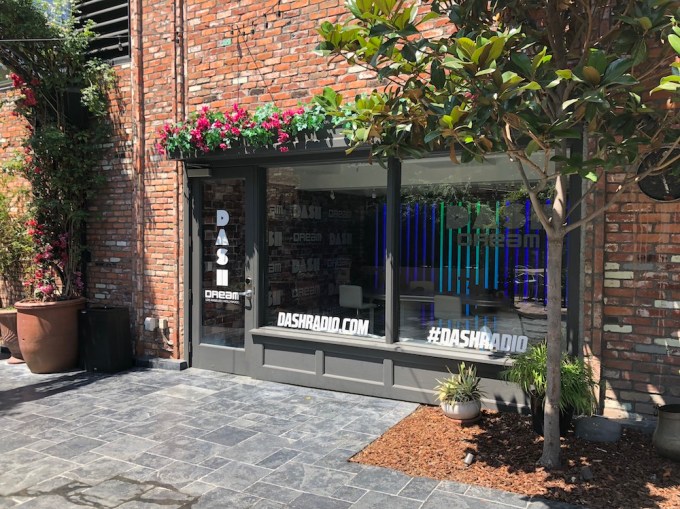
Dash studio

Speaking of analog radio, Keeney acknowledged that there are other services (like iHeartRadio) that bring live radio broadcasts online, but he suggested that they’re coming from “legacy players” who are “all burdened by legacy infrastructure.”

Dash is able to take a different approach. For one thing, it’s cut out the long stretches of advertising — as Keeney put it, “We figured a business model that goes around these traditional insertion-based advertising models.”

That doesn’t means it’s avoiding sponsorships. In fact, it recently opened a studio in the Empire State Building (it already has a studio in Los Angeles) in partnership with Build-A-Bear, which also operates a branded kids’ station on Dash. What Dash isn’t going to do is interrupt the music and shows with ads.

Keeney also suggested that Dash might eventually introduce a paid, premium plan with features like on-demand show archives.

He made it clear that if Dash really is going to be the future of radio, it needs to allow new talent to succeed as well. That includes surfacing new artists (Keeney said Post Malone’s first radio interview was on Dash), and also new DJs. After all, Snoop Dogg is “an incredible talent,” but he’s never going to be known primarily as a Dash Radio personality.

“Now we’re starting to see people emerging, they are going to be known as somebody from Dash Radio,” Keeney said.

from Startups – TechCrunch https://ift.tt/2z2JnLy
#USA Marieme Diop and Shikoh Gitau to speak at Startup Battlefield Africa

//

Startup Battlefield Africa is set for December 11 in Lagos and investor Marieme Diop and ICT expert Shikoh Gitau will be there to lend their perspective and expertise. The Lagos TechCrunch event is a return to Africa for the Startup Battlefield series after its debut on the continent in Nairobi, Kenya.

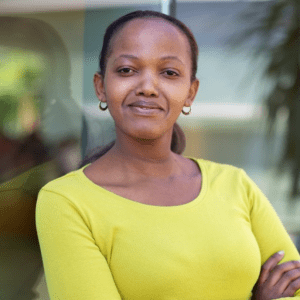
Shikoh Gitau

Diop — who is a VC investor in early-stage African startups at Orange Digital Ventures — will speak on venture capital in Africa. And Gitau, who is head of product at Safaricom’s Alpha incubator, joins TechCrunch to discuss talent, innovation, and repatriate entrepreneurs in Africa’s expanding startup landscape.

Alpha opened in 2017 and Gitau led a Pan-African and global search for candidates to form its team. The incubator was established to innovate new products and apps for Safaricom: Kenya’s largest telecom, globally recognized for its M-Pesa mobile money product with 27 million customers.

In April this year, Gitau and her colleagues rolled out Alpha’s first product, called Bonga, to leverage M-Pesa’s extensive financial web as a social and e-commerce network.

Marieme Diop will share insights with the Startup Battlefield crowd on Africa’s VC market. Under her tutelage, Orange Digital Ventures (ODV) participated in a $16 million round for South African fintech startup Yoco and the $8.6 million round to Africa’s Talking—a Pan-African business enterprise software startup.

Marieme Diop

Formed in 2017 as the venture arm of French telco Orange, ODV is a €150 fund with €50 allocated for Africa, according to Diop. It has made 17 investments globally, with 2 in Africa. These follow pre-fund Orange investments in startups Jumia (Africa’s first unicorn), Afrimarket, and Afrostream.

Orange has €40 left for African startup investments, according to Diop. “Our target is to make 4 African investments each year,” she told TechCrunch.

Diop will join Startup Battlefield Africa to discuss investment at a time when VC rounds and funds on the continent are surging. A recent Crunchbase survey found 51 viable Africa-focused VC funds globally, with 22 (or 43 percent) located on the continent. Of those 22, nearly half (41 percent) were formed since 2016, with 9 in Nigeria.

TechCrunch’s Startup Battlefield Africa in Lagos will be a day-long affair and include a competition with pitches from Africa’s top early-stage startups. TechCrunch will also offer panel discussions to explore the continent’s rapidly growing tech ecosystem, including venture capital. You don’t want to miss out. Buy your tickets here.

from Startups – TechCrunch https://ift.tt/2D0ddoD

#USA Marieme Diop and Shikoh Gitau to speak at Startup Battlefield Africa

//

Startup Battlefield Africa is set for December 11 in Lagos and investor Marieme Diop and ICT expert Shikoh Gitau will be there to lend their perspective and expertise. The Lagos TechCrunch event is a return to Africa for the Startup Battlefield series after its debut on the continent in Nairobi, Kenya.

Shikoh Gitau

Diop — who is a VC investor in early-stage African startups at Orange Digital Ventures — will speak on venture capital in Africa. And Gitau, who is head of product at Safaricom’s Alpha incubator, joins TechCrunch to discuss talent, innovation, and repatriate entrepreneurs in Africa’s expanding startup landscape.

Alpha opened in 2017 and Gitau led a Pan-African and global search for candidates to form its team. The incubator was established to innovate new products and apps for Safaricom: Kenya’s largest telecom, globally recognized for its M-Pesa mobile money product with 27 million customers.

In April this year, Gitau and her colleagues rolled out Alpha’s first product, called Bonga, to leverage M-Pesa’s extensive financial web as a social and e-commerce network.

Marieme Diop will share insights with the Startup Battlefield crowd on Africa’s VC market. Under her tutelage, Orange Digital Ventures (ODV) participated in a $16 million round for South African fintech startup Yoco and the $8.6 million round to Africa’s Talking—a Pan-African business enterprise software startup.

Marieme Diop

Formed in 2017 as the venture arm of French telco Orange, ODV is a €150 fund with €50 allocated for Africa, according to Diop. It has made 17 investments globally, with 2 in Africa. These follow pre-fund Orange investments in startups Jumia (Africa’s first unicorn), Afrimarket, and Afrostream.

Orange has €40 left for African startup investments, according to Diop. “Our target is to make 4 African investments each year,” she told TechCrunch.

Diop will join Startup Battlefield Africa to discuss investment at a time when VC rounds and funds on the continent are surging. A recent Crunchbase survey found 51 viable Africa-focused VC funds globally, with 22 (or 43 percent) located on the continent. Of those 22, nearly half (41 percent) were formed since 2016, with 9 in Nigeria.

TechCrunch’s Startup Battlefield Africa in Lagos will be a day-long affair and include a competition with pitches from Africa’s top early-stage startups. TechCrunch will also offer panel discussions to explore the continent’s rapidly growing tech ecosystem, including venture capital. You don’t want to miss out. Buy your tickets here.

from Startups – TechCrunch https://ift.tt/2D0ddoD

#USA Marieme Diop and Shikoh Gitau to speak at Startup Battlefield Africa

//

Startup Battlefield Africa is set for December 11 in Lagos and investor Marieme Diop and ICT expert Shikoh Gitau will be there to lend their perspective and expertise. The Lagos TechCrunch event is a return to Africa for the Startup Battlefield series after its debut on the continent in Nairobi, Kenya.

Shikoh Gitau

Diop — who is a VC investor in early-stage African startups at Orange Digital Ventures — will speak on venture capital in Africa. And Gitau, who is head of product at Safaricom’s Alpha incubator, joins TechCrunch to discuss talent, innovation, and repatriate entrepreneurs in Africa’s expanding startup landscape.

Alpha opened in 2017 and Gitau led a Pan-African and global search for candidates to form its team. The incubator was established to innovate new products and apps for Safaricom: Kenya’s largest telecom, globally recognized for its M-Pesa mobile money product with 27 million customers.

In April this year, Gitau and her colleagues rolled out Alpha’s first product, called Bonga, to leverage M-Pesa’s extensive financial web as a social and e-commerce network.

Marieme Diop will share insights with the Startup Battlefield crowd on Africa’s VC market. Under her tutelage, Orange Digital Ventures (ODV) participated in a $16 million round for South African fintech startup Yoco and the $8.6 million round to Africa’s Talking—a Pan-African business enterprise software startup.

Marieme Diop

Formed in 2017 as the venture arm of French telco Orange, ODV is a €150 fund with €50 allocated for Africa, according to Diop. It has made 17 investments globally, with 2 in Africa. These follow pre-fund Orange investments in startups Jumia (Africa’s first unicorn), Afrimarket, and Afrostream.

Orange has €40 left for African startup investments, according to Diop. “Our target is to make 4 African investments each year,” she told TechCrunch.

Diop will join Startup Battlefield Africa to discuss investment at a time when VC rounds and funds on the continent are surging. A recent Crunchbase survey found 51 viable Africa-focused VC funds globally, with 22 (or 43 percent) located on the continent. Of those 22, nearly half (41 percent) were formed since 2016, with 9 in Nigeria.

TechCrunch’s Startup Battlefield Africa in Lagos will be a day-long affair and include a competition with pitches from Africa’s top early-stage startups. TechCrunch will also offer panel discussions to explore the continent’s rapidly growing tech ecosystem, including venture capital. You don’t want to miss out. Buy your tickets here.

from Startups – TechCrunch https://ift.tt/2D0ddoD

#USA Naya Health, once a promising breast pump startup, now leaving customers in the dark

//

With their loud noises and hard plastic flanges, breast pumps are the bane of many a new mother’s existence. Founded in 2013, Naya Health is one of the most notable tech startups working on a better pump. But the company’s support site is now shutdown and it’s stopped updating its social media accounts. In a report today, CNBC spoke to several customers who said their pumps, which cost $1,000 and aren’t covered by insurance, had stopped working, and Naya Health had not provided them with adequate support or replacement parts.

Several users have also complained on Naya Health’s Facebook page about non-delivery of pumps they ordered months ago. A Kickstarter campaign created for Naya Health’s smart baby bottle, which raised more than $100,000, is also filled with complaints about orders not being fulfilled (the last response from co-founder and CEO Janica Alvarez was posted six months ago).

Naya Health’s Facebook and Instagram accounts haven’t been updated since summer, even though users are still posting complaints, while its Twitter account has been set to protected mode. An email sent to Alvarez, who co-founded the company with her husband Jeffery Alvarez, Naya Health’s CTO, received an auto-reply. TechCrunch has also contacted Naya Health investors Tandem Capital and Bojiang Capital, the co-leads of its seed round, for comment. The company has raised $4.6 million in angel and seed funding, according to Crunchbase.

While the Naya Health breast pump’s price tag is significantly more than most competing devices, customers were willing to give it a chance because of its unique flange design, which used silicone and water instead of plastic cups to recreate a nursing baby’s mouth.

from Startups – TechCrunch https://ift.tt/2PSaHDx

#USA Cloudflare reportedly gearing up for a $3.5 billion IPO next year

//

Cloudflare is reportedly preparing for an initial public offering with a potential valuation of more than $3.5 billion. According to Reuters, the IPO would take place in the first half of 2019 and be led by Goldman Sachs.

This year is expected to be a strong one for cybersecurity stock debuts, thanks in part to increasing awareness of, and demand for, security and privacy services. Another cybersecurity startup said to be prepping for an IPO is CrowdStrike, which raised $200 million earlier this year on a valuation of $3 billion. According to Reuters, CrowdStrike’s would also be led by Goldman Sachs.

Founded by Lee Holloway, Matthew Prince, and Michelle Zatlyn, Cloudflare launched in 2010 at TechCrunch Disrupt. Since then, it has raised a total of $182.1 million from investors including NEA, Union Square Capital, Baidu, Microsoft, Qualcomm and capitalG (Alphabet’s investment fund formerly known as Google Capital), according to Crunchbase. Its last funding, a $110 million Series D, was announced in September 2015 and led by Fidelity Investments.

Cloudflare’s services help websites load faster and prevent security breaches. According to the company’s website, it now has more than 154 data centers and serves more than 10 million domains. The company claims that “the average Internet users touches us more than 500 times” each week.

from Startups – TechCrunch https://ift.tt/2q7rabJ

#USA Teamable, the Tinder for hiring, raises $5M and acquires Simppler

//

Teamable, a provider of hiring software that leverages employees’ social networks, has brought in $5 million from new investor Foundation Capital and existing backers True Ventures and SaaStr Fund.

The startup also announced its acquisition of Simppler‘s referral recommendation engine and matchmaking recruiting software. Teamable’s co-founder and chief executive officer Laura Bilazarian declined to disclose the terms of the deal but said none of the $5 million investment was used to finance the transaction.

According to Crunchbase, Simppler had raised $3.2 million in equity funding from Foundation Capital, Greylock and others. The company, which is akin to Teamable, creates a referral platform using existing employee networks; it was founded by Vipul Sharma in 2013. Sharma previously ran machine learning at Eventbrite and, according to his LinkedIn profile, he’s been an engineering director at Indeed for the past year.

Sharma and the Simppler team will not be joining Teamable .

Using Gmail, Facebook, GitHub and other social media platforms, Teamable aggregates its employees’ contacts to connect recruiters with a more focused set of potential candidates. Companies using Teamable, including Spotify and Lyft, then facilitate a warm introduction between a candidate and the employee in their network. The startup says its social recruiting algorithms lead to more efficient and diverse hiring practices.

“I don’t think candidates love the way recruiting is done,” Bilazarian told TechCrunch. “They are throwing applications over a wall and not hearing back. And I don’t think companies love the way recruiting is done because people are just making guesses based off a job description and they aren’t getting the right applicants.”

“Instead of few people at a company spamming the entire world, you have people who really understand the company reaching out to you,” she added. “Teamable is very precise. It’s reach out to five people to get a hire versus reach out to 200 just to get one response.”

The Foundation-led investment brings Teamable’s total equity funding to date to $10 million, including last year’s $5 million Series A. Bilazarian says the 50-person company is cash flow positive with 200 customers. With offices in San Francisco and Yerevan, Armenia, Teamable will use the capital to expand its team and recruiting platform.

from Startups – TechCrunch https://ift.tt/2CZpbPl

#USA DLab is a new East Coast accelerator for crypto

//

SOSV, a twenty-year-old fund with $500M in assets under management, has been running accelerators for years. Their oldest one, HAX, is the premier hardware accelerator in San Francisco and Shenzhen and they’ve recently launched a food accelerator in New York and a pair of biology accelerators. Now, however, they’ve just announced dLab, a crypto accelerator that is paired with Cardano to build out distributed apps and solutions.

It is led by Nick Plante, a programmer integral in drafting the JOBS Act and who co-founded Wefunder, a successful crowdfunding platform.

“We can only make this sort of commitment to ecosystems we feel are incredibly compelling; it takes a substantial amount of dedication, education, staffing, and of course the long term financial commitment to support the space and the companies,” said Plante. “We invest in ecosystems that we identify as ‘macro trends’ like disruptive food, life sciences and synthetic biology, Chinese market entry, IoT and robotics… things that will fundamentally alter the way that we live in the next 100 years.”

“Decentralization is clearly a macro trend, in the macro sense. What’s happening with blockchain and digital ledger technologies has the potential to upend some of the most basic economic incentives that lie beneath the things we do every day; to affect the ways that humans collaborate, identify, trust, govern, and bring new ideas to life… it underlies all of it,” he said.

Dlab supplies up to $200,000 in pre-seed funding as well as perks from the SOSV global network of accelerators. They are also offering fellowships in partnership with Cardano to work with projects that would further blockchain research.

“Through last year and the start of this year we kept watching the blockchain ecosystem do some amazing things – along with some criminal things. The surveys and reports about the fraud rates of ICOs and other unpleasantness kept underlining our concerns report after report. The potential for the big economic shifts I mentioned earlier were clearly here but there were so, so many problems; there was a real need for education, for curation, and for proper governance and incentive structures to be put in place,” said Plante.

The group is accepting applications now for a January cohort. The group invests in 150 startups per year, a heady number in these cash-poor times.

from Startups – TechCrunch https://ift.tt/2PRf4i6

#USA Coinbase lets you buy and sell USDC stablecoin

//

A few weeks after Circle announced the launch of USD Coin (or USDC for short), Coinbase also announced that customers can now buy, sell, send and receive USDC on Coinbase. A USDC is a token that is worth exactly 1 USD. Its value is going to stay stable against USD — hence the name stablecoin for this type of coins.

Unlike traditional cryptocurrencies, you can be sure that the value of your USDC wallet isn’t going to fluctuate like crazy. It opens up new possibilities and use cases.

While Coinbase lets you hold USD in your Coinbase account, this isn’t safe. If somebody hacks into your account, you could end up with an empty wallet. That’s why you should always try to control the keys of your wallet and transfer your coins to a safer wallet, such as a Ledger wallet or at least a software solution like MyEtherWallet.

But if you want to short cryptocurrencies without sending your USD back to your bank account, you can now convert your tokens to USDC. This way, it’ll be easier to buy cryptocurrencies again in the future. And maybe you can avoid paying taxes by hiding your tokens from taxation authorities…

USDC also works just like a regular token. You just need a wallet address to send some USDC. USDC is an ERC-20 token, which means that it leverages the Ethereum blockchain and ecosystem.

But stablecoins need to be regulated more tightly. Circle, Coinbase and a bunch of other companies have created the CENTRE consortium to define the policies around stablecoins. For instance, if you want to handle stablecoins on your exchange, you need to send regular audited reports that prove that you have as many USD sitting on a bank account as issued tokens.

With both Coinbase and Circle on board, it’s clear that USDC is off to a good start. Now let’s see if there’s enough interest to create other stablecoins based on EUR, CNY and other fiat currencies.

from Startups – TechCrunch https://ift.tt/2NZrMd9

#USA Sources: Balderton Capital gearing up to invest in Swedish e-scooter startup VOI

//

We already knew that the electronic scooter space in Europe was heating up, with Berlin’s Tier announcing today it has raised €25 million in a round led by Northzone, and rumours circulating that Delivery Hero founder Lukasz Gadowski has ventured into the space — all within the context of U.S. companies Bird and Lime recently expanding to Europe. However, now it seems that Balderton Capital could be about to make its move by investing in Sweden’s VOI Technology, another e-scooter rental play with pan-European ambitions.

According to multiple sources, the London-based venture capital firm is gearing up to lead a round in Stockholm-based VOI. Two sources say the amount being invested is $15 million at a pre-money valuation of between $35-40 million, while another source said it could be as much as $25 million. Separately, I’m hearing that with multiple term sheets on the table and the pace at which the company is growing, VOI is actually considering increasing the round to $50 million.

Other VC firms thought to be participating are Berlin’s Project A, and Netherland-based Prime Ventures.

To date, VOI has raised around just shy of $3 million in seed funding from Vostok New Ventures.

I contacted Balderton Capital earlier today, but haven’t heard back. A spokesperson for Project also declined to comment. Neither Prime Ventures or VOI could be reached at the time of publication.

What is particularly noteworthy about Balderton’s entrance into the e-scooter market is that three of the other “big four” London VC firms have already made U.S. investments in the space. Index and Accel have backed Bird, and Atomico has backed Lime.

As I noted in my earlier Tier funding story — which marked the biggest financial backing for a European company in the space to date — this isn’t stopping a number of European investors getting busy trying to create the “Bird or Lime of Europe,” even if it is far from clear that Bird or Lime won’t take that title for themselves (which is obviously the bet being made by Index, Accel and Atomico). The general sentiment of European VCs steadfastly trying to nurture a European born competitor is that they don’t want to see the e-scooter rental market be rolled over by the U.S. in the same way that Uber rode in and knocked out many local players.

With that said, the worse case scenario in the eyes of many of those same VCs (and those VCs standing on the sidelines not participating) is that Bird or Lime will eventually acquire the most promising European e-scooter company or companies. In other words, the downside is mitigated somewhat, failing an outright home run.

Meanwhile, Tier, VOI and Gadowski’s Go Flash aren’t the only European born e-scooter startups with pan-European ambitions. There’s also Coup, an e-scooter subsidiary owned by Bosch and backed by BCG Digital Ventures that operates in Berlin, Paris and Madrid. And just two month’s ago Taxify announced its intention to do e-scooter rentals under the brand Bolt, first launched in Paris but also planning to be pan-European, including Germany.

Not that everyone is convinced. Two early-stage European VCs I spoke to today said they hated the space. “I just don’t understand, isn’t it going to be a massive bloodbath?” said one of the VCs, before questioning the total number of rides we could see in Europe annually. “I just don’t see how Europe is going to produce multiple multibillion dollar businesses in this space. I think the market size caps it”.

from Startups – TechCrunch https://ift.tt/2CzQsXy