

#USA The real-life Emery and Evan from “Fresh off the Boat” launch Batu Capital for cannabis, crypto and big data startups

//

Brothers Evan and Emery Huang, founders of Batu Capital

Restaurateur and raconteur Eddie Huang is the best known of the three “Fresh off the Boat” brothers (it was his memoir that inspired the ABC sitcom), but his younger brothers Emery and Evan remain relatively mysterious even to its most loyal viewers. Though the two’s namesake characters are also prominently featured on the show, their real-life counterparts have kept a much lower public profile, making sporadic appearances on Eddie’s social media.

Emery and Evan, however, have been busy investing in real estate and recently branched into tech startups. Though their multi-family investment office Batu Capital just launched this year, it reached a big milestone this week when one of their first investments, MJ Freeway, an enterprise software developer for the cannabis industry, entered into a merger agreement with MTech that will make it part of a Nasdaq-listed holding company.

The fictionalized versions of Evan and Emery Huang, portrayed on “Fresh off the Boat” by Ian Chen and Forrest Wheeler. (Photo by Vivian Zink/ABC via Getty Images)

In an interview, the two brothers told TechCrunch about moving into the tech sector and the startups they want to fund in the United States, China and Southeast Asia. Batu Capital is focused on finding companies in the cannabis, blockchain and crypto sectors, as well as big data.

In addition to MJ Freeway, which provides enterprise resource planning and compliance tracking software for the cannabis businesses, its portfolio also includes Vidy, a startup building a new approach to video ads on Ethereum, and Sora Ventures, a crypto-backed blockchain and digital currency venture fund. Batu Capital invests in seed or Series A stage companies or Series C and pre-IPO and its typical check size will be about $500,000 to $2 million.

Though Batu isn’t a single family office, instead raising capital from a network of limited partners for each investment, its creation was motivated by Emery and Evan’s desire to protect their family’s assets after several generations of political and social upheaval.

“Long story short, our family has made and lost fortunes more than five times within the past two generations and quite frankly I’ll be damned if we let it happen again in me and Evan’s lifetime,” Emery says.

Before World War II, the Huang brothers’ paternal relatives amassed a railroad fortune, but lost it all during the Japanese invasion of Nanjing. They escaped to Chongqing and began rebuilding their wealth through real estate, but were forced to flee to Taiwan during the Chinese Communist Revolution, losing everything once again. Meanwhile their maternal grandparents had also fled from China to Taiwan to escape the Japanese army. Though they had worked in banking before, they survived in Taipei by selling steamed buns on the street for several years until getting jobs in a textile plant, eventually opening their own curtain and upholstery fabric factory.

Like many who had escaped the Chinese Communist Party, however, the boys’ relatives remained wary of another invasion and though they had rebuilt their lives in Taiwan, both sides eventually left for the U.S. That’s where their parents, Louis and Jessica, met, married, and had their three sons. “Fresh off the Boat,” the first American primetime sitcom in 20 years to star Asian-Americans, is a fictionalized version of the Huang family’s ups-and-downs as Louis and Jessica build a restaurant business in Florida, where the brothers grew up.

Investing in the backbone of new industries

All three brothers gained business experience by working on BaoHaus, the popular restaurant chain Eddie launched on the Lower East Side of Manhattan in 2009. Emery, who had won the Writers of the Future Grand Prize for science fiction writing, exited early and moved to China. He wanted to work on novels set there, but also look for new investment opportunities. At that time, Emery and Evan were helping their parents prepare for retirement by exiting the restaurant business and they began investing the family’s assets in real estate, brokering deals between Chinese investment groups and New York City property owners before deciding to branch into tech.

Batu Capital is named after Batu Khan, the Mongol ruler and founder of the Golden Horde dynasty, in a nod to their love of Mongolian history (they also recently discovered, thanks to 23andMe tests, that they have some Mongolian heritage through both their parents).

The firm is focusing on cannabis because of its “massive addressable market, both in terms of pain management and medical usage, as well as recreational usage,” Emery says. In particular, the brothers are hopeful that it can replace the $17 billion painkiller market, but without the side effects that have contributed to the opioid epidemic. As for crypto, Emery says the brothers “were really drawn to the applications of blockchain technology, not just for currency, but blockchain in general, and smart ledgers in general, as a way to archive information in terms of data storage and data fidelity.”

In each sector, Evan says Batu looks for companies that want to build solutions for the “overall infrastructure of the industry.”

For example, MJ Freeway helps growers and dispensaries manage their business while making sure they comply with state and federal regulations. Vidy, meanwhile, is using blockchain to reboot the way publishers display ads. Instead of automatic pop-ups or embeds, readers can decide if they want to see a video by placing their finger or cursor over text in an online article (try it in this Esquire Singapore article by hovering over the pink highlighted text).

By allowing readers an easy opt-in to streaming videos, Vidy hopes to give publishers a more nuanced understanding of user engagement. The startup, whose partners include Mediacorp, Mercedes-Benz, and Deliveroo, also created its own ERC20 utility token, called VidyCoin, which advertisers use to purchase ad placements and readers can earn by watching videos. Recording transactions on blockchain enables Vidy to guard against different types of online ad fraud, including click spam.

With their family’s past setbacks in mind, the Huang brothers say one priority is to make sure their portfolio is geographically diverse. In addition to the U.S. and China (Emery is based in Shanghai and Evan is planning to move from the U.S. to Beijing soon), Batu Capital is also looking at growth markets in Southeast Asia, in particular the Philippines and Cambodia. The latter not only benefits from Chinese funding, but also provides more transparency for investors, they say.

“Our number one priority for startups is the executive team. We want to make sure it’s people who have a track record of building up companies in that industry or related industries, or that have experience that can transfer over. They have to have a competitive edge in the market. For example, what’s their niche in the big data space or do they have strategic partnerships?” Emery says. “The same thing with crypto and cannabis. We don’t just invest in the space. We need to make sure they stand out.”

from Startups – TechCrunch https://ift.tt/2CcGVp9
#USA With TodayTix Presents, TodayTix is starting to produce its own live shows

//

Mobile ticketing app TodayTix is getting into the show production business with the launch of a new program called TodayTix Presents.

While TodayTix is sometimes described as the mobile version of the TKTS booth where you can pick up last-minute tickets to Broadway shows, CEO Brian Fenty said that he sees the service’s real competitors as “anything you can do with your night, outside of work — that’s Netflix and ‘Orange is the New Black,’ that’s post-season baseball, that’s a pitcher of margarita.”

At the same time, Fenty said after driving a total of $250 million in sales and to 4.6 million customers, the company has built a rich trove of data about people’s cultural interests. So with that in mind, it made sense for TodayTix to follow Netflix’s footsteps with “the same ethos that they had, to develop and to nurture programming and content that’s intimately connected to what users and what customers want to see.”

This doesn’t mean TodayTix is going to be producing spectacular Broadway productions. Instead, Fenty pointed to the TodayTix Live concert in Brooklyn last month as the first of these shows.

That concert, which celebrated TodayTix’s five-year anniversary and was hosted by Darren Criss, featured (mostly) Broadway stars like Matthew Morrison and Ariana Debose, who (mostly) performed pop standards.

Fenty said future TodayTix Live events won’t follow the exact same format, but the idea is to continue featuring popular artists in intimate settings — he compared it to “MTV Unplugged.” In fact, he suggested that with 300 attendees, last month’s concert was about as big as these shows will get.

And because these are small, one-off events, Fenty said they’re noc competitive with the big shows that TodayTix works with.

“[Our partners] are doing longform, high-budget, highly developed shows that take years to develop and are fully baked,” he said. “Really what TodayTix Presents is supposed to be is a work-in-progress, an intimate way to see an artist.”

TodayTix already has plans for another New York City event in November, and then two in December. Fenty said “the cadence should roughly be a few events per quarter to start,” and that there will be shows across the service’s 13 markets.

from Startups – TechCrunch https://ift.tt/2NDrUi6

#USA Readdle’s Denys Zhadanov to talk about bootstrapping at Disrupt Berlin

//

Readdle might not be a familiar name, but chances are you’ve been using some of their mobile apps. The Ukrainian company is a bootstrapped success story with 100 million downloads, 135 employees and a profitable business. That’s why I’m excited to announce that Readdle Vice President Denys Zhadanov is coming to TechCrunch Disrupt Berlin to talk about this remarkable journey.

Readdle is behind some of the most popular productivity apps on iOS, such as Spark, PDF Expert, Calendars 5, Scanner Pro and Documents. When you browse the top charts in the App Store, there’s always a Readdle app here and there.

The App Store has been around for ten years and has created a major shift in the tech industry. Many companies wouldn’t be around without the App Store and the Play Store, such as Uber, Snap, Facebook’s WhatsApp and Instagram.

But the App Store isn’t just about social apps and big venture capital funding rounds. Readdle was there from day one and launched its first app back in 2008. They’ve been growing steadily, launched dozens of paid productivity apps, shut down some of them and iterated on the most successful ones.

Readdle’s biggest bet right now is Spark. The company wants to create a better email client for iOS and the Mac. This is an ambitious product with many competitors, including Microsoft’s Outlook and Google’s Gmail. The company is trying a software-as-a-service business model for this product with premium features.

In many ways, building such a strong company without external funding is even more impressive than the average startup. And I can’t wait to hear Zhadanov’s take on that.

Buy your ticket to Disrupt Berlin to listen to this discussion and many others. The conference will take place on November 29-30.

In addition to fireside chats and panels, like this one, new startups will participate in the Startup Battlefield Europe to win the highly coveted Battlefield cup.


Denys Zhadanov

Vice President of Marketing, Readdle

Denys is a Vice President of marketing at Readdle.

He is also an advisor, a speaker, and a connector between Ukraine and Silicon Valley.

Readdle aims to redefine personal productivity and shape the "future of work" by creating best in class apps and services. Readdle apps such as Scanner Pro, Calendars 5, Spark email, Documents and PDF Expert were downloaded over 100 million times worldwide, are always in top charts on the App Store, won numerous awards from Apple and love from the tech industry. Being a pioneer of the App Store, Readdle now employs 130 people in 8 locations, never raised external capital.

Forbes 30 under 30, Denys has often been quoted about app economy, entrepreneurship, and digital marketing by major media outlets such as WSJ, The Verge, USA Today, TechCrunch, Bloomberg, Wired, TheNextWeb, FastCompany.

from Startups – TechCrunch https://ift.tt/2PpDeA6

#USA With $50M in fresh funding, Allbirds will open new stores in the US, UK and Asia

//

The quintessential venture capitalist’s uniform consists of a pair of designer jeans, a Patagonia fleece vest and $95 wool sneakers.

The company behind the shoes, Allbirds, entered the unicorn club this morning with the announcement of a $50 million Series C from late-stage players T. Rowe Price, which led the round, Tiger Global and Fidelity Investments. The 3-year-old startup founded by Joey Zwillinger and Tim Brown has raised $75 million to date, including a $17.5 million Series B last year. Its backed by Leonardo DiCaprio, Scooter Braun, Maveron, Lerer Hippeau and Elephant, the venture capital firm led by Warby Parker founder Andrew Hunt.

The Wall Street Journal is reporting the round values Allbirds at $1.4 billion. The company would not confirm that figure to TechCrunch.

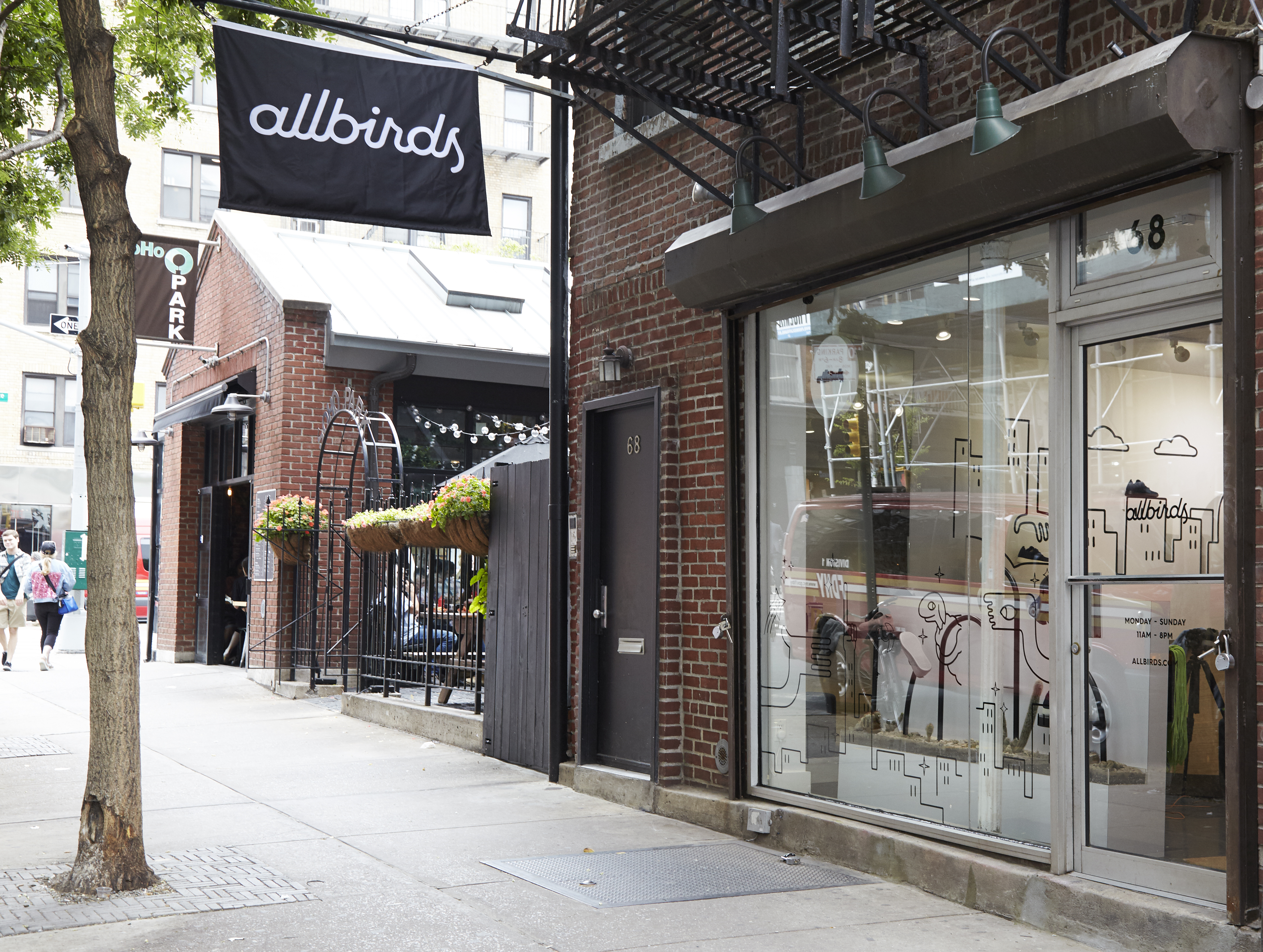
Like Warby Parker, San Francisco-based Allbirds began as a direct-to-consumer online retailer but has since expanded to brick-and-mortar, opening stores in San Francisco and New York. It currently ships to locations across the U.S., New Zealand, Australia and Canada. Next week, the company plans to open its first storefront in the U.K. in London’s Covent Garden neighborhood. It will begin shipping throughout the U.K. In 2019.

Using its latest investment, Allbirds will double down on its brick-and-mortar business. In addition to the U.K., the company says it will open even more locations in the U.S., as well as open doors in Asia in the coming months. Tiger Global, which has backed Allbirds since its Series B, may be of help. The firm has offices in Hong Kong and Singapore, as well as partners across Asia.

Allbirds makes eco-friendly wool shoes for men, women and kids via its kid’s line, aptly named Smallbirds. The shoes are made out of sustainable materials, including merino wool, a fabric made from eucalyptus fiber that the company has dubbed “Tree” and “SweetFoam,” a shoe sole made from sugarcane-based, carbon-negative foam rubber.

“Climate change is the problem of our generation and the private sector has a responsibility to combat it,” Zwillinger, Allbirds’ chief executive officer, said in a statement. “This injection of capital will help us bring our sustainable products to more people around the globe, demonstrating that comfort, design and sustainability don’t have to live exclusive of each other.”

It’s been quite the year for venture investment in … shoes. Rothy’s, which makes sustainable ballet flats for women, has raised $7 million and launched a sneaker. Atoms, a maker of minimalist shoes, brought in $560,000 in seed funding from LinkedIn’s ex-head of growth Aatif Awan and Shrug Capital. And GOAT, the operator of an online sneaker marketplace, nabbed a $60 million Series C in February.

from Startups – TechCrunch https://ift.tt/2yf7jvQ

#USA Lime wants to block Scoot and Skip from deploying electric scooters in SF next week

//

Lime is doing the most right now. In light of the San Francisco Municipal Transportation Agency denying Lime a permit to operate electric scooters in the city Lime is gearing up to request a temporary restraining order.

“Lime believes that after selecting two other less experienced electric scooter companies and comparatively weaker applications in a process that was riddled with bias, the SFMTA should revisit the decision and employ a fair selection process,” the company wrote in a press release.

Those two “less experienced” electric scooter companies Lime’s referring to are Skip, which currently operates via an official permit in Washington, D.C., and Scoot, which has successfully and legally operated shared electric mopeds in the city for several years.

Following the SFMTA’s decision, Lime sent an appeal requesting the agency reevaluate its application. At the time, the SFMTA said it was “confident” it picked the right companies.

Now, since the SFMTA still plans to enable both Scoot and Skip to deploy their respective scooters on Monday, Lime says it “believes that it has no choice but to seek emergency relief in the court.”

Ahead of the decision in Santa Monica, Lime, along with Bird, protested recommendations for the city to not grant Lime a permit. Though, the city did end up granting Lime a permit. Lime, however, is not the only company that has appealed the decision in San Francisco. Earlier this week, Lyft reportedly petitioned SF Mayor London Breed, asking her to reconsider the SFMTA’s decision to only grant two permits for electric scooters.

“It’s unfortunate Lime has chosen this course,” John Coté, communications director for City Attorney Dennis Herrera said in a statement. “The SFMTA’s permitting process for the pilot program was thoughtful, fair and transparent. It includes an appeal process that Lime should be pursuing instead of wasting everyone’s resources by running to court.”

He added:

Lime appears to be playing games. It had weeks to resolve this and instead chose a last-minute motion in an effort to shut down the entire scooter program.  Lime fails to admit that its application simply didn’t match those of its competitors. If Lime succeeds, it will be hurting the very people it purports to want to help – those who are ready to use scooters on Monday.

Last spring, Lime told San Franciscans that electric scooters were a great transportation alternative. Now, Lime is saying that if they can’t run electric scooters in San Francisco, no one can.  It’s sour grapes from Lime, plain and simple.

I’ve reached out to the SFMTA and will update this story if I hear back.

from Startups – TechCrunch https://ift.tt/2IPf4wl

#USA YC-grad Papa raises $2.4M for its ‘grandkids-on-demand’ service

//

One of the latest additions to the on-demand economy is Papa, a mobile app that connects college students with adults over 60 in need of support and companionship.

The recent graduate of Y Combinator’s accelerator program has raised a $2.4 million round of funding to expand its service throughout Florida and to five additional states next year, beginning with Pennsylvania. Initialized Capital led the round, with participation from Sound Ventures.

Headquartered in Miami, the startup was founded last year by chief executive officer Andrew Parker. The idea came to him while he was juggling a full-time job at a startup and caring for his grandfather, who had early onset dementia.

“I’ve always been a connector of humans,” Parker, the former vice president of health systems at telehealth company MDLIVE, told TechCrunch. “I’ve always naturally felt comfortable with all walks of life and all age groups and have just felt human connection is really critical.”

Seniors can request a “Papa Pal” using the company’s mobile app, desktop site or by phone. The pals can pick them up and take them out for an activity or have them over to play a game, complete household chores, teach them how to use social media and other technology or simply to chat. A senior is matched with a student, who must complete a “rigorous” background check, in as little as 30 seconds.

Parker says there are 600 students working with Papa an average of 25 hours per month.

“We’ve been fortunate that this is something the students really want to be part of,” he said. “They aren’t doing this for a couple extra dollars. They are doing this to help the community.”

The service costs seniors $20 per hour, $12 of which is paid to the students and $8 is returned to Papa. It’s not a subscription-based service, but seniors can pay for a premium option that lets them choose between three Papa Pals instead of being randomly paired with one of the several hundred options. The students do not provide any personal care, like bathing or grooming. And they are not a pick-up and drop-off service, like Uber or Lyft.

“We believe the Papa team has found a unique way to combat loneliness and depression in older adults,” said Alexis Ohanian, co-founder and managing partner of Initialized Capital, in a statement. “The experience that Papa Pals bring their members make it seem like they are part of a family.”

In addition to expanding to new markets, Papa is in the process of partnering with insurance companies with a goal of allowing seniors to pay for some of its services through their Medicare plans.

“Loneliness is a crisis. It’s a disease. It’s killing people prematurely,” Parker said. “We are providing a really massive impact to these people’s lives.”

from Startups – TechCrunch https://ift.tt/2ITA716

#USA CommonSense Robotics’ first automated fulfillment center is now live

//

Israeli startup CommonSense Robotics is launching its first automated micro-fulfillment center in Tel Aviv. It’s a tiny 6,000 square feet warehouse that is packed from ground to ceiling with products. Robots do the heavy lifting when it comes to getting items ready to dispatch.

TechCrunch shot a video os CommonSense Robotics’ test fulfillment center. Today’s new warehouse is much bigger than that, but still much smaller than an Amazon warehouse. The company’s first client is Superpharm, Isarel’s largest drug store chain.

The startup wants to convince grocery retailers in urban areas that they can deliver orders in less than an hour. Currently, grocery retailers either leverage their stores (which is a waste of time) or have a giant warehouse outside of the big city.

With CommonSense Robotics, you could imagine a city with multiple micro-fulfillment centers so that you’re never too far. When you order something, robots instantly navigate around the warehouse and the shelves to pick up your stuff. A central server coordinates all the robots in real time to optimize the routes. This way, humans can stay at a scanning station and put together an order without having to move.

CommonSense Robotics remains in charge of the fulfillment centers. E-commerce retailers pay the startup to create and manage those fulfillment centers. This way, you can focus on your product inventory and last mile deliveries.

The company already signed a deal with Israeli grocery retailer Rami Levy for 12 centers. And CommonSense also plans to launch multiple sites in the U.S. in 2019.

from Startups – TechCrunch https://ift.tt/2IOFuyh

#USA SpankChain spanked

//

SpankChain, a cryptocurrency aimed at decentralized sex cams, has announced that a hacker stole about $38,000 from their payment channel thanks to a broken smart contract. They wrote:

At 6pm PST Saturday, an unknown attacker drained 165.38 ETH (~$38,000) from our payment channel smart contract which also resulted in $4,000 worth of BOOTY on the contract becoming immobilized. Of the stolen/immobilized ETH/BOOTY, 34.99 ETH (~$8,000) and 1271.88 BOOTY belongs to users (~$9,300 total), and the rest belonged to SpankChain.

Our immediate priority has been to provide complete reimbursements to all users who lost funds. We are preparing an ETH airdrop to cover all $9,300 worth of ETH and BOOTY that belonged to users. Funds will be sent directly to users’ SpankPay accounts, and will be available as soon as we reboot Spank.Live.

The hacker used a ‘reentrancy’ bug in which the user calls the same transfer multiple times, draining a little Ethereum each time. The bug is the same one that previously affected the DAO.

The company pointed out that a security audit on their smart contract would have cost $50,000, a bit more than the amount lost. “As we move forward and grow, we will be stepping up our security practices, and making sure to get multiple internal audits for any smart contract code we publish, as well as at least one professional external audit,” they wrote.

I’ve reached out to the company for clarification but in short it seems the spanker has become the spankee.

from Startups – TechCrunch https://ift.tt/2Oh3DDI

#USA SpankChain spanked

//

SpankChain, a cryptocurrency aimed at decentralized sex cams, has announced that a hacker stole about $38,000 from their payment channel thanks to a broken smart contract. They wrote:

At 6pm PST Saturday, an unknown attacker drained 165.38 ETH (~$38,000) from our payment channel smart contract which also resulted in $4,000 worth of BOOTY on the contract becoming immobilized. Of the stolen/immobilized ETH/BOOTY, 34.99 ETH (~$8,000) and 1271.88 BOOTY belongs to users (~$9,300 total), and the rest belonged to SpankChain.

Our immediate priority has been to provide complete reimbursements to all users who lost funds. We are preparing an ETH airdrop to cover all $9,300 worth of ETH and BOOTY that belonged to users. Funds will be sent directly to users’ SpankPay accounts, and will be available as soon as we reboot Spank.Live.

The hacker used a ‘reentrancy’ bug in which the user calls the same transfer multiple times, draining a little Ethereum each time. The bug is the same one that previously affected the DAO.

The company pointed out that a security audit on their smart contract would have cost $50,000, a bit more than the amount lost. “As we move forward and grow, we will be stepping up our security practices, and making sure to get multiple internal audits for any smart contract code we publish, as well as at least one professional external audit,” they wrote.

I’ve reached out to the company for clarification but in short it seems the spanker has become the spankee.

from Startups – TechCrunch https://ift.tt/2Oh3DDI

#USA Coord, a Sidewalk Labs spin-out, raises $5 million to help mobility services better integrate into cities

//

Coord, the mobility data startup that spun out of Alphabet-owned Sidewalk Labs, has raised a $5 million Series A round led by Alliance Ventures, with participation from Trucks, Urban.Us and DB Digital Ventures.

The plan with the funding is to continue to enhance Coord’s APIs and geographic coverage, as well as “build a bridge between the private and public sectors,” Coord co-founder and CEO Stephen Smyth wrote on Medium.

Coord offers a few products for its customers, which includes companies like Zipcar, Mozio and Google’s Maps product. There’s the Tolls API, which keeps tabs on toll roads, bridges and tunnels to determine the costs of trips, the Curbs API that is designed to help drivers easily figure out the parking and passenger loading rules (think ride-hailing drivers) in the area, meter prices and so forth, as well as a Routing API that uses real-time information to surface the best multi-modal routes.

And as bike-sharing and scooter-sharing continue to expand across the world, Curbs also offers a Shared Vehicle API to enable its customers to integrate the real-time availability, prices and locations of both bikes and scooters.

“Our goal is to help the public and private sectors speak the same language when it comes to urban transportation,” Smyth wrote. “While many private companies are not well integrated into existing transportation systems of today, we believe that end users will ultimately demand interoperability across all of the systems in a city. To that end, we are driving standardization of transportation-related data across cities.”

from Startups – TechCrunch https://ift.tt/2NzJFyN