#USA The Hack Fund will use crypto to give startups early liquidity

//

Now that “utility” tokens have become a popular and international way to fund major blockchain projects, a pair of investors are creating a new way to turn tokens into true equities. The investors, Jonathan Nelson and Laura Nelson, have created Hack Fund, an early stage investment vehicle that allows startups to launch what amounts to “blockchain stock certificates,” according to Jonathan.

“Our previous business model exchanged equity from startup companies for services, and wrapped that equity into funds that we then sold to investors. These fund investors have included family offices, institutions, and high net worth individuals,” said Jonathan. “However, Hack Fund represents a new business model. Because Hack Fund leverages the blockchain, investors all over the world at all levels can participate in startup investing by trading blockchain stock certificates. Also, its SEC compliant structure means that it is also available to a limited number of accredited investors in the US.”

The team originally created Hackers/Founders, a tech entrepreneur group in Silicon Valley, and they now support 300,000 members in 133 cities and 49 countries. Hack Fund is a vehicle to support some of the startups in the Hackers/Founders network.

“HACK Fund, through its Hackers/Founders heritage, has a large, unique global network,” said Jonathan. “This provides Hack Fund with unparalleled reach and deal flow across the global technology market. There are a few blockchain-based funds, but they are limited themselves to blockchain-only investments. Unlike typical venture funds, HACK Fund will provide quick liquidity for investors, leveraging blockchain technology to make typically illiquid private stocks tradeable.”

The idea behind Hack Fund is quite interesting. In most cases investing in a company leads to up to ten years of waiting for a liquidity event. However, with blockchain-based stock certificates investors can buy shares that can be bought and sold instantly while company performance drives the value up or down. In short, startups become liquid in an instant, which can be a good thing or a bad thing, depending on the founding team.

“HACK Fund is a publicly traded closed-end fund. The fund’s venture investments are valued on a quarterly basis by an independent third party, audited and posted to the blockchain for all token holders to review. There are no K-1 statements issued, there is no partnership/LLC, rather HACK Fund is an investment company akin to Berkshire Hathaway which invests in the same manner as early-stage venture capital,” said Jonathan.

The team is raising a little over $2 million in an ICO to build out the fund. They’ve already raised most of their $100 million total goal from individual investors but the ICO will let retail investors buy some of the tokens as they are made available on the BRD wallet.

from Startups – TechCrunch https://ift.tt/2Nz3SF9
#USA Zenefits’ Parker Conrad returns to launch Rippling, combining HR & IT tools

//

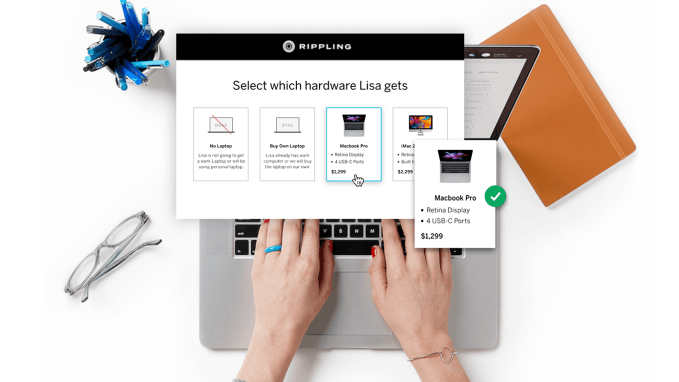
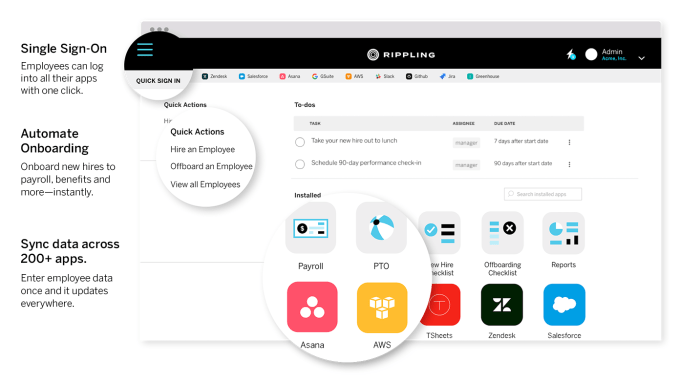
Parker Conrad likes to save time, even though it’s gotten him in trouble. The former CEO of Zenefits was pushed out of the $4.5 billion human resources startup because he built a hack that let him and employees get faster insurance certifications. But 2.5 years later, he’s back to take the busy work out of staff onboarding as well as clumsy IT services like single-sign on to enterprise apps. Today his startup Rippling launches its combined employee management system, which Conrad calls a much larger endeavor than the minimum viable product it announced while in Y Combinator’s accelerator 18 months ago.

“It’s not an HR system. It’s a level below that” Conrad tells me. “It’s this unholy, crazy mashup of three different things”. First, it handles payroll, benefits, taxes, and PTO across all 50 states. “Except Syria and North Korea, you can pay anyone in the world with Rippling” Conrad claims.

Second, it’s a replacement for Okta, Duo, and other enterprise single-sign on security apps that authenticate staffers across partnered apps. Rippling bookmarklets make it easy to auth into over 250 workplace apps like Gmail, Slack, Dropbox, Asana, Trello, AWS, Salesforce, GitHub and more. When an employee is hired or changes teams, a single modification to their role in Ripple automatically changes all the permissions of what they can access.

And third, it handles computer endpoint security. When an employee is hired, Rippling can instantly ship them a computer with all the right software installed and the hard drive encrypted, or have staffers add the Rippling agent that enforces the company’s security standards. The system is designed so there’s no need for an expert IT department to manage it.

“Distributed, fragmented systems of record for employee data are secretly the cause of almost all the annoying administrative work of running a company” Conrad explains. “If you could build this system that ties all of it together you could eliminate all this crap work.” That’s Rippling. It’s opening up to all potential clients today, charging them a combined subscription or a la carte fees for any of the three wings of the product.

Conrad refused to say how much Rippling has raised total, citing the enhanced scrutiny Zenefits’ raises drew. But he says a Wall Street Journal report that Rippling had raised $7 million was inaccurate. “We haven’t raised any priced VC rounds. Just a bunch of seed money. We raised from Initialized Capital, almost all the early seed investors at Zenefits, and a lot of individuals.” He cited Y Combinator, YC Growth Fund, YC’s founder Jessica Livingston and president Sam Altman, other YC partners, as well as DFJ and SV Angel.

“Because we were able to raise bunch of money and court great engineers . . . we were able to spend a lot of time building this fundamental technology” Conrad tells me. Rippling has about 50 team members now, with about 40 of them being engineers, highlighting just how thoroughly Conrad wants to eradicate manual work about work, starting with his own startup.

The CEO refused to discuss details of exactly what down at Zenefits and whether he thought his ejection was fair. He was accused of allowing Zenefits’ insurance brokers to sell in states where they weren’t licensed, and giving some employees a macro that led them more quickly pass the online insurance certification exam. Conrad ended up paying about $534,000 in SEC fines. Zenefits laid off 430 employees, or 45 percent of its staff, and moved to selling software to other insurance brokers.

But when asked what he’d learned from Zenefits, Conrad looked past those troubles and instead recalled that “one of the the mistakes that we made was that we did a lot stuff manually behind the scenes. When you scale up, there are these manual processes, and it’s really hard to come back later when it’s a big hard complicated thing and replace it with technology. You get upside down on margins. If you start at the beginning and never let the manual processes creep in . . . it sort of works.”

Perhaps it was trying to cut corners that got Conrad into the Zenefits mess, but now that same intention has inspired Rippling’s goal of eliminating HR and IT drudgery with an all-in-one tool.

“I think I’m someone who feels the pain of that kind of stuff particularly strongly. So that’s always been a real irritant to me, and I saw this problem. The conventional wisdom is ‘don’t build something like this, start with something much smaller’” Conrad concludes. “But I knew if I didn’t do this, that no one else was gong to do it and I really wanted this system to exist. This is a company that’s all about annoying stuff and making that fucking annoying stuff go away.”

from Startups – TechCrunch https://ift.tt/2QJI23J

#USA Warby Parker taps NY celebs for Pupils Project limited edition collection

//

Warby Parker is introducing a new collaboration as part of the Pupils Project.

In participation with a number of famous New Yorkers, including Rosario Dawson, Lena Dunham, Nikolai Fraiture, Iman, Fran Lebowitz, Humberto Leon, Mary-Louise Parker, Chloë Sevigny, Gloria Steinem, and Michael K. Williams, the company is releasing ten new pairs of frames.

All the proceeds from the sale of these frames will go towards the Pupils Project, which is a program that partners with the Department of Education in NYC and in Baltimore to provide free vision screenings, eye exams and glasses to school children in need. According to the CDC, vision impairment is the single most prevalent disabling condition among children in the United States.

Neil Blumenthal, who ran a non-profit called Vision Spring before cofounding Warby Parker explained that the company was initially designed to be able to give back to people in need.

“With all of these programs, Buy a Pair, Give a Pair and Pupils Project, we are thinking about what’s going to motivate us to come to work every day,” said Blumenthal, co-CEO of Warby Parker. “Hopefully we’ll get to a point where businesses don’t need to justify every action in terms of increasing shareholder value and focus on being good for the world.”

Thus far, Warby Parker has distributed over 4 million pairs of glasses to people in need across the globe since their launch in 2010.

By working with celebrities and influencers on this latest collaboration, Warby Parker hopes to grow awareness domestically for the issues that face some school children around vision impairment.

Each pair in the collection, which is a combination of sunglasses and regular glasses, cost $95.

from Startups – TechCrunch https://ift.tt/2CBOLtu

#USA Shared inbox startup Front launches a complete redesign

//

Front is launching a major revamp today. And it starts with a brand new design. Front is now powered by React for the web and desktop app, which should make it easier to add new features down the road.

Front hasn’t pivoted to become something else. At heart, it remains a multiplayer email client. You can share generic email addresses with your coworkers, such as sales@yourcompany or jobs@yourcompany. You can then assign emails, comment before replying and integrate your CRM with your email threads.

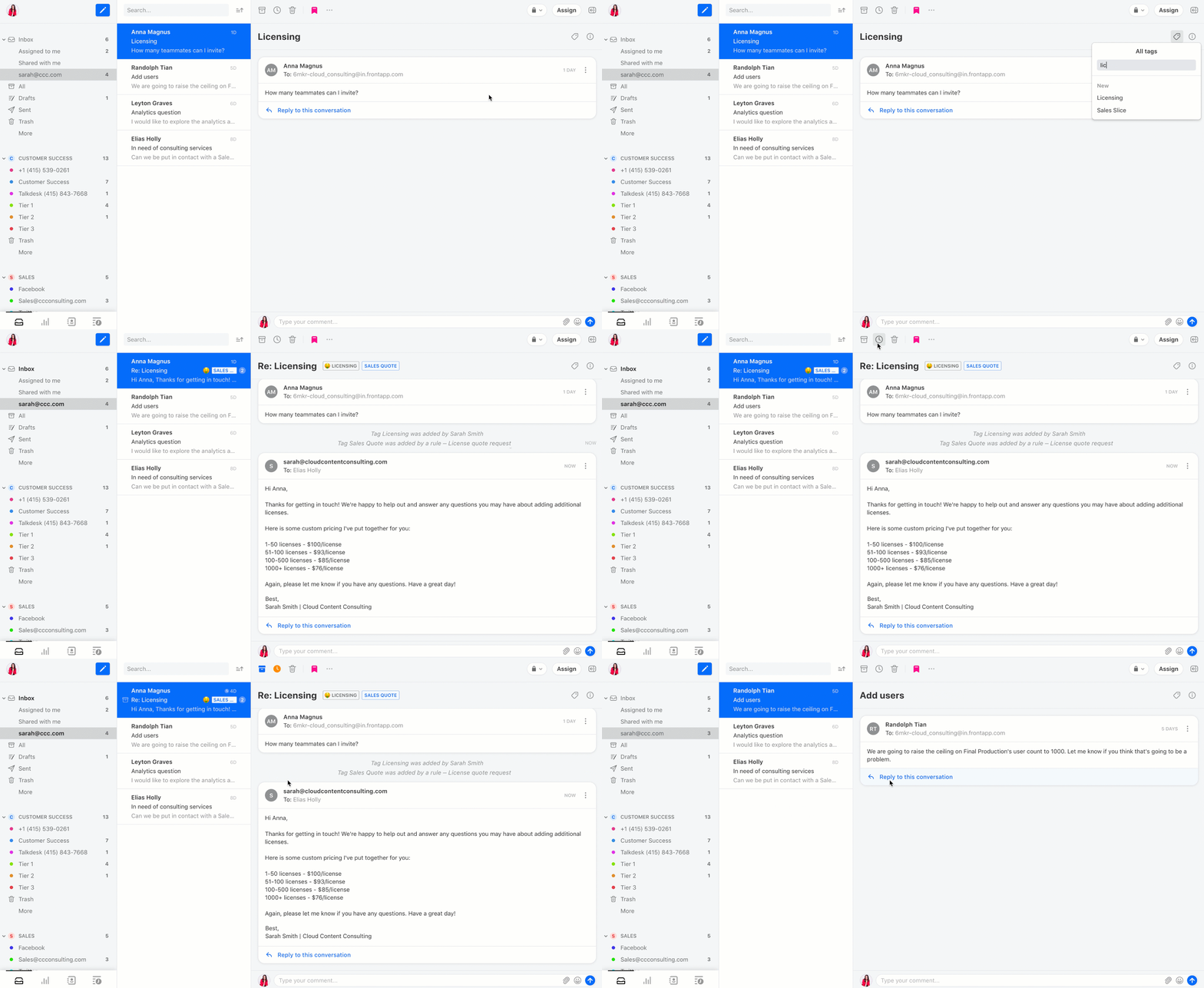
But the company is also adding a bunch of new features. The most interesting one is the ability to start a thread with your team without having to send an email first. If a client sends you an email, you can comment on the thread and mention your coworkers just like on a Facebook post.

Many companies already use emails for internal communications. So they started using Front to talk to their coworkers. Before today, you had to send an original email and then people could comment on it. Now, you can just create a post by giving it a title and jumping to the comment section. It’s much more straightforward.

“We aren't planning for all internal conversations to move to Front, but a lot of them very well could. A tool like Slack is often used for questions that don't require the immediate response that Slack demands,” co-founder and CEO Mathilde Collin told me. “By bringing these messages into Front, we aim to reduce disruptions and help people stay focused.”

In other words, a Slack message feels like a virtual tap on the shoulder. You have to interrupt what you’re doing to take a minute and answer. Front can be used for asynchronous conversations and things that don’t need an immediate response. That’s why you can now also send Slack messages to Front so that you can deal with them in Front.

With this update, Front is making sharing more granular. Front isn’t just about shared addresses. You can assign your personal emails to a coworker — this is much more efficient than forwarding an email. Now, you can easily see who can read and interact with an email thread at the top of the email view.

If somebody sends an email to Sarah and Sam, they’ll both have a copy of this email in their personal inboxes. If Sarah and Sam start commenting and @-mentioning people, Front will now merge the threads.

As a user, you get a unified inbox with all your personal emails, emails that were assigned to you and messages assigned to your team inbox.

Finally, Front has improved its smart filtering system. You can now create more flexible rules. For instance, if an email matches some or all criteria, Front can assign an email to a team or a person, send an automated reply, trigger another rule and more.

The new version of Front will be available later this month. Once again, Front remains focused on its core mission — making work conversations more efficient and more flexible. The company doesn’t try to reinvent the wheel and still relies heavily on emails.

Many people (myself included) say that email is too often a waste of time. Dealing with emails doesn’t necessarily mean getting work done. Front wants to remove all the pains of this messaging protocol so that you can focus on the content of the messages.

from Startups – TechCrunch https://ift.tt/2OOYH8r

#USA Robinhood cuts trading fees, grows profits with in-house clearing

//

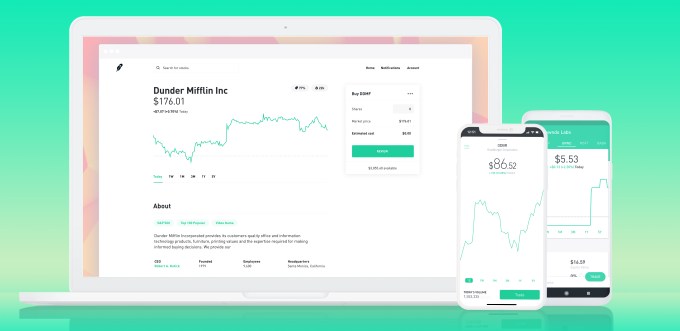
As zero-commission stock trading app Robinhood starts preparing to IPO, an engineering investment two years in the making could accelerate its quest for profitability. Most stock broker services have to pay an external clearing house to reconcile trades between buyers and sellers. Now with 6 million accounts, that added up to a huge cost for Robinhood since it doesn’t demand a trading fee like the $7 to $10 that incumbent competitors E*Trade and Scottrade charge. Relying on outside clearing also introduced bottlenecks around its innovation and user sign ups, limiting onboarding to business hours.

But today Robinhood will start migrating accounts to its new in-house clearing service over the next few months. That will save it from paying clearing fees on stock, option, ETF, and cryptocurrency trades. In turn, Robinhood is eliminating or reducing some of its edge case fees. $10 broker assisted trades, $10 restricted accounts, $50 voluntary corporate actions, and $30 worthless securities processing will all now be free. Robinhood is meanwhile cutting its margin on fees passed on by banks or FedEx, so ACH reversal fees will drop from $30 to $9, overnight check delivery from $35 to $20 and overnight mail from $35 to $20.

“What’s really interesting is that this is the only clearing system built from scratch on modern technology in at least the last decade” Robinhood co-founder and co-CEO Vlad Tenev tells me. Most clearing services ran mainframes and Terminal-based UIs  that aren’t built for the pace of startup innovation. Going in-house “allows us to vertically integrate our business so we won’t have to depend on third-parties for foundational aspects. It’s a huge investment in the future of Robinhood that will massively impact our customers and their experience, but also help us out on building the kind of business we want to build.”

There’s a ton of pressure on Robinhood right now since it’s raised $539 million to date, including a $363 million Series D in May at a jaw-dropping $5.6 billion valuation just a year after raising at $1.3 billion. Currently Robinhood earns revenue from interest on money kept in Robinhood accounts, selling order flow to exchanges that want more liquidity, and its Robinhood Gold subscriptions where users pay $10 to $200 per month to borrow $2,000 to $50,000 in credit to trade on margin. Last month at TechCrunch Disrupt, Robinhood’s other co-CEO Baiju Bhatt told me the startup is now actively working to hire a CFO to get its business ready to IPO.

Whoever that CFO is will have an easier job thanks to Christine Hall, Robinhood’s Product Lead for Clearing. After stints at Google and Udacity, she was hired two years to navigate the regulatory and engineering challenges or spinning up Robinhood Clearing. She explains that “Clearing is just a fancy word for making sure that when the user places a trade, the price and number of shares matches what the other side wants to give away. In the less than 1 percent chance of error, the clearing firm makes sure everyone is on the same page prior to settlement.

Robinhood Clearing Product Lead Christine Hall

Forming the Robinhood Securities entity, Hall scored the startup the greenlight from FINRA, the DTCC, and the OCC. She also recruited Chuck Tennant, who’d previously run clearing firms and would grow a 70-person team for the project at Robinhood’s Orlando office. They allow Robinhood to clear, settle (exchanging the dollars and shares), and ensure custody (keeping records of asset movements) of trades. 

“It gives us massive cost savings, but since we’re no longer depending on a third-party, we basically control our destiny” Tenev says. No more waiting for clearing houses to adapt to its new products. And no more waiting the whole weekend for account approval as Robinhood can now approve accounts 24/7. These little improvements are critical to Robinhood staying ahead of the pack of big banks like Charles Schwab that are lowering their fees to compete as well as other startups offering mobile trading.

Clearing comes with additional risk. Regulatory scrutiny is high, and the more Robinhood brings in-house, the more security work it must do. A breach could break the brand of user trust it’s been building. Yet if successful, the launch equips Robinhood for an ambitious future beyond playing the markets. “The mission of the company has expanded a lot. It used to be all about stock trading. But if you look at Robinhood 5 years from now, it’s about being best-in-class for all of our customers’ financial needs” Tenev concludes. “You should be able to get everything from Robinhood that you could get from walking into your local bank.” That’s a vision worthy of the startup’s epic valuation.

from Startups – TechCrunch https://ift.tt/2IM1ee9

#USA Let’s talk about space at Disrupt Berlin with Mike Collett

//

You thought TechCrunch Disrupt Berlin was all about SaaS, fintech, social, blockchain and all the traditional tech topics? Of course not! I’m excited to announce that Mike Collett from Promus Ventures is going to tell you why you should care about space beyond SpaceX.

Arguably, SpaceX is the reason why many people are interested in space topics. But there’s a vibrant ecosystem of startups that are working on small and big challenges to create new use cases, launch bigger objects, travel further and open up new possibilities.

Collett in particular has been studying this (ahem) space for many years. He’s the founder and managing partner of Promus Ventures, a VC firm focused on deep tech investments.

He invests in many things, such as AI, robotics, computer vision, blockchain, healthcare, agriculture and… space. Before that, he focused on nanotechnology more specifically, with investments in quantum cascade lasers, quantum dots, photonic integrated optoelectronic devices, nano-engineered fabrics and more.

It’s clear that Collett will have plenty of interesting things to say about the current landscape of space startups. That’s why you should buy your ticket to Disrupt Berlin to listen to this discussion and many others. The conference will take place on November 29-30.

In addition to fireside chats and panels, like this one, new startups will participate in the Startup Battlefield Europe to win the highly coveted Battlefield cup.


Mike Collett

Founder & Managing Partner, Promus Ventures

Mike Collett is Founder and Managing Partner of Promus Ventures, a venture capital firm based in Chicago and San Francisco investing in deep-technology software and hardware companies in the U.S., Europe and New Zealand. Mike has been a venture capital investor in software and hardware for over 15 years. He has invested in more than 65 private technology companies, including areas such as artificial intelligence/machine learning, space, fintech, robotics, syn bio, computer vision, connected car, blockchain, healthcare, insurance, agriculture, nanotechnology and others. Mike currently serves on numerous Boards of Directors of private technology companies, including Spire, Gauss Surgical, Dispatch, ICEYE, CrossLend, Rhombus and others.

Mike previously was Founder and Managing Partner of Masters Capital Nanotechnology Fund, a venture capital firm. Investments included companies in quantum cascade lasers, quantum dots, photonic integrated optoelectronic devices, nano-engineered fabrics and others. While at Masters Capital, a hedge fund, Mike invested in private technology software and hardware companies. Prior to venture capital, Mike was a Vice President at Merrill Lynch in their Mergers & Acquisitions group as well as an Associate at Duff & Phelps.

Mike holds a Bachelor’s of Science in Math and Bachelor’s of Arts in English from Vanderbilt University. He also holds a Masters of Business Administration in Finance from Washington University in St. Louis. Mike and his wife Paige have four children and live in Chicago.

from Startups – TechCrunch https://ift.tt/2OOsn5I

#USA SoftBank is considering taking a majority stake in WeWork

//

SoftBank may soon own up to 50 percent of WeWork, a well-funded provider of co-working spaces headquartered in New York, according to a new report from The Wall Street Journal.

SoftBank is reportedly weighing an investment between $15 billion and $20 billion, which would come from its $92 billion Vision Fund, a super-sized venture fund led by Japanese entrepreneur and investor Masayoshi Son.

WeWork declined to comment.

SoftBank already owns some 20 percent of WeWork. The firm invested $4.4 billion in the company in August 2017, $1.4 billion of which was set aside to help WeWork expand in China, Japan and Southeast Asia.

This August, WeWork raised another $1 billion from SoftBank in convertible debt. At the same time, WeWork disclosed financials to a handful of media outlets, sharing that its revenue had doubled to $763.8 million in the first half of 2018 as losses increased to $723 million.

SoftBank, for its part, seems to have a hankering for real estate tech. Not only has it become a key stakeholder in WeWork, but it has deployed significant amounts of capital to Opendoor, Compass, Katerra and others.

Last month, the Vision Fund backed Opendoor, a platform for buying and selling homes, with $400 million. The same day, it led a $400 million round for Compass, valuing the real estate brokerage startup at $4.4 billion. As for Katerra, SoftBank poured $865 million into the construction tech business in January.

WeWork, founded in 2010 by Adam Neumann and Miguel McKelvey, has raised nearly $5 billion in a combination of debt and equity funding to date. It was valued at $20 billion in 2017, though reports earlier this summer estimated its valuation would fall somewhere between $35 billion and $40 billion with additional capital from SoftBank. A $40 billion valuation would make it the second most valuable VC-backed company in the U.S. behind only Uber.

WeWork has more than 268,000 members across 287 locations in 23 countries.

from Startups – TechCrunch https://ift.tt/2yqLEzX

#USA Jennifer Garner’s baby food company Once Upon a Farm raises $20M Series B

//

CAVU Venture Partners has led the $20 million Series B for Once Upon a Farm, which sells organic, cold-pressed baby food in 8,500 grocery stores in the U.S.

The Berkeley-based startup was originally founded in 2015 by serial entrepreneurs Rohan Oza and Clayton Christopher. Today, it lists actress Jennifer Garner and former General Mills president John Foraker as co-founders, too.

Both Garner and Foraker — who was the chief executive officer of the popular organic mac & cheese brand Annie’s Homegrown for more than a decade — joined the company in September 2017. Foraker had been an angel investor in Once Upon a Farm and, after conversations with Garner, decided to accept the role of CEO. Garner, widely known for her roles in Alias, 13 Going on 30 and the upcoming HBO original series Camping, was already somewhat of a Once Upon a Farm evangelist when she signed on as chief brand officer a little over a year ago.

“I am proud of the innovative business that we have built,” Garner said in a statement. “It is incredibly exciting to see so many families embracing our products. This latest round of funding allows us to continue to help busy parents give their children the most nutritious foods possible and make life a little bit easier for families across the country.”

Foraker told TechCrunch that since he and Garner joined, the business has grown 10x. Last fall, the company’s products were for sale in 300 stores; today, as mentioned, they are available in more than 8,000.

“Because she has global celebrity, the power of that, she can really help us get the message out and help lots of moms and dads find [Once Upon a Farm],” Foraker said.

Once Upon a Farm sells smoothies and applesauce for kids up to age 12 directly to consumers through its online marketplace and in stores. Pouches of its signature baby food, smoothies and applesauce are $2.99 each.

As part of the deal, CAVU’s co-founder and managing partner Brett Thomas, along with CAVU investor Jared Jacobs, will join the company’s board. S2G Ventures and Beechwood Capital also participated in the round for the startup, which raised a $4 million Series A in June 2017.

The company plans to use the funds to expand its direct to consumer business, partner with more U.S. grocers and build out a wider assortment of baby products.

“You can buy fresh pet food now in almost 20,000 stores in the U.S.,” Foraker said. “We think fresh baby food has a long way to go.”

from Startups – TechCrunch https://ift.tt/2RCksXK

#USA Venture capital investment in US companies to hit $100B in 2018

//

So many new unicorns valued at $1 billion-plus, countless $100 million venture financings, an explosion of giant funds — it’s no surprise 2018 is shaping up to be a banner year for venture capital investment in U.S.-based companies.

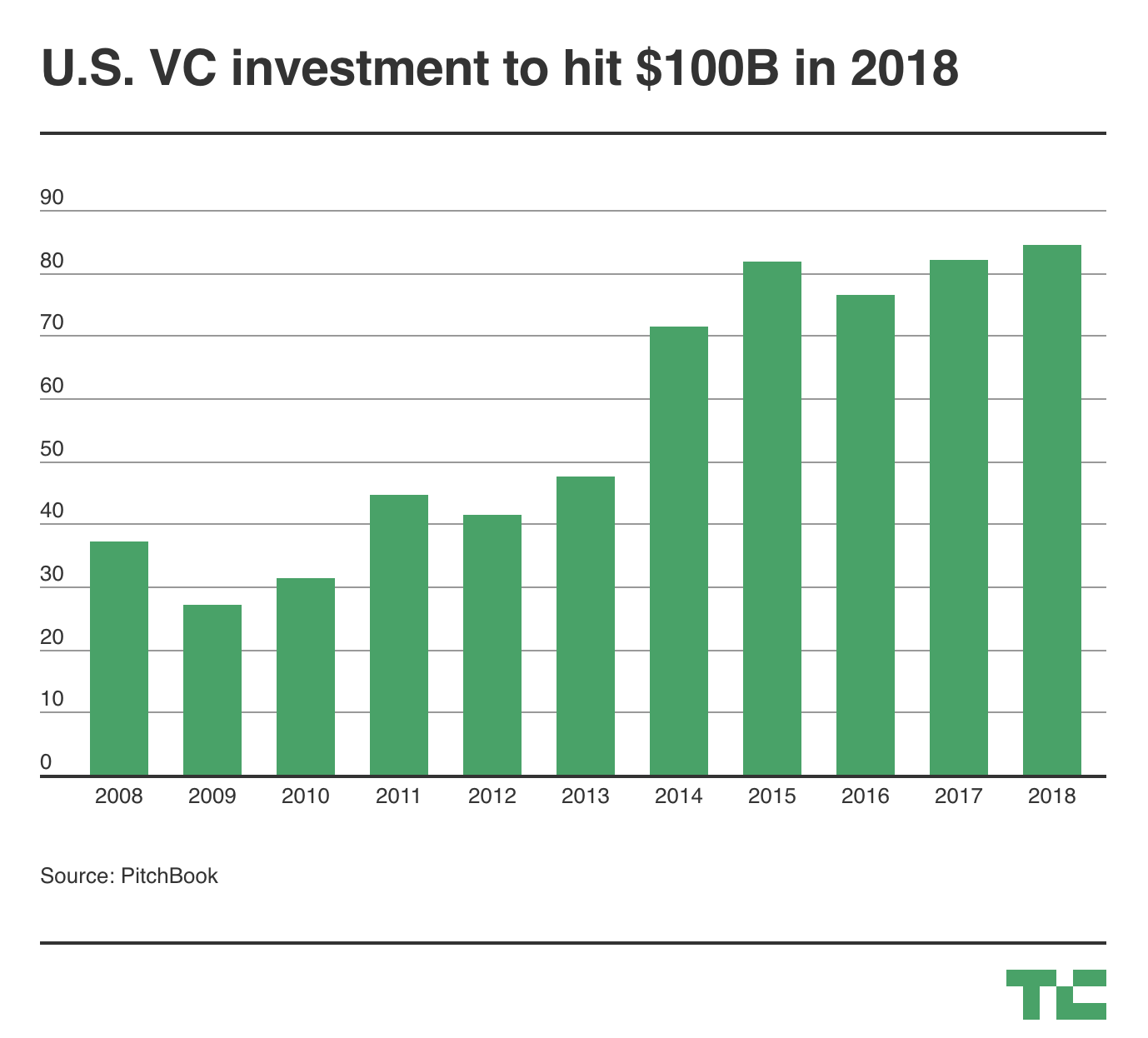
There are more than 2.5 months remaining in 2018 and already U.S. companies have raised $84.1 billion — more than all of 2017 — across 6,583 VC deals as of Sept. 30, 2018, according to data from PitchBook’s 3Q Venture Monitor.

Last year, companies raised $82 billion across more than 9,000 deals in what was similarly an impressive year for the industry. Many questioned whether the trend would — or could — continue this year, and oh, boy has it. VC investment has sprinted past decade-highs and shows no signs of slowing down.

Why the uptick? Fewer companies are raising money, but round sizes are swelling. Unicorns, for example, were responsible for about 25 percent of the capital dispersed in 2018. Those companies, which include Slack, Stripe and Lyft, have raised $19.2 billion so far this year — a record amount — up from $17.4 billion in 2017. There were 39 deals for unicorn companies valuing $7.96 billion in the third quarter of 2018 alone.


Some other interesting takeaways from PitchBook’s report on the U.S. venture ecosystem:

  • Nearly $28 billion was invested into early-stage startups in 2018, with median deal size increasing 25 percent to  $7 million last quarter.
  • Ten funds have raised more than $500 million this year and another five, including Lightspeed Venture Partners and Index Ventures, have closed on more than $1 billion.
  • Companies based on the West Coast were responsible for 54.7 percent of deal value in 3Q but other regions are catching up: New England (12 percent), the Mid-Atlantic (20 percent) and The Great Lakes (5 percent).
  • Investment in U.S. pharma and biotech has reached a new high of $14 billion already in 2018.
  • Corporate venture capital activity is heating up. This year, CVCs invested $39.3 billion in U.S. startups, more than double the $15.2 billion invested in 2013.
  • VC-backed companies are exiting via buyouts more than ever.

from Startups – TechCrunch https://ift.tt/2INks39

#USA Making A Murderer returns on October 18

//

Making A Murderer is coming back to Netflix on October 18.

In 2015, Netflix released the 10-episode docuseries Making A Murderer, created by Laura Ricciardi and Moira Demos. The picture looked at the mystery surrounding the murder of Teresa Halbach. Steven Avery, a Manitowoc County man charged with the murder in 2007, was wrongfully convicted of sexual assault at the age of 22, and was exonerated by DNA evidence after serving 18 years in prison.

Making A Murderer examined the original allegations, the events surrounding the murder of Teresa Halbach, all laid within the context of Avery’s wrongful conviction and subsequent lawsuit against Manitowoc County.

The docuseries quickly gripped the attention of millions.

The trailer for Making A Murderer Part 2 shows attorney Kathleen Zellner joining Avery’s team as they seek to appeal the 2007 conviction.

You can check out the full trailer below. The series returns October 18.

from Startups – TechCrunch https://ift.tt/2y6eaaI