#USA Making A Murderer returns on October 18

//

Making A Murderer is coming back to Netflix on October 18.

In 2015, Netflix released the 10-episode docuseries Making A Murderer, created by Laura Ricciardi and Moira Demos. The picture looked at the mystery surrounding the murder of Teresa Halbach. Steven Avery, a Manitowoc County man charged with the murder in 2007, was wrongfully convicted of sexual assault at the age of 22, and was exonerated by DNA evidence after serving 18 years in prison.

Making A Murderer examined the original allegations, the events surrounding the murder of Teresa Halbach, all laid within the context of Avery’s wrongful conviction and subsequent lawsuit against Manitowoc County.

The docuseries quickly gripped the attention of millions.

The trailer for Making A Murderer Part 2 shows attorney Kathleen Zellner joining Avery’s team as they seek to appeal the 2007 conviction.

You can check out the full trailer below. The series returns October 18.

from Startups – TechCrunch https://ift.tt/2y6eaaI

#USA Emmanuel Macron meets with the French tech community

//

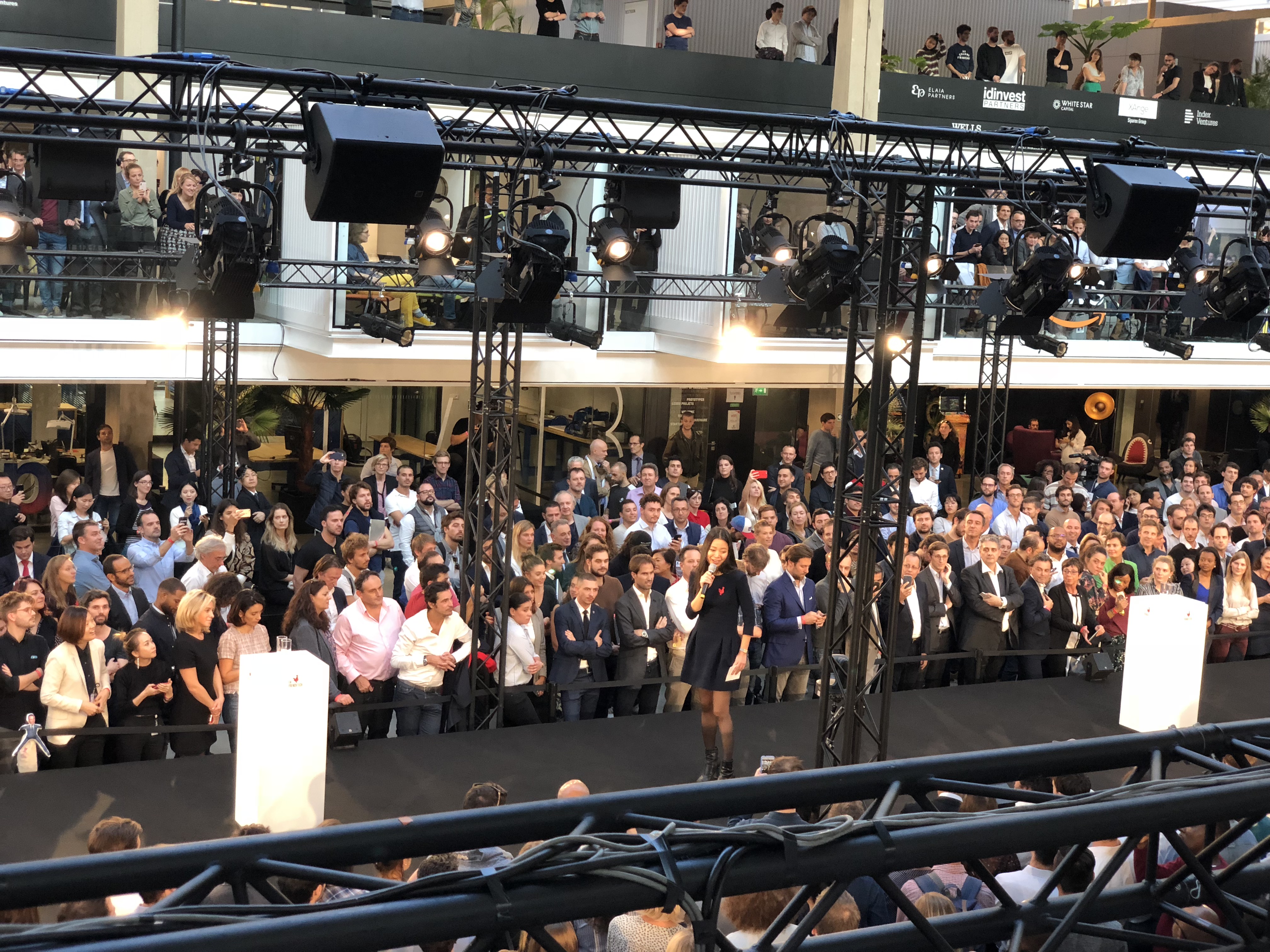
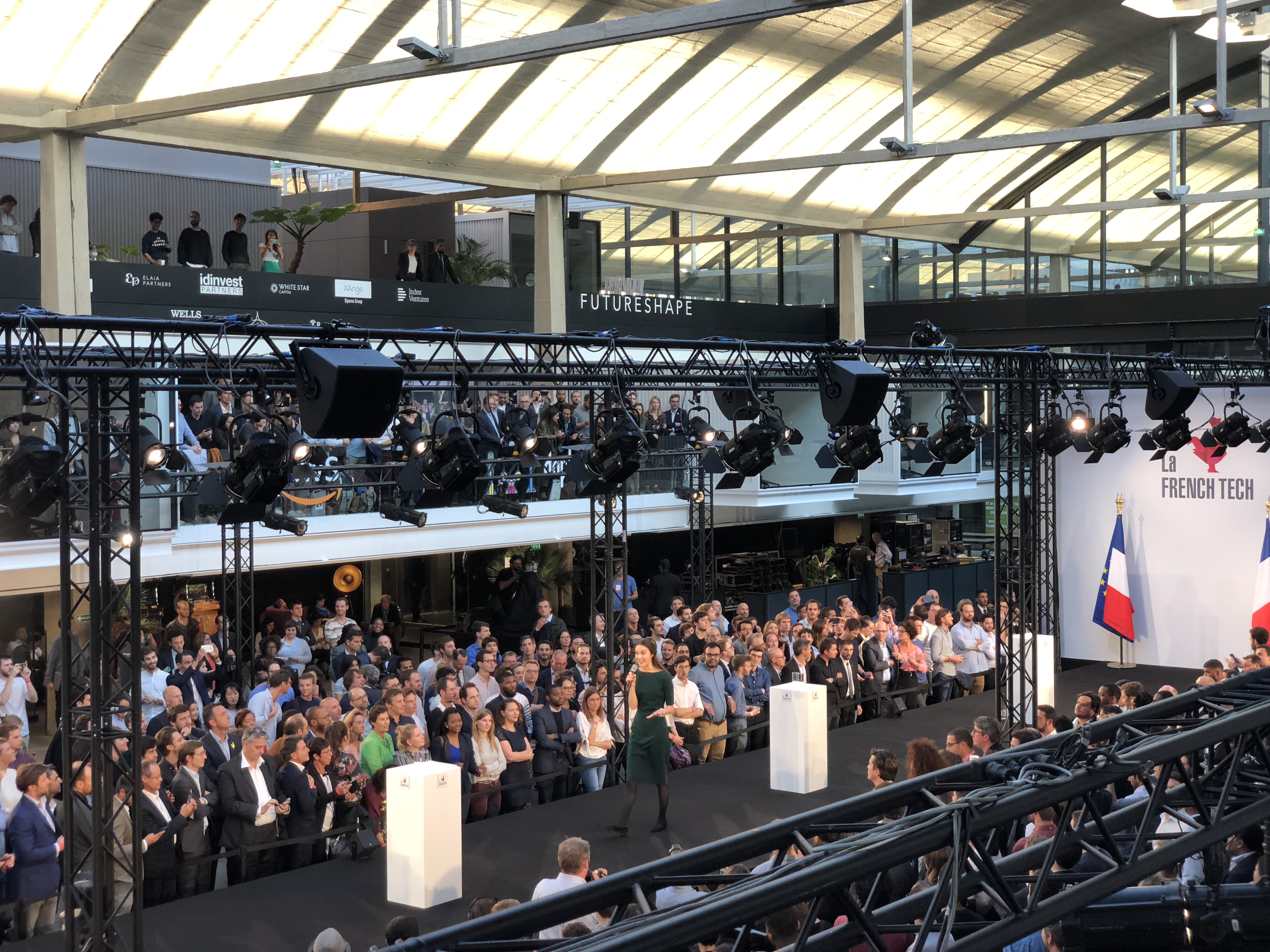
French President Emmanuel Macron came to France’s ginormous startup campus Station F to talk to the French tech community. The event is organized by La French Tech, the government initiative to promote and foster the startup community in France.

Station F director Roxanne Varza first took the stage to introduce the event. She announced that there will be more startups in the Fighters Program. Station F has created this program so that entrepreneurs from diverse backgrounds get a chance to relocate to Station F.

La French Tech new director Kat Borlongan then talked for a few minutes about the public initiative. “My firm belief is that La French Tech should operate just like all the startups in this room today,” she said.

According to her, it means that La French Tech should think about its users first, have a data-driven approach, and test and iterate.

Macron gave a very short speech and then held a Q&A sessions with tech entrepreneurs. This is a surprising format for Macron.

He mostly reassured entrepreneurs that things are changing and France is on the right path. He announced that the French Tech Visa would be simplified by March 2019.

Some entrepreneurs said there were paying too many taxes to hire talent in France. Macron refuted that. “I like to compare a researcher in Harvard with a researcher in France,” he said. “[In France], school is free and excellent, healthcare is free, there’s a retirement system. On the other side, there’s nothing.”

He also promised stronger antitrust rules at the European level. Tech giants sometimes dominate in Europe living no room for competition.

Macron finished by saying that tech companies also need to promote France’s system. They need to pay fair taxes, they need to think about tech’s effect on society. “I know one thing, the system will implode if you’re not responsible enough,” he said.

Things have changed in just over a year. When Macron first came to Station F for its grand opening, it was shortly after the elections. He was a popular President.

Now, most people dislike him, just like his predecessors François Hollande and Nicolas Sarkozy when they were in office. According to a source, he even thought about canceling today’s event given that he’s about to appoint some new faces in his government.

But Macron built his reputation on the so-called startup nation. He first became a public figure thanks to a grassroots approach built on top of the startup community. That’s why the startup community is still overwhelmingly in favor of Macron’s policies. And yet, there’s now a clear divide between the startup nation and the middle class at large, who think the President is out of touch and doesn’t care about them.

from Startups – TechCrunch https://ift.tt/2pIWY6D

#USA Google partners with tech retailer b8ta to let people demo smart home products

//

Try before you buy is the new name of the game. With items costing upwards of $100, people want to know what they’re getting themselves into before they commit to a costly gizmo — at least that’s what Google is betting on right now. Aligned with Google’s Made by Google event, the company is partnering with startup b8ta to create an interactive experience around its products.

These experiences are live at seven of b8ta’s flagship locations, which enable people to try out new tech products. Each demo experience is modeled after the different rooms of a home — living room, kitchen, home office and so on.

“We’re excited that Made by Google products are now available in the majority of b8ta locations across the country,” Google Director of Retail Marketing Janell Fischer said in a statement. “We’re always looking to make it easier for customers to try and shop our products, and this is a great example of that coming to life.”

It’s been a big year for b8ta. In April, the startup unveiled a Shopify-like solution for retailers called Built by b8ta, with Netgear as one of its first customers. Then, in June, Macy’s partnered with b8ta to enhance its experiential-based retail concept and went on to lead the startup’s $19 million Series B round.

from Startups – TechCrunch https://ift.tt/2Cy5jlR

#USA Google partners with tech retailer b8ta to let people demo smart home products

//

Try before you buy is the new name of the game. With items costing upwards of $100, people want to know what they’re getting themselves into before they commit to a costly gizmo — at least that’s what Google is betting on right now. Aligned with Google’s Made by Google event, the company is partnering with startup b8ta to create an interactive experience around its products.

These experiences are live at seven of b8ta’s flagship locations, which enable people to try out new tech products. Each demo experience is modeled after the different rooms of a home — living room, kitchen, home office and so on.

“We’re excited that Made by Google products are now available in the majority of b8ta locations across the country,” Google Director of Retail Marketing Janell Fischer said in a statement. “We’re always looking to make it easier for customers to try and shop our products, and this is a great example of that coming to life.”

It’s been a big year for b8ta. In April, the startup unveiled a Shopify-like solution for retailers called Built by b8ta, with Netgear as one of its first customers. Then, in June, Macy’s partnered with b8ta to enhance its experiential-based retail concept and went on to lead the startup’s $19 million Series B round.

from Startups – TechCrunch https://ift.tt/2Cy5jlR

#USA The Wing, a co-working space for women, opens its doors in San Francisco

//

Women-focused co-working space The Wing has made its way to California, opening its first of two planned locations in the state this morning.

On Sansome Street in San Francisco’s Financial District, The Wing hopes to attract professional women able to shell out $215 per month for access to its 8,000-square-foot workspace, which is complete with conference rooms, a cafe, a library stocked with books on feminist theory, a lactation room and more.

In addition to its chic decor and feminist messaging, The Wing is also known for its programming. Headquartered in New York City, where the company operates three of its four existing spaces, The Wing has hosted events with former Secretary of State Hillary Clinton, actress Jennifer Lawrence and New York Senator Kirsten Gillibrand, to name a few. The San Francisco location will be no different.

A spokesperson for The Wing tells me they have a fully booked calendar of politics, tech, entertainment and lifestyle-focused events prepped for members. In the first month, San Francisco Mayor London Breed will stop by, as will Democratic House Minority Leader Nancy Pelosi and Oakland Mayor Libby Schaaf.

As a brand founded by women — Audrey Gelman and Lauren Kassan — and inspired by the women’s club movement of the 19th century, The Wing and its majority female staff very carefully and skillfully practice what they preach. In building their spaces, for example, they hire female architects to design and perfect the location. Their conference rooms are named for notable women. One, in particular, named for Dr. Christine Blasey Ford, stands out.

The dozens of art pieces scattered throughout The Wing are by female artists. The menu at The Wing’s cafe, which has a sign above it that reads “I’ll have what she’s having,” showcases women of the Bay Area’s food and beverage industries. Even the wines served at The Wing are made by female wine makers in California.

If there’s on thing about The Wing that stands out, it’s the startup’s attention to detail.

Founded in 2016, The Wing plans to open its next location, in West Hollywood, in early 2019.

The Wing is backed by venture capital firms NEA, Kleiner Perkins, Forerunner Ventures and BBG Ventures, as well as co-working unicorn WeWork. It has raised just over $40 million to date to expand its co-working spaces throughout the U.S. and beyond.

from Startups – TechCrunch https://ift.tt/2Nxoqh4

#USA Netlify just got $30 million to change the way developers build websites

//

Netlify wants to revolutionize the way developers build websites, abstracting away the web server and breaking web sites into microservices, making the process more like building a mobile application than a traditional website. Today, the company announced a $30M Series B investment to help continue to build on that vision.

Kleiner Perkins led the round. Andreessen Horowitz and the founders of Slack (Stewart Butterfield), Yelp (Jeremy Stoppelman) and Figma (Dylan Field) all participated. Today’s investment brings the total raised to over $44 million, according to Crunchbase data.

Chris Bach, co-founder and president and Matt Biilmann, co-founder and CEO see the change they are trying to make as part of the larger shift to an API economy. They want to take the same ease of development APIs have given programmers in a mobile context and bring that to web development.

As I wrote earlier this year when they announced support for AWS Lambda, they want to reduce the complexity around web development:

“Netlify has abstracted away the concept of a web server, which it says is slow to deploy and hard to secure and scale. By shifting from a monolithic website to a static front end with back-end microservices, it believes it can solve security and scaling issues and deliver the site much faster.”

The founders have a grand vision, “We are basically out to replace all web servers with a with a global application delivery network,” Bach explained.

Mamoon Hamid, general partner at investor Kleiner Perkins says that while the website backend has evolved over recent years, the front end has remained static, and that’s what Netlify is addressing with their microservices-based approach to web development. “Netlify smack dab hits our view of where we need to go for the web to flourish,” Hamid told TechCrunch.

He believes the last shift of this magnitude in web development at the presentation layer was the advent of the CMS 15 years ago, and we are starting to see developers attracted to the Netlify approach in a big way. “We really believe that with this 300,000 strong developer force that’s already behind Netlify that they’re showing early signs of tapping into what could be  the platform from which a significant portion of the web content is served from [in the future],” Hamid said.

Netlify is working to increase the number of websites running on their approach in the coming years and see this as a mission to change the web. “For us, it’s very important to keep being a place where developers want to go and very easily can get something up and running. And then you can scale from there,” Bach said.

The company wants to build out a more organized sales and marketing team to sell the Netlify approach to larger organizations, while continuing to build out the product and developer outreach. All of this takes money and that’s why they went for such a large round today.

from Startups – TechCrunch https://ift.tt/2EaX1lI

#USA Tim Berners-Lee is on a mission to decentralize the web

//

“I’ve always believed the web is for everyone,” wrote Tim Berners-Lee, the well-known (and knighted) creator of the World Wide Web.

“The web has evolved into an engine of inequity and division; swayed by powerful forces who use it for their own agendas,” he added. “Today, I believe we’ve reached a critical tipping point, and that powerful change for the better is possible — and necessary.”

Late last month, he published the above in a blog post announcing inrupt, a startup that would finally execute on his vision for the information superhighway he built nearly 30 years ago. Backed with an undisclosed amount of funding from Glasswing Ventures, the startup is emerging from stealth today with a plan to decentralize the web and restore power to the people rather than the companies that have exploited user trust for their own financial gains.

The timing couldn’t be better. The last year has been plagued with scandals, from Cambridge Analytica, a data analysis firm that used Facebook data to target voters for President Donald Trump’s presidential campaign, to most recently a data-exposing hack on Google+ that relinquished the private information of hundreds of thousands of unsuspecting users.

Internet privacy and security are hot-button issues, to say the least. Users are rapidly losing trust in the companies that became institutions in the digital age — and they’re demanding solutions.

The race to restore control of data and the web at large has begun; inrupt is looking to the finish line.

The father of the World Wide Web

Berners-Lee is a British engineer and professor of computer science who famously gave away the web, which allows anyone with a computer to access the internet, for free.

For the past few years, he’s been quietly working on a project called Solid with a small team at the Massachusetts Institute of Technology. Solid is an open-source project built on the existing web meant to give people control over their own data. Using Solid, users can keep their data wherever they choose, rather than being forced to store it on centralized servers.

The world we’ve created on the web [is] not the right one. — John Bruce, co-founder of inrupt.

Despite its populist ambitions, Solid has failed to garner the momentum necessary to truly disrupt the web.

Berners-Lee realized Solid needed commercial backing, a real business behind it to earn the interests of open-source developers who have to build decentralized apps on the Solid platform for it to be useful.

Thus, inrupt was born. Berners-Lee tapped John Bruce, a fellow British engineer and serial entrepreneur, to lead the company as its chief executive officer. Most recently, Bruce co-founded Resilient, an incident response platform later acquired by IBM. Before that, he was the chairman and CEO of Quickcomm and the vice president of Symantec.

Bruce resigned from IBM in April to focus on inrupt full time.

“The world we’ve created on the web [is] not the right one,” Bruce told TechCrunch. “Maybe, just maybe, we can put it in the place it was originally intended to be.”

“Inrupt’s mission, at this point, is to bring resources, process and skills to galvanize the open-source effort that Tim was leading out of MIT to help [Solid] become, truly, a force to be reckoned with,” he added. “We are at the stage of the new web that Tim was at when he first started the World Wide Web.”

Bruce says that since Berners-Lee announced inrupt in late September, open-source developers have poured into the Solid platform in droves.

Now, the pair are gearing up to raise another round of funding, hire, expand the Solid platform and work on a digital assistant tool called Charlie, which the company describes as a “decentralized version of Alexa.”

For Berners-Lee, inrupt is Act II of a much larger story. For Bruce, it’s the opportunity to work with a legend.

“This is a man that understands the web truly better than anyone else on the planet,” Bruce said. “And the wheels of innovation have really just started to turn.”

from Startups – TechCrunch https://ift.tt/2C2F0Dv

#USA SoundCloud finally lets more musicians monetize four years later

//

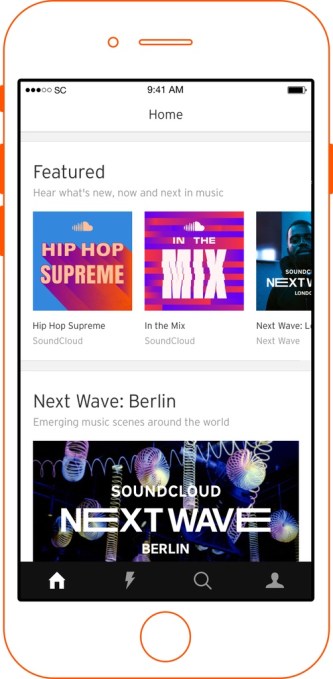
SoundCloud moves painfully slow for a tech company, and no one feels that pain more than musicians who are popular on the site but don’t get paid. 10 years since SoundCloud first launched, and four years since it opened an invite-only program allowing just the very biggest artists to earn a cut of the ad and premium subscription revenue generated by their listeners, SoundCloud is rolling out monetization.

Now, musicians 18 and up who pay SoundCloud $8 to $16 per month for hosting, get over 5000 streams per month, and only publish original music with no copyright strikes against them can join the SoundCloud Premier program. They’ll get paid a revenue share directly each month that SoundCloud claims “meets or beats any other streaming service”. However, the company failed to respond to TechCrunch’s inquiries about how much artists would earn per 1000 ad-supported or premium subscription listener streams, or how many streams would earn them a dollar.

Beyond payouts, Premier members can post new tracks instantly without having to wait to be discoverable or monetizable, they’ll get real-time feedback from fans, and extra discovery opportunities from SoundCloud. The company hopes monetization will lure more creators to join the 20 million on the platform, get them to promote their presence to drive listens, and imbue the site with exclusive artist-uploaded content that attracts listeners.

It’s been a year since SoundCloud raised an $170 million emergency funding round to save itself from going under after it was forced to lay off 40 percent of its staff. That deal arranged by Kerry Trainor saw him become CEO and the previous co-founder and CEO Alex Ljung step aside. With underground rap that had percolated on SoundCloud for years suddenly reaching the mainstream, the startup seemed to have momentum.

The problem is the slow speed of progress at SoundCloud has allowed competitors with monetization baked in to catch up to its formerly unique offering. YouTube Music’s launch in June 2018 combined premium major label catalogues with user uploaded tracks in a cohesive streaming service. And last month, Spotify began allowing indie artists to upload their music directly to the platform. Meanwhile, licensing distribution services like Dubset are making it legal for big streaming apps to host remixes and DJ sets. Together, these make more of the rarities, live versions, and hour-long club gigs that used to only be on SoundCloud available elsewhere.

The delays seem in part related to the fact that SoundCloud wants to be Spotify as well as SoundCloud. It’s refused to back down from its late entry into the premium streaming market with its $9.99 per month SoundCloud Go+ subscription. As I previously recommended, “to fix SoundCloud, it must become the anti-Spotify” by ruthlessly focusing on its differentiated offering in artist-uploaded music. Instead, another year has passed with only a light revamping of SoundCloud’s homescreen to show for it.

SoundCloud proudly announced it had reached $100 million in revenue in 2017, and exceeded its financial and user growth targets. But filings reveal it lost over $90 million in 2016 and it was previously projected to not become profitable until 2020. That begs the question of whether SoundCloud will have to raise again, or might once again open itself to acquisitions. With Apple, Google, Amazon, and Spotify all in fierce competition for the future of streaming, any of them might be willing to pay up for music that fans can’t easily find elsewhere.

from Startups – TechCrunch https://ift.tt/2IIZUc1

#USA Upskill launches support for Microsoft HoloLens

//

Upskill has been working on a platform to support augmented and mixed reality for almost as long as most people have been aware of the concept. It began developing an agnostic AR/MR platform way back in 2010. Google Glass didn’t even appear until two years later. Today, the company announced the early release of Skylight for Microsoft HoloLens.

Upskill has been developing Skylight as an operating platform to work across all devices, regardless of the manufacturer, but company co-founder and CEO Brian Ballard sees something special with HoloLens. “What HoloLens does for certain types of experiences, is it actually opens up a lot more real estate to display information in a way that users can take advantage of,” Ballard explained.

He believes the Microsoft device fits well within the broader approach his company has been taking over the last several years to support the range of hardware on the market while developing solutions for hands-free and connected workforce concepts.

“This is about extending Skylight into the spatial computing environment, making sure that those workflows, the collaboration, the connectivity is seamless across all of these different devices,” he told TechCrunch.

Microsoft itself just announced some new HoloLens use cases for its Dynamics 365 platform around remote assistance and 3D layout, use cases which play to the HoloLens strengths, but Ballard says his company is a partner with Microsoft, offering an enhanced, full-stack solution on top of what Microsoft is giving customers out of the box.

That is certain something Microsoft’s Terry Farrell, director of product marketing for mixed reality at Microsoft recognizes and acknowledges. “As adoption of Microsoft HoloLens continues to rapidly increase in industrial settings, Skylight offers a software platform that is flexible and can scale to meet any number of applications well suited for mixed reality experiences,” he said in a statement.

That involves features like spatial content placement, which allows employees to work with digital content in HoloLens and affect the real world hands-free. They enhance this with the ability to see multiple reference materials across multiple windows at the same time, something we are used to doing with a desktop computer, but not with a device on our faces like HoloLens. Finally, users can use hand gestures and simple gazes navigate in virtual space, directing applications or moving windows, as we are used to doing with keyboard or mouse.

Upskill also builds on this with its broad experience securely connecting to back-end systems to pull the information into the mixed reality setting wherever it lives in the enterprise.

The company is based outside of Washington, D.C. in Herndon, Virginia. It has raised over $45 million, according to Crunchbase. Ballard says the company currently has 70 employees. Customers using Skylight include Boeing, GE, Coca-Cola, Telestra and Accenture.

from Startups – TechCrunch https://ift.tt/2CwYh11

#USA Matt Lerner reduces role at 500 Startups to launch ‘growth coaching’ company Heretix

//

Matt Lerner, who has for the last few years effectively been 500 Startups’ main person in London, is reducing his role at the Silicon Valley-based VC fund and accelerator to pursue a new business of his own. He’s officially scaling back to a part-time position of Venture Partner to launch “growth coaching” company Heretix.

The idea, he tells me, is to build on his work running the 500 Startups London “Distro Dojo” growth marketing program, but in a way that opens it up to more startups in the U.K. and across Europe that are in need of building a self-sufficient growth strategy. That’s because any company is free to approach Heretix, which is initially acting as a simple gun for hire (although you still need to apply) and, unlike Distro Dojo, isn’t a program tied to an equity investment.

“We’re not an agency, and we’re not a bootcamp,” says Lerner, who will continue to head up 500 Startups’ London office and support its U.K. portfolio. “Heretix is focused on providing growth coaching for startup founders and teams. Our first goal is to help them double, triple or 10x their growth. Our second goal is to make them self-sufficient.”.

To provide further context, Lerner says to think back to 2015 when he left PayPal to join 500 Startups in London, a city that wasn’t short of accelerators but was facing a “Series A Crunch”. “The capital was there, and so were the seed-stage startups. So what was the problem?” he says. The answer: VCs could not find enough investable companies with Series A traction.

“Through my work at 500, I saw a ton of seed-stage companies who were able to hustle themselves to mid-five-figure MRR.. But they would flatten out, their hustle would not scale. They could not find the multiple repeatable channels they needed to break through the £100,000 monthly revenue barrier”.

In an attempt to solve this problem, 500 Startups decided to launch a growth marketing investment program, and based on his experience building B2B growth teams for PayPal, tapped up Lerner to run it. The resulting “Distro Dojo” was a program with a mandate to help post-seed companies scale growth on top of existing traction.

“I set up the Dojo and was lucky enough to get some very talented entrepreneurs and marketers to join me. And, it really made a difference,” says Lerner. “We worked with 35 companies, and earned a ‘Net Promoter’ score of 96 percent from our founders. And their companies saw an average growth of 250 percent year-on-year with many companies growing revenue 3x, 5x, even 20x. And many of them have raised at higher valuations, including AirSorted, ZenJob, Tamatem, Popsa, Settled and OurPath”.

To that end, in combination with other members of the original Dojo team, Heretix sees its official unveiling today, with a mission to help companies grow without being tied to outside agencies or consultants. That’s because Lerner believes that you can’t ultimately outsource growth, it has to be an “internal muscle” you develop as a founder and as a company.

“The 500 Distro Dojo helped us prove out the model, and now we want to offer that coaching to promising startups all over Europe, without taking equity” adds Lerner. “Our program has two formats: our half-day ‘Quick Wins’ workshop and a ‘Core Strengths’ program that runs part-time for two months.”

from Startups – TechCrunch https://ift.tt/2y9kTk7