#USA Devialet unveils an ambitious new speaker

//

French speaker maker Devialet is arguably manufacturing some of the best sounding all-in-one speakers on the market, but they’ve always been too expensive for the average customer. With the Phantom Reactor, the company is releasing a cheaper speaker that still sounds great.

At €990 ($1,137), Devialet is going for a wider audience of music fans who have enough disposable income to look beyond your average Bluetooth speaker.

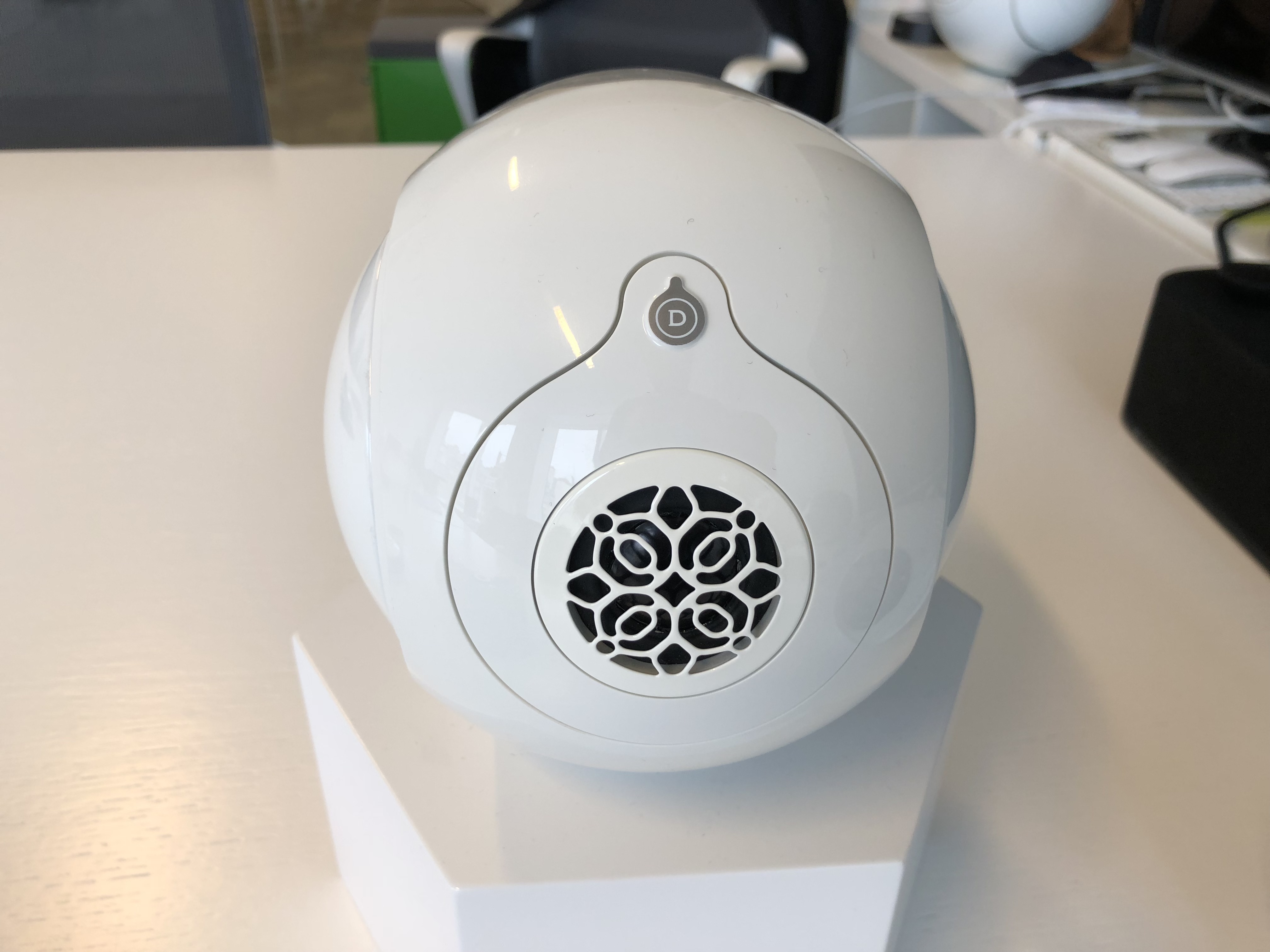
But pricing is just part of the story. The Phantom Reactor is also much more compact than the original Phantom. It is four times smaller and weighs 10 pounds. It’s still quite heavy, so you won’t be able to pack it in your suitcase when you’re flying for vacation.

But you can now put it on a shelf, unplug it and move it to the kitchen, etc. In other words, you no longer have to dedicate an entire table to your Devialet speaker. And as you saw in the photos, it definitely looks like a Devialet speaker with its egg-shaped design, but much smaller.
Fortunately, the company tried to compromise as little as possible when it comes to sound. Devialet has worked for three years on this speaker to produce the same sound quality in a smaller package. “We had to reinvent everything to release this product,” co-founder and CTO Pierre-Emmanuel Calmel told me.

When it comes to specifications, the Phantom Reactor features a tiny touch panel at the top to control the speaker. It connects to your phone or computer using Wi-Fi, Bluetooth, AirPlay, Spotify Connect or UPnP. There’s also an audio jack. Chromecast Audio support as well as the ability to pair multiple speakers will come later with an update (you probably can already use multiple speakers with AirPlay 2 though).

There’s no microphone and Devialet doesn’t plan to support voice assistants on its devices directly. “We are completely focused on sound quality. We want to be platform agnostic with Apple, Amazon or Google. Our idea is that we want to make our speakers compatible with all the protocols from those companies — but our business is sound quality,” CEO Franck Lebouchard told me (former CEO Quentin Sannié wasn’t around during our meeting).

If you’re into voice assistants, you can always find a workaround. For instance, you can buy an Amazon Echo Dot and plug it to your Phantom Reactor. Let’s see if the company adds HomeKit support and other smart home features in the coming months.

Given that Sonos has taken a U-turn and integrated Amazon Alexa into its flagship speaker, I pushed a bit more on this front. “We have no plan today because it would involve a lot of effort to interact with Reactor to do your shopping. In the end, we’ll never be as good as Amazon,” Lebouchard said.
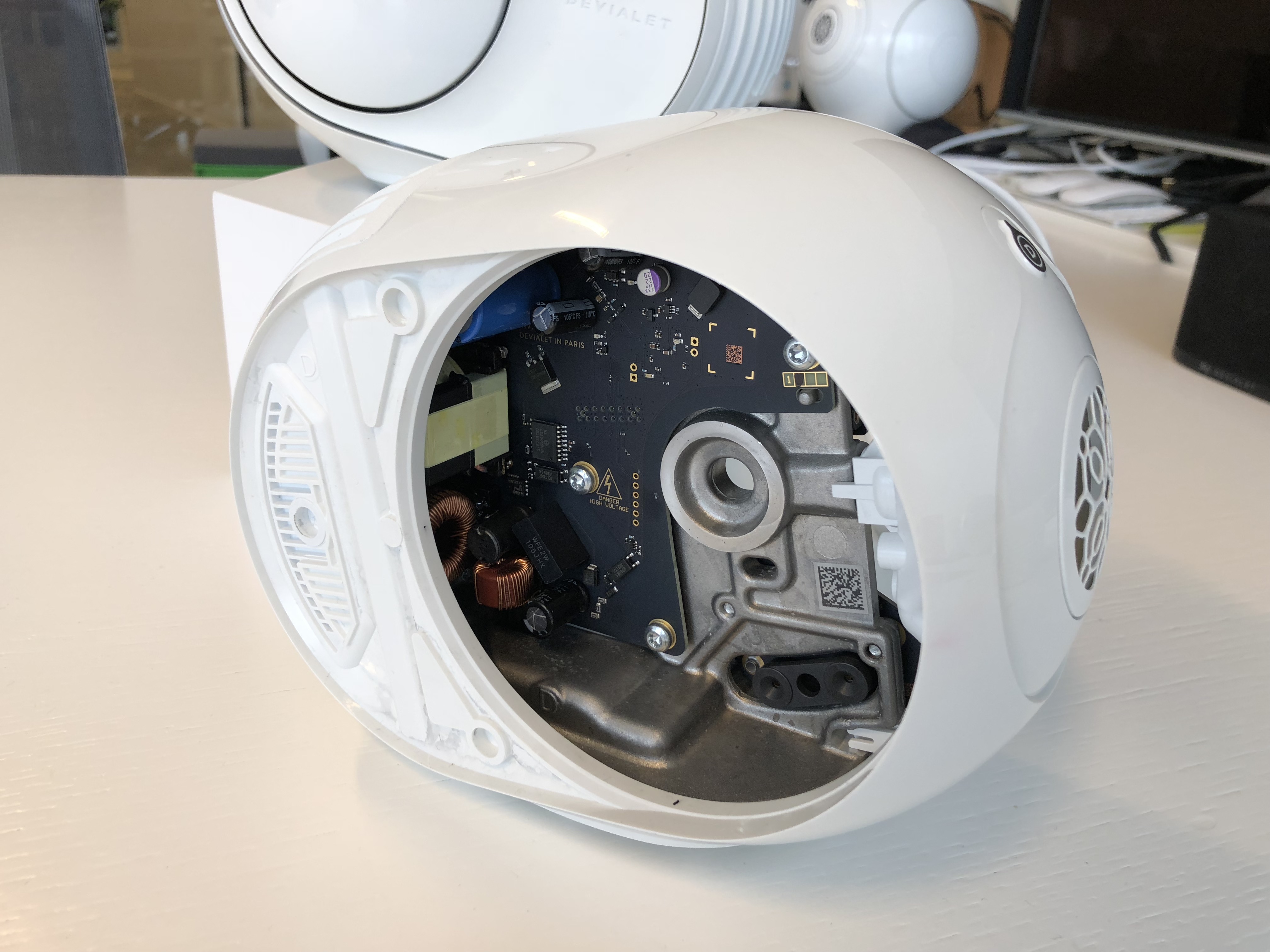
So the Phantom Reactor is just a damn good speaker, nothing else. “There’s zero background noise, zero saturation and zero distorsion,” Lebouchard said. And just like other Devialet speakers, it’s incredibly loud for the size of the speaker. During my fairly limited listening session, it sounded awesome.

It takes advantage of Devialet’s patent portfolio, including its unique sound amplification technology, a mathematical model that lets you push the speaker to its physical limits and the iconic piston-powered woofers.

But Devialet isn’t just a speaker manufacturer. The company has licensed its technology to other companies, such as Sky in the U.K. A couple of years ago, the company wanted to put a “Sound powered by Devialet” sticker on all your electronics products, from your TV to the speakers in your car.

“Phantom was the first step to make our technology accessible,” Lebouchard said. “Phantom reaches tens of thousands of people today. We’ve crossed a big milestone with the Sky Soundbox and we now reach hundreds of thousands of people.” And with the Phantom Reactor, the company hopes to reach even more customers.

The company told me that Devialet will follow all options. There will be new in-house Devialet products as well as more licensing deals. Lebouchard gave me a ‘no comment’ on the Freebox rumors though.

The Phantom Reactor will be manufactured in France near Fontainebleau. The company has built a brand new factory and expects to produce a speaker every 49 seconds.

There will be two versions of the Phantom Reactor, a 600W model for €990 and a 900W model for €1,290. Pre-orders start tomorrow and the speaker will be available in many consumer electronics stores (also on Amazon) on October 24th.

from Startups – TechCrunch https://ift.tt/2OHsWyj

#USA Mapify, the Berlin-based ‘social travel network’, locates $1M seed round

//

Mapify, the Berlin startup that offers what it describes as a “social travel network,” has raised $1 million in seed funding from a mixture of U.S. and Europe-based funds and angel investors.

The include Switzerland’s Ennea VC (led by Jan Valentin, who served as Senior Vice President at Kayak in Europe), Roland Grenke (co-founder of Dubsmash), Navid Hadzaad Javaherian (former founder and CEO at GoButler ​and ​Product Leader at Amazon Alexa), L.A.-based LayJax Ventures​ (the investment vehicle of Pheed co-founder Phil Haus​ and actor Zach Avery), Niv Dror​ (previously of Product Hunt ​and AngelList​), and Lucas von Cranach​ (CEO of OneFootball).

The company had previously received investment from MIT’s Sandbox Innovation Fund​, Gunnar Froh (who launched Airbnb’s international expansion), Fredrik Posse​ (Partnerships Manager at Spotify), and Hagen Angermann​ (former Senior Manager at Daimler in Asia).

Launched in November 2017 — and a finalist in TechCrunch Battlefield​ — Mapify is a social travel app that lets you “visualize, find and plan” individual travel experiences. You can visually document past and current travel experiences, including photos, descriptions and other details, either related to an individual experience or entire trip. You can also connect with other travellers via a follow function and the ability to comment on places shared or by collaborating on “collections”.

In addition — in classic social media style — the Mapify app features a location-focused feed, which pushes personal recommendations based on travel interests as understood by the platform. You can search for countries, regions and cities on Mapify to discover spots to save to your private lists of planned trips.

“The global travel market and especially its planning and booking process is fragmented,” Mapify co-founder and CEO Patrick Häde tells TechCrunch. “People are using dozens of different sources for inspiration or planning and end up sharing Google docs with friends to create some kind of unified experience. We have designed an app unifying the travel space by pulling together inspiration, sharing and planning into a seamless mobile-first platform that is based on a social network of travelers around the globe. We are designing Mapify to be social because we believe the future of travel lies in unique and personal recommendations from friends and influencers”.

To that end, Mapify is currently most popular amongst millennials, especially those who travel frequently. “As some call it the ‘Instagram of Travel’, the platform has grown virally through re-sharings on Instagram and by word-of-mouth,” Häde says.

Rather confusingly, Instagram might also be seen as a competitor, as it too can be used for travel inspiration. However, the Mapify co-founder says Instagram’s data structure is not well-suited for a travel planning process (e.g. no exact locations). Another more obvious competitor is TripAdvisor, but it doesn’t offer personalised travel feeds, making it less efficient to navigate.

Meanwhile, Mapify currently generates revenue through in-depth partnerships with travel companies such as Airbnb. “By combining different travel services in one single mobile platform, we have seen increasing interest amongst the top players in the travel industry to become part of the Mapify platform,” adds Häde.

from Startups – TechCrunch https://ift.tt/2QxNV3I

#USA Brand management platform Frontify raises $8.3M led by Blossom Capital

//

Frontify, the Swiss startup that’s built a “brand management platform,” has raised a chunky $8.3 million in Series A funding. Leading the round is Blossom Capital, the new London-based venture capital firm co-founded by ex-Index and LocalGlobe VC Ophelia Brown. Frontify’s previous seed investors include Doodle co-founder Myke Naef, former Googler Thomas Duebendorfer, and Cédric Waldburger of Tenderloin Ventures.

Founded in 2013 by CTO Roger Dudler — and headquartered in the Swiss city St. Gallen, no less — Frontify is a Software-as-a-Service that helps companies manage their branding in a more consistent and efficient way. The SaaS provides employees across an organisation access to an “always up-to-date” brand portal, media library, pattern library and style guides. It is targeted mostly at marketing and branding teams, but is also cleverly built to include designers and software engineers, so that all the respective people in a company can collaborate internally and externally on branded content.

The premise, as articulated by Blossom Capital’s Brown, is that in an age of social media and a plethora of content channels, it is more important than ever for companies to cultivate and protect their brand. Better brand consistency helps to build trust and long-term value, which helps companies stay competitive without having to join a race to the bottom, particularly in terms of how they position themselves against competitors and with regards to pricing. In other words, premium pricing can only be achieved with a premium brand, in addition to providing high quality products and service, of course.

“In today’s fast-paced world, sending static PDF brand guidelines by email, or using a DAM [digital asset manager], is not enough to uphold brand consistency across all communication channels,” Frontify CEO Andreas Fischler tells me, when asked to explain the problem. “With Frontify, we aim to create a brand management platform which enables everyone in a company to create beautiful and brand-consistent content”.

To that end, the Frontify platform includes five main features: The ability to create a “Style Guide” (online brand guidelines); a “UI Pattern Library” (a pattern library for front end code/design systems); “Digital Asset Management” (a place to store all of a brand’s digital assets, such as logo etc.); a “Workspace” (for digital brand collaboration), and “Publishing” (a way for employees to create ‘on-brand’ content based on templates, all within a web browser).

“With Frontify, all brand touch-points can be aligned, allowing companies to communicate and operate with more brand consistency,” adds Fischler. “This leads to a stronger brand, which allows companies to raise prices, get better margins, attract the very best employees, and spread through word of mouth -– fuelling company growth”.

To that end, Fischler says the new Series A will be used to further build out the Frontify suite of products, and to expand to the U.S., including opening an office in New York (you can only get so far from St. Gallen). The startup’s biggest markets so far are the U.S., U.K., Germany, and Switzerland. In addition to the U.S., it also plans to expand into Benelux, Northern Europe, Latin America, Spain, and France.

Frontify already claims “several hundred enterprise customers”. They include Lufthansa, IBM, Allianz, Vodafone, and Deliveroo. The Swiss startup is also partnering with some of the leading agencies worldwide, including Interbrand, Sapient, Bold, and Praekelt.

Meanwhile, regarding competitors, Fischler had this to say: “Most of our competitors have their roots in Digital Asset Management and still focus on this topic. We are convinced that using a DAM is just a small part of creating consistent brand experiences for all touch-points. Brand management is more significant than that. We believe in providing everyone throughout an organisation with the ability to create brand-consistent content in everyday work. No matter which department you work in. We aim to provide entire brand worlds at the tips of every employees’ fingers; a complete brand management solution. For every company size”.

from Startups – TechCrunch https://ift.tt/2QDgM6F

#USA Machinify raises $10 million to help businesses use AI to monetize data

//

Data is valuable — if you know how to access it and reap the insights from it. That’s where Machinify comes in. The artificial intelligence company just raised a $10 million Series A round led by Battery Ventures with participation from GV and Matrix Partners.

“Our core notion is that today, enterprises are collecting a ton of data,” Machinify founder and CEO Prasanna Ganesan told TechCrunch. “But if you look at how many of them are successful in turning it into smarter decision-making to drive efficiency, very few companies are succeeding.”

With Machinify, enterprise customers feed the system raw data, specify what they’re trying to optimize for — whether that be revenue or some other goal — and then the machine figures out what to do from there. Based on past decisions, the machine can figure out the right thing to do, Ganesan said.

A good example of how companies use Machinify is in the healthcare space, where businesses are using the tool to increase the accuracy and speed with which they process claims. By doing so, these companies have been able to increase revenue and reduce costs.

“Machinify is laser-focused on the critical operational issues created by the deployment of what we often call Software 2.0 within enterprises,” GV general partner Adam Ghoborah said in a statement. “Software 2.0 is software that is not written by humans like traditional software but is dynamically driven by AI models and large enterprise datasets. Software 2.0 requires a completely different approach, and we believe that the Machinify platform holds the key to unlocking its value.”

from Startups – TechCrunch https://ift.tt/2CvKE27

#USA Machinify raises $10 million to help businesses use AI to monetize data

//

Data is valuable — if you know how to access it and reap the insights from it. That’s where Machinify comes in. The artificial intelligence company just raised a $10 million Series A round led by Battery Ventures with participation from GV and Matrix Partners.

“Our core notion is that today, enterprises are collecting a ton of data,” Machinify founder and CEO Prasanna Ganesan told TechCrunch. “But if you look at how many of them are successful in turning it into smarter decision-making to drive efficiency, very few companies are succeeding.”

With Machinify, enterprise customers feed the system raw data, specify what they’re trying to optimize for — whether that be revenue or some other goal — and then the machine figures out what to do from there. Based on past decisions, the machine can figure out the right thing to do, Ganesan said.

A good example of how companies use Machinify is in the healthcare space, where businesses are using the tool to increase the accuracy and speed with which they process claims. By doing so, these companies have been able to increase revenue and reduce costs.

“Machinify is laser-focused on the critical operational issues created by the deployment of what we often call Software 2.0 within enterprises,” GV general partner Adam Ghoborah said in a statement. “Software 2.0 is software that is not written by humans like traditional software but is dynamically driven by AI models and large enterprise datasets. Software 2.0 requires a completely different approach, and we believe that the Machinify platform holds the key to unlocking its value.”

from Startups – TechCrunch https://ift.tt/2CvKE27

#USA Machinify raises $10 million to help businesses use AI to monetize data

//

Data is valuable — if you know how to access it and reap the insights from it. That’s where Machinify comes in. The artificial intelligence company just raised a $10 million Series A round led by Battery Ventures with participation from GV and Matrix Partners.

“Our core notion is that today, enterprises are collecting a ton of data,” Machinify founder and CEO Prasanna Ganesan told TechCrunch. “But if you look at how many of them are successful in turning it into smarter decision-making to drive efficiency, very few companies are succeeding.”

With Machinify, enterprise customers feed the system raw data, specify what they’re trying to optimize for — whether that be revenue or some other goal — and then the machine figures out what to do from there. Based on past decisions, the machine can figure out the right thing to do, Ganesan said.

A good example of how companies use Machinify is in the healthcare space, where businesses are using the tool to increase the accuracy and speed with which they process claims. By doing so, these companies have been able to increase revenue and reduce costs.

“Machinify is laser-focused on the critical operational issues created by the deployment of what we often call Software 2.0 within enterprises,” GV general partner Adam Ghoborah said in a statement. “Software 2.0 is software that is not written by humans like traditional software but is dynamically driven by AI models and large enterprise datasets. Software 2.0 requires a completely different approach, and we believe that the Machinify platform holds the key to unlocking its value.”

from Startups – TechCrunch https://ift.tt/2CvKE27

#USA Machinify raises $10 million to help businesses use AI to monetize data

//

Data is valuable — if you know how to access it and reap the insights from it. That’s where Machinify comes in. The artificial intelligence company just raised a $10 million Series A round led by Battery Ventures with participation from GV and Matrix Partners.

“Our core notion is that today, enterprises are collecting a ton of data,” Machinify founder and CEO Prasanna Ganesan told TechCrunch. “But if you look at how many of them are successful in turning it into smarter decision-making to drive efficiency, very few companies are succeeding.”

With Machinify, enterprise customers feed the system raw data, specify what they’re trying to optimize for — whether that be revenue or some other goal — and then the machine figures out what to do from there. Based on past decisions, the machine can figure out the right thing to do, Ganesan said.

A good example of how companies use Machinify is in the healthcare space, where businesses are using the tool to increase the accuracy and speed with which they process claims. By doing so, these companies have been able to increase revenue and reduce costs.

“Machinify is laser-focused on the critical operational issues created by the deployment of what we often call Software 2.0 within enterprises,” GV general partner Adam Ghoborah said in a statement. “Software 2.0 is software that is not written by humans like traditional software but is dynamically driven by AI models and large enterprise datasets. Software 2.0 requires a completely different approach, and we believe that the Machinify platform holds the key to unlocking its value.”

from Startups – TechCrunch https://ift.tt/2CvKE27

#USA Humbition is a new fund led by the Indiegogo’s Slava Rubin

//

Zocdoc founder Cyrus Massoumi and Indiegogo founder Slava Rubin have created a new $30 million fund called Humbition aimed at early stage, founder-led companies in New York.

“The fund is focused on connecting startups with investors and advisors experienced in building and growing successful businesses,” said Rubin.

“W are seeking to fill a void in NYC, where the vast majority of early stage investors have no significant experience building and scaling businesses,” he said. “The fund’s main areas of investment include marketplaces, consumer and health tech. But the primary criteria for investments is high quality founders. The fund is also seeking out mission-driven businesses because the companies that are socially responsible will be the most successful in the coming decades.”

The fund has has brought on ClassPass founder Payal Kadakia, Warby Parker founder Neil Blumenthal, Charity: Water CEO and founder Scott Harrison, and Casper founder and CEO Philip Krim as advisors and investors. They have already invested some of the $30 million raise in Burrow, a couch-on-demand service.

“New York City is home to a tremendous number of mission-driven startups that are simply not receiving the same level of support as their peers in the Bay Area. This void presents a unique opportunity for humbition to reach the incredible local talent who need the funding and guidance to build and grow their businesses in New York City,” said Rubin.

from Startups – TechCrunch https://ift.tt/2NvfYPe

#USA With a new CEO and CTO in place, proptech startup Goodlord raises further £7M

//

London ‘proptech’ startup Goodlord, which offers cloud-based software to help estate agents, landlords and tenants manage the rental process, has raised £7 million in Series B funding. The round is led by Finch Capital, with participation from existing investor Rocket Internet/GFC, and is roughly equal in size to Goodlord’s Series A in 2017. However, it would be fair to say a lot has happened since then.

In January, we reported that Goodlord had let go of nearly 40 employees, and that co-founder and CEO Richard White was leaving the company (we also speculated that the company’s CTO had departed, too, which proved to be correct). In signs of a potential turnaround, Goodlord then announced a new CEO later that month: serial entrepreneur and investor William Reeve (pictured), a veteran of the London tech scene, would now head up the property technology startup.

As I wrote at the time, Reeve’s appointment could be viewed as somewhat of a coup for Goodlord and showed how seriously its backers — which, along with Rocket Internet (and now Finch), also includes LocalGlobe and Ribbit Capital — were treating their investment and the turn-around/refocus of the company. With today’s Series B and news that Reeve has appointed a new CTO, Donovan Frew, that effort seems to be paying off.

Founded in 2014, unlike other startups in the rental market space that want to essentially destroy traditional brick ‘n mortar letting agents with an online equivalent, Goodlord’s Software-as-a-Service is designed to support all stakeholders, including traditional high-street letting agents, as well as landlords and, of course, tenants.

The Goodlord SaaS enables letting agents to “digitize” the moving-in process, including utilizing e-signatures and collecting rental payments online. In addition, the company sells landlord insurance, and has been working on other related products, such as rental guarantees, and “tenant passports.”

If Goodlord can reach enough scale, it wants to let tenants easily take their rental transaction history and landlord references with them when moving from one rental property to another as proof that they are a trustworthy tenant.

Meanwhile, the company says new funding will be used to build new products, grow its customer base, and invest in the further development of its proprietary technology to continue to make “renting simple and more transparent for letting agents, tenants and landlords”.

from Startups – TechCrunch https://ift.tt/2pJljJw

#USA RankScience closes $1.8M seed — and now only wants to replace human SEO staff if you don’t have any

//

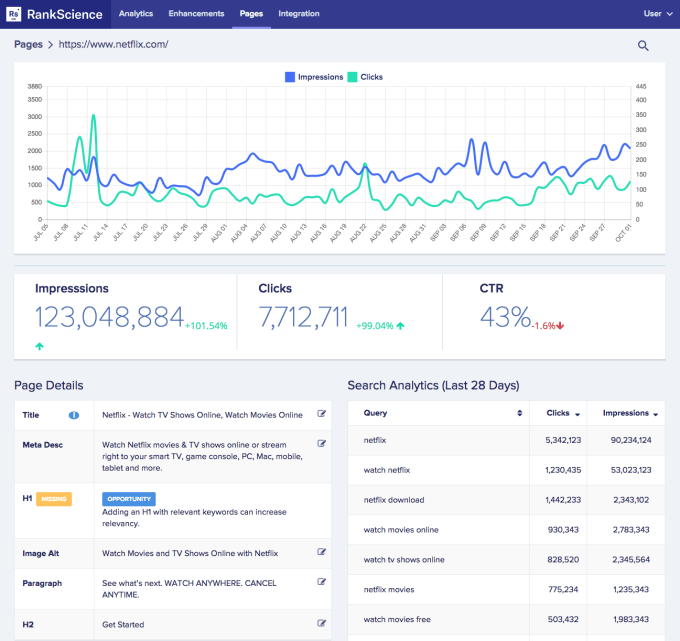
A couple of years ago YC-backed RankScience, which offers AI-enhanced SEO split-testing, put a few SEO experts’ noses out of joint when the fledgling startup brashly talked about replacing human expertise with automation.

Two years on its pitch has mellowed, with the team saying their self-service platform is “augmenting human SEO ability rather than replacing them”.

The startup has also — finally — closed a seed round, announcing $1.8M led by Initialized Capital, along with Adam D’Angelo, Michael Seibel, BoxGroup, Liquid2 Ventures, FundersClub, and Jenny 8 Lee participating.

The new roster of investors join a list of prior backers that includes Y Combinator, 500 Startups, Christina Cacioppo, and Jack Groetzinger.

So what took them so long? Founder Ryan Bednar tells TechCrunch they wanted to take their time with the seed, rather than raise more money than they needed — a position that was possible thanks to already being profitable at YC Demo Day.

“I admit that this is unusual,” he says of the slow seed, though he also says they did raise a “small amount” after demo day, before filling out the rest this month.

“I saw many YC batchmates raising massive rounds pre product-market-fit, which can end up being a mistake,” he adds. “We probably could have raised a few million at Demo Day but ultimately didn’t feel we were ready for it. I didn’t know what I would spend the money on, and we were growing without it, so we chose not to. I wanted to raise capital when I felt we were ready to use it for growth, and now’s that time.”

Bednar also says he is “selective” when it comes to investors — and “specifically” wanted to work with Initialized, saying he’s “known Garry and Alexis personally for years, and trust that they would support us in building a long-term scalable business”.

Commenting on the funding to TechCrunch, Initialized Capital’s Alexis Ohanian tells us: “Even though so many businesses depend on traffic from search, it’s a challenge for them to be data-driven about SEO. RankScience makes it easy to test changes to your website that can lift search traffic. They also automate a growing number of technical SEO tasks, which otherwise would take engineers away from building product and infrastructure, which is really exciting.”

RankScience plans to use the fresh funding to hire more AI and machine learning engineers, with headcount growth targeted at its SF office.

While the founders have stepped back from pronouncing ‘the death of the SEO expert’, they are still touting the power of automation AI for SEO — noting how, after crawling a customer’s site/s, the software automatically proposes “SEO enhancements and experiments” to customers — for “one-click [human] approval”.

It also includes what Bendar bills as a “self-driving car mode” — where the tech will deploy the touted “enhancements and experiments” without customer approval. But he concedes it’s not for all RankScience users.

“For about half of our customers, we’re their only SEO vendor so we automate SEO services 100% for them, and for the other half, our software augments human SEO ability, either from in-house marketers or agencies,” he says, explaining how the team has evolved their thinking on automation vs human agency and expertise.

“When we launched we didn’t think hard enough about what sorts of controls SEO managers at larger websites would want, and we tried to automate everything without giving marketers enough control. This was a mistake and we’ve worked hard on correcting it.

“This should have been obvious but it turns out that SEO managers are highly selective about what sorts of HTML changes our software might make to their webpages. So we’ve spent the past year building tools to give SEO marketers complete control over everything our software does, and also advanced editors and tools so they can create their own SEO enhancements and run SEO split tests through the platform.”

For those who make use of RankScience’s ‘Self-Driving Car Mode’ the software is replacing SEO staff “completely”, but he adds: “This works especially well for startups and medium size businesses. But SEO is such a multifaceted problem, we want to give larger companies with marketing teams complete control over our platform, and so we work with both types of customers.”

As well as (finally) closing out its seed round now, RankScience is also launching a new self-service platform for startups and SMEs — touting greater controls.

On the customer front, Bednar says they have “hundreds” of sites on the platform now — and are serving “hundreds of millions of page views per month”. Cumulatively he says they’ve deployed “millions” of SEO split tests at this point.

“Our customers run the gamut from startups just getting started with SEO to publicly-traded companies,” he continues. “Our best industries are SaaS, ecommerce, marketplaces, healthcare, publishing, and location-based sites.

“We’ve recently been working with more consumer goods brands, and we’ve also launched a partnership program so that we can work with SEO and Digital Marketing Agencies and independent consultants.”

He says the vast majority of RankScience users are based in the US at this stage but adds that Europe is a “growing market”.

In terms of competition, Bednar name-checks the likes of Moz, Conductor (acquired this year by WeWork), BloomReach and BrightEdge — so it is swimming in a pool with some very big fish.

“Most of these products are more akin to advanced SEO analytics suites, and we differ in that RankScience is 100% focused on data-driven SEO automation,” he says, fleshing out the differences and RankScience’s edge, as he sees it. “Our software doesn’t just tell you what changes to make to your site to increase search traffic, it actually makes the changes for you. (Now with more controls!)”

from Startups – TechCrunch https://ift.tt/2IHuzXe