#USA WeWork taps Lemonade to offer insurance to WeLive members

//

WeWork has partnered with Lemonade to provide renters insurance to WeLive members.

WeLive is the residential offering from WeWork, offering members a fully-furnished apartment, complete with amenities like housekeeping, mailroom, and on-site laundry, on a flexible rental schedule. In other words, bicoastal workers or generally nomadic individuals can rent a short-term living space without worrying about all the extras.

As part of that package, WeLive is now offering Lemonade renters insurance to new and existing members.

WeLive currently has two locations — one in New York and one in D.C. — collectively representing more than 400 units. WeWork says that both units are nearly at capacity. The company has plans to open a third location in Seattle Washington by Spring 2020.

Lemonade, meanwhile, is an up-and-coming insurance startup that is rethinking the centuries-old industry. The company’s first big innovation was the digitization of getting insurance. The company uses a chatbot to lead prospective customers through the process in under a minute.

The second piece of Lemoande’s strategy is rooted in the business model. Unlike incumbent insurance providers, Lemonade takes its profit up-front, raking away a percentage of customers’ monthly payments. The rest, however, is set aside to fulfill claims. Whatever goes unclaimed at the end of the year is donated to the charity of each customer’s choice.

To date, Lemonade has raised a total of $180 million. WeWork, on the other hand, has raised just over $9 billion, with a reported valuation as high as $35 billion.

Of course, part of the reason for that lofty valuation is the fact that WeWork is a real estate behemoth, with Re/Code reporting that the company is Manhattan’s second biggest private office tenant. But beyond sheer square footage, WeWork has spent the past few years filling its arsenal with various service providers for its services store.

With 175,000 members (as of end of 2017, so that number is likely much higher now), WeWork has a considerable userbase with which it can negotiate deals with service providers, from enterprise software makers to… well, insurance providers.

Lemonade is likely just the beginning of WeWork’s stretch into developing a suite of services and partnerships for its residential members.

from Startups – TechCrunch https://ift.tt/2zXYqIk

#USA WeWork taps Lemonade to offer insurance to WeLive members

//

WeWork has partnered with Lemonade to provide renters insurance to WeLive members.

WeLive is the residential offering from WeWork, offering members a fully-furnished apartment, complete with amenities like housekeeping, mailroom, and on-site laundry, on a flexible rental schedule. In other words, bicoastal workers or generally nomadic individuals can rent a short-term living space without worrying about all the extras.

As part of that package, WeLive is now offering Lemonade renters insurance to new and existing members.

WeLive currently has two locations — one in New York and one in D.C. — collectively representing more than 400 units. WeWork says that both units are nearly at capacity. The company has plans to open a third location in Seattle Washington by Spring 2020.

Lemonade, meanwhile, is an up-and-coming insurance startup that is rethinking the centuries-old industry. The company’s first big innovation was the digitization of getting insurance. The company uses a chatbot to lead prospective customers through the process in under a minute.

The second piece of Lemoande’s strategy is rooted in the business model. Unlike incumbent insurance providers, Lemonade takes its profit up-front, raking away a percentage of customers’ monthly payments. The rest, however, is set aside to fulfill claims. Whatever goes unclaimed at the end of the year is donated to the charity of each customer’s choice.

To date, Lemonade has raised a total of $180 million. WeWork, on the other hand, has raised just over $9 billion, with a reported valuation as high as $35 billion.

Of course, part of the reason for that lofty valuation is the fact that WeWork is a real estate behemoth, with Re/Code reporting that the company is Manhattan’s second biggest private office tenant. But beyond sheer square footage, WeWork has spent the past few years filling its arsenal with various service providers for its services store.

With 175,000 members (as of end of 2017, so that number is likely much higher now), WeWork has a considerable userbase with which it can negotiate deals with service providers, from enterprise software makers to… well, insurance providers.

Lemonade is likely just the beginning of WeWork’s stretch into developing a suite of services and partnerships for its residential members.

from Startups – TechCrunch https://ift.tt/2zXYqIk

#USA Mosaic Ventures, the London-based Series A investor, has closed a second fund at $150M

//

Well, that was quick: A little over two months since we reported that Mosaic Ventures was in the middle of raising a second fund, TechCrunch can reveal that fund two has in fact now closed, as the London-based venture capital firm looks to double down on backing “Europe’s most ambitious entrepreneurs”.

We began hearing from sources late last week that news was imminent, and in a call on Saturday morning Mosaic founding partners Simon Levene and Toby Coppel confirmed the details. Fund two totals $150 million, as per an earlier SEC filing, and will be used to continue the firm’s Series A remit, which will see it back 5-10 new companies each year, as lead or co-lead, typically with a $3-7 million first check.

Four years since launching, Mosaic has invested in over 20 startups, and in a range of sectors. These include blockchain/crypto startups Blockstream and Blockchain (the firm remains bullish with regards to the space), fintech startup Habito, open source drone company Auterion, period tracking app Clue, and data startup Infosum. The firm has also invested directly in deep tech company builder Entrepreneur First, alongside Reid Hofflan with Greylock, a deal Mosaic helped instigate.

“I think what we do is very unique,” says Coppel, when I ask how the VC differentiates itself from competing early-stage firms in London and Europe, especially since — only just on fund two — it is somewhat unproven. “What we do is focus very much at the early-stage, Series A, where founders have built an early product, they’re a long way ahead of themselves in terms of building out their team and their got-to-market. We roll up our sleeves and get stuck in with them in many of the foundational pieces of building a company. That’s our entire focus”.

He also argues that when Mosaic write a cheque, the firm’s interests are more aligned with the founders it backs than larger venture capital firms.

“Given our fund size and the cheques we write at Series A, we think working with us is a very strong choice because of our experience and because we are willing to take risk and because of our network and so forth. And we’ll give everything — we’re entrepreneurs ourselves. As you say, it is early for Mosaic and therefore whatever we do at this point we are going to give 150 percent.

“There are firms that are much bigger in terms of fund size and for them, often writing a $3 million cheque is not the same, it’s a very small part of their fund, you don’t necessarily get the same focus and effort and alignment. And I think that is what sets us apart”.

To that end, Levene and Coppel, who both built much of their career in Silicon Valley, most notably in senior positions at Yahoo, tell me that Mosaic will continue to invest thematically, specifically outlining five areas. They are: “blockchain, crypto and the decentralized web” (it’s the decentralised aspect of blockchain where no one vendor needs to own or have control over the platform, that the pair say is attractive), “computational health”, “machine intelligence”, “mobility and location services”, and “finance 2.0”.

Elaborating on how Mosaic views health tech, Coppel says that over the next five to ten years the cost of sensors that enable “continuous bio tracking” will continue to drop and therefore we’ll all be collecting huge amounts of data from our bodies, such as our metabolism or cardiovascular systems, so that we can monitor our own health. Combined with various “-omics data” and that the fact that sequencing the genome can be done for less than $100, we’ll be able to generate new drugs or help adapt personalised treatments based on that data. “When you’re collecting all that data it creates significant new things and opportunities in new areas. That’s the transformation that healthcare is going to go through,” he says.

Regards “finance 2.0,” Levene and Coppel don’t entirely disagree with my assertion that much of the low and mid-hanging fruit in fintech has already been picked (Coppel himself was an early investor in Transferwise), as the banks and financial services continue to be unbundled. However, they say there are still opportunities to build “best-of-breed services” both for consumers and businesses.

“Insurance is one of those,” says Coppel. “Today the experience is pretty poor because most insurance companies have gone through channels and therefore they’re not consumer-centric. But also the underlying insurance product itself hasn’t really been geared for trust where they’ve created these products that have suited their own internal risk models not necessarily what the customers need. So there is a whole series of opportunities to reinvent the core underlying… risk and protection product to tailor it to the customer’s needs”.

Pressed to be more specific, he says that today many people are overinsured in the wrong products, such as phone insurance, and underinsured in what really matters, such as life insurance or critical illness insurance.

Another area Mosaic is eyeing up is SME financing, where the “attack vector” could be building a great accounting or invoicing product, and then by using the data passed through those services, offering more flexible business financing.

A common thread throughout a number of Mosaic’s existing portfolio — and just about any VC firm these days — is machine learning, and the Mosaic founders says they remain firm in their belief that the impact of machine learning will be pervasive across all industries and businesses. “We’ve gone deep into machine learning and machine intelligence-based businesses,” adds Levene. “Obviously there’s the investment in EF… that, if you like, is an index of that whole sector. At least half a dozen of the portfolio have a strong machine learning vector as to how they are attacking a particular vertical”.

On that note — and given that AI is an area where Europe and the U.K. in particular excels — I turn the topic to Brexit and ask the pair what they make of the current Brexit mess (actually, I used a far less polite word).

“Entrepreneurs at this point still don’t understand what Brexit means,” says Coppel. “It hasn’t come to fruition and most entrepreneurs are focused on the next week, the next month, the next quarter, rather than what’s going to happen in a year and a half to the U.K. economy. That’s certainly true of the early-stage companies. [For] the later stage companies, there are some more significant decisions. It’s not easy to move hundreds of people around.

“We don’t really know what Brexit means yet and it obviously creates havoc for people who are trying to plan. But at this point we haven’t seen any evidence from entrepreneurs saying ‘I’m not going to start my company in London, I’m going to start my company in Barcelona or Berlin’ and we haven’t seen companies move from London to the continent because of Brexit. Could we see that in six months from now? Possibly”.

Adds Levene, less optimistically: “The biggest single risk that we foresee is… if it changes the hiring market. If you don’t have access to 300 million people you can bring on your books tomorrow. If you have to go through a visa process that is cumbersome, that would stymie startups being able to hire talent quickly and scale up. So the capital follows talent and if we put up the walls around immigration then that’s going to be a problem”.

I suggest that, given the current trajectory and the music coming from the U.K. government, whatever the immigration mechanism put in place post-Brexit, it won’t be as optimal for U.K. startups as the status quo. Levene doesn’t refute my logic. “It’s shooting ourselves in the foot,” he says, “and it’s not just in tech but I think it’s also going to be in other verticals… So I think the government is gonna have a reckoning if they create friction for hiring, not just in tech but in many other industries”.

from Startups – TechCrunch https://ift.tt/2CwMcbZ

#USA Atomico leads $31M Series B in Varjo, the Finnish startup developing ‘human-eye resolution’ VR and XR

//

Varjo Technologies, the Finnish startup that made a splash earlier this year with news it had developed a virtual reality headset capable of “human-eye resolution,” has raised $31 million in Series B funding.

Leading the round is Europe’s Atomico, with participation from Siemens-backed venture capital firm Next47. Existing Series A investors EQT Ventures and Lifeline Ventures also followed on. It brings total funding for the Helsinki-based company to $46 million.

Founded in 2016, Varjo (which means “shadow” in Finnish and is pronounced “Var-yo”) aims to bring to market “the world’s first” human-eye resolution virtual reality (VR) and mixed reality (XR) product, which will be orders of magnitude higher in resolution than existing consumer headsets, such as Magic Leap or Microsoft’s HoloLens. However, unlike those existing devices — and courtesy of a claimed 20x bump in resolution — Varjo is targeting industrial use-cases for its wares.

In a call, co-founder and CEO Urho Konttori — who was previously at Nokia and Microsoft, where he played a pivotal role in the Meego N9 smartphone and the high-end Lumia devices, respectively — told me that Varjo is looking to sell into “design-driven” industries including simulation and training, architecture, automotive, aerospace, manufacturing, engineering, and construction — along with industrial design more generally.

These use-cases require VR and XR to mimic the human eye as closely as possible, and demand “extreme precision” and visual fidelity. Konttori says the status quo in resolution is like asking designers or engineers sporting headsets to work or train “half blind”. In contrast to existing lower resolution headsets, the startup’s prototype already claims “an effective resolution of 50 megapixels per eye”.

But to really understand the impact Varjo hopes to make, consider how complex design and engineering projects are undertaken today. In car design, for example, clay models are still used at key points of the design stage and form an important part of the creative loop. However, producing these slows down the design iteration process and in some ways stifles creativity because of the lag between tweaking a drawing or 3D CAD file and experiencing it in clay form in real life. Moving this to a high resolution virtual reality domain via VR and XR will remove this obstacle and enable designers to take more risks and try new things. This, in the longer term, should lead to better design and more innovative products.

What is also noteworthy, given VR and AR’s penchant for being the promise that keeps on promising, is that Varjo isn’t a “moonshot” investment, even though Atomico does do moonshot investments from time to time. Instead, the company says it is on track to commercially launch its VR headset later this year, with an AR/XR add-on to the headset available in the first half of 2019.

I’m also told it is already working in partnership with companies such as Airbus, Audi, BMW, Volkswagen, and Lilium, who have had early access to prototypes and have been feeding back and helping iterate the product.

I note that it is refreshing to see a new hardware company based in Europe, and that Varjo, with its ties to ex-Nokians, appears to be benefiting from European hardware talent, Konttori says that European VC firms have seemingly lost their appetite for truly innovative hardware. In Varjo’s case, he says Atomico was the exception, and that — along with flying taxi company Lilium (which Atomico has also invested in) — he hopes it can be the start of a European hardware startup renaissance.

from Startups – TechCrunch https://ift.tt/2y7xuEt

#USA Faraday Future investor Evergrande Health now says the troubled startup is trying to back out of deal

//

Evergrande Health, the investor that bailed out besieged electric vehicle startup Faraday Future in a deal worth $2 billion this summer, is now accusing it of attempting to break an agreement it made with previous backer Season Smart. In June, Evergrande Health announced that would it take over the financial commitment made by Season Smart last November that saved Faraday Future from running out of cash. Now Evergrande Health says Faraday Future Jia Yueting has started arbitration in Hong Kong in an attempt to renege on its agreement with Season Smart.

Evergrande Health agreed in June to buy Season Smart’s 45% stake in Faraday Future for $860 million, an increase over the $800 million Season Smart originally paid, and then complete the deal with additional installments of $600 million in both 2019 and 2020.

But in a new filing with the Hong Kong stock exchange first reported by Reuters, Evergrande Health says it was informed in July by Faraday Future that the $800 million it received from Season Smart had already been spent, and that Smart King, the joint venture set up between Faraday Future and Season Smart, had been asked to provide another $700 million. As a result, Season Smart had entered into a supplemental agreement to advance $700 million.

Evergrande Health now accuses Faraday Future of “manipulating Smart King” by using its majority seats on Smart King’s board of directors to begin arbitration in Hong Kong claiming that Season Smart hasn’t fulfilled its payment conditions. Evergrande Health says Faraday Future is using this as a pretext to deprive Season Smart of its shareholder rights to approve Faraday Future’s future financing plans and terminate its agreements with Season Smart.

As a result, Season Smart has “engaged a team of international lawyers and will take all necessary actions” to protect its rights, as well as Evergrande Health’s interests.

Despite its deals with Season Smart and Evergrande Health, The Verge reports that Faraday Future’s financial woes have continued, with some of its company’s vendors and suppliers claiming that they have not been paid in weeks, and that Faraday is also contemplating layoffs. The Verge’s sources say at least three companies have filed liens with the California Secretary of State over payments owed by Faraday Future.

Meanwhile the company is facing a host of other legal and financial issues. These include a legal battle with its former CFO, Stefan Krause, who Faraday Future claims stole intellectual property (Krause has accused Faraday Future of defamation). Jia is also under fire over debts incurred by LeEco, the failed tech conglomerate he founded. The Chinese government froze his assets in 2017 and, in an unusual move, publicly ordered him to repay LeEco’s investors.

TechCrunch has contacted Faraday Future for comment.

from Startups – TechCrunch https://ift.tt/2IMK7co

#USA Recent departures hint at turmoil at Quartet Health, a mental health startup backed by GV

//

Backed with nearly $87 million in venture capital funding from GV, Oak HC/FT and F-Prime Capital, Quartet Health was founded in 2014 by Arun Gupta, Steve Shulman and David Wennberg to improve access to behavioral healthcare. Its mission: “enable every person in our society to thrive by building a collaborative behavioral and physical health ecosystem.”

Recent shakeups within the New York-based company’s c-suite and a perusal of its Glassdoor profile suggest Quartet’s culture is not fully in line with its own philosophy.  

In the last few weeks, chief product officer Rajesh Midha has left the company and president and chief operating officer David Liu is on his way out, TechCrunch has learned and confirmed with Quartet. Founding chief executive officer Arun Gupta, meanwhile, has stepped into the executive chairman role, relinquishing responsibility of the company’s day-to-day operations to former chief science officer David Wennberg, who’s taken over as CEO.

“I’m focusing on our external growth,” Gupta told TechCrunch on Friday. “David has really stepped up as CEO.”

Gupta and Wennberg said Liu’s role was no longer needed because Wennberg had assumed his responsibilities. Liu will formally exit the company at the end of the month. As for its product chief, the pair say Midha had “transitioned out” of the role and that an unnamed internal candidate was tapped to replace him.

When asked whether other employees had left in recent weeks,  Wennberg provided the following indeterminate statement: “We are always having people coming in. I don’t think we’ve had any unusual turnover. We’re hiring and people’s roles change and that’s just part of growth.”

Quartet, which provides a platform that allows providers to collaborate on treatment plans, currently has 150 employees, according to its executives.

In a LinkedIn status update published this week — after TechCrunch’s initial inquiries — Gupta announced his transition to executive chairman:

“Still full-time, though focused largely on our opportunity to further evangelize our mission, [I will] drive the change we want to see in this world, and expand our reach … I have tremendous confidence in David’s ability to lead our many talented Quartetians to deliver this next phase.”

Several former employees seemed less than pleased with Gupta’s performance, writing in a number of Glassdoor reviews that he was “abominable,” “kind of a monster” and “by far the worst executive.”

When asked for comment on those reviews, Gupta and Wennberg shrugged it off: “Glassdoor is Glassdoor.” They agreed its important to pay attention to but impossible to vet.

Gupta began his career as a management consultant at McKinsey and served as a consultant to The World Bank before joining Palantir, Peter Thiel’s data-mining company, as an advisor in 2014. Wennberg, for his part, was the CEO of The High Value Healthcare Collaborative, a consortium of 15 healthcare delivery systems, before co-founding Quartet.

In January, Quartet raised a $40 million Series C to expand throughout the U.S. F-Prime Capital and Polaris Partners led the round, with participation from GV and Oak HC/FT. The financing valued the company at $300 million, according to PitchBook.

As part of the funding, Quartet announced it was adding three new directors to its board: F-Prime’s executive partner Carl Byers; Ken Goulet, an executive vice president at health insurance provider Anthem; and former Rackspace CEO and BuildGroup co-founder Lanham Napier. Other outside board members include Oak HC/FT’s managing partner Annie Lamont, GV partner Krishna Yeshwant, Polaris managing partner Brian Chee and former U.S. Congressman Patrick Kennedy.

Quartet previously raised a $40 million Series B in April 2016 led by GV. The investment marked the venture capital investment arm of Google’s first in a mental health startup. Before that, the startup brought in a $7 million Series A led by Oak HC/FT’s managing partner Annie Lamont.

For now, Quartet remains committed to growth.

“We learn from what we are doing and we continue to learn,” Wennberg said. “That is part of growth. It’s hard and you just keep working and growing because we have a huge mission.”

from Startups – TechCrunch https://ift.tt/2Oc1CZq

#USA D-Wave offers the first public access to a quantum computer

//

Outside the crop of construction cranes that now dot Vancouver’s bright, downtown greenways, in a suburban business park that reminds you more of dentists and tax preparers, is a small office building belonging to D-Wave. This office, squat, angular, and sun-dappled one recent cool Autumn morning, is unique in that it contains an infinite collection of parallel universes.

Founded in 1999 by Geordie Rose, D-Wave company worked in relatively obscurity on esoteric problems associated with quantum computing. When Rose was PhD student at the University of British Columbia he turned in an assignment that outlined a quantum computing company. His entrepreneurship teacher at the time, Haig Farris, found the young physicists ideas compelling enough to give him $1,000 to buy a computer and a printer to type up a business plan.

The company consulted with academics until 2005 when Rose and his team decided to focus on building usable quantum computers. The result, the Orion, launched in 2007 and was used to classify drug molecules and play Sodoku. The business now sells computers for up to $10 million to clients like Google, Microsoft, and Northrop Grumman.

“We’ve been focused on making quantum computing practical since day one. In 2010 we started offering remote cloud access to customers and today, we have 100 early applications running on our computers (70% of which were built in the cloud),” said CEO Vern Brownell. “Through this work, our customers have told us it takes more than just access to real quantum hardware to benefit from quantum computing. In order to build a true quantum ecosystem, millions of developers need the access and tools to get started with quantum.”

Now their computers are simulating weather patterns and tsunamis, optimizing hotel ad displays, solving complex network problems, and, thanks to a new, open source platform, could help you ride the quantum wave of computer programming.
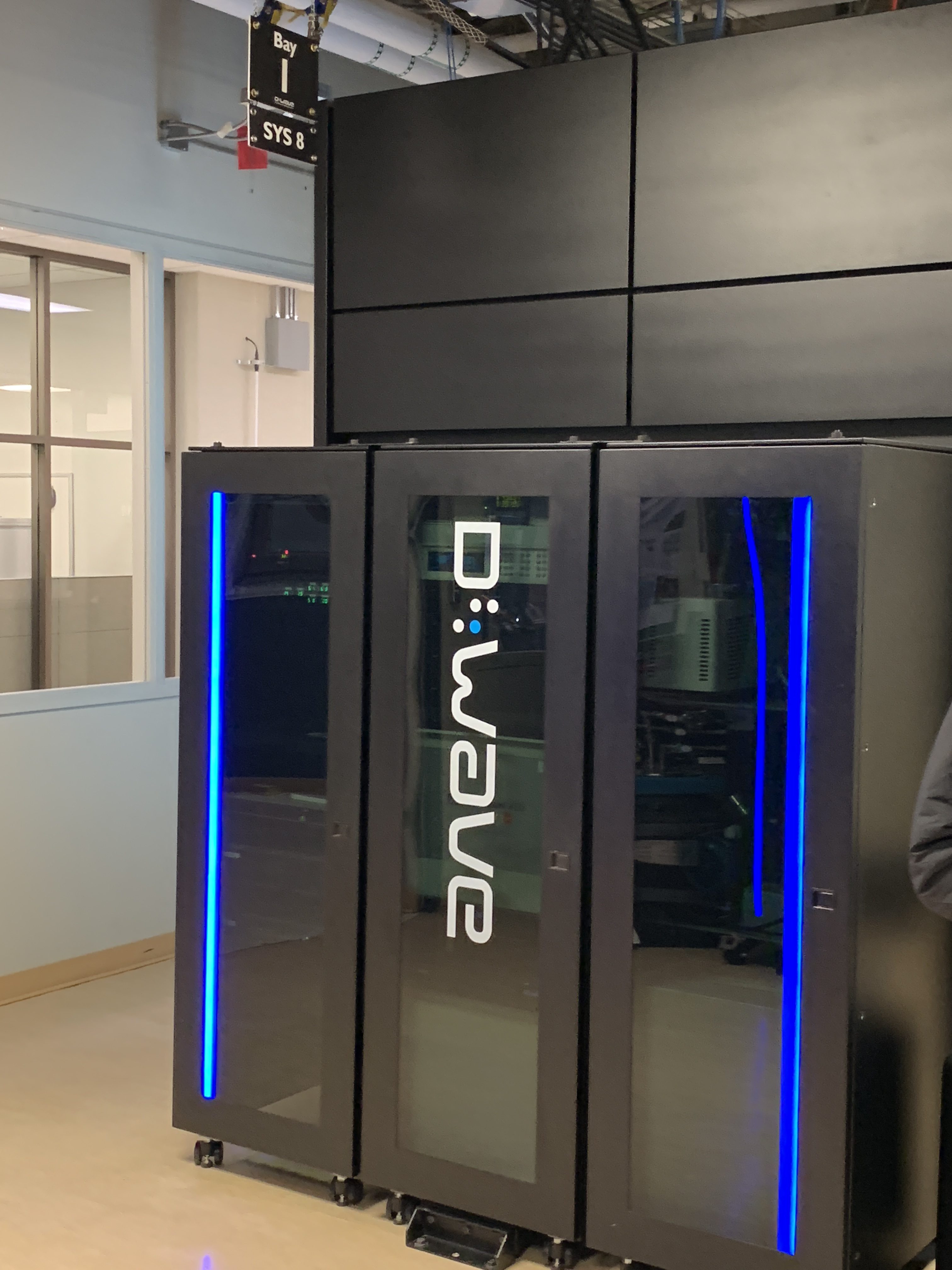
Inside the box

When I went to visit D-Wave they gave us unprecedented access to the inside of one of their quantum machines. The computers, which are about the size of a garden shed, have a control unit on the front that manages the temperature as well as queuing system to translate and communicate the problems sent in by users.
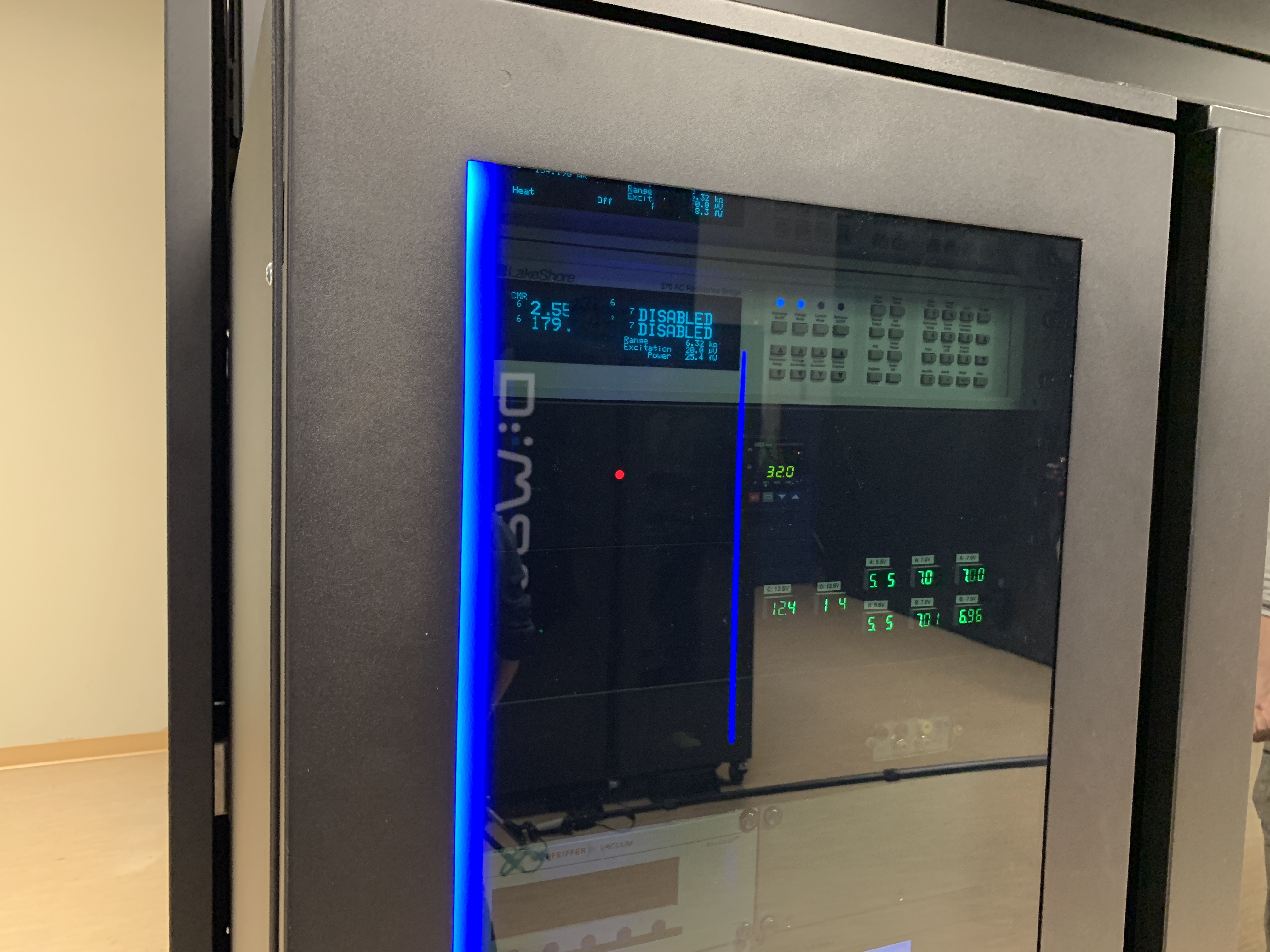
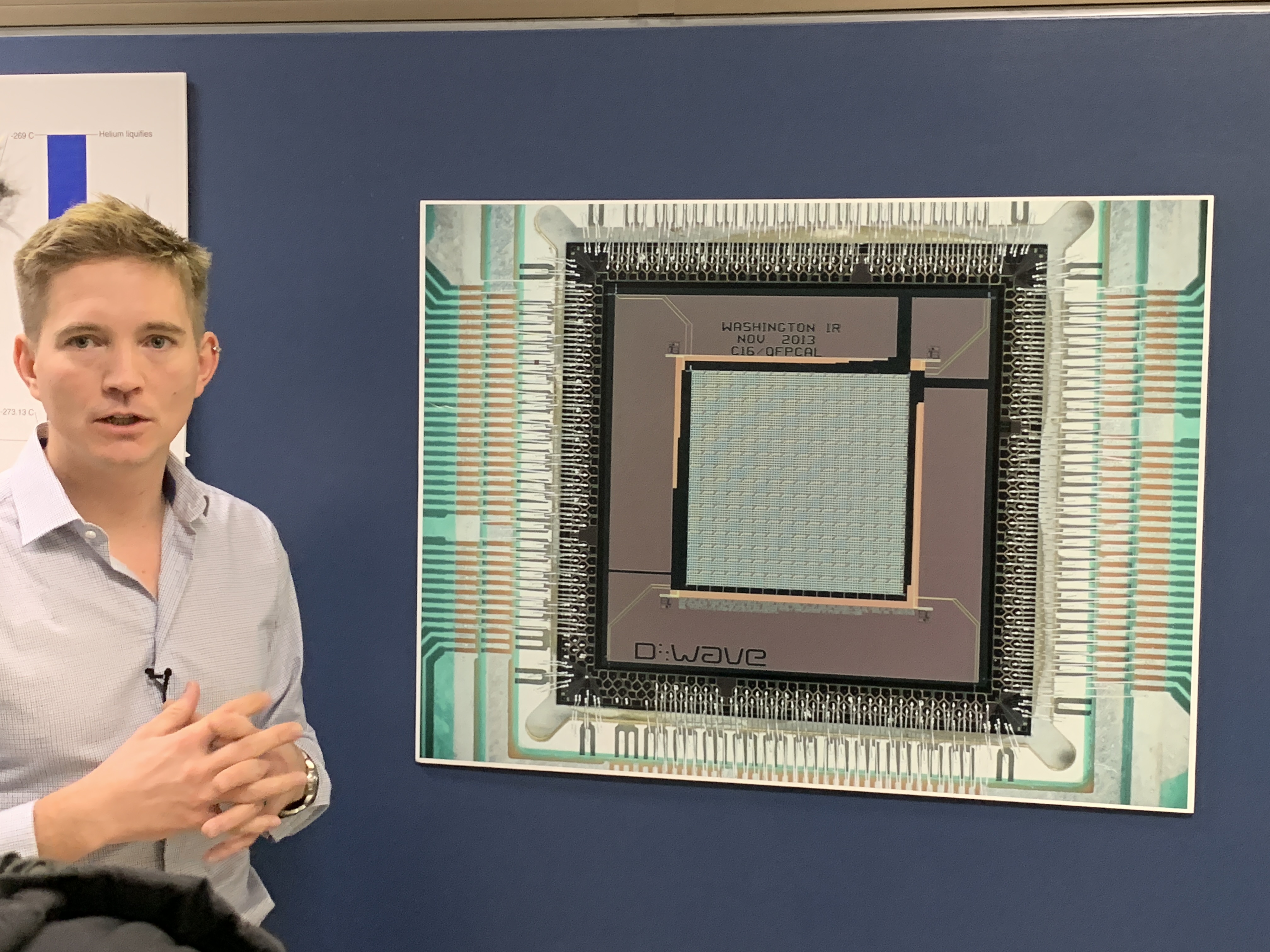
Inside the machine is a tube that, when fully operational, contains a small chip super-cooled to 0.015 Kelvin or -459.643 degrees Fahrenheit or -273.135 degrees Celsius. The entire system looks like something out of the Death Star – a cylinder of pure data that the heroes must access by walking through a little door in the side of a jet black cube.

It’s quite thrilling to see this odd little chip inside of its supercooled home. As the computer revolution maintained its predilection towards room-temperature chips, these odd and unique machines are a connection to an alternate timeline where physics is wrestled into submission in order to do some truly remarkable things.

And now anyone – from kids to PhDs to everyone in between – can try it.

Into the Ocean

Learning to program a quantum computer takes time. Because the processor doesn’t work like a classic universal computer you have to train the chip to perform simple functions that your own cellphone can do in seconds. However, in some cases researchers have found the chips can outperform classic computers by 3,600 times. This trade off – the movement from the known to the unknown – is why D-Wave exposed their product to the world.

“We built Leap to give millions of developers access to quantum computing. We built the first quantum application environment so any software developer interested in quantum computing can start writing and running applications — you don’t need deep quantum knowledge to get started. If you know Python, you can build applications on Leap,” said Brownell.
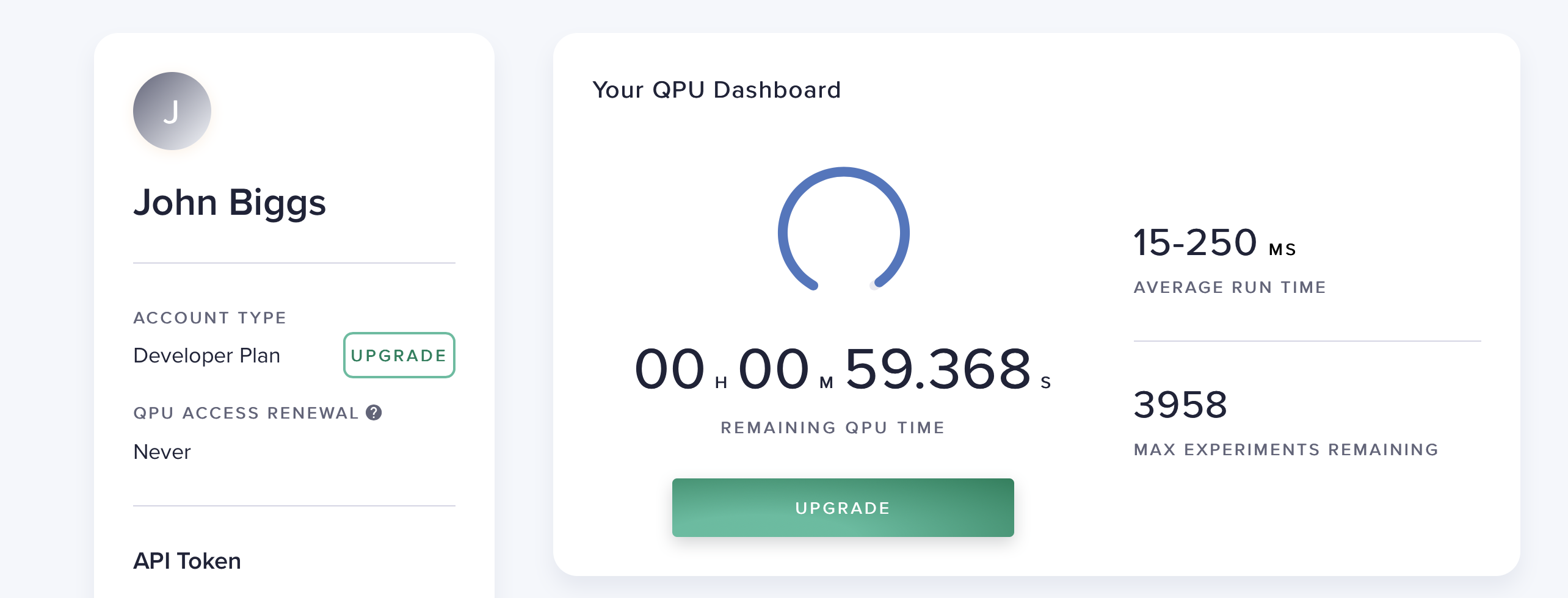
To get started on the road to quantum computing D-Wave build the Leap platform. The Leap is an open source toolkit for developers. When you sign up you receive one minute’s worth of quantum processing unit time which, given that most problems run in milliseconds, is more than enough to begin experimenting. A queue manager lines up your code and runs it in order received and the answers are spit out almost instantly.

You can code on the QPU with Python or via Jupiter notebooks and it allows you to connect to the QPU with an API token. After writing your code, you can send commands directly to the QPU and then output the results. The programs are currently pretty esoteric and require a basic knowledge of quantum programming but, it should be remembered, classic computer programming was once daunting to the average user.
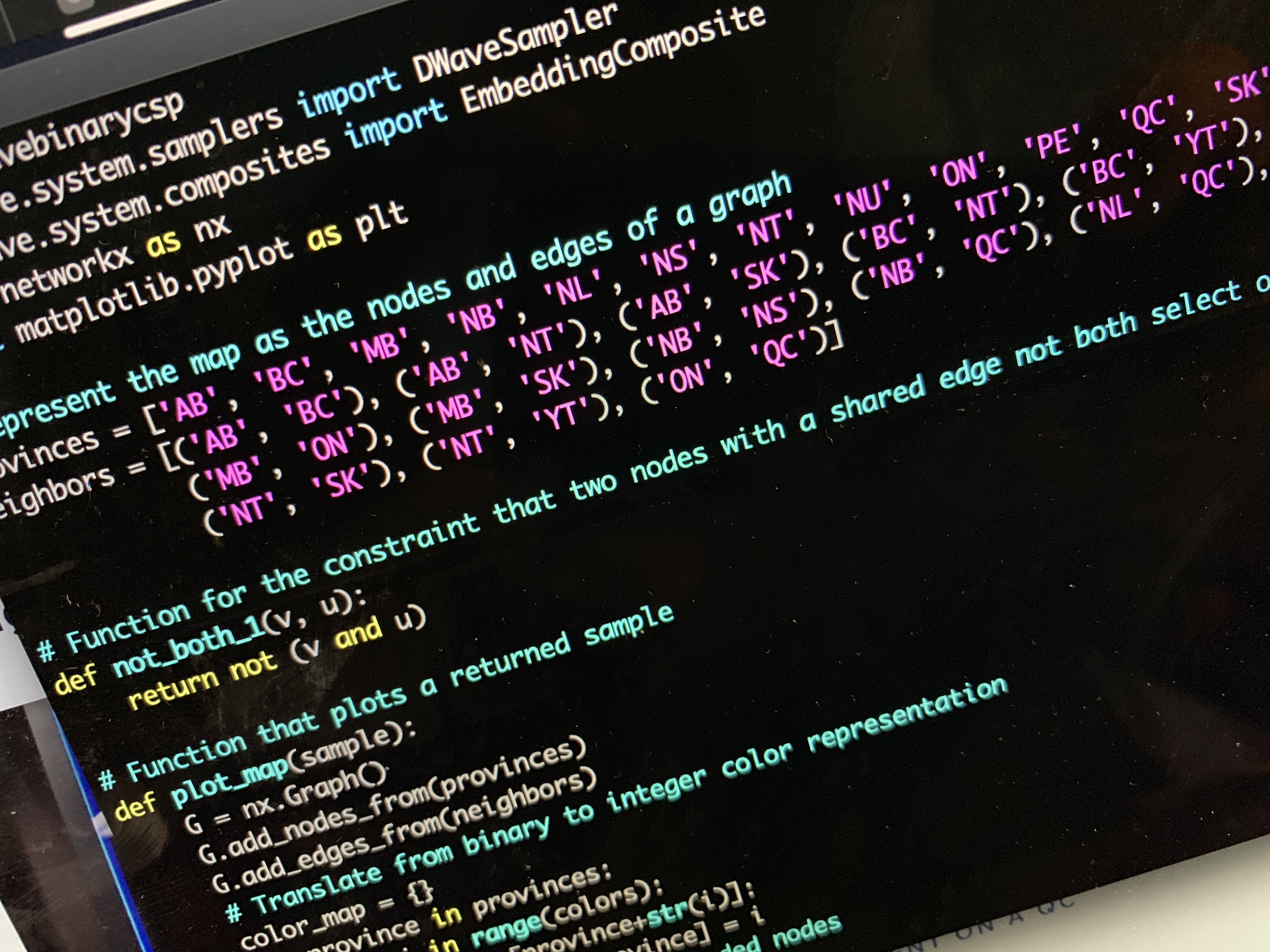
I downloaded and ran most of the demonstrations without a hitch. These demonstrations – factoring programs, network generators, and the like – essentially turned the ideas concepts of classical programming into quantum questions. Instead of iterating through a list of factors, for example, the quantum computer creates a “parallel universe” of answers and then collapses each one until it finds the right answer. If this sounds odd it’s because it is. The researchers at D-Wave argue all the time about how to imagine a quantum computer’s various processes. One camp sees the physical implementation of a quantum computer to be simply a faster methodology for rendering answers. The other camp, itself aligned with Professor David Deutsch’s ideas presented in The Beginning of Infinity, sees the sheer number of possible permutations a quantum computer can traverse as evidence of parallel universes.

What does the code look like? It’s hard to read without understanding the basics, a fact that D-Wave engineers factored for in offering online documentation. For example, below is most of the factoring code for one of their demo programs, a bit of code that can be reduced to about five lines on a classical computer. However, when this function uses a quantum processor, the entire process takes milliseconds versus minutes or hours.

Classical

# Python Program to find the factors of a number

define a function

def print_factors(x):
# This function takes a number and prints the factors

print("The factors of",x,"are:")
for i in range(1, x + 1):
if x % i == 0:
print(i)

change this value for a different result.

num = 320

uncomment the following line to take input from the user

#num = int(input("Enter a number: "))

print_factors(num)

Quantum


@qpu_ha
def factor(P, use_saved_embedding=True):

####################################################################################################
# get circuit
####################################################################################################

construction_start_time = time.time()

validate_input(P, range(2 ** 6))

# get constraint satisfaction problem
csp = dbc.factories.multiplication_circuit(3)

# get binary quadratic model
bqm = dbc.stitch(csp, min_classical_gap=.1)

# we know that multiplication_circuit() has created these variables
p_vars = ['p0', 'p1', 'p2', 'p3', 'p4', 'p5']

# convert P from decimal to binary
fixed_variables = dict(zip(reversed(p_vars), "{:06b}".format(P)))
fixed_variables = {var: int(x) for(var, x) in fixed_variables.items()}

# fix product qubits
for var, value in fixed_variables.items():
    bqm.fix_variable(var, value)

log.debug('bqm construction time: %s', time.time() - construction_start_time)

####################################################################################################
# run problem
####################################################################################################

sample_time = time.time()

# get QPU sampler
sampler = DWaveSampler(solver_features=dict(online=True, name='DW_2000Q.*'))
_, target_edgelist, target_adjacency = sampler.structure

if use_saved_embedding:
    # load a pre-calculated embedding
    from factoring.embedding import embeddings
    embedding = embeddings[sampler.solver.id]
else:
    # get the embedding
    embedding = minorminer.find_embedding(bqm.quadratic, target_edgelist)
    if bqm and not embedding:
        raise ValueError("no embedding found")

# apply the embedding to the given problem to map it to the sampler
bqm_embedded = dimod.embed_bqm(bqm, embedding, target_adjacency, 3.0)

# draw samples from the QPU
kwargs = {}
if 'num_reads' in sampler.parameters:
    kwargs['num_reads'] = 50
if 'answer_mode' in sampler.parameters:
    kwargs['answer_mode'] = 'histogram'
response = sampler.sample(bqm_embedded, **kwargs)

# convert back to the original problem space
response = dimod.unembed_response(response, embedding, source_bqm=bqm)

sampler.client.close()

log.debug('embedding and sampling time: %s', time.time() - sample_time)

“The industry is at an inflection point and we’ve moved beyond the theoretical, and into the practical era of quantum applications. It’s time to open this up to more smart, curious developers so they can build the first quantum killer app. Leap’s combination of immediate access to live quantum computers, along with tools, resources, and a community, will fuel that,” said Brownell. “For Leap’s future, we see millions of developers using this to share ideas, learn from each other, and contribute open source code. It’s that kind of collaborative developer community that we think will lead us to the first quantum killer app.”

The folks at D-Wave created a number of tutorials as well as a forum where users can learn and ask questions. The entire project is truly the first of its kind and promises unprecedented access to what amounts to the foreseeable future of computing. I’ve seen lots of technology over the years and nothing quite replicated the strange frisson associated with plugging into a quantum computer. Like the teletype and green-screen terminals used by the early hackers like Bill Gates and Steve Wozniak, D-Wave has opened up a strange new world. How we explore it us up to us.
from Startups – TechCrunch https://ift.tt/2BZXVPp

#USA Magic Leap buys mesh-computing startup Computes

//

Magic Leap has announced that they are acquiring Computes, a decentralized mesh computing startup. Terms of the deal weren’t disclosed.

From Magic Leap’s blog post:

From the beginning, Chris Matthieu and Jade Meskill started Computes, Inc. based on the principle of enabling the next generation of computing. We believe Magic Leap is the perfect home to achieve this vision

Why would Magic Leap want to get their hands on this company? Well, it’s no secret that building a “digital layer” on top of the real world is more than a little compute-heavy, mesh computing offers an attractive future for leveraging the power of grouped systems to push resources to the devices that need it most.

The company’s website does a not-so-great job of explaining what exactly they do, but here’s a blip from one of the company’s white papers:

The Lattice protocol allows authorized computers to self-organize into a mesh computer, limited only by the number and power of the members. Lattice will intelligently allocate work to the best members of the mesh, based on the requirements of the task.

This is an interesting idea for AR headset systems where eventually most of them may be in standby on average and could theoretically push their compute power to another system. Perhaps more likely is offsite PCs with beefy internals offering the headsets a punch. On the far less sexy side, this could also just be a play for the startup to drill down some of its backend services.

If you’re still curious of what they do and interested in some even more mildly dubious explaining, check out this video from Computes’ CEO which only mildly resembles a video from the Dharma Initiative.


from Startups – TechCrunch https://ift.tt/2BXmT1K

#USA Scaleway adds object storage

//

Cloud hosting company Scaleway is launching object storage in public beta. The company uses an Amazon S3-compatible API, which means that you could easily replace your Amazon S3 bucket with a Scaleway bucket by changing the API end point.

The basic object storage package starts at $5.75 per month (€5 per month), which includes 500GB of storage and 500GB of outgoing transfer. You then pay €0.01 per month for every extra GB of storage and €0.02 per month for every extra GB of outgoing transfer. And there’s no limit.

You can transfer data back and forth between a Scaleway server instance and your object storage bucket for free. You can also create a bucket for free during the public beta phase.

When it comes to service level agreement, the company promises 99.9 percent availability and 99.999 percent redundancy and protection of your files.

It’s hard to compare Scaleway’s pricing with big competitors, such as Amazon S3, Google Cloud Storage and Microsoft Azure’s blob storage. Pricing differs depending on the region and the level of availability. But they tend to be more expensive than Scaleway if you choose standard storage options.

Backblaze’s B2 charges $0.005 per GB of storage per month and $0.01 per GB of outgoing transfer per month. DigitalOcean’s Spaces costs $5 per month for 250 GB of storage, 1TB of outgoing transfer, and then $0.02 per extra GB of storage, $0.01 per extra GB of transfer.

But pricing is just one thing. Chances are you don’t want to work with multiple vendors and pay for outgoing transfer by hosting your computing instances with one cloud hosting company and your object storage with another. Having object storage could help convince more clients to switch to Scaleway for everything.

from Startups – TechCrunch https://ift.tt/2IGzoQE

#USA Deliverr raises $7M to help e-commerce businesses compete with Amazon Prime

//

When Amazon rolled out its membership-based two-day shipping service in 2005, e-commerce and customer expectations around fulfillment speed changed forever.

Today, more than 100 million people use Amazon Prime. That means, 100 million people are fully accustomed to two-day shipping and if they can’t have it, they shop elsewhere. As The Wall Street Journal’s Christopher Mims recently put it: “Alongside life, liberty and the pursuit of happiness, you can now add another inalienable right: two-day shipping on practically everything.”

Only recently have Amazon’s competitors begun to offer similar fast delivery options. About two years ago, Walmart launched its own free two-day delivery service for its owned-inventory; eBay followed suit, establishing a three-day or less delivery guaranteed option for shoppers in March 2017.

To power these Prime-like delivery options, Walmart, eBay and the Canadian e-commerce business Shopify are relying on a little upstart.

One-year-old Deliverr helps businesses offer rapid delivery experiences to their customers. Today, the company is announcing a $7.1 million Series A led by Joe Lonsdale’s 8VC, with participation from Zola founder Shan-Lyn Ma, Flexport chief executive officer Ryan Peterson and others.

The San Francisco-based startup uses machine learning and predictive intelligence to determine which of its warehouses to store its client’s goods.

Currently, Deliverr operates out of more than 10 warehouses in Texas, Missouri, Pennsylvania, Ohio and New Jersey, among other states, though co-founder Michael Krakaris says that number is growing every week. Its customers typically store inventory in three to five different locations based on Deliverr’s predictive algorithms.

Unlike Amazon, which owns more than 75 fulfillment centers, Deliverr doesn’t own its warehouses. Krakaris describes the company’s strategy as a sort of Uber for fulfillment.

“Uber didn’t change the physical infrastructure of cars. They didn’t build their own taxis. What they did was create software that could connect excess capacity drivers,” Krakaris told TechCrunch. “Most warehouses aren’t going to be full. We are going in and filling that extra space they wouldn’t otherwise fill.”

One of the startup’s tricks is to use brand-neutral packaging so any and all marketplaces could theoretically power fulfillment through Deliverr. Amazon, of course, sticks a Prime sticker on all its outgoing packages. And because Amazon’s fulfillment service is used by some eBay sellers, eBay items are known to show up at customers’ homes in Amazon-branded packaging. Not a great look for eBay.

You need an independent fulfillment service that can handle all these different fulfillment channels and be neutral,” Krakaris said.

Deliverr plans to use the investment to scale its team and ink partnerships with additional online retailers.

from Startups – TechCrunch https://ift.tt/2Pfu6hA