

About Startup365

Chaque jour nous vous présenterons une nouvelle Startup française ! Notre pays regorge de talents et d'entrepreneurs brillants ! Alors partons à la découverte des meilleures startup françaises ! Certaines d'entre elles sont dans une étape essentielle dans la vie d'une startup : la recherche de financement, notamment par le financement participatif (ou crowdfunding en anglais). Alors participez à cette grande aventure en leur faisant une petite donation ! Les startups françaises ont besoin de vous !

#Blockchain Cryptocurrency Exchanges Eye Russia for Expansion Despite Sanctions

Cryptocurrency Exchanges Eye Russia for Expansion Despite Sanctions

Sanctions imposed by governments as part of geopolitical struggles do not always filter through to under-regulated industries. Ambitious businesses covet every opportunity for expansion and diversification. That seems to be the reason why a growing number of crypto exchanges are turning their attention to Russia and its diaspora, despite the disapprobation this risks drawing from U.S. officials.

Also read: Crypto-Friendly Statesman Takes Over Swiss Presidency

Major Platforms Increase Presence in the Russian World

Cryptocurrency Exchanges Eye Russia for Expansion Despite SanctionsEver since the annexation of Crimea, Russia’s reemergence as an aspiring military, political and economic power on the world scene has been met with an ever-expanding list of western sanctions, the most wide-ranging containment measures against Moscow since the Cold War. They’ve undoubtedly taken their toll on the Russian economy and dissuaded many foreign investors. However, that’s not necessarily the case with the crypto industry, which is looking to expand operations after a prolonged downturn. Major digital asset exchanges have been focusing on Russia and the greater Russian world, despite the sanctions. According to a recent report, interest toward cryptocurrencies there has remained relatively stable throughout the past year.

Binance, the largest exchange by daily trading volume, has not restricted access to its platform for Russian users, despite cutting off traders from a number of other countries under U.S. sanctions such as Iran and Belarus. What’s more, the Chinese crypto company hired a special representative for Russia, Gleb Kostarev, who recently told Forklog that the Russian Federation and the CIS countries are some of the largest and most important markets for Binance, with great potential for future growth. The platform’s website is already available in Russian and Russian-language support is offered to VIP clients.

Establishing a Russian office is in Binance’s plans but the company prefers to first see comprehensive regulations for the crypto industry in the country. But Huobi, which is the fourth largest crypto exchange, is evidently not worried by the lack of regulations. It has already set up shop in Russia and launched a dedicated platform, Huobi Russia. It maintains 24-hour Russian-language online support and call center. Huobi is also partnering with Russia’s state-owned development bank VEB to provide legal help to crypto companies and with the country’s oldest business school, the Plekhanov University of Economics, on an educational program. Another exchange that is planning a Russian expansion is Kucoin. Its website already has a Russian version too.

Buying Cryptocurrencies With Rubles

Cryptocurrency Exchanges Eye Russia for Expansion Despite SanctionsAmong the other crypto trading platforms with Russian language support are Exmo, arguably the largest digital assets exchange in Eastern Europe, and the Hong Kong-based Bitmex.

U.K.-headquartered Exmo, which is also represented in both Moscow and Kiev, offers pairs of major cryptocurrencies with the Russian ruble, and supports a number of payment methods that are popular in this part of the world, including card deposits and withdrawals, bank transfers in local fiat currency, Qiwi, Yandex Money, Webmoney and other payment processors.

Peer-to-peer crypto trading platforms are also taking care of Russian-speaking users. The popular exchange Localbitcoins has a Russian-language website devoted to traders from the Russian Federation, where most of the offers are priced in rubles and traders use popular Russian payment methods. Another P2P platform, Latvia-based Hodl Hodl, recently announced the launch of BTC and LTC trades in pairs with the Russian ruble. It also expanded its list of exchanges whose rates can be referenced in the offers, adding Binance and Exmo.

Do you expect the Russian crypto market to continue to grow despite foreign sections and the lack of regulations? Share your thoughts on the subject in the comments section below.


Images courtesy of Shutterstock.


At Bitcoin.com there’s a bunch of free helpful services. For instance, have you seen our Tools page? You can even lookup the exchange rate for a transaction in the past. Or calculate the value of your current holdings. Or create a paper wallet. And much more.

The post Cryptocurrency Exchanges Eye Russia for Expansion Despite Sanctions appeared first on Bitcoin News.

from Bitcoin News http://bit.ly/2C5SaOr Cryptocurrency Exchanges Eye Russia for Expansion Despite Sanctions
#Blockchain Cryptocurrency Exchanges Eye Russia for Expansion Despite Sanctions

Cryptocurrency Exchanges Eye Russia for Expansion Despite Sanctions

Sanctions imposed by governments as part of geopolitical struggles do not always filter through to under-regulated industries. Ambitious businesses covet every opportunity for expansion and diversification. That seems to be the reason why a growing number of crypto exchanges are turning their attention to Russia and its diaspora, despite the disapprobation this risks drawing from U.S. officials.

Also read: Crypto-Friendly Statesman Takes Over Swiss Presidency

Major Platforms Increase Presence in the Russian World

Cryptocurrency Exchanges Eye Russia for Expansion Despite SanctionsEver since the annexation of Crimea, Russia’s reemergence as an aspiring military, political and economic power on the world scene has been met with an ever-expanding list of western sanctions, the most wide-ranging containment measures against Moscow since the Cold War. They’ve undoubtedly taken their toll on the Russian economy and dissuaded many foreign investors. However, that’s not necessarily the case with the crypto industry, which is looking to expand operations after a prolonged downturn. Major digital asset exchanges have been focusing on Russia and the greater Russian world, despite the sanctions. According to a recent report, interest toward cryptocurrencies there has remained relatively stable throughout the past year.

Binance, the largest exchange by daily trading volume, has not restricted access to its platform for Russian users, despite cutting off traders from a number of other countries under U.S. sanctions such as Iran and Belarus. What’s more, the Chinese crypto company hired a special representative for Russia, Gleb Kostarev, who recently told Forklog that the Russian Federation and the CIS countries are some of the largest and most important markets for Binance, with great potential for future growth. The platform’s website is already available in Russian and Russian-language support is offered to VIP clients.

Establishing a Russian office is in Binance’s plans but the company prefers to first see comprehensive regulations for the crypto industry in the country. But Huobi, which is the fourth largest crypto exchange, is evidently not worried by the lack of regulations. It has already set up shop in Russia and launched a dedicated platform, Huobi Russia. It maintains 24-hour Russian-language online support and call center. Huobi is also partnering with Russia’s state-owned development bank VEB to provide legal help to crypto companies and with the country’s oldest business school, the Plekhanov University of Economics, on an educational program. Another exchange that is planning a Russian expansion is Kucoin. Its website already has a Russian version too.

Buying Cryptocurrencies With Rubles

Cryptocurrency Exchanges Eye Russia for Expansion Despite SanctionsAmong the other crypto trading platforms with Russian language support are Exmo, arguably the largest digital assets exchange in Eastern Europe, and the Hong Kong-based Bitmex.

U.K.-headquartered Exmo, which is also represented in both Moscow and Kiev, offers pairs of major cryptocurrencies with the Russian ruble, and supports a number of payment methods that are popular in this part of the world, including card deposits and withdrawals, bank transfers in local fiat currency, Qiwi, Yandex Money, Webmoney and other payment processors.

Peer-to-peer crypto trading platforms are also taking care of Russian-speaking users. The popular exchange Localbitcoins has a Russian-language website devoted to traders from the Russian Federation, where most of the offers are priced in rubles and traders use popular Russian payment methods. Another P2P platform, Latvia-based Hodl Hodl, recently announced the launch of BTC and LTC trades in pairs with the Russian ruble. It also expanded its list of exchanges whose rates can be referenced in the offers, adding Binance and Exmo.

Do you expect the Russian crypto market to continue to grow despite foreign sections and the lack of regulations? Share your thoughts on the subject in the comments section below.


Images courtesy of Shutterstock.


At Bitcoin.com there’s a bunch of free helpful services. For instance, have you seen our Tools page? You can even lookup the exchange rate for a transaction in the past. Or calculate the value of your current holdings. Or create a paper wallet. And much more.

The post Cryptocurrency Exchanges Eye Russia for Expansion Despite Sanctions appeared first on Bitcoin News.

from Bitcoin News http://bit.ly/2C5SaOr Cryptocurrency Exchanges Eye Russia for Expansion Despite Sanctions

#Asia #Japan Is There (Finally) a Practical Way for Foreigners to Live in Japan?

//

For decades, Japan has been struggling with the economic need to attract more foreign residents to the country and the general social reluctance to do so.

Over the years there have been some well-publicized failures and a few quiet successes, and Japan retains her image as a generally closed nation.

But reality changes much faster than perception in Japan. Things are already changing and that change is about to accelerate.
Today I’d like you to meet Nao Sugihara founder of MTIC, who is going to explain these trends in detail. Nao runs a recruiting platform called GaijinBank that deals exclusively with blue-color, foreign labor, and he’ll show you not only that Japan’s has opened up far more than most people acknowledge, but that this trend will likely accelerate over the next 20 years.
It’s a great conversation, and I think you’ll enjoy it.

Show Notes

Which companies hire foreigners for blue-collar work n Japan
The biggest misunderstandings between Japanese companies and foreign staff
The overtime gap with foreign workers
The real reasons foreign workers object to overtime
Japan’s new guest visa program
How to integrate more foreigners into Japanese society
Lessons learned from the Latin American guest-worker program
Why the foreign nurses programs never seem to work out well

Links from the Founder

Everything you wanted to know about MTIC
Friend Nao on Facebook
About GaijinBank

Home Page
Youtube Channel
 Facebook
All Jobs in Japan

Leave a comment
Transcript
I love working with startups. I love talking with startup founders and I know that you do too. That is why you listen to the podcast and I thank you for that.

When the traditional media focuses on startups, they tend to look at the crazy founders making outrageous claims or the newly minted billionaires, CEOs, and investors. That is all good fun, of course, but when we look a little deeper, startups tell us something else.

Looking at what startups get started and what startups get funded, and what startups get traction, that tells us a lot about the kinds of problems that we, as a country, thin  are worth solving. What problems are important enough to attract time and money, and customers changes a lot from country to country, and it reveals a lot about the social priorities of the cultures that these startups operated, and it’s not always a pleasant revelation.

Japan has always had a complex relationship with her foreign residents. Even today, there is a widespread intellectual acknowledgment that Japan needs to increase and encourage immigration but transforming that goal into actual policy enter real social acceptance, well, that is harder.

Today, we sit down with Nao Sugihara of MTIC and were going to dive deep into this. Nao runs a recruiting platform called GaijinBank and while there are lots of job sites catering to foreign engineers and creative’s, socket deals exclusively with the blue-collar labor.

Foreigners are working blue-collar jobs in Japan is actually an incredible aspect of the Japanese economy and one that is largely ignored, not only by the Japanese press, but even by the foreigners living in Japan, and you know, I have to admit, the things are different and, in some ways, much more encouraging than I expected.

But you know, Nao tells that story much better than I can. So, let’s get right to the interview.

[pro_ad_display_adzone id=”1404″  info_text=”Sponsored by”  font_color=”grey” ]

Interview

Tim: So, I’m sitting here with Nao Sugihara of MTIC which is Make Tokyo an International City.

Nao: Yes!

Tim: So, thanks for sitting down with me.

Nao: Thank you. Thank you for the opportunity like this. I’m happy to talk today.

Tim: Wow, I’m glad to have you on, and I usually don’t interview founders of companies for like, recruiting companies, but what you are doing is really different.

Nao: Thank you.

Tim: You know,

from Disrupting Japan: Startups and Innovation in Japan http://bit.ly/2HcxZEv

#Blockchain Cryptocurrency Exchanges Eye Russia for Expansion Despite Sanctions

Cryptocurrency Exchanges Eye Russia for Expansion Despite Sanctions

Sanctions imposed by governments as part of geopolitical struggles do not always filter through to under-regulated industries. Ambitious businesses covet every opportunity for expansion and diversification. That seems to be the reason why a growing number of crypto exchanges are turning their attention to Russia and its diaspora, despite the disapprobation this risks drawing from U.S. officials.

Also read: Crypto-Friendly Statesman Takes Over Swiss Presidency

Major Platforms Increase Presence in the Russian World

Cryptocurrency Exchanges Eye Russia for Expansion Despite SanctionsEver since the annexation of Crimea, Russia’s reemergence as an aspiring military, political and economic power on the world scene has been met with an ever-expanding list of western sanctions, the most wide-ranging containment measures against Moscow since the Cold War. They’ve undoubtedly taken their toll on the Russian economy and dissuaded many foreign investors. However, that’s not necessarily the case with the crypto industry, which is looking to expand operations after a prolonged downturn. Major digital asset exchanges have been focusing on Russia and the greater Russian world, despite the sanctions. According to a recent report, interest toward cryptocurrencies there has remained relatively stable throughout the past year.

Binance, the largest exchange by daily trading volume, has not restricted access to its platform for Russian users, despite cutting off traders from a number of other countries under U.S. sanctions such as Iran and Belarus. What’s more, the Chinese crypto company hired a special representative for Russia, Gleb Kostarev, who recently told Forklog that the Russian Federation and the CIS countries are some of the largest and most important markets for Binance, with great potential for future growth. The platform’s website is already available in Russian and Russian-language support is offered to VIP clients.

Establishing a Russian office is in Binance’s plans but the company prefers to first see comprehensive regulations for the crypto industry in the country. But Huobi, which is the fourth largest crypto exchange, is evidently not worried by the lack of regulations. It has already set up shop in Russia and launched a dedicated platform, Huobi Russia. It maintains 24-hour Russian-language online support and call center. Huobi is also partnering with Russia’s state-owned development bank VEB to provide legal help to crypto companies and with the country’s oldest business school, the Plekhanov University of Economics, on an educational program. Another exchange that is planning a Russian expansion is Kucoin. Its website already has a Russian version too.

Buying Cryptocurrencies With Rubles

Cryptocurrency Exchanges Eye Russia for Expansion Despite SanctionsAmong the other crypto trading platforms with Russian language support are Exmo, arguably the largest digital assets exchange in Eastern Europe, and the Hong Kong-based Bitmex.

U.K.-headquartered Exmo, which is also represented in both Moscow and Kiev, offers pairs of major cryptocurrencies with the Russian ruble, and supports a number of payment methods that are popular in this part of the world, including card deposits and withdrawals, bank transfers in local fiat currency, Qiwi, Yandex Money, Webmoney and other payment processors.

Peer-to-peer crypto trading platforms are also taking care of Russian-speaking users. The popular exchange Localbitcoins has a Russian-language website devoted to traders from the Russian Federation, where most of the offers are priced in rubles and traders use popular Russian payment methods. Another P2P platform, Latvia-based Hodl Hodl, recently announced the launch of BTC and LTC trades in pairs with the Russian ruble. It also expanded its list of exchanges whose rates can be referenced in the offers, adding Binance and Exmo.

Do you expect the Russian crypto market to continue to grow despite foreign sections and the lack of regulations? Share your thoughts on the subject in the comments section below.


Images courtesy of Shutterstock.


At Bitcoin.com there’s a bunch of free helpful services. For instance, have you seen our Tools page? You can even lookup the exchange rate for a transaction in the past. Or calculate the value of your current holdings. Or create a paper wallet. And much more.

The post Cryptocurrency Exchanges Eye Russia for Expansion Despite Sanctions appeared first on Bitcoin News.

from Bitcoin News http://bit.ly/2C5SaOr Cryptocurrency Exchanges Eye Russia for Expansion Despite Sanctions

#USA Uber’s IPO may not be as eye-popping as we expected

//

Uber is expected to raise $10 billion later this year in one of the largest U.S. initial public offerings in history. The float will value the ride-hailing giant somewhere between $76 billion — the valuation it garnered with its last private financing — and $120 billion — a sky-high figure assigned by Wall Street bankers that’s had even early Uber investors scratching their heads.

A new report from The Information pegs Uber’s initial market cap at $90 billion. To develop the estimate, the site analyzed undisclosed documents Uber provided creditors in 2017 “in which the company projected it would double net revenue to $14.2 billion by 2019,” ran revenue multiples and compared Uber to GrubHub, which investors say is the business’s closest comparison.

Uber declined to comment on The Information’s analysis.

How we got here

Uber confidentially filed for its long-awaited IPO last month, marking the beginning of a race to the stock markets between it and U.S. competitor Lyft, which filed just hours before, according to a source with knowledge of the situation. Founded in 2009 by Travis Kalanick, Uber has brought in about $20 billion in a combination of debt and equity funding. It counts SoftBank as its largest shareholder in a cap table that also lists Toyota, T. Rowe Price, Fidelity, TPG Growth and many more. As for the skepticism surrounding Uber’s lofty $120 billion valuation, the eye-popping figure seems unachievable considering the company isn’t profitable and has and continues to burn through cash.

An IPO that large would certainly make its investors happy. First Round Capital, for example, seeded Uber with $1.6 million in the company’s first two funding rounds in 2010 and 2011, according to The Wall Street Journal. At a $120 billion valuation, First Round’s shares would be worth some $5 billion. The venture capital firm, however, sold some of its shares to SoftBank alongside Benchmark, which itself would otherwise own shares worth about $14 billion.

Bradley Tusk, an early Uber investor who signed on to help the company surmount political and regulatory barriers in 2011, own shares said to be worth $100 million, though he too gave up 42 percent of his equity in a secondary sale to SoftBank, he recently told TechCrunch.

I’m quite happy with the 120 number,” Tusk said. “But … I am a little surprised by [it], it does seem to be a really aggressive number.”

“Any investment in Uber is obviously a long-term bet on the future, like someone who invested in Amazon in the early days,” Tusk added. “One thing [Uber chief executive officer Dara Khosrowshahi] is doing well is really expanding Uber into a mobility company as opposed to just a ride-hailing company.”

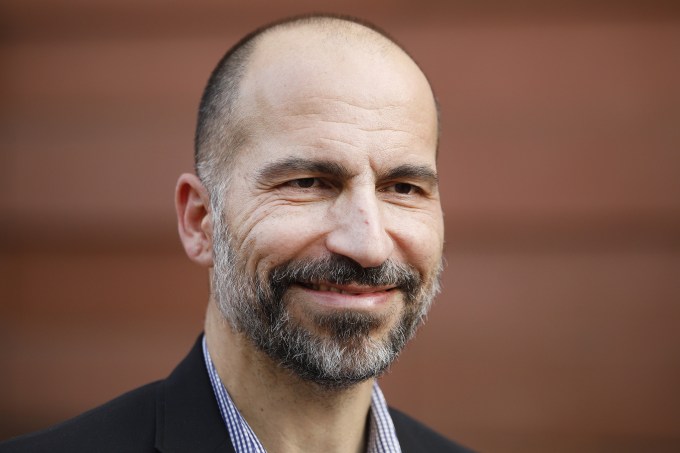
Dara Kowsrowshahi, chief executive officer of Uber, looks on following an event in New Delhi, India, on Thursday, Feb. 22, 2018. Photographer: Anindito Mukherjee/Bloomberg via Getty Images

A long-term bet on the future

Uber has opted to go public in a year poised to see the most high-flying unicorn IPOs in history. As we’ve reported in great detail on this site, both Lyft and Uber are planning to float, as are Slack and Pinterest . Many of these companies, however, made the call to make their public markets debut before the stock market took a quick turn south. Poor performing stocks may discourage unicorns from emerging from their cozy VC-protected stalls.

Uber will garner increased scrutiny from Wall Street investors as they begin to parse out its true value. Fortunately the company, which like Amazon has long prioritized growth over profit, has “’clear levers’ it could pull in order to turn on the cash spigots if it wanted to, by reducing its marketing spending both in the U.S. and developing markets and by finding partners to help finance its self-driving car development,” according to The Information. “Pulling those levers would slow revenue growth by a third—from a 33% growth in net revenue to 22 percent growth in net revenue in 2019 [but] it would save Uber $2 billion annually.”

In its third quarter 2018 financial results, Uber posted a net loss of $939 million on a pro forma basis and an adjusted EBITDA loss of $527 million, up about 21 percent quarter-over-quarter. Revenue for Q3 was up five percent QoQ at $2.95 billion and up 38 percent year-over-year.

“We had another strong quarter for a business of our size and global scope,” Uber chief financial officer Nelson Chai said in a statement. “As we look ahead to an IPO and beyond, we are investing in future growth across our platform, including in food, freight, electric bikes and scooters, and high-potential markets in India and the Middle East where we continue to solidify our leadership position.”

We can speculate on Uber’s valuation for days but ultimately Wall Street will determine just how high Uber will go. For now, all we can do is sit and wait for the company to relinquish its S-1 to the masses.

from Startups – TechCrunch https://tcrn.ch/2AyrdTJ

#USA Uber’s IPO may not be as eye-popping as we expected

//

Uber is expected to raise $10 billion later this year in one of the largest U.S. initial public offerings in history. The float will value the ride-hailing giant somewhere between $76 billion — the valuation it garnered with its last private financing — and $120 billion — a sky-high figure assigned by Wall Street bankers that’s had even early Uber investors scratching their heads.

A new report from The Information pegs Uber’s initial market cap at $90 billion. To develop the estimate, the site analyzed undisclosed documents Uber provided creditors in 2017 “in which the company projected it would double net revenue to $14.2 billion by 2019,” ran revenue multiples and compared Uber to GrubHub, which investors say is the business’s closest comparison.

Uber declined to comment on The Information’s analysis.

How we got here

Uber confidentially filed for its long-awaited IPO last month, marking the beginning of a race to the stock markets between it and U.S. competitor Lyft, which filed just hours before, according to a source with knowledge of the situation. Founded in 2009 by Travis Kalanick, Uber has brought in about $20 billion in a combination of debt and equity funding. It counts SoftBank as its largest shareholder in a cap table that also lists Toyota, T. Rowe Price, Fidelity, TPG Growth and many more. As for the skepticism surrounding Uber’s lofty $120 billion valuation, the eye-popping figure seems unachievable considering the company isn’t profitable and has and continues to burn through cash.

An IPO that large would certainly make its investors happy. First Round Capital, for example, seeded Uber with $1.6 million in the company’s first two funding rounds in 2010 and 2011, according to The Wall Street Journal. At a $120 billion valuation, First Round’s shares would be worth some $5 billion. The venture capital firm, however, sold some of its shares to SoftBank alongside Benchmark, which itself would otherwise own shares worth about $14 billion.

Bradley Tusk, an early Uber investor who signed on to help the company surmount political and regulatory barriers in 2011, own shares said to be worth $100 million, though he too gave up 42 percent of his equity in a secondary sale to SoftBank, he recently told TechCrunch.

I’m quite happy with the 120 number,” Tusk said. “But … I am a little surprised by [it], it does seem to be a really aggressive number.”

“Any investment in Uber is obviously a long-term bet on the future, like someone who invested in Amazon in the early days,” Tusk added. “One thing [Uber chief executive officer Dara Khosrowshahi] is doing well is really expanding Uber into a mobility company as opposed to just a ride-hailing company.”

Dara Kowsrowshahi, chief executive officer of Uber, looks on following an event in New Delhi, India, on Thursday, Feb. 22, 2018. Photographer: Anindito Mukherjee/Bloomberg via Getty Images

A long-term bet on the future

Uber has opted to go public in a year poised to see the most high-flying unicorn IPOs in history. As we’ve reported in great detail on this site, both Lyft and Uber are planning to float, as are Slack and Pinterest . Many of these companies, however, made the call to make their public markets debut before the stock market took a quick turn south. Poor performing stocks may discourage unicorns from emerging from their cozy VC-protected stalls.

Uber will garner increased scrutiny from Wall Street investors as they begin to parse out its true value. Fortunately the company, which like Amazon has long prioritized growth over profit, has “’clear levers’ it could pull in order to turn on the cash spigots if it wanted to, by reducing its marketing spending both in the U.S. and developing markets and by finding partners to help finance its self-driving car development,” according to The Information. “Pulling those levers would slow revenue growth by a third—from a 33% growth in net revenue to 22 percent growth in net revenue in 2019 [but] it would save Uber $2 billion annually.”

In its third quarter 2018 financial results, Uber posted a net loss of $939 million on a pro forma basis and an adjusted EBITDA loss of $527 million, up about 21 percent quarter-over-quarter. Revenue for Q3 was up five percent QoQ at $2.95 billion and up 38 percent year-over-year.

“We had another strong quarter for a business of our size and global scope,” Uber chief financial officer Nelson Chai said in a statement. “As we look ahead to an IPO and beyond, we are investing in future growth across our platform, including in food, freight, electric bikes and scooters, and high-potential markets in India and the Middle East where we continue to solidify our leadership position.”

We can speculate on Uber’s valuation for days but ultimately Wall Street will determine just how high Uber will go. For now, all we can do is sit and wait for the company to relinquish its S-1 to the masses.

from Startups – TechCrunch https://tcrn.ch/2AyrdTJ

#USA Uber’s IPO may not be as eye-popping as we expected

//

Uber is expected to raise $10 billion later this year in one of the largest U.S. initial public offerings in history. The float will value the ride-hailing giant somewhere between $76 billion — the valuation it garnered with its last private financing — and $120 billion — a sky-high figure assigned by Wall Street bankers that’s had even early Uber investors scratching their heads.

A new report from The Information pegs Uber’s initial market cap at $90 billion. To develop the estimate, the site analyzed undisclosed documents Uber provided creditors in 2017 “in which the company projected it would double net revenue to $14.2 billion by 2019,” ran revenue multiples and compared Uber to GrubHub, which investors say is the business’s closest comparison.

Uber declined to comment on The Information’s analysis.

How we got here

Uber confidentially filed for its long-awaited IPO last month, marking the beginning of a race to the stock markets between it and U.S. competitor Lyft, which filed just hours before, according to a source with knowledge of the situation. Founded in 2009 by Travis Kalanick, Uber has brought in about $20 billion in a combination of debt and equity funding. It counts SoftBank as its largest shareholder in a cap table that also lists Toyota, T. Rowe Price, Fidelity, TPG Growth and many more. As for the skepticism surrounding Uber’s lofty $120 billion valuation, the eye-popping figure seems unachievable considering the company isn’t profitable and has and continues to burn through cash.

An IPO that large would certainly make its investors happy. First Round Capital, for example, seeded Uber with $1.6 million in the company’s first two funding rounds in 2010 and 2011, according to The Wall Street Journal. At a $120 billion valuation, First Round’s shares would be worth some $5 billion. The venture capital firm, however, sold some of its shares to SoftBank alongside Benchmark, which itself would otherwise own shares worth about $14 billion.

Bradley Tusk, an early Uber investor who signed on to help the company surmount political and regulatory barriers in 2011, own shares said to be worth $100 million, though he too gave up 42 percent of his equity in a secondary sale to SoftBank, he recently told TechCrunch.

I’m quite happy with the 120 number,” Tusk said. “But … I am a little surprised by [it], it does seem to be a really aggressive number.”

“Any investment in Uber is obviously a long-term bet on the future, like someone who invested in Amazon in the early days,” Tusk added. “One thing [Uber chief executive officer Dara Khosrowshahi] is doing well is really expanding Uber into a mobility company as opposed to just a ride-hailing company.”

Dara Kowsrowshahi, chief executive officer of Uber, looks on following an event in New Delhi, India, on Thursday, Feb. 22, 2018. Photographer: Anindito Mukherjee/Bloomberg via Getty Images

A long-term bet on the future

Uber has opted to go public in a year poised to see the most high-flying unicorn IPOs in history. As we’ve reported in great detail on this site, both Lyft and Uber are planning to float, as are Slack and Pinterest . Many of these companies, however, made the call to make their public markets debut before the stock market took a quick turn south. Poor performing stocks may discourage unicorns from emerging from their cozy VC-protected stalls.

Uber will garner increased scrutiny from Wall Street investors as they begin to parse out its true value. Fortunately the company, which like Amazon has long prioritized growth over profit, has “’clear levers’ it could pull in order to turn on the cash spigots if it wanted to, by reducing its marketing spending both in the U.S. and developing markets and by finding partners to help finance its self-driving car development,” according to The Information. “Pulling those levers would slow revenue growth by a third—from a 33% growth in net revenue to 22 percent growth in net revenue in 2019 [but] it would save Uber $2 billion annually.”

In its third quarter 2018 financial results, Uber posted a net loss of $939 million on a pro forma basis and an adjusted EBITDA loss of $527 million, up about 21 percent quarter-over-quarter. Revenue for Q3 was up five percent QoQ at $2.95 billion and up 38 percent year-over-year.

“We had another strong quarter for a business of our size and global scope,” Uber chief financial officer Nelson Chai said in a statement. “As we look ahead to an IPO and beyond, we are investing in future growth across our platform, including in food, freight, electric bikes and scooters, and high-potential markets in India and the Middle East where we continue to solidify our leadership position.”

We can speculate on Uber’s valuation for days but ultimately Wall Street will determine just how high Uber will go. For now, all we can do is sit and wait for the company to relinquish its S-1 to the masses.

from Startups – TechCrunch https://tcrn.ch/2AyrdTJ

#USA Uber’s IPO may not be as eye-popping as we expected

//

Uber is expected to raise $10 billion later this year in one of the largest U.S. initial public offerings in history. The float will value the ride-hailing giant somewhere between $76 billion — the valuation it garnered with its last private financing — and $120 billion — a sky-high figure assigned by Wall Street bankers that’s had even early Uber investors scratching their heads.

A new report from The Information pegs Uber’s initial market cap at $90 billion. To develop the estimate, the site analyzed undisclosed documents Uber provided creditors in 2017 “in which the company projected it would double net revenue to $14.2 billion by 2019,” ran revenue multiples and compared Uber to GrubHub, which investors say is the business’s closest comparison.

Uber declined to comment on The Information’s analysis.

How we got here

Uber confidentially filed for its long-awaited IPO last month, marking the beginning of a race to the stock markets between it and U.S. competitor Lyft, which filed just hours before, according to a source with knowledge of the situation. Founded in 2009 by Travis Kalanick, Uber has brought in about $20 billion in a combination of debt and equity funding. It counts SoftBank as its largest shareholder in a cap table that also lists Toyota, T. Rowe Price, Fidelity, TPG Growth and many more. As for the skepticism surrounding Uber’s lofty $120 billion valuation, the eye-popping figure seems unachievable considering the company isn’t profitable and has and continues to burn through cash.

An IPO that large would certainly make its investors happy. First Round Capital, for example, seeded Uber with $1.6 million in the company’s first two funding rounds in 2010 and 2011, according to The Wall Street Journal. At a $120 billion valuation, First Round’s shares would be worth some $5 billion. The venture capital firm, however, sold some of its shares to SoftBank alongside Benchmark, which itself would otherwise own shares worth about $14 billion.

Bradley Tusk, an early Uber investor who signed on to help the company surmount political and regulatory barriers in 2011, own shares said to be worth $100 million, though he too gave up 42 percent of his equity in a secondary sale to SoftBank, he recently told TechCrunch.

I’m quite happy with the 120 number,” Tusk said. “But … I am a little surprised by [it], it does seem to be a really aggressive number.”

“Any investment in Uber is obviously a long-term bet on the future, like someone who invested in Amazon in the early days,” Tusk added. “One thing [Uber chief executive officer Dara Khosrowshahi] is doing well is really expanding Uber into a mobility company as opposed to just a ride-hailing company.”

Dara Kowsrowshahi, chief executive officer of Uber, looks on following an event in New Delhi, India, on Thursday, Feb. 22, 2018. Photographer: Anindito Mukherjee/Bloomberg via Getty Images

A long-term bet on the future

Uber has opted to go public in a year poised to see the most high-flying unicorn IPOs in history. As we’ve reported in great detail on this site, both Lyft and Uber are planning to float, as are Slack and Pinterest . Many of these companies, however, made the call to make their public markets debut before the stock market took a quick turn south. Poor performing stocks may discourage unicorns from emerging from their cozy VC-protected stalls.

Uber will garner increased scrutiny from Wall Street investors as they begin to parse out its true value. Fortunately the company, which like Amazon has long prioritized growth over profit, has “’clear levers’ it could pull in order to turn on the cash spigots if it wanted to, by reducing its marketing spending both in the U.S. and developing markets and by finding partners to help finance its self-driving car development,” according to The Information. “Pulling those levers would slow revenue growth by a third—from a 33% growth in net revenue to 22 percent growth in net revenue in 2019 [but] it would save Uber $2 billion annually.”

In its third quarter 2018 financial results, Uber posted a net loss of $939 million on a pro forma basis and an adjusted EBITDA loss of $527 million, up about 21 percent quarter-over-quarter. Revenue for Q3 was up five percent QoQ at $2.95 billion and up 38 percent year-over-year.

“We had another strong quarter for a business of our size and global scope,” Uber chief financial officer Nelson Chai said in a statement. “As we look ahead to an IPO and beyond, we are investing in future growth across our platform, including in food, freight, electric bikes and scooters, and high-potential markets in India and the Middle East where we continue to solidify our leadership position.”

We can speculate on Uber’s valuation for days but ultimately Wall Street will determine just how high Uber will go. For now, all we can do is sit and wait for the company to relinquish its S-1 to the masses.

from Startups – TechCrunch https://tcrn.ch/2AyrdTJ

#USA Uber’s IPO may not be as eye-popping as we expected

//

Uber is expected to raise $10 billion later this year in one of the largest U.S. initial public offerings in history. The float will value the ride-hailing giant somewhere between $76 billion — the valuation it garnered with its last private financing — and $120 billion — a sky-high figure assigned by Wall Street bankers that’s had even early Uber investors scratching their heads.

A new report from The Information pegs Uber’s initial market cap at $90 billion. To develop the estimate, the site analyzed undisclosed documents Uber provided creditors in 2017 “in which the company projected it would double net revenue to $14.2 billion by 2019,” ran revenue multiples and compared Uber to GrubHub, which investors say is the business’s closest comparison.

Uber declined to comment on The Information’s analysis.

How we got here

Uber confidentially filed for its long-awaited IPO last month, marking the beginning of a race to the stock markets between it and U.S. competitor Lyft, which filed just hours before, according to a source with knowledge of the situation. Founded in 2009 by Travis Kalanick, Uber has brought in about $20 billion in a combination of debt and equity funding. It counts SoftBank as its largest shareholder in a cap table that also lists Toyota, T. Rowe Price, Fidelity, TPG Growth and many more. As for the skepticism surrounding Uber’s lofty $120 billion valuation, the eye-popping figure seems unachievable considering the company isn’t profitable and has and continues to burn through cash.

An IPO that large would certainly make its investors happy. First Round Capital, for example, seeded Uber with $1.6 million in the company’s first two funding rounds in 2010 and 2011, according to The Wall Street Journal. At a $120 billion valuation, First Round’s shares would be worth some $5 billion. The venture capital firm, however, sold some of its shares to SoftBank alongside Benchmark, which itself would otherwise own shares worth about $14 billion.

Bradley Tusk, an early Uber investor who signed on to help the company surmount political and regulatory barriers in 2011, own shares said to be worth $100 million, though he too gave up 42 percent of his equity in a secondary sale to SoftBank, he recently told TechCrunch.

I’m quite happy with the 120 number,” Tusk said. “But … I am a little surprised by [it], it does seem to be a really aggressive number.”

“Any investment in Uber is obviously a long-term bet on the future, like someone who invested in Amazon in the early days,” Tusk added. “One thing [Uber chief executive officer Dara Khosrowshahi] is doing well is really expanding Uber into a mobility company as opposed to just a ride-hailing company.”

Dara Kowsrowshahi, chief executive officer of Uber, looks on following an event in New Delhi, India, on Thursday, Feb. 22, 2018. Photographer: Anindito Mukherjee/Bloomberg via Getty Images

A long-term bet on the future

Uber has opted to go public in a year poised to see the most high-flying unicorn IPOs in history. As we’ve reported in great detail on this site, both Lyft and Uber are planning to float, as are Slack and Pinterest . Many of these companies, however, made the call to make their public markets debut before the stock market took a quick turn south. Poor performing stocks may discourage unicorns from emerging from their cozy VC-protected stalls.

Uber will garner increased scrutiny from Wall Street investors as they begin to parse out its true value. Fortunately the company, which like Amazon has long prioritized growth over profit, has “’clear levers’ it could pull in order to turn on the cash spigots if it wanted to, by reducing its marketing spending both in the U.S. and developing markets and by finding partners to help finance its self-driving car development,” according to The Information. “Pulling those levers would slow revenue growth by a third—from a 33% growth in net revenue to 22 percent growth in net revenue in 2019 [but] it would save Uber $2 billion annually.”

In its third quarter 2018 financial results, Uber posted a net loss of $939 million on a pro forma basis and an adjusted EBITDA loss of $527 million, up about 21 percent quarter-over-quarter. Revenue for Q3 was up five percent QoQ at $2.95 billion and up 38 percent year-over-year.

“We had another strong quarter for a business of our size and global scope,” Uber chief financial officer Nelson Chai said in a statement. “As we look ahead to an IPO and beyond, we are investing in future growth across our platform, including in food, freight, electric bikes and scooters, and high-potential markets in India and the Middle East where we continue to solidify our leadership position.”

We can speculate on Uber’s valuation for days but ultimately Wall Street will determine just how high Uber will go. For now, all we can do is sit and wait for the company to relinquish its S-1 to the masses.

from Startups – TechCrunch https://tcrn.ch/2AyrdTJ

#UK Tech giants including Google and Intel turn to Cambridge deep learning ace

//

Global technology giants have turned to a Cambridge UK deep learning pioneer to help steer a world first AI and ML collaboration.

myrtle.ai has assembled a globally renowned team of experts with expertise in producing low power inference circuits and already works with quoted businesses on both sides of the Atlantic.

Now it has been chosen to develop a Speech Recognition benchmark for MLPerf – a new Machine Learning (ML) benchmarking competition backed by Google, Baidu, Intel and AMD.

MLPerf, a collaboration of tech giants and researchers from numerous universities including Harvard, Stanford and the University of California Berkeley, is aspiring to drive progress in ML by developing a suite of fair and reliable benchmarks for emerging artificial intelligence hardware and software platforms.

myrtle.ai has been selected to provide the computer code that will be the benchmark standard for the Speech Recognition division. The code is a new implementation of two AI models known as DeepSpeech 1 and DeepSpeech 2, building on models originally developed by Baidu.

CEO Peter Baldwin (pictured) said: “We are honoured to be providing the reference implementations for the Speech to Text category of MLPerf. Myrtle has a world-class machine learning group and we are pleased to be able to provide the code as open source so that everyone can benefit from it.” 

Baldwin says this is the first time the AI community has come together to try to develop a series of reliable, transparent and vendor-neutral ML benchmarks to highlight performance differences between different ML algorithms and cloud configurations. 

The new benchmarking suite will be used to test and measure training speeds and inference times for a range of ML tasks.

myrtle ai’s Speech Recognition benchmark is based on proven experience in this field. Its core R & D team has speeded up Mozilla’s DeepSpeech implementations 100-fold when training on Librispeech, demonstrating their practical experience of training and deploying AI and ML algorithms.

Myrtle was founded to develop software and services for public and private data centres. Originally specialising in image processing and large scale simulation Myrtle helped produce computer generated content for over 20 major Hollywood blockbusters.

Clients have included NYSE and NASDAQ listed companies in LA, Vancouver and London as well as a major automotive OEM and a government department. 

The company is currently targeting its technology at inference workloads in data centres and is involved in a major collaboration to address the safety and verification challenges that currently preventing sophisticated deep learning networks being used in road vehicles.

Peter Baldwin has run Myrtle since founding it. He has a pure mathematics PhD from Cambridge University and a special interest in the mathematical foundations of deep learning.

He wrote and licensed Myrtle’s first commercially available software: a suite of simulation tools that ran at huge scale in private data centres. The first commercial software he ever wrote was used to help produce the chocolate river in Tim Burton’s film ‘Charlie and the Chocolate Factory’.

The celebrated founder of Cambridge Angels, Robert Sansom, is a director while another angel and entrepreneur Robert Swann, who was a first mover in the enterprise, is also on the board; two other companies that benefit from his advice are Audio Analytic and Undo Software – both global leaders in their fields of tech specialism.

From world-changing self-driving car projects to reducing the power consumption of global data centres, myrtle.ai strives to use its engineering expertise to transform the world today by making tomorrow’s AI run with unsurpassed efficiency on low power hardware.

from Business Weekly http://bit.ly/2RAn2jQ

Posted in #UK