About Startup365

Chaque jour nous vous présenterons une nouvelle Startup française ! Notre pays regorge de talents et d'entrepreneurs brillants ! Alors partons à la découverte des meilleures startup françaises ! Certaines d'entre elles sont dans une étape essentielle dans la vie d'une startup : la recherche de financement, notamment par le financement participatif (ou crowdfunding en anglais). Alors participez à cette grande aventure en leur faisant une petite donation ! Les startups françaises ont besoin de vous !

#Blockchain The Daily: BTCP Bug Exploited by ‘Bad Actor’, Binance Lists New Pairs

The Daily: BTCP Bug Exploited by ‘Bad Actor’, Binance Lists New Pairs

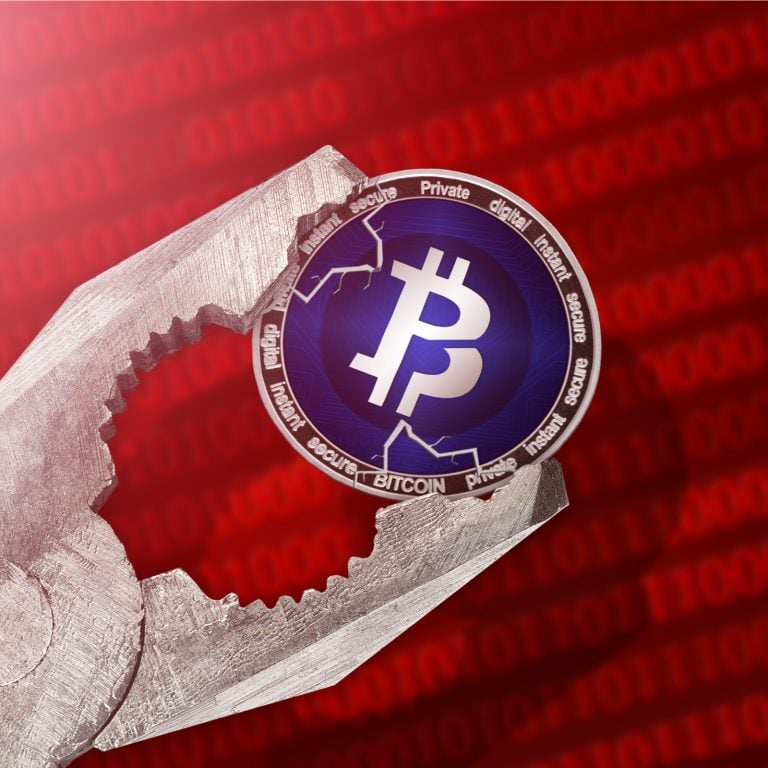
The main story featured in today’s edition of The Daily is an official conformation from the Bitcoin Private team that someone has premined millions of BTCP. We also report about the latest currency pairs made available for trading on the Binance exchange.

Also Read: Report: Over 300 British Blockchain Companies Shut Down in 2018

Bitcoin Private Bug Exploited by ‘Bad Actor’

The Daily: BTCP Bug Exploited by ‘Bad Actor’, Binance Lists New PairsThe team behind Bitcoin Private has issued an official statement regarding a Coinmetrics report alleging that there was a covert premine of about 2 million BTCP at the creation of the token. The developers say they preformed an investigation after being made aware of the issue and determined that the findings are “mathematically accurate.” However, they claim that they have no connection to whoever was behind this exploit.

According to their internal audit, an open source developer became a BTCP developer to work on a specific issue in exchange for a bounty. This developer was given access to the project on Github in January, wrote his code, collected the reward, and hasn’t been heard of again. But one line of code was missing which enabled the exploit due to the nodes not properly verifying the falsified fork blocks.

And during the publicly announced fork-mine, a “bad actor” exploited this bug, the developers say. “As the code was open source, and the fork-mine was announced on Twitter, anyone with sufficient blockchain development knowledge could have exploited it. At this point, the only thing we can be sure of is that the BTCP Contribution Team did not know about the exploit until it was uncovered by Coin Metrics.”

The developers have put forward two possible plans for fixing the issue using hard forks to choose from, based on community feedback. In the meantime, they requested that all exchanges close deposits and withdrawals of BTCP to mitigate any damage that could be done. Users are also advised to proceed with caution when moving coins.

Binance Exchange Lists New Pairs

The Daily: BTCP Bug Exploited by ‘Bad Actor’, Binance Lists New PairsBinance, the popular international cryptocurrency exchange, has announced it is adding two new trading pairs (TRX/XRP and XZC/XRP), with Ripple’s XRP as the quote asset into the new Combined ALTS Trading Market (ALTS). The move naturally created a lot of excitement and buzz among Ripple’s cheerleaders on crypto social media.

Alongside this development, Binance also announced that the original ETH Trading Market (ETH) will be renamed into the ALTS Trading Market. This is done to reflect the fact that the trading venue now wants to support more trading pairs with different quote currencies.

What do you think about today’s news tidbits? Share your thoughts in the comments section below.


Images courtesy of Shutterstock.


Verify and track bitcoin cash transactions on our BCH Block Explorer, the best of its kind anywhere in the world. Also, keep up with your holdings, BCH and other coins, on our market charts at Satoshi’s Pulse, another original and free service from Bitcoin.com.

The post The Daily: BTCP Bug Exploited by ‘Bad Actor’, Binance Lists New Pairs appeared first on Bitcoin News.

from Bitcoin News http://bit.ly/2Ae6a8M The Daily: BTCP Bug Exploited by ‘Bad Actor’, Binance Lists New Pairs

#Blockchain PR: XRP Is Now Available on EO.Finance

XRP Is Now Available on EO.Finance

This is a paid press release, which contains forward looking statements, and should be treated as advertising or promotional material. Bitcoin.com does not endorse nor support this product/service. Bitcoin.com is not responsible for or liable for any content, accuracy or quality within the press release.

We are pleased to announce that Ripple XRP has been added to EO.Finance! For those unaware, XRP is currently the second largest cryptocurrency in terms of market capitalization. Ripple is the name for both a digital currency (XRP) and an open payment network within which that currency is transferred.

With the recent addition of card payments to EO.Finance it is now possible to buy XRP with your credit and debit cards. You can also exchange a number of cryptos to XRP and back, deposits and withdrawals have also been introduced.

This is a timely new inclusion as XRP has emerged as a front runner during the last months Bear market, growing 50% in the last week alone – it rose from $0.28 to $0.42, and is much tipped to lead any future Bull Run. Despite XRP showing much promise, not many wallets have offered support, meaning EO.Finance is one of the few places you can purchase XRP with such ease.

EO.Finance is part of a fully licensed ecosystem, it holds European licenses for crypto wallet #FVR000161 and crypto-fiat exchange #FRK000193.

To register an account simply download the app on iOS or Android, EO.Finance is also accessible through browsers, as well as Chrome and Firefox extension.

Website: https://eo.finance
iOS app: https://apple.co/2CxcIAY
Android app: http://bit.ly/2TbIybZ

Video on how to buy cryptos with EO.Finance: https://www.youtube.com/watch?v=25oKGgAawn8

Supporting Link
https://eo.finance/
Contact Email Address
press@eo.finance

This is a paid press release. Readers should do their own due diligence before taking any actions related to the promoted company or any of its affiliates or services. Bitcoin.com is not responsible, directly or indirectly, for any damage or loss caused or alleged to be caused by or in connection with the use of or reliance on any content, goods or services mentioned in the press release.

The post PR: XRP Is Now Available on EO.Finance appeared first on Bitcoin News.

from Bitcoin News http://bit.ly/2EMozxj PR: XRP Is Now Available on EO.Finance

#Blockchain Bitcoin History Part 6: The First Bitcoin Exchange

Bitcoin History Part 6: The First Bitcoin Exchange

Aside from mining, the only way to obtain bitcoin in the very early days was by trading it on forums or IRC. This arrangement relied on the other party fulfilling their side of the deal, since there were few escrow services back then. Bitcoin didn’t have to wait long for a dedicated exchange to spring up, thankfully, with the first cryptocurrency exchange going live in March 2010.

Also read: Bitcoin History Part 5: A Wild Altcoin Appears

Bitcoin Gets Its First Market

The first cryptocurrency exchange wasn’t Bitstamp, Vircurex, or Btc-e. It was in fact a now defunct platform called Bitcoinmarket.com. The site was proposed on the Bitcointalk forum (where else?) by “dwdollar” on Jan. 15, 2010. “Hi everyone. I’m in the process of building an exchange,” he wrote. “I have big plans for it, but I still have a lot of work to do. It will be a real market where people will be able to buy and sell Bitcoins with each other.” He elaborated:

I am trying to create a market where Bitcoins are treated as a commodity. People will be able to trade Bitcoins for dollars and speculate on the value. In theory, this will establish a real-time exchange rate so we will all have a clue what the current value of a Bitcoin is, compared to a dollar.

Dwdollar’s quest was a much-needed one, for at the time there was little common consensus on how much a bitcoin was worth. Most price charts only go back as far as summer 2010, at which point 1 BTC was trading for around $0.05, though when Bitcoinmarket.com launched in March of that year, a single bitcoin was priced at around $0.003 – that’s 333 BTC to the dollar.

Bitcoin History Part 6: The First Bitcoin Exchange
Bitcoinmarket.com

Bitcoinmarket.com Goes Live

On March 17, 2010, Bitcoinmarket.com went live. Like all platforms that sprung up in those early days, the exchange was rickety, and holes were often patched following feedback from Bitcointalk forum members. The site accepted Paypal initially as its means of exchanging BTC for fiat. This system worked for a while, but as Bitcoin grew, so did the number of scammers. Following a string of fraudulent trades, Paypal was removed from the exchange on June 4, 2011.

On the same day, a forum user captured the giddiness that was starting to encircle the Bitcoin community, writing: “That market is going nuts. Yesterday, I saw a guy selling BTC on ebay for $20. Thought he wouldn’t sell any right away. Sold all 30 to 4 diff bidders in 12 hours. Now this morning I see bitcoinmarket.com at $23.99! I’m usually a buy and hold kinda guy, but this rapid growth is freaking me out. I only own 75 BTC, but feel like the rich guy.”

Bitcoin History Part 6: The First Bitcoin ExchangeBy this point, Bitcoinmarket.com’s days were numbered. There was a new exchange poised to open its virtual doors to a tsunami of bitcoiners, many of whom had been wooed after learning of a deep web marketplace known as Silk Road which launched in February of that year. Bitcoinmarket.com’s successor launched in July 2011 and by 2014 was handling 70% of all global bitcoin trades. Its name, of course, was Mt. Gox.

Bitcoin History is a multipart series from news.Bitcoin.com charting pivotal moments in the evolution of the world’s first and finest cryptocurrency. Read part five here.


Images courtesy of Shutterstock.


Need to calculate your bitcoin holdings? Check our tools section.

The post Bitcoin History Part 6: The First Bitcoin Exchange appeared first on Bitcoin News.

from Bitcoin News http://bit.ly/2TfcAf1 Bitcoin History Part 6: The First Bitcoin Exchange

#USA My product launch wishlist for Instagram, Twitter, Uber and more

//

‘Twas the night before Xmas, and all through the house, not a feature was stirring from the designer’s mouse . . . Not Twitter! Not Uber, Not Apple or Pinterest! On Facebook! On Snapchat! On Lyft or on Insta! . . . From the sidelines I ask you to flex your code’s might. Happy Xmas to all if you make these apps right.

Instagram

See More Like This – A button on feed posts that when tapped inserts a burst of similar posts before the timeline continues. Want to see more fashion, sunsets, selfies, food porn, pets, or Boomerangs? Instagram’s machine vision technology and metadata would gather them from people you follow and give you a dose. You shouldn’t have to work through search, hashtags, or the Explore page, nor permanently change your feed by following new accounts. Pinterest briefly had this feature (and should bring it back) but it’d work better on Insta.

Web DMs Instagram’s messaging feature has become the defacto place for sharing memes and trash talk about people’s photos, but it’s stuck on mobile. For all the college kids and entry-level office workers out there, this would make being stuck on laptops all day much more fun. Plus, youth culture truthsayer Taylor Lorenz wants Instagram web DMs too.

Upload Quality Indicator – Try to post a Story video or Boomerang from a crummy internet connection and they turn out a blurry mess. Instagram should warn us if our signal strength is low compared to what we usually have (since some places it’s always mediocre) and either recommend we wait for Wi-Fi, or post a low-res copy that’s replaced by the high-res version when possible.

Oh, and if new VP of product Vishal Shah is listening, I’d also like Bitmoji-style avatars and a better way to discover accounts that shows a selection of their recent posts plus their bio, instead of just one post and no context in Explore which is better for discovering content.

Twitter

DM Search – Ummm, this is pretty straightforward. It’s absurd that you can’t even search DMs by person, let alone keyword. Twitter knows messaging is a big thing on mobile right? And DMs are one of the most powerful ways to get in contact with mid-level public figures and journalists. PS: My DMs are open if you’ve got a news tip — @JoshConstine.

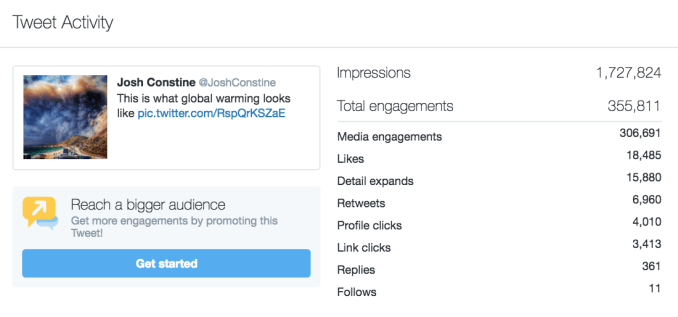
Unfollow Suggestions – Social networks are obsessed with getting us to follow more people, but do a terrible job of helping us clean up our feeds. With Twitter bringing back the option to see a chronological feed, we need unfollow suggestions more than ever. It should analyze who I follow but never click, fave, reply to, retweet, or even slow down to read and ask if I want to nix them. I asked for this 5 years ago and the problem has only gotten worse. Since people feel like their feeds are already overflowing, they’re stingy with following new people. That’s partly why you see accounts get only a handful of new followers when their tweets go viral and are seen by millions. I recently had a tweet with 1.7 million impressions and 18,000 Likes that drove just 11 follows. Yes I know that’s a self-own.

Analytics Benchmarks – If Twitter wants to improve conversation quality, it should teach us what works. Twitter offers analytics about each of your tweets, but not in context of your other posts. Did this drive more or fewer link clicks or follows than my typical tweet? That kind of info could guide users to create more compelling content.

Facebook

(Obviously we could get into Facebook’s myriad problems here. A less sensationalized feed that doesn’t reward exaggerated claims would top my list. Hopefully its plan to downrank “borderline content” that almost violates its policies will help when it rolls out.)

Batched Notifications – Facebook sends way too many notifications. Some are downright useless and should be eliminated. “14 friends responded to events happening tomorrow”? “Someone’s fundraiser is half way to its goal?” Get that shit out of here. But there are other notifications I want to see but that aren’t urgent nor crucial to know about individually. Facebook should let us decide to batch notifications so we’d only get one of a certain type every 12 or 24 hours, or only when a certain number of similar ones are triggered. I’d love a digest of posts to my Groups or Events from the past day rather than every time someone opens their mouth.

I so don’t care

Notifications In The “Time Well Spent” Feature – Facebook tells you how many minutes you spent on it each day over the past week and on average, but my total time on Facebook matters less to me than how often it interrupts my life with push notifications. The “Your Time On Facebook” feature should show how many notifications of each type I’ve received, which ones I actually opened, and let me turn off or batch the ones I want fewer of.

Oh, and for Will Cathcart, Facebook’s VP of apps, can I also get proper syncing so I don’t rewatch the same Stories on Instagram and Facebook, the ability to invite people to Events on mobile based on past invite lists of those I’ve hosted or attended, and the See More Like This feature I recommended for Instagram?

Uber/Lyft/Ridesharing

“Quiet Ride” Button – Sometimes you’re just not in the mood for small talk. Had a rough day, need to get work done, or want to just zone out? Ridesharing apps should offer a request for a quiet ride that if the driver accepts, you pay them an extra dollar (or get it free as a loyalty perk), and you get ferried to your destination without unnecessary conversation. I get that it’s a bit dehumanizing for the driver, but I’d bet some would happily take a little extra cash for their compliance.

“I Need More Time” Button – Sometimes you overestimate the ETA and suddenly your car is arriving before you’re ready to leave. Instead of cancelling and rebooking a few minutes later, frantically rushing so you don’t miss your window and get smacked with a no-show fee, or making the driver wait while they and the company aren’t getting paid, Uber, Lyft, and the rest should offer the “I Need More Time” button that simply rebooks you a car that’s a little further away.

Spotify/Music Streaming Apps

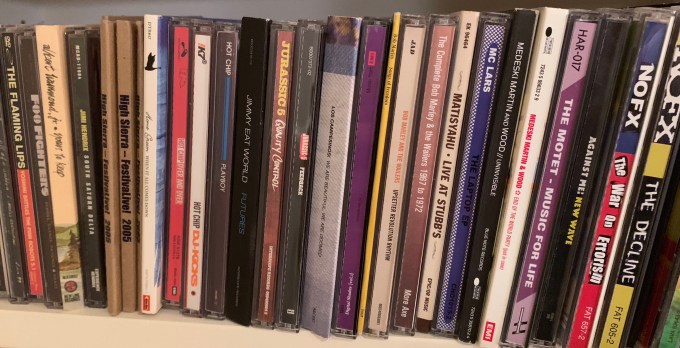
Scan My Collection – I wish I could just take photos of the album covers, spines, or even discs of my CD or record collection and have them instantly added to a playlist or folder. It’s kind of sad that after lifetimes of collecting physical music, most of it now sits on a shelf and we forget to play what we used to love. Music apps want more data on what we like, and it’s just sitting there gathering dust. There’s obviously some fun viral potential here too. Let me share what’s my most embarrassing CD. For me, it’s my dual copies of Limp Bizkit’s “Significant Other” because I played the first one so much it got scratched.

Friends Weekly Spotify ditched its in-app messaging, third-party app platform, and other ways to discover music so its playlists would decide what becomes a hit in order to exert leverage over the record labels to negotiate better deals. But music discovery is inherently social and the desktop little ticker of what friends are playing on doesn’t cut it. Spotify should let me choose to recommend my new favorite song or agree to let it share what I’ve recently played most, and put those into a Discover Weekly-style social playlist of what friends are listening to.

Snapchat

Growth – I’m sorry, I had to.

Bulk Export Memories – But seriously, Snapchat is shrinking. That’s worrisome because some users’ photos and videos are trapped on its Memories cloud hosting feature that’s supposed to help free up space on your phone. But there’s no bulk export option, meaning it could take hours of saving shots one at a time to your camera roll if you needed to get off of Snapchat, if for example it was shutting down, or got acquired, or you’re just bored of it.

Add-On Cameras – Snapchat’s Spectacles are actually pretty neat for recording first-person or underwater shots in a circular format. But otherwise they don’t do much more, and in some ways do much less, than your phone’s camera and are a long way from being a Magic Leap competitor. That’s why if Snapchat really wants to become a “Camera Company”, it should build sleek add-on cameras that augment our phone’s hardware. Snap previously explored selling a 360-camera but never launched one. A little Giroptic iO-style 360 lens that attaches to your phone’s charging port could let you capture a new kind of content that really makes people feel like they’re there with you. An Aukey Aura-style zoom lens attachment that easily fits in your pocket unlike a DSLR could also be a hit

iOS

Switch Wi-Fi/Bluetooth From Control Center – I thought the whole point of Control Center was one touch access, but I can only turn on or off the Wi-Fi and Bluetooth. It’s silly having to dig into the Settings menu to switch to a different Wi-Fi network or Bluetooth device, especially as we interact with more and more of them. Control Center should unfurl a menu of networks or devices you can choose from.

Shoot GIFs – Live Photos are a clumsy proprietary format. Instagram’s Boomerang nailed what we want out of live action GIFs and we should be able to shoot them straight from the iOS camera and export them as actual GIFs that can be used across the web. Give us some extra GIF settings and iPhones could have a new reason for teens to choose them over Androids.

Gradual Alarms – Anyone else have a heart attack whenever they hear their phone’s Alarm Clock ringtone? I know I do because I leave my alarms on so loud that I’ll never miss them, but end up being rudely shocked awake. A setting that gradually increases the volume of the iOS Alarm Clock every 15 seconds or minute so I can be gently arisen unless I refuse to get up.

Maybe some of these apply to Android, but I wouldn’t know because I’m a filthy casual iPhoner. Send me your Android suggestions, as well as what else you want to see added to your favorite apps.

[Image Credit: Hanson Inc]

from Startups – TechCrunch https://tcrn.ch/2ELMwDV

#Blockchain Data Leaks and Deplatforming Drive Businesses Away From Web Giants

Data Leaks and Deplatforming Drive Businesses Away From Web Giants

Consumers and enterprises are exiting centralized web platforms amid growing concerns over unwarranted data sharing. Loss of privacy and data leakage are the primary drivers leading users away from web giants such as Google and Facebook. In some cases, disaffected users are seeking out decentralized alternatives that facilitate personal data ownership.

Also read: Feed 7 Different Species at the River Forest Farm’s ‘Bitcoin Cash Zoo’

Facebook and Google Keep Leaking Data

The opaque data sharing practices of internet oligarchs such as Google and Facebook, which wield huge power over billions of web users, have attracted significant attention throughout 2018. From the Cambridge Analytica scandal to the more recent revelations that Facebook shared users’ private messages with privileged partners, the disclosures have kept coming.

Minds.com, disillusioned by the current state of affairs, has vowed to boycott the web monopolies altogether. On Dec. 19, the company explained its stance, writing of Google, Facebook and other closed-source networks’ unfair practices, which include “excessive surveillance, data mining, algorithm manipulation, subjective bans, inconsistent enforcement of terms and even complete de-platforming.” It concluded:

In response, Minds is suspending our support of all Google and Facebook products until the above mentioned items are resolved.

The Quest for Decentralized, Censorship-Resistant Platforms

Platforms as multifaceted as Google are not easily replaced like for like. However, there are alternatives for users who desire more privacy, full sovereignty over their data and reassurance that they will not suddenly be suspended without warning for supposed infringements. In its blog post on Dec. 19, Minds.com wrote of privacy-focused alternatives such as Duckduckgo and Brave that are championing the flight towards less data-hungry platforms.

While the web’s largest companies have caught flak for their data handling practices and their propensity to ban users with little provocation, it’s not just Facebook and Google that have been guilty of this. Patreon, under pressure from payment processors, has been merrily deplatforming users, while online services such as Slack have been exiling users on the grounds of Iranian heritage under fear of U.S. sanctions. The spate of perma-bans, data leaks and privacy scandals has been a boon for decentralized platforms that are oriented around personal ownership of data.

New Data Storage Solutions Are Coming Online

Data Leaks and Deplatforming Drive Businesses Away From Web GiantsDoc.com is a cryptocurrency-powered service with a series of health apps that facilitate free medical and psychological consultations. It’s taken the distributed data storage route. “Because we handle extremely sensitive healthcare data,” explained CEO Charles Nader, “we knew that following the centralized model Google and Facebook have was not the best idea.” Nader spoke of using cryptographic protocols, including blockchain technology, to store data and ensure it is only accessed by authorized parties. “This way we give control back to our users,” he finished.

Other projects that have launched decentralized data storage frameworks this year include Essentia and Inrupt, the latter led by internet godfather Tim Berners-Lee. The project speaks of “decentralizing the power that’s currently centralized in the hands of a few” which it proposes to achieve through an open source protocol called Solid. For now, the vast majority of the web is hostage to the likes of Google and Facebook, and is too deeply embedded in their ecosystem to contemplate an escape. The tide is slowly turning, however, and with each new entity excluded from the web’s dominant platforms, the case for decentralized alternatives strengthens.

Do you think decentralized platforms will see mainstream adoption, or are they destined to remain the preserve of privacy purists? Let us know in the comments section below.


Images courtesy of Shutterstock, Twitter, and Doc.com.


Need to calculate your bitcoin holdings? Check our tools section.

The post Data Leaks and Deplatforming Drive Businesses Away From Web Giants appeared first on Bitcoin News.

from Bitcoin News http://bit.ly/2EJnsxx Data Leaks and Deplatforming Drive Businesses Away From Web Giants

#Blockchain Bitcoin Equipment Maker Ebang Reapplies for Hong Kong Listing

Ebang International Holdings Inc., a Chinese bitcoin mining equipment maker, has refiled documents for a public share sale with the Hong Kong stock exchange after its first submission failed to proceed. Money raised from the initial public offering (IPO) will go towards development of new mining hardware and non-crypto blockchain applications, among other things.

Also read: Bermuda Issues Draft Crypto Custodial Services Regulation

IPO Seeks to Raise Undisclosed Amount

Bitcoin Equipment Maker Ebang Reapplies for Hong Kong Listing

Ebang’s filing did not reveal how many shares the company planned to sell, or their expected price, according to IPO documents published on the Hong Kong stock exchange (HKEX) on Dec. 20. It’s also unclear how much money Ebang intends to raise, but reports at the time of the initial application in June put the figure around $1 billion. The first filing has since expired.

Ebang – based in Zhejiang province in eastern China – manufactures and sells cryptocurrency mining equipment and telecommunications network devices under the Ebit brand. The company’s hardware often ends up in remote locations housing large mining pools that depend on cheap electricity.

According to the latest listing papers, Ebang posted 2.14 billion yuan ($310 million) of revenue in the six months to June 2018, up 4,600 percent from a year earlier. Net profit increased 16-fold to 931.72 million yuan ($135 million) but profits fell sharply during the third quarter of 2018, as global cryptocurrency markets plummeted.

Significant Revenue Decline

“While the average monthly new contract value for purchase orders confirmed with BPU customers increased slightly during the second quarter, we have, since the third quarter of 2018, recorded a significant decrease in average monthly new contract value,” said Ebang in its second draft filing. The company controls about 11 percent of the global market for bitcoin mining chips, according to the iResearch Report.

Bitcoin Equipment Maker Ebang Reapplies for Hong Kong Listing

During the second quarter, it “experienced significant decreases in revenue and gross profit” compared to the previous one which ended in June. Ebang will be expected to submit its Q3 earnings figures when the HKEX authorities sit to consider the application in the New Year. One of the requirements for companies intending to list on the exchange is that they provide financial information for a period not exceeding six months to the date from when the application was made.

Regulators in Hong Kong, including the stock exchange itself, have reportedly raised concerns about the business model and future prospects of cryptocurrency companies. Currently, the Hong Kong stock exchange is looking at Bitmain’s IPO application. Another application by bitcoin mining equipment manufacturer Canaan expired on Nov. 14 – exactly six months after it submitted the documents to the Asian bourse.

What do you think about Ebang’s revised IPO application? Let us know in the comments section below.


Images courtesy of Shutterstock.


Need to calculate your bitcoin holdings? Check our tools section.

The post Bitcoin Equipment Maker Ebang Reapplies for Hong Kong Listing appeared first on Bitcoin News.

from Bitcoin News http://bit.ly/2QPKwlx Bitcoin Equipment Maker Ebang Reapplies for Hong Kong Listing

#Asia #Japan DJ Selects: Japan’s Airbnb for Satellites – InfoStellar

//

The aerospace industry has been particularly resistant to disrupting in Japan. In the rest of the world, launch vehicle and spacecraft technology has made incredible gains over the past decade, but here in Japan its still mostly the same government contracts going to the same major contractors.

Naomi Kurahara of InfoStellar, has come up with an innovative way to leverage existing aerospace infrastructure and to collaborate globally by renting out unused satellite ground-sataion time, Airbnb style.

You see when an organization launches a satellite, they also build a ground station to communicate with it. The problem is, that as the satellite obits the Earthy, it’s only in communication range of the ground station for less than an hour a day. The rest of the time the ground station just sits there.

By renting out that unused time ground-station operators earn extra income, and the satellite operators are able to communicate with their satellites as often as they need.

It’s a great interview and I think you’ll enjoy it.

Show Notes for Startups

Why the Airbnb for satellites startup model makes sense
The demand-side problem
Why this market is much larger than it seems today
The key growth drivers in the satellite market
Why the Japanese aerospace industry can’t innovate
How to run a startup as an expectant mother
What challenges women scientists still face in Japan
How Japan could better support working moms

Links from the Founder

Learn about InfoStellar

[shareaholic app=”share_buttons” id=”7994466″] Leave a comment
Transcript from Japan
Disrupting Japan, episode 56.

Welcome to Disrupting Japan – straight talk from Japan’s most successful entrepreneurs. I’m Tim Romero and thanks for joining me.

Aerospace in Japan is particularly resistant to disruption. Over the past decade, the rest of the world has seen incredible gains in both launch vehicles and spacecrafts. But Japan has been moving slowly. Sometimes it seems as if she’s determined to stay the course with the same government contracts going to much the same corporate heavyweights year after year.

Naomi Kurahara of InfoStellar once had plans of changing the Japanese aerospace industry. But along the way she went out on her own with a plan that bypassed Japan’s major players and targeted the global market. You see, when an organization launches a satellite, they usually also build an antenna and a ground station to communicate with that satellite. The problem is that as the satellite orbits the Earth, it’s only communications range with the ground station for less than an hour a day. The rest of the time the ground station just sits there.

So, Naomi decided to pool all of the unused ground station time together and rent it out to satellite operators, Airbnb style. Everybody wins by sharing resources. The ground station operators get income by renting out their facilities and the satellite operators get to communicate with their satellites far more often.

But Naomi explains it better than I can, so let’s get right to the interview.

[pro_ad_display_adzone id=”1411″ info_text=”Sponsored by” font_color=”grey” ]

[Interview]

Tim: Cheers! I’m sitting here with Naomi Kurahara, the CEO and fearless founder of InfoStellar, so thanks for sitting down with me.

Naomi: Thank you for inviting me.

Tim: Now, InfoStellar is basically time-sharing for satellite ground station, or Airbnb for satellites, but it’s a complex idea so why don’t you explain a little bit about what InfoStellar does.

Naomi: Okay, the reason I started this business is the aerospace space has an issue for cost. Like satellite is expensive, and rocket is expensive, and ground station is expensive because, maybe, not many people are using.

Tim: Well, aerospace is incredibly expensive but actually I think before we get into InfoStellar’s business model, I think it’s going to be best if you explain what ground stations are and how th…

from Disrupting Japan: Startups and Innovation in Japan http://bit.ly/2EL51Zb

#Blockchain A Look Back at the Top Cryptocurrency Markets From Christmases Past

A Look at the Top Cryptocurrency Markets From Christmases Past

The cryptocurrency ecosystem has grown dramatically in just a few years, with the number of crypto markets increasing from 59 in 2013 to over 2,000 today. Looking at historic snapshots of the cryptocurrency markets from Christmases past also shows a significant turnover in the leading altcoins by market cap.

Also Read: Report Finds a Strong Relationship Between Crypto-Advocates and Life Extension

Number of Crypto Markets Increases by 10x During 2014

A Look Back at the Top Cryptocurrency Markets From Christmases PastWhile many point to 2017 as the year in which the cryptocurrency markets saw their most dramatic growth, 2014 saw the number of virtual currencies increase by nearly 1,000%. As of Dec. 28, 2014 there were 506 active markets according to Coinmarketcap, up from just 59 on Dec. 22, 2013.

Despite the impressive growth in the number of active markets, the price performance of many of the leading cryptocurrencies by market cap was extremely bearish, with six of the top 10 cryptocurrencies losing more than 80% in one year.

Between Dec. 22, 2013 and Dec. 28, 2014, BTC lost nearly 50%, falling from $619 to $316. Litecoin (LTC) fell from the second ranked market by capitalization to fourth, posting an 84% loss from roughly $17.10 to $2.74. Ripple (XRP) was the only top market to gain year over year, up 7% from $0.022 to $0.024. XRP climbed from third to rank as the second largest cryptocurrency by market cap.

Peercoin (PPC) fell from the fourth largest crypto to rank 19th, posting an 81.5% loss as prices dropped from $3.12 to $0.58. Fifth-ranked namecoin (NMC) dropped to 13 with price falling 82.5% from $4.13 to $0.72. Quark (QRK) went from the sixth largest crypto to rank 27th with a price drop of 92.6%. Nxt (NXT) posted the second strongest performance among the top-ranked crypto markets of late 2013, climbing from seventh to ninth despite an 18% drop in price from $0.02 to $0.017.

At the end of 2013, bitshares PTS (PTS) comprised the eighth largest crypto by market cap with a token value of $12.45. One year later, PTS was ranked 45th after suffering a 99.99% drop from $12.45 to $0.00049. Ninth-ranked worldcoin (WDC) dropped to 53rd, posting a 98.5% loss from $0.4 $0.006. Megacoin (MEC) fell from 10th to 48th by market cap, producing a 96.8% drop from $0.52 to $0.017.

Five of the top 10 virtual currencies as of late 2013 retained their top 10 ranking the following year.

Of 2014’s Top Markets, Only BTC and LTC Posted Price Gains 1 Year Later

A Look Back at the Top Cryptocurrency Markets From Christmases PastBTC gained 32% from Dec. 28, 2014 to Dec. 27, 2015, up from $316 to trade for $416.50. Ripple was able to retain its position as the second largest crypto market despite losing 94% from $0.024 to $0.0062. Despite ending 2014 as the third-ranked crypto market, Paycoin (XPY) would close 2014 as the 48th-ranked cryptocurrency after posting a 99.6% loss from $10.74 to $0.038.

LTC gained 25% during 2014, moving from fourth to third alongside a price increase from $2.74 to $3.43. Fifth-ranked bitshares (BTS) dropped to eighth, posting an 80% loss from $0.016 to $0.003. maidsafecoin (MAID) moved from sixth to tenth, producing a 72% drop in price from $0.05 to $0.014.

Seventh-ranked stellar (XLM) finished 2015 as the ninth-ranked crypto market, falling 70% from $0.0058 to $0.0017. Despite dogecoin (DOGE) falling 23% from $0.00018 to $0.00014, doge ascended from the eighth largest cryptocurrency to rank sixth at the end of 2015. Ninth-ranked NXT fell from the top ten rank 11th alongside a price drop of 63% from $0.0161 to $0.006167. While PPC posted a yearly loss of 31% following a drop from $0.578 to $0.4, PPC ascended the market cap rankings from 10th to seventh.

Eight of the dominant markets from Christmas 2014 held their top 10 ranking as of the end of 2015. The number of active markets increased 11% from 506 to 562.

BTC, ETH, DASH, and MAID Posted Triple-Figure Gains for 2016

A Look Back at the Top Cryptocurrency Markets From Christmases PastBTC gained 111% from $416.50 on Dec. 27, 2015 to $878.80 on Christmas Day 2016, following a year of bullish action for the cryptocurrency markets. XRP posted slight gains during 2016, up 3.4% from $0.00617 to $0.00638, resulting in a drop from second to third, ranked by market cap. While LTC posted a 27% gain from $3.43 to $4.35, LTC also shifted down one rank, finishing 2016 as the fourth largest cryptocurrency.

Fourth-ranked ethereum (ETH) was the top performing market of 2016, gaining nearly 760% from $0.85 as of late 2017 to finish the year as the second largest crypto asset with ETH trading for $7.29. Despite dash gaining nearly 270% from $2.69 to $9.91 between the Christmases of 2015 and 2016, it moved from the fifth ranked cryptocurrency to seventh as of Dec. 25, 2016. Sixth-ranked doge fell from the top 10 during 2016, finishing the year as the 13th largest market after posting a 42% gain from $0.00014 to $0.00023.

PPC was the only top market of late 2015 to post a loss one year later, dropping from seventh to 38th in market cap ranking after producing a 43% loss from $0.41 to $0.23. BTS posted a 26% gain from $0.0034 to $0.0042, however fell from eighth to 25th ranked cryptocurrency by capitalization. Despite posting a 55% gain from $0.0017 to $0.0026, XLM slid from ninth to finish the year ranked 16th. Maid moved from 10th to finish the year as the eighth largest cryptocurrency following a massive 620% gain from $0.014 to $0.10.

Six of the leading markets from late 2015 maintained their position in the top 10 as of Christmas 2016. The number of active markets increased by 15% from 562 to 644.

2017 Bull Trend Drives Record Prices

A Look Back at the Top Cryptocurrency Markets From Christmases PastSanta delivered a bountiful Christmas to the cryptocurrency community in 2017, with nine of the top 10 markets posting four-figure or five-figure gains between Dec. 25, 2016 and Dec. 24, 2017.

BTC gained 1,500% last year, increasing from $879 to $14,057. ETH held its position as the second largest cryptocurrency by market cap, gaining 9,345% from $7.29 to $688.59 in a single year.

Ripple posted the second strongest price gain among the top markets for 2017, growing 17,140% from $0.00638 to $1.10. Despite the enormous increase in price, XRP slipped one rank to finish the year as the fourth largest cryptocurrency. LTC moved from the fourth to the fifth-ranked crypto asset by market cap alongside a 6,255% increase in price from $4.35 to $276.49.

Monero (XMR) moved from the fifth ranked cryptocurrency to 10th, gaining 3,455% from $9.63 to $342.43. Sixth-ranked ethereum classic (ETC) dropped to 17th during 2017, however gained 2,725% from $1.10 to $31.10. Despite gaining 12,140%, dash dropped one rank by market cap, moving from seventh to eighth.

Eighth-ranked maidsafe fell out of the top rankings during 2017, finishing the year in 55th after gaining 670% over the dollar but falling significantly against BTC. Nem (XEM) retained its position as the ninth-ranked market after gaining 24,345% from $0.004 to finish the year as the strongest performing leading market, with XEM trading for $0.88. Despite posting a gain of 2,280% from $2.89 to $68.83, 10th-ranked augur (REP) moved from 10th to 36th ranked cryptocurrency.

Seven of the top 10 markets from 2016 retained their leading rank one year later. The number of active markets increased by roughly 100% from 644 to 1,334 at the end of 2017.

All Leading Markets Post Heavy Losses for 2018

A Look Back at the Top Cryptocurrency Markets From Christmases PastBTC has dropped 70% in the last 12 months, falling from $14,057 on Dec. 24, 2017 to trade for roughly $4,230 today. ETH dropped from the second to the third ranked cryptocurrency by market cap following by a yearly drop of 77% from $688.60 to $156.80. Bitcoin cash (BCH) moved from third to fourth, accompanied by a 93% loss from $2,956 to $206.

XRP posted the weakest loss of the top performing markets over the last year, moving from fourth to second ranked market cap alongside a 60% drop from $1.10 to $0.44. LTC fell by 87% from $276.49 to $36.11 while moving from fifth to seventh by capitalization. New entrant cardano (ADA) moved from fifth to 11th this year, shedding 87.5% of its value from $0.39 to $0.05.

Seventh-ranked iota (MIOTA) now sits at 12th, following an 89% drop from $3.45 to $0.38. Dash moved from eighth to 14th this year, in the process losing 91.5% from $1,212 to $102. After ranking ninth for two consecutive Christmases, XEM appears poised to greet Santa as the 16th largest cryptocurrency, having lost 91% from $0.88 to $0.079. 10th-ranked XMR fell 83% from $342.43 to trade for $57.65 over the last year, currently positioned as the 13th largest market by capitalization.

Six of the dominant markets from last Christmas have held their position in the top 10, three of which have consistently held their leading position since 2013. The number of active markets has increased from 1,334 to 2,067 over the last 12 months.

How do you think the cryptocurrency markets will be performing next Christmas? Share your thoughts in the comments section below!


Images courtesy of Shutterstock


At Bitcoin.com there’s a bunch of free helpful services. For instance, have you seen our Tools page? You can even lookup the exchange rate for a transaction in the past. Or calculate the value of your current holdings. Or create a paper wallet. And much more.

The post A Look Back at the Top Cryptocurrency Markets From Christmases Past appeared first on Bitcoin News.

from Bitcoin News http://bit.ly/2CwGgib A Look Back at the Top Cryptocurrency Markets From Christmases Past

#USA Four ways to bridge the widening valley of death for startups

//

Many founders believe in the myth that the first steps of starting a business are the hardest: Attracting the first investment, the first hires, proving the technology, launching the first product, and landing the first customer.  Although those critical first steps are difficult, they are certainly not the most difficult on the arduous path of building an iconic company. As early and late-stage funding becomes more abundant, founders and their early VC backers need to get smarter about how to position their companies for a looming valley of death in between. As we’ll learn below, it’s only going to get much, much harder before it gets easier.

Money will have the look, and heft, of dumbbells as the economic cycle turns. Expect an abundance of small, seed checks at one end, an abundance of massive checks for clear, breakout companies at the other, and a dearth of capital for expanding companies with early proof points and market traction. Read more on how to best prepare for this inevitable future. (Image courtesy Flickr/CircaSassy)

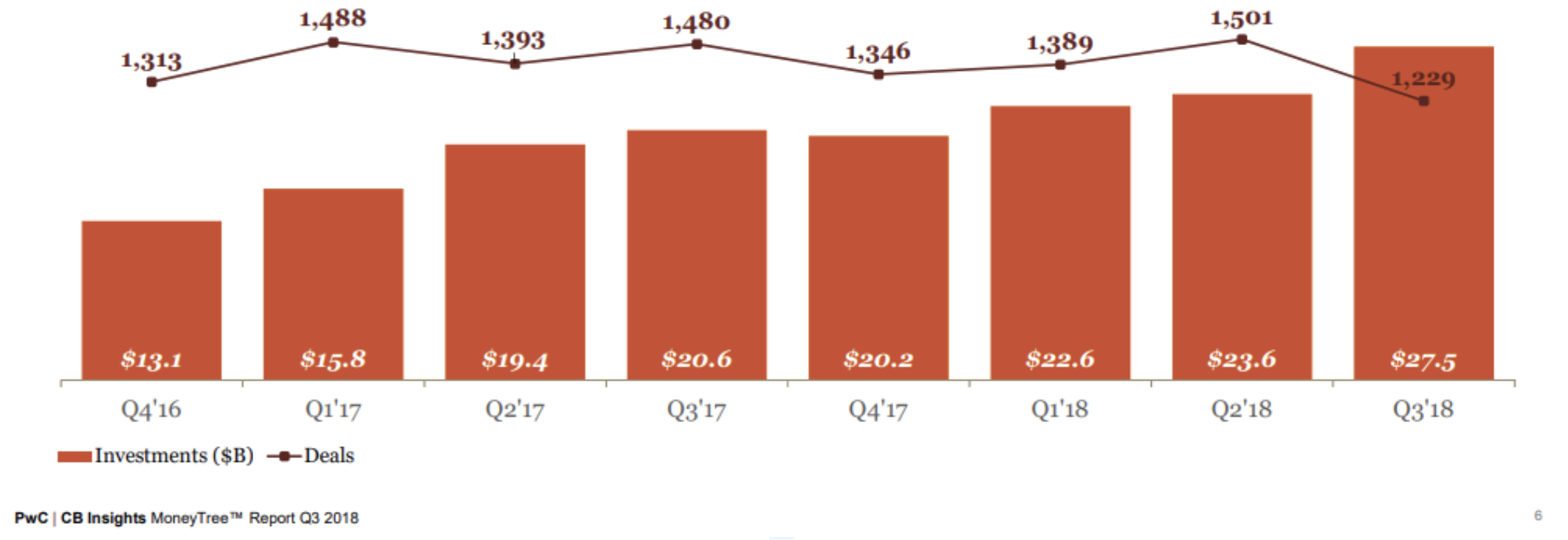
There will be an abundance of capital at the two ends of the startup spectrum.  At one end, hundreds of seed and micro VCs, each armed with dozens of $250k-$1M checks to write every year, are on the prowl for visionary founders with pedigree and resumes.  At the other end, behemoths like Softbank, sovereigns, as well “early-stage” firms raising larger funds are seeking breakout companies ready for checks that are in the mid-tens to hundreds of millions.  There will be a dearth of capital to grow companies from a kernel of a business, to a becoming the clear market-defining leader.  In fact, we’re already seeing deal volume decreasing significantly as dollars increase, likely evidence of larger checks going into fewer companies.

Even as the overall number of deals decrease below 2012 levels, the overall dollars invested into startups continue to soar. The 200+ “seed” stage funds formed since 2012 will continue to chase nascent companies. Meanwhile, the increasing number of mega-funds will seek breakout companies into which to make $100M+ investments. Companies with early traction seeking ~$20M to grow will be abundant and have difficulty accessing capital.

Founders should no longer assume that their all-star seed and Series A syndicates will guarantee a successful follow-on financing. Progress on recruiting and product development, though necessary, are no longer sufficient for B-rounds and beyond.  Founders should be mindful that investors that specialize in leading $20-50M rounds will have a plethora of well-funded, well-mentored, well-staffed startups with slick presentations, big visions, and some early market traction, to choose from.

Today, there is far more capital chasing fewer quality companies.  Fewer breakout companies and fear of missing out is making it easy to raise growth rounds with revenue growth which may not be scalable or even reflective of an attractive business. This is creating false realities and prompting founders to raise big rounds at high prices- which is fine when there is an over-abundance of capital, but can cripple them when capital later becomes scarce. For example, not long ago, cleantech companies, armed with very preliminary sales, raised massive financings from VCs eager to back winners towards scaling into what they characterized as infinite demand. The reality is that the capital required to meet target economics was far greater and demand far smaller. As the private markets turned, access to cash became difficult and most faltered or were acquired for pennies on the dollar.

There is a likely future where capital grows scarce, and investors take a harder look at the underpinnings of revenue, growth, and (dis)economies of scale.

What should startup leadership teams emphasize in an inevitable future where the $30M rounds will be orders of magnitude harder than their $5M rounds?

A business model representative of the big vision

Leadership teams put lots of emphasis on revenue.  Unfortunately, revenue that’s not representative of the big vision is probably worse than no revenue at all.  Companies are initially seeded with the expectation that the founding team can build and sell something.  What needs to be proven is the hypothesis that the company can a) build a special product that b) is inexpensive to convince customers to pay for, and c) that those customers represent a massive market. It should be proven that it is unattractive for customers to switch to the inevitable copycats.  It should be clear that over time, customers will pay more for additional features, and the cost of acquiring new customers will go down. Simply selling a product to customers that don’t represent that model, is worse than not selling anything at all.

Recruiting talent that’s done it

Early founding teams are cognitively diverse individuals that can convince early investors that they can overcome the incredible odds of building a company that until now, shouldn’t have existed.  They build a unique product, leveraging unique tools satisfying an unmet need. The early teams need to demonstrate the big vision, and that they can recruit the people that can make that vision a reality.  Unfortunately, more founders struggle when it comes to recruiting people that have real experience reducing a technology to practice, executing on a product that customers want, and charting the path to expand their market with improving unit economics. There are always exceptions of people that do the above for the first time at startups; however, most of today’s iconic startups knew what kind of talent they needed to execute and succeeded in bringing them on board.  Who’s on your team?

Present metrics that matter 

The attractive SaaS valuation multiples behoove all founders to apply its metrics to their businesses even if they aren’t really SaaS businesses.  Sophisticated later-stage investors see right past that and dismiss numbers associated with metrics that are not representative. Semiconductors are about winning dedicated sockets in growing markets.  Design tools are about winning and upselling seats in an industry that’s going to be hooked on those tools. Develop a clear understanding of how your business will be measured. Don’t inundate your investor with numbers; present a concise hypothesis for your unfair advantage in a growing market with your current traction being evidence to back it.

Find efficiencies by working in massive markets

“Pouring fuel on the fire” is a misleading metaphor that leads some into believing that capital can grow any business.  That’s just as true as watering a plant with a firehose water or putting TNT in your Corolla’s gas tank: most business models and markets simply are not native to the much-sought-after venture growth profile.  In fact, most later-stage startups that fail after raising large amounts of capital, fail for this reason.  Most markets are conducive to businesses with DIS-economies of scale, implying dwindling margins with scale, which is why many businesses are small serving local, fragmented markets that technology alone cannot consolidate.  How do your unit economics improve over time? What are the efficiencies generated by economies of scale? Is there a real network effect that drives these economies?

Image courtesy Getty Images

I expect today’s resourceful founders to seek partners, whether its employees, advisors, or investors, to help them answer these questions.  Together, these cognitively diverse teams will work together accelerate past any metaphoric valley and build the iconic companies taking humanity to its fantastic future.   

from Startups – TechCrunch https://tcrn.ch/2Q0CPDI

#Asia #Japan DJ Selects: Japan’s Airbnb for Satellites – InfoStellar

//

The aerospace industry has been particularly resistant to disrupting in Japan. In the rest of the world, launch vehicle and spacecraft technology has made incredible gains over the past decade, but here in Japan its still mostly the same government contracts going to the same major contractors.

Naomi Kurahara of InfoStellar, has come up with an innovative way to leverage existing aerospace infrastructure and to collaborate globally by renting out unused satellite ground-sataion time, Airbnb style.

You see when an organization launches a satellite, they also build a ground station to communicate with it. The problem is, that as the satellite obits the Earthy, it’s only in communication range of the ground station for less than an hour a day. The rest of the time the ground station just sits there.

By renting out that unused time ground-station operators earn extra income, and the satellite operators are able to communicate with their satellites as often as they need.

It’s a great interview and I think you’ll enjoy it.

Show Notes for Startups

Why the Airbnb for satellites startup model makes sense
The demand-side problem
Why this market is much larger than it seems today
The key growth drivers in the satellite market
Why the Japanese aerospace industry can’t innovate
How to run a startup as an expectant mother
What challenges women scientists still face in Japan
How Japan could better support working moms

Links from the Founder

Learn about InfoStellar

[shareaholic app=”share_buttons” id=”7994466″] Leave a comment
Transcript from Japan
Disrupting Japan, episode 56.

Welcome to Disrupting Japan – straight talk from Japan’s most successful entrepreneurs. I’m Tim Romero and thanks for joining me.

Aerospace in Japan is particularly resistant to disruption. Over the past decade, the rest of the world has seen incredible gains in both launch vehicles and spacecrafts. But Japan has been moving slowly. Sometimes it seems as if she’s determined to stay the course with the same government contracts going to much the same corporate heavyweights year after year.

Naomi Kurahara of InfoStellar once had plans of changing the Japanese aerospace industry. But along the way she went out on her own with a plan that bypassed Japan’s major players and targeted the global market. You see, when an organization launches a satellite, they usually also build an antenna and a ground station to communicate with that satellite. The problem is that as the satellite orbits the Earth, it’s only communications range with the ground station for less than an hour a day. The rest of the time the ground station just sits there.

So, Naomi decided to pool all of the unused ground station time together and rent it out to satellite operators, Airbnb style. Everybody wins by sharing resources. The ground station operators get income by renting out their facilities and the satellite operators get to communicate with their satellites far more often.

But Naomi explains it better than I can, so let’s get right to the interview.

[pro_ad_display_adzone id=”1411″ info_text=”Sponsored by” font_color=”grey” ]

[Interview]

Tim: Cheers! I’m sitting here with Naomi Kurahara, the CEO and fearless founder of InfoStellar, so thanks for sitting down with me.

Naomi: Thank you for inviting me.

Tim: Now, InfoStellar is basically time-sharing for satellite ground station, or Airbnb for satellites, but it’s a complex idea so why don’t you explain a little bit about what InfoStellar does.

Naomi: Okay, the reason I started this business is the aerospace space has an issue for cost. Like satellite is expensive, and rocket is expensive, and ground station is expensive because, maybe, not many people are using.

Tim: Well, aerospace is incredibly expensive but actually I think before we get into InfoStellar’s business model, I think it’s going to be best if you explain what ground stations are and how th…

from Disrupting Japan: Startups and Innovation in Japan http://bit.ly/2EL51Zb