
#Blockchain Analysis: Will the Cryptocurrency Market’s Long Tail Trend Ever End?

The cryptocurrency market has its very own long tail trend that sees the majority of all value flow to BTC, with altcoins left to fight for the scraps. With a $60 billion market cap and a dominance of 53 percent, BTC has ruled the market since day one. As altcoin investors endure the persistent pain of an ongoing bear market, they may be entitled to ask: is the long tail a long-term trend? 

Also Read: Using Technical Indicators to Trade Crypto in 2019

The Top 7 Cryptocurrencies By Market Cap

At the time of publication, the top seven cryptocurrencies by market cap are BTC at $60B, XRP at $12B, ETH at $11B, EOS at $2.05B, USDT at $2.04B, BCH at $1.97B and LTC at $1.86B.

Over the years there have been significant spikes and falls in bitcoin core’s decade-long dominance, but BTC has always retained the highest market cap. But this could yet change.

Analysis: Will the Cryptocurrency Market's Long Tail Trend Ever End?
Jan.28 2019

Based on ripple’s $12B market cap – a figure which is hotly disputed – it would it take a 5x for second-in-line XRP to dethrone BTC. Currently, bitcoin core is sitting pretty and leading the way by a considerable margin, just as it has done for the majority of its history. It is also listed on the most exchanges, making the mother coin tough to take down.

Market Cap Is a Poor Metric

According to crypto analysts, market capitalization is a poor metric for measuring the value of the cryptocurrency market. Mati Greenspan of Etoro told news.Bitcoin.com: “Trying to measure the value of a crypto network using the market cap is like evaluating the health of a person based on body weight.”

Is it even possible to predict which cryptocurrency might one day overtake BTC? Hugo May, investment analyst at Invictus Capitalsaid: “I am wary of predicting which of these sides will eventually prevail. It is often said that ‘hindsight is 20/20’ in terms of vision, and it is likely we will look back one day amazed at how seemingly obvious the natural progression of adoption was. But for now, we can merely look to where the users and development resources are migrating.”

Crypto Market Is Packed With Opinions

Analysis: Will the Cryptocurrency Market's Long Tail Trend Ever End?May stressed that the crypto space is packed with opinions regarding future asset prices and technical developments. “A very contentious dispute exists between the supporters of maximalism and those that lean to multi-tokenism,” he noted. “The maximalists, often referred to as bitcoin maximalists, generally believe that the genesis blockchain would serve all of the blockchain needs and that the bitcoin asset would regulate all appropriate value transfer.”

The concept of multi-tokenism envisions a network of networks, which comprise small applications that connect with large protocols at various junctures. May explained the movement has come about through the creation of Turing complete blockchains, specifically Ethereum, which today hosts a magnitude of tokens and decentralized applications.

May noted how, compared to Ethereum, the traditional first-generation blockchains such as Bitcoin Core and Litecoin tend to have smaller developer communities, which are comprised of highly competent developers who consistently develop the protocols. Some of these developers even get paid salaries to produce updated code and advancements. The vast majority of blockchain engineers and IT professionals that enter the space do not work for Blockstream, the largest [BTC] blockchain development company [but] are involved with smaller endeavors,” he explained.

Most developers are focused on so-called second generation blockchains where interoperability is one of the technical challenges that currently has the highest resource allocation within the industry. May explained that if these interconnected networks and tokens become migratable and the establishment of some development standards is successful, it is plausible that we could see a multi-token ecosystem in the future. The experience, he added, would be akin to visiting a grocery store, with several producers equally connected at the UX layer.

“In terms of value transfer and applications, the backend is built by a magnitude of projects that interact and communicate with each other, but the user in the front experiences a seamless and simple process when engaging the interface. The long tail thesis is only possible if decentralized … [projects] develop with some sort of standard in terms of interoperability,” said May.

Lesser Known Cryptos Likened to Dodgy Watches

Analysis: Will the Cryptocurrency Market's Long Tail Trend Ever End?The crypto market downturn has seen many casualties.  Stefan Neagu, the co-founder of Persona, told news.Bitcoin.com: “I believe that what we see, and what we have right now in the cryptocurrencies market, is similar to what we see in the movies when a guy opens up his jacket and on both sides, you can pick a shiny new watch, whichever one you want. But just like in the movies, in which the buyer will have no guarantee that the watch will function properly or that it’s an original not a counterfeit, the same occurs in crypto. You don’t have much information about the project or a team’s ability to deliver, you have no idea about how successful or not that project will be.”

Neague explained that it makes more sense to have a long tail on cryptocurrencies where one coin performs a specific purpose. “What would make them more valuable, in the sense of raiding their utility, is a way to interconnect these long tail tokens, so a user of blockchain X is not stuck in that blockchain but has the ability to get outside the borders and perform whatever action it wants in another blockchain.” 

As the crypto market evolves, only a handful of digital coins currently near the top of the market cap charts are likely to survive. Whatever the outcome, it’s likely that the long tail trend will continue, with BTC leading the charge and the chasing pack coming in a distant second.

Will BTC ever be dethroned as the dominant cryptocurrency? Let us know in the comments section below.


Images courtesy of Shutterstock.


Need to calculate your bitcoin holdings? Check our tools section.

The post Analysis: Will the Cryptocurrency Market’s Long Tail Trend Ever End? appeared first on Bitcoin News.

from Bitcoin News http://bit.ly/2sSuMQf Analysis: Will the Cryptocurrency Market’s Long Tail Trend Ever End?


#Blockchain Report: Two Hacker Groups Stole $1 Billion From Crypto Exchanges

A new report alleges that just two groups of hackers dominate the majority of cybercrime directed against cryptocurrency exchanges. Together, these groups have responsible for stealing about $1 billion of cryptocurrency so far.

Also Read: Arwen Enables Self-Custody for Traders of Centralized Exchanges

The Most Lucrative of All Crypto Crimes

Digital surveillance company Chainalysis has released its latest “crypto crime” report, claiming to identify two groups responsible for the majority of hacks in the field. Its findings were obtained in part by analyzing the different practices the thieves used for laundering their illicit gains.

On average, the incidents that the researchers traced from the two hacking groups involved $90 million per incident. They suspect that the first group is a “giant, tightly controlled organization” that may be partly driven by non-monetary goals. The second group is found to be smaller and less organized but absolutely focused on money and without much regard for evading detection.

Report: Two Hacker Groups Stole $1 Billion From Crypto Exchanges

“Hacking dwarfs all other forms of crypto crime, and it is dominated by two prominent, professional hacking groups,” the Chainalysis team wrote. “Together, these two groups are responsible for stealing around $1 billion to date, at least 60% of all publicly reported hacks. And given the potential rewards, there’s no question hacking will continue; it is the most lucrative of all crypto crimes.”

Most Stolen Crypto Laundered on Exchanges

According to the report, at least 50 percent of the stolen funds were cashed out through some type of conversion service within 112 days of the hacks. The researchers found that 64.3 percent of the funds were sent to centralized cryptocurrency exchanges, 11.9 percent to peer-to-peer exchanges and the remaining 23.8 percent went through other conversion services such as mixing services, bitcoin ATMs and gambling sites.

“Exchanges are regularly processing the stolen funds, allowing the hackers to convert the funds to traditional currencies or other cryptocurrencies,” the Chainalysis team explained. “This is in part because unless you’re the exchange that was hacked, these funds look like they have come from legitimate owners (that is, the original entities who were hacked); it is hard to tell which funds have been stolen and which haven’t without specialized investigation software.”

Report: Two Hacker Groups Stole $1 Billion From Crypto Exchanges

Chainalysis recently announced the launch of Know Your Transaction (KYT) for stablecoins, an anti-money laundering (AML) compliance solution for monitoring stablecoin transactions from issuance to redemption.

What do you think about the findings of this report? Share your thoughts in the comments section below.


Images courtesy of Shutterstock.


Verify and track bitcoin cash transactions on our BCH Block Explorer, the best of its kind anywhere in the world. Also, keep up with your holdings, BCH and other coins, on our market charts at Satoshi’s Pulse, another original and free service from Bitcoin.com.

The post Report: Two Hacker Groups Stole $1 Billion From Crypto Exchanges appeared first on Bitcoin News.

from Bitcoin News http://bit.ly/2G7dlmV Report: Two Hacker Groups Stole $1 Billion From Crypto Exchanges

#Blockchain Inspired by Unwriter’s Apps, BCH Developers Create Fountainhead Cash

Inspired by Unwriter's Apps BCH Developers Create Fountainhead Cash

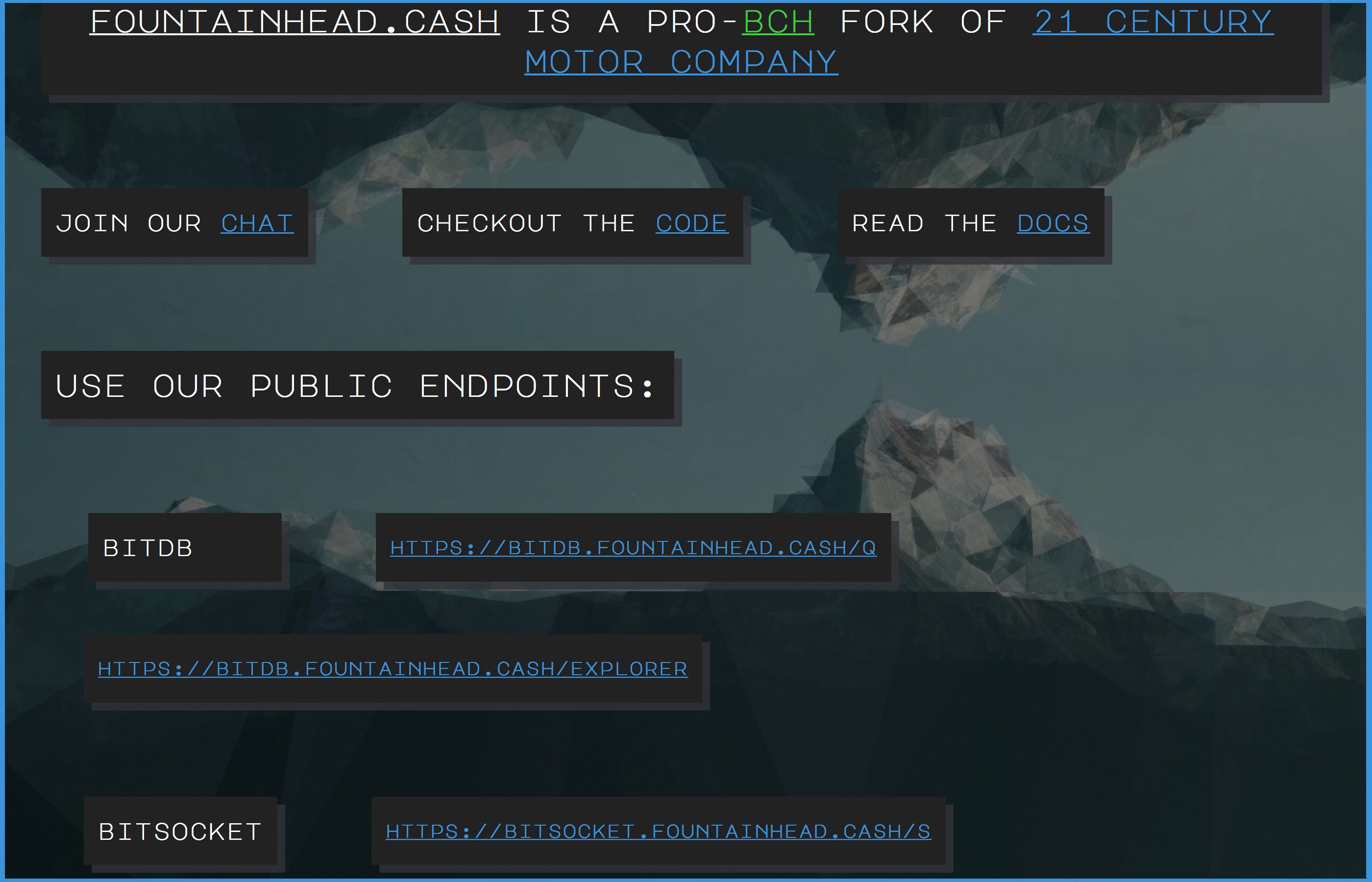
When the Bitcoin Cash (BCH) network split last November, prominent platform developer Unwriter decided to focus on building applications for the BSV chain. Since then, a group of BCH developers has forked Unwriter’s 21 Century Motor Company. On Jan. 27, a few BCH programmers revealed the Fountainhead Cash project and explained they had decided to keep building the anonymous developer’s valuable platforms such as Bitdb and Bitsocket.

Also read: Bitcoin Mixing Concept Payjoin Makes a ‘Huge Mess’ for Blockchain Surveillance

Fountainhead Cash Developers Continue to Build On Unwriter’s Projects

On Sunday a group of BCH developers publicly announced they are working on a project called Fountainhead Cash. The project is basically a forked model of the developer Unwriter’s 21 Century Motor Company which incorporates blockchain applications like Bitdb, Bitsocket, read cash, and data cash. The name Fountainhead derives from Ayn Rand’s quintessential novel, which emphasizes that a person’s ego is “the fountainhead of human progress.” With Fountainhead Cash “Bitdb development on Bitcoin Cash lives on,” the team of programmers detailed.

Inspired by Unwriter's Apps, BCH Developers Create Fountainhead Cash

“Fountainhead Cash is a community developed fork of 21 Century Motor Company that continues development on Bitcoin Cash — We run our own nodes of Bitdb and Bitsocket on multiple servers, and continue to build on and improve these pieces of infrastructure for Bitcoin Cash developers,” explained the developers.

The announcement continued:

We have fixed multiple bugs, worked on new optimizations for the future, and have been discussing new ways to improve and grow the Bitcoin Cash ecosystem — The end-game goal is to make developing for Bitcoin Cash as easy as any other sort of development.

‘The Point Is, Who Will Stop Me?’

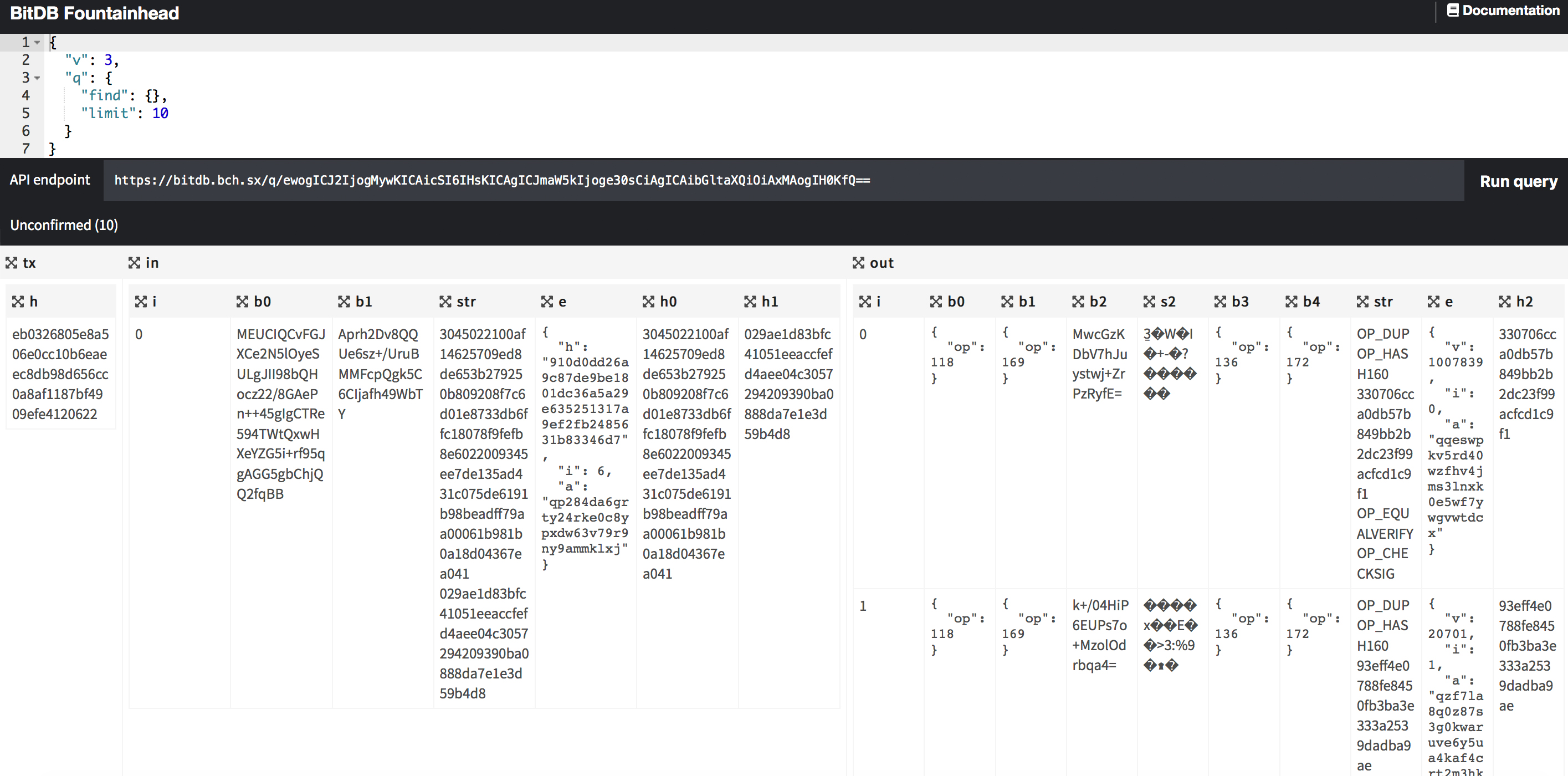
Essentially, Bitdb is an autonomous database that continuously synchronizes with the BCH network and the platform Bitsocket is a message bus service for building real-time bitcoin applications. The three main developers working on the Fountainhead project consist of Kosinus the creator of Bookchain, Jt the producer of Craft.cash, and the Badger Wallet creator Spend BCH. On the website, the team has published code, documentation, and a link to its public chat room on Telegram. The creators say that anyone is welcome to join the discussion and help develop future BCH applications with Fountainhead tools.

Inspired by Unwriter's Apps, BCH Developers Create Fountainhead Cash

Meanwhile, and per usual, Unwriter continues to publish a mind-boggling number of experiments and they are always open source. A great advantage to open source software is how the practice invites collaboration and sharing, even if programmers are not on the same development team. Open source projects also permit another development team to make modifications to a project that another set of programmers wouldn’t commit. Couple this scenario with market dynamics and ultimately the free market decides on which incorporated changes suit consumers best. The Fountainhead Cash project is an exemplary model of two competing development teams sharing open source ideas. Just as Ayn Rand’s main character Howard Roark defiantly asked: “The point is, who will stop me?”

What do you think about Fountainhead Cash? Let us know what you think about this subject in the comments section below.


Image credits: Shutterstock, Fountainhead Cash, and Bitdb.


Want to create your own secure cold storage paper wallet? Check our tools section.

The post Inspired by Unwriter’s Apps, BCH Developers Create Fountainhead Cash appeared first on Bitcoin News.

from Bitcoin News http://bit.ly/2RmNpWk Inspired by Unwriter’s Apps, BCH Developers Create Fountainhead Cash

#Blockchain Cryptocurrency Is Providing a Lucrative New Revenue Stream for Governments

Cryptocurrency: New Lucrative Income Source for Governments

Cryptocurrency’s resistance to government control is countered by the fact that a number of governments, including Chile, Romania, Spain and South Africa, are looking to cash in by taxing crypto assets. These countries are crafting laws that bind citizens to annually disclose cryptocurrency investments that, in some cases, are held at home and abroad, and to pay anything from 10-35 percent income tax on crypto gains.

Also read: Italian Court Orders Bitgrail Founder to Refund $170M of ‘Missing’ Cryptocurrency

Cryptocurrency Taxation: Coming-of-Age Responsibility or Loss of Freedom?

Crypto taxation is happening despite governments’ largely lukewarm treatment of virtual currency as a bona fide financial instrument that is useful for everyday transactions. Some governments have previously issued skeptical statements in a bid to dissuade cryptocurrency usage on their turf, though others have committed to research, proactive policies and legislation to make digital coins an integral part of their economic strategy.

Cryptocurrency Is Providing a Lucrative New Revenue Stream for Governments

Governmental efforts to stake a claim in cryptocurrency wealth suggest that digital currencies are at a point where the establishment acknowledges their legitimacy and value to the state. However, the warm embrace of government tax agencies doesn’t sit well with crypto visionaries for whom privacy and detachment from the state are foundational values.

Chile’s new legislation, allowing it to tax cryptocurrencies starting in April, has been interpreted by observers as a major step towards legitimizing the trade and use of virtual currencies in the South American country, following previous uncertainty. Before the latest move to increase the tax base by targeting crypto assets, the Chilean judiciary had refused to protect cryptocurrency investments, noting that they are not legal tender, while taking issue with the fundamental qualities of virtual currencies.

In 2018, the country’s Supreme Court upheld a bank’s closure of a cryptocurrency exchange’s accounts. It said the bank had acted in compliance with laws on money laundering and terrorist financing, a threat allegedly posed by censorship-resistant, decentralized cryptocurrencies. However, with the latest development, it may be necessary for the judiciary to protect cryptocurrency exchanges and individual investors from interference, even if their motive is merely to maintain the largest possible terrain for the taxman.

Cryptocurrency Is Providing a Lucrative New Revenue Stream for Governments

Crypto Users Faced With Autonomy Conundrum

Cryptocurrency users are faced with a conundrum whereby absolute autonomy from state interference denies them the protection of governments when banks and other institutions overstep the mark. However, recognition comes with a price in the form of relinquishing a degree of privacy and control to governments.

Governments have previously excluded cryptocurrencies from their definition of what constitutes money, but this interpretation also seems to be evolving. Whereas Chile exempted cryptocurrencies from Value Added Tax laws in 2018 on the premise that they are “intangible assets,” investors will now be required to pay tax on earnings generated from crypto-related investments, according to the country’s Internal Revenue Service.

The opacity of cryptocurrency is a source of worry for governments as it can potentially be used for tax evasion and money laundering. Then again, so can fiat currency. Spain has identified 15,000 cryptocurrency investors it will monitor to prevent illicit financial dealings and to tax for cryptocurrency transactions, as well as staking its claim in crypto assets.

“The use by organized crime of the deep internet for trafficking and trade in illicit goods, as well as the use of bitcoin-type cryptocurrencies as means of payment, is one of the most demanding challenges today. In order to face this threat, the use by the tax agency’s research units of new information gathering and analysis technologies in all types of networks will be enhanced,” Spanish publication El Pais reported.

Cryptocurrency Is Providing a Lucrative New Revenue Stream for Governments

Spain’s anti-fraud law, drafted in October, will require crypto investors to declare all of the assets they hold at home and abroad. Profits from cryptocurrency transactions are currently taxable under legislation covering matters related to individual income taxes, with rates of between 19 and 23 percent depending on profit.

The latest taxman to join the club is Romania, which amended its tax laws this month, allowing it to start taxing gains from bitcoin investments at a rate of 10 percent. The improved fiscal code legislation categorizes earnings generated from buying and selling cryptocurrencies as “income from other sources” and therefore subject to income tax, local media reports.

The evolution in governments’ perceptions of cryptocurrency and subsequent demands of its owners seem inevitable. It is up to the cryptocurrency community to also evolve in ways that allow it to manage the mixed blessings of state encroachment. While concerns about criminality are warranted, sweeping government encroachment into the space will result in loss of freedoms such as insulation from censorship.

What do you think about the growing interest from governments in taxing cryptocurrency? Let us know in the comments section below.


Images courtesy of Shutterstock.


Express yourself freely at Bitcoin.com’s user forums. We don’t censor on political grounds. Check forum.Bitcoin.com

The post Cryptocurrency Is Providing a Lucrative New Revenue Stream for Governments appeared first on Bitcoin News.

from Bitcoin News http://bit.ly/2RpMS5R Cryptocurrency Is Providing a Lucrative New Revenue Stream for Governments

#Blockchain Tidbits: Voorhees Believes Maximalism Is Flawed, Craig Wright Self-Proclaimed Largest BTC Holder

Voorhees Believes Maximalism is Flawed, Craig Wright Self-Proclaimed Largest BTC Holder

Tidbits summarizes interesting chatter from across the cryptosphere. Today, the crypto community reacts to Erik Voorhees’s argument that maximalism is a flawed ideology. Jonathan Silverblood recommends using the bear market as an opportunity to build while earning crypto and Craig Wright claims he owns more BTC than anyone else in the world. 

Also read: Judge Denies Craig Wright’s Motion to Dismiss Billion-Dollar Bitcoin Lawsuit  

Crypto Community Responds to Erik Voorhees

Shapeshift CEO Erik Voorhees recently took to social media to point out the inherent flaw of the Bitcoin maximalist mindset.

Voorhees also explained that open markets have always led to situations where there are multiple solutions, so altcoins will continue to exist in the cryptocurrency space. In response, one commentator brought up TCP/IP as a monopoly in an open market, but Voorhees argued that there are many other popular internet protocols like VOIP, SMTP, and http.

Director of research at Tierion and Bitcoin developer Paul Sztorc had an interesting take on the debate Voorhees stirred up. Sztorc brought up scholar Nassim Nicholas Taleb’s observation that almost all drinks are kosher in the United States, even though the kosher population represents less than three tenths of a percent of the residents. Drawing upon the dictatorship of the intolerant minority concept, Sztorc argued that the most intolerant cryptocurrency community will end up producing the most widely used coin.

Using the Bear Market Bottom as an Opportunity

Bitcoin Unlimited developer Jonathan Silverblood recently urged his followers on social media to use the bottom of a bear market as an opportunity to help rebuild. Silverblood argued that builders will be able to profit financially while helping the crypto industry to recover from the bear market.

Silverblood went on to recommend sites like honest.cash, bitbacker.io and cash.gateway for builders to get started.

Craig Wright Claims He Owns the Most BTC

Nchain chief scientist Craig Wright raised eyebrows on social media recently when he claimed to own the largest BTC bags in the entire world. Wright also predicted that BTC prices will fall to zero.

A commentator asked Wright to dump his BTC onto the open market, but Wright refused to do so because it would be illegal under commodities trading laws. Another commentator asked Wright to spend his BTC instead, but Wright claimed that he currently has too many possessions.

What do you think of Wright’s self-proclaimed title as largest BTC holder? Let us know in the comments below.


Images courtesy of Shutterstock.


Readers should do their own due diligence before taking any actions related to the mentioned companies or any of its affiliates or services. Bitcoin.com and the author are not responsible, directly or indirectly, for any damage or loss caused or alleged to be caused by or in connection with the use of or reliance on any content, goods or services mentioned in this article.  

The post Tidbits: Voorhees Believes Maximalism Is Flawed, Craig Wright Self-Proclaimed Largest BTC Holder appeared first on Bitcoin News.

from Bitcoin News http://bit.ly/2sWdSQR Tidbits: Voorhees Believes Maximalism Is Flawed, Craig Wright Self-Proclaimed Largest BTC Holder

#Blockchain Tidbits: Voorhees Believes Maximalism Is Flawed, Craig Wright Self-Proclaimed Largest BTC Holder

Voorhees Believes Maximalism is Flawed, Craig Wright Self-Proclaimed Largest BTC Holder

Tidbits summarizes interesting chatter from across the cryptosphere. Today, the crypto community reacts to Erik Voorhees’s argument that maximalism is a flawed ideology. Jonathan Silverblood recommends using the bear market as an opportunity to build while earning crypto and Craig Wright claims he owns more BTC than anyone else in the world. 

Also read: Judge Denies Craig Wright’s Motion to Dismiss Billion-Dollar Bitcoin Lawsuit  

Crypto Community Responds to Erik Voorhees

Shapeshift CEO Erik Voorhees recently took to social media to point out the inherent flaw of the Bitcoin maximalist mindset.

Voorhees also explained that open markets have always led to situations where there are multiple solutions, so altcoins will continue to exist in the cryptocurrency space. In response, one commentator brought up TCP/IP as a monopoly in an open market, but Voorhees argued that there are many other popular internet protocols like VOIP, SMTP, and http.

Director of research at Tierion and Bitcoin developer Paul Sztorc had an interesting take on the debate Voorhees stirred up. Sztorc brought up scholar Nassim Nicholas Taleb’s observation that almost all drinks are kosher in the United States, even though the kosher population represents less than three tenths of a percent of the residents. Drawing upon the dictatorship of the intolerant minority concept, Sztorc argued that the most intolerant cryptocurrency community will end up producing the most widely used coin.

Using the Bear Market Bottom as an Opportunity

Bitcoin Unlimited developer Jonathan Silverblood recently urged his followers on social media to use the bottom of a bear market as an opportunity to help rebuild. Silverblood argued that builders will be able to profit financially while helping the crypto industry to recover from the bear market.

Silverblood went on to recommend sites like honest.cash, bitbacker.io and cash.gateway for builders to get started.

Craig Wright Claims He Owns the Most BTC

Nchain chief scientist Craig Wright raised eyebrows on social media recently when he claimed to own the largest BTC bags in the entire world. Wright also predicted that BTC prices will fall to zero.

A commentator asked Wright to dump his BTC onto the open market, but Wright refused to do so because it would be illegal under commodities trading laws. Another commentator asked Wright to spend his BTC instead, but Wright claimed that he currently has too many possessions.

What do you think of Wright’s self-proclaimed title as largest BTC holder? Let us know in the comments below.


Images courtesy of Shutterstock.


Readers should do their own due diligence before taking any actions related to the mentioned companies or any of its affiliates or services. Bitcoin.com and the author are not responsible, directly or indirectly, for any damage or loss caused or alleged to be caused by or in connection with the use of or reliance on any content, goods or services mentioned in this article.  

The post Tidbits: Voorhees Believes Maximalism Is Flawed, Craig Wright Self-Proclaimed Largest BTC Holder appeared first on Bitcoin News.

from Bitcoin News http://bit.ly/2sWdSQR Tidbits: Voorhees Believes Maximalism Is Flawed, Craig Wright Self-Proclaimed Largest BTC Holder

#Blockchain The Daily: Privacy Coin Strength Debated, Hardware Wallet Exploit Demonstrated

In Tuesday’s edition of The Daily, we detail the theoretical vulnerability found in the Coldcard crypto wallet, coming just one month after its manufacturer ridiculed the flaw found in other hardware wallets. Sticking with vulnerabilities, we also consider the risks of leaving your funds on an exchange in the wake of Liqui’s demise and examine how private zcash transactions really are.

Also read: Italian Court Orders Bitgrail Founder to Refund $170M of ‘Missing’ Cryptocurrency

Coldcard Subjected to Proof-of-Concept Hack

Coldcard, the hardware wallet (HW) developed by Coinkite, is vulnerable to a theoretical man in the middle attack that would enable its PIN code to be tried multiple times a second. The attack would require physical access and specialist hardware to perform, but was nevertheless deemed serious enough for Coinkite to publish a blog post encouraging users to select a long PIN code. The white hat hacker who found the exploit, Lazy Ninja, shared his findings with Coinkite, along with a video demonstrating it in action.

As Coinkite explains, “His approach takes between 5 and 10 seconds per PIN attempt … Although we allow very short PIN codes—even just four digits (2+2) for development—as explained in our documentation, best practice is using an eight digit PIN code (4+4), which is what we recommend.” In December, Coinkite published a blog post titled “Some Other Wallets.fail” which poked fun at other manufacturers’ devices that were exploited by the Wallet Fail team.

Liqui Exchange Shuts Down Citing Lack of Liquidity

On Jan. 28, Liqui exchange sent an email to its users stating that: “Much to our regret … Liqui is no longer able to provide liquidity for the users left. We also do not see any economic point in providing you with our services.” It’s promised users that they will be able to withdraw their assets within 30 days of the notice. Speculation has swirled as to the reasons behind the exchange winding down.

Traders have reported withdrawal issues with Liqui for months, and were disgruntled in late December to find updated terms that deducted 3.33 percent per day after a zero-fee withdrawal period ended. Given the shadiness of the Ukraine-registered exchange, whose owners are unknown, its exit from the cryptocurrency space will not be mourned by traders who were able to withdraw all of their holdings in time.

Zcash Privacy Debated

The level of privacy provided by zcash (ZEC) has been fiercely debated this week in the wake of comments from the Winklevoss twins that regulators were more “comfortable” with the coin than monero (XMR). “In theory Zcash has better privacy than Monero. Is there something they know about ZEC that we don’t?” responded well-known cryptographer Peter Todd. He later directed his Twitter followers to a tweet highlighting a ZEC feature that enables transactions to be marked for the purposes of meeting “mandatory KYC/AML bullshit.”

In a separate Twitter debate on Jan. 28, another user ranked the privacy levels of ZEC and XMR, suggesting that the most private method was sending zcash between z-addresses, followed by using monero with lots of “churn” to further obfuscate sender and receiver. “This is quite accurate,” agreed Monero developer Riccardo Spagni.

What are your thoughts on the stories in today’s news roundup? Let us know in the comments section below.


Images courtesy of Shutterstock.


Need to calculate your bitcoin holdings? Check our tools section.

The post The Daily: Privacy Coin Strength Debated, Hardware Wallet Exploit Demonstrated appeared first on Bitcoin News.

from Bitcoin News http://bit.ly/2G05WXt The Daily: Privacy Coin Strength Debated, Hardware Wallet Exploit Demonstrated

#Blockchain Petitions to End RBI Crypto Banking Ban Advancing in India

A lawyer representing the Internet and Mobile Association of India in its writ petition against the RBI banking ban has shared new details of the progress to lift the ban with news.Bitcoin.com. The supreme court recognizes the urgency of hearing the RBI case without waiting for the Indian government to introduce crypto regulation.

Also read: Indian Supreme Court Moves Crypto Hearing, Community Calls for Positive Regulations

The Urgency of Hearing RBI Ban Case

The Indian supreme court is hearing two crypto-related issues. The first concerns the crypto banking ban by the country’s central bank, the Reserve Bank of India (RBI). The other concerns the Indian government’s cryptocurrency regulation, lawyer Jaideep Reddy explained to news.Bitcoin.com on Monday.

He represents the Internet and Mobile Association of India (IAMAI), on behalf of Nishith Desai Associates, in its writ petition against the RBI circular in the country’ supreme court. The IAMAI is an industry body whose members include a number of local crypto exchanges. In its circular dated April 6 last year, the central bank banned financial institutions under its control from providing services to crypto businesses.

Indian Supreme Court Sees Urgency of Deciding Validity of RBI Crypto Banking Ban

In the latest supreme court hearing, “The matter was actually heard for a reasonable period of time,” said Reddy, who represented the IAMAI in that hearing.

The petitioners’ counsel told the court that “the constitutionality of the RBI circular is a separate issue from the government of India committee’s decision” on crypto regulation, he recalled. “The court in the last hearing appreciated that the issues regarding the RBI circular on the one hand, and the larger government policy decision on the other, were separate.” He continued:

After hearing IAMAI, it observed that the exchanges’ businesses are nearly shut as a result of the RBI circular, and that, therefore, the issue of the validity of the circular needs to be heard and decided without waiting for the government committee’s overall policy recommendation. The counsel for the RBI agreed to this approach.

“As of now, the petitioners have been pressing for the issues on the RBI circular to be heard,” the lawyer reiterated, noting that “the court needs to decide whether the circular is legally and constitutionally valid or not.”

Indian Supreme Court Sees Urgency of Deciding Validity of RBI Crypto Banking Ban

RBI Ban Case Set for End of February

Without asking either party to submit additional documents, the supreme court set the next hearing to the end of February, due to “other pre-scheduled matters in the coming weeks,” Reddy said, emphasizing:

While the judges orally observed that the matter should be placed on the top of the list and on a Tuesday, the official order only states that it will be listed in the last week of February. The exact date and order of listing will become known once the official list is released closer to the last week of February.

“We hope for a detailed hearing in which the court will hear all the arguments for and against the RBI circular and ultimately decide whether to uphold it or not,” the advocate concluded.

Indian Supreme Court Sees Urgency of Deciding Validity of RBI Crypto Banking Ban

Petitions to Be Heard

The media reported that several petitions had been filed against the RBI ban. Reddy shared with news.Bitcoin.com:

There are at least 5 petitions currently pending in the supreme court in connection with crypto-assets. Of these, 3 challenge the legal and constitutional validity of the RBI circular while 2 are public interest litigations on the broader issue of the need for crypto-asset regulation.

He emphasized that “IAMAI’s petition only challenges the RBI circular.” While noting that “The petitions are simultaneously listed so there is no concept of any petitioner leading the others,” he also pointed out that “Generally, the seniority of the counsel influences who leads the arguments on a particular day.”

Indian Supreme Court Sees Urgency of Deciding Validity of RBI Crypto Banking Ban

Counter-Affidavits Filed by Government

The media also reported that the RBI had filed a counter-affidavit with the supreme court. Reddy confirmed to news.Bitcoin.com that “The RBI has filed a counter-affidavit responding to the IAMAI petition,” adding that “It cites various concerns associated with crypto-assets.” He elaborated:

We have responded in detail to the RBI’s counter-affidavit by filing a rejoinder on behalf of IAMAI responding to each point. In our view, the mere fact that crypto assets have certain risks does not warrant a complete banking embargo.

The advocate further explained: “Crypto assets also have benefits and are essential to the success of blockchain technology. The constitution requires that restrictions on fundamental rights be reasonable and proportionate.”

There is another counter-affidavit filed with the supreme court, Reddy conveyed. “The Union of India (i.e., the federal government) filed a counter-affidavit in some of the other petitions regarding the status of the government committee’s deliberations on the legal issues surrounding virtual currency,” he noted. “No date was given by which the ultimate report would come out. However, the counter-affidavit states that a draft report and draft law are soon expected to be placed for the consideration of the committee.”

Do you think the Indian supreme court will lift the banking ban? Let us know in the comments section below.


Images courtesy of Shutterstock.


Need to calculate your bitcoin holdings? Check our tools section.

The post Petitions to End RBI Crypto Banking Ban Advancing in India appeared first on Bitcoin News.

from Bitcoin News http://bit.ly/2CQQqsF Petitions to End RBI Crypto Banking Ban Advancing in India

#Blockchain Petitions to End RBI Crypto Banking Ban Advancing in India

A lawyer representing the Internet and Mobile Association of India in its writ petition against the RBI banking ban has shared new details of the progress to lift the ban with news.Bitcoin.com. The supreme court recognizes the urgency of hearing the RBI case without waiting for the Indian government to introduce crypto regulation.

Also read: Indian Supreme Court Moves Crypto Hearing, Community Calls for Positive Regulations

The Urgency of Hearing RBI Ban Case

The Indian supreme court is hearing two crypto-related issues. The first concerns the crypto banking ban by the country’s central bank, the Reserve Bank of India (RBI). The other concerns the Indian government’s cryptocurrency regulation, lawyer Jaideep Reddy explained to news.Bitcoin.com on Monday.

He represents the Internet and Mobile Association of India (IAMAI), on behalf of Nishith Desai Associates, in its writ petition against the RBI circular in the country’ supreme court. The IAMAI is an industry body whose members include a number of local crypto exchanges. In its circular dated April 6 last year, the central bank banned financial institutions under its control from providing services to crypto businesses.

Indian Supreme Court Sees Urgency of Deciding Validity of RBI Crypto Banking Ban

In the latest supreme court hearing, “The matter was actually heard for a reasonable period of time,” said Reddy, who represented the IAMAI in that hearing.

The petitioners’ counsel told the court that “the constitutionality of the RBI circular is a separate issue from the government of India committee’s decision” on crypto regulation, he recalled. “The court in the last hearing appreciated that the issues regarding the RBI circular on the one hand, and the larger government policy decision on the other, were separate.” He continued:

After hearing IAMAI, it observed that the exchanges’ businesses are nearly shut as a result of the RBI circular, and that, therefore, the issue of the validity of the circular needs to be heard and decided without waiting for the government committee’s overall policy recommendation. The counsel for the RBI agreed to this approach.

“As of now, the petitioners have been pressing for the issues on the RBI circular to be heard,” the lawyer reiterated, noting that “the court needs to decide whether the circular is legally and constitutionally valid or not.”

Indian Supreme Court Sees Urgency of Deciding Validity of RBI Crypto Banking Ban

RBI Ban Case Set for End of February

Without asking either party to submit additional documents, the supreme court set the next hearing to the end of February, due to “other pre-scheduled matters in the coming weeks,” Reddy said, emphasizing:

While the judges orally observed that the matter should be placed on the top of the list and on a Tuesday, the official order only states that it will be listed in the last week of February. The exact date and order of listing will become known once the official list is released closer to the last week of February.

“We hope for a detailed hearing in which the court will hear all the arguments for and against the RBI circular and ultimately decide whether to uphold it or not,” the advocate concluded.

Indian Supreme Court Sees Urgency of Deciding Validity of RBI Crypto Banking Ban

Petitions to Be Heard

The media reported that several petitions had been filed against the RBI ban. Reddy shared with news.Bitcoin.com:

There are at least 5 petitions currently pending in the supreme court in connection with crypto-assets. Of these, 3 challenge the legal and constitutional validity of the RBI circular while 2 are public interest litigations on the broader issue of the need for crypto-asset regulation.

He emphasized that “IAMAI’s petition only challenges the RBI circular.” While noting that “The petitions are simultaneously listed so there is no concept of any petitioner leading the others,” he also pointed out that “Generally, the seniority of the counsel influences who leads the arguments on a particular day.”

Indian Supreme Court Sees Urgency of Deciding Validity of RBI Crypto Banking Ban

Counter-Affidavits Filed by Government

The media also reported that the RBI had filed a counter-affidavit with the supreme court. Reddy confirmed to news.Bitcoin.com that “The RBI has filed a counter-affidavit responding to the IAMAI petition,” adding that “It cites various concerns associated with crypto-assets.” He elaborated:

We have responded in detail to the RBI’s counter-affidavit by filing a rejoinder on behalf of IAMAI responding to each point. In our view, the mere fact that crypto assets have certain risks does not warrant a complete banking embargo.

The advocate further explained: “Crypto assets also have benefits and are essential to the success of blockchain technology. The constitution requires that restrictions on fundamental rights be reasonable and proportionate.”

There is another counter-affidavit filed with the supreme court, Reddy conveyed. “The Union of India (i.e., the federal government) filed a counter-affidavit in some of the other petitions regarding the status of the government committee’s deliberations on the legal issues surrounding virtual currency,” he noted. “No date was given by which the ultimate report would come out. However, the counter-affidavit states that a draft report and draft law are soon expected to be placed for the consideration of the committee.”

Do you think the Indian supreme court will lift the banking ban? Let us know in the comments section below.


Images courtesy of Shutterstock.


Need to calculate your bitcoin holdings? Check our tools section.

The post Petitions to End RBI Crypto Banking Ban Advancing in India appeared first on Bitcoin News.

from Bitcoin News http://bit.ly/2CQQqsF Petitions to End RBI Crypto Banking Ban Advancing in India

#Blockchain Petitions to End RBI Crypto Banking Ban Advancing in India

A lawyer representing the Internet and Mobile Association of India in its writ petition against the RBI banking ban has shared new details of the progress to lift the ban with news.Bitcoin.com. The supreme court recognizes the urgency of hearing the RBI case without waiting for the Indian government to introduce crypto regulation.

Also read: Indian Supreme Court Moves Crypto Hearing, Community Calls for Positive Regulations

The Urgency of Hearing RBI Ban Case

The Indian supreme court is hearing two crypto-related issues. The first concerns the crypto banking ban by the country’s central bank, the Reserve Bank of India (RBI). The other concerns the Indian government’s cryptocurrency regulation, lawyer Jaideep Reddy explained to news.Bitcoin.com on Monday.

He represents the Internet and Mobile Association of India (IAMAI), on behalf of Nishith Desai Associates, in its writ petition against the RBI circular in the country’ supreme court. The IAMAI is an industry body whose members include a number of local crypto exchanges. In its circular dated April 6 last year, the central bank banned financial institutions under its control from providing services to crypto businesses.

Indian Supreme Court Sees Urgency of Deciding Validity of RBI Crypto Banking Ban

In the latest supreme court hearing, “The matter was actually heard for a reasonable period of time,” said Reddy, who represented the IAMAI in that hearing.

The petitioners’ counsel told the court that “the constitutionality of the RBI circular is a separate issue from the government of India committee’s decision” on crypto regulation, he recalled. “The court in the last hearing appreciated that the issues regarding the RBI circular on the one hand, and the larger government policy decision on the other, were separate.” He continued:

After hearing IAMAI, it observed that the exchanges’ businesses are nearly shut as a result of the RBI circular, and that, therefore, the issue of the validity of the circular needs to be heard and decided without waiting for the government committee’s overall policy recommendation. The counsel for the RBI agreed to this approach.

“As of now, the petitioners have been pressing for the issues on the RBI circular to be heard,” the lawyer reiterated, noting that “the court needs to decide whether the circular is legally and constitutionally valid or not.”

Indian Supreme Court Sees Urgency of Deciding Validity of RBI Crypto Banking Ban

RBI Ban Case Set for End of February

Without asking either party to submit additional documents, the supreme court set the next hearing to the end of February, due to “other pre-scheduled matters in the coming weeks,” Reddy said, emphasizing:

While the judges orally observed that the matter should be placed on the top of the list and on a Tuesday, the official order only states that it will be listed in the last week of February. The exact date and order of listing will become known once the official list is released closer to the last week of February.

“We hope for a detailed hearing in which the court will hear all the arguments for and against the RBI circular and ultimately decide whether to uphold it or not,” the advocate concluded.

Indian Supreme Court Sees Urgency of Deciding Validity of RBI Crypto Banking Ban

Petitions to Be Heard

The media reported that several petitions had been filed against the RBI ban. Reddy shared with news.Bitcoin.com:

There are at least 5 petitions currently pending in the supreme court in connection with crypto-assets. Of these, 3 challenge the legal and constitutional validity of the RBI circular while 2 are public interest litigations on the broader issue of the need for crypto-asset regulation.

He emphasized that “IAMAI’s petition only challenges the RBI circular.” While noting that “The petitions are simultaneously listed so there is no concept of any petitioner leading the others,” he also pointed out that “Generally, the seniority of the counsel influences who leads the arguments on a particular day.”

Indian Supreme Court Sees Urgency of Deciding Validity of RBI Crypto Banking Ban

Counter-Affidavits Filed by Government

The media also reported that the RBI had filed a counter-affidavit with the supreme court. Reddy confirmed to news.Bitcoin.com that “The RBI has filed a counter-affidavit responding to the IAMAI petition,” adding that “It cites various concerns associated with crypto-assets.” He elaborated:

We have responded in detail to the RBI’s counter-affidavit by filing a rejoinder on behalf of IAMAI responding to each point. In our view, the mere fact that crypto assets have certain risks does not warrant a complete banking embargo.

The advocate further explained: “Crypto assets also have benefits and are essential to the success of blockchain technology. The constitution requires that restrictions on fundamental rights be reasonable and proportionate.”

There is another counter-affidavit filed with the supreme court, Reddy conveyed. “The Union of India (i.e., the federal government) filed a counter-affidavit in some of the other petitions regarding the status of the government committee’s deliberations on the legal issues surrounding virtual currency,” he noted. “No date was given by which the ultimate report would come out. However, the counter-affidavit states that a draft report and draft law are soon expected to be placed for the consideration of the committee.”

Do you think the Indian supreme court will lift the banking ban? Let us know in the comments section below.


Images courtesy of Shutterstock.


Need to calculate your bitcoin holdings? Check our tools section.

The post Petitions to End RBI Crypto Banking Ban Advancing in India appeared first on Bitcoin News.

from Bitcoin News http://bit.ly/2CQQqsF Petitions to End RBI Crypto Banking Ban Advancing in India