HardTech Project Launches Funding Program for Hardware Startups

HardTech Project Launches Funding Program for Hardware Startups


HardTech Project Launches Funding Program for Hardware Startups

Program will provide no-cost manufacturing, marketing and fundraising support to selected startups

WELLESLEY, Mass., April 08, 2026 (GLOBE NEWSWIRE) — Hardware startups are undercapitalized, partly because investors need to evaluate complex manufacturing, supply chain and scaling risks before deciding to invest. A new initiative from the HardTech Project aims to change that by helping promising hardware startups reduce those risks and strengthen their path to funding. Applications are being accepted now.

The HardTech Project Funding Program will provide a select group of startups with no-cost access to:

  • Manufacturing expertise
  • Business support
  • Marketing guidance
  • Fundraising resources

These resources will help companies demonstrate production readiness and establish credibility with potential investors. The HardTech Project is collaborating with FORGE, a nonprofit helping innovators with physical products navigate the journey from prototype to full scale commercialization, and Carlton PR & Marketing, a boutique marketing agency with deep ties to the Massachusetts innovation ecosystem.

The Massachusetts Technology Collaborative is supporting the program with a grant built to strengthen the hardware innovation ecosystem and improve hardtech companies’ access to capital.

“Hardware innovation is critical to economic growth, but many hardtech companies struggle to secure funding,” said HardTech Project CEO Laila Partridge. “Investors need confidence in a startup’s ability to execute and scale. This will give startups the resources they need to answer investor questions, making them more attractive investment options.”

Eligible startups must have:

  • A working prototype incorporating mechanical and electronic hardware components
  • Demonstrated market validation
  • Funding needs tied to defined growth milestones
  • Willingness to work with Massachusetts-based manufacturers or suppliers
  • Openness to using crowdfunding as part of a 2026 financing strategy

“This initiative gives hardware founders access to the right expertise at the right time,” added Partridge.

Learn more and apply here. Deadline: midnight April 24, 2026.

About HardTech Project
Hardtech innovation is more important than ever, but it’s no secret that investors are leery of what they see as risky deals. Solving this problem requires de-risking manufacturing and technical uncertainties at scale. The HardTech Project is focused on reducing hardware investment risk to attract more capital to hardware innovation.

The HardTech Project provides startups and potential investors with third-party validation on the cost and timing of the startups’ productization processes, as well as assurance that the startup has access to the right manufacturing expertise. Learn more: hardtechproject.com.

CONTACT: Media Contact:
Bobbie Carlton
Bobbie@carltonprmarketing.com
781-718-7619

HardTech Project Launches Funding Program for Hardware Startups

HardTech Project Launches Funding Program for Hardware Startups


HardTech Project Launches Funding Program for Hardware Startups

Program will provide no-cost manufacturing, marketing and fundraising support to selected startups

WELLESLEY, Mass., April 08, 2026 (GLOBE NEWSWIRE) — Hardware startups are undercapitalized, partly because investors need to evaluate complex manufacturing, supply chain and scaling risks before deciding to invest. A new initiative from the HardTech Project aims to change that by helping promising hardware startups reduce those risks and strengthen their path to funding. Applications are being accepted now.

The HardTech Project Funding Program will provide a select group of startups with no-cost access to:

  • Manufacturing expertise
  • Business support
  • Marketing guidance
  • Fundraising resources

These resources will help companies demonstrate production readiness and establish credibility with potential investors. The HardTech Project is collaborating with FORGE, a nonprofit helping innovators with physical products navigate the journey from prototype to full scale commercialization, and Carlton PR & Marketing, a boutique marketing agency with deep ties to the Massachusetts innovation ecosystem.

The Massachusetts Technology Collaborative is supporting the program with a grant built to strengthen the hardware innovation ecosystem and improve hardtech companies’ access to capital.

“Hardware innovation is critical to economic growth, but many hardtech companies struggle to secure funding,” said HardTech Project CEO Laila Partridge. “Investors need confidence in a startup’s ability to execute and scale. This will give startups the resources they need to answer investor questions, making them more attractive investment options.”

Eligible startups must have:

  • A working prototype incorporating mechanical and electronic hardware components
  • Demonstrated market validation
  • Funding needs tied to defined growth milestones
  • Willingness to work with Massachusetts-based manufacturers or suppliers
  • Openness to using crowdfunding as part of a 2026 financing strategy

“This initiative gives hardware founders access to the right expertise at the right time,” added Partridge.

Learn more and apply here. Deadline: midnight April 24, 2026.

About HardTech Project
Hardtech innovation is more important than ever, but it’s no secret that investors are leery of what they see as risky deals. Solving this problem requires de-risking manufacturing and technical uncertainties at scale. The HardTech Project is focused on reducing hardware investment risk to attract more capital to hardware innovation.

The HardTech Project provides startups and potential investors with third-party validation on the cost and timing of the startups’ productization processes, as well as assurance that the startup has access to the right manufacturing expertise. Learn more: hardtechproject.com.

CONTACT: Media Contact:
Bobbie Carlton
Bobbie@carltonprmarketing.com
781-718-7619

U.S. Accounting Services for Start-ups Market 2026-2033: Cloud-Based Platforms Fuel Expansion – Kruze Consulting, Pilot.com, Intuit (QuickBooks), Zeni, and airCFO Dominate

U.S. Accounting Services for Start-ups Market 2026-2033: Cloud-Based Platforms Fuel Expansion – Kruze Consulting, Pilot.com, Intuit (QuickBooks), Zeni, and airCFO Dominate


U.S. Accounting Services for Start-ups Market 2026-2033: Cloud-Based Platforms Fuel Expansion – Kruze Consulting, Pilot.com, Intuit (QuickBooks), Zeni, and airCFO Dominate

Early-stage firms prefer flexible, scalable services due to limited budgets and high price sensitivity. Cloud adoption enhances real-time insights and operational efficiency, supporting a growing startup ecosystem.

Dublin, April 01, 2026 (GLOBE NEWSWIRE) — The “U.S. Accounting Services for Startup Market Size, Share & Trends Analysis Report by Type, Delivery Model, End Use and Segment Forecasts, 2026-2033” has been added to ResearchAndMarkets.com’s offering.

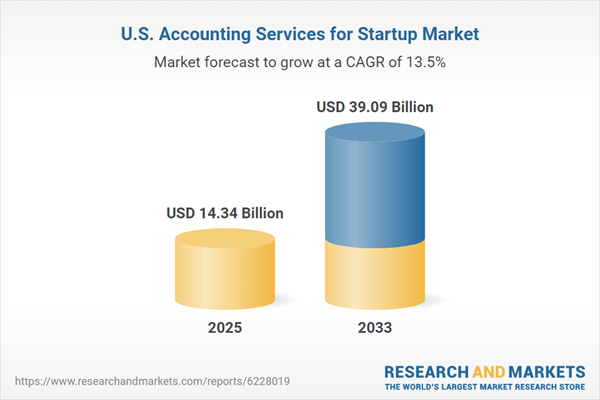
The U.S. accounting services for startup market is poised for substantial growth, with the sector estimated to reach USD 39.09 billion by 2033, climbing from USD 14.34 billion in 2025. This expansion is driven by a focus on cost efficiency and lean operations, crucial for early-stage firms operating on limited budgets. Startups prefer outsourced accounting, which provides expert services like bookkeeping, tax support, and financial planning, in a more flexible and affordable manner compared to hiring full-time staff.

The burgeoning U.S. startup ecosystem serves as a significant catalyst for this growth. Annually, millions of new business applications emerge, fueled by entrepreneurial zeal, digital business models, and streamlined company registration processes. This surge inherently increases demand for foundational accounting services such as bookkeeping setup, state compliance, and tax preparation, positioning startups as a vital market segment.

Entrepreneurial activity in the U.S. has notably increased since 2018, expanding the potential clientele for accounting firms specializing in startups. In 2024 alone, approximately 5.21 million new business applications were submitted, signaling robust growth in employer-type startups that need ongoing accounting support. This trend reflects a dynamic entrepreneurial landscape, contributing significantly to market expansion.

Cloud-based accounting platforms present a pivotal growth opportunity by enhancing real-time financial tracking, remote accessibility, and data-driven insights. These technologies streamline operations, boost accuracy, and empower strategic decision-making for startups. The demand for scalable and automated solutions is rising, influencing the expansion of advanced accounting services in areas like bookkeeping and payroll, as startups seek cost-effective ways to navigate financial complexities while ensuring agility and compliance.

However, the market faces constraints due to the high price sensitivity of startups, which often operate on tight budgets with uncertain revenue streams. Many startups rely on DIY financial tools, low-cost software, or part-time bookkeepers to manage costs, limiting the scope for premium services. This presents a challenge to accounting firms attempting to offer high-value services, especially against automated platforms marketed as budget-friendly alternatives.

Report Segmentation

This report provides comprehensive revenue forecasts and trend analyses from 2021 to 2033, segmented by type, delivery model, and end use.

Type Outlook (Revenue, USD Million, 2021-2033):

  • Bookkeeping
  • Tax Preparation Services
  • Payroll Services
  • Financial Auditing
  • Others (CFO-as-a-service, advisory, integrations, automation)

Delivery Model Outlook (Revenue, USD Million, 2021-2033):

  • Traditional
  • Hybrid (Human + AI)

End Use Outlook (Revenue, USD Million, 2021-2033):

  • E-commerce
  • BFSI
  • Healthcare
  • Others (SaaS, consumer apps, marketplaces, hardware, industrial tech)

Why You Should Buy This Report

  • Comprehensive Market Analysis: Gain detailed insights into the market across major regions and segments.
  • Competitive Landscape: Explore the market presence of key players.
  • Future Trends: Discover the pivotal trends and drivers shaping the future of the market.
  • Actionable Recommendations: Utilize insights to uncover new revenue streams and guide strategic business decisions.

This report addresses:

  • Market intelligence to enable effective decision-making
  • Market estimates and forecasts from 2018 to 2030
  • Growth opportunities and trend analyses
  • Segment and regional revenue forecasts for market assessment
  • Competition strategy and market share analysis
  • Product innovation listings for you to stay ahead of the curve

Key Attributes

Report Attribute Details
No. of Pages 100
Forecast Period 2025-2033
Estimated Market Value (USD) in 2025 $14.34 Billion
Forecasted Market Value (USD) by 2033 $39.09 Billion
Compound Annual Growth Rate 13.5%
Regions Covered United States

The leading players profiled in this U.S. Accounting Services for Startup market report include:

  • Kruze Consulting
  • Pilot.com, Inc.
  • Intuit Inc. (QuickBooks)
  • Zeni Inc.
  • airCFO
  • Graphite Financial
  • Invensis Technologies Pvt Ltd
  • Flatworld Solutions Inc.
  • Ledger Labs, Inc.
  • KMK Ventures Private Limited

For more information about this report visit https://www.researchandmarkets.com/r/he7s69

About ResearchAndMarkets.com
ResearchAndMarkets.com is the world’s leading source for international market research reports and market data. We provide you with the latest data on international and regional markets, key industries, the top companies, new products and the latest trends.

Attachment

CONTACT: 
CONTACT: ResearchAndMarkets.com 
         Laura Wood,Senior Press Manager 
         press@researchandmarkets.com
         For E.S.T Office Hours Call 1-917-300-0470 
         For U.S./ CAN Toll Free Call 1-800-526-8630 
         For GMT Office Hours Call +353-1-416-8900 

Eascra Biotech Takes First Place at TechConnect Bio in Space Innovation Challenge

Eascra Biotech Takes First Place at TechConnect Bio in Space Innovation Challenge


Eascra Biotech Takes First Place at TechConnect Bio in Space Innovation Challenge

Nanomedicine startup wins $30,000 prize for pioneering nanoparticle delivery platform

BOSTON, March 25, 2026 (GLOBE NEWSWIRE) — Eascra Biotech, a nanomedicine startup, has won first place at the TechConnect Bio in Space Innovation Challenge, held during the TechConnect World Innovation Conference and Expo on March 10-12, 2026, in Raleigh, NC. Principal scientist Dr. Ian Sands delivered the winning pitch, earning Eascra the top prize of $30,000 from a $50,000 prize pool.

The Bio in Space Innovation Challenge, produced by TechConnect and powered by ATI, calls for breakthrough technologies leveraging space and microgravity to advance biotechnology, human health, and advanced biomaterials. Eascra was selected from ten finalists who presented to an expert panel of judges drawn from leading space and life science organizations.

“This recognition reflects the strength of our technology and the promise of space-enabled manufacturing to transform patient care,” said Mari Anne Snow, Eascra co-founder and CEO. “Dr. Sands represented Eascra brilliantly, and this win reinforces what we’ve believed from the beginning: that microgravity is a powerful tool for building better therapeutics.”

Eascra is the first commercial company to produce nanoparticles in space for medical use on Earth, having completed five missions to the International Space Station in less than two years. The company’s JBNp technology, pioneered by cofounder Dr. Yupeng Chen, a professor of biomedical engineering at the University of Connecticut, delivers RNA therapeutics to hard-to-penetrate tissues like cartilage and solid tumors. Eascra’s proprietary nanoparticles are highly versatile and able to maintain fragile cargos like mRNA at room temperature for extended periods, thus eliminating cold chain requirements.

About Eascra Biotech

Eascra Biotech (eascrabiotech.com) is an early-stage nanomedicine startup providing an advanced therapeutic delivery platform capable of delivering RNA, gene editing, and other therapeutics to hard-to-reach treatment sites, such as articular cartilage, kidneys, and solid tumors. Its mission is to advance our technology for the benefit of humankind. Eascra’s proprietary delivery mechanism, a Janus Base Nanoparticle (JBNp) invented by Eascra co-founder, Dr. Yupeng Chen, mimics DNA and is customizable for different treatment indications. Eascra is working with NASA, the ISS National Laboratory™, and a variety of private space companies to accelerate our go-to-market strategy. The company is actively seeking commercial partnerships with companies in need of innovative delivery mechanisms to expedite the development of cutting-edge treatments that enhance patient outcomes.

Images available upon request.

CONTACT: Media Contact:
Bobbie Carlton
Carlton PR & Marketing LLC
Bobbie@carltonprmarketing.com       
781-718-7619

Eascra Biotech Takes First Place at TechConnect Bio in Space Innovation Challenge

Eascra Biotech Takes First Place at TechConnect Bio in Space Innovation Challenge


Eascra Biotech Takes First Place at TechConnect Bio in Space Innovation Challenge

Nanomedicine startup wins $30,000 prize for pioneering nanoparticle delivery platform

BOSTON, March 25, 2026 (GLOBE NEWSWIRE) — Eascra Biotech, a nanomedicine startup, has won first place at the TechConnect Bio in Space Innovation Challenge, held during the TechConnect World Innovation Conference and Expo on March 10-12, 2026, in Raleigh, NC. Principal scientist Dr. Ian Sands delivered the winning pitch, earning Eascra the top prize of $30,000 from a $50,000 prize pool.

The Bio in Space Innovation Challenge, produced by TechConnect and powered by ATI, calls for breakthrough technologies leveraging space and microgravity to advance biotechnology, human health, and advanced biomaterials. Eascra was selected from ten finalists who presented to an expert panel of judges drawn from leading space and life science organizations.

“This recognition reflects the strength of our technology and the promise of space-enabled manufacturing to transform patient care,” said Mari Anne Snow, Eascra co-founder and CEO. “Dr. Sands represented Eascra brilliantly, and this win reinforces what we’ve believed from the beginning: that microgravity is a powerful tool for building better therapeutics.”

Eascra is the first commercial company to produce nanoparticles in space for medical use on Earth, having completed five missions to the International Space Station in less than two years. The company’s JBNp technology, pioneered by cofounder Dr. Yupeng Chen, a professor of biomedical engineering at the University of Connecticut, delivers RNA therapeutics to hard-to-penetrate tissues like cartilage and solid tumors. Eascra’s proprietary nanoparticles are highly versatile and able to maintain fragile cargos like mRNA at room temperature for extended periods, thus eliminating cold chain requirements.

About Eascra Biotech

Eascra Biotech (eascrabiotech.com) is an early-stage nanomedicine startup providing an advanced therapeutic delivery platform capable of delivering RNA, gene editing, and other therapeutics to hard-to-reach treatment sites, such as articular cartilage, kidneys, and solid tumors. Its mission is to advance our technology for the benefit of humankind. Eascra’s proprietary delivery mechanism, a Janus Base Nanoparticle (JBNp) invented by Eascra co-founder, Dr. Yupeng Chen, mimics DNA and is customizable for different treatment indications. Eascra is working with NASA, the ISS National Laboratory™, and a variety of private space companies to accelerate our go-to-market strategy. The company is actively seeking commercial partnerships with companies in need of innovative delivery mechanisms to expedite the development of cutting-edge treatments that enhance patient outcomes.

Images available upon request.

CONTACT: Media Contact:
Bobbie Carlton
Carlton PR & Marketing LLC
Bobbie@carltonprmarketing.com       
781-718-7619

Zalos raises $3.6M to build Computer Agents that operate finance systems the way humans do

Zalos raises $3.6M to build Computer Agents that operate finance systems the way humans do


Zalos raises $3.6M to build Computer Agents that operate finance systems the way humans do

The Zalos Computer Agents log into systems and automate end-to-end workflows, without CFOs needing to replace the systems that they have built their operations around.

San Francisco, CA, March 24, 2026 (GLOBE NEWSWIRE) — Modern finance teams run on a fragmented stack of ERPs, CRMs, spreadsheets, email, and banking platforms that were never designed to talk to each other. APIs between these systems are often missing or incomplete, which means finance teams become the human API themselves, manually stitching data across systems to complete billing cycles, close the books, and produce reporting their business depends on. Zalos was built on the belief that the next leap in productivity will not come from replacing that stack, but from agentic software that can operate it the same way humans do and understands the deep business context. 

Zalos founders William Fairbairn and Hung Hoang.

Today Zalos, the leader in Computer Agents for Finance Operations, announced a $3.6 million seed round to realize this vision. The funding round was led by 14 Peaks with participation from Cohen Circle, 20VC and notable angels*.

Computer Agents are the defining AI technology for 2026. 2023 was generative AI, 2024 brought multi-modal, and in 2025, AI learnt reasoning. Now AI will take over our computers. OpenAI and Anthropic have both moved into the space with generalist Computer Agents, but Zalos is purpose-built for finance operations, where the stakes of getting it wrong are categorically higher. Finance teams cannot operate on 90% accuracy, the agents need finance specific skills, and they need every automated action logged in a format auditors can follow. The Computer Agent market is still in its early stages; comparable to where large language models were at GPT 3.5. Zalos’s purpose-built infrastructure and evaluation systems are designed to push reliability to the accuracy levels that CFOs need to automate finance operations at scale.

“Finance teams have the systems, but they are still doing the work manually because the stack is not connected,” said William Fairbairn, CEO and co-founder of Zalos. “We built Zalos on the belief that CFOs should not need to rip out their existing stack to adopt the latest in AI, we want to start by sitting on top of what is already there. Computer Agents that can log in and run the workflow end to end are the fastest path to real transformation in finance operations.”
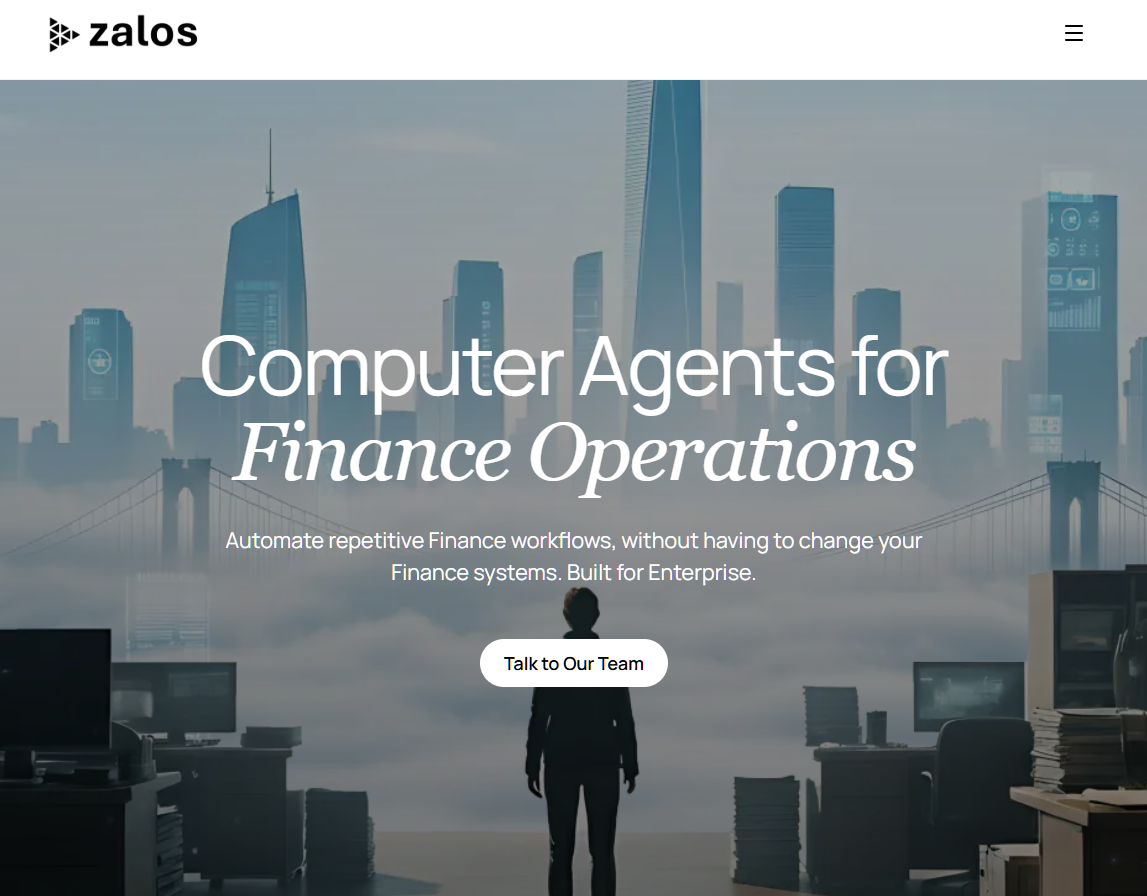
Zalos Computer Agents automatea range of repetitive finance processes, ranging from billing to reconciliations to accounts payable.

Zalos converts screen recordings of finance workflows into Computer Agents that log in, navigate screens, enter data, and check against controls across ERPs, Excel, email, and internal tools. The platform works inside NetSuite, Sage, and SAP S/4HANA today, with no heavy integrations required. Every agent action is captured in an auditable log, and the platform is built to enterprise security standards including SOC 2 Part II certification, enterprise single sign-on, role-based access controls, and on-premise deployment options. Use cases being most actively used by clients include billing automation across multiple systems, month-end reconciliations, and cross-system KPI reporting across multiple ERP instances.

The company was founded by CEO William Fairbairn and CTO Hung Hoang after intersecting paths led them to the same conclusion. Fairbairn spent years at Agicap speaking with hundreds of CFOs, and heard the same frustration consistently: ERP implementations take more than twelve months, deliver limited upside when they go well, and carry real career risk when they go wrong. Hoang left Apple Pay after five years and became focused on Computer Agents specifically because they avoid the API problem that has stalled so many automation efforts in finance. The two began building Zalos last October after joining Y Combinator, with a focus on specialized agents that emulate how finance teams actually operate inside their tools.

Hung Hoang, CTO and co-founder of Zalos added “The opportunity Zalos is addressing reflects a structural reality in enterprise finance. Legacy ERPs’ speed of innovation has stalled, leading to growing manual work in the place of transformative automation. AI-native ERPs may offer a credible alternative for companies that have not yet committed to a system. But for the majority of midmarket and enterprise finance teams, replacing an embedded ERP is not an attractive option; years of processes have been built around it, and too many painful system implementations remain fresh in memory.

The rise of reliable Computer Agents creates a third path: automation that sits on top of the existing stack and operates it as a human would. These agents are trained once with screen recordings, then the process is automated forever, never taking a holiday, and at a speed and consistency a person cannot match.”

Emanuele Larocca, Principal at 14 Peaks: “Finance operations is one of the last areas where the complexity and embeddedness of the underlying systems have made it genuinely hard for CFOs to unlock the ROI promised by AI. What Zalos has built sidesteps that problem entirely. By operating the systems as a human would, training agents with screen recordings, they deliver the true power of finance transformation without losing any domain expertise or asking CFOs to rip out systems they have spent years configuring.”

Nate Pontician, Vice President at Cohen Circle: “Zalos is redefining what software means for the CFOs. Zalos’ computer agents don’t just assist; they log in, navigate systems, and complete workflows end-to-end. They’re giving finance professionals back hours lost to repetitive tasks so they can focus on what actually moves the business forward. It’s not a copilot… it’s a colleague.”

Looking ahead, Zalos plans to expand beyond the major midmarket ERPs where it already has customers and into enterprise ERPs and on-premise systems. By building a wide-reaching context graph across the finance stack, the company aims to help CFOs deploy a swarm of agents and drive a step-change in their finance team’s impact.

* Notable angels included: Mike Lenz (CFO Fedex), Ian Sutherland (CFO Tide), Long Dinh (CFO Ada), Nancy Casey (Global Vice President, Oracle, SAP), Paul Forster (Founder, Indeed), Henri Stern (Founder, Privacy), Ed Woodford (Founder, zerohash), James Beshara (Founder, Tilt Payments), Long Lu (Founder, Misa Accounting), Catherine Dahl (Founder, Beanworks Accounts Payable), Pablo Palafox (Founder, Happy Robot), Hasan Sukkar (Founder, 11x), Chris Smoak (Founder, Atrium), Ooshma Garg (Gobble), Minh Pham (Head of Browser Infra, Perplexity), Jon Langbert (Founder, Alight), Mandeep Singh (Founder, Trouva), Thai Duong (Founder, Calif), Ash Rush (Founder, Sterling Road), Jake Klamka (Founder Insight Data Science), Jonathan Meeks (Board, TA Associates).

Media images can be found here

About Zalos
Zalos Computer Agents are designed for Finance Operations, logging into ERPs and other systems with a username and password, then automating a range of repetitive finance processes, ranging from billing to reconciliations to accounts payable.

The Computer Agents work by converting screen recordings of finance workflows inside systems or Excel into agents. They operate inside ERPs, Excel, email and internal tools – logging in, clicking the screens, entering data, or checking against controls. The agent actions are documented in an auditable log, alongside rigorous enterprise security. For more information please visit https://www.zalos.ai/ or follow via LinkedIn.

CONTACT: For further information please contact the Zalos press office on press@zalos.io 

Geordie AI Named “Most Innovative Startup” at RSAC 2026 Innovation Sandbox

Geordie AI Named “Most Innovative Startup” at RSAC 2026 Innovation Sandbox


Geordie AI Named “Most Innovative Startup” at RSAC 2026 Innovation Sandbox

Recognized for pioneering technology that enables enterprises to safely scale AI agents

SAN FRANCISCO, March 23, 2026 (GLOBE NEWSWIRE) — Geordie AI, the security and governance platform for agentic AI, today was named the “Most Innovative Startup” at the RSAC™ 2026 Conference Innovation Sandbox contest, one of the cybersecurity industry’s most prestigious startup competitions.

The RSAC Innovation Sandbox contest highlights emerging cybersecurity companies transforming the industry with breakthrough technologies. The contest’s top 10 finalists presented their innovations live to a panel of expert judges and a global audience at the RSAC Conference on March 23.

Founded in 2025 by cybersecurity leaders from Snyk, Veracode, and Darktrace, and backed by Ten Eleven Ventures and General Catalyst, Geordie has developed a disruptive approach to securing and governing autonomous AI agents. The company was recognized for its ability to provide enterprise teams with a deep, continuous understanding of agent behavior and posture, enabling the safe adoption of AI agents.

“When we started Geordie, we believed agent adoption would accelerate far faster than expected and that security and AI teams would need new governance models to keep up,” said Henry Comfort, CEO and co-founder of Geordie. “Winning the RSAC Innovation Sandbox is a powerful validation of the work our team is doing to help enterprises safely adopt AI agents. We look forward to continuing to partner with enterprises so they can understand, secure, and confidently deploy this fast-growing technology.”

For two decades, the RSAC Innovation Sandbox contest has served as one of the cybersecurity industry’s most reliable predictors of future market leaders. Collectively, Innovation Sandbox alumni have generated more than $50.1 billion in investments and over 100 acquisitions, underscoring the contest’s track record of identifying transformative companies early and launching the next generation of cybersecurity category leaders.

This recognition from RSAC comes as Geordie experiences exponential momentum in the market, with the number of secured agents increasing 10x in just under five months. Revenue has also increased tenfold in the last two months, and Geordie was recently recognized as a representative vendor in Gartner’s Market Guide for Guardian Agents, having also won the Black Hat Innovation Spotlight competition in London.

Today, Geordie also released Beam, a new solution for managing AI agent risk through context engineering. The remediation suite assesses risk holistically and continuously feeds mitigation back to the agent using context-based controls, so teams’ AI initiatives can continue at full speed.

Attendees at RSAC 2026 can meet with Geordie’s team at the Early Stage Expo throughout the RSAC Conference at Moscone South, in Kiosk 12.

About Geordie AI
Geordie is the only AI Agent Security and Governance Platform built from the agent out — because your agents are already operating beyond your perimeters, invisible to pre-agent tools and only partially visible to those built around them. Meeting agents where they live, Geordie maps their full anatomy, connections, and context, steering with precision so your business never has to choose between security and innovation. Trusted by some of the most forward-thinking organizations in the world.

Media Contact
Story Tweedie-Yates
VP of Marketing, Geordie AI
story@geordie.ai

Geordie AI Introduces Beam: The First AI Agent Remediation Suite with Context Engineering

Geordie AI Introduces Beam: The First AI Agent Remediation Suite with Context Engineering


Geordie AI Introduces Beam: The First AI Agent Remediation Suite with Context Engineering

Proactive security controls allow forward-looking teams to secure AI agents at scale

LONDON, March 23, 2026 (GLOBE NEWSWIRE) — Today, Geordie AI announces a new solution for managing AI agent risk through context engineering, as CEO Henry Comfort takes the stage at RSAC Innovation Sandbox in San Francisco. Legacy security stacks and proxy-based approaches leave risk compounding invisibly across agent ecosystems — creating gaps that slow both security and productivity. Geordie’s new remediation suite, Beam, assesses risk holistically and continuously feeds mitigation back to the agent using context-based controls, so teams’ AI initiatives can continue at full speed.

“Our customers want to actively address the security issues in their AI agents so their organizations can innovate quicker,” says CEO and Co-Founder Henry Comfort. “Geordie helps them do this with a context-driven ‘easy button’ that takes care of risks before they snowball into massive problems.”

Organizations are rapidly adopting AI agents to innovate and improve their productivity. Recent research suggests that over 70% of developers are using coding agents every day, and another study from Microsoft said that more than 80% of the Fortune 500 are actively using agents in their organizations today.

According to Gartner, 74% of Security leaders say these same AI agents represent a completely new attack vector in their organization. But legacy endpoint, cloud, and network security tools were built to secure users and traditional software, not AI agents that make decisions in real time, move across tools, and carry context between systems.

In the face of this massive adoption, security teams are faced with an impossible tradeoff; put up proxies and gateways to stay safe, but add latency to those agents, killing the business value at scale and losing a chunk of visibility.

Beam was created to manage risk in a way that allows the adoption of AI agents to continue at full pace, beyond isolated pilots. First, Geordie’s risk engine maps how an agent is configured and how it behaves in real time: what it is trying to do, what it’s already done, and the environments in which it’s operating. Based on this behavior, Beam deterministically assesses the appropriate context and security policies to provide back to the agent, creating a continuous feedback loop that proactively improves and evolves with agent behavior in real time. Instead of relying on fixed rules, Beam shapes how agents behave as they operate. That means responses are specific and adaptive, not generic.

And over time, that creates a system that improves with usage. The more agents run, the more accurately you can understand and guide their behavior, which truly helps enterprise adoption and governance.

“For us, AI agents are a necessity to our competitive advantage,” said Leo Cunningham, CISO at Owkin. “We chose to work with Geordie because of its purpose-built approach, which doesn’t risk the business innovation that started our AI agent journey in the first place.”

This product release comes as Geordie experiences exponential momentum in the market, with the number of secured agents increasing 10x in just under five months. Revenue has also increased tenfold in the last two months, and Geordie was recently recognized as a representative vendor in Gartner’s Market Guide for Guardian Agents, having also won the Black Hat Innovation Spotlight competition in London.

Meet the team at RSAC in the Innovation Sandbox, or sign up for a spot to meet with Geordie’s engineers for open, practitioner‑level discussions on Tuesday, March 24, at The Harlequin. Sign up for these limited spots here.

Meet Geordie at RSA

About Geordie AI
Geordie is the only AI Agent Security and Governance Platform built from the agent out — because your agents are already operating beyond your perimeters, invisible to pre-agent tools and only partially visible to those built around them. Meeting agents where they live, Geordie maps their full anatomy, connections, and context, steering with precision so your business never has to choose between security and innovation. Trusted by some of the most forward-thinking organizations in the world.

Media Contact
Story Tweedie-Yates
VP of Marketing, Geordie AI
story@geordie.ai

Geordie AI Introduces Beam: The First AI Agent Remediation Suite with Context Engineering

Geordie AI Introduces Beam: The First AI Agent Remediation Suite with Context Engineering


Geordie AI Introduces Beam: The First AI Agent Remediation Suite with Context Engineering

Proactive security controls allow forward-looking teams to secure AI agents at scale

LONDON, March 23, 2026 (GLOBE NEWSWIRE) — Today, Geordie AI announces a new solution for managing AI agent risk through context engineering, as CEO Henry Comfort takes the stage at RSAC Innovation Sandbox in San Francisco. Legacy security stacks and proxy-based approaches leave risk compounding invisibly across agent ecosystems — creating gaps that slow both security and productivity. Geordie’s new remediation suite, Beam, assesses risk holistically and continuously feeds mitigation back to the agent using context-based controls, so teams’ AI initiatives can continue at full speed.

“Our customers want to actively address the security issues in their AI agents so their organizations can innovate quicker,” says CEO and Co-Founder Henry Comfort. “Geordie helps them do this with a context-driven ‘easy button’ that takes care of risks before they snowball into massive problems.”

Organizations are rapidly adopting AI agents to innovate and improve their productivity. Recent research suggests that over 70% of developers are using coding agents every day, and another study from Microsoft said that more than 80% of the Fortune 500 are actively using agents in their organizations today.

According to Gartner, 74% of Security leaders say these same AI agents represent a completely new attack vector in their organization. But legacy endpoint, cloud, and network security tools were built to secure users and traditional software, not AI agents that make decisions in real time, move across tools, and carry context between systems.

In the face of this massive adoption, security teams are faced with an impossible tradeoff; put up proxies and gateways to stay safe, but add latency to those agents, killing the business value at scale and losing a chunk of visibility.

Beam was created to manage risk in a way that allows the adoption of AI agents to continue at full pace, beyond isolated pilots. First, Geordie’s risk engine maps how an agent is configured and how it behaves in real time: what it is trying to do, what it’s already done, and the environments in which it’s operating. Based on this behavior, Beam deterministically assesses the appropriate context and security policies to provide back to the agent, creating a continuous feedback loop that proactively improves and evolves with agent behavior in real time. Instead of relying on fixed rules, Beam shapes how agents behave as they operate. That means responses are specific and adaptive, not generic.

And over time, that creates a system that improves with usage. The more agents run, the more accurately you can understand and guide their behavior, which truly helps enterprise adoption and governance.

“For us, AI agents are a necessity to our competitive advantage,” said Leo Cunningham, CISO at Owkin. “We chose to work with Geordie because of its purpose-built approach, which doesn’t risk the business innovation that started our AI agent journey in the first place.”

This product release comes as Geordie experiences exponential momentum in the market, with the number of secured agents increasing 10x in just under five months. Revenue has also increased tenfold in the last two months, and Geordie was recently recognized as a representative vendor in Gartner’s Market Guide for Guardian Agents, having also won the Black Hat Innovation Spotlight competition in London.

Meet the team at RSAC in the Innovation Sandbox, or sign up for a spot to meet with Geordie’s engineers for open, practitioner‑level discussions on Tuesday, March 24, at The Harlequin. Sign up for these limited spots here.

Meet Geordie at RSA

About Geordie AI
Geordie is the only AI Agent Security and Governance Platform built from the agent out — because your agents are already operating beyond your perimeters, invisible to pre-agent tools and only partially visible to those built around them. Meeting agents where they live, Geordie maps their full anatomy, connections, and context, steering with precision so your business never has to choose between security and innovation. Trusted by some of the most forward-thinking organizations in the world.

Media Contact
Story Tweedie-Yates
VP of Marketing, Geordie AI
story@geordie.ai

MWM AI: The Platform Behind 1 Billion Downloads, Now Turning Prompts into App Businesses

MWM AI: The Platform Behind 1 Billion Downloads, Now Turning Prompts into App Businesses


MWM AI: The Platform Behind 1 Billion Downloads, Now Turning Prompts into App Businesses

Paris, March 19th, 2026

  • MWM, the leading mobile app publisher behind 1 billion downloads, today launches MWM AI, the first platform to turn simple prompts into native iOS app businesses. 
  • Powered by 14 years of mobile expertise, MWM AI gives 500 million creators, solopreneurs, and SMBs worldwide the tools to build, launch, and scale app businesses with built-in distribution, monetization, and growth.


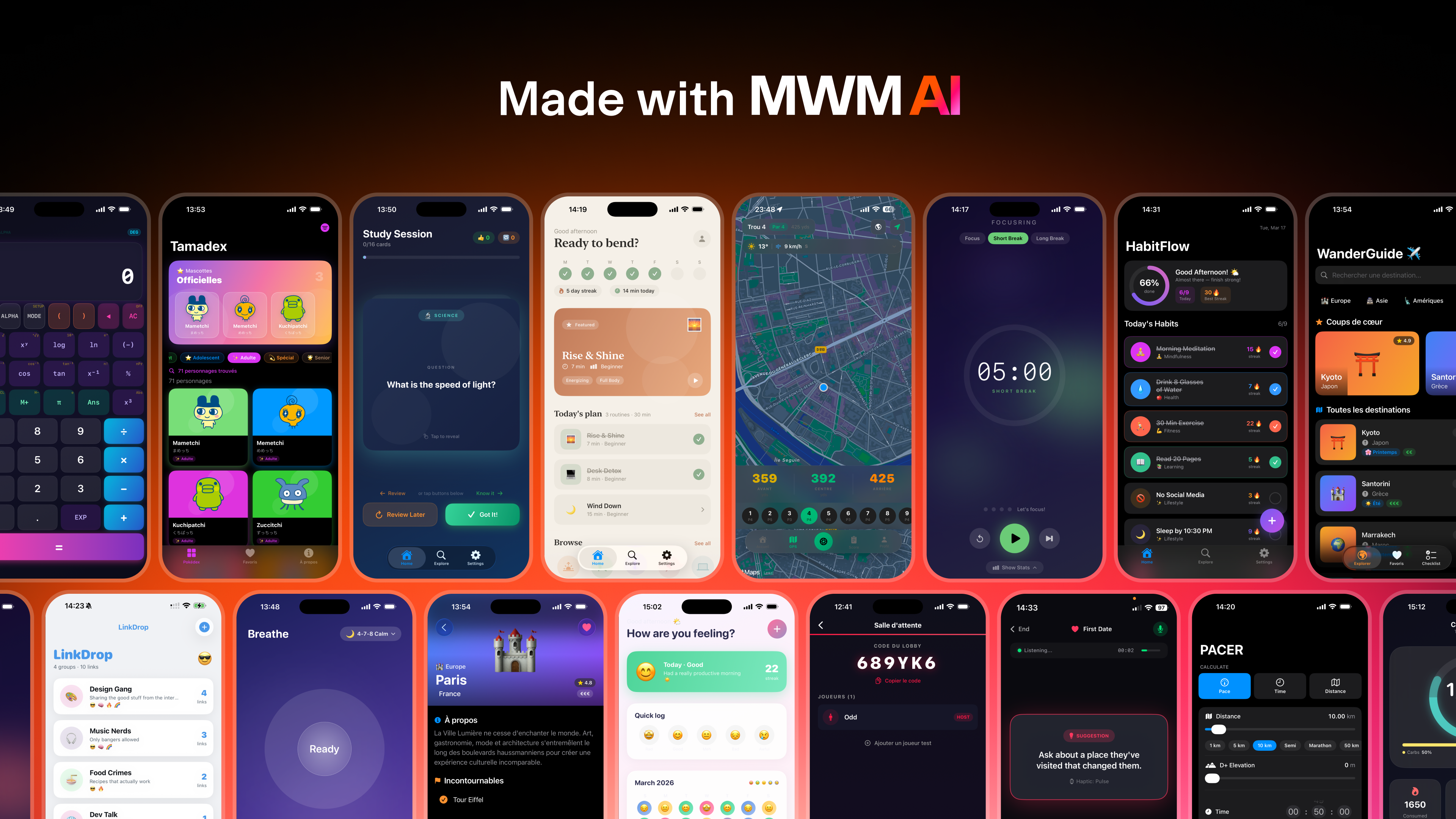
Applications Made with MWM AI

The “Shopify Moment” for the App Economy

MWM AI marks a turning point for the app economy. More than a coding tool, it is the first platform built to transform an idea into a real mobile business, handling the entire lifecycle from creation to distribution, monetization, and scale. Where traditional copilots help developers write code, MWM AI helps creators and entrepreneurs launch native, App Store-ready businesses from a simple prompt. MWM AI aims to have the same impact on the mobile app economy that Shopify had on e-commerce.

Every app is generated in native Swift for Apple platforms including iPhone, iPad, Mac, Apple Watch, and Apple Vision Pro. In its first week of beta, MWM AI was used to generate over 5,000 apps, spanning an extraordinary range of categories and use cases. Unlike prototype generators, these are App Store-ready businesses designed to compete with hand-built applications.

Built on 14 Years of App Business Expertise

MWM AI is built on 14 years of experience creating, launching, monetizing, and scaling mobile apps at global scale. Over that time, MWM has learned that the biggest barrier to entering the app economy is not just the cost of building, but the time it takes to get to market. In mobile as in many industries, even a great product can lose if it launches too late.

MWM AI is designed to compress that timeline dramatically. With simple prompts, creators, entrepreneurs, and businesses can go from idea to a production-ready native iOS app in minutes, without technical skills. Built on the systems behind MWM’s billion-download portfolio, the platform gives users not just a faster way to build, but a faster path to succeed.

Winning in the app economy is about two things: time to market and time to scale. If you launch too late, you miss the opportunity. If you scale too slowly, you lose momentum. MWM AI was built to solve both problems, helping anyone go from idea to native app in minutes, then giving them the infrastructure to launch, optimize, and grow like a real app businesssaid Jean-Baptiste Hironde, Founder & CEO of MWM

Turn Ideas into App Business in Minutes, Not Months

MWM AI is built for the 500 million creators, entrepreneurs, and small businesses with app ideas but no realistic way to build them. What once required $50,000 to $500,000, 6 to 12 months, and teams of 5 to 15 people can now start with a simple prompt and become a production-ready app in minutes.

But speed alone is not enough. MWM AI comes with the infrastructure to turn apps into businesses, including App Store distribution workflows, subscriptions, in-app purchases, paywalls, ad monetization, real-time analytics, and A/B testing. Every app is shaped by the design, monetization, and growth patterns behind MWM’s billion-download portfolio.

Apps created with MWM AI are original by design, built from unique prompts and market context rather than templates. And for the most promising products, MWM Publishing provides dedicated marketing support to help turn early traction into category leadership. Launching first on iOS with native Swift, and with native Kotlin for Android coming soon, MWM AI gives builders both the speed and the business infrastructure needed to win in a crowded app economy.

About MWM

Founded in 2012, MWM is a mobile technology company behind more than 1 billion downloads worldwide. Over the past 14 years, the company has built, published, and scaled category-leading apps across the full mobile lifecycle, from product development to monetization, distribution, and growth. In 2026, MWM launched MWM AI, the first platform to turn simple prompts into real native iOS apps Business with built-in App Store distribution, monetization, and growth, bringing MWM’s app business expertise to a new generation of creators and entrepreneurs. Headquartered in Paris, MWM has been recognized among the Frenchtech top 120 startups in France and has raised more than $75 million from investors including Eurazeo, Bpifrance, NJJ, Aglaé Ventures, Cassius Family, and Habert Dassault Finance.

Key Facts

  • End-to-end platform: Build, distribute, monetize, and scale app businesses
  • Proven mobile expertise: 14 years, 200+ apps built, 70+ live, 1B+ downloads
  • Early traction: 5,000+ apps generated in the first week of beta, with a 7-minute average creation time
  • Native by design: 100% native Swift apps, built on the web with ios device simulator, one-click testing on physical device and embedded TestFlight workflows
  • Growth engine: Top-performing apps can enter MWM Publishing for dedicated growth support
  • Market opportunity: $500B+ mobile economy, 500M potential creators
  • Pricing: Free, Starter ($19), Pro ($49), Pro+ ($149), and Enterprise

Learn more at: mwm.ai


Media contact:
 

Charles Perrot, COO
press@mwm.io

MWM AI Platform

Attachments