Google alums raise $5M pre-seed for Sparkli: The First Multimodal AI-Native Learning Engine for children

Google alums raise $5M pre-seed for Sparkli: The First Multimodal AI-Native Learning Engine for children


Google alums raise $5M pre-seed for Sparkli: The First Multimodal AI-Native Learning Engine for children

Zurich-based startup emerges from stealth to turn screen time into active learning expeditions that foster agency, curiosity, and future-ready skills.

Zurich, Jan. 22, 2026 (GLOBE NEWSWIRE) — Children today have an unprecedented ability to explore ideas, yet their digital world gives them so few ways to do it. When an eight-year-old asks how to build a city on Mars, the answer should ignite imagination, not flatten it into a wall of text. Built for this moment, Sparkli is launching a new model of learning shaped for the developing brain, using real-time multimodal AI that gives children the agency to build their own interactive learning expeditions on any topic in minutes. Sparkli transforms these inquiries into multi-disciplinary, real-life journeys that foster future-ready skills, including technology, design thinking, sustainability, financial literacy, entrepreneurship, emotional intelligence, and global awareness.The Zurich-based company has raised a $5 million pre-seed round to bring its multimodal learning engine to families and schools around the world.

Sparkli founders: (L to R) Mynseok Kang, Lax Poojary and Lucie Marchand.

The pre-seed round will allow Sparkli to scale its generative learning engine and prepare for a private beta launch in January 2026. The company is currently validating its platform through a strategic pilot with one of the world’s largest private school groups. This partnership provides Sparkli with a powerful testing ground across a network of more than 100 schools and over 100,000 students. 
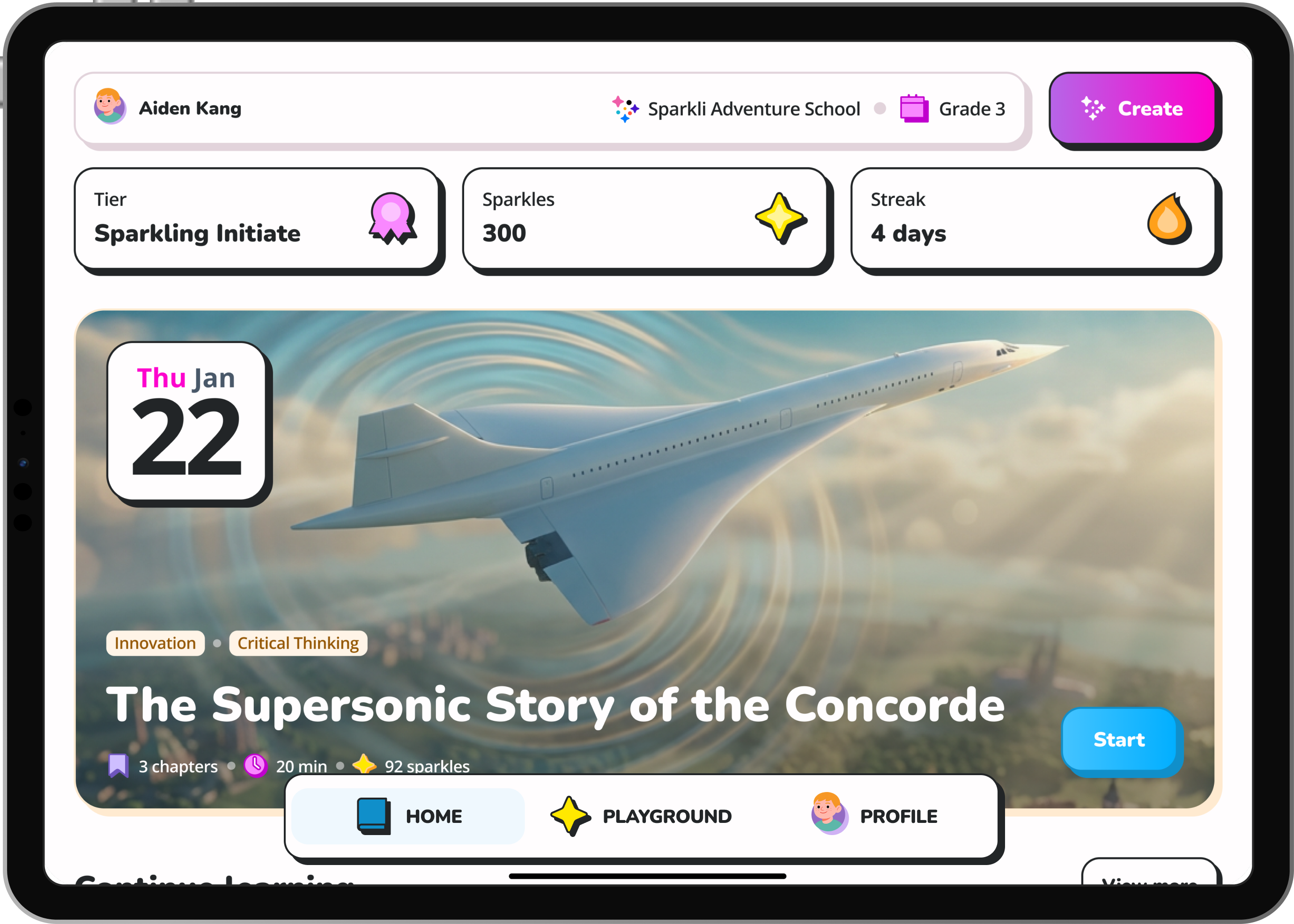
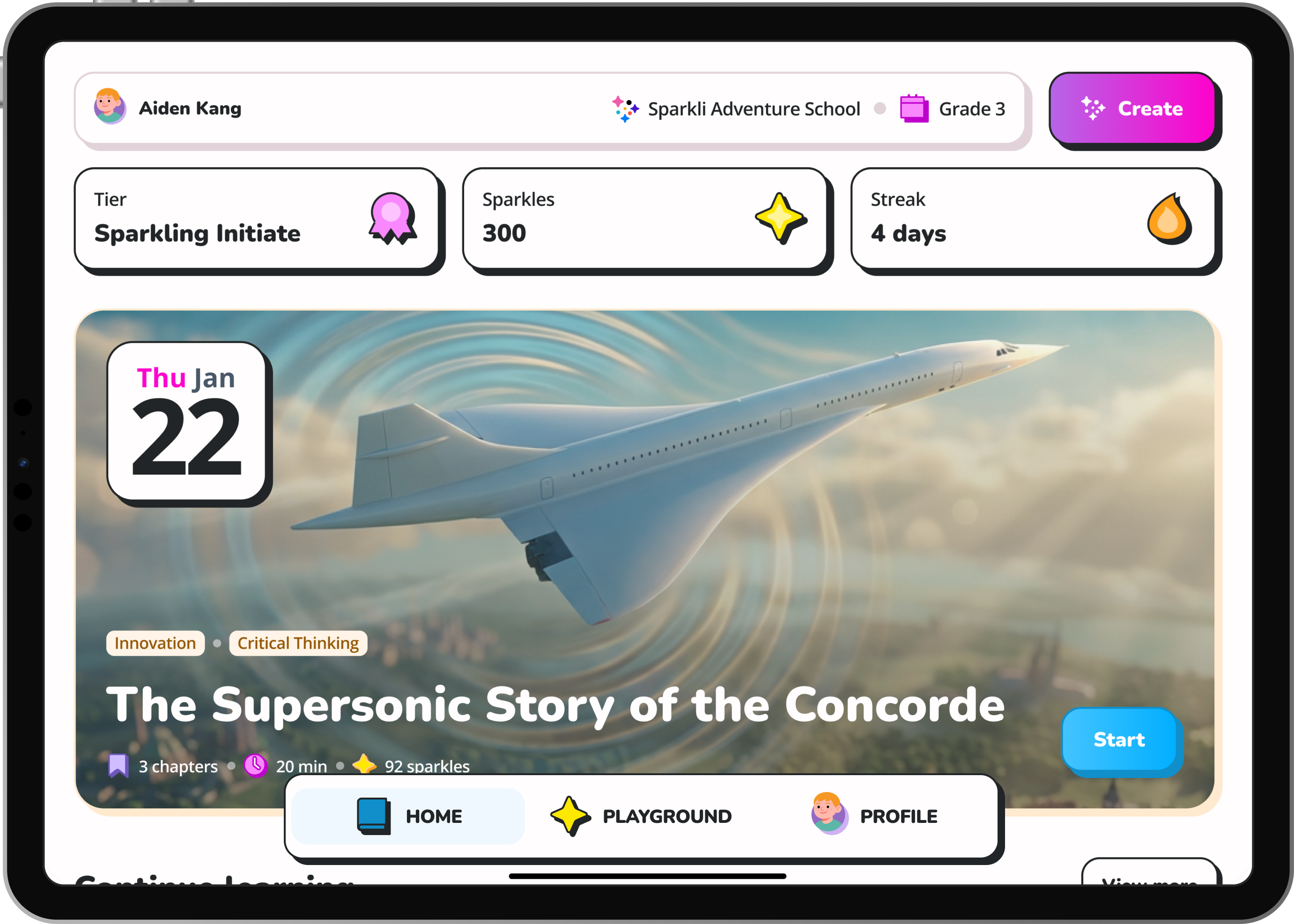
The Sparkli platform: currently in private beta with global school networks, with a consumer launch scheduled for June 2026.

Sparkli’s approach is shaped by three shifts essential for modern childhood education, a strategy designed to solve the ‘Agency and Curiosity Gap’. First, it forces a Velocity Shift by moving away from static curriculums to real-time relevance where children explore new topics the moment they emerge. Second, it drives an Engagement Shift by replacing the dry ‘AI chatbot wall of text’ and passive screen time (watching videos, playing video games) with a multimodal playground of visuals, voice, and playable simulations. This turns consumption into active, gamified inquiry rooted in educational value. Finally, Sparkli prioritizes a Skills Shift that focuses on capabilities such as creativity and complex problem solving rather than memorization.

Underpinning these interactions is a system that builds an interest and knowledge graph for every child over time, enabling the platform to deliver truly personalized and adaptive learning.In practice, this means if a child asks to build a city on Mars, Sparkli doesn’t just list facts but instantly generates an interactive expedition where they learn age-appropriate physics, simulate the environment, and build their own city. As they design the infrastructure and explore logistics, the platform challenges them to engage in debates, make strategic choices based on real arguments, and ultimately reflect on and defend their decisions.

Sparkli is building the first multimodal learning engine for children aged 5-12.

“Our goal is to build agency in the next generation,” said Lax Poojary, CEO and founder of Sparkli. “Children learn by exploring, making choices, asking questions, and discovering what inspires them. Sparkli turns screen time into a place where curiosity grows rather than fades.”

Sparkli’s early pilots illustrate these shifts in action. In one classroom, eight-year-olds used the platform to simulate building their own mini food cart businesses, where teachers observed students debating concepts like budgeting and customer experience. In another pilot, students took control during an unstructured ‘Freedom Friday’ session, initiating their own expeditions into topics ranging from game design to the Big Bang. Parents testing the consumer version described a notable difference in the quality of their children’s screen time, with one parent remarking that their son returned from a session eager to outline his sustainability plan if he were Mayor for a day.
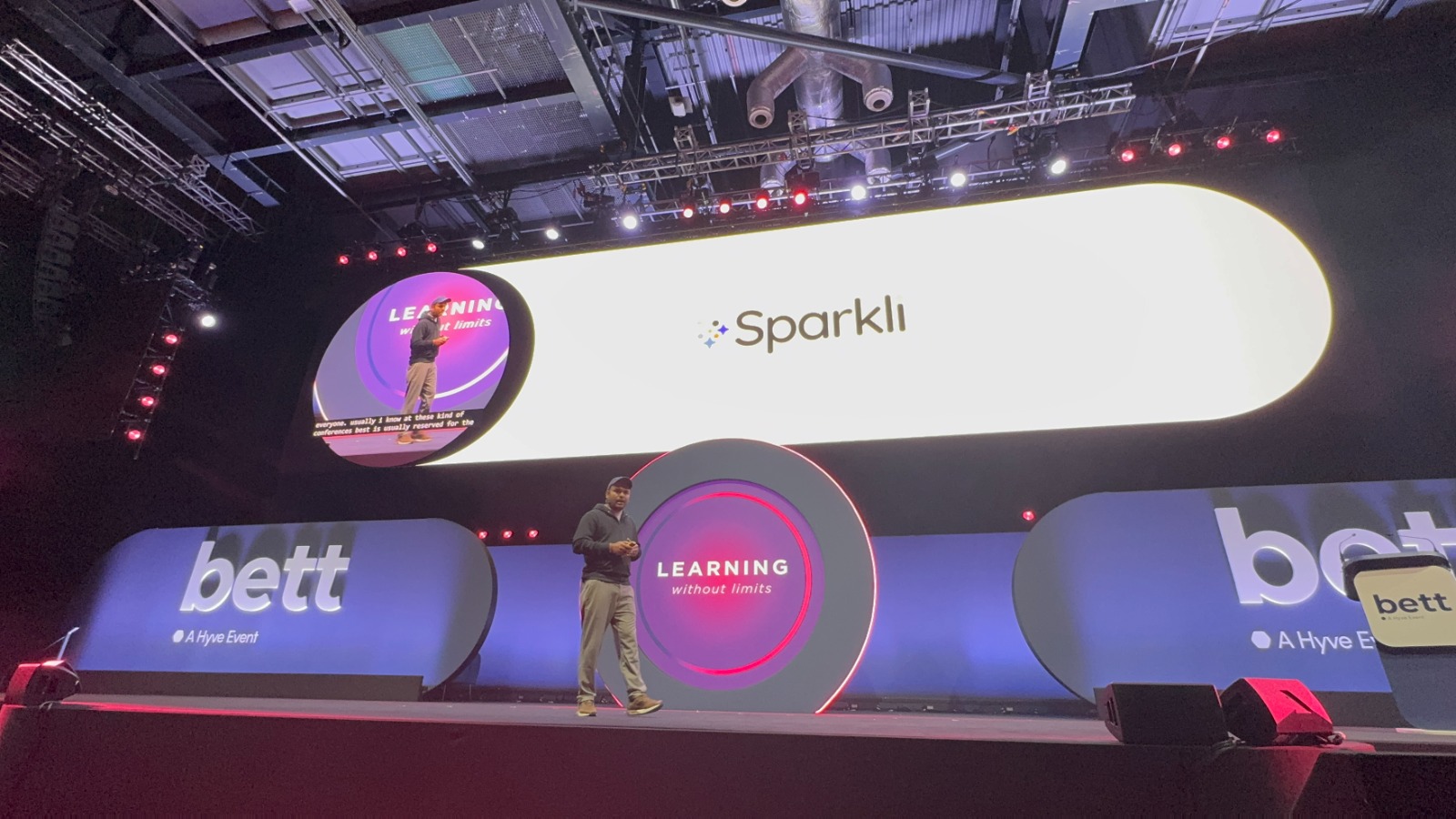
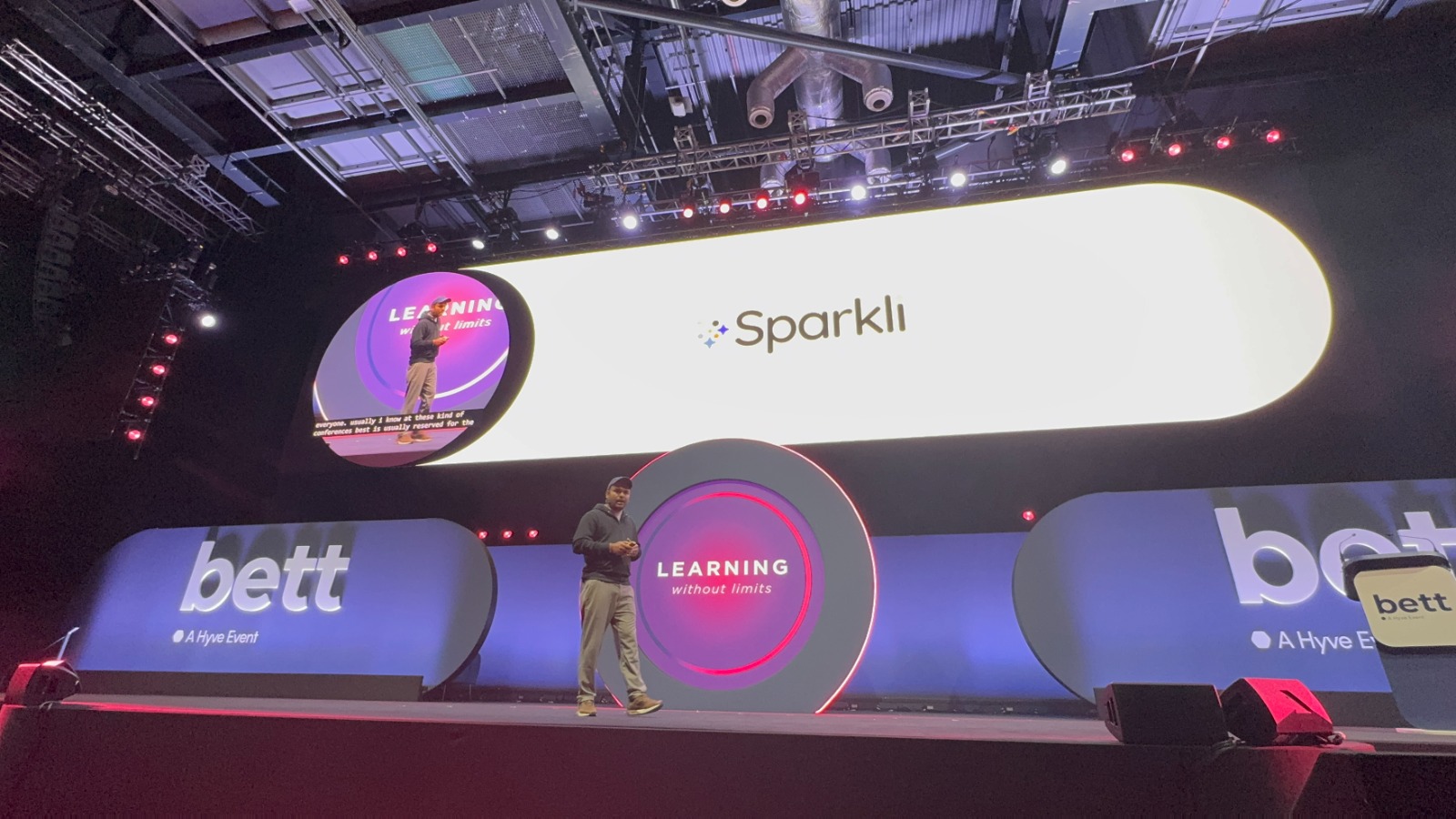
Sparkli launch at Bett Conference, the largest education conference in the world.

Realizing the potential to reimagine this learning experience, CEO Lax Poojary and his co-founders, who are veterans of Google Area 120, Search, and YouTube, assembled a team of engineers and designers, including experts from ETH and the education sector. Together, they are building a platform that fuses generative AI, pedagogy, motion design, and game mechanics to address a fundamental failure in how content is delivered. Existing systems are often slow, standardized, and unable to keep pace with discovery. Textbooks take years to update, traditional edtech depends on static libraries and drills, and open-ended AI tools and chatbots, though powerful for adults, are unsafe or overwhelming for young users. This growing gap creates a major market opportunity for Sparkli to deliver a capable yet safe platform that pairs modern generative technology with strong guardrails and age-sensitive design.

By solving this, Sparkli positions itself to disrupt the $7 trillion global education market, a sector widely predicted to be one of the most significant use cases for artificial intelligence. While Duolingo has built the largest consumer EdTech business to date by digitizing rigid language drills, Sparkli targets a significantly larger addressable market by reimagining how the next generation acquires knowledge

“Sparkli represents a step change in how children can interact with knowledge,” said Lukas Weder, Partner at Founderful. “The team is applying high caliber engineering and thoughtful pedagogy to a space that desperately needs innovation. Their traction with schools shows a real appetite for tools that foster curiosity and agency rather than passive consumption.”

Sparkli’s vision is to become the AI-native operating system for childhood development. The company plans to extend its platform from curiosity into creation, giving children tools to build and prototype projects directly inside Sparkli. It seeks to connect classroom learning with home exploration and ultimately support learners as they grow into adolescence and beyond. The long-term goal is to give every child a lifelong AI companion that remembers what they cared about at age six and helps them develop those passions at seventeen.

Media images can be found here.

About Sparkli
Sparkli is a Zurich-based AI company building the first multimodal learning engine for children aged 5-12. Founded by veterans of Google Area 120, YouTube, and Search, Sparkli combines Swiss engineering precision with consumer-scale technology to foster curiosity, agency, and critical thinking. The platform is currently in private beta with global school networks, with a consumer launch scheduled for June 2026. For more information, visit sparkli.ai and join early access here: https://go.sparkli.ai/early-access


Google alums raise $5M pre-seed for Sparkli: The First Multimodal AI-Native Learning Engine for children

Google alums raise $5M pre-seed for Sparkli: The First Multimodal AI-Native Learning Engine for children


Google alums raise $5M pre-seed for Sparkli: The First Multimodal AI-Native Learning Engine for children

Zurich-based startup emerges from stealth to turn screen time into active learning expeditions that foster agency, curiosity, and future-ready skills.

Zurich, Jan. 22, 2026 (GLOBE NEWSWIRE) — Children today have an unprecedented ability to explore ideas, yet their digital world gives them so few ways to do it. When an eight-year-old asks how to build a city on Mars, the answer should ignite imagination, not flatten it into a wall of text. Built for this moment, Sparkli is launching a new model of learning shaped for the developing brain, using real-time multimodal AI that gives children the agency to build their own interactive learning expeditions on any topic in minutes. Sparkli transforms these inquiries into multi-disciplinary, real-life journeys that foster future-ready skills, including technology, design thinking, sustainability, financial literacy, entrepreneurship, emotional intelligence, and global awareness.The Zurich-based company has raised a $5 million pre-seed round to bring its multimodal learning engine to families and schools around the world.

Sparkli founders: (L to R) Mynseok Kang, Lax Poojary and Lucie Marchand.

The pre-seed round will allow Sparkli to scale its generative learning engine and prepare for a private beta launch in January 2026. The company is currently validating its platform through a strategic pilot with one of the world’s largest private school groups. This partnership provides Sparkli with a powerful testing ground across a network of more than 100 schools and over 100,000 students. 

The Sparkli platform: currently in private beta with global school networks, with a consumer launch scheduled for June 2026.

Sparkli’s approach is shaped by three shifts essential for modern childhood education, a strategy designed to solve the ‘Agency and Curiosity Gap’. First, it forces a Velocity Shift by moving away from static curriculums to real-time relevance where children explore new topics the moment they emerge. Second, it drives an Engagement Shift by replacing the dry ‘AI chatbot wall of text’ and passive screen time (watching videos, playing video games) with a multimodal playground of visuals, voice, and playable simulations. This turns consumption into active, gamified inquiry rooted in educational value. Finally, Sparkli prioritizes a Skills Shift that focuses on capabilities such as creativity and complex problem solving rather than memorization.

Underpinning these interactions is a system that builds an interest and knowledge graph for every child over time, enabling the platform to deliver truly personalized and adaptive learning.In practice, this means if a child asks to build a city on Mars, Sparkli doesn’t just list facts but instantly generates an interactive expedition where they learn age-appropriate physics, simulate the environment, and build their own city. As they design the infrastructure and explore logistics, the platform challenges them to engage in debates, make strategic choices based on real arguments, and ultimately reflect on and defend their decisions.

Sparkli is building the first multimodal learning engine for children aged 5-12.

“Our goal is to build agency in the next generation,” said Lax Poojary, CEO and founder of Sparkli. “Children learn by exploring, making choices, asking questions, and discovering what inspires them. Sparkli turns screen time into a place where curiosity grows rather than fades.”

Sparkli’s early pilots illustrate these shifts in action. In one classroom, eight-year-olds used the platform to simulate building their own mini food cart businesses, where teachers observed students debating concepts like budgeting and customer experience. In another pilot, students took control during an unstructured ‘Freedom Friday’ session, initiating their own expeditions into topics ranging from game design to the Big Bang. Parents testing the consumer version described a notable difference in the quality of their children’s screen time, with one parent remarking that their son returned from a session eager to outline his sustainability plan if he were Mayor for a day.

Sparkli launch at Bett Conference, the largest education conference in the world.

Realizing the potential to reimagine this learning experience, CEO Lax Poojary and his co-founders, who are veterans of Google Area 120, Search, and YouTube, assembled a team of engineers and designers, including experts from ETH and the education sector. Together, they are building a platform that fuses generative AI, pedagogy, motion design, and game mechanics to address a fundamental failure in how content is delivered. Existing systems are often slow, standardized, and unable to keep pace with discovery. Textbooks take years to update, traditional edtech depends on static libraries and drills, and open-ended AI tools and chatbots, though powerful for adults, are unsafe or overwhelming for young users. This growing gap creates a major market opportunity for Sparkli to deliver a capable yet safe platform that pairs modern generative technology with strong guardrails and age-sensitive design.

By solving this, Sparkli positions itself to disrupt the $7 trillion global education market, a sector widely predicted to be one of the most significant use cases for artificial intelligence. While Duolingo has built the largest consumer EdTech business to date by digitizing rigid language drills, Sparkli targets a significantly larger addressable market by reimagining how the next generation acquires knowledge

“Sparkli represents a step change in how children can interact with knowledge,” said Lukas Weder, Partner at Founderful. “The team is applying high caliber engineering and thoughtful pedagogy to a space that desperately needs innovation. Their traction with schools shows a real appetite for tools that foster curiosity and agency rather than passive consumption.”

Sparkli’s vision is to become the AI-native operating system for childhood development. The company plans to extend its platform from curiosity into creation, giving children tools to build and prototype projects directly inside Sparkli. It seeks to connect classroom learning with home exploration and ultimately support learners as they grow into adolescence and beyond. The long-term goal is to give every child a lifelong AI companion that remembers what they cared about at age six and helps them develop those passions at seventeen.

Media images can be found here.

About Sparkli
Sparkli is a Zurich-based AI company building the first multimodal learning engine for children aged 5-12. Founded by veterans of Google Area 120, YouTube, and Search, Sparkli combines Swiss engineering precision with consumer-scale technology to foster curiosity, agency, and critical thinking. The platform is currently in private beta with global school networks, with a consumer launch scheduled for June 2026. For more information, visit sparkli.ai and join early access here: https://go.sparkli.ai/early-access
Asesuisa Becomes a Founding Partner of CoreNest Accelerator in El Salvador

Asesuisa Becomes a Founding Partner of CoreNest Accelerator in El Salvador


Asesuisa Becomes a Founding Partner of CoreNest Accelerator in El Salvador

The company continues to lead innovation in El Salvador’s insurance sector

SAN SALVADOR, El Salvador, Jan. 22, 2026 (GLOBE NEWSWIRE) — Asesuisa, a subsidiary of Grupo Ficohsa, announced its incorporation as a Founding Partner of the Insurance vertical of CoreNest Accelerator, an acceleration and innovation platform designed to connect startups with leading corporations, venture capital and global networks, positioning El Salvador as an innovation hub in Latin America.

CoreNest Accelerator is part of the CoreNest Capital global ecosystem, an international venture capital firm investing in high-growth technology startups worldwide. From El Salvador, CoreNest Accelerator operates as a vehicle that integrates early-stage capital, structured acceleration and corporate pilots, reducing risk and accelerating technology adoption across key sectors of the economy.

The incorporation of Asesuisa as a Founding Partner will enable a specialized InsurTech pipeline, focused on artificial intelligence, process automation, customer experience, risk prevention, digital health and innovation in service models. Through this alliance, Asesuisa will play an active role in identifying, validating and piloting solutions that address real challenges within the insurance sector, both locally and regionally.

“Asesuisa joining as a Founding Partner marks a milestone for insurance innovation across LATAM, showing how applied innovation can drive real regional impact,” said José Roberto Rodríguez, CEO of CoreNest Accelerator.

As a Founding Partner, Asesuisa joins the CoreNest Accelerator model not only from an institutional positioning perspective, but as a strategic ecosystem player, participating in the design of innovation challenges, gaining priority access to startup deal flow, co-creation spaces, corporate pilots, and an international network of investors and experts.

For his part, Enzo Bizzarro, Executive Chairman of Asesuisa, highlighted:

“Joining CoreNest Accelerator as a Founding Partner reflects our vision to anticipate change and deliver greater value through innovation across the region.”

This alliance is part of CoreNest Accelerator’s strategy to activate sector-based verticals led by reference corporations, strengthening the connection between innovation, capital and market, and consolidating El Salvador as a key destination for startups seeking to scale across the region.

About CoreNest Accelerator

CoreNest Accelerator is part of the CoreNest Capital global ecosystem, an international venture capital firm investing in high-growth technology startups worldwide. The Accelerator serves as CoreNest’s on-the-ground platform in El Salvador, linking local innovation with global capital, corporate partners, and international markets.

About CoreNest Capital

CoreNest Capital is an international venture capital firm focused on investing in high-growth technology startups. Through its venture capital expertise, it supports the expansion of emerging ecosystems and the connection between innovation, capital and global markets.

About Asesuisa

With 56 years of experience in property & casualty, life and surety insurance in El Salvador, Asesuisa delivers a comprehensive portfolio of protection solutions in an efficient and timely manner. Asesuisa ranks first in consumer preference and is a benchmark in the Salvadoran insurance industry, recognized for its financial strength, prestige, track record and trust.

About Grupo Ficohsa

A leading financial group in Central America, with operations in Honduras, Nicaragua, Guatemala, Panama and El Salvador, as well as offices in the United States. The group is composed of leading companies in banking, insurance and pensions, serving 2.1 million clients and employing more than 6,000 people, positioning itself as one of the region’s leading financial groups.

Pedro Crespo
op@corenest.com

Asesuisa Becomes a Founding Partner of CoreNest Accelerator in El Salvador

Asesuisa Becomes a Founding Partner of CoreNest Accelerator in El Salvador


Asesuisa Becomes a Founding Partner of CoreNest Accelerator in El Salvador

The company continues to lead innovation in El Salvador’s insurance sector

SAN SALVADOR, El Salvador, Jan. 22, 2026 (GLOBE NEWSWIRE) — Asesuisa, a subsidiary of Grupo Ficohsa, announced its incorporation as a Founding Partner of the Insurance vertical of CoreNest Accelerator, an acceleration and innovation platform designed to connect startups with leading corporations, venture capital and global networks, positioning El Salvador as an innovation hub in Latin America.

CoreNest Accelerator is part of the CoreNest Capital global ecosystem, an international venture capital firm investing in high-growth technology startups worldwide. From El Salvador, CoreNest Accelerator operates as a vehicle that integrates early-stage capital, structured acceleration and corporate pilots, reducing risk and accelerating technology adoption across key sectors of the economy.

The incorporation of Asesuisa as a Founding Partner will enable a specialized InsurTech pipeline, focused on artificial intelligence, process automation, customer experience, risk prevention, digital health and innovation in service models. Through this alliance, Asesuisa will play an active role in identifying, validating and piloting solutions that address real challenges within the insurance sector, both locally and regionally.

“Asesuisa joining as a Founding Partner marks a milestone for insurance innovation across LATAM, showing how applied innovation can drive real regional impact,” said José Roberto Rodríguez, CEO of CoreNest Accelerator.

As a Founding Partner, Asesuisa joins the CoreNest Accelerator model not only from an institutional positioning perspective, but as a strategic ecosystem player, participating in the design of innovation challenges, gaining priority access to startup deal flow, co-creation spaces, corporate pilots, and an international network of investors and experts.

For his part, Enzo Bizzarro, Executive Chairman of Asesuisa, highlighted:

“Joining CoreNest Accelerator as a Founding Partner reflects our vision to anticipate change and deliver greater value through innovation across the region.”

This alliance is part of CoreNest Accelerator’s strategy to activate sector-based verticals led by reference corporations, strengthening the connection between innovation, capital and market, and consolidating El Salvador as a key destination for startups seeking to scale across the region.

About CoreNest Accelerator

CoreNest Accelerator is part of the CoreNest Capital global ecosystem, an international venture capital firm investing in high-growth technology startups worldwide. The Accelerator serves as CoreNest’s on-the-ground platform in El Salvador, linking local innovation with global capital, corporate partners, and international markets.

About CoreNest Capital

CoreNest Capital is an international venture capital firm focused on investing in high-growth technology startups. Through its venture capital expertise, it supports the expansion of emerging ecosystems and the connection between innovation, capital and global markets.

About Asesuisa

With 56 years of experience in property & casualty, life and surety insurance in El Salvador, Asesuisa delivers a comprehensive portfolio of protection solutions in an efficient and timely manner. Asesuisa ranks first in consumer preference and is a benchmark in the Salvadoran insurance industry, recognized for its financial strength, prestige, track record and trust.

About Grupo Ficohsa

A leading financial group in Central America, with operations in Honduras, Nicaragua, Guatemala, Panama and El Salvador, as well as offices in the United States. The group is composed of leading companies in banking, insurance and pensions, serving 2.1 million clients and employing more than 6,000 people, positioning itself as one of the region’s leading financial groups.

Pedro Crespo
op@corenest.com

Cloover secures $1.2 billion financing commitment to build the AI operating system for energy independence

Cloover secures $1.2 billion financing commitment to build the AI operating system for energy independence


Cloover secures $1.2 billion financing commitment to build the AI operating system for energy independence

Cloover targets $500m sales volume in 2026 underscoring the explosive demand for distributed energy solutions. Rising energy demand by AI, grid instability, and the expansion of electric mobility are increasing pressure on existing energy systems, creating one of the largest infrastructure opportunities of the coming decade.

Berlin, Jan. 21, 2026 (GLOBE NEWSWIRE) — The globe is racing to secure its energy future as electricity demand rises, grids come under pressure, and households face growing uncertainty over costs and supply. At the same time, demand for decentralized energy solutions like solar, batteries, heat pumps, and EV charging is surging. The missing piece has been infrastructure that can deliver these systems at scale. Cloover was built to solve this gap by creating the operating system for energy independence – and today the company has announced a landmark financing commitment to accelerate the rollout of residential energy independence.

Cloover team: (L to R) CTO Vivek Jain with founders Jodok Betschart, Peder Broms, Valentin Gönczy.

Cloover has secured $22 million in Series A equity financing alongside a $1.2 billion debt facility, bringing total capital commitments to $1.222 billion. The equity round was led by MMC Ventures and QED Investors, with participation from Lowercarbon Capital, BNVT Capital, Bosch Ventures, Centrotec, and Earthshot Ventures. The debt facility was provided by a leading European bank to fund customer and installer financing on the platform. Cloover also benefits from a €300 million guarantee from the European Investment Fund, which underpins its financing programs and enables scalable, low-cost capital for the energy transition. In total, Cloover has now raised more than $30 million in equity financing and secured over $1.3 billion in debt.

The scale of this commitment reflects the urgency of the problem Cloover is addressing. Europe’s energy transition depends on hundreds of thousands of small and mid-sized installers, yet most operate with fragmented software, manual workflows, and limited access to capital. Traditional banks are ill-equipped to finance residential energy assets at speed and granularity, creating delays that stall installations and price many households out of clean energy. Cloover takes a fundamentally different approach by embedding financing directly into installer workflows and pairing it with an end-to-end software platform built specifically for decentralized energy.

At the heart of this innovation is AI-powered credit underwriting, which evaluates long-term energy savings rather than traditional credit metrics alone. Cloover also pre-finances public subsidies, allowing consumers to benefit immediately from state incentives. For institutional investors, Cloover opens the door to a new impact-aligned infrastructure asset class, backed by real performance data, climate impact tracking, and full transparency across the value chain.

“With this $1.2 billion commitment, we’re enabling households to become energy independent, without the friction of upfront costs or complex loan applications. Our AI operating system connects stakeholders across the value chain and revolutionizes how energy independence becomes the new norm” said Jodok Betschart, Co-Founder & -CEO at Cloover.

Cloover is building the digital nervous system of the distributed energy economy. Its AI-powered platform integrates workflow management, financing, procurement, and energy optimization into one seamless operating system. It automates complex workflows, detects risks early, and empowers data-driven decisions from the first customer leading to long-term energy-management through Cloover’s EMS and dynamic tariffs. Further, Cloover’s AI Finance co-pilot helps SME installers solve capital flow challenges along the whole value chain and improve liquidity to enable faster growth. By replacing disconnected tools and slow financing processes with one integrated system, Cloover enables installers to close more projects, move faster, and serve a broader customer base.

Installers using Cloover offer financing at the point of sale, increasing conversion rates and unlocking new market segments. Automated workflows reduce administrative burden and improve throughput, while access to capital shortens cash cycles. On average, installer partners generate 30 percent incremental revenue through Cloover by reaching customers they previously could not serve. Homeowners benefit from access to decentralized energy without large upfront investments and see between 20 and 30 percent savings on energy costs through optimized system performance and financing.

By connecting manufacturers, installers, households, and investors in a unified ecosystem, Cloover ensures energy projects scale efficiently, transparently, and collaboratively – mirroring the way software unlocked scale for e-commerce two decades ago.

“Cloover is not just about financing – we’re building the backbone for energy independence. We are creating the Shopify of Energy: a platform that equips manufacturers, installers, households, and investors with the tools to grow, collaborate, and deliver distributed energy at scale” added Valentin Gönczy, Co-Founder & CPO at Cloover.

Cloover was founded after the team conducted extensive research with hundreds of energy installers across Europe and saw the same pattern repeat across markets. Demand for decentralized energy was accelerating, but the industry lacked the infrastructure to support mass adoption. Financing emerged as the most decisive bottleneck. While other sectors such as automotive benefit from thousands of specialized lenders, residential energy assets have only a handful. Cloover was created to close this gap by combining financing with modern software infrastructure and building a platform that supports installers rather than competing with them.

Cloover grew revenues more than 8x in 2025 while remaining profitable, approaching $100 million in sales. The company is projecting $500 million in 2026 and $1 billion in 2027, underscoring the explosive demand for distributed energy solutions.

The company’s growth is driven by powerful market forces. Rising energy demand driven by AI, grid instability, and the expansion of electric mobility are increasing pressure on existing systems. Governments are accelerating policy support for decentralized energy, while households are seeking greater control over their energy costs and supply. These trends are converging to create one of the largest infrastructure opportunities of the coming decade.

“Cloover is tackling one of the largest and most structurally important opportunities in the European energy transition. What truly sets them apart is execution: in 2025 the team delivered outstanding commercial progress while building the foundations of a scalable platform business. Jodok, Peder and Valentin have assembled an exceptional team with deep expertise across energy, software, and credit, and we’re excited to back them as they scale Cloover into a category-defining company.” said Oliver Richards, General Partner at MMC Ventures.

With the new capital, Cloover will expand into additional European markets and is considering France, Italy, the UK, and Austria, deepen its platform with further AI-driven workflow automation and financing products. For now, the team’s long-term vision is for Cloover to become the global platform powering decentralized energy, connecting manufacturers, installers, investors, and households through a single operating system designed to deliver affordable, and independent energy at scale.

Media images can be found here

About Cloover
Founded in 2023 by Jodok Betschart, Peder Broms and Valentin Gönczy, Cloover is a pan-European platform building the operating system for energy independence. Its end-to-end solution empowers manufacturers, installers, investors, and households to accelerate the transition to clean, affordable, and independent energy. Cloover currently operates in Germany, Switzerland, Sweden, and the Netherlands.

About MMC Ventures
MMC Ventures is a leading European venture capital firm backing early-stage companies. With a research-driven approach and deep expertise across enterprise AI, data infrastructure, fintech and health, MMC partners with exceptional founders building the next generation of transformative startups and the technologies underpinning them. MMC’s fintech portfolio includes category-defining companies such as Interactive Investor, Copper, YuLife, TreasurySpring and Safeguard Global. Learn more at www.mmc.vc.

CONTACT: For further information please contact the Nicolas Wolter on nicholas@cloover.co and +49 171 2942558  or Bilal Mahmood on b.mahmood@stockwoodstrategy.com and +447714007257

Cloover secures $1.2 billion financing commitment to build the AI operating system for energy independence

Cloover secures $1.2 billion financing commitment to build the AI operating system for energy independence


Cloover secures $1.2 billion financing commitment to build the AI operating system for energy independence

Cloover targets $500m sales volume in 2026 underscoring the explosive demand for distributed energy solutions. Rising energy demand by AI, grid instability, and the expansion of electric mobility are increasing pressure on existing energy systems, creating one of the largest infrastructure opportunities of the coming decade.

Berlin, Jan. 21, 2026 (GLOBE NEWSWIRE) — The globe is racing to secure its energy future as electricity demand rises, grids come under pressure, and households face growing uncertainty over costs and supply. At the same time, demand for decentralized energy solutions like solar, batteries, heat pumps, and EV charging is surging. The missing piece has been infrastructure that can deliver these systems at scale. Cloover was built to solve this gap by creating the operating system for energy independence – and today the company has announced a landmark financing commitment to accelerate the rollout of residential energy independence.

Cloover team: (L to R) CTO Vivek Jain with founders Jodok Betschart, Peder Broms, Valentin Gönczy.

Cloover has secured $22 million in Series A equity financing alongside a $1.2 billion debt facility, bringing total capital commitments to $1.222 billion. The equity round was led by MMC Ventures and QED Investors, with participation from Lowercarbon Capital, BNVT Capital, Bosch Ventures, Centrotec, and Earthshot Ventures. The debt facility was provided by a leading European bank to fund customer and installer financing on the platform. Cloover also benefits from a €300 million guarantee from the European Investment Fund, which underpins its financing programs and enables scalable, low-cost capital for the energy transition. In total, Cloover has now raised more than $30 million in equity financing and secured over $1.3 billion in debt.

The scale of this commitment reflects the urgency of the problem Cloover is addressing. Europe’s energy transition depends on hundreds of thousands of small and mid-sized installers, yet most operate with fragmented software, manual workflows, and limited access to capital. Traditional banks are ill-equipped to finance residential energy assets at speed and granularity, creating delays that stall installations and price many households out of clean energy. Cloover takes a fundamentally different approach by embedding financing directly into installer workflows and pairing it with an end-to-end software platform built specifically for decentralized energy.

At the heart of this innovation is AI-powered credit underwriting, which evaluates long-term energy savings rather than traditional credit metrics alone. Cloover also pre-finances public subsidies, allowing consumers to benefit immediately from state incentives. For institutional investors, Cloover opens the door to a new impact-aligned infrastructure asset class, backed by real performance data, climate impact tracking, and full transparency across the value chain.

“With this $1.2 billion commitment, we’re enabling households to become energy independent, without the friction of upfront costs or complex loan applications. Our AI operating system connects stakeholders across the value chain and revolutionizes how energy independence becomes the new norm” said Jodok Betschart, Co-Founder & -CEO at Cloover.

Cloover is building the digital nervous system of the distributed energy economy. Its AI-powered platform integrates workflow management, financing, procurement, and energy optimization into one seamless operating system. It automates complex workflows, detects risks early, and empowers data-driven decisions from the first customer leading to long-term energy-management through Cloover’s EMS and dynamic tariffs. Further, Cloover’s AI Finance co-pilot helps SME installers solve capital flow challenges along the whole value chain and improve liquidity to enable faster growth. By replacing disconnected tools and slow financing processes with one integrated system, Cloover enables installers to close more projects, move faster, and serve a broader customer base.

Installers using Cloover offer financing at the point of sale, increasing conversion rates and unlocking new market segments. Automated workflows reduce administrative burden and improve throughput, while access to capital shortens cash cycles. On average, installer partners generate 30 percent incremental revenue through Cloover by reaching customers they previously could not serve. Homeowners benefit from access to decentralized energy without large upfront investments and see between 20 and 30 percent savings on energy costs through optimized system performance and financing.

By connecting manufacturers, installers, households, and investors in a unified ecosystem, Cloover ensures energy projects scale efficiently, transparently, and collaboratively – mirroring the way software unlocked scale for e-commerce two decades ago.

“Cloover is not just about financing – we’re building the backbone for energy independence. We are creating the Shopify of Energy: a platform that equips manufacturers, installers, households, and investors with the tools to grow, collaborate, and deliver distributed energy at scale” added Valentin Gönczy, Co-Founder & CPO at Cloover.

Cloover was founded after the team conducted extensive research with hundreds of energy installers across Europe and saw the same pattern repeat across markets. Demand for decentralized energy was accelerating, but the industry lacked the infrastructure to support mass adoption. Financing emerged as the most decisive bottleneck. While other sectors such as automotive benefit from thousands of specialized lenders, residential energy assets have only a handful. Cloover was created to close this gap by combining financing with modern software infrastructure and building a platform that supports installers rather than competing with them.

Cloover grew revenues more than 8x in 2025 while remaining profitable, approaching $100 million in sales. The company is projecting $500 million in 2026 and $1 billion in 2027, underscoring the explosive demand for distributed energy solutions.

The company’s growth is driven by powerful market forces. Rising energy demand driven by AI, grid instability, and the expansion of electric mobility are increasing pressure on existing systems. Governments are accelerating policy support for decentralized energy, while households are seeking greater control over their energy costs and supply. These trends are converging to create one of the largest infrastructure opportunities of the coming decade.

“Cloover is tackling one of the largest and most structurally important opportunities in the European energy transition. What truly sets them apart is execution: in 2025 the team delivered outstanding commercial progress while building the foundations of a scalable platform business. Jodok, Peder and Valentin have assembled an exceptional team with deep expertise across energy, software, and credit, and we’re excited to back them as they scale Cloover into a category-defining company.” said Oliver Richards, General Partner at MMC Ventures.

With the new capital, Cloover will expand into additional European markets and is considering France, Italy, the UK, and Austria, deepen its platform with further AI-driven workflow automation and financing products. For now, the team’s long-term vision is for Cloover to become the global platform powering decentralized energy, connecting manufacturers, installers, investors, and households through a single operating system designed to deliver affordable, and independent energy at scale.

Media images can be found here

About Cloover
Founded in 2023 by Jodok Betschart, Peder Broms and Valentin Gönczy, Cloover is a pan-European platform building the operating system for energy independence. Its end-to-end solution empowers manufacturers, installers, investors, and households to accelerate the transition to clean, affordable, and independent energy. Cloover currently operates in Germany, Switzerland, Sweden, and the Netherlands.

About MMC Ventures
MMC Ventures is a leading European venture capital firm backing early-stage companies. With a research-driven approach and deep expertise across enterprise AI, data infrastructure, fintech and health, MMC partners with exceptional founders building the next generation of transformative startups and the technologies underpinning them. MMC’s fintech portfolio includes category-defining companies such as Interactive Investor, Copper, YuLife, TreasurySpring and Safeguard Global. Learn more at www.mmc.vc.

CONTACT: For further information please contact the Nicolas Wolter on nicholas@cloover.co and +49 171 2942558  or Bilal Mahmood on b.mahmood@stockwoodstrategy.com and +447714007257

PeakMetrics Launches MCP Server to Bring Live Narrative Intelligence Into AI Assistants

PeakMetrics Launches MCP Server to Bring Live Narrative Intelligence Into AI Assistants


PeakMetrics Launches MCP Server to Bring Live Narrative Intelligence Into AI Assistants

Live narrative intelligence now available directly inside ChatGPT, Google Gemini, and Claude

LOS ANGELES, Jan. 20, 2026 (GLOBE NEWSWIRE) — PeakMetrics today announced the launch of its Model Context Protocol (MCP) Server, enabling teams to access live narrative intelligence directly inside AI assistants such as ChatGPT, Google Gemini, and Claude. This allows teams to analyze risk, understand emerging narratives, and apply intelligence in real time within the tools where work already happens.

As AI becomes a core part of how teams research, plan, and make decisions, intelligence can no longer live in a single platform or static report. It needs to be accessible in the moment and grounded in current data. The PeakMetrics MCP Server extends narrative intelligence into AI driven workflows while maintaining the same rigor, security, and proactive insight teams rely on today.

With the MCP Server, AI assistants can securely query PeakMetrics real time narrative signals, trends, and risk indicators when context matters most. AI outputs are informed by what is actually happening online, not outdated training data or manual exports.

“AI is most effective when it is grounded in real-time, trusted data,” said Nick Loui, Co-Founder and CEO at PeakMetrics. “Our new MCP Server allows teams to bring PeakMetrics narrative intelligence into the AI tools they already use, streamlining workflows and delivering accurate intelligence in more places teams already work.”

The MCP Server acts as a secure connection between AI assistants and the PeakMetrics platform. When users ask questions about narrative momentum, coordination, or emerging risk, the AI can retrieve accurate, permissioned intelligence directly from PeakMetrics.

All access follows PeakMetrics existing security and permission model, making the MCP Server suitable for enterprise, government, and other high trust environments.

With the MCP Server, teams can:

  • Ask plain language questions about emerging narratives and risk
  • Detect coordinated or automated activity shaping conversations
  • Generate real time briefings for leadership
  • Combine narrative intelligence with internal data sources for deeper analysis

The PeakMetrics MCP Server is available to all customers. For more information on PeakMetrics, please visit peakmetrics.com.

About PeakMetrics

PeakMetrics is an AI-driven narrative intelligence company that helps organizations see through the manipulated internet. We uncover the online narratives that influence public perception, reputation, and the bottom line, revealing both threats and opportunities. Our AI-powered platform provides the context to understand how narratives spread, why they gain traction, who is amplifying them, and whether they are authentic or deceptive. With a clear view of the full picture, leaders can act with confidence and make smarter, data-backed decisions.

Contact:
Jessica Pratt
PeakMetrics
jessica@peakmetrics.com

PeakMetrics Launches MCP Server to Bring Live Narrative Intelligence Into AI Assistants

PeakMetrics Launches MCP Server to Bring Live Narrative Intelligence Into AI Assistants


PeakMetrics Launches MCP Server to Bring Live Narrative Intelligence Into AI Assistants

Live narrative intelligence now available directly inside ChatGPT, Google Gemini, and Claude

LOS ANGELES, Jan. 20, 2026 (GLOBE NEWSWIRE) — PeakMetrics today announced the launch of its Model Context Protocol (MCP) Server, enabling teams to access live narrative intelligence directly inside AI assistants such as ChatGPT, Google Gemini, and Claude. This allows teams to analyze risk, understand emerging narratives, and apply intelligence in real time within the tools where work already happens.

As AI becomes a core part of how teams research, plan, and make decisions, intelligence can no longer live in a single platform or static report. It needs to be accessible in the moment and grounded in current data. The PeakMetrics MCP Server extends narrative intelligence into AI driven workflows while maintaining the same rigor, security, and proactive insight teams rely on today.

With the MCP Server, AI assistants can securely query PeakMetrics real time narrative signals, trends, and risk indicators when context matters most. AI outputs are informed by what is actually happening online, not outdated training data or manual exports.

“AI is most effective when it is grounded in real-time, trusted data,” said Nick Loui, Co-Founder and CEO at PeakMetrics. “Our new MCP Server allows teams to bring PeakMetrics narrative intelligence into the AI tools they already use, streamlining workflows and delivering accurate intelligence in more places teams already work.”

The MCP Server acts as a secure connection between AI assistants and the PeakMetrics platform. When users ask questions about narrative momentum, coordination, or emerging risk, the AI can retrieve accurate, permissioned intelligence directly from PeakMetrics.

All access follows PeakMetrics existing security and permission model, making the MCP Server suitable for enterprise, government, and other high trust environments.

With the MCP Server, teams can:

  • Ask plain language questions about emerging narratives and risk
  • Detect coordinated or automated activity shaping conversations
  • Generate real time briefings for leadership
  • Combine narrative intelligence with internal data sources for deeper analysis

The PeakMetrics MCP Server is available to all customers. For more information on PeakMetrics, please visit peakmetrics.com.

About PeakMetrics

PeakMetrics is an AI-driven narrative intelligence company that helps organizations see through the manipulated internet. We uncover the online narratives that influence public perception, reputation, and the bottom line, revealing both threats and opportunities. Our AI-powered platform provides the context to understand how narratives spread, why they gain traction, who is amplifying them, and whether they are authentic or deceptive. With a clear view of the full picture, leaders can act with confidence and make smarter, data-backed decisions.

Contact:
Jessica Pratt
PeakMetrics
jessica@peakmetrics.com

Homie and TMG – The Mortgage Group partner to help mortgage brokers turn “maybe some day” home-buyers into mortgage-ready homeowners

Homie and TMG – The Mortgage Group partner to help mortgage brokers turn “maybe some day” home-buyers into mortgage-ready homeowners


Homie and TMG – The Mortgage Group partner to help mortgage brokers turn “maybe some day” home-buyers into mortgage-ready homeowners

MONTREAL and VANCOUVER, British Columbia, Jan. 19, 2026 (GLOBE NEWSWIRE) — Homie, a consumer-friendly iOS app that turns home-buying intent into an adaptive affordability plan, has partnered with TMG – The Mortgage Group to make these plans accessible to more Canadians.

Through this collaboration, TMG will offer free access to Homie via its national network, empowering buyers to create a personalized financial plan and reconnect with a broker at the right time. As part of the partnership, TMG will hold exclusive rights for Homie within the brokerage channel for the first three months following launch.

The planning gap is real: according to a 2024 survey by TD Bank Group, 69% of prospective buyers lack a financial plan to achieve their goal and 85% are not comfortable with the mortgage process. Confidence improves when people build a plan or meet a professional; this partnership brings both together.

TMG brings meaningful reach, with over 1,700 mortgage professionals across Canada and 35 years in home financing. Its network funds more than $15 billion in mortgages each year, making TMG the largest independent brokerage in Canada.

“Static calculators tell you where you are. Homie tells you what to do next. With TMG, Canadians get a plan that adapts to their real finances and a broker who steps in when it counts,” said Andrew Peker, CEO and co-founder of Homie.

“We are providing our network and their clients with free access to an iOS app that turns curiosity into readiness. That results in better-prepared buyers and more efficient use of broker time,” said Christa Mitchell, SVP Strategic Initiatives, TMG.

“TMG strategically invests in innovation that helps our brokers find more opportunities and be more efficient with their time,” said Dan Pultr, President & COO of TMG The Mortgage Group. “We think of it as a value-add boomerang. We share a client that’s just not ready to buy, and Homie brings us back a borrower that’s ready to buy today. By helping Canadians plan and stay accountable earlier, clients arrive confident and prepared. That is better for the client and better for our conversion.”

How it works

  • Smart handoff: TMG brokers invite buyers to Homie for education and coaching.
  • Adaptive planning: AI turns goals into next steps for credit, savings, and readiness.
  • Timely return: When a client qualifies and signals readiness, Homie alerts TMG to re-engage.

homie-buying-power-dashboard-canada

Get started

Consumers: Download Homie on iOS: https://apps.apple.com/ca/app/homie-canadian-mortgage-coach/id6744301717

Brokers: TMG advisors can request program details through their regional lead.

About Homie

Homie is an education-focused iOS app that helps Canadians understand, track, and grow their buying power. Homie is not a lender or a broker. Visit: https://meethomie.ca

About TMG The Mortgage Group

TMG is one of Canada’s largest independently owned mortgage brokerage networks, serving Canadians nationwide with a broker-first model.

Media contacts

Homie: press@meethomie.ca | TMG: media@mortgagegroup.com

Notes to editors

  • Source: TD Bank Group, “Despite knowledge gaps and financial constraints, Canadians still aspire to homeownership,” May 30, 2024.
  • Homie is not a lender or a mortgage broker.

A photo accompanying this announcement is available at https://www.globenewswire.com/NewsRoom/AttachmentNg/eb5c99ee-60d9-4ab4-94d5-564b91a45f95

Homie and TMG – The Mortgage Group partner to help mortgage brokers turn “maybe some day” home-buyers into mortgage-ready homeowners

Homie and TMG – The Mortgage Group partner to help mortgage brokers turn “maybe some day” home-buyers into mortgage-ready homeowners


Homie and TMG – The Mortgage Group partner to help mortgage brokers turn “maybe some day” home-buyers into mortgage-ready homeowners

MONTREAL and VANCOUVER, British Columbia, Jan. 19, 2026 (GLOBE NEWSWIRE) — Homie, a consumer-friendly iOS app that turns home-buying intent into an adaptive affordability plan, has partnered with TMG – The Mortgage Group to make these plans accessible to more Canadians.

Through this collaboration, TMG will offer free access to Homie via its national network, empowering buyers to create a personalized financial plan and reconnect with a broker at the right time. As part of the partnership, TMG will hold exclusive rights for Homie within the brokerage channel for the first three months following launch.

The planning gap is real: according to a 2024 survey by TD Bank Group, 69% of prospective buyers lack a financial plan to achieve their goal and 85% are not comfortable with the mortgage process. Confidence improves when people build a plan or meet a professional; this partnership brings both together.

TMG brings meaningful reach, with over 1,700 mortgage professionals across Canada and 35 years in home financing. Its network funds more than $15 billion in mortgages each year, making TMG the largest independent brokerage in Canada.

“Static calculators tell you where you are. Homie tells you what to do next. With TMG, Canadians get a plan that adapts to their real finances and a broker who steps in when it counts,” said Andrew Peker, CEO and co-founder of Homie.

“We are providing our network and their clients with free access to an iOS app that turns curiosity into readiness. That results in better-prepared buyers and more efficient use of broker time,” said Christa Mitchell, SVP Strategic Initiatives, TMG.

“TMG strategically invests in innovation that helps our brokers find more opportunities and be more efficient with their time,” said Dan Pultr, President & COO of TMG The Mortgage Group. “We think of it as a value-add boomerang. We share a client that’s just not ready to buy, and Homie brings us back a borrower that’s ready to buy today. By helping Canadians plan and stay accountable earlier, clients arrive confident and prepared. That is better for the client and better for our conversion.”

How it works

  • Smart handoff: TMG brokers invite buyers to Homie for education and coaching.
  • Adaptive planning: AI turns goals into next steps for credit, savings, and readiness.
  • Timely return: When a client qualifies and signals readiness, Homie alerts TMG to re-engage.

homie-buying-power-dashboard-canada

Get started

Consumers: Download Homie on iOS: https://apps.apple.com/ca/app/homie-canadian-mortgage-coach/id6744301717

Brokers: TMG advisors can request program details through their regional lead.

About Homie

Homie is an education-focused iOS app that helps Canadians understand, track, and grow their buying power. Homie is not a lender or a broker. Visit: https://meethomie.ca

About TMG The Mortgage Group

TMG is one of Canada’s largest independently owned mortgage brokerage networks, serving Canadians nationwide with a broker-first model.

Media contacts

Homie: press@meethomie.ca | TMG: media@mortgagegroup.com

Notes to editors

  • Source: TD Bank Group, “Despite knowledge gaps and financial constraints, Canadians still aspire to homeownership,” May 30, 2024.
  • Homie is not a lender or a mortgage broker.

A photo accompanying this announcement is available at https://www.globenewswire.com/NewsRoom/AttachmentNg/eb5c99ee-60d9-4ab4-94d5-564b91a45f95