#USA South Korean home cleaning startup Miso sweeps up $8 million Series A

//

South Korean home cleaning service Miso wants to leave its competition in the dust after raising an $8 million Series A. Led by AddVenture, with participation from returning investors Y Combinator, FundersClub and Strong Ventures, and new backer Social Capital, the funding will be used on marketing and entering new Asian countries.

The Y Combinator alum, which was the third startup from South Korea to participate in the accelerator program, has now raised over $10.5 million in total. When TechCrunch first profiled Miso in June 2016, it was processing about 5,000 bookings a month. Now co-founder and CEO Victor Ching says the platform processes about 50,000 to 60,000 cleanings a month.

The company claims that it has processed over 750,000 bookings since it was founded in 2015 and made more than $40 million in gross merchandise value over the last three years. It has served a total of 110,000 customers and currently has 15,000 cleaners on its platform, which is accessible through mobile apps and its website.

When they launched, Miso and competitors like WaHome and Daeri Jubu represented a shift in how home cleaners work in South Korea, where demand for their services is growing thanks to the increase in dual-income households. As Ching explains to TechCrunch, cleaners previously had to pay a monthly fee to join an agency and were often required to check in at its office to wait for bookings, even though work wasn’t guaranteed. Cleaning apps give customers and cleaners more convenience and flexibility, as well as a rating system for transparency.

Ching says that when he and co-founder Haksu Lee started Miso, they assumed most cleaners would want the equivalent of full-time work, or about 30 to 40 hours a week. In reality, however, only about 30% of its providers want to work that many hours, while the rest clean on a part-time basis or to supplement their income. Full time cleaners on the platform typically earn up to about $2,000 a month (in comparison, the monthly minimum wage for full-time work in South Korea is about $1,400).

To stand out from competitors, Miso has focused on developing scale over the last two years, says Ching, who was chief product officer at food delivery startup Yogiyo before it was acquired by Delivery Hero in 2014. Ching’s experience handling food delivery logistics helped him develop Miso’s backend so that when bookings began to increase, it was able to arrange shorter commutes for cleaners. This in turn allowed the company to offer quicker bookings of about 2 to 3 hours, expanding its customer base (it initially only offered four- or eight-hour sessions). Its services also now include air conditioner and washing machine cleanings, as well as same-day bookings in some markets.

Miso’s logistics system also helps match cleaners and customers. About half of its customer base are subscribers, which mean they typically book a cleaning once a week. Most prefer to have the same person come over every week, but that means Miso needs to pair them with a cleaner who is willing to go over regularly. Miso’s platform takes into account the preferences of both customers and providers and also tries to match jobs in the same building or apartment complex with one cleaner. Ching says this is an important advantage Miso has over competitors, because its focus on convenience keeps cleaners loyal to the platform.

from Startups – TechCrunch https://ift.tt/2CpHhdI

#USA Taxify is entering the e-scooter game

//

Estonian ride-hailing company Taxify will compete with Bird and Lime in Europe with its new brand of e-scooters, called Bolt, launching in Paris on Thursday.

The company has rolled the scooter sharing service into its mobile app, which has attracted 10 million users in 25 countries since it launched in August 2013.

A spokesperson for the company told TechCrunch it plans to release scooters in several other European and Australian cities where their app is already established, but will also launch in new markets where they’ve been unable to offer ride-hailing services because of regulatory roadblocks, including Germany and Spain.

As of now, Taxify has no plans to scoot into the US market.

“One in five Taxify rides are less than 3 km, which is the perfect distance to cover with an electric scooter,” Taxify CEO and co-founder Markus Villig said in a statement. “It’s likely that some of our ride-hailing customers will now opt for scooters for shorter distances, but we’ll also attract a whole new group of customers with different needs. This means we’ll be able to help more people with their daily transportation problems.”

A Bolt scooter ride will cost 15 cents a minute, with a minimum fare of €1. Just like other e-scooter startups, you unlock the GPS tracked scooters by scanning the QR-code on the scooter using the Taxify app. Taxify will collect the scooters in the evenings for recharging.

Lime e-scooters went live in Paris at the end of June. About a month later, Bird’s fleet did the same, rolling into Paris and Tel Aviv as part of its international launch. GoBee Bike, Obike, Ofo and Mobike — all dockless bike providers — have also launched in Paris. GoBee has since exited after failing to compete with heavyweights like Mobike, which is owned by the multi-billion dollar Chinese company Meituan.

Taxify, for its part, is a favorite among private investors. In May, the company brought in $175 million from Daimler, Didi Chuxing and others. The financing brought the company to the $1 billion valuation mark, where it joined fellow ride-hailing giants Lyft, Uber, Careem and more in the unicorn club.

Whether e-scooters will be as popular in Europe as they’ve been in the US remains to be seen. It’s likely they’ll run into the same regulatory headaches they faced in several US cities as they continue to crop up in new markets.

Taxify, as a European company battling a pair of US-based mobility startups, may have the upper hand.

from Startups – TechCrunch https://ift.tt/2wMqHPe

#USA Origami Labs shows off its voice-powered smart ring

//

Origami Labs wants to bring voice assistants right to your ear without requiring you to wear a device like a Bluetooth headset or Apple AirPods. Instead, the startup is using a ring on your finger combined with bone conduction technology to allow you to use your smartphone’s built-in assistant – whether that’s Google Assistant or Siri – in an all-new way.

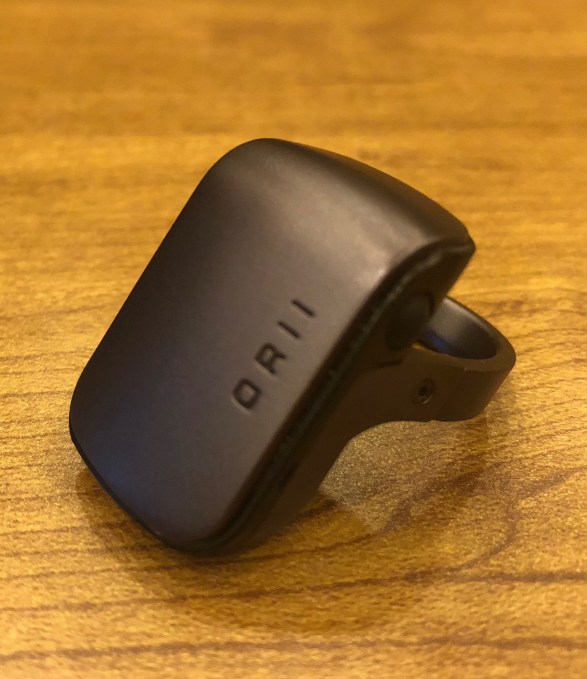
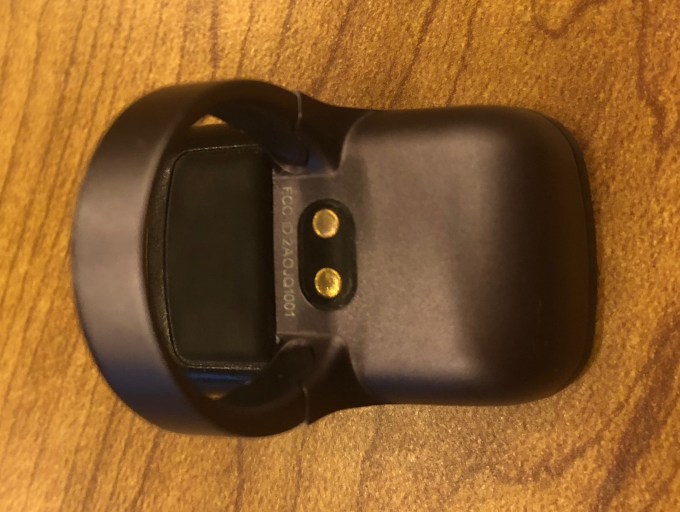
Origami Labs’ device is the Orii, a smart ring that works with an app on your phone, allowing you to physically touch your finger to your ear to either speak to or listen to your voice assistant.

This involves the use of bone conduction technology, which allows you to hear sounds through the vibration of bones in your face, bypassing the outer and middle ears to stimulate the inner ear directly.

That means you can use Orii to do things like listen to your text messages, send a WhatsApp message to a friend, take a phone call, get information like the time or weather, use reminders, or anything else that Siri or Google Assistant could do.

The ring alerts you with a vibration, then you listen (or speak to its microphone) by raising your finger to your ear.

The company presented its device on stage at TechCrunch Disrupt SF 2018 today, after winning a “wildcard” spot that allowed it to enter the Startup Battlefield competition.

The Hong Kong-based startup was founded by Marcus Leung-Shea and Kevin Wong in 2015.

Wong’s father is visually impaired, which makes using a smartphone more difficult.

“That’s where we got started – just to create a device that helps visually impaired people,” Marcus explains. “But through building the product and launching a Kickstarter, it became clear that this screen-free way of interacting with technology is something that actually a lot of people are looking for. It taps into this sense that we’re spending too much time looking at our devices,” he says.

With other Bluetooth devices, like AirPods, there’s a limit to how long they can be worn comfortably.

Plus, there’s the aesthetics to consider – not everyone wants to be seen wearing their AirPods all the time, out of a sense of style. AirPods and other Bluetooth devices in the ear are also often used as a signal others that you don’t want to be bothered.

Meanwhile, using the assistant through the speaker on the phone isn’t very private.

The startup ran crowdfunding campaigns last year to raise its initial seed round. On Kickstarter, the Orii had 4,000 backers – enough to prove there’s at least some consumer interest in this kind of product, the founders believe.

The first version of the Orii is shipping to its early backers who paid $99 to $150 for the device. It’s a bit large, in comparison to even costume rings, but that’s a solvable problem at scale. A second version of the device, shipping in Q2 2019, will be about 25 percent to 30 percent smaller, Marcus says. This one will come in different colors and enable new features. The company is also working on Alexa integration.

Orii has generated some interest from businesses and consumers. Specifically, luxury hotels and retailers want to test the product as a team communication system because they don’t want their staff looking at screens, which could come across as rude.

Mobile operators in Hong Kong, where the 14-person team is based, are also interested in selling Orii as a bundle with their phones. But all these discussions are in the early stages, Marcus notes.

Origami Labs is backed by its crowdfunding and seed investment from the Alibaba Entrepreneurs Seed Fund.

from Startups – TechCrunch https://ift.tt/2MPOEQh

#USA Secretive semiconductor startup Groq raises $52M from Social Capital

//

Groq has raised $52.3 million of a $60 million round, per an SEC filing. Social Capital co-founder and former Facebook executive Chamath Palihapitiya, who’s listed on the filing, has participated in the funding.

Presumably, Palihapitiya’s investment came from Social Capital; the firm, which has been experiencing a boatload of personnel changes as of late, led Groq’s $10 million investment in April 2017.

Groq is developing a tensor processing unit — which is an integrated circuit developed for machine learning specifically. There’s not much other info out there; the company doesn’t have much of a website or any promotional materials available for public viewing.

In addition to Palihapitiya, two other names are listed on the most recent filing. That’s the company’s CTO Jonathan Ross, who spent about five years as a hardware engineer at Google and co-founded the search giant’s Tensor Processing Unit (TPU), which is responsible for its custom ML chip.

The other name is Douglas Wightman, a former software engineer at Google. His LinkedIn profile says he’s Groq’s CEO.

Palihapitiya has spoken publicly about the project before, telling CNBC last year that he was “really excited about Groq.”

“It’s too early to talk specifics, but we think what they’re building could become a fundamental building block for the next generation of computing,” he said.

The company has reportedly poached several people from Google’s TPU team.

from Startups – TechCrunch https://ift.tt/2wNbT3A

#USA Nutrigene wants to personalize your vitamins using your genetic code

//

Vitamins are proving to be a lucrative industry in the United States. Just last year vitamin sales pulled in roughly $37 billion for the U.S. economy. That’s up from $28 billion in 2010. To cash in on this growing market, several startups have popped up in the last few years — including Nutrigene, a startup combining the vitamin business with another lucrative avenue of revenue in consumer DNA analysis.

Nutrigene believes your genes may hold the secret to what you might be missing in your diet. The company will send you tailor-made liquid vitamin supplements based on a lifestyle quiz and your DNA. You get your analysis by filling out an assessment on the startup’s website, choosing a recommended package such as “essentials,” “improve performance” or “optimize gut health.” After that you can also choose to upload your DNA profile from 23andMe, then Nutrigene will send you liquid supplements built just for you.

Founder Min FitzGerald launched the startup out of Singularity and later accepted a Google fellowship for the idea. Nutrigene then went on to Y Combinator’s winter 2018 class. FitzGerald’s co-founder and CTO Van Duesterberg comes from a biotech and epigenetics background and holds a PhD from Stanford.

PhDs and impressive resumes aside, the vitamin and genetics industries are not without controversy. For every study showing that those who eat a balanced diet don’t benefit from supplements, there are just as many highlighting the benefits of taking your vitamins. Also, coupling vitamin therapy with your DNA seems at a glance dubious. However, Dawn Barry, former VP at Illumina and now president of Luna DNA, a biotech company powered by the blockchain, says it could have some scientific underpinnings. But, she cautioned, nutrigenetics is still an early science.

Amir Trabelsi, founder of genetic analysis platform Genoox, agrees. We interviewed both Trabelsi and Barry previously when Nutrigene first came on our radar. Trabelsi pointed out these types of companies don’t need to provide any proof.

“That doesn’t mean it’s completely wrong,” he told TechCrunch. “But we don’t know enough to say this person should use Vitamin A, for example… There needs to be more trials and observation.”

Nutrigene acknowledges the best supplementation for performance goes beyond just a genetic profile. Our lifestyles, where we live, what we do and what we put in our bodies (or don’t) all can contribute to a deficiency. For better nutritional accuracy, Nutrigene will send you a blood test kit in the mail to test for things like Vitamin D deficiency (a common deficiency in Silicon Valley, according to my doctor). You also can choose to go to a blood testing center to find out what sort of nutritional supplements you’ll need for optimal performance.

One other twist — Nutrigene’s vitamins come in liquid form for what FitzGerald says is the optimum delivery method.

I tried out the program for myself earlier this year, though not for more than a few days as I was pregnant at the time and wanted to stick with the prenatal vitamins I’d been taking. Nothing I saw on the packaging from Nutrigene was dangerous for pregnant women, just run-of-the-mill stuff like vitamin B12, which my genetic analysis said I was prone to be deficient in. But I had already been taking some pretty good prenatal vitamins from New Chapter and a DHA supplement from Nordic Naturals for a year leading up to getting pregnant. I had a very healthy, nearly 9.5 pound baby boy in March. My own doctor, who tested my nutritional levels at the beginning of my pregnancy through a blood sample, did not tell me I had any deficiencies.

That’s not to say it wouldn’t be great for someone else looking for optimal nutrition and wanting a boost through supplementation. It’s also a great industry to get into if you know how to market your products. Though crowded, there’s plenty of room to grow and billions of dollars in the vitamin industry for those who can make their products stand out. DNA analysis and liquid supplementation might just be the thing.

FitzGerald tells TechCrunch that Nutrigene has already shipped 8,500 personalized dosages to customers since launching earlier this year.

For those interested in trying out Nutrigene, you can do so by ordering on the website. Package pricing varies and depends on nutritional needs, but starts at around $85 per month.

from Startups – TechCrunch https://ift.tt/2ClZskm

#USA Elevian is developing medicine to prevent age-related diseases

//

Age is the No. 1 risk factor behind most diseases in the developed world, according to numerous studies. That’s why Elevian, led by a team of Harvard researchers, is working to develop medicine that treats aging by restoring the body’s regenerative capacities.

Elevian intends to do this using growth differentiation factor 11 (GDF11), which the team first identified in 2014, the company announced today at TechCrunch Disrupt San Francisco.

In tests, Elevian has found that giving recombinant GDF11 to older animals stimulates stem cells to repair the tissue damaged by aging and degeneration. The animals in those studies showed a reduction in age-related cardiac hypertrophy, youthful skeletal muscle repair, improved brain function and metabolism, reversal of renal and pulmonary disease and tumor suppression. Moving forward, the plan is to develop medicine that regulates GDF11 and other circulating factors.

“We specifically are trying to eliminate the diseases that come with aging,” Elevian co-founder and CEO, Dr. Mark Allen told TechCrunch. “You could say that an unintended consequence will be that we live longer in a healthier state. We don’t know how much longer. Our goal is not to live longer. Unfortunately a lot of Western medicine is helping us to live longer in a more diseased state. If the focus is on heart disease, people will live longer but increase risk of Alzheimer’s.”

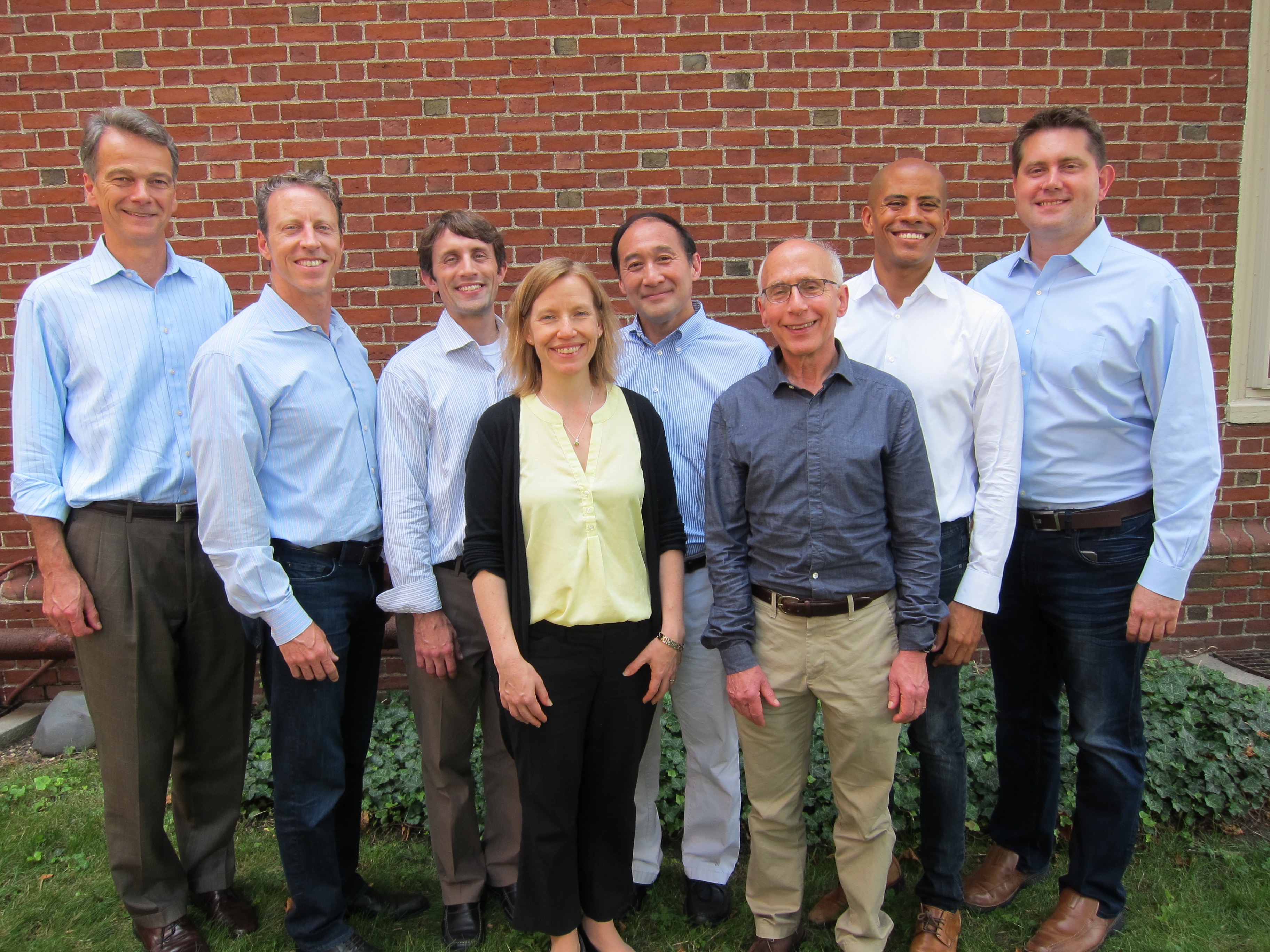
Elevian’s founding team

Elevian’s goal is to treat and prevent many age-related diseases, and ultimately eliminate the suffering that comes with those diseases. But in order to do that, it’s going to take a really long time — at least 10 years, to be exact. That’s because Elevian will need separate trials for Alzheimer’s, cardiovascular diseases and others.

“It’s very likely that heart disease is going to be first,” Allen said. “We think that’ll be our first [FDA] approval. Then we’ll seek additional approval for the same drug to be able to market it. Once we’re approved for one indication, physicians can practice off-label uses, but we are not allowed to market it for use for anything else.”

Elevian plans to start a human clinical trial in two years. So “if everything goes according to plan, it will take eight more years” for it to get to market.

“It’s really a result of the regulatory approval process in the United States and several other countries that have very stringent requirements around safety and efficacy tests,” he said.

The first generation of therapy will be expensive, Allen said, but the goal is to eventually get the cost down.

“We have defined as one of our company’s core values to continue to work on next-generation therapies that make this accessible to people regardless of cost,” he said. “The first generation therapy we’re working on is simply replacing natural protein that declines as we age. Natural protein, number one, is expensive to manufacture and it has to be dosed pretty frequently — once daily.”

But Elevian is already working on its second generation that, instead of needing to be injected once a day, will only need to be injected once a month. Elevian is also exploring making pills.

To date, Elevian has raised $5.5 million in funding. Check out the company’s pitch below.

from Startups – TechCrunch https://ift.tt/2NdHbKz

#USA Forethought looks to reshape enterprise search with AI

//

Forethought, a 2018 TechCrunch Disrupt Battlefield participant, has a modern vision for enterprise search that uses AI to surface the content that matters most in the context of work. Its first use case involves customer service, but it has a broader ambition to work across the enterprise.

The startup takes a bit of an unusual approach to search. Instead of a keyword-driven experience we are used to with Google, Forethought uses an information retrieval model driven by artificial intelligence underpinnings that they then embed directly into the workflow, company co-founder and CEO Deon Nicholas told TechCrunch. They have dubbed their answer engine ‘Agatha.’

Much like any search product, it begins by indexing relevant content. Nicholas says they built the search engine to be able to index millions of documents at scale very quickly. It then uses natural language processing (NLP) and natural language understanding (NLU) to read the documents as a human would.

“We don’t work on keywords. You can ask questions without keywords and using synonyms to help understand what you actually mean, we can actually pull out the correct answer [from the content] and deliver it to you,” he said.

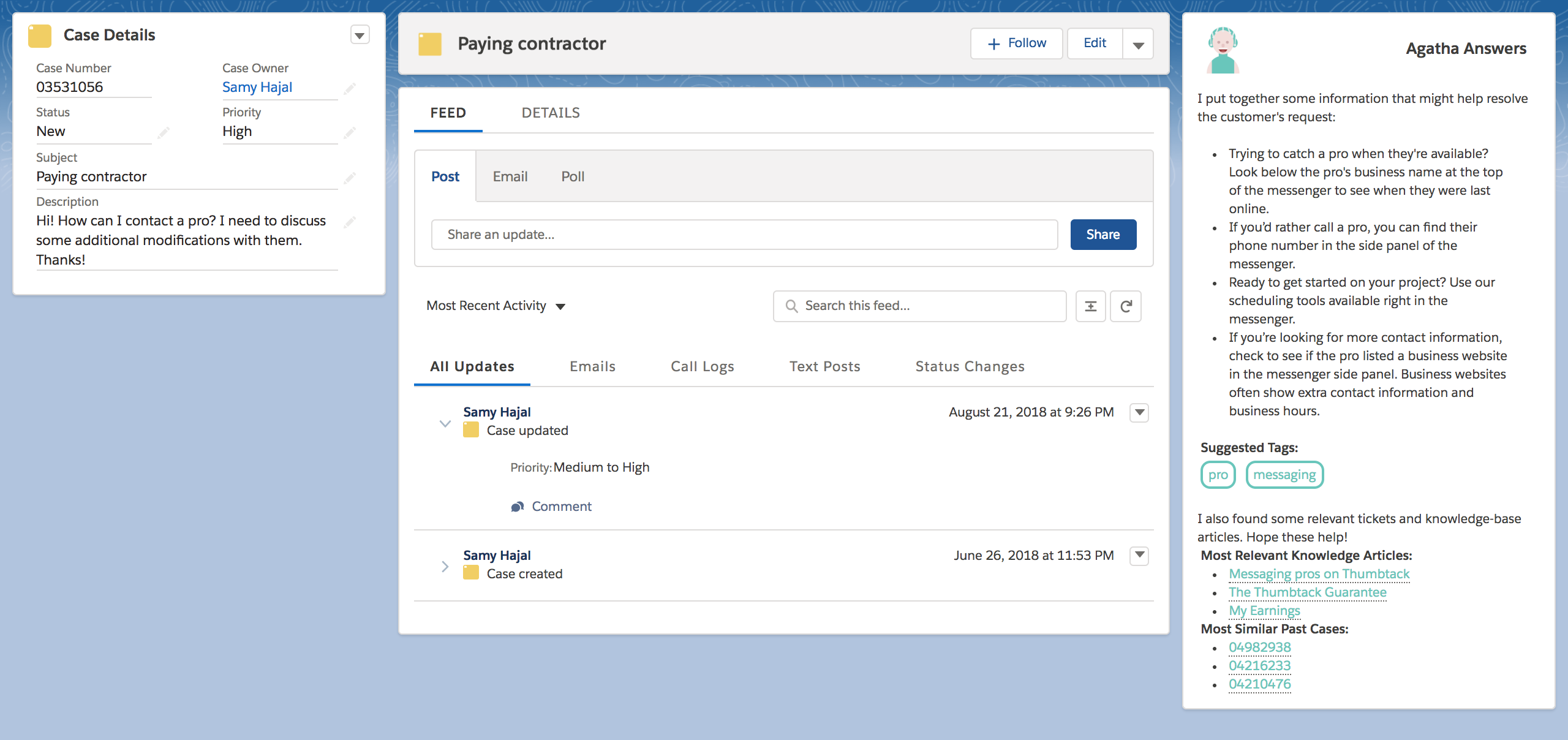
One of first use cases where they are seeing traction in is customer support. “Our AI, Agatha for Support, integrates into a company’s help desk software, either Zendesk, Salesforce Service Cloud, and then we [read] tickets and suggest answers and relevant knowledge base articles to help close tickets more efficiently,” Nicholas explained. He claims their approach has increased agent efficiency by 20-30 percent.

Forethought at work in Salesforce Service Cloud. Screenshot: Forethought

The plan is to eventually expand beyond the initial customer service use case into other areas of the enterprise and follow a similar path of indexing documents and embedding the solution into the tools that people are using to do their jobs.

When they reach Beta or general release, they will operate as a cloud service where customers sign up, enter their Zendesk or Salesforce credentials (or whatever other products happen to be supported at that point) and the product begins indexing the content.

Forethought in Zendesk. Screenshot: Forethought

The founding team, all in their mid-20s, have had a passion for artificial intelligence since high school. In fact, Nicholas built an AI program to read his notes and quiz him on history while still in high school. Later at the University of Waterloo he published a paper on machine learning and had internships at Palantir, Facebook and Dropbox. His first job out of school was at Pure Storage. All these positions had a common thread of working with data and AI.

The company launched last year and they debuted Agatha in private Beta 4 months ago. They currently have six companies participating, the first of which has been converted to a paying customer.

They have closed a pre-seed round of funding too, and although they weren’t prepared to share the amount, the investment was led by K9 Ventures. While Village Global, Original Capital and other unnamed investors also participated.

from Startups – TechCrunch https://ift.tt/2wNTC6m

#USA Myki raises $4M Series A to decentralize identity management for enterprises

//

Myki, a startup based between Beirut and New York which offers both a consumer and enterprise identity management solution to store sensitive information offline, today announced at TechCrunch Disrupt in San Francisco that it’s raised a $4 million Series A to scale its operations.

The round was led by Dubai-based VC BECO Capital with participation from Beirut-based LEAP Ventures and B&Y Venture Partners, all of which are returning investors. Myki plans to expand its U.S. operations with its “decentralised Identity Management” solution for enterprise.

Priscilla Elora Sharuk, who co-founded the startup with Antoine Vincent Jabberer in 2015, said: “Online security and data privacy is not a privilege, it is a right, and that is why at Myki we empower our users with the tools to securely manage their digital identity.”

Myki actually launched on the TechCrunch Disrupt Battlefield stage in September of 2016, and has since gone on to win several plaudits from tech industry outlets for its free and powerful password management, and amassing more than 250,000 users worldwide.

Back in May, on the TechCrunch Disrupt Berlin stage, Myki announced a partnership with self-sovereign identity application Blockpass to combine self-sovereign identity and offline password security.

Myki is going after the consumer password space, with biometric authentication such as touch ID and Face ID; the enterprise with “Myki for Teams”; and a solution for Managed Service Providers.

from Startups – TechCrunch https://ift.tt/2wKRhco

#USA N26 launches N26 Black for freelancers

//

Challenger bank N26 is launching a premium plan for professional accounts. N26 already had a free plan for freelancers and self-employed called N26 Business. N26 Business Black introduces the same perks as N26 Black, but for freelancers and self-employed.

The new plan costs the same for regular users and business users. The company recently raised the price of N26 Black, so you’ll now have to pay €9.99 per month for N26 Black or N26 Business Black.

In addition to regular N26 features, N26 Business Black lets you withdraw money anywhere in the world without any conversion fee. You also get the Allianz insurance package, which includes travel insurance, mobile phone and ATM theft protection as well as extended warranty on things you buy.

In order to sweeten the deal, N26 is offering three months of Zervant for customers based in Austria, Germany and France, and three months of Debitoor for everyone. Those are invoicing and accounting platforms for freelancers and small companies.

from Startups – TechCrunch https://ift.tt/2M2oyUX

#USA McCarthyFinch AI services platform automates tedious legal tasks

//

McCarthyFinch sounds a bit like a law firm — and with good reason. The startup has developed an AI as a Service platform aimed at the legal profession. This week, it’s competing in the 2018 TechCrunch Disrupt Battlefield in San Francisco.

The company began life as a project at a leading New Zealand law firm, MinterEllisonRuddWatts. They wanted to look at how they could take advantage of AI to automate legal processes to make them more efficient, cost-effective and faster, according to company president Richard DeFrancisco.

“They were working on leveraging technology to become the law firm of the future, and they realized there were some pretty tremendous gaps,” he explained. They found a bunch of Ph.Ds working on artificial intelligence who worked with more than 30 lawyers over time to address those gaps by leveraging AI technology.


That internal project was spun out as a startup last year, emerging as an AI platform with 18 services. MinterEllison, along with New Zealand VC Goat Ventures, gave the fledgling company US$2.5 million in pre-seed money to get started.

The company looked at automating a lot of labor-intensive tasks related to legal document review and discovery such as document tagging. “Lawyers spend a lot of time tagging things with regards to what’s relevant and not relevant, and it’s not a good use of their time. We can go through millions of documents very quickly,” DeFrancisco said. He claims they can lower the time it takes to tag a set of documents in a lawsuit from weeks to minutes.

He says that one of their key differentiators is their use of natural language processing (NLP), which he says allows the company to understand language and nuance to interpret documents with a high level of accuracy, even when there are small data sets. Instead of requiring thousands of documents to train their models, which he says law firms don’t have time to do, they can begin to understand the gist of a case in as little as two or three documents with 90 percent accuracy, based on their tests.

They don’t actually want to sell their platform directly to law firms. Instead, they hope to market their artificial intelligence skills as a service to other software vendors with a legal bent who are looking to get smarter without building their own AI from scratch.

“What we are doing is going to technology service providers and talking to them about using our solution. We have restful APIs to integrate into their technology and do a Powered By-model,” DeFrancisco explained.

The startup currently has 10 trials going on. While he couldn’t name them, he did say that they include the largest law firm in Europe, largest global provider of legal information and the fastest growing SaaS company in history. They are also working on agreements with large systems integrators including Deloitte and Accenture to act as resellers of their solution.

While they are based in New Zealand, they plan to open a U.S. office in the Los Angeles area shortly after Disrupt. The engineering team will remain in New Zealand, and DeFrancisco will build the rest of the company in the U.S as it seeks to expand its reach. They also plan to start raising their next round of funding.

from Startups – TechCrunch https://ift.tt/2M3CApm