#USA Phiar raises $3 million for an AR navigation app for drivers

//

Augmented reality is a very buzzy space, but the fundamental technologies underpinning it are pushing boundaries across a lot of other verticals. Machine learning, object recognition and visual mapping tech are the pillars of plenty of new ventures, enabling there to be companies that thrive in the overlap.

Phiar (pronounced fire) is building an augmented reality navigation app for drivers, but the same tech it’s built to help drivers easily pinpoint where they need to make their next turn also helps them build up rich mapping data that can give partners like autonomous car startups the high-quality data they so deeply need.

The SF-based company has just closed a $3 million seed deal led by Norwest Venture Partners and The Venture Reality Fund. Other investors include Anorak Ventures, Mayfield Fund, Zeno Ventures, Cross Culture Ventures, GFR Fund, Y Combinator, Innolinks Ventures and Half Court Ventures.

While phone and headset-based AR have received a lot of the broader media attention, the automotive industry is a central focus for a lot of augmented reality startups attracted by the proposition of a mobile environment that can showcase and integrate bulky tech. There certainly have been quite a few heads-up display startups looking to take advantage of a car’s windshield real estate, and prior to joining Y Combinator, Phiar was actually looking to build some of this hardware themselves before deciding on a more software-focused route for the company.

Unlike a lot of phone AR apps built on top of Apple or Google’s developer platforms, Phiar’s use case doesn’t quite work with the limitations of these systems, which understandably weren’t built with the idea a user would be moving at 60 miles per hour. As a result, the company has had to build tech to greater understand the geometry of a quickly updating world through a single camera while ensuring that it’s not just some ugly directional overlay, using techniques like real-time occlusion to ensure that the digital and physical worlds interact nicely.

While the startup’s big consumer-facing play is the free AR mobile app, Phiar is really just an augmented reality company on the surface; its real sell is what it can do with the data and insights gathered from an always-on dash camera. The same object recognition tech that will allow the app to seamlessly toss AR animations onto the scene in front of you is also analyzing that environment and uploading metadata to build up its mapping insights.

In addition, the app saves up to 30 minutes of footage from each ride, offering users the utility of a free dash cam in case they get in an accident and need video for an insurance claim, while providing some rich anonymized data for the company to build up high-quality mapping data it can sell to partners.

This kind of data is incredibly useful to companies building autonomous car tech, ridesharing companies and a lot of entities that are interested in access to quickly updating map data. The challenge for Phiar will be building up enough users so their map data is as rich as their partners will demand.

CEO Chen-Ping Yu says that the startup is in talks with partners in the automotive space to integrate their tech and is also working to bring what they’ve built to companies in the ridesharing space. Yu says the company plans to release their consumer app in mid-2019.

from Startups – TechCrunch https://ift.tt/2Rm3OLl
#USA LearnLux raises $2M from Sound Ventures, Marc Benioff to help employees make financial decisions

//

Earlier this year, Rebecca Liebman impressed a panel of high-profile investors, including Ashton Kutcher and Salesforce chief executive Marc Benioff, at a SXSW pitch competition. She won and Benioff wrote her a check for $200,000 on the spot.

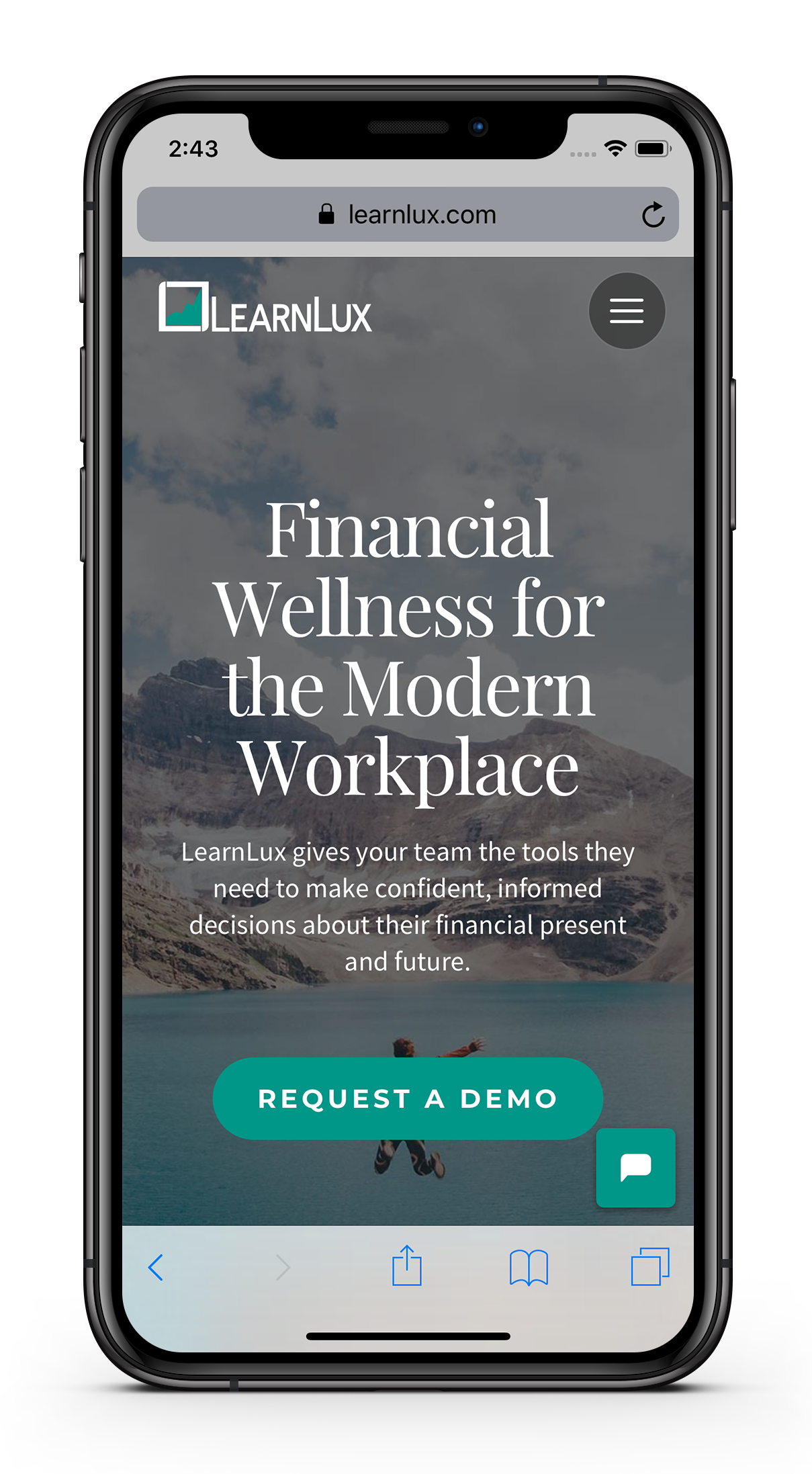
Today, she’s announcing that her educational fintech startup LearnLux has closed a $2 million seed round from Kutcher’s investment firm Sound Ventures, Benioff, Underscore VC and former Wealthfront CEO Adam Nash. LearnLux operates under a SaaS model, partnering with businesses to offer access to its digital financial wellness product, which helps employees make important financial decisions.

The Boston-based startup was founded by Liebman, 25, and her brother, Michael Liebman, 22, in 2015.

“He was coding from his dorm room when we were first building the product,” Rebecca said. “We’ve had a really interesting experience from a young age. I was working at a lab at MIT with brilliant Ph.D. students and no one could figure out how to open a retirement account. Michael was working at a bank with people who studied finance who still couldn’t figure out how to open a retirement account.”

LearnLux provides interactive learning tools and educational content created in-house to guide workers through their 401k, health savings accounts or stock options, for example. Rebecca says they’ve signed on 10 customers since launching in September.

“There are all these financial decisions you have to make and we allow you to have an interactive experience online where you can playout what those decisions will look like,” she said.

“Finance has been made to confuse people. We had to figure out how to break it down and explain it in a way that makes sense … Whatever kind of learner you are, you will understand more about your financial decisions with [LearnLux.]”

from Startups – TechCrunch https://ift.tt/2PWt0LQ

#USA Australian scheduling software company Deputy brings in $81M amid rapid growth

//

After eight years of bootstrapping, Deputy sought scale. So the workforce management platform turned to venture capital, quickly raising a $25 million Series A in early 2017. Today, Deputy is announcing a major accomplishment: the close of an $81 million round — the largest Series B in Australian history.

IVP has led the investment for the Sydney and Atlanta-headquartered company, with support from OpenView Venture Partners, Square Peg Capital and Equity Venture Partners. Deputy plans to invest the funds in engineering and product, building out those teams in both HQs.

Co-founder and chief executive officer Ashik Ahmed declined to disclose the valuation.

Deputy’s employee management tool makes scheduling, timesheets, tasks and workplace communication easier for hourly and shift workers. Ahmed tells TechCrunch the 10-year-old company has 90,000 customers in 80 countries, including Amazon, Google, McDonald’s, Compass and Uber. It’s scheduled some 200 million shifts, or 1.2 billion hours of work, and facilitated over $30 billion in payroll payments.

Right now, the company grows every month as much as we did in [the first] six years,” Ahmed said. “Our growth … has really skyrocketed.”

Ahmed credits that growth to support from VCs.

“It’s not about the money but more about the expertise that we have been able to bring in,” he said. “OpenView, for example, has been really, really instrumental for the next stage of our journey.”

Deputy co-founder and CEO Ashik Ahmed.

Around the globe, most workers earn money on an hourly basis. In the U.S., according to the Bureau of Labor Statistics’ data from 2015, roughly 80 million workers were hourly or about 60 percent of all wage and salary workers in the country.

“The world of work is changing,” he said. “We are becoming more about instant gratification, we want what we want when we want it, and work is no different.”

“If businesses of today do not recognize the change that is happening, if they don’t adapt to it, they will become irrelevant tomorrow. Our goal is to help our customers adapt to this change by offering more flexibility in how they engage their workers. Our vision is to help these businesses thrive in the future world.”

from Startups – TechCrunch https://ift.tt/2BBkGIz

#USA Second Home closing in on new £20M funding round to bring its ‘creative workspace’ to more locations

//

Second Home, the “creative workspace” company co-founded by Rohan Silva, a policy advisor for then British Prime Minister David Cameron, is closing in on a new funding round, TechCrunch has learned.

According to sources, the London startup has secured £20 million in investment from Boston-based investor Gerald Chan, who owns Hang Lung Group with his brother Ronnie Chan. Both were also the first investors in Xiaomi, and Gerald Chan recently gave the biggest ever philanthropic gift to Harvard University, totalling a hefty $350m million.

Second Home’s existing investors include: Yuri Milner, Index Ventures, Atomico, Talis Capital, Tencent founder Martin Lau, and former Goldman Sachs chief economist Jim O’Neill.

I understand that the injection of capital will be used to expand to L.A. in the U.S., and possibly another 5 locations, as Second Home continues to scale up its operations and the number of physical locations it has under management. The funding could be announced as soon as next week.

Second Home’s original East London site opened in November 2014. The company opened Second Home Lisbon in 2016, and added another London space in Holland Park this year. A third London Second Home in Clerkenwell Green will open its doors next month.

I’m told that all three are fully occupied, and Silva has previously said that 97 percent of new customers come via referrals and other “organic channels”.

Meanwhile, the companies, charities and teams based at Second Home across various sites include energy upstart Bulb (which employs 280 people located at Spitalfields), Threads Styling, Help Refugees, Kickstarter, TaskRabbit, Vice Media, Spotify, Volkswagen, Taylor Wessing, Ermenegildo Zegna, and others.

Silva couldn’t be reached for comment at the time of publication. I’ll update this article if and when I hear back.

from Startups – TechCrunch https://ift.tt/2E0Hm7D

#USA 30 European startup CEOs call for better stock option policies

//

Thirty European tech CEOs of big startups signed a letter about stock options in Europe. Other tech CEOs can join the group and sign the letter before it is sent to policymakers on January 7.

As you can read in the letter below, these CEOs think Silicon Valley isn’t the only region suffering from talent crunch. It could be a “serious bottleneck to growth.”

“Over the next twelve months, Europe’s startups will need to hire more than 100,000 employees,” the letter says. “Without delay, we call on legislators to fix the patchy, inconsistent and often punitive rules that govern employee ownership—the practice of giving staff options to acquire a slice of the company they’re working for.”

Here’s the current list of signatories: Johannes Reck (GetYourGuide), Alice Zagury (The Family), Christian Reber (Pitch), Johannes Schildt (KRY / LIVI), Peter Mühlmann (Trustpilot), Ilkka Paanenen (Supercell), Taavet Hinrikus (TransferWise), Lucas Carne (Privalia), Jean-Charles Samuelian (Alan), Alex Saint (Secret Escapes), Dr. Tamaz Georgadze (Raisin), Patrick Collison (Stripe), Nikolay Storonsky (Revolut), Samir Desai (Funding Circle), Markus Villig (Taxify), Jean-Baptise Rudelle (Criteo), Nicolas Brusson (BlaBlaCar), Jacob de Geer (iZettle), David Okuniev (Typeform), José Neves (Farfetch), Felix Van de Maele (Collibra), Joris Van Der Gucht (Silverfin), Daniel Dines (UiPath), Rohan Silva (Second Home), Niklas Östberg (Delivery Hero), Dominik Richter (Hello Fresh), Dr. Raoul Scherwitzl (NaturalCycles), Alex Depledge (RESI), Juan de Antonio (Cabify).

Here’s the letter:

OPEN LETTER TO EUROPE’S POLICYMAKERS

Not Optional: Europe must attract more talent to startups

This following letter will be sent to Europe's policymakers on 7 January 2019.

Policymakers, entrepreneurs and investors must work together to bring more talent to Europe’s startups. Here’s why.

The European tech sector has never been stronger. From London to Lisbon, Paris to Prague, Europe is now nurturing some of the world’s most dynamic and creative companies. And not all are fledgling young startups: many are already substantial, high-growth enterprises set to succeed in the global market.

The days of living in Silicon Valley’s shadow are over. We no longer lack ambition and capital. Now, Europe is a shining powerhouse of bold, new business models that drive economic growth, generate jobs and improve people’s lives.

We’d all like to see this fair weather continue, but storm clouds are gathering on the horizon.

Europe could be the world’s most entrepreneurial continent but the limited availability of talent to nurture and fuel its blossoming start-up ecosystem is a serious bottleneck to growth. That’s why we, the founders and executives of Europe’s leading tech businesses, now urge policymakers to put talent at the top of their agenda.

Over the next twelve months, Europe’s startups will need to hire more than 100,000 employees. Add to that the number of employees that start-ups yet to be born will need to get their ideas off the ground. Reaching that goal will be hard, but hard things are what we do and we’re ready to rise to the challenge.

Without delay, we call on legislators to fix the patchy, inconsistent and often punitive rules that govern employee ownership—the practice of giving staff options to acquire a slice of the company they’re working for.

This isn’t just a perk on top of a salary: universally, stock options reward employees for taking the risk of joining a young, unproven business, and give them a real stake in their company’s future success. Stock options are one of the main levers that startups use to recruit the talent they need; these companies simply can’t afford to pay the higher wages of more established businesses.

But policies that currently govern employee ownership across Europe are often archaic and highly ineffective. Some are so punishing that they put our startups at a major disadvantage to their peers in Silicon Valley and elsewhere, with whom we’re competing for the best designers, developers, product managers, and more.

If we fail to take action, we could see a brain drain of Europe’s best and brightest, leading to fewer jobs created and slower growth. That’s why we need to create startup-friendly employee share ownership schemes, to help Europe’s tech sector—its greatest engine of growth, innovation and employment—to succeed and thrive in the global labour market.

If we don’t eliminate the talent bottleneck, we risk squandering the incredible momentum that European tech has built up in recent years. The next Google, Amazon or Netflix could well come from Europe, but for that to happen, reforming the rules of employee ownership is definitely not optional.

According to Index Ventures, the company that is coordinating this effort, some countries already have startup-friendly policies while others lag behind:

The VC firm recommends overhauling policies in some countries and harmonizing policies across Europe. New rules should follow those six principles:

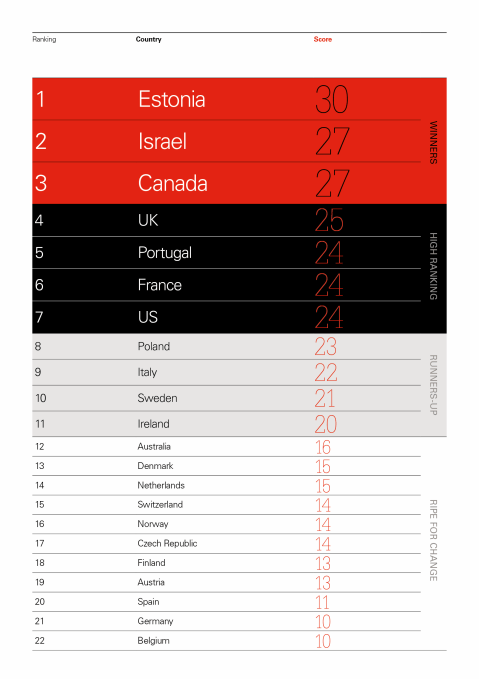
  1. Create a stock option scheme that is open to as many startups and employees as possible, offering favourable treatment in terms of regulation and taxation. Design a scheme based on existing models in the UK, Estonia or France to avoid further fragmentation and complexity.
  2. Allow startups to issue stock options with non-voting rights, to avoid the burden of having to consult large numbers of minority shareholders.
  3. Defer employee taxation to the point of sale of shares, when employees receive cash benefit for the first time.
  4. Allow startups to issue stock options based on an accepted ‘fair market valuation’, which removes tax uncertainty.
  5. Apply capital gains (or better) tax rates to employee share sales.
  6. Reduce or remove corporate taxes associated with the use of stock options.

from Startups – TechCrunch https://ift.tt/2SeODDR

#USA 30 European startup CEOs call for better stock option policies

//

Thirty European tech CEOs of big startups signed a letter about stock options in Europe. Other tech CEOs can join the group and sign the letter before it is sent to policymakers on January 7.

As you can read in the letter below, these CEOs think Silicon Valley isn’t the only region suffering from talent crunch. It could be a “serious bottleneck to growth.”

“Over the next twelve months, Europe’s startups will need to hire more than 100,000 employees,” the letter says. “Without delay, we call on legislators to fix the patchy, inconsistent and often punitive rules that govern employee ownership—the practice of giving staff options to acquire a slice of the company they’re working for.”

Here’s the current list of signatories: Johannes Reck (GetYourGuide), Alice Zagury (The Family), Christian Reber (Pitch), Johannes Schildt (KRY / LIVI), Peter Mühlmann (Trustpilot), Ilkka Paanenen (Supercell), Taavet Hinrikus (TransferWise), Lucas Carne (Privalia), Jean-Charles Samuelian (Alan), Alex Saint (Secret Escapes), Dr. Tamaz Georgadze (Raisin), Patrick Collison (Stripe), Nikolay Storonsky (Revolut), Samir Desai (Funding Circle), Markus Villig (Taxify), Jean-Baptise Rudelle (Criteo), Nicolas Brusson (BlaBlaCar), Jacob de Geer (iZettle), David Okuniev (Typeform), José Neves (Farfetch), Felix Van de Maele (Collibra), Joris Van Der Gucht (Silverfin), Daniel Dines (UiPath), Rohan Silva (Second Home), Niklas Östberg (Delivery Hero), Dominik Richter (Hello Fresh), Dr. Raoul Scherwitzl (NaturalCycles), Alex Depledge (RESI), Juan de Antonio (Cabify).

Here’s the letter:

OPEN LETTER TO EUROPE’S POLICYMAKERS

Not Optional: Europe must attract more talent to startups

This following letter will be sent to Europe's policymakers on 7 January 2019.

Policymakers, entrepreneurs and investors must work together to bring more talent to Europe’s startups. Here’s why.

The European tech sector has never been stronger. From London to Lisbon, Paris to Prague, Europe is now nurturing some of the world’s most dynamic and creative companies. And not all are fledgling young startups: many are already substantial, high-growth enterprises set to succeed in the global market.

The days of living in Silicon Valley’s shadow are over. We no longer lack ambition and capital. Now, Europe is a shining powerhouse of bold, new business models that drive economic growth, generate jobs and improve people’s lives.

We’d all like to see this fair weather continue, but storm clouds are gathering on the horizon.

Europe could be the world’s most entrepreneurial continent but the limited availability of talent to nurture and fuel its blossoming start-up ecosystem is a serious bottleneck to growth. That’s why we, the founders and executives of Europe’s leading tech businesses, now urge policymakers to put talent at the top of their agenda.

Over the next twelve months, Europe’s startups will need to hire more than 100,000 employees. Add to that the number of employees that start-ups yet to be born will need to get their ideas off the ground. Reaching that goal will be hard, but hard things are what we do and we’re ready to rise to the challenge.

Without delay, we call on legislators to fix the patchy, inconsistent and often punitive rules that govern employee ownership—the practice of giving staff options to acquire a slice of the company they’re working for.

This isn’t just a perk on top of a salary: universally, stock options reward employees for taking the risk of joining a young, unproven business, and give them a real stake in their company’s future success. Stock options are one of the main levers that startups use to recruit the talent they need; these companies simply can’t afford to pay the higher wages of more established businesses.

But policies that currently govern employee ownership across Europe are often archaic and highly ineffective. Some are so punishing that they put our startups at a major disadvantage to their peers in Silicon Valley and elsewhere, with whom we’re competing for the best designers, developers, product managers, and more.

If we fail to take action, we could see a brain drain of Europe’s best and brightest, leading to fewer jobs created and slower growth. That’s why we need to create startup-friendly employee share ownership schemes, to help Europe’s tech sector—its greatest engine of growth, innovation and employment—to succeed and thrive in the global labour market.

If we don’t eliminate the talent bottleneck, we risk squandering the incredible momentum that European tech has built up in recent years. The next Google, Amazon or Netflix could well come from Europe, but for that to happen, reforming the rules of employee ownership is definitely not optional.

According to Index Ventures, the company that is coordinating this effort, some countries already have startup-friendly policies while others lag behind:

The VC firm recommends overhauling policies in some countries and harmonizing policies across Europe. New rules should follow those six principles:

  1. Create a stock option scheme that is open to as many startups and employees as possible, offering favourable treatment in terms of regulation and taxation. Design a scheme based on existing models in the UK, Estonia or France to avoid further fragmentation and complexity.
  2. Allow startups to issue stock options with non-voting rights, to avoid the burden of having to consult large numbers of minority shareholders.
  3. Defer employee taxation to the point of sale of shares, when employees receive cash benefit for the first time.
  4. Allow startups to issue stock options based on an accepted ‘fair market valuation’, which removes tax uncertainty.
  5. Apply capital gains (or better) tax rates to employee share sales.
  6. Reduce or remove corporate taxes associated with the use of stock options.

from Startups – TechCrunch https://ift.tt/2SeODDR

#USA Social music app Playlist lets you listen to music with others in real time

//

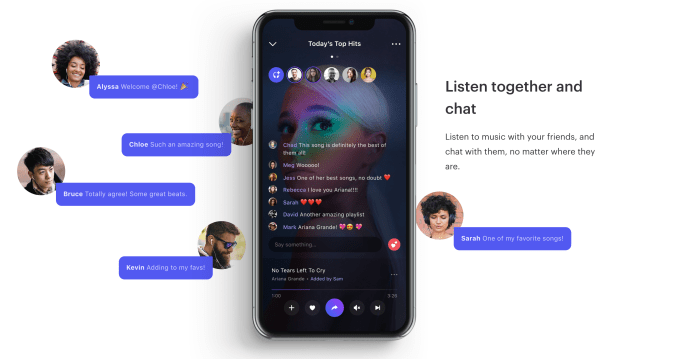
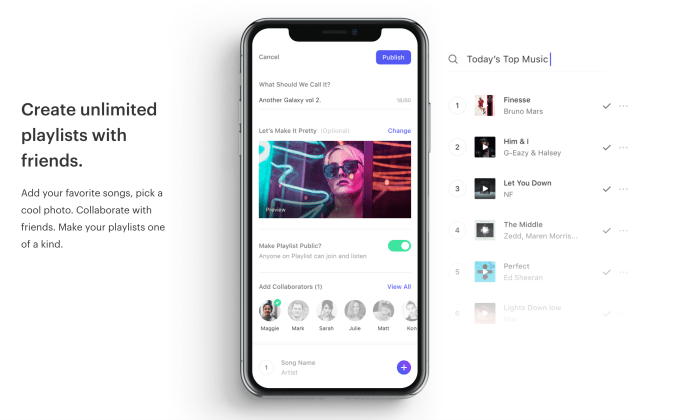
A new app called Playlist aims to make music a more social experience than what’s offered today by the major music platforms like Apple Music, Pandora or Spotify, for example. In Playlist, you can find others who share your musical tastes and join group chats where you listen to playlists together in real time. You can collaborate on playlists, too.

The app, backed by investment from Stanford’s StartX fund, was founded by Karen Katz and Steve Petersen, both Stanford engineers and serial entrepreneurs. Katz previously co-founded AdSpace Networks and another social music platform, Jam Music. She also was a founding executive team member at Photobucket, and founded a company called Project Playlist, which was like a Google search for music back in the Myspace era.

Peterson, meanwhile, has 35 patents and more than a decade of experience in digital music. In the early 2000s he created the software architecture and ran the team at PortalPlayer Inc., which powered the iPod’s music player and was later sold to Nvidia for $357 million. Afterwards, he was CTO at Concert Technology, a technology incubator and intellectual property company with a focus on mobile, social and digital music services.

“The world has gone social, but music has been largely left behind. That’s a real gap,” explains Katz, as to why the founders wanted to build Playlist in the first place.

“Ever since we started listening to music from our mobile phones, it’s become an isolated experience. And music is the number one thing we do on our phones,” she says.

The idea they came up with was to unite music and messaging by synchronizing streams, so people could listen to songs together at the same time and chat while they do so.

During last year’s beta testing period, Playlist (which was listed under a different name on the App Store), saw a huge number of engagements as a result of its real-time nature.

“Out of the gate, we saw 10 times the engagement of Pandora. People have, on average, 60 interactions per hour — like chats, likes, follows, joins, adds and creates,” Katz says. 

Under the hood, the app uses a lot of technology beyond just its synchronized streaming. It also leverages machine learning for its social recommendations, as well as collaborative playlists, large-scale group chat, and behavior-based music programming, and has “Music Match” algorithms to help you find people who listen to the same sort of things you do.

The social aspects of the app involves a following/follower model, and presents playlists from the people you follow in your home feed, much like a music-focused version of Instagram. A separate Discover section lets you find more people to follow or join in other popular listening and chat sessions.

At launch, the app has a catalog of more than 45 million songs and has a music license for the U.S. It plans to monetize through advertising.

The core idea here — real-time music listening and chat — is interesting. It’s like a Turntable.fm for the Instagram age. But the app sometimes overcomplicates things, it seems. For example, importing a playlist from another music app involves switching over to that app, finding the playlist and copying its sharing URL, then switching back to Playlist to paste it in a pop-up box. It then offers a way for you to add your own custom photo to the playlist, which feels a little unnecessary as the default is album art.

Another odd choice is that it’s difficult to figure out how to leave a group chat once you’ve joined. You can mute the playlist that’s streaming or you can minimize the player, but the option to “leave” is tucked away under another menu, making it harder to find.

The player interface also offers a heart, a plus (+), a share button, a mute button and a skip button all on the bottom row. It’s… well… it’s a lot.

But Katz says that the design choices they’ve made here are based on extensive user testing and feedback. Plus, the app’s younger users — often high schoolers, and not much older than 21 — are the ones demanding all the buttons and options.

It’s hard to argue with the results. The beta app acquired more than 500,000 users during last year’s test period, and those users are being switched over to the now publicly available Playlist app, which has some 80K installs as of last week, according to Sensor Tower data.

The company also plans to leverage the assets it acquired from the old Project Playlist, which includes some 30 million emails, 21 million Facebook IDs and 14 million Twitter IDs. A “Throwback Thursday” marketing campaign will reach out to those users to offer them a way to listen to their old playlists.

The startup has raised $5 million in funding (convertible notes) from Stanford StartX Fund, Garage Technology Ventures, Miramar Ventures, IT-Farm, Dixon Doll (DCM founder), Stanford Farmers & Angels, Zapis Capital and Amino Capital.

The Palo Alto-based company is a team of six full-time.

Playlist is a free download for iOS. An Android version is in the works.

from Startups – TechCrunch https://ift.tt/2FIYBfp

#USA Quip raises another $40 million for dental care products and services

//

Quip, the dental care startup that got its start selling electric toothbrushes directly to consumers, has raised $40 million. The money comes in the form of equity and debt financing, with about half of the funding coming in an equity deal lead by Sherpa Capital and the other half in debt financing from Triplepoint Capital.

“I think the mix of debt and equity is a great thing for us,” Quip CEO Simon Enever told TechCrunch. “It’s more attractive than ever to get alternative types of financing.”

Alternative types of financing, for example, enable founders to potentially avoid terms that are not founder-friendly, as well as raise additional funds that they were unable to secure from traditional investors.

This comes a couple of months after Quip partnered with Target to sell its products, and about six months after Quip raised $10 million from Silicon Valley Bank and acquired Afora, a New York-based startup that offers an alternative to traditional dental insurance.

“It’s been another big year of growth in general for us,” Enever said. “We recently passed a big milestone — our one-millionth brusher.”

With the new funding in hand, Quip has a lot of product and services launches ahead of it, Enever said. He wouldn’t get into details, but Enever said now that the company has executed on phase one — electric toothbrushes and toothpaste — it’s time to expand into additional offerings.

“We’re excited to start offering members more products and services, and in the new year, you’ll see a few new physical products that expand daily at-home care,” he said.

Again, details are limited, but one could envision products like floss, teeth whiteners, mouthwash and chewing gum. Given Quip’s relationships with dental providers, Enever says customers have also asked for cheaper dental visits.

“For patients, we want to help them with everything — that full-service oral hygiene routine,” Enever said. “On the flip side, for providers, the attraction to Quip is we’ve built this large digital platform full of eager patients. We started Quip because people were not invested in their oral health, or were only visiting the dentist when a tooth was falling out or in pain.”

This week, Quip is launching a practice program for dental service providers to offer a low-cost way to offer Quip’s products to their patients. Quip also plans to use the funding to expand its headcount and grow its subscriber base.

from Startups – TechCrunch https://ift.tt/2E3s7Lc

#USA For a small fee, entrepreneurs can now manage their own fleet of Bird e-scooters

//

Bird announced today that it will sell its electric scooters to entrepreneurs and small business owners, who can then rent them out as part of a new service called Bird Platform.

The company will provide the independent operators with scooters, which they are given free rein to brand as they please, as well as access to the company’s marketplace of chargers and mechanics, in exchange for 20 percent of the cost of each ride. Bird says fleet managers, which may be independent entrepreneurs or local mom and pop bike rental shops, for example, can also collect and charge the scooters themselves.

There’s no minimum or a maximum number of scooters independent operators can purchase, though they have to keep in mind local regulations that, in certain cities, limit the number of scooters permitted on the streets. Bird says the company will initially begin rolling out Bird Platform in December, targeting markets where scooters are already actively used and where regulations are a bit more relaxed. Bird Platform will be irrelevant in San Francisco, for example, where the San Francisco Municipal Transportation Agency has put a cap on the number of e-scooters available and has refused to grant Bird a permit to operate at all.

The company hopes Bird Platform will be a helpful tool as it continues to work its way into new markets around the world.

Bird chief executive officer Travis VanderZanden said they’ve been quietly working on this product for a while and have 300 interested parties waiting to get started with the service.

“In the last year of operating, we kept getting these inbound requests from entrepreneurs that really wanted to take Bird to their cities,” VanderZanden told TechCrunch. “I think there’s been a lot of people passionate about the electric scooter movement and taking cars off the road. There are a lot of entrepreneurs who want to bring Bird to their city.”

Goat, a scooter startup located in Austin, similarly began renting its scooters to micro mobility enthusiasts in the Texas capital. Goat CEO Michael Schramm explained the launch in a company announcement at the time, according to Mashable: “The way we look at it is, why would someone want to be a charger and make $5 a scooter, when they can manage their own fleet and keep all the earnings doing the same task they’re already doing?”

Bird, valued at $2 billion, has raised $415 million in venture capital funding from Greycroft, Sequoia, Accel and others. Since launching about a year ago, it’s clocked in more than 10 million rides and expanded to some 100 cities.


from Startups – TechCrunch https://ift.tt/2Qq8OS0

#USA Meet ‘Bitski’, the single sign-on wallet crypto desperately needs

//

The mainstream will never adopt blockchain-powered decentralized apps (dApps) if it’s a struggle to log in. They’re either forced to manage complex security keys themselves, or rely on a clunky wallet-equipped browser like MetaMask. What users need is for signing in to blockchain apps to be as easy as Login With Facebook. So that’s what Bitski built. The startup emerges from stealth today with exclusive on TechCrunch about the release of the developer beta of its single sign-on cryptocurrency wallet platform.

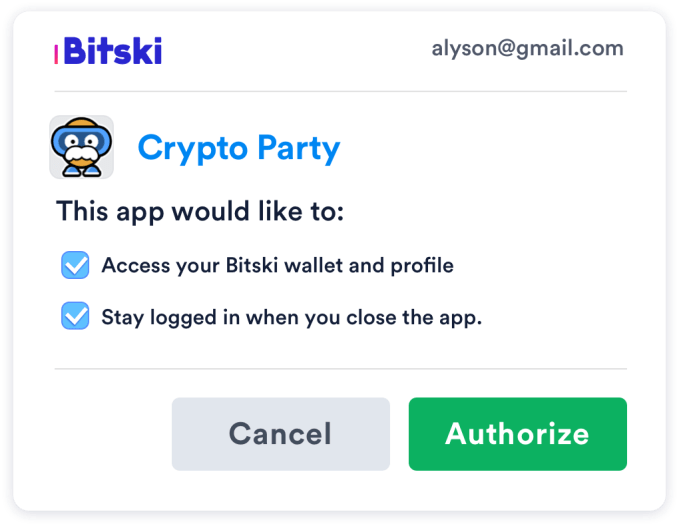
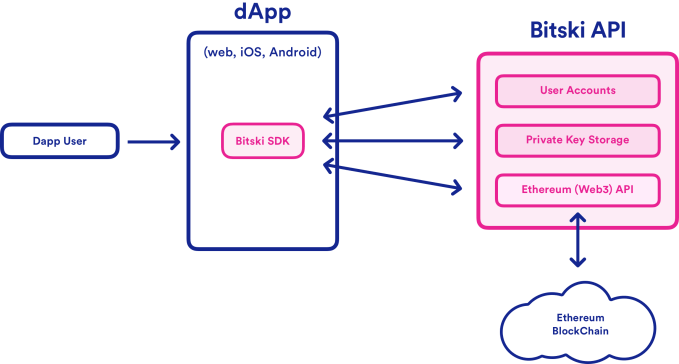
10 projects including 7 game developers are lined up to pay a fee to integrate Bitski’s SDK. Then, whenever they need a user’s identity or to transact a payment, their app pops open a Bitski authorization screen where users can grant permissions to access their ID, send money, or receive items. Users sign up just once with Bitski, and then there’s no more punching in long private keys or other friction. Using blockchain apps becomes simple enough for novices. Given the recent price plunge, the mainstream has been spooked about speculating on cryptocurrencies. But Bitski could unlock the utility of dApps that blockchain developers have been promising but haven’t delivered.

“One of the great challenges for protocol teams and product companies in crypto today is the poor UX in dApps, specifically onboarding, transactions, and sign-in/password recovery” says co-founder and CEO Donnie Dinch. “We interviewed a ton of dApp developers. The minute they used a wallet, there was a huge drop-off of folks. 
Bitski’s vision is to solve user onboarding and wallet usability for developers, so that they can in-turn focus on creating unique and useful dapps.”

The scrappy Bitski team raised $1.5 million in pre-seed capital from Signia, Founders Fund, Village Global, Social Capital, and Steve Jain. They were betting on Dinch, a designer-as-CEO who’d built concert discovery app WillCall that he sold to Ticketfly, which was eventually bought by Pandora. After 18 months of rebranding Ticketfly and overhauling its consumer experience, Dinch left and eventually recruited engineer Julian Tescher to come with him and found Bitski.

Bitski co-founder and CEO Donnie Dinch

After Riff failed to hit scale, the team hung up its social ambitions in late 2017 and “started kicking around ideas for dApps. We mocked up a Venmo one, a remittance app…but found the hurdle to get someone to use one of these products is enormous” Dinch recalls. “Onboarding was a dealbreaker for anyone building dApps. Even if we made the best crypto Venmo, to get normal people on it would be extremely difficult. It’s already hard enough to get people to install apps from the App Store.” They came up with Bitski to let any developer ski jump over that hurdle.

Looking across the crypto industry, the companies like Coinbase and Binance with their own hosted wallets that permitted smooth UX were the ones winning. Bitski would bring that same experience to any app. “Our hosted wallet SDK lets developers drop the Btski wallet into their apps and onboard users with standards web 2.0 users have grown to know and love” Dinch explains.

Imagine an iOS game wants to reward users with a digital sword or token. Users would have to set up a whole new wallet, struggle with their credentials, or use another clumsy soluation. They’d have to own Ethereum already to pay the Ethereium “gas” price to power the transaction, and the developer would have to manually approve sending the gift. With Bitski, users can approve receiving tokens from a developer from then on, and developers can pay the gas on users behalf while triggering transactions programmatically.

Magik is an AR content platform that’s one of Bitski’s first developers. Magik’s founders tell me “We’re building towards reaching millions of mainstream consumers, and Bitski is the only wallet solution that understands what we need to reach users at that scale. They provide a dead-simple, secure, and familiar interface that addresses every pain point along the user-onboarding journey.”

Bitski will offer a free tier, priced tiers based on transaction volume or a monthly fee, and an enterprise version. In the future, the company is considering doubling-down on premium developer services to help them build more on top of the blockchain. “We will never, ever monetize user data. We’ve never had any intent at looking at it” Dinch vows. The startup hopes developers will seize on the network effects of a cross-app wallet, as once someone sets up Bitski to use one product, all future sign-ins just require a few clicks.

In August, Coinbase acquired a startup called Distributed Systems that was building a similar crypto identity platform called the Clear Protocol. A “login with Coinbase” feature could be popular if launched, but the company is focus is spread a ton of blockchain projects. “If [login with Coinbase] launched tomorrow, they wouldn’t be able to support games or anything with a unique token. We’re a lockbox, they’re a bank” Dinch claims.

The spectre of single sign-on’s biggest player Facebook looms as well. In May it announced the formation of a blockchain team we suspect might be working on a crypto login platform or other ways to make the decentralized world more accessible for mom and pop. Dinch suspects that fears about how Facebook uses data would dissuade developers and users from adopting such a product. Still, Bitski’s haste in getting its developer platform into beta just a year after forming shows it’s eager to beat them to market.

Building a centralized wallet in a decentralized ecosystem comes with its own security risks. But Dinch assures me Bitski is using all its own hardware with air-gapped computers that have been stripped of their wifi cards, and it’s taking other secret precautions to prevent anyone from snatching its wallets. He believes cross-app wallets will also deliver a future where users actually own their virtual goods instead of just relying on the good will of developers not to pull them away or shut them down.”The idea of we’ve never been able to provably own unique digital assets is crazy to me” Dinch notes. “Whether it’s a skin in Fortnight or a movie on iTunes that you purchase, you don’t have liquidity to resell those things. We think we’ll look back in 5 to 10 years and think it’s nuts that no one owned their digital items.”

While the crypto prices might be cratering and dApps like Cryptokitties have cooled off, Dinch is convinced the blockchain startups won’t fade away. “There is a thriving developer ecosystem hellbent on bringing the decentralized web to reality; regardless of token price. It’s a safe assumption that prices will dip a bit more, but will eventually rise whenever we see real use cases for a lot of these tokens. Most will die. The ones that success will be outcome oriented, building useful products that people want.” Bitski’s a big step in that direction.

from Startups – TechCrunch https://ift.tt/2Rp5ZOc